
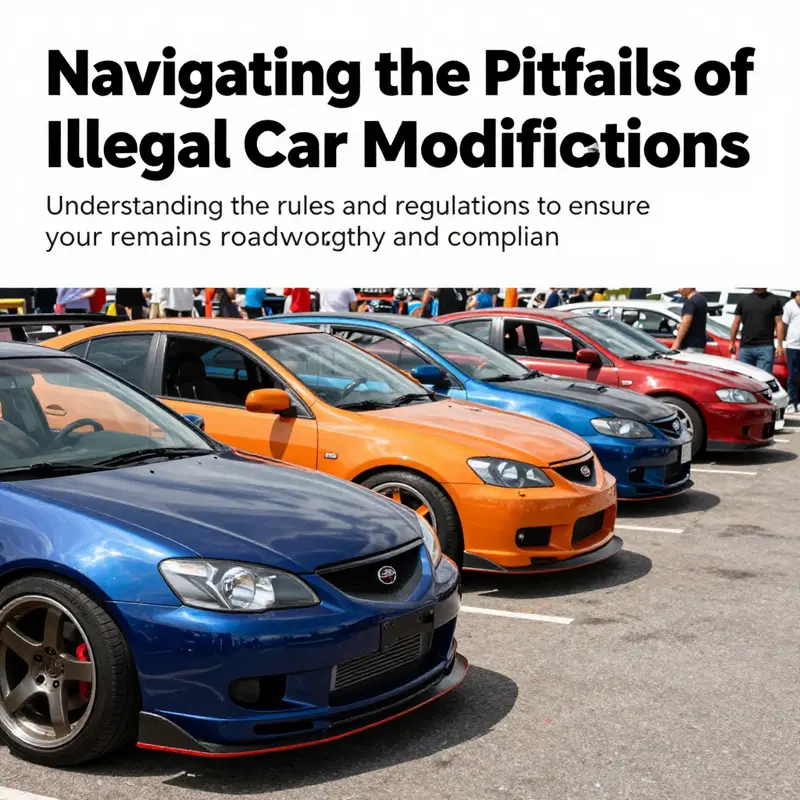
Car modifications can be an exhilarating journey for car enthusiasts, offering the chance to personalize and enhance vehicles. However, within this realm lies a complex landscape of legality that modders must navigate. Understanding what constitutes illegal modifications is crucial in preventing fines, impoundments, or worse. In this article, we delve into the specifics of illegal modifications related to vehicle identification changes, body modifications, and performance enhancements. Each chapter unveils the regulations governing these aspects to aid hobbyist car modifiers, professional tuners, and enthusiasts alike in making safe and lawful choices.
VIN in the Crosshairs: The High-Stakes Fight Over Vehicle Identity and Illegal Modifications

VIN in the Crosshairs: The High-Stakes Fight Over Vehicle Identity and Illegal Modifications delves into one of the most consequential and least understood forms of illegal car modification: tampering with or replacing the vehicle identification number. The VIN is more than a string of characters on a dashboard or a plate under the hood. It is the central fingerprint of a vehicle, linking it to its history, its ownership, its recalls, and its regulatory status. When the VIN is altered, the entire regulatory and safety architecture that keeps roads safer begins to unravel. This chapter follows the thread from the moment a VIN is touched by a modification, through the legal definitions that classify such acts as illegal, to the concrete consequences that individuals and businesses face when authorities uncover the manipulation. It also considers why the integrity of vehicle identification matters beyond the letter of the law, touching on how changes to VINs ripple into insurance, resale value, stolen-vehicle networks, and public safety. Throughout, the emphasis remains on what is legally permissible, what is not, and why the distinction matters for everyday drivers, technicians, and policymakers alike.
To understand why VIN changes sit at the fulcrum of legality, it helps to start with a clear picture of what a VIN is and how it functions in modern vehicle governance. A Vehicle Identification Number is a standardized, unique code assigned to each vehicle at manufacture. In many jurisdictions, including the regulatory framework that governs road traffic in China, the VIN is the sovereign identifier that ties together registration records, title documents, insurance contracts, warranty histories, and safety recall campaigns. It is the primary reference point that harmonizes information across agencies, manufacturers, service networks, and police databases. When a vehicle passes through several hands, or when it is reassigned through ownership transfers, the VIN remains the constant thread that can be traced back to the vehicle’s origin and its lawful status on the road. Any alteration to that thread—whether by stamping a new number, replacing the plate, or swapping the engine or frame numbers without proper authority—undermines trust in the entire system and triggers a cascade of legal and safety concerns.
The legal framework around VIN alterations is not a vague guideline but a structured set of prohibitions designed to maintain traceability and accountability. In China, as in many other jurisdictions, altering or illegally replacing the VIN, or any other core identification marks such as the engine number or chassis number, is explicitly prohibited under the Regulations on Motor Vehicle Registration and the Road Traffic Safety Law. The intent behind these rules is not to punish random tinkering but to preserve a reliable map of a vehicle’s legal identity. When a VIN is changed, it becomes difficult to verify who owns the car, whether it has a legitimate history, or whether it has been involved in theft or fraud. The legal penalties reflect the seriousness of these risks. Fines can be substantial, and the vehicle may be impounded while authorities determine the appropriate restoration path. In more severe cases, authorities may suspend or revoke the driver’s license, or, for businesses that facilitate such changes, impose heavy fines, revoke licenses, and confiscate tools and proceeds. The penalties are not merely punitive; they are designed to deter activity that could enable theft networks, illicit trade in stolen vehicles, or untraceable recalls that leave drivers unprotected.
Within this framework, VIN-related violations carry a clear distinction: they are illegal when performed without proper authorization and without the requisite registration procedures. This is not a matter of personal taste or convenience. It is a matter of public safety and governance. A tampered VIN can enable a vehicle that has a hidden, defective, or dangerous history to move through the system as if it were compliant, masking accountability for any subsequent incidents. It can also complicate or nullify regulatory processes designed to protect road users. For example, recalls issued by manufacturers rely on accurate VIN data to identify affected vehicles. If the VIN is falsified or altered, a vehicle that actually requires a recall might not be properly identified, leaving its occupants at risk. Likewise, insurance underwriting, which often depends on accurate vehicle identity, relies on VIN integrity to assess risk, determine premiums, and process claims. When identity becomes murky, coverage can be disputed, and claims can be denied. The moral of the story is simple: identity in the vehicle system is not a backdrop; it is the backbone of accountability and safety.
The material consequences of VIN tampering extend beyond the moment of inspection or the courtroom penalty. Authorities describe a spectrum of implications that affect the individual driver, the workshop that allegedly facilitated the modification, and the broader ecosystem of vehicle ownership. For the individual, the risk is immediate: fines in the range of one thousand to three thousand yuan, impoundment of the vehicle, and mandatory restoration to the original condition before the vehicle can pass inspection again. For the driver who relies on a clean license to maintain employment or travel, the possibility of license suspension or revocation introduces a real career and mobility cost. In cases where fraudulent intent is detected, additional penalties can be levied under broader public security laws, which could include administrative detention or further fines. The penalties for business operators are even more severe, reflecting the larger social cost of illegal VIN work. When a repair shop or modification shop is found to be complicit, authorities can confiscate equipment and profits, revoke operating licenses, and bar the enterprise from future automotive services. The message is unequivocal: VIN-related work can be lucrative only within the lines drawn by law.
One of the most insidious aspects of VIN manipulation is the way it blurs the line between legitimate restoration or restoration-like work and outright fraud. There are legitimate scenarios in which a vehicle’s identification data must be changed or updated through official channels. For instance, when a vehicle is officially rebranded, when there is a legitimate correction of an error on the VIN record, or when a component replacement is registered in a way that preserves traceability. Such processes require formal approvals, verified documentation, and coordinated action with the appropriate registration authorities. The critical difference is the presence of legitimate authorization and formal registration, not the simple fact that a number has been altered to fit a desired narrative of ownership or history. The rules are crafted precisely to prevent the latter scenario, in which a vehicle’s identity is weaponized to commit theft, launder used parts, or mask noncompliant features that could affect safety or compliance with emissions and safety standards.
From a public safety perspective, the VIN is a signal that a vehicle’s life has a documented history. Recall campaigns depend on accurate VIN data to reach the owners of affected vehicles, to publish and implement fixes, and to monitor outcomes. A tampered VIN disrupts this chain, creating blind spots where dangerous defects can persist unnoticed. Beyond recalls, VIN integrity supports efficient law enforcement. It helps investigators trace stolen vehicles, track illicit parts, and prevent trafficking networks that rely on falsified identity to move dangerous assets across borders or through commercial channels. The consequence is not simply a legal risk for the operator but a broader risk to the community—a risk that is managed, indeed mitigated, when identification data remains intact and verifiable.
Of course, the topic of illegal modifications cannot be reduced to a single identifier. The VIN story intersects with a larger landscape of vehicle customization that regulators watch closely. In many places, minor modifications that do not alter the vehicle’s structural integrity or fundamental safety characteristics are permissible, provided they do not conflict with registration terms or safety standards. This distinction, however, is not a green light for tinkering with the VIN itself. It is a reminder that drivers and technicians should understand the boundary between permissible cosmetic or non-invasive enhancements and identity-related changes that threaten legal compliance and safety. When people read about the legality of modifications, they often picture loud exhausts, flashy body kits, or oversized wheels. The VIN, by contrast, is a quiet sentinel that keeps the vehicle tethered to its rightful owner, history, and regulatory obligations. The moment someone treats that sentinel as a negotiable piece of data is when risk escalates—from fines to impoundment to more severe criminal penalties.
The practical dynamics of enforcement are as important as the law itself. In practice, authorities rely on a combination of checks to detect VIN tampering, including cross-referencing registration data with the vehicle’s actual identification marks at the point of inspection, and validating that engine numbers, chassis numbers, and body identifiers align with manufacturer records and official documentation. When discrepancies arise, the system triggers an investigation. In many cases, the detection of VIN changes prompts a broader audit of the vehicle’s entire modification history, the provenance of components used in the changes, and the financial trails associated with the work. This is not merely a bureaucratic exercise; it is an attempt to close loopholes that criminals exploit to disguise stolen cars, untraceable parts, or vehicles that no longer conform to safety and emissions standards. The process is designed to be rigorous yet transparent so that legitimate owners who need to make legally sanctioned changes are not caught in a web of needless bureaucracy, while those who seek to hide wrongdoing are deterred by the high probability of detection and serious penalties.
In addition to the legal mechanics, there is a human dimension to VIN integrity that deserves attention. Automobile technicians, inspectors, and law enforcement officers sit at the intersection where knowledge, ethics, and public safety meet. A technician who recognizes an irregular VIN pattern must act with caution, documenting concerns and following official procedures rather than proceeding with uncertain remedies. Inspectors, in turn, must balance a practical understanding of how modern vehicles are built and how legitimate maintenance can require data that looks unusual on the surface, such as a VIN that has experienced a clerical correction or a legal rebrand. The public safety conversation benefits from this disciplined professionalism. It ensures that people who rely on vehicles for daily life—commuters, families, essential workers—are not exposed to unanticipated risks due to identity tampering or to the introduction of unsafe, mislabeled, or noncompliant components.
Yet, the social and economic ecosystems around vehicle ownership complicate the issue further. The used-car market often becomes a flashpoint for debates about VIN integrity. When a vehicle’s identity data has been altered, its resale value, insurance eligibility, and potential for a legitimate title transfer can be compromised. Even if a vehicle appears to operate normally, the underlying questions about its origin and its compliance status create a transfer risk that can deter buyers and complicate financing or leasing arrangements. For buyers, the best protection lies in due diligence: asking for complete vehicle histories, verifying VINs against official records, and understanding the regulatory framework that governs modifications. For sellers and dealers, the lesson is to maintain meticulous documentation and to comply with all registration processes for any changes that affect identity or safety characteristics. It is a reminder that even routine or corrective actions can have unintended consequences if they touch the vehicle’s identification data.
The chapter would be incomplete without acknowledging the broader context in which these rules operate. The digitalization of vehicle records, the increasing complexity of modern engines, and the globalization of the car market all interact with VIN integrity in meaningful ways. National registries, cross-border data sharing, and advanced analytics are designed to detect anomalies that suggest illegal activity. This technological backbone makes the risk of detection higher than in the past, which in turn raises the perceived cost of attempting VIN modifications. However, it also imposes a duty on policymakers and industry professionals to ensure that legitimate, well-documented pathways exist for owners who genuinely need to adjust certain data points during the vehicle’s life cycle. The tension between flexibility and control is not easily resolved, but the direction is clear: any changes to how a vehicle is identified must be accountable, transparent, and legally sanctioned.
A reader exploring the specifics of illegal modifications may wonder how practices differ across regions or how the guidelines translate into everyday actions. The principle to keep in mind is consistency. If a jurisdiction requires that all modifications—especially anything that touches the vehicle’s identification data—pass through official channels and be thoroughly documented, then the safest approach for a responsible owner is to seek those channels proactively and to avoid any unsanctioned alterations. In the same breath, it is reasonable to recognize that not all changes are inherently dangerous or illegal. There are legitimate scenarios where a vehicle’s identity needs to be corrected or updated due to administrative errors, administrative rebranding, or compliance-related adjustments. Those scenarios require a clear, formal process that is understood by owners and by technicians alike. The key takeaway is that legality is not a mood or preference; it is a structured process that protects the vehicle’s history, its safety, and the public’s trust in the road system.
For readers who want to explore the topic further, a practical starting point is to familiarize themselves with the broader discourse around illegal car modifications and the specific emphasis on vehicle identification changes. Understanding the scope of what regulators consider illegal can help prevent costly missteps and encourage responsible behavior. The law is not merely punitive in intention; it aims to preserve safety, accountability, and traceability for everyone who shares the road. By staying within the boundaries and engaging with official procedures, owners can pursue legitimate improvements and features that enhance their experience without compromising the vehicle’s identity or the system that depends on it. In that spirit, the conversation about VIN integrity becomes a conversation about responsibility, trust, and the durable health of the entire automotive ecosystem.
For readers seeking to explore related discussions on the topic, a related resource discusses the broader landscape of illegal car modifications and can provide additional context for how such practices are perceived, detected, and addressed in different jurisdictions. This link offers a comprehensive overview of the types of modifications that fall outside legal boundaries and the rationale behind those boundaries: illegal car modifications.
In sum, vehicle identification changes are not simply a technical nuisance or a petty violation. They strike at the core of how society governs the safety, accountability, and reliability of millions of vehicles on the road. As technology advances and the mobility landscape evolves, the imperative to protect VIN integrity grows stronger, not weaker. The rules will continue to evolve, but the underlying principle remains unchanged: identity in the vehicle system must be verifiable, auditable, and legally authorized. The moment that identity is treated as a negotiable asset, the entire system loses its grip on safety, trust, and shared responsibility on public roads.
External reference: For a broader understanding of how these standards are codified and enforced, consult the official regulatory framework documented by Chinese authorities: https://www.122.gov.cn
Body Work, Roadworthiness, and the Legal Boundary: Navigating Safe, Legal Car Modifications
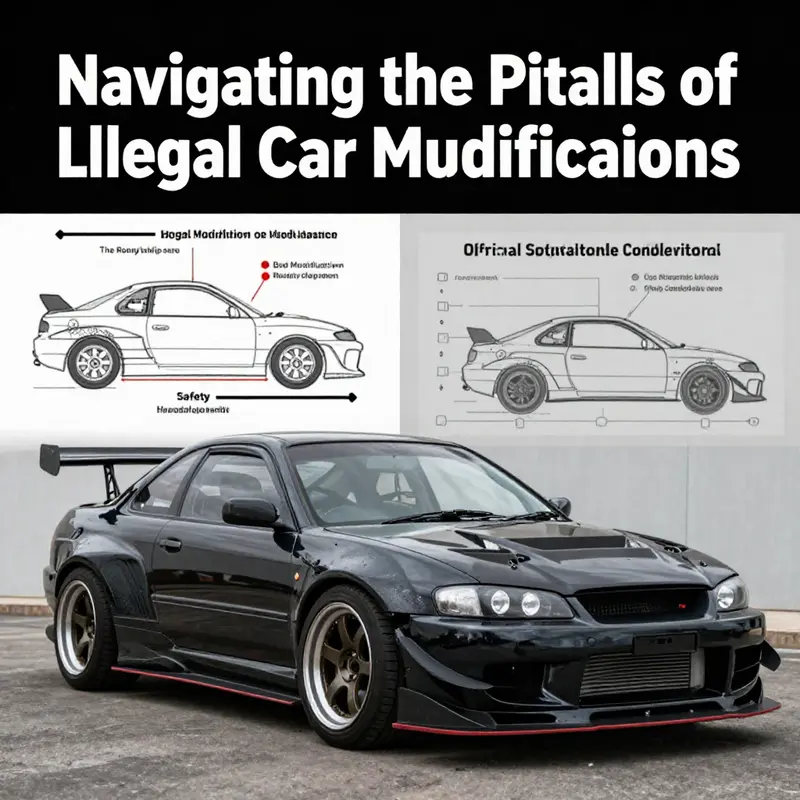
The car you drive is more than a display of personal taste; it is a machine designed to protect you and others on the road. When owners choose to modify a vehicle, the changes ripple through its performance, safety systems, and compatibility with traffic laws. This chapter examines how body-related alterations—those that touch the exterior shape, dimensions, or visible surfaces of a car—enter a complex arena where aesthetics collide with safety standards and enforcement. It is a topic that extends beyond style, because the body of a vehicle is a carefully engineered system. Even small changes can shift the way a car behaves in a crash, how it protects occupants, and how it communicates its presence to other road users. In many jurisdictions, including the regulatory framework in China as of 2026, altering the vehicle’s physical form without proper authorization crosses into illegal territory. The core idea is simple: modifications that undermine the vehicle’s fundamental safety characteristics, or that misrepresent the vehicle to authorities, are not just risky; they can be unlawful.
To grasp the stakes, consider a few concrete avenues by which body work becomes legally problematic. Some of the most scrutinized changes involve the vehicle’s color, shape, or overall dimensions. Painting a car a different color is not inherently illegal, but if the color changes are used to circumvent identification or to obscure a vehicle’s identity during inspection or enforcement, authorities may view the modification as noncompliant. More critically, the law targets alterations that affect the vehicle’s crash energy management or pedestrian protection. When a driver adds a full-body kit, oversized spoilers, or reshapes bumpers beyond the factory design, the modification can alter the car’s crash dynamics, impact absorption characteristics, and even the way airbags deploy. These changes, unless properly certified and registered, can render the vehicle noncompliant with safety standards and crash tests that manufacturers have already passed. The safety argument is straightforward: vehicles are tested in specific configurations. Deviating from those configurations without evidence that the new setup preserves or enhances safety is not simply a matter of taste; it is a risk assessment that regulators are obligated to monitor.
From a regulatory perspective, the emphasis is on visibility, stability, and predictable behavior. The exterior profile of a car contributes to air flow, ground clearance, and the vehicle’s center of gravity. When a driver lowers a suspension excessively or installs wheels with nonstandard offsets and sizes, the geometry of the suspension, steering ratio, and tire contact patch can change in ways the manufacturer did not anticipate. These modifications can influence steering response, braking balance, and even tire wear patterns. In places where police and inspectors verify compliance, such adjustments can become grounds for penalties if they compromise steering feel, handling, or visibility. The same caution applies to lighting: aftermarket headlights and auxiliary lamps that brighten, colorize, or misalign light beams can blind oncoming drivers or fail to meet reflectivity and visibility standards. In the worst cases, lighting upgrades may fail to comply with regulatory requirements for beam pattern, color temperature, and occupancy lighting in the event of a crash.
The enforcement landscape is not limited to the exterior. The regulations surrounding body-related changes often align with broader laws governing vehicle registration, roadworthiness, and emissions. In the regulatory environment described by China’s Ministry of Public Security, several explicit prohibitions exist. Any attempt to change the vehicle’s identification numbers—such as the VIN, engine number, or frame number—without proper registration is strictly forbidden. This prohibition protects the integrity of vehicle records, helps authorities track stolen or counterfeit vehicles, and ensures that the car’s reported configuration matches its actual hardware. Likewise, changing the frame or engine without the appropriate paperwork can trigger penalties that range from fines to forced restoration, or even impoundment in severe cases. The logic is clear: identity and traceability are fundamental to road safety and accountability.
With this framework in mind, it is useful to distinguish between modifications that are outright illegal and those that remain permissible, provided they are properly approved. The line is drawn where a modification alters a vehicle’s structure, safety performance, or identification in a way that the regulatory system cannot easily accommodate. Under the same regulatory umbrella, there is room for non-intrusive, safety-preserving modifications that do not affect the car’s fundamental geometry or its critical safety characteristics. For example, some interior accessories, wind deflectors on trucks, or certain non-structural add-ons can be acceptable if they do not influence the vehicle’s safety performance or crash compatibility. The key is to obtain the necessary approvals or certifications before driving the modified vehicle on public roads. In practice, this often means documentation that demonstrates the modification’s safety compatibility, adherence to official standards, and proper registration of the new configuration.
A crucial implication for drivers, car enthusiasts, and professionals who restore or modify vehicles is the potential cost of noncompliance. The penalties can be straightforward, but they are not merely monetical. Fines—reported at times up to a modest amount in some jurisdictions—are accompanied by a mandate to restore the vehicle to its original condition. In other words, a vehicle that has been altered must be brought back to the manufacturer’s specification before it can pass inspection or be legally registered. If an inspector deems a modification unsafe or noncompliant, the car can be impounded. In severe cases, repeat offenses or modifications that clearly undermine public safety can lead to license suspension or revocation, compounding the consequences for the owner. Over longer horizons, a vehicle that fails successive annual inspections due to illegal modifications may be deemed unfit for road use and even scrapped. These outcomes emphasize that illegal body work is not a one-off risk but a persistent liability that can affect the vehicle, the owner, and other road users for years.
The regulatory stance also invites a practical maxim for drivers who want to explore personal style within the law: seek compliance, not just concealment. The legal alternatives provide a pragmatic path forward. Minor modifications that do not alter the vehicle’s structure or safety characteristics are often permissible. These can include certain interior upgrades, nonintrusive exterior accents, or accessories that do not interfere with the car’s primary safety functions. The emphasis is on preserving the integrity of the car’s safety equipment—the crumple zones, airbags, seat belt pretensioners, and electronic stability systems—while allowing owners to express themselves through aesthetics that do not compromise crash dynamics or roadworthiness. When in doubt, consult the relevant authorities, obtain the necessary approvals, and ensure that any change is reflected in the vehicle’s registration records. The process, though sometimes tedious, is designed to prevent situations where a modification saves a few weeks of customization but costs a driver far more in safety risk and legal consequences.
The broader lessons extend beyond the immediate jurisdiction. International comparisons, such as the United Kingdom’s approach, illustrate how different regulatory ecosystems handle similar concerns. In the UK, for instance, the Driver and Vehicle Standards Agency (DVSA) enforces lighting, reflectors, and structural integrity requirements, and a vehicle that fails to meet these standards may fail an MOT test, face fines, or be deemed unfit for road use. Although the specifics differ, the underlying logic is universal: vehicle modifications must never erode the predictability and safety that other road users rely on. This shared principle helps explain why a robust framework exists for evaluating and approving modifications before they can legally enter the public road network.
For readers who want a more formal view of how modifications can affect road safety and insurance, the broader literature and official guidance are illuminating. The risk calculus is not only a matter of what looks good or sounds cool at a car meet; it is a calculation about how the car behaves in the real world under normal and emergency driving scenarios. When a modification is illegal, it is not merely a technical defect; it becomes a symbol of disregard for safety and law. The potential consequences, from fines to vehicle impoundment and license sanctions, reflect society’s preference for a road environment where every vehicle behaves within predictable limits. The aim of these rules is not to crush creativity but to ensure that modifications do not undermine the safety features that protect everyone on the road.
Understanding this, it becomes clear that the questions surrounding body modifications are not about taste in isolation. They are about the compatibility of individual choices with a shared safety framework. A person may want a certain aesthetic, but that preference must be evaluated against the vehicle’s design limitations and the regulatory requirements intended to maintain road safety. This evaluation is increasingly nuanced as technology evolves. The era of electronic stability control, adaptive lighting, and advanced driver-assistance systems means that changes to the vehicle’s exterior can interact with internal systems in complex ways. For instance, altering a bumper or front fascia may influence pedestrian protection performance in a crash test. Upgrading a light assembly to a brighter unit could interact with camera-based driver-assistance features, potentially reducing their effectiveness. Each of these interactions invites a careful, regulatory-aware approach to any modification.
The practical takeaway for anyone contemplating exterior or body modifications is straightforward. First, treat the modification as a system-wide assessment rather than a cosmetic update. Second, consult the official guidelines to determine whether the change requires registration or certification. Third, if the modification is permissible, ensure that all documentation is complete and up to date. Fourth, remember that the ultimate test of any modification is road legality and safety on the day you drive your car on public roads. This approach reduces the risk of costly repairs, legal penalties, and the dreaded situation where a once-favorite car becomes a liability because it no longer meets the standards that keep roads safe for everyone.
From a reader’s perspective, curiosity about the boundaries is natural. If you find yourself wondering whether a particular exterior change is illegal, or whether a modification could be approved with the right paperwork, you can consult public resources or seek professional guidance. A simple starting point is to review articles that address the legal status of car modifications in general, such as discussions that summarize what makes a modification illegal and what alternatives exist. In many communities, there are forums, automotive authorities, and safety organizations that can provide practical advice on how to navigate the approval process and what documentation is typically required. When in doubt, acknowledge that the safest path is to err on the side of compliance and to pursue a formal agreement with the relevant regulatory body before making any conspicuous exterior alteration.
For readers who want to explore this topic further, a concise, publicly available resource that addresses legality questions is available online. It explains how modifications might violate safety and emissions standards and how enforcement agencies approach noncompliant vehicles. If you are interested, you can read more about this topic at the article that questions whether car modifications are illegal and discusses the practical implications of modification choices in various regulatory contexts. The conversation surrounding legality is not merely a policy debate; it is a practical guide to maintaining road safety while allowing some room for personal expression within clearly defined limits.
To connect these ideas back to the broader topic of illegal modifications and their implications, consider how significant body changes—such as altering the vehicle’s dimensions with nonstandard bumpers or oversized body kits—can challenge the way a car is judged during inspections or registrations. This is precisely why authorities emphasize compliance; the aim is to prevent situations where a visually striking modification is not matched by the protective performance that drivers rely on during a crash. The legal boundary is not about stifling creativity; it is about preserving the reliability of safety systems and ensuring that every vehicle on the road can be trusted to behave in predictable ways when it matters most.
In closing, the nexus of body work, safety compliance, and the law demands a disciplined, informed approach. Owners who prioritize compliance and safety can still pursue aesthetic and aerodynamic options within certified standards. When modifications go beyond those boundaries, the consequences are real and enforceable. The best practice is to pursue modifications openly, seek approvals, and maintain accurate records. If you are curious about the broader landscape of car modifications and their legality, you can explore additional perspectives on the topic by reading about whether car modifications are illegal and how such questions are framed across different regulatory environments. This awareness protects you, your passengers, and other road users while still allowing room for responsible personalization.
Internal link reference for further context: Are car modifications illegal?
External resource: For a broader regulatory framework and official guidance on vehicle modifications, see the UK government resource on Vehicle Modifications and Safety Compliance: https://www.gov.uk/government/publications/vehicle-modifications-and-safety-compliance
Power, Legality, and the Fine Line: Navigating China’s Rules on Illegal Car Modifications
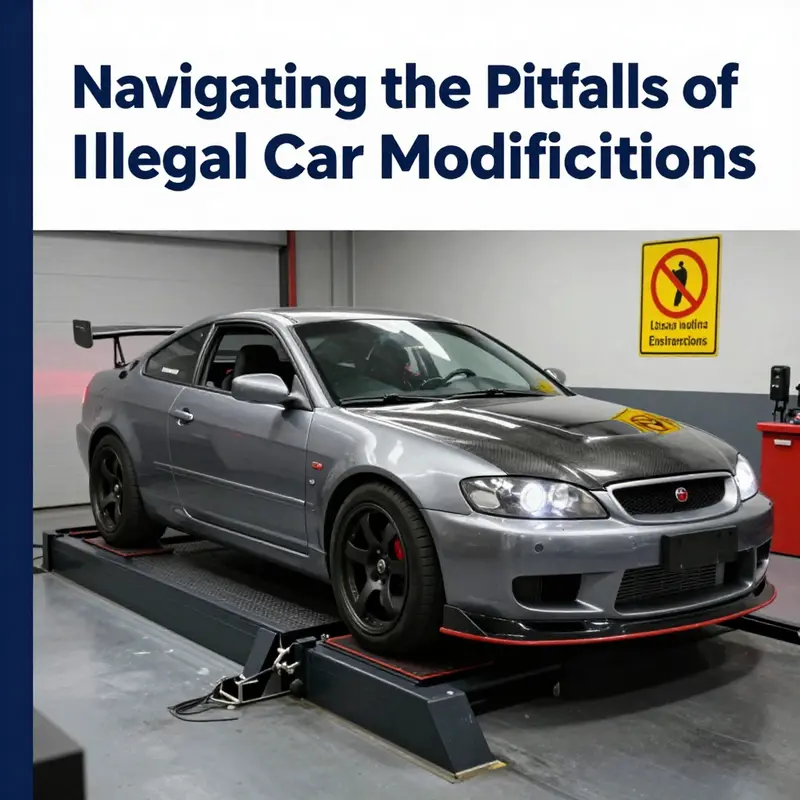
In every city, the urge to bend a car toward personal preference sits at the crossroad of engineering curiosity and social responsibility. The dream of a more responsive throttle, a quieter cabin, or a stance that communicates identity is powerful. Yet the road to turning that dream into reality is not a free pass. It runs through a complex network of regulations designed to protect drivers, pedestrians, and the broader environment. In the Chinese context as of 2026, the boundary between permitted customization and illegal modification is drawn with precision and reinforced by a disciplined enforcement framework. Understanding this boundary requires more than a catalog of prohibited changes; it requires a narrative about safety, traceability, and the shared obligation to maintain a road system that serves millions of users with predictable behavior. The tension between performance desire and regulatory caution is not new, but the scope and clarity of current rules have shifted the culture of car modification from a purely experimental pastime into a disciplined practice guided by legal standards and civic responsibility. This chapter weaves together the practical, the legal, and the ethical threads of modification, painting a coherent picture of what constitutes an illegal modification, why it matters, and how enthusiasts can pursue legitimate avenues to enhance their vehicles without compromising roadworthiness or public safety.
At the heart of the Chinese regime is the insistence that a vehicle entering public streets must be verifiably the same vehicle that passed inspection and registration. This principle rests on several pillars: a stable vehicle identity, predictable performance within the limits established by the manufacturer and the authorities, and a chain of custody for parts and systems that influence safety and emissions. When a modification hits any of these pillars, the risk is not merely theoretical. It becomes tangible in how the vehicle responds to braking, steering, or a sudden maneuver; in how it emits pollutants or noises; and in how easily authorities can confirm compliance during a roadside check or a formal inspection. The regulations emphasize that identity numbers and core structural elements—such as engine and frame numbers—must remain traceable and consistent with the registered vehicle. Any alteration without the proper authorization triggers a violation with well-defined consequences. The logic is straightforward on paper but demands meticulous discipline in practice; the slightest deviation from the approved specification can upend the entire compliance equation.
Among the most common and consequential categories of illegal modification is the changing of the vehicle identification and critical hardware identifiers. The VIN, engine number, chassis number, and model typing are not decorative labels; they are the primary means by which a vehicle is tracked through its life. Replacements or alterations to these numbers, or to the components that define the vehicle’s identity, undermine the integrity of road safety regimes and complicate law enforcement and regulatory oversight. The regulations explicitly prohibit such changes without proper registration and oversight. The practical implication is that any reengineered baseline—whether it involves replacing the engine, swapping major components, or altering the frame—must be accompanied by a formal process that ensures the vehicle remains traceable, inspectable, and within the safety envelope calibrated by engineers and regulators. In this light, even performance-oriented pursuits must be filtered through a bureaucratic sieve that confirms compatibility with the vehicle’s original design intent and the regulatory standards that govern emissions, safety, and roadworthiness. The result is a circuitous but essential pathway where enthusiasts must seek legitimate channels to upgrade performance without severing the link to the vehicle’s identity and to the safety assurances that the system requires.
Another pillar of legality concerns the vehicle’s external silhouette and dimensional profile. The body shape, size, and color carry more significance than aesthetic appeal. They are part of how the vehicle is perceived by other road users and how it interacts with safety systems designed around standard geometries. Unauthorized changes to body color, the addition of full-body kits that alter aerodynamics, oversized spoilers, or reshaped bumpers that affect length, width, or height are treated as illegal unless an authority signs off on the modifications. Lawmakers recognize that radical exterior changes can influence visibility, stability, crash protection, and even the effectiveness of pedestrian protection systems. The policy is not merely about keeping a car looking familiar; it is about preserving a predictable envelope of handling characteristics and protective features that all road users rely on. For enthusiasts, this means that exterior tuning must be framed within approved parameters or pursued through a formal approval process that establishes the safety and regulatory compatibility of the resulting form.
Wheel and tire changes illustrate a similar tension between desire and discipline. Altering wheel size, width, or offset beyond the original design limits may seem like a straightforward way to improve grip or stance, but the consequences cascade through steering geometry, brake clearance, suspension tuning, and even tire contact patch behavior. When alterations push beyond what the vehicle’s design can safely tolerate, handling becomes inconsistent, braking efficiency can degrade, and the risk of tire blowouts or wheel failure increases. Chinese regulations address these consequences explicitly by requiring that any wheel and tire modifications stay within factory-specified tolerances or be validated through a rigorous process that demonstrates compatibility with the vehicle’s safety systems. In short, even seemingly minor changes to contact patches and rotational inertia can have outsized effects on dynamics and safety, so the standard remains conservative and precise.
Beyond the chassis and exterior, the exhaust system and engine hardware are a frequent focal point for people seeking to unlock additional performance. The allure of louder exhaust notes, reduced backpressure, or turbocharged acceleration often clashes with environmental and noise standards. Exhaust modifications that increase noise levels or alter emissions thresholds can render a vehicle noncompliant. Engine tuning that pushes the power output beyond what the certified emissions certification allowed likewise falls under illegality because it destabilizes emissions control systems and can increase heat output and component wear in ways that official testing never evaluated. The regulatory logic here is twofold: to protect the air from excessive pollution and to preserve the reliability of powertrains and braking systems under varied driving conditions. This is not a claim about taste or preference, but a statement about the shared accountability that comes with the privilege of private car ownership in a densely populated landscape where street noise and emissions have broad social impacts. For many drivers, the lesson is clear: performance improvements must be pursued within a framework that preserves reliability, emissions compliance, and long-term engine health.
Lighting and visibility form another critical axis. The visual language of a car can be loud, but the law is concerned with what others see and how that affects safety. Overly bright, flashy, or colored headlights and auxiliary lighting can blind or distract oncoming drivers, particularly at night or in poor weather. The same rules apply to lighting housings that have been altered or additional lamps installed without authorization. The aim is not to dull the car’s personality but to ensure that road illumination remains predictable enough for safe interaction with other road users. This is not mere pedantry; it is a precaution grounded in the reality that lighting affects reaction times, glare perception, and the ability of drivers to judge distances accurately. For those who crave distinctive lighting effects, the path forward lies in working within permitted designs or seeking official permission for changes that are demonstrably safe and compliant.
Accessories pose a subtler but equally important challenge. While adding high decibel air horns or aftermarket audio systems can make a vehicle more expressive, these additions must not create a nuisance or distraction for others. The boundary here is drawn not only around the equipment’s presence but around the resulting acoustic footprint and potential glare or visual distraction. Authorities differentiate between nonintrusive interior accessories and modifications that alter a vehicle’s exterior character or cause safety concerns. The practical takeaway for enthusiasts is to pursue accessories that respect the vehicle’s intended use, keep disturbances to a minimum, and avoid creating conditions that could trigger inspections or penalties. Even topics that seem purely cosmetic become regulatory concerns when they threaten safety, noise control, or the calm, predictable operation of roads shared by people and goods.
Tampering with vehicle identification or documentation sits at the core of the regulatory envelope. The use of stolen, cloned, or altered VINs, or the incorporation of components from seized or illegally obtained vehicles, is treated as a criminal offense. The severity of this offense arises from the fact that it corrodes the entire system that makes road travel traceable and accountable. Without a reliable identity trail, it becomes impossible to track recall campaigns, warranty obligations, safety notices, or even insurance coverage. The enforcement philosophy is clear: preserve the integrity of vehicle identity to ensure that safety and regulatory requirements can be comprehensively and fairly applied. The penalties can be severe, not only in terms of fines or vehicle impoundment but also in the long arc of a driver’s record and the vehicle’s legitimacy on the road.
The chapter of legality does not end with penalties; it opens a practical corridor for enthusiasts who want to pursue performance or comfort upgrades while staying within the bounds of the law. The honest path is to seek minor, nonintrusive interior modifications that do not alter the structural or safety characteristics of the vehicle. For example, some anti-collision or passive safety enhancements on passenger cars can be permissible when they preserve crumple zones and fundamental safety architectures. In the right circumstances, manufacturers and authorities provide a framework that allows controlled experimentation while preserving the essential roadworthiness of vehicles. The guiding principle is to protect the integrity of the vehicle’s core safety systems, maintain the reliability of emissions controls, and ensure that any change can be inspected, tested, and approved on the basis of evidence and engineering judgment. This approach fosters a culture where enthusiasts can pursue creativity and performance, but only through channels that ensure that safety, accountability, and environmental considerations remain central to the process.
Considered together, the illegal modification landscape in China as of 2026 presents a clear but nuanced map. It rejects alterations that undermine identity verification, safety, or environmental performance, and it accepts a narrow band of modifications that can be demonstrated to stay within the established parameters. For readers who are exploring this topic, it is essential to distinguish between the impulse to customize and the obligation to protect the broader community that shares the streets and the air. In practice, the line is navigated most effectively by a mindset that asks three questions before any change is undertaken: Will this modification preserve the vehicle’s traceability and identity? Will it keep performance within the safety margins defined by engineers and regulators? Will it maintain or improve environmental and noise performance to align with public standards? If the answer to any of these questions is no, the modification should be reconsidered or postponed until proper authorization is obtained. The path to legitimate tuning, therefore, is not a surrender of ambition but a disciplined recalibration of ambition to fit within a lawful framework that values safety, accountability, and social responsibility.
For those seeking a concise reference to the overarching principle behind these rules, a compact overview is available that frames illegal car modifications as actions that threaten safety, legality, and the integrity of the registration and inspection regime. Enriching this, the broader discourse on modifications often emphasizes that the legal alternatives are not about limiting personal expression so much as ensuring that performance enhancements are achieved without compromising the shared spaces in which traffic operates. As such, the community of drivers and tuners can still pursue meaningful upgrades through sanctioned processes, including design approvals, engineering assessments, and compliance demonstrations. This approach acknowledges the legitimate desire to personalize and optimize one’s vehicle while honoring the social contract that makes road travel orderly and predictable for everyone. If readers wish to explore a detailed discussion of illegal modifications, a related resource provides a focused examination of common practices and regulatory responses. Illegal Car Modifications serves as a practical repository for understanding how specific changes fit or conflict with the rules, and it can help set expectations before any work begins. While this chapter synthesizes the regulatory logic, the best path forward for any owner or enthusiast remains clear: stay within the approved boundaries, pursue legitimate upgrades, and engage with authorities when a modification promises genuine benefits but requires formal validation. In the broader landscape of automotive culture and policy, this disciplined approach helps preserve safety, environmental performance, and legal certainty for all road users. For readers seeking a broader frame that extends beyond national borders and delves into how different jurisdictions treat modifications, a widely recognized source of safety and policy guidance offers extensive insights into the balance between innovation and regulation. https://www.nhtsa.gov
Final thoughts
In summary, while car modifications can lead to greater enjoyment and personalized expression, it is imperative to understand the legal implications derived from these changes. Knowledge of vehicle identification regulations, safety standards for body alterations, and the legal framework surrounding performance enhancements is essential. The risks of illegal modifications range from fines to potential scrapping of vehicles, making it critical for modifiers to stay informed. By adhering to legal standards and making thoughtful modifications, you can enjoy the world of car tuning without compromising compliance or safety. Stay passionate, but always play by the rules.