
Car modifications are not just a means of personal expression; they are part of a vibrant culture that thrives in California. As enthusiasts, we seek to fine-tune our vehicles to enhance performance, aesthetics, or comfort. However, navigating state regulations is crucial to avoid fines or penalties. This guide offers a comprehensive overview of what modifications are lawful within California’s borders, from permissible upgrades to safety and environmental compliance. As we delve into each chapter, enthusiasts will discover the intricate balance between creativity and legality when modifying vehicles in the Golden State.
The Fine Line of Custom Cars: Navigating What California Legally Allows and Prohibits When Modifying a Vehicle
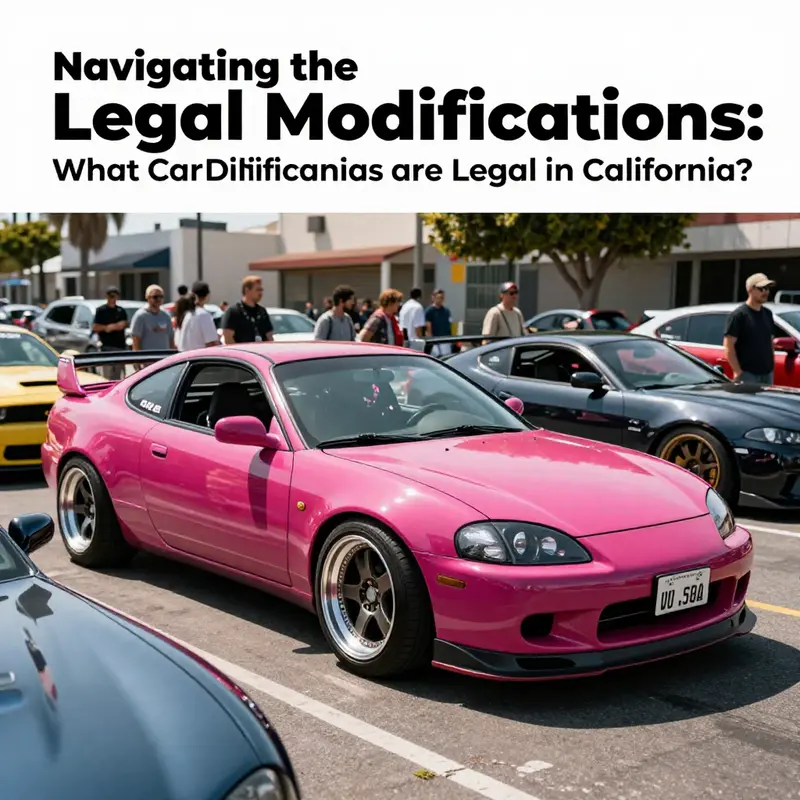
California sits at the center of car culture in the United States, where enthusiasts chase performance, aesthetics, and individuality while staying tethered to rules designed to protect safety, air quality, and reliable vehicle identification. The core idea is straightforward: you can tailor a car, but only if your modifications remain within the bounds of state and federal law. The result is a landscape that rewards thoughtful preparation—checking the rules, selecting compliant parts, and documenting changes—more than it rewards impulse. What follows is a cohesive view of the legal terrain, not a catalog of every possible tweak, but a map you can use before you begin any project to avoid costly missteps and unintended penalties. The overarching message is simple: regulations exist to keep vehicles predictable on the road and verifiable to inspectors and automated systems, and understanding them is the first step toward responsible customization.
The heart of the matter lies in safety, emissions, and identification. Modifications that affect how a car operates safely, how cleanly it runs, or how easily law enforcement and regulatory systems can recognize it are the places where California draws a firm line. In practice this means some adjustments are openly permitted when done with proper standards, while others are off-limits, or require painstaking compliance steps. For example, exhaust systems may be upgraded to a more performance-oriented design, but only if the chosen parts meet California Air Resources Board (CARB) standards and carry a California-approved designation. This requirement is more than a formality; it’s a gatekeeper that prevents aftermarket components from slipping past emissions testing and smog checks. When in doubt, a CARB Executive Order (EO) number attached to a part signals that the component has been reviewed and approved for use on specific vehicle applications. Without that EO endorsement, even a seemingly minor change can transform a modification into a violation that can trigger fines, failed inspections, or impoundment.
Tires and wheels illustrate the careful balance California strikes between customization and safety. You may switch to different tires or wheels, but the modifications cannot exceed the vehicle’s OEM size or width. The rule is not merely about aesthetics; it is about preserving handling characteristics, ensuring proper contact with the road, and preventing clearance issues that could lead to unpredictable steering or contact with fenders and bodywork. Proper mounting and secure fastening are nonnegotiable. In short, you can refresh the look or adjust grip, but you must stay within the wheel and tire envelope the manufacturer designed for the model. The same attention to safety applies to suspension and ride height. Modifications to suspension are allowed, but there is a real constraint: the vehicle cannot be lowered below the legally required ride height, because doing so can compromise braking performance, steering geometry, and crash protection. Off-road enthusiasts sometimes pursue lifts, and California does permit lifts up to certain limits—commonly cited as up to six inches for off-road purposes—so long as the overall design remains faithful to the vehicle’s original intent and does not violate local ordinances or safety standards. This constraint underscores a broader principle: even a seemingly simple stance adjustment can have ripple effects on safety, aerodynamics, head clearance, and lighting alignment.
Inside the cabin, many popular upgrades survive the regulatory test. Interior modifications such as new seats, upgraded sound systems, or redesigned dashboards are generally permissible as long as they do not obstruct the driver’s view, intrude on airbags, or interfere with seatbelts. The interior realm, unlike external styling, tends to be more forgiving when the changes stay clear of safety-critical systems and do not alter how the vehicle detects, responds to, or communicates with occupants and passengers. When it comes to body work, California allows certain body kits, but with a caveat: any kit must not alter the vehicle’s overall dimensions beyond factory specifications and must not create hazardous protrusions or otherwise compromise pedestrian safety or the vehicle’s integrity. The regulatory emphasis here is about predictable behavior in the event of a collision and consistent performance of safety features. Taken together, these points create a framework in which a thoughtful, standards-driven approach to modification is both permissible and prudent.
Yet the landscape is not a free-for-all. Several modifications are explicitly illegal and carry clear penalties. The most visible and often harshly enforced restriction concerns license plates. Any alteration that obscures, defaces, or otherwise hides the plate is illegal under California Vehicle Code § 5200. This means tinted or decorative films, stickers, or covers that obscure legibility are off-limits. The practical consequence is immediate: law enforcement can seize improperly modified plates, and drivers face fines. The enforcement climate has grown stricter in recent years, with reports of plate confiscations rising in certain jurisdictions. Legislative changes have reinforced these rules; for instance, Assembly Bill 2111, effective January 1, 2024, makes it explicit that modifications which hinder plate readability—such as certain reflective or textured films—are illegal and can lead to fines and vehicle impoundment. This is a stark reminder that even popular cosmetic ideas can become legally perilous if they interfere with plate visibility.
Beyond plates, other areas invite scrutiny. Excessive exhaust noise is a common target for fines; California’s limits are set to keep sound at reasonable levels and prevent nuisance or safety concerns on public roadways. In addition, emissions controls present a non-negotiable boundary: altering emissions systems or removing catalytic converters is not just frowned upon; it is unlawful under both state and federal regimes, with clear penalties for noncompliance. Lighting modifications illustrate the precision of the rules: non-standard colors, especially blue or red lighting, or underglow that shines beyond the vehicle’s frame, can run afoul of legal expectations and interfere with visibility for other road users. Window tinting also follows explicit rules: front windows must allow a substantial amount of light transmission, typically no more than a 70 percent visible light transmission (VLT), while rear and side windows may be darker—commonly around 35 percent VLT—though local ordinances and vehicle type can influence these figures. Vehicles risk failing a smog inspection or facing fines if the tint does not comply.
With these complexities in mind, how should a California driver evaluate a potential modification? The first step is to consult the official sources, especially the California DMV and CARB. The DMV provides guidance and status updates on what is permissible, while CARB’s EO numbers attest to a product’s regulatory clearance. Keeping detailed records of every modification, including part numbers, installation dates, and installer information, helps during inspections and potential future sales. When in doubt, err on the side of caution, verify applicability to your specific vehicle model, and pursue alternatives that carry explicit regulatory clearance. For readers seeking a concise overview of how regulations apply to different tweaks, our broader guide on legal car modifications offers a structured lens on the topic. Legal car modifications provides context and practical considerations that complement the California-focused framework described above.
In practice, a compliant modification plan blends performance goals with regulatory literacy. Before purchasing an exhaust system, verify its CARB approval and confirm that it is California-approved for your make, model, and year. When considering wheels and tires, measure clearances and consult the OEM specifications to ensure no rubbing, reduced steering lock, or interference with suspension travel. If a lift or lowering is part of the plan, map out how the change affects alignment, brake line length, bumper clearance, and daytime running lights. For interior upgrades, test seat visibility and airbag compatibility to avoid deployment issues in a crash. For exterior touches, ensure any body kit remains within factory dimensions and check for protrusions that could pose a hazard to pedestrians or cyclists.
Ultimately, the goal is not to suppress creativity but to channel it within a framework that keeps California roads safe and compliant. The system is designed to reward preparedness: know the rules, choose CARB-approved components, document installations, and maintain your vehicle so it remains readable by plate readers and regulators alike. As you plan your next project, remember that the same state that encourages innovation also enshrines accountability. The safest, most rewarding path to personalizing a car is the one that keeps safety and compliance front and center, turning customization from a gamble into a well-executed, road-ready transformation. For official guidelines and up-to-date requirements, visit the California DMV site and cross-check with CARB’s listings whenever you consider a significant modification.
External resources: for authoritative guidelines on California vehicle standards, refer to the state’s DMV pages at https://www.dmv.ca.gov. This external resource complements the practical guidance within this chapter and helps ensure your project stays within the legal boundaries while you chase your automotive goals.
Walking the Line: How California Defines What Car Modifications Are Legal—and What They Are Not
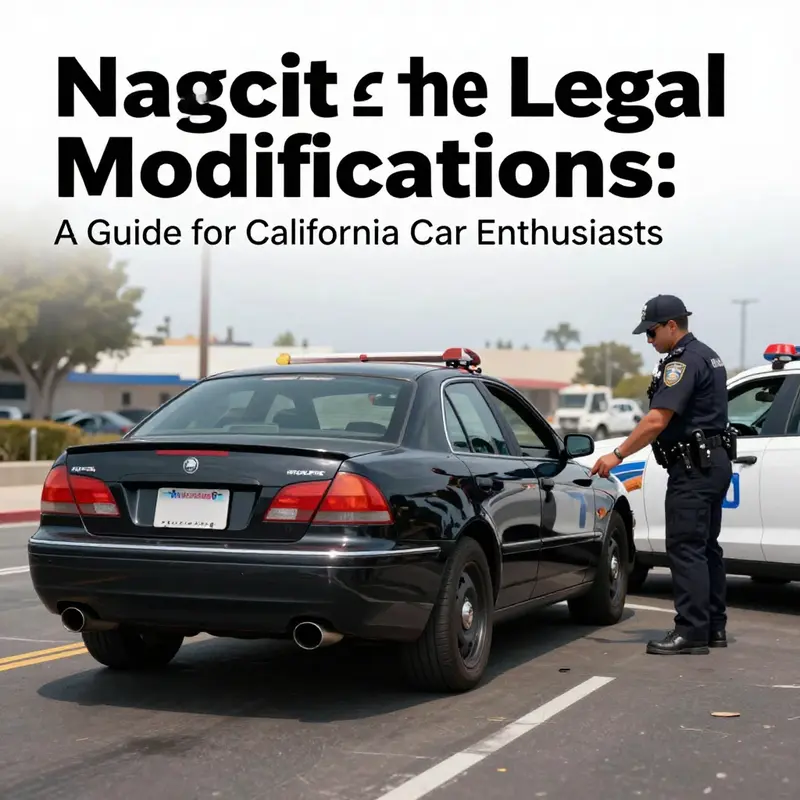
In California, the pursuit of personal expression through car modification sits beside a rigorous framework designed to protect safety, air quality, and the reliability of the registration system. The tension between individual customization and state policy is not a mystery; it is a practical balance codified in rules set by the California Air Resources Board (CARB), the Department of Motor Vehicles (DMV), and local ordinances. Modifications are not banned out of hand, but they must pass a test of compatibility with emissions controls, safety features, and the vehicle’s identification. There is room to tailor performance, comfort, and aesthetics, but the line is drawn where the changes threaten environmental goals, road safety, or the integrity of a vehicle’s identity. When approached with diligence, many popular upgrades can be pursued without stepping into illegal territory; when approached cavalierly, what starts as stylistic expression can quickly become a legal headache that costs time, money, or even a vehicle.
A core principle that frames almost every modification is CARB’s EO, or Executive Order, process. If a component or system has a CARB EO number, it has undergone testing and received approval to meet California’s emissions standards. This is not a mere formality: the EO indicates that the modification is expected to behave within the state’s air-quality framework. For exhaust systems, the practical implication is clear. Aftermarket exhausts are allowed only if they are CARB-compliant and carry the appropriate documentation. Owners should look for California-approved exhausts and verify that any claimed performance gains do not come with a hidden cost to emissions compliance. The same rigorous logic applies to other systems: if a part lacks CARB approval, it is a potential risk to compliance and may be deemed illegal, especially if it alters emissions controls or introduces non-road-legal configurations. The message is precise: permitable modifications are those that exist in a documented, state-sanctioned framework, not improvisations that escape oversight.
Tires and wheels offer another practical example of California’s measured pragmatism. You can change tires and wheels, but the modification must respect the vehicle’s OEM specifications in size and width. The aim is to preserve predictable handling characteristics and avoid issues that could compromise braking performance or steering. Proper fitment is part of the safety equation; wheels must be securely mounted and free from hazards that could threaten other road users. This principle—preserve the baseline geometry of the vehicle unless a change is demonstrably safe and compliant—applies across trim choices, brake upgrades, and even certain suspension work.
Suspension and ride height illustrate the balancing act between ground clearance, handling, and local safety norms. California allows suspension modifications, yet the vehicle must not be lowered so drastically as to violate minimum ride-height requirements or create alignment problems that jeopardize stability. The risk is not limited to the vehicle’s own performance; it can trigger local ordinances or road safety concerns, especially on routes with speed limits, steep grades, or uneven surfaces. In practice, a moderate lift or drop that preserves a reasonable center of gravity and does not interfere with tires, fenders, or exhaust routing is more likely to pass muster. The emphasis here is on maintaining predictable behavior at highway speeds and ensuring that upgrades do not create new hazards or trigger unintended consequences for neighboring drivers.
Interior upgrades tell a slightly different story. Replacing seats, upgrading audio, or modernizing dashboards are generally lawful as long as the changes do not obstruct the driver’s view or interfere with airbags, seatbelts, or other safety systems. California’s approach to interior work reflects the idea that the interior is less likely to affect external emissions or road-safety risk, provided it remains compatible with essential safety features. This latitude—interior customization without compromising occupant protection—supports personalization without inviting policy conflicts. Even here, though, there is a caveat: anything that nudges the vehicle toward a non-compliant configuration, such as improper airbag deployment devices or obstructed instrumentation, can bring the modification into a regulatory gray area and should be avoided.
Body customization enters a more nuanced domain. Limited body kits can be legal when they do not alter overall dimensions beyond factory specifications and do not introduce hazardous protrusions. The key word is restraint: California’s standard is not a ban on aggressive styling but a guard against creating new hazards for other road users. A kit that expands the vehicle’s footprint, alters the stance in a way that reduces visibility for the driver, or introduces sharp edges near pedestrian or cyclist paths is likely to be challenged at inspection and could fail on safety grounds.
Yet the same careful framework makes it essential to understand what is not allowed. Illegal modifications cluster around four pillars: identification, emissions integrity, lighting, and visibility. The enforcement of license plate integrity—no obscuring, covering, or altering the plate in any way—is straightforward yet potent. Vehicle Code provisions spell out that plate visibility is non-negotiable, and law enforcement agencies routinely seize plates that cannot be read. The real-world enforcement is concrete: when officers encounter plates altered by tinting, overlays, or covers, they can issue fines and remove the plate from service for inspection. The example of these enforcement efforts in various jurisdictions underscores a practical reality: the law takes plate integrity seriously, and the penalties are not symbolic.
Another strict lane is noise and emissions. Excessively loud exhausts—beyond the decibel thresholds that California codifies for public safety and neighborhood peace—are illegal and punishable. The enforcement is not theoretical; it translates into citations and the potential requirement to revert to compliant configurations. In the emissions arena, any modification that tampers with catalytic converters or other emissions-control devices is prohibited. The state’s goal is to keep vehicles within tested and approved emission levels, and actions that bypass or defeat this mechanism are not tolerated.
Lighting and visibility also receive close scrutiny. Non-standard lights, especially colored headlights or những that interfere with other drivers’ visibility, fall into a prohibited category. The same applies to underglow and other aftermarket lighting configurations that illuminate areas of the vehicle outside the frame in ways that could cause distraction or misperception. The overarching principle is straightforward: modifications should not degrade the driver’s ability to see or be seen by others on the road.
Window tinting occupies a particularly technical space. California imposes visible light transmission limits that protect driver and pedestrian safety while preserving essential visibility. Front-side windows and windshields face higher transmission requirements, with darker tints generally deemed illegal. Rear windows have more leeway, but a tint that blocks too much light across the vehicle still invites penalties during inspection and may require removal. Given the variability in tint products, this area is one where careful verification with official guidelines is essential before committing to a modification.
Finally, identification modifications—altering VINs or frame numbers—constitute fraud and can land a vehicle in impound or require a costly re-registration process. The legal risk here is severe because it touches on the vehicle’s very identity, title, and ability to be tracked for safety recalls or law enforcement purposes. It is a stark reminder that not all customization is cosmetic; some changes strike at the core of how a vehicle is recognized within the registration system.
With so many moving parts, the reliable path through California’s modification landscape is built on due diligence. Before purchasing any aftermarket part, verify its CARB EO status and ensure the part aligns with the vehicle’s specifications. When in doubt, consult the DMV andCARB resources, and look for practical examples of what has passed inspection in practice. An accessible starting point for understanding these boundaries is a concise guide on legal car modifications, which can help bridge the gap between desire and compliance. For readers seeking a direct overview, consider exploring the practical guide on legal car modifications.
For a broad overview that connects personal customization with legal requirements, you may find further clarity in related discussions that explore how modifications intersect with insurance, resale value, and long-term ownership considerations. This broader context helps ensure choices that fit both your aesthetic goals and your ongoing obligations as a California driver. As always, every custom part should carry documentation demonstrating CARB approval, and every significant change should be accompanied by a careful review of the DMV’s current rules. If you are unsure, err on the side of caution and pursue modifications that are clearly documented as compliant. This approach reduces the chance of an unexpected roadside stop, a ticket, or a vehicle that won’t pass a smog check at renewal time.
For a focused, reader-friendly entry point on what counts as legal in practice, see the section on legal car modifications. legal car modifications.
External reference: For up-to-date state standards and official guidelines, consult the California DMV’s resources: https://www.dmv.ca.gov.
Guardrails of Compliance: Navigating California’s Safety and Emissions Rules for Car Modifications
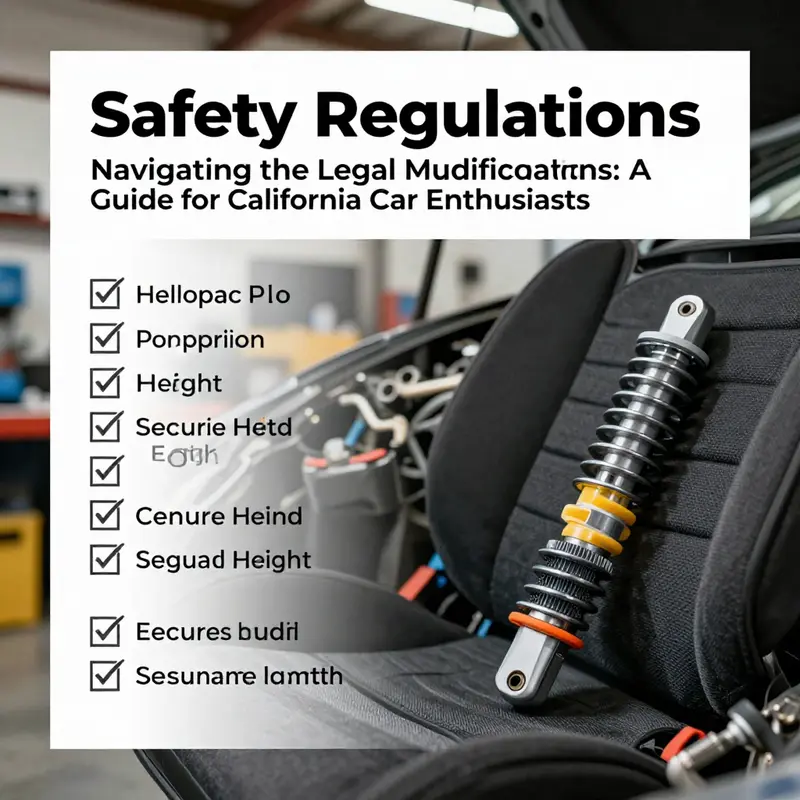
California’s car culture thrives on customization, yet the state’s regulations set guardrails that keep roadways safe, clean, and predictable. Modifying a vehicle here isn’t simply a hobby; it’s a legal act that must coexist with state vehicle codes and federal safety standards. The guiding principle is clear: a modification is permissible as long as it preserves safety, emissions integrity, and the ability to identify the vehicle on the road. The practical implication is not to stifle creativity but to anchor it in a framework that protects drivers, passengers, and the broader public.
To understand what counts as a modification, think of the major systems that affect how a car behaves in traffic. Suspension, exhaust, lighting, and bodywork are common targets for enthusiasts, yet any change to these areas must still meet the California Vehicle Code and, where applicable, the federal Motor Vehicle Safety Standards. In everyday terms, this means aftermarket parts and alterations are scrutinized not just at installation but also during roadside checks and annual inspections. The aim is roadworthiness, not workshop perfection. Enforcement rests with agencies such as the DMV, with emissions regulators playing a complementary role when environmental performance is in question. A modification that weakens crash performance, interferes with vehicle control, or reduces emissions performance will trigger rejection or a requirement to revert to stock components.
There are clear lines that keep legitimate customization moving forward. Exhaust systems illustrate the balance at play: aftermarket exhausts are allowed if they bear CARB approval and meet CARB standards. A compliant system can be installed without risking penalties; a system that bypasses emissions controls or fails to meet regulatory criteria is not permissible. Tires and wheels are another straightforward example. You can change tires and wheels, but only within the vehicle’s OEM size and width limits. The wheels must be securely mounted and not pose a hazard to braking or steering. Suspension modifications are permissible as long as ride height remains above the legally mandated minimum; a too-low stance can create safety issues and run afoul of local ordinances. Interior upgrades—seats, audio systems, dashboards—are generally fine, provided they do not obstruct the driver’s view or interfere with airbags or seatbelts. And body kits can be legal if they do not alter the vehicle’s overall dimensions beyond factory specifications and do not introduce protrusions that could cause hazards to pedestrians or other road users.
The line between permissible and prohibited becomes sharper in several high-profile areas. License plate alterations top the list of illegal practices; any modification that obscures or alters plate characters is illegal under the California Vehicle Code. This is not a hypothetical offense—enforcement agencies consistently cite plate visibility as a priority, with plates being seized and fines issued when plates are unreadable or altered. Noise levels are another hotspot. Excessive exhaust noise that exceeds state or local decibel limits can trigger penalties, especially if a vehicle is clearly louder than what a safe, modern vehicle should produce. Emissions tampering remains a serious concern as well. Altering emission control systems or removing catalytic converters is prohibited and can lead to substantial penalties, including failing a smog test and being barred from legal operation until the issue is cured. Lighting modifications follow, with strict rules about nonstandard colors and interference with visibility. Under no circumstance should nonstandard lights—such as blue or red emergency-style lighting—or bright LED underglow illuminate in a way that distracts or impairs other drivers. Window tinting is governed by visible light transmission requirements, with front windows generally restricted to higher light transmission than rear windows.
The practical implications of these rules extend beyond the garage and into everyday life. DMV enforcement means modifications that affect safety or emissions can render a vehicle unsafe to operate, potentially leading to unsafe-vehicle designation, fines, or the need to revert to stock configurations. Smog checks, safety inspections, and the potential for plate-related penalties all factor into whether a project can progress from concept to road-ready reality. For anyone who has ever wondered how to translate a design idea into a legal modification, the path begins with a compliance-first mindset. It is not simply about what you want to install, but about what the state will allow in terms of safety, identification, and environmental performance.
A practical approach centers on due diligence before purchase and installation. Start by confirming that aftermarket parts carry official approval. In California, many key components are evaluated by CARB, and parts with a CARB Executive Order number signal compliance with emissions standards. When in doubt, consult a licensed inspector or an authorized shop that understands the intersection of California law and federal safety standards. The California DMV offers a Vehicle Modifications page with guidance, while CARB provides the emissions framework that technicians apply during assessment. Documentation matters: keep purchase receipts, installation records, and every piece of certification that demonstrates compliance. Such paperwork can smooth inspections and demonstrate a responsible, safety-first approach.
Regulatory resources underpin the practical steps. The California Vehicle Code outlines standards for equipment, performance, and emissions control, and it is the backbone of what is permissible on California roads. The California Air Resources Board governs emissions regulation and the certification process for aftermarket parts. The DMV’s guidance complements these rules by clarifying inspection expectations and the process for updates to policy. For readers who want a concise, rule-focused overview, there is a dedicated article on legal car modifications that distills the core principles and actionable takeaways. Legal car modifications.
The recommended workflow for vehicle owners is straightforward but requires forethought. Before selecting parts, map out how each changes the vehicle’s performance and safety profile. Check for CARB approval or an EO number, verify compatibility with the specific make and model, and anticipate how a modification will interact with emissions testing and safety inspections. Engage with an authorized inspection station early in the process to preempt missteps, confirm compliance, and avoid last-minute complications. Document everything, because regulatory landscapes shift with technology and policy priorities. This proactive approach minimizes the risk of fines, impoundment, or a failed smog inspection, and it preserves the ability to enjoy a customized vehicle without compromising safety or legality.
Beyond the individual project, staying informed about evolving regulations is essential. California’s approach to vehicle modification emphasizes a dual commitment: safety on the road and accountability for emissions. The state’s Vehicle Code provides the baseline, and CARB reinforces environmental expectations. The DMV ties the two together through practical guidance and inspection procedures. Because modifications can differ by vehicle type and local ordinances, it pays to maintain ongoing dialogue with qualified professionals who understand the current standards. When in doubt, pause, check the regulations, and verify with an inspection professional before proceeding. For authoritative information, consult the DMV’s Vehicle Modifications page and keep abreast of CARB updates that affect aftermarket parts and emissions compliance.
External resource: DMV Vehicle Modifications.
Breath of the Road: Navigating California’s Emission Standards for Car Modifications
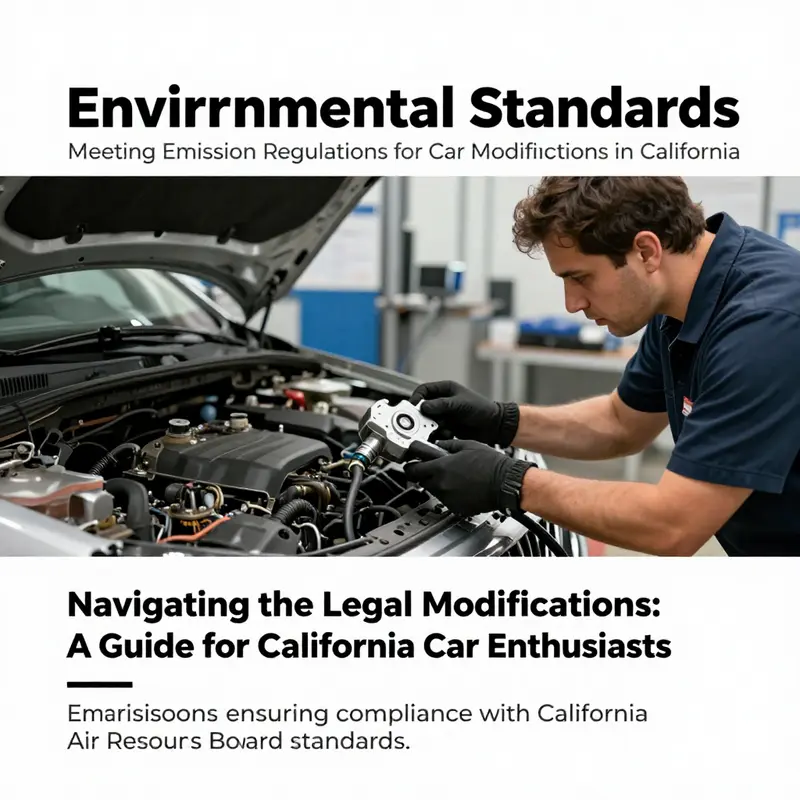
California’s pursuit of clean air shapes every choice a vehicle owner makes when modifying a car. The state leans on the California Air Resources Board (CARB) to set rigid emission standards and to certify aftermarket components through its Executive Order (EO) program. The overarching aim is straightforward: modifications must not push pollutants like nitrogen oxides (NOx), hydrocarbons (HC), or particulate matter (PM) beyond what the factory design permits. In practice, this means a careful balance between performance, form, and the air we all share. The language of legality here is precise, and it begins with certification. Parts and systems intended for sale or installation in California must either be proven by testing to meet CARB’s limits or bear an EO number that explicitly approves them for use. Without that stamp, a modification becomes not only risky in terms of smog compliance but potentially illegal at the point of sale or installation. This is not a philosophical debate about what counts as “better” performance; it is a regulatory framework designed to ensure that a gain in horsepower does not come at the expense of air quality and public health. For readers seeking a definitive reference, CARB’s official site remains the authoritative source on what counts as an approved modification and how EO designations are assigned. The practical implication for enthusiasts is clear: plan modifications with emissions in mind, not as an afterthought. The path to compliance starts long before a wrench touches a bolt and continues through testing, documentation, and proper installation.
Emissions standards in California cover a wide range of pollutants and engineering approaches. CARB targets NOx, HC, and PM as the principal culprits in smog formation and health risk. When a modification alters a vehicle’s exhaust flow, fuel metering, or combustion characteristics, it can shift the emission profile in ways that are not always obvious. That is why the EO certification process is rigorous. Manufacturers must present data showing that the modified system does not worsen overall emissions compared to a compliant baseline. In some cases, a part may even reduce certain pollutants if designed with modern catalysts or advanced coatings, but the burden of proof rests on the certifier. The consequence of noncompliance is straightforward: a modification that lacks CARB approval may be illegal to sell or install, and vehicles fitted with such parts can fail smog inspections. In practical terms, a DIY approach to performance upgrades is rarely a safe shortcut in California; the regulatory channel demands traceable certification and clear documentation.
A practical corollary of these rules is that performance upgrades—whether turbochargers, exhaust systems, or engine-tuning calibrations—must advance with a careful eye on the vehicle’s emissions ledger. A turbocharger, for example, can increase air flow and combustion efficiency, but if the tune allows the engine to run lean or rich in a way that elevates NOx or HC, the modification could require additional emissions management or be rejected during testing. Exhaust systems present a similar tension. Aftermarket pipes and mufflers may improve sound, weight, and performance, yet they must be CARB-approved and labeled with an EO or a California-approved designation. The search for a legally installed system is not simply about fitting a bigger pipe; it is about ensuring that the system, when operated across its entire temperature and load envelope, continues to meet California’s environmental thresholds.
Beyond the exhaust, emissions considerations permeate how wheels, tires, suspension, and even interior upgrades influence a car’s environmental footprint. While a wheel or tire upgrade might seem cosmetic or performance-driven, changes that alter rolling resistance, vehicle weight, or aerodynamic efficiency can indirectly shift emissions behavior. In California, these indirect effects are scrutinized through the same regulatory lens: the total system behavior must stay within the pollutant limits established for the vehicle’s class and year. Suspension modifications, for instance, can affect ride height and weight distribution, possibly influencing aerodynamics and exhaust temperature profiles. The regulations do not automatically prohibit any of these changes, but they require that the overall emissions output remains within permitted bounds. The challenge for enthusiasts is to pursue legitimate upgrades with an eye toward the entire vehicle’s emissions profile, not just the immediate impact of a single component.
For interior and aesthetics, the regulatory focus remains emissions-centric only where the modification interacts with systems that affect engine performance, fuel delivery, or safety controls. Interior upgrades, such as seats, dashboards, or audio systems, are typically permissible so long as they do not obstruct the driver’s view or interfere with airbags and seatbelts. The line is clear when modifications begin to touch vehicle safety or emissions control devices. Conversely, body kits and other exterior changes may be permissible if they do not alter the vehicle’s dimensions beyond factory specifications or create hazardous protrusions. California’s stance is not a blanket prohibition on customization; it is a demand that changes harmonize with the vehicle’s intended emissions and safety architecture.
A crucial caveat for anyone charting a modification course is the risk of noncompliance—enforceable penalties range from fines and vehicle impoundment to smog-check failure. CARB’s EO program is the gatekeeper, and non-approved parts can trigger a cascade of issues, including rejection at the smog station or legal action against installers and manufacturers. This is why cross-checking with the California DMV and CARB before investing in any significant modification is essential. If a component has an EO number, that is typically your best sign that the part has passed CARB’s screening and is considered legal in California. If not, the safest path is to avoid installation or seek an equally vetted alternative. Owners should also be mindful of how modifications interact with the vehicle’s OBD system, as tampering with software or emissions-related controls can trigger fault codes and fail regulatory checks.
In navigating the regulatory landscape, the advisory role of public guidance becomes practical. For readers who want to understand the broader legal landscape and see concrete examples of what has been challenged or upheld in California, a closer look at the discussion on illegal-car-modifications-california can be informative. This resource can help readers differentiate between what is technically possible and what is legally permissible, reducing the risk of costly missteps. As you explore the boundaries, keep in mind that the compliance path is not just about avoiding penalties; it is about ensuring that the vehicle remains a responsible contributor to air quality while offering the performance or customization you seek. The emphasis on certification, documentation, and responsible installation matters as much as any horsepower figure.
For the curious reader, the official roadmap is straightforward: consult CARB’s EO program to verify that a modification is approved for California use, and verify that the rest of the vehicle remains within the regulatory parameters for emissions and safety. If you are contemplating a project that could touch emissions or safety devices, begin with the EO search, request the manufacturer’s documentation, and confirm that the installation will occur through a qualified professional who understands both the technical and regulatory dimensions. The DMV and local agencies can be practical allies in navigating any ambiguity about a proposed modification. In the end, California’s environmental standards are less about restricting personal expression and more about preserving air quality and public health while allowing interested drivers to pursue legitimate, well-documented performance enhancements.
External resource: For official guidance on emission standards and certified modifications, visit the California Air Resources Board at https://arb.ca.gov.
Finding Your Roadmap: Practical Resources and Realities of Legal Car Modifications in California
In California, the line between what you can do to your car and what you cannot do is defined by safety, emissions, and identification requirements. Modifications are allowed when they preserve safety, keep emissions within limits, and maintain proper vehicle identification. Start by mapping what remains within legal bounds and verify every part you replace against authoritative guidelines. A practical approach treats modification as a compliance task: plan, verify, and document rather than guess.
A central pillar is certification and compliance. State agencies ensure parts and configurations do not undermine safety or emissions. The California Air Resources Board (CARB) sets emissions standards, while the Department of Motor Vehicles (DMV) oversees registration, plate integrity, and the legality of changes that could affect identification. If a part is CARB-certified or has a CARB Executive Order (EO) number, it is considered California-compliant. Without certification, a modification may fail inspections or smog tests.
Exhaust, suspension, tires, and interior changes are evaluated case by case. Aftermarket exhausts can be legal if CARB-certified and do not disable emissions controls. Suspension and ride height must remain safe and within minimum requirements. Tire and wheel changes must respect OEM size and width constraints and be properly mounted. Interior upgrades should not obstruct airbags or impair driver visibility or seat-belt operation.
Obvious non-negotiables include plate visibility and legality. Altering, obscuring, or covering the license plate is unlawful. Noise, emissions, and lighting are tightly regulated; excessive exhaust noise and removal or tampering with catalytic converters are prohibited. Window tinting is regulated by visible light transmission standards, with front windows usually requiring higher transmission than rear windows.
For anyone planning changes, the best practice is to consult the DMV for registration guidance and verify with CARB that the component is approved for California use. The presence of a CARB EO number signals compliance; the absence calls for caution and alternatives. Build a modification plan around a clear path to legality.
For further guidance, readers can consult official sources from the DMV and CARB. The DMV site provides registration and plate guidance, while CARB publishes emissions standards that determine which aftermarket parts are permissible in California. When in doubt, pause, confirm, and document to minimize the risk of fines, vehicle impoundment, or failed inspections. This approach keeps personalization balanced with safety and environmental responsibilities on California roads.
Final thoughts
Understanding the legal landscape of car modifications in California is crucial for any enthusiast. From knowing what modifications are permissible to recognizing the importance of safety and emissions compliance, awareness can save you from fines and relationship strains with local law enforcement. Engage in car culture responsibly and creatively within the bounds of the law, ensuring your modifications contribute positively to your driving experience.