
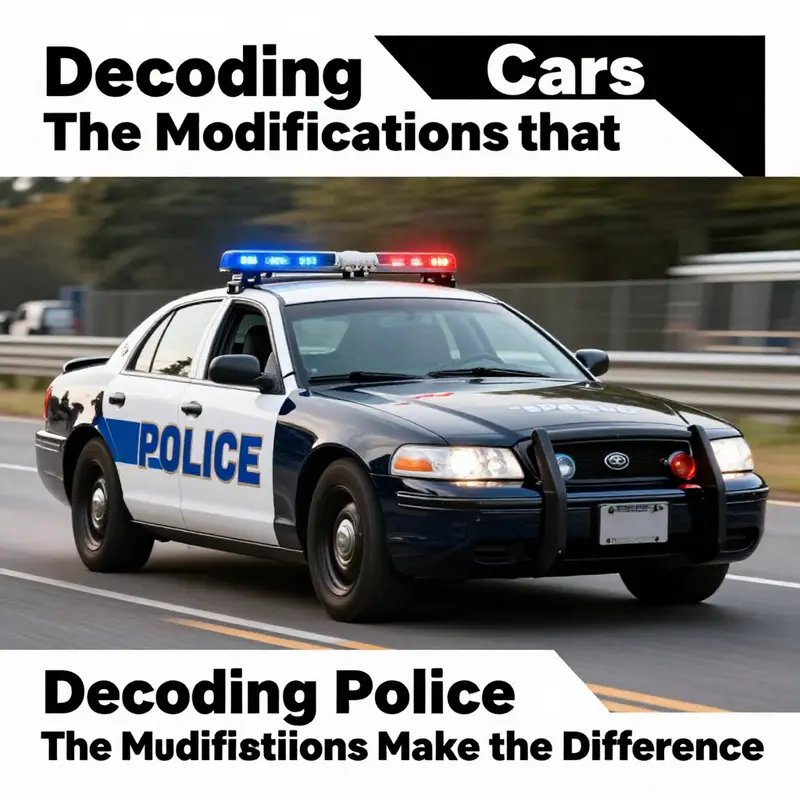
Police vehicles are more than just cars; they are precision-engineered machines, finely tuned to meet the rigorous demands of law enforcement. From high-speed pursuits to emergency response scenarios, every modification serves a distinct purpose, enhancing performance, safety, and operational efficiency. In the following chapters, we will delve into the heart of these modifications, beginning with high-performance engines and drivetrains designed for rapid acceleration. We’ll explore reinforced suspension and braking systems that ensure stability and safety, highlight enhanced cooling systems to manage heat during rigorous tasks, and concluding on the importance of specialized lighting and sirens to maintain order in chaotic situations. Each chapter interlinks to provide a comprehensive understanding of what makes these vehicles reliable allies in public service.
Power on Duty: Engineering High-Performance Engines and Drivetrains in Police Vehicles
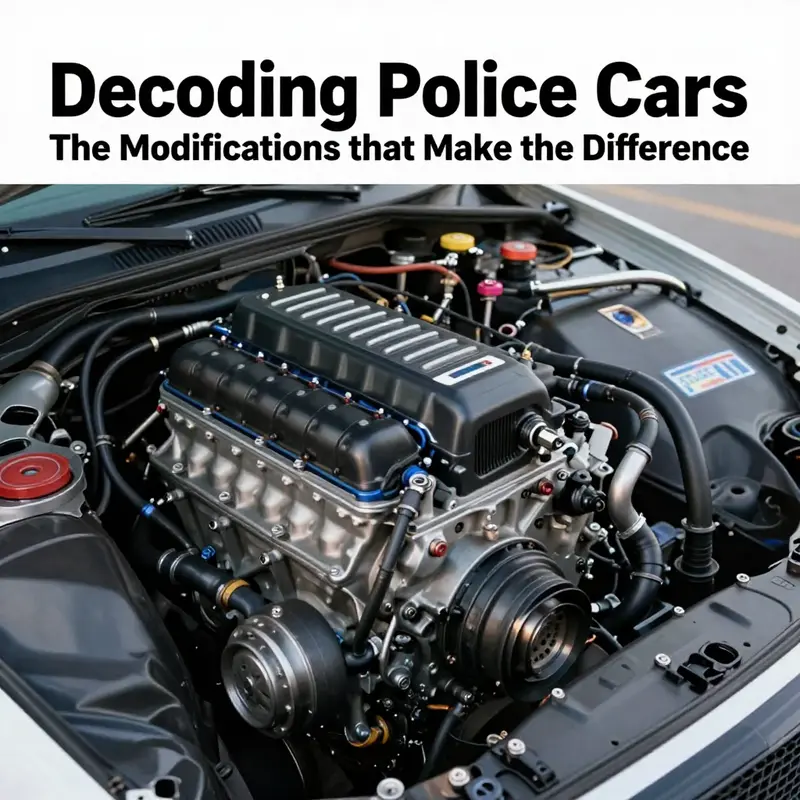
The machines designed to keep communities safe walk a fine line between everyday utility and the relentless demands of the street. In police work, a car is not merely a container for officers and equipment; it is a purposeful platform that must deliver horsepower, precision, and reliability in situations where seconds count and the road does not always present a kind surface. The modifications that transform a standard sedan or SUV into a pursuit-capable police car revolve around one core objective: to provide power when it is needed most, without compromising control, durability, or safety. While the broader modification program for law enforcement vehicles includes reinforced interiors, enhanced lighting, and advanced surveillance capabilities, the heart of the vehicle’s effectiveness lies in its engine and drivetrain architecture. These systems are engineered to respond with immediacy to a driver’s command, sustain high loads during pursuits, and maintain predictable behavior under adverse conditions, all while interfacing seamlessly with a host of other critical systems that keep the car mission-ready.
The engine choices seen in modern law enforcement fleets are framed by a balance of torque, power, and reliability. In many agencies, engines are selected to deliver strong low- and mid-range torque, allowing rapid acceleration from a standstill and robust overtaking ability without needing extravagant revs. A typical pursuit-rated platform might employ a high-displacement V6 or V8 that can deliver ample torque at moderate RPM, which translates into quick response during a traffic stop or when pursuing a suspect who is weaving through congested streets. The emphasis is not only raw horsepower but also the vehicle’s ability to sustain performance under sustained load. Pushing a heavy patrol car to high speeds for extended periods generates significant heat, so the engine’s duration at elevated output must be matched by cooling and lubrication systems designed to prevent fade and maintain performance.
To translate powerful engines into reliable on-road performance, the drivetrain architecture must be equally robust. Automatic transmissions take center stage in most police vehicles, chosen for their smoothness, durability, and predictable shift logic. These are not off-the-shelf units; they are purpose-built with hardened gear sets, reinforced torque converters, and substantial heat management strategies. The transmission’s design must handle repeated shifts across a wide RPM band, during rapid acceleration, and under the duress of high-speed pursuits that push the vehicle to the limits of grip and braking. In some fleets, transmissions include adaptive control algorithms that optimize shift points for pursuit conditions, load leveling, and fuel efficiency, while still prioritizing response time when the driver tabs the throttle and commands power delivery. The drive ratio—whether front-, rear-, or all-wheel drive—also plays a critical role. All-wheel-drive configurations can offer superior traction in wet or uneven surfaces, while rear-wheel-drive layouts historically favored handling characteristics and high-speed stability. In either case, the drivetrain is chosen and tuned to preserve stability during aggressive maneuvers, reduce wheel spin when launching from a standing start, and maintain momentum through straightaways and curves alike.
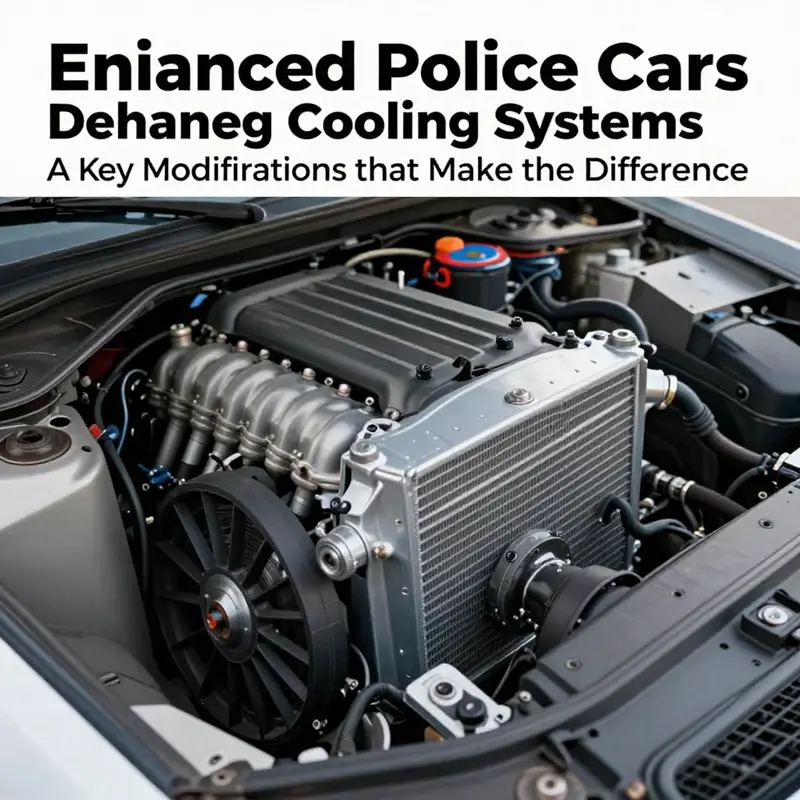
Cooling systems are the quiet heroes behind these performance guarantees. An engine that produces substantial torque must shed heat quickly to avoid performance deterioration, particularly during long pursuits or hot climates where ambient temperatures compound the challenge. Police vehicles often employ larger radiators and supplementary oil coolers to dissipate the extra heat generated by sustained high-load operation. In some configurations, enhanced intercooling for turbocharged or supercharged variants helps keep intake temperatures in check, preserving power and protecting engine components from thermal damage. The cooling system is not isolated to the engine alone; it extends to the transmission and differential, which can also generate significant heat under stress. In pursuit scenarios, a well-coordinated cooling strategy ensures that power is available when needed and that heat soak never erodes response times or reliability.
The drivetrain’s durability rests on more than robust components; it requires a holistic approach to lubrication and wear management. High-output engines demand higher-grade oils with advanced viscosity properties and additives that resist shear under heavy loads. An optimized oil cooling circuit helps maintain oil temperature within an ideal range, protecting bearings and extending service life during continuous operation. The driveshafts, axles, and differentials are reinforced to tolerate the additional stress of rapid accelerations, high-speed braking, and the occasional off-nominal road condition encountered during field duties. To further safeguard performance, engineers implement protective measures such as cool-to-touch gear housings and reinforced mountings that prevent component fatigue and misalignment under harsh driving conditions. These choices are not purely mechanical; they influence the vehicle’s reliability in ways that officers experience on the street. A patrol car that can maintain consistent acceleration while negotiating a long pursuit reduces the risk of losing control, and that, in turn, supports a safer outcome for all road users.
Power management is another crucial thread in the fabric of a police vehicle’s performance. The electrical system of a modern patrol car is a hive of activity: radios, MDTs, laptops, cameras, and data retrieval systems all draw power while the engine runs. When the throttle is opened in anger or urgency, the electrical demands spike, and the vehicle’s most important task is to manage that load without starving any system of power. Engine management software and hardware are therefore tuned not only for acceleration but also for the seamless distribution of energy to critical devices, ensuring that the driver’s command for speed does not collide with the need for real-time information or reliable surveillance footage. This synchronization is essential during a high-stakes encounter where a second’s delay could affect outcomes. The human operator remains at the center of the system, and the vehicle’s engineering is designed to favor swift, decisive responses while preserving safety margins.
In practice, the interplay of engine, transmission, and cooling systems with the rest of the vehicle’s architecture yields a cohesive performance envelope. The goal is not only to maximize peak power but to deliver predictable, controllable power across the entire operating range. This predictability is what allows officers to navigate high-speed chases with confidence, knowing the car will respond with the same cadence in a crowded urban setting as it does on an open highway. It also enables the vehicle to maintain control during abrupt lane changes, evasive maneuvers, and the sudden braking often required in active enforcement scenarios. The result is a platform that can transition from routine patrol duties to forceful pursuit with minimal degradation in handling or reliability. It is a practical, duty-bound design philosophy rather than a raw performance obsession.
The broader safety ecosystem surrounding the engine and drivetrain further reinforces these capabilities. The chain of modifications begins with reinforcement of structural elements that support heavier powertrains, including upgraded engine mounts and anti-roll bars that help stabilize the chassis during aggressive acceleration and cornering. A reinforced suspension system, while not part of the engine per se, works in concert with the drivetrain to maintain tire contact and grip under varying loads. This synergy is essential for preventing wheel hop, reducing understeer or oversteer during high-speed turns, and preserving steering precision when visibility is compromised by weather or cluttered lighting at a scene. In every case, the engineering rationale centers on consistent, reliable performance that officers can rely on when lives may depend on it.
Beyond the mechanical and electronic integration, there is a philosophy of tailoring power to mission phases. In some operations, officers may need a quick, explosive surge from a stop to close the distance with a suspect. In others, endurance matters more—the ability to maintain steady speeds over long periods to surveillance routes or during convoy operations. The drivetrain design must support both ends of this spectrum without forcing compromises that could undermine safety. This adaptability often manifests in selectable drive modes, torque-vectoring strategies, or transmission logic that shifts more aggressively at critical times and softens behavior to reduce fatigue during long shifts. The goal is to provide the operator with intuitive, confidence-inspiring control that translates finely to on-road behavior.
The narrative around police vehicle engines and drivetrains is not written in isolation. It is part of an ecosystem that includes fuel strategy, emission considerations, and the evolving expectations of modern policing. The choice of engine and drivetrain must endure daily wear while accommodating the realities of a pallete of mission tasks, from routine traffic duties to rapid deployments in emergencies. It must also align with updates across the vehicle’s other systems, ensuring that software and hardware communicate in a manner that preserves performance integrity. In this sense, the engine and drivetrain are living components of a broader instrument that supports public safety. They require ongoing tuning, testing, and validation to confirm that the vehicle remains capable under the most challenging conditions, while still meeting standards for reliability and safety.
For readers seeking a deeper, more technical look at how agencies approach engine and drivetrain specifications without revealing brand-specific connotations, there is value in consulting official discipline-wide resources. These sources outline the criteria agencies use to select platforms, define endurance testing protocols, and describe the kinds of performance envelopes required for pursuit-rated operation. They also emphasize the importance of standardized performance benchmarks across departments, enabling a coherent understanding of what constitutes adequate power, torque, and resilience under stress. While the day-to-day vocabulary of a patrol car’s operation is the officer’s, the engineering language behind it is a careful negotiation between capability, safety, and practicality. In practice, this means a constant conversation between vehicle designers, fleet managers, and field operators to ensure that every modification serves a concrete purpose on the ground.
As the discussion of engines and drivetrains flows into the broader theme of vehicle readiness, it becomes clear that modifications are not isolated upgrades but integrated components of a comprehensive safety and efficiency strategy. The interior design supports this by withstanding heavy use and protecting essential controls, the exterior by resisting damage and enhancing durability, and the electrical and communications layers by staying resilient under demanding conditions. Yet at the core remains the relentless demand for power with control. The officer’s response to a dangerous scenario depends on a car that can reach, sustain, and modulate speed with precision. The engineer’s challenge is to deliver that capability within a framework that prioritizes reliability, ease of maintenance, and safety for all road users. This is the essence of the high-performance engine and drivetrain philosophy in police vehicles: power that is purposeful, managed by intelligent systems, and bounded by the realities of field duty.
For readers who want a practical primer on how modifications unfold in real-world workflows, a quick exploration of the broader modification guide can be illuminating. It offers insight into how agencies plan, implement, and document changes across a vehicle platform, ensuring consistency and accountability through the life of the fleet. Such a guide helps bridge the gap between the theory of high-performance engineering and the gritty realities of patrol work, where every adjustment must prove its worth in the harsh light of day. If you’re curious about how these concepts translate into everyday practice, that resource provides a grounded, accessible overview that complements the more technical discussions of engine and drivetrain tuning.
In parallel with the engine and drivetrain narrative, it is worth noting how this thread fits into the larger fabric of police vehicle design. Modifications across the vehicle—such as reinforced cab interiors, optimized cooling for sustained operations, and advanced surveillance systems—create a cohesive platform that supports officers in every phase of their duties. The engine’s power and the drivetrain’s reliability underpin the entire spectrum of operations, from routine patrols to high-stakes interdiction. As with all complex tools, the value lies not only in the components themselves but in how well they work together under real-world conditions. That is the enduring principle guiding the evolution of police vehicles: a dependable blend of power, control, durability, and situational awareness that enables law enforcement to perform with speed, precision, and responsibility.
For readers seeking an accessible entry point into this topic, the car modifications guide offers a practical framework for understanding how engineers translate general performance concepts into field-ready configurations. It distills the process into a sequence—assess mission requirements, select baseline platforms, enhance core performance systems, and validate through rigorous testing—without leaning on brand-specific exemplars. This approach echoes the ethos of professional practice in the field: each objective is defined by duty, each modification justified by safety and effectiveness, and every choice tested against the unpredictable rhythms of the road. The end result is a fleet that can adapt to diverse scenarios while maintaining a disciplined standard of performance and accountability.
If you would like to consult an authoritative external resource for broader context on how police vehicle performance standards are established and maintained, see the National Law Enforcement and Corrections Technology Center (NLECTC). Their guidance offers a detailed lens on how agencies evaluate and implement high-performance engine and drivetrain solutions within a safety-first framework. This external reference complements the discussion here by anchoring the practical considerations in established standards and best practices. https://www.nlectc.org
Steering Through the Speed: How Reinforced Suspension and Braking Shape Police Vehicle Performance
The road in front of a police car is a proving ground where precision, control, and immediate response are as essential as the siren and the radio. Among the most consequential modifications that distinguish a police vehicle from a standard patrol car are the reinforced suspension systems and the enhanced braking setups. These elements, working in concert with the vehicle’s engine and cooling subsystems, form the backbone of quick, stable, and safe operations. When officers engage in high-speed pursuits, sudden evasive maneuvers, or prolonged roars along rough roads, the discipline of the chassis and the reliability of the brakes determine whether a pursuit ends in a stable takedown or a loss of control. The modifications in this domain are not cosmetic upgrades; they are functional redesigns aimed at preserving tire contact with the pavement, maintaining steering precision, and ensuring predictable braking performance under demanding conditions. In this sense, reinforced suspension and braking systems are not just about speed; they are about safety, reliability, and the confidence that officers and the public deserve during every call to action.
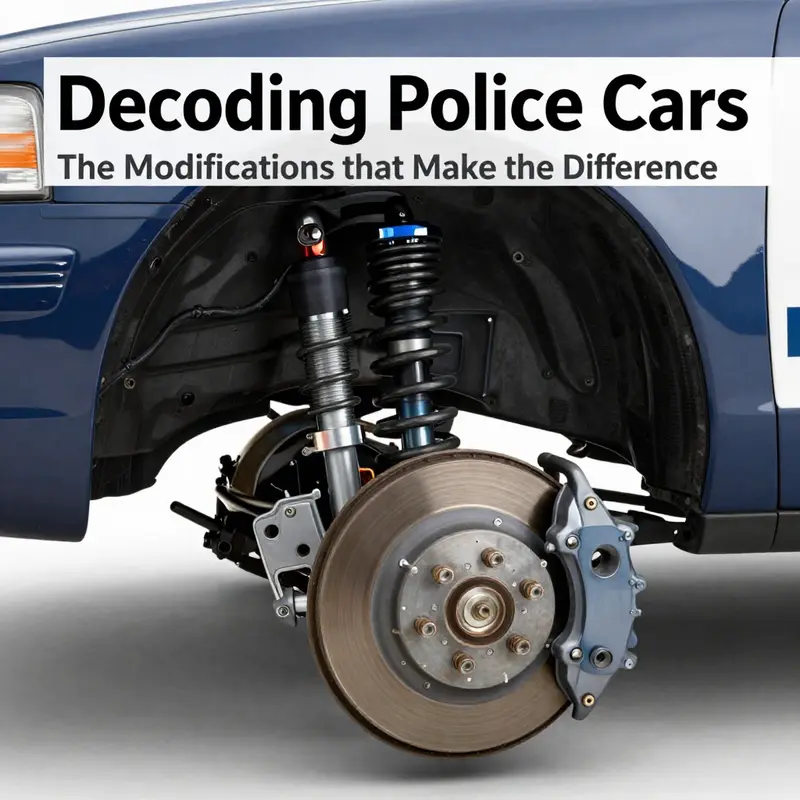
Reinforced suspension systems are the quiet workhorses of police vehicle dynamics. They are designed to keep the vehicle steady when the road surface becomes a rough canvas under the weight of equipment and adrenaline. A typical reinforced suspension features stiffer springs that can carry heavier loads without the vehicle sagging under acceleration or during a high-G maneuver. Heavier loads are a constant reality for law enforcement—radio equipment, additional safety gear, and in some cases officers who may have to carry equipment for extended patrols or special operations. The stiffer springs help maintain a consistent ride height, which is critical for predictable steering geometry and tire contact with the road surface. Without this, the vehicle could experience increased weight transfer during quick lane changes, leading to more pronounced body roll and a delayed or imprecise steering response.
Upgraded shocks complement the stiffer springs by controlling how the suspension energy from bumps, potholes, and curbs is absorbed. These shocks, often designed for high-temperature endurance, dampen the oscillations that would otherwise translate into a harsh ride and a shifting center of gravity. In a pursuit, where controllers must ride the brakes or make rapid directional changes, effective shock damping maintains tire contact and minimizes pitch and dive. Reinforced control arms, bushings, and related components further bolster the chassis against the repeated stresses of aggressive driving. The goal is not only stiffness but also durability and predictability. When a patrol car needs to corner sharply at speed or absorb a hard impact without letting the wheels momentarily lose contact, reinforced components ensure that wheel alignment remains within tight tolerances and that steering input remains linear and communicative to the driver.
A coherent suspension package in a police vehicle also aims to reduce body roll, a phenomenon that can degrade steering feel and increase the likelihood of abrupt lane departures during a pursuit. By reducing roll, the suspension helps the driver maintain a stable line through curves, which in turn shortens reaction times and improves overall pursuit safety. This stabilization is especially important in urban environments where abrupt lane changes, disappointingly uneven road surfaces, and sudden obstacles are common. The suspension must manage not just vertical loads from bumps but also the lateral demands of quick steering. In practice, this translates into a system that feels more planted at high speed, with a more predictable response to steering inputs and a more immediate sense of how the vehicle will behave when the throttle is pushed or the brakes are applied with urgency.
The braking side of the equation is equally critical and, in many ways, the balancing counterpart to the suspension. Enhanced braking systems are built to withstand the heat and wear that come with sustained deceleration, rapid stops, or repeated heavy braking in quick succession. Larger rotors are a central feature, enabling greater heat dissipation. As brakes operate, heat is the enemy of stopping power; excessive heat can lead to brake fade, where the effective friction between pad and rotor diminishes and stopping distances lengthen. Larger rotors present more surface area to shed that heat and also reduce the thermal load per unit area when the rotor experiences intense braking. This is especially valuable during pursuit sequences that require frequent braking or when an officer must slow rapidly to navigate through heavy traffic or approach a suspect with precision. In conjunction with the rotors, high-performance brake pads are designed to resist heat soak and maintain bite under demanding conditions. These pads deliver consistent engagement across a broad temperature range, providing officers with reliable pedal feel and predictable stopping power even after multiple hard stops.
Multi-piston calipers are another essential element of an enhanced braking system. By distributing clamping force across a larger number of pistons, the braking system achieves more even wear, more consistent pedal response, and quicker initial bite. This configuration reduces pedal travel to achieve the same stopping force and helps maintain a firm, confident braking feel. The combination of larger rotors, high-performance pads, and multi-piston calipers creates a braking system capable of resisting brake fade during extended deceleration scenarios and providing stable, repeatable performance when the vehicle must slow for sequences of traffic stops, pursuits, or tactical maneuvers.
The integration of reinforced suspension and advanced braking systems is more than a sum of its parts; it is a carefully tuned interaction that accounts for the vehicle’s weight, its balance, and its dynamic behavior under stress. When a vehicle is loaded with equipment, the center of gravity shifts slightly and the suspension must react accordingly to maintain handling characteristics. A well-tuned setup ensures that suspension stiffness and brake demand align with the vehicle’s chassis rigidity and the driver’s expectations. This alignment improves not only performance but also safety. Officers rely on predictable brake modulation to avoid overreacting in high-stakes moments, while a stable suspension aids in steering control when the vehicle is decelerating from high speeds or navigating through sudden changes in direction. The result is a platform that remains controllable and intuitive, even in the most demanding driving conditions.
The practical implications of these modifications extend beyond the thrill of speed. In urban patrols and high-risk interdiction scenarios, the car must decelerate quickly to allow safe approach, stop at precise distances from a target, and maintain stable tracking of a moving suspect through busy traffic. The reinforced suspension reduces jerky ride and stabilizes body motion, which helps to prevent collateral damage or misdirection of the vehicle in a crowded environment. A braking system capable of withstand repeated heavy use diminishes the risk of brake fade that could compromise stopping distances. Officers benefit from consistent pedal feedback, enabling them to gauge how hard to press and how soon a full stop will occur. Taken together, the suspension and braking upgrades constitute a cohesive safety net that supports rapid decision-making and controlled execution in the heat of a law enforcement operation.
The engineering philosophy behind these modifications emphasizes durability, predictability, and ease of maintenance. Components are chosen not only for their strength but for how they endure the daily realities of a patrol fleet. The materials, the geometry of linkages, and the calibration of bushings are all selected to resist wear, resist corrosion, and remain stable under a wide range of temperatures and road conditions. This is not merely a matter of performance; it is a commitment to reliability. In the field, a patrol car must perform consistently after sitting idle overnight in a cold climate, after a long day of operation in a hot region, and after a grueling sequence of pursuits and stops. The suspension and braking systems are designed with that cadence in mind, so that when an officer throws the car into a tight turn or needs a decisive stop, the vehicle responds in a way that feels intuitive and safe.
The pursuit of performance in this domain also introduces a set of trade-offs. A stiffer suspension can convey a harsher ride for occupants when the vehicle travels on poor pavement, and aggressive brake systems may demand higher-quality components and more attentive maintenance to sustain peak performance. These considerations are balanced with the overarching objective of public safety: to stop or slow down swiftly, to steer accurately, and to protect both the officer and the civilian population. The design choices reflect a careful calculus, weighing the benefits of reduced body roll and improved brake heat management against the realities of patrol wear, tire life, and long-term durability. In practice, that calculus is tested in controlled environments and real-world operations alike, where engineers and fleet managers monitor how the suspension and braking changes hold up to repeated use, how they respond to varying loads, and how they influence the vehicle’s overall mission capability.
For readers seeking a broader understanding of how these goals fit into the larger framework of police vehicle design, a practical reference on car modifications offers guidance on balancing performance, safety, and value. See the Car Modifications Guide for a readable overview of how performance-oriented upgrades are approached and what questions to ask when planning a modification program. This resource helps frame the idea that the chase for better handling and stopping power is part of a broader discipline that also considers insurance, resale value, and maintenance.
From a training perspective, officers are prepared to work with vehicles that exhibit these characteristics. Training focuses on understanding how the vehicle responds under heavy braking, how steering behavior changes as weight shifts during deceleration, and how to time brake application to maximize control in different traffic scenarios. Instructors emphasize the feedback from the steering wheel, the pedal, and the seat of the pants—the sensory cues that tell a driver when the vehicle is near its handling limits. The objective is not to teach reckless driving but to empower rapid, controlled responses in the moments when seconds matter. The combination of technological enhancements and human skill creates a synergy in which the vehicle becomes an extension of the officer’s intent rather than a passive tool reacting to it.
The broader context of these modifications is a system that values reliability and predictability as much as raw speed. While high-performance engines, cooling systems, and communications equipment often capture the spotlight in discussions of police vehicle upgrades, the reinforced suspension and braking architecture quietly anchors the entire enterprise. Without it, improvements in power or techno-wizardry could be undermined by a chassis that cannot maintain grip, a braking system that fades, or a ride that becomes unpredictable under stress. The chassis and the brakes thus stand as a foundation upon which the rest of the vehicle’s capabilities—armor, electronics, and sensors—can be fully realized and integrated. In essence, the reinforced suspension and braking are not just about stopping or turning quickly; they are about doing so in a way that preserves control, protects lives, and supports the practical realities of day-to-day police work.
In reflecting on these modifications, it is useful to keep in mind that the exact configurations vary with the agency’s needs, regional road conditions, and the patrol duties typical to a given fleet. The core principles, however, remain consistent: maintain stability under load, deliver consistent, fade-resistant braking, and ensure that drivers have a precise and confident sense of how the vehicle will behave as it commands the road. The result is a vehicle that can pursue, intercept, and disengage with a level of control and reliability that standard passenger cars simply cannot guarantee. For those who want to explore more about how modifications are approached in practice and how they affect overall vehicle behavior, consult the Car Modifications Guide linked earlier. It offers a practical lens on how performance upgrades are evaluated in terms of safety, cost, and long-term value.
External resource for further technical context: https://www.ford.com/vehicles/police-interceptor-utility/.
null
null
Seeing Signals: The Essential Role of Lighting and Sirens in Police Car Modifications
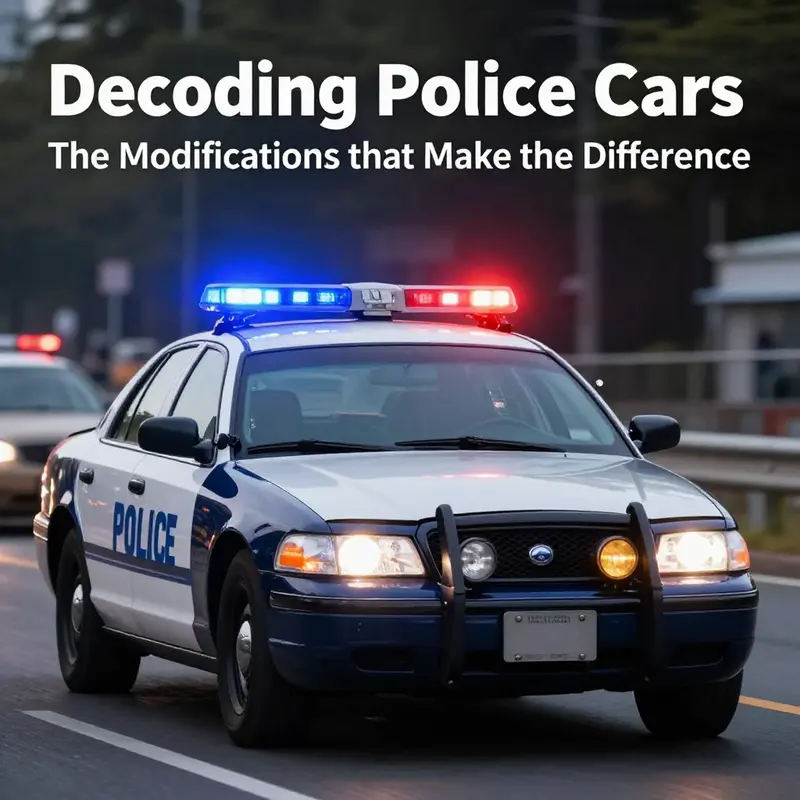
The police car stands at the intersection of necessity and perception. It is a moving command post built not only to traverse city streets but to command attention, convey authority, and safeguard everyone in its path during emergencies. Among the suite of modifications that transform a standard patrol vehicle into a capable law enforcement tool, specialized lighting and sirens sit at the front line of operational effectiveness. These systems are not merely cosmetic flourishes; they are integral to how officers arrive first, arrive safely, and arrive with the information needed to act decisively. The chapter that follows considers these lighting and siren enhancements as a single, cohesive study in signaling—how they illuminate the way, how they communicate under pressure, and how they integrate with every other piece of the car’s armor and electronics to create a reliable, responsive platform for public safety.
At the heart of modern police lighting is a recognition that visibility is a weapon as much as a shield. Roof-mounted light bars, with their array of LEDs, are designed to be instantly recognizable from every angle, day or night. LEDs have become the standard because they glow with relentless brightness, sip power steadily, and outlast older technologies that once defined police visibility. This triad—brightness, efficiency, and durability—translates into a dependable signal that does not falter in the heat of a pursuit or the drizzle of a late-night city square. The lights on a patrol car do more than flash; they map an officer’s presence across a scene, guiding motorists to slow, to stop, or to pull over with a rhythm that is understood by every driver on the road. Pattern selection matters. In one moment, a strobe might snap attention with a crisp, silent cadence; in another, a wig-wag sweep can create a moving beacon that keeps pace with the pace of a changing situation. Some patterns project light in multiple directions, ensuring visibility from the front, the sides, and the rear, while a lower bumper lighting array provides crucial low-angle visibility for drivers approaching in blind spots or from parallel lanes. This interplay between high and low angles reduces the chance that a driver will miss a signal due to glare, height, or perspective shifts in urban canyons where walls and parked cars bounce light in unexpected ways.
The strategic logic behind these lighting systems lies not only in visibility but in control. Modern patrol cars integrate lighting controls into a centralized interface, often linked to the vehicle’s main display. Officers can select patterns, switch between steady, flashing, and warning modes, and bring in auxiliary signals for specific tasks without diverting their attention from the road. The control architecture is designed to support rapid, confident decisions under stress. When dispatched to a scene, an officer can command attention and clear a corridor through traffic while maintaining awareness of suspects, bystanders, and other responders. The seamless integration of lighting with radios and data terminals is essential here. The same interface that changes a pattern can also cue the emergency beacon on the roof to synchronize with the arrival of backup units, the activation of radios, and the auto-display of critical incident information on MDTs or laptops. In practice, this integration reduces cognitive load: responders do not juggle devices or toggle separate systems. They operate through a consolidated suite that keeps the focus on action, timing, and safety.
A patrol car’s lighting package also carries a suite of bumper and grille lights that complement the roof bars. These low-profile, wide-field emitters reduce blind spots in busy intersections and at the edges of the car’s forward view. Urban environments are crowded with reflective surfaces: glass, metal, signage, and the glare from streetlights. The bumper lights, when aimed low, provide improved visibility at the most common eye level of drivers approaching head-on or from the side. When combined with the roof’s omnidirectional output, they ensure that the signal is legible from almost any approach vector. Pattern choices become practical rather than decorative in these environments. An officer may deploy a combination of roof flash and bumper signals to navigate a congested corridor while the vehicle’s own motion creates a moving barrier that others instinctively respect. The result is a disciplined, predictable choreography on the street, where each signal pattern serves a specific communicative purpose: to alert, to instruct, to warn, or to clear a path.
Beyond the direct signals these lights emit, their energy efficiency and longevity have real operational consequences. LEDs are not just bright; they’re durable enough to survive the jolts of a high-speed pursuit and the vibrations of rough roads. They resist heat and weather alike, maintaining brightness without rapid degradation. The long lifespan of LED emitters reduces maintenance downtime and keeps a patrol car ready for service for longer stretches. In a department that relies on rapid response, every minute saved from lighting maintenance adds to the fleet’s overall effectiveness. The reliability of lighting underpins the trust citizens place in responders; it also underpins the officers’ confidence in performing their duties. A signal that fails to illuminate at a critical moment can delay a response, complicate a dangerous situation, or obscure an officer’s intended action. The emphasis on robust lighting is thus a reflection of a broader commitment to safety and accountability.
A related advantage of modern lighting systems is their impact on situational awareness. The LED light bar’s rapid response to switch patterns is not just about speed; it’s about how quickly others interpret a change in signaling. Police signals work as visual language: a defined code recognized through training and repetition. The ability to cycle through patterns that convey urgency—an unmistakable ‘please stop’ message when a suspect is nearby, or a clear ‘we’re arriving’ signal for a medical team racing to the scene—matters as much as the message itself. In this sense, lighting becomes a part of incident management, enabling officers to frame the tempo of a response. The synergy between lighting and sirens is essential here. Sirens carry a different kind of urgency; their wail or pulse is attuned to the ambient noise and traffic patterns, instructing pedestrians and motorists to yield. When paired with lights, the siren transforms into a multisensory prompt—sound and sight working together to reduce risk and increase throughput in emergency moves.
The siren, in particular, has evolved from a simple alert to a sophisticated element of traffic management. Modern siren systems are designed to modulate tone and cadence to reflect different driving environments and jurisdictions, always with an ear toward minimizing confusion. In narrow streets, for instance, a particular cadence can produce a predictable line of movement for vehicles that might otherwise hesitate or stall. In wide boulevards, a different cadence might be used to create a clear, expanding corridor, letting multiple responders arrive in a controlled sequence. The interplay of sound and light creates a compounded effect: drivers see the signal and hear the command, and the body of a vehicle becomes a moving banner of authority and order. Even the car’s own acoustics matter; the siren’s placement, the amplifier’s placement, and the car’s acoustic envelope are designed to optimize sound projection while maintaining audibility in the presence of city noise, sirens from other agencies, and environmental factors like wind or rain.
This emphasis on integrated signaling has ripple effects on how a department approaches training, maintenance, and policy. Officers train to recognize and respond to different lighting patterns as part of their standard operating procedures. They learn which patterns correlate with different types of incidents and how to adjust their own behavior to remain predictable to the public. Maintenance teams, meanwhile, monitor the health of the lighting and siren systems as part of the vehicle’s overall readiness. They perform regular checks to ensure weather seals, electrical connections, and control interfaces remain robust under daily wear and the rigors of extreme climates. Weather resilience is particularly important for LEDs and their drivers; exposure to heat, cold, and moisture can affect brightness and response times if not properly managed. These considerations inform how departments spec out vehicles and how they plan for replacement cycles, spares, and rapid turnarounds after service desk entries. In this way, the modularity of the lighting system feeds into longer-term fleet strategy, helping ensure a consistent standard across all vehicles in a given fleet and across variations in region, climate, and traffic density.
To return to the practical human element, lighting and sirens shape the officer’s relationship with the public. The signals are designed to be authoritative but not terrifying; they must convey urgency without inducing panic. The body language of a vehicle flashed in a specific pattern communicates the signal’s intent at a glance, enabling a quick, accurate read by drivers who may be unfamiliar with the local rules of the road. In a traffic stop, for example, a particular combination of roof lights and front bumper signals marks the moment a car should pull over and remain stationary. In a pursuit, a different sequence guides the pursuit corridor, allowing oncoming traffic to move aside smoothly while police units coordinate their positions. All of this is orchestrated through a careful balance of visibility, audibility, and control, with each element designed to reduce risk and improve outcomes for everyone on the street.
For readers who want to explore the broader landscape of car modifications in which lighting and sirens sit, a practical primer such as the Car Modifications Guide offers a broader frame for understanding how lighting integrates with other systems. This resource helps connect the dots between the visible signals discussed here and the other durable modifications that keep a patrol vehicle reliable during long shifts, including reinforced suspensions, cooling upgrades, and secure interiors. As you consider how these pieces come together, it becomes evident that the modifications are not isolated choices but parts of a unified strategy to maximize safety, efficiency, and accountability on the road.
In closing this reflection on signaling, it is worth noting that the field continues to evolve. New materials, smarter electronics, and evolving standards push departments to reassess what constitutes optimal visibility and audibility. The ultimate aim remains steadfast: to ensure that officers arrive prepared to protect the public while minimizing risk to themselves and bystanders. The lighting and siren systems are the visible face of this aim, but they are supported by a foundation of engineering, training, and policy that keeps the whole machine reliable and ready. The modern police car, then, is less a single device and more a carefully engineered ecosystem—one that translates the urgency of a call into a coordinated, intelligible, and safe response for everyone involved.
External resource: A Technical Guide to Bright Police Lights: Standards, Properties, and Applications in Practice. https://www.policevehiclelighting.com/technical-guide-bright-police-lights
Internal reference for broader context: Car Modifications Guide. https://modifiyeliarabalar.net/blog/car-modifications-guide/
Final thoughts
The modifications made to police cars are not just a matter of preference; they are critical adaptations that support the demanding realities of law enforcement work. From engines built for high-speed pursuits to safety features designed to protect officers and civilians alike, these enhancements are essential for the effectiveness and reliability of police vehicles. Understanding these upgrades offers valuable insights for car enthusiasts and professionals alike. Each component harmonizes to create a machine that is not only capable of handling emergencies but is also a testament to the ingenuity of automotive engineering.