
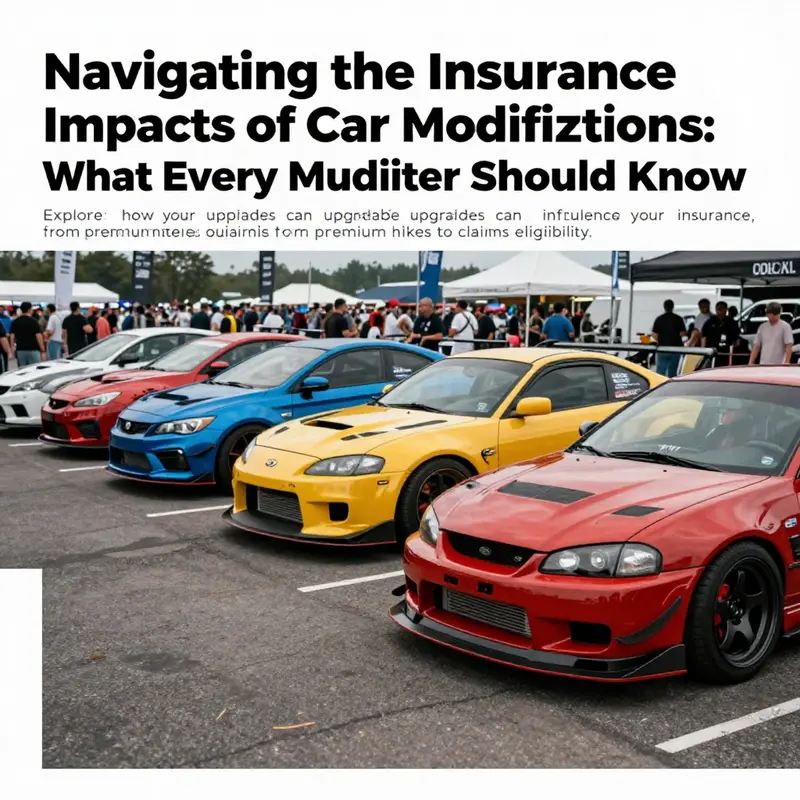
For passionate hobbyists and professional tuners alike, modifying a car is more than just a pursuit; it’s a lifestyle. Yet, these modifications—be they performance upgrades, aesthetic changes, or interior enhancements—carry significant implications on your vehicle insurance. Understanding how modifications affect your insurance policy is not only prudent, but essential for every car enthusiast. This comprehensive guide delves into the potential pitfalls, from increased premiums to the necessity of notifying your insurer about your modifications, ensuring your passion doesn’t lead to unexpected financial burdens. Each chapter will shed light on critical aspects: assessing risk and premium impacts, effectively communicating with insurers, navigating legal compliance, and understanding diverse modification types to better manage your coverage. Learn to embrace your automotive creativity while protecting your investments.
Mods at the Margin: How Vehicle Tuning Elevates Risk, Premiums, and Insurance Coverage
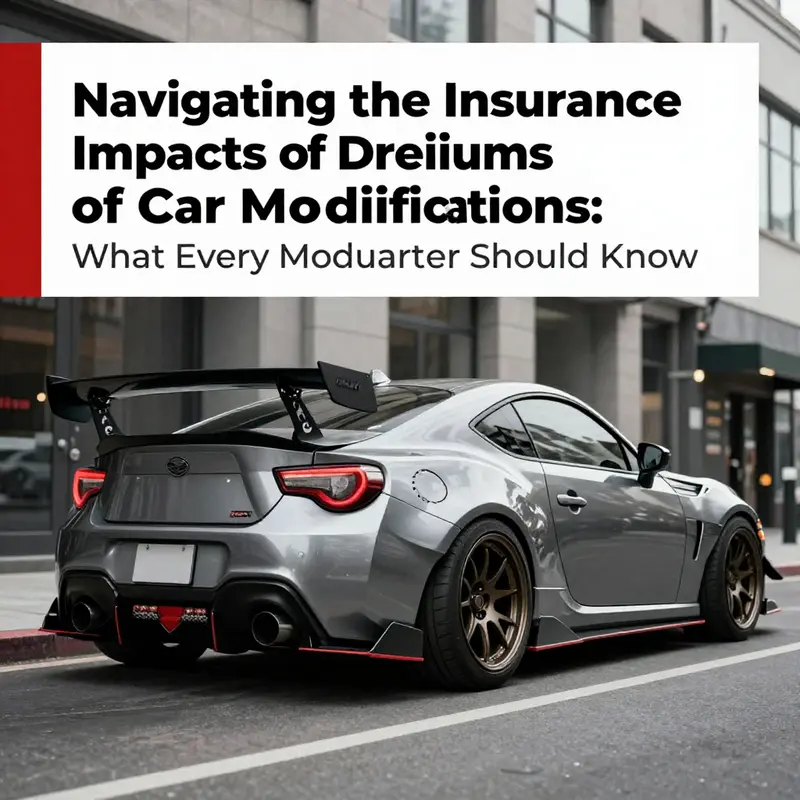
When a car leaves the showroom with factory settings, its risk profile for insurers often looks orderly and predictable. The engine hums within tested tolerances, safety systems are calibrated to standards, and the vehicle’s value aligns with its age and mileage. But once the owner starts altering that equation—adding turbo upgrades, tweaking suspension for performance, or swapping parts for a more aggressive look—the risk ledger changes in ways that are sometimes invisible to casual drivers. The world of car modifications sits at the tricky intersection of performance passion and risk management. Insurance providers, who must balance claims costs with pricing, read these changes through a careful, data-driven lens. The result is a landscape where modifications can elevate risk, adjust premiums, and trigger specific coverage requirements that last long after the first test drive with a new setup. Understanding this landscape is essential for anyone who plans to modify a vehicle and still want to keep insurance fair, valid, and responsive when the day comes to file a claim.
The first and most immediate consequence of modifications is a shift in risk perception. Alterations to performance components—engine tuning, turbocharging, upgraded exhausts, or suspension changes—can raise a car’s top speed, acceleration, and handling dynamics. They can also increase the chance of mechanical failure or create new maintenance considerations. From an insurer’s viewpoint, these aren’t just cosmetic or cosmetic-adjacent changes; they directly affect the car’s potential for loss. The cost to repair or replace a more valuable, high-performance vehicle is often higher than that of a stock model. And if a modified setup increases the likelihood of a crash, the aggregate risk—over time and across many drivers—also rises. When risk goes up, premiums tend to reflect that shift. The insurance industry has documented this pattern: modifications, particularly performance upgrades, can lead to higher premiums because they escalate both the cost of repairs and the probability of an incident. This isn’t a universal rule, but it is a recurring outcome in many markets and policies.
The story doesn’t end with risk and price. A central thread running through the modification-insurance relationship is the obligation to disclose. In many jurisdictions, policy terms require you to inform your insurer within a defined window after you install a modification. In the United Kingdom, for example, a commonly cited guideline is to notify within a short period, and in many cases to secure a policy endorsement that reflects the changes. The practical effect of failing to disclose can be severe: if coverage is amended or claimed, a failure to declare modifications can invalidate the policy or lead to claim denial. This is not mere paperwork; it is a legal and financial safeguard. When a claim is filed, the insurer will review whether the modification was disclosed and how it influences risk exposure. If the disclosure was omitted, a claim related to the modified parts may be reduced or rejected, even if the incident was not caused by the modification. The emphasis on early disclosure reinforces a broader principle: transparency enables accurate risk assessment and preserves the integrity of coverage when it matters most.
What counts as a modification, and how a given change affects coverage, varies widely depending on legality, safety, and the way the aftermarket component integrates with the vehicle’s systems. Legal compliance matters profoundly. If a modification passes inspection by the relevant vehicle authority or regulatory body, it can still qualify for comprehensive and third-party liability coverage, albeit often under specific conditions. If a modification is illegal or unapproved—such as lowering the chassis beyond safe thresholds, altering engine displacement in a deceptive or unsafe way, removing essential structural components, or tampering with the Vehicle Identification Number—it can trigger outright denial of compensation for damaged parts or, in some cases, for the whole vehicle. The legal status of a modification interacts with insurance in a way that can either preserve protection or invalidate it, depending on the jurisdiction and the exact nature of the change. This linkage between law and policy is why the process of modification is rarely a purely mechanical or cosmetic decision; it becomes a regulatory and contractual decision as well.
The spectrum of modifications stretches from performance-oriented upgrades to cosmetic tweaks and interior reconfigurations, each carrying a different insurance footprint. Performance upgrades—engine tuning, turbocharging, nitrous systems, or enhanced driveline components—are typically associated with higher risk and greater potential loss. They often require an endorsement, a rider, or even a revised valuation to reflect the car’s augmented capabilities and value. Appearance-focused changes—body kits, custom paints, or aftermarket rims—tend to introduce a different kind of risk: theft appeal and repair costs. While they may not directly alter a vehicle’s mechanical safety in every case, they can increase the vehicle’s attractiveness to thieves or raise the cost of repairs due to non-standard parts or finish work. Interior modifications, such as premium sound systems or seating changes, can impact safety systems when they interfere with airbags or occupant restraints. Electrical work presents a distinct set of concerns. Improperly installed wiring or high-powered audio installations can introduce fire hazards or electrical faults that are expensive to address and sometimes disqualifying for certain covers if they compromise safety systems. In short, a modification’s risk profile is not a simple binary; it is a nuanced mosaic shaped by the type of change, how it’s implemented, and how well it is documented and maintained.
Data and practice reinforce this view. Industry bodies have highlighted that modified vehicles tend to be associated with higher claim activity, driven by a combination of increased value, higher repair costs, and, in some cases, greater likelihood of theft. A recent NAIC-related assessment noted that vehicles with extensive modifications can see insurance costs rise by noticeable margins, sometimes by thirty percent or more, depending on the scope and nature of the changes. This statistic captures the practical consequence of a more volatile risk profile: when the car is more valuable or more attractive to thieves, when handling characteristics are altered, or when maintenance requires specialized expertise, insurers price the risk accordingly. The precise impact on premium is not universal; it depends on the modification type, the insurer’s underwriting approach, and the vehicle’s baseline risk. Still, the overarching trend is clear: modifications tend to push the financial envelope, and drivers should plan for that eventuality as they design their builds.
Another layer of complexity arises from warranty and safety regulations. In many markets, certain modifications can void the manufacturer’s warranty, especially those touching the engine, transmission, or safety systems. The implications extend into the insurance landscape because if a modified component fails and causes damage or a fire, the warranty may no longer be a recourse. In such cases, the insurer becomes the primary line of defense, which can influence both coverage decisions and liability considerations after an loss event. The interplay between warranty status and insurance coverage underscores why careful planning matters. If you anticipate potential warranty voiding, you may need to secure more comprehensive documentation of your modifications, insist on proper installation, and confirm that the installer or shop provides warranty-backed workmanship. Without these safeguards, you risk a cascade of complications that can complicate or invalidate claims when you most need support.
In practical terms, what should a responsible modifier do to protect themselves financially and legally? The first step is disclosure—before any parts are ordered or installed. Talk with your insurer, and obtain written confirmation that your intended changes are permissible under the policy or that you will need an endorsement. Then pursue a formal policy amendment or rider that reflects the modifications and aligns with the new risk profile. If the changes are high-value or safety-critical, consider adding a separate coverage layer for newly added equipment. This add-on coverage is designed to insure expensive aftermarket components like specialized audio systems, roof racks, or upgraded wheels in the event of damage or theft. Keeping detailed records is essential: retain invoices, installation manuals, safety certificates, and any inspection reports. Documentation can be decisive in a dispute about whether a modification was properly disclosed, legally compliant, and safely installed.
In a broader sense, drivers who pursue modifications should recognize that their relationship with insurance is a long-term, ongoing negotiation rather than a one-time transaction. The risk environment evolves as a car ages, maintenance practices change, and new performance goals emerge. Some insurers actively specialize in markets for modified vehicles, understanding the unique needs and risk profiles of enthusiasts. Those options can be beneficial for drivers who maintain rigorous documentation and operate within legal and safety boundaries. Yet the core discipline remains consistent: transparency, compliance, and proactive coverage planning. This is not only about preserving claim eligibility; it is about sustaining a sustainable ownership experience where the thrill of customization does not outpace the reliability of protection.
Internal linking can offer readers a practical path to deeper guidance. For professionals or enthusiasts who want a concise overview of how their specific modifications may affect coverage, an accessible discussion links directly to more detailed information on this topic. See the discussion at car-modifications-affect-insurance for a focused exploration of common scenarios and insurer expectations, and consider how your build aligns with the guidance presented there as you plan the next phase of your project.
The overarching takeaway is straightforward: modifications change risk, and risk changes insurance. The value of your car rises with performance and customization, and so does the potential cost of coverage. To navigate this reality, you must approach modifications with a plan that begins before the first bolt is turned and continues through each maintenance cycle and claim process. By knowing the rules—what must be disclosed, what requires an endorsement, and what kinds of losses might be excluded—you can enjoy the risks and rewards of a personalized vehicle without compromising the protection that keeps you and your investment secure. A well-considered approach balances the owner’s passion with prudent risk management, enabling a modified car to be both exhilarating and insurable.
External reference for further reading: https://www.iii.org/article/automobile-insurance-and-modified-vehicles
Notifying Insurers About Car Modifications: How to Safeguard Coverage When You Upgrade
When a driver tailors a car beyond factory settings, the relationship with an insurer shifts in subtle but powerful ways. Modifications can range from performance upgrades that transform acceleration and handling to cosmetic changes that affect value and appearance. Each alteration shifts the risk the insurer assumes, and how you disclose and document those changes can protect or undermine coverage when a claim arises. The core idea is simple: modifications change risk, and clear communication helps you keep coverage aligned with the car you drive.
To begin, act promptly. The moment a modification is completed, or a plan to modify is finalized, the risk assessment window starts. Many policies expect notification within a defined period, often around ten days, though specifics vary by insurer and jurisdiction. Delays can complicate or invalidate claims if the change is not properly disclosed. If the modification affects performance, fuel needs, braking, or emissions, the insurer needs to know so they can adjust terms before a claim occurs. A late notice can lead to disputes about whether the modification contributed to an incident. The practical rule is to treat the modification as a material change in risk and to communicate it with the same diligence you use when renewing your policy after major life events.
Gathering documentation is the next essential step. Before contacting the insurer, assemble a dossier that demonstrates the modification and its impact. Include the updated registration certificate reflecting changes such as color or wheel size, and the original certificate to show evolution of the vehicle identity. Collect invoices, receipts, and a detailed parts list for every modification. If an upgrade involved professional installation or a powertrain change, include service reports or engineering statements. For larger modifications, a professional inspection or compliance certificate may be required to show safety and regulatory standards are met. This bundle helps the insurer reassess risk and provides a clear provenance trail should a claim be filed years later. With concrete third party validation, you reduce ambiguity at claim time.
Contact your insurer directly, not through a middleman who might miss details. A direct conversation ensures you communicate exactly what was changed, why it was done, how it affects driving dynamics, and what maintenance the vehicle now requires. Use precise, descriptive language and avoid vague phrases. For example, instead of saying you added performance parts, specify whether you installed a larger turbo, a different exhaust, a tuned engine control unit, or upgraded suspension components. Explain the expected effects on acceleration, braking, cornering, fuel economy, and reliability. If a modification affects safety systems such as airbags, stability control, or braking software, emphasize how those systems remain functional. Also discuss anticipated maintenance schedules, since insurers want to know the vehicle will be kept in a safe, roadworthy condition.
Request a formal policy update rather than a casual notice. The insurer will assess whether the modification changes risk enough to warrant a premium adjustment, a policy endorsement, or a separate rider. The goal is to have the modification formally recognized within the policy so future claims are evaluated against the correct risk profile. Depending on the change, you may face a higher premium, a different deductible, or the need for additional coverage such as a newly added equipment rider for high value parts. Some modifications may be accepted with no premium impact if they fit within the existing risk framework, but that depends on underwriting criteria and the nature of the change. The key is to secure a written endorsement that codifies new terms and protects both you and the insurer in case of a dispute.
The type of modification often shapes the insurer’s response. Performance upgrades such as engine tuning or turbocharger changes tend to draw closer scrutiny because they can alter power and dynamics. These changes are more likely to trigger premium changes and may require a specific endorsement. Appearance upgrades such as body kits or aftermarket wheels usually carry moderate risk and may affect value and repair costs more than safety systems. Interior upgrades like high powered audio systems can be a mixed bag, especially if they interfere with airbags or seat integrity. Electrical modifications pose risks of fire or short circuits; improper installation can be grounds for denial if they create unsafe conditions. This landscape shows why transparency matters: an insurer’s assessment hinges on how the change shifts risk, not solely on the upgrade’s value.
Some policies offer specialized coverage for enthusiasts, including riders that accommodate a broader range of parts. These programs can provide more predictable premiums and faster claims when properly documented and endorsed. Even with specialized coverage, disclosure remains mandatory and legally binding in many places. The aim is to have a policy that reflects the car as it is, not as it was, to reduce disputes over coverage during a claim.
The question of warranties and manufacturer liability intersects with the notification process. Warranties may be voided if a modification affects critical systems, changing the claim calculus. When a warranty is voided, the insurer may become the primary recourse for damages related to the modification. In practice, owners weigh the cost savings from a modification against possible warranty loss and the need for appropriate insurance coverage. In some cases, disclosing the modification and obtaining a compatible endorsement can preserve coverage that might otherwise be compromised by an unapproved alteration. A modification strategy that aligns with manufacturer guidelines and insurance requirements is more likely to deliver benefits without gaps in protection.
Throughout this process, practical discipline matters as much as policy language. Keep thorough records of all communications with your insurer, including dates, names, and the substance of conversations. Maintain digital and physical copies of submitted documentation and endorsements. Review policy documents after an endorsement to confirm that changes are accurately reflected, including updated limits and new riders. If a premium quote seems unusually high or a coverage denial occurs for a specific aspect of the modification, ask for a detailed explanation and consider getting a second opinion from another insurer. Some drivers find that engaging specialists who understand modified cars yields clearer underwriting criteria and terms. The objective is not to avoid changes but to manage them with a clear map of risk, cost, and protection.
To bring this discussion full circle, recognize that notifying about modifications is not a mere formality. It is a formal alignment of risk and protection that preserves rights after an incident. It is the bridge between a car you love to customize and the financial safety net that keeps you driving confidently. Approaching upgrades with diligence turns potential friction into a cooperative effort with your insurer. If you want to deepen your understanding of how specific changes influence insurance coverage, you can explore resources that address the nuances of this dynamic. For example, the Insurance Information Institute provides a thorough overview of how modifications affect car insurance, including cost implications and risk considerations that drive premium adjustments and claim outcomes. More context can also cover resale value, regional legality, and add on equipment coverage, all of which shape your decision-making for future upgrades and renewals. The bottom line is a well-documented, openly communicated modification strategy that protects you in an accident and reinforces trust with your insurer. The path to secure, uninterrupted coverage becomes clearer when you disclose, document, endorse, and review, with a steady eye toward the long-term value of your investment in both your car and your protection.
The Legal Compass: How Compliance Shapes Insurance for Modified Cars
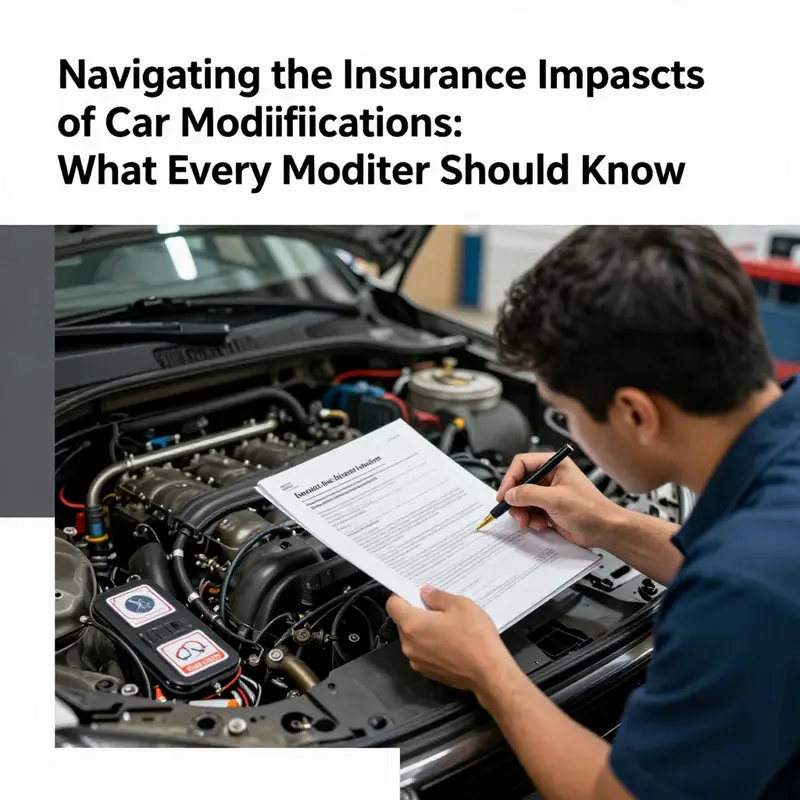
Modifying a car can feel like adding a personal signature to a vehicle that already carries a history of miles and memories. Yet the act is rarely neutral in the eyes of insurers or regulators. Modifications can shift a car from a straightforward, factory-spec machine into a risk profile that varies with every turn of the key. The thrill of customization sits alongside the hard math of risk assessment: value, safety, emissions, and the likelihood of incidents. When you modify, you are not only changing the vehicle’s appearance or performance; you are potentially altering its legal status and how an insurer will price and protect it. That is where the idea of a legal compass becomes crucial. Compliance does not merely satisfy a bureaucratic pulse; it directly shapes whether you can claim what you are paying for when accidents or setbacks occur. The chapters that follow map this terrain, but the core message is simple and practical: without clear compliance, the range of insurance options narrows, costs rise, and the protection you expect can evaporate when it matters most. The aim is to keep your modified car not only exhilarating to drive but also predictable and protected in the eyes of the law and the insurer alike.
Tuned Risk: How Car Modifications Reshape Insurance and Coverage
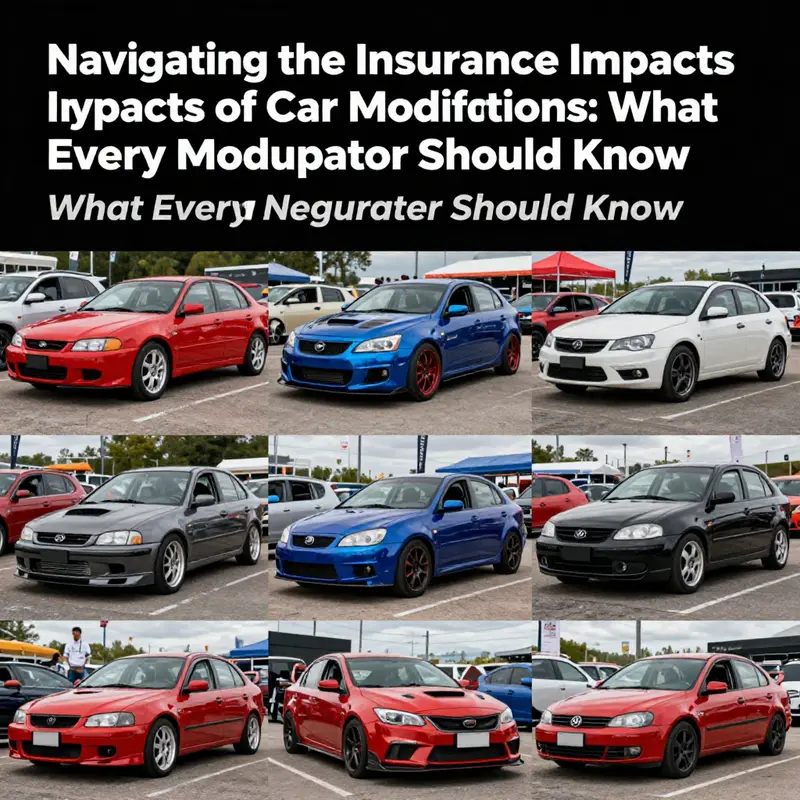
Modifying a car is a risk negotiation that changes value, performance, and coverage. Each change can raise repair costs and alter how insurers view the vehicle. Disclosure is essential: most auto policies require you to report modifications within a defined window, often within 10 days. Without disclosure, a claim might be denied or the policy could be altered or invalidated. The typical remedy is a policy endorsement that reflects updated value and risk. Legality and regulatory validation also matter: approved modifications that pass safety inspections are more likely to be covered, while illegal changes can lead to claim denial. Insurers scrutinize high risk upgrades such as engine tuning, forced induction, or chassis changes; these often require a formal amendment and may raise premiums. Cosmetic upgrades can influence value and theft risk and may require additional coverage for newly added equipment. Warranty interactions matter: manufacturers may void warranties for failures caused by modifications, which means insurance becomes the primary protection for some losses. Practical steps include talking to the insurer before making changes, obtaining written approval, and keeping receipts and installation records. Consider specialized insurers that cater to modified vehicles and compare policy language about safety systems and high end components. The goal is transparency and proper documentation so coverage keeps pace with the car you build.
Final thoughts
Navigating the insurance landscape for modified vehicles requires attention to detail and proactive communication. Understanding the financial implications of your modifications allows you to not only enjoy the thrill of your upgraded ride but also ensures you remain protected in the event of an incident. From recognizing how modifications can increase premiums to ensuring compliance with legal standards, being informed empowers you as a car modifier. Always remember: transparency with your insurer, thorough documentation of your modifications, and adequate coverage options are your best allies in securing your automotive passion without financial risk.