
Car modification has long been a passion for many automotive enthusiasts in Australia, blending creativity with technical skill. Yet, amidst the thrill of upgrading vehicles, it’s crucial to navigate the complex landscape of legal compliance. This article delves into the legality of car modifications, focusing on both minor changes that often go unnoticed and substantial alterations that require official approval. We will explore what constitutes a minor modification, the processes involved in securing approval for major alterations, and the importance of consulting local authorities to ensure your modifications are compliant. By the end, car hobbyists, tuners, and enthusiasts will be equipped with the knowledge to modify vehicles responsibly and lawfully.
Small Changes, Big Boundaries: Navigating Minor Car Modifications Within Australia’s Legal Framework
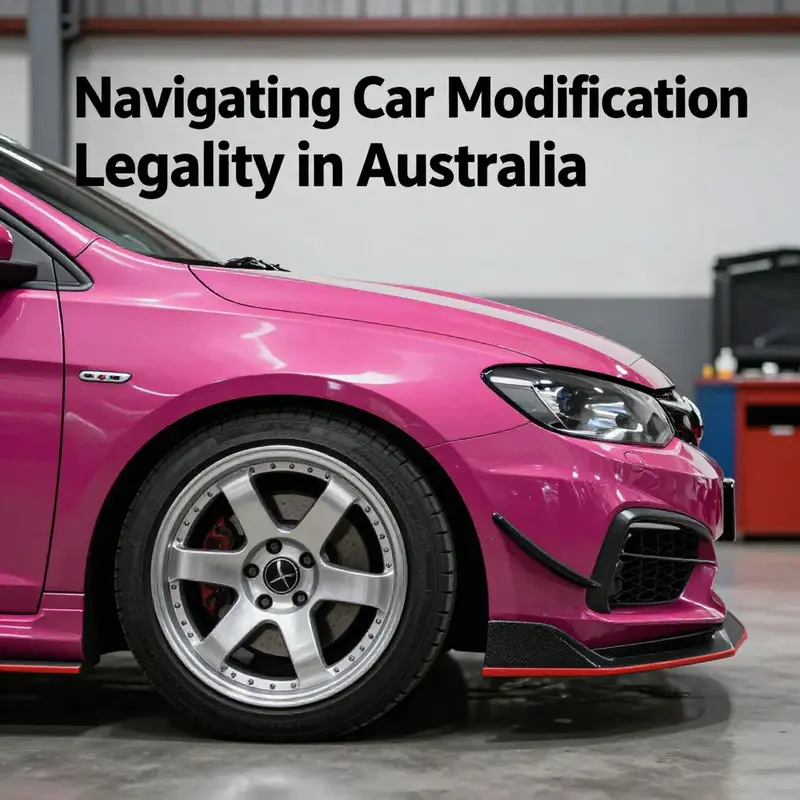
The road where personal expression meets public safety is often paved with carefully measured compromises. In Australia, the idea that a car can be tweaked to reflect a driver’s preferences while still honoring safety standards is not only possible; it is also the backbone of how modern motorists approach customization. Yet the landscape is not a single rulebook handed to every owner. It is a mosaic of national guidelines steered by the Australian Design Rules (ADRs) and layered by state and territory regulations. Understanding where a minor modification lands on the legality spectrum requires more than curiosity; it requires a grounded sense of how safety, emissions, visibility, and performance are weighed by regulators. This chapter looks at the realm of minor modifications—the small, everyday tweaks that many owners consider before they buy parts, lift a vehicle, or slide a roof rack onto the roof rails—and follows a thread from principle to practice, showing how the law shapes choices in a way that protects both drivers and the broader driving public.
At the heart of the minor-modification conversation is the ADR framework. The ADRs establish the baseline safety and environmental standards that all new and modified vehicles should meet. When a modification is described as minor, it is typically something that does not meaningfully alter a vehicle’s core safety systems, performance characteristics, or emissions profile. Examples commonly considered within the minor category include aftermarket alloy wheels, certain types of aftermarket lighting that do not blind or distract other road users, roof racks, and interior lighting upgrades that do not impact electrical safety. These changes are often permissible without formal approval or an inspection, provided they remain within the ADRs and do not interfere with the vehicle’s safety or emissions. Yet classifications are not universal across Australia. What is deemed minor in one state may invite closer scrutiny in another if a particular modification touches on a safety or compliance boundary that a local regulator has chosen to emphasize more stringently.
To understand why, consider a simple tweak that many drivers contemplate: changing wheels. The logic is straightforward—wheels affect the vehicle’s unsprung mass, contact patch, and handling characteristics. If the new wheels fit within the manufacturer’s standards, do not protrude in a way that creates tire/suspension interference, and stay within agreed load ratings, the change often stays in the realm of minor modifications. The ADRs and local enforcement policies, however, require a careful check: will the wheels alter braking efficiency, steering response, or tire clearance? Could the added width or altered offset affect the vehicle’s stability control or ABS calibration? If the answer is no, the modification is typically allowed without a formal application for approval. If the answer is yes, or if there is any ambiguity about safety margins, a more thorough review with the relevant road authority is prudent. In practice, this means drivers should consult their state’s transport authority and, if in doubt, seek verification from an authorized vehicle inspector. The goal is not to create a barrier to personalization but to ensure that any alteration does not undermine safety or environmental protections.
Another practical example is window tinting. Tinted windows can improve comfort and aesthetics, but they must be balanced against the imperative of driver visibility and the risk of reducing the ability of police and other drivers to gauge signals and intentions. The ADRs specify maximum levels for visible light transmission (VLT), and these limits are designed to preserve adequate driver visibility under various lighting conditions. If a tint falls within the permitted range, and the installation does not compromise the structural integrity of the glass or the safety systems, it is typically considered minor. If a tint encroaches on the legally defined limits or is installed in a way that reduces visibility below safe thresholds, regulators may require removal or adjustment, and some jurisdictions might require certification or inspection before the vehicle can be used on public roads.
A broader category but equally common on the list of minor modifications is the addition of roof racks and related mounting hardware. Roof racks are popular for practicality, enabling transport of bicycles, kayaks, or larger cargo that cannot be accommodated within the confines of the vehicle. Proper installation is essential. The weight distribution, wind resistance, and potential impact on aerodynamics should not degrade handling or fuel efficiency beyond what is considered safe. Most roof-rack setups that are purpose-designed for a given vehicle model and that adhere to mounting guidelines and load limits pass as minor modifications. But even here, the devil is in the details. If a rack system interferes with door seals, the operation of sensors, or the deployment of a sunroof, or if it conflicts with the legibility of number plates or lighting, it would cross into a zone where more formal assessment may be warranted.
Inside this framework, the line between minor and substantial is often drawn where the change begins to touch the vehicle’s fundamental systems. If a modification changes the engine’s performance characteristics, the suspension geometry in a way that affects handling, or the vehicle’s chassis or structural integrity, it typically moves toward substantial territory. In those circumstances, it is standard practice for the modification to receive prior approval from the relevant state or territory transport authority. In New South Wales, as an example, any modification that has potential implications for safety, performance, or emissions requires prior approval before the vehicle can be registered. Other states, including Victoria and Queensland, maintain similar expectations: they encourage consultation and often require an inspection or certification to verify compliance with safety and environmental standards before a vehicle can be legally used on the road. While the sheer mechanical complexity of a modification matters, regulators also consider the cumulative effect of multiple small changes. A series of seemingly minor alterations—if done collectively—could shift the overall safety and emissions profile of the vehicle in ways that warrant closer examination.
The practical process for a driver who is contemplating a modification thus typically unfolds in a set of steps designed to minimize risk and ensure legality. First, consult the state or territory road authority. This initial inquiry is not a sign of distrust but a prudent step to confirm how a specific modification is likely to be treated under local rules. In many cases, regulators maintain guidance documents, checklists, and advisory notes that can help a vehicle owner classify a prospective change as minor or substantial. Second, consider engaging an authorized vehicle inspector for a compliance verification. An inspector can examine the installation, verify compatibility with safety systems, confirm that emissions standards remain intact, and certify that the modification, if approved, meets all applicable requirements. The inspector’s role is not merely administrative; it is diagnostic, ensuring that the modification integrates harmoniously with the vehicle’s design and with the broader safety ecosystem on public roads. Third, ensure that any documentation, certification, or approval documented by the transport authority is kept in an accessible place, ideally within the vehicle’s records, so that if the vehicle is inspected or if the title or registration is renewed, there is a clear trail demonstrating compliance.
This careful, methodical approach has practical resonance in a market where many drivers seek to personalize their vehicles without straying into illegality or unsafe territory. The balance between freedom to customize and the obligation to maintain safety is rarely just a matter of personal preference; it is a public policy posture that prioritizes a shared responsibility on the road. The ADR framework provides the baseline, but state-specific regulations translate those rules into everyday practice on Australian streets. In this sense, legality is not merely a checkbox to tick but an ongoing dialogue between a vehicle owner, the broader driving public, and the institutions that regulate who may drive what and how.
To those navigating this space, there is value in distilling the core philosophy of the minor-modification category: if a modification preserves or enhances safety and environmental integrity, and if it is designed, installed, and used in a way that aligns with regulatory expectations, it is typically permissible without heavy regulatory friction. If, however, a change could undermine visibility, braking, steering, or emissions, or if it intrudes upon the safe operation of the vehicle or on-road behavior, it will require formal scrutiny, approval, or inspection. The regulatory mindset is not punitive; it is preventative. It aims to prevent unintended consequences that could arise when a vehicle’s performance envelope is extended beyond tested limits or when visibility and communications with other road users are compromised.
While the legal framework is consistent in intent across states, drivers should be mindful of the practical differences that arise in different jurisdictions. The Department of Transport and Main Roads in Queensland, VicRoads in Victoria, and Service NSW—along with other state and territory bodies—provide the administrative pathways for compliance. These bodies offer guidance and, in many cases, standardized processes for applying for modification approvals or for confirming that a modification falls within the acceptable range of minor alterations. In some cases, a formal inspection or certification is the final step before the vehicle can be registered with the modification in place. The exact sequence and the required documentation can vary, but the underlying principle remains the same: safety first, then legality, then personalization.
For readers seeking a concise, authoritative summary of permissible boundaries and practical steps, there is a dedicated resource that captures the essence of legal car modifications in Australia. It presents a clear picture of which modifications are generally acceptable as minor changes and which would require more formal oversight. This resource emphasizes ADR compliance, safety considerations, and regulatory variation across states. It also serves as a practical reminder that the road to compliance often begins with a careful assessment of how a modification will interact with the vehicle’s safety systems and with regulatory expectations. You can explore this overview through a focused discussion on the topic: legal car modifications.
The conversation about minor modifications naturally intersects with other aspects of vehicle ownership. When drivers consider changes that alter performance or aesthetics, they often also contemplate how those modifications interact with insurance coverage, resale value, and maintenance costs. Insurance policies, in particular, can become more nuanced in the wake of modifications. Even when a change is legal and compliant, insurers may adjust premiums or alter coverage terms based on the perceived risk associated with the modification. Some drivers worry that minor changes could trigger a total loss or a denial of coverage if a claim involves a modified component. The reality is nuanced: many insurers will consider modifications, but they may request documentation of compliance and perhaps an appraisal of the modification’s impact on the vehicle’s value and safety profile. To navigate these considerations, vehicle owners should engage in proactive conversations with their insurer, ensuring that the scope of modifications is disclosed and that the policy continues to provide the intended protection. This is not just about money; it is about ensuring that a driver who relies on the vehicle for daily transportation or for professional duties has a coherent and predictable risk management framework in place.
Beyond the realm of safety, visibility, and emissions, the legal landscape of minor modifications also touches on consumer rights and the responsibilities of vehicle owners. The law recognizes the right of individuals to choose modifications that reflect personal preference and practical needs, but it also asserts the public interest in ensuring that modifications do not place other road users at risk. This balance is often most visible in the requirement for modifications to be reversible or inspectable if necessary. The ability to demonstrate compliance through documentation or certification reassures regulators that a change does not compromise the integrity of the vehicle, its braking and steering systems, or its capacity to emit pollutants within regulated limits. It is a framework built not to stifle innovation but to safeguard the integrity of the road system as a shared resource.
For anyone who is compiling a plan to modify a vehicle, a practical mindset will serve well. Start with a realistic assessment of what you want to achieve and how it might affect the vehicle’s safety and compliance. Gather information from official sources, including the relevant transport authority in your state or territory, and consider a consultation with an authorized vehicle inspector early in the process. Keep a detailed record of the intended modification, the materials, and the installation steps, along with any approvals or certifications obtained. When the modification is complete, maintain the documentation as part of the vehicle’s records. This approach not only increases the likelihood of a smooth registration process but also provides a reliable trail for insurance and resale considerations should they arise in the future.
As a final note, the national perspective remains anchored in the ADRs and in the role of the National Transport Commission as a central reference point for Australian road-transport policy and standards. The ADR framework is the backbone, while the state and territory authorities translate those standards into day-to-day practice. This layered system reflects a pragmatic recognition that while national rules provide consistency, local conditions, road types, and enforcement priorities can vary. The outcome is a regulatory environment that encourages thoughtful customization while preserving the safety and reliability that underpin Australia’s road network. For those who want to explore the official, overarching guidance that frames these discussions, the National Transport Commission’s resources offer a reliable starting point for understanding how Australia approaches vehicle modifications in a national context: https://www.ntc.gov.au.
In sum, minor car modifications in Australia sit at the intersection of personal preference and public safety. They can be pursued with relative ease when they respect the ADRs and do not intersect with safety or emissions boundaries. The key is a careful assessment, a willingness to seek guidance when needed, and a commitment to maintaining the vehicle’s safety profile as the primary priority. By treating minor modifications as opportunities to enhance comfort, practicality, and enjoyment without compromising safety, Australian drivers can express their individuality within a framework designed to protect everyone on the road. The result is a dynamic but responsible culture of customization that aligns personal choices with collective safety obligations, ensuring that the road remains a shared space where individual style and public trust coexist.
External resource for further official guidance: National Transport Commission
null
null
Wheels, Warrants, and Ways Forward: Navigating Australian Vehicle Modification Laws
Modifying a car is often a dance between personal expression and practical responsibility. In Australia, the thrill of customization—whether you’re adjusting aesthetics, refining performance, or reconfiguring a cabin—meets a framework designed to safeguard road safety, environmental standards, and predictable vehicle behavior. This chapter explores how that framework works in practice, how the law distinguishes between what you can do with minimal friction and what requires formal approval, and how a driver can navigate the process without sacrificing the satisfaction of a well-tuned machine.
At the heart of lawful modification are the Australian Design Rules, commonly known as the ADRs. These rules establish the baseline safety, environmental, and performance standards that all vehicles must meet, regardless of where they are registered in the country. The ADRs are national in scope, but the actual enforcement and administration of compliance fall to state and territory transport authorities. In everyday terms, you can think of the ADRs as the yardstick for what is permissible, while state agencies are the gatekeepers who decide whether a particular modification passes muster in your jurisdiction.
The practical distinction between minor and substantial modifications helps drivers gauge the likely path to compliance. Minor modifications are those that typically wrap themselves neatly within the ADR framework and do not interfere with core safety systems, visibility, or emissions. They include adjustments like changing wheels (within a safe speed rating and size range), installing aftermarket lighting that does not blind or confuse other road users, or adding body kits and aero tweaks that do not extend beyond the original vehicle footprint or create sharp protrusions. As long as these alterations do not affect the vehicle’s safety or its environmental performance, they can usually be implemented without prior approval or formal inspection. The key word here is conformity: the modification must align with the ADRs and cannot compromise the vehicle’s safety, emissions, or basic operability.
When the modification crosses into the realm of significant changes—alterations to the engine, suspension, chassis, or structural components—the balance shifts. In these cases, it is common for a state or territory transport authority to require explicit approval before the vehicle can be registered again after the modification. This process is designed to ensure the altered vehicle meets safety and environmental standards, and it often involves a formal inspection. The exact requirements vary by jurisdiction, but the underlying principle is consistent: substantial changes can alter crash performance, handling characteristics, braking efficiency, and emissions behavior, all of which must be demonstrably safe and compliant before the vehicle remains on public roads.
To illustrate how this plays out in practice, consider a few concrete examples often cited in regulatory guidance. A bullbar may be legal in many circumstances, but it cannot obstruct the original lighting system, must not introduce sharp edges that could injure pedestrians or occupants, and must not extend the vehicle’s width beyond its original footprint. If the bullbar is designed to absorb impact, it must be crash-tested and certified. The same attention to geometry and safety applies to body kits and spoilers; they must avoid protrusions that could injure or injure others in a collision, and they must not cover original lights unless the design includes integrated lighting that preserves visibility. These are not mere aesthetic concerns—the ADRs and related regulations assess how such components influence the vehicle’s crash performance, the likelihood of occupant injury, and pedestrian safety outcomes.
Another frequent area of modification involves seating and interior layout. Removing rear seats, for instance, can be permissible for cleaning or temporary configurations, but permanent changes to reconfigure a vehicle into a two-seater generally require formal certification. An engineer’s certificate may be necessary to confirm the change, and this certificate typically needs to be registered with the state transport authority. The process can be costly and time-consuming, and it often restricts the future reinstallation of seats. The safeguards here are clear: altering a vehicle’s occupancy profile changes its weight distribution, seating arrangements, and crash dynamics, and those changes must be demonstrated to be safe under the ADR framework before being allowed on the road.
Understanding the importance of formal processes helps prevent a common pitfall: attempting modifications without proper authorization can result in penalties, failed inspections, or even a vehicle being deemed unroadworthy. In practice, this means that before you drive a modified car onto public roads after a substantial change, you should already be in contact with the relevant authority, such as a state transport department, or have engaged an authorized vehicle inspector who can verify compliance. These steps protect you from the risk of fines, invalid registrations, or difficulties when you need to renew registration or obtain insurance in the future. The goal is not to stifle creativity but to ensure that the vehicle remains a predictable, controllable, and safe machine for all road users.
The process of verifying legality across Australia typically follows a simple, if sometimes circuitous, path that begins with education and ends with formal confirmation. The starting point for most owners is a clear understanding of which changes might require an approval and which are likely to pass through with minimal friction. The ADRs, as the national standard, guide this assessment, but the decisive step is to consult the relevant state or territory transport authority. In New South Wales, for example, Transport for NSW (TfNSW) and the Roads and Maritime Services (RMS) share responsibility for ensuring modifications that affect safety, performance, or emissions have prior approval. Across Victoria, VicRoads handles analogous duties within its jurisdiction, while in Queensland the Department of Transport and Main Roads administers the rules. In each case, the regulator’s role is to interpret the ADRs in the context of local roads, traffic laws, and inspection regimes.
For owners seeking a practical route through the maze, there is a clear sequence to follow. First, determine whether the modification is minor or substantial by considering its impact on safety, emissions, and core vehicle functions. If the modification is likely to be minor, confirm that it remains within the permissible size, weight, and performance boundaries defined by the ADRs. If there is any doubt, it is safer to contact the state authority directly or consult an experienced inspector who understands the specifics of your vehicle class and use case. Second, consult the official sources. The Australian Vehicle Standards portal is the central repository for official guidance, confirming what is approved and what requires engineering or certification. This portal consolidates updates to ADRs, interpretations, and compliance pathways, making it a critical reference for any serious modifier. Third, engage with your state transport department or an authorized inspector early in the process. Even for apparently minor changes, proactive consultation can prevent delays and ensure you meet documentation requirements, such as certificates of conformity, serial numbers, or engineering sign-offs when required.
From a procedural standpoint, the role of state agencies is not merely punitive enforcement. It is collaborative and preventive, aimed at ensuring the long-term roadworthiness of vehicles in a diverse regulatory landscape. The authorities are interested less in policing every modification and more in verifying that changes do not compromise safety, emissions, or vehicle integrity. They provide guidelines, acceptance criteria, and pathways to obtain approvals. They also publish notifications about changes to ADRs or to interpretation of the rules, making it essential for owners to stay current. In this sense, the law functions as a dynamic framework—one that requires ongoing diligence from car owners who wish to personalize their vehicles while remaining compliant.
A useful perspective for vehicle owners concerned about risk and value is to consider not only the legality of a modification but its broader implications. Insurance is a notable example. Some modifications influence insurance premiums and coverage terms, particularly if the changes affect the risk profile of the vehicle or its repair costs. The literature and practitioner discussions on the topic emphasize how the interplay between modification legality and insurance can shape long-term ownership costs and resale value. It is prudent to anticipate these considerations by consulting insurers about planned modifications and by preserving documentation that demonstrates compliance with ADRs and state requirements. In this regard, there is value in treating the regulatory journey as part of the design process for any modification project, ensuring that safety, compliance, and financial considerations advance in concert.
Legal navigation is rarely a single-step journey. It often involves iterative consultation, review, and refinement. As you begin to map out your modification plan, a proactive approach helps you anticipate potential sticking points and timelines. For instance, if you propose a significant structural alteration or a reconfiguration that changes occupancy, you may need to budget for engineering assessment, specialized inspections, and registration changes. The possibility of needing a certificate from an engineer is not a mere bureaucratic hurdle; it serves as a rigorous technical evaluation of how the change interacts with the vehicle’s integrity in real-world driving situations. The time horizon for such processes can extend beyond a standard modification timeline, influencing when you can legally operate the vehicle after changes are completed.
To further illustrate how to find reliable guidance in this domain, consider the role of official portals and professional resources. The Australian Government’s Department of Infrastructure, Transport, Regional Development, and Local Government maintains the Vehicle Standards portal, which aggregates current information on approved modifications and compliance requirements. This portal is the most authoritative source for verifying whether a modification is legally permissible and for understanding the conditions under which approvals are granted. It consolidates standards, regulatory interpretations, and links to the relevant state authorities. For a concise overview of what is legally permissible and what requires certification, it serves as the definitive reference point for both everyday mod enthusiasts and professional modifiers. The portal helps bridge the gap between national safety standards and state-specific implementation, which is why it appears repeatedly in guidance for responsible modification.
In practice, the decision to modify and the path to legality hinge on a willingness to engage with the regulatory ecosystem rather than a retreat from it. The temptation to rush a project to completion must be balanced against the risk of noncompliance, which can include failed inspections, the inability to register the vehicle, penalties, or, in the worst case, a vehicle being taken off the road. The goal is not simply to avoid trouble but to preserve the integrity of the vehicle, its occupants, and other road users. The ADRs and state regulations are tools designed to help you achieve a safer, more reliable, and legally compliant vehicle that still reflects your personal preferences and performance ambitions.
For readers seeking a practical starting point while they plan upgrades, a focused reading of a broadly framed resource can be helpful. In addition to consulting the ADRs and local authorities, many owners find it useful to explore a dedicated article that synthesizes the practical aspects of legal modifications. A resource that centers on legal car modifications provides distilled insights into how to evaluate modifications against regulatory criteria, what kinds of documentation may be required, and how to navigate the approval process in common modification scenarios. Such a guide complements the official material by offering scenario-based guidance that can help you anticipate questions regulators may ask and prepare the necessary evidence in advance. If you are curious to see a concise, policy-focused treatment of this topic, you can refer to that compiled discussion and then cross-check it with the authoritative guidance provided by government sources.
The practical upshot for any prospective modifier is straightforward: start with safety and compliance as the non-negotiables. Ensure that the changes you plan to implement do not undermine structural integrity, lighting visibility, crash performance, or emissions. Stay within the design constraints described by the ADRs and seek formal approval whenever the change could alter the vehicle’s fundamental safety profile or regulatory classification. Maintain thorough documentation—engineering certifications, inspections, and conformity statements—as a cornerstone of your modification project. This approach not only reduces risk but also preserves the ability to register, insure, and legally operate the vehicle over its lifespan. It turns a potentially perilous shortcut into a disciplined project that respects the regulatory environment while still delivering the personalization and performance you seek.
A practical note on communication and record-keeping can help in real-world scenarios. When you reach out to a state transport authority or a certified inspector, be prepared to share information about your vehicle’s make, model, year, current specifications, and a detailed description of the proposed modification. Where possible, provide diagrams or manufacturer data showing how the modification interfaces with existing systems. For sophisticated alterations, an engineer’s assessment can be the decisive document that demonstrates whether the change remains within safety margins. The more transparent and well-supported your submission, the smoother the path to approval and registration. In this context, it is not only about compliance; it is about building a documented case for why your modification maintains or improves safety and environmental performance while delivering your intended benefits.
It is worth noting that the landscape can vary between states and territories, even as the ADRs provide a common baseline. This means that a modification that is permissible without a formal permit in one jurisdiction might require approval in another, especially when the change involves harnessing new technologies, reconfiguring occupancy, or altering critical safety systems. The best practice is to confirm the exact requirements with the relevant authority in your jurisdiction before you begin. If you are in New South Wales, you would consult TfNSW or the RMS; in Victoria, VicRoads; in Queensland, the Department of Transport and Main Roads; and so on for other states and territories. Each authority often publishes a guide or FAQ that translates the ADRs into state-specific language, along with links to application forms, inspection schedules, and contact points. These resources are designed to make compliance more predictable and less burdensome, helping you plan realistically for both the practical and financial aspects of your project.
The chapter of a car’s life dedicated to modification is not purely about legality; it is also about understanding the broader ecosystem that shapes road safety, consumer protection, and environmental stewardship. The legal framework encourages responsible innovation by requiring evidence of conformity and by providing channels for testing and certification. It recognizes that some modifications can offer meaningful improvements in safety or efficiency when implemented correctly, while others may pose unforeseen risks if attempted without proper engineering validation. In that sense, the law is not a constraint on personal expression alone; it is a structured approach to ensuring that the pursuit of customization does not compromise life on the road for any user, whether they are in a high-performance vehicle or a standard family car.
If you are seeking a concise entry point to this topic, there is a well-curated article that explains the core ideas behind legal car modifications. It presents the essentials in accessible terms, clarifying when a modification might be straightforward and when professional certification is likely to be necessary. You can read that resource to ground your planning before you engage with regulators or engineers. It is important to cross-check any guidance from such summaries with the official regulatory sources to ensure you are acting in up-to-date compliance with current laws and standards. The combination of practical planning, formal validation, and ongoing awareness of regulatory updates forms a resilient approach to vehicle modification in Australia.
For those who wish to link regulatory content directly to their own modification plans, a navigation through official portals and state resources is essential. A useful heuristic is to treat the ADRs as the gatekeeper for safety and environmental performance, while the state authority acts as the gatekeeper for legality within your locale. The two layers work together to ensure that modifications remain within a safe and legal envelope, regardless of where the vehicle is registered or driven. In day-to-day terms, this means you can pursue your customization ideas with confidence, provided you document, test, and verify each step in alignment with the standards and the approvals process. This approach preserves the vehicle’s roadworthiness and protects you from the headaches and costs associated with noncompliance, including potential repurchase risks, registration issues, or insurance complications.
If you want to explore the topic even further, a targeted resource that compiles general guidance on legal car modifications can be a helpful companion to the official information. The article covers common modification categories, the kinds of approvals that tend to be required, and the practical steps to obtain engineering certification when necessary. While it is not a substitute for regulator-approved documentation, it provides a sane, realistic overview that helps car enthusiasts plan responsibly. When you couple this practical overview with the primary regulatory sources, you equip yourself with a robust foundation for making informed decisions about how to modify your car while staying on the right side of the law.
In closing, the question of whether car modification is legal in Australia does not have a single yes or no answer. It depends on the nature of the modification, the vehicle, and the jurisdiction in which the vehicle is registered. The ADRs set the universal safety and environmental expectations, but the administration and approval pathways are distributed across state lines. The path to legality is best navigated with early and ongoing engagement with the relevant authorities, careful documentation, and a willingness to adjust plans in light of regulatory guidance. By adopting a disciplined approach—checking ADR compatibility, consulting state transport authorities, and securing necessary engineering or inspection validation—you can realize meaningful, personalized upgrades while preserving road safety, ensuring compliance, and safeguarding your investment.
For a direct reference to the governing standards and to explore specific modification scenarios in more depth, the official government resource provides the clearest, most authoritative guidance. This resource keeps you current with any changes to the standards and clarifies how those changes affect practical modifications on the ground. It is the anchor point for anyone who intends to graduate from concept to compliant execution, ensuring that personal expression in vehicle design does not drift outside the bounds of safety and legality. The ultimate aim is a vehicle that reflects your vision without compromising the shared responsibility of all road users to stay safe and to protect the environment for future drivers.
Internal resource for readers seeking a practical synthesis and accessible guidance on this topic can be found in a concise overview article on legal car modifications. The piece distills the most common considerations into a readable format, which you can use as a quick reference while you plan your project. It should be read in conjunction with the regulatory materials to avoid misinterpretation and ensure that your modification decisions remain aligned with current standards. Legal Car Modifications offers this approachable framing and can serve as a starting point before you dive into the more formal requirements outlined by the state authorities.
External resources: For authoritative, up-to-date information directly from the national regulator, consult the Australian Government – Vehicle Standards portal. This portal aggregates official guidance, updates to the ADRs, and links to state authorities, helping you stay aligned with the latest regulatory expectations across Australia. Access the portal here: https://www.transport.gov.au/vehicle-standards
Final thoughts
Understanding the legal framework surrounding car modifications in Australia is essential for any enthusiast looking to customize their vehicle. Minor modifications can offer personal expression without the burden of heavy regulation, while major changes open the door to creative possibilities but come with the responsibility of ensuring compliance with safety and environmental standards. By consulting local authorities and staying informed about current regulations, hobbyists and professionals alike can confidently navigate the thrilling world of car mods while adhering to the law. Empowered with this knowledge, you can enhance your vehicle with peace of mind.