
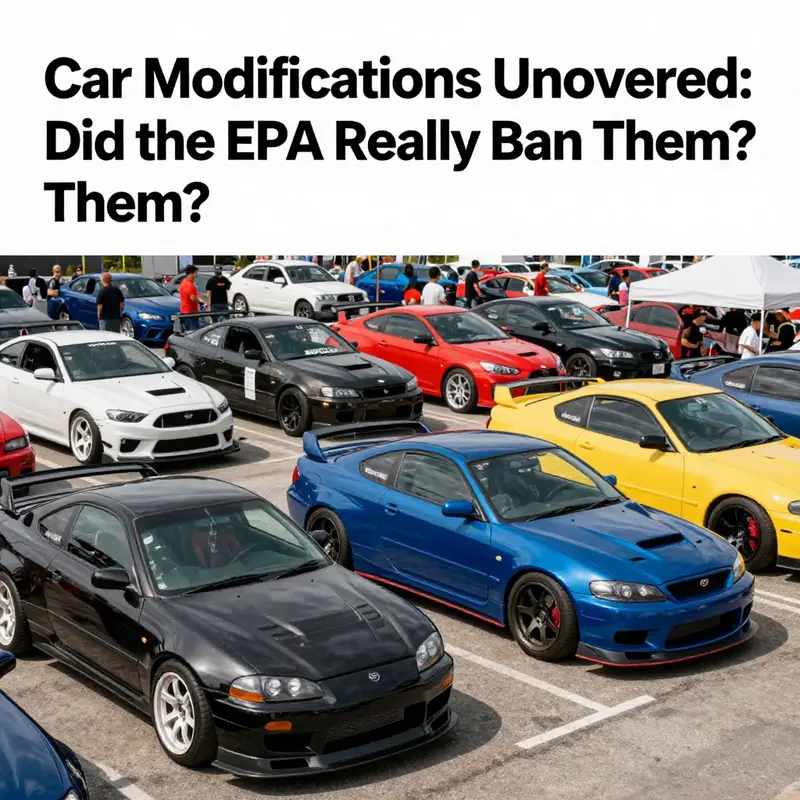
Car modifications are a cherished aspect of automotive culture, allowing enthusiasts and professionals to personalize, enhance performance, and restore classic vehicles. However, misconceptions around EPA regulations often leave many wondering if their beloved modifications are under threat. This comprehensive exploration starts with an examination of EPA regulations, shedding light on how they set the federal standards for vehicle safety and emissions without outright prohibiting modifications. Following this, we’ll delve into how various states interpret and enforce these standards, creating a patchwork of regulations that can both facilitate and restrict modding activities. Next, we’ll investigate the specific emissions standards that can affect modifications, particularly those targeting engine performance and exhaust systems. Finally, we’ll look at the public sentiment surrounding these regulations, including legal challenges that arise as the automotive culture continues to evolve. Each chapter will build on the previous one, providing a holistic understanding of the interplay between the EPA, state regulations, and the passionate community of car modifiers.
Emissions on the Edge: How EPA Rules Shape What You Can Change in Your Car
When people talk about modifying a car, they often imagine a spectrum that runs from cosmetic tweaks to performance upgrades. But the regulatory horizon that matters for most owners sits at the edge where engineering meets air quality. The U.S. Environmental Protection Agency does not ban every modification, nor does it parachute into someone’s driveway to police every bolt turned or sensor tweaked. What it does, instead, is set the safety net of emissions standards that all modifications must respect. The result is a national baseline coupled with a patchwork of state rules that govern how far you can push a vehicle beyond its factory configuration without running afoul of the law. Understanding this layered structure—federal emissions mandates, the regulatory photography of certified aftermarket parts, and the strong but uneven hand of state enforcement—clarifies what is permissible and what risks lurk behind a well-intentioned upgrade.
From the federal perspective, the EPA’s primary obligation is to ensure that vehicles, both new and modified, do not emit pollutants beyond the limits established by law. Those pollutants include carbon monoxide, nitrogen oxides, hydrocarbons, and particulate matter that have clear implications for air quality and public health. The agency does not micromanage the precise content of every aftermarket exhaust system or engine tune; instead, it focuses on the emission profile that any modification must not worsen beyond what the vehicle’s original certification allows. If a modification alters the emission control system in a way that increases tailpipe or evaporative emissions beyond legal thresholds, it crosses from a permissible tweak into a federal violation. In practical terms, this means a modified car can remain legal only if the change does not push the vehicle outside the certification envelope that the EPA affixed to the vehicle when it left the factory. The emphasis is on outcome—emissions performance—rather than on a blanket litany of what is and isn’t allowed.
The federal framework rests on a few concrete pillars. The regulations are codified under Title 40 of the Code of Federal Regulations, with specific parts that govern different kinds of engines and testing procedures. Part 1036 addresses emissions from heavy-duty gasoline engines, Part 1037 covers heavy-duty diesel engines, and Part 1065 lays out procedures for testing emissions from vehicles and engines. These rules are not merely technicalities; they define the testing methods, the measurement thresholds, and the certification processes that determine whether a particular modification can be considered compliant. Importantly, these rules apply to both new vehicles and used vehicles that are modified after purchase. The policy intent is to prevent a post sale modification from turning a compliant vehicle into a pollutant source that would harm air quality and public health. The EPA’s stance is not punitive in nature; it is protective, aimed at preserving the integrity of emissions standards across the life of a vehicle while still allowing room for legitimate aftermarket innovation within those limits.
Yet the federal government does not wield sole jurisdiction here. States are the primary enforcers of vehicle modifications in daily life. The federal baseline exists so that, no matter where a vehicle is operated, the emissions outcome remains within a national standard. States, however, are empowered to translate those standards into specific, sometimes stricter, rules that govern modifications and compliance testing. This is where California becomes a familiar but often misunderstood player. California operates under a unique program coordinated by the California Air Resources Board, or CARB, which certifies modifications that affect emissions before they can be legally installed within the state. CARB certification acts as a gatekeeper: even if a part or modification would be acceptable under federal rules, it must first be demonstrated to CARB that the change will not cause excess emissions when the vehicle operates on California roads and in California testing conditions.
Outside California, the regulatory landscape varies widely. Many states adopt a framework that mirrors the EPA’s emphasis on maintaining emission standards, but the stringency of inspections, testing requirements, and the availability of certified aftermarket parts differ. Some jurisdictions emphasize regular emissions tests, others focus more on safety inspections, and still others rely on a combination of both along with random compliance checks. In this patchwork, the practical effect is that a modification deemed acceptable in one state might trigger penalties or require additional certification in another. The contrast between California’s robust CARB program and states with comparatively lighter regimes highlights a central truth: the federal baseline protects air quality nationwide, while the state level fills in the details in ways that reflect local priorities and political realities.
For vehicle owners and hobbyists, this layered structure can feel complex, and it invites two questions that people frequently ask. First, what counts as a modification in the eyes of the regulators? The answer is not merely about new parts or cosmetic changes. Any alteration that touches the emission control system—the exhaust, the engine tuning that can influence fuel mixture and timing, or aftermarket parts that have not been certified to meet emission standards—can trigger regulatory scrutiny. Second, what happens if a modification is done without proper certification? The risk is not limited to a failed inspection or a temporary ban from the road. Federal law can view noncompliant modifications as violations that may lead to penalties, fines, or enforcement actions against vehicle owners or the suppliers and installers of the parts. This is why the EPA maintains a catalog of approved aftermarket parts certified to meet emission standards, and why the use of uncertified components is treated as a potential violation rather than a free pass for customization.
Within this legal logic, the idea of a universal prohibition on modifications dissolves. The EPA is not policing every bolt twist in every vehicle; it is ensuring that the resulting emissions stay within the federally mandated envelope. The enforcement mechanism, in practice, relies on a combination of federal oversight of manufacturers and aftermarket parts suppliers, coupled with state enforcement that tests vehicles during road use, annual inspections, or periodic emissions testing. When a modification renders a vehicle noncompliant with its original certification, federal law can view the vehicle as a nonconforming product on public roads. In the eyes of the law, the modification is not just an aesthetic preference; it becomes a potential public health risk if it causes emissions to spike or evades testing protocols. This is why the process around certified parts and careful, informed installation matters so much.
The conversation around modifications also touches the broader question of who bears responsibility. If a car owner installs an aftermarket exhaust or a performance computer tune that is not certified for emissions, and the vehicle subsequently fails an emissions test, the owner can be held liable for noncompliance. In many states, the testing and inspection regime will include checks for tampering with the emissions control system, and inspectors may look for noncertified parts or evidence of modifications that could lead to higher emissions. The enforcement approach is not about criminalizing every hobbyist project; it is about ensuring that the actions do not undermine the communal goal of clean air. The EPA’s philosophy recognizes the value of innovation and performance upgrades, while also asserting that public health and air quality are nonnegotiable baseline requirements.
A practical reading of the law, therefore, involves balancing aspiration with accountability. For someone contemplating a modification, a straightforward rule of thumb emerges: if the modification touches the emissions system or could reasonably affect emissions, it should be approached with caution and ideally with certified components and professional guidance. If a change promises improvements in performance or efficiency, that promise is meaningful only if the change can be shown to meet emissions standards under real-world operating conditions. This is where the involvement of state programs, like CARB, and the EPA’s own lists of certified aftermarket parts become crucial. Checking whether a proposed modification is on a certified list, and whether the state in which you operate accepts that certification, can save a lot of trouble down the line.
As we navigate this topic, it is helpful to keep in mind a simple distinction: compliance is about the emissions outcome, not simply about the presence of aftermarket parts. You can install an aftermarket part that is certified and maintain compliance; you can also install an uncertified or noncompliant part and collide with both state and federal standards. The difference in consequence can be substantial. A compliant modification preserves the vehicle’s official certification and avoids triggering the heavy hammer of enforcement. An noncompliant modification, even if it made the car louder or faster, risks nonconformity with federal emissions limits and invites penalties or, in the worst case, recalls and legal action. This understanding helps align personal goals with the collective responsibility to keep air clean and breathable for communities and future drivers alike.
For readers seeking deeper clarity on what counts as legal car modifications, there is a resource that distills the often dense language of regulation into more accessible guidance. This practical guide explores the boundaries between acceptable alterations and activities that cross into noncompliance, emphasizing the importance of certified parts and proper installation. It can be a valuable starting point for anyone who wants to design a modification project that respects both performance ambitions and regulatory obligations. If you want a clearer picture of what is considered legal car modifications, see this guide legal car modifications.
Beyond personal projects, the regulatory framework has implications for businesses and shops that design, sell, or install aftermarket parts. Reputable shops that advertise compliance with emission standards tend to adopt a careful, documentation-driven approach. They will advise customers on parts that are CARB approved or EPA certified and will document the installation process to show that the vehicle’s emissions performance remains within the required range. This is not merely about avoiding trouble with regulators; it is about building trust with customers who rely on the reliability of their daily drivers as well as the long-term health of the environment. The collaborative ecosystem between federal standards, state enforcement, and certified aftermarket suppliers creates a dynamic where vehicle customization can coexist with clean air goals rather than running in opposition to them.
Readers who are curious about the broader regulatory ecosystem might also consider the responsibilities of manufacturers and aftermarket suppliers themselves. The EPA imposes rules not only on what individuals can install but also on how aftermarket parts are marketed and distributed. Parts that claim to control emissions or to alter the fuel system must meet certification requirements and come with appropriate labeling that reflects their emissions impact. When manufacturers or distributors fail to comply, enforcement actions can cascade through the supply chain, underscoring that regulatory compliance is a shared duty across the entire ecosystem of automotive modification. This shared responsibility helps explain why the process can feel intricate to the hobbyist who simply wants a better exhaust note or a smoother ride. It also underscores why a steady, careful approach—grounded in certified parts, proper testing, and adherence to state requirements—often yields both peace of mind and predictable results on the road.
In sum, the EPA does not ban car modifications; it sets a framework that ensures modifications do not erode air quality. The federal baseline ensures consistency across states, while state programs adapt that framework to local contexts. California stands out for its rigorous CARB program, which adds an additional layer of certification for emissions-related changes. The practical effect for most car owners is straightforward: if a modification could influence exhaust, fuel management, or other emissions control systems, pursue certified components and confirm the modification’s compliance through the appropriate regulatory channels. When in doubt, consult state guidance and rely on the expertise of professional installers who understand the regulatory landscape as well as the mechanical implications. The road to performance does not have to run roughshod over air quality; it can progress along a regulated, transparent path that respects both engineering curiosity and the public good.
External resource: For official guidance from the primary regulatory authority, see the EPA Vehicles page at https://www.epa.gov/vehicles.
State Lines, Emission Lines: How EPA Guidelines Meet State Realities in Car Modifications
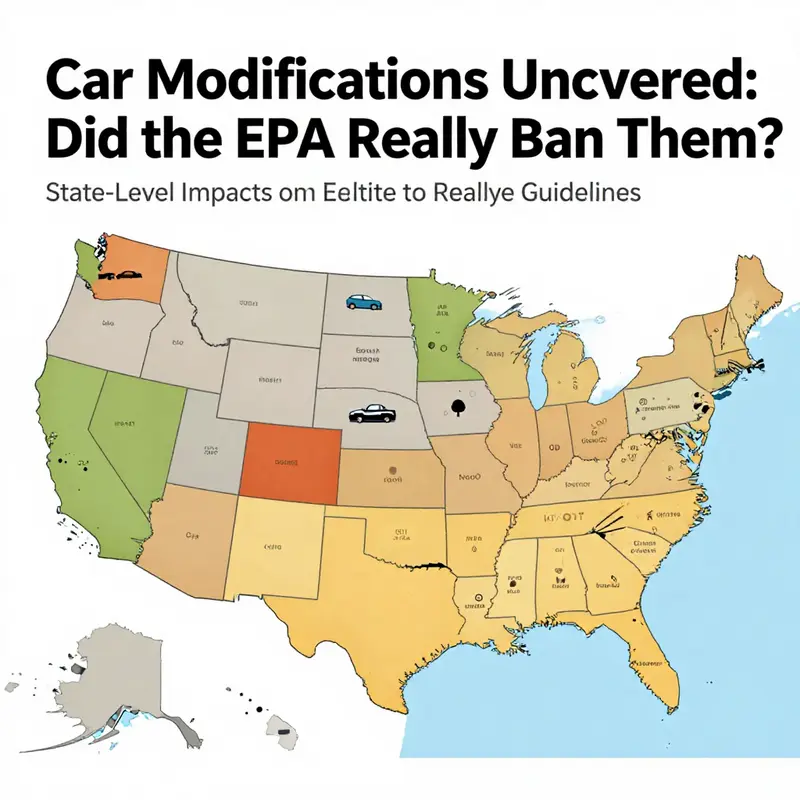
When curious minds ask whether the EPA bans car modifications, the simplest answer is no. The agency does not issue a blanket prohibition on all aftermarket changes. Instead, the EPA establishes national emission and fuel-economy standards that set a baseline every vehicle, modified or not, must meet. What changes the game is how states interpret, enforce, and sometimes intensify those federal expectations. The result is a regulatory landscape that feels like a relay race, with the federal government handing off to state agencies a baton that has gained weight as it travels down the line. The consequence is a patchwork where who can modify and how much modification is permitted depends almost as much on geography as on the make and model of the car. This intricate balance—federal guardrails complemented or superseded by state-level rules—shapes every layer of the modification scene, from the design of aftermarket parts to the decisions of a buyer who is considering a move across state lines.
At the federal level, the EPA sets emission standards that define the maximum amounts of pollutants that vehicles may emit during operation. These standards cover tailpipe pollutants like carbon monoxide and nitrogen oxides, as well as broader metrics that influence decisions about engines, exhaust systems, and other components that can influence the pollution footprint of a modified vehicle. The EPA’s role is to guarantee a consistent, nationwide floor: no matter where a car is sold or driven, it must comply with the same essential limits. Importantly, the federal framework envisions modifications as long as they do not push a vehicle beyond those mandated limits. The emphasis is on real-world emissions performance rather than a blanket ban on performance upgrades. In practical terms, that means a vehicle owner who installs a more aggressive exhaust or tunes the engine still must ensure the resulting emissions stay within the national ceiling. The EPA’s standards, thus, create a universal reference point that curtails excessive pollution without micromanaging every aftermarket decision.
But the story does not end at the federal door. States have the authority to regulate aftermarket changes more stringently, using the federal baseline as a starting point but not necessarily a stopping point. The most prominent example is California, where the state’s Air Resources Board (CARB) has long been a pioneer in environmental regulation. CARB operates under a waiver granted by the EPA, allowing California and some other states to adopt stricter emissions requirements than the federal baseline. That waiver is more than a legal footnote; it is a practical license for California to push beyond federal limits in certain areas, and its approach has rippled outward, influencing other states that sometimes decide to align their rules with California’s stricter standards. In this sense, California acts like a regulatory magnet, drawing aftermarket manufacturers and vehicle owners into a more rigorous compliance orbit. When California tightens controls on modifications—whether it involves exhaust changes, engine tuning, or components that could alter emissions—many manufacturers respond by designing products to meet CARB certification standards. The effect is an industry phenomenon: products are built not only for the broad federal market but also for the subset of customers who require CARB compatibility. That CALIFORNIA-compliance mindset has become a de facto standard in several other states, where regulators choose to adopt or reference CARB criteria to streamline enforcement and avoid a fragmented compliance landscape.
This dynamic produces a landscape that is less about a uniform ban and more about an evolving hierarchy of rules. In states that have embraced California’s approach, aftermarket parts and modifications are expected to pass more stringent checks, and the process to certify those modifications can be more demanding. In other states, the rules may be more permissive, yet still anchored by the federal requirement that modifications must not cause emissions to exceed the federal standard. In practice, this creates a practical distinction: what is permissible in one state may be prohibited or require additional certification in another. The federal baseline remains the common denominator, but state authorities can layer on additional tests, restrictions, or inspections that reflect local environmental goals, political climates, or regulatory philosophies. The result is a regulatory mosaic in which the legality of a given modification depends on where the car is registered, inspected, or driven.
This interplay has important consequences for consumers. A car owner who modifies an exhaust system or tunes the engine in a state with stricter rules may later encounter trouble if that same vehicle is moved to or registered in a state with less stringent enforcement. Conversely, a modification that passes muster in a lax state could be problematic if the vehicle is then subject to a rigorous inspection regime in another state. The problem is not merely bureaucratic; it touches ownership decisions, resale value, and even insurance considerations. The resale market, in particular, becomes sensitive to the geographic history of a vehicle’s modifications. Buyers may worry about whether a modification could render a car noncompliant in their state, or whether it will pass inspection and registration in their local jurisdiction. These cross-border considerations add a layer of complexity that did not exist when modifications were a purely personal preference. In turn, this complexity feeds a cautious market that weighs the risk of noncompliance against the perceived performance benefits of aftermarket upgrades.
To understand the practical texture of this landscape, it helps to look at California as a focal point. CARB does not merely enforce a set of rules; it frames a philosophy about how modification should be integrated into a broader environmental strategy. The agency scrutinizes modifications that could increase emissions beyond permissible levels, including changes to engines, exhaust configurations, and other tuning work that might alter the vehicle’s pollutant output. In California, then, a product designed to boost performance must also be designed to maintain or reduce emissions in the approved operating envelope. This calibration has sparked a robust ecosystem of aftermarket design that seeks CARB certification, an effort that frequently involves rigorous testing and documentation. The result is a market that slowly learns what it takes to stay within the lines drawn by CARB, and by extension, what other states may be willing to accept as the California approach gains influence.
Yet the California model is not the only path. Several other states historically align with California for specific vehicle categories, especially when it comes to categories that intersect with environmental performance and public health. The alignment is not universal, and in many places the rules are a blend of CARB-inspired standards and locally tailored provisions. In states that choose not to follow California’s lead, federal standards remain the floor, and enforcement can be more variable. Local inspectors, state police, and transportation departments interpret the rules with a degree of discretion that can create a sense of unpredictability for car owners and modifiers. The risk, for the individual modifier, is that a change deemed acceptable in one state could trigger an inspection failure or a violation in another, creating practical headaches for owners who frequently relocate or purchase vehicles from different regions. The effect on the aftermarket industry is equally nuanced: some manufacturers develop products to meet the tightest, CARB-like criteria to capture the broadest possible market, while others target more modest, nationwide requirements with an eye toward state-by-state enforcement realities.
The underlying logic of this system—federal baseline plus state interpretation—also shapes how modifications are tested and demonstrated as compliant. In the real world, compliance often looks like a multi-layered process. A manufacturer may certify a product with CARB for California use, then rely on that certification to facilitate approvals in other states that accept CARB-equivalent standards. For consumers, the upshot is that a modification can be legitimate and legally installed under the right conditions, but the exact path to legality depends on the jurisdiction. The complexity can be daunting: it requires awareness of which state a vehicle is registered in, which modifications have CARB certification, and how a move to another state could affect current modifications. And for those who want to move between leasing agreements, financing arrangements, or ownership transitions, the stakes are higher still, since many contracts require that modifications remain compliant with local rules as a condition of maintenance or insurance coverage.
This navigational challenge is not merely about compliance paperwork. It also touches the financial calculus of modifications. Some modifications may produce meaningful performance gains or aesthetic appeal, but the cost of certification, potential changes to the parts used, or even the risk of failed inspections can offset the perceived benefits. The aftermarket ecosystem responds by designing parts that maximize the chance of staying within regulatory bounds, a process that often yields products with dual appeal: they offer performance potential while preserving or improving emission compliance. It is a balancing act—one that requires manufacturers to see the broader regulatory horizon, not just the immediate performance gains. It also invites buyers to adopt a more strategic approach to modification, weighing long-term operational costs and regulatory risk alongside horsepower and sound.
From a policy perspective, the central question is less about banning modifications and more about managing emissions risk and public health through targeted rules. The federal government sets smart baseline limits to prevent a race to higher pollution; state governments set the pace of innovation and risk management through more stringent or more flexible interpretations. The result is a dynamic equilibrium in which modifications are not inherently illegal, but they must be designed, installed, and operated in ways that keep emissions within the legally defined envelope. This framework encourages a cautious yet creative aftermarket culture, one that recognizes the importance of environmental protection while acknowledging the market’s enduring demand for customization and performance.
For readers who want to explore this landscape with a concrete sense of the legal terrain, a practical overview of US car-modification legality can be found in a focused resource that outlines how rules differ by jurisdiction and what kinds of changes tend to trigger scrutiny. car-modifications-legal-us. Understanding that resource helps ground the broader discussion in real-world implications, where a modification that seems purely cosmetic or purely performance-driven can have hidden regulatory ramifications depending on where it is installed and where the vehicle is driven. This reality underscores the core theme of this chapter: the EPA does not ban car modifications, but its standards, interpreted through state authority, shape what is possible and how it is implemented across the country. The expectation is not uniform prohibition but a collaborative framework in which federal limits set a ceiling and states write the rules for how people may approach the space beneath it.
As the regulatory story unfolds, the interplay between federal guidelines and state enforcement continues to define the daily experience of modification enthusiasts, insurers, and automotive engineers alike. The broad principle remains clear: modifications must be compatible with emission standards, and state-specific rules add layers of complexity that can either foster a responsible, CARB-informed approach or create a more permissive environment where compliance relies on more general adherence to the federal baseline. The end result is a nuanced, evolving, and regionally diverse landscape that speaks to the broader question at the heart of this chapter: how do federal guidelines and state realities converge to shape the world of car modifications on the ground? The answer is a layered narrative of standard-setting, certification, regional leadership, and practical navigation—one that invites ongoing attention as technology, markets, and environmental priorities continue to shift.
For readers seeking a concise lens into the US regulatory texture, consider the California-centered pathway and its broader influence. The state’s approach demonstrates how a more stringent framework can drive product development and consumer behavior, even for buyers who live outside California. It also illustrates the risk-reward calculus that governs modification decisions and highlights the importance of regional compliance in a mobile, interconnected market. This narrative is not a call to abandon modification culture but a plea to engage with it thoughtfully, recognizing that local laws and federal standards together define what is permissible and what is prudent. The EPA’s emission standards remain the unchanging north star, while state regulators chart the path that most directly affects what you can legally do to your vehicle when you live in your state, plan to move to another, or compete in a national market where multiple jurisdictions may apply different rules to the same modification.
In closing, the central takeaway is straightforward: the EPA does not ban car modifications outright. The agency provides a national floor that protects air quality and public health, while states—especially California—carry the interpretive and enforcement burden that turns that floor into a consented, lived-in space of rules for modifications. The resulting landscape is complex and sometimes counterintuitive, but it is also adaptable and forward-looking, reflecting ongoing efforts to balance performance culture with environmental responsibility. As technology evolves and new propulsion and control systems emerge, the dialogue between federal standards and state regulations will only grow more nuanced, requiring vehicle owners, manufacturers, and regulators to remain engaged in a shared project of clean, sustainable mobility. To stay informed on the latest standards and how they translate to real-world modifications, consult the EPA’s official emission standards page and keep an eye on state regulator updates as rules continue to evolve.
External reading: For official standards and context from the Environmental Protection Agency, see the EPA’s emission standards page at https://www.epa.gov/vehicles/emission-standards-vehicles-and-motor-vehicles.
Emissions Standards and Vehicle Modifications: Why There Is No EPA Ban and How State Rules Steer the Aftermarket
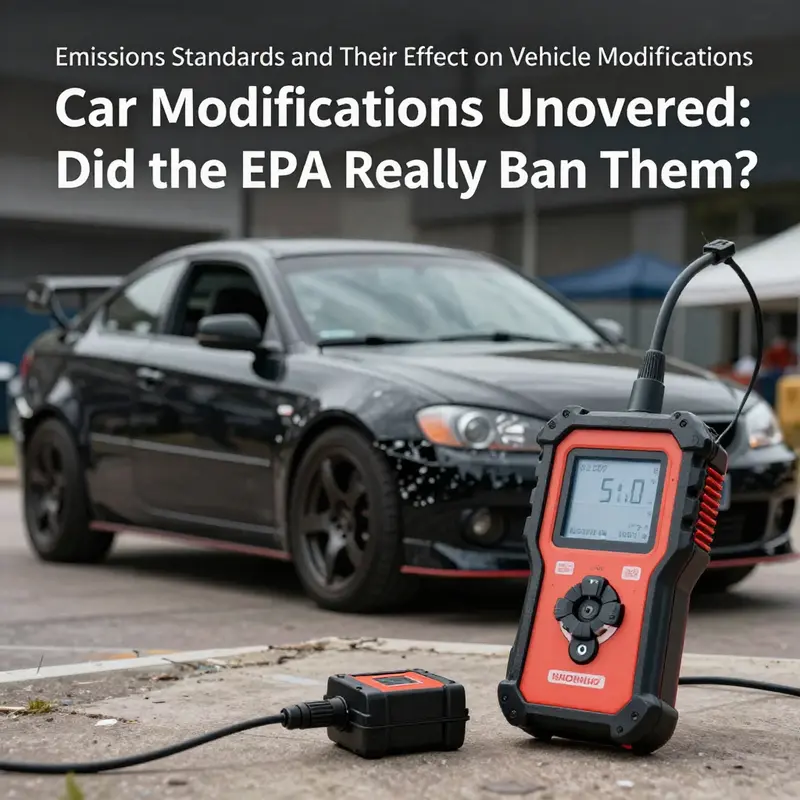
The question many enthusiasts and observers ask is deceptively simple: did the EPA ban car modifications? The short answer is no. The long answer reveals a layered system in which the federal government sets a national floor for pollution, safety, and overall performance, while state governments decide what counts as an acceptable modification within that floor. The distinction matters because it reframes the entire conversation around the aftermarket: not a single national ban, but a mosaic of rules that can make certain changes easier in one state and harder in another. This reality can feel counterintuitive when the headlines suggest a monolithic prohibition, yet it aligns with how the United States allocates regulatory authority. At the federal level, the EPA’s mandate is to prevent vehicles from emitting pollutants beyond established limits. Those limits cover critical substances such as nitrogen oxides, carbon monoxide, hydrocarbons, and, increasingly, greenhouse gases tied to CO2 and fuel efficiency. Any modification that pushes a vehicle outside these federally mandated boundaries becomes a problem not because modifications themselves are outlawed, but because the resulting emissions or performance characteristics could breach the national standard. In other words, the EPA’s role is to ensure a level playing field where modifications cannot be used as a backdoor to pollute beyond what is legally permissible. This approach preserves both the promise of aftermarket innovation and the public health imperative of clean air, without surrendering regulatory control to piecemeal, uncoordinated actions at the state level.
From a practical standpoint, the federal framework provides a baseline. Vehicle makers design engines, exhaust systems, and emission-control devices to reliably meet or exceed the national standards. When a consumer or shop modifies a vehicle, the onus falls on the modified vehicle to still comply with those same standards. If a modification raises tailpipe emissions or confuses the engine management system in a way that undermines proper control of pollutants, the vehicle could fail to meet federal requirements. The EPA’s approach is not to police every bolt and reed valve in an aftermarket setup, but to ensure that any alteration does not defeat the mechanism that keeps pollutants within the legal envelope. This principle matters especially in the era of more stringent greenhouse gas regulations, where improvements in efficiency and reductions in CO2 per mile are increasingly tied to the standard itself, not just the tailpipe pollutants. As a result, the conversation about modifications shifts from “can I do this?” to “does this modification keep the vehicle within the legal emissions range while preserving safety and reliability?”
Yet the federal message is not a blank check for every modification as long as a test passes. The EPA’s standards are designed with real-world driving in mind, and that means they anticipate how vehicles perform under a wide range of conditions, including variations caused by aftermarket parts. The reality is more nuanced: the EPA recognizes that some modifications can improve efficiency or reduce emissions when implemented thoughtfully, while others can inadvertently increase pollutants if they disrupt engine calibration, fuel-air mixture, or exhaust flow in ways the agency did not anticipate in its test cycles. To navigate this, the EPA relies on a combination of standard testing protocols, laboratory modeling, and enforcement mechanisms. The legitimacy of a modified vehicle hinges on whether it can be demonstrated to stay within the federally defined emission boundaries under normal operating conditions. The emphasis is on compliance rather than prohibition, which is why the path to a lawful modification often involves balancing performance goals with rigorous adherence to emissions limits. In practice, this means that tinkering must be done with an awareness of how the changes interact with the vehicle’s control systems and the standards that govern them.
Beyond the federal layer, state governments wield substantial jurisdiction over modifications, and this is where the landscape becomes visibly patchwork. California stands as the most prominent example of a stringent, single-state program that has shaped the aftermarket across the nation. The California Air Resources Board, or CARB, operates a system in which many modifications—especially those affecting emissions such as exhaust components, catalytic converters, or engine tuning—must be certified before installation. CARB certification creates a local standard that aligns with California’s aggressive air-quality goals and often reflects or anticipates broader regulatory trends. The state’s model influences neighboring jurisdictions and can exercise a chain reaction effect: shops, manufacturers, and vehicle owners plan modifications with CARB approval in mind, even if they live outside California. The result is a de facto deconstruction of the one-size-fits-all federal approach, replaced by a nuanced calculus that weighs the benefits of performance enhancements against the responsibilities of maintaining clean air. Other states may adopt similar testing and certification requirements, or they may rely more heavily on the federal baseline plus a state-level emissions test. In many places, a modification can be lawful if it passes emissions testing and safety inspections that reflect state standards. In states with less stringent regimes, the road to legality can be more straightforward but still tethered to meeting emissions criteria that protect air quality. This dynamic creates the practical reality of “pollution from the aftermarket” being policed not by a universal ban, but by a spectrum of rules that can differ sharply from one state to the next.
In this context, the idea of a nationwide prohibition on modifications loses some of its appeal. Instead, what exists is a framework in which the legality of any aftermarket change is judged by whether the end result remains within the federally mandated envelope and, at the same time, whether the change complies with state-specific requirements. The federal baseline acts like a safety net, preventing any modification from doing harm to the atmosphere beyond a certain threshold, while state authorities decide how closely to scrutinize modifications and how to enforce those rules at the street level. It’s a system designed to safeguard public health while allowing room for experimentation and customization, provided that safety and environmental safeguards are preserved. California’s stricter stance clearly demonstrates that a modification might be permissible in one jurisdiction but not in another, if it fails to secure the necessary certification or to pass a state emissions test. This reality helps explain why aftermarket enthusiasts often hear about compliance and certification processes more than outright bans.
A critical consequence of this arrangement is the need for trust and transparency in the aftermarket ecosystem. Consumers who plan modifications must understand not only the federal limits but also the particular rules in their home state or the state where the work is performed. This often means engaging with certified technicians who can assess how a given change might affect emissions and safety. It also means checking that any modifications, especially those affecting exhaust flow or engine calibration, have documentation that demonstrates compliance with the applicable standards. The regulatory complexity can seem daunting, but it also serves a protective function. It helps prevent scenarios in which a clever tweak intended to boost performance ends up pushing a vehicle outside the legal envelope or creating safety vulnerabilities. The emphasis on documentation, certification, and testing fosters a more predictable aftermarket environment in which responsible modification can coexist with environmental and public health goals.
This nuanced regulatory mosaic is not merely a compliance checklist. It shapes how manufacturers design new performance parts and how workshops staff themselves. When the federal standard emphasizes cleaner combustion and lower CO2 emissions, the industry responds by integrating more sophisticated emission-control technologies and by refining engine management systems to maximize efficiency under a broader set of conditions. The push toward cleaner, lighter, and more efficient vehicles—the products of both regulatory ambition and market demand—drives a cycle of innovation that gradually expands what is possible within the law. In the same vein, the global trend toward tougher standards in regions such as the European Union, China, and California accelerates the move toward electrification and hybridization. There, the calculus shifts from chasing marginal gains in combustion efficiency to rethinking propulsion architecture entirely, a shift that has ripple effects on aftermarket design, safety testing, and the availability of certain components for modification. The ICCT study referenced here provides a broad, data-driven context for understanding these shifts: emissions and fuel efficiency standards are not static; they shape how vehicles are engineered, how modifications are conceived, and how markets adapt to meet the expectations of regulators and consumers alike.
In practical terms, this means that a modification’s fate is partly determined by where it’s performed. If a shop in a state with permissive testing accepts a tune or exhaust change without checking for certification, the vehicle may pass a local inspection but fail a more stringent federal or regional evaluation if discovered. Conversely, a modification performed in a state with rigorous CARB-like requirements may proceed only after undergoing a formal certification process or after proving that the change stays within set emission margins. The key takeaway for readers is thus straightforward: the EPA does not issue a blanket ban on modifications; rather, it delineates the environmental guardrails. States interpret and enforce those guardrails in ways that can vary considerably, resulting in a patchwork where what is permissible in one jurisdiction may not be in another. The patchwork is not a sign of regulatory disarray, but a deliberate structure that aims to balance innovation, safety, and environmental protection across a very diverse country.
For enthusiasts seeking practical guidance, the path forward is pragmatic and grounded in compliance. Begin with a clear picture of federal expectations, then map out the regulatory terrain in your state. Seek out reputable, certified technicians who understand how a chosen modification interacts with the engine control unit, emission-control devices, and the vehicle’s diagnostic systems. Always verify whether the modification requires CARB-like certification or state-specific approval, and obtain documentation that demonstrates the modification’s compliance with the applicable standards. If there is any doubt, consult the state’s environmental agency or a qualified inspector before investing in parts or a tuning session. The aim is to preserve the performance you want while ensuring that the car remains within the law and able to operate without undue risk of failure or costly rework. This approach benefits not just the individual owner, but the broader ecosystem of manufacturers, service providers, insurers, and regulators who rely on clarity and accountability to sustain a vibrant, responsible aftermarket culture.
In sum, the EPA’s role is not to ban modifications outright. It is to set standards that guarantee clean air and safe operation, and to empower states to administer those standards in ways that reflect local priorities and conditions. The result is a dynamic but navigable landscape in which modifications are possible, provided they respect the ambient limits of emissions and pass the scrutiny of state regulation where applicable. As global shifts toward lower emissions continue to gain momentum, the same logic extends beyond national borders, underlining the central truth: environmental policy and automotive customization are not adversaries but partners in pursuing higher efficiency, cleaner air, and smarter mobility. For readers who want to explore the question of legality in their own jurisdiction, a practical entry point is to examine the existing state framework and the relevant CARB-like processes, which provide a clear trail from modification idea to road-legal realization. And for those curious about how broader regulatory trends influence the aftermarket across the world, a comprehensive study from the ICCT offers valuable context on the trajectory of emission and fuel efficiency standards that shape every gear-wrenching decision on shop benches and design studios alike.
Internal link reference: If you want to read about the legality of car modifications within the United States, this overview provides a grounded perspective on what is permissible where and why: car modification legal US.
External resource: For a broader, data-driven context on how emissions standards influence vehicle design and the shift toward electrification and advanced powertrains, see the ICCT study on Vehicle Emissions and Fuel Efficiency Standards: https://theicct.org/publications/vehicle-emissions-and-fuel-efficiency-standards
Boundaries on the Road and in the Courtroom: Public Sentiment, Legal Challenges, and the EPA Car Modification Policy
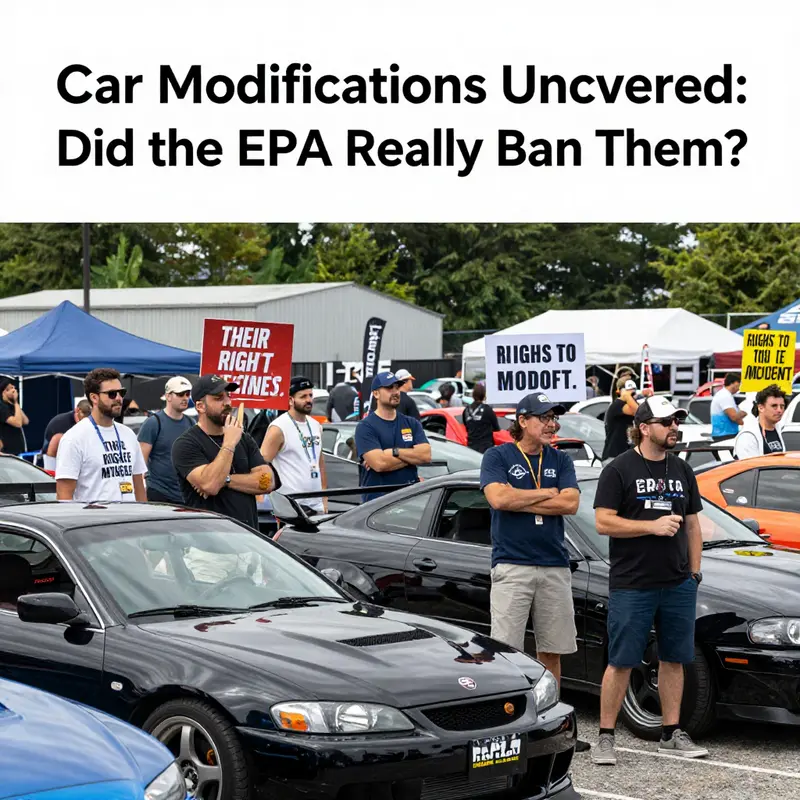
Modifying cars sits at the intersection of personal expression and public protection. The EPA sets national emission and safety baselines, but it does not ban aftermarket modifications. State and local authorities interpret and enforce the rules, creating a patchwork of pathways for compliant changes. California operates a unique program requiring certification before installation, while other states may require testing and inspections to ensure emissions stay within federal limits. The result is not a universal prohibition but a mosaic of requirements that can feel inconsistent to drivers and shops.
Public sentiment often values personal autonomy in vehicle tuning, while environmental and public health concerns push for cautious enforcement. Critics argue that many aftermarket devices do not meaningfully worsen air quality, and aggressive enforcement can burden small businesses. Proponents say modern vehicles are complex and that even small tweaks can ripple through emissions and fuel economy, necessitating careful oversight.
States have responded with stricter enforcement, litigation, or rules clarifying federal authority. The legal landscape shifts with court decisions and regulatory interpretations. Trade associations representing the aftermarket ecosystem argue that broad EPA interpretations risk stifling innovation. States may push back and require additional certification, testing, and compliance steps, which can raise costs for installers and owners.
For readers seeking practical guidance, the path forward is to engage early with regulatory landscapes in their state, understand testing protocols, and pursue clear, compliant pathways for modifications. Prioritizing modifications that stay within emission standards and documenting testing and certification where required can reduce risk. The overarching message is that the EPA does not ban car modifications outright; it frames a set of standards and states translate those standards into concrete requirements at the local level.
The policy takeaway is that environmental regulation interacts with economic activity, consumer rights, and automotive culture. A harmonized approach aims to protect air quality while preserving legitimate innovation and a vibrant aftermarket ecosystem.
Final thoughts
The regulatory landscape surrounding car modifications, influenced by both EPA standards and individual state laws, remains complex but far from prohibitive. While the EPA provides a foundational framework aimed at reducing vehicle emissions, it does not outright ban modifications; instead, it allows a degree of personal freedom that is championed by hobbyists and professionals alike. State-level regulations further shape this landscape, offering varying degrees of permissiveness and restriction, which highlights the importance for modifiers to be informed about their local laws. Emissions standards serve as a key factor affecting modifications, but they also encourage innovation and compliance among the automotive community. As public sentiment continues evolving, so too does the dialogue regarding the legality and ethics of car modifications. Ultimately, this vibrant culture must navigate the challenging terrain of regulations while still pursuing the joys of automotive personalization.