
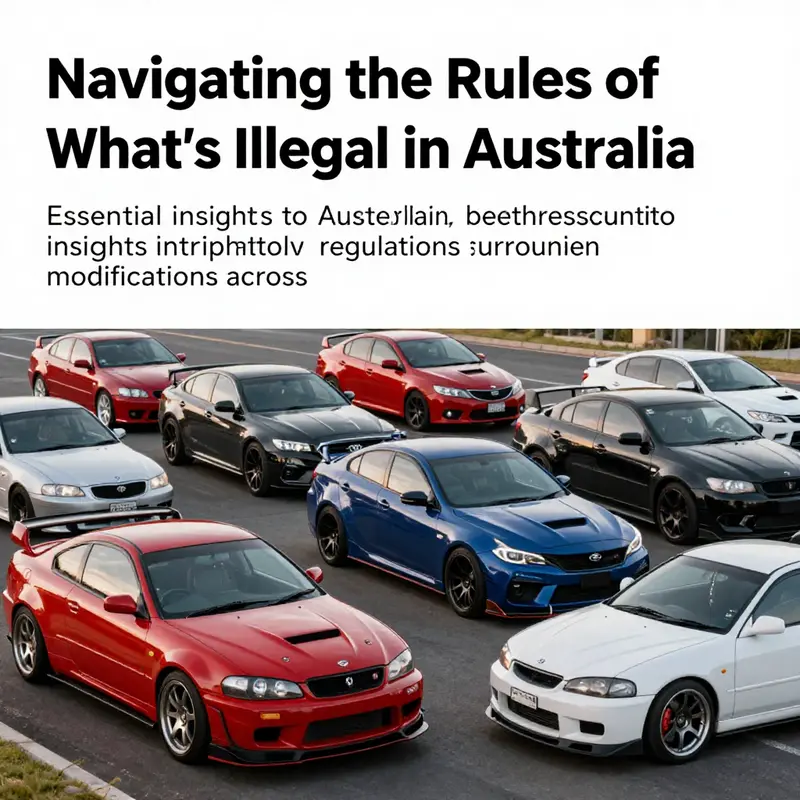
For car enthusiasts, modifying vehicles is a thrilling pursuit of customization and performance enhancement. However, it’s crucial to navigate the complex web of regulations governing such modifications in Australia. Each state and territory enforces distinct laws aimed at ensuring safety, environmental protection, and driver compliance. This overview explores the most common car modifications deemed illegal or heavily restricted, providing hobbyist modifiers, professional tuners, and classic car restorers with essential insights to avoid legal repercussions. We will delve into exhaust modifications, suspension changes, window tinting regulations, lighting rules, and engine tuning restrictions, equipping readers with the knowledge to elevate their automotive experience responsibly.
Ringing the Law Bell: Exhaust Systems, Noise, and the Australian Road-Use Conundrum
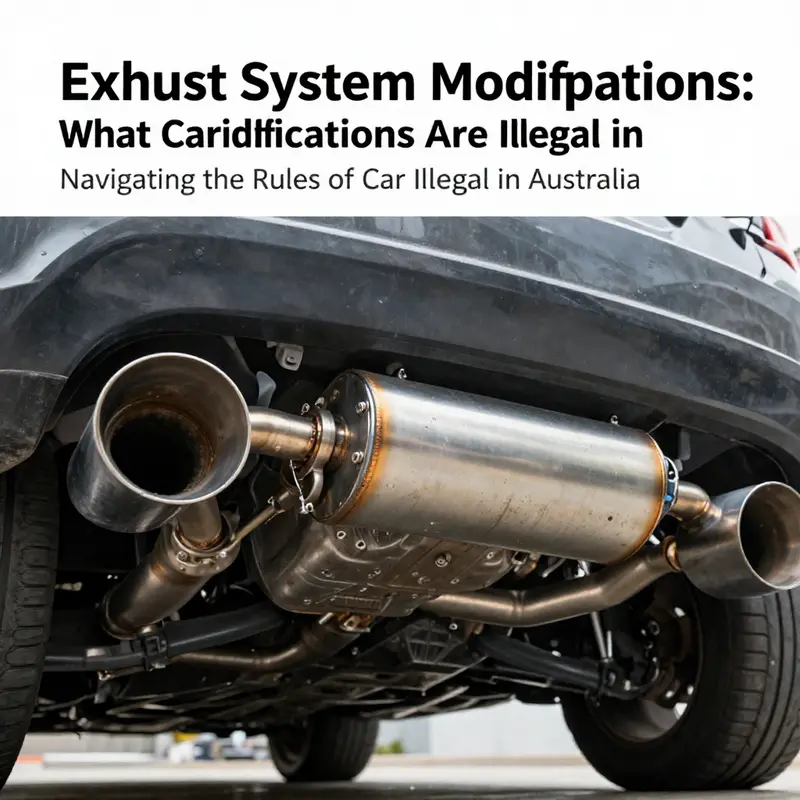
In Australia, an exhaust system isn’t merely a source of a deeper note or a sportier image. It is a regulated component that carries emissions, noise, and safety responsibilities into the public arena. The rules governing exhausts are not uniform across the country, but they share a common spine: modifications must not breach predictable limits set to protect people, property, and the environment. This chapter focuses on exhaust-related modifications, unpacking what crosses the line and why the enforcement apparatus treats it as a matter of roadworthiness rather than a cosmetic tweak. The central thread running through the regulations is about controlling noise to a certain standard, controlling emissions to limit pollution, and preserving the integrity of the vehicle’s safety systems. The practical upshot is clear: while a louder exhaust might seem like a simple customization, it rarely stays within legal bounds without explicit approval, certification, and alignment with the Australian Design Rules (ADRs).
Noise limits are the first frontline in distinguishing lawful from unlawful exhaust work. Across states and territories, ADR standards set baseline expectations for how loud a road vehicle can be. In many jurisdictions, the permissible noise level for typical passenger cars is drawn into sharp relief by a measurable boundary—often described in decibels measured at a distance from the vehicle, such as 50 meters. Modifications that push these readings beyond the threshold trigger enforcement actions and can lead to penalties, vehicle impoundment, or detainment from the road. This isn’t simply about a louder-than-average rumble; it is about maintaining a predictable auditory environment for other road users, especially in urban settings and near schools and hospitals. The line is drawn not by taste but by a quantifiable standard that technicians and police officers can verify during inspections. The practical consequence for owners is a cost-benefit decision, weighing the desire for a sportier exhaust against the risk of fines, failed inspections, or worse, a vehicle that cannot be legally driven until the system is corrected.
Beyond noise, emissions control is a core safety and environmental issue. The catalytic converter, a cornerstone of the exhaust system, is not optional in the eyes of the law. Tampering with or removing it to improve performance or to achieve a louder soundtrack is illegal in virtually every state. The catalytic converter performs a critical function—reducing the release of harmful pollutants into the atmosphere. Altering or bypassing this essential component disrupts the vehicle’s compliance with emissions standards, which are themselves anchored in ADR provisions. The intrusion into emissions control isn’t just a regulatory hazard; it increases the risk of failing pollution tests during annual inspections, which again can lead to fines, impoundment, or the vehicle being deemed unroadworthy until the modification is reversed or approved through a formal process. In practical terms, any exhaust modification that compromises the emissions pathway is a non-starter for legal approval.
Another common flashpoint is the use of straight-pipe arrangements or other high-performance exhaust configurations that claim to deliver improved airflow or a “better” sound, but lack the necessary compliance certification. Straight pipes often bypass or suppress the resonator or catalytic components that ADRs rely on to balance performance with environmental and safety considerations. Roadside checks and inspections have routinely penalized vehicles found with non-compliant exhaust systems, and the regulatory message is consistent: performance gains don’t trump the requirements that keep the road safe and the air clean. The practical reality is that many enthusiasts are tempted by the perceived benefits of these setups, yet the law demands a path that acknowledges both performance and compliance. The result is a tension—between the visceral allure of a louder, more aggressive exhaust note and the sober demands of road safety and environmental stewardship.
If you are contemplating exhaust work, the process is not about finding a cheaper, louder option and hoping for the best. It is about navigating a path that begins with understanding the ADRs and the state-specific rules, followed by seeking the right approvals and ensuring that every component is certified for road use. In some cases, a modification can be approved if it is part of a certified conversion or if the installer can demonstrate, through formal testing, that the exhaust system meets the relevant noise and emissions standards. The certification route often involves licensed testing facilities and alignment with the national standards that govern how a vehicle is measured and evaluated on the road. The practical implication for vehicle owners is straightforward: never assume that a clever aftermarket exhaust automatically qualifies as legal. The safe, lawful course is to verify compatibility with ADRs, obtain any needed certification, and pursue installation through qualified professionals who understand both the engineering and regulatory dimensions of the work.
A broader consideration is the interconnection between exhaust modifications and other aspects of a vehicle’s safety and compliance profile. A louder exhaust that also shifts the vehicle’s mass distribution, alters backpressure, or changes exhaust routing can influence wheel and tire clearance, heat management, and even brake cooling. In turn, these changes may require additional checks or modifications to maintain safe handling characteristics. The upshot is that an exhaust project rarely stands in isolation. It sits at the intersection of noise, emissions, safety, and regulatory oversight, and each facet must be aligned to pass the roadworthiness audit that a vehicle faces each year. This entwinement helps explain why the legal pathway for exhaust changes can be demanding but ultimately protective: it minimizes risk to other road users while providing a structured route for those who seek to tailor their vehicles in compliant ways.
For readers seeking a compact guide to the broader landscape of modifications, a quick survey of the legal terrain is helpful. A simple starting point is to recognize that a modification’s legality hinges on measurable outcomes—noise levels, emissions, and the integrity of safety-critical components. If a proposed change would push noise beyond the permitted limit, remove a component essential to emissions control, or create a hazard through incorrect mounting or heat management, it will not pass muster. Even if the origin of the modification is well intentioned or framed as a performance upgrade, the absence of certification and test data will usually be a red flag. In practice, many enthusiasts choose to pursue legitimate avenues such as certified upgrades that explicitly state compliance with ADRs, or consult with a trusted, licensed installer who can guide the project from concept to certified completion. The goal is clear: the vehicle should not only perform to expectations but also travel the road without presenting a risk of noise nuisance, environmental damage, or safety compromise.
For those who want a concise entry point into this topic, a broader discussion of illegal car modifications offers context about the landscape—covering more than exhausts and touching on issues like window tinting, lighting, and suspension. Reading about illegal modifications can illuminate the logic regulators apply when they evaluate compliance and can inform a responsible approach to any future work. If you’d like to explore a broader set of illegal modifications, you can read more on the topic here: Illegal car modifications. Meanwhile, for a deeper dive into exhaust-system legality and practical guidance, consult the external resource that informs many regulatory discussions about road-legal exhaust configurations. External resource: https://www.racq.com.au/road-legal-exhaust-systems-in-australia.
The bottom line is straightforward: in Australia, exhaust modification is governed by a framework that emphasizes predictable, verifiable outcomes. The law aims to keep noise within a reasonable envelope, limit harmful emissions, and preserve the vehicle’s fundamental safety features. If you’re planning any exhaust work, approach it as a regulatory project first, a performance project second. The right path is to seek ADR-compliant parts, obtain the necessary certifications, and partner with professionals who understand the regulatory terrain. When done properly, a vehicle can deliver the舌 performance you want without compromising safety, warranty, or road legality. The road ahead is well-marked, and the penalties for deviation are designed to deter risky behavior more than to discourage legitimate customization. In that spirit, the most responsible route remains clear: respect the law, respect the limits, and pursue modifications through approved channels so that your drive remains both exhilarating and compliant.
null
null
Tinted Glass, Complicated Rules: The Legal Landscape of Window Tinting Across Australia
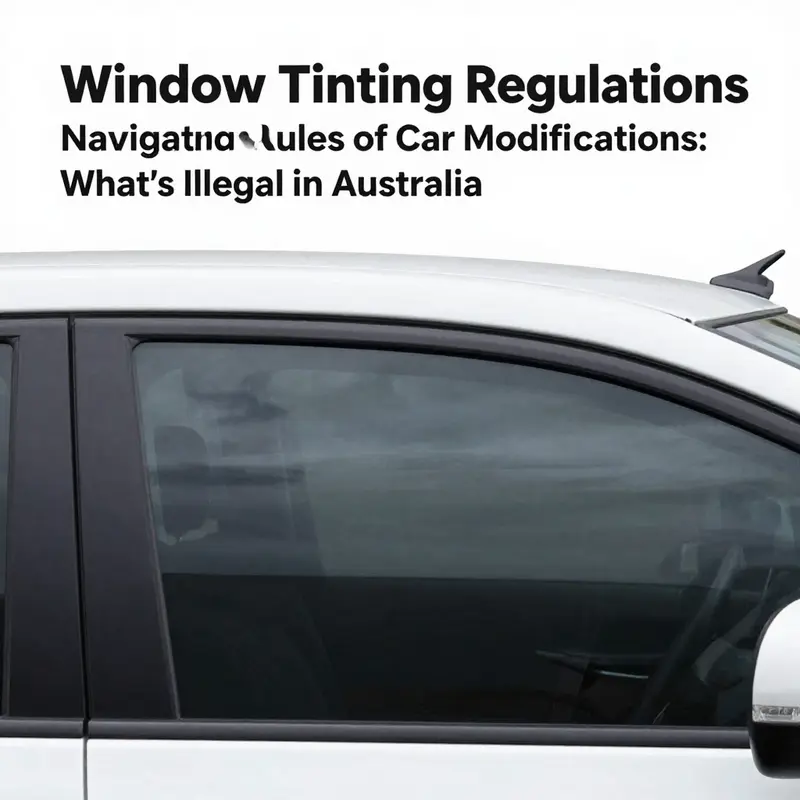
Tinted glass has long been a point of contention for drivers who want privacy, UV protection, or reduced glare, and regulators view it through a safety lens. In Australia, window tinting sits at the crossroads of personal choice and public safety, and the law treats front windows and rear windows quite differently. The result is a patchwork of standards that can feel opaque to the average driver, especially for those who move between states or purchase a used car with preinstalled tint. What appears simple at first glance—stick on film and go—quickly reveals itself as a regulatory minefield when you consider how visibility, glare, and even electronic systems can be affected. The essence of the rules centers on preserving the driver’s ability to see and be seen, while also ensuring that police, emergency services, and other road users are not blindsided by opaque glass at critical moments of decision making, such as turning, braking, or crossing intersections at night. Across most jurisdictions, the front windscreen and the front side windows are the focus. The front windscreen is treated with particular caution because it is the primary conduit for the driver’s field of view. In many states, tinting the top portion of the front windscreen is permitted only up to a specified light transmission, commonly around 35 percent visible light transmission, in the sun visor area. This cap is not a mere preference; it is designed to ensure that the glass still passes enough light during daytime and allows for adequate depth perception and reaction times in complex traffic situations. In practice, that means a driver can tint the upper strip but must leave a clear band that keeps the main field of view unobscured. The mandate is not uniform, but the underlying rationale is consistent: preserve the driver’s ability to scan the road ahead and to be visible to others in all lighting conditions. The front side windows—those on the driver and front passenger sides—are the next stage in the discussion. In most states, the minimum light transmission for these windows is around 70 percent. That translates to films that still let the driver and passenger see out clearly while allowing others to see through with sufficient daylight penetration. The tension here is intuitive: tint is desirable for reducing heat and glare, but it should not come at the expense of driver awareness in traffic, pedestrians, or cyclists who rely on eye contact and signaling. In many jurisdictions, tinting the front side windows below the 70 percent VLT threshold would be technically illegal. The rear side windows and the rear windscreen are where regulations tend to relax. A common pattern is that these windows may carry darker tints, provided the vehicle is equipped with suitable rear mirrors and, in some states, that the tint does not impede the driver’s ability to use the vehicle safely. The rationale is that rear passengers do not influence the forward view and that dual mirrors compensate for reduced visibility through the rear glass. Yet even this relaxation comes with caveats. Some states require that the tint film be certified or installed by an approved professional, and some films with metallic or reflective properties can interfere with electronic systems such as GPS, mobile signals, or the vehicle’s radio. The practical upshot is that a tint which seems perfectly harmless in one context can trigger compliance issues in another, particularly if the film affects driver visibility in low light or high glare situations. The penalties for non-compliance are not uniform, but they are consistently tangible. Police and road safety authorities may issue infringement notices, require the tint to be removed or replaced, and in some cases seize the vehicle until the tint is corrected. In more serious cases—where the tint creates an immediate safety hazard or is paired with other noncompliant modifications—fines can accumulate and, in rare circumstances, more formal action can be taken. The enforcement landscape also emphasizes the importance of documentation. In jurisdictions with strict front window requirements, motorists are often asked to provide proof that the tint complies with the relevant light transmission standards, especially if the vehicle has an inspection sticker or a compliance certificate. This is where the complexity of a nationwide system becomes evident. Drivers who relocate or purchase a vehicle across state borders may find themselves needing to adjust or replace tint to align with the new jurisdiction’s standards. The need for vigilance extends beyond the legality of the film itself. The method of installation, the presence of air bubbles or improper edge sealing, and even the mirror configuration can influence whether a tint is treated as compliant. In some cases, even a film that meets the numerical VLT criteria can be deemed noncompliant if it is improperly installed or if it creates a safety hazard in the event of a collision. Those who are considering tinting their windows should treat it as a regulated modification rather than a cosmetic enhancement. The best path is to consult local regulations before you begin, and to engage a certified installer who understands the nuances of the jurisdiction where the vehicle will be operated. It is also prudent to consider the practical consequences for insurance and resale. Some insurers view noncompliant tint as a risk factor, and aggressive tinting can complicate claims or even void coverage if it is linked to a broader pattern of nonstandard modifications. For buyers of second‑hand cars, a clear title requires scrutiny of the tint itself. If a vehicle is sold with darker rear windows but a compliant front windscreen treatment, the responsibility lies with the new owner to verify ongoing compliance, particularly if the vehicle will be driven across borders or on long interstate trips where different laws apply. The conversation about window tinting thus becomes part of a larger dialogue about responsible modification. It is not merely a matter of styling or personal preference; it intersects with aspects of road safety, environmental standards, and the reliability of a vehicle’s signaling in a crowded traffic environment. To anchor this discussion with a practical reference, a broad overview of illegal car modifications can provide context about where tinting sits within the spectrum of regulated changes. For a broader look at illegal car modifications, see illegal-car-modifications. This pointer may help readers frame tinting within the wider safety and compliance landscape as they navigate the state‑by‑state norms that govern what is permissible on Australian roads. For more state‑specific guidance, it is essential to consult the relevant road safety authority, since the rules governing tinting, mirrors, and related requirements can differ notably between jurisdictions. The patchwork nature of Australia’s tinting standards means drivers must be prepared to adjust when moving from one state to another, and even when purchasing a used vehicle with tint installed elsewhere. In many cases, a straightforward approach—aiming for a compliant front windscreen treatment and clear front side windows, with nonessential restrictions relegated to rear glass—strikes a practical balance between comfort and conformance. Yet the reality remains that tinting is a regulated modification with real compliance implications, not a purely discretionary cosmetic feature. It is worth noting that as more drivers consider climate control and UV protection, the popularity of tinted films is unlikely to wane. The policy question remains: how can regulators preserve safety while accommodating legitimate consumer preferences? The answer lies in clarity, consistent enforcement, and robust certification pathways that help vehicle owners navigate the complexity without sacrificing safety. External resources such as official state guidelines and road safety portals offer the most reliable guidance for those who want to stay on the right side of the law while still enjoying the benefits of tinted glass. For readers seeking a detailed, official standard specific to a given state, consult the relevant transportation authority or vehicle standards office. In the meantime, awareness of the general framework—and a careful appraisal of the front and rear window rules—provides a solid foundation for responsible decision making. External reference: https://www.nsw.gov.au/road-safety/vehicle-standards/window-tinting
Lighting and Headlight Rules: Navigating Australia’s Legal Thresholds for Car Modifications
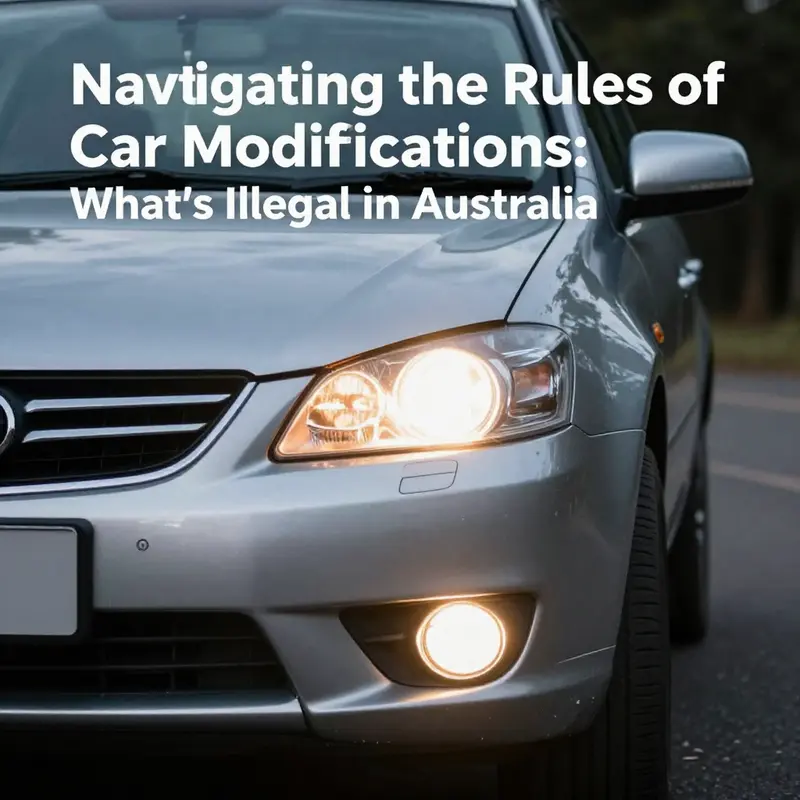
Headlights and the lighting system are often the most scrutinized area when car enthusiasts talk about modifications in Australia. The regulation of vehicle lighting is not just about looks or personal preference; it is a safety framework designed to preserve visibility for all road users and to minimize glare that can dazzle or blind oncoming drivers. In practice, any change to a vehicle’s lighting configuration needs to stay within the Australian Design Rules (ADRs), the legally enforceable standards set by the federal government. These rules are not advisory gray lines, but thresholds that police, inspectors, and insurance assessors rely on to determine whether a modification is permissible on public roads. The core idea is straightforward: maintain reliable illumination, preserve the intended beam pattern, and prevent any alteration that could harm other drivers or undermine the vehicle’s safety systems.
Central to this topic are the specific ADRs that govern lamps and headlamps. ADR 46/01 covers lamps, lighting devices, and indicators, while ADR 48/01 deals with headlamp aiming. Put simply, you are allowed to upgrade or replace lights only if the replacement is certified under these rules and the installation does not disrupt the beam pattern, color temperature, or performance in a way that could cause glare or misalignment for others. The Department of Infrastructure, Transport, Regional Development, Communications and the Arts (DITRDCRA) provides the official guidance that links these ADRs to practical road‑legal use. In short, compliant headlights must be certified, properly aimed, and properly installed. Anything that bypasses these checks raises the risk of failing a roadworthy inspection and attracting penalties.
One of the most frequent illegal routes involves high‑intensity discharge (HID) or light-emitting diode (LED) headlights that do not meet ADR standards. When a headlight emits excessive brightness, or the color temperature shifts toward blue or purple beyond what ADRs approve, glare becomes a real danger. The problem is not only the brightness itself; it is the way it interacts with oncoming traffic and the way it can overwhelm a driver’s peripheral vision. Across many states, police and inspectors are trained to spot non‑compliant units, mismatched color temperatures, and unintended color casts that can disguise pedestrians or cyclists. The risk is not hypothetical. It is precisely the kind of safety hazard that ADR compliance aims to prevent, and it is precisely the sort of modification that can lead to fines, vehicle impairment, or failed roadworthiness tests.
Another common misstep is altering the beam pattern. The headlamp aim is critical because it determines where the light touches the road and where it may spill into eyes of other road users. If someone tilts the beams upward or sideways in a way that increases glare, it is not just a legal risk; it is a direct safety hazard. That is why the official guidelines emphasize that any headlamp modification must preserve the intended distribution of light. Even cosmetic or functional upgrades that seem beneficial—such as brighter fog lights or additional daytime running lamps—must be installed with proper mounting and wiring that conform to ADRs and the vehicle’s certification. The intention behind these standards is clear: better visibility for the driver should not come at the expense of others’ safety.
Tinted lenses and lens coverings illustrate how seemingly minor alterations can draw legal scrutiny. In some jurisdictions, tinted headlights or lens covers are banned or restricted unless they meet specific light transmission requirements. This is not merely a design preference; it is a lighting regulation aimed at preserving adequate illumination on the road. When lights are altered in ways that reduce visibility or impede the ability of the system to signal to other road users, they fail the safety test, regardless of any perceived benefit in a dark environment. States like New South Wales and Victoria have taken a particularly cautious stance on headlight modifications, reflecting regional enforcement priorities as well as the overarching national framework.
In this landscape, the role of official inspections becomes central. A vehicle that arrives at a roadworthy check or a statutory inspection with non‑compliant headlights is at risk of failing the test. If a headlamp system is deemed non‑compliant, the owner may be required to return the vehicle to a compliant state before it can be registered or re-registered. This is not merely a paperwork exercise; it is a safeguard that affects insurance coverage, the ability to legally operate the vehicle, and even the vehicle’s resale value. Indeed, the risk of penalties extends beyond fines. In some cases, authorities may impound a vehicle until the lighting system is brought into compliance, a disruption that underscores how seriously lighting standards are treated in practice.
For owners who are intent on improving lighting while staying within the law, the pathway is clear but exacting. Seek certified, ADR‑compliant lighting upgrades and have them installed by professionals who understand the rules and the documentation required. The process often involves certification that the replacement components meet the relevant ADRs and that the installation does not alter the vehicle’s original design parameters in a way that would affect safety. If you are unsure about the legitimacy of a particular modification, it is prudent to consult your local authority or a licensed testing facility before making a purchase or committing to an installation. The risk of noncompliance—warrants, insurance disputes, or criminal charges—far outweighs any perceived advantage from an unregulated upgrade.
To readers seeking broader context on what counts as legal car modifications, see Legal Car Modifications. This broader framing helps connect lighting rules to the continuum of regulatory expectations that govern aftermarket changes. The lighting discussion, however, remains a precise subset of a larger regulatory ecosystem designed to balance performance with safety. The ADR framework, along with state‑level enforcement practices, provides a consistent baseline across the country, even as local authorities retain some scope for nuance in enforcement and interpretation. For example, while the ADRs set the standard for what constitutes a compliant beam pattern and a compliant light source, the way these standards are applied can vary slightly from jurisdiction to jurisdiction, and inspectors may have discretion in how they interpret borderline cases. This is why working with the right professionals and engaging with official resources is essential when planning any lighting upgrade.
Ultimately, the lighting rules reflect a broader principle of road safety that permeates every aspect of modification culture in Australia: enhancements must improve, not compromise, safety. The lamps you install must illuminate the road effectively for you and other drivers, while always respecting the boundaries of the law. In the end, the most satisfying and durable upgrades are those that survive the scrutiny of road safety standards, the examiner’s eye, and the practical realities of driving at night in a busy city or a remote highway. For readers who want to explore the formal framework in more depth, the official ADR guidance and related regulatory resources offer the precise language and technical criteria used by regulators nationwide. External residents of the topic can consult the authoritative resource on Australian Design Rules for detailed, rule‑by‑rule guidance: https://www.ditrd.gov.au/vehicles-and-transport/vehicle-safety-and-regulations/australian-design-rules
Power Under Scrutiny: Engine Tuning and Australia’s Road Modifications Framework
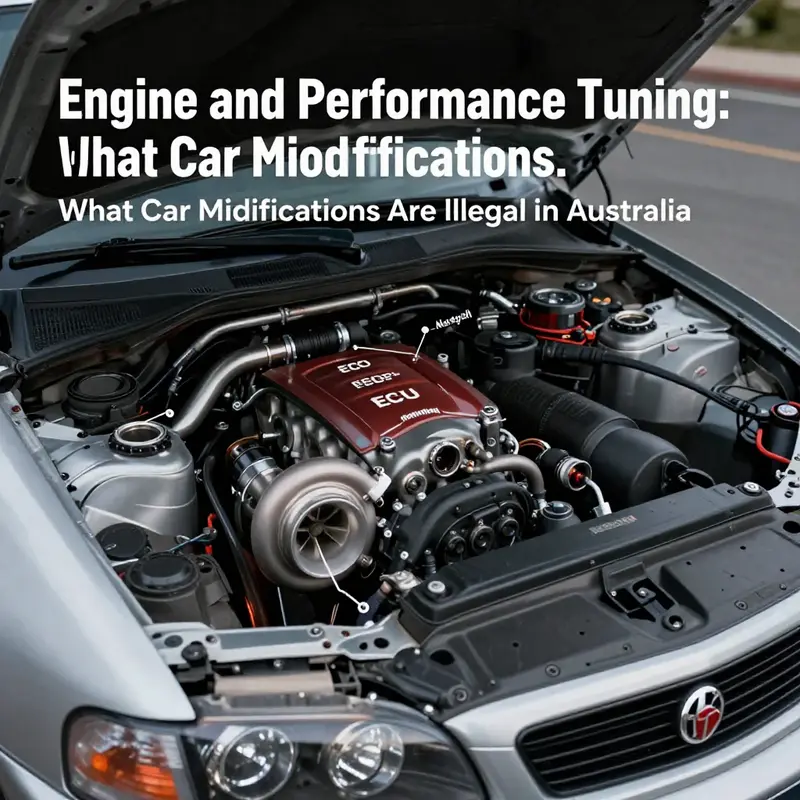
In Australia, performance upgrades are built on a framework of safety, emissions, and road-usage rules. Vehicle modifications must pass approvals under Australian Design Rules (ADRs) and state or territory requirements. Changes that affect how power is produced or how the engine breathes—such as exhaust, ignition timing, fuel delivery, or induction—often require formal assessment and certification before the vehicle can be used on public roads. Commonly scrutinized areas include exhaust systems (noise and emissions limits), emissions equipment integrity (catalytic converters), and engine management alterations (ECU remapping) performed outside authorised pathways. Boost devices like turbochargers or superchargers generally demand a formal modification certificate and potential re-registration to remain legal for road use. Unauthorized tuning can lead to fines, vehicle impoundment, insurance complications, and warranty voidance. The aim of the regime is not to stifle performance but to ensure safety, reliability, and environmental compliance.
Practically, enthusiasts are encouraged to pursue certified modification programs, work with licensed testing facilities, and complete any required re-registration when upgrading power. For official guidance, consult national vehicle modification resources and your local road-traffic authority.
Final thoughts
Understanding the legal landscape surrounding car modifications in Australia is essential for both novices and seasoned tuners. With each chapter illuminating the complexities of regulations on exhaust systems, suspension alterations, window tinting, lighting changes, and engine tuning, enthusiasts can better navigate the fine line between customization and compliance. Prioritizing legal modifications not only avoids punitive measures but also enhances the driving experience and safety on the road. Stay informed, stay compliant, and keep your passion for automotive enjoyment thriving without legal pitfalls.