

Car enthusiasts and modifiers know the thrill of improving their vehicles. Beyond mere aesthetics, performance modifications elevate the driving experience, sharpening responsiveness, power, and handling. From street racing to track days, every car mod enthusiast seeks the ‘best’ upgrade to unleash their ride’s full potential. This guide embarks on a deep dive into what qualifies as the top performance modification—engine tuning—and explores its synergistic relationship with essential upgrades like performance exhaust systems, suspension enhancements, and high-performance tires. Additionally, we’ll uncover budget considerations, ensuring your investment yields significant returns. Join us on this journey to discover how to make informed decisions that align with your unique goals and elevate your ride to new heights.
Tuning the Heart of the Machine: Why Engine Calibration Stands as the Best First Performance Modification

Choosing the best performance modification for a car is less about chasing a single flashy bolt-on and more about aligning power, responsiveness, and reliability with how you actually drive. Among the options, engine tuning—often delivered as an ECU remap or chip tune—consistently rises to the top as the most efficient, impactful, and accessible starting point. It is not merely about pushing more horsepower; it is about unlocking the engine’s hidden potential, refining its behavior under real-world conditions, and doing so in a way that respects the existing hardware and the driver’s intent. This is where the discipline of modern engine control meets the art of driving pleasure, creating a coherent, cohesive upgrade path that often yields the most satisfying gains for the least upfront disruption to daily usability.
The core idea behind engine tuning is straightforward: the engine control unit already holds the blueprint for how the engine should behave under a wide range of operating conditions. It determines how much fuel is delivered, when the spark should ignite, and how aggressively the turbo or supercharger should boost, if one is present. In stock form, those maps are conservative enough to protect longevity, meet emissions standards, and smooth out the rough edges for a broad audience. But within those broadly safe envelopes, there is often spare capacity—hidden potential that a skilled tuner can reveal. A professional ECU tune recalibrates the engine’s control strategy to suit the specific vehicle configuration and the driver’s goals. The result is a more responsive, more eager engine that can deliver a meaningful jump in power and torque without the need for a major mechanical overhaul.
Real-world gains from a well-executed tune are substantial but nuanced. Commonly, horsepower and torque rise in the range of about 10% to 25% or more, depending on the engine design, whether the car is turbocharged, and what other changes, if any, accompany the tune. For a turbocharged setup, the tune can adjust boost pressure within safe limits, optimize ignition timing for higher efficiency, and lean toward an air-fuel mixture that extracts more usable energy from every drop of fuel. Naturally aspirated engines also benefit, though the relative gains can be more modest since there is less leeway to increase boost. The real triumph is not just the peak numbers, but the improved throttle response, broader torque availability, and a more linear, confident power delivery across the rev band. A well-tuned engine feels less like a chorus of discrete corrections and more like a single, purposeful instrument that responds precisely to the driver’s intent.
Modern engine tuning goes beyond simple map edits. It often involves a tailored calibration that accounts for a car’s exact configuration, including aftermarket intakes, exhausts, intercoolers, or even changes in fuel, octane, or altitude. This customization is where tuning earns its reputation as a smart, efficient modification. A professional tune will respond to the fact that you’ve installed a freer-flowing intake or a less restrictive exhaust by adjusting air-fuel ratios and timing to preserve safe combustion and avoid lean conditions that can damage the engine. In effect, the tune becomes a bridge between hardware upgrades and safety, preserving reliability while maximizing performance. If you’ve added components after the tune, a revisit with the tuner ensures the ECU maps harmonize with the new hardware, maintaining efficiency and protection against detonation. This is the essence of the concept of a custom calibration: a map that understands the entire system and adapts to it rather than treating each part in isolation.
The appeal of engine tuning also lies in how it changes the relationship between the driver and the car. A tuned engine can offer a noticeably crisper throttle feel, a more eager response when the pedal is pressed, and a torque curve that remains generous over a wider range of speeds. The vehicle becomes more willing to surge forward when needed, which translates into quicker overtakes, more confident passing, and an overall sense that the car is more in tune with the driver’s intent. For many enthusiasts, that immediacy of response is the defining characteristic of a satisfying performance upgrade. It’s the difference between a car that feels predictable and a car that feels alive, ready to respond to even subtle steering and throttle inputs with purposeful momentum.
Of course, the practical advantages of tuning extend beyond straight-line acceleration. In daily driving, a well-tuned engine often improves driveability by smoothing delivery across gears and RPM ranges, reducing hesitation, and stabilizing transmission behavior when torque shifts. The result can be a driving experience that feels more engaging yet more refined at the same time. And because tuning typically focuses on the engine’s control logic rather than adding new hardware, it remains remarkably cost-effective. It is common for a professional ECU tune to cost far less than a full hardware upgrade, while delivering a meaningful, measurable boost in performance. This blend of affordability and impact is a large part of why tuning is frequently recommended as the initial step in a broader performance plan.
That said, there is a fundamental caveat to any modification, and it specifically concerns tuning philosophy. Not all tunes are created equal. The best results come from engineers who practice disciplined, data-driven tuning using reliable tools, validated baselines, and careful logging. Aggressive tunes without adequate monitoring can push temperatures, pressures, and fueling beyond safe boundaries, risking detonation, overheating, or component wear. The key to safety is working with an experienced tuner who can interpret data from dyno runs and real-world driving, ensuring the calibration respects the engine’s limits while still delivering the intended gains. A responsible tune embraces a measured approach: incremental gains paired with thorough validation, and a plan for monitoring, especially in hot climates or with aggressive driving styles.
For those curious about the practical workflow behind the best-in-class outcome, consider the path from stock to tuned as a conversation between the car, the tuner, and the road. It usually begins with a baseline assessment—checking fuel trims, timing, and boost behavior—followed by controlled tests to establish a performance baseline. Then comes the core work: adjusting the fuel map to achieve stable air-fuel ratios across the rev range, refining ignition timing to maximize efficiency and power without risking knock, and, where applicable, tuning boost pressure and wastegate behavior for turbocharged engines. The end product is not a one-size-fits-all map but a bespoke engine strategy tuned to the vehicle’s unique configuration and the driver’s preferences. If the car has aftermarket intake and exhaust, a well-executed tune ensures these changes harmonize with the engine’s breathing, preserving safe AFRs and avoiding inefficiencies or misfires that could undermine performance gains.
An important facet of this process is the ability to tailor the tune to a driver’s preferred style. Some enthusiasts want a spicy, edge-of-grip throttle response that makes the car feel instantly reactive to every touch of the accelerator. Others prioritize smooth, predictable power delivery for spirited daily driving or track days where consistency matters. A skilled tuner can shift the torque peak and broaden the usable range to align with these preferences, sometimes even offering multiple maps that a driver can switch between depending on conditions or mood. In this way, engine tuning becomes not just a performance upgrade nhưng a customization that resonates with how the car lives on the street or the track. For readers seeking a practical gateway into this world, the concept of a tunable engine map is a reminder that performance is a language spoken in curves, throttle, and timing—an intimate dialogue between machine and driver.
The value proposition of tuning is further reinforced when considering it as the foundation for other enhancements. A properly tuned engine unlocks the full potential of intake systems, exhaust improvements, and turbo upgrades without inadvertently compromising efficiency or safety. Conversely, attempting to bolt on high-flow components without tuning can lead to suboptimal air-fuel balances, reduced reliability, and a less-than-satisfying result. This is why professionals often position ECU remapping as the first logical step in a broader performance journey. It primes the engine to respond to hardware changes with the intended improvements rather than fighting against mismatched calibrations. If you intend to pursue a broader upgrade plan, you will likely find that your after-tune gains amplify once you’ve introduced complementary hardware, provided the tuning has already laid a solid, well-calibrated foundation.
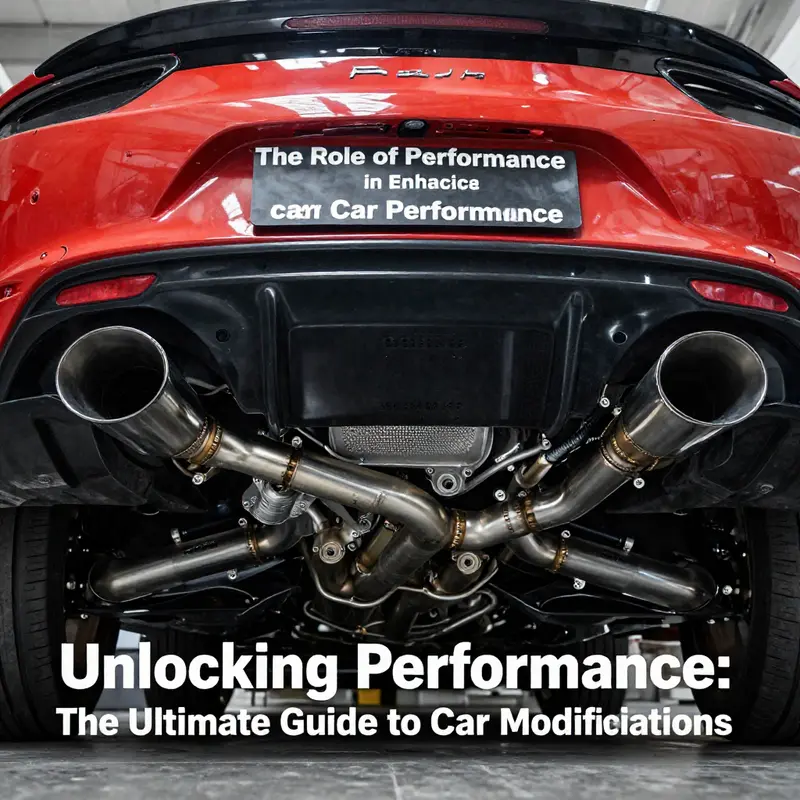
The broader conversation about performance modifications would be incomplete without addressing the balance between cost, effort, and outcome. Engine tuning stands out because of its affordability and ease of installation relative to most mechanical upgrades. It does not require hours of mechanical labor or the complex integration of new hardware, and it can deliver a noticeable uplift in both power and daily driveability. For many enthusiasts, this makes tuning the best “first step,” the one modification that cleanly sets the stage for a more ambitious but still harmonious upgrade path. It is the kind of improvement that earns the most consistent recommendations from professional tuners and experienced drivers alike: start with the map, then consider the cat-back exhaust, intake, suspension, and tires, all tuned and selected to work together.
If you are exploring this path, it can be valuable to view engine tuning not as a solitary upgrade but as a conversation about how a car is meant to respond to your inputs. The tuned engine, when paired with the right supporting adjustments, becomes a more eager partner—one that rewards precise throttle control, confident cornering, and predictable behavior at the limit. It is also worth noting that the sport of tuning thrives on knowledge-sharing and responsibility. Understanding how to install and adjust modifications responsibly is essential; practical guidance on the process is available through resources that walk readers through the installation and calibration steps. For those curious about the practical steps to apply such modifications, see How to Install Modifications on a Car.
In the end, engine tuning embodies a pragmatic philosophy. It respects the engine’s existing design, leverages computational control to extract more usable power, enhances drivability, and does so with a cost-to-benefit ratio that appeals to a broad range of enthusiasts. It is not a guarantee of limitless speed, nor is it a substitute for solid fundamentals like tire grip, chassis balance, and braking capability. Instead, it offers a powerful, flexible, and safe way to translate possible performance into actual, measurable gains you can feel every time you press the accelerator or lean into a corner. When framed this way, tuning emerges not as a loud, disruptive modification but as a thoughtful, surgical, and ultimately rewarding way to align your car’s temperament with your driving intentions. The engine’s heart, once calibrated, beats with clarity, and the road responds in kind.
External reading for broader context and verification of performance gains can be found in automotive literature exploring tuning outcomes and best practices: https://www.autoblog.com/2024/05/28/engine-tuning-performance-gains/
null
null
Steering the Edge: How Suspension Upgrades Recast Handling and Performance

Suspension upgrades often hide in the shadows beside more glamorous power boosts, yet they are the conviction behind every meaningful handling improvement. For the question of what constitutes the best performance modification, many drivers discover that upgrading the suspension delivers a more tangible, repeatable, and underappreciated form of performance than chasing horsepower alone. The road becomes a feedback medium, not a mystery to be solved with larger engines. The car communicates grip, balance, and predictability with a clarity that magnifies every other modification you might undertake. In practice, this makes suspension work one of the most efficient paths to higher performance for a broad range of drivers, from daily commuters who crave confidence on wet streets to track enthusiasts chasing faster corner exits and cleaner lap times.
At the heart of suspension effectiveness is the concept of a chassis that can translate engine load into usable grip without sacrificing control. Modern independent suspension designs play a crucial role here. They allow each wheel to respond to road irregularities on its own, maintaining tire contact with the surface across varying conditions. The payoff is not just a smoother ride; it is a more consistent footprint of the tire on the road. With independent layouts, the car can keep the inner and outer tires engaged in a coordinated dance as you enter a corner, brake, and accelerate out of it. The result is more linear steering, more predictable turn-in, and a chassis that remains composed when balance is challenged. In performance contexts, this translates to quicker, more confident laps and improved driveability at the limit, where small miscommunications between driver and car can turn into big time losses.
The upgrades themselves are not a mere shopping list but a conversation about how the car handles forces. A common starting point is replacing rubber bushes with stiffer polyurethane or spherical bearings. This move reduces unwanted flex in the control arms and links, ensuring that steering inputs translate more directly into wheel motion. The improvement is often described as a more precise and immediate response to steering, especially when the car is pushed beyond ordinary pace. It’s not merely about rigidity; it’s about achieving a more controlled energy flow through the suspension so that the tires can do their most important job: maintain contact and grip. The car feels more willing to follow the driver’s intent, especially at the limit, where any vague or delayed response can sap motivation and confidence.
Lowering springs are another well-trodden path toward a more handling-focused setup. By lowering the ride height, you reduce the vehicle’s center of gravity, which helps resist body roll through corners. The practical impact is a chassis that leans less and therefore keeps the tires loaded more evenly as you lean into turns. This isn’t a guarantee of cornering speed by itself, but it creates a more favorable baseline for grip distribution and throttle control. The visual cue is often a lower, more planted stance; the dynamic cue is a chassis that feels more willing to track along the desired line. It’s essential, though, to pair such changes with careful attention to bump absorption and ride quality. If the suspension becomes too stiff for the road surface, you lose the very tire contact that makes the lower stance effective. The goal is a balanced reduction in body movement without trading away tire compliance or comfort on imperfect surfaces.
Adjustable dampers add a further layer of versatility. Dampers control how quickly the suspension compresses and rebounds in response to road inputs. When you can tune them, you gain the ability to trade ride comfort for control as needed. Softer settings can preserve compliance and keep the car smooth on everyday roads, while stiffer settings can tighten up the chassis for aggressive cornering, faster lap times, and more certainty at the limit. The advantage is not simply a stiffer ride; it’s a calibrated interaction between springs, tires, and chassis geometry. With properly dialed dampers, the driver experiences more predictable load transfer, less pitch and dive, and a steering feel that remains communicative under load. The car becomes more like an extension of the driver’s hands, a crucial trait when precision matters most.
All of these changes interact with a car’s alignment and overall geometry. A chassis upgrade without corresponding alignment work risks undermining the gains. Alignment—especially toe and camber settings—tunes how the tire contacts the road across a corner’s arc and how the car behaves when transitioning from straight-line stability to lateral load. A touch more negative camber can boost grip at the limit by keeping the outer tire at peak contact during aggressive cornering, but it also accelerates inner tire wear if not matched to driving style and tire compound. Toe adjustments sharpen or relax steering response and straight-line stability; even small tweaks can have outsized effects on exit speeds and mid-corner confidence. The precision-driven driver seeks a setup in which the suspension geometry and damping cooperate to keep the tire in its optimal friction state across a wide envelope of speeds and surface conditions.
The trade-offs are real and often subtle. Upgrades that stiffen the suspension and reduce body roll can also magnify road harshness. A track-focused setup may deliver pristine control on smooth racing surfaces but feel brittle on rough channels or daily commutes. The balance point is a function of the vehicle’s baseline dynamics, the typical road conditions, and the owner’s tolerance for a firmer ride. The same dampers that offer crisp turn-in on a smooth track can transmit road imperfections into the seat. The art of suspension tuning thus becomes a dialog between desired handling precision and required ride comfort. A thoughtful approach uses progressive choices—soft settings for daily driving and a well-calibrated stiffer option for specific track sessions—so that you do not have to surrender comfort to chase performance.
Beyond the immediate feel, suspension upgrades alter how the chassis handles weight transfer under braking and acceleration. A capable suspension helps keep the tire contact patch stable when the car loads the outside front tire in a corner and the inside rear tire finishes loading through the exit. This stability is what allows the driver to brake deeper into a turn and feed power earlier on the exit with confidence. In practice, the gains become measurable not only in handling precision but in the driver’s ability to push on the throttle earlier, knowing the chassis will stay composed as weight shifts rearward. That sense of control—of being able to commit to the corner with a known outcome—translates directly into faster lap times and safer, more predictable street performance.
The interplay between suspension upgrades and other performance modifications is worth highlighting. An ECU remap or engine tune can unlock more power, but without a chassis capable of controlling that power, you risk amplifying instability. Suspension upgrades equip the car to absorb, manage, and apply that power with a precision that makes the speed feel sustainable rather than reckless. The same philosophy applies when combining upgrades: the tires must be capable of translating the increased grip into forward motion, the brakes must be able to scrub speed without fade, and the steering must convey the car’s limits clearly. This holistic view aligns with the central message of the broader discussion: the best performance modification depends on goals, but the most transformative gains often arise from a well-integrated suspension strategy that unifies handling, feedback, and confidence.
In the search for practical guidance, it helps to think about the driving context. On public roads, a balanced suspension upgrade that preserves ride quality while sharpening response often provides the most sustainable improvement. On a closed circuit or a demanding back road, you might push for greater roll stiffness and a more aggressive damper tune, always with careful attention to tire choice and alignment. The objective is to achieve a chassis that remains composed through varied transitions, where steering input maps cleanly to vehicle response and where the tires maintain friction rather than sliding into the limit. A car that can consistently deliver a predictable line through complex corners is a car that can be driven faster, with less guesswork and more trust.
For readers who want to see how these ideas fit into the larger landscape of car modification, there are practical resources that outline the steps of a thoughtful upgrade program. The car modifications guide offers a practical overview of how geometry, damping, and spring rates combine to shape a vehicle’s behavior, helping you understand where suspension upgrades sit in a broader plan. This kind of guide helps ensure that you approach upgrades with a coherent strategy rather than piecing together parts in search of a magical fix.
On a deeper technical level, professionals and engineers treat suspension as a dynamic system with multiple interacting variables. The principles underpinning modern chassis engineering emphasize maintaining tire contact, controlling roll, and delivering consistent tire loading through the entire cornering cycle. This is why suspension upgrades tend to deliver tangible performance benefits that persist across a wide range of conditions, not just in ideal scenarios. The careful calibration of bushings, dampers, springs, and alignment yields a chassis that responds intuitively to the driver’s input, making even modest gains feel meaningful because they are felt directly in steering precision, grip levels, and cornering confidence.
If you’re seeking a broader, authoritative frame for these ideas, the engineering literature on chassis dynamics and suspension design provides rigorous insight into why these principles matter. For a deeper technical grounding, the Society of Automotive Engineers (SAE) offers extensive research and standards related to suspension behavior, dynamic modeling, and drive-axle interaction. See the SAE resource for a foundational look at suspension dynamics and related topics. This external reference complements the practical guidance discussed here, grounding the discussion in established engineering practice and ongoing research.
In summary, suspension upgrades can be the most effective and accessible route to real-world performance gains. They translate the car’s power into usable speed, deliver sharper steering and more controlled cornering, and offer a practical path to improved track performance without requiring wholesale mechanical replacements. The optimal path—whether a street-focused balance or a track-ready, higher-stiffness setup—depends on your goals, road conditions, and willingness to trade some ride comfort for increased control. When integrated thoughtfully with engine tuning, tire selection, and braking strategy, suspension enhancements form the backbone of a capable, confident, and enjoyable performance vehicle. For many drivers, they represent the best balance of payoff and practicality in the quest for genuine driving performance, turning the act of steering into a precise, responsive, and rewarding experience.
See the car modifications guide for a practical overview of how geometry and damping choices come together, and consider the broader conversation that links suspension, engine, and tires in a coherent performance plan. For a deeper technical grounding beyond the practical, consult authoritative resources on chassis dynamics through SAE and related engineering literature to understand how these ideas are developed, tested, and applied in modern vehicles.
Grip Before Gears: The Essential Role of High-Performance Tires in Real-World Power Upgrades
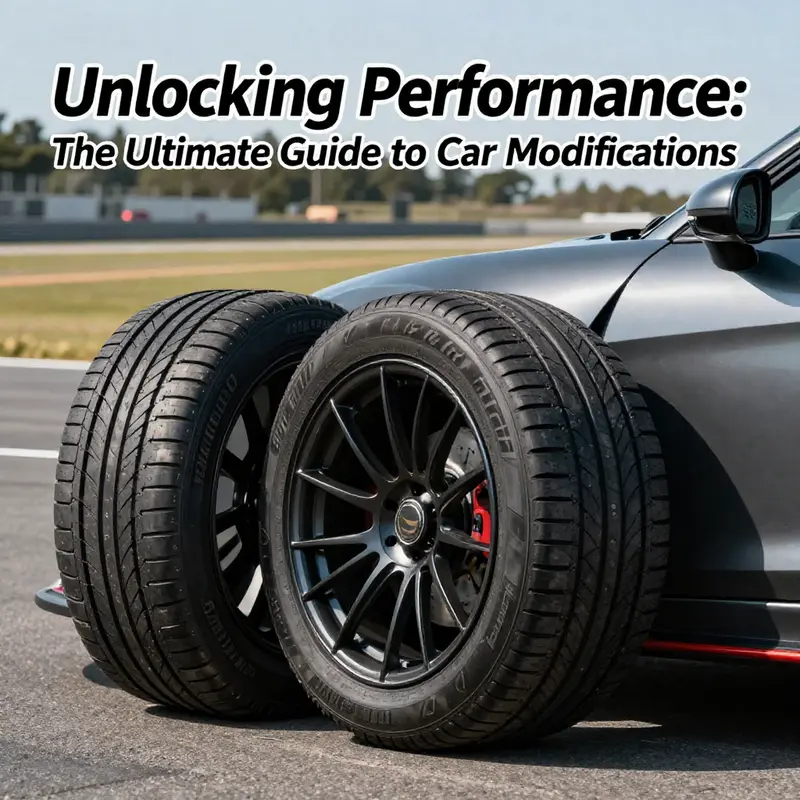
The best performance modification for a car is not a single bolt-on part but the careful orchestration of the car’s sleeping giants—the tires. In the grand balance of horsepower, torque, and chassis dynamics, tires are the primary interface between the machine and the road. They translate every ounce of engine tuning, every influence of suspension geometry, and every millimeter of aerodynamic thinking into tangible grip, braking bite, and available stability. In practical terms, a car may gain 10 to 25 percent more power from a professional ECU remap, yet without appropriate tires to harness that extra grip, those gains are dulled, delayed, or even squandered in understeer, oversteer, or heat-soaked performance that never reaches the pavement. Tires are not merely a consumable or a cosmetic upgrade; they are the foundational element that makes all the other performance modifications meaningful. When you consider upgrading a car’s dynamic envelope, the tires determine how aggressively you can drive, how quickly you can brake from speed, and how confidently you can corner on the edge of grip. They define the practical ceiling of what your tuned engine and upgraded suspension can actually deliver on public roads and, crucially, on a track in spirited driving conditions.
The technical logic behind this is straightforward but powerful. At the core, high-performance tires are engineered with advanced rubber compounds and tread patterns designed to maximize the coefficient of friction between rubber and road while controlling heat buildup. The goal is to keep the grip high even as power and speed push the car to the limit. A sticky compound and a well-designed tread can hold a line through a fast corner, maintain stability under aggressive throttle release, and shed heat efficiently to prevent grip fade. This last point—heat management—is critical in track use or repeated hard driving, where tires can go through cycles of heating and cooling. When tires overheat, their grip compounds can break down, leading to unpredictable handling and diminished braking performance. By contrast, tires designed for sustained performance balance grip with thermal stability, allowing the driver to push harder for longer without a dramatic drop in traction.
The narrative of performance is incomplete without acknowledging how tires work in concert with other upgrades. Engine tuning, for instance, delivers more power, but the benefit only translates into faster acceleration and higher corner exit speeds if the tire can transfer that power to the pavement. A performance exhaust and intake optimize airflow and, in tandem with an ECU map, may raise the engine’s effective pressure and turbo boost, yet those gains are nothing without a tire capable of handling higher lateral and longitudinal demands. Braking upgrades—the inclusion of larger rotors and calipers—also rely on tires to convert increased stopping force into controlled deceleration. In all these cases, tires serve as the bridge that converts theoretical performance into actual on-road performance. Without the right tires, a tuned engine feels eager but not confident; a stiffened suspension feels tense rather than planted; and a track session becomes more about managing tire wear and heat than about extracting speed.
Beyond the mechanical mechanics, tires shape the car’s personality. Spring for a set of tires that offer a grippy feel and you invite a more responsive throttle, a more precise steering feel, and a sense of urgency in the car’s response to driver input. Conversely, a tire with too much compromise—too soft, too hard, or with a tread pattern unsuited to the prevailing weather—can blunt the enthusiasm created by a fresh tune or a suspension upgrade. In the hands of a skilled driver, high-performance tires turn a well-tuned car into a more confident machine that can exploit its upgraded hardware. In the hands of an amateur, they can magnify instability and magnify errors. This is why tire selection is not a cosmetic choice but a performance decision with immediate, measurable consequences on acceleration times, braking distances, and cornering speeds.
From a sourcing and production perspective, the caliber of high-performance tires is increasingly tied to sophisticated global supply chains and manufacturing clusters. The detailed research notes that these tires are often produced in regions where engineering talent, quality control, and material science converge, with scale advantages that can lower costs and keep performance limits accessible to enthusiasts and professionals alike. In particular, the commentary on tire manufacturing highlights the concentration of expertise in certain industrial corridors, including large-scale tire production in some regions where cost-efficient scaling allows for consistent quality while keeping prices competitive. The practical upshot is that high-performance tires remain a relatively accessible way to elevate a car’s dynamic envelope without the need for a major engine or chassis overhaul. That accessibility matters for the majority of performance seekers who want meaningful gains without the complexity or risk of major hardware substitutions.
Choosing the right tire is a nuanced task that hinges on understanding load index, speed rating, and compound type. The load index tells you how much weight the tire can safely carry, which becomes crucial when you’re pushing power-laden platforms that place additional stress on the rubber during acceleration and braking. The speed rating informs you of the maximum safe operating speed, a critical factor when the car is now capable of sustained higher speeds. Compound type—how soft or hard the rubber is—dictates grip, wear rates, and heat tolerance. A soft compound yields superior grip but wears faster and can heat up quickly in hot conditions; a harder compound offers longer life with less sticky traction. For a modified car with more power, the decision matrix tilts toward a compound and construction that maintain grip under higher loads while managing heat. This often means a higher-performance summer tire that is tuned for predictable heat behavior—and, depending on climate, a dedicated all-season that preserves grip across a broader spectrum of temperatures while still offering consistent braking performance.
Tire choice also intersects with wheels and overall vehicle aesthetics in a more purposeful way than mere style. A proper tire-and-wheel package is designed to maximize the contact patch and keep the tire’s footprint aligned with suspension geometry, which helps in maintaining predictable steering heft and cornering response. A well-matched wheel not only complements the tire’s grip characteristics but also reduces rotating mass, contributing to a leaner, more agile feel during maneuvering. The physical integration matters; a heavy wheel can negate some of the gains from an engine tune by increasing unsprung mass and reducing suspension efficiency. In practice, a balanced package—stiff, light wheels with a high-performance tire—delivers the most coherent and repeatable handling, enabling a tuned engine and upgraded suspension to work in concert rather than at odds with one another.
The social and practical realities of tire selection deserve attention as well. Enthusiasts often underestimate the implications of weather and daily driving conditions. A tire designed for track use can be a disappointment in cold or wet conditions, while an all-season performance tire can offer reliable grip across more weather scenarios but may compromise ultimate grip at the limit. The prudent path is to align tire choice with the intended application: everyday spirited driving may benefit from a versatile performance tire that maintains mid-range grip across varied weather, while a dedicated track-focused setup demands a tire that can sustain peak performance under repeated heat cycles. In either case, the tires’ behavior defines how aggressively you can drive, how quickly you can brake, and how consistently you can hold a line through corners. It is a practical truth that, in many ways, tires set the boundary of what your engine and suspension can deliver in the real world.
For readers seeking a practical roadmap beyond theory, a stepwise path can anchor the decision-making process. Start with a reliable ECU tune to unlock the engine’s potential while ensuring the tune remains compatible with the car’s sensors and emissions controls. Then pair that tuned power with carefully chosen tires that can handle the increased loads and torque delivery, while selecting wheels that minimize unsprung mass and preserve suspension geometry. Consider your climate and daily needs when choosing tires, and be mindful of the trade-offs between grip, wear, and cost. As a reference point, a practical guide to car modifications is available that can help map out how to integrate tires with other upgrades in a cohesive package. Car Modifications Guide
The chapter closes with a reminder that high-performance tires are not optional ornamentation but a foundational element that enables the full realization of every other performance modification. They are the brake on overpromising and the catalyst for actual on-road speed, handling, and confidence. Without capable rubber gripping the pavement, a tuned engine becomes a noisy idle, an upgraded exhaust becomes a brag, and a sport-tuned suspension becomes a liability in challenging corners. Tires are the quiet workhorse that makes speed feasible, sustainable, and safe. They deserve careful selection, honest testing, and a willingness to invest in the right compound and construction for the driver’s goals, climate, and track ambitions. This is the practical center of gravity when building a performance package that works as a coherent whole rather than a collection of disparate parts.
External resource for deeper reading on tire technology and performance: https://www.autocar.co.uk/article/tyre-technology-and-performance
null

null
Final thoughts
In conclusion, the journey of modifying a car for heightened performance is as thrilling as the finished product itself. Engine tuning stands out as the premier choice for those seeking substantial gains economically and performance-wise. However, the magic truly lies in a holistic approach—integrating tuning with enhancements like performance exhausts, upgraded suspensions, and high-performance tires will maximize your vehicle’s capability. Each modification complements the others, creating a balanced and exhilarating driving experience. Assess your goals and budget carefully, and you’ll find a world of possibilities awaiting your ignition.