
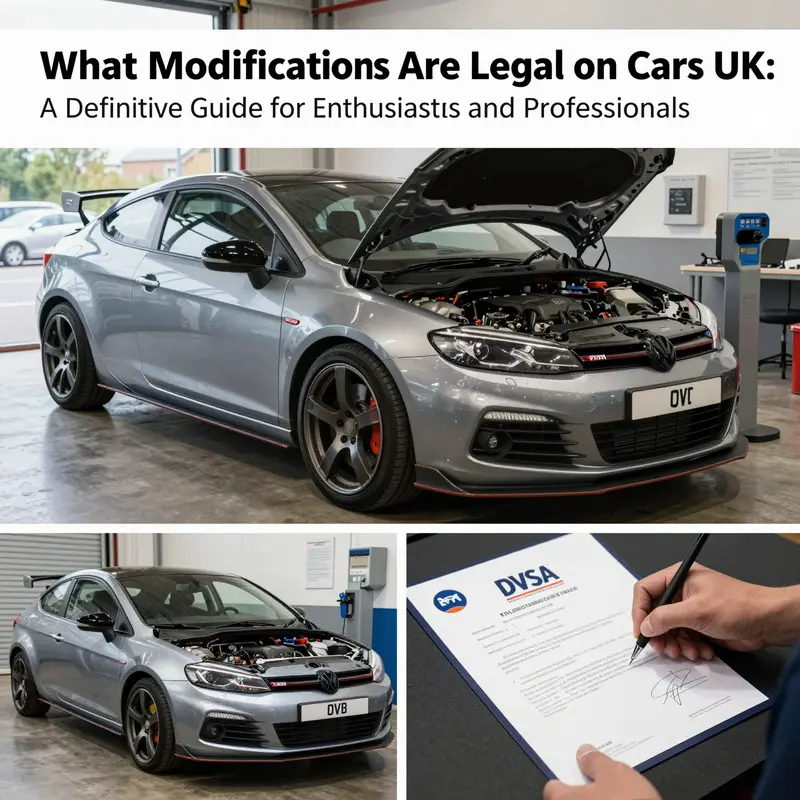
Understanding what modifications are legal on cars in the UK is more than just a compliance matter—it’s the foundation for safe, reliable, and roadworthy vehicle enhancements. Whether you’re a hobbyist car modifier aiming to personalize your ride, a professional tuner enhancing performance, a classic car restorer preserving automotive heritage, a global enthusiast exploring UK standards, or an auto parts supplier navigating legal landscapes, mastering these regulations is essential. This guide meticulously unpacks four critical areas: body and exterior changes that shape your car’s look without compromising legality; engine and performance alterations that boost power while respecting legal boundaries; emissions, noise, and safety compliance that keep your vehicle roadworthy and environmentally responsible; and finally, the certification and legal approval processes that validate your modifications. Each chapter builds on the last, providing a comprehensive, passionate, yet authoritative roadmap to confidently modify vehicles within the UK’s stringent framework.
Legality in the Body: Navigating UK Rules for Exterior Car Modifications
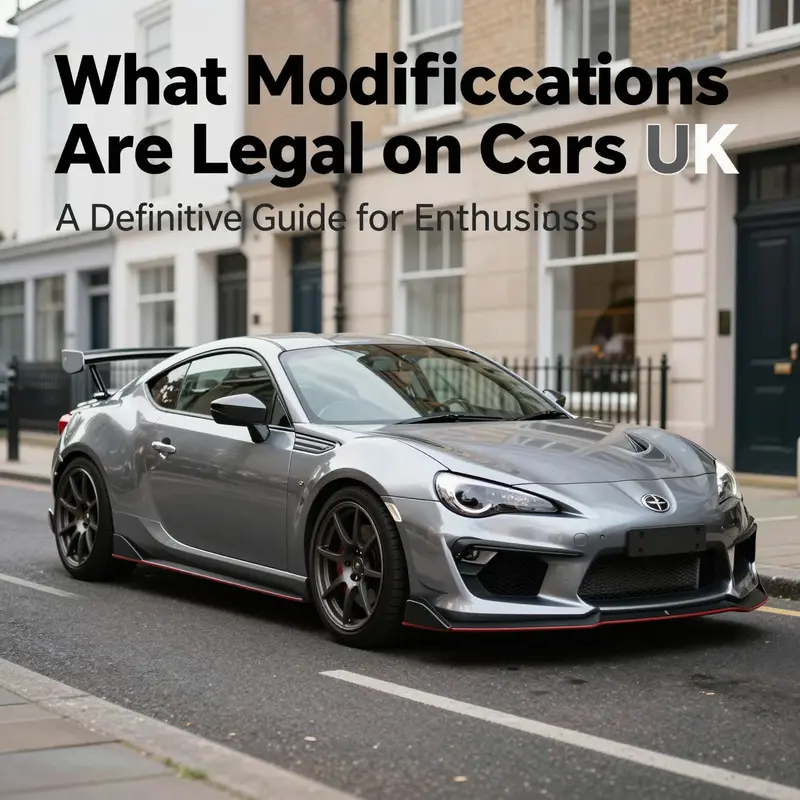
The exterior of a car is a canvas for personal expression as well as a boundary between aesthetic intent and legal obligation. In the United Kingdom, the line between what you can modify and what you cannot is drawn not just by taste, but by a framework of safety, emissions, and structural integrity that governs every alteration you might imagine. The regulators, led by the DVSA and the Department for Transport, view body and exterior changes as potentially transformative. They are concerned with how a modification might affect crash dynamics, pedestrian safety, visibility, and the vehicle’s ability to meet type approval and emissions standards. This means that a clever body kit, a more aggressive stance, or a fashionable set of wheels can be perfectly lawful, but only if the change remains within the boundaries set by law and of course the vehicle’s original design intent. The practical upshot is that ownership and modification decisions must be informed by regulatory realities, not just personal preference, and that a considered approach—often guided by professional advice—will save time, money, and potential trouble with law enforcement or the MOT test.
When a car’s exterior is altered, a few core principles repeatedly appear: keep the vehicle’s fundamental structure within approved limits, preserve or restore visibility and lighting performance, and ensure that any change does not undermine the vehicle’s identity or its compliance with the type-approval framework. A striking example of this logic is the Vehicle Type Approval (VTA) system, which comes into play when modifications affect the vehicle’s core dimensions or chassis. If the alteration is significant—such as altering the body shape, upgrading to a custom body kit, or converting a van into a camper—the modification may require re-approval under the Vehicle Type Approval framework. The threshold for what constitutes “significant” varies by circumstance, but the underpinning idea is clear: if the modification changes the vehicle’s essential design, it should be re-validated to confirm that safety, emissions, and performance credentials remain intact.
A practical implication follows: not every exterior upgrade triggers formal re-approval, yet every major change carries a risk. This is why many owners pursue modifications that enhance appearance or function while staying within recognized bounds. It is also why owners should view professional assessment as a prudent step. An accredited tester or an engineer familiar with UK standards can help determine whether a chosen modification is likely to pass the MOT, whether it interacts with the vehicle’s type-approval status, and what steps might be necessary to keep the vehicle legally compliant. For those seeking a compact, navigable guide to the full spectrum of modifications, a comprehensive overview exists in dedicated car-modifications resources, such as car-modifications-guide. While such guides do not replace official guidance, they can help frame expectations before speaking with a tester or booked workshop.
Beyond structural questions, the Roadworthiness and MOT framework adds another layer of scrutiny. The MOT test is a gatekeeper for legality on UK roads, and any exterior modifications must not cause a failure. Lighting systems, reflectors, mirrors, tyres, and suspension are common fault lines. For lighting in particular, the rules are explicit about color, placement, and function. Front-facing lights must conform to standards and be approved for use on public roads; the permitted colors for forward-facing lights are typically white, yellow, or amber, while red lights are reserved for brakes or indicators. Dazzle and misalignment undermine safety and can lead to a failed MOT, even if the rest of the modification is technically compliant. This is a space where the law meets engineering in a practical, testable way: an aftermarket headlamp or a differently styled lighting unit must be homologated and properly aimed to avoid dazzling oncoming drivers and to ensure the vehicle remains visible under various conditions.
Wheel and tyre alterations sit at the intersection of safety, compliance, and performance. The exterior’s visual impact often accompanies mechanical consequences. Changing wheel size or tyre width is permissible, but only within the manufacturer’s specifications and within the limits that preserve accurate speedo readings and reliable handling characteristics. Drastically changing wheel geometry can distort suspension geometry, alter braking performance, or affect ABS and stability control systems. When a modification pushes beyond what the manufacturer approved, it risks MOT failure and could also affect insurance and legal responsibility in the event of a crash. In other words, the exterior aesthetic upgrade cannot be viewed in isolation from how it interacts with the vehicle’s safety systems.
The exhaust and related underbody considerations are sometimes discussed in the same breath as exterior enhancements, though they remain distinctly tied to emissions and noise. Any exhaust modification should not raise noise levels beyond legal limits and must comply with emission standards. In practice, this means that a louder exhaust, even if it contributes to the car’s aggressive silhouette, may be illegal if it pushes the vehicle outside the permitted noise threshold or increases visible emissions. The legal framework aims to balance consumer choice with community welfare and environmental responsibilities. The intent is that a visually striking car does not become a nuisance to other road users or a pollutant to the environment.
Registration and identity continuity are often overlooked in conversations about exterior changes, yet they matter. If a major modification fundamentally redefines the vehicle’s identity—for example, a dramatic change in body style or a complete structural overhaul—the DVLA may need to reassess the vehicle’s eligibility for its existing registration. In some scenarios, a new V5C logbook or even a new registration number could be required. While this is more common in drastic repurposing than in cosmetic upgrades, it underscores the principle that changes cannot break continuity of identity without official acknowledgment.
Tinting and glazing are subtle but consequential parts of exterior modification. In the UK, front side windows, rear side windows, and the windscreen have minimum visible light transmission requirements, commonly 75% or higher, depending on the area and the section of glass in question. Tint darker than the permitted threshold without authorization is non-compliant and can lead to an MOT failure. The policy reflects a straightforward safety concern: adequate daylight must reach the driver’s eyes, and the vehicle must maintain clear visibility of road signs, pedestrians, and other vehicles. This is particularly important for emergency braking and sudden hazard perception, where reduced visibility from tinting can compromise safety margins.
Safety-critical exterior changes, including those affecting brakes, steering, or lighting, are usually subject to certification requirements. Where modifications could alter the vehicle’s braking balance, steering response, or lighting performance, it is prudent to obtain confirmation from DVSA-approved bodies or the original equipment manufacturer. The aim of such certification is to ensure that the modification does not undermine the vehicle’s fundamental safety characteristics. The UK regulatory framework is careful not to shut down reasonable customization, but it insists that critical safety functions remain under professional oversight. When in doubt, owners should pause and consult official guidance before committing to a major exterior change.
The process of planning an exterior modification can be as important as the modification itself. Start with a precise assessment of the intended change’s scope. Does the alteration affect the vehicle’s structure, dimensions, lighting, or visibility? If the answer is yes, seek early input from a qualified tester who understands type-approval and MOT requirements. This pre-emptive step often clarifies what additional approvals or modifications may be necessary and helps avoid the cost and frustration of rework after installation. It is also worth recognizing the value of official information: the government provides guidance on vehicle modifications and the MOT test, which is a definitive reference point for owners who want to stay within the letter of the law. Official guidance can offer detailed explanations of how specific changes interact with type approval, MOT pass criteria, and registration status, and it serves as a reliable checkpoint before you move from concept to steel and paint.
As with any legal framework, there is a balance to strike between personal choice and collective safety. The UK approach to body and exterior modifications seeks to preserve the integrity of the road-legal vehicle while allowing individuality and improvement within tested boundaries. It is not a prohibition on self-expression but a guardrail that helps ensure vehicles remain safe and compliant after modifications. For those who want to explore the possibilities, the best path is to couple a clear design intent with a practical compliance plan, engaging with accredited professionals and reviewing official guidance early in the process. In this way, the road toward a customised exterior remains a journey within legal parameters rather than a shot in the dark.
In closing, the world of exterior automotive modification in the UK is navigable, but it is navigable with awareness. The essentials—structure, lighting, visibility, tyre and wheel interaction, noise and emissions, and identity—form a coherent lattice of requirements that protects drivers, passengers, pedestrians, and other road users. If a modification touches any of these pillars, the prudent course is to pause, consult, and verify against the official standards. The broader takeaway is not to abandon creativity, but to pursue it with an understanding that legality and safety are not antagonists; they are the framework that makes personal style sustainable on public roads. For readers who want a compact, practical overview that can guide initial research, the car-modifications-guide offers a helpful starting point, while official resources provide the definitive road map you’ll want to follow before making a single cut or bolt. For authoritative detail, consult the government’s guidance on vehicle modifications and the MOT test at the link below, which consolidates the precise regulatory expectations around body and exterior changes and helps translate high-level principles into actionable steps: https://www.gov.uk/government/publications/vehicle-modifications-and-the-mot-test.
Power Without Penalty: Navigating Legal Engine Tweaks and Performance Modifications in the UK
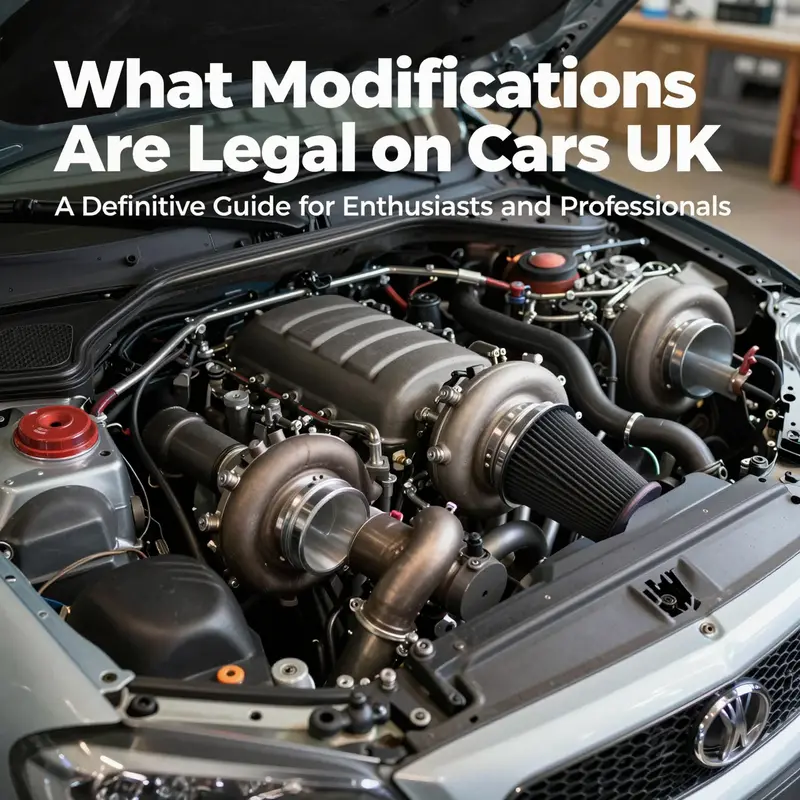
When a car rumbles with more intent than it did from the showroom, it can feel exciting. Yet in the United Kingdom, engine and performance modifications walk a fine line between exhilaration and a breach of the law. The road to a faster or more responsive machine is paved with the same priorities that govern all legal modifications: safety, emissions, and the integrity of the vehicle’s existing approvals. The framework is not meant to stifle curiosity or compromise driving pleasure; it is designed to ensure that any change does not undermine the vehicle’s fundamental purpose, which is to be safely operable on public roads. In practice, this means that a modification must stay within the boundaries set by the DVSA and the Department for Transport, align with the vehicle’s original type approval, and remain compatible with the MOT regime. A careful, informed approach makes it possible to enjoy meaningful improvements in power, throttle response, or drivability while staying on the right side of the law and preserving resale value, insurance coverage, and long-term reliability. The process is less about constraint and more about rigorous accountability; it invites owners to view modifications as a conversation between ambition and evidence, not as a leap into a legal gray area that could invite penalties, failed tests, or re-registration hurdles.
One of the core pillars in this conversation is emissions compliance. In the UK, any change that affects a vehicle’s emissions system is scrutinised with the seriousness of a safety modification. The catalytic converter, the exhaust after-treatment devices, and components such as the EGR valve or the diesel particulate filter are not optional afterthoughts; they are central to a car’s ability to meet Euro standards and pass the MOT. A modification that bypasses or alters these components is effectively illegal and will almost certainly trigger an MOT fail when tested against the lab-based limits. This is not simply a matter of noise or a handful of extra horses—emissions are a tangible signal of a vehicle’s environmental footprint and its overall compliance with the regulatory framework that keeps the air cleaner and the traffic safer.
Against that backdrop, engine tuning and ECU remapping sit in a delicate balance. A remap can unlock smoother torque delivery, a broader usable power band, or a more responsive throttle without automatically crossing the emissions line. The key is that the tune must operate within the vehicle’s legal emission thresholds and must preserve the integrity of the engine’s fuel and ignition strategies as approved at the time of manufacture. Reputable tuners who advertise their maps as legal emphasize that their software keeps emissions within the official ceiling and avoids any meaningful alteration to the emission control system. If the remap pushes the car into higher NOx or particulate limits, or alters fuel economy in a way that contravenes the type approval, the modifications cease to be lawful. A practical measure is to insist on documentation that the remap has been designed to stay within Euro standards for the model and year, and to request a certificate from the installer confirming emissions compliance after the work is completed. That documentation becomes especially valuable when the vehicle faces MOT or regulatory scrutiny. The conversation around ECU tuning also touches the broader question of transparency with the DVSA and, where relevant, the vehicle’s manufacturer or dealership. The DVSA guidance consistently points toward professional installations and verifiable documentation as essential safeguards against unintended noncompliance.
Engine upgrades pose a second layer of complexity. Installing a turbocharger or a supercharger can be lawful in principle, provided the engine remains within the bounds of its original type approval. A transformation that alters the fundamental character of the engine—its maximum power, torque curve, or engine management strategy—carries with it a risk that the vehicle may require re-registration or a formal re-certification process. In some cases, a substantial power increase—roughly in the realm of a notable percentile change—could trigger a DVSA inspection to confirm continued compliance. The overarching principle is that any upgrade must not fundamentally misalign the car with the approvals granted for that chassis and engine combination. This is not a mere technicality; it is about preserving calibration across the powertrain, the driveline, and the vehicle’s safety systems, including brakes and steering, which must be able to cope with the enhanced output without compromising control. For builders and owners, the recommended path is to engage engineers who understand the regulatory thresholds and to secure explicit approvals or re-registration if required. Without such steps, even a well-executed upgrade can fall outside the legal envelope, exposing the driver to penalties and the possibility that the vehicle becomes unroadworthy.
Exhaust systems form another domain where the tension between performance and legality is most visible. A performance exhaust can reduce backpressure, improve flow, and yield a more aggressive character. In the UK, the key constraint is noise. The exhaust must stay within the legal noise limits, which more often than not are framed in decibel terms measured under MOT test procedures. The commonly cited constraint is a limit around 72 decibels A-weighted, measured at a specified distance, under controlled conditions. That threshold ensures that a louder system does not become a public nuisance or a safety hazard by masking tyre noises or obscuring warning sounds. In addition to noise, exhaust modifications must not emit excessive visible smoke or fumes, which would breach emissions regulations and potentially trigger an MOT failure or legal penalties. Importantly, even with a compliant exhaust, the vehicle must not suffer any deterioration in the emission control chain, for example by removing or bypassing catalytic converters or DPFs. The goal is to preserve a clean, predictable exhaust signature that aligns with the factory’s environmental performance while delivering the expected improvements in sound and performance.
A vehicle’s MOT is the practical gatekeeper for all performance-oriented work. After any engine or exhaust alteration, the car must pass its MOT with its new configuration documented and certified. The test scrutinises changes affecting emissions, braking, steering, suspension, or lighting, but it also requires that any modifications be fully disclosed and verifiable. If the MOT flags a noncompliance, owners face the prospect of reverting the car to its pre-modified state or taking further steps to bring the vehicle back into compliance. This is not merely about passing a test; it is about maintaining a baseline of safety and environmental performance that the road network relies upon. The interplay between the MOT and taxation is not incidental. When a modification increases engine power, it can influence road tax through the vehicle’s VED category. Cars with higher-power engines may fall into different bands, and post-2017 registrations can attract higher rates. The tax implication reinforces the need for owners to appreciate the broader administrative footprint of performance work beyond the immediate installation costs and fuel economy effects.
In this landscape, the role of proper documentation cannot be overstated. Retaining receipts, technical specifications, and compliance certificates becomes a practical hedge against later disputes about the legality of modifications. It also simplifies the process if a professional must re-create or verify a claim with the DVSA during a re-inspection or re-registration scenario. The precise nature of what constitutes a compliant modification often depends on model-specific approvals and the combination of components used. Engine upgrades must harmonize with the vehicle’s overall calibration and must be traceable to a compliant blueprint that the DVSA would recognise as consistent with the vehicle’s type approval. This is why many owners adopt a cautious approach: they proceed with staged modifications, monitor emissions and performance through professional dyno tests, and maintain a clean trail of documentation that connects each change to a demonstrable regulatory pathway.
For readers who want a concise map to legal modifications in this area, a practical pathway is to view the broader framework of legal-car-modifications that frames how performance changes are judged in the UK. The resource at legal-car-modifications offers a structured orientation to the kinds of questions that should be asked and the steps that should be taken to ensure that what is done remains within the law. This is not an invitation to experiment without guardrails; it is a reminder that curiosity can be safely indulged within a carefully documented, regulator-approved process. The balance lies in choosing upgrades that align with the vehicle’s existing approvals, using qualified installers, and building a traceable dossier of compliance that can stand up to MOT checks and potential DVSA scrutiny.
A final note on the broader ecosystem: safety-critical innovations like braking systems, steering geometry, and lighting require additional layers of certification. Even if the engine and exhaust are within legal limits, a modification that jeopardises braking efficiency or steering responsiveness can instantly render a car unsafe for road use. In practice, this means coordinating with refurbishment or upgrading programs that maintain compatibility with the vehicle’s safety-critical subsystems and, where necessary, obtaining certification from DVSA-approved bodies or from the original equipment manufacturer. The aim is to maintain a cohesive performance profile where enhancements in one domain do not undermine another, preserving overall drivability, reliability, and safety.
This chapter has sketched a coherent view of engine and performance modifications in the UK, anchored in safety, emissions, and regulatory integrity. It is a space where ambition, engineering discipline, and compliance must converge. For anyone considering horsepower gains, torque improvements, or throttle feel enhancements, the best starting point is to treat modifications as a regulated endeavour rather than a DIY sprint. Engage with certified professionals who appreciate the DVSA and MOT framework, insist on transparent documentation, and maintain a continuous line of communication with the relevant authorities. The payoff is not merely a faster car; it is a legally compliant, roadworthy machine that can be enjoyed with confidence and without the risk of unplanned penalties or immobilisation. To further deepen understanding, readers can consult the broader guidance on vehicle modifications and MOT tests provided by official sources, which outlines the current rules, processes, and expectations for licensed modifications.
External resource for further reading: https://www.gov.uk/government/publications/vehicle-modifications-and-mot-tests
Road Worthiness in the UK: Navigating Legal Boundaries for Emissions Noise and Safety Modifications
Modifying a car in the United Kingdom sits at the intersection of personal taste and public safety. The UK maintains a framework that keeps vehicles predictable, safe and environmentally responsible. The rules are enforced by the DVSA and the Department for Transport. They do not seek to suppress creativity but to prevent changes that would undermine safety, emissions or compliance with type approval. The core concerns are emissions, noise and safety. A modification may be legal in isolation but only if the vehicle remains compliant with the original type approval and with MOT requirements. When in doubt, seek guidance from DVSA and GOV guidance. The central principle is that changes must not distort the vehicles identity or its ability to meet the conditions of its type approval and roadworthiness certification. Alterations should preserve or not impair safety characteristics and must keep emissions and noise within permitted limits. A practical approach is to think in three steps: keep the original identity by preserving VIN and registration unless a formal re registration occurs; align with the original type approval where possible; obtain the necessary certifications or inspections. For many owners, the path begins with a clear plan and professional advice that can interpret the type approval specifics and applicable regulations. This chapter weaves together emissions, noise and safety with the MOT test and GOV guidance. It is not a catalog of forbidden ideas but a map of legitimate routes that respect the framework. In planning a modification, verify what the vehicle was originally approved to do. Some alterations such as certain aftermarket body parts or wheels are allowed if they do not widen the track or affect structural safety without testing or certification. The key is restraint and verification: parts designed to maintain or improve safety margins and installed to the standards of the original equipment manufacturer or a DVSA approved body are more likely to be lawful. Alterations that significantly change the vehicles character, such as substantial engine performance changes that push beyond the original approval, require scrutiny to ensure certification and MOT eligibility. Three gates remain open: emissions, noise and safety. If any modification causes failure at one of these gates the vehicle is unlikely to pass. The GOV guidance sets out common permissible adjustments such as parts that do not modify legal dimensions or compromise structural integrity, including certain body kits, spoilers or alloy wheels, but with caveats. The DVSA stresses that alterations should not affect critical dimensions that influence handling braking or visibility. Window tinting is tightly regulated with minimum light transmission requirements for front side and windscreen areas. Tinting that reduces visibility can fail MOT. The aim is to preserve a driver line of sight and the ability of other road users to gauge a vehicle moving. Engine modifications can be acceptable if the vehicle stays within the original type approval. If performance changes push the car into a different class the legal status becomes murkier. Modifications that tamper with emissions components such as removing catalytic converters or altering DPFs are viewed with strict scrutiny. The road vehicles construction and use regulations are cited in guidance and enforcement actions to prevent tampering that would increase emissions beyond what the type approval and MOT accommodate. Fuel conversions such as LPG require certified installers and must meet EU type approval standards. The exhaust system is another area where the line is drawn: replacing with a performance oriented system is allowed only if noise levels stay within permitted limits and emissions stay legal. The 74 dB A limit at 50 kmh is a common benchmark. If noise exceeds this, penalties may apply. The vehicle identity through VIN and registration should be preserved unless re registration occurs. In safety terms, modifications to brakes steering suspension lighting or seat attachments require scrutiny and often certification. DVSA guidance emphasizes that safety critical components must retain reliability under real world conditions. To navigate confidently, owners should seek professional advice and reference official GOV guidance before major changes. A practical approach combines manufacturer guidelines parts with approvals from bodies such as VCA and a thorough inspection by an accredited garage before registration or MOT testing. The aim is not to curb personal expression but to ensure every change stays compatible with safety emissions and structural integrity. The GOV guidance provides a comprehensive framework for what is permitted and how to ensure compliance, and is complemented by DVSA guidance and professional advice. See GOV.UK vehicle modifications for an official reference and plan modifications with tests and possible re registration in mind. The balance between personal preference and public responsibility defines modern car modification practice in the UK and is about credible certified roadworthy changes rather than forbidden ideas.
Legal Car Modifications in the UK: Steering Through Certification, Approval, and the Roadwide Rules
Modifying a car in the United Kingdom sits at the intersection of personal preference, engineering integrity, and a robust framework designed to keep roads safe and emissions within limits. The conversation often begins with questions like what can be changed, how changes are validated, and what happens if a modification drifts from the approved path. The governing landscape is anchored in legislation such as the Road Vehicles (Construction and Use) Regulations 1986, supported by guidance from the Vehicle Certification Agency (VCA) and the Department for Transport (DfT). The system also relies on the UK’s Vehicle Identification Number (VIN) framework and the annual testing regime that keeps changes transparent to authorities and insurers alike. In practice, this means that a modification is not simply a preference or a cosmetic update. It is a potential alteration of a vehicle’s safety, emissions profile, or identity, and it must be demonstrably compatible with UK type approvals and the testing standards that regulate roadworthiness.
To appreciate what is legally permissible, it helps to see the modification landscape as a continuum rather than a checklist. On the permissive end are adjustments that upgrade safety, security, or basic functionality without distorting core characteristics or the vehicle’s certified performance. Upgrades to safety and security systems, for example, are widely accepted when they meet recognized standards. A modern vehicle’s security package—immobilisers, GPS tracking, steering wheel locks, and alarms—can be installed to strengthen protection against theft and theft-related claims. Insurers increasingly expect robust anti-theft features, and the legality of these measures rests on their correct installation and demonstrated reliability. When such systems are properly integrated, they are deemed compatible with the existing electrical architecture and do not interfere with essential safety devices. This is a reminder that even permissible upgrades must be executed with attention to the vehicle’s electrical safety and the ongoing integrity of its systems.
Interpersonal safety remains central too. Upgrades to seat belts and child safety seats are permitted so long as they meet British Standards (BS AU 174) and are fitted with care and precision. The emphasis on standards reflects the broader aim: to ensure that any modification preserves or enhances occupant protection. Even seemingly minor interior changes should avoid compromising airbags, seat controls, or passenger restraint systems. As with security systems, the critical factor is proper installation by qualified technicians and verification that the modifications do not create new hazards or interact adversely with the vehicle’s structural elements. The road is not the place for improvised improvisations; it is a domain where adherence to safety rules is continuous and non-negotiable.
Cosmetic and aerodynamic alterations also have their regulated boundaries. When people choose paintwork or body kits, the focus is on whether such changes alter the vehicle’s dimensions or create protrusions that could affect road safety or pedestrian protection. Minor styling adjustments—gentle spoilers or side skirts, modest paint changes that do not obscure essential markings—are often acceptable. The line is drawn where modifications could expand the vehicle’s footprint or raise its profile in a way that challenges compliance with minimum clearance, visibility, or structural integrity requirements. The same reasoning applies to wheels and tyres. Replacing wheels is permissible only when the new configuration matches the original specification in critical measurements such as diameter, width, and bolt pattern. Deviations here can trigger insurance issues, MOT failures, and questions about whether the vehicle remains within its type-approved bounds.
Roof-mounted accessories illustrate how practicality intersects with regulatory oversight. Roof racks and storage boxes are allowed if they are installed securely and do not push the vehicle’s height beyond the permitted limits or impair visibility. When laden, these additions must stay within height restrictions and not introduce unsafe aerodynamic disturbances that might undermine stability at speed. The principle behind these rules is straightforward: modifications should not undermine steering, braking, or suspension performance, and they should not introduce new points of failure.
The engine bay is a more delicate theatre. Engine modifications are not outright forbidden; rather, they require careful alignment with the vehicle’s original type approval. ECU tuning, or remapping, is tolerated only if it keeps emissions within the standards established for the vehicle and does not push the car outside its approved performance envelope. Any remap that causes emissions to drift beyond the legally permissible range can trigger an MOT failure and, in the worst case, render the vehicle unroadworthy. Exhaust system upgrades walk a similar tightrope. An aftermarket exhaust is permissible when it respects noise limits and emissions regulations. In the UK, the 74 decibel limit at 50 km/h is a notable threshold that exhausts must stay under to avoid additional scrutiny or prosecution under broader environmental law. The message is consistent: performance enhancements cannot come at the expense of compliance with pollution controls and noise regulations.
For engine replacements, the bar is even higher. A replacement engine is acceptable only if it is of the same type and model as the original, and the change must be properly registered with the DVLA within a tight window—often stated as within 14 days of installation—accompanied by proof of origin and a certificate from a qualified mechanic. This is not a formality; it is a confirmation that the new engine is compatible with the vehicle’s certification and that the vehicle’s identity remains clear in the registration system. Conversions to alternative fuels, such as petrol-to-LPG, introduce additional layers of certification. Qualified installers must verify compatibility and secure EU type-approval standards where applicable. This framework prevents mismatches between the fuel system and the vehicle’s control strategies, ensuring that the vehicle can be safely operated without destabilizing its emissions profile or fuel-management logic.
The rules extend to the realm of visibility and lighting. Modifications that alter lighting arrangements—whether to upgrade or reposition lighting components—must comply with the relevant standards. It is not merely a matter of brightness or aesthetics; the changes must preserve clear illumination of the road and ensure that other road users can interpret the vehicle’s signals reliably. The same caution applies to tinted windows. The regulations require minimum visible light transmission levels (75% for front side windows, rear side windows, and the windscreen, excluding certain areas). Darker tints without authorization are not just a MOT failure risk; they can also impede safety by reducing driver visibility in low-light conditions.
Beyond the mechanical and aesthetic spectrum, certain categories of modifications demand formal certifications or professional involvement. Safety-critical changes—especially those affecting brakes, steering, or lighting systems—often require certification from DVSA-approved bodies or the original equipment manufacturer. This is not a bureaucratic hurdle; it reflects the potential consequences of altering systems that are essential to vehicle control and occupant protection. When in doubt, the system encourages vehicle owners to seek professional advice or consult official DVSA guidance before undertaking significant modifications. The aim is not to deter customization but to ensure that the roadworthiness and safety of the vehicle are maintained throughout the modification cycle.
The certification and approval landscape is multi-layered, and understanding it can prevent expensive mistakes. For major changes, notification to the DVLA is typically required within a defined window. The process may involve presenting a range of documentation, including ownership proof, details of the modification, and in some cases, a certificate of conformity from the manufacturer or a qualified engineer. The VCA’s role in type approval remains central for manufacturers and importers. UK Type Approval ensures that new models and commercial kits meet consistent safety and environmental standards before they can be sold. Individual owners are generally not able to apply for type approval; this remains the preserve of manufacturers and certified kit providers. Insurance considerations weave through the process as well: insurers commonly require notification of modifications, and the policy terms may adjust premiums or coverage depending on the perceived risk of the modification. In short, the legal path to modification is as much about documentation, compliance, and verification as it is about the act of changing a component.
Practical wisdom flows from this framework: plan modifications with an eye to compliance from the outset. Engage with reputable, qualified technicians who understand the UK’s regulatory expectations, keep thorough records of every change, and verify how each modification interacts with existing safety systems and emissions controls. When evaluating any modification, consider how it would be treated at MOT time. An alteration that might seem innocuous could compromise a test if it affects brake balance, steering feedback, lighting alignment, or suspension geometry. The MOT tester has the authority to reject a vehicle if it appears unsafe or non-compliant with the standards governing that class of vehicle.
For readers seeking authoritative, up-to-date guidance, the official government publication on vehicle modifications and MOT testing is a reliable compass. There, the Department for Transport outlines what is permitted, how to report modifications, and how such changes affect MOT and insurance. It is a crucial reference point for anyone weighing a modification that could alter the vehicle’s compliance posture. As a practical tip, keep a personal archive of all workshop certificates, conformity statements, and any DVLA communications. The accumulation of documentation streamlines verification and reduces the friction that can accompany a modification’s lifecycle—from execution to testing to registration.
For readers who want to explore a concise practitioner-oriented perspective on legal modifications, an accessible resource that synthesizes common concerns is available online. It presents practical guidance, balanced with an emphasis on safety and compliance and illustrates how owners can approach modifications as a systematic, responsible project rather than a speculative upgrade. Legal Car Modifications offers a broad sweep of considerations that complements the formal regulatory text, helping bridge the gap between technical possibilities and legal obligations. This resource should not replace official sources, but it can illuminate the decision-making process and help owners communicate effectively with insurers and testers.
In sum, the UK’s framework for car modifications is designed to reward thoughtful, compliant innovation rather than to restrict curiosity. The balance rests on keeping the vehicle’s safety profile intact, preserving the integrity of emissions controls, and ensuring that any change remains within the scope of the original type approval. Major modifications demand attention to documentation, certification, and registration. Insurers, MOT testers, DVLA, and VCA each play a role in validating that the modification does not compromise road safety or environmental performance. The pathway is clearer for well-planned upgrades—those that reinforce safety, maintain structural integrity, and stay within the vehicle’s certified identity. As the road to modification is navigated, it becomes evident that legality and customization can coexist, provided the journey is guided by rigorous standards, professional guidance, and a commitment to responsible motor ownership.
External resource: https://www.gov.uk/government/publications/vehicle-modifications-and-mot-testing
Final thoughts
Navigating the legal landscape of car modifications in the UK demands a clear understanding of regulations governing bodywork, engine enhancements, emissions, noise, and safety. Staying within these legal frameworks ensures your vehicle remains roadworthy, compliant, and safe for all. From selecting permissible exterior upgrades to tuning your engine without breaching emission laws, and securing the appropriate certifications, every modification carries responsibility. Armed with this knowledge, hobbyists, professional tuners, classic restorers, and parts suppliers can confidently craft vehicles that turn heads while respecting the law. Embracing these legal boundaries not only protects you from fines and MOT failures but also contributes to safer roads and a more sustainable environment. Your passion for car modification thrives best when driven by expertise, care, and legal certainty.