

The Looming EPA Ban on Car Modifications: What It Means for Enthusiasts
In a world where personalization drives innovation and creativity, the possibility of an EPA ban on car modifications sits like a dark cloud over the automotive community. Picture this: the thrill of customizing your ride, tweaking its performance, and injecting your personal flair into a machine that is, for many, more than just a mode of transport-it’s a canvas for self-expression. For hobbyist car modifiers, professional tuners, and restoration enthusiasts, the thought of losing the right to modify vehicles strikes at the heart of automotive passion.
The implications of such a ban would ripple through the community, stifling one of the most beloved aspects of car culture-individuality. It raises crucial questions about freedom, innovation, and even the very fabric of how we interact with our vehicles. Motorsports, car shows, and weekend repair sessions could become relics of the past, reshaping the landscape of an industry that thrives on creativity and personal touch.
For enthusiasts, the stakes are astronomically high, as a ban could impact everything from resale value to insurance considerations. Would a collector’s cherished classic car lose its value without the possibility for modification? Indeed, the emotional and financial implications of such regulations warrant a deeper exploration. To understand the need for balance in this debate, one must consider the roots of car culture and the essential freedoms that have allowed it to flourish. This article delves into the complexities surrounding the potential EPA ban on car modifications, the passionate responses from the community, and the future of automotive expression.
Whether you are an avid modifier, a professional in the tuning business, or simply a fan of classic restoration, it’s essential to stay informed and engaged in this unfolding conversation. For more insights into the practical aspects of car modifications, including how they can affect insurance and resale value, visit our articles on car modifications and resale value and insurance for modified cars.
Current EPA Regulations on Car Modifications
As car enthusiasts face renewed scrutiny from the Environmental Protection Agency (EPA), understanding current regulations on car modifications is crucial. The EPA’s stance on modifications has clear distinctions between what is allowed and what is banned, significantly affecting hobbyists, professional tuners, and restoration enthusiasts.
Allowed Modifications
Most modifications that focus on enhancing performance without increasing emissions remain permissible. Here are some key modifications currently allowed:
- Engine Modifications:
- Cold air intakes
- Performance exhaust systems
- Chip tuning for performance enhancements
- Body Modifications:
- Cosmetic changes, including body kits and wraps
- Suspension upgrades
Banned Modifications
Conversely, the EPA has strict limitations on modifications that could elevate emissions or violate safety regulations. Some prohibited practices include:
- Engine Modifications:
- Altering or removing emissions control systems
- Removing catalytic converters
- Any modifications that do not comply with EPA emission standards
- Body Modifications:
- Changes that increase emissions, such as hood scoops that amplify intake air
- Use of aftermarket parts found to be illegal or non-compliant with federal laws
Impact on Enthusiasts
The ongoing push for stricter regulations on vehicle modifications is causing concern among car modifiers and tuners. The limitations enforce a narrower scope for performance tuning and creative modifications, potentially stifling car culture and innovation. For enthusiasts looking to personalize their vehicles, it’s vital to stay informed and compliant with these regulations while also advocating for a more balanced approach that recognizes the spirit of car modification.
Despite the restrictions, there remains room for creativity within the framework, as enthusiasts find ways to develop compliant modifications. Learn more about the alternative allowed modifications and how they impact the automotive landscape.
Conclusion
Navigating the complex laws regarding modifications requires awareness and a commitment to maintaining compliance while pursuing personal automotive passion. Engaging with the community and local regulations can lead to better understanding and advocacy for more favorable rules pertaining to vehicle modifications.
Comparison of Car Modification Regulations in Europe vs. USA
Car modifications can be a passionate pursuit for many enthusiasts, but it’s crucial to navigate the complex web of regulations governing them. The rules can differ significantly between Europe and the USA, particularly in terms of emissions and safety standards. Below is a detailed comparison of the regulations in both regions:
| Category | Europe | USA |
|---|---|---|
| Emissions Standards | Euro 7 emission standards in place | EPA regulates smog and soot emissions; proposed new emissions targets for 2027 |
| Safety Regulations | Euro NCAP safety testing required for new cars | FMVSS (Federal Motor Vehicle Safety Standards) govern safety regulations |
| Enforcement | Strict inspections and regulations across EU | Varies by state; federal regulations exist but enforcement varies |
| Types of Modifications Allowed | Limited; must comply with EU regulations, including emissions | More flexibility; modifications allowed as long as they don’t violate emissions or safety standards |
| Specific Safety Standards | Must meet Euro NCAP ratings | Compliance with FMVSS; includes crash test ratings and equipment requirements |
For more details on EPA regulations in the USA, and the Euro 7 standards in Europe, refer to the provided links.
Visual Representation of the Comparison
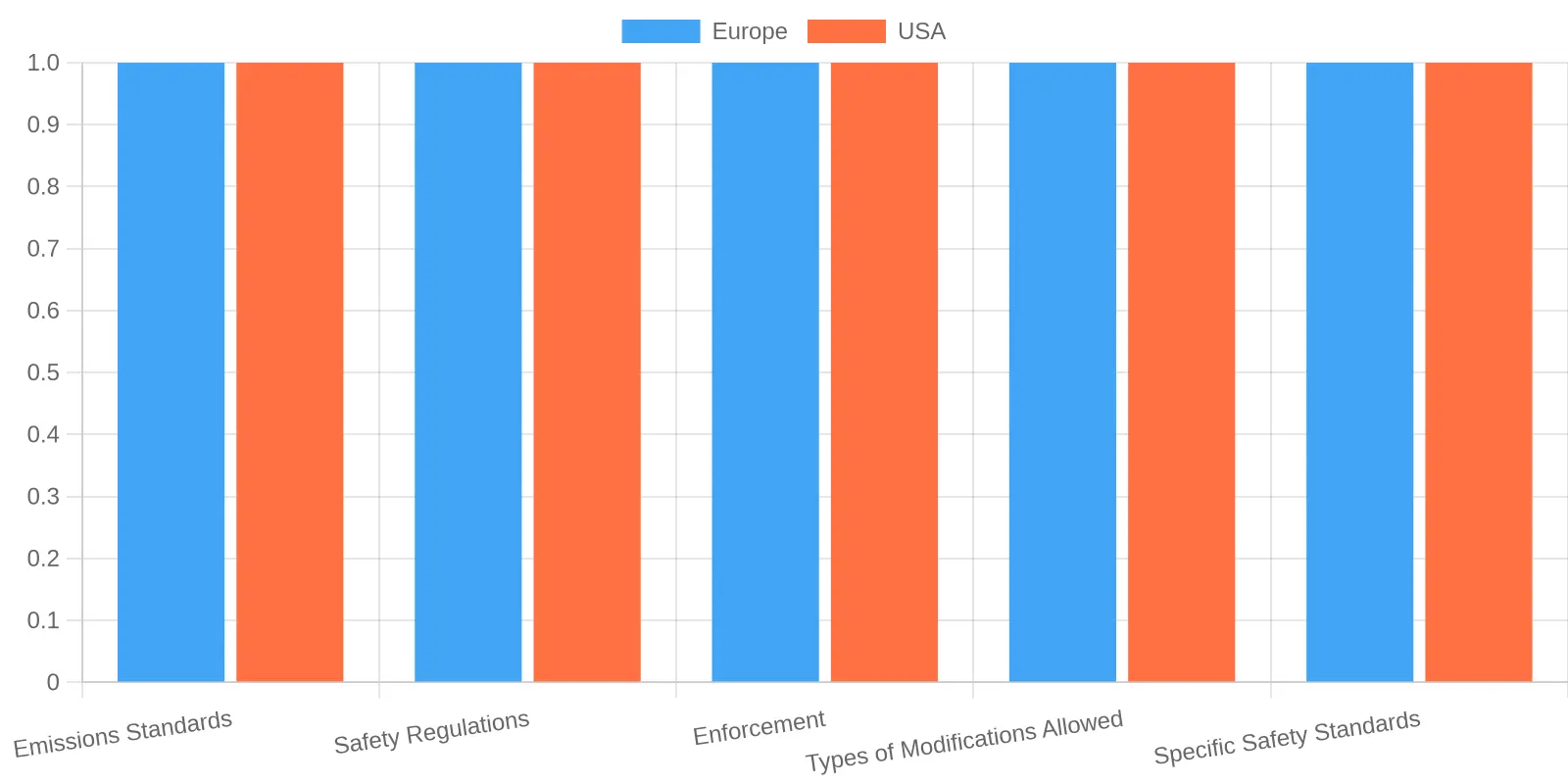
Understanding these regulations is essential for hobbyist car modifiers, professional tuners, and anyone passionate about car culture. As regulations continue to evolve, staying informed will help enthusiasts navigate their modification journey legally and safely.
This comparison aims to provide you with a better understanding of how you can approach modifications in your region, ensuring compliance with the relevant standards while maximizing your car’s performance and aesthetics.
As the Environmental Protection Agency (EPA) contemplates stricter regulations on vehicle modifications, significant concerns are surfacing regarding potential repercussions across various stakeholders in the car modification landscape. Whether you are a hobbyist, an automotive shop professional, or a supplier of aftermarket parts, the potential impacts of an EPA ban on car modifications warrant serious consideration.
Effects on Hobbyists
Hobbyists form the backbone of the car modification culture, engaging deeply with their vehicles through customization and performance enhancements. An EPA ban on modifications could strip away their passion for personalization, largely due to increased regulations surrounding emissions and safety standards.
- Limitations on Customization: If modifications such as aftermarket exhaust systems and engine tuning are banned, many hobbyists would no longer have the freedom to personalize their vehicles. This restriction can not only dampen the spirit of car enthusiasts but also diminish the community surrounding car modifications.
- Resale Value Concerns: Modified cars often carry a unique editorial worth that appeals to collectors and novice car buyers alike. A ban could potentially affect resale values negatively, making it more challenging for hobbyists to recoup costs on their investments. To understand more about this, you can read about car modifications and resale value.
Impacts on Automotive Shops
For automotive shops, particularly those specializing in tuning and modification, a regulatory shift can lead to significant financial hardship.
- Reduced Business: Shops that rely heavily on modifications may experience a decline in clientele as regulations tighten. Modifications that once drew in customers could become illegal overnight, leading to a sharp drop in business.
- Legal Compliance: The potential need to navigate complex legal compliance issues and increased scrutiny can strain not only operational focuses but financial resources as well. Shops may find themselves needing to adapt quickly or face severe financial consequences.
Consequences for Part Suppliers
Suppliers of aftermarket automotive parts are another essential stakeholder group that could feel the ramifications of an EPA ban severely.
- Drastic Shift in Inventory: If specific parts become illegal to sell or install, suppliers may be forced to pull popular products, leading to a significant loss in revenue. As a consequence, suppliers may have to pivot their business strategies, spending time and resources to offer compliant alternatives.
- Market Uncertainty: The unpredictability of regulations can deter investment in new products or technologies since suppliers will be reluctant to invest in parts that may not have a market in the near future. This uncertainty can stifle innovation within the automotive aftermarket.
Conclusion
The potential impact of an EPA ban on vehicle modifications provides a stern reminder of how regulatory frameworks affect the passion and livelihood of many individuals within the automotive community. From hobbyists and automotive shops to part suppliers, the ripple effect of such regulations could radically alter the landscape of car customization.
As the debate around these potential regulations evolves, the automotive community will need to rally together. Advocacy against overly restrictive regulations could preserve the freedom to explore and enjoy vehicle modifications while promoting environmentally sustainable practices that benefit everyone involved.
For comprehensive details on navigating the potential changes in this ever-evolving arena, consider checking out articles like how to navigate modifications to a leased car or the legal landscape concerning car modifications.
Car modification has long been a hallmark of automotive culture in the United States, evolving from simple tweaks and enhancements to detailed customizations that express personal identity, performance, and artistry. The roots of car modification date back to the early days of the automobile itself, where enthusiasts began altering their vehicles for better performance and aesthetic appeal. However, as the industry grew and environmental concerns emerged, so too did government regulation-especially from the Environmental Protection Agency (EPA).
Early Modifications and the Dawn of Regulation
The love affair with car modification truly blossomed in the 1950s and 1960s, an era characterized by chrome accents, powerful engines, and a keen sense of style. As hot-rodding became popular, enthusiasts would swap out engines, add superchargers, and customize their vehicles to achieve greater speed and performance. At this time, government oversight was minimal, allowing modifications to flourish largely unchecked.
However, the environmental movement of the 1970s changed this landscape dramatically. Increased awareness of air pollution, exacerbated by the oil crisis, pushed lawmakers to take action. The Clean Air Act was established in 1970, giving birth to various regulations aimed at curbing emissions from vehicles. As vehicles became more regulated, the scope of modifications began to shift, with a growing focus on compliance with environmental standards.
EPA’s Influence and Emerging Challenges
With the rise of the EPA, enthusiasts began encountering a new regulatory landscape. The EPA enforced emissions standards designed to reduce pollutants from vehicles, impacting how modifications were approached. In recent years, specific instances have highlighted the ongoing tension between car enthusiasts and regulatory bodies. For example, modifications like engine swaps and aftermarket exhaust systems were scrutinized under the Clean Air Act, leading to debates about what constitutes a ‘street legal’ modification.
In 2021, there was a pivotal moment when the EPA took more stringent stances against modifications deemed to violate emissions regulations. This led to legal disputes, as car modifiers pushed back against what they viewed as overreach. Some modifications, particularly those converting street-legal cars into race-only or specialized vehicles, sparked considerable controversy, drawing the attention of the legal system and advocacy groups fighting for car enthusiasts’ rights. The discussions around the EPA’s role and proposed regulations highlighted how car culture, while deeply rooted in self-expression and innovation, has always had to navigate the complexities of compliance and regulation.
The Continuous Evolution
As we move into an era where electric and hybrid vehicles increasingly dominate the market, the conversation about car modifications is only becoming more intricate. Recent EPA guidelines introduced aims to reduce car emissions dramatically by 2032, impacting how modifications are approached. Changes in technology and consumer expectations towards greener solutions underscore the importance of understanding both historical context and current regulations.
For hobbyist modifiers, professional car tuners, and classic car restoration enthusiasts alike, staying informed about the legal boundaries and the evolving landscape of EPA regulations is vital. Ensuring compliance while pursuing personal automotive passions is a balancing act that defines the modern era of car modification.
For insights into the legal aspects of vehicle modifications, you can learn more here.
This historical narrative serves as a critical reminder of the need for ongoing dialogue between enthusiasts and regulatory authorities-a dialogue essential to preserving the spirit of car modification in a changing world.
Testimonials from the Community on the Impact of Car Modification Regulations
The world of automotive modification is rich with passion, creativity, and a shared love for cars. However, recent regulatory discussions led by the EPA have left many enthusiasts feeling anxious about the future of their hobby. Here are some passionate testimonials from both hobbyists and professional tuners that capture their sentiments regarding potential modifications bans.
Voices from the Enthusiasts
-
John, a hobbyist car modifier from California:
“The EPA regulations are threatening everything that we’ve built in car culture. They want to restrict our ability to modify our cars to enhance performance. It’s not just about speed; it’s about personal expression! Without modifications, cars become nothing but appliances.” -
Sara, a professional tuner with over a decade of experience:
“As a business owner, I understand the importance of emissions reductions, but there needs to be a balance. Most of us adhere to guidelines, and many modifications can be done responsibly. If the EPA bans all modifications, it will shut down small businesses and kill innovation in the automotive sector.” -
James, a classic car restoration enthusiast:
“Restoring classic cars is not just a hobby; it’s a preservation of history. Regulations that would hinder the ability to personalize these vehicles would devastate a crucial part of our heritage. I fear that if the EPA goes through with these bans, many classic cars that deserve revival will be lost forever.”
Direct Concerns from Tuners and Shops
- David, owner of a local tuning shop:
“We work hard to ensure that modifications meet environmental standards. Instead of outright bans, the EPA should focus on their enforcement on manufacturers that bypass emissions control. A blanket ban on modifications doesn’t solve the issue; it strangles our passion and drives people underground.”
Emotional Impact of Regulations
The growing tension in the automotive community reflects a fear that regulations may extinguish the vibrant culture of car modification. Enthusiasts express how modifying cars is not just about performance; it’s about creativity, community, and passion. As one forum user eloquently stated, “It’s more than just a car; it’s a canvas for our dreams. Losing that would be a tragedy.”
As discussions continue, hobbyists and tuners alike urge regulators to consider their perspectives and work towards a solution that allows modifications while still addressing environmental concerns. Learn more about the implications of vehicle modifications.
With the regulatory landscape in flux, the voices of those within this passionate community must not be overlooked.
Popular Car Modifications at Risk of EPA Regulations
As the Environmental Protection Agency (EPA) tightens regulations to combat emissions, several popular car modifications could come under scrutiny or face outright bans. Here’s a rundown of top modifications that enthusiasts might find themselves unable to utilize legally:
- Exhaust Systems: Aftermarket exhaust systems are favored for performance enhancement and improved sound. However, these can significantly increase emissions, putting them at risk of prohibition under new EPA rules.
- Tuning Chips and ECU Remapping: These modifications, which enhance engine performance, often increase power output and fuel consumption, which may conflict with emissions standards.
- Cold Air Intakes: While designed to improve engine efficiency, modifying the intake system can alter a vehicle’s emissions profile, making it a potential target for regulation.
- Superchargers and Turbochargers: These performance upgrades can lead to higher emissions levels. If manufacturers cannot comply with new EPA regulations, such modifications might be banned or restricted.
- Nitrous Oxide Systems: Often used in racing, nitrous systems can cause a significant spike in emissions, putting them high on the EPA’s list for potential bans.
- Lowering Kits: Although primarily aimed at aesthetics and handling, drastic changes in suspension can affect a car’s alignment with emissions regulations.
If you’re curious about how these regulations might affect your vehicle’s resale value or insurance, you can learn more about car modifications and their impact on insurance and value.
These modifications embody the spirit of car culture. Their potential ban raises questions about the future of automotive personalization and the balance between regulatory compliance and enthusiast passion.
Trends in Car Modification Popularity
Understanding the trends in car modification is vital for enthusiasts and professionals alike. Over the past decade, there have been notable changes in the types of modifications that car enthusiasts have favored. This chart illustrates the trends in car modification popularity from 2013 to 2023, detailing the rising and falling trends in performance upgrades, cosmetic changes, and custom modifications.
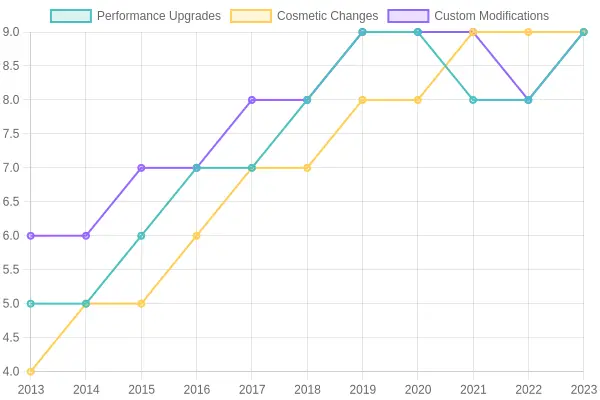
| Year | Performance Upgrades | Cosmetic Changes | Custom Modifications |
|---|---|---|---|
| 2013 | 5 | 4 | 6 |
| 2014 | 5 | 5 | 6 |
| 2015 | 6 | 5 | 7 |
| 2016 | 7 | 6 | 7 |
| 2017 | 7 | 7 | 8 |
| 2018 | 8 | 7 | 8 |
| 2019 | 9 | 8 | 9 |
| 2020 | 9 | 8 | 9 |
| 2021 | 8 | 9 | 9 |
| 2022 | 8 | 9 | 8 |
| 2023 | 9 | 9 | 9 |
As seen in the chart,
- Performance Upgrades have gradually risen, peaking in 2019 and 2023, reflecting enthusiasts’ increasing focus on enhancing vehicle performance.
- Cosmetic Changes showed a steady growth, especially in recent years, indicating a strong aesthetic interest among car modifiers.
- Custom Modifications consistently gained popularity, indicating a growing trend toward personalized vehicles.
For more insights on car modifications and their implications, learn more about modifying financed vehicles and the impact of modifications on resale value.
Conclusion: Take Action Now!
As we navigate through uncertain times regarding potential EPA changes on car modifications, it becomes increasingly crucial for hobbyists, professional tuners, and automotive enthusiasts to advocate for their rights to modify and personalize vehicles. The landscape of automotive customization is under scrutiny, with pending regulations that could significantly impact our passion for car modifications.
The EPA’s recent moves towards stricter emissions regulations may present challenges, particularly for aftermarket modifications. These proposed changes not only threaten the creativity of car enthusiasts but also the livelihood of countless small businesses linked to the modification and tuning industry. As a passionate community, we must unite and voice our concerns about the implications of these regulations. We have the power to protect the vibrant culture of vehicle customization that fuels our creativity and passion for automobiles.
A remarkable statistic reflecting the vitality of our hobby is that the U.S. automotive engine tuner market is projected to grow significantly in the coming years, reaching a valuation of approximately USD 2.5 billion by 2028, reflecting a CAGR of around 6% from 2023 to 2028. This demonstrates the enduring support and enthusiasm for car modification despite regulatory hurdles.
We invite you to join discussions, engage in advocacy, and spread awareness regarding these proposed changes. You can learn more about the implications of car modifications and their value and how together we can shape the future of our beloved automotive culture.
Furthermore, if you’re looking for quality parts to enhance your car while ensuring compliance with existing regulations, consider Summit Fairings. They offer a wide range of products that cater to enthusiasts while maintaining the performance and aesthetic you desire. Don’t just sit on the sidelines. Now is the time to take action and protect our community!
Stand together, inform your friends, and let’s keep the spirit of car modification alive!