
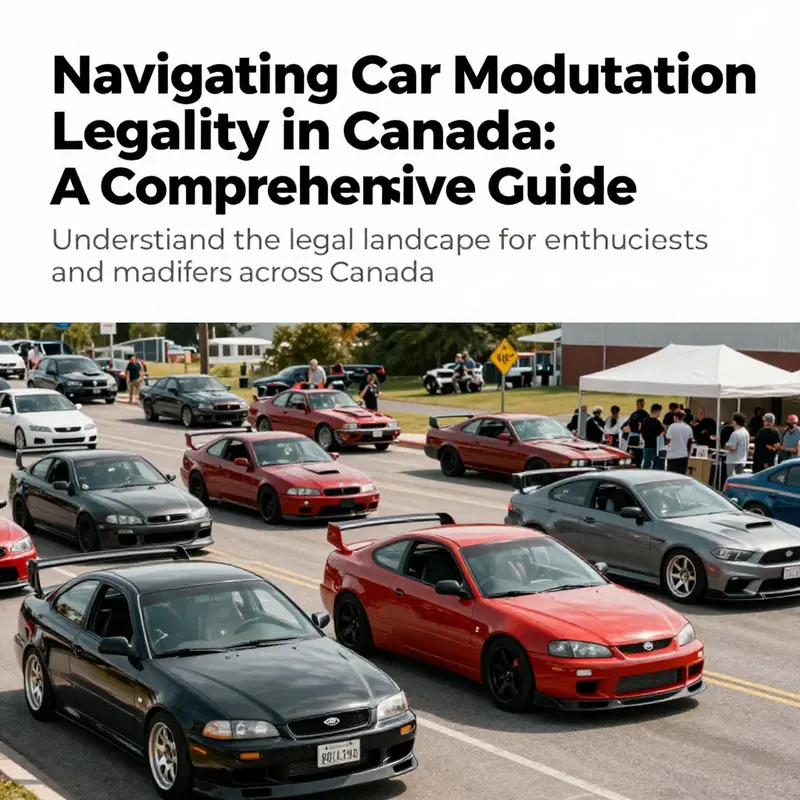
Car modification is more than just an activity; it’s a vibrant culture that embodies creativity, personal expression, and technical skill. In Canada, however, navigating the waters of legality surrounding car enhancements can be perplexing. While modifications are permitted, they must conform to federal and provincial regulations that prioritize safety and environmental standards. This article delves into the complexities of car modification legality across Canada. We start with the foundational legal framework that governs modifications, explore the types of modifications generally allowed, discuss compliance with safety and emissions requirements, and highlight how provincial variations can affect your ability to customize your vehicle. Together, this knowledge will empower hobbyists, professional tuners, and restoration enthusiasts to enhance their vehicles within the bounds of the law.
Navigating Canada’s Rules: The Legal Landscape of Car Modification
Understanding the legal landscape of car modification in Canada requires seeing federal standards and provincial rules as parts of a single system designed to keep vehicles safe, environmentally compliant, and predictable for other road users. The federal framework sets baseline safety and emissions expectations that apply coast to coast. Provinces then layer registration, inspection and traffic enforcement rules on top, producing practical differences in what you can do to your car in Ontario versus Quebec or British Columbia. Across this complexity, a few non-negotiable principles emerge: modifications cannot defeat emissions controls, cannot reduce safety, and must leave identification and lighting clear and compliant.
At the federal level, two sets of rules matter most. One governs emissions and anti-tampering, making it illegal to remove catalytic converters, bypass oxygen sensors, or reprogram the engine to defeat emissions controls. These prohibitions are not mere technicalities; they are backed by environmental law and carry significant penalties. The other set comes from the Canadian Motor Vehicle Safety Standards (CMVSS), which define the minimum safety features for vehicles on Canadian roads. Any modification that undermines CMVSS compliance — for example, altering structural identification numbers or disabling safety systems — can put you on the wrong side of federal law.
Because provinces control registration and traffic enforcement, the practical implications of those federal limits often depend on where the vehicle is driven or registered. Provinces set rules about lighting colour and placement, window tint darkness, exhaust noise, ride height, and how aftermarket wheels and tires may fit the vehicle. These rules are enforced through roadside checks, regular inspections, and vehicle registration processes. That layered enforcement is why a modification that is tolerated in one province may trigger a fine or a requirement to reverse the change in another.
Lighting is an area where federal and provincial rules intersect visibly. Headlights must emit white or amber light; taillights must be red. Using non-standard colours for driving lights or taillights is illegal across Canada. Aftermarket HID or LED kits that produce blue, purple, or green tints can fail roadside checks or safety inspections. Provinces also police decorative lighting: underglow is effectively banned in some regions, permitted with constraints in others, and routinely a reason for police stops if it alters the vehicle’s visual signature. Window tinting follows a similar pattern: provinces set specific visible light transmission (VLT) minimums for front side windows and windshields. Deep, limo-style tinting on front windows is nearly universally prohibited; rear windows are more permissive but still subject to local rules.
Exhaust modifications illustrate the combined effect of environmental and provincial enforcement. Removing or seriously altering emissions control equipment is a federal offence. Even when exhaust changes do not affect emissions systems directly, provinces often regulate noise. Quebec, for instance, enforces a decibel limit, while Ontario can use loud exhaust as evidence of reckless driving, with potential fines or vehicle seizures. The simple lesson is that modifying exhausts cannot ignore both emissions and noise standards; doing so risks fines or impoundment.
Suspension changes and ride-height adjustments are another common modification that encounter legal limits. Provinces specify acceptable headlight and bumper heights and may require certification for significant lifts or drops. A vehicle that sits too low may scrape, damage critical components, or misalign lighting, and a vehicle lifted beyond permitted limits can alter handling and safety systems. Inspections often check for these limits because they affect how the vehicle interacts with the road and with other vehicles in a collision.
Wheels and tires are frequently modified for style or performance. The legal concerns here are straightforward: wheels must fit correctly, maintain proper offset and bolt pattern, and tires should not extend past fenders without approved flares or mudguards. Some provinces prohibit sharp-edged rims or oversized tires that create hazards for pedestrians and other vehicles. Improperly fitted wheels can also create insurance problems and cause inspectors to fail the vehicle.
Vehicle identification and registration requirements have strict boundaries. License plates must be visible and unobstructed; decorative frames, coverings or sprays that obscure characters are illegal. Altering or removing vehicle identification numbers (VINs) or engine numbers is a serious criminal matter. These rules protect ownership, facilitate enforcement, and help deter theft. Recordkeeping becomes essential here: keep invoices, certificates, and clear before-and-after documentation for any significant modification to support registration and resale.
Practical compliance means planning modifications with both federal and provincial rules in mind. Before buying parts or authorizing work, verify whether the change will affect emissions equipment, safety systems, or regulated features like lights and glass. If the modification is structural or alters key dimensions, check whether your province requires inspection, certification, or even notification to the registrar. Inspections are not uniformly required for every change, but if a vehicle will be registered after significant alteration, provinces such as Ontario, British Columbia and Quebec often require a safety inspection. Passing these checks usually depends on documentation and the quality of the installation.
Insurance and resale considerations are linked to legal compliance. Insurers expect vehicles to meet legal standards and to be accurately described on policy documents. Failure to disclose modifications can void coverage or result in claim denials. When selling, documented compliant modifications can preserve or enhance value, while undocumented or illegal alterations can lower buyer confidence. For more detail on disclosure and how modifications affect coverage, see this guide on declaring modifications to insurers.
When you work with professionals, use installers who understand federal and provincial limits. A competent shop will avoid tampering with emission systems, will fit components within manufacturer tolerances, and will provide certification or receipts that inspectors will accept. DIY work carries more risk because an inspector may not accept undocumented work or may find installation problems that affect safety. Even small changes can have unexpected consequences for airbags, stability control systems, or onboard diagnostics.
Enforcement is practical and sometimes local. Officers often focus on visible and safety-sensitive changes: lighting that blinds or confuses drivers, exhausts that are dangerously loud, severely altered suspensions that affect handling, and anything that obscures registration plates. Municipalities and police services may have their own enforcement priorities, which can lead to uneven experiences for modified vehicle owners. For that reason, anticipate variability: what passes unnoticed during a weekend cruise in one area might prompt a ticket in another.
Ultimately, responsible modification in Canada means balancing creativity and personalization with legal requirements and public safety. Start with the federal baseline: do not tamper with emissions systems, do not disable mandated safety features, and do not alter identification marks. Then consult your provincial rules for allowable lighting, tint, noise, ride height and registration requirements. Keep full records, use reputable installers, inform your insurer, and be prepared for inspections. When in doubt, check the official Motor Vehicle Safety Regulations from Transport Canada for the baseline rules and consult your provincial vehicle authority for local limits: https://www.tc.gc.ca/en/corporate/transportation-standards/motor-vehicle-safety-regulations
If you want practical advice on how to notify insurers and the implications of declared modifications, consult this internal guide on declaring modifications to your insurer: https://modifiyeliarabalar.net/blog/declare-car-modifications/
Following these steps keeps your car legal, keeps you insured, and keeps other road users safe while letting you enjoy personalization within Canada’s framework of safety and environmental protection.
What You Can and Can’t Change: A Practical Guide to Legal Vehicle Modifications in Canada
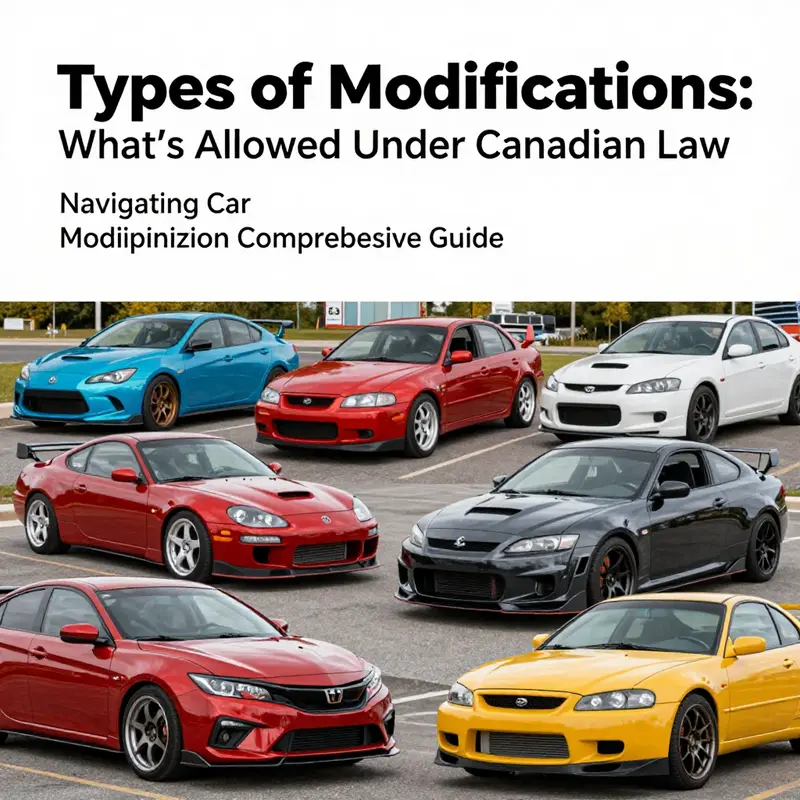
Modifying a car in Canada is possible, but it comes with clear boundaries meant to protect safety, reduce emissions, and preserve roadworthiness. The federal Motor Vehicle Safety Regulations (MVSR) set the baseline. Provinces and territories add their own rules. Understanding which changes are generally allowed, which are restricted, and how to document and certify modifications will keep your project legal and your vehicle insurable.
Most everyday modifications fall into several broad categories: exterior aesthetics, wheels and tires, interior upgrades, lighting, engine and performance work, chassis and suspension changes, and visibility tweaks such as window tinting. Each category carries its own set of expectations. Cosmetic changes—paint, wraps, body kits—are usually permitted so long as they don’t impair visibility or create a hazard. Aftermarket badges, trims, and non-structural panels are acceptable when installed properly. Vinyl wraps, even striking two-tone or “floating roof” designs, are fine as long as reflective surfaces or color schemes don’t mimic emergency vehicles or interfere with other drivers’ ability to judge distance and speed.
Wheels and tires are commonly upgraded for style and performance. Canadian law allows wheel and tire swaps provided fitment respects the vehicle’s load rating, bolt pattern, size, and offset. Incorrect wheel choices can alter steering, suspension geometry, braking distances, and speedometer accuracy. Tire choices must match the vehicle’s intended use and season; for example, winter tires are recommended and in some provinces required in certain months or conditions. Always confirm that aftermarket wheels and tires do not rub, contact suspension components, or exceed manufacturer-specified clearances.
Interior alterations that don’t affect structure or safety systems are generally acceptable. Reupholstering seats, upgrading audio systems, and replacing non-structural interior panels are routine. Avoid modifications that interfere with seat mounting points, seatbelts, airbags, or occupant protection systems. Replacing a steering wheel or altering dash-mounted controls can be allowed, but if the change disables the airbag or alters the steering column in a way that reduces crash protection, the modification becomes illegal. Any change that affects crashworthiness or occupant restraint systems is a serious red flag.
Performance modifications are where legality and liability often collide. Simple bolt-on upgrades—filters, intakes, certain exhaust components—may be legal when they do not increase emissions beyond federal and provincial limits. Anything that alters the emissions control system, such as removing or disabling catalytic converters, tampering with oxygen sensors, or installing defeat devices, is prohibited and can lead to fines or vehicle seizure. Engine tuning and forced induction swaps are possible but may trigger emissions testing or require certification. If modifications change the vehicle’s emissions profile, they must comply with the MVSR and provincial environmental laws.
Chassis, suspension, and steering changes must preserve handling and safety. Lifting or lowering a vehicle is legal if the work maintains safe steering geometry, does not overload axle ratings, and retains proper headlight aim and bumper heights within provincial limits. Structural changes to the frame, unapproved welding repairs, or modifications that alter crash structures can render a vehicle unroadworthy. Many provinces require documented proof that structural work was performed to acceptable standards, and major alterations often need a certified inspection before the vehicle can be registered.
Lighting is another tightly regulated area. Headlights, taillights, brake lights, and turn signals must comply with Canadian Motor Vehicle Safety Standards for brightness, color, and placement. Aftermarket lights are acceptable when they meet those standards. Blue or red lights that mimic emergency vehicles are prohibited for civilian use. Underbody or decorative lighting that produces glare or distracts other drivers will attract enforcement. Auxiliary lights for off-road use are common, but their use on public roads may be restricted and they must be wired so they don’t impair the main lighting system.
Window tinting regulations differ across provinces and territories, especially regarding front windshield and front side windows. Tints that reduce visibility for the driver or for law enforcement checking occupants will be rejected. Reflective or excessively dark films that obscure occupants or decrease light transmission beyond permitted percentages are illegal. Always check local limits before applying film.
Documentation and inspection play a central role. Provinces such as Ontario, British Columbia, and Quebec have inspection regimes that may require a modified vehicle to pass a safety inspection before registration renewal or initial registration. Significant modifications—engine swaps, major performance changes, structural alterations—often require notification to the licensing authority and proof that work was done to standard. Keep invoices, part numbers, installation manuals, and receipts. These documents prove that parts used are compliant, and they speed the inspection process.
Insurance considerations run alongside regulatory compliance. Many insurers require disclosure of modifications because they change risk profiles. Failing to declare modifications can void coverage. Discuss upgrades with your insurer before you install them. For more on how insurers view modifications, see this article on insurance for modified cars: https://modifiyeliarabalar.net/blog/insurance-for-modified-cars/.
Some common pitfalls result from misunderstanding how changes interact with safety and emissions systems. For example, replacing an exhaust for a deeper tone may inadvertently remove or bypass emission control devices. Upgrading to larger brakes or wheels without adjusting suspension geometry can cause premature wear or unpredictable handling. Replacing factory lighting with overly bright units might dazzle oncoming drivers or fail a structural inspection.
Provincial variations mean one-size-fits-all advice won’t cover every detail. Some provinces require formal inspections after specific modifications. Others focus on emissions testing during a change of ownership or when a vehicle fails a roadside check. Enforcement priorities also differ: urban centers with stricter emissions programs may scrutinize exhaust and tuning more heavily, while rural areas may focus on lighting, tires, and load securement. Always consult the provincial vehicle and safety authority for the precise rules that apply to your jurisdiction.
When planning a modification, approach it as an engineering and compliance project. Research compatible parts and certified installers. Seek components with certifications or data sheets showing compliance with safety standards. Use reputable shops that understand Canadian regulations. If you do work yourself, follow manufacturer instructions and retain proof of parts and labor. In the event of a sale, documented and professionally installed modifications often preserve resale value better than amateur alterations.
Certain categories remain clearly illegal regardless of location. Any modification that disables or interferes with emissions control equipment, safety systems like airbags, or devices designed to meet crash standards is prohibited. Lights that impersonate emergency vehicles, dangerously dark tints, and modifications that make a vehicle unstable or unfit for the road are not acceptable.
The federal Transport Canada pages remain the definitive source for the MVSR and the legal standards that underpin provincial rules. For technical requirements, definitions, and examples of permitted and prohibited modifications, consult the official guidance from Transport Canada: https://www.tc.gc.ca/en/corporate/transportation-standards/motor-vehicle-safety-regulations.
Practical compliance tips: choose parts listed for road use in Canada; keep installation and purchase records; notify your insurer and confirm coverage; verify local inspection requirements; and when in doubt, talk to a licensed mechanic or a provincial inspector. Road safety, emissions, and documentation are the three pillars that determine whether a modification stays legal. Treat each project as an opportunity to improve your vehicle without sacrificing compliance. When you do that, modification becomes not just a personal expression, but a responsible enhancement that keeps the car legal, safe, and insurable.
null
null
Mapping the Legal Landscape: How Provincial Rules Shape Car Modifications in Canada
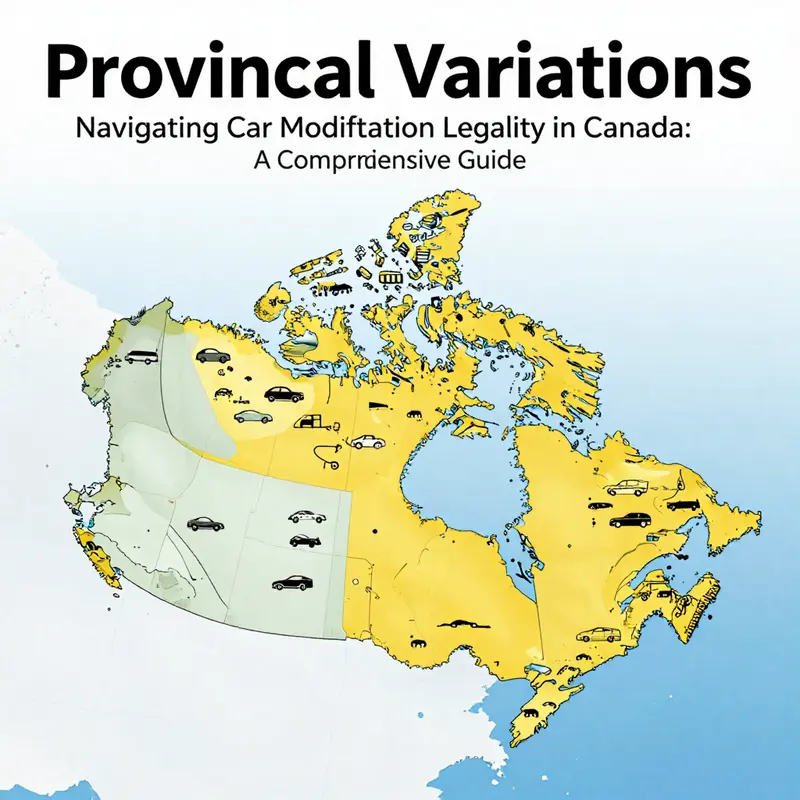
The idea that car modification is simply a matter of personal taste gives way when you step into Canada’s roadways. At the federal level, basic safety, emissions, and roadworthiness standards create a common baseline that everything must meet. This is anchored in the Motor Vehicle Safety Regulations (MVSR) under the Canada Motor Vehicle Safety Act. Yet beyond that shared foundation lies a patchwork of provincial rules that translate safety and environmental goals into regionally specific requirements. What is permitted in one province can be restricted or even prohibited in another, and that divergence lives at the intersection of urban policy, rural practicality, and local enforcement priorities. For anyone planning a modification, recognizing this provincial diversity is not a distraction but a practical map. It helps ensure that effort and investment do not end up stranded at a provincial border or, worse, subject to fines, rework, or vehicle seizure.
In practice, Canadians travel across provinces for work, family, or recreation, and many keep vehicles that originated in one jurisdiction but operate in another. The federal frame ensures that all vehicles sold in the country meet basic safety and emissions expectations. But provincial authorities decide how far those modifications may go, especially when changes touch on exhaust systems, lighting, suspension, or body alterations. This means that a modification that respects the MVSR in one province might be assessed differently by a provincial inspector elsewhere. The result is a necessity for vigilance and proactive consultation—before, not after, you swing a wrench.
Ontario presents a case study in careful oversight. The province maintains relatively strict standards for vehicle modifications, with a clear emphasis on controlling noise and preserving safety. The rulebook here includes provisions that effectively require a safety inspection before a modified vehicle can be registered. In other words, an aftermarket change that alters a major system—whether it is exhaust tone, braking behavior, or structural components—will undergo scrutiny to confirm it does not compromise roadworthiness. For residents who live near dense urban corridors or commute along congested routes, the Ontario approach signals a conservative posture aimed at minimizing nuisance and maximizing predictability for the broader driving public. This environment makes planning particularly important: anticipated inspections, documented parts lists, and a readiness to revert or adjust upgrades if an inspector flags concerns.
British Columbia offers a contrasting but complementary picture. BC’s approach tends to be more permissive in the realm of customization, especially for off-road vehicles and individual builds that emphasize utility and performance within safety constraints. The province channels its oversight through a structured safety-inspection program, not a blanket ban on broad categories of modifications. In practice, this means a lot of mainstream aftermarket activity can proceed, provided it passes the Vehicle Safety Inspection Program checks. The emphasis here shifts toward ensuring that the modification doesn’t introduce unsafe conditions, glare from lighting, or emissions issues. The BC model demonstrates how a province can encourage creativity and personal expression while maintaining a robust safety net. It also illustrates the importance of working with licensed inspectors who can interpret how a given modification aligns with provincial expectations.
Alberta sits somewhere in the middle, offering a higher degree of customization than some regions while maintaining a clear commitment to safety and emissions standards. In the prairie province, aftermarket parts and performance-oriented changes are often permitted, but they must operate within provincial guidelines that govern safe handling, braking, steering, and exhaust practices. This balance reflects Alberta’s broader priorities: a mix of openness to personalization and a pragmatic insistence that modifications do not undermine road safety or environmental responsibilities. The Alberta experience underscores an essential point for anyone venturing into modification across provinces: the same part or tune may be acceptable in one jurisdiction but require alteration in another.
The charm of this provincial mosaic is also its source of confusion. The rules do not form a single, universal checklist that travels with a vehicle from province to province. A modification that is legal in one place may trigger a reinspection or a notification requirement elsewhere. This complexity grows when a vehicle crosses provincial borders regularly or when its ownership changes hands and the new jurisdiction reevaluates the vehicle against local standards. The practical reality is that many owners end up seeking guidance from the provincial ministry of transportation or from licensed inspectors before committing to a modification plan. It is a step that prevents costly missteps and ensures that the vehicle remains compliant through the next renewal cycle.
The broader story behind provincial differences speaks to regional priorities. Urban centers, with their density and emphasis on public safety, tend to police noise and glare more strictly. They want to minimize nuisance for nearby residents and pedestrians, reduce roadside incidents, and maintain a predictable driving environment. Rural and western regions often prize utility, performance, and personal freedom, sometimes accepting a wider range of modifications when the changes do not escalate safety risks or environmental harms. Yet all regions converge on the shared objective: keeping roads safe, emissions in check, and vehicles roadworthy. The federal scaffold remains the guardrail, ensuring a minimum standard that protects everyone on the road while provincial authorities tailor the rules to local contexts.
For drivers who want to navigate this landscape with confidence, a practical approach unfolds in three moves. First, begin with the baseline: understand that modifications must comply with MVSR and do not interfere with essential safety systems or emission controls. This is not merely a checklist for compliance; it is a framework that recognizes the role of the vehicle as a complex machine that integrates performance, safety, and environmental stewardship. Second, orient your plans to provincial realities. Review official provincial resources, speak with licensed inspectors, and preemptively confirm whether your intended changes would trigger a safety inspection, a notification, or a formal approval process. Third, document meticulously. Maintain records of all components, installation procedures, and any correspondence with inspectors or authorities. A well-documented modification not only smooths through inspections but also supports resale and resale-related disclosures.
To support readers who want a concise guide that complements the broader discussion, consider this internal resource on legal car modifications. It provides a compact overview and practical reminders for aligning your plans with both federal and provincial expectations: Legal car modifications. Keeping a reference like this handy can help you map your modification project from concept to roadworthiness without getting tangled in jurisdictional nuances.
As important as planning is, so is understanding the consequences of missteps. Modifications that affect the emission control system—such as removing catalytic converters or altering emission-related components—remain illegal and carry potential penalties, including fines or vehicle seizure. Lighting and visibility must meet CMVSS standards, and aftermarket lighting should not produce glare or reduce visibility for others. More broadly, modifications must not disable or degrade critical safety features. Electronics that govern airbags, seat belts, and stability control must remain intact and functional. In short, the safety architecture of the vehicle cannot be compromised for the sake of cosmetic appeal or performance gains.
Considering the practical realities, owners should also plan for inspections and potential administrative steps. In provinces like Ontario, annual or periodic safety inspections can be part of the registration or renewal process for modified vehicles. Other provinces may have different schedules or notification requirements. These procedures are not intended as punitive measures; they function as quality checks that help ensure that modifications do not create new hazards for the owner or for other road users. The act of obtaining approvals or passing inspections often reveals gaps between intention and on-the-ground execution, underscoring the value of engaging with professionals who understand the local code and how it is enforced.
The conversation about provincial variations naturally leads to questions about travel, cross-border driving, and multi-provincial ownership. A car that passes scrutiny in one province might face a different standard in another, which is why many drivers choose to align their build with the most stringent provincial expectations they are likely to encounter. This cautious approach minimizes exposure to last-minute surprises when registering, renewing, or re-titling a vehicle in a new jurisdiction. It also keeps resale options open, since buyers often look for a documented compliance trail that respects regional rules.
In shaping a modification plan, owners can lean on a few practical guardrails. Start with a respectful assessment of how a change could affect the vehicle’s safety systems and emissions profile. Maintain a transparent record trail of all components and installation steps. Consult provincial guidance early, and if in doubt, reach out to a licensed inspector or the provincial ministry of transportation for clarification. The goal is not to avoid risk altogether but to manage it through informed decision-making and proactive compliance. This mindset is especially important for more ambitious projects, such as suspension changes, weight alterations, or significant bodywork, where the potential for unintended safety or regulatory consequences increases.
As readers move from theory to practice, the real work is in tailoring the plan to the provincial context while keeping the federal standard in view. The MVSR provides the core safety and environmental assurances that apply everywhere in Canada. Provincial rules then fine-tune how those assurances are realized on the ground, reflecting differences in traffic patterns, urban density, climate, and resource priorities. The result is a dynamic, living framework rather than a rigid, one-size-fits-all rule set. For many enthusiasts, understanding this synergy—federal baseline plus provincial nuance—transforms modification from a gamble into a measured project that respects safety, legality, and personal expression.
For further federal guidance on how modifications intersect with national safety and emissions standards, see the official source that documents the Motor Vehicle Safety Regulations and their application across Canada: https://www.tc.gc.ca/en/corporate/transportation-standards/motor-vehicle-safety-regulations.
Final thoughts
Understanding the legalities of car modification in Canada is essential for anyone looking to enhance their vehicle responsibly. With clarity on the overarching legal framework, types of permissible modifications, and the critical compliance with safety and emissions regulations, car enthusiasts can navigate their customization projects with confidence. Remember, local provincial regulations may introduce nuances in the law that require attention. By staying informed and proactive, you can ensure that your modifications not only reflect your personal style but also adhere to Canadian laws, keeping you and your vehicle safe on the road.