

Navigating the world of car modifications can be exciting, but it’s important to understand how changes may affect warranty coverage. This guide breaks down the key considerations so you can customize with confidence while protecting your investment.
When Modifications Meet Warranties: Navigating Coverage, Claims, and the Fine Print
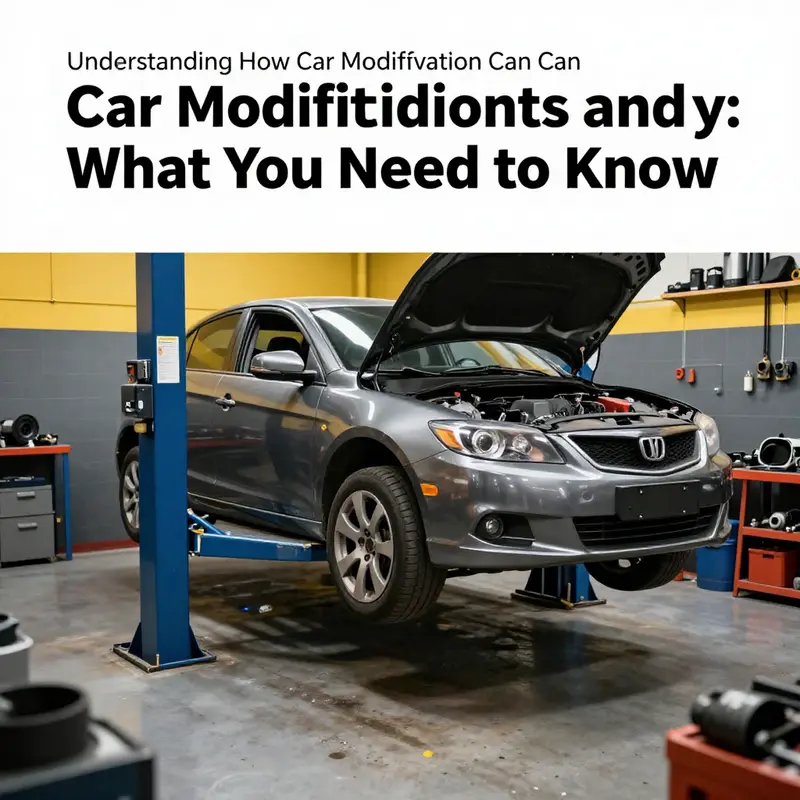
Modifying a car can improve performance aesthetics or usability, but it raises questions about warranties. The Magnuson Moss Warranty Act protects consumers by preventing voiding of coverage solely because of aftermarket parts, but it does not guarantee blanket protections. Manufacturers may deny coverage for a defect if they can prove the modification caused or worsened the problem, or if the alteration violates safety or emissions standards. Owners are advised to document installations, use compatible parts, seek professional installation, and obtain written assurances about what is and is not covered. Knowing the warranty terms before modifying helps balance customization with protection and can reduce disputes if service is needed.
Chapter 2: The Warranty-Wrench Balance: Legal Protections and Practical Limits of Car Modifications
Modifying a car sits at an uneasy intersection of personal preference, performance potential, and the broad shield of consumer rights. For many drivers, the draw of a louder exhaust, a stiffer suspension, or a set of lighter wheels is about more than style; it’s a statement of how a vehicle can reflect individual needs and driving ambitions. Yet every lever pulled in the name of performance nudges against the framework that governs warranty coverage. Understanding where law protects you and where it might step back is essential for anyone who plans to modify a car while keeping the peace with a dealer and the factory warranty. The core of this tension lies in a federal safeguard known as the Magnuson-Moss Warranty Act, which serves as a backstop against blanket denial of warranty claims merely because aftermarket parts were installed. This law does not grant carte blanche to modify without consequence, but it does require manufacturers to prove that a claimed failure was caused by a specific modification, not by the mere fact that a modification exists on the vehicle. In practice, this means the burden is on the manufacturer to show, with clear and direct evidence, that the aftermarket component was the actual, proximate cause of the problem the owner is trying to have repaired under warranty. It is a crucial distinction: a host of other issues can be involved in a malfunction, and the presence of a part is not, by itself, proof of responsibility for a breakdown. The nuance matters, because it shapes how a claim is evaluated and how a driver should approach both maintenance and dispute resolution.
When a failure arises, the first question isn’t “was there a modification?” but rather “did the modification directly cause the failure?” A classic example helps illuminate how the standard operates in everyday terms. If a car’s engine fails after installation of a high-performance exhaust system, the manufacturer has to demonstrate that the exhaust or its installation directly led to the engine damage. If the failure stems from improper tuning or a defective component that occurred alongside the modification, the outcome can be contested—but not simply on the basis that a modification exists. The operator is not guaranteed immunity from warranty denial for every issue that arises after a modification; rather, the claim must trace the malfunction to a clear, causative link to a specific aftermarket change. Conversely, if a minor modification—say, custom wheels or floor mats—does not interfere with any safety systems or cause any impairment to the vehicle’s original design, the broader warranty should remain intact. The line is often subtle and rests on whether the modification affected the diverse system interactions that govern safety, emissions, and reliability.
A critical reality for drivers to recognize is that warranty terms are not uniform across all manufacturers or models. Some automakers offer limited warranties on modified components, and others require using factory-approved parts or certified installation methods to preserve coverage. The exact language of the warranty booklet for a given model matters as much as the modification itself. This is why an upfront, careful review of the warranty terms—or consultation with a knowledgeable dealer representative—can save hours of disagreement later. The legal framework gives protection against a blanket denial, but it does not erase the need for careful maintenance and responsible modification choices. The difference between coverage and denial often hinges on precision: the specificity with which a dealership or the manufacturer can link a failure to the modification rather than to unrelated wear, age, or accident.
The conversation about legality does not stop at the edge of the law’s protection. Emissions controls, for instance, occupy a special category because federal and state environmental regulations address these systems explicitly. Tampering with emissions components, such as altering catalytic converters or other parts of the exhaust system, can trigger penalties under the Clean Air Act and simultaneously jeopardize warranty coverage for any related or resulting problems. The protection under Magnuson-Moss has a clear boundary: it does not shield modifications that violate federal laws or safety regulations. Similarly, suspensions, steering components, or braking systems altered in ways that affect the vehicle’s performance can also lead to warranty denial if such changes directly contributed to a safety-related failure or accident. The law does not create loopholes that allow owners to circumvent safety or environmental protections; rather, it requires a careful mapping of causation and responsibility if a claim goes to dispute.
This is why documentation plays a pivotal role. An owner who keeps meticulous records—from purchase receipts for aftermarket parts to professional installation notes and tuning logs—enables a clearer demonstration of the modification’s nature and timing. If a claim is denied, these documents can become the backbone of a consumer’s defense, showing that the modification itself did not automatically compromise the vehicle’s integrity. In practice, this means saving invoices, warranty terms, installation certifications, and any correspondence with the dealer or manufacturer. The more transparent a record-keeping trail, the easier it is to establish whether a claim is truly about a failed component or a downstream effect of unintended interactions within the vehicle’s systems.
For drivers who want a more in-depth treatment of the legal landscape, there is a wealth of guidance that expands on these principles and clarifies common points of confusion. One resource that offers a focused look at the topic is a dedicated article on legal car modifications, which explores how the law interprets responsibility and how disputes tend to unfold in real-world scenarios. This kind of reading can demystify the process of negotiating with a dealership and understanding the practical steps to protect one’s rights while still pursuing the vehicle’s desired performance. Accessing such material can help an owner balance personal customization with the obligation to maintain the vehicle’s reliability and safety in a way that aligns with legal protections. For readers looking to explore this further, the article Legal car modifications provides a concise, accessible overview of the key considerations and common pitfalls. (Legal car modifications)
While the law offers strong guardrails, it does not remove the need for a thoughtful approach to modifications. Before committing to any change, consider the broader implications: how a modification will interact with your vehicle’s electronics, braking system, and suspension; how it might affect resale value and insurance; and how to document the project so that you can articulate a well-supported case if a warranty claim is ever questioned. The practical takeaway is straightforward: you can enjoy customization, but you do so with an awareness that not all changes are equally compatible with warranty protections. This means choosing components with proven compatibility, relying on qualified technicians for installation, and seeking parts that meet the manufacturer’s specifications when possible. The risk calculus varies with each car, each part, and each intended use case, but the underlying principle remains constant: clarity of causation is the heart of warranty coverage when modifications are involved.
Some owners might ask whether there is a safe, zero-risk path to modification. The answer lies in transparency and restraint. If a driver is intent on a particular upgrade that might be controversial from a warranty perspective, a pragmatic approach is to pursue those changes in a way that minimizes potential conflict. This can involve selecting parts classified as non-intrusive, opting for bolt-on components that do not require adaptive tuning, and ensuring that any changes can be reversed without affecting the original configurations. It is also prudent to confirm whether the expected benefits of a modification outweigh the potential limitations on warranty coverage for related components. In some cases, a dealer may be more accommodating if a modification is performed with factory-approved parts and documented installation methods. While this does not guarantee uninterrupted coverage for every issue, it can reduce the likelihood of a blanket denial and provide a clearer path for dispute resolution if a failure occurs.
For those navigating the process after a claim denial, the route to resolution is not a one-way street. A consumer has rights to challenge decisions and to seek guidance from regulatory bodies if needed. The FTC’s framework provides a mechanism to address unfair or deceptive practices related to warranties, and it is appropriate to escalate concerns when a manufacturer or dealer refuses coverage for a problem that is not clearly caused by the modification. In such situations, the emphasis should be on gathering all relevant documentation, articulating a precise causation narrative, and using formal channels to resolve the matter. The path to resolution is rarely swift, but with careful preparation and a solid understanding of the rules, a driver can assert their rights while maintaining a commitment to the vehicle’s safety and reliability.
In sum, modifications and warranties inhabit a space defined by causation, safety, and documentation. The Magnuson-Moss Warranty Act provides a framework that discourages blanket denial and emphasizes evidence-based claims. Yet the law does not erase the legitimate concerns manufacturers may raise when modifications interact with complex vehicle systems. By staying informed, documenting every step of the modification journey, and choosing parts and installers with care, owners can pursue performance goals without forfeiting the protections they are entitled to under federal law. The interplay between customization and control of warranty costs is not a binary choice but a continuum that rewards attention to cause, effect, and accountability. For readers seeking a concise roadmap to this landscape, the essential steps are simple: read the warranty terms, document everything, consult qualified experts, and be prepared to demonstrate, should it be necessary, that the modification did not directly cause the issue claimed under warranty.
External resource: For official guidance on understanding warranties under the Magnuson-Moss framework, visit the FTC’s guidance page on warranties and consumer rights: https://www.ftc.gov/tips-advice/business-center/guidance/understanding-warranties
Internal resource note: For a focused discussion on the legal aspects of car modifications, you may also consult the article Legal car modifications for a practical overview of how these rules apply in everyday scenarios. Legal car modifications
Warranty in the Workshop: Navigating Car Modifications and How Coverage Actually Works
Modifying a car often occupies a gray area between hobby and negotiation with the warranty department. The Magnuson-Moss Warranty Act in the United States prohibits a manufacturer from voiding a warranty merely because aftermarket parts are installed, but coverage can be denied for failures directly caused by a modification. This chapter explains causation, coverage, and practical steps to preserve warranty protection when modifying a vehicle. It covers how small cosmetic changes differ from modifications affecting safety, emissions, or driveline components, the role of OEM-approved parts and certified installation, and the importance of documentation and clear communication with dealers. It also highlights official guidance from consumer protection agencies and practical strategies to minimize risk while enjoying personalization.
Chapter 4 Revisited: How Specific Car Modifications Can Make or Break Warranty Claims
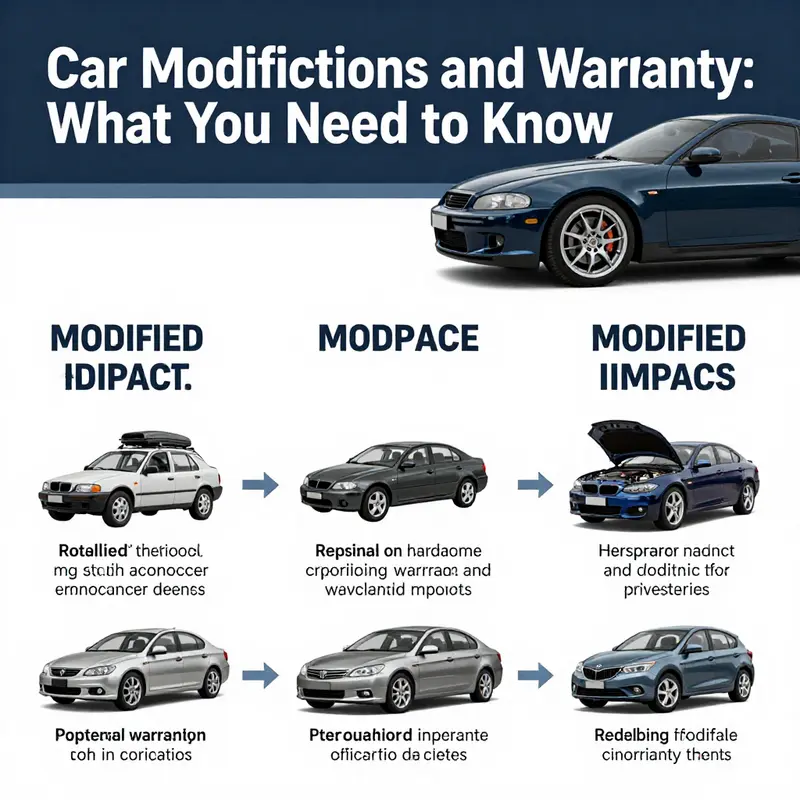
Modifying a car invites the thrill of personalization—the sound, the speed, the feel on the road. It also invites questions about warranty coverage. The conversation rarely ends with a simple yes or no. Instead, it runs through the legal framework that protects consumers and the practical realities of how manufacturers apply those protections. The core message is nuanced: modifications can complicate warranty claims, but whether they void coverage depends on what actually goes wrong, what was changed, and how closely the modification aligns with factory specifications. In the United States, this is guided by the Magnuson-Moss Warranty Act, a law that protects consumers from being forced into a particular way of maintaining or repairing a vehicle. The FTC’s guidance under that act makes clear that a warranty cannot be voided merely because aftermarket parts were installed. The critical question is whether the modification directly caused the failure that is being claimed. If the failure is traceable to the modification, coverage for that specific issue can be denied. If not, the claim may still stand for other problems not connected to the modification. This distinction matters because it shapes how cautious a car owner must be when planning upgrades and how one should approach a warranty dispute if a problem arises.
From a practical standpoint, the difference between a blanket void and a targeted denial is where many owners stumble. Consider the case of a vehicle with a high-performance exhaust system. If the exhaust is installed correctly and tuned to the engine within safe parameters, it’s conceivable that the engine’s core components remain within design tolerances. However, if the modification leads to improper tuning, altered air-fuel ratios, or excessive heat in the combustion chamber, a subsequent engine issue may be framed by the manufacturer as causally linked to the modification. In such a scenario, the warranty may deny coverage for the engine failure specifically, while other unrelated issues could still be treated under the original terms of the warranty. The practical takeaway is that the presence of a modification does not automatically nullify every warranty claim; what matters is whether the failure can be shown to stem from the modification or from a separate, OEM-design-related defect. This nuance should guide conversations with service departments and, if needed, with consumer protection guidance.
The line between covered and non-covered problems grows even thinner when we examine forced induction systems—turbochargers and superchargers. These devices are designed to push more air into the engine, increasing power output. They alter the operating parameters of the powertrain and can raise thermal and mechanical stresses in ways the factory did not anticipate under typical conditions. Because of that, manufacturers frequently point to the presence of a non-OEM component when the cause of a failure involves the engine, turbocharger, or related systems. If an aftermarket turbocharger or supercharger is installed, the terms of the warranty may no longer cover related components, especially if the modification exceeds OEM specifications or was not installed by a qualified technician following manufacturer guidelines. Sometimes this denial extends to the turbocharger itself, particularly when the failure is connected to installation quality, calibration, or support systems like the ECU mapping that controls fuel delivery and ignition timing. The result can be a paired denial: the engine fails, and the claim is denied for the engine and possibly for the forced induction hardware, even if the rest of the vehicle is technically within its warranty period.
What distinguishes these situations is how a warranty term defines “factory-original” components and what it means to introduce a non-factory modification. Warranty documents—the terms and conditions provided by the manufacturer—shape the interpretation of “factory-original” and what constitutes a direct link between the modification and a failure. In many cases, the manufacturer will argue that any aftermarket forced induction changes the baseline operating conditions of the engine, which can be seen as a contributing factor to failures in related components. If the modification is paired with improper installation, or if the installed components push the engine beyond the limits validated during the design process, coverage for failures within the powertrain becomes a subject of dispute. This is why meticulous installation and tuning are not mere afterthoughts; they are central to whether a claim remains defensible under warranty.
The broader regulatory landscape reinforces the message that these outcomes are not arbitrary. While the United States relies on the Magnuson-Moss framework to protect consumers, other jurisdictions have similar protections that recognize consumer rights to challenge a denial and to demand substantiation of causal links between a modification and a failure. The overarching principle remains consistent: a manufacturer may deny coverage for issues caused by a modification, but they must demonstrate a plausible connection between the modification and the failure they are claiming. This has practical implications for anyone considering modifications. It means that before pulling the trigger on a project, a car owner should carefully read the warranty terms, identify which components are most sensitive to upgrades, and understand how the proposed changes align with the vehicle’s design tolerances.
In this light, the question shifts from “Can I modify my car and still have full warranty?” to “What kind of modification can I make without compromising the protection I rely on for the things that matter most to me?” One reality often overlooked is that some manufacturers do offer limited warranties on certain modified components or require you to use parts that are factory-approved to preserve coverage. These offerings vary widely by brand and model, and they can be a meaningful hedge against the risk of broad warranty denial. If protecting warranty coverage is a priority, the prudent path is to investigate whether a particular modification or component is eligible for continued warranty support under a factory-approved pathway. That approach does not necessarily prevent performance gains, but it does require a careful alignment with the manufacturer’s guidelines and approved suppliers.
For readers navigating this terrain, practical steps can help manage risk while still pursuing personal customization. First, gather solid information about your car’s current warranty terms. Read the sections that discuss exclusions and the conditions under which coverage may be denied. Then, when planning a modification, consult with a qualified technician who understands both the mechanical implications and the warranty landscape. They can advise on installation practices, calibration strategies, and the degree to which the modification respects OEM specifications. Documentation matters—collect receipts, installation diagrams, calibration maps, and a written assessment from the installer. When you submit a warranty claim later, having a clear record that the component was installed correctly and tuned to the recommended parameters can make a meaningful difference in the evaluation of fault causation.
It is also worthwhile to think beyond the mechanical and consider the broader protections that come with owning a modified car. Insurance, for example, can be impacted by modifications, altering premium calculations or coverage options. Understanding how modifications affect insurance, while not the same as warranty, can help owners avoid a double whammy where a claim on a modified vehicle becomes complicated on multiple fronts. For a concise discussion on how modifications influence car insurance, see What Modifications Affect Car Insurance. While that resource is focused on insurance, the underlying theme—careful consideration of how any change interacts with the broader risk and protection framework—resonates with warranty decisions as well. You can explore it here: https://modifiyeliarabalar.net/blog/what-modifications-affect-car-insurance/.
In all cases, a steady approach—coupled with honest expectations about what a warranty will and will not cover—serves owners better than an impulsive upgrade that promises more but leaves coverage uncertain. The practical reality is that performance enhancements often demand a trade-off: you gain speed, sound, or handling in exchange for greater scrutiny of who covers the resulting failures. The FTC’s guidance makes this point with clarity: a manufacturer cannot automatically void a warranty for a consumer-installed aftermarket part; they must show the modification caused the specific failure. Yet this proof can be elusive if the modification introduces new stresses or if improper installation muddies the causal chain. The result is a landscape where knowledge and preparation are the most reliable shields against unexpected costs.
As you plan the next step in vehicle personalization, keep the conversation with the dealer and the shop constructive. Ask for a written warranty condition for the specific modification you’re considering, request the part’s compatibility with the vehicle’s OEM systems, and inquire whether the installation qualifies under any factory-approved program. If a denial arises, request a detailed written explanation that ties the denial to a specific failure and the role of the modification in causing that failure. If the explanation is vague, you have a basis to seek guidance from consumer protection resources that interpret the Magnuson-Moss Act and related regulations. While this chapter has focused on the claimed relationship between modification and warranty denial, the broader takeaway is that a thoughtful, informed approach to modifications can preserve essential protections while still delivering the personal vehicle enhancements that enthusiasts seek.
For readers who want to explore broader implications beyond warranty and into the regulatory and consumer-rights framework, note that the official guidance from consumer protection agencies remains an essential reference. The discussion here is designed to empower readers to navigate the nuanced terrain rather than to advocate for reckless experimentation. Modifications can transform a car in meaningful ways, but they should be pursued with a clear understanding that coverage for the unexpected still depends on causation, documentation, and adherence to terms that manufacturers set forth. This is the balance at the heart of modern car ownership: personalization without surrendering the protections that provide peace of mind on the road.
External reference for deeper reading on how forced induction can influence warranty claims: https://www.autoblog.com/2025/07/18/turbocharger-supercharger-warranty-claims/.
Between Performance and Protection: Navigating How Car Modifications Impact Warranties

Modifying a car sits at the intersection of appetite for performance and the protections built into warranty terms. The instinct to customize—toward more power, better sound, or a distinct stance—collides with the careful language that manufacturers use to define what their warranty covers. The conversation isn’t simply yes or no about voiding a warranty. It rests on principles enshrined in federal guidance and the practical realities of how a claim is evaluated when aftermarket parts are involved. In the United States, the Magnuson-Moss Warranty Act shields consumers by ensuring that a warranty cannot be voided merely because aftermarket parts were installed, unless the modification can be shown to have directly caused the claimed failure. The critical nuance is causation: the burden shifts if a failure is traceable to a modification rather than to a defect in materials or workmanship. This distinction matters because it frames not just what could be covered, but how a claim might be pursued and what kinds of documentation strengthen a consumer’s position.
The landscape, however, is not binary. Substantial changes—engine tuning, high-performance exhausts, or suspension alterations—change a car’s dynamic profile and its risk matrix. When a modification contributes to a malfunction or damages a component, a manufacturer can legitimately deny coverage for the specific issue. A turbocharger installation that leads to engine damage due to improper tuning, for example, is a scenario where coverage for that repair may be refused. Conversely, more modest modifications like upgraded floor mats or a different radio system typically do not trigger an automatic voiding of the entire warranty, so long as those changes do not interfere with safety systems or create harm that can be linked to the failure. The key is the relationship between the modification, the symptom, and the defect at the center of the claim.
To understand how this plays out in practice, it is essential to consider how warranties are written and how manufacturers and service networks interpret them. Vehicle warranties come with terms and conditions that can vary from one maker to another and from model to model. Some manufacturers may offer limited warranties on modified components or require the use of factory-approved parts to preserve full coverage. Because the precise language can differ dramatically, a careful read of the warranty booklet is indispensable. If there is any doubt, speaking with the manufacturer or an authorized dealer before making changes can prevent misalignment between expectations and coverage. In this context, a proactive step is to verify whether there is a pre-approval program for aftermarket parts or a list of approved suppliers. Such programs can provide a pathway to maintain as much warranty protection as possible while pursuing the modification.
The discussion of seriousness also invites a broader view of how claims are evaluated. When a failure occurs, service records, inspection results, and a clear account of any modifications all come under review. The process often involves a meticulous assessment to determine whether the fault lies with a defect in materials or workmanship or with the modified component. Even if a modification is not the direct cause of a failure, it can complicate the claim by casting doubt on whether the original defect could be isolated from the modification’s influence. In short, the consumer bears the responsibility to demonstrate that a defect is not the result of the aftermarket alteration. Yet the manufacturer must show that the claimed failure is linked to the modification or was caused by a separate issue that the modification did not cause. This friction is why the warranty process can feel unpredictable, and it reinforces the value of careful planning before modifications.
An immediate implication for anyone considering changes is to approach modifications with a strategy rather than a impulse. Start with the warranty terms and consult the manufacturer’s guidance on aftermarket parts. If available, seek part approvals or pre-approval from a dealership that the brand regards as an authorized intermediary. When in doubt, document every step: keep receipts, note part numbers, installation dates, and the technician or shop that performed the work. A well-documented modification trail can become a critical reference should a dispute arise. It is also prudent to maintain a parallel record of maintenance and service history that illustrates continued care of the vehicle post-modification. In the event of a future claim, such documentation helps distinguish wear or failure that stems from routine service from issues introduced by aftermarket components.
For those who want to explore the broader implications of modifying a car beyond warranties, there is value in understanding the intersection with legal and insurance considerations. Certain modifications, while not voiding the entire warranty, can affect insurance premiums or coverage terms. Insurance policies often scrutinize the nature of modifications, especially if they alter performance characteristics or safety systems. The prudent path, then, is to treat modification as part of a larger planning process: assess the potential impact on warranty, insurance, resale value, and safety before committing to any change. Keeping this holistic view in mind can help align personal goals with the practical realities of ownership, reducing the risk of surprising outcomes later on.
To balance ambition with protection, many enthusiasts turn to a measured approach: prioritize modifications that are less likely to interfere with warranty coverage or with core safety systems, and reserve more ambitious changes for vehicles where the risk of denial is understood and accepted. There is a growing emphasis on choosing components with a proven track record in the context of a given vehicle, and on working with technicians who are versed in the brand’s engineering philosophy. This approach helps preserve the integrity of the vehicle’s core systems while still delivering the personalized experience that motivates modification in the first place. It also invites ongoing conversation with dealers and manufacturers whenever a change is contemplated, so that expectations stay aligned and the likelihood of an unwanted denial remains low.
For readers who want a concise reference point on the balance between modification and warranty, a resource on Legal Car Modifications provides context about how different jurisdictions and brands approach the issue and where the line is drawn between protected and restricted modifications. Legal Car Modifications offers insight into the legal framing of adjustments and how professionals navigate the boundaries without jeopardizing coverage. This perspective complements the practical guidance outlined here, helping readers connect theory with the real-world steps needed to plan, execute, and document changes responsibly.
In considering whether to proceed with a modification, a clear, proactive mindset matters more than a bold impulse. The core takeaway is that modifications are not categorically forbidden; they are factors in a nuanced equation about coverage. The equation weighs what failed, what was altered, and whether the alteration caused or contributed to the failure. If the modification is unrelated to the problem, coverage for other issues can still apply. If the modification is implicated, coverage may be limited to the non-modified components or denied for the specific fault linked to the alteration. The practical implication is straightforward: do your homework, document your changes, engage with the dealer or manufacturer early, and avoid high-risk alterations without a plan for preserving warranty protection.
Ultimately, the aim is to enjoy the benefits of customization without triggering an adversarial warranty dispute. When done thoughtfully, modifications can coexist with a robust warranty framework, ensuring that the thrill of personalization does not come at the expense of the assurances that come with owning a vehicle. It is about balancing curiosity with due diligence, and about recognizing that protecting one’s investment often begins long before the first bolt is loosened. For those seeking a concise starting point on the legal landscape, the Federal Trade Commission’s guidance on warranties remains a foundational, accessible resource that clarifies consumer rights and responsibilities in this arena: https://www.consumer.ftc.gov/articles/0267-warranty-rights.
Final thoughts
The interaction between car modifications and warranty coverage can be nuanced. Modifications do not automatically void warranties, especially when performed within manufacturer guidelines and applicable laws. Always verify terms, keep receipts, and document parts to protect your investment.