
In the world of automotive passion, car modifications represent a deeply personal expression of style, performance, and identity. Yet, for hobbyist car modifiers, professional tuners, and classic car restorers, one crucial aspect often goes overlooked – the implications of these modifications on insurance policies. Understanding how modifications can affect insurance is essential to mitigating risks and ensuring proper coverage. This article dives into mandatory notifications regarding car modifications, explores how they impact insurance premiums and coverage exclusions, discusses additional insurance needs for custom parts, and examines the legal compliance necessary to safeguard claims. Each chapter delivers insights essential for anyone passionate about enhancing their vehicles, ensuring they are not only stylish and powerful but also legally compliant and financially protected.
null
null
Raising the Stakes: How Car Modifications Reshape Insurance Premiums and Coverage
Modifying a car is often more than a hobby; it is a statement about identity, performance, and aspiration. Yet behind every engine swap, suspension tweak, or bespoke body kit lies a layer of risk that insurers must assess. The relationship between modification and insurance is not a simple one-to-one calculation. It is a dynamic conversation among the vehicle, the driver, the modification itself, and the rules that govern how risks are priced and covered. When a car is altered, the risk profile changes in ways that can affect what you pay, what is covered, and how claims are adjudicated. This chapter explores that intricate dialogue, drawing on how policies are written, how underwriters view risk, and how drivers can navigate the system without sacrificing either their passions or their financial protection.
From the moment a modification is contemplated, the clock starts ticking on notification. In many jurisdictions, if a change increases the vehicle’s risk—whether through engine tuning, turbocharging, or other performance upgrades—you are obligated to inform the insurer in writing within a clearly defined window, often within 10 days of the modification. This requirement is not a bureaucratic hurdle; it is a mechanism to ensure the insurer re-evaluates risk with up-to-date information. Failing to disclose can jeopardize the legitimacy of a claim. In practical terms, an unreported upgrade becomes a black hole in the claims process. If the insurer later discovers the modification, they may deny coverage for the related incident or even cancel the policy. The message is simple: disclosure is not optional, it is foundational to the trust and accuracy of risk pricing.
Once a modification is disclosed, the policy itself often undergoes a formal amendment or endorsement process. The policy must be updated to reflect the changed risk profile and the altered value of any added equipment. This is not about punitive bookkeeping; it is about ensuring the contract accurately mirrors the reality of the vehicle on the road. When an endorsement is completed, it creates a framework in which the modified car is treated as the same vehicle under the policy, but with the adjusted risk and terms that reasoned underwriting requires. In some cases, this process also clarifies how specialized coverage for aftermarket parts is handled. The need for endorsement is especially critical when the modification affects safety systems, braking performance, or structural integrity. In these instances, the risk calculation becomes more nuanced, and the insurer must decide whether the existing coverage remains adequate or whether supplemental protections are necessary.
The impact on premiums is not uniform. Performance modifications—engine tuning, turbocharging, intercooled upgrades, or any alteration that increases speed or acceleration—are typically treated as higher risk. Underwriters associate such changes with an elevated probability of accidents and, in some cases, more severe outcomes when incidents occur. Higher speeds and more aggressive handling introduce a different risk landscape than stock configurations, and this often translates into higher premiums. The same logic applies to changes that influence theft risk or maintenance costs. If a car becomes more attractive to thieves due to aftermarket appearances or unique parts, insurers may respond by adjusting premiums to reflect the greater theft risk. The same modification can also interact with other policy features; for example, a higher-performance build might necessitate higher liability limits or different deductibles to match the altered risk exposure.
Aesthetic modifications may seem cosmetic, but they carry their own risk calculus. Custom paint, body kits, or aftermarket wheels can affect theft risk, visibility, and even accident dynamics in certain scenarios. Thieves may target vehicles with distinctive features, and a car that looks visibly altered can present a higher theft lure in certain markets. The premium implications of aesthetic changes often hinge on whether the insurer views the modification as increasing the likelihood of a loss. In some cases, cosmetic upgrades can be neutral or even mildly discount-eligible if they are paired with protective technologies or higher-quality components that the insurer recognizes as reducing certain types of risk. The exact outcome depends on the insurer’s ratings, the specific parts installed, and how well the modifications are documented.
The question of coverage is equally essential. Standard comprehensive policies typically exclude coverage for damages to customized or aftermarket parts unless the policy includes explicit endorsements or add-ons that extend coverage to these items. For instance, while a blemish on the original bumper might be reimbursed under a standard policy, a non-original, aftermarket bumper is often excluded unless the plan is specifically extended to cover such parts. This means you may be insured for the overall vehicle but not for the specialized components you paid a premium to install. To close that gap, many drivers purchase an optional coverage known as new equipment insurance or a similar add-on that reimburses losses related to modifications. Without this coverage, losses tied to listed modifications—such as high-value wheels, upgraded audio systems, or forged engine components—may be left unreimbursed, even if the accident or incident was otherwise covered.
Another facet of coverage concerns the limits and the way liability interacts with modified parts. In at-fault accidents, the third-party liability portion of the policy may still apply up to the policy limit. If a modification is damaged in an accident at fault for the insured, coverage may be constrained to the value of standard, factory-installed components unless the modification is separately insured. The liability framework can also expose gaps in claims when modified parts have higher replacement costs than their stock counterparts. This is where precise documentation—receipts, appraisals, and proof of ownership—becomes crucial. If the other party is at fault and the insured can prove the value and ownership of the modified parts, it can support a successful claim for those parts. Conversely, in the event of a total loss, the insurer will evaluate the overall vehicle value and replacement costs; if the modifications are deemed excessive or non-standard, the settlement may hinge on the acceptability of the claimed value and the policy’s terms for non-original components.
The legal and regulatory environment adds another layer of complexity. Modifications must comply with national regulations and pass the relevant inspections. In many places, vehicle alterations that modify engine displacement, ground clearance, or use non-approved parts can trigger regulatory scrutiny and impact insurance. If a modification fails verification or inspection, the insurer may limit coverage to compulsory motor vehicle liability insurance or worse, deny commercial coverage altogether. Conversely, if the modification is verified and compliant, both compulsory and commercial insurance can apply in a broader sense, supporting a broader range of claim scenarios. The distinction between verified and unverified alterations is not merely bureaucratic; it determines whether certain claims will be investigated and paid and whether the policy remains in force. Illegal or safety-compromising modifications—such as removing airbags, drastically altering suspension in a way that compromises stability, or using unsafe non-certified parts—can lead to policy voidance, leaving the vehicle unprotected in ways that go beyond a simple premium increase.
When accidents occur, the claims process for modified cars can reveal these risk realities in practical terms. In a single-vehicle accident where you are at fault, the standards are straightforward in many respects: original factory parts are typically covered under comprehensive insurance, but modified parts are not unless new equipment insurance was purchased. This makes the protection of those modifications highly contingent on prior coverage. In a multi-vehicle incident, the situation shifts. If you are at fault, the claim ordinarily covers only the original parts, with modifications excluded unless there is explicit additional coverage. If the other party is at fault, you may still claim for damages to modified parts, but you will need to present thorough proof of value, ownership, and the replacement cost. This proof often takes the form of invoices, appraisals, and documented compatibility with the vehicle. The argument for coverage in such a case rests on demonstrating that the modified components were reasonably integrated into the vehicle and that their value is recognized within the policy framework.
Total loss or non-insurable damage can also occur if the insurer deems a modification dangerous or illegal. If the alteration creates a safety hazard that contravenes regulatory or safety standards, the insurer may refuse all claims or decline to renew the policy. This is not a punitive outcome so much as a risk management stance: insurers price risk with the reality of legal and safety constraints in mind. Those constraints are not static; they evolve as technology, traffic safety standards, and enforcement practices change. For drivers, this means that modifications are not a one-time decision but a long-term commitment that requires ongoing attention to legal compliance, documentation, and communication with the insurer.
Given this landscape, the best practice for car owners who want to modify their vehicles is prudence wrapped in proactivity. Plan modifications with insurance in mind from the outset. Before starting any significant change, obtain insurance quotes and discuss the anticipated modifications with the insurer. This helps set expectations for how premiums may shift and what additional coverages might be required. Documentation becomes your ally: keep meticulous invoices, before-and-after photos, certificates of conformity, and any professional assessments that attest to the quality and safety of the work. These records simplify the endorsement process and strengthen your position if a claim arises.
A practical path is to verify that modifications comply with local laws and pass the Vehicle Management Office inspections. The mechanics of verification are more than bureaucratic box-ticking; they are safety safeguards that align the vehicle with road regulations and with the insurer’s risk model. When modifications are officially verified, you gain a clearer avenue for commercial coverage and a more predictable claims process. If verification is not possible or the parts are not approved, then the protective canopy of comprehensive coverage may narrow, and you may be left with only mandatory liability coverage. The bottom line is clear: disclosure, documentation, compliance, and proactive dialogue with your insurer are the pillars that protect both your investment and your peace of mind.
For those who want to explore how a modification can best fit within an insurance framework, a concise overview is available in resources that discuss what modifications affect car insurance. This kind of overview helps drivers weigh whether a particular upgrade aligns with risk tolerance and budget before the wrench ever hits the metal. To learn more, readers can refer to the overview labeled What Modifications Affect Car Insurance. The decision to explore that resource is a practical step toward balancing passion with protection, ensuring that the road ahead remains secure as vision and velocity converge. What Modifications Affect Car Insurance.
Ultimately, the influence of car modifications on insurance is not a single rule but a spectrum. Some changes invite modest premium adjustments, while others trigger a cascade of coverage considerations and legal obligations. The most successful path through this terrain combines upfront planning, clear communication, and robust documentation. It involves recognizing that while a modification can enhance performance or aesthetics, it also alters risk in ways that deserve careful calibration by both the driver and the insurer. By approaching modifications with a proactive stance—reviewing endorsements, verifying compliance, and securing appropriate add-on protections—you can pursue your automotive goals without surrendering financial protection or claim certainty. The negotiation between passion and prudence is ongoing, but the tools to align them are well within reach when drivers treat modifications as part of a comprehensive risk management strategy rather than an isolated weekend project.
External resource for further reading: How Car Modifications Influence Insurance Premiums and Coverage Exclusions. https://www.insurance.com/car-insurance/modifications/
Beyond the Sticker: How Custom Parts Redefine Insurance for Modified Cars
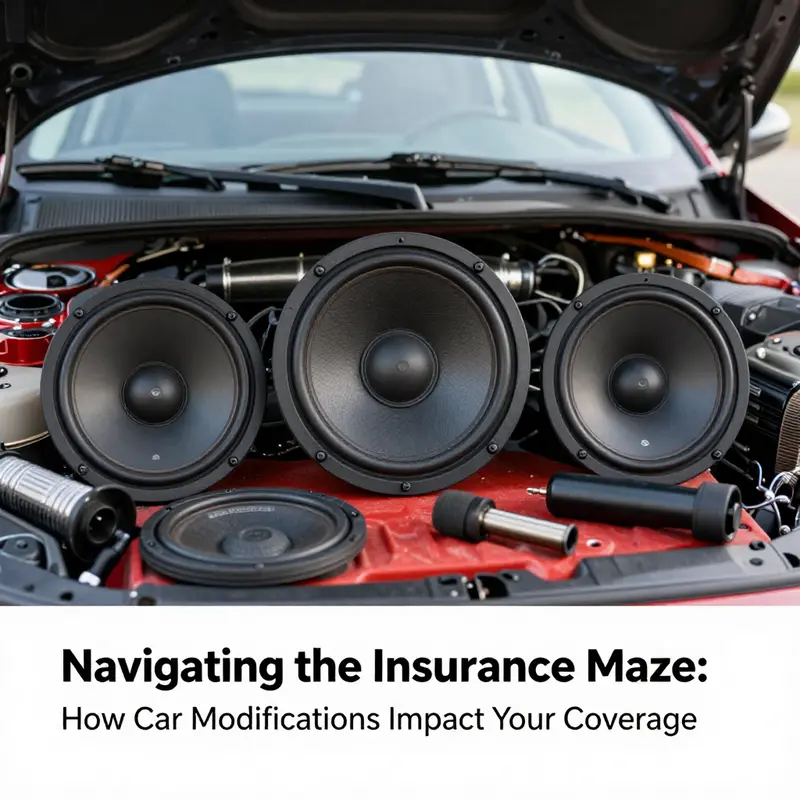
Modifications change more than a car’s appearance or sound. They redraw the risk map for insurers and, by extension, for you as the owner. When a vehicle leaves the factory line, underwriting assumptions follow a fairly predictable path. Once you start replacing parts, boosting performance, or altering essential safety systems, the risk profile shifts and the coverage terms must adjust accordingly.
Notification is the first practical reality. If a modification increases risk—engine tuning that raises power, suspension changes that affect handling, or safety-system upgrades—the insurer typically expects to be informed in writing within a narrow window. A common guideline is within 10 days of the change. This isn’t a bureaucratic trap but a guardrail designed to prevent claim disputes later on. If you delay, a claim could be denied because the insurer would be operating on outdated risk assumptions. The policy may be amended or endorsement-based to reflect the new reality.
Premiums also respond quickly to perceived risk. Modifications that enhance performance or alter safety systems are usually treated as higher risk, and the premium may rise accordingly. Cosmetic changes might have a smaller impact, but even small changes deserve careful review because gaps in coverage can lurk and a modest upcharge may pale beside a large claim. In most standard comprehensive policies, modified parts are excluded unless you add coverage for them. For example, a custom aftermarket bumper might not be reimbursed unless the policy includes a rider that covers aftermarket components.
This is where a dedicated endorsement, commonly called Custom Parts and Equipment (CPE), enters the framework. The CPE endorsement protects the financial value of non-standard modifications—engine work, performance tires, aftermarket audio, or body kits. Without it, losses to modified components can go unreimbursed after a covered incident. Adding CPE typically raises the premium, but it often offers meaningful protection against large out-of-pocket costs and helps align coverage with risk.
Verification and legality also shape how insurance applies. Modifications should meet local regulations and pass required inspections where applicable. In some jurisdictions, unverified or illegal alterations can create coverage gaps, or trigger denial in certain scenarios. Conversely, documented and verified modifications generally support broader coverage and smoother claim handling. This step isn’t merely bureaucratic; it preserves the integrity of risk assessment and helps ensure the insured vehicle remains within legal operation.
In the event of a claim, outcomes can vary by fault and by whether the modification is properly covered. A single-vehicle accident where you are at fault may be processed primarily under the policy’s coverage for original parts unless you carry dedicated coverage for the modified components. In multi-vehicle crashes, fault can shift the outcome: if another driver is at fault, you might claim for the value of modified parts if you have proof of ownership and installation. If a modification is deemed dangerous or non-compliant, an insurer may limit or deny coverage. These nuances underscore why preemptive planning and thorough documentation matter.
Practical guidance follows a few core steps: plan ahead before you modify, obtain insurer quotes early, and document meticulously—receipts, serial numbers, photos, and installation dates. Keep legal compliance in view by checking local laws and required inspections, and seek guidance from your insurer or a qualified professional when in doubt. The economic logic is straightforward: while some upgrades may add modest costs, they can prevent large, unexpected losses by preserving the value of high-value components and reducing dispute risk in a claim.
Taken together, the mid- and long-term message is clear. Modifications do affect insurance, but with careful planning, transparent communication, and appropriate endorsements, you can protect your car, your finances, and your peace of mind. Minor cosmetic changes are typically manageable within standard coverage if you disclose them and document them; major performance or safety upgrades, plus high-value components, deserve deliberate endorsement strategies and verified compliance.
Modifications and Insurance: Navigating Legal Compliance and Claims
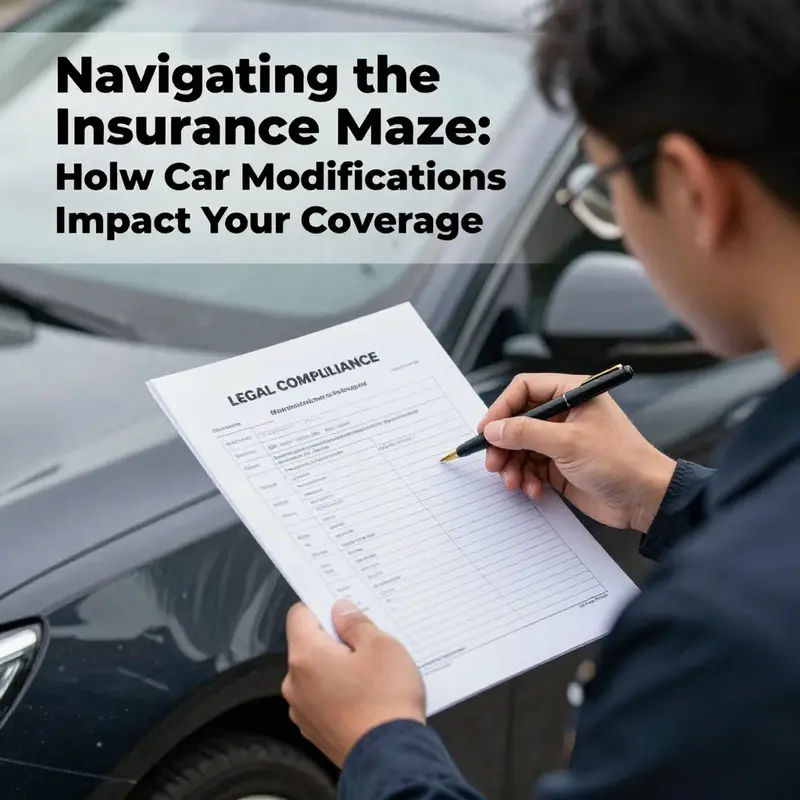
Modifying a car affects more than style or speed. It is a legal act that can change how an insurance policy applies after a crash or breakdown. Insurers assess risk based on the car as it sits on the road, and a modification can raise or shift that risk. You should understand how a change will interact with your policy, how to disclose it, and how it could affect a claim.
In many places you must notify your insurer in writing within a short window after a change that increases risk. The window is often about ten days. If you fail to report, coverage can be reduced or a claim denied. An endorsement or policy amendment is the standard way to formalize the change so the insured vehicle remains covered.
Financially, higher risk can mean higher premiums, or exclusions for non listed parts. Some polices cover stock parts but exclude aftermarket or custom parts unless you add them to the policy. A separate rider for new equipment can help recover losses for high value upgrades like sound systems or wheels.
Legality also matters. Some modifications trigger regulatory checks, emissions standards, or safety rules. If a change is not verified or approved, it can affect registration and coverage. In a worst case, a modification that violates the law can void a policy when a claim is filed.
If an accident happens, coverage for mods depends on fault. If you are at fault, coverage for modified parts may be limited by policy limits. If another party is at fault, you may be able to recover the value of modified parts with receipts or documentation. In some cases, insurers might contest a claim if a modification contributed to the incident.
Practical steps help protect you. Plan before you modify, get quotes, and talk to your insurer first. Keep invoices and photos, and document each change. Ensure you pass all local inspections and meet regulatory requirements. Honest disclosure helps keep coverage intact when you need it most.
The aim is balance: enjoy customization while keeping protection. Not every upgrade changes insurance equally; cosmetic changes may have little impact, while performance or safety changes often need more robust coverage. If you want more depth, look for resources from your regulator or insurer about how modifications affect coverage. And remember that transparency and compliance make the claim process smoother when needed.
Final thoughts
Navigating the landscape of car modifications and insurance can be complex, but understanding the nuances is vital for protecting both your investment and enjoyment. From mandatory notifications and associated costs to ensuring you have the right additional coverage and remaining compliant with legal regulations, each facet plays a crucial role in safeguarding your vehicle. For every enthusiast out there, knowledge is power—educate yourself, communicate with your insurance provider, and always document your modifications. With the right approach, you can transform your vehicle while ensuring it remains adequately protected.