

In the world of car enthusiasts and modifiers, the thrill of personalizing a vehicle is matched only by the anxiety of jeopardizing its warranty. Modifications, whether for performance, aesthetics, or functionality, invoke a crucial question: How do they affect your vehicle’s warranty? The answers lie not just in the nature of the modifications themselves but also in the manufacturer’s policies and the mechanics of warranty application. In this article, we will explore impactful engine modifications, delve into the nuances of electrical changes and their potential risks, scrutinize suspension alterations, and clarify how cosmetic enhancements influence warranty coverage. Finally, we will provide practical tips for safeguarding your warranty while indulging in your passion for car tuning and modifications.
Power, Policy, and Warranty: Navigating Engine Modifications and Coverage

Engine modifications sit at the crossroads of performance ambition and written policy. They promise juice for the drive and a chance to tailor a vehicle to a rider’s needs. Yet they also pose a practical challenge: how far can you push the engine before the factory warranty stops covering repairs? The answer is not a single line but a spectrum that shifts with the type of modification, how it’s installed, and the specific terms laid out by the manufacturer. To understand this terrain, one must first recognize that warranties are contracts with defined boundaries. They promise coverage for defects in materials or workmanship that arise under normal use. They do not guarantee every outcome when a car’s engine is asked to perform beyond the stock configuration. In that sense, engine modifications are not simply a toggle switch between covered and not covered; they reframe the causation questions that warranty assessors must answer when a claim is filed. A modification that fails and a separate, unrelated fault are two different events in the eyes of a warranty inspector. The risk is that if the modification contributed to the failure, the claim may be denied or limited. If the modification is merely cosmetic or non-invasive, the odds of a straightforward claim being honored rise substantially. The practical rule of thumb is simple: anything that preserves the integrity of the engine’s original design and does not alter critical operating parameters is less likely to void coverage than changes that push the engine beyond its intended limits.
To unpack this, it helps to segment engine-related modifications into two broad categories: those that touch the engine’s core operation and those that do not. Core modifications include changes to the engine control system, forced induction additions, major internal components, and exhaust systems that materially affect emissions or engine output. When a vehicle’s ECU is remapped or reprogrammed to extract more power or torque, the software becomes a central part of how the engine runs. While a remap can deliver noticeable performance gains, it also changes fuel delivery, ignition timing, and sometimes fueling strategies under load. Manufacturers argue that such alterations can accelerate wear or reveal latent defects only after the modification exists, which makes the warranty claim’s causation harder to prove. In many cases, this is enough for a denial of the powertrain portion of the warranty.
Similarly, adding forced induction—turbochargers or superchargers—significantly increases cylinder pressures and heat. This not only elevates performance but also introduces new failure modes that the original design did not anticipate. If a failure occurs after installation, the manufacturer may rightly question whether the root cause lies in the modification or in a lingering defect from earlier production. The same logic applies to major internal engine parts replacements or upgrades. If the timing chain, pistons, or another critical component is altered, the line between factory specification and modified operation blurs. In such cases, warranty coverage tends to shrink, especially for the parts and systems most directly affected by the change.
Non-core modifications also influence the warranty, but their impact is usually less drastic. Upgrades that do not involve internal engine components or the ECU—such as intake or exhaust systems that meet emissions standards, provided they do not damage the engine or its wiring—often fall outside the more stringent restrictions. The key caveat is that any modification must be compatible with the vehicle’s safety systems and should not impede emissions controls. If an aftermarket intake changes air flow but is paired with a compliant exhaust and proper tuning that preserves emissions performance, some manufacturers may still honor parts of the warranty, particularly if the changes are performed by qualified technicians with approved parts. The risk remains that a downstream failure caused by a misfit or improper installation could complicate a claim, even if the modification itself is permitted under the warranty terms.
This is where the installation context matters. Unauthorized or improper installation can void the warranty regardless of the modification’s nature. A part installed by an untrained technician can introduce new failure modes or create electrical shorts, grounding issues, or sensor misreads. In such cases, the manufacturer may argue that the fault lies with the installation, not with a defect in the part or the engine. The moral is clear: even when a modification would be allowed in principle, professional installation and documentation are essential if you want to preserve the possibility of warranty coverage.
Manufacturers also distinguish between different warranty scopes. A typical new-vehicle limited warranty covers defects in materials and workmanship for a defined period or mileage. The powertrain warranty, if offered separately, focuses on engine and driveline components. Emissions warranties, mandated in many regions, add another layer of complexity because modifications affecting emissions systems can trigger compliance concerns as well as warranty implications. When a claim involves an engine modification, the review often starts with a simple question: did the modification cause the problem? If the answer is yes, there is a strong case for denial or partial denial of coverage. If the issue is truly independent, a manufacturer may still cover non-modified systems under the standard warranty, but the situation can become intricate when the failure overlaps with the modified components or when the evidence of cause remains ambiguous.
In some jurisdictions, there is a concept of “approved” or “certified” modifications. These programs allow enthusiasts to add performance parts within a framework that the manufacturer has reviewed and validated. Parts secured through OEM-approved channels and installation performed by certified technicians may carry greater protection, because they align with the vehicle’s original design intent and the manufacturer’s safety standards. Even then, the scope of coverage can be narrow. The parts themselves might be covered under a limited warranty, while the rest of the powertrain remains subject to the standard terms. The upshot is that pre-approval and compatibility checks are not mere formalities; they are practical steps toward preserving as much coverage as possible while pursuing the performance goals that matter to the owner.
For owners considering a modification, the prudent path is to anticipate how a claim could unfold. Start by reviewing the warranty documentation and asking explicit questions about engine-related mods. Seek written confirmation on what is allowed, what requires pre-approval, and how claims will be evaluated if a modified component fails. This proactive approach helps avoid disputes that arise only after trouble occurs. Keeping original parts can also be advantageous. If you decide to revert to stock, having the original components available supports a smoother claim process and demonstrates a commitment to the vehicle’s baseline configuration. A detailed trail of receipts, installation notes, and professional assessments becomes valuable evidence when presenting a claim to the dealer or manufacturer.
Another consideration is emissions compliance. Modifications that alter the exhaust flow or oxygen sensors can affect emissions controls, which, in turn, can trigger regulatory concerns and warranty implications. A modification that maintains compliant emissions is more defensible than one that creates a clear deviation from the factory’s emission profile. This is why many experts emphasize using parts that meet or exceed OEM specifications and ensuring that tuning, if any, is performed by technicians with appropriate certifications. The more transparent the process, the stronger the case that the vehicle continues to operate within its designed parameters.
Navigation through this landscape benefits from practical, grounded steps. Before purchasing a modification, talk to the dealer or the manufacturer’s service department. Ask for a written stance on how the modification will affect warranty coverage, and request a pre-approval in writing if possible. When negotiating the installation with a shop, insist on certified technicians, reputable parts, and a complete installation log. Documentation should capture the part numbers, installation dates, tool usage, and any calibration or software changes. These records are not mere paperwork; they are the bridge between performance aspirations and warranty realities.
For readers seeking a broader safety net, consider exploring the concept of legal and policy boundaries around car modifications through resources that discuss warranty eligibility and consumer rights. For a concise overview of how modifications intersect with warranty claims in a mainstream context, see the discussion on legal car modifications, which provides a framework for understanding permissible changes and the limits of coverage. You can explore this topic here: legal-car-modifications.
Ultimately, the decision to modify the engine is a balance between personal preference and practical risk. The potential performance gains must be weighed against the probability of warranty challenges, the possible need for pre-authorization, and the likelihood that a future repair could be excluded from coverage. Owning a modified engine does not automatically erase protection; it shifts the conversation toward clarity, documentation, and alignment with the manufacturer’s standards. When done with care, it remains possible to enjoy enhanced performance while maintaining as much warranty integrity as the arrangement permits. The key is transparency, professional execution, and respect for the conditions set out in the warranty documentation.
External resource: https://www.autocar.co.uk/car-news/technology/warranty-claims-and-car-modifications
Wired for Warranty: Do Electrical Modifications Really Void Your Car’s Coverage?
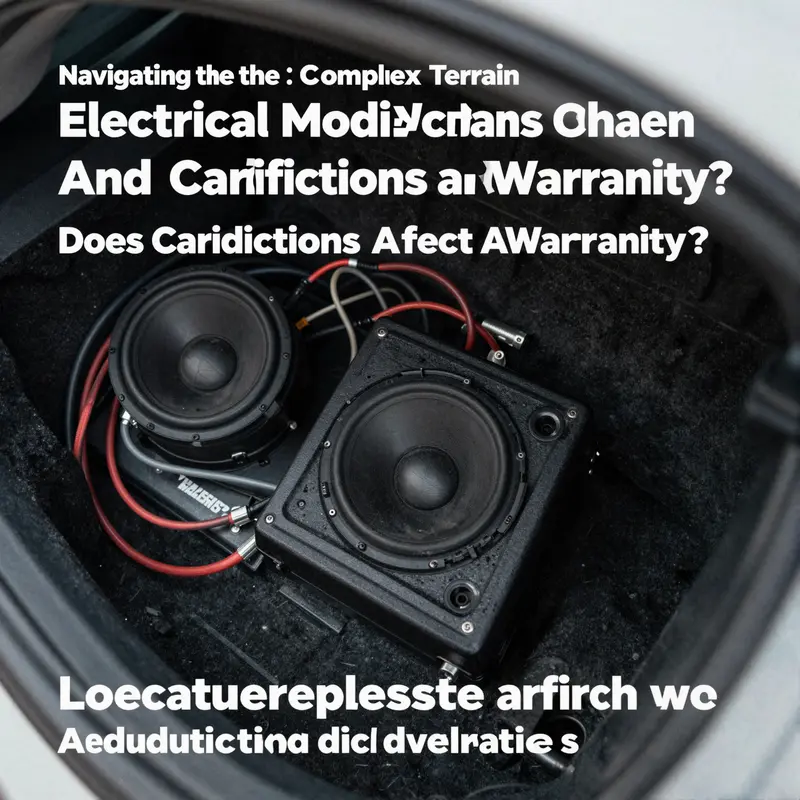
When a car owner considers adding an illuminated display, a louder sound system, or a more powerful range of charging accessories, the first question often isn’t about performance. It’s about protection. Will this electrical upgrade void the warranty, or can it be done without leaving the dealership’s door open to denial? The short answer is nuanced. Electrical modifications can affect warranty status, but the impact hinges on how the modification is done, what it touches, and the precise language of the manufacturer’s policy. The more fundamental takeaway is straightforward: modifications that stay away from the vehicle’s core systems and are installed correctly by qualified technicians are far less likely to trigger a warranty dispute. Those that involve altering wiring harnesses, modifying the engine management network, or changing components that interact with safety and emissions systems carry a far higher risk of warranty implications. This isn’t merely a matter of good faith. It’s a matter of how manufacturers define causation and responsibility when a fault appears after a modification has taken place.
From the outset, it’s important to acknowledge a reality that sits at the center of warranty practice: a warranty covers defects in materials or workmanship from the factory. It does not serve as a blanket guarantee for every aftermarket upgrade. When a fault surfaces, the question is whether the problem is a direct, demonstrable result of the modification or merely a coincidental failure related to an unrelated component. The burden of proof often rests with the claimant, especially when the repair involves electrical systems. If a technician can show that a fault stemmed from a misstep in installation or from an aftermarket component that was poorly integrated, the manufacturer or dealer may refuse coverage for the affected part. If, however, a car exhibits an unrelated defect in a perfectly stock subsystem, warranty coverage may still apply for that defect, albeit with the context of the modification considered in the background.
The electrical landscape of a modern vehicle complicates this dynamic. Cars increasingly rely on a network of sensors, microcontrollers, and control modules. A stable voltage supply, clean grounding, and proper shielding are not cosmetic concerns; they’re essential to the vehicle’s safety and reliability. Any modification that taps into that network has the potential to introduce noise, ground loops, or parasitic draws. A well-executed install that remains within the electrical architecture’s design boundaries may not affect warranty coverage. A sloppy or invasive modification, on the other hand, can cause faults that the manufacturer could attribute to the modification rather than a defect in the original design. This distinction is why many automakers place emphasis on how a modification is performed and who performs it.
Consider the spectrum of electrical work available to a curious owner. On one end sits non-invasive enhancements: upgrading a radio or navigation unit that uses a dormant, pre-wired harness, adding a dash camera with a clean, documented power feed from a fused line, or installing a small GPS tracker that does not interact with engine systems. These alterations, especially when executed by a trained technician and with correct components that meet the vehicle’s electrical standards, tend to leave warranty protections intact. On the other end lies modifications that intrude into the core electrical ecosystem: a remapped engine control unit (ECU), an ECU flash that changes fuel mapping or timing, high-output alternators or batteries, or any installation that requires splicing into critical wires or relocating connectors that feed safety or emission control systems. In these cases, manufacturers may argue that the fault is the result of the modification, not a manufacturing defect. The line between permissible and impermissible becomes especially important in high-performance contexts where owners push engines and exhaust flows beyond stock specifications. In such scenarios, the risk that a powertrain or emissions-related warranty claim could be denied increases significantly.
For a driver weighing options, the practical path to protection hinges on a few concrete steps. First, consult the vehicle’s policy documents before committing to any modification. Owner’s manuals and warranty booklets often outline the boundaries of what is considered permissible. If the language is ambiguous, a call to the dealer or a factory representative can help clarify whether a proposed modification is likely to be considered within warranty protection. Second, prioritize quality over price. Use parts that are certified or approved for aftermarket use and insist on installation by trained professionals who understand vehicle architecture. A trustworthy installer will respect wiring harness routes, protect against moisture intrusion, and correct grounding procedures. They will also document all work performed, which becomes an important record should any warranty questions arise later.
The documentation trail cannot be overstated. Keep every receipt, installation log, and certificate of authenticity for aftermarket parts. A clear paper trail helps establish that a modification was planned, properly executed, and compliant with the vehicle’s electrical framework. It also provides a reference point when a service advisor reviews a claim. In some cases, dealers request the exact part numbers and installation dates to verify that the work aligns with the approved scope of modifications. Without this evidence, even a minor dispute can escalate into a longer, more costly process. As a practical matter, owners should also maintain a separate maintenance log for any aftermarket installation, noting how the system was tested, what settings were employed, and whether any service issues were tracked after the modification. This proactive approach reduces ambiguity and supports a smoother warranty evaluation.
Another dimension to consider is the role of the installer’s qualifications. An unqualified installer, even when using legitimate parts, can create conditions that a factory would view as the source of a fault. Improper routing of wires, inadequate protection from vibration, or incorrect grounds can cause erratic sensor readings or short circuits. Such outcomes can prompt a warranty denial on the grounds that the fault is attributable to the modification’s installation rather than a manufacturing defect. By contrast, a properly installed modification—carried out by a technician with experience in automotive electrical systems—poses a smaller risk of misattribution. In some markets, technicians are required to follow industry standards or to adhere to specific installation practices. Adherence to these standards reduces the likelihood that an insurer or manufacturer will reject a claim on purely technical grounds. The practical consequence is straightforward: invest in skill, documentation, and compliance, and you tilt the balance toward preserving warranty coverage.
The conversation can also touch on the broader ecosystem around modifications. Insurance certainly intersects with warranty in meaningful ways. Insurance policies may view modifications as changes in risk. Some policies increase premiums or impose stricter conditions when significant electrical upgrades are installed. This reality does not automatically void factory warranty, but it adds another layer of cost and complexity to the decision-making process. For readers who want to understand this interplay, it’s worth exploring resources on how modifications affect insurance and warranty in tandem. For a broader look at how modifications intersect with insurance, see this article on car modifications and insurance impact. (car-modifications-insurance-impact)
Equally important is the practical assessment of risk versus reward. A car owner might gain enhanced features or comfort from an upgrade, yet the potential for warranty contention should never be dismissed. If the modification is purely cosmetic or involves a non-critical electrical upgrade that does not interface with the vehicle’s control networks, the likelihood of warranty impact is typically low. When the upgrade engages with safety systems, engine management, or emissions controls, the manufacturer’s position becomes more cautious. The risk is not just a denial of a single repair; it can also involve required diagnostic work to determine whether the symptom arose from the modification or a genuine defect. This distinction matters in terms of time, cost, and the overall peace of mind worth investing in a car that remains within its maintenance lifecycle.
In practice, the decision to pursue an electrical modification should begin with a careful risk assessment. Owners should ask: Will this upgrade require tapping into power feeds that supply critical sensors or actuators? Does the wiring plan involve alterations to ground pathways or signal lines that could create interference with safety or drive-train control modules? Will the installation be performed by someone who follows recognized automotive electrical standards? Is there a clear paper trail that documents the exact components used and the installation process? If the answer to these questions is yes, the modification is more likely to be considered compatible with warranty coverage. If the answer is uncertain, it may be wiser to pause or to choose a less invasive option.
The overall philosophy, then, is balance. Owners should pursue modifications that align with their needs while respecting the vehicle’s complex electrical DNA. The promise of warranty coverage remains a critical element of ownership, not a luxury to be discarded in the pursuit of personalization. If one proceeds with care—selecting non-invasive upgrades, engaging qualified installers, and maintaining meticulous records—the odds of preserving warranty protection while enjoying a tailored driving experience are favorable. Yet it is essential never to assume that a modification is automatically warranty-friendly. The safest course is to verify, document, and proceed with both caution and curiosity.
For readers who want to explore the broader landscape of how modifications intersect with other aspects of ownership, a reading path that connects insurance considerations with vehicle modifications can be helpful. See the article linked here for an in-depth look at how modifications can influence insurance outcomes, helping you weigh the full spectrum of costs and protections before you commit to any electrical change. (https://modifiyeliarabalar.net/blog/car-modifications-insurance-impact/)
External resource: The National Highway Traffic Safety Administration (NHTSA) offers consumer guidance on how modifications relate to vehicle safety and warranty eligibility. For authoritative information, visit https://www.nhtsa.gov. This resource is intended to support owners as they navigate the complexities of upgrading their vehicles while safeguarding their rights and safety on the road.
Suspension Tweaks and Warranty: Navigating How Car Modifications Affect Coverage
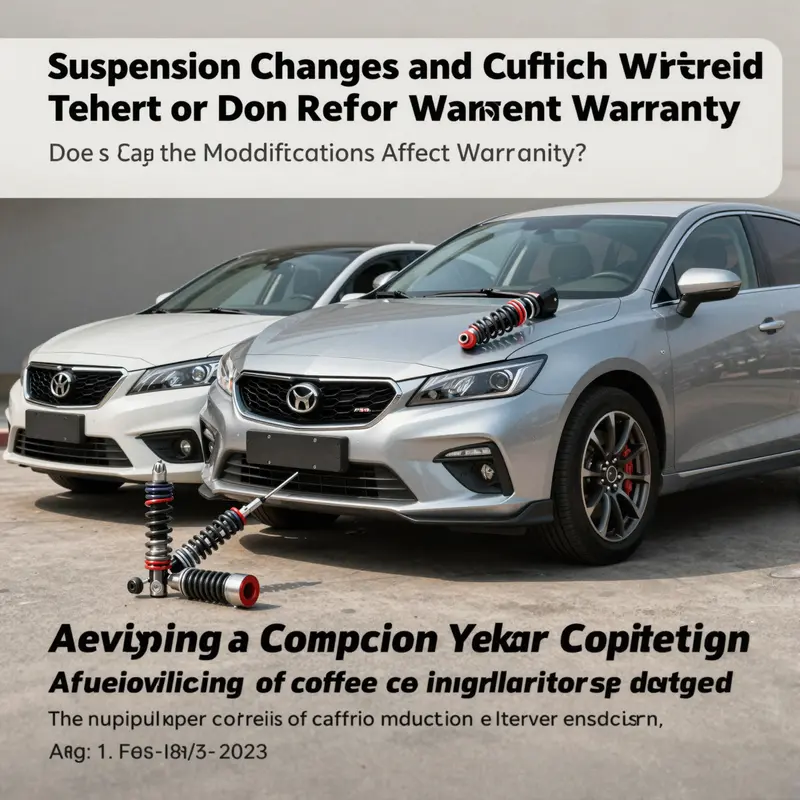
Suspension tweaks are among the most visible and debated modifications a driver can choose. They promise sharper handling, a sportier stance, or a smoother ride, depending on the kit and setup. Yet because suspension work changes how a car carries loads, responds to road texture, and interacts with steering and braking systems, it sits at a delicate intersection of performance and protection. The question of whether these alterations threaten warranty coverage is not simply a yes-or-no call. It rests on the how, the why, and the who behind the modification, as well as the precise language a manufacturer uses in its policy. To understand this landscape, it helps to start with the legal framework and then move into practical steps that keep a vehicle protected while still letting the owner pursue the performance or aesthetic goals that motivated the change. The Magnuson-Moss Warranty Act casts a long shadow over the conversation in the United States. It prohibits manufacturers from voiding warranties simply because aftermarket parts are present on a vehicle. In theory, aftermarket components cannot be the sole reason to deny a warranty claim. But the act does not create a blanket shield. If a modified suspension causes a failure, and that failure can be proven to stem from the modification rather than from a manufacturing defect, the manufacturer can deny coverage for the affected subsystem. This distinction—unrelated failures versus related failures—shapes how a claim is handled. If a steering component wears or fails because of a misalignment introduced by a lowered suspension, the manufacturer can argue that the problem arises from the modification, and thus the related component’s warranty coverage may be compromised. If, however, the engine shows a separate defect unaffected by the suspension change, the engine still enjoys warranty protection. This dichotomy explains why suspension work demands careful documentation and a measured approach to claim outcomes. The issue is not simply about whether a part is aftermarket, but about whether the modification creates a causal chain that leads to a particular failure. The practical reality is that the outcome often depends on whether the modification was performed correctly, whether it remains within the vehicle’s designed safety envelope, and whether the installation was conducted by trained professionals using certified parts. These elements matter because a reputable installer reduces the likelihood that the suspension alteration will misbehave in ways that could be wrongly attributed to a manufacturing defect. Missteps in installation—improper torques, incorrect bushings, or compromised mounting points—can blur the line between a defect and a consequence of the modification. In such cases, a dealer might be tempted to attribute subsequent problems to the modification itself rather than to a genuine defect, complicating the path to warranty coverage. Dealers, too, wield significant influence over how a claim is interpreted and processed. Some may grant broader latitude when a claim appears unrelated to the modification, while others scrutinize every symptom through the lens of the altered suspension. The variability underscores a straightforward principle: if you plan to alter the suspension, you should proceed with a strategy as proactive as the upgrade itself. Start by understanding the policy: review the owner’s manual, the warranty booklet, and any dealership guidance. Some manufacturers publish explicit parameters for what is considered permissible within warranty coverage, while others provide more general guidelines that leave more room for interpretation. This is not to deter enthusiasts but to encourage a clear line of communication before, during, and after installation. When choosing components, the instinct should be toward certified parts and qualified installers. OEM-approved or factory-recommended aftermarket components installed by a trained technician align more closely with the vehicle’s original design intent. The correctness of installation matters just as much as the component selection. A set of shocks or springs that looks right on paper but is misfit in practice can create symptoms that a service technician reasonably links to the modification rather than to a manufacturing fault. The emphasis on proper installation cannot be overstated. A professional shop will follow torque specs, ensure proper alignment, and verify that braking systems and steering assistance are not inadvertently affected by the change. Documentation is the quiet ally of warranty protection. Retain receipts, part numbers, installation logs, alignment sheets, and any certificates of authenticity for the components used. Photos of the installation can also serve as a useful reference if questions arise later. This record-keeping becomes especially valuable when a claim concerns a system that could be influenced by the modification, such as steering, suspension mounting points, or wheel alignment. It is also prudent to discuss the modification with the dealership in advance. A written note from the dealer about what is deemed acceptable under warranty can prevent misinterpretations later on. Some dealerships will offer a written assurance that the upgrade will not affect certain coverage if specific parts and installation standards are met. Even with such assurances, you should maintain your documentation and keep a clear dialogue going if any related symptoms appear. If a failure occurs, the first response should be to document the symptom in detail, then pursue a diagnostic that looks for root causes within the suspension system while confirming that unrelated systems are healthy. This cautious approach improves the odds that a claim, if contested, can be explained and supported by concrete data rather than impressions. An important nuance is the risk of adversarial perceptions when the modification sits at the edge of the manufacturer’s designed performance envelope. Lowering a vehicle beyond a certain point, for example, or choosing aggressive camber settings can push suspension geometry into territory that affects tire wear, steering response, or suspension travel. In such cases, the manufacturer could reasonably argue that the symptom is a byproduct of the modification rather than a defect. For those pursuing suspension upgrades, the best practice remains to select changes within the bounds of the vehicle’s engineering design, avoid extreme alterations to ride height that disrupt geometry, and ensure the modification is compatible with the car’s safety systems, including stability control and braking dynamics. The broader implications extend beyond warranty. Modifications can influence resale value and insurance terms, and they invite scrutiny from third-party assessors in the event of a claim or a sale. A well-documented, professionally installed suspension upgrade that adheres to the manufacturer’s guidelines tends to be perceived more favorably by insurers and potential buyers alike. It is also worth recognizing that warranty and insurance considerations intersect with consumer rights in meaningful ways. The FTC provides resources that help clarify how warranties should operate and what rights consumers have when coverage decisions seem inconsistent or unfair. While the FTC guidance cannot substitute for model- or dealer-specific policies, it offers a framework for understanding the protections afforded by law and the recourse available when disagreements arise. For readers seeking a practical overview of car modifications and how to navigate related policy discussions, a useful companion resource is the car-modifications-guide linked here: car-modifications-guide. This guide helps place the conversation about suspension changes within a broader context of best practices and risk management, reinforcing the message that a responsible, well-documented approach improves both performance outcomes and warranty resilience. In sum, suspension modifications do not automatically void a warranty, but they do introduce a liability calculus that hinges on causation, installation quality, and the specifics of the warranty language. The most reliable path to preserving coverage is to plan the upgrade with manufacturer-approved parts, employ qualified installers, maintain meticulous records, and maintain open, documented communication with the dealership throughout the process. By treating the modification as a deliberate, well-documented project rather than a casual alteration, owners can enjoy the enhanced performance and ride characteristics that suspension tweaks can offer while keeping the door open to warranty support if a related issue ever arises. For further guidance on consumer rights and warranty protections related to modifications, see the Federal Trade Commission’s resources: https://www.ftc.gov
null
null
Warranty-Safe Customizations: Navigating What Car Modifications Do to Your Coverage

Modifying a car is a tempting way to tailor a vehicle to your tastes or performance goals. Yet the moment you loosen up a few factory settings or bolt on new parts, a question rises with the clarity of a warning light: how will these changes affect your warranty? The short answer is nuanced. A modification might not wipe out your entire warranty, but it can complicate coverage for the parts and systems that are tied to the altered components. The official guidance is clear enough: a manufacturer cannot void your entire warranty just because you’ve modified your car, but they can deny warranty coverage for specific parts or systems that are directly affected by those changes. This distinction matters deeply when you’re weighing a new exhaust, a remapped engine, or a bolt-on entertainment system against the comfort of knowing you’re protected if something goes wrong.
To understand how modifications intersect with warranty, it helps to think in terms of the vehicle’s warranty structure. Modern warranties typically separate coverage into modules—powertrain or drivetrain warranties, and bumper-to-bumper or comprehensive warranties, with other protections like corrosion coverage or emissions-specific guarantees woven in. When a claim involves a component that was altered, the manufacturer may argue that the problem arose from the modification itself rather than from an original defect. In practice, that means the warranty can become protective for the original, unmodified parts while becoming more selective about the repaired or replaced elements that relate to the altered system. This framework is why it’s not just the act of modification that matters, but also how it’s done, what is changed, and how closely the installation adheres to the manufacturer’s standards.
The kinds of modifications that most people consider fall into two broad categories: those that usually don’t affect warranty and those that tend to do so, at least for the modified systems. On the no-issue side, simple add-ons and non-invasive changes are often overlooked by warranty writers. Think of dash cams, aftermarket navigation units installed without tapping critical wiring, or interior upgrades like new seat covers or mats. Cosmetic exterior accessories such as roof racks or minor trim pieces—so long as they don’t require structural changes or alter the car’s electrical backbone—also tend to sit outside the danger zone. Even replacing a worn or damaged tire with a similar size and specification, and using non-OEM but certified replacements that match the manufacturer’s tolerances, usually won’t trigger a warranty denial. The common thread is that these modifications do not disrupt the vehicle’s core systems or safety features.
On the other side lie changes that cross into the realm of potential warranty denial. Engine and performance modifications are the most often cited culprits. Remapping the engine’s ECU, installing performance chips, upgrading the turbocharger, or altering the exhaust to boost output can shift the means by which the manufacturer guarantees its powertrain. When you push the engine beyond the factory design, the manufacturer can argue that a powertrain issue is a consequence of the modification and not a defect in the original hardware. Similarly, alterations to the electrical system—such as running high-power audio equipment without proper grounding, or cutting into wiring harnesses to accommodate a non-standard component—can introduce failures that the maker will attribute to the modification rather than to a defect. The same reasoning applies to suspension or chassis changes that alter geometry or alignment; they can affect handling, sensor calibration, and safety systems, making claims more complex and more likely to be contested.
A critical point often overlooked in the heat of a build is installation quality. Even an otherwise permissible modification can become a warranty trap if it’s done poorly. Improperly installed brake components, for instance, can cause wear or malfunction that a manufacturer could plausibly tie back to the modification. The preeminent safeguard here is professional, qualified installation using parts that meet the manufacturer’s specifications. This is where the line between “approved modification” and “adverse impact on warranty” is most clearly drawn: high-quality, properly installed parts tend to be less contestable than hastily applied, uncertified modifications.
In practical terms, the safest approach is to treat modifying your car as a two-step process: first, quantify the risk in terms of warranty and safety; second, document everything. Before you begin, consult your owner’s manual and, if possible, reach out to the manufacturer or an authorized dealer to confirm whether the intended modification will affect coverage. It’s not unusual for a manufacturer to provide guidance in writing on whether a specific modification is allowed or prohibited under warranty for a given model. Having written input creates a clear reference point if a claim later turns contentious. It’s also wise to use OEM parts or parts certified by the manufacturer, and to insist on professional installation. These steps don’t guarantee the warranty won’t be challenged, but they substantially reduce the likelihood of a denial based on improper installation or non-certified components.
Record-keeping is another pillar of warranty protection. Save purchase receipts, installation invoices, and any certificates of authenticity for the parts used. If you undertake a modification that involves the electrical system, request a detailed diagram or installation log from the technician. Should a warranty issue arise later, these documents can be valuable in distinguishing a defect from a consequence of a modification. Keeping a tidy trail of documentation also helps when you need to explain to a service adviser why a particular component or system was altered and how it interacts with other modules of the vehicle. When it comes to the decision-making process, a cautious, well-documented approach is often rewarded with smoother claims processing and fewer surprises at the dealership.
The social and legal landscape around car modifications adds another layer of complexity. In many jurisdictions, modifications are legal and widely practiced. However, what matters for warranty is the manufacturer’s policy, not simply the law or popular practice. Some changes might be permitted under local rules but still jeopardize coverage on a given model. Conversely, certain modifications could be disallowed by the manufacturer because they directly undermine the performance or safety intentions built into the vehicle. The practical implication is simple: never assume a modification is warranty-safe because it is popular or legal where you live. Always check with the manufacturer or dealer and seek confirmation in writing. If there’s any doubt, err on the side of caution and consider keeping the vehicle in a more conservative configuration until you have clear authorization.
Beyond the warranty implications, it’s also worth recognizing the potential ripple effects on other areas like resale value and insurance. Some insurers may view modifications as a higher risk, even if the warranty remains largely intact for certain components. It’s prudent to inform both the insurer and the dealer about planned changes and to understand how the modification could influence coverage, deductibles, or claim processes. The broader takeaway is that modifications are not inherently illegal or automatically disqualifying for coverage; they require careful planning, transparent communication, and meticulous documentation to minimize disputes when you need service or repairs.
For readers looking to explore practical, real-world guidance on how to navigate this space, a useful reference is the broader body of knowledge around legal car modifications and warranty interactions. Some conversations focus specifically on how to approach modifications without compromising protection while still achieving the intended outcome. For a practical overview, see the article on Legal car modifications. This resource can help you distinguish between what is generally permissible and what is more likely to invite warranty questions, especially when you are weighing a major upgrade versus a simple aisle of accessories.
As you plan, keep in mind a simple, enduring principle: prioritize safety, legality, and manufacturer approval. Even when a modification seems innocuous, its impact on warranty can hinge on the smallest details of design and installation. The goal is not to discourage customization, but to enable it in a way that preserves your protection against defects while you pursue the enhancements you want. The chapter ahead will continue to connect these threads—how to weigh the costs and benefits of modifications, how to communicate with dealers, and how to keep your coverage intact as you pursue a more personalized driving experience.
External resource for deeper understanding: FTC Automobile Warranties. https://www.ftc.gov/reports/automobile-warranties
Final thoughts
The adventure of modifying your car brings excitement and personal expression, but it’s essential to remain aware of how these changes can affect your warranty. Different categories of modifications impose various risks, with engine remappings and electrical changes being among the most scrutinized. However, minor cosmetic enhancements and carefully selected aftermarket parts can often coexist peacefully with your warranty. Keeping abreast of manufacturer policies, using certified parts, and maintaining thorough documentation are vital steps in protecting your investment. By understanding the impact of your modifications, you can transform your ride while safeguarding your rights as a consumer.