

Car modifications are a profound expression of personalization and performance enhancements, capturing the hearts of hobbyists, professionals, and enthusiasts globally. Altering a vehicle extends beyond mere aesthetics; it strikes at the core of individuality, functionality, and driving experience. Whether you’re a passionate car modifier seeking creative exterior upgrades, a professional tuner aiming for optimal performance enhancements, or a classic car restorer cherishing authenticity and detail, understanding the classes of car modifications is crucial in this expansive landscape. In the sections ahead, we’ll delve into the various modifications—exterior, interior, performance, and legal considerations—empowering you with the knowledge needed to make informed choices that resonate with your vision and compliance.
Exterior Modifications: Defining What Counts as a Car Change

Exterior alterations are often the most visible way owners personalize a car. This concise guide explains how to distinguish cosmetic changes from modifications that affect safety, performance, or legality. A modification is any change that departs from the factory design and that can influence handling, lighting, aerodynamics, or compliance with rules and regulations. Practical examples include body kits, paint and wraps, wheel and tire choices, lighting upgrades, suspension adjustments, and equipment installed for specialized use. The key questions are: does the change alter the vehicle’s original performance envelope, does it impact safety or emissions, and is it compliant with local laws and inspection regimes? In many jurisdictions, even cosmetic upgrades may require documentation of parts origins and proper installation. Owners should consider compatibility with existing systems, potential effects on warranty or insurance, and how the modification might affect resale value. A thoughtful approach balances personal expression with safety, durability, and legal compliance, and relies on careful planning, verification, and documentation. Resources like the Car Modifications Guide can help classify work and plan a responsible path from concept to road.
Inside the Makeover: How Interior Modifications Redefine What Counts as a Car Modification

A car is more than its engine, tires, and chassis; it is a moving interface between machine and human. When we talk about modifications, the interior often carries the most intimate and daily impact. Interior modifications are changes made to the cabin that alter not just how a car looks, but how it feels to sit in it, how easy it is to live with on long trips, and how effectively the vehicle communicates its status and capabilities to the driver. They span a spectrum from small, practical upgrades to full-on cabin revamps, and they sit at the heart of what most people notice first when they step inside. In the broader conversation about what classes as a modification on a car, interior work sits squarely in a space where aesthetics and ergonomics intersect with technology, safety, and daily usability. The result is a realm where taste becomes function, and function, in turn, redefines the very idea of a modification.
To understand interior modifications, it helps to anchor the discussion in definitions that emphasize change to interior components rather than exterior appearances or under-the-hood engineering. Interior mods typically involve replacing, upgrading, or customizing factory-installed parts to alter appearance, comfort, or technological capability. They are not simply about keeping the car clean or maintaining its original look; they are about altering the cabin’s tactile and experiential landscape. When done well, interior modifications can elevate comfort, improve usability, enhance safety through better ergonomics, or deepen the sense of personalization that makes a vehicle feel like a genuine extension of the owner. When done poorly, they can create friction—misaligned controls, uncomfortable seating, or unreliable electronics—that undermines the very purpose of a car as a practical tool. The difference hinges on fit, finish, and the integrity of installation.
Among the most visible interior changes are seat upgrades. The seat is the primary point of contact between the driver and the car, a locus where ergonomics, mood, and even safety converge. Upgrading seats often means moving beyond the factory standard to materials that feel more luxurious or that better support posture on long drives. Premium materials like Nappa leather or Alcantara can dramatically alter the cabin’s tactile experience, and heated or ventilated options add a layer of comfort that becomes noticeable within minutes of starting a journey. In some builds, retrimming the seats—whether in full leather, a two-tone combination, or even carbon-fiber accents—becomes a statement of intent, signaling not only a change in material quality but a shift in the vehicle’s identity. These seat changes carry practical implications too. They can affect seating position, legroom, and pelvic support, all of which influence fatigue over extended periods behind the wheel. When seats are upgraded, careful attention to bolster width, seat depth, and the angle of recline matters as much as the material itself.
Dashboard and trim enhancements sit a step back from the seat but remain central to the cabin’s character. Interior modifications here often involve adding real carbon fiber, wood veneer, brushed aluminum, or bespoke painted panels to refresh the look of the dashboard, door trims, or center stack. The effect is twofold: it can modernize a cabin that feels dated, and it can signal a particular aesthetic—sporty, luxurious, rugged, or understated. The trade-off, however, is equally real. High-gloss finishes and carbon fiber accents must be chosen with durability in mind. In some environments, glare and heat can degrade certain finishes over time, so manufacturers and skilled installers emphasize materials and protective coatings that maintain their appearance under daily use and seasonal changes. The right choice balances visual impact with practicality, ensuring the cabin remains legible and comfortable in varying light and temperatures.
Technology has become a primary driver of interior modification, and it now often defines what counts as an interior upgrade. Infotainment improvements are among the most common, ranging from upgraded head units with seamless Apple CarPlay or Android Auto integration to more ambitious systems that incorporate GPS navigation, off-road mapping, or advanced audio configurations. The core aim is not merely to add screen real estate but to improve information access while preserving clean, intuitive control layouts. An immersive audio setup—high-end speakers and subwoofers, harmoniously integrated with the cabin’s acoustics—can transform daily commutes into a richer sensory experience. The challenge lies in maintaining system reliability and keeping wiring discreet. The most successful installations respect the vehicle’s existing electrical architecture, avoid interference with safety systems, and preserve the original vehicle’s diagnostic interfaces. The balance between enhancement and disruption is delicate, and it explains why some interior upgrades require professional planning and skilled execution rather than a weekend DIY project.
Ambient lighting and lighting accents have become almost ubiquitous in modern interiors. The idea is less about illumination and more about mood, nuance, and the perceptual quality of the space. Subtle LED strips behind the dash, under the seats, or along door sills can transform the cabin’s ambiance, shifting perceptions of space and comfort. These elements also offer functional benefits, such as improved readability of controls at night without overly bright cabin lighting. The risk, of course, is distraction or glare if lighting is misapplied. Thoughtful placement and color control can avoid these pitfalls, turning lighting into a tasteful accent rather than a source of visual strain. In some high-end builds, lighting schemes are synchronized with driving modes or climate settings, creating a cohesive, immersive environment that reinforces the car’s intended character—whether it’s a calm long-haul cruiser, a performance-oriented cockpit, or a rugged expedition vehicle.
Steering wheel modifications provide a tangible link between the driver and the car’s interior ethos. Swapping a factory wheel for a leather-wrapped, carbon-fiber, or heated version is a common upgrade that improves grip, control, and tactile feedback. The steering wheel carries a strong psychological signal as well; its shape, texture, and color contribute to how the driver perceives the vehicle’s responsiveness. For performance-minded builders, a compact or multi-function wheel can enhance precision in steering input and offer quick access to controls without breaking the line of sight to instrumentation. The risk, again, is improper sizing or mismatched airbag compatibility, which can create safety concerns if not handled by qualified installers.
Industrial and manufacturing perspectives offer another layer of context. High-end interior modifications sometimes involve retrimming in premium materials with traceable material compliance documentation. This level of rigor is common in manufacturing hubs where there is a demand for traceability and quality assurance. Such projects prioritize not only the aesthetic and tactile qualities but also compliance with standards that govern materials, safety, and environmental impact. The attention to documentation reflects a broader industry trend: interior upgrades now frequently require a formal provenance trail, ensuring that materials meet safety and regulatory expectations. This approach helps create a bridge between customization and confidence, particularly for owners who intend to use their vehicles in demanding conditions or across borders where inspections or warranties may hinge on documented specifications.
From a practical standpoint, the spectrum of interior modifications is typically categorized by complexity and investment. Basic mods include steering wheel covers, floor mats, and trim overlays—low-cost, quick-to-install changes that can refresh the feel of a cabin without disturbing the underlying architecture. Mid-level mods involve more substantive work, such as seat reupholstering, dashboard facelifts, and infotainment upgrades that require more time and skilled labor but remain accessible to enthusiasts. Then there are the high-end or full-cabin mods, where the interior is retrimmed with premium materials, sometimes with full traceability and certification for the components used. These projects are often undertaken in specialized facilities and can require extensive time, planning, and budget, but they yield a dramatically elevated cabin experience that can rival factory-build quality in terms of finish and materials. In all cases, the overarching goal is to improve the driving experience while preserving or enhancing core safety and usability.
The impact of interior modifications goes beyond appearance. A well-executed interior upgrade can improve daily comfort, reduce fatigue on long journeys, and increase the practical usability of the car’s systems. A redesigned cockpit that better aligns with a driver’s posture reduces the strain on neck, shoulder, and back muscles during extended trips. Improved seating materials and reinforcement can offer better support, and upgraded infotainment systems can reduce driver distraction by presenting clearer information and simpler interfaces. In contrast, ill-fitting seat textiles or poorly installed components can create misalignment between the driver and the car’s controls, potentially interfering with seat belt positioning, airbags, or adjustment mechanisms. An Autocar UK examination of interior mod strategies emphasizes safety, proper fitment, and material quality as critical criteria for a true interior modification. The point is not to discard the factory baseline but to build on it in a way that enhances safety, usability, and satisfaction.
Legal and regulatory considerations loom over interior upgrades in a way that is sometimes overlooked. While many interior changes are legal and safe when performed by qualified technicians, some alterations can affect safety features, emissions, or the vehicle’s structural integrity. For example, modifications that alter seating dynamics, airbag coverage, or restraint systems must typically comply with official standards to remain road-legal and pass inspections. In many jurisdictions, the onus falls on the owner and the installer to ensure that modifications meet local requirements and do not compromise safety. This is where the practical value of professional guidance becomes clear. A well-planned interior modification program recognizes that legality and safety are not afterthoughts; they are integral to the feasibility and longevity of any change.
For anyone contemplating interior modifications, the approach should be thoughtful and staged. Begin with a clear objective for what you want to achieve: better comfort for long trips, a more intuitive tech interface, or a cabin that reflects a particular personality. Draft a budget that accounts for the materials, labor, and potential calibration or programming that may be required to integrate new systems with the car’s existing electronics. Consider the installation environment and time; some projects can be completed in a weekend, while others require weeks of planning, especially when retrimming or custom cabinetry is involved. Before committing, seek out reputable installers who specialize in interior work and request references, material certifications, and aftercare options. And remember that the best interior modifications respect the car’s original design intent while delivering a cohesive experience that feels seamlessly integrated rather than tacked on.
In addition to professional guidance, practical resources and a measured plan can help ensure success. For readers seeking hands-on guidance, resources that walk through the installation process provide a bridge between ideation and execution. A useful starting point is a guide that concentrates on safe, reliable interior modifications, including how to select appropriate materials, how to assess fitment to existing mounting points, and how to manage electrical integration without disrupting safety systems. This approach helps ensure that the result is not just visually striking but also durable and safe in daily use. If you want to explore a structured path to turning ideas into installable reality, you can consult practical tutorials and checklists that align with interior work. how-to-install-modifications-car
Beyond the workshop, the interior’s transformation can influence how a car is perceived in the market. For many buyers, interior quality signals value and availability of features, sometimes affecting resale dynamics and perceived reliability. As the 2025 interior-modification landscape shows, buyers are increasingly attentive to the materials used, the provenance of components, and the craftsmanship of installation. A cabin that feels coherent, well engineered, and responsibly sourced can lift a vehicle’s standing in the eyes of a buyer who values comfort and long-term durability as much as performance metrics. Conversely, a cabin that looks customized but wears poorly over time can erode confidence in the vehicle’s overall reliability.
In sum, interior modifications occupy a unique crossroads in the broader taxonomy of car modifications. They are where personal taste meets practical engineering, where comfort translates into daily joy, and where style must coexist with safety and reliability. The most successful interior transformations are not flashy one-off stunts but carefully planned evolutions that respect the vehicle’s core design philosophy while delivering a more enjoyable, user-friendly, and durable cabin. They demonstrate that a modification is not simply a change in appearance or function, but a reimagining of how a car feels from the inside out. As the field continues to evolve, owners who approach interior upgrades with attention to fitment, materials, and safety will find that the cabin becomes a clearer expression of who they are as drivers, without ever compromising the essential purposes of a vehicle: to move people and ideas with comfort, confidence, and control.
External reference: https://www.autocar.co.uk/car-review/interior-modifications-how-to-do-it-right
Power, Precision, and Boundary Lines: Defining What Counts as a Performance Modification on a Car

A modification is rarely just a hobby project that sits on a shelf of a garage’s memory. It is a negotiation between intent, capability, and consequence. When enthusiasts ask what classes as a modification, they often mean something more specific than changing a color or swapping a wheel. They seek to alter how a car behaves in the world: how quickly it accelerates, how it turns, how reliably it stops, and how it responds to the demands of a road, a track, or even a daily commute. In that sense, performance modifications sit at the intersection of desire and responsibility. They promise a more responsive, more capable machine, but they also carry a higher stake—the risk of reducing longevity, raising legal exposure, or complicating insurance and resale. To understand what qualifies as a modification in this arena, it helps to trace the line from the engine bay to the street and beyond into governance, safety, and perception. The broad category of performance modifications centers on upgrades that alter power, acceleration, handling, and overall dynamic behavior. These are not cosmetic changes; they are changes in what the vehicle does and how it does it. The core idea is to unlock latent potential without compromising the fundamental integrity of the vehicle or the safety of its operator and others on the road. Yet even this seemingly clear aim becomes murky once you consider the many ways a car can be altered and the many contexts in which those alterations exist. A turbocharger, a tuned ECU, a modified exhaust, or a strengthened drivetrain can transform a car’s character in dramatic, measurable ways. They can deliver immediate thrill and measurable gains in speed and responsiveness. They can also alter torque curves, boost pressure management, and fuel-air mixtures in ways that ripple through reliability, emissions, and drivability. The balance between power and control is not a trivial matter; it is the heart of what makes a modification “a modification” in a performance sense rather than a purely cosmetic change. The key distinction here is impact. If a change shifts how a car accelerates, how quickly it responds to throttle input, how it communicates through the steering wheel and chassis, or how it manages heat under load, it begins to belong to the realm of performance modification. If the change affects only aesthetics—color, trim, interior textures, or exterior styling—that remains a separate category. The practical separation is not a rigid legal boundary but a continuum along which a modification can sit, sometimes close to the edge where power and safety intersect. Engine upgrades illustrate this continuum with striking clarity. A turbocharger or a supercharger directly elevates the engine’s ability to produce horsepower and torque. The result is not only faster times but altered engine characteristics: more aggressive throttle response, altered boost curves, and often increased heat load. These changes require compatible upgrades elsewhere—better intercooling, more robust cooling, upgraded exhaust flow, and reinforced rotating assemblies—to keep the system reliable under extended high-load operation. It is not enough to bolt a power-adder on and call it a day; a cohesive system approach is essential. Likewise, modifications to intake and exhaust systems affect more than the auditory character of a vehicle. A cold air intake, designed to improve airflow, can yield measurable improvements in engine efficiency and response, but it also shifts backpressure dynamics and can influence fuel mapping. A performance exhaust reduces backpressure and can enhance exhaust flow, often producing a more pronounced engine note. Yet the loudness of a modified exhaust is not a mere sonic flourish; it is a signal to regulators, neighbors, and, in some jurisdictions, to the vehicle’s own ECU that air and gas exchange have changed in fundamental ways. Engine management, including ECU tuning or chip tuning, sits at the cognitive core of performance modifications. An ECU remap can optimize fuel delivery, ignition timing, boost pressure, and even valve timing in ways that extract additional power and improve efficiency. It is a practice that demands precision and validation. A poorly executed tune can cause detonation, excessive heat, and component failure, transforming a vehicle that was once a good daily driver into a high-risk machine. The act of tuning, then, is not merely a matter of horsepower figures; it is a recalibration of how the engine behaves across rpm bands, altitudes, temperatures, and driving styles. When we extend this logic to transmissions, clutches, and other drivetrain components, the scope widens to encompass a broader array of performance outcomes. A short-shift kit, for instance, reduces the distance between gears, enabling quicker, more aggressive shifts that can sharpen lap times and driving feel. High-performance clutches and reinforced drivetrains are designed to withstand the elevated forces that torque and boost pressures demand. The consequence is a chain of interdependent upgrades: more power requires more aggressive clutch engagement; more aggressive driving requires more resilient balancing of suspension and braking, which themselves may necessitate enhanced heat management and rigid chassis reinforcement. In this sense, performance modifications can be thought of as a chain of systemic upscaling rather than isolated alterations. As this dynamic unfolds, it is essential to keep in mind the other axis of modification: legality and safety. A modification can be technically feasible and deliver the coveted performance gains, yet it may run afoul of local regulations or safety standards. In many jurisdictions, anything that alters emissions, safety-critical systems, or the structural integrity of the vehicle must be reviewed or approved by official authorities. This is not merely a bureaucratic hurdle; it reflects a concern for the real-world consequences of more capable machines. On the road, higher power and altered suspension dynamics can affect braking distances, steering feel, and cornering stability in ways that necessitate re-evaluating insurance, inspection regimes, and even permissible tire choices. The same is true for modifications that affect the vehicle’s footprint, aerodynamics, or load-bearing capacity. The legal framework aims to ensure that the pursuit of speed does not come at the cost of predictable, verifiable safety for the operator and for others sharing the road. For enthusiasts, these considerations are not deterrents; they are a call to thoughtful engineering and responsible ownership. A well-planned performance modification program begins with a clear objective and a meticulous assessment of compatibility. It asks not only how much horsepower can be wrung from an engine but how reliability, heat management, and drivability will be affected under real-world conditions. It invites an assessment of the vehicle’s sensory feedback—how the throttle responds, how the steering communicates grip and load transfer, and how the brakes modulate deceleration when the car is warm or under load. In practice, this means testing and validation beyond a single dyno run or a quiet stretch of highway. Road testing in varied conditions—hot days, cold days, long-duration sessions, and repeated stop-and-go patterns—helps ensure that the car remains predictable and safe in everyday use. It also frames the broader conversation about how modifications influence resale value, warranty coverage, and insurance. Insurance, in particular, often hinges on the scope and risk profile of modifications. Some policies may offer modest adjustments to premiums for certain upgrades if they are disclosed and properly documented, while others may impose restrictions or require specialized coverage. The risk calculus is not solely about the added speed; it is about how the modification changes the car’s likelihood of failure, the predictability of performance, and the potential for liability in the event of an incident. The categories laid out in the initial research overview—exterior, interior, performance, handling and suspension, braking, and specialized or functional modifications—exist on a spectrum of intent and consequence. Aesthetic choices, while impactful to personal identity and curb appeal, do not automatically implicate the car’s dynamic envelope in the same way as powertrain or chassis changes. Yet even cosmetic modifications can carry indirect effects on safety, legality, and insurance if they alter vehicle identity features, visibility, lighting, or structural integrity. The line between what counts as a modification for enthusiasts and what counts as an acceptable alteration in the eyes of regulators is not a fixed mark but a negotiated standard that shifts with technology, policy, and social expectations. This is why many practitioners advocate a holistic approach: assess the purpose of the modification, ensure it is technically coherent with the vehicle, verify that it complies with applicable laws, and document all changes for future reference, maintenance, and resale conversations. It is also why the concept of a modification is deeply contextual. A change that is routine and legal in one country may be restricted or prohibited in another. A modification that is common on a race track may be unsuitable for daily street use due to noise, emissions, or regulatory constraints. In other words, the same modification can be experienced as exciting and liberating or as worrisome and burdensome, depending on where you are and how you use your vehicle. The broader point remains: performance modifications are those that meaningfully alter how the car performs and handles, not merely how it looks. They require a systems-thinking mindset—an awareness that every change in the powertrain, exhaust, cooling, or electronics has downstream implications for reliability, safety, and compliance. The conversation about what qualifies as a modification should therefore be seen not as a gatekeeping exercise but as a practical framework for responsible customization. When this framework is applied, it supports a more informed discussion about risks, rewards, and the long arc of ownership. For readers who want a deeper technical grounding, an external resource offers a broad, industry-oriented perspective on the technical details and the broader implementation of car modifications: https://www.caranddriver.com/features/a29658317/car-mods-explained-technical-details-and-industrial-implementation/ . Within the car culture itself, it is common to see a shared vocabulary that helps convey these ideas quickly. The words “modification” and “upgrade” are often used interchangeably in casual conversation, but the prudent practitioner keeps sight of the distinction between something that improves a car’s function and something that merely changes its shape or surface. The crucial test, then, is not simply a list of components but a narrative about why those components exist and how they integrate with the vehicle’s architecture. This narrative is as much about responsibility as it is about aspiration. In the end, the boundary lines that define performance modifications are not walls that trap innovation; they are guardrails that help preserve safety, reliability, and a fair playing field for everyone on the road. They remind us that a car is a system, not a collection of independent parts. They invite us to consider the full lifecycle of a modified vehicle—from the choice of upgrades and the testing performed, through daily use and maintenance, to legal compliance and insurance implications. And they invite us to recognize that the most compelling builds are those that harmonize power with control, ambition with prudence, and the personal satisfaction of a driver who feels connected to a machine that behaves as they intend, not merely as an impulse of speed. For readers seeking a practical entry point into how these ideas map onto real-world decisions, a concise reflection on the insurance implications can be useful: car-modifications-insurance-impact. This internal link helps anchor the discussion in a broader framework without diverting attention from the central argument about what counts as a modification in the performance sense. As the road ahead of modified cars continues to evolve with new powertrains, electrification, and advanced driver-assistance features, the conversation about modification categories will remain essential. It will help determine not only how enthusiasts pursue performance but also how society negotiates safety, liability, and accountability in a world where vehicles are increasingly capable and complex. For readers who want more context on the technical foundations, the external resource linked above provides a broader technical lens on how car mods are designed and implemented across the industry.
Rules Under the Hood: Navigating What Counts as a Car Modification and Its Legal Boundaries
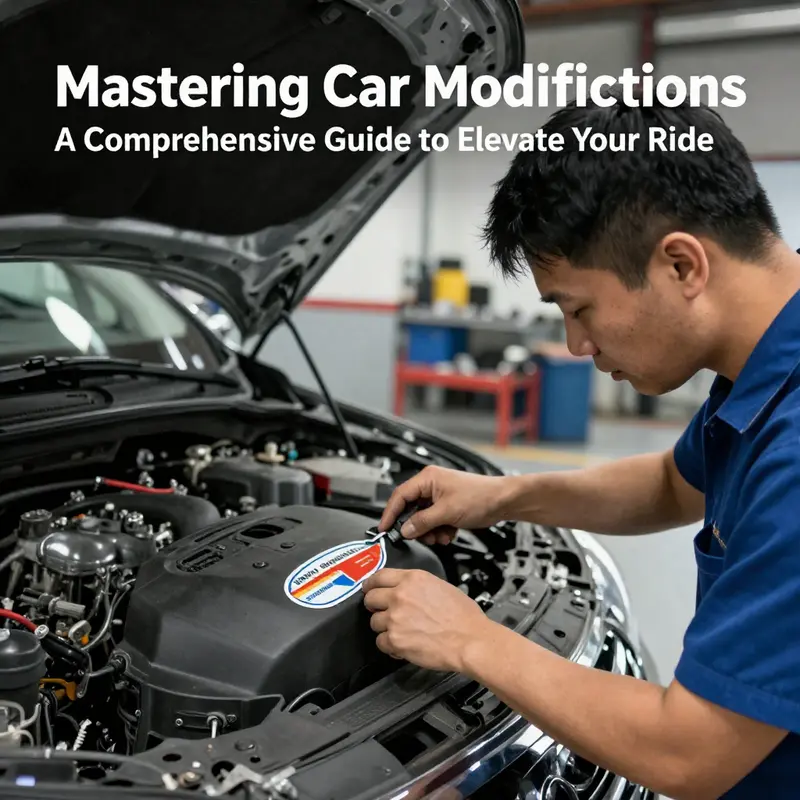
When people talk about modifying a car, they often imagine a gleaming badge of personal style—new paint color, oversized wheels, a sportier exhaust note. Yet the conversation around modification that truly matters is the legal one. In many places, and especially in tightly regulated jurisdictions, what counts as a modification is not simply a matter of taste or performance. It is a question of safety, emissions, and roadworthiness, and it is framed by a precise set of rules that determine what can be altered, how it must be approved, and what steps must follow before a vehicle can legally share the road with other users. To understand the landscape, it helps to move beyond the surface of appearances and into the regulatory framework that keeps the chassis, the occupants, and the surrounding traffic safe. In this chapter, the focus is not on the romance of customization but on the practical, enforceable boundaries that shape every alteration a driver might contemplate. This approach clarifies not only what is permissible but why certain changes, even those that seem minor or cosmetic, may require formal scrutiny or even denial if they threaten safety, structure, or environmental compliance.
A useful way to think about modifications is to recognize they fall into broad categories that mirror the aims of the alteration: exterior aesthetics, interior comfort and function, power and driveline, handling and suspension, braking performance, and specialized equipment for particular tasks. Each category can intersect with the law in different ways. Exterior changes—new body kits, distinctive paint schemes, or window tint levels—often appear cosmetic. But depending on how they affect visibility, lighting, or the vehicle’s dimensions, these modifications can trigger regulatory concerns. Interior upgrades, such as upgraded seating or a premium audio system, are typically less controversial from a safety standpoint, yet they can still influence safety features and occupant protection if they interfere with airbags, seat anchorage, or visibility through the windscreen. Performance upgrades—engine tuning, forced induction, or exhaust modifications—are where the line between enhancement and regulatory violation becomes most acute. The same is true for suspension and chassis work that alters ride height, weight distribution, or structural stiffness, since these factors influence stability, braking distance, and the risk profile of the vehicle in common driving scenarios. Braking system upgrades, while often desirable for high-performance applications, carry their own set of compliance questions because they must harmonize with braking force distribution and overall vehicle dynamics. Finally, specialized or functional modifications, such as those applied to utility vehicles designed for emergency services or construction work, have wholly different considerations, often requiring certifications and professional oversight beyond typical consumer modifications.
The legal framework that governs what counts as a modification and how it must be handled is usually anchored in the country or region where the vehicle is registered. In many places, the most important questions relate to safety, emissions, and structural integrity. Consider a jurisdiction that uses a structured, step-by-step process to determine whether a change is permissible and how and when it must be approved. In such a system, the terms major and minor modifications are not mere descriptors but signals about the level of scrutiny required before a change can be realized and registered. A major modification typically denotes a change that significantly alters the vehicle’s original design—such as installing a different engine, altering the suspension system, changing the wheelbase, or increasing the vehicle’s height. These alterations are almost always subject to formal pre-approval by the relevant motor vehicle authority. The rationale is clear: these kinds of changes can transform a vehicle’s dynamic behavior, its crashworthiness, and its emissions profile, with potential consequences far beyond the individual owner.
Even changes that seem minor can come under regulatory scrutiny. Installing an aftermarket exhaust system, modifying lighting, or adjusting the tint level beyond legal specifications may appear straightforward, but if such adjustments fail to meet safety standards or emission rules, they become the subject of review. The risk is not merely a fine. In many systems, failure to obtain proper authorization can render the vehicle unroadworthy, expose the owner to penalties, and complicate insurance coverage. The logic is consistent: if a modification could compromise road safety or environmental compliance, it warrants examination and, when required, formal approval before it is implemented and used on public roads.
A critical component of the legal process is the duty to coordinate with multiple stakeholders before any change is made. In the most regulated environments, this coordination involves not only the vehicle owner and the workshop performing the modification but also the vehicle insurer. Insurance is a contract that hinges on disclosure and risk assessment. Non-disclosure of modifications can invalidate a policy, deny coverage after an incident, or leave the owner with uncovered losses. The prudent path is to consult the insurer first, not after a modification has been completed. The insurer’s role is not merely financial protection; it is part of the safety and compliance ecosystem because it reflects the risk profile of a modified vehicle regarding accidents, repairs, and liability.
Once the owner has aligned with the insurer, the next step is the formal submission of an approval package to the appropriate authority. In many jurisdictions, this takes the form of a detailed application prepared for the Vehicle Safety and Standards Division or an equivalent regulatory body within the transport department. The application must typically include illustrative documentation from the vehicle’s manufacturer or an authorized agent, technical specifications of the proposed modification, diagrams showing how the change interfaces with existing systems, and evidence of how safety, crashworthiness, and emissions are preserved or improved. The exact requirements can vary, but the principle is consistent: before any physical alteration is performed, the authority must review the plan to confirm that the modification can be integrated without compromising safety or regulatory compliance.
Only after this pre-approval is granted should the modification be carried out by an approved workshop or manufacturer. In many cases, the approval process also requires a final inspection by the transport authority once the work is completed. This final check verifies that the installed components, wiring, structural changes, or recalibrations conform to the approved plan and meet safety and environmental standards. The emphasis on a documented, auditable trail is intentional. It helps ensure that modifications remain traceable, that any deviations from the approved plan are identified and corrected, and that the vehicle remains compatible with ongoing road safety programs and maintenance standards.
To ground this framework in practical terms, consider examples that commonly present as cosmetic or performance upgrades but entangle themselves with regulatory oversight. Replacing an engine with a more powerful unit, or altering the suspension geometry in a way that changes ride height or cornering behavior, are clear cases of major modifications. They quantify risk in ways that are measurable by engineers and regulators—the mass distribution changes, the steering geometry shifts, the braking requirements, and, critically, the emissions output. Similarly, changing the wheelbase or the overall height of the vehicle invites questions about clearance, stability, and the impact on crash dynamics with other road users. These are the sorts of changes that almost always require pre-approval and documentation before any work is performed.
Even seemingly modest changes, such as a broadened exhaust system or tinted windows that exceed permissible limits, can attract regulatory attention. Such instances test whether the modification adheres to standards designed to control noise, exhaust composition, and visibility. A vehicle that looks different inside and out from its factory blueprint may still be subject to the same tests as a factory model if the alterations affect fundamental performance or safety parameters. In this sense, the law acts as a safety margin that judges not only what a vehicle looks like but how it behaves on the road, how it emits, and how it responds in critical driving situations.
The specifics of how a jurisdiction applies these principles can be seen in the way the regulation is structured in practice. For instance, in a place where the Road Traffic Ordinance and its associated construction and maintenance regulations define the boundaries, the authorities explicitly prohibit unauthorized changes that could compromise road safety. The roles of the Transport Department and related safety divisions come into sharp relief: they provide guidelines, issue approvals, and carry out inspections to confirm compliance. The process is designed not to punish curiosity or creativity in car customization but to ensure that the road remains a shared space where performance benefits do not come at the expense of everyone’s safety.
For owners who aim to understand what counts as a modification in a specific jurisdiction, the wording of official guidance matters a great deal. In some systems, a detailed checklist helps determine when a change is “major” or “minor.” In others, the decision hinges on whether the modification affects a defined set of subsystems, including the chassis, engine, exhaust, lighting, or structural integrity. A central theme across these approaches is that anything affecting safety or emissions requires careful consideration, documentation, and often pre-approval. This is not a barrier to experimentation but a framework that seeks to balance personal expression with collective safety. It is also a reminder that the line between a freedom to customize and a duty to maintain standards is real and enforceable.
From the owner’s perspective, navigating this landscape means approaching modifications as a project with a regulatory and administrative dimension, not only a mechanical one. It involves engaging with the workshop not as an end in itself, but as a partner who can ensure that the modification plan is feasible within the law. It means assembling technical specifications, sourcing components that meet recognized standards, and preparing to demonstrate how the change preserves or enhances safety, reliability, and compliance. It also means anticipating the possibility of final inspections and planning for contingencies if the approved plan needs refinement in light of technical or safety concerns observed during the review or after the work is completed.
Still, the broader takeaway remains clear: the decision to modify a car is not a solitary act. It sits at the intersection of engineering, policy, insurance, and public safety. When a driver asks, “What counts as a modification?” the answer is layered and context-dependent. The objective is not simply to count the number of parts replaced or the amount of money invested in upgrades. The question is whether the alteration, in its intended form and its actual execution, respects the rules designed to keep roads safer and emissions within acceptable limits. The best practice is to adopt a cautious, informed approach: study the regulatory framework, consult the insurer, prepare a robust approval package, and only then proceed with the modification.
For readers seeking a practical touchstone, the idea of “legal car modifications” can be explored in more depth through sources that discuss the broader principles of compliance and the risks of non-disclosure. This broader perspective helps frame the expectations around what can be changed and how to manage the process responsibly. The idea is not to deter customization but to normalize the idea that responsible modification is a staged, documented, and supervised activity rather than a last-minute alteration performed in isolation. The journey from concept to on-road execution is most secure when guided by an understanding of the legal boundaries and a disciplined approach to safety and accountability. If you want a concise overview of the legal dimensions, you can explore this overview: Legal car modifications.
In the specific context of a regulated market, the framework also helps explain why some jurisdictions require pre-approval even for modifications that only affect aesthetics or minor comfort features. The underlying logic is that these seemingly small changes can interfere with safety-critical systems, such as lighting alignment, visibility through glass, or the integrity of the vehicle’s structural elements. The transport authorities aim to ensure that the cumulative effect of all modifications remains within tested and accepted limits. This means that owners cannot assume a blanket exemption for non-engine changes; each modification must be appraised for its potential impact on the vehicle’s performance, safety, and compliance with environmental standards. The system, though sometimes perceived as complex, is designed to prevent conflicts between a driver’s preferences and the broader public interest in road safety and environmental stewardship.
As the discussion draws toward practical counsel, it is important to emphasize the sequential logic of compliance. First, understand the modification you want to pursue and assess whether it could be considered major. If so, prepare for pre-approval by collecting manufacturer documentation, specifications, and any engineering analysis that demonstrates the modification’s compatibility with the vehicle’s safety framework. Next, align with the insurer to ensure coverage will extend to the modified configuration. Then submit a formal application to the appropriate regulatory body through the designated channels. Finally, implement the modification with an approved workshop and anticipate a post-work inspection to confirm alignment with the approved plan. Across this sequence, records and documentation form the backbone of legitimacy. They prove that the change was thought through, technically justified, and legally sanctioned. In the end, the result is not only a more customized vehicle but a legally sound one that can be enjoyed with reduced risk of regulatory friction or insurance disruption.
For readers who want to trace the exact regulatory contours in their own country or region, the path is to consult the official guidance provided by the government or the competent authority in their location. In the Hong Kong example, the Road Traffic Ordinance and the Road Traffic (Construction and Maintenance of Vehicles) Regulations set out the core expectations, while the Transport Department’s guidelines illuminate the practical steps for pre-approval and inspection. These documents are designed to be navigable, but they reward careful reading and, when necessary, professional guidance. Inquiries to the Vehicle Safety and Standards Division, and the careful compilation of the required documentation, are part of prudent preparation, not red tape. They reflect a shared commitment to keeping the road safe while allowing a reasonable degree of personalization within clearly defined limits.
In summary, understanding what counts as a modification—and how it is regulated—requires a holistic view of the vehicle, its systems, and the surrounding legal framework. The guiding principle is safety first, followed by environmental and structural integrity, all of which justify a formal approval process for significant changes and a careful, documented approach to even the more modest ones. This perspective helps owners avoid unintended consequences, such as fines, insurance denial, or the embarrassment of learning that a cherished upgrade cannot legally be used on public roads. It is a reminder that car culture and regulatory culture are not adversaries but partners in the ongoing project of responsible mobility. For further context on the legal dimensions of modification and how it intersects with insurance, regulations, and practical steps, readers may consult a breadth of resources and official guidelines. And as always, the best path forward is to stay informed, documented, and aligned with the authorities who oversee road safety and environmental compliance. For additional, more general insights into the legal dimensions of modifications, see the official guidance linked above and consider exploring related discussions that address the broader implications of modifying financed or leased vehicles, as these scenarios frequently surface in real-world decision-making. Additionally, for a broader, globally oriented understanding of the topic, readers may reference publicly accessible guidance on the subject, including government resources that detail how modifications are treated in different jurisdictions and the potential consequences of non-compliance. The aim is to empower owners to pursue their customization ambitions without compromising safety, legality, or peace of mind.
External resource for further reading: https://www.gov.hk/en/residents/transport/vehicle/modifications.htm
Final thoughts
Understanding car modifications is essential for both aesthetic enhancement and performance optimization. With diverse classes ranging from exterior modifications that amplify visual appeal, to performance upgrades that unlock your vehicle’s true capabilities, there’s something for every automotive enthusiast. However, while embracing the joy of personalization, it’s crucial to navigate the legal landscape to ensure your modifications are compliant and safe. As you embark on your modification journey, keep the possibilities vast yet attainable, and remember that each change reflects your unique car culture identity. Mod away, but always within the realm of legality and safety.