
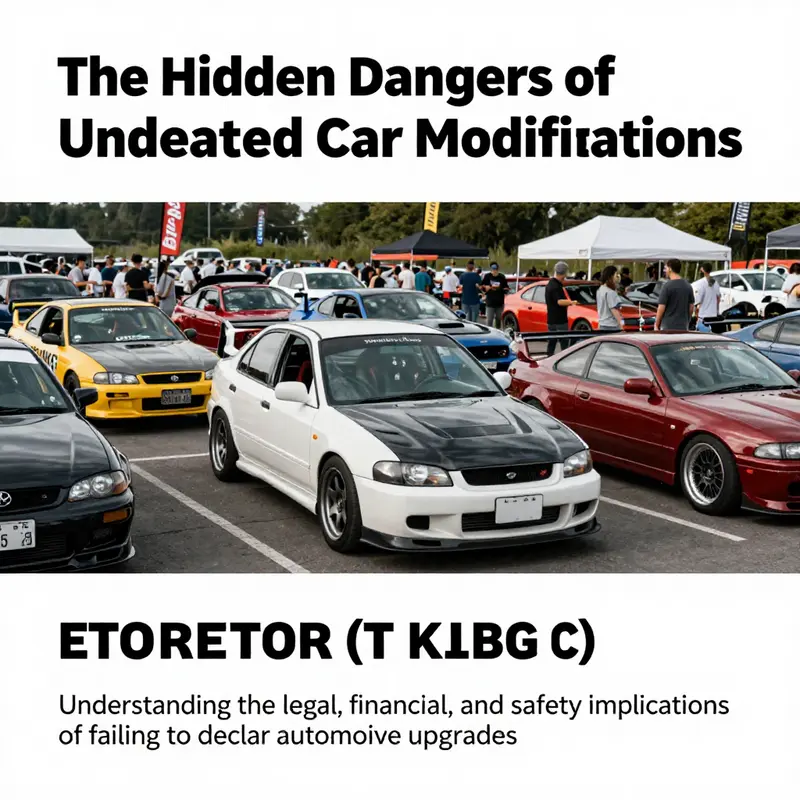
Car modifications can be an exciting journey for hobbyists, professionals, and enthusiasts alike. However, it’s crucial to navigate this territory with an understanding of the impact of failing to declare any alterations made to your vehicle. In China, car modifications without proper registration can lead to significant legal repercussions, financial risks, and serious safety issues. This article outlines these critical blind corners: from the legal consequences of non-declaration to the financial toll it could take on your pursuits, explores how neglecting to report modifications compromises safety, and finally, reveals the impact on insurance and vehicle benefits. By grasping these aspects, car modifiers can engage in their passion responsibly and avoid dire pitfalls.
When Silence Costs: The Legal Fallout of Not Declaring Car Modifications
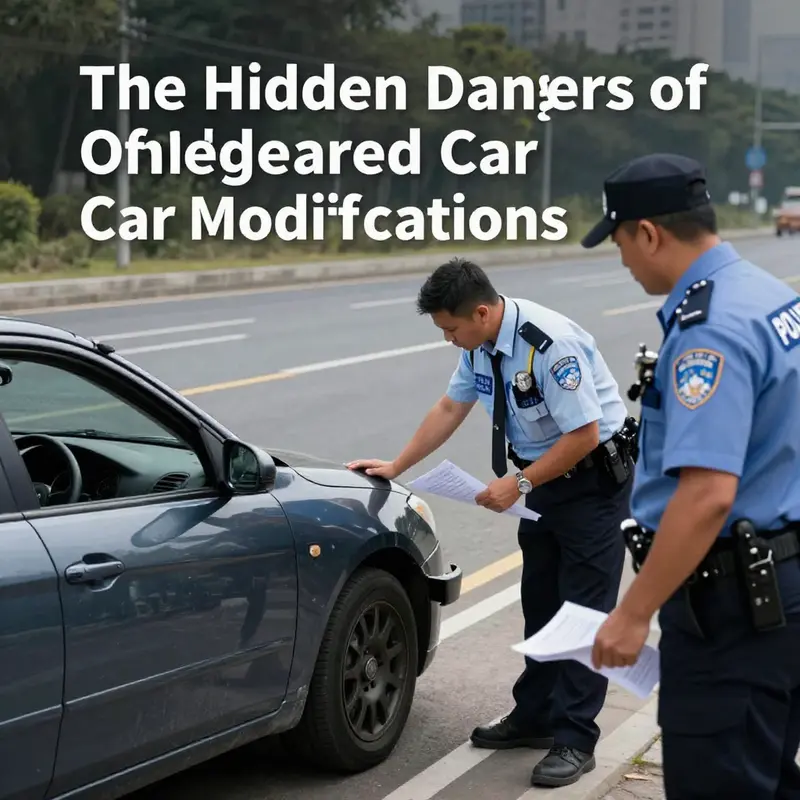
Failing to declare car modifications is rarely a simple oversight. What starts as an aesthetic choice or a performance tweak can quickly become a legal, financial, and logistical nightmare. Across jurisdictions that regulate vehicle alterations, including China under its Road Transport Regulations and Traffic Safety Law, the act of changing a vehicle without notifying the authorities triggers a chain of enforceable consequences. These consequences are designed to protect road safety, ensure accurate registration records, and preserve fair insurance practices. They also make clear that a modification is not merely a personal preference; it is an alteration to a legal document and a safety profile.
Consider the common situation of changing a vehicle’s body color, adding aftermarket lighting, or installing a performance exhaust. Each of these modifications changes a detail that appears on registration or influences how the vehicle behaves on the road. Registration systems are built around specific technical data: engine type, chassis number, emissions controls, braking characteristics, and even paint color in some cases. When those data differ from the official record, enforcement officials treat the vehicle as non-compliant. That non-compliance can produce immediate administrative action and lasting collateral damage.
Immediate penalties often start with fines and directives to restore the vehicle. Under relevant regulations, unauthorized changes to appearance or technical data can result in monetary penalties. For smaller, cosmetic changes, penalties may be modest. Change the body color without updating the registration and you may face a fixed fine. Tweak critical systems like the engine, braking, or lighting and penalties are typically higher. The authorities may issue a formal notice demanding restoration to the original condition. This is not merely a suggestion; it is a legal order that must be followed within a set timeframe. The cost of reversing a modification can exceed the original expense of the upgrade. Moreover, such restorations must often be completed under supervision or certified by an inspection, which adds time and expense.
If you continue to drive a modified vehicle that is not declared, enforcement can escalate to seizure and detention. Police and vehicle management agencies have the authority to take a car off the road until it is returned to its registered state and cleared by inspection. Seizure is disruptive: you lose access to your vehicle, incur storage or towing fees, and face added pressure to comply quickly. Detention also complicates daily life. Imagine losing your only means of transport while repairs are arranged. The administrative process to reclaim a detained vehicle involves paperwork, proof of rectification, and passing the required tests. That process can stretch for weeks in some cases.
One of the most practical consequences is the failure to pass annual inspections. Inspection regimes are designed to confirm that a vehicle on the road matches its registration and is safe to operate. When inspectors find disparities—different paint, altered emissions components, modified structural parts—the vehicle is marked as unqualified. An unqualified result halts registration renewal and, in many systems, makes it illegal to drive until the issues are resolved. This is a cycle: without passing inspection you cannot legally operate the vehicle, and without operating it, arranging and testing some repairs can be more cumbersome.
Beyond administrative penalties, unreported modifications have serious insurance implications. Insurance contracts typically require policyholders to disclose material changes that affect risk. Unauthorized alterations are commonly excluded from coverage. If you are involved in an accident while driving a vehicle with unapproved modifications, insurers may deny claims for both damage to your vehicle and third-party liabilities. That denial can leave you personally responsible for substantial expenses—from repair bills to medical and legal costs in the event of injury or property damage. The financial exposure can be catastrophic, especially if the modification contributed to the cause of the accident.
These risks multiply when the vehicle is financed or leased. Lenders and leasing companies include clauses that require maintenance of the vehicle in its approved condition. Unreported modifications can breach those agreements, triggering penalties, accelerated repayment demands, or repossession. If a modification interferes with the collateral value of the car, the lender’s loss increases. In the resale market, undocumented modifications depress buyer confidence and reduce resale value. Potential buyers shy away from cars with unclear paperwork because they inherit the same regulatory and insurance headaches. A vehicle that might have fetched a fair price in stock condition can sell at a steep discount once its history includes unapproved alterations. For guidance on how modifications affect resale, see this detailed discussion on car modifications and resale value: https://modifiyeliarabalar.net/blog/car-modifications-and-resale-value/.
There are also consequences for the professionals who perform illegal work. Repair shops and mechanics that carry out or facilitate unauthorized modifications can face severe administrative and criminal penalties. Fines can be substantial, equipment and parts may be confiscated, and business licenses can be revoked in egregious cases. This regulatory pressure exists to deter improper work and to ensure that repairs and modifications meet safety standards. For vehicle owners, dealing with reputable and licensed shops reduces risk and ensures that any changes are done in a way that can be properly certified and declared.
If you receive a penalty notice, administrative remedies exist but are time-limited. Regulations typically provide a window to lodge an administrative appeal or to pursue court action. In some systems, you may have 60 days to file an appeal and up to six months to sue directly. Exercising these rights requires understanding the specific grounds of the violation, the evidence relied upon by authorities, and the documentation you can present to show compliance or mitigate the infraction. Legal advice can be worthwhile when penalties are substantial or when the case risks impacting your license or ownership rights.
A deeper risk lies in driving safety. Modifications that change handling, braking, lighting, or visibility can create hazards not only for the vehicle occupants but for other road users. Regulations governing modifications exist in part to maintain predictable safety standards. Unauthorized power increases, altered suspension geometry, or non-standard lighting can degrade control and increase the likelihood of accidents. When such a modification contributes to a crash, the legal and moral responsibility is heavier. Authorities treat those scenarios seriously, and courts may assign liability accordingly.
Understanding the process for legal modification is crucial. Most jurisdictions require that changes be reported to the local vehicle authority within a set period—often ten days. That reporting triggers an inspection and, if necessary, an update to the registration documentation. Some modifications are straightforward to approve; others require rigorous testing and certification. The burden is on the owner to ensure compliance. Making a habit of documenting every change, retaining invoices, and seeking written confirmation of approvals can prevent disputes down the road.
While the immediate regulatory penalties are clear, the wider effects of failing to declare modifications ripple outward. Insurance denials reduce financial protection. Inspection failures curtail lawful use. Seizure and forced restoration disrupt life and cost money. The cumulative effect can be a severe loss of value and utility in the vehicle and a prolonged legal struggle. Declaring modifications turns an uncertain risk into a managed administrative task. It allows insurers, regulators, and buyers to treat the vehicle transparently and reduces the chance of costly enforcement.
Compliance may require time and money, but it preserves the vehicle’s legal standing and protects the owner from long-term liabilities. The practical path is to consult the local vehicle management office before or immediately after making changes, choose qualified service providers, and follow the formal declaration process. If in doubt, review the official regulations for your jurisdiction to ensure you meet timing and evidence requirements. For an official reference on regulatory standards in China, see the Ministry of Public Security’s guidance: https://www.mps.gov.cn/n1058125/n1058195/n1058311/c12792898/content.html
The Real Cost: How Undeclared Modifications Can Wreck Your Finances and Insurance
The financial fallout of not declaring vehicle modifications stretches far beyond a single fine. Many car owners think a discreet upgrade or cosmetic tweak is harmless. They may not realize how quickly one modification can unravel insurance protection, loan agreements, and resale value, and can expose them to lawsuits and crippling repair bills. This chapter follows the money: how undeclared changes change your policy status, affect claims, alter premiums, and cascade into broader financial damage.
When you change a car’s technical profile—engine swaps, suspension upgrades, altered exhausts, and even some visual changes—you alter risk in ways insurers model carefully. Policies are priced and underwritten on expected risk. If you raise the vehicle’s performance, make it easier to steal, or reduce safety features, the insurer’s expected payouts grow. Failing to disclose these alterations is a breach of contract. That breach gives the insurer lawful grounds to decline claims and void coverage, often retroactively to the date of the change. The immediate consequence is stark: if you have an accident or suffer theft while driving a modified vehicle that you didn’t declare, you may have no insurance to turn to.
Denied claims are the most direct and painful financial outcome. Imagine a collision where an altered suspension contributed to handling instability. If the insurer investigates and finds undisclosed modifications, it can refuse liability or crash repair payouts. You would then be left to pay repair costs for both your vehicle and the other party’s. Legal liability for third-party injuries or property damage can be substantial. Without insurer defense, you may face costly lawsuits, legal fees, and settlement obligations. These expenses can quickly outstrip what most people can afford.
Beyond refused claims, insurers commonly cancel policies or refuse renewals after discovering undeclared modifications. That cancellation has immediate ripple effects. First, you lose active protection. Second, future insurers will see a record of voided coverage or cancellations. This history makes renewing or finding new coverage more expensive. You may be forced to pay higher premiums or accept more limited policies. In extreme cases, some insurers will refuse to cover a vehicle that has certain modifications at all. For owners who depend on affordable coverage, this shift can be a long-term financial drain.
The value of your car also talks back. Modifications do not always increase resale value. Many buyers prefer stock vehicles for reliability and lower maintenance uncertainty. Undeclared or poorly executed changes can reduce market demand and erode trade-in value. If a lender holds a lien on the car, the lender’s assessment of collateral value matters. Banks and finance companies often prohibit unauthorized modifications in loan or lease agreements. Making changes without approval can breach those contracts, trigger default clauses, and accelerate loan repayment demands. For financed vehicles, this mistake can lead directly to repossession.
Insurance companies and lenders are not the only institutions watching modifications. Regulatory agencies and police have the power to impose administrative fines for undisclosed or illegal changes. In some jurisdictions, fines are modest for cosmetic changes, but they escalate sharply for alterations affecting technical data, engine, or lighting systems. Requiring restoration to original specification is another costly enforcement action. Forced restoration means paying for parts and labor to revert the vehicle to factory condition. If the vehicle is seized during enforcement, you lose use of the car and still bear the costs to retrieve it.
Another financial pitfall is invalidated theft coverage. High-value modifications, especially performance parts or rare cosmetic upgrades, often attract thieves. If your insurer determines the vehicle’s theft risk increased because of undocumented modifications, it may refuse to honor a theft claim. You then face replacing expensive components or the whole vehicle out of pocket. For custom work that involved rare or bespoke parts, replacement costs are often high and hard to recoup.
Legal exposure grows when a modified vehicle causes or contributes to injury. If courts find the alteration made the vehicle unroadworthy, liability shifts squarely to the owner and possibly the installer. Without insurance that covers modified vehicles, the financial burden of medical claims and damages falls on you. Personal assets may be at risk if judgments exceed your solvency. Even with insurance, if coverage is voided because of non-disclosure, you might receive no defense and no indemnity from your insurer.
Small, everyday costs add up too. Vehicles with unreported modifications often lose access to certain administrative benefits. They can become ineligible for streamlined inspections or inspection exemptions. That forces owners into more frequent and costly compliance checks. License suspension or revocation due to severe modifications removes the ability to work or travel, imposing indirect financial losses. For drivers who use their car for income, such as ride-hailing, loss of driving privileges instantly cuts revenue.
Some owners hope a low-cost backdoor solution will shield them: paying for parts and labor off the books, or using non-certified workshops. This tactic creates additional risks. If a repair shop operates illegally or lacks professional insurance, it may not honor workmanship guarantees. If the shop is later penalized, tool and part confiscation or license revocation can leave you without recourse. You might then face repeated repairs and costs to find compliant vendors. Shop penalties sometimes reach into the tens of thousands, and in some states or countries, authorities may pursue owners for complicity.
There are pathways to manage modifications responsibly. The financially prudent route is to disclose any planned or completed alterations to your insurer and to relevant transport authorities. Insurers often offer specialized policies or endorsements for modified vehicles. These options cost more, but they protect you against the catastrophic expense of denied claims. Always get written consent when a modification affects safety or performance metrics. If your car is financed or leased, obtain the lender’s written approval. This prevents contract breaches that can trigger repossession or penalty fees.
Documentation pays dividends. Keep invoices, modification certificates, parts receipts, and workshop confirmations. If an insurer questions a modification, a clear paper trail shows you acted in good faith. Similarly, using authorized workshops or obtaining official inspections before driving the car in public can reduce the chance of enforcement or claim denial. If you must revert a modification, keep records of restoration to prove compliance.
Consider also market perception. Detailed, tasteful modifications may increase value for a narrow buyer segment. But most buyers and insurers prefer clarity and certification. Before investing in upgrades, weigh potential resale benefits against higher insurance premiums, possible financing complications, and regulatory risks. Resources that explain which mods affect coverage help. For practical guidance on declaring modifications to insurers, see this practical guide on declaring car modifications.
When thinking about the total cost, include not only immediate bills but potential long-term consequences. Higher premiums, canceled policies, legal judgments, forced restorations, and reduced resale value can combine into a toll far greater than the price of the modification. A minor savings on installation or a deliberate choice to avoid paperwork rarely offsets the downstream risks.
Finally, accountability extends to the people you trust with your car. Reputable shops will inform you about legal and insurance implications and may refuse to perform unauthorized work on financed or leased vehicles. If a shop offers to hide changes to keep your paperwork clean, treat that as a red flag. That decision defers responsibility but compounds risk.
Being transparent avoids surprise expenses and protects your assets. Disclose, document, and obtain approvals before changing a vehicle’s specification. That is the simplest and most reliable way to keep your insurance valid, maintain access to financial services, and prevent a single mod from translating into ongoing financial hardship. For deeper insight into how insurers view modified cars and how policies can be adapted, consult external research on insurance and modified vehicles: https://www.abi.org.uk/insights-and-research/research-articles/insurance-and-modified-vehicles/
Silence Has a Price: The Safety Crisis Hidden in Not Declaring Car Modifications
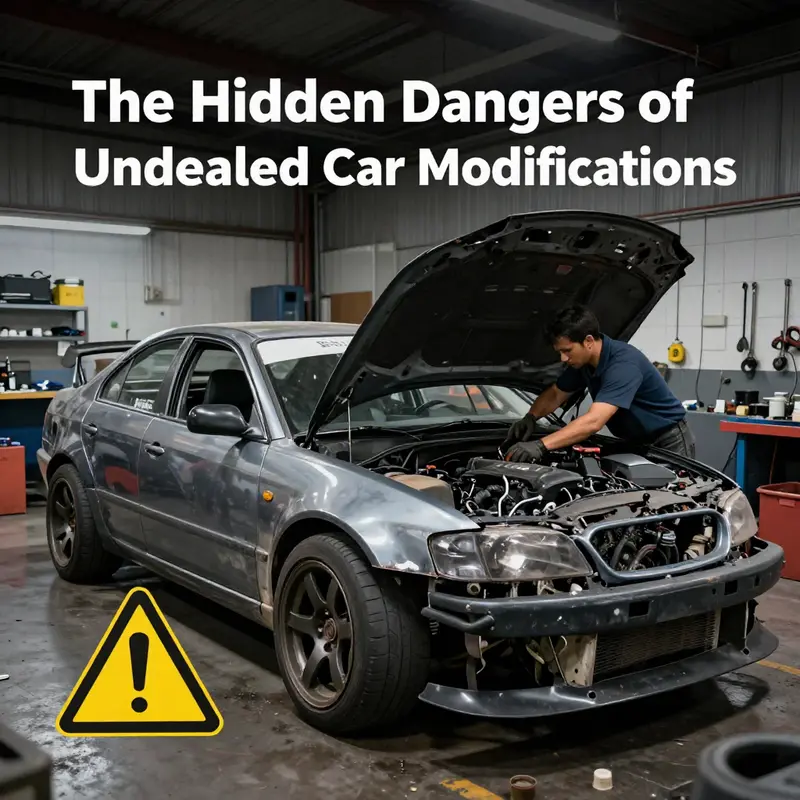
When a vehicle leaves the factory floor, its design is a carefully balanced package of safety systems, structural integrity, and performance parameters. The moment a driver begins to alter key components—whether to improve aesthetics, boost power, or change handling—that balance is disturbed. Yet the consequences of not declaring those changes extend far beyond a paperwork checkbox. They seep into how a car behaves on the road, how well it protects its occupants, and how the law evaluates responsibility when things go wrong. The topic is not merely about compliance or penalties; it is about the fundamental safety of a vehicle in everyday traffic, in unpredictable conditions, and under the stress of an accident scenario. When modifications are not declared, the unknowns multiply. The modification may be minor in intent but major in consequence, or it may be extensive and far from the safety baseline the vehicle was designed to meet. Either way, the failure to declare creates a cloud of risk that judges, insurers, and the road itself must bear.
One of the most direct safety implications of unreported modifications lies in the integrity of safety systems that a driver relies on every time they press the pedal or pull the steering wheel. Modern vehicles are built around a suite of passive and active safety features that assume certain chassis geometry, weight distribution, braking performance, and sensor input ranges. When modifications alter suspension geometry, wheel and tire size, or even the vehicle’s weight distribution, the way these systems function can shift in subtle, almost imperceptible ways. Consider suspension alterations that raise or lower the ride height. Even a small change can change the center of gravity, which in turn affects handling characteristics, steering feedback, and stability at the limit. The same applies to tire and wheel swaps that change contact patch, traction, or response to load transfer during cornering or braking. When these changes are not declared, drivers may experience a feeling of drift or understeer that they cannot attribute to a problem with the car’s electronic stability control or braking system. If a driver then reacts instinctively, overcorrects, or misreads the car’s behavior in a critical moment, the result can be a preventable loss of control.
The braking system, too, is sensitive to modification. Upgrades to brake components, calipers, or rotor sizes can alter stopping distances and pedal feel. If a modification is undertaken without informing the relevant authorities or the insurer, it is possible that the vehicle’s performance envelope no longer matches the testing conditions under which it was certified. In an emergency, the driver may rely on brakes that behave differently from the original expectation, particularly if the modification also affects the vehicle’s weight or load dynamics. The consequence is a potential mismatch between driver intention and vehicle response, increasing the risk of a collision or a failure to avoid one. Even lighting systems, when altered, can have safety repercussions. Brighter, differently aimed, or color-tinted lights may affect the reflection of signals, the perception of distance, or the other drivers’ ability to gauge speed and position. While some changes may seem purely cosmetic, the safety implications can be real when they interfere with how other road users interpret the vehicle’s movements.
The safety implications of not declaring modifications become even more acute when we examine the structural and regulatory dimensions. A change to a vehicle’s structural components, such as the framing, body modification, or altered stiffness, can impact crash energy management. Modern passenger cars are designed to deform in controlled ways to absorb crash forces, protecting occupants. If the vehicle’s dynamics have been altered without formal assessment, the crashworthiness of the car in certain scenarios may be degraded. In many jurisdictions, regulatory bodies require that any structural or substantial mechanical modification be reviewed, tested, and certified before the vehicle can operate legally. When a driver ignores that requirement, the risk is not only a potential legal violation but also a withdrawal of the vehicle from the safe operating standard. If a vehicle fails a mandatory safety inspection due to modifications that have not been properly documented and approved, it may be deemed unsafe to operate. This is not an abstract risk—it’s a concrete barrier that can prevent a car from being driven, until the faults or changes are rectified.
The environmental intimacy of safety is also worth noting. Modifications that push a vehicle beyond its intended emissions or fuel management profile may have knock-on effects on the engine’s thermal behavior, exhaust flow, and overall reliability. The interplay between modification and engine management can create conditions where the engine runs hotter, or where fuel delivery and ignition timing drift from the tested baseline. Elevated temperatures and abnormal stress can shorten component life and raise the chance of a failure at the most inconvenient moment. In the broader sense, these changes can also influence how a vehicle responds in critical safety scenarios, such as sudden maneuvers to avoid an obstacle, where engine response and cooling capacity intersect with the driver’s split-second decisions.
Then there is the matter of enforceability and accountability. When modifications are not declared, it becomes substantially harder to determine who bears responsibility in the event of a crash. If a vehicle is found to carry unreported modifications at the time of incident, insurers may contest coverage or deny claims on the grounds that the modifications invalidate the policy as written. This is not merely a financial risk; it is a safety risk in the sense that it can leave injured parties without timely compensation for medical costs, property damage, or the costs of long-term rehabilitation. Additionally, the very act of failing to declare modifications signals a potential lack of safety alignment with the road system. Authorities may see unreported changes as an indicator that the vehicle does not meet the standard safety expectations established by law. The potential consequences range from fines and vehicle confiscation to, in extreme cases, revocation of driving privileges for persistently noncompliant operators. These are not abstract punishments; they are measures designed to protect public safety by ensuring vehicles on the road meet certain baseline criteria.
From the perspective of policy and public safety, unreported modifications erode the public trust that the road system relies on. Insurance premiums, tax structures, and regulatory enforcement all assume a shared baseline of compliance. When drivers operate under a veil of non declaration, the system loses visibility into how many vehicles carry modifications that could alter performance or safety risk. This can distort safety statistics, complicate enforcement, and hamper risk assessment. The ripple effects extend to emergency response scenarios too. Firefighters, paramedics, and police officers responding to accidents involving vehicles with unreported modifications may face additional hazards or uncertain vehicle behavior. In such environments, first responders depend on predictable vehicle performance to stabilize the scene, extricate occupants, and launch medical aid. If the vehicle’s modifications alter its behavior in unpredictable ways, response times may lengthen or safety interventions may be compromised.
The safety equation is not necessarily hopeless, however. The practical path forward is rooted in transparency and professional oversight. Vehicle owners who plan modifications should seek guidance early in the process, understand the standards and testing that apply to their jurisdiction, and pursue documentation that demonstrates compliance. This reduces the probability of unintended safety degradation and improves the likelihood that the vehicle remains within the legal and insurance frameworks that govern road use. In many cases, obtaining pre-approval or inspection for a modification can avert a cascade of complications. The goal is not to discourage customization but to ensure that the pursuit of customization does not compromise the vehicle’s protective features, the driver’s safety, or the safety of others sharing the road.
The evidence of risk extends beyond the mechanics of the car and the statutes that govern it. It influences the psychology of driving itself. When a driver knows that a vehicle has not been properly declared, there can be an added cognitive load during a trip. The driver may be second-guessing the modifications, wondering whether they will pass inspection, worry about insurance coverage, or fear the moment when authorities might pull them over. This mental burden alters focus and attention, potentially impairing reaction times in critical moments. In contrast, a declared and properly approved modification creates a predictable context. The driver understands the scope of the change, the tests that were conducted, and the limits of the vehicle’s performance. This clarity reduces ambiguity at the moment of decision, allowing the driver to respond more calmly and effectively in high-stakes situations.
The path to safety is not a solitary journey for the individual driver. It is a shared obligation among builders, mechanics, regulators, insurers, and the driving public. Mechanics who perform unauthorized work bear significant risk too. The penalties can extend beyond fines to the revocation of business licenses, loss of tool access, or other enforcement actions that remove the capacity to work with vehicles in a safe way. This underscores a broader principle: modifications, to remain safe, must be understood and controlled within a framework that ensures the changes are compatible with the vehicle’s design philosophy and the road system’s safety expectations. The legitimacy of a modification, therefore, rests not only on the quality of the work but on the transparency of intent, the traceability of the changes, and the alignment with safety testing and regulatory procedures.
For readers seeking practical guidance, the core takeaway is simple. If you plan to modify a vehicle, begin by researching the requirements in your region, identify the modifications that are permissible, and pursue formal approval before the work begins. Keep records of the changes and obtain any necessary inspections, certifications, or notices. Doing so helps preserve safety margins, secures insurance coverage, and reduces the risk of enforcement actions that can strand you without a usable vehicle or a legal basis to drive it. The conversation about safety is not abstract; it is about real consequences in everyday driving, in the moments when brakes must work, steering must respond, and light must illuminate the road ahead. It is about the reliability of a machine we rely on to transport us, our families, and our communities through daily life and into emergencies. When modifications are declared and validated, the road becomes safer for everyone, even as individual preferences and aspirations for vehicle performance continue to evolve.
In this chapter we have focused on the safety and practical implications of not declaring car modifications, linking the emotional weight of personal choice to the measurable risks faced by drivers, pedestrians, and emergency responders. The broader arc of the article will connect these safety concerns to legal and financial realities, painting a full picture of what happens when declaration becomes a prerequisite for safety, accountability, and peace of mind. The unspoken truth is that declaration is less about bureaucracy and more about ensuring that the car you drive every day remains a safe, predictable, and accountable part of the traffic ecosystem. It is a decision with immediate safety consequences and long-term implications for financial security and legal standing. To learn more about the practical, real-world implications of failing to declare modifications, including how such actions can affect insurance and liability, you can explore further discussions on the topic in the linked resource titled illegal-car-modifications. This resource delves into the broader landscape of why declarations matter, how authorities assess modifications, and what steps owners can take to align their builds with safety standards while preserving their ability to enjoy customized vehicles responsibly. For a broader context on vehicle safety standards and testing, see the National Highway Traffic Safety Administration’s guidance at https://www.nhtsa.gov.
When Silence Costs: How Undeclared Modifications Destroy Insurance and Vehicle Benefits
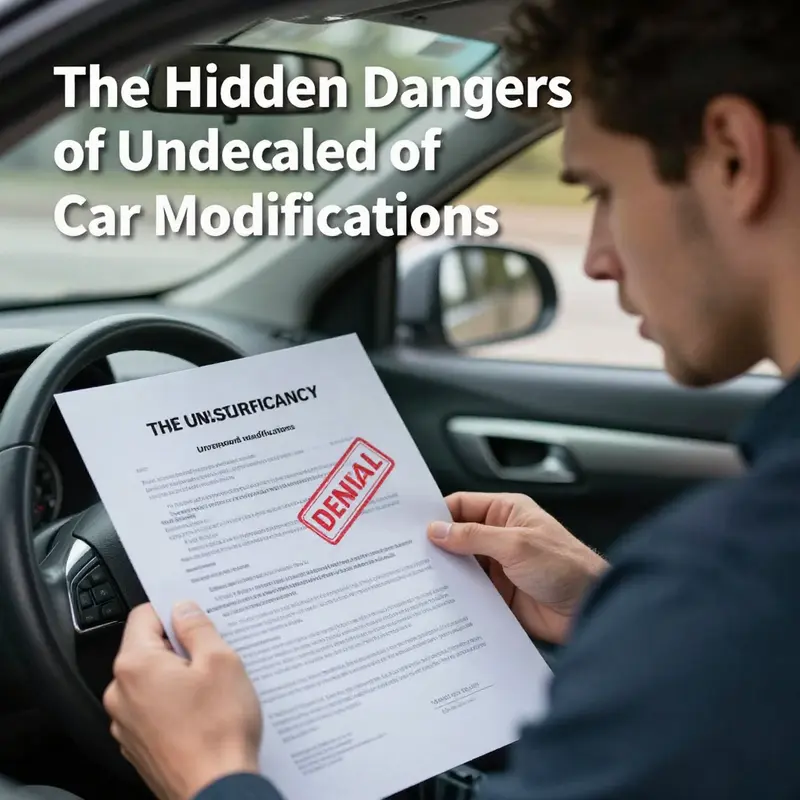
When Silence Costs: How Undeclared Modifications Destroy Insurance and Vehicle Benefits
Modifying a car can feel like a private project: a set of parts, a weekend in the garage, a personal touch. But when those changes are not disclosed, the result is rarely private. Undeclared modifications change how insurers, manufacturers, lenders, and regulators view your vehicle. That shift can strip away protections, void contracts, and leave you fully exposed to financial and legal losses. This chapter explains, in practical terms, what you risk when you fail to declare modifications—and what to do before you turn the first bolt.
At the center of the problem is risk assessment. Insurance companies, warranty providers, and lenders set terms based on a vehicle’s factory specification. They price coverage, write exclusions, and approve loans assuming certain performance limits, safety features, and structural standards. Any modification—engine swaps, boosted turbochargers, altered suspension, custom lighting, or body changes—changes those assumptions. An upgraded engine increases acceleration and thermal loads. Lowered suspension changes handling dynamics and crash behavior. Non-standard lighting alters visibility and reaction times. Each change alters the vehicle’s risk profile in measurable ways. When those changes are not reported, the policy remains based on inaccurate information. That mismatch opens the door for denial of claims and contract disputes.
Claim denial is the most immediate and painful consequence. If you are in an accident and your insurance company discovers undisclosed modifications, the insurer may refuse to pay. Denial can happen for multiple reasons: the modification increased the chance of an accident, it directly caused the loss, or it breached a policy clause requiring full disclosure. In practice, many policies include broad terms that require you to inform the insurer of any change that materially affects the vehicle’s condition. Even if the modification had no role in the crash, the insurer can argue the policy was negotiated under false pretenses and decline payment. The result is that vehicle repairs, medical bills, and third-party liabilities fall back on you.
This risk magnifies when the modification affects safety-critical systems. Alterations to braking, steering, chassis geometry, or lighting create new failure modes. After an accident, investigators and insurers look for contributing factors. If they find that a modified suspension or non-compliant headlight assembly compromised safety, they can assign primary blame to the modification. That not only justifies a claim denial but may trigger criminal or civil penalties in jurisdictions where illegal modifications are regulated. The financial shock is immediate: repair costs plus any legal and medical liabilities. Recovering from such losses without insurance is often catastrophic.
Beyond claims, undeclared modifications can annul other vehicle benefits. Manufacturer warranties typically exclude damage caused by unauthorized changes. If you alter the engine or exhaust system and a related component fails, the manufacturer can refuse warranty repairs. That includes powertrain warranties, emission systems, and even corrosion coverage if the modification involved bodywork. Extended warranty programs and certain service plans often carry similar clauses. The practical effect is that routine problems that would have been covered now become out-of-pocket expenses.
Financing and leasing arrangements add another layer of exposure. Lenders and leasing companies expect collateral to remain in a declared, marketable condition. Major modifications can violate loan covenants or lease agreements, giving the lender grounds to call in the loan or repossess the vehicle. Even if they do not immediately repossess, a lender may refuse to accept the car as full collateral in a default situation, or may insist on costly reversals to restore the vehicle to its original state. If you modify a vehicle you are still paying off, consult your finance agreement first; the wrong change can trigger defaults and accelerate repayment obligations.
Inspection exemptions and regulatory benefits also hinge on declared condition. Many jurisdictions offer inspection leniency for newer, unmodified vehicles, or reduced frequency when the vehicle complies with standards. Once a vehicle is altered without approval, those benefits can be lost. You may be required to undergo more frequent safety and emissions tests, or your vehicle may fail to qualify for streamlined registration. That adds recurring cost and administrative hassle, and in some cases can make the vehicle illegal to operate until it is restored to compliance.
Market value and resale are often underestimated consequences. While some modifications can increase appeal for a niche buyer, undisclosed changes usually depress value. Prospective buyers and dealers price risk: unknown maintenance history, potential legal issues, and the cost of reversing alterations. Vehicles with undocumented changes attract fewer buyers and lower offers. When you add the potential for having to pay to restore the car to original specification to satisfy insurers or regulators, the economic loss becomes concrete.
Insurance premiums themselves can also change once modifications are declared. In many cases, an honest disclosure leads to a new premium that accurately reflects increased risk. Yes, you might pay more. But that cost is predictable and bounded. Remaining silent keeps the risk hidden but unbounded. After a claim denial, you may face skyrocketing future premiums, difficulty obtaining coverage, or policies written with high exclusions. Insurers may add endorsements or refuse coverage for particular systems you altered. The limited, higher-cost insurance market for modified cars is real; failing to declare changes often lands you there abruptly and at a worse rate.
There is also an industry impact to consider. Repair shops and modification businesses face penalties for performing unauthorized or unsafe changes. If they altered your vehicle illegally and you kept that secret, both you and the shop may face fines or enforcement actions. This can complicate recovery and create disputes over responsibility for restoring the vehicle. For peace of mind, insist on documentation from any professional who works on your car—receipts, parts lists, and compliance certificates where available. That paper trail matters to insurers and regulators alike.
So what practical steps reduce the damage? First, consult your insurer before making any modification. Ask about coverage, premium change, and necessary endorsements. In many cases, insurers will outline acceptable modifications and set conditions for coverage. Second, secure written approvals from the lender or lease company if the vehicle is financed or leased. Third, insist on professional installation and obtain certificates or receipts that describe parts and workmanship. Fourth, if you have already modified the vehicle, disclose the changes proactively. Early disclosure often leads to adjustment of coverage rather than immediate repudiation. Fifth, consider specialized insurers or policies designed for modified vehicles; these policies understand non-standard parts and performance tuning and can often provide tailored coverage.
Even after these steps, know that not every modification is insurable in a standard market. Some changes are considered too risky or non-compliant with local law. In such cases, you must weigh the cost of reverting the vehicle to a compliant state against the intangible value the modification provides. That decision should factor in the likelihood of regulatory inspection, your use case, and potential resale plans.
Finally, recordkeeping is vital. Keep photographs, receipts, part numbers, and certificates. If the modification is reversible, document the original parts you replace. This documentation helps when negotiating with insurers, selling the car, or responding to regulators. It also supports your claim that modifications were performed professionally and, if applicable, in compliance with legal standards.
The consequences of not declaring modifications are not theoretical. Denied claims, voided warranties, tougher inspections, loan disputes, reduced resale value, and regulatory penalties are all documented outcomes where disclosure was absent. The rational path is simple: treat modifications like material changes to any other major asset. Discuss them with stakeholders, get approvals, and document everything. The modest administrative effort up front prevents disproportionate losses down the road.
For more detailed guidance on which specific modifications commonly affect insurance and how to disclose them, see this practical resource on what modifications affect car insurance.
External reference: https://www.motability.co.uk/insurance-and-modifications
Final thoughts
Navigating the world of car modifications requires awareness and responsibility. Hobbyists and professionals should prioritize legal compliance by declaring any alterations to their vehicles, as failing to do so can lead to severe legal consequences, substantial financial strains, and compromised safety for both the driver and others on the road. Moreover, individuals must also recognize the effects that undeclared modifications have on insurance coverage and the benefits their vehicles receive. Embracing modifications responsibly not only enhances the joy of car culture but also ensures a safe, legal, and financially sound automotive adventure.