

For many car enthusiasts, modifications are a way to express personal style, improve performance, and enhance driving pleasure. However, these alterations come with a significant responsibility: they can drastically affect your insurance. Understanding the implications of your upgrades is crucial to ensuring your vehicle remains adequately covered. In our exploration, we will first delve into the necessity of notifying your insurer about modifications—a vital step that can save you from unfortunate surprises later on. Next, we will examine how these modifications influence claims and payouts, highlighting the risks of uninsured changes. Finally, we’ll discuss how your premiums might change and what you can do to protect your investment. Together, these insights form a comprehensive narrative that empowers you to enjoy your car modifications without the fear of financial setbacks.
Modified Velocity, Real Consequences: Navigating Risk, Notification, and Insurance When You Alter Your Car
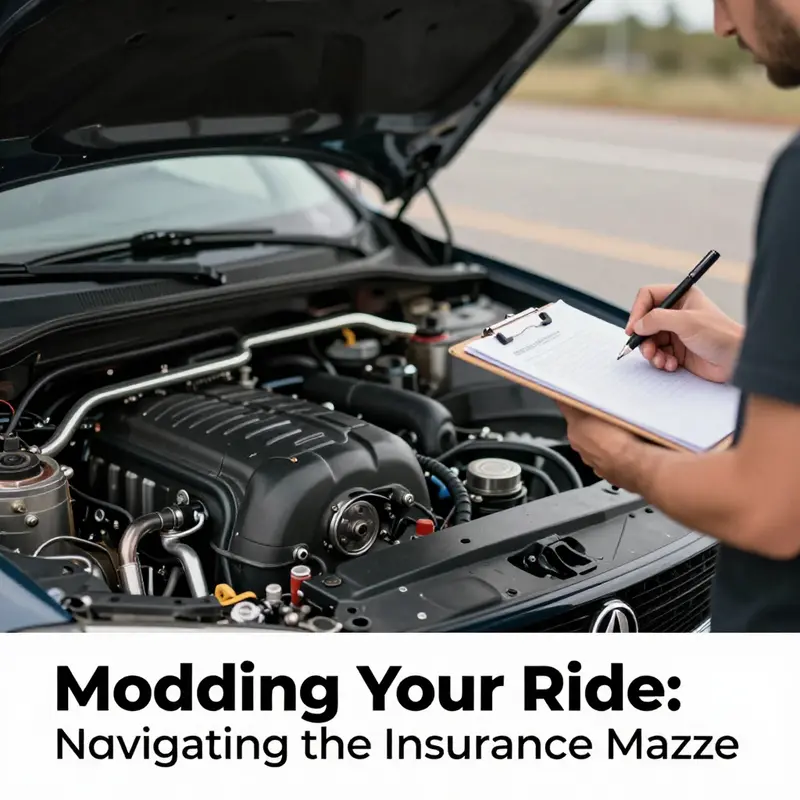
A car is more than a machine that takes you from point A to point B. For many drivers, it is a canvas for expression, performance, and personal identity. But when that canvas grows from factory-fresh to something noticeably different, the consequences stretch far beyond aesthetics. Modifications change how a vehicle handles, how fast it can go, how it sounds, and how it looks under the streetlights. They also change the math that underpins insurance—risk assessment, coverage eligibility, premium calculations, and even whether a claim will be paid at all. This chapter unfolds those consequences in a cohesive narrative, showing how modifications recalibrate risk in the eyes of insurers, why notification is not a optional courtesy but a core requirement, and how careful planning can preserve protection without bankrupting the budget. It is a story about balance: between personal passion and prudent risk management, between the thrill of customization and the practical realities of policy language, endorsements, and legal compliance. And while the specifics can vary by country, insurer, and policy, the underlying logic is remarkably consistent: changes to a vehicle alter risk, and risk is, in insurance terms, money in motion.
To begin with, risk is the lingua franca of insurance. A modification may offer tangible benefits—enhanced braking feel, more responsive steering, or a louder exhaust that matches a driver’s sense of identity. However, every alteration can also tilt the probability curve of an incident in one direction or another. A turbocharged engine, for instance, raises the potential for high-performance acceleration, but it can also introduce new mechanical stresses, heat, and tuning fragilities. Larger aftermarket wheels may improve grip in some driving conditions but can adversely affect braking distance, ride quality, and tire wear. A roof-mounted spoiler might reduce lift at speed but also introduces different air resistance and structural considerations. These are not merely cosmetic choices; they are functional variables that shift the vehicle’s risk profile in ways that insurance companies quantify and price.
The most immediate and widely observed consequence of any modification is the requirement to notify. In most standard policies, disclosure is not optional; it is a baseline obligation. The insurer needs to understand what has changed to reassess the risk and adjust the premium accordingly. The window for notice is often tight—commonly within a defined number of days after a modification is completed. This timeframe is not arbitrary. It gives the insurer time to reevaluate risk, adjust coverage, and, if necessary, implement endorsements or riders that explicitly cover the changed vehicle. The absence of timely notification is not a harmless oversight but a real threat to claim eligibility. If a claim arises after a modification that was not disclosed, the insurer may deny coverage on the grounds of misrepresentation or non-disclosure. In some cases, the policy could be cancelled altogether, leaving the vehicle owner unprotected when it matters most.
This is not simply a question of paperwork. It is about the integrity of protection. If a driver adds a high-performance engine and then fails to inform the insurer, the risk the vehicle represents to others, and to the owner, shifts in a way that the policy language did not anticipate. The insurer’s role is to price risk accurately and to ensure that the policy matches the vehicle’s true operating profile. When a modification increases the likelihood of an accident, or alters the typical repair costs, the insurer must revisit the premium and the scope of coverage. In practice, this means that even if the policy technically remains in force after a modification, the coverage for certain components or scenarios could be constrained. The practical upshot is simple: to preserve both protection and affordability, disclosure is essential, and prompt, precise information helps keep your policy aligned with your car’s reality.
The narrative of risk extends beyond the mere existence of a modification. The type, purpose, and quality of the modification can influence the insurer’s assessment. For example, a large aftermarket wheel package affects ride characteristics and potential tire costs. It may also influence the likelihood of wheel damage in a collision or through curb strikes. A suspension upgrade that’s designed to lower the ride height, while desirable to some for handling aesthetics, can alter ground clearance and crash dynamics. The more a modification shifts the vehicle’s performance envelope, the more scrutiny it attracts from underwriters. In some cases, the change will be viewed as increasing the probability of a claim; in others, it may be seen as a divergence from standard risk, depending on how well the modification is engineered, tested, and certified. The takeaway is not that modifications are inherently bad from an insurance standpoint, but that they must be approached with a candid risk assessment in collaboration with the insurer.
Claim outcomes after modifications hinge on several intertwined factors. First, if the modification is included in the policy with a specified endorsement or rider, the insurer has explicit permission to cover those added parts. Without such endorsement, the costs to replace or repair aftermarket components after an accident can be excluded, even if the base vehicle is comprehensively insured. A common scenario involves adding an aftermarket spoiler or aero accessory. If damaged, the reimbursement, absent a dedicated rider, often covers only original factory components. This protection gap can be a costly surprise when the car is involved in a fender-bender or a more serious crash. The insurance company may argue that the aftermarket piece lacks the same value or repairability as the stock part, leading to a discrepancy in settlement. The prudent response is simple: secure the right coverage for valuable aftermarket parts before trouble arises.
One of the most important distinctions in this space is between modifications that are legal and those that are illegal. Insurers generally honor trade-standard modifications that comply with national safety and registration standards. These are modifications that have been designed, installed, and certified in a manner consistent with road-use regulations. On the other hand, illegal modifications can trigger the most severe consequences. Altering engine displacement, dramatically modifying suspension to radically lower ride height, or installing non-compliant headlights or exhaust systems can void an entire policy. In such circumstances, the insurer may refuse to compensate for any damage, including damage to the original vehicle components. The risk here is not just a denial of coverage for the accident in question but a lack of recourse in the face of a broader liability claim. For car owners who rely on their vehicle for daily transportation or business use, the stakes are high. The policy, which once provided a safety net, may become a source of financial exposure if illegal modifications are discovered or alleged during a claim investigation.
To navigate these complexities, licensing and registration steps are as critical as the mechanical work itself. In many regulatory environments, a process exists to validate and document modifications through a vehicle management authority or similar body. The process often entails submitting plans, obtaining approvals, and updating the vehicle’s registration documents. The consequence of skipping this process is not merely bureaucratic delay. Insurance coverage may be severely limited until formal approval is obtained. In some jurisdictions, without proper approval, coverage may be restricted to third-party liability only, such as CTPLI (compulsory traffic liability coverage), which does not extend to your vehicle’s own damage. In practical terms, this can leave you financially responsible for repairing or replacing your own car, even after an accident where you were partially at fault. This reality underscores why the step of registering modifications with the appropriate authority is not optional; it is foundational to ensuring that comprehensive or collision coverage remains intact.
The intersection of engineering, regulation, and insurance becomes even more nuanced when expensive or bespoke parts are involved. Enthusiasts who install high-end audio systems, bespoke interiors, or performance parts may find themselves needing specialized coverage designed to account for these non-standard components. This is where add-on policies for added equipment become highly valuable. A standard policy rarely addresses the full value of a sophisticated sound system, luxury wheels, or a purpose-built engine. Without an add-on such as additional equipment coverage, a claim for damage to these components can be partially or wholly excluded. The logic is straightforward: the insurer underwrites risk on a vehicle as a package. If a piece that sits outside factory configuration is damaged or stolen, the replacement value may exceed standard limits, and without explicit coverage, the claim may be reduced or denied. The rider protects the investment you have made in creating a personalized, higher-performance machine without forcing you to bear the full cost of replacement out of pocket.
Having a strong, proactive approach to modifications also means selecting an insurer that understands the landscape of modified vehicles. Some insurance providers specialize in policies that are tailored to modified cars. These specialized policies can offer more nuanced coverages, better appraisal processes, and more flexible endorsements that reflect the realities of a modified vehicle. When evaluating insurers, drivers should seek clarity about how each company handles undisclosed modifications, how they price risk for performance-focused builds, and whether they accept a wide array of aftermarket components. Transparency about the modification’s purpose, origin, installation, and maintenance history can go a long way toward building a mutual understanding with the underwriter. The goal is to ensure that the policy language aligns with the vehicle’s use and value, rather than forcing a division between passion and protection.
For readers who want a concise, practical path to maintaining valid insurance while pursuing modifications, several steps emerge clearly from the policy landscape. First, disclose planned and completed modifications promptly. If you anticipate changes—such as a planned turbo upgrade or a wheel refresh—discuss them with your insurer ahead of installation. Second, apply for a policy amendment within the required window. Even if the modification seems minor, many policies require formal updates to ensure that coverage remains comprehensive and coherent. Third, consider dedicated coverage for valuable parts. An added equipment rider is not a luxury; it is a safeguard for the parts that define the car’s new character. Fourth, complete the registration and approval processes with the relevant vehicle management or regulatory body. Without this formal validation, coverage risks collapse when you most need it. Fifth, maintain meticulous records. Keep receipts, invoices, installation notes, and any permits or approvals. These documents support the claim process and help demonstrate the legitimacy and safety of the modifications. Finally, engage in ongoing dialogue with your insurer. Insurance is not a one-time transaction but a dynamic relationship that adapts to a changing vehicle and evolving risk. Honesty, documentation, and proactive communication create a durable shield against disputes and unexpected claim outcomes.
The practical implications also extend to the premium and renewal landscape. Significant performance enhancements or modifications that affect safety or reliability can substantially alter the risk profile of the vehicle. When the risk increases, premiums can rise accordingly. The driver who spikes horsepower without adjusting coverage may face a mismatch between the car’s risk and the policy’s pricing, which can translate into financial strain over time. In some cases, insurers may even decide not to renew a policy if the modifications are extreme or if the vehicle’s risk becomes unmanageable within the insurer’s risk framework. This reality reinforces the idea that modifications are not merely a budget line item to be managed around once a year; they are ongoing risk variables that influence the entire insurance lifecycle—from underwriting to renewal to eventual settlement. The responsible approach is to engage in early, transparent discussions about how each modification will be reflected in pricing, coverage, and future policy terms.
A useful way to think about this is through the lens of value management. The objective is to preserve or enhance the vehicle’s enjoyment and utility while preserving the integrity of protection. This means balancing the emotional value of customization with the economic value of insurance protection. For example, a driver who invests in high-grade components should weigh whether those components are sufficiently protected by an explicit riders and whether the overall policy accommodates depreciation, theft, or damage scenarios unique to those parts. It also means recognizing that not every upgrade yields a net benefit after insurance considerations. Some upgrades may improve performance but at a cost that outweighs the incremental protection offered by the policy. In these cases, it may be prudent to limit certain modifications or pursue alternative, insurance-friendly strategies such as reversible upgrades or aftermarket components that are widely accepted by insurers.
To tie these threads together in a practical, readable arc, consider a driver who loves the challenge of tweaking their car for better track days and weekend cruising. They undertake a series of modifications: a calibrated engine tune, larger but lighter wheels, a sport-tuned suspension, and a premium braking package. They also install a high-end audio system and custom interior touches. They research potential insurers with a track record of handling modified vehicles, compile detailed invoices, and secure professional installation records. They discuss the plan with their insurer, seeking endorsements for the major components and requesting guidance on maintenance and inspection requirements. They file the necessary documents with the vehicle registration authority to reflect the changes, ensuring that the vehicle’s legal status remains current. They add coverage for added equipment to protect the non-standard parts. In the months that follow, they monitor performance, track safety metrics, and stay in close contact with their insurer to adjust coverage as needed. If a minor accident occurs, the claim is evaluated against a policy that already recognizes the modifications; the settlement process is smoother because the insurer has a known, documented risk profile rather than a mystery alteration discovered after the fact. If a major upgrade is contemplated, the driver repeats the process, reinforcing that insurance is a living part of car ownership, not a static afterthought. This approach yields a balanced outcome: the thrill of customization remains intact, and the protection that damages, liability, and total repair costs represent is preserved.
For those seeking a succinct takeaway, the central message remains consistent across jurisdictions and policy frameworks: any modification that changes how a car performs, looks, or is used will influence insurance, but you can manage this influence through timely disclosure, proper endorsements, and alignment with regulatory requirements. The insurance policy is not a constraint to your creativity but a framework within which your car’s new identity can safely exist. By treating modifications as a controlled process rather than an impulsive change, you protect not only the car but also the driver, passengers, and the other road users who share the journey. In this sense, modification becomes a partnership with protection, not a gamble with risk.
If you want to explore a focused checklist that mirrors these ideas in practical terms, you can look at specific guidance on how changes affect coverage, which provides concrete steps and language you can use when talking to your insurer. For readers who want a concise, practical path to maintaining valid insurance while pursuing modifications, the path is straightforward but demands discipline. Disclose planned and completed modifications promptly. If you anticipate changes—such as a planned turbo upgrade or a wheel refresh—discuss them with your insurer ahead of installation. Apply for a policy amendment within the required window. Consider dedicated coverage for valuable parts. Complete the registration and approval processes with the relevant vehicle management or regulatory body. Maintain meticulous records and stay in ongoing dialogue with your insurer. This structured approach does not suppress your passion for customization; it channels it into a responsible practice that respects the financial and legal dimensions of modern car ownership.
For further reading on the general relationship between car modifications and insurance, see the discussion linked in related resources, which delves into how different types of modifications may influence coverage, claims, and pricing. And if you’re curious about the broader regulatory backdrop and practical outcomes of following these steps, you can consult the Insurance Information Institute’s overview of modifying your car and insurance for a wider, evidence-based context: https://www.iii.org/article/car-modifications-and-insurance
From Customization to Claim: How Vehicle Modifications Redefine Insurance Payouts and Policy Coverage
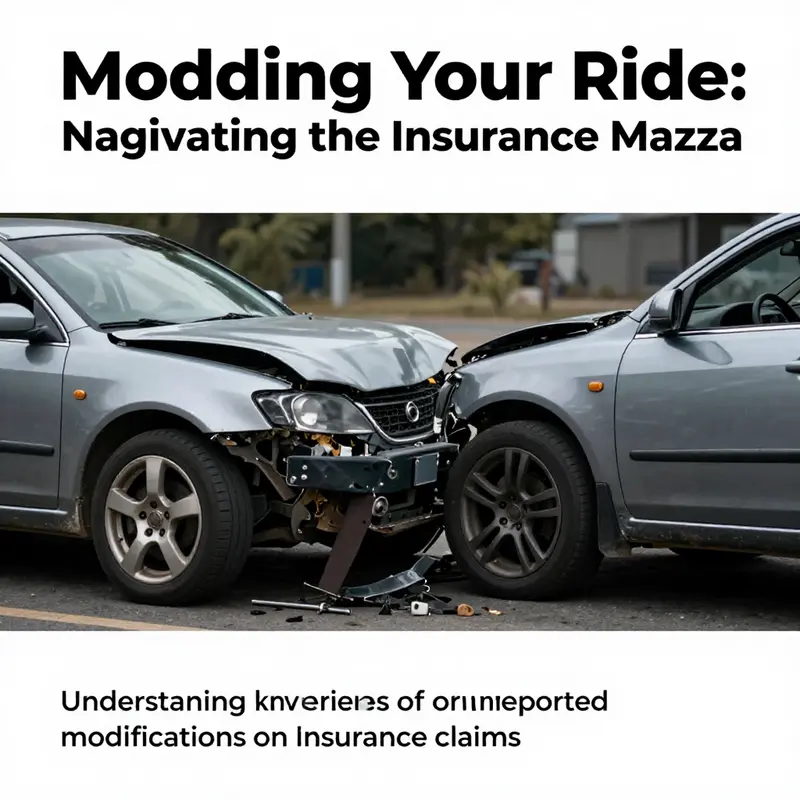
Modifications do more than change how a car looks or performs. They reframe the risk insurers see when they translate a driver’s behavior into a numbers-based assessment of future claims. This chapter follows the logic from risk assessment to the payout on a claim, tracing how each alteration—from performance upgrades to aesthetic add-ons—can shift coverage, premiums, and even whether a claim will be paid at all. The thread running through these considerations is transparency. Insurance contracts hinge on a shared understanding between the policyholder and the insurer about what the vehicle is, how it is used, and what has been changed from the factory baseline. When a modification is concealed, the integrity of that understanding fractures, and the financial protections built into the policy can collapse under the weight of a denied claim. The practical implication is simple but profound: the path from a modified car to a legitimate payout is paved with disclosures, endorsements, and registrations that validate the altered risk profile rather than pretending it does not exist. In this frame, modifications become a form of information that must be managed, documented, and aligned with the policy’s terms, not a loophole to bypass them.
Consider how an insurer evaluates a modified vehicle. On the surface, a car with added horsepower or a bigger exhaust might seem merely aspirational or aesthetic. Yet under the hood, changes to the engine, turbocharging, or suspension alter braking distances, acceleration profiles, tire wear, and the likelihood of component failure under stress. Even if the modification improves thrill or handling, it can also alter the odds of an accident. The insurer’s concern is not only whether a crash occurred, but whether the modifications contributed to the event, and whether the vehicle’s newly altered risk is properly covered by the policy as written. This is where the terrain becomes technical and where the value of proactive communication becomes clear. When you notify your insurer about planned or completed modifications, you initiate a process that helps frame the risk and calibrate the coverage in a way that preserves claims legitimacy.
Policy language often excludes certain kinds of damage or loss if alterations were not disclosed or were not approved through an endorsement. It is not simply a matter of having a rider for one particular component; it is about aligning the entire risk profile with the coverage envelope. If a policy is silent on a particular modification, or if the modification falls outside the scope of what the insurer considers standard or accepted, there can be gaps that cause a claim to be reduced or denied. This is particularly true for modifications that change the vehicle’s operational characteristics. A high-performance engine or upgraded suspension can make a car behave differently in emergencies, and an insurer may reasonably question whether the driver’s skill level, fault, or liability exposure has shifted as a result. The critical point is not the existence of the upgrade itself, but the insurer’s ability to quantify how that upgrade affects risk and, by extension, the basis of compensation upon a claim.
Even when a modification is disclosed, the way it is covered matters. A standard comprehensive or collision policy is built to cover the vehicle as it came from the factory, with carve-outs for specified modifications or endorsements. If a modification is clear and documented, a policyholder may still face higher premiums because the risk is deemed greater. The premium reflects the probability of loss and the cost of repairs, which in modified automobiles can be substantial when non-standard parts are involved. In some cases, the insurer may require separate coverage for the modified components or a rider that explicitly states the value and risk of non-factory equipment. This is not merely administrative overhead; it is the practical mechanism that preserves the possibility of a fair payout when a claim arises. Without such rider coverage, an insurer might limit reimbursement to the value of factory parts or, in worst-case scenarios, decline the claim entirely because the loss stemmed from an undisclosed augmentation of risk.
A common scenario illustrates the delicate balance between modification, disclosure, and payout. A driver adds a spoiler and an upgraded exhaust for improved aerodynamics and sound. If a collision damages the car, the insurer will assess the claim based on policy terms and the condition of the vehicle at the time of loss. If only the factory parts are recoverable under coverage and the aftermarket pieces were not insured as added equipment, the payout could fall short of the total repair bill. Conversely, if the policy includes an “additional equipment loss insurance” rider that values and protects non-standard components, the insurer may cover both factory and aftermarket parts up to the rider’s stated limits. The crucial nuance is that the rider must exist, be properly documented, and be aligned with the vehicle’s current registration data. This is a prime example of how a modification, properly endorsed, can still preserve meaningful coverage, while the same modification left unendorsed might lead to disappointment and substantial out-of-pocket expense.
The conversation about coverage is not merely about whether damage to non-standard parts is reimbursed. It also encompasses how an insurer evaluates the labor costs and depreciation in a modified vehicle. A vehicle that has been tuned for performance may suffer from higher repair costs because aftermarket components often carry a steeper price tag than factory equivalents. Some insurers apply diminishing value calculations when the vehicle’s risk profile is altered by modifications. In such cases, even if a repair is fully covered, the settlement amount may reflect depreciation that weighs the aftermarket modifications more heavily than the factory baseline. This does not necessarily negate coverage, but it does influence the final payout and underscores why proactive, precise disclosure matters.
Another layer of complexity arises with the legality and compliance of modifications. Insurers distinguish between modifications that comply with national safety and registration standards and those that do not. If a modification is illegal or not properly registered, some insurers reserve the right to void the policy entirely or to refuse compensation for any damage, including to the original vehicle. The logic is straightforward: if the vehicle is altered in a way that violates safety norms or registration rules, the risk profile is not just higher—it is non-compliant with the contract’s core requirements. For a driver, this translates into a stark consequence: even a legitimate accident could be a total claim rejection under a policy that has become invalid due to non-compliance. In practical terms, the path to a legitimate payout, in the presence of illegal or unregistered modifications, becomes blocked not at the moment of loss but at the point of policy assessment and interpretation.
A further, practical dimension concerns how claims are processed when modifications are involved. The claims-adjustment process hinges on documentation, alignment with policy endorsements, and the availability of proof that the modifications were properly installed and maintained. Insurers frequently request detailed records: receipts for parts, installation confirmations, inspection reports, and updated valuations that reflect the current state of the vehicle. This documentary trail helps the insurer determine whether the modification contributed to the loss and whether it is covered under the existing terms. When such documentation is thorough and accurate, the insurer can adjudicate claims more smoothly, reducing the risk of disputes that slow or derail payments. Conversely, gaps in documentation can complicate the process, create ambiguity about coverage, and potentially lead to partial or complete denial of a claim. The lesson, again, centers on foresight: keep a meticulous record of every change, every cost, and every regulatory step so that the claim, should it arise, is a straightforward mapping from policy to loss.
The pricing and coverage implications of modifications also ripple into the renewal stage. Insurers continually reassess risk as policies come up for renewal. If a driver has introduced significant performance enhancements or non-standard equipment that remains unendorsed, the insurer may decide to raise premiums, narrow coverage, or even decline renewal. This risk-based recalibration reflects the insurer’s ongoing evaluation of how the vehicle is used, how often it is driven, and where it operates. In some markets, the stance on certain modifications can be more stringent; in others, insurers may offer expanded endorsements or specialized policies designed for modified vehicles. The upshot is that renewal conversations are not automatic renewals of the same terms; they are opportunities to adjust coverage to match the current risk profile, which may involve higher costs or altered limits. Again, the thread remains one of open communication. Proactively negotiating endorsements or exploring specialized policies before renewal can prevent unpleasant surprises when you next submit a claim or attempt to renew.
From a consumer-facing perspective, the most reliable strategy to safeguard claims and payouts is to treat modifications as part of the vehicle’s ongoing legal and financial footprint, not as a discreet add-on. This means registering changes through the proper channels, obtaining any required approvals, and ensuring that the vehicle’s registration reflects the updated reality of the car. In many jurisdictions, this is done with a formal process that involves a Vehicle Management Office or equivalent authority. The goal is to link the physical modification with legal documentation and insurance implications, so that when a loss occurs, the insurer has a clear, official record of what was changed, how it was changed, and for what purpose. Without this alignment, even well-intentioned alterations can become logistical obstacles to timely and full compensation. Conversely, alignment yields a smoother path through the claims process, with a higher likelihood of payout that reflects the vehicle’s actual condition and value.
For readers navigating the world of modifications and insurance, there is value in seeking guidance before changes are completed. A thoughtful consultation with your insurer about planned upgrades can illuminate exactly which types of enhancements will require endorsements, how much coverage you should seek for added equipment, and what documentation will be needed to keep the policy airtight. In many cases, insurers can offer a tailored solution that acknowledges the modification’s value while preserving the ability to recover costs in the event of a loss. This proactive approach reduces the risk of post-loss disputes and helps ensure that a claim aligns with the contract’s terms rather than becoming a fight over what was or was not disclosed. If you want a concise starting point on the practical implications of modifications for insurance, you can explore more about the topic here: insurance for modified cars.
Beyond the individual policy, there is a broader responsibility to understand how modifications interact with regulatory and safety standards. Modifications that comply with safety regulations are more likely to be recognized by insurers as legitimate risk management choices. When a modification adheres to standards, it signals that the owner has evaluated the safety implications, tested the installation, and maintained the components. This reduces the uncertainty that insurers face during the claims process. On the other hand, modifications that bypass safety rules or regulatory oversight introduce a level of risk that is harder to quantify and manage. In such cases, insurers may respond with stricter terms, higher premiums, or coverage exclusions, which may apply not only to the modification itself but to related vehicle components and even to ordinary, non-modified aspects of the car. The practical takeaway is straightforward: if you are considering modifying your vehicle, prioritize compliance and transparency as the foundation of both coverage and trust with your insurer.
The conversation about claims and payouts also intersects with consumer expectations about value. A modified car often carries a different resale value than a stock model. This can affect how settlements are calculated after a total loss or how repair costs are appraised when a claim is underway. Some policies address depreciation and value adjustments for modified vehicles, while others may require a separate appraisal to avoid disputes about fair market value. Understanding how your policy handles these scenarios before a loss occurs can prevent costly disagreements when you most need protection. It is not unusual for a vehicle owner to assume that a modification automatically translates into broader coverage, only to discover that the policy’s limits, deductible structure, or exclusions tell a different story when a claim is paid. The difference between expectation and reality often hinges on a clear plan that aligns the technical realities of modern car customization with the precise language of the contract.
Throughout this discussion, the central message remains consistent: modifications do not erase risk; they redefine it. The chapter’s practical guidance, distilled into a few working principles, centers on proactive disclosure, precise documentation, and strategic coverage design. Notify the insurer about any planned or completed modification promptly. This can be done within the policy’s endorsement window or at the earliest feasible moment, depending on the jurisdiction and the insurer’s rules. Apply for a policy amendment to reflect the change, and ensure that the amendment specifies the scope and value of the modification. Keep records—receipts, installation certificates, inspection reports, and updated valuations—as part of the vehicle’s official file. If the modification is substantial or carries significant value, consider purchasing an additional equipment loss insurance rider or an equivalent endorsement that explicitly covers non-standard components. Finally, verify that the modification has been registered with the appropriate vehicle or regulatory authority so that the policy remains effective and claims-ready should an accident or loss occur. The aim is not to hinder customization but to ensure that the reward of customization—the enhanced experience—remains paired with reliable financial protection when the unexpected happens.
For readers who want to explore how these principles translate into real-world policy language and practical steps, a reliable starting point is a focused discussion on insurance for modified cars, which helps translate theory into a concrete action plan. By integrating these practices, drivers can enjoy the benefits of personalization while preserving the integrity of their coverage and the security of their claims process. NAIC guidance also offers a broader framework for understanding how state and national standards shape coverage decisions in cases involving modifications. For further information on how modifications affect insurance policies and what steps to take, refer to official guidance such as https://www.naic.org. This external resource provides regulatory context that can help frame the insurer’s approach to coverage and the claimant’s rights when a loss occurs.
In sum, the impact of car modifications on claims and payouts is best understood as a matter of properly managed risk. When modifications are disclosed, documented, and registered, and when appropriate endorsements are secured, a modified vehicle can remain a sound candidate for full or near-full recovery in the event of damage. When any of these steps are skipped, the same modifications become a liability risk, potentially limiting coverage and complicating the path to compensation. The ultimate objective is clarity: ensure that modifications are an informed, negotiated element of the policy, not a hidden variable that undermines the fairness and reliability of insurance protection. The result is not a dampening of customization, but a calibrated, transparent approach that keeps the pursuit of a personalized driving experience aligned with the enduring promise of financial security when the road turns unpredictable.
The Premium Puzzle: How Car Modifications Reshape Insurance Costs and Coverage

Modifying a car is often about more than aesthetics or performance. It is a conversation with risk, a negotiation with cost, and a test of how closely a policy can adapt to a changing machine. When you alter the brakes, the exhaust, the engine, or the suspension, you are not just changing the vehicle’s looks or its speed. You are shifting the risk profile that insurance providers use to price premiums and determine what they will cover in the event of a claim. This chapter dives into that financial feedback loop, explaining how modifications can push premiums higher, alter what is included in a policy, and even shape whether a policy will be renewed at all. The discussion remains anchored in the reality that every modification has a cost attached to it, and the cost may extend far beyond the initial purchase or installation bill. That cost is not simply measured in dollars spent at the shop or on custom parts; it also reflects the ongoing obligation to disclose changes, document them, and ensure that coverage mirrors the car as it exists on the road today, not as it rolled off the factory line yesterday.
If you are contemplating a modification, or if you already have one, the most practical starting point is to recognize that insurance is a contract built on risk assessment. Insurers collect as much information as possible about a vehicle’s altered performance, its likely exposure to theft, the likelihood of mechanical failure, and the potential for increased repair costs. A modification can change all of these factors in meaningful ways. A simple add-on, such as upgraded wheels or a custom sound system, might seem modest but still carries a value that the insurer must account for if a loss occurs. A high-performance engine or extensive bodywork, on the other hand, can dramatically alter both the vehicle’s value and the cost of repairs. The key through all of this is transparency. The policy that protects you is built on a foundation of trust between you and your insurer, and that trust hinges on full disclosure. This is why the first part of managing the financial implications of car modifications is to understand the notification requirements and the timing involved in reporting changes so that coverage remains valid and claims remain payable.
From the moment you consider a planned modification, you should think about the administrative horizon—the window during which you must inform your insurer and, in many jurisdictions, apply for an amendment to the policy. The requirement is not merely bureaucratic. It is designed to prevent disputes at the moment a claim is filed, when an unreported alteration could otherwise complicate or even invalidate compensation. In many typical policies, you are expected to put the insurer on notice in writing if the modification increases risk, and you will have a defined period, often a matter of days or weeks, to obtain a policy endorsement or a change-of-circumstances endorsement. Missing that window can trigger a denial of coverage or a claims dispute that leaves you to bear repair or replacement costs out of pocket. The practical upshot is clear: staying ahead of disclosure turns potential financial risk into a managed cost, rather than an unanticipated expense.
A deeper layer of complexity emerges when you consider how a modification affects claims and payouts after an loss event. Insurers evaluate the risk and the value of the vehicle with the modification in mind. If you have modified the car but did not inform the insurer or purchase the appropriate coverage, you should expect the standard comprehensive or collision policy to offer limited or no protection for the modified parts. A widely cited scenario involves a cosmetic addition, such as a spoiler or custom aero piece. If that component is damaged in a crash, the insurer may cover only the original factory part’s value, unless you’ve secured additional equipment loss insurance as a rider. This kind of rider is often marketed as coverage for newly added equipment, equipment loss insurance, or an equivalent designation that explicitly includes non-standard components. The practical consequence is simple: while your car’s core integrity and original parts might be repairable or replaceable under standard terms, the value and cost of aftermarket components require explicit coverage to be recoverable.
The line between what is considered acceptable modification and what triggers a more complicated coverage scenario is also drawn in the realm of legality and safety compliance. Modifications that conform to national safety and registration standards are generally eligible for full insurance coverage, because they can be verified as legitimate and road-legal. In contrast, illegal or non-compliant changes carry the risk of voiding the policy altogether. Altering vehicle systems in a way that breaches safety codes, or that changes essential specifications such as engine displacement, suspension geometry, or lighting to non-compliant standards, can result in a denial of compensation for any damage, including to the original vehicle structure. This is not merely a theoretical risk; insurers rely on regulatory compliance to validate coverage and to assess risk accurately. When a vehicle is altered in ways that contravene regulations, the insurer may decide that the risk is outside the scope of the policy terms and may decline to pay for losses, even when those losses involve non-modified aspects of the car.
Premiums reflect, in practical terms, the altered risk profile that a modification creates. If you install a high-performance engine or undertake substantial tuning that improves speed, acceleration, or overall drivetrain stress, the insurer views the car as more likely to be involved in an accident or to incur higher repair costs. The pricing logic is straightforward: greater capability often introduces greater exposure to risk, and the monetary value associated with potential repairs or total loss can rise substantially. In some cases, the premium increase can be substantial enough to make the modification economically questionable, especially if it does not deliver proportional insurance value through enhanced use or enjoyment. In other cases, insurers may choose to restrict the policy, add exclusions, or, in extreme circumstances, decline renewal altogether if the modification represents a high-risk profile that cannot be reliably mitigated within standard policy structures.
This dynamic means that the financial impact of a modification is not a one-off event tied to the initial purchase or installation cost. It ripples through the policy for as long as the car is insured. The premium may rise, perhaps gradually or in steps, to reflect the ongoing risk. The policy terms may be adjusted to reflect new assumptions about theft risk, repair costs, and potential total loss. In some situations, an insurer may require a different coverage framework altogether—perhaps a more limited policy, a specialized form of coverage, or even a rider that accounts for the added equipment value. The effect on renewal risk is real: a change in risk profile can lead to non-renewal if the modification pushes the vehicle into a category that the insurer considers unacceptable or too costly to insure under existing terms.
All of this points to a central truth: the financial implications of modifications are not purely about the sticker price of parts or labor. They are about the life cycle of the policy—the way risk is measured, priced, and underwritten over time. For owners who value their modifications, this is not an existential threat to coverage but a set of practical adjustments that ensure protection remains aligned with the car’s actual state. In practice, this alignment begins with a candid, proactive dialogue with the insurer. It means presenting a complete picture of what has changed, why the change was made, and what documentation exists to support the modification. Receipts, professional assessments, installation photographs, and verification from the relevant regulatory or registration body all contribute to a credible case that the modification is legitimate, safely implemented, and legally compliant. In short, documentation is not a burdensome add-on; it is the currency with which you buy continued access to protection when your car’s character changes.
From a strategic standpoint, owners should view modifications through a planning lens. Before any change, talk to your insurer about how your plan might affect the policy, and ask for a clear forecast of how premiums and coverage could shift. A frank discussion can yield practical steps that preserve coverage while keeping costs within a reasonable range. This might include agreeing on premium adjustments in advance, selecting a combination of coverage options that reflects the modification’s value, or choosing to pursue a specialized policy or rider that explicitly covers the modified components. If you decide to move forward with a modification, you can also use that opportunity to explore ancillary protections that guard against specific risks. For instance, for valuable aftermarket parts such as high-end audio systems, performance components, or custom wheels, you may need an explicit add-on that recognizes the component’s value and ensures it is included in the event of loss or theft. The decision to add this coverage should be guided by a careful assessment of the modification’s value relative to the overall vehicle value and the policy’s deductibles and limits.
Throughout this process, the role of registration and regulation cannot be overstated. Before a modification can be fully accommodated by coverage, many jurisdictions require that the changes be registered with the Vehicle Management Office (VMO) or the local equivalent. This step culminates in a new vehicle registration record that reflects the car’s updated specifications. The practical consequence is significant: without VMO approval and the corresponding updated certificate or registration, coverage offered by conventional comprehensive or collision insurance may be severely limited. In many cases, you would be reliant only on a basic third-party liability framework, and even that protection could be compromised if the insurer detects the unregistered modification later. This underscores another crucial point: the cost of non-compliance extends beyond the policy terms. It can translate into a much broader exposure to financial risk, especially if a total loss occurs and the insurer contests the modified car’s eligibility for coverage under the policy terms.
Even when you navigate disclosure, approvals, and proper coverage, the financial calculus of ownership remains nuanced. Some insurers recognize the realities of ownership for enthusiasts who invest in modifications and offer specialized policies or add-on coverage designed to address the higher value of components and the potentially greater risk of total loss. These options frequently require meticulous documentation—receipts that prove purchase price and current value, comprehensive photographs, and, in some cases, third-party assessments of condition and installation quality. The cost of such add-ons tends to be higher, reflecting the incremental risk and the higher replacement cost associated with modified components. Yet for many owners, these costs are a prudent investment, helping to ensure that the rewards of modification—personal satisfaction, enhanced performance, and unique aesthetics—do not come at the expense of financial security when something goes wrong on the road.
To illustrate the practical implications, consider how a valuation shift occurs when modifications are present but not properly reflected in the policy. If a vehicle with aftermarket components suffers a total loss, an insurer may reimburse based on the car’s pre-modification value or market value, depending on the policy language and whether the modifications were disclosed and acknowledged. If the modification is included in a rider or a named coverage, the insurer can adjust the payout to reflect the enhanced value of the modifications, subject to policy limits. Conversely, if the modification is unreported or non-approved, the payout may be limited to the value of the unmodified vehicle, leaving the owner to absorb the cost of the added components out of pocket. This risk-reward dynamic is precisely why the prudent course is transparency, documentation, and a proactive approach to coverage that aligns with the car’s actual state.
For owners who want to keep pace with this evolving landscape, a practical path forward is to view car insurance as a living agreement. Treat modifications not as a one-time event but as ongoing information that can alter premiums and coverage for years to come. The process begins with a vivid, up-to-date inventory of all changes: what was added, when it was installed, who performed the work, and how the modification interacts with the vehicle’s other systems. This inventory becomes the backbone of communications with the insurer and the regulator, providing the evidence needed to justify revised premiums and expanded coverage. It also supports the claim process should a loss occur, enabling a smoother, faster path to resolution because the insurer can see precisely what was involved in the vehicle’s configuration at the time of the incident.
Another facet of the financial implications worth noting is the potential impact on resale value. Modifications can alter the car’s market appeal and the insurance landscape for future owners. If a car is widely perceived as higher-risk due to performance-oriented modifications, it may command a lower resale price or a more challenging insurance underwriting during ownership transitions. Conversely, certain modifications may enhance appeal and value when they align with a buyer’s preferences and when properly documented with transferable insurance coverage. The interplay between resale value and insurance costs creates a longer-term financial equation, one that makes thorough planning and documentation even more essential for owners who intend to sell or transfer their vehicle at any point.
As you weigh these considerations, it is useful to reflect on the broader lessons that emerge from the current landscape of insurance practice. Modifications change the risk equation, and risk is the currency used by insurers to determine what they will cover and at what cost. The same factors that can increase the thrill of ownership—the increased speed potential, the unique styling, the enhanced sound or feel of the car—can also elevate the likelihood and cost of a claim. The safest path is proactive, collaborative engagement with the insurer, not reactive negotiation after a loss. This means not merely avoiding surprises but actively shaping a coverage plan that recognizes the vehicle as it exists today rather than as it did when it left the factory. The goal is not to erase the risk introduced by modification but to manage it in a way that preserves protection, maintains fair pricing, and keeps the car aligned with its owner’s ambitions.
For readers who want to explore the topic further, a concise resource helps summarize core considerations and practical steps. If you are curious about how specific modifications affect policy terms, a detailed explainer on the subject is available under the article titled What Modifications Affect Car Insurance. This resource provides targeted guidance on disclosure, endorsements, and the scope of coverage when parts and systems are altered. The link is provided here for convenience as a starting point for readers seeking concrete steps and policy language examples: What Modifications Affect Car Insurance.
In sum, the financial implications of car modifications are real and multi-layered. They begin with risk assessment and move through disclosure, regulatory compliance, and premium pricing to determine how much you will pay and what your policy will cover in the event of a loss. Owners who engage in modifications responsibly—by informing their insurer, obtaining the necessary endorsements, registering changes with the appropriate authorities, and documenting every detail of their upgrades—can preserve both protection and value. The alternative is a path of uncertainty: higher taxes on risk, diminished payout potential, and even the possibility of non-renewal. The choice is yours, but the consequences are best understood before a modification becomes a part of your car’s story rather than an afterthought added later to a claim form.
External resource: Cars.com article on car modifications and insurance: https://www.cars.com/insights/car-modifications-and-insurance-what-you-need-to-know/
Final thoughts
In conclusion, while car modifications can bring immense joy and personalization to your vehicle, they also introduce complexities that can affect your insurance coverage. Proactively notifying your insurer of any changes, understanding the implications for claims, and being aware of potential premium adjustments are essential steps in navigating the waters of modified vehicle insurance. Empower yourself with knowledge, so your passion for car modifications does not lead to unforeseen financial challenges. Whether you’re turning wrenches in your garage or discussing setups at car meets, make insurance part of your modding conversation for a smoother ride ahead.