

Car modification is both an art and a science, captivating enthusiasts from local garage hobbyists to global tuning fans. Understanding how to stay safe while enhancing your vehicle is paramount, ensuring that modifications don’t just boost performance but also comply with safety regulations. This guide empowers you with three foundational pillars: navigating regulations that govern modifications, selecting components that prioritize safety and quality, and hiring skilled professionals who can safely execute your vision. Each chapter integrates seamlessly, guiding you through the thrilling yet meticulous journey of car modifications.
Regulatory Roadmap for Safe Car Modifications
Safety and roadworthiness are the core principles behind any modification. Rather than viewing regulations as a barrier to creativity, think of them as guardrails that keep you and every road user safe. A well planned modification improves performance while preserving reliability and predictability on the road. Every change should be evaluated for its impact on braking, steering, suspension, visibility, and electrical systems. This mindset helps you design a project that aligns with your goals without introducing unexpected hazards.
Many projects that substantially alter the vehicle require permits or formal approval from regulatory authorities. This is not a hurdle but a safety review that creates an auditable trail. It also ensures that upgrades to powertrain, cooling, or safety critical components meet recognized standards and are properly documented. Even changes that seem straightforward can trigger inspections or require certified installation to prove ongoing roadworthiness and crash safety.
Quality parts and proper fitment matter as much as permit decisions. Certified components from reputable brands form the backbone of a safe modification. A brake upgrade must harmonize with hydraulic lines, fluid capacity, and cooling; wheels and tires must match original specifications and load ratings; any change to the vehicle architecture must be compatible with the modern safety and stability systems. The rule is simple: every component should be fit for purpose, documented, and traceable to the vehicle model and its intended use.
The role of professionals cannot be overstated. Licensed technicians who understand the vehicle family and the relevant workshop standards bring disciplined practices, thorough testing, and complete documentation. A knowledgeable installer will outline the modification plan, expected outcomes, potential risks, and a realistic timeline. They will verify compatibility, protect electrical and cooling systems, and ensure that all changes are supported by appropriate certificates and records for future maintenance and insurance matters.
A strong safety culture also means a robust post modification testing and validation routine. After installation, conduct a structured test program that gradually increases load and demand, checks brakes and steering response, and monitors temperatures and sensor feedback. If anything feels unusual, treat it as a warning sign and address it before the vehicle returns to everyday use. Documentation should capture the plan, the parts used, installation notes, test results, and any adjustments made during validation.
Insurance considerations are a practical reality. Consult your insurer before starting a modification project to understand coverage implications, premium adjustments, or endorsements that may be required. Clear communication helps you avoid surprises in the event of a claim and keeps maintenance and inspection plans aligned with policy terms.
For authoritative guidance, refer to official sources that outline what is permitted, what requires certification, and how to approach inspections. A key reference is the United Kingdom government guidance on vehicle modifications and safety, which offers a safety focused framework and practical inspection expectations. The official guidance is available at https://www.gov.uk/guidance/vehicle-modifications-and-safety. This external resource provides concrete steps to translate high level safety goals into design choices, documentation, and inspection readiness.
In practice, build a practical workflow that starts with a clear safety objective, engages a qualified technician early, uses certified parts, and follows a formal installation and testing sequence. Maintain meticulous records and keep insurers informed to preserve coverage. When safety, legality, and professional stewardship come together, modifications deliver not only improved performance but lasting confidence and road ready reliability.
Quality at the Core: Selecting Safe, Reliable Components for Car Modifications
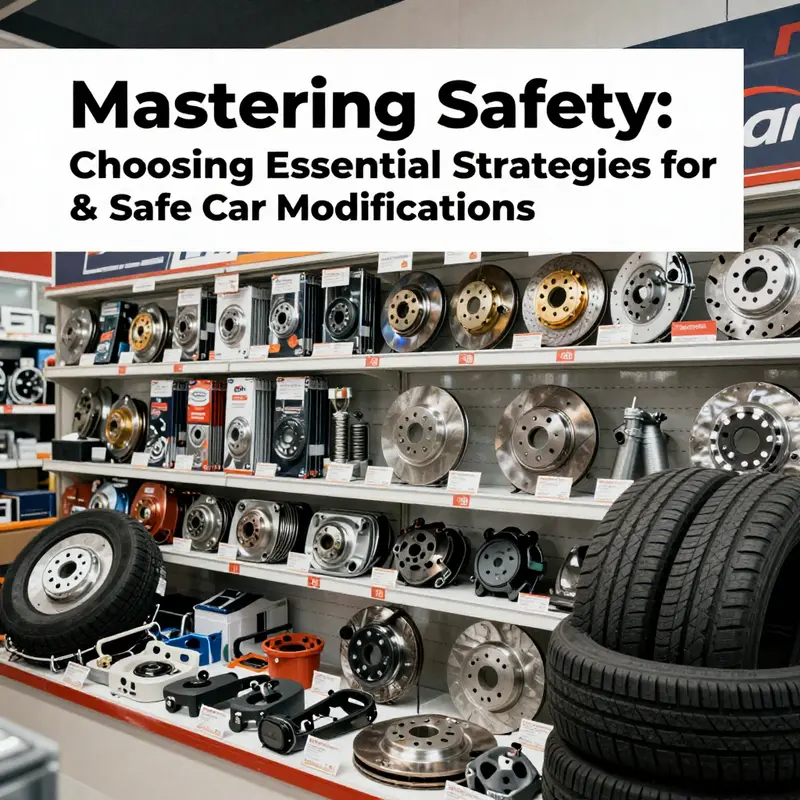
Choosing the right components when you modify a car is more than a matter of speed or style. It is a decision about safety, reliability, and the long-term legality of your project. The foundation of any safe modification is simple in theory but demanding in practice: pick parts that are designed for your exact make, model, and year, come from reputable manufacturers, and are certified for road use. When you start from that baseline, you reduce the risk of unexpected failures, you protect yourself and other road users, and you create a platform that will deliver predictable performance rather than dangerous surprises. The path to safe, durable modifications begins with a deep respect for fitment, quality, and the kind of thorough planning that keeps a project from becoming a liability the moment you turn the key.
Part of this discipline is recognizing that not all parts are created equal. In the realm of performance, aesthetics, and functionality, the temptation to use inexpensive, unbranded, or counterfeit components can be strong, especially when budgets are tight or the modification scene feels pressure-filled. Yet the cost of a cheap brake pad, a questionable rotor, or a marginally engineered wheel can be measured in more than money. It can be the difference between a confident stop and a catastrophic brake fade, or between precise steering and a wobble that unsettles the entire chassis. Safe modification starts with a careful filtration system for the parts path—separating the genuinely engineered, purpose-built components from the imitators who promise a shortcut to power or flash without delivering real, tested safety.
Within the critical systems that keep a car controllable and predictable, the rule is uncompromising: always opt for high-quality, certified components. Brakes, for example, are the universal demonstrations of whether a modification project is headed toward safety or risk. When you upgrade or replace braking components, you are altering the entire energy management chain. Pads, rotors, lines, fluid, and calipers must be chosen in a manner that preserves, and ideally enhances, pedal feel, modulation, and thermal stability. Inferior brake pads or rotors can dramatically extend stopping distances and, under heavy use, may fail when heat builds. That is not a scenario you want to test on a public road. The same logic applies to suspension and tires. A suspension upgrade that stiffens feel without considering chassis balance, dampening, and alignment can reduce tire grip, degrade ride quality, and invite unpredictable handling at the moment you need traction the most. Tires themselves are a direct interface with the road, and their compound, construction, and profile must align with the vehicle’s weight, power, and intended use. Forged or high-grade cast aluminum wheels—often described in the industry as low- unsprung-weight solutions—offer strength and rigidity while reducing the mass the suspension must control. In a chassis that already carries energy and momentum, reducing unsprung weight translates to improved wheel response, more precise steering, and better overall handling. The point is not to chase exotic materials for the sake of a label; it is to ensure the parts provide durable performance under real-world conditions and in the specific configurations your project requires.
A second necessary focus is compatibility. Every car is a unique integration of components—a symphony rather than a collection of independent parts. Upgrading an element like wheels or tires requires precise attention to the overall system: suspension components, braking hardware, steering geometry, and even the vehicle’s electronic stability controls. A wheel or tire that does not match the factory specifications in width, offset, or diameter can upset alignment, steering feel, and cornering grip. Mismatched sizes can increase lateral loading, alter brake caliper clearance, and complicate thermal management. These effects cascade into a less predictable driving experience and can undermine safety, even when the parts themselves are excellent in isolation. The same principle applies when upgrading power plants. An engine upgrade is not simply a higher horsepower figure; it triggers the need for associated upgrades in cooling, lubrication, and transmission systems. Without these support systems, the car can overheat, experience oil starvation, or suffer driveline damage under load. In short, every component choice should be considered as part of a broader, well-malculated plan rather than as an isolated bolt-on improvement.
From a methodological standpoint, the emphasis on high-quality parts begins with brand integrity. Reputable brands typically provide testing data, material specifications, and installation guidelines that acknowledge the vehicle’s dynamics, weight distribution, and heat generation. They often have established benchmarks for endurance under real driving conditions and are transparent about the limits of their products. In contrast, low-cost alternatives frequently rely on shorter service life, reduced material strength, and incomplete or misleading warranty coverage. The risk, in those cases, is not merely a future maintenance bill; it is the possibility that a part fails during operation, with consequences far exceeding the price tag of the component itself. Therefore, the first practical rule is to prioritize components that come with certification, credible performance data, and a track record of safety under the types of driving you expect to do.
Another crucial dimension is the fitment process itself. Even the best part can fail to deliver its promised benefits if it is installed incorrectly. This is why the choice of installer matters almost as much as the parts themselves. A professional who understands the precise tolerances, torque specifications, and alignment procedures relevant to your vehicle is essential. Proper installation goes beyond simply bolting on parts; it includes ensuring the entire system remains balanced. The brakes must be bled correctly; suspension components must be torqued to spec; wheels must be properly torqued in a specific sequence to avoid warping. A reputable shop will also confirm the compatibility of aftersales features such as electronic stability control or traction control with the new hardware. In some cases, modifications to braking or suspension can alter wheel alignment and ABS behavior, and these should be assessed with diagnostic testing. The value of professional installation thus cannot be overstated: it translates design intent into reliable, real-world performance.
When you begin to populate a parts list, there is a natural temptation to think in terms of power gains or aesthetic improvements alone. Yet the thoughtful approach starts with the vehicle’s safety envelope. You should assess how each potential upgrade changes the way the car interacts with the road, not only how it looks or how quickly it can accelerate. This mindset leads you to parts that offer predictable, proven performance and measurable improvements without compromising handling or control. In practice, this means prioritizing engineering-over-trend. For brakes, that means selecting components that preserve line pressure, pedal feel, and modulation even after repeated heavy use. For tires, it means choosing a compound and construction that match the car’s intended driving conditions—whether you expect dry performance, wet grip, or off-road capability—and that respect the vehicle’s suspension geometry. For wheels, it means balancing strength, weight, and offset so that the rolling mass does not inadvertently disrupt steering response. For electronics, it means ensuring wiring harnesses, power supply, and fuse protection are scaled to support the added load and complexity of the mod, while respecting the vehicle’s electrical system design. In all these cases, the goal is a coherent, well-integrated package rather than a collage of high-performance stickers on a compromised chassis.
To further support safer choices, it helps to engage with resources that distill field experience into practical guidance. A concise, well-curated reference can help you distinguish between a genuine performance upgrade and a trend that looks appealing but delivers little benefit in safety or reliability. In this vein, a practical overview is available through the car-modifications-guide resource, which provides a structured way to think about fitment, compatibility, and compliance as you plan. Use this as a baseline reference to validate your choices before you purchase or install. car-modifications-guide
Beyond the part itself, the installation plan should address the environment in which the car operates. If you are moving to a configuration that increases horsepower or torque, you should pair that with a cooling upgrade and an auxiliary lubrication strategy that protects against heat buildup. This is not merely about avoiding engine damage; it is about preserving the integrity of the entire powertrain and ensuring the drivetrain can handle the altered loads without progressive wear. The principle here is straightforward: every upgrade should be paired with a compensating improvement in related subsystems so that the overall system remains balanced and reliable under the conditions you will actually drive.
A portion of the discipline also lies in managing expectations around durability and maintenance. High-quality parts do not eliminate maintenance; they sometimes require more attentive upkeep to sustain peak performance. For example, high-performance brakes may require more frequent bleeding and fluid checks because of their operating temperatures. Forged wheels, while stronger and lighter, demand careful inspection for cracks or stress after aggressive cornering or impacts. Performance tires often wear faster than all-season variants and may require more frequent rotation to maintain even wear. The prudent modifier integrates a maintenance cadence into procurement and installation decisions, rather than treating maintenance as an afterthought or a nuisance. This approach reduces the chance that a careful plan spirals into a reactive, unsafe situation when a component nears the end of its useful life.
The process of selecting safe components naturally leads to a broader appreciation of documentation. Keeping thorough records of what you installed, when, and with what approvals or permits is not merely bureaucratic compliance; it is a practical safety tool. Detailed records help technicians diagnose issues if and when they arise, assist with insurance and resale considerations, and provide a clear trail for future inspections. This is especially important if the modification was undertaken in multiple phases or by different shops, where consistent documentation across the project prevents misalignment and misunderstandings about what was changed and why. A well-kept log includes the brand and model of each part, serial numbers where applicable, installation dates, any calibration settings, and the results of post-installation tests. The value of such records extends beyond the moment of modification; it informs ongoing maintenance decisions and supports the car’s legal standing on the road.
In this context, the role of the qualified technician or certified aftermarket specialist becomes even more critical. A professional is not just an installer; they are a systems integrator who understands how your chosen parts will communicate with sensors, controllers, and safety systems that already exist in your vehicle. They can provide a tailored assessment of how an upgrade will affect braking balance, steering response, and stability control, and they can help you identify potential compromises before they become problems. The consideration is not merely technical but also practical: a certified technician can help ensure that modifications align with local regulations and inspection requirements. They will consider whether the chosen parts require permits, whether any changes to emissions or noise levels are permissible, and whether documentation is sufficient for inspection and insurance purposes. In practice, this means selecting a shop with a track record of safe, compliant work and technicians who understand not only the mechanical aspects but also the regulatory framework surrounding vehicle modifications.
In the end, choosing safe components is about more than ensuring the car can reach a higher top speed or look more aggressive on the street. It is about preserving the vehicle’s predictable behavior, its ability to stop and corner safely, and its capacity to remain compliant with the rules that govern road use. It is a conversation between design intent and real-world constraints, guided by verified data, professional installation, and responsible maintenance. It is a philosophy of safety that respects the car’s initial engineering while allowing for enhancements that do not compromise its fundamental stability and control.
As you navigate options, keep the principle in focus: select parts that are validated for your specific vehicle, install them with care by qualified professionals, and document every step of the process. This approach not only protects you physically but also protects the vehicle’s value, legality, and future usability. It ensures that your modified car remains a reliable daily companion or a well-behaved performance machine, rather than a hobby that risks your safety and the safety of others. If you need a concise starting point for practical decision-making, consult the car-modifications-guide and use its criteria to evaluate every potential component before you buy. That disciplined, safety-first mindset is what turns modification projects into lasting investments rather than hazardous experiments.
External reference: https://www.caranddriver.com/features/a47948828/what-to-know-before-modifying-your-car/
Skilled Hands, Safer Roads: Hiring Qualified Professionals for Safe Car Modifications
A car modification project can be as much about the people who steer it as the parts that go on the car. The moment you step beyond stock, you are asking a vehicle to perform in ways it was not originally engineered to do, and you are asking systems that were designed to work in harmony to remain in harmony under new conditions. That is precisely why hiring qualified professionals is not a luxury but a safety and legality prerequisite. When the goal is not merely to customize but to improve performance without compromising reliability, the quality and qualifications of the people doing the work matter more than any brochure or discount tag. The road around a car modification is a landscape of tight tolerances, complex interactions between brakes, steering, suspension, electronics, and body integrity, and a regulatory environment that varies from one jurisdiction to another. In this setting, the best outcome arises not from improvisation but from a deliberate, professional approach grounded in experience, proper credentials, and a solid plan that keeps safety front and center.
The labor market for capable professionals in this field has grown in response to real demand. As evidence of that trend, Indeed.com reports hundreds of custom automotive modification job openings across the United States, underscoring that a skilled workforce exists and is actively seeking tasks that demand precision and responsibility. This pool includes automotive mechanics, shop technicians, and specialists who focus on high-performance and bespoke builds. Their value lies not only in the ability to install parts but in the discernment to match the right parts to the right car, to anticipate how one change affects another, and to anticipate the downstream consequences of every decision. This is not merely a question of technical prowess; it is a question of engineering judgment, risk assessment, and a disciplined respect for the boundaries of safety and legality. A shop that employs ASE-certified technicians, factory-trained specialists, or technicians with equivalent credentials can provide a measurable baseline of expertise. While credentials alone do not guarantee perfection, they are a meaningful signal that the team has been trained to recognized standards and tested for reliability under realistic conditions.
To begin with, the core criterion for selecting a partner in car modification should be competence as demonstrated through track record and methodical process. A qualified professional will not promise miracles in a single meeting or a single visit. Instead, they will present a plan built on an explicit assessment of the vehicle, the objectives of the modification, and the constraints posed by the car’s existing architecture. They will discuss what is feasible given your intended use—daily driving, spirited weekend runs, track days, or a combination of these—and how each choice aligns with safety margins. They will explain the interdependencies among systems. If you are upgrading the braking system, for instance, you need not only new rotors and calipers but also compatible lines, fluid capacity, heat management, and accurate torque specifications for fast, consistent stopping. If you are altering the engine’s output, you must plan cooling, lubrication, and transmission considerations in lockstep; otherwise you risk overheating, bearing wear, or a failure cascade that can endanger you and others on the road.
Evaluating a prospective professional begins with credentials, but it should extend into a careful assessment of their project philosophy and their approach to documentation. An experienced shop will begin with a comprehensive, written plan that outlines the purpose of each modification, the expected performance changes, the risks involved, and the steps for validation. This plan should cover both the technical and regulatory dimensions of the work. It should include an itemized bill of materials with exact specifications, part numbers where applicable, and a timeline that aligns with the vehicle’s needs and the client’s constraints. The best practitioners also present a risk matrix that identifies potential failure modes, the likelihood of occurrence, and the magnitude of consequences. Such transparency is not a mere bureaucratic exercise; it is the backbone of trust and a practical safeguard against improvisation that could later become a legal or safety liability.
Transparency extends to testing and validation. A professional team will outline a staged testing regimen that moves from bench checks to controlled on-road evaluation, always with safety as the guiding principle. They will perform functional tests of the brakes, steering, suspension, and power delivery, verifying that the vehicle remains controllable and predictable under a variety of conditions. They will check that the modifications have not introduced vibration, unusual noises, or abnormal wear patterns. They will verify that steering geometry, alignment, and tire contact patches are within acceptable ranges after every adjustment. The emphasis on testability is essential because a modification that looks impressive on a spec sheet may reveal dangerous characteristics once it is subjected to real-world operating conditions. A responsible professional will insist on road testing with proper supervision, and they will reserve the right to halt work if any safety concern emerges.
In discussions about qualifications, it is natural to weigh the significance of certifications and training. ASE-certified technicians are a widely recognized benchmark in many markets, signaling a baseline level of competency across essential automotive disciplines. Factory-specific training and ongoing education are equally important, particularly for projects that involve electronics, powertrain management, or advanced driver-assistance systems. The landscape of modern vehicle modification is inseparable from electronics and software. A qualified professional understands the software implications of hardware changes, whether it is an ECU remap, a dashboard integration, or an infotainment upgrade. They appreciate how changes in load, heat, and vibration reverberate through a vehicle’s electrical system and respond with appropriate protective measures, such as robust wiring practices, correctly rated fuses and relays, and a disciplined approach to harness routing that minimizes the risk of chafing, short circuits, or heat damage.
Of course, the quality of the parts matters just as much as the quality of the labor. A shop that relies on reputable, certified brands for critical systems—brakes, suspension, tires, cooling, and lubrication—communicates a commitment to reliability and safety. The goal is not to assemble the flashiest components but to ensure that every piece you install integrates with the car’s original design intent and with the rest of the modification. Even a seemingly minor upgrade, such as wheels and tires, must be matched precisely to the factory specifications. A mismatched tire diameter, for example, can alter steering response, affect speedometer accuracy, and skew braking distances. A professional will insist on matching wheel offset, load ratings, and tire sizes to avoid unintended consequences. They will also verify compatibility with the vehicle’s sensors, such as ABS and stability control systems, to prevent nuisance warnings or misinterpretations that could compromise safety.
Beyond technical fit, the professional relationship must be anchored in clear communication and mutual expectations. A competent shop will take the time to listen, to understand your goals, and to translate them into practical design choices anchored in safety and compliance. They will present a detailed plan that includes the rationale behind each modification, anticipated performance gains, and the tradeoffs involved. They will spell out the regulatory requirements that apply to your project in your jurisdiction and will note any permits or approvals that may be required. In certain regions, significant alterations—such as bodywork changes, engine swaps, or structural modifications—demand prior authorization from the appropriate authorities. A reputable professional will not begin work without confirming these requirements or, at minimum, providing a compliant path to obtain the necessary approvals.
Choosing the right partner is also about safeguarding the vehicle’s value and the owner’s peace of mind. A well-documented project carries evidence of safety-conscious decision-making that can be essential for future inspections, insurance, and resale. A professional shop will maintain records: the original configuration, the scope of modifications, certificates of conformity where applicable, part invoices, and diagnostic results from post-install tests. This documentation is not merely administrative; it is a living archive of how the vehicle has evolved and why those decisions were made. It supports accountability and makes it easier to address any issues that arise after the work is completed.
A further practical consideration is the range of services offered by a professional team. Many projects benefit from a one-stop approach where design, fabrication, installation, tuning, testing, and even transportation are coordinated under one roof. For complex builds, this integrated approach minimizes the risk of miscommunication between suppliers, engineers, and installers and allows for a consistent quality standard across all stages of the modification. When a shop provides a written plan, a transparent timeline, staged testing, and a clear warranty framework, you have a stronger basis to trust the outcome. A comprehensive engagement also helps manage risk—both in terms of physical safety and compliance with laws, which vary widely from place to place and can change over time.
Before you ever authorize work, a practical litmus test remains essential: does the proposed project align with professional norms and regulatory boundaries? A shop should be comfortable discussing what is legally permissible and what would require permits or exemptions. If a technician brushes aside regulatory questions with vague assurances, that is a warning sign. A safe, standards-driven project begins with an honest assessment of constraints, not with a bold promise of limitless performance. A good partner will also discuss contingency plans: what happens if a modification does not meet performance expectations, if a component fails during testing, or if additional changes are needed to preserve safety margins. This proactive stance is central to risk management and to preserving the car’s value and the owner’s safety.
Throughout the engagement, the vehicle owner should retain a central role as the decision-maker who remains informed and engaged. The best professionals treat this as a collaborative process rather than a master class where the client becomes merely a recipient of services. They will welcome questions, provide clear, jargon-free explanations, and illustrate how each modification supports the stated goals without compromising safety or legality. They will insist on verifiable references, whether through portfolios of completed projects, testimonials from credible clients, or the opportunity to inspect similar builds. In short, the most capable professionals combine technical fluency with practical prudence, upholding standards that protect the driver, passengers, other road users, and the broader community.
To help frame your approach and to keep your project aligned with a coherent safety philosophy, consider consulting a structured resource that outlines best practices for car modifications. For a concise framework on how to approach modifications, refer to the car modifications guide. This kind of reference can complement the hands-on expertise of a qualified professional by offering a shared vocabulary and a reference point for discussing design intent, testing milestones, and regulatory considerations. The goal is not to substitute judgment with a checklist but to use a common, well-considered framework that reduces ambiguity and supports safer outcomes. You can access such guidance here: car modifications guide.
Of course, there is also a practical dimension to this decision: the logistics of actually moving a modified vehicle, particularly if the project involves high-value or sensitive configurations. A professional network that includes reputable transportation specialists—such as car haulers with climate-controlled capabilities and vibration-dampening considerations—can help ensure that the vehicle arrives at its new state without scratches, dents, or misalignment. This is not a peripheral concern but a continuation of the safety ethos. A modification is only as good as its ability to be transported safely to every subsequent event, test, or showroom visit. When a shop coordinates or recommends a careful transport plan, it signals a maturity in their approach and reinforces the idea that safety, from the first wrench turn to the final road test, is the through line of the entire project.
The decision to hire qualified professionals, to rely on a disciplined process, and to insist on documented safety checks pays dividends beyond the immediate project. It reduces the probability of safety incidents, lowers the risk of regulatory penalties, and preserves the vehicle’s value across time. It also adds another layer of psychological comfort: you, the owner, can be confident that the car you drive daily, or showcase at events, has been built with a respect for the complex interplay of systems that supports both performance and safety. In a field where the temptation to shortcut can be strong—lower costs, faster timelines, or flashy outcomes—the lasting advantage belongs to those who choose the slower, wiser path. The wiser path is not about denying ambition; it is about aligning that ambition with the car’s real-world responsibilities and with society’s expectations for safe, lawful driving.
For readers seeking a concrete starting point in their own journey, remember that the right partner will value transparency, safety, and compliance as non-negotiable foundations. They will welcome your questions, present a clear, written plan, and avoid promising outcomes that neglect the vehicle’s safety perimeter. They will offer a robust testing regime, clear documentation, and a path to confirm that the modifications continue to function within the car’s original safety envelope. And they will be prepared to engage with insurers and authorities in a constructive manner, ensuring that the modification not only performs as expected but also remains insurable and legally sound. In practice, that means you should walk away from any proposal that abandons documentation, discounts risk assessment, or shortcuts the regulatory process.
In closing, the value of hiring qualified professionals is not simply about obtaining a more impressive end result. It is about safeguarding lives, protecting your investment, and maintaining a route toward legitimate, safe driving that you and everyone else on the road can trust. The road to a well-modified car is paved with careful planning, disciplined execution, and accountability. It is a journey that rewards patience and expertise, and it culminates in a vehicle that not only meets your goals but does so within the reliable, tested boundaries that keep you and the people around you safer. For those who want to anchor their approach in a proven framework, a practical guide to car modifications serves as a valuable companion, helping translate ambition into responsible action and ensuring that the hands behind the work are indeed skilled hands.
External resource for further reading: Indeed.com – Custom Automotive Modification Jobs: https://www.indeed.com/jobs?q=custom+automotive+modification&l=United+States
Final thoughts
In the dynamic arena of car modifications, safety and compliance shouldn’t be overlooked for the sake of personalization or performance enhancements. By diligently understanding regulations, selecting appropriate high-quality components, and enlisting qualified professionals, car enthusiasts can enjoy the exhilarating ride of customization without compromising their safety or legality. Remember, a well-modified car amplifies performance, ensures reliability, and most importantly, protects the driver and others on the road. Drive passionately, but prioritize safety at every turn!