
Car enthusiasts and modifiers often face the dilemma of personalizing their vehicles versus protecting their warranties. While the thrill of upgrading performance and aesthetics is undeniable, the fear of voiding a warranty looms large. This exploration delves into how various modifications interact with warranty protections, ensuring car hobbyists, professional tuners, and restoration enthusiasts are well-informed. Each chapter will dissect specific types of modifications, outline legal protections, and offer practical strategies to safeguard both your car and your warranty, providing a roadmap for responsible modification.
When Tweaks Meet Terms: Navigating Warranty Risks in Car Modifications
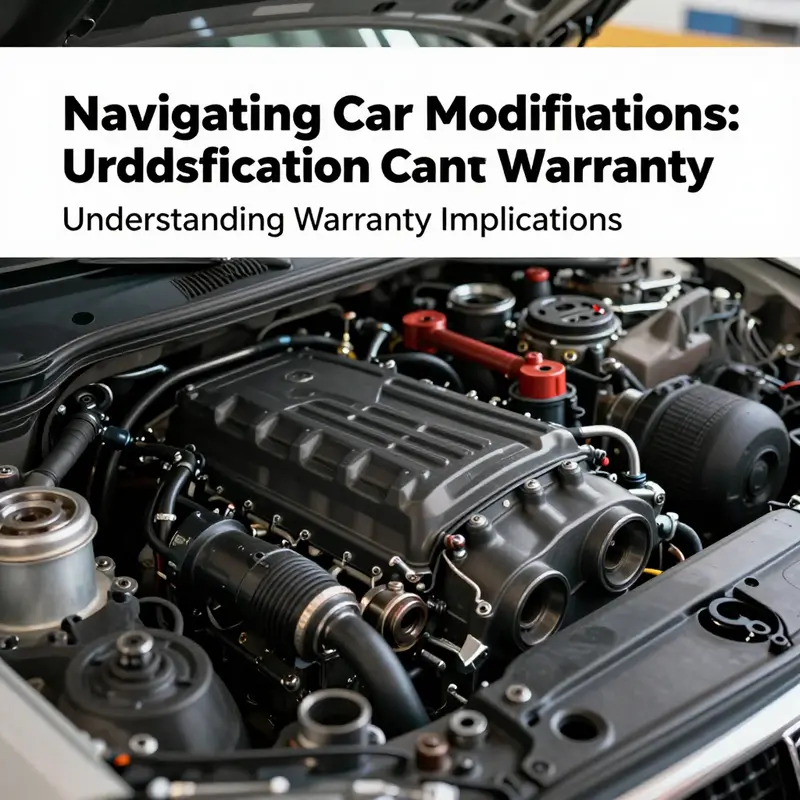
Modifying a car is often as much about personal expression as it is about performance or practicality. The garage becomes a workshop for turning a daily driver into a reflection of taste, needs, and aspirations. Yet that personal touch comes with a tension point: warranties. The idea that “modifications void the warranty” is a simplification that can mislead owners and set them up for unwanted surprises. The truth, as explained through the lens of the Magnuson-Moss Warranty Act and manufacturer policies, is more nuanced. A modification does not automatically erase every claim a vehicle owner might ever make. Instead, warranty protection is not a blanket guarantee but a shield with boundaries. The manufacturer may deny coverage for issues caused or aggravated by a modification, while still honoring repairs that fall outside the modification’s influence. Understanding where those boundaries lie is essential for anyone weighing upgrades against the risk of losing protection on the very gear that keeps the car running smoothly.
When a car leaves the factory under a warranty, it carries a promise that certain components and systems will be supported for a specified period. If a problem arises in the engine, transmission, or electrical system, the manufacturer will assess whether that issue is connected to any modification. If an aftermarket engine part or a re-tuned engine is blamed for stress or failure, the claim for engine-related repairs can be denied. Conversely, if an electrical glitch appears in a system unrelated to the modification, the repair may still be covered. This division is not arbitrary. It rests on a basic principle: the obligation to repair under warranty is tethered to the vehicle’s original design and tested operating conditions. Modifications disrupt those conditions, and manufacturers reserve the right to investigate whether a failure is rooted in the alteration or in a preexisting design flaw.
The legal framework backing this approach is best understood through the Magnuson-Moss Warranty Act. It prohibits manufacturers from voiding an entire warranty simply for aftermarket alterations. But it does not compel them to cover every component if a particular part or system is damaged due to the alteration. The practical takeaway is straightforward: keep the scope of coverage in mind. If you install a high-performance exhaust or tune the engine, and your engine exhibits issues that trace to those changes, the manufacturer may deny claims related to the engine. If a distinct, unrelated issue—say, a sensor glitch in the braking system—occurs, that problem should still be within warranty coverage, provided it is not clearly caused or amplified by the modification. This distinction can spare a surprising amount of confusion for car owners who pursue meaningful upgrades.
The path to a more predictable warranty experience often lies in clarity before and after you modify. OEMs increasingly publish guidelines about what types of modifications are considered acceptable and what might void related coverage. Some automakers offer certified aftermarket parts that have been vetted for compatibility and safety. In those cases, choosing certified parts and having them installed by qualified technicians can preserve more of the original warranty. It is important to note, though, that even when a modification is certified, the protection is not universal. Documentation becomes critical, and the safe bet remains verifying that the specific modification is approved for the vehicle’s model year and trim level.
A subtler but equally important nuance concerns the nature of the modification. Subtle changes—such as non-invasive wheel options, or audio system upgrades that do not touch safety or performance systems—are sometimes treated more leniently. Some manufacturers maintain clauses that protect owners from losing coverage solely due to non-invasive changes. However, these protections almost always come with caveats: meticulous documentation, proof that the modification does not interfere with critical safety systems or core performance functions, and installation by certified professionals. The message is consistent: if you want to chase customization while keeping warranty protections intact, you need to align your plans with the letter of the warranty terms and the manufacturer’s guidelines.
For many owners, the decision to modify begins with a practical risk assessment. Recording every modification with precise part numbers, installation dates, and receipts is not merely bureaucratic; it is a means of creating a clear trail back to the factory baseline if a warranty decision is challenged. In some cases, manufacturers offer a pre-approval process where you can submit a proposed plan for evaluation before any work begins. This approach provides a framework for understanding what is permissible and how each change might affect warranty coverage. It also shifts the risk from an unexpected denial to an informed negotiation, where the owner and the dealer or manufacturer can discuss the plan in advance.
Beyond the direct warranty implications, many owners must also consider the impact on insurance and resale value. Insurance providers often scrutinize modifications for risk and cost implications, sometimes offering specialized riders or adjusting premiums based on the nature of the alterations. The potential insurance consequences underscore the importance of a holistic view when deciding what to modify and how. A mod that seems exciting on the surface could complicate future claims or financing arrangements, especially if the vehicle is leased or financed. The insurance angle is not solely about cost; it can influence how lenders view the vehicle’s collateral value and the ease with which it can be insured in the future. To navigate this landscape, owners benefit from early conversations with their insurer and a careful read of the policy terms before committing to any upgrade.
As this topic unfolds, it is helpful to anchor the discussion in real-world practice while acknowledging the wide variety of vehicle programs and dealer interpretations. A practical lens involves looking at how to balance personal customization with the financial and legal realities of warranty protection. The core strategy is threefold: knowledge, documentation, and professional execution. First, educate yourself about what your warranty actually covers and what it excludes. Read the warranty booklet, talk to your dealership’s service department, and review the manufacturer’s published guidelines for modifications. Second, document every step of the modification journey. Keep a file with part numbers, manufacturers (where applicable), serial numbers, installation dates, and the credentials of the technicians who performed the work. Store receipts and, if possible, a pre-approval confirmation from the dealer or manufacturer. Third, rely on certified professionals and reputable brands. Certified installers bring a level of accountability and traceability that can be essential if a warranty dispute arises. They are more likely to have experience with the manufacturer’s expectations and the technical know-how to execute the modification without creating unintended issues.
For those who want a concise resource on how modifications intersect with insurance, a focused discussion exists in the broader body of guidance on car modifications and coverage. See car-modifications-insurance-impact. This internal reference helps readers understand how a change in one area of the car can ripple into others, including insurance and liability considerations. Keeping these links in mind while planning any enhancement helps ensure a smoother path through the decision-making process and minimizes the chance of a post-modification warranty dispute. It also reinforces the idea that the modification conversation is not simply about what is possible, but about what is prudent given the warranty and the broader protections that accompany ownership.
When contemplating what to do with a financed or leased vehicle, the stakes can feel higher. Leased cars often have stricter guidelines about alterations because the vehicle must remain in a condition that preserves its value for the residual terms of the contract. Financing arrangements add another layer of accountability, since lenders may require compliance with specific modification standards to protect collateral. In practice, this means owners should not assume that a modification is automatically permissible if it is technically feasible. Instead, it is wise to secure explicit pre-approval, align with OEM guidelines, and prepare thorough documentation. This careful approach does not kill the dream of personalization; it simply reframes it within a framework that protects both the owner’s investment and the vehicle’s reliability.
Ultimately, the decision to modify is a negotiation between desire and duty—between the satisfaction of crafting a car that fits one’s life and the responsibility of preserving warranty protection. The most robust path is deliberate planning that respects the manufacturer’s design intent, uses certified components, and engages qualified technicians. In many cases, owners discover that they can achieve meaningful, even dramatic, improvements without eroding core protections. In others, they learn that certain upgrades require accepting the possibility of limited coverage and the need for supplementary warranties or insurance arrangements. The practical takeaway is clear: knowledge and preparation empower owners to customize with confidence, not as a leap into ambiguity.
For authoritative guidance on the legal framework that governs these decisions, consult the Magnuson-Moss Warranty Act guidance. It provides the formal balance between consumer rights and manufacturer responsibilities and helps clarify when modifications can affect coverage and when they cannot. Still, every vehicle and warranty is unique, so a candid dialogue with the dealership, a careful read of the warranty terms, and thoughtful documentation remain indispensable. By approaching modifications with a clear plan, owners can pursue the thrill of personalization while protecting the financial and practical assurances that come with ownership. For a practical look at insurance implications, see car-modifications-insurance-impact. For more detailed legal context, the FTC’s guidance on the Magnuson-Moss Warranty Act is available at https://www.ftc.gov/tips-advice/business-center/guidance/magnuson-moss-warranty-act.
Power, Policy, and Protection: Navigating Which Modifications Challenge Your Warranty
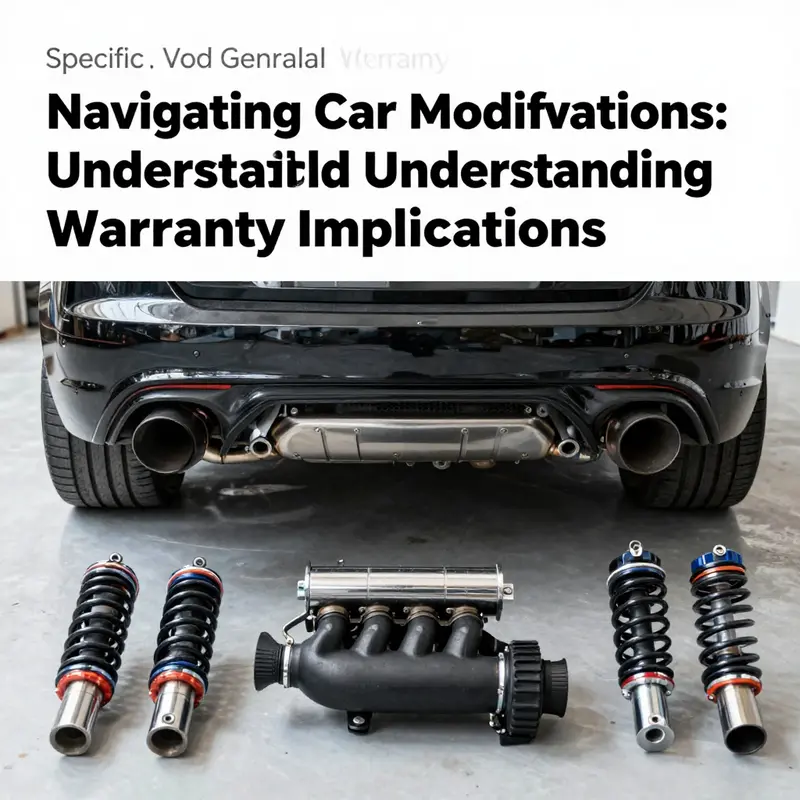
When a car enthusiast talks about modifying a vehicle, the conversation often slips into a maze of dreams and tradeoffs. The dream is clear: more power, sharper handling, a look that turns heads. The tradeoff, more complicated: how far can you push a car before you start paying for it out of pocket, not just in the performance of the car but in the coverage you assumed came with ownership? The tension is real, because modern warranties are not a blanket shield against every alteration. They are contracts that promise repair for defects in materials or workmanship, within the boundaries of the modification choices you make. The law in the United States, specifically the Magnuson-Moss Warranty Act, clarifies a crucial line. Manufacturers cannot automatically void an entire vehicle warranty simply because a non-OEM part was installed or a modification was made. Yet they can separate coverage for the specific systems and components that the modification affects, and they can deny repair on parts that fail as a direct result of the modification. In practice, that means the path through modification legality is not a single rule but a careful negotiation between engineering cause and warranty coverage. A well-informed approach thinks about what the modification is, how it interacts with the vehicle’s existing design, and which component failures a dealership could reasonably tie to that modification. The result is not a blunt penalty but a nuanced risk profile that requires documentation, judgment, and a clear understanding of what the dealership and the manufacturer expect.
Consider the pattern that emerges when we map common modifications to warranty outcomes. Engine and powertrain changes, such as ECU remapping or other forms of performance tuning, typically attract the most scrutiny. The engine is a tightly balanced ecosystem of components that share timing, fuel delivery, air intake, and exhaust pathways. When you remap the ECU to extract more horsepower or torque, you alter fuel maps, boost targets, and timing. That can push internal clearances, heat, and stress beyond factory-tested conditions. If a failure arises in the engine or related subsystems, the manufacturer can argue that the root cause lies in the modification, and thus deny coverage for that specific failure. The key thing here is causation. If the engine later experiences a problem that would have occurred regardless of the tuning, such as a separate sensor failure or a wear issue with a component not tied to the modification, the warranty should still apply to those unrelated areas. This distinction—between what a modification directly causes and what is merely coincidental—helps keep the door open for coverage on intact systems while clearly allowing for denial when the modification truly triggers the damage.
Aftermarket exhaust systems sit in a similar gray area, especially when they alter backpressure and emissions characteristics. A high-quality exhaust that is carefully matched to the factory setup and installed by a certified technician may not automatically void coverage for unrelated problems. However, if the exhaust design or installation creates issues that manifest as engine troubles, abnormal emissions, or other failures that can be traced back to the modification, the warranty for those affected systems can be denied. Tires and wheels, too, bring their own set of warranty considerations. A change in size, width, or offset can impact speedometer accuracy, traction control, ABS response, and overall handling. When a tire or wheel modification leads to a driveline or electronic-system fault, the warranty for the related components can be in jeopardy. In some cases, a dealer might argue that because the modification changed a core dynamic of the vehicle, the warranty should not cover defects in the systems that rely on those dynamics, even if the defect itself seems unrelated at first glance.
Suspension lifts and other ride-height alterations present another example of how a modification can ripple through a car’s warranty coverage. Alterations in ride height can change alignment specifications, steering geometry, and tire wear patterns. If misalignment or worn suspension parts are observed after a modification, a warranty claim could be challenged on the grounds that the modification contributed to the failure or accelerated wear. The same logic applies when structural components are altered, such as wide-body kits or heavily modified frames. While cosmetic upgrades themselves may not directly cause a failure, significant structural changes and their installation quality can influence the behavior of critical systems and potentially void coverage for related problems. The overarching principle remains the same: the more a modification interacts with a vehicle’s core systems, the more opportunity there is for coverage to be narrowed or denied for issues that arise in those areas.
What about the practical path through these complexities? The friction between the desire to customize and the obligation to protect a warranty does not have to become a stalemate. There are ways to reduce risk while still pursuing the modifications that matter to you. First, keep meticulous records. Preserve all receipts, installation notes, and before-and-after diagnostics. If a problem arises, you want a clear, traceable line showing that a particular modification contributed to or did not contribute to the issue. Second, prioritize quality and accountability. Use reputable brands, and insist on certified installers who follow documented procedures. The difference between a sloppy installation and a precise, tested setup can be the margin that matters when a warranty claim comes under scrutiny. Third, maintain a line of communication with your dealership or the manufacturer—even before you start. A proactive conversation about which parts are allowed under warranty and how a modification might affect coverage can prevent surprises and give you a documented understanding of expectations. This is where the legal framework becomes a practical guide rather than a remote constraint.
An informed driver will also consider how the vehicle is used after modification. A performance tune, for instance, does not uniformly disqualify warranty coverage; its impact depends on the symptoms and their linkage to the modification. If you notice a non-engine-related fault that preceded the change, or a new issue that appears in a system not tied to the modification, it’s reasonable to expect that normal warranty protections will apply to those areas. Conversely, if a problem involves a component that the modification directly altered, then it is rational for the manufacturer to review whether the issue falls within the scope of the modified configuration. The end result is not a binary yes-or-no to warranty coverage, but a careful, case-by-case assessment where legal guidance, dealership policy, and documented engineering reasoning intersect.
If you want a clearer view of how these ideas translate into real-world practice, you can explore the broader conversation about legal car modifications in the US. This resource delves into how modifications are treated under current regulations and what drivers can expect when dealing with warranty questions. Legal car modifications in the US provides context for the nuances discussed here and helps frame your own planning around what is allowable and what risks you might be assuming.
Of course, the legal frame itself emphasizes one core truth: a manufacturer cannot simply erase the warranty because a part was changed or an aftermarket component was installed. They must demonstrate that the modification directly caused the failure or that the problem is in the portion of the vehicle that interacts with the modified part. This distinction helps protect consumers from arbitrary exclusions while acknowledging that some modifications can indeed affect how a vehicle performs and ages. The Magnuson-Moss Warranty Act is a critical touchstone here. For those seeking formal, government-backed guidance on how warranty coverage works in practice, the Federal Trade Commission provides official guidance that outlines the limits of warranty denial and the responsibilities of manufacturers and dealers alike. It is a reliable reference that complements practical advice and dealership conversations. For formal guidance on the act, see the FTC page on the Magnuson-Moss Warranty Act. https://www.ftc.gov/tips-advice/business-center/guidance/magnuson-moss-warranty-act
Wrenches, Warranties, and the Law: Navigating Car Modifications Without Losing Coverage
The moment a driver slides behind the wheel after a fresh set of aftermarket parts, a quiet tension often settles in. Enthusiasm for a louder exhaust, sharper steering, or a cooler-sounding engine can collide with the rigid boundaries of factory coverage. You might imagine a simple truth: modify your car, and you risk voiding the warranty. In practice, the terrain is more nuanced. The law, the manufacturer’s policies, and the specific fault all intertwine to determine what remains under warranty and what does not. Understanding this landscape is not about dampening dreams but about making modifications with eyes open and records ready so that passion does not morph into unexpected repair bills.
At the center of the legal picture is the Magnuson-Moss Warranty Act in the United States. It provides a shield: manufacturers cannot automatically void an entire vehicle warranty simply because a non-OEM part was installed or a modification was made. Yet it also carves out a clear pathway for denial. If a particular component or system is damaged or fails because of a modification, the manufacturer can refuse coverage for that specific part. The engine may fall under scrutiny if you have installed a high-performance aftermarket engine or altered the exhaust in a way that causes engine trouble. If the failure lies elsewhere—electrical wiring, transmission behavior, or unrelated cooling concerns—the rest of the vehicle’s warranty should still apply. The practical upshot is not a blanket invitation to rewrite the vehicle’s DNA, but a commission of careful testing, careful documentation, and careful dialogue with the dealer.
A second axis through which this topic travels is the insistence, by most automakers, on Original Equipment Manufacturer (OEM) parts and factory settings for full warranty protection. When you retrofit the ECU with a tuning tool, change tire dimensions, or reinstall suspension geometry, there is a real risk that the related subsystems become uninsurable under the existing warranty umbrella. The logic is straightforward: if the modification directly influences a part’s performance or a sensor’s reading, and that influence contributes to a failure, the manufacturer has reason to limit or deny coverage for that fault. It is not a courtroom metaphor; it is a mechanical one. The most prudent path is to anticipate the logic ahead of time, not after the smoke test.
For readers who want a pragmatic map, the steps are simple in practice even if the stakes feel high. Keep a meticulous record of every modification: part numbers, installation dates, installer credentials, and any warranty paperwork or service records. Use reputable brands and certified installers who can vouch for the quality and compatibility of the parts with the vehicle’s original design. Before pulling the trigger on a modification, check with the dealership or the manufacturer to confirm whether the change could affect warranty eligibility and whether there are official, factory-supported pathways to achieve the desired result. If you can, opt for reversible upgrades or install components that can be removed without altering factory settings. This preserves the option to return to stock configuration if a warranty claim becomes necessary.
The practical reality also extends beyond the shop floor into the realm of what counts as a warranty-covered repair. If a modification has nothing to do with a later problem—say you replace a sensor housing and the car later develops a normal wear-related issue in the braking system—the second fault is typically still covered. The key is proving that the two problems are not causally linked. This distinction matters because it shifts the burden of proof back onto the day-to-day owner: careful documentation and a measured approach to upgrades can substantially tilt the balance toward continued warranty support when other faults appear.
For readers who crave a broader view, the legal landscape extends beyond a single act or a single country. In many jurisdictions, consumer rights around repair and modification are evolving. The broader movement around the Right to Repair argues that consumers should have the freedom to fix and modify the devices they own without losing basic service access and fair treatment under warranty. Across the United States, several states and in the European Union, laws are being shaped to ensure that repairs and reasonable modifications do not automatically void warranties or bar service for unrelated issues. The message is not that all modifications are exempt from scrutiny, but that there is a legally recognized space in which repair and modification can occur with protections.
To illustrate the complexity with a familiar analogy, consider how some device maker policies have interacted with bootloader unlocks or software-level changes. In the automotive context, this translates into a similar calculus: a change that stays within the bounds of the vehicle’s intended operation and uses manufacturer-approved channels is more likely to be treated as compatible with warranty expectations, while drastic or non-reversible alterations have a higher risk of triggering coverage denial. The specifics depend on brand policies, the exact modification, and the fault in question. In this sense, the experience mirrors the broader consumer rights dialogue that has moved through laptops, smartphones, and home devices toward legitimate repair and modification pathways that respect both consumer ownership and the integrity of the product.
If you are contemplating a significant modification, there is a resource that can help frame the decision. A thorough discussion of the legal landscape around modifications and warranty is captured in resources that emphasize the right to repair, the scope of warranty protections, and the practical steps of keeping modifications reversible and well-documented. A useful starting point for understanding these rights is the concept that consumers should be able to repair and modify their property without fear of automatic warranty termination when those changes do not damage the core functions or safety of the product. This is not a license to disregard safety or to hack around essential systems, but a pledge to approach alterations with transparency and prudence, while seeking guidance from credible sources and official channels.
The chapter would not be complete without a nod to how this topic intersects with everyday ownership decisions. If your plan is to trade in or resell the vehicle later, consider how the modification factors into resale value and whether potential buyers will view the alteration as a positive upgrade or a red flag. The truth is nuanced: a well-done, reversible upgrade from a reputable installer can sometimes enhance value or appeal, while a poorly executed modification may complicate future service or negotiations. Keeping receipts, warranties for the installed parts, and a clean service history helps protect both current ownership and future transfer of the vehicle. In short, the best strategy blends passion with prudence, ensuring that the mechanical and financial risks are minimized while the driving experience remains rewarding.
For readers seeking a concise, practical anchor to this discussion, one can explore the legal car modifications landscape through dedicated resources that summarize what is permissible and what requires caution. This broader dialogue complements the more specific automotive warranty framework and helps readers understand how rights to repair and modification are evolving in real time. If you want to see a focused treatment of this topic in the context of car ownership and policy, the article on legal car modifications offers a thoughtful examination of how law, policy, and personal choice intersect in everyday garages and dealerships.
External resource: https://www.consumer.ftc.gov/articles/0347-right-repair
Internal link for deeper discussion: legal car modifications
Warranty-Smart Customization: Navigating Personal Car Upgrades Without Voiding Coverage
The impulse to tailor a car to your tastes is powerful, but so is the instinct to protect the investment that car represents. The question of whether modifications void a warranty sits at the intersection of desire and obligation, risk and reward. The law in the United States—the Magnuson-Moss Warranty Act—does not grant manufacturers the blanket power to cancel an entire warranty simply because a driver added aftermarket parts or altered a setting. Yet it does empower them to scrutinize and potentially deny coverage for the particular components or systems that the modification directly affects. In practice, this means your customization ride can still be within the warranty’s orbit, provided the modification is carefully chosen, properly installed, and clearly linked to the parts and systems it changes or potentially compromises. The path to balancing personalization with protection begins with a clear understanding of where the boundary lies and how to stay on the right side of it, even as you pursue a more personally tailored driving experience.
The core idea is simple: avoid altering the vehicle’s core components in ways that could reasonably be connected to a failure or defect. This is not just a caution about safety or reliability; it is a practical framework for keeping your coverage intact. Engines and transmissions, braking systems, and the vehicle’s primary electrical architecture reside at the center of that framework. A turbocharger, a reprogrammed engine control unit, or a significant alteration to the braking hardware can be potent performance upgrades, but they also carry the risk that any ensuing trouble could be linked back to the modification. If the repair needed is shown to be caused by the modification, the manufacturer may decline to cover that repair even while other unrelated issues remain eligible for warranty service. The careful takeaway is that the warranty’s protection remains intact for the parts not affected by the modification, and the affected components require explicit OEM-approved pathways to maintain broader coverage. In plain terms, the more you push the vehicle’s core systems, the more you should anticipate the possibility of a narrowed warranty net.
To navigate this landscape, many experts recommend pursuing non-invasive, non-critical upgrades that respect the vehicle’s factory architecture. Cosmetic and convenience enhancements—such as plug-and-play accessories, dash-mounted devices with vehicle-specific integration kits, or trim styles that do not require cutting wires or drilling into structural components—tend to sit in a safer zone. These offerings can still express your personal style and improve comfort or usability without inviting warranty disputes. A dash camera, a non-intrusive navigation kit, or a discreet set of LED accents are common examples when installed properly. The practical test is simple: if the installation does not alter how the car’s essential systems operate, it is less likely to touch the warranty’s core commitments. This approach aligns with the broader principle that modifications should be reversible and compatible with the vehicle’s baseline configurations.
Wheels and tires occupy a more nuanced middle ground. Upgrading wheels or tires can influence dynamics, traction control, ABS behavior, and even the accuracy of the speedometer. The crucial step is to ensure any new wheels and tires conform to the manufacturer’s specifications for diameter, width, load rating, and speed rating. A mismatch in these areas can cause subtle safety and reliability issues, potentially complicating warranty claims if related problems arise. The safer practice is to verify model-year and trim-specific compatibility before purchasing, and to choose components that remain within the intended performance envelope of the vehicle. When in doubt, consult the dealership or a qualified technician who can confirm that the selected gear will not disrupt critical systems or the vehicle’s self-diagnostic logic.
Beyond hardware, there is a realm of interior and cosmetic changes that often cause little friction with warranty coverage. Seat covers, window tinting that complies with local laws, or auxiliary recording devices can be added with minimal risk. Even relocation or replacement of non-structural interior components generally does not trigger warranty concerns, provided the installation does not interfere with seat airbag pathways, wiring harnesses behind dashboards, or the vehicle’s interior safety structure. Yet even these seemingly minor choices deserve forethought. If a change touches the electrical system or reconfigures how a sensor or safety feature operates, it may create ambiguity about whether a subsequent fault is related to the modification or to an unrelated defect. Ambiguity invites dispute, so document everything and seek clarity from the dealer when a modification touches the vehicle’s body or electronics more than superficially.
Communication then becomes a central pillar of warranty-conscious customization. Before taking the step into modifications, engage with the dealer and your insurer. A candid, proactive conversation helps establish expectations and prevents misinterpretations later on. Insurance implications can be as consequential as warranty concerns. Some modifications, though not warranty-disruptive, can alter risk profiles, affecting premiums or coverage limitations. In this regard, a clear, written conversation with your insurer is prudent. If you pursue changes that may influence risk—such as higher-performance tires, enhanced braking systems, or aerodynamic alterations—request an updated quote or a policy amendment. Some insurers offer add-on coverage specifically designed for modified vehicles, sometimes labeled as ‘added equipment’ or ‘modified vehicle insurance.’ The essential point is transparency; failing to disclose modifications can produce claim denials even when the incident is not directly related to the modification. A careful, documented approach to disclosure supports both your warranty posture and your insurance protection.
When it comes to the actual process of modification, selecting reputable, certified shops and installers is a practical safeguard. Documentation is your ally: keep receipts, part numbers, and detailed notes about the installation process, including photos of the work performed. If you later need to file a warranty claim, this paper trail can help establish that the modification was professionally installed and that it did not introduce new, unanticipated conditions. If the modification is performed at a dealership, ask whether the shop performing the work offers any warranty on their services or on the modification itself. Some authorized modification programs provide limited warranties on the work performed or on specific parts, which can add a layer of assurance that independent shops may not offer. The bottom line is that professional execution, accompanied by thorough documentation, transforms a potential point of friction into a documented, traceable change that is easier to evaluate in the event of a dispute.
Another thread in this tapestry is legality and local regulation. The safest route is to avoid modifications that could be illegal or require inspection and approval for road use. Externally aggressive body kits, excessively loud exhaust systems, or illegal tinting can invite fines and impact not only the vehicle’s legal status but also how insurance and warranty claims are processed after a collision or fault. If a modification becomes a point of legal contention, coverage under both warranty and insurance can become more complicated, and the claim process can be slowed or obstructed. The intention here is not to dampen creativity but to emphasize due diligence. A modification that is compliant with local rules and that is implemented with a clear, documented plan has a far stronger chance of harmonizing with warranty and insurance protections.
In refining your approach, it is useful to keep a simple, guiding framework in your mind as you plan. First, avoid altering core components in ways that could be directly implicated in failures. Second, favor non-invasive, OEM-friendly upgrades that preserve the vehicle’s architecture. Third, align wheels and tires with factory specifications to avoid diagnostic or safety issues. Fourth, treat interior changes with the same respect for wiring and safety pathways as exterior upgrades. Fifth, communicate openly with your dealer and insurer, and maintain comprehensive records. Sixth, employ qualified installers who can provide reliable documentation and, if possible, aftermarket work that carries its own warranty on the installation. Finally, ensure all modifications comply with local laws and regulations. When you follow these steps, you maximize your chances of enjoying a customized ride without compromising your warranty or your peace of mind.
As you navigate these decisions, an accessible reference can help contextualize the balance between modification and protection. For a broader understanding of how modifications intersect with legal protections, you can consult the FTC’s guidance on the Magnuson-Moss Warranty Act, which clarifies what manufacturers can and cannot do in regulating warranty coverage. This resource reinforces that while a modification may affect coverage for the modified component, it does not automatically erase the warranty for other, non-modified systems. In other words, careful planning and transparent practice can enable personal expression in your vehicle while preserving essential protections. For practical, day-to-day consideration, you might also explore discussions around how modifications influence insurance decisions and the ways insurers manage risk for drivers with customized cars. If you want a quick reading that dovetails with this chapter’s focus, see the article on how modifications can affect car insurance and warranty decisions.
For deeper, official guidance, the Federal Trade Commission’s Magnuson-Moss Warranty Act overview provides authoritative context and is a valuable reference point as you map out a modification plan that respects both your car’s performance and its protections. You can explore this resource at the FTC’s site: https://www.ftc.gov/tips-advice/business-center/guidance/magnuson-moss-warranty-act. In the meantime, as you plan, you can also reflect on a practical step that connects tightly to everyday decisions: consider what modifications affect car insurance. This is a common concern for drivers who want to balance style with safeguarding their financial commitments. A thoughtfully chosen modification portfolio, accompanied by thorough paperwork and transparent communications, can help you enjoy a personalized ride without compromising the warranty’s integrity or your insured protection. For further reading on this topic, see the article that examines how specific alterations influence insurance coverage what modifications affect car insurance.
Ultimately, the goal is to maintain a vehicle that reflects your preferences while staying aligned with the boundaries that safeguard warranty coverage and insurance protections. Personalization should feel like a collaboration among you, your dealer, and your insurer, not a unilateral gamble. When you approach modifications with respect for the vehicle’s architecture, a commitment to documentation, and clear lines of communication, you create a durable foundation for a customized car that remains covered by warranty and protected by insurance—a synthesis that honors both your individuality and your financial security.
Warranty at the Crossroads: Understanding How Car Modifications Influence Coverage and Repair
Modifying a car is a rite of passage for many owners. From sportier exhaust notes to sharper handling, the idea of tailoring a vehicle to personal tastes is appealing. Yet every modification carries a set of questions about warranty and repair. The core regulation most people rely on in the United States is the Magnuson-Moss Warranty Act, a law designed to prevent manufacturers from voiding an entire warranty simply because a part was changed. The practical implication is nuanced: a modification can complicate warranty coverage, but it does not automatically erase the protection for every system in the car.
Under Magnuson-Moss, manufacturers cannot deny coverage for a problem that is not caused by the modification. If a defect arises in a component that you have not altered, or that fails independently of the modification, the manufacturer’s warranty obligations for that component generally still apply. The key question is causation: did the problem originate in the modified part or in a system that the modification touches? When the answer is yes, the claim may be denied for the affected component. When the answer is no, other systems remain protected.
Consider common modifications. A performance exhaust or a turbo upgrade can place extra pressure and heat on the engine and exhaust pathway. If the engine develops a fault that is linked to the aftermarket exhaust, the maker can reasonably deny coverage for the engine repair that is tied to that modification. But a separate issue—like an electrical fault in the radio or a bad airbag sensor—may still be covered. Even if a change is subtle, such as a tire size increase or a suspension tweak, claims related to the modified area might be scrutinized more closely. The manufacturer’s warranty terms often reserve the right to exclude parts that were altered or damaged due to those alterations.
Dealership practices also shape how warranty questions play out in real life. Some dealers will push back on service if a critical component appears to be operating outside factory tolerances or if an inspection reveals deviations from OEM specifications. In practice, this can mean longer wait times, additional diagnostic work, or even outright refusal to authorize repairs on portions of the vehicle that are tied to the modification. That reality underscores why drivers who modify should expect to discuss their plan with the dealership ahead of time and to document every step of the process.
Alternatives exist that help preserve warranty protection while allowing customization. Some manufacturers offer certified aftermarket parts or modifications that are tested and approved for compatibility with the vehicle’s systems. Using these parts can reduce risk, though it is not a blanket guarantee of keeping every warranty intact. Beyond that, third-party warranties tailored to modified vehicles sometimes provide coverage for certain failures, but they come with added costs and tighter terms. The general rule remains clear: read the warranty carefully, seek clarity from the dealer, and weigh the benefits of certified options against the potential loss of coverage on certain components.
Preparation is the best defense. Before making changes, gather the exact terms of your warranty and note any sections that discuss modifications, exclusions, or required OEM parts. Keep receipts, installation records, and serial numbers of any aftermarket components. Choose reputable brands and certified installers who provide documented warranties on their work. When possible, aim to revert critical systems to factory specifications for the purpose of a warranty claim, or at least maintain a parallel record of the original settings and configurations. These steps do not guarantee full protection, but they simplify the process of proving that issues are unrelated to the modification.
It is equally important to approach modifications with a plan. Speak with your dealership or the manufacturer’s service department before purchasing performance parts. Ask specific questions about how a likely issue would be treated under warranty and whether any certificates or test results are required to keep coverage intact. If a problem arises after installation, begin with a documented diagnostic: what failed, when, under what driving conditions, and what evidence points to or away from the modification as the cause. This evidence becomes the backbone of any warranty discussion and can help prevent a dispute escalate into out-of-pocket repair bills.
Outside considerations also color the risk. Modifications can influence not just coverage but other financial protections, including insurance premiums, resale value, and financing terms. A segment of vehicle owners treat their cars as evolving projects, yet every change has a ripple effect across risk and protection landscapes. If an overhaul affects the electronics or powertrain, the question shifts from “will the warranty cover this?” to “what about coverage after a failure related to the modification?” This is where a careful, informed approach pays off, reducing the chance of unexpected costs if something goes wrong.
To bridge practical guidance with broader implications, consider this: the goal is to enjoy the benefits of customization while maintaining sensible protection. Some owners find that sticking with certified, manufacturer-approved enhancements offers a middle path—preserving the essence of what makes the modification attractive while keeping a large portion of the warranty intact. For the curious reader, there is further discussion on how modifications intersect with car insurance and financial risk; the links below point to resources that explore these connections in more depth. What matters most is a deliberate plan, clear documentation, and a dialogue with trusted professionals.
For readers seeking a quick practical reference, you can read about what modifications affect car insurance here: what modifications affect car insurance. This internal link offers a focused look at how changes can impact a policy and the associated implications beyond the warranty itself.
External resource context is important too. For a solid baseline of the law that governs these questions, consult the Federal Trade Commission guidance on the Magnuson-Moss Warranty Act. It clarifies the limits on warranty denials and the relevance of causation in coverage decisions. You can review the FTC guidance at the following external resource: https://www.ftc.gov/tips-advice/business-center/guidance/magnuson-moss-warranty-act
Final thoughts
In summary, while car modifications provide a pathway to personal expression and enhanced performance, they also pose risks concerning warranties. Understanding which modifications typically lead to warranty voids, alongside knowing your rights under prevailing laws like the Magnuson-Moss Warranty Act, empowers car enthusiasts to make informed decisions. By adhering to best practices and maintaining clear communication with dealerships and manufacturers, you can enjoy the thrill of personalization without compromising the essential protections that warranties provide.