

Embracing the spirit of personalization and creativity, car enthusiasts have long sought ways to enhance their vehicles’ appearance without incurring hefty bills. The modern landscape of car body modifications offers a plethora of affordable and effective strategies that not only improve aesthetics but also maintain the vehicle’s integrity and value. This guide breaks down the best methods available for hobbyist car modifiers, professional tuners, classic car restorers, and global modification fans. From paint film wrapping to strategic wheel upgrades, each chapter provides insight into affordable modifications that anyone can incorporate into their vehicle’s style without excessive costs. Let’s dive into these exciting possibilities and see how they can redefine your vehicle.
Coating the Look, Not the Wallet: The Smart Path of Paint Film Wrapping for Cheap Car Customization
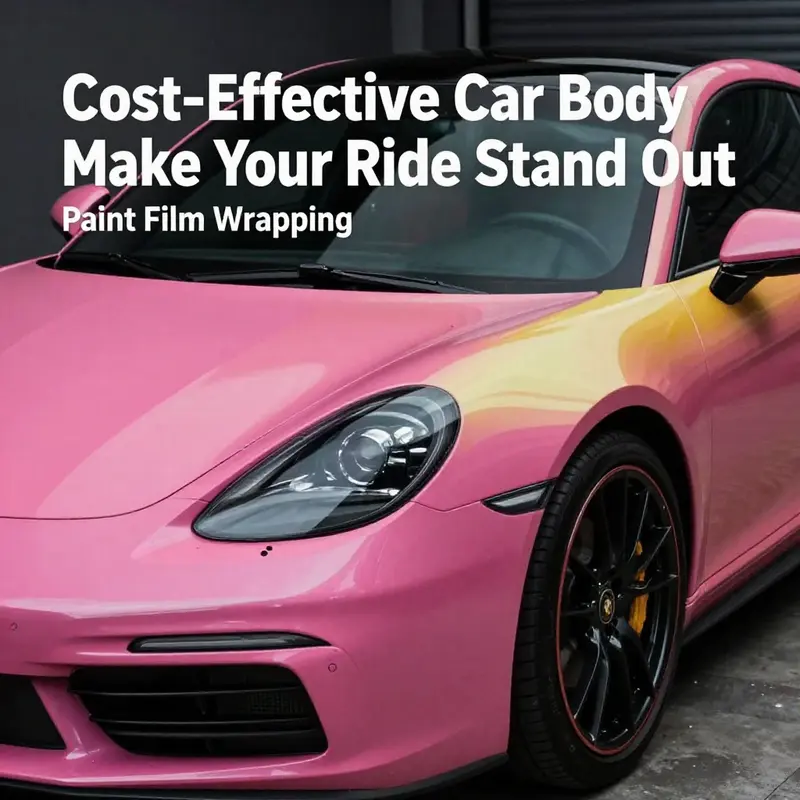
When people start exploring cheap ways to refresh a car’s appearance, paint film wrapping often rises to the top of the list. It is more than a cosmetic trick; it is a practical strategy that preserves the factory finish while letting you experiment with color, texture, and personality. The core idea is simple: instead of repainting the entire body, you cover the surface with a specialized adhesive vinyl film. This film comes in a dizzying array of finishes—gloss, matte, satin, metallic—and textures such as carbon fiber or brushed metal. The result can be dramatic, and the process is designed to be reversible. If you tire of the look, you can peel the film away without permanently altering the original paint. In a world where modifications can feel permanent and costly, wrap offers a flexible path that aligns with a tighter budget while delivering a look that feels custom and current.
The most compelling aspect of paint film wrapping is its cost profile. Traditional repainting, especially a full-color transformation performed by a body shop, can climb into the four-figure or five-figure range depending on the vehicle size, color, and complexity. In contrast, a high-quality vinyl wrap applied by professionals typically lands in a range from roughly two thousand to eight thousand dollars. This spread is not merely about the sticker price; it reflects the scope of work, the quality of the film, and the precision required for a seamless, long-lasting finish. A wrap is not a DIY-only miracle, but it does offer substantial savings when compared with a complete repaint, particularly when you factor in the labor required and the potential to refresh or swap colors down the line.
The film itself is more than a cosmetic layer. Modern vinyl wraps, especially premium varieties, provide a degree of protection that can extend the life of the underlying factory paint. The top surface acts as a shield against UV exposure, minor rock chips, and environmental contaminants. In most cases, a well-chosen wrap will absorb some of the abuse that would otherwise show up on the factory finish, helping to preserve resale value by keeping the original paint closer to its factory condition. Some high-end films even boast self-healing properties, where shallow scratches disappear after brief exposure to heat or warm water. While these claims invite healthy skepticism and require careful testing on each film, they point to the functional benefits behind the aesthetics.
Restoration or modification becomes easier when flexibility is baked into the plan. A wrap can be designed to achieve a specific character—sporty, understated, or futuristic—without committing to a permanent hue. Matte black, icy chrome, or a deep metallic blue can be swapped for a fresh vibe by simply removing and replacing the film. For owners who like to experiment with a new image annually, this reversibility is a powerful advantage. And because the film sits atop the existing paint, the risk of color bleed or finish incompatibilities is reduced compared with some traditional painting processes. In practical terms, this means you can tailor the look to your season, your mood, or even a garage event without the financial penalty of a repaint.
From a care perspective, wraps require a gentler routine than you might expect. Cleaning is similar to washing a painted surface, but there are caveats that help maximize lifespans. Use mild cleaners and soft cloths, avoid aggressive scrubbing that can abrade seams, and stay mindful of edges and panel gaps where dirt can collect. The longevity expectations for a good wrap are typically five to seven years with proper maintenance and professional installation. That lifespan is long enough to justify the investment for many owners, especially when you consider how often people peel back to the stock look after a period of ownership or a change in circumstance. The beauty of this option is not just the look; it is the option to revert or rebrand without inviting permanent consequences.
The decision to wrap versus apply decals or partial wraps tightens the budget further without sacrificing impact. If you want a bolder statement without committing to the entire vehicle, partial wrapping or decals can deliver a high-contrast design at a fraction of the cost. Hood graphics, roof panels, or door accents can transform the perception of the car with careful color blocking and texture play. Decals—well-designed vinyl stickers—offer another avenue for personalization, allowing you to splash in a logo, a motif, or a personal insignia while keeping the base color intact. These smaller moves are particularly well-suited for first-timers who want to test the waters of customization before committing to a full wrap.
There is a structural logic to choosing wrap as a cost-effective modification that resonates with practical owners. The wrap’s protective layer helps you sleep at night about long-term maintenance: it’s easier and cheaper to replace a film than to repaint a door or panel after a collision or repeated scuffing, and removal does not force you to repaint the entire vehicle. Because the original finish remains underneath, you retain flexibility in how you present the car to the world—and you keep your options open for the next owner, who may appreciate the fact that the factory paint survived under a pristine, removable layer. This resale-value consideration links back to broader discussions on how modifications affect a vehicle’s marketability. In fact, car owners who plan to sell or trade in their vehicle often find wraps advantageous precisely because the original paint quality remains accessible and presentable. For a broader perspective on how modifications impact resale value, many enthusiasts examine how different alterations influence buyer perception and overall depreciation over time.
Before you dive into a wrap project, it’s essential to consider the legal and regulatory environment. In several jurisdictions, altering the color of a significant portion of the vehicle can trigger registration requirements or disclosures. As a rule of thumb, changing color on more than a certain percentage of the surface may necessitate notifying local authorities within a defined window. This isn’t a barrier to creativity, but it is a reminder that a cheap modification still resides within a framework of compliance. If you plan to lease or finance the vehicle, you’ll also want to verify whether any terms restrict non-factory finishes or require disclosures during insurance or title processes. The responsible path is to research local regulations and align the modification plan with any lease or loan constraints you may have. It is easy to overestimate the simplicity of a cheap change, but the practical realities of legality, insurance, and ownership structure deserve attention as you map out the project.
In terms of execution, the wrap process leans on two broad paths: professional installation or careful DIY for select applications. Full-body wraps demand a high skill level to achieve a seamless, bubble-free surface with precise edge trimming and heat shaping. A professional install minimizes the risk of creases, air pockets, or premature peeling, and it often comes with a warranty on the workmanship and the film. For those who want to stretch the budget further, smaller tasks—like applying decals, swapping door handles, or adding a simple roof rack look—can be tackled at home with basic tools and a patient approach. Yet, when the objective is a consistent finish across the entire vehicle, investing in a professional wrap is usually the better long-term bet. The cost savings become meaningful only if the result is durable and visually uniform across all panels.
The allure of paint film wrapping lies not just in price or appearance. It is a practical, reversible, and aesthetically flexible approach that respects the vehicle’s original heritage while offering room for personal expression. It bridges the gap between a cosmetic upgrade and a protective measure, turning an ordinary car into something that feels thoughtfully customized. For readers weighing the next step in cheap car body modification, this option asks you to weigh the full spectrum: the up-front cost, the degree of change you want, the degree of permanence you’re comfortable with, and the regulatory reality on your doorstep. And as you consider these questions, remember that the wrap is more than a finish—it is a strategy that can align with how you drive, where you drive, and how you want others to perceive your vehicle on the street.
If you want to explore how modifications influence long-term value and how wrap fits into that picture, you can read more about car modifications and resale value car modifications and resale value. This broader discussion helps situate wrap within a continuum of affordable upgrades that balance appearance, protection, and marketability. While the wrap can deliver a dramatic transformation, it remains important to weigh it against other budget options like decals or selective panel changes, which can be equally effective for certain aesthetics and budgets. The key is to choose an approach that honors both the owner’s taste and the practical realities of maintenance, legality, and long-term ownership.
As you plan, keep in mind the external resource that informs many practitioners about the materials and methods behind modern wraps. It highlights how such films, often designed for durability and UV resistance, pair with installation best practices to deliver a look that lasts. For a deeper dive into the materials and how they’re sourced, readers may wish to consult the external reference linked here. External resource: https://www.alibaba.com/product-detail/Sunvision-Car-Paint-Protection-PPF-Film-Self_1600492586767.html?spm=a2700.10250043.0.0.5f5c5b4dXrRnVw
Subtle, High-Impact: Mastering Partial Wraps and Decals for Budget Car Makeovers
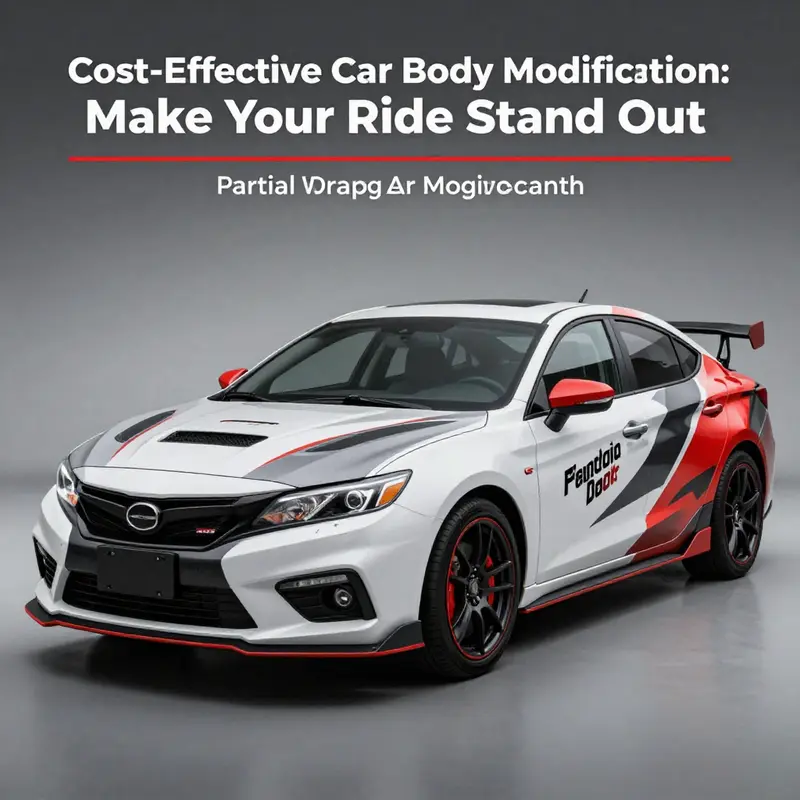
Partial wrapping and decals offer a practical path to a personalized look without the expense and complexity of full body kits. The appeal lies in how small, targeted changes can create a cohesive, high-stakes appearance that reads as intentional design rather than a patchwork of add-ons. Instead of reworking every panel, you can concentrate on the zones that define a car’s silhouette and character—the hood, the roof, the trunk lid, or a chosen combination of doors and mirrors—and still achieve a strong, integrated presence on the road. This approach lets you experiment with texture, color, and contrast while keeping the project realistically affordable and reversible if tastes change. The logic is simple: wrap films and decals are layered materials that can be applied with careful attention to alignment and surface prep, then removed with minimal risk to the original paint if you proceed correctly and avoid aggressive aggressive removal methods or improper solvents. The result can be striking enough to transform the car’s personality without triggering the higher cost or higher risk profile of a full wrap.
Advantage follows advantage in this space. Customizable aesthetics remains the most obvious payoff. With partial wraps, you can unify a theme—say a monochrome palette with a matte finish or a subtle metallic sheen—across the chosen panels to create a sense of flow. The design can accommodate a particular aesthetic or echo a theme, such as a racing-inspired motif or a minimalist, aero-conscious look. The effect is not merely cosmetic; when executed with intention, it can alter the perceived shape and stance of the vehicle. A hood wrap, for example, can emphasize width and create a laser-focused focal point that draws the eye toward the front end, while a roof wrap can lighten or darken the upper profile, influencing how light interacts with the car as it moves through sun and shade. The doors and side panels, if wrapped in a coordinated texture or color, can reinforce a sense of movement and continuity that makes the car appear more cohesive than its stock form.
The implications extend beyond style. Partial wraps and decals can also contribute to modest aerodynamic or acoustic effects, especially when applied to zones where air tends to separate or swirl. While the impact is not as dramatic as a full aero kit, deliberate wrapping in strategic areas can smooth micro-eddies and reduce drag in targeted zones. The resulting gains, though incremental, compound with highway cruising and stability at speed, presenting a practical reward for enthusiasts who want more than a one-note cosmetic upgrade. What matters is disciplined execution: alignment that respects panel lines, edges that are kept clean, and a finished surface that remains visually consistent across the entire treatment. When you see a well-done partial wrap, it reads as deliberate design rather than a mere sticker or accident of mismatched tones.
One of the strongest selling points is the balance between cost and impact. Full body kits and full wraps can be substantial investments, and they carry higher risk if the application is imperfect. Partial wraps and decals, by comparison, are inherently more approachable. They allow experimentation with finishes—gloss, satin, matte, or textured surfaces—without losing the flexibility to revert or revise without major downtime. A key nuance, however, is the installation quality. Even on a smaller scale, wrap films must be laid with patience. Air bubbles, trapped dust, or misaligned decals can quickly undermine the intended effect. Surface preparation becomes not merely a preliminary step but the deciding factor in how clean and durable the result appears. The car’s finish should be thoroughly cleaned, free of wax and residues, and properly decontaminated to give the film a stable, smooth surface to cling to. A high-quality primer or edge treatment can help ensure the wrap’s edges stay tucked and the color transition remains crisp across curved panels.
In practice, a thoughtful approach to partial wrapping involves choreographing the chosen zones into a unified narrative. A hood wrap might set the visual tone, followed by a roof or trunk accent that echoes the hood’s color or texture. Side-panel decals or color-blocking stripes can knit the overall look together, drawing the eye along the car’s length and creating a sense of motion even when standing still. The choice of finish matters here. A matte wrap on the hood paired with a gloss roof, or a subtle satin texture on the doors with a contrasting high-gloss edge, can produce a dynamic but restrained effect that reads as design-forward rather than gimmicky. It’s about balancing personality with resale value, ensuring the vehicle’s lines remain legible and attractive to prospective buyers who may not share the exact same taste but will appreciate craftsmanship and consistency.
From a practical standpoint, feasibility and maintenance should shape your plan as much as aesthetics. Partial wraps are typically more forgiving of imperfect lines and curves, but they still demand careful masking and precise cutting when decals feature intricate edges or complex logos. The more intricate the design, the greater the likelihood of interior masking and careful alignment to preserve clean edges around trim pieces and door handles. In some cases, decals can be applied as removable vinyl stickers for quick customization or to test a theme before committing to a larger wrap. The choice between a single large panel wrap or multiple small decals depends on a few factors: your vehicle’s color underlayer, the durability you require, and how much of the original paint you want to preserve. The reality is that while decals can deliver immediate visual impact, they often require more precise installation to avoid visible seams or misfits where different graphics meet. For this reason, even budget-conscious enthusiasts sometimes choose professional installation for the most visible areas, while handling smaller decals or less critical sections themselves to maximize savings.
In evaluating value, it’s worth considering how partial wraps and decals interact with a car’s resale narrative. A well-executed wrap that aligns with a tasteful theme can attract buyers who value customization while reassuring them about maintainability and reversibility. The wrap protects the underlying paint by shielding it from UV exposure and minor abrasions, which can be a selling point when the original finish remains in good condition beneath. The ability to remove the film cleanly, restoring the car to stock if the new owner prefers a neutral presentation, adds a layer of flexibility that can translate into perceived value. For buyers who seek a factory-like aesthetic with a personal twist, this balance between character and conservatism can be especially appealing. The key is to frame the modification as a reversible expression of the vehicle’s personality, rather than a permanent departure that excludes future customization.
Choosing how to pursue partial wraps and decals also intersects with broader considerations—the importance of legality, safety, and your own willingness to engage in DIY work. In many places, color changes that affect the vehicle’s appearance beyond certain thresholds require registration or disclosure, so it’s essential to verify local regulations before embarking on a project. Even when the legal framework is permissive, the practical realities of applying wrap material demand a careful, patient approach. Durable wraps rely on proper surface preparation, precise cutting, and protective finishing. In DIY contexts, starting with small, non-critical areas can be a smart way to learn the technique and gauge fit before committing to larger sections. For those who want to maximize learning while minimizing risk, there are resources and communities that document best practices, share templates, and provide feedback on common pitfalls—an invaluable reservoir when you’re charting a budget-friendly path to a personalized look.
If you’re seeking a practical, hands-on starting point, consult the DIY car modifications guide. It offers guidance on technique, tools, and troubleshooting that can be directly applied to partial wraps and decals, helping you achieve a polished result without overspending. DIY car modifications guide
For readers who want a more expansive perspective on the technical specifications, performance considerations, and best practices for using partial wraps and decals, a comprehensive guide is available. This resource delves into the nuances of wrap materials, installation workflows, and long-term maintenance considerations, further illuminating how these affordable modifications can fit into a broader strategy for cost-effective customization. External resource: https://www.autoblog.com/2025/12/03/car-body-modifications-partial-wraps-decals/
The bottom line is that partial wrapping and decals offer a disciplined, design-forward way to stretch the visual language of a car without overhauling its entire body. They demand thoughtful planning, careful surface preparation, and a willingness to iterate, but the payoff can be substantial: a cohesive, striking appearance that remains adaptable, reversible, and, crucially, affordable. As part of a broader strategy for cheap car body modification, this approach provides a bridge between the allure of bold personalization and the realities of budget and practicality. The goal is not to chase the flash of a trend but to cultivate a confident, tailored look that respects the vehicle’s original character while signaling the owner’s personal sense of style. In practice, the strongest results come from deliberate, cohesive decisions—choosing a palette and texture that harmonize across the targeted areas, ensuring clean edges, and maintaining a careful balance between visibility and restraint. When done well, partial wraps and decals become more than a quick cosmetic fix; they become a thoughtful expression of how a car can be both a daily driver and a personal statement, without breaking the bank.
null
null
Rolling Upgrades: Affordable Wheels and Tires for a Budget Car Makeover
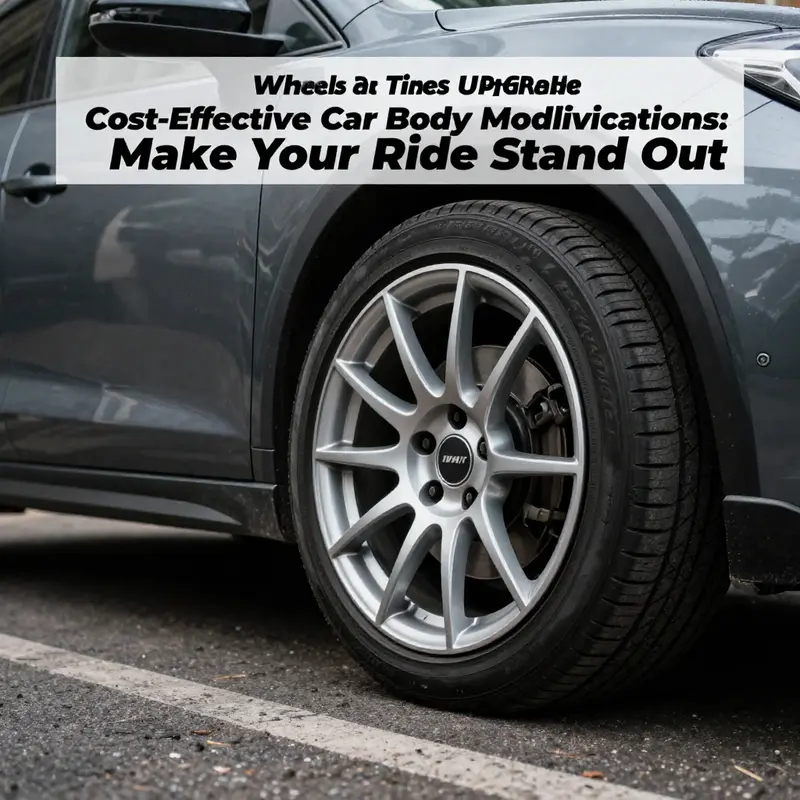
Upgrading wheels and tires is one of the most practical ways to alter the feel of a budget car without heavy chassis work. A solid wheel and tire package can sharpen handling, improve grip, and give the car a more purposeful look while keeping costs in check.
The aim is to maximize value by choosing a wheel with robust construction and a tested load rating that matches the car weight and driving style. Pair it with tires that handle the load and provide predictable behavior across temperature and speed.
Size and offset matter. A modest increase in wheel diameter can transform the stance without sacrificing ride quality. Make sure the overall diameter stays close to stock to avoid speedometer errors and unwanted rubbing.
Wider tires can boost traction but require compatible fender clearance and suspension travel checks. Verify full steering lock clearance and ensure there is a comfortable gap to the bodywork under all conditions.
Cosmetic aero and body tweaks can complement the wheel and tire upgrade without overdoing it. Subtle lip spoilers or clean side skirts can enhance the overall stance and stability at speed while remaining affordable.
Resale value is a consideration. A well chosen wheel and tire package that matches the car can preserve value and show care in maintenance. Plan in stages, test fit, and verify clearances before committing to a full change.
The result is a cohesive upgrade that improves safety, usability, and confidence on the road. With careful choice and proper maintenance, the wheel and tire package becomes the anchor of a budget build rather than a cosmetic afterthought.
Final thoughts
With a variety of cost-effective modifications available, enhancing your vehicle’s appearance and functionality doesn’t have to be an expensive endeavor. By exploring paint film wrapping, decals, window tinting, and wheel upgrades, you can create a unique identity for your car while preserving its value and integrity. Each modification offers a personal touch, inviting enthusiasts from all walks of automotive life to express their style without heavy investments. As you embark on your modification journey, remember that quality, creativity, and compliance with local regulations will lead you to the best results.