
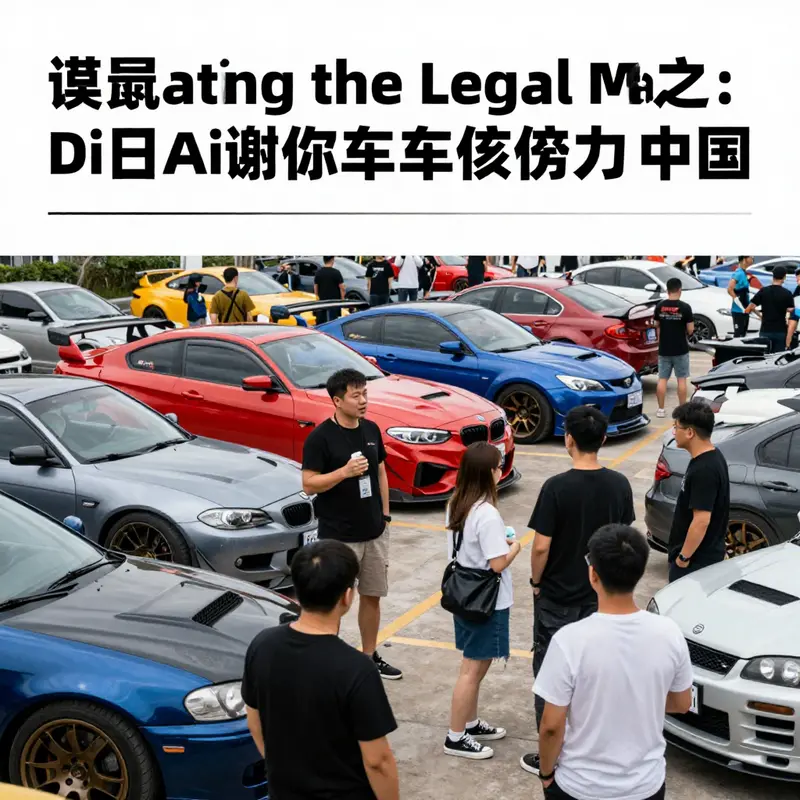
For passionate hobbyists and professional tuners alike, modifying cars to enhance performance or aesthetics is both a science and an art. However, in China, navigating the legal landscape of car modifications requires more than just mechanical savvy; it necessitates understanding official regulations to ensure that every tweak or upgrade is compliant. This comprehensive guide illuminates the process of declaring car modifications legally in China. From gathering essential documents and submitting applications for approval to following the necessary steps after your vehicle is modified, each chapter breaks down these procedures systematically. Through this journey, car enthusiasts can embrace creativity while adhering to legal standards, ensuring that their vehicles not only stand out but also remain roadworthy.
Paperwork Before the Road: Essential Documents for Declaring Car Modifications

Declaring car modifications is as much a legal exercise as a technical one. In China, the path from a plan in a workshop to a road-legal vehicle begins with a precise and sometimes meticulous collection of paperwork. The purpose of this paperwork is not mere bureaucracy; it is the formal record that links a vehicle’s appearance and its technical specifications to a verifiable history. When handled well, it protects you from unexpected compliance issues, speeds up approvals, and preserves your ability to drive on public roads without the risk of a later dispute about what was changed and why. When a modification touches safety, emissions, or vehicle appearance, the documents you assemble become the bridge between an owner’s intent and the regulatory framework that governs it. The process is straightforward in principle: determine legality, gather the required documents, submit the application, undergo inspection, and, once approved, re-register with updated records. Yet in practice, the quality of your documentation can determine whether the process moves smoothly or stalls at the gate. The narrative that follows blends practical guidance with a clear rationale for each item you’ll assemble, so you can approach your modification project with confidence rather than guesswork.
To begin, ask yourself what you intend to modify and whether those changes fit within the legal boundaries. Permitted alterations typically include changes to the body color (with notable restraints on color choices), installation of compliant roof racks or luggage carriers, replacement tires of the same size and specification, wheel upgrades that meet safety standards, and interior changes that do not affect the vehicle’s fundamental structure or safety systems. The list is not exhaustive, and it does not include anything that would alter the engine, chassis, or frame, nor anything that tampered with emission controls. If a particular modification seems borderline, treat it as a candidate for pre-approval and consult the local Vehicle Management Office (VMO) before starting work. This early step protects you from investing time and money into an adjustment that cannot be legally registered later. A clear understanding of legality helps shape your document plan.
With legality in mind, you can assemble the core documents that the VMO will require to evaluate your modification. Start with the vehicle’s identity and ownership records, because any change to the vehicle is, at its core, a change to its official record. You should bring both the original and a photocopy of the vehicle registration certificate. The original confirms the current linked data, while the photocopy provides a spare reference for the office and for your own records. The driver’s identity is the next cornerstone. Carry both the original and a photocopy of the driver’s ID, or the owner’s ID if you are acting as the authorized representative. Some VMOs will accept the owner’s ID with a power-of-attorney or an official authorization letter, but it is safer to verify this in advance so your submission is complete on arrival. The vehicle’s driving license is similarly essential; bring the original and photocopy so the office can confirm the driver-class and any relevant endorsements.
Photographs form a surprisingly crucial part of the documentation. For modifications that affect the vehicle’s appearance—new paint, bodywork, or exterior components—the VMO typically requires photographs that show the vehicle from multiple angles: front, rear, and both sides. In many jurisdictions, these images will be compared against the vehicle’s appearance on a future re-registration. The standard practice is to present photos of the vehicle as it exists before any modification and then again after the work is completed, creating a clear before-and-after record. If you are replacing a component that alters the exterior silhouette or color, plan to capture a comprehensive photo set that reflects the new look.
Beyond photos, a detailed modification plan and technical documentation are central to a transparent declaration. The plan should specify every modified part, its brand and model, the exact quantity, the installation method, and the expected performance characteristics. This level of detail helps the VMO assess safety and compatibility with existing systems. For each major modification, you may also need a certificate of conformity or a safety or quality certification from the component supplier or manufacturer. While some items can be inspected independently, others require formal proof that they meet safety and industry standards. If you are working with a professional modification shop, obtain a certificate of qualifications or a written statement from the shop confirming their compliance with relevant standards. If the modification affects emissions or energy use—such as a fuel conversion or a change in exhaust components—you may need an environmental compliance certificate. These documents demonstrate that the change aligns with environmental regulations and does not unduly increase pollutants.
In addition to the above, certain modifications demand third-party validations. A safety inspection report from an authorized testing agency is often required when wheel changes, electrical work, or structural changes are involved. This inspection confirms that the work has been performed correctly and that it can operate safely within the vehicle’s design limits. Collect any such inspection reports before you approach the VMO; having them on hand speeds up the review and reduces the chances of delays caused by incomplete evidence. The more thorough your preparation, the smoother the interaction with the authorities.
The submission itself can be completed in two ways: online through the government service platform or in person at the local VMO. Online submissions offer convenience and allow you to organize digital copies for easy attachment. In-person visits enable real-time questions and immediate file handling. When filling out the Vehicle Modification Application Form, accuracy matters as much as completeness. Any inconsistency in the modification description can trigger a request for clarification, slow down the process, or—even in the worst case—lead to a rejection that requires you to restart the procedure. The key is to ensure that every detail in the application aligns with the supporting documents you present. If you are unsure about any portion of the form, seek clarification from the VMO before you submit. The goal is to minimize back-and-forth and keep the file moving toward approval.
A crucial moment follows the submission: the vehicle inspection. The VMO will schedule a physical inspection to verify that the declared modifications match what exists on the vehicle and that all changes comply with safety, structural, and regulatory demands. The VIN must be checked, and the inspector will look for signs that the modification has been correctly implemented and is compatible with the vehicle’s safety systems. The inspection is not a mere formality; it is a substantive check of the vehicle’s readiness for road use with its new configuration. Be prepared to present any missing documents or answer questions about the components you installed and their performance characteristics.
Once the modification is approved, the road to legal compliance enters a final phase. You will be required to re-register the vehicle to reflect the changes. This re-registration updates the vehicle’s records to show the new appearance or structural modifications. In cases where the modification changes the vehicle’s look, the VMO may require a vehicle photo after the work is completed to confirm the updated state. You will typically receive a new driving license that reflects the updated details and enhanced photos, along with a new inspection certificate. The entire process—from application through inspection to re-registration—serves the purpose of keeping official records synchronized with the vehicle’s physical configuration.
There are several key points to remember that can prevent missteps and help you plan your timeline. First, there is a time limit: changes to body color must be registered within ten days of completion. This deadline is non-negotiable in most jurisdictions and creates a practical constraint on scheduling both the modification work and the post-modification steps. Second, certain colors are prohibited. Colors reserved for emergency services—such as fire engine red, emergency yellow, or certain official blue/white schemes—must be avoided if you intend to declare the change. Using a restricted color can trigger additional scrutiny or outright rejection. Third, avoid adding external features that alter the vehicle’s approach or departure angles in a way that could compromise safety or violate standards. The VMO’s role is to ensure that changes do not create safety hazards, such as protruding components or components that modify the vehicle’s critical geometry. Fourth, if the vehicle is under a loan, you cannot undertake modifications or register changes until the loan is satisfied or the lender’s consent is obtained. This rule prevents lien-related complications and ensures the lender’s collateral remains properly accounted for in the vehicle’s records. Finally, if you are uncertain about a modification’s legality, consult your local VMO before starting any work. This step protects you from spending time and money on work that cannot be recorded or insured properly.
The practical takeaway is straightforward: lawfully declare modifications by compiling a comprehensive dossier that aligns with official requirements, submit it through the correct channel, and be prepared for the formal inspection and re-registration that culminate in updated documents and records. A well-managed dossier reduces friction and helps you avoid last-minute scrambles for missing paperwork. It also provides a clear trail should questions arise later about when, why, and how a modification occurred. If you would like a concise starter checklist, you can refer to the guide Declare Car Modifications, which complements the broader process described here by summarizing essentials in plain terms.
As you plan the paperwork, consider keeping a personal file—either in a dedicated binder or a cloud folder—that holds all versions of documents, photos, certificates, and correspondence with the VMO. This practice—keeping the original, the copies, and the dates of key actions—will help you maintain a clear, auditable history of the modification from concept to road-legal status. It also makes it easier to address any questions that arise years later, whether you’re inspecting the vehicle for resale, dealing with insurance, or planning future changes. The goal is not to drown in paperwork but to create a transparent, traceable record that can be reviewed quickly by authorities, lenders, or insurers.
In closing, the paperwork you assemble for declaring car modifications is more than a list of documents. It is the formal narrative that links your vehicle’s new personality to its safety and legality on public roads. Prepare thoroughly, verify every item against the requirements, and approach the VMO with a calm, well-documented file. The result will be a smoother approval process, a clear path to re-registration, and the confidence that your modified car can be driven with full compliance and safety on your everyday routes. For official procedures, refer to the government resource: https://www.122.gov.cn
The Paper Trail to Road-Legal Mods: Mastering the Submission and Approval Path for Vehicle Modifications

Declaring car modifications is more than a formality; it is the road map that turns personal vision into a road-legal reality. In many places, the system is designed to protect safety, ensure environmental compliance, and keep a clear record of how a vehicle may differ from its stock configuration. The moment you decide to modify, you step onto a path that begins with legality checks and ends with official documentation reflecting the new appearance, components, and capabilities of your car. This chapter follows that path as a cohesive narrative, showing how the submission and approval process works, what matters most to the authorities, and how to approach the steps without getting tangled in red tape. The core idea is straightforward: you prepare, you apply, you are inspected, and only then do the changes become part of the official record. When done correctly, the resulting paperwork protects you, your vehicle, and other road users, and it helps preserve the value and safety of the modification over time.
First, you must determine the legality of your proposed changes. This is more than a checklist; it is a conversation between your intentions and the rules that govern what can be altered, how it can be altered, and when the alteration becomes visible to regulators. In many jurisdictions, there are clear boundaries: engine, chassis, frame, and emissions systems are typically restricted or require special authorization. Think of it as a framework rather than a cage. It provides a spectrum of permitted modifications and a guardrail against actions that could compromise safety or environmental standards. A few changes are commonly allowed, though not automatically without scrutiny. Repainting the vehicle to a different color is often permitted, but it must be registered within a defined window, frequently within ten days of completion. Installing aftermarket wheels or tires may be allowed if the parts are certified and installed safely, and roof racks or luggage carriers are usually acceptable within the scope of stability and clearance requirements. Upgrading interior components may be permitted if they do not interfere with electrical systems or safety devices. The overarching principle remains constant: verify with the local vehicle authority before you begin any work. The dialogue here is not adversarial; it is preventative. By understanding the allowed and restricted changes in advance, you avoid wasted time and the risk of reversing a modification that has already progressed beyond the point of easy retrofitting.
Next comes documentation—a rigorous, orderly set of papers that establishes ownership, describes the planned changes in detail, and provides evidence that those changes will be safe and compliant. The exact documents can vary by region, but the essence remains the same: show who you are, show what you own, show what you intend to modify, and show that you have credible, verifiable plans and components. A typical starting point is the vehicle’s registration certificate, which proves ownership and current configuration. You will also need your government-issued photo ID, or the ID of your authorized representative if you are acting through a proxy. The completed application form—obtained from the local vehicle management authority or the appropriate licensing office—expresses your request to change the vehicle’s registration details and, crucially, links the change to your VIN. The vehicle identification number is the anchor of the file; it is how the system tracks every alteration from the chassis to the bumper cover. The modification plan itself is more than a sheet of numbers; it is a precise map of what will be replaced, upgraded, or added. For complex changes, include part numbers, brand names where appropriate, and a clear description of the function and purpose of each component. When possible, attach manufacturer certifications or conformity documents that prove the components meet recognized safety and performance standards.
If you intend to alter the vehicle’s appearance—such as changing body color, adding new bumper assemblies, or modifying exterior fittings—photos become an indispensable part of the submission. Before-and-after images help the inspecting authority understand the scope of the work and verify that what you propose aligns with the documentation. In some cases, you will also need to present proof of the modification shop’s authorization, license, or registration information. This is especially important when the modification is performed by a professional shop rather than a private owner; the authorities want to confirm that the shop is legitimate and capable of performing the work safely and in compliance with applicable standards. The spirit of these requirements is not to hinder creativity but to build a reliable record that makes future inspections smoother and faults easier to diagnose if needed.
In today’s increasingly digital world, many jurisdictions offer online submission options. A growing number of regional motor vehicle agencies provide online portals where you can upload scanned copies of documents, complete the application form electronically, and sometimes schedule an inspection. If online submission is available in your area, it can simplify the process and expedite the start of the review. However, even when you submit online, you should be prepared to present the original documents in person if requested by the VMO or equivalent authority. The insistence on physical verification underlines a core principle: the records must be accurate, verifiable, and able to withstand scrutiny during routine checks or insurance inquiries. The combination of digital convenience and on-the-ground verification balances efficiency with rigor, ensuring that the submitted information corresponds to reality on the vehicle itself.
Once the application is submitted, the authorities embark on a review phase. Timeframes vary, but a typical window is a few days during which the office will confirm the vehicle’s VIN, assess the modification plan, and verify that the proposed changes comply with safety and technical standards. The rule is explicit: you cannot perform the modification until you have official approval. If the process is favorable, the approval becomes the gateway that unlocks the actual work. It is essential to plan accordingly, especially if the modification involves long lead times for parts, custom paint, or specialized installations. Delays in the approval can ripple through the timeline, affecting delivery estimates and insurance considerations. If there are questions or uncertainties about a particular modification, the prudent step is to consult with the local vehicle management office before you begin any work. The objective is not to delay you but to protect you from pursuing a path that could later be deemed non-compliant or illegal.
With approval in hand, the modification itself can proceed. The actual work must align with the plan that was submitted and approved. Deviations can trigger additional reviews or require re-submission, which can extend the timeline and complicate the process. The process also often anticipates the need for post-modification documentation. In many systems, you will be required to return to the vehicle management office after the work is complete to update the registration records. This re-registration step is a critical hinge in the process because it ensures that the official records reflect the vehicle’s current state. If the appearance has changed—such as a new paint job or a redesigned bumper—the office will typically require updated vehicle photographs to accompany the new file. In some jurisdictions, the new documents will include a revised driving license photo page and an updated inspection certificate, reissuing these credentials with the new configuration in mind. The aim is not merely paperwork for paperwork’s sake; it is a robust, verifiable trail that proves the vehicle’s current state to police, insurers, and road authorities.
Alongside the procedural steps, there are practical points that consistently surface in conversations with owners who have gone through the process. First, always be mindful of timing: the policy of many authorities requires that changes in appearance be registered within a specified window after the modification’s completion. In the example that informs many practices, changing the body color must be registered within ten days of completion. This ten-day window is not arbitrary; it helps ensure that the official record mirrors the vehicle’s exterior in a timely fashion, reducing the risk of mismatches between what is on the road and what is in the file. Second, there are clearly prohibited colors that mimic emergency services. The temptation to choose a hue associated with police cars or fire services is both a legal and safety concern, given the potential for impersonation or confusion on the road. Third, there is a note about external add-ons and geometry: avoid parts that create exterior protrusions or alter the vehicle’s approach and departure angles in ways that might compromise safety or be incompatible with inspection standards. These cautions reflect a broader principle: modifications should not undermine the vehicle’s stability, visibility, or structural integrity. Fourth, the financing construct matters. Vehicles still under loan or with other financial arrangements often carry restrictions on modifications or registration changes. If the loan agreement explicitly limits changes without lender approval, proceeding without consent may violate loan terms and complicate insurance coverage or collections. Finally, the crucial rule of thumb: when in doubt, consult first. A proactive conversation with the local authority can prevent a misstep that could lead to denial of the modification or the imperative to revert changes at significant expense.
A note on integration: the process described here translates into a practical workflow for the modern modifier. It is possible to layer the technical specifics—VIN verification, the exact document set, the post-modification photographs—onto a broader understanding of how road-legal compliance intertwines with personal customization. The same principles apply across many jurisdictions, even though the exact forms, timelines, and inspection standards can vary. When you see a detailed set of requirements, you are reading a common blueprint: legality check, documentation, application, inspection, and official record. Your job is to align your plan with that blueprint from the outset, so the path through the bureaucracy feels like a guided journey rather than a scramble for compliance at the last minute.
For readers who want a concise pathway to a practical resource while planning their project, a dedicated article on the declared process can serve as a useful companion: declare-car-modifications. This piece offers a focused walkthrough that complements the broader guidelines discussed here, helping you translate the rules into a concrete, step-by-step timetable without losing sight of safety and legality. As you prepare, keep in mind that the core aim remains consistent: a modified vehicle that is not only expressive but verifiably safe and legally documented. The final reward—documented changes that are accepted by the authorities—arrives when you complete the submission, obtain the approval, and complete the re-registration with the updated records.
The world of vehicle modifications is not a free-for-all; it is a regulated craft that blends artistry with accountability. The submission and approval phase is where that blend takes shape. It is the moment when intention meets process, and the vehicle acquires a documented identity that reflects its new form and function. The road ahead for the modified car is clearer when this identity is correctly filed, inspected, and updated. The chapter you have navigated explains how to approach the submission with clarity, how to assemble the right evidence, and how to respect the boundaries that safeguard safety and order on public roads. When you stand back and see the updated paperwork, you see not just forms and stamps, but a verified record that your creative work has earned its place on the street.
External resource for further guidance: for authoritative, up-to-date guidance on vehicle modifications and registration, consult the official UK government resource at https://www.gov.uk/government/publications/vehicle-modifications-and-registration. This external reference provides detailed information on which modifications require notification, how to apply, the evidence needed, and the consequences of non-compliance. It serves as a reliable benchmark that many jurisdictions reference when shaping local procedures and ensuring that the core principles—legality check, documentation, application, inspection, and official record—remain consistent globally.
If you want to explore connected topics that often influence the decision to modify and the outcomes of the process, you can visit related discussions on car modifications and their broader implications, such as how modifications affect resale value, insurance, and long-term maintenance. For a broader perspective on how modifications intersect with financing and ownership, you may find additional insights in the linked resources that discuss modifying financed vehicles, modifications to leased cars, and how insurance implications evolve when changes are recorded. These discussions help frame the practical realities owners face as they move from concept to completed, legally acknowledged modification.
In sum, the path to legally declaring car modifications is structured but navigable. It starts with a clear understanding of what is permissible, moves through thorough documentation, and culminates in an approval that authorizes the work and updates the vehicle’s official record. The discipline of documentation, the responsibility to verify every step, and the commitment to re-register accurately after the work all converge to ensure that the car you want to shape remains a safe, compliant, and accountable participant in traffic. The process protects you and your investment, while also contributing to a safer, more predictable road environment for everyone. Following these steps with patience and precision turns a bold customization into a responsible enhancement that stands up to scrutiny and serves you well for years to come.
Declaring Car Modifications in China: A Clear Path to Completing the Change Legally

Personalizing a car is a shared dream for many drivers, a choice that speaks to identity and practical needs alike. Yet in China, that dream moves through a well-defined doorway: a formal declaration to the local Vehicle Management Office (VMO). The process may feel like a technical detour, but it is a deliberate route designed to preserve road safety, standardize vehicle data, and keep the record of each car aligned with its physical form. When you approach modification with this frame in mind, the work of changing a vehicle becomes less about improvisation and more about navigation—knowing what is allowed, what must be documented, and how to align your plans with the legal timeline. In this chapter, the path from the first decision to modify to the final registration amendment unfolds as a single, continuous journey. It is a journey that emphasizes planning, clarity, and patience, ensuring that your customized ride remains both roadworthy and legally compliant.
The first step in that journey is a sober assessment of legality. Not every change earns a green light from the regulators. Chinese regulations draw a careful map of permissible modifications, balancing innovation with safety. At the broad level, changing the body color, replacing an engine or chassis, altering the fuel type, or changing the vehicle’s declared usage both fall under scenarios that can be legally registered—but only when the modification is executed within strict boundaries. Some alterations, while technically feasible, exceed the threshold of what the authorities will recognize, and they must be avoided if the goal is to maintain a clean legal standing. The clarity begins here: the legal route is not a permissive one; it is a selective one, where the scope of each modification matters as much as the act itself.
Among the changes you might consider, certain modifications are allowed under tight conditions. A roof rack, for instance, is permissible if its height remains within a specified limit, a practical constraint that reflects a concern for stability and aerodynamics. Non-load-bearing side steps may be added, provided they do not extend more than a modest distance beyond the body. Other examples include replacing air intakes or changing wheel rims, as long as specific parameters—such as tire specifications—remain within the approved framework. The list of prohibited changes is equally important: raising ground clearance beyond safe thresholds, widening tires in ways that alter handling, installing turbochargers or mufflers removed for noise purposes, or significantly altering dimensions or lighting systems—all of these steps are outside the legal scope and can jeopardize roadworthiness. The careful reader will notice that this is not a matter of personal taste but a set of standards designed to keep vehicles within predictable safety margins while still allowing meaningful customization.
To begin the formal track, you must prepare a set of documents that confirm your identity, establish ownership, and document the precise nature of the modification. The fundamental pieces are straightforward: the Motor Vehicle Change Registration/Record form, which you obtain at the VMO; your valid identification or the representative’s ID if you are using an agent; and the vehicle’s own registration documentation, including the Motor Vehicle Registration Certificate and the Driving License. Beyond these basics, the paperwork becomes more specific depending on what you plan to alter. For a body color change, the authorities will want photos that show the after-modification appearance, a visual record that corroborates the claimed color. If you intend to replace wheel rims, you may need to provide proof of wheel rim qualification and a safety inspection report. For interior or electrical system modifications, relevant technical inspection reports will be necessary. Each document is a brick in the edifice of compliance; without them, the path cannot proceed.
As you prepare, it helps to imagine the moment you submit your application not as a final verdict but as a formal declaration that the modification aligns with national standards. The Vehicle Management Office does not approve modification requests on the spot. Instead, they undertake a careful review, which typically includes a verification of the vehicle identification number (VIN) and a physical inspection of the modifications themselves. They assess whether the parts are properly installed, whether the changes match the declared scope, and whether the alteration preserves or enhances safety on the road. A crucial element of this phase is timing: in many cases, approval takes a few days, and the modification itself cannot commence until the VMO issues authorization. The rule is simple and powerful: do not begin any modification before receiving official approval. The prudence embedded in this rule saves a driver from a cascade of complications, including potential fines, invalidated insurance, or the need to revert changes at additional expense.
Once the VMO has granted its approval, the project enters a second and equally important phase: completing the modification in a way that is faithful to the declaration and compliant with the sanctioned parameters. It can be tempting to push ahead with bold ideas, but the guardrails established by the regulatory framework demand fidelity to the approved scope. In practice, this means that any component changes, fitments, or body alterations must be completed in a manner that matches the specifications submitted in your application. The work should be performed by competent technicians or reputable modification shops that understand not only aesthetics but also the mechanical and safety implications of the changes. In this moment, your preparation is vindicated by the observed reality of your vehicle: the new parts look and feel right, and they reflect the exact dimensions, materials, and configurations you stated in the application. The emphasis here is on alignment—between what was declared and what was executed—to avoid misrepresentations that could trigger later scrutiny.
After the modification is completed, you return to the VMO for re-registration. This step is not optional; it is mandatory for any change that affects the vehicle’s appearance or structure. The VMO will once again require documentation, and they may request a photography session to capture the new appearance. These photographs serve as a current reference point for the vehicle’s file, ensuring that the official record matches the physical vehicle. When the registration is updated, you will receive a new set of documents reflecting the changes: a revised driving license with updated photos and details, and a new inspection certificate. This phase cements the legality of the modification, transforming a private customization project into an officially recognized vehicle state.
An important practical consideration accompanies this sequence: the timing window for making the changes public. For body color changes in particular, there is a strict deadline that you must observe after completing the modification. The registration must occur within 10 days of finishing the work. Missing this window can bring about penalties or complicate the legal standing of the vehicle, so calendar-aware planning is essential. It is tempting to delay, to test the waters, or to spread out the process across weeks, but the regulations are explicit: timely registration is a non-negotiable obligation that keeps your car in the register and your use of it free from administrative risk.
Reading the requirements for illegal or restricted modifications is not merely an exercise in caution; it is a practical guide to avoiding costly missteps. The color itself is a focal point: avoid colors reserved for emergency services, such as the familiar fire engine red, emergency yellow, or the police white-blue combination. These colors carry a public safety dimension and are tightly controlled for obvious reasons. The message is clear: custom beauty must bow to public safety and public perception as well. The same discipline applies to external additions that could alter a vehicle’s approach and departure angles. Parts that protrude in ways that can imply a different profile to other road users or that might affect pedestrian safety or collision dynamics can trigger scrutiny and rejection. The goal is a balance between personal expression and roadworthiness, a balance that the authorities carefully calibrate.
Another practical constraint concerns finances and ownership status. If a vehicle is under a loan, the modification and the registration changes cannot proceed. This prohibition is not arbitrary; it reflects the broader risk management and lien considerations that lenders use to protect their collateral. In practice, this means coordinating with your financial institution before planning any cosmetic or mechanical changes. The moment you resolve the financing questions, you can proceed with the legal process, but never assume that a modification can occur independently of the loan agreement’s status. The broader implication of this rule is a reminder that car modification is not a purely private act; it interacts with financial, insurance, and administrative ecosystems that must be navigated in a coordinated way.
In the spirit of responsible customization, it is wise to consult early with the local VMO if there is any uncertainty about a specific modification’s legality. Even seemingly minor or ambiguous changes deserve confirmation. This consultative step protects you from missteps and creates a clearer path forward. It also underscores a collaborative relationship with the authorities, one that can be surprisingly supportive when you present a well-documented plan and demonstrate a commitment to safety and regulatory compliance. It is a practical reminder that the goal of modification is not just personal expression but a lawful, safe, and well-documented evolution of the vehicle’s identity on public roads.
The practical workflow of preparation, submission, inspection, modification, and re-registration ties together with several auxiliary considerations that often escape initial attention but prove crucial in the long run. For example, picking a modification shop matters almost as much as choosing the parts. A reputable shop will understand the regulatory boundaries and will help ensure that the installation adheres to the declared specifications and to safety standards. It will also maintain meticulous records of the work performed, which can ease the later verification process and reduce the likelihood of disputes or misinterpretations. Insurance considerations are equally important. Inform your insurer about modifications to avoid surprises in the event of a claim. Some changes can alter risk profiles, premium calculations, or coverage conditions, so proactive disclosure helps maintain consistent protection.
From a narrative perspective, the process of declaring and completing modifications in China embodies a disciplined approach to customization. It is a process that respects the realities of road safety and public administration while still enabling personal vision. The balance between creativity and compliance is a dynamic tension that can be managed with careful planning, thorough documentation, and timely action. The chapter’s guidance invites a mindset: envision the final configuration, collect every document that attests to safety and legality, submit with clarity, anticipate the inspection, and honor the post-modification registration as the formal embrace of your car’s new identity. If you approach modification with that mindset, the journey from idea to road-ready vehicle becomes less a leap of faith and more a well-marked trail through a regulated landscape.
For readers seeking an extended regulatory frame to accompany this practical guide, a deeper dive into the legal architecture can provide useful context. For a regulatory overview of legal car modifications in China, see Legal car modifications in China.
As a closing reflection, the process is not merely about compliance. It is about cultivating responsibility in a culture of change. When a owner engages with the VMO in a transparent and proactive manner, the result is a vehicle that reflects personal intent while still serving the common good—safety, predictability, and accountability on the road. The legal declaration of modifications thus becomes a mature, practical expression of car customization rather than a provocation to an opaque, uncharted procedure. The road ahead, after all, is shared, and every legal modification is a testament to the fact that personal expression can harmonize with public safety when navigated with care and clarity.
External resource: For official regulatory details and the authoritative framework governing vehicle management and modifications in China, consult the Ministry of Public Security’s Vehicle Management Regulations page at https://www.mps.gov.cn/n818634/n818649/n818657/c1135677/content.html.
Navigating the Legal Re-registration Process After Car Modifications
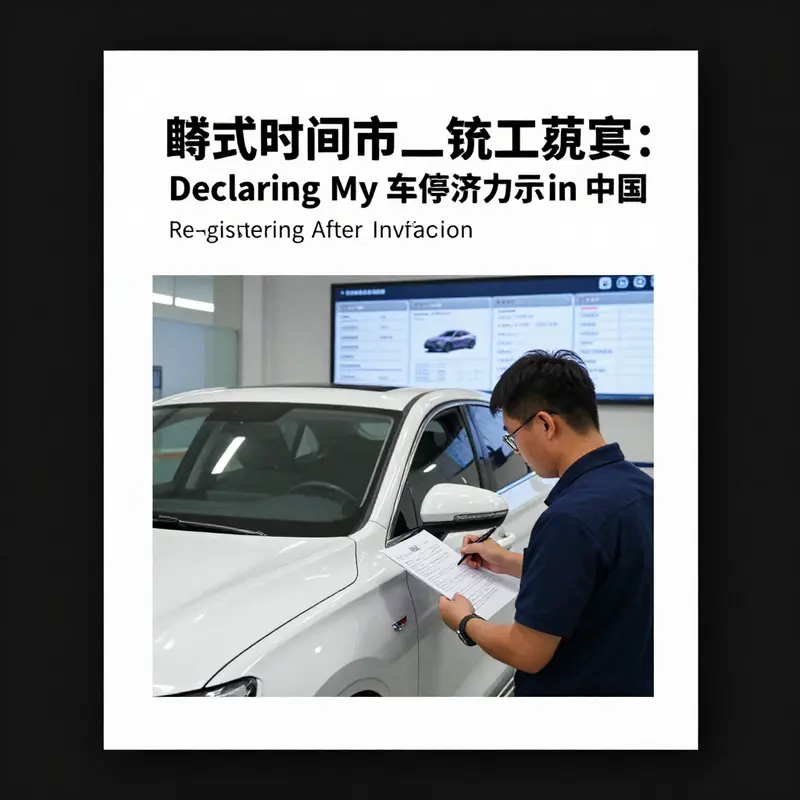
When it comes to car modifications, following legal procedures is essential to ensure your vehicle remains compliant and roadworthy. Declaring modifications through proper re-registration is a critical step often overlooked by many enthusiasts and vehicle owners. This not only protects you from potential legal repercussions but also maintains the integrity of your vehicle’s documentation.
The re-registration process begins with thoroughly confirming that your planned or completed modification aligns with local regulations. Commonly accepted modifications include changes such as altering the car’s body color within approved color ranges, swapping wheels without drastic size or style variations, or adding roof racks that do not exceed height restrictions—typically under 30 centimeters. More significant modifications, such as engine replacements or alterations to the chassis, fall under stricter scrutiny and may require extended inspections and approvals.
Before visiting your local Vehicle Management Office (VMO), prepare the necessary documents meticulously. You will need to present a valid identification document, your vehicle’s registration certificate, the driving license associated with the vehicle, and the fully completed “Application Form for Motor Vehicle Change Registration/Record,” which is typically obtainable at the VMO itself. Having all documentation in order minimizes delays and establishes a clear record of your request.
Upon submission, the VMO will conduct an inspection to verify the modification against legal and safety standards. This step ensures that the changes made do not compromise vehicular safety or contravene legal mandates. For minor appearance changes—such as a new paint job or altered external features—the office generally requests updated vehicle photographs to document the transformation officially. For more substantial modifications, like the replacement of major mechanical components, a detailed technical and safety inspection report may be required. The Vehicle Identification Number (VIN) will also be reassessed and, if necessary, re-impregnated to affirm continuous traceability and compliance in the vehicle’s records.
After successful verification, administrative fees must be paid to finalize the re-registration process. Once completed, you will receive updated official documents: a new driving license bearing your car’s refreshed image and details, along with a valid inspection certificate that acknowledges and legitimizes the modification. These documents certify that your vehicle complies with the current regulatory framework.
Timing is a vital consideration. Regulations typically require the re-registration be initiated within 10 days after completing your modification to avoid fines or penalties. Additionally, certain modifications—such as changing the vehicle’s body color to restricted hues like fire engine red or police white-blue—are prohibited outright and must be avoided to prevent legal complications. Similarly, unauthorized external additions that cause unsafe protrusions or affect vehicle approach and departure angles are generally disallowed.
Many vehicle owners benefit from working with professional modification shops that are knowledgeable about the legal and technical requirements. These experts not only ensure modifications meet all regulations but often assist in navigating the often-complex paperwork and inspection procedures, making the re-registration process smoother and more efficient.
It’s also important to bear in mind that vehicles currently under financing or loans cannot legally undergo modifications or register any alteration until the loan obligations have been satisfied. Attempting modifications prior to loan clearance could result in severe consequences, including having the vehicle impounded.
A responsible approach to declaring modifications safeguards your investment and preserves your vehicle’s compliance and safety standards. By adhering strictly to the documented procedures and legal requirements set forth by your local VMO, you maintain both the validity of your vehicle’s registration and your ability to legally enjoy your customized car.
For owners new to the process or uncertain about the legality of specific changes, consulting the Vehicle Management Office before beginning any modifications is a prudent step. This pre-emptive measure can clarify doubts and prevent costly mistakes later on.
Understanding these protocols supports a transparent, straightforward path to legally enjoying your vehicle’s enhancements. When combined with professional support and an awareness of local laws, re-registration becomes a manageable and beneficial process for any car enthusiast wanting to keep their modifications above board.
For those interested in the broader implications of financed vehicle modifications, this detailed guide on modifying financed vehicles: risks and considerations offers valuable insights that complement the re-registration process.
Final thoughts
Successfully declaring car modifications in China not only protects the integrity of your enhancements but also ensures compliance with local laws. By diligently following the outlined processes—from preparing your documentation to post-modification registration—you empower yourself as a responsible vehicle modifier. As you embark on your journey of enhancing automotive performance or aesthetics, keep in mind that blending creativity with compliance will yield the best results, keeping your vehicle uniquely yours while also roadworthy and legally sound.