
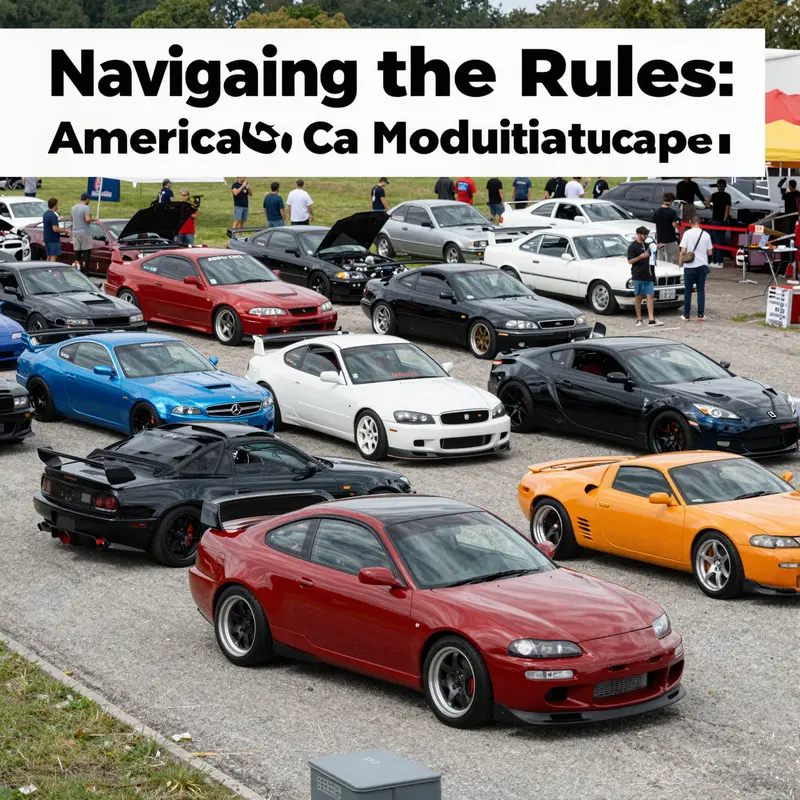
Car modification has long been an intrinsic part of automotive culture in the United States, embodying creativity, performance enhancement, and personal expression. Yet many enthusiasts may wonder—has America taken a stand against car modifications? The answer is nuanced. While there’s no outright ban on modding, a complex web of regulations ensures that modifications comply with safety and environmental standards. This article unfolds in three informative chapters: first, examining the regulatory framework that dictates what can and cannot be altered in vehicles; second, delving into the safety concerns tied to specific modifications; and finally, discussing the environmental regulations that impact modifications, ensuring car enthusiasts can craft their dream vehicles while treading lightly on the planet.
Between Freedom and Regulation: The Real Geography of Car Modifications in America
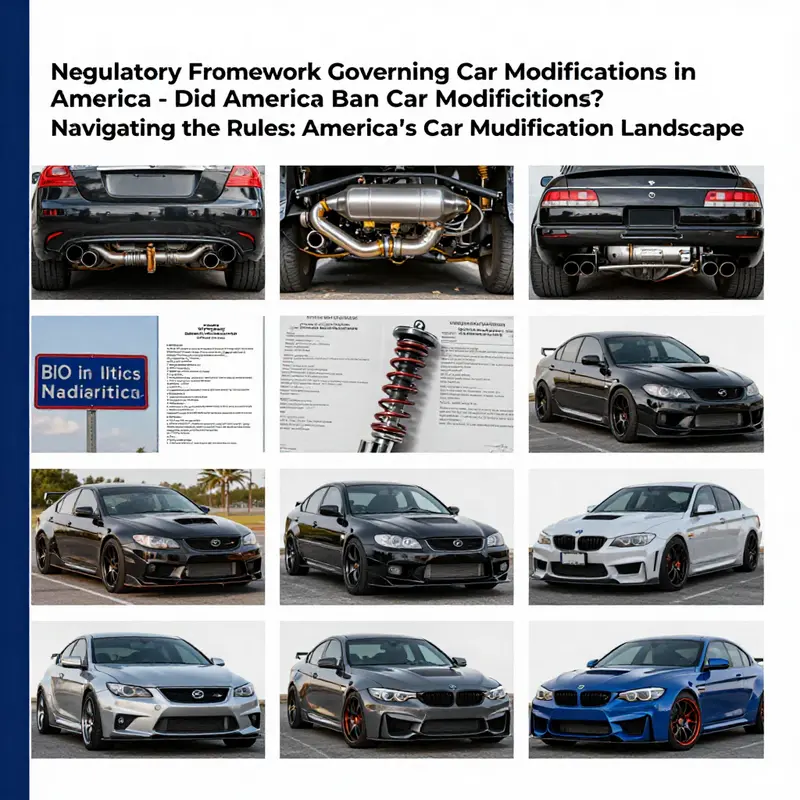
When people ask whether America has banned car modifications, they usually anticipate a simple yes or no. The reality is more intricate and considerably more useful to anyone who plans to customize a vehicle. The United States does not impose a single nationwide ban on aftermarket changes. Instead, it relies on a layered regime of federal safety standards, environmental rules, and state laws that together shape what is possible, what requires inspection or certification, and what remains legally questionable. In practice, enthusiasts often find that modifications are permitted as long as they do not undermine safety, do not push emissions beyond legal limits, and stay within the boundaries set by their own state. The frame for this complex landscape is built not on a single decree but on a constellation of regulations whose reach can appear uneven from one jurisdiction to the next yet remains coherent in its central aim: safeguarding people on the road, protecting air quality, and ensuring that vehicles marketed to the public meet minimum reliability expectations.
At the federal level, the primary mechanism is the Federal Motor Vehicle Safety Standards, or FMVSS. Administered by the National Highway Traffic Safety Administration, these standards set minimum performance criteria for new vehicles and certain aspects of vehicle design. The key thing to grasp is that FMVSS are mostly concerned with safety performance and crashworthiness as the vehicle leaves the factory. They are not a broad, post-sale mandate that prescribes every possible aftermarket tweak. This distinction matters because it means that, in many cases, a car can be legally modified after purchase without tripping a federal ban, so long as the modification does not create an unsafe condition or undermine the safety performance envisioned by the standards. The nuance is essential: if a modification is genuinely safe and does not affect the fundamental way the vehicle operates in a way FMVSS would view as unsafe, it generally does not collide with a blanket federal prohibition.
But the federal picture is not purely about safety. The Environmental Protection Agency sits on the other side of the policy spectrum with the Clean Air Act, focusing on emissions and the environmental footprint of motor vehicles. It is here that the most publicized and potentially severe restrictions arise for anyone who tampers with emission control systems. Removing, bypassing, or altering catalytic converters, EGR systems, or oxygen sensors is typically illegal and punishable. Emissions tampering is more than a theoretical risk; it carries penalties that can include fines, vehicle seizure, or denial of registration in some circumstances. This is where the line between a seemingly harmless aesthetic upgrade and a regulation-enforced alteration can become stark. Even modifications that seem innocuous—such as a different exhaust tip—may trigger scrutiny if their effects push emissions beyond what the law allows or if the modification interferes with the system that manages pollutants.
When you move from federal to state, the terrain becomes even more variegated. States enjoy latitude to tailor how modifications are treated, particularly when it comes to how vehicles are tested, inspected, and registered for road use. California, for instance, harnesses state authority to impose stricter emissions standards than the federal baseline, a policy not shared by every state. In practice, that means a modification that passes muster in one state could be problematic or even illegal in another. This is not just a theoretical quirk; it translates into different inspection regimes, different allowed ranges for suspension geometry, wheel offsets, or brake components, and sometimes different penalties for noncompliant devices. The U.S. system rewards regional experimentation in some areas while preserving a baseline of national safety considerations in others.
Within this mosaic, there are also categories of modifications that are commonly treated as permissible or at least navigable with careful attention. Non-structural cosmetic changes, up to a point, often fall into a gray area. Aesthetic upgrades—new paint, interior trims, nonfunctional lights, or audio systems—usually do not confront FMVSS unless they impinge on safety systems. Performance-oriented changes, such as upgrading brakes, adjusting suspension, or recalibrating engines, can be legally performed but with caveats. If the changes are performed in a way that retains safe control of the vehicle and does not defeat emissions controls, many jurisdictions allow them, particularly when the vehicle retains its road-legal status and can pass the local inspection criteria. Still, when these modifications affect core safety functions—steering, braking, steering geometry, or the vehicle’s ability to respond to steering inputs—they increasingly attract the attention of regulators and inspectors. The practical truth is that modification is possible, but it is bounded by a responsibility to maintain safe operation.
A useful way to think about this is to recognize the difference between a modification’s intent and its actual outcomes. A project that aims to reduce weight or improve handling can be admirable, but if it ends up compromising braking performance or introducing unpredictable steering behavior, it sits in a regulatory grey zone. The same logic applies to lighting: headlights, taillights, and signaling devices must meet visibility and reliability requirements. A headlight conversion that makes the beam pattern unsafe or too intense can lead to enforcement action. The law’s interest lies not in the cosmetic or performance narrative of a modification but in its measurable impact on how the vehicle behaves on the road. In this sense, the emphasis is on safety and environmental integrity rather than on a hobbyist’s appetite for customization.
For readers who want a consolidated federal perspective, the regulations are not a manual that dictates every tweak but a framework that governs outcomes. The post-sale modifications that pass scrutiny toward safety and emissions are generally permissible, while those that threaten these pillars—either through unsafe operation or through emissions tampering—face penalties. This is the crux of why the common refrain is not “no modifications allowed,” but rather “modify with vigilance.” The federal system acknowledges the value of customization while insisting that safety and environmental standards remain non-negotiable for any vehicle that remains in service on public roads.
To navigate this landscape, many car owners and modifiers turn to state resources, local ordinances, and, when in doubt, professional counsel. The variety of state policies means that the same modification can be treated differently depending on where the vehicle is registered and operated. Some states provide more leeway for classic-car enthusiasts or for off-road vehicles that are not street-legal in their original form, as long as those vehicles are properly documented and used within the intended context. Others require strict certification or compliance with modern standards for any vehicle that is registered and driven on public highways. The tension here is not about a national ban, but about the practical realities of keeping a modified vehicle within the law while preserving its character and the owner’s investment in it.
What does this mean in everyday terms for owners who want to modify their cars? It means that the planning stage is critical. It requires an honest assessment of intended use—daily commuting, weekend cruising, or off-road adventures—and a careful audit of how a modification will interact with emission controls, safety systems, and local inspection requirements. It means seeking reputable expertise and, ideally, documenting compliance steps. It means recognizing that some modifications might be reversible or adjustable if the initial configuration proves noncompliant. It also means understanding that the path to a legally modifiable car is not the same for everyone; the same project can be straightforward in one state and fraught with hurdles in another. The practical takeaway is clear: treat modifications as structural changes to a legal contract you have with the road, not as a mere DIY project that stays private.
Readers who want more than a general overview can look to the collective knowledge built around the topic in the broader discourse on car legislation. A helpful resource that distills this landscape is the overview available at car-modifications-legal-us, which presents common questions, scenarios, and regulatory touchpoints from a U.S. perspective. This reference is not a substitute for local advice, but it offers a grounded sense of how federal and state rules commonly apply to post-sale changes and why a modification that seems innocuous can sometimes trigger a compliance review. For a concise federal reference, many find it useful to consult official sources like the NHTSA’s guidance on vehicle modifications, which anchors the discussion in primary regulatory language and practical implications for owners and modifiers alike. The practical frame is this: curiosity about modifying a car is legitimate, but it must be pursued with an eye toward safety, emissions integrity, and the realities of state and local law.
In day-to-day practice, the path that many enthusiasts chart mirrors the pragmatic approach lawmakers advocate. Start with the vehicle’s current compliance status, then assess how a proposed change would influence critical performance domains—braking efficiency, steering response, crashworthiness, lighting visibility, and exhaust emissions. If the modification is likely to alter any of these domains in a way that could violate FMVSS or EPA standards, then it should be redesigned or rejected. If it can be implemented in a way that preserves safety and emissions integrity, then proceed with due diligence, including sourcing components that are tested to function within the vehicle’s system, maintaining thorough installation records, and ensuring that any required inspections, certifications, or registrations are completed before the vehicle returns to public roads.
This cautious, informed approach aligns with a broader philosophy that many jurisdictions apply: the road is a shared space, and modifications must respect common safety and environmental expectations. The market for aftermarket parts is large and diverse, and the sheer volume of available options can tempt shortcuts. Yet the consequences of shortcuts—in the form of failed inspections, penalties, or liability in the event of an accident—are rarely worth the short-term gains. The balance between personal expression and public responsibility is not a prison sentence on the dream of customization; it is a framework that allows enjoying the activity while keeping people safe and communities healthy. And in this balance, the myth of a blanket nationwide ban falls away, revealing instead a careful, pragmatic system that seeks to harmonize passion with accountability.
Those who want to explore the policy nuances further can consult the comprehensive landscape of resources linked through the broader discussion, including official guidance on vehicle modifications and related regulatory alerts. For a broader context and deeper reading on how these questions play out legally, see the overview in car-modifications-legal-us. This chapter has tried to map the terrain in a way that respects both the desire to personalize and the obligation to operate safely and lawfully. It emphasizes that modification is not a forbidden act but a regulated one, demanding due diligence, respect for regional variation, and continued attention to how changes affect a vehicle’s safety and its footprint in a world of shared roads.
External resource: https://www.nhtsa.gov/vehicle-modifications
Between Freedom and Compliance: Why America Has Not Banned Car Modifications
When people ask whether America has banned car modifications, the short answer is often misread as a universal prohibition. In practice, there is no nationwide ban on modifying vehicles. Instead, a dense lattice of federal and state rules governs what you can change, how you do it, and whether the changes can be used on public roads. The result is a legal ecosystem where enthusiasts enjoy broad latitude to customize, while safety, environmental, and consumer protections keep certain modifications out of reach or require verification, certification, or even reconfiguration. This is not a paradox but a balance—an ongoing tension between the desire for personal expression and the public interest in safe, clean, and predictable roadways. The landscape is as much cultural as it is regulatory, shaped by decades of automotive passion, technical advances, and evolving standards that keep pace with new technologies and new societal goals. The question, therefore, becomes less about a single ban and more about what counts as a safe, legal, and responsible modification in a country whose roads carry millions of customized machines every year.
At the federal level, the backbone of safety and compliance is the National Highway Traffic Safety Administration, or NHTSA. Its authority rests on the Federal Motor Vehicle Safety Standards, FMVSS, which set mandatory performance criteria for a wide range of features—from braking and steering to lighting, crashworthiness, and occupant protection. FMVSS are not designed to police every aftermarket choice; rather, they define the baseline safety thresholds that a vehicle must meet when it leaves the factory and throughout its life on public roads. When an individual or shop modifies a vehicle in ways that could undermine those safety features, the modification runs the risk of running afoul of FMVSS or related enforcement actions. For example, changes that impair braking performance, alter steering geometry, or degrade structural integrity can trigger safety concerns that federal inspectors or recalls may address. In addition, environmental safeguards are layered into the regulatory mix because emissions controls are a public-interest matter as well. The Clean Air Act and related state programs shape what is permissible in terms of exhaust systems and emissions control devices. These federal and environmental foundations mean that modifications exist in a space that is both permissive and carefully policed, depending on the nature of the change and its effect on safety and air quality.
The most visible examples of compliance challenges often involve modifications to emissions systems and exhausts. Installing an aftermarket exhaust that raises noise levels beyond local ordinances or reduces the effectiveness of emission control devices can trigger regulatory action. Here, the boundaries are not just about sound; they are about the broader environmental impact and the possibility of violating emission standards that apply even if the vehicle remains street-legal in other respects. When the exhaust system is altered in a way that increases pollution or shifts the vehicle outside federally approved performance envelopes, it can fall afoul of both federal and state rules. This is where the regulatory landscape becomes a nuanced negotiation rather than a simple yes-or-no verdict. Enthusiasts who pursue performance gains often argue that their modifications are safe or beneficial, but safety is not merely about raw power; it is also about predictable behavior under varied road conditions, reliability, and compliance with the broader physics of vehicle dynamics. The federal framework insists that any modification should not compromise these dimensions, and it obliges individuals to prove that their changes do not undermine safety or environmental protections.
State and local laws add another layer of complexity. While the federal standards establish a national baseline, state governments can and do tailor their own rules to reflect regional priorities and conditions. California’s regime is often cited as the most stringent, with the Air Resources Board (CARB) maintaining rigorous certification requirements for aftermarket parts and strict oversight of what can be sold or installed within the state. Even when a modification would meet FMVSS at the federal level, it may still face hurdles at the state level if it cannot satisfy CARB’s criteria for emissions or if it fails to receive the necessary certifications for use on public roads in California. Other states strike a different balance, enforcing their own inspection and emissions-testing regimes, which can create a patchwork of compliance realities across the country. For a hobbyist who travels between states, or who modifies a car with an eye toward regional events, this patchwork matters: a part that is acceptable in one jurisdiction might be restricted or require additional testing elsewhere. The net effect is not a uniform ban, but a map of compliance challenges that demands careful planning and ongoing diligence.
Culturally, car modification remains a deeply embedded practice in many American communities. Hot rod culture, drag racing, and car shows have long celebrated the artistry and ingenuity of customization. Yet this cultural vitality sits beside a regulatory apparatus that is inherently risk-sensitive. The tension is productive in many ways: it pushes engineers and designers to pursue safer, cleaner, more reliable performance while giving regulators a clearer mandate to protect the public. The result is a vibrant ecosystem where modifications are common and celebrated, so long as they adhere to safety standards and environmental laws. The SEMA Show and local car clubs illustrate how robust and dynamic this ecosystem can be, even as participants navigate compliance requirements. The core message remains consistent: modifications are not banned outright; they are subject to the same logic that governs any product that moves on public roads—safety and environmental responsibility first.
Beyond safety and the environment, practical considerations also shape the modification landscape. Insurance, for example, intersects closely with regulation. Modifications can influence risk profiles, which in turn affects pricing, coverage, and the conditions under which a policy remains valid. For many readers, access to affordable insurance is a central concern, and the question of how modifications affect premiums or coverage is as important as whether a particular change is technically legal. This is why education about modifications and insurance is essential for responsible car culture. For readers seeking a grounded review, the story of modifications and insurance is a reminder that legality and affordability are often linked through risk assessment that insurers perform. In practice, this means that any modification plan should be discussed with an insurer or a knowledgeable broker to understand how a given change could influence rates, terms, and even the ability to secure a policy after modifications are completed. See more on this topic through the discussion of car modifications and insurance.
The practical path for enthusiasts is not to avoid modification but to approach it with a methodical mindset. The first step is education: understand FMVSS minimums, the environmental expectations in your state, and any local ordinances related to noise, lighting, or vehicle height and clearance. The second step is research: identify parts and processes that carry CARB or other state certifications, and determine whether a given modification requires certification, testing, or a professional installation. The third step is documentation: retain receipts, installation logs, and any official certifications or approvals. This record-keeping can be invaluable if questions arise about safety or compliance, especially during inspections or potential resale. The fourth step is professional engagement: engage qualified technicians who understand both performance goals and regulatory boundaries. A careful, experienced installer can help preserve safety margins while achieving the desired aesthetic or performance outcome. And the fifth step is ongoing monitoring: regulatory landscapes evolve, new safety findings emerge, and emissions standards tighten in response to environmental goals. Staying informed helps ensure that a beloved build remains both legal and roadworthy over time.
From a practical standpoint, this is where most people encounter the friction of regulation. A change that seems simple in theory—changing a muffler or swapping suspension components—may have indirect safety consequences that regulators evaluate. For example, altering suspension geometry can change ride height, bump steer, or steering feel, all of which influence handling and crash safety. Modifications to lights may affect visibility and other drivers’ perception, while changes to electronic systems could interfere with airbags, stability control, or other safety features. The federal standard-setting process and state enforcement practices are designed to catch these issues before they become safety problems, which means that modifications are not free to roam the spectrum of possibility; they must stay within the boundaries of what is deemed safe, controllable, and environmentally responsible. This balance is the essence of America’s approach: freedom to customize, paired with accountability to the public good.
In the end, the central question is less about a blanket prohibition and more about where a given modification sits on the spectrum of safety and compliance. When enthusiasts describe their projects, they often emphasize design intent, performance gains, and the artistry of customization. Regulators emphasize predictability, public safety, and environmental stewardship. The bridge between these perspectives is built from clear standards, transparent processes, and a practical acknowledgment that modifications, when properly executed, can coexist with the goal of safe, clean, and reliable transportation. A robust culture of safety-conscious innovation persists precisely because the system recognizes the value of customization while upholding the obligations that accompany use on public roads. This is not a contradiction but a necessary common ground that supports both individual expression and collective welfare.
For readers who want a concise reminder of how to navigate this terrain, a sensible approach centers on legitimacy and documentation. Favor parts with recognized certifications where required, particularly in regions with stringent environmental rules. Work with installers who understand the safety and regulatory implications of modifications and who maintain meticulous records that can be presented if questions arise. Maintain your vehicle in a state that preserves the integrity of braking systems, steering, lights, and crash protection. And above all, stay tuned to official guidance from regulatory bodies, as standards and enforcement practices do evolve over time. The path to a legally compliant, fully customized vehicle does not lie in evasion but in deliberate alignment with safety and environmental expectations while pursuing the creative spirit that has driven American automotive culture for generations. As this narrative shows, the absence of a blanket ban does not mean a free-for-all; it means a structured, dynamic, and ultimately pragmatic framework that respects both liberty and responsibility.
If you are curious about how these considerations intersect with insurance and risk management, you can explore further through resources that discuss how modifications impact coverage and premiums. In addition to broad regulatory guidance, there are practical articles that help readers understand how modifications affect insurance, resales, and long-term ownership costs. car modifications and insurance can provide context for how to align your build with insurance expectations as you plan your next step. And for a broader view of the legal landscape and official standards, consult the National Highway Traffic Safety Administration’s resources. External guidance and data from NHTSA offer a formal anchor for the discussion of safety standards and compliance in modified vehicles. https://www.nhtsa.gov
The resulting picture is one of continued vitality and responsible governance. America does not ban car modifications outright; it requires that the modifications honor safety and environmental commitments, align with state rules, and remain compatible with the way roads are designed to be used. Enthusiasts who navigate this framework successfully contribute to a culture of responsible innovation, where performance, aesthetics, and personal expression coexist with the safety and reliability that keep everyone on the road secure. The question of a ban fades in importance next to the ongoing task of balancing freedom with safety, novelty with predictability, and individuality with the common good. In that sense, America’s approach to car modifications is less about prohibitions and more about a continuous, shared effort to refine the interface between human creativity and the machine that carries it forward on public highways.
Rethinking Road Rules: How Environmental Policy Shapes Car Modifications in America
Questions about a nationwide ban on car modifications often miss the real driver of what is permissible on American roads: a layered system of safety and environmental rules that aims to balance freedom with public health. The United States does not ban car customization in a singular, sweeping decree. Instead, federal agencies set baseline standards that ensure vehicles remain safe and controllable, while state governments layer on environmental protections that curb pollution. The result is a legal landscape that varies from place to place, yet shares a common thread: modifications must not erode safety or violate emissions laws. To understand why the question persists, it helps to trace how federal safety rules and environmental regulations interact with the most common tweaks people make to their cars—changes to exhausts, suspensions, lighting, and even cosmetic alterations. The answer, then, is not a definitive prohibition but a careful calibration of what can be changed, under what conditions, and where those conditions differ by state and, in some cases, by city or county zoning. The story begins with the idea that road safety is nonnegotiable and that environmental health is a shared public interest, a framework that shapes everyday decisions about modifications in quiet but consequential ways.
At the federal level, the National Highway Traffic Safety Administration (NHTSA) administers federal motor vehicle safety standards (FMVSS). These standards are designed to prevent injuries by making sure that major vehicle systems—such as braking, steering, lighting, and the structural integrity of the passenger compartment—remain intact after modifications. When a modification would undermine a vehicle’s ability to stop promptly in an emergency, steer reliably, or protect occupants in a crash, it can run afoul of FMVSS. This is not about stifling creativity; it is about preserving a universal baseline of safety on public roads. The practical implication for enthusiasts is clear: if a modification introduces a safety hazard, it cannot be tolerated on a road-going vehicle. In practice, this has meant that many common modifications—rims, paint, interior swaps, or aftermarket lighting—can be pursued without federal overreach, so long as they do not compromise the essential safety envelope of the vehicle. The boundary line is typically drawn where the modification would impair a vehicle’s ability to perform its basic, legally required functions. To keep this boundary clear, many states require certain modifications to be performed by qualified professionals or to be tested and certified before the vehicle can return to the street. This precaution is not a quirk of regulation; it is a recognition that safety is not optional when cars share space with heavy traffic, pedestrians, and emergency responders.
Beyond safety, environmental regulation adds another, equally influential layer. The Environmental Protection Agency (EPA) enforces the Clean Air Act, and it uses emission standards to limit how much pollution a vehicle can emit. Modifications that increase tailpipe pollutants beyond legal limits are typically prohibited because they defeat the purpose of national air quality protections. A typical example is a high-performance exhaust system that bypasses or disables catalytic converters, a critical component for reducing hazardous emissions. While a cat-back or otherwise cosmetic exhaust alteration might be legal in some contexts, modifying a vehicle in a way that bypasses emissions controls crosses a line—the line is drawn not by taste or performance but by environmental impact. The EPA’s role is to ensure that the cars that roll off the assembly line continue to meet pollution standards after they are modified. What this means in everyday terms is that the legality of certain exhaust tweaks, air intake changes, or engine mapping can vary depending on how they affect a vehicle’s emissions profile. In many cases, a modification that seems purely performance-oriented can become a compliance issue if it leads to higher smog-forming emissions or undermines the efficiency of aftertreatment systems. The federal government thus maintains a general position: you may upgrade performance, but not at the expense of cleaner air that protects the health of millions of people.
California, with its California Air Resources Board (CARB), represents the more stringent end of the spectrum. CARB operates under the same Clean Air Act framework but imposes certifications and standards that go beyond federal requirements. Vehicles modified in ways that do not meet CARB certification cannot be legally registered or driven in the state. This creates a practical constraint for owners who might travel between states or who reside in California and wish to undertake certain modifications. CARB’s approach reflects a broader truth: environmental policy is not uniform across the country, and state-level standards can significantly shape what is permissible within a given jurisdiction. For residents of California and others in states that embrace CARB-like rules, the bar for legitimacy is not just about legality in general but about formal certification of modifications. In those settings, a modification that is legal elsewhere might be noncompliant in California unless it has CARB approval or remains within the scope of approved equipment. The result is a patchwork system where a modification’s legality hinges on the vehicle’s location as much as on the device itself. The narrative of bans thus shifts from a single national ban to a more nuanced map of allowances and prohibitions, with environmental policy acting as the major compass.
This regulatory mosaic has practical consequences for owners who want to tailor their cars for aesthetics, performance, or both. There is a rich spectrum of permitted activities that enthusiasts pursue with relative ease: tasteful cosmetic changes, updated lighting that meets visibility requirements, suspension enhancements that do not threaten ride stability, and various upgrades to noncritical components that do not alter the vehicle’s fundamental safety profile. The critical caveat is that any modification must preserve the vehicle’s ability to operate safely on public roads. When modifications threaten stability, braking performance, or structural integrity, they wander into a gray zone that is typically not allowed without passing the appropriate safety or environmental checks. In other words, the road to customization runs through the gatekeepers of safety and emissions rather than around them. Even with broad tolerance for creativity, the state and federal system keeps a careful watch over whether a change would raise the risk of harm to the operator, passengers, or other road users. This is not a rhetorical defense of regulation; it is an explanation of how safety and environmental stewardship converge to shape everyday decisions about car modifications.
As the conversation shifts from “can I modify my car?” to “how can I modify it legally and responsibly?” another layer emerges: how modifications influence regulatory compliance across different life circumstances. For many drivers, modifications occur not in isolation but within the context of financing, leasing, or ownership costs. Those practical realities intersect with law in meaningful ways. Financing and leasing arrangements often come with terms that restrict or regulate modifications, both to protect the value of the asset and to ensure the vehicle remains insurable. Insurance is another critical axis. Modifications can influence risk profiles and premiums, and insurers frequently require notice of changes to evaluate coverage and adjust terms. This is not to say that modification is universally discouraged by insurers; rather, the relationship is dynamic. Some modifications may reduce perceived risk or be neutral in cost, while others could increase exposure in ways that insurers deem unfavorable. The result is a practical ecosystem where drivers must understand not only whether a modification is technically legal but also whether it will be financially viable within the broader framework of financing, registration, insurance, and resale.
In this sense, the broader question of a nationwide ban becomes less about prohibiting customization and more about enforcing a shared commitment to safety and environmental health. The federal baseline ensures that critical safety features cannot be ignored in pursuit of speed or novelty. The environmental layer ensures that the pursuit of performance does not come at the expense of clean air and public health. State-level variations, such as CARB’s stricter verification processes, remind us that the United States is a federation of policies, each designed to address the unique environmental and political landscape of its jurisdiction. This arrangement produces a practical reality in which a modification that is perfectly permissible in one state could be problematic or illegal in another. The consequence is a culture of informed modification—one that encourages enthusiasts to seek certifications, to verify compatibility with local regulations, and to engage with authorities when in doubt. It is a culture built not on fear of a ban, but on respect for the living, evolving framework that governs how cars are designed, altered, and used on public streets.
From the perspective of daily life, this framework often translates into predictable patterns. A driver who wants more aggressive braking behavior might opt for components that improve stopping power without degrading control, and will seek the necessary inspections or certifications to prove that the change remains within FMVSS-compliant safety margins. A hobbyist who craves a bolder exhaust note will learn the limits of emissions compliance and, if in a CARB state, will pursue equipment that has CARB approval or works within permissible emissions envelopes. Aesthetic upgrades, such as wheels, body panels, or interior trim, typically proceed with minimal regulatory friction as long as they do not compromise safety or violate environmental rules. The overall effect is a system that rewards innovation within boundaries, preserving road safety and air quality while still allowing a robust culture of customization to flourish. The question of whether America bans car modifications, therefore, dissolves into a more nuanced inquiry: what modifications remain permissible under a safety- and environment-centered regime, and how do drivers navigate the jurisdictional variances that inevitably accompany such a regime?
For readers seeking a concise frame to anchor their own decisions, a practical approach is to view modifications through three lenses: safety, emissions, and legality in the local context. The safety lens asks whether the modification preserves or improves the vehicle’s ability to protect occupants and others in the event of a crash or sudden maneuver. The emissions lens asks whether the modification affects the vehicle’s compliance with air quality standards and whether it is certified or approved for use in the jurisdiction. The local context lens asks whether the modification is permitted by state regulations, whether it requires CARB or other state-level approvals, and whether registration or annual inspections will recognize the change. Taken together, these lenses show that modification is not a binary choice of allowed or banned, but a calculated decision about risk, responsibility, and consequence. This approach honors both personal preference and the civic commitment embedded in safety and environmental policy, ensuring that enthusiasts can pursue their passions without compromising public well-being.
In shaping this understanding, it is also worth acknowledging how the public conversation around modifications has evolved with technological progress. As engines become more sophisticated and aftertreatment systems more complex, the regulatory screen has become more precise about what counts as a compliant alteration. Digital tuning, for instance, sits at a tricky intersection: it can unlock meaningful performance gains while also potentially interfering with emissions controls if misapplied. The fact that such tuning can require careful calibration, verified by manufacturers or regulatory authorities, reinforces the broader principle that modification is permissible when it preserves the vehicle’s integrity and environmental performance. The takeaway is not techno-pessimism but a practical optimism: innovation can continue within well-defined boundaries, and those boundaries are designed to protect people and the environment as technology and culture evolve together.
Finally, readers may wonder how truly global standards align with this domestic mosaic. The United States does not stand alone in recognizing the tension between customization and public interest. Other countries grapple with similar questions, and their experiences often illuminate American choices. Yet the United States’ combination of federal safety standards and state-level environmental controls creates a distinctive balance that prioritizes safety as a universal baseline while allowing diverse approaches to environmental protection. The result is a dynamic, sometimes uneven, but ultimately functional system that permits personalization without surrendering public welfare. For those who want to explore the practical implications further, there is a wealth of guidance and casework available. When in doubt, consulting resources on what counts as a legal modification can prevent costly missteps and help align personal goals with responsible ownership. The idea is not to police individuality but to steward a shared road environment where performance, style, and sustainability can coexist. As the conversation continues in subsequent chapters, the focus stays on how policy, technology, and personal choice intersect in a country that values both freedom and accountability.
For readers seeking a concise orientation to the principles discussed above, a good starting point is the broader discussion of legal car modifications and how to navigate the regulatory landscape responsibly. See the overview on Legal Car Modifications for a practical guide that complements the regulatory frame described here. This resource emphasizes responsible customization, safety-minded choices, and the importance of certification and compliance when pursuing upgrades. In sum, America’s approach to car modifications is not a blanket ban but a carefully calibrated system that protects safety and air quality while still inviting personal expression and mechanical ingenuity. The path forward invites curiosity, diligence, and respect for the complex rules that keep roads safer and cleaner for everyone. To deepen understanding of federal emissions guidance, observers can consult the EPA’s official vehicle emissions resource for authoritative detail on how emissions controls are evaluated and enforced across the fleet. The EPA’s Vehicle Emissions page provides foundational context for how environmental standards influence modification decisions and offer a clear reference point for anyone navigating this landscape.
External resource: EPA Vehicle Emissions. https://www.epa.gov/vehicles
Final thoughts
Car modifications represent a passionate community of enthusiasts who strive to enhance their vehicles, personalize their journeys, and leave a mark on the automotive landscape. Though America has not outright banned car modifications, a robust structure of regulations ensures that these changes do not compromise safety or environmental integrity. By understanding the laws governing modifications, enthusiasts can continue to innovate while adhering to necessary standards, ensuring that their creativity does not come at the cost of safety standards or ecological health.