
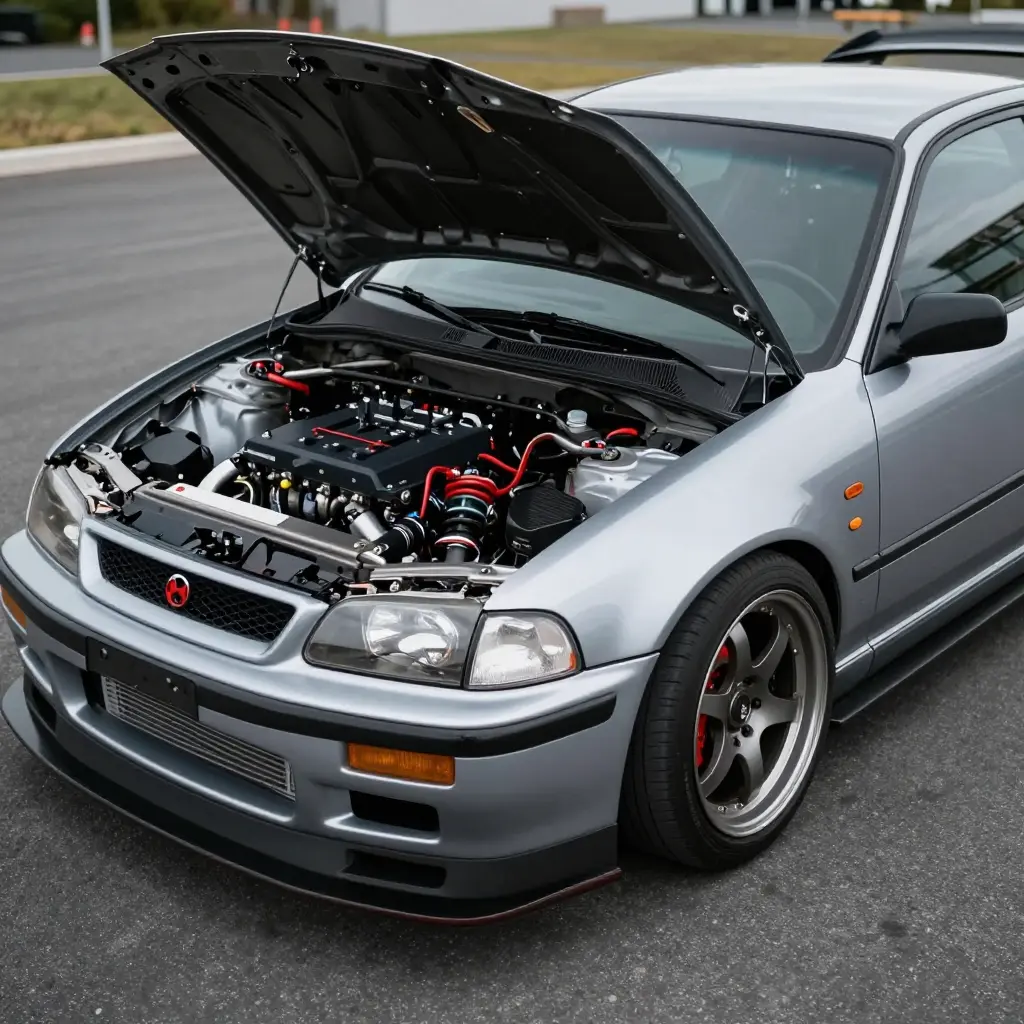
Personalizing a new car is one of the great pleasures of ownership. Whether you want more horsepower, sharper handling, or a look that turns heads, modifying a fresh vehicle is tempting. What holds many owners back is a single fear: that any change will void car warranty protection they paid for. The fear is understandable. It is also mostly wrong.
No single modification cancels your entire warranty. Automakers and dealerships work under specific legal rules, and the outcome depends on which part fails and why. An ECU tune does not erase coverage for a failed power window, and a suspension swap does not automatically void protection for your infotainment system. How modifications affect related areas like your insurance coverage is worth understanding too, since it shapes the full risk picture.
This guide covers the legal principle that decides these cases, then looks at ECU tuning and suspension swaps in detail, and finishes with a reference table and FAQ you can check before your next upgrade.
How New Car Warranties Actually Work
A new car warranty is a written promise from the automaker: if a covered part fails because of a defect in materials or workmanship inside a set time or mileage window, the manufacturer pays to repair or replace it. Coverage is limited by both time and mileage, and it is split into tiers that matter before you touch a single bolt.
The Two Tiers: Bumper-to-Bumper vs. Powertrain
Bumper-to-bumper coverage (often called the “basic” or “comprehensive” warranty) is the broad one. It typically runs for 3 years or 36,000 miles and covers most components except wear items like brake pads, tires, and wipers. Powertrain coverage lasts much longer, commonly 5 to 10 years or 60,000 to 100,000 miles, but it protects only the engine, transmission, and drive axles. The gap between them explains why a suspension swap can sit outside powertrain protection while still falling inside the bumper-to-bumper window.
What Happens When You Modify Your Car
A dealer cannot void car warranty coverage just because it spots aftermarket modifications under your hood. To deny a claim, the manufacturer has to show that a specific aftermarket part caused a specific failure. If your lowered suspension leads to a blown shock, that claim can be denied. The same lowering springs cannot be blamed for a failed infotainment screen or a leaking water pump.
The Law on Your Side: The Magnuson-Moss Warranty Act
The Magnuson-Moss Warranty Act, passed by Congress in 1975, is the federal statute behind that logic. It bars automakers from conditioning a warranty on your use of branded parts or authorized service unless they supply those parts or services for free. The practical effect is that the manufacturer, not you, has to justify a denial. If you are unsure whether a planned build crosses a legal line, it helps to know which modifications are actually illegal before you start wrenching.
How ECU Tunes Interact With Your Warranty
An ECU tune changes the software that runs the engine. By remapping fuel delivery, turbo boost, and ignition timing, a tuner can raise power and torque without touching a bolt. Because the engine control unit governs how the engine and transmission behave, those changes reach through the whole drivetrain.
Modern ECUs log more than fault codes. Flash counters record every rewrite of the software, and data logs capture boost spikes, unusual fueling, and torque values outside factory parameters. When a technician plugs in a diagnostic tool, the tune is often visible even if everything under the hood still looks stock.
That is why a tune is one of the modifications most likely to lead to a denied powertrain claim. The powertrain warranty covers the engine, transmission, and related components, and a tune alters the parameters those parts were engineered around. Extra boost or aggressive timing raises cylinder pressure and heat, which wears pistons, turbochargers, and clutches faster. Turbocharged and diesel engines are especially exposed, since raising boost or fuel on those platforms puts heavy stress on turbos, injectors, and emissions systems.
The risk turns concrete after a failure. If a turbo lets go on a tuned car, the dealer can point to the flash counter and argue the tune pushed the component past its design limits. In most markets the dealer cannot void coverage for the whole vehicle; the manufacturer has to connect the modification to the failure. Coverage is usually denied only for the affected components – the engine or transmission – while unrelated parts keep their protection. Tuned cars also carry different resale expectations, which is worth weighing alongside the modifications and resale value trade-offs before you flash the ECU.
Before spending money on upgrades, it is worth knowing which changes commonly void car warranty protection and which are usually safe.
| Modification | Typical Warranty Impact | Why |
|---|---|---|
| ECU tune / remap | May void powertrain coverage | Rewriting fuel, boost, and timing maps pushes the engine past its engineered limits, which gives a dealer grounds to deny engine or transmission claims. |
| Piggyback tuner | May void powertrain coverage (often even if removed) | It intercepts sensor signals to add power; stored data logs or evidence of tampering can still trigger a denial after it is unplugged. |
| Cat-back exhaust | Generally does not void coverage | It replaces piping after the catalytic converter and leaves emissions gear untouched, so only directly related failures tend to be questioned. |
| Cold air intake | Generally does not void coverage | A simple bolt-on that rarely causes damage; a dealer has to show the intake caused a failure before denying a claim. |
| Coilover suspension swap | May void suspension and steering coverage | Replacing factory struts and springs means related alignment, bushing, and steering claims can reasonably be refused. |
| Lowering springs | May void suspension coverage | Lower ride height and changed geometry add stress to shocks, CV joints, and other parts the manufacturer may no longer cover. |
| Wheel and tire upgrade | Generally does not void coverage (unless out of spec) | Aftermarket wheels are fine when size and offset match factory specs; wrong fitment can strain bearings and suspension. |
| Cosmetic / interior mods | Generally does not void coverage | Wraps, tint, trim, and lighting rarely touch mechanical systems, though electrical or safety-related changes can still raise questions. |
The pattern is consistent: a dealer has to prove your aftermarket part caused a specific failure before denying that claim, and full coverage is rarely cancelled outright. Keep every receipt and document each change, and understand how modifications affect car insurance alongside your factory warranty.
How a Suspension Swap Affects Warranty Coverage
A suspension swap changes ride height, geometry, and load paths under the car, and warranty coverage follows the consequences of those changes rather than the parts themselves. Under the Magnuson-Moss Warranty Act in the United States and similar consumer protections elsewhere, a dealer cannot reject a claim simply because a modification exists. It has to show the modification caused the specific failure. That distinction separates an approved repair from a denied one.
The two common approaches differ in footprint. Lowering springs keep the factory dampers and change only ride height and spring rate. A coilover setup replaces springs and dampers together and adds adjustable height and damping, letting you fine-tune how the car sits and responds. An air-suspension swap goes further, replacing springs entirely with air bags, compressors, and sensors, which introduces components and electronic controls the factory never intended.
None of these changes void coverage for the whole vehicle. What they can do is void it for the systems they touch. After a coilover kit goes on, a dealer may decline a warranty repair on a leaking damper, a worn control arm, a torn bushing, or a noisy wheel bearing if the lowered geometry plausibly increased stress on those parts. The rest of the car, from the engine to the infotainment system, usually keeps its coverage.
An aggressive drop deserves particular attention because it shifts suspension angles in ways that accelerate wear. Camber and toe change, ball joints and tie rods work through a wider range of motion, and bushings carry loads they were not designed for. A dealer inspecting a failed wheel bearing on a car sitting two inches lower will often draw a straight line between the two. The attribution is not always fair, but it is the argument you would have to counter.
Keep the drop moderate, hold on to your factory parts, and have the work done by a shop that documents everything. If you are handling the job yourself, following a careful approach to installing car modifications gives you a paper trail showing the work was done correctly, which is what you want if a warranty question ever comes up.
Modifications That Generally Do NOT Void Your Warranty
Most cosmetic and non-performance upgrades are safe. Interior changes – upgraded seats, custom floor mats, a new steering wheel, a modern infotainment head unit – almost never touch the systems a warranty is designed to protect. The same goes for LED bulbs and upgraded fog lights, vinyl wraps, window tint, and audio system upgrades. None of these affect the powertrain, drivetrain, or emissions hardware that manufacturers care about most.
Wheels cause more worry than they deserve. Wheels and tires that stay within the factory-specified size, offset, and load rating generally keep your warranty coverage intact. The critical phrase is “within spec.” Once a wheel change pushes load beyond the manufacturer’s design limits and a wheel bearing or suspension component fails, that is exactly when a claim can be denied. Staying inside the numbers keeps you on solid ground.
If you add a cat-back exhaust and later your power window motor dies, those two facts are unrelated, and the window repair should still be covered. Under the Magnuson-Moss Warranty Act, a dealer or manufacturer cannot deny a claim simply because aftermarket modifications exist; it has to show the modification directly caused the specific failure.
People say a part will “void car warranty,” which is misleading. A warranty is rarely cancelled in full. A single claim gets denied when a specific modification is linked to a specific failure, and the rest of your coverage stays in place. Most owners miss that distinction between voiding a warranty and denying a claim.
Keep modifications within manufacturer specifications, document what you install, and remember that a denial requires a proven connection. Understanding installing aftermarket modifications correctly helps you enjoy your build without losing the protection you paid for.
Reported Warranty Claim Denials by Modification Type
Modifications do not carry equal risk. The chart below ranks common ones by the share of claims reportedly denied, which shows where dealers and manufacturers tend to push back hardest.
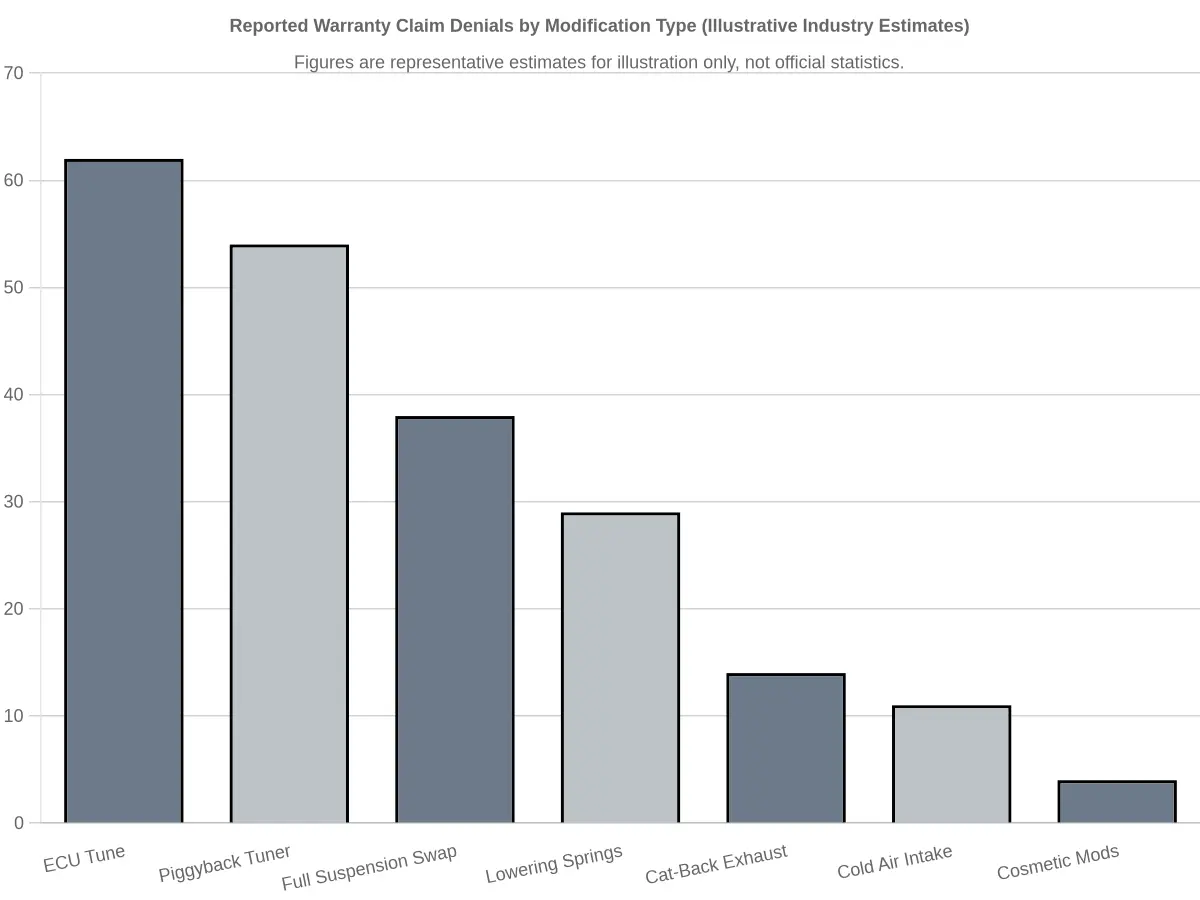
Figures are representative industry estimates for illustration only and should not be read as official statistics. Actual denial rates vary widely by manufacturer, dealer, and the specific failure involved.
What the Rankings Tell You
- ECU tune (62%) – A full flash rewrites factory fuel and boost maps, so when a powertrain failure follows, it is the single easiest modification for a dealer to blame.
- Piggyback tuner (54%) – A plug-in module leaves less of a footprint than a flash, but it still intercepts sensor signals and often draws the same scrutiny.
- Full suspension swap (38%) – Swapping arms, coilovers, and bushings touches geometry and load paths, which can shift blame onto aftermarket parts for related failures.
- Lowering springs (29%) – A milder change, but reduced ground clearance and altered camber can still complicate claims tied to shocks or drivetrain angles.
- Cat-back exhaust (14%) – Piping downstream of the catalytic converter rarely touches emissions-critical components, so denial risk stays low.
- Cold air intake (11%) – Easy to reverse, though some dealers will still argue over airflow and mass-airflow sensor issues.
- Cosmetic mods (4%) – Wraps, tint, and trim changes have almost nothing to do with mechanical failures.
Read This With the Warranty Sections
The closer a modification gets to engine management and suspension geometry, the more exposed you are. If you are weighing whether a change is worth the risk, learn more about the risks of modifying financed vehicles before you commit to a build that could affect your coverage.
How to Protect Your Warranty When Modifying
Careless aftermarket modifications can cost you warranty protection. These steps let you personalize your ride while keeping your coverage intact.
- Read your specific warranty terms. Every policy spells out which parts and repairs it covers, and the exclusions usually name the modifications that matter most.
- Keep your stock parts. Store the original ECU, springs, exhaust, and intake so you can reinstall them if a dealer inspection demands a factory setup.
- Document every change. Photograph parts, save receipts, and log install dates to prove exactly what was modified and when.
- Hire certified installers. A licensed shop’s invoice and torque specs carry far more weight than a backyard job during a warranty dispute.
- Declare modifications to your dealer and insurer. Tell both parties in writing about performance or safety parts, and declare modifications to your car insurance so a future claim is not denied.
- Pick reversible modifications. Bolt-on parts you can swap back easily are far safer than permanent fabrication or welded components.
- Avoid overt ECM tampering on a leased or financed car. A flashed tune leaves a digital fingerprint, and the lender or lessor can treat it as grounds to void the agreement.
- Retain all service records. A complete maintenance history proves that neglect, not your upgrades, caused any failure down the road.
FAQ: ECU Tunes, Suspension Swaps, and Warranty Coverage
Does an ECU tune void my whole warranty or just the engine?
Usually not the whole warranty. Under the Magnuson-Moss Warranty Act, a dealer has to prove the tune directly caused the failure before denying a claim. Engine and drivetrain parts are most at risk; unrelated components keep their standard coverage.
Can a dealer detect a tune after I remove it?
Often, yes. Modern ECUs log flash counters, ignition cycles, and peak boost values even after you reflash the stock file. Technicians can read those stored parameters during routine diagnostics, so a removed tune can still leave detectable traces that raise questions about a powertrain claim.
Does a suspension swap void my warranty?
Not the whole car warranty. Coverage continues for unrelated systems, though the aftermarket suspension and the parts it stresses – bushings, ball joints, control arms – may be excluded. The dealer still has to connect the failure to your modification before denying that specific claim.
Do lowering springs affect warranty coverage?
They can affect coverage on related components. If the altered ride height causes premature wear to shocks, axles, or steering parts, a dealer may deny those repairs. The rest of the vehicle keeps its coverage, and springs alone do not void protection across the entire car.
Can I modify a leased or financed car without losing coverage?
It depends on your contract. Leases and finance agreements often restrict modifications, and lenders or lessors may require written approval. Reversible changes are usually safer than permanent ones, but any alteration can breach the terms and affect insurance. Review your agreement carefully before modifying a leased car.
What should I do if a warranty claim is denied because of a modification?
Request the denial in writing, including the failed part and an explanation of how your modification caused it. Then contact the manufacturer directly and reference the Magnuson-Moss Warranty Act. If that fails, request arbitration or consult a consumer protection attorney about challenging the decision.
What This Means for Your Build
An ECU tune is the modification most likely to jeopardize powertrain warranty coverage, because it changes how the engine and transmission manage load, boost, and fueling. A suspension swap carries real risk too, but its exposure is narrower: it puts related components such as control arms, bushings, and wheel bearings on the hook rather than the entire vehicle. Cosmetic and non-performance changes – wheels, trim, audio, lighting, and interior upgrades – are generally safe under the Magnuson-Moss Warranty Act. None of them automatically void car warranty protection; the law does not work that way.
A manufacturer cannot deny a warranty claim simply because you modified your car. It must first prove that your specific modification caused the specific failure. Plan reversible builds, keep every receipt and install record, and return to stock parts before a dealer visit whenever possible. When a modification can be removed and the paperwork is airtight, you keep both the performance and the protection.
The builds that hold up are the ones you can defend. Decide what you are willing to risk before you touch the car, document each step, and treat reversibility as a design requirement rather than an afterthought. For a step-by-step walkthrough, see our guide to installing your modifications the right way. That is what we do at modifiyeliarabalar.net: helping enthusiasts plan safe, intentional builds that deliver the performance they want without the warranty surprises they don’t.