

Car enthusiasts often pour their hearts and souls into fine-tuning vehicles, whether for performance or restoration. Yet, when financial challenges arise, managing a car loan can become a daunting task. Understanding how car loan modifications work is essential for hobbyists, professionals, and anyone passionate about cars. This guide delves into the intricacies of loan modifications, from the process and requirements to terms and conditions, and long-term financial implications. Equipped with this knowledge, you can make informed decisions that keep your automotive dreams alive, even in tough times.
When the Payment Stacks Too High: A Deep Dive into How Car Loan Modifications Work
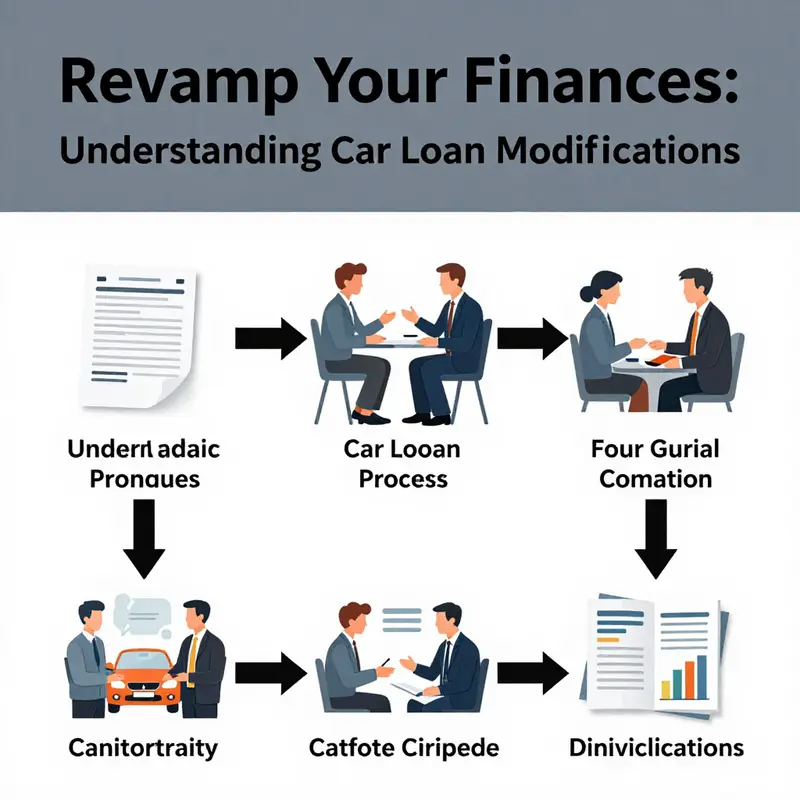
The moment a regular auto payment becomes a source of stress rather than a routine obligation is often the moment the door to a car loan modification opens. A modification is not a fresh loan or a new deal that starts from scratch; it is a reshaping of the terms you already agreed to. In practice, that reshaping is aimed at keeping you in the driver’s seat rather than watching the car slip away. It is a negotiation between you and the lender, grounded in the shared objective of preventing default, which would invite loss of collateral and additional costs on both sides. The heart of a loan modification is simple in concept: change the math in a way that makes the monthly burden manageable, at least for a period, without increasing risk for the lender beyond what they can absorb. But the mechanics, eligibility, and consequences are where real nuance lives, and understanding those details helps borrowers make informed decisions instead of defaulting to fear or haste.
To begin, it is important to distinguish modification from other debt-relief options. A modification alters the terms of the existing loan agreement rather than replacing it with a new contract. In that sense, it differs from a refinance, which substitutes an old loan with a new one under different terms. A modification keeps the same creditor, the same vehicle, and the same underlying debt, but it can adjust several levers that determine monthly payments and the total cost of the loan over its lifetime. Common modifications include lowering the interest rate, extending the repayment term, or temporarily deferring a portion of payments. Sometimes a modification may involve capitalizing missed amounts—meaning any past-due payments are added to the principal balance and amortized over the new term. While this can be an essential path to affordability, it also means the total interest paid over the life of the loan may increase, even if monthly payments drop. Recognizing this trade-off is crucial for any borrower weighing a modification against other options.
The practical path to a modification begins when hardship arises or is anticipated. The most common triggers are job loss, a reduction in hours or income, a medical emergency, or another significant financial disruption that makes current payments unsustainable. Lenders view modification as a risk-management tool. Default and repossession are costly and time-consuming for lenders, just as they are personally disruptive for borrowers. The aim is to preserve value—preserving the vehicle for the borrower and preserving the collateral for the lender. In many cases, lenders will work with you through hardship assistance programs that are designed specifically for such situations. These programs can include temporary forbearance periods, during which payments may be reduced or paused, followed by a plan to resume regular payments. The process, though, is not automatic; it requires proactive contact and a willingness to document your financial situation in a credible, transparent way.
When you decide to pursue a modification, the first step is the application, which typically occurs directly with your lender or through a third-party servicer that handles loan administration on behalf of the lender. The application is not a form of admission that you will struggle forever; instead, it is a formal request to alter the contract so you can stay current. A central element of the application is proving financial hardship. Lenders want to know that the difficulty is real, ongoing, and likely to be resolved with structured changes rather than a temporary patch. This requires clear, honest documentation and a coherent explanation of your current and projected income, expenses, and debts. The documentation usually includes recent pay stubs, tax returns, bank statements, and a written narrative that explains your situation—how it started, what has changed, and what your prospects look like going forward. The exact requirements vary by lender and by jurisdiction, but the pattern is consistent: you present your case, the lender evaluates your circumstances, and the two sides negotiate a package that makes payments feasible without compromising the collateral’s value.
The negotiation itself is guided by a blend of objective criteria and policy accommodations that lenders or servicers have developed to address hardship. Credit history and overall payment history matter, but they are not the sole determinants. A lender will scrutinize your recent payment behavior to assess whether you have made meaningful attempts to stay current, even in the face of hardship. They will also consider the remaining term of the loan, the vehicle’s current value relative to the outstanding balance, and the likelihood that your financial position will improve in the near term. Your income stability, the presence of alternative assets, and even the terms of any related loans or lines of credit can influence what the lender is willing to offer. In short, the modification is a negotiation that balances the borrower’s need for relief with the lender’s need to protect its position.
A typical modification package can take several forms. At the simplest level, a lower interest rate can reduce the monthly cost by shrinking the amount of interest accrued each month. A longer loan term can further reduce monthly payments by spreading the same debt over a greater number of months, though this often comes with more total interest paid over the life of the loan. In some cases, a lender might grant a temporary forbearance, which means a stretch of time during which payments are paused or reduced and then resumed. For borrowers who have fallen significantly behind, the option to partially forgive or reduce the principal can surface, but it is less common and often subject to more stringent criteria. All of these options have different implications for credit reporting, interest accrual, and the long-term cost of financing the vehicle. The decision to include any principal reduction or to capitalize arrears changes the structure of the loan in meaningful ways and should be weighed carefully with mindful consideration of long-term costs.
One essential nuance is the timing of these changes. The earlier you engage with your lender, the more leverage you typically have to shape a workable plan. Delays can reduce options because lenders prefer to resolve delinquencies before they escalate into defaults or repossessions. A proactive approach also signals to the lender that you are serious about maintaining ownership of the vehicle and stabilizing your finances. The modification itself is not a guarantee; approval depends on a constellation of factors, including your credit history and payment history, but more importantly, on the specific policies of the lending institution and the demonstrated likelihood of sustained affordability under the revised terms.
As a borrower, you should also understand the practical consequences of agreeing to a modification. A lower monthly payment offers immediate relief, but it may shift and lengthen the payoff horizon. This can lead to more interest paid in total and can affect the equity you have in the vehicle. In some cases, you may encounter fees associated with the modification, or you may be required to maintain certain insurance or maintenance standards as a condition of the modified plan. Some modifications can change the loan’s title or the terms of the collateral’s lien, though this is less common than people expect. It is crucial to secure any modification in writing, with a detailed, itemized schedule showing new payment amounts, due dates, interest rate, term length, and any changes to the principal balance or arrears. Reading the document carefully and understanding how all the numbers are calculated helps avoid surprises after you sign.
The topic of eligibility is a thread that runs through every conversation about loan modification. While there is no universal eligibility checklist that applies to every lender, several common considerations repeatedly surface. Lenders look at your current income and expected income trajectory, your job security or the likelihood of regained stability, and your overall debt load. They consider the value of the car today and how much equity you have in it, which affects the risk of continuing the loan if circumstances deteriorate further. Your past payment record—whether you have been consistently late or have missed payments—also matters. A borrower who has recently made on-time payments, even during a hardship, may be viewed more favorably than someone who has fallen deeply delinquent without showing any attempt to rectify it. Documentation is the bridge between claim and credibility; the more transparent and complete your materials, the more likely the lender will see you as a viable candidate for modification.
Another layer to consider is the long-term financial picture beyond the loan itself. A modification can be a strategic move to avoid repossession and to preserve mobility, but it is not a cure-all solution. If your return to stability is uncertain or if you foresee continued income volatility, you may want to weigh whether maintaining ownership under revised terms remains the best option. In some situations, a modification could be paired with a longer-term plan that includes budgeting changes, debt consolidation, or even a future refinance once income improves. The goal is to align the loan’s restructured terms with a realistic expectation of cash flow over the coming months and years, rather than promising relief that fades when the next financial challenge arises.
The social and emotional dimensions of loan modification are often overlooked but are real. For many borrowers, coping with financial hardship already carries a sense of embarrassment or anxiety. The modification process can feel invasive because it requires sharing sensitive financial details and potentially exposing gaps in income or savings. Yet engaging in the process can restore a sense of control and ensure continued access to transportation—a critical asset for work, childcare, medical appointments, and daily life. Communicating clearly with a lender, asking questions, and requesting written confirmations can transform a potentially intimidating experience into a structured plan with clearly defined expectations. If you are thinking about pursuing a modification, you can start by reaching out to your lender and asking about hardship programs, then prepare your documentation systematically so the process can move efficiently.
As you navigate the modification landscape, it is useful to keep two questions in focus. First, what exactly is changing in the loan, and how does that alter the amount you pay monthly, the total time to payoff, and the overall cost of financing the car? Second, what are the long-term implications for your credit and financial flexibility? While the specifics will vary by lender, some general patterns emerge: a lower rate paired with a longer term can produce manageable monthly payments, but it can also extend the loan period and raise total interest. A forbearance period can provide immediate relief yet may require a disciplined plan to resume payments and catch up. The key is to quantify, not guess, the trade-offs. If you are tempted to accept a modification because the monthly bill looks smaller in the short term, run the numbers across the entire term of the loan and compare them to your current trajectory and to the cost of alternative options.
For readers weighing the broader question of whether modification is even possible, consider a practical step described in many lender guidelines: initiate a conversation early, present a coherent plan, and demonstrate commitment to repayment through documented income and expense statements. A crucial part of that plan is understanding how the modified loan will behave over time. A lower payment might be accompanied by a slower rate of equity buildup, a longer path to payoff, and altered incentives to maintain high-value insurance or to keep the vehicle in optimal condition. These are not hostile terms; they are adjustments aimed at preserving the essential relationship between you, the borrower, and the lender, with the vehicle serving as anchor in a strategy to reduce overall financial risk for both sides.
If you’re curious about the compatibility of modifications with financing more generally, you can explore related discussion at can I modify a financed car. This resource offers practical guidance and context about financing considerations when contemplating changes to a vehicle loan, helping you align expectations with policy realities. can I modify a financed car.
In sum, a car loan modification is a negotiated adjustment to the terms of an existing loan designed to restore affordability and maintain the borrower’s ability to keep the vehicle. It is not a silver bullet but a carefully considered tool that, when used thoughtfully, can bridge a period of hardship to a longer period of stability. The decision to pursue a modification rests on clear-eyed analysis: what adjustments are offered, how they alter the loan’s total cost, what documentation is required, and how the changes fit into a broader plan for financial recovery. Because each lender operates under its own policies, and because every borrower’s situation is unique, the best course is to engage early, document thoroughly, and be prepared to weigh the trade-offs with a calm, numbers-driven mindset. External guidance can help illuminate the terrain as you navigate these decisions. For readers seeking a detailed overview of the process and its implications, an external resource provides a thorough examination of when and why a modification makes sense, including potential long-term costs and considerations. See the Bankrate guide on car loan modification for a comprehensive explainer: https://www.bankrate.com/loans/car-loans/car-loan-modification/.
Bending the Curve: How Car Loan Modifications Reshape Payments Without Resetting Your Debt
When financial hardship tightens its grip, a car often becomes more than a convenience—it becomes a lifeline. The engine still runs, the family still travels to work and school, and the daily rhythm of life depends on keeping that vehicle moving. A car loan modification is one mechanism lenders offer to keep that rhythm intact without forcing a restart for the loan. It is not a refinance, and it does not erase the debt or reset the clock; instead, it retools the terms of the existing agreement so the borrower can keep making payments that fit a changed reality. The aim is practical and protective: avoid default, prevent repossession, and preserve reliable transportation during a period of strain. The path from recognition of hardship to a workable modification is not guaranteed, and it requires careful documentation and clear communication with the lending party. Yet for many borrowers, a modification can be a pragmatic bridge between economic difficulty and ongoing credit responsibility, a way to honor the obligation while honoring the need to stay soluble in the near term.
A modification begins with a reassessment. The lender or servicer reviews the borrower’s current income, expenses, and payment history and compares those factors against the terms of the existing loan. The underlying debt remains the same in principle—the principal balance is still the amount borrowed, and interest continues to accrue according to the original or adjusted schedule—but the cadence of repayment shifts. The arithmetic is simple in intent: lower monthly obligations enough to make on-time payments sustainable, then gradually restore the borrower’s financial footing so the loan remains a steady obligation rather than a looming risk. In practice, the modification could look very different from one lender to the next, and even from one borrower to another, because the modification is a negotiation that hinges on the lender’s policies, the borrower’s history, and the severity and duration of the hardship.
The modifications commonly offered fall into a small family of options. One of the most straightforward is extending the loan term. By lengthening the repayment horizon—from, say, 48 months to 72 months or more—the monthly payment can be reduced measurably. The downside is predictable: paying over a longer period means more interest accrues in total, and the borrower ends up paying more over the life of the loan even though the monthly burden is lighter. The second, often paired with the first, is a reduction of the interest rate. A lower rate immediately lowers the monthly payment and reduces the overall cost of borrowing if the term remains the same. However, rate reductions are not always permanent. Some lenders may offer a temporary relief that eventually reverts to the original rate or to a new, longer-term schedule once the borrower’s finances stabilize. A third frequently used tool is forbearance, which allows for a temporary pause in payments or a reduction to a minimal amount for a defined period. Forbearance buys time, and it can be a critical cushion when a borrower faces a brief layoff, medical treatment, or a short-term income shock. The catch with forbearance, as with any modification, is that the clock is reset in meaningful ways. Interest continues to accrue, even if payments are paused, and the eventual repayment plan must address that accrued interest. In some cases, a forbearance might be accompanied by an adjustment to the amortization schedule to catch up on missed payments without a sudden jump in the next due date, but borrowers should expect a careful recalibration of how each payment is allocated.
The underlying motives for offering a modification are grounded in risk management as much as in compassion. From the lender’s point of view, a modified loan is a way to avoid the more costly outcome of an impounded asset or a default that cascades into collections and repossession. A vehicle is collateral; when a borrower cannot keep up with payments, the lender faces both a loss of expected cash flow and the possibility of recouping only a portion of the asset’s value through repossession and resale. A modification, then, functions as a tailored compromise that attempts to preserve the borrower’s access to transportation while sustaining the lender’s recovery prospects. The negotiation is personal in its texture: it depends on the borrower’s documented hardship and on the institution’s criteria for hardship programs. This is why prompt, transparent communication is essential. If difficulty is anticipated, reaching out early to the lender or servicer increases the likelihood of a workable arrangement and reduces the risk of late payments triggering more severe actions.
The documentation a lender usually requests is a window into the borrower’s current financial reality. Expect to provide proof of income through recent pay stubs or tax returns, along with recent bank statements that reflect liquidity. A detailed explanation of the hardship is typically required, outlining the cause, duration, and the steps being taken to recover. In some cases, lenders may also ask for a budget that itemizes monthly expenses and shows how the proposed modification would bring the monthly payment into a sustainable range. This is not a mere formality; it is the basis on which the lender weighs the likelihood that the borrower can maintain on-time payments under the revised terms. The documents, once gathered, are reviewed by a specialist who translates the numbers into options, and this is where the negotiation begins in earnest. It is not unusual for borrowers to work with a third-party servicer or credit counselor who can help present a coherent case to the lender, ensuring the most favorable and realistic terms are on the table. In some cases, the borrower might also need to provide updated insurance information or address any gaps in credit history that could affect the lender’s decision. While this process can feel intrusive, it is a formal, risk-managed exercise designed to reflect the borrower’s true financial picture.
One practical implication of modification terms is the potential change to how the loan itself appears on a credit report. A successful modification that brings payments current and keeps the account in good standing can preserve or even improve credit health compared with a delinquent account. However, the act of modifying the loan, extending terms, or deferring payments can still carry an impact. The profile of the loan—its current status, the revised payment schedule, and the duration of any forbearance—may influence how future lenders view the borrower’s creditworthiness. The borrower should be prepared for conversations about how the modification will be reported and should monitor statements and credit reports to ensure accuracy. It is not unusual for the credit impact to be nuanced: the monthly obligations may be lower, but the total interest paid over the life of the loan may rise, and the loan balance can look different on a credit report as the terms are adjusted.
Beyond the mechanics, there is a set of practical considerations that borrowers tend to wrestle with. First, it is crucial to understand that modifications are not universally offered. Some lenders do not have hardship programs, or they limit modifications to certain types of loans or to borrowers with consistent payment histories up to the point of hardship. This variability underscores the importance of initiating contact early and exploring all available options with the original lender before considering external solutions. If a modification is available, it will typically come with a formal agreement or forbearance plan that specifies the revised payment amount, the new schedule, any fees, and the length of the modification. It is essential to request the terms in writing, review them carefully, and ask questions about any ambiguous language. The written agreement should clearly state what happens if a payment is missed during the modification period, how long the modified terms will stay in effect, and whether the modification becomes permanent or reverts after a defined period. A prudent borrower will also inquire about potential penalties, late fees, or administrative charges that might accompany the modification. These details can have real financial consequences, especially if the repayment period is extended and interest accrues at a higher rate or if a forbearance period is followed by a catch-up schedule that demands a rapid reimbursement.
As one weighs the trade-offs, it is helpful to anchor the decision in three questions: Will the modification prevent default and keep the vehicle? Will the revised terms align with a realistic recovery in income and cash flow? What is the long-term cost in interest and total repayments under the new schedule? The first question focuses on immediate risk: default and repossession are the most acute dangers lenders want to avoid. The second centers on sustainable budgeting: does the new monthly payment fit within the borrower’s ongoing income and essential expenses? The third invites a clear prognosis of total cost, which is often counterintuitive. A lower monthly payment achieved by stretching the term can create a larger interest burden over time, even as the borrower enjoys relief in the near term. A rate reduction can provide immediate savings, but borrowers should verify whether the rate is truly locked for a defined period or if it will adjust down the line. A forbearance offers relief, but it creates a future obligation to repay a larger principal or interest portion unless compensated for by a longer term or a different structure. The intersection of these factors defines the practical and financial reality of the modification.
In some cases, the modification is a stepping stone rather than a final arrangement. A temporary relief can bridge the gap to a more permanent refinancing, which resets the loan with a new rate and term at market conditions. Refinancing, while distinct from modification, can sometimes be a superior path if the borrower’s credit improves or if interest rates shift in a favorable direction. The decision to pursue refinancing after a modification is a strategic one that depends on current credit, remaining balance, and the costs associated with processing a new loan. Borrowers should be aware that a modification can have implications for refinancing options, including how the new terms affect eligibility and the overall cost of borrowing. Therefore, it is wise to view modification as part of a broader toolkit for managing auto debt rather than as an isolated remedy.
The emotional and practical dimensions of modification are often intertwined. A borrower’s life circumstances—such as job changes, health events, or family circumstances—shape both the need for relief and the capacity to honor revised terms. The negotiation itself can be a collaborative process, with lenders sometimes offering options that reflect a borrower’s resilience and willingness to meet obligations under revised conditions. The relationship between borrower and lender can be improved by transparent communication, careful preparation of documentation, and a cooperative mindset. Even when an agreement is reached, the borrower should maintain a careful watch over the loan’s performance against the revised schedule. Regularly reviewing payment activity, term length, and any accrued interest will help ensure the modification remains aligned with financial reality, not just hopeful intent.
Alongside the practical steps and the numerical calculus, there is a broader message about responsibility and contingency planning. Car ownership remains a powerful asset, but it also represents a fixed cost that can dictate a household’s broader financial health. A well-structured modification acknowledges that reality and aims to preserve mobility while reducing risk. The process emphasizes resilience: assess, document, discuss, and decide. It invites borrowers to balance the relief of lower payments against the long arc of repayment. It invites lenders to balance risk with support for borrowers who encounter misfortune, recognizing that a vehicle loan is as much a predictor of ongoing stability as any other debt.
For readers who want a concise, practical checklist as they consider whether a modification is right for them, the core steps are straightforward. Begin by contacting the lender as soon as you anticipate trouble, not after it has escalated. Gather income verification, recent statements, and a concise explanation of the hardship. Ask for all available options, including term extensions, rate reductions, and forbearance, and request written terms before agreeing. Review the amortization schedule carefully, noting how much total interest you may pay under the revised plan and how long the modified agreement will last. If you sense that the terms could become unfavorable, seek a second opinion from a credit counselor or from the lender’s hardship specialist. And when you are ready to proceed, ensure that the final agreement is documented and that you fully understand the implications of any fees, catch-up requirements, or potential changes to the loan’s reporting on your credit.
In this landscape, the modification acts not as a magic solution but as a negotiated instrument—an adjustment that aims to preserve stability for you and reliability for the lender. It is a response to the friction between financial pressure and the continued obligation to repay a loan. It recognizes that sometimes the best path forward is not a complete reset, but a recalibration. The result, ideally, is a durable plan that enables you to maintain driving independence, protect your credit profile, and avoid the destabilizing consequences of default. As with any debt management decision, success hinges on timing, transparency, and a willingness to engage in a candid assessment of what you can realistically sustain over the coming months and years. The road to an effective car loan modification is rarely smooth or guaranteed, but it is navigable with preparation, clear communication, and careful attention to the long-term implications of the terms you accept.
If you are navigating this option, you may also find it helpful to explore resources that discuss how modifications fit within the broader debt-management landscape. For instance, a widely cited expert guide provides a detailed look at the pros and cons of car loan modification, helping readers compare modification outcomes with alternative routes such as refinancing and debt consolidation. This external perspective can complement the lender-specific information you gather and help you frame questions for your own lender. As you weigh the decision, remember that the goal is practical sustainability: a modified loan that remains affordable, a car that continues to serve the family’s needs, and a path back to stable finances with the least friction possible.
Internal link note: for readers curious about how modifications interact with financing when a vehicle has an outstanding loan, a related discussion on financing considerations can offer additional context and practical considerations. Modifications for a financed car provides a perspective on how repair or modification decisions can intersect with existing financing obligations, and why understanding those interactions matters whether you are pursuing a modification or considering other forms of debt relief.
As with any financial decision, there is value in grounding your choice in your own situation rather than the generalities of any one policy. The terms that work best for one borrower may not translate to another, and the same modification that yields immediate relief could carry a greater total cost for someone else. The practical reality is that the right path is the one that preserves essential mobility, maintains financial stability, and respects the lender’s legitimate risk management criteria. The negotiation itself becomes a shared exercise in planning for a future where both parties can fulfill their obligations without sacrificing the borrower’s ability to move through daily life. That is the essence of a car loan modification: a carefully calibrated instrument designed to balance the scales when the balance sheet tilts toward hardship, preserving the vehicle’s value as a stable, usable asset while keeping the loan on a trajectory that remains within reach of the borrower’s evolving income and responsibilities.
External resource: for a comprehensive understanding of car loan modifications, including pros and cons, you can refer to Bankrate’s authoritative guide on the topic at https://www.bankrate.com/loans/car-loans/car-loan-modification/.
How a Car Loan Modification Shapes Your Financial Future: Costs, Credit, and Choices
How a Car Loan Modification Shapes Your Financial Future: Costs, Credit, and Choices
A car loan modification is a practical tool for managing a temporary or prolonged cash shortfall. It can keep you on the road while preventing repossession and damaging delinquencies. But the decision to modify a loan reverberates through your finances well beyond the immediate monthly payment change. Understanding those long-term effects helps you make a choice that supports longer-term goals, rather than creating new problems later.
At the heart of a modification is a trade-off. Lenders provide relief because it is often cheaper for them than repossessing and reselling a vehicle. For borrowers, relief usually arrives in one of three forms: a lower interest rate, an extended term, or a temporary payment reduction or forbearance. Each option eases monthly strain, but each also changes how interest accrues, how equity builds, and how outside parties view your creditworthiness. That ripple of changes touches the total cost of the loan, your ability to refinance, your resale options, and even your insurance and gap coverage needs.
Reducing the monthly payment often comes with increased total interest. Extending a 48-month loan to 72 months, for instance, lowers the monthly outlay. Yet interest compounds over the longer period. Even with a modest rate, those extra months can add hundreds or thousands of dollars in total interest. The borrower experiences immediate breathing room, but the longer repayment horizon delays the end of debt and reduces the opportunity to redirect funds toward savings, emergency reserves, or retirement. The modification may fix the short-term problem but slow a trajectory toward greater financial freedom.
A reduced interest rate can limit the extra cost of a modification when lenders choose that route. A drop from 8% to 5% genuinely reduces the total interest paid and can make extending the term less painful. Yet lenders rarely lower rates without conditions. Those conditions might include evidence of hardship, a history of partial payments, or paying a fee. It’s essential to weigh how the new rate and term interact. A modest rate reduction coupled with a longer term may still produce higher total interest than the original agreement.
Forbearance or temporary payment reductions offer immediate relief without permanently changing the amortization schedule in some cases. Lenders may allow skipped or reduced payments for a fixed period, then require repayment of missed amounts through a lump sum, additional monthly payments, or by extending the term. If the lender tacks missed payments onto the end of the loan and extends the term, you can expect the consequences described above. If the lender expects a lump-sum payoff at the end of the deferral, the borrower must plan months ahead to meet that obligation. Misunderstanding the payback plan is a common reason modifications fail to provide lasting benefit.
Equity in the vehicle responds quickly to modifications. When you push payments further into the future, you slow the rate at which principal is repaid. In effect, you can become more “upside-down”—owing more than the car is worth—for a longer time. This negative equity matters when you want to trade, sell, or refinance. Lenders and dealers often decline to accept a trade if the remaining loan exceeds the vehicle’s value, or they may roll negative equity into a new loan, compounding the problem by extending debt onto a new vehicle. That situation can trap borrowers in a cycle of longer loans and heavier interest burdens.
Credit score effects are nuanced. A successful modification negotiated before missed payments can protect your score by preventing delinquencies. Lenders sometimes report a modified loan as current, which preserves your payment history. But not all lenders report the same way. Some will flag the account as modified, which can appear in credit files and influence future underwriting decisions. If the modification follows missed payments, your credit may already bear damage that the modification cannot erase. Repeated modifications or further delinquencies signal ongoing instability and can make it harder to access credit at reasonable rates. Thus, a modification can be a lifesaver for credit in the short term, yet a signal of risk in the medium term if underlying issues persist.
Approval is not automatic, and modifications may come with fees. Processing fees, late fee waivers, or administrative charges reduce the immediate relief. Borrowers should insist on written terms that list any fees, the exact payment schedule after modification, and how missed payments during the modification period will be treated. A verbal agreement is not enough. Without clear documentation, the borrower risks surprises such as a large final balloon payment or continuation of late fees.
A modified loan can complicate future refinancing. Lenders look at the current loan balance, payment history, and the vehicle’s value. If modification extended the term and increased the balance relative to the vehicle’s value, refinancing terms are likely to be less favorable or unavailable. Even if refinancing is possible later, the borrower may face higher rates because of the modification notation on credit reports or because the loan-to-value ratio is poor. Those limits reduce options for lowering interest or shortening the loan at a later, more stable time.
Modifications also influence decisions about vehicle ownership. If modification keeps you in possession during a hardship, it may be the best way to maintain necessary transport. But it may also defer the day when selling the vehicle or switching to a cheaper model becomes practical. A car that is affordable monthly yet drains resources through higher total interest can slow plans such as buying a home, building an emergency fund, or paying down higher-interest debts. Consider whether keeping the vehicle aligns with long-term financial priorities.
Insurance and gap coverage deserve attention. A longer loan term and continued negative equity increase the importance of gap insurance. If your car is totaled, gap insurance covers the difference between the loan balance and the insurer’s payout. If you are deeper underwater after a modification, a total loss could leave a large leftover balance. Check whether your existing gap insurance policy remains valid under the modified loan, and whether premiums or coverage requirements change. Also consider whether the lender’s requirements for comprehensive or collision coverage change as a condition of modification.
Behavioral finance matters as well. The relief a modification provides can restore calm and allow better budgeting. Yet some borrowers assume the modification resolves underlying cash flow problems. Without changes to spending or income, the relief may be temporary. A plan to rebuild an emergency fund, control discretionary spending, or increase income reduces the chance of needing a second modification. Viewing a loan modification as a temporary bridge rather than a permanent fix helps preserve financial momentum.
Legal and tax consequences are limited but worth noting. For most personal auto loans, interest is not tax-deductible, so modifications do not produce tax benefits. If a lender forgives a portion of the loan—which is rare with auto loans—there could be tax implications. In such cases, the borrower should consult a tax professional to understand reporting requirements. Also, be mindful of local laws that regulate lender practices and borrower protections. Consumer protection statutes vary by state and country. Understanding your rights helps you negotiate from a position of knowledge.
When weighing a modification, simulate scenarios. Create a clear comparison of the original loan, the modified terms, and alternatives such as voluntary repossession, selling the car, or refinancing. Calculate total interest under each scenario. Consider the monthly budget, but also compute cumulative cost and projected equity at several future dates. If the modification reduces monthly payments but increases total cost by a large margin, ask whether the saving today justifies the added expense over time.
Communication with the lender matters. Be proactive. Lenders are more likely to offer manageable solutions when borrowers contact them early. When negotiating, get every promise in writing. Ask for a full breakdown: the new monthly payment, the new interest rate, any fees, how missed payments are handled, how the modification will be reported to credit bureaus, and whether insurance requirements change. If the lender refuses to put terms in writing, treat that as a red flag.
Seek independent advice. A certified financial counselor or a credit advisor can run unbiased numbers and help you compare options. Nonprofit credit counseling agencies can often provide free or low-cost counseling. They may also help negotiate with the lender. Avoid predatory operators that promise unrealistic results in exchange for upfront fees. Verify credentials and seek references.
Consider alternatives. Refinancing is one: it replaces the original loan with a new loan, often at a lower rate if credit has improved or market rates have fallen. Refinancing may not be available if your credit has suffered or if the vehicle’s value has declined sharply. Selling the car voluntarily to pay down the loan is another path, though that requires finding a buyer and possibly covering a gap between sale proceeds and the loan balance. Voluntary repossession might halt payments but severely damages credit. Each option has long-term consequences that merit comparison with a modification offer.
If you accept a modification, monitor progress. Confirm that payments are applied as agreed. Check your credit reports after the modification takes effect to see how it is reported. Keep records of all correspondence and receipts. If you notice errors or if the lender fails to implement agreed changes, escalate the matter through the lender’s complaint channels and, if needed, to regulatory bodies.
Finally, think of a modification as part of a broader financial plan. Use it to buy breathing space to restructure other debts or to stabilize income. Set a horizon for returning to stronger terms, such as targeting refinancing once credit improves or aggressively paying extra principal when able to reduce the term. Turning the temporary relief into a step toward improved financial health prevents the modification from becoming a permanent tax on future earning.
A car loan modification can save a vehicle and protect credit. It can also extend debt, increase total interest, and complicate resale or refinancing. The right choice comes from careful calculation, documentation, and honest assessment of future income and spending. If you plan and act deliberately, you can use a modification to bridge a rough patch while keeping your long-term goals within reach. For practical scenarios and a deep explanation of whether modification is the best option for your unique case, see this external resource: https://www.bankrate.com/loans/car-loans/car-loan-modification/
For guidance on how modifications to your financed vehicle might affect other aspects of ownership, review the article about modifying a financed vehicle: modify a financed vehicle.
Final thoughts
Navigating the complexities of car loan modifications can initially appear daunting, but understanding the process and its implications is crucial for any car enthusiast facing financial challenges. By modifying your car loan, you retain the ability to enjoy your vehicle while managing payments effectively. Whether you’re adjusting interest rates, extending terms, or deferring payments, each choice has unique impacts on your long-term financial wellbeing. Stay informed, review your options carefully, and engage with your lender to ensure that your automotive journey remains uninterrupted. Your passion for cars can continue alongside financial stability!