

Car modification is an exhilarating journey that not only enhances the performance and aesthetics of your vehicle but also allows you to express your individuality. Whether you are a hobbyist looking to increase your car’s power on the roads, a professional tuner tuning for perfection, or an enthusiast seeking to revive a classic car, understanding how to effectively modify your vehicle is essential. This guide breaks down the process into three pivotal chapters: laying the groundwork by defining your goals and budget, exploring common performance upgrades to enhance your vehicle’s capabilities, and delving into aesthetic changes to make your car uniquely yours. As the automotive landscape continues to evolve, having a clear approach to car modification is more important than ever, ensuring you achieve impactful results while maintaining safety and compliance.
Dream, Define, and Drive: Crafting Your Car Modification Plan Through Goals and Budget
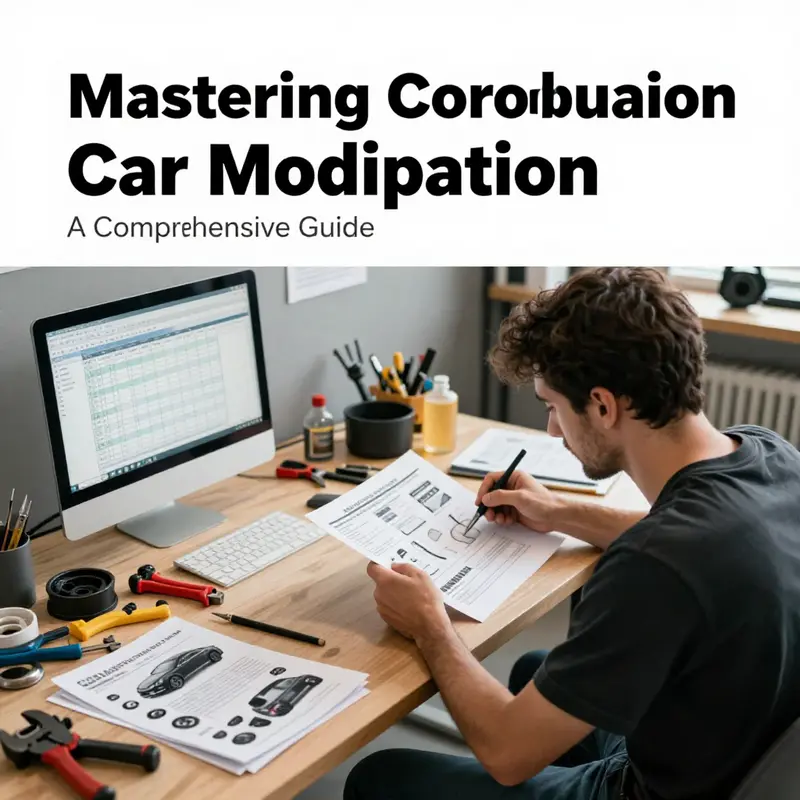
Every meaningful car modification starts not with the parts you want to bolt onto the chassis, but with a clear sense of why you’re modifying in the first place. This is where the journey toward a successful, satisfying build begins: with goals that resonate with how you actually drive, the environment you operate in, and the limits you’re willing to work within. The road to a car that feels truly yours runs through a preliminary conversation between passion and practicality. If you’ve ever found yourself drawn to the idea of a sportier stance, sharper handling, or a more aggressive soundtrack, take a moment to ask what you hope those changes will deliver on your daily routes—beyond the glossy photos at the shop. Do you want faster acceleration off the line for weekend canyon runs, or a car that remains dependable on winter commutes and family trips? Perhaps you crave a presence on the street that turns heads while maintaining a reasonable level of comfort and reliability. Whatever your answer, it should guide every subsequent choice, from initial assessments to the size of the budget you set aside.
Defining goals is less about chasing a dream version of your car and more about aligning what you want with what you actually use. For some owners, the aim is straightforward: a vehicle that accelerates a little more briskly, stops with more authority, and handles corners with less body roll. For others, the objective blends performance with aesthetics, painstakingly calibrating how the car feels through the wheel and how it looks when parked among peers. A third group prioritizes practicality: the ability to carry gear, navigate rough roads, and preserve daily usability, all while integrating tasteful upgrades that do not disrupt the vehicle’s core reliability. The frame of your plan should reflect these realities. If you spend most days commuting through congested city streets, your priorities might emphasize torque delivery and a more approachable throttle response rather than the peak horsepower you’d chase on a track. If weekend drives are your sanctuary, you may be willing to embrace a more aggressive tune, stiffer suspension, and a more communicative steering feel, knowing you’ll tolerate slightly harsher ride quality during daily use. In all cases, the starting point is honest self-checking about how you actually drive, what you value most, and how far you’re willing to go to achieve it.
With goals in place, there is another critical hinge: budget. A well-framed budget does more than cap how much you spend on parts; it frames your entire approach to modification, from the order you tackle components to the pace at which you experiment and adapt. Your budget should reflect both immediate costs and longer-term obligations. Immediate costs cover the parts that you intend to install and the labor required to do so. Long-term obligations include maintenance, potential wear-and-tear implications, insurance considerations, and the effect on resale value. A practical way to think about this is to imagine your car as an evolving project, where each modification changes not just performance or appearance but the ongoing cost of ownership. For instance, a higher-performance braking setup may improve stopping power but also demand higher-quality fluids, more frequent checks, and potentially more demanding maintenance intervals. A more aggressive aero package and wider tires can improve grip but may shave a little off fuel economy and alter tire rotation schedules. To balance ambition with reality, many drivers adopt a phased approach: allocate a core portion of the budget to fundamental safety and reliability improvements, reserve a flexible portion for performance or aesthetic upgrades that align with evolving goals, and hold a contingency to address surprises that often surface once you actually drive with the new setup.
A critical dimension of budgeting that often gets overlooked is the total cost of ownership over the life of the car. This extends beyond sticker price and installation costs; it encompasses insurance implications, maintenance frequency, potential regulatory requirements, and even the car’s resale value. Insurance considerations can shift when you alter a vehicle’s performance characteristics, whether through increased perceived risk or changes in repair costs. Maintenance demands may rise with more specialized components or required recalibrations after significant changes to the engine, suspension, or braking system. Resale value is another factor to weigh, particularly if you anticipate selling the car within a few years. Buyers often value stock components and documented, reversible modifications more highly than temporary, experimental setups. You can mitigate potential downsides by selecting modifications that preserve factory safety margins, remain compatible with the rest of the car’s systems, and are easier to revert if needed.
This is where visualization, both mental and digital, becomes a powerful ally. Many enthusiasts use digital tools that allow them to simulate how changes will look and feel without committing to them physically. These online car modifiers enable you to experiment with paint schemes, wraps, decals, and aerodynamics in a risk-free environment. The ability to preview color, texture, and form before taking the plunge can save time and money, and it can prevent you from chasing a look that does not harmonize with the car’s lines or with practical driving realities. Even without altering the mechanical heart of the vehicle, you can assess whether a given visual direction genuinely matches your broader goals and the car’s silhouette. This approach also helps you communicate your vision clearly when you do consult with shops or specialists, reducing the risk of misaligned expectations and costly reworks.
As you lay out the plan, a practical navigation map emerges. You begin by asking big, strategic questions—what is the primary use case for the vehicle, and how do that use case’s demands shape the parts list? You then translate those questions into a staged budget that respects both ambitions and constraints. A useful signal is to differentiate between “must-have” upgrades and “nice-to-have” enhancements. Must-have upgrades tend to prioritize safety, reliability, and core performance improvements that are essential to the way you intend to drive the car. Nice-to-haves, while undoubtedly appealing, should be evaluated against their impact on the total ownership cost and on the day-to-day driving experience. If you decide to chase a particular aesthetic, it is worth asking whether the look will demand ongoing maintenance or modifications that could affect ride height, alignment, or clearance. Aesthetic choices can cascade into mechanical considerations, so the decision to pursue a certain design should come with a plan for how it will be sustained rather than a one-off installation.
To keep the process grounded, many people consult a car modifications guide that outlines practical steps for balancing parts, labor, and long-term costs. This resource helps translate abstract goals into a tangible sequence of priorities and checklists, reducing the likelihood of overcommitting to expensive pieces that do not harmonize with your driving reality. If you’re curious about how to structure your plan in a way that respects both ambition and budget, consider that guide as a supportive framework. It can provide a coherent language for discussing scope, timelines, and cost with technicians, ensuring that every decision aligns with the larger purpose you established at the outset. When you begin to map your plan, you should remember that the goal is not to chase a single transformational upgrade in isolation, but to weave a coherent, evolving story where each addition complements the others and strengthens the overall driving experience.
A careful budgeting mindset also encourages you to think in terms of staged phases rather than a single windfall. You might decide to start with a focused set of changes that preserve daily usability but offer noticeable improvements in safety, such as enhanced braking or improved tire performance. After you have lived with those changes for a season and have a clear sense of their impact, you can evaluate whether the next phase should expand into handling, power, or aero features. This staged approach minimizes risk and helps preserve the vehicle’s reliability during the learning curve that often accompanies modifications. It also provides a natural checkpoint to reassess goals. If you discover that you value quiet comfort and daily practicality more than track-worthy performance, you can adjust the plan accordingly, reallocating budget toward suspension tuning and tire balance rather than engine-motivated upgrades. The flexibility of a phased plan respects the reality that preferences can evolve as you gain experience and as the car reveals how it behaves in different conditions.
In constructing this plan, you should also account for the car’s baseline condition. A thorough inspection of the vehicle’s current state is not a luxury but a prerequisite. Early modifications can reveal weaknesses in the chassis, exhaust routing, electrical system, or cooling system that were not obvious before you set your goals. Addressing these boundary conditions before you install new components reduces the risk of premature wear, failures, or unpredictable handling. This is not about dampening ambition but about building a foundation that can support your aspirations without compromising safety or reliability. A strong base enables the vehicle to respond to upgrades in a predictable and manageable way, preserving the very experience you want from the modification—the sense that the car is coherent, responsive, and trustworthy in all the scenarios you expect to encounter.
In this planning phase, you will inevitably encounter trade-offs. The most compelling performance upgrades can also demand more frequent maintenance, stiffer springs can translate into a harsher ride, and larger wheels can affect acceleration and fuel economy. The key is to foreground the compromises that sit closest to your daily rhythm. If your commute involves long stretches of highway and limited opportunities for spirited driving, a plan that emphasizes improved braking and tire grip without dramatically increasing engine output may deliver more consistent satisfaction than chasing a peak horsepower figure. On the other hand, if your days rarely require long journeys and you crave a more visceral experience when the road opens up, a carefully calibrated combination of intake, exhaust, and tuning might deliver the sense of responsiveness you seek, as long as you remain mindful of the added maintenance requirements and the broader cost picture. By anchoring decisions to your defined goals and to a disciplined budget, you maintain a clear line of sight from intention to execution, and you prevent the process from drifting into impulsive, uncoordinated spending.
The decision to lean on visualization tools, the mindset of phased progress, and the careful assessment of baseline conditions all converge to a single discipline: deliberate pacing. You are not merely accumulating parts; you are shaping a driving identity that fits your life, your roads, and your responsibilities. This is the heart of responsible modification. It recognizes that a car is not a disposable prop necessary to chase a trend but a complex system that rewards thoughtful stewardship. Your goals become a compass that points toward decisions you can live with for months, seasons, and perhaps years. In that sense, the chapter you are writing is not about a bag of tricks but about a philosophy of modification—where ambition meets accountability, where aesthetics meet engineering, and where your daily driving ethic informs every choice you make. If you carry this through, you will not only end up with a car that looks and feels the way you envisioned; you will also cultivate a confidence that, when a new idea I emerges, you can evaluate it with the same disciplined lens you used at the start.
In the spirit of building a coherent plan, you might explore the practical route of engaging with a resource that distills the art and science of modifications into core principles, especially one that emphasizes a balance between performance and safety. A useful starting point is a structured guide that helps you weigh parts, labor, and long-term cost, enabling a practical, phased approach to upgrading. This approach fosters a learning loop: you introduce a change, test its impact on handling or response, gather feedback from real-world driving, and then decide on subsequent steps. The cycle keeps modification purposeful rather than impulsive, turning each elective upgrade into a measured experiment that adds value to your driving experience without eroding the car’s foundations. As you progress, the goal remains constant, even as the specific choices shift. You want a vehicle that aligns with your driving life today and remains adaptable to the road you may be on tomorrow. The best way to ensure that you stay on that path is to start with the questions that matter most—questions about how you drive now, how you want to drive, and how much you are prepared to invest—and to let the answers guide every installation, setting, and schedule.
To anchor your plan in a practical, sourced framework, you may find it helpful to consult a resource that specifically outlines how to balance modifications with long-term costs and safety. This approach ensures that your goals remain tethered to real-world constraints and the responsibilities that come with altering a vehicle’s dynamics. While the exact brand names of parts are less important than how well the overall system works together, the process of mapping goals to a budget and then to a staged implementation remains central to successful car modification. In the end, your car should reflect a harmony between how you want to feel behind the wheel and what you are willing to pay to maintain that feeling over time.
A practical reminder to close the loop on this chapter’s thread: the first and most enduring step is to articulate your goals clearly and to set a budget that is honest about both immediate aspirations and future needs. Only then can you entertain the more technical journey of selecting parts, coordinating with professionals, and charting a course that aligns with your driving life. The stage is yours to define, and when you do, you’ll discover that the path to modification is less about accumulating more hardware and more about building a coherent experience—one that respects safety, reliability, and the pleasures of driving today while leaving room for the ideas you may encounter tomorrow. If a map is what you need to begin, a trusted car modifications guide can serve as a practical compass, helping you translate vision into a durable, roadworthy reality. The result is not simply a faster or more stylish car; it is a vehicle that embodies your priorities, your discipline, and your evolving relationship with the road.
Internal resource for planning: consider the car modifications guide as a framework to translate intentions into tangible steps with cost awareness and safety in mind. It helps frame a staged budget and a realistic timeline, ensuring your plan remains cohesive as you progress through the modification journey. You can explore this practical pathway here: car modifications guide.
External resource for broader guidance: for further reading on responsible modification practices and safety considerations, you can consult an in-depth, widely used guide that discusses best practices for performance improvements and the safety standards involved. This external reference provides valuable perspectives on the balance between ambition and reliability: https://www.wikihow.com/Modify-Your-Car-for-Better-Performance.
Velocity by Design: A Practical Journey Through Common Performance Upgrades in Car Modification
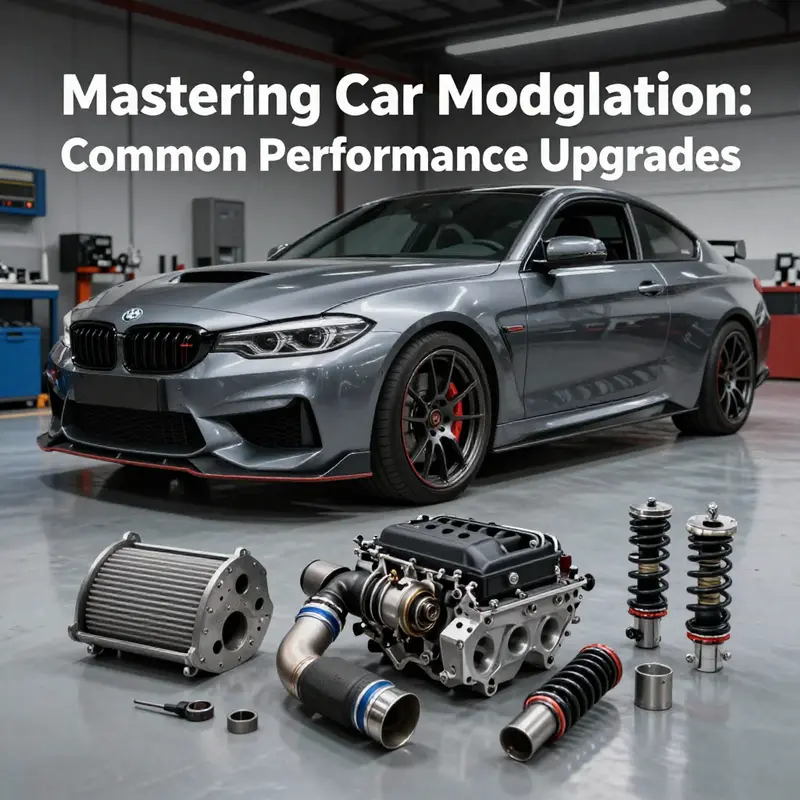
The pursuit of performance is a balance of intention, safety, and reliability. This chapter treats upgrades as a cohesive design problem rather than a scattershot bag of parts. It emphasizes building a system where power, handling, and braking work together, guided by testing and data. Start with clear goals and constraints, then sequence improvements: intake and exhaust to improve breathing, suspension and braking to sharpen control, and weight reduction or aero tweaks where appropriate. Throughout, safety and legality stay central, ensuring daily drivability remains intact. The aim is a car that accelerates with confidence, steers with precision, and stops with predictable feedback. Upgrades should enhance driveability and reliability, not merely peak horsepower, and every change should be validated with real-world testing, professional alignment, and awareness of maintenance implications. This disciplined approach treats the car as an integrated system rather than a collection of independent add-ons.
Visual Alchemy: Crafting a Car’s Identity Through Aesthetic Modifications
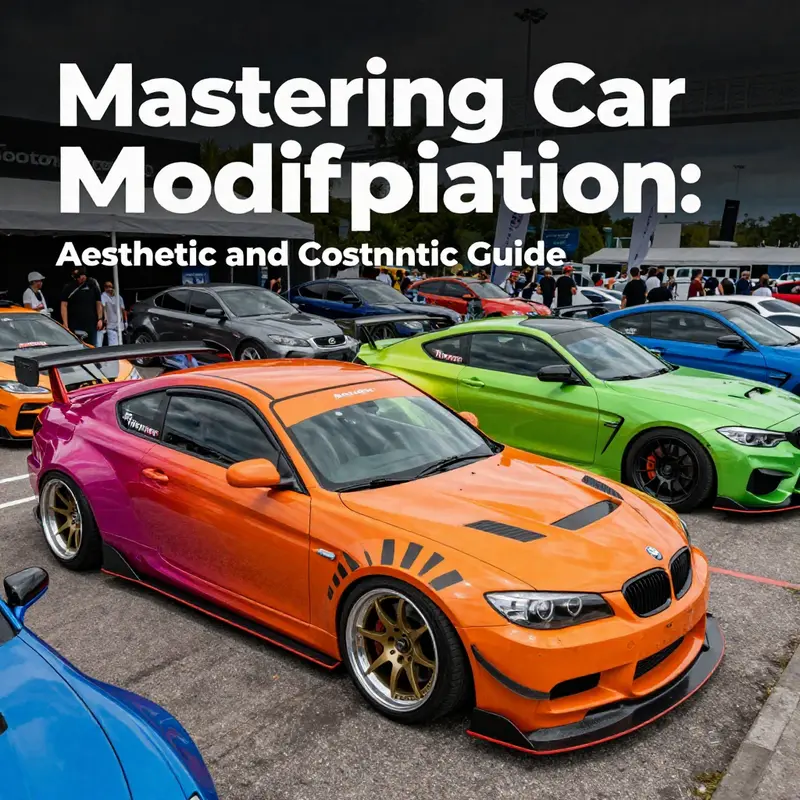
A car is rarely only a machine to move from point A to point B. It is a portable space where personality, mood, and taste converge. When you choose to modify its appearance, you are not chasing trends so much as translating a personal story into metal, paint, and texture. Aesthetic and cosmetic changes, distinct from performance work, center on how the vehicle presents itself to the world and how it feels when you sit behind the wheel. The goal is not merely to attract attention but to create a coherent, aspirational identity that remains legible across different roads and moments. In this chapter, the focus is on exterior and interior styling choices that elevate the car’s visual language while preserving usability, value, and a sense of quiet ownership. The journey begins with a vision, grows through careful selection, and culminates in a cabin and silhouette that communicate your values without demanding compromises elsewhere in life on four wheels.
Aesthetic work begins with conversation—between you and your vehicle. The exterior is the first act of that conversation. Color sets a tone before any lines or textures are felt. A glossy black can read as confident, modern, and restrained, while a carefully chosen wrap or paint in a high-contrast hue suggests boldness and clarity of purpose. Matte finishes, chrome accents, and subtle metallic flares all contribute to a visual cadence that your eyes will recognize from a distance and a touch will confirm up close. Color language, in particular, matters: the hue of the body interacts with the surrounding environment, lighting, and even the car’s silhouette to produce a sense of scale, speed, and elegance. Whether you favor restrained monotones or a two-tone scheme that nods to classic design, the aim is to maintain harmony with the car’s proportions rather than fighting them through loud contrasts.
Beyond color, surface treatment communicates intent. A clean, well-defined line or a softly integrated contour can sharpen the perception of nimbleness or stability. Car styling often benefits from restraint: a well-placed split line, a subtle contour on the hood, or a modest diffuser can create the impression of purpose without shouting. This is where the idea of a body kit moves from a pure performance discussion into aesthetics. A kit can accentuate the car’s stance or silhouette, adding a sense of aggression or refinement depending on how it’s designed and installed. The key is to avoid kits that overwhelm the original lines or introduce elements that feel incongruent with the car’s proportions. A visually coherent silhouette speaks with confidence, not with bravado.
Wheels and tires are immediately noticed cues of personality. The choice of wheel diameter, spoke pattern, and finish has a disproportionate impact on how the vehicle sits and how it is perceived at a glance. Lightweight alloys, thoughtfully contoured spokes, and finishes that echo or contrast with the body color can alter the perceived engineering philosophy of the car. The tire pairing—width, profile, and tread pattern—affects not just grip but the overall tactile impression of the vehicle’s stance. Rim design can shift the perceived age of a car, making an older chassis feel contemporary or a modern one feel even more purposeful. Coupled with an appropriate tire choice, these visual decisions deliver both aesthetic satisfaction and a sense of grounded practicality, because the tires anchor the design in real-world performance cues while remaining outward-facing style statements.
Lighting is another crucial instrument in the aesthetic toolkit. Upgraded headlights, accent lighting, and carefully executed taillight hints can transform the car’s nighttime presence. LED elements offer precision, brightness, and the potential for color accents that emphasize the car’s character. Yet lighting should be used with care. Excessive brightness, distracting colors, or misaligned elements can degrade visibility or draw unintended attention, clashing with a design that seeks poise and balance. The idea is to illuminate the car’s features rather than to blind onlookers or create glare. Subtle underglow or glow accents, when permitted by local regulations, can add a sense of theater without compromising safety or legibility. The result is a vehicle that reads as thoughtfully designed in both daylight and dusk, a thing that looks intentional rather than impulsive.
Decals and graphics occupy a narrower, more personal lane of aesthetics. They offer a way to declare interests, motifs, or affiliations without altering the fundamental architecture of the car. A well-executed graphic can feel like a piece of wearable art on four wheels, easing the transition from concept to everyday reality. The risk here is over-saturation: a car that wears too many motifs can blur its own story. The most successful uses of decals or graphics are crisp, aligned, and limited in scope. When done with restraint, they become quiet signature marks that invite closer inspection rather than shouting for attention from across the street.
The interior represents the second, equally important act in shaping identity. The interior is a tactile laboratory for mood, comfort, and focus. The aim is not to replace the core experience of driving but to refine it into a space that supports presence, calm, or exhilaration—depending on what you seek. Seat covers, for instance, can introduce color, texture, and a different feeling under the hands and legs. Materials matter: leather, suede, or fabric can alter warmth, grip, and endurance under daily use. Patterns, stitches, and density of seams contribute to a sense of craftsmanship and can transform a standard cabin into something that feels custom-tailored. Even small changes—like choosing a premium shift knob or a refined steering wheel cover—offer perceptible upgrades in texture and engagement, without requiring structural changes or complex installations.
One of the most powerful interior avenues is ambient lighting. The right lighting palette inside a cabin can shift the emotional climate of a drive. Soft hues around the footwells or under the dashboard create a cocoon of controlled atmosphere, enabling you to relax after a long day or sharpen focus during a late-night ride. The color options can be coordinated with exterior themes to reinforce a cohesive story. In addition to lighting, the organization of space matters. Minimal clutter, purposeful storage solutions, and careful placement of accessories can make the interior feel serene and intentional. It is possible to combine luxury with practicality by selecting materials and configurations that tolerate daily use while preserving an elegant, calm aesthetic.
In the broader landscape of automotive style, a newer discipline has gained momentum: the goddess-style car aesthetic. This approach moves beyond flash to cultivate interior environments that nurture balance, mindfulness, and a sensory sense of well-being. It embraces soft luxury, natural textures, and subtle rituals that turn the cabin into a mobile sanctuary. The goddess style emphasizes a color palette associated with serenity and grace—blush pinks, warm beiges, sage greens, lavender accents, and champagne tones—paired with materials that feel warm and tactile. Linen, velvet, wood, ceramic, and smooth stone elements are introduced in measured, balanced ways to avoid indulgence or clutter. The sensory experience becomes central: scents, textures, and organized spaces are choreographed to promote inner calm, reduce distraction, and foster a mindful approach to driving. The objective is not to create a showpiece but to build a space that supports better day-to-day living, a sanctuary on wheels rather than a stage for performance.
This interior philosophy also invites a broader conversation about personal meaning and the car as an extension of identity. A goddess-style interior might integrate decorative accents that reflect values or beliefs—carefully chosen pendants or artisanal pieces that resonate on a symbolic level. These touches are not meant to dominate the cabin but to exist as intentional, meaningful details that enhance the overall mood. The result is a car interior that feels not only beautiful but emotionally resonant, a place where routine travel becomes a ritual that aligns with how you want to feel as you move through the world. It is about making a space both visually pleasing and emotionally supportive, a deliberate counterbalance to the stresses of daily life.
The design process itself benefits from a thoughtful, methodical approach. Start by collecting inspiration that speaks to the story you want the car to tell. Mood boards, clippings, fabric swatches, and paint samples can be gathered in a single notebook or digital folder to reveal patterns and themes. Consider how exterior choices will harmonize with interior materials. If you gravitate toward a soft, warm, tactile environment, you might favor gentle color contrasts and natural textures inside, with exterior colors that echo those tones. Conversely, a sharper, more contemporary interior can be complemented by a sleek, high-contrast exterior that emphasizes clean lines and refined geometry. The relationship between what is seen outside and what is felt inside is not incidental; it is a deliberate design choice that reinforces the car’s overall personality across different contexts—morning commutes, weekend getaways, or late-night city cruises.
A practical step in this journey is to acknowledge the difference between reversible cosmetic modifications and permanent alterations. Exterior finishes, wraps, and decals can often be reversed or changed with relative ease, preserving resale value should your preferences shift. Inside, removable seat covers, trim overlays, and non-invasive mood lighting are similarly reversible options that allow experimentation without binding you to a single aesthetic for years. Maintaining reversibility is not about hesitation; it is about preserving flexibility as your life, tastes, and needs evolve. The intention is to create lasting satisfaction while leaving room for future refinement, rather than committing to a look that might someday feel outdated or incongruent with your evolving sense of self.
If you are looking for a practical compass to guide the process, a reliable memory is this: begin with a narrow focus and progress gradually. The most successful aesthetic projects unfold through deliberate, incremental steps rather than an all-at-once rebuild. The initial phase might be as modest as upgrading interior lighting and swapping a few tactile components, followed by a careful exterior color and wheel selection. Each step should be tested against daily use, verifying that visibility, comfort, and safety remain uncompromised. The aim is to accumulate a coherent narrative that is stronger for its cumulative subtlety than for any single showpiece. In this sense, the car becomes not a collection of disparate touches but a curated expression of taste, discipline, and lived experience.
To support your planning and execution, there is a concise resource that outlines general steps and considerations for car modifications. A practical guide to planning and executing these changes can be found in the car-modifications-guide. This reference can help you map goals to feasible options while reminding you to prioritize safety, reversibility, and alignment with local regulations. car-modifications-guide
As you refine the personal story your car tells, keep in mind several important considerations that connect aesthetics to daily life. First, legal compliance is essential. Legislation around lighting, window tinting, and the visibility of certain exterior changes varies by region. You should verify that your choices comply with local rules to avoid penalties or the need to undo work. Second, resale value is a practical factor. Not every modification will improve the market appeal of a used car. The most valuable aesthetic investments tend to be reversible or highly desirable in the enthusiast community, especially those that preserve the original lines and construction. Third, budget and safety should guide decisions. It is better to invest in a few well-executed touches that endure than to chase frequent, low-quality updates that degrade the cabin or diminish visibility. Finally, remember that modifications should enhance, not hinder, everyday life. Aesthetic changes must support comfortable, safe driving and intuitive use of controls, storage, and accessibility.
In this light, the goddess-style interior concept offers a powerful example of how interior and exterior choices can be tethered to a philosophy of living well on the road. The palette, textures, and spatial arrangements are not arbitrary; they embody a deliberate intention to reduce clutter, cultivate calm, and create a sense of beauty that aligns with daily routines. The result is a car interior that feels less like a showroom and more like a personal retreat, while still preserving the practical demands of driving, parking, and long trips. It is this balance—between aesthetic elegance and everyday function—that defines successful cosmetic modification.
For readers seeking further inspiration that connects goddess-style ideas with broader design principles, this trend is well documented and discussed in contemporary automotive and design discourse. A memorable case study of the goddess aesthetic and its practical application can be explored through the referenced article on goddess-style interiors, which delves into color theory, materials, and sensory considerations in more depth. The goal here is to translate those concepts into actionable, car-specific decisions that enhance daily life without compromising safety or legality.
In practice, the outcome of aesthetic modification is a car that feels uniquely yours at every turn of the key. Exterior choices shape first impressions and the driving persona you project to others, while interior touches shape the moment-to-moment experience of being inside the cabin. When approached with care, these modifications create a cohesive, expressive vehicle that stands out not merely for its surface but for the sense of intention embodied in every surface, seam, and glow. It is in this synthesis that aesthetic modification becomes more than decoration; it becomes a disciplined act of self-expression, a way to align how you move through the world with how you want to feel while you move. The car, in this sense, becomes a reflective surface—a mirror of taste, discipline, and the quiet confidence that comes from driving a vehicle that supports your mood and your daily rhythm.
As the conversation around modification evolves, it invites you to consider how your choices interact with other aspects of car ownership. You might eventually plan to layer a few performance-oriented accents or pursue a more integrated interior upgrade that blends function with beauty. The overall arc remains the same: begin with a clear sense of purpose, choose options that reinforce a consistent narrative, and test changes gradually to ensure compatibility with your life on the road. The aesthetic path is not a departure from responsible modification; it is a complement to it, designed to enrich daily driving while maintaining core standards of safety, legality, and value. The art of car modification, when practiced with care, becomes a long-term dialogue between your identity and the vehicle you call mine, a partnership that grows with time rather than a one-off transformation.
In closing, the aesthetic and cosmetic chapter of car modification invites you to see the vehicle as a canvas and a companion. It is an invitation to curate a space that feels both beautiful and usable, to tell a story without words, and to do so in a way that respects the vehicle’s origins, your daily realities, and the communities that share a passion for personalized transport. The road ahead offers countless horizons for color, texture, and form, limited only by taste, restraint, and the willingness to test ideas with care. When design is guided by a sense of proportion, purpose, and personal meaning, the result is not a showpiece but a living, evolving expression of who you are as a driver and as a creator. The journey, then, is as important as the destination, and the car becomes a faithful collaborator in the ongoing work of shaping a life lived with intention and style on the move.
External resource for further reading on goddess-style interior design in cars and related trends: https://www.caranddriver.com/features/a40789651/goddess-style-car-aesthetic/
Final thoughts
In the world of car modification, purpose and planning are your best companions. From defining your goals and setting a budget to selecting performance and aesthetic upgrades, each step you take brings you closer to achieving your automotive dreams. Remember, the journey of modification is just as important as the final outcome—approach each phase with care and consideration for safety and legality. With the right knowledge and resources, you can transform your vehicle into a true reflection of your personality and ambitions. Drive with passion, and let your unique style shine on every road you conquer.