
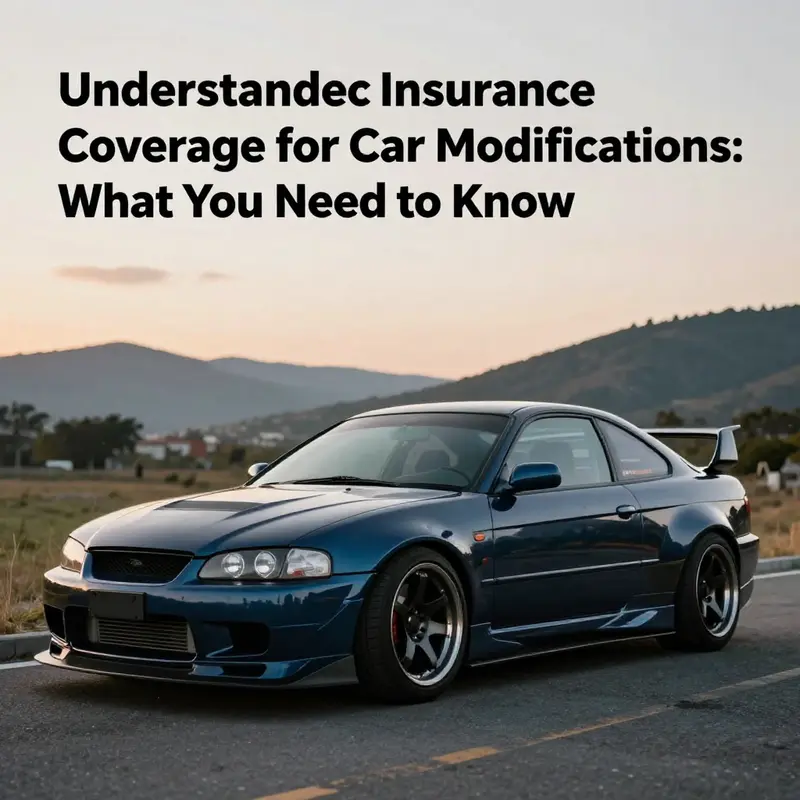
Car modifications are a mark of passion and creativity for many automotive enthusiasts. Whether you’re a hobbyist tweaking your daily driver or a professional tuner pushing boundaries for performance, understanding how insurance covers these modifications is essential. Often, enthusiasts unknowingly risk their coverage because standard auto insurance policies typically don’t cover modified parts, placing a heavy burden on their wallets in the event of a claim. This article unpacks the complexities of insurance as it pertains to car modifications, discussing the critical aspects and considerations you should take before altering your ride. We will delve into insurance policy implications and guide you through navigating claims and coverage, ensuring you’re well-informed and prepared for every twist and turn on the road ahead.
Under the Hood of Coverage: How Car Modifications Reframe Insurance, Risk, and Real-World Claims
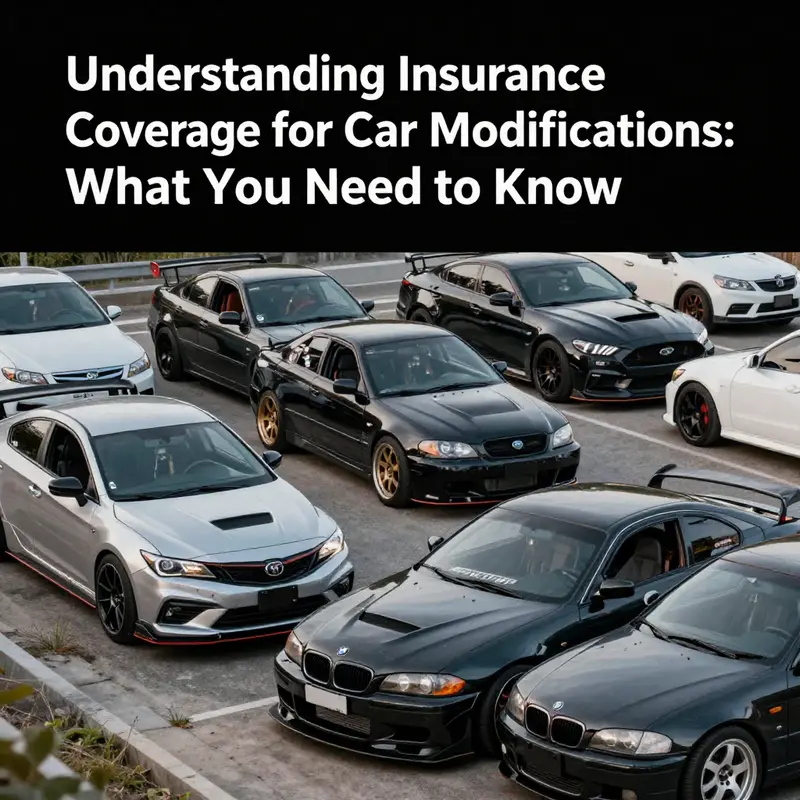
Modifying a car is a form of personal expression, a way to tune performance, comfort, or image into something that feels distinctly yours. It is also, increasingly, a test of how a consumer’s risk is understood and priced by the insurance system. The idea that “modifications are just parts added to a vehicle” misses a deeper truth: in the eyes of an insurer, every aftermarket wheel, exhaust, suspension change, or engine tweak can shift the vehicle’s risk profile in meaningful, sometimes unpredictable, ways. Reading the question, does insurance cover car modifications, as a simple yes or no, is to miss the anatomy of coverage. The answer depends on several interwoven elements: the nature of the modification, how it changes risk, whether it was disclosed, and the precise language of a policy or rider. In practice, the relationship between modifications and coverage is less a single clause and more a landscape of eligibility, conditional limits, and often, gaps that must be navigated with care and foresight.
The foundation for any thoughtful discussion begins with legality and transparency. Insurers operate within a framework of contract law and risk regulation that prizes accuracy and predictability. The most crucial step in insuring a modified vehicle is not choosing the parts but informing the insurer in writing before any change occurs. This is more than courtesy; it is a contractual obligation in many policies. Failing to disclose significant changes can be treated as a material misrepresentation, which grants the insurer the right to deny claims or even cancel coverage after a modification is made. In practical terms, this means a modification that vaults the risk profile—such as adding a turbocharger, altering the chassis in a way that changes suspension geometry, or expanding the stopping power beyond factory specifications—should trigger a conversation with the insurer before purchase or installation. It is not about stifling creativity but about preserving the protective intent of the policy. When a modification is contemplated, you should seek written guidance on whether a formal endorsement, rider, or additional policy form is required. This conversation, though sometimes awkward, is the best hedge against later surprises in the event of a claim.
Risk assessment in the insurance world is a science tempered by judgment. Insurers calculate how likely a vehicle is to be involved in an accident, and how costly that accident might be if it occurs. Modifications can tilt this balance in two directions at once: they can raise the probability of a loss, and they can amplify the severity of a loss. Performance upgrades like turbocharging, bespoke suspension work, or high-traction tires can alter acceleration, handling, weight distribution, and braking requirements. Even cosmetic or comfort-oriented modifications—though not originally designed to affect performance—can change risk if they obscure or delay important safety signals, or if they lower the driver’s margin for error. The actuarial logic is not simply about the price of parts; it is about how those parts influence the likelihood and cost of future claims. In quantitative terms, studies referenced in industry discussions note a meaningful uptick in claim frequency for modified vehicles relative to stock versions. A cautious estimate might place average claim frequency for modified vehicles well above standard models, with performance-focused modifications pushing those numbers higher still. The takeaway for a driver is clear: upgrades are not free risk; they are new risk that must be priced and managed.
Premiums are the most visible expression of that risk recalibration. Insurers routinely adjust premiums to reflect the enhanced risk profile of a modified car. The math behind these adjustments is not arbitrary or punitive; it follows the same principle that governs any underwriting decision: more risk demands higher compensation to maintain the insurer’s overall portfolio stability. The extent of the increase depends on the modification’s type, scope, and how it interacts with the vehicle’s original design. A modest upgrade might result in a modest premium uplift, while a dramatic performance overhaul could produce a substantial premium increase. The other factor shaping premium changes is the degree of disclosure. When the insurer is fully informed, they can price the risk more accurately and in many cases provide avenues to insure the modifications through endorsements or specialized policies. When disclosure is missing, the risk is mispriced, and the insured party carries the peril of denied claims should an accident occur after the modification. The moral is straightforward: transparency reduces uncertainty for both sides and generally yields a clearer path to coverage, albeit with higher ongoing costs.
Another layer in the coverage question concerns the actual protection a standard policy affords for modified components. In most personal auto policies, the default stance is to cover the vehicle’s original factory equipment, with some exceptions for added equipment up to a specified limit. This means that if you install aftermarket wheels, a custom body kit, or an upgraded audio system, these items are not automatically covered by a standard policy in the way the factory parts are. If an accident damages a modified part, the insurer will often pay to repair or replace the OEM parts and may not extend the same compensation to the aftermarket components. In practice, a claim for a damaged upgraded exhaust system or a specialized intake manifold may be denied or paid only up to the depreciated value of the aftermarket item, not its purchase price. This gap is not a function of malice; it is a function of policy design. To bridge it, many drivers pursue add-ons that explicitly insure the newly installed equipment. A familiar form of this is the “Newly Added Equipment” coverage or a similar rider, designed to insure the aftermarket parts themselves. The practical effect is that without such an add-on, an accident can leave a valuable modification either underinsured or not insured at all. The decision to obtain such an endorsement rests on the scale of the modifications, their cost, and how essential they are to the car’s purpose.
The narrative becomes more intricate when liability considerations come into play. Even when a modified car has maintained comprehensive or collision coverage that excludes aftermarket parts, a claim can be denied if the modification is found to have caused or contributed to the accident. Consider, for instance, a poorly installed turbocharger that overheats or fails, leading to a fire or an engine failure that triggers a broader loss. If the insurer can tie the incident to the modification’s installation or function, coverage for that accident can be compromised. The risk is not merely about replacing parts; it is about whether the policy’s terms align with the changed risk dynamics. The broader implication is clear: modifying a car can affect your entire claim outcome, not just the repair bill. That is why the step of notifying the insurer and securing an explicit agreement on coverage is so critical. It is also why many drivers facing major performance or structural modifications consider specialized policies designed for modified or performance vehicles. These policies can offer more precise terms, clearer guidance for claim handling, and a level of expertise that general auto insurance may lack. But they come at a price, and the terms are stringent. The bottom line remains consistent: you should not assume your modifications are automatically protected by a standard policy.
To operationalize these risk and coverage dynamics, the insurer will frequently request thorough documentation. Documentation becomes the evidence that the modified vehicle is both legally compliant and accurately valued for the purposes of insurance. The essentials usually include original purchase receipts and detailed invoices for every modification, photographs that show the vehicle before and after the work, and any official certifications or compliance documents from manufacturers or third-party testing labs. If a modification alters the vehicle’s registration status or requires DMV approval, records of that process can also be important. The absence of robust documentation is a common reason for claim denial, even when the modification itself is perfectly legal. The more you can demonstrate the modification’s value, provenance, and safe integration with the vehicle’s systems, the smoother the claims experience is likely to be.
This is where the practical path to reliable coverage bifurcates into two routes: a straightforward, fully disclosed approach within a standard policy that uses endorsements to cover the specific aftermarket items, and a more specialized route that relies on modified-vehicle policies designed from the ground up for enthusiasts. The former is generally cheaper in upfront premiums but demands careful documentation and ongoing diligence. The latter offers clearer terms for a broader set of modifications and may simplify claims handling in the event of a loss; however, it often comes with higher premiums and stricter conditions. Industry discussions and market observations suggest that there is a relatively narrow but growing niche of insurers who actively court modified-vehicle customers with dedicated products. This niche sometimes features more experienced adjusters who understand aftermarket parts, faster claims processing, and more precise payout structures for customized vehicles. The reality, however, is that this market is not universal. Consumers should research and compare providers who offer specialist coverage for modified cars, balancing cost, comprehensiveness, and the insurer’s reputation for handling aftermarket claims fairly and efficiently.
For readers seeking a practical starting point, the key steps are straightforward, even if the path may diverge based on jurisdiction and carrier. First, articulate your planned modifications in writing and contact your insurer before any work begins. Ask explicitly whether an endorsement or rider is required, and whether there are any restrictions on the types of modifications eligible for coverage. Second, gather documentation early—retain invoices, take clear before-and-after photos, and obtain any required certifications or compliance documents. Third, discuss the possibility of an add-on that insures the value of the aftermarket components, not just the vehicle’s factory equipment, and obtain a written quote that shows how premiums would change with the modifications in place. Fourth, compare options among providers, with attention to those that specialize in modified or performance vehicles. A useful reference point in the field is the dedicated article on insurance considerations for modified cars, which can provide practical guidance and policy comparison tips. Insurance for modified cars offers a framework for understanding what to ask and what to expect when negotiating coverage for aftermarket parts. Even if you decide not to pursue a specialized policy, the article helps crystallize the question: how do your specific modifications align with your policy’s language, exclusions, and endorsements?
The science and art of insuring modified cars also involve keeping an eye on the broader regulatory and market environment. Legal compliance is not merely a matter of avoiding trouble; it is a condition that underpins the insurer’s willingness to provide coverage and the terms on which it will do so. A vehicle that does not meet applicable safety standards or that has modifications that violate local, state, or national rules can trigger automatic policy rejection, policy cancellation, or dramatic post-loss reductions. In many jurisdictions, even changes to the exhaust system, lighting, or emissions equipment can cross legal lines if they fail to conform to safety codes or environmental regulations. The upshot for owners is that the pursuit of performance or aesthetics must be balanced against safety, legality, and the insurance framework that makes ownership viable. This is not a cautionary tale about stifling personal taste; it is a reminder that the value of a modified car is inseparable from the ability to secure reliable protection against risk.
Where does this leave a car owner deciding whether to modify and how to insure? It leaves them at a crossroads where foresight, documentation, and clear communication with the insurer determine not only the cost of ownership but the likelihood that a claim will be honored when the unexpected happens. If the owner is intent on adding a significant performance upgrade, a careful calculation should be made that weighs the upgrade’s functional benefits against the incremental risk and the total cost of coverage, including any endorsements or specialized policies. If the owner wants to preserve the most straightforward path to coverage, they may opt for more modest modifications or seek insurer-approved options that are known to maintain a smoother risk profile and predictable coverage terms. In either case, keeping an open dialogue with the insurer, ensuring compliance with legal standards, and maintaining rigorous records remains the anchor that supports a safe and protected driving experience.
Ultimately, the question is not simply whether modifications are covered but how coverage is structured to accommodate them. The answer rests on clarity: what is being modified, how it changes risk, and whether the insurer agrees to insure that new risk with explicit terms. The prudent driver will treat modification as a change in risk management, not a cosmetic or convenience upgrade. They will prepare for higher premiums, more detailed documentation, and, potentially, a different policy form or endorsement. They will also be aware that liability considerations can influence the entire claim outcome, making transparency and accuracy essential, not optional. In this sense, insurance coverage for car modifications is less about a blanket yes or no and more about building a tailored, well-documented agreement that aligns the driver’s goals with the insurer’s responsibilities.
The journey toward secure coverage for modified cars is ongoing and evolving, shaped by advances in auto technology, changes in regulatory expectations, and the emergence of specialized products that acknowledge the growing enthusiasm for customization. As a practical matter, the best path forward is proactive engagement: disclose fully, document meticulously, and pursue a coverage structure that reflects the vehicle’s true character. That approach protects not only the parts and the car’s value but also the driver’s financial resilience in the event of a crash or other loss. For readers who want a concise checklist to anchor this process, the steps are simple in principle and demanding in execution: decide on modifications with safety and legality in mind, notify the insurer in writing before any work begins, seek appropriate endorsements or riders, assemble complete documentation, and compare coverage options across providers with an eye toward specialists who understand the nuances of modified vehicles. This disciplined approach is the most reliable way to keep your car’s personality from becoming a liability, while still enjoying the benefits that make it uniquely yours.
As a final note, the landscape of insurance for modified cars is not static. It reflects ongoing tensions between consumer desire for personalization and the industry’s need to manage risk in a complex, data-driven world. The best practice remains the simplest: keep the conversation with your insurer open, honest, and ongoing. The result is not only better protection but also a clearer understanding of how your buying decisions and your driving can align with a policy that truly reflects your car’s life after modification. For readers seeking an external perspective on how regulators and insurers assess and price modified vehicles, credible industry resources such as the National Association of Insurance Commissioners provide a broad framework for risk-based pricing, underwriting practices, and consumer rights. See https://www.naic.org for additional context and guidance.
Insurance Policy Implications for Modifying Your Vehicle: Navigating Coverage, Risk, and Responsibility
Modifying a car is often described as a form of personal expression, a way to tailor a vehicle to your needs, your style, and sometimes your ambitions on the road. It is also a legal and financial decision that ripples through the way an insurance policy is written and how claims are evaluated after a crash or other loss. The broad truth is simple enough: modifications can change the risk profile of a vehicle, and unless insurers are fully informed about what you’ve done, coverage can become unclear or even unavailable when you need it most. The nuance, however, matters just as much as the headline. Not every modification trips the same wire, and not every market treats modifications with the same level of scrutiny. Yet the constant thread across jurisdictions is an emphasis on disclosure, documentation, and a clear understanding that standard auto policies are designed around factory equipment. When you step outside that baseline, you don’t merely alter the car’s appearance or performance; you alter the risk landscape—one that an insurer has already priced for when the policy was written.
At the heart of this landscape is disclosure. Insurance contracts are promises built on a view of the vehicle’s risk before any modification. If you plan to bolt on a turbo kit, install low-profile racing tires, or swap in aftermarket wheels, you should expect that the policy needs to be revisited. In many cases, the correct path is to inform the insurer in writing before any work begins. This is not a mere courtesy; it is often a contractual obligation. In some markets, there is a defined deadline after completing the modification—commonly a window of around ten days—to submit a formal request for a policy endorsement or rider. Missing that deadline can open the door to claim denials for damages tied to the modified parts, even if the accident occurred after the change. The practical upshot is straightforward: a modification is not automatically covered just because you own it. The coverage is contingent on having the insurer acknowledge and adjust the policy to reflect the new risk.
This process hinges on a second axis: government or regulatory verification of the modification. The practical question is whether the modification has been legally verified or approved by the relevant authority in your jurisdiction. When a modification is verified, the vehicle is treated as compliant with applicable safety and legal standards. In such cases, you are more likely to have access to the broadest form of coverage that a standard or a commercial policy can offer. This generally includes both compulsory third-party liability insurance and comprehensive coverage, though the risk profile will be reassessed and the premium adjusted to reflect the updated value and risk. In situations where the modification has not been verified or approved, the vehicle may be considered non-compliant. In those circumstances, insurers can limit coverage significantly, sometimes restricting it to the compulsory liability line and excluding damage to the modified components from a comprehensive or collision claim. This distinction between verified and unverified modifications underscores a central theme for modifiers: legality, certification, and formal recognition matter almost as much as the modification itself.
To understand why this matters, consider the mechanics of what your insurer is protecting. A standard policy is built to cover the original factory equipment, or OEM parts, and to compensate for losses caused by covered perils up to the limits of the policy. When you introduce aftermarket components, you are increasing both the value of the vehicle and, often, the potential cost of repair. Upgraded tires might be more expensive to replace, customized wheels can be more valuable, and a performance exhaust or engine tune can alter the likelihood and cost of repair in the event of an accident or fire. If the insurer cannot map the risk to a clearly defined, approved scope of modifications, it may decide that the added risk is outside the policy’s intended coverage. This is not a trivial distinction; it can determine whether a damaged bump sensor, a modified turbo, or a theft of upgraded audio equipment is paid for, or whether the claim is settled against the baseline, factory components alone.
Alongside the verification question sits the practical need for specialized coverage when you add equipment. Standard policies typically do not automatically extend to every aftermarket item. If you install sound systems, custom wheels, body kits, or performance upgrades, you should be prepared to discuss a separate, add-on protection sometimes described as an “Additional Equipment Loss Insurance.” This coverage is designed to enumerate each new component and assign a value to it, creating a clear list that the insurer accepts for coverage in the event of an accident, theft, or fire. If you neglect this step and you suffer a loss that involves the added equipment, the insurer may only pay to replace factory-installed parts, leaving the aftermarket components unreimbursed. The burden then falls on you for the cost of replacement or repair, which can be substantial when the added equipment carries significant value.
But the risk calculus does not stop at the value and verifiability of modifications. Insurers also scrutinize how modifications alter the vehicle’s dynamics and safety profile. Modifications that meaningfully affect power, handling, braking, suspension, or structural integrity can push a vehicle into a high-risk category. Engine tuning, significant increases in displacement, or changes that alter weight distribution and braking performance can create conditions where an insurer might decline to provide coverage for accidents attributed to those modifications. The policy itself may include explicit exclusions for certain categories of risk or may require special endorsements to cover those risks. In some instances, the combination of altered performance and insufficient or poorly executed installation can invite denial if a claim alleges that the modification contributed to the accident or damage. The overarching message is clear: even if a modification is technically legal, it does not automatically guarantee that an insurer will cover everything that follows.
What this means for budgeting and planning is more practical than it might seem. Modifications almost always lead to higher premiums, in part because the vehicle’s value is higher and in part because the added/perceived risk is greater. Insurers price risk not just on the car’s current state but on the probability of future losses and the expected cost of repairs. A modified vehicle can be more attractive to thieves, more difficult to repair, or more expensive to insure due to the specialized labor and parts required. Some of these premium adjustments are immediately apparent in the quote phase, while others become evident only after you seek coverage for a specific modification. The key is to anticipate this cost and factor it into your decision about what to modify, how to modify, and when to modify.
Beyond these financial and risk considerations lies the more practical, day-to-day reality of claims handling. If you modify your car and fail to notify the insurer, you risk invalidating claims for accidents that occur after the modification. Even for baseline liability coverage—the kind often mandated in many markets—the insurer can argue that the modification caused or contributed to the accident, and therefore the claim might be denied. A poorly installed component can be implicated in a fire, a collision, or a loss through theft. The cautionary takeaway is straightforward: do not assume that a modification will ride along under the umbrella of your existing policy. The safest approach is to secure clear approval before you begin, document the process meticulously, and ensure that the policy language aligns with the changes you intend to make.
The best way to translate this into practical steps is to move from intention to formal recognition. Before you lift a hammer or twist a bolt, consider the legal and insurance landscape. Start by consulting the relevant authorities or registration bodies to confirm what changes require official approval and what procedures must be followed. In many regions, this step is essential not only for policy compliance but also for ensuring that your vehicle remains street-legal and roadworthy. Once you have confirmation, reach out to your insurer in writing, describing in detail the modifications you plan to undertake. Outline the parts, the expected values, the installation methods, and the anticipated impact on performance. The insurer will tell you whether you need a formal endorsement or rider to your policy and whether any of the added equipment requires separate coverage. It is common for insurers to require an itemized list of all new components, including purchase prices and installation costs. If the insurer approves the plan, you’ll likely receive a revised policy or an endorsement that explicitly covers the modified state of the vehicle.
In many markets, there is a practical, almost procedural, set of steps that translates these principles into a workable policy framework. First, inform the insurer in writing before the modification is completed. This is not a formality; it is the gateway to coverage that reflects the car in its altered state. Second, if the modification is verified by government authorities, your coverage options typically expand, and you may be eligible for both compulsory third-party liability and comprehensive protection, subject to risk reassessment and premium adjustments. Third, for added equipment, obtain the supplementary coverage that specifically covers those components. Fourth, if you pursue high-risk or performance-enhancing changes, expect the insurer to scrutinize whether coverage remains available for accidents involving the modified aspects, and be prepared for exclusions or outright denial if the changes are deemed to significantly increase risk without proper safeguards. Fifth, plan financially for higher premiums and for the potential need to replace specialized parts with equivalent aftermarket components in the event of a loss. Finally, maintain comprehensive records: invoices, receipts, official approvals, registration documents, and any correspondence with the insurer. These documents will smooth the claims process and reduce the chances of dispute when a loss occurs.
A note on practical storytelling helps connect these policies to everyday realities. Imagine you are installing a turbocharger and a new exhaust system to gain performance. If you disclose this plan, the insurer will assess the risk, and you may be offered an endorsement that covers the modifications, possibly with a higher premium and with explicit terms about what is and isn’t covered. If the install is performed by an experienced technician, with proper safety checks, and the modification is verified, you are more likely to obtain a robust level of protection. On the other hand, if you install the kit clandestinely, fail to document the components, or skip the verification process, you risk the very outcome you want to avoid: a claim denial when a crash happens or when a component fails. The moral is not to stigmatize modifications, but to treat them as a responsible partnership with your insurer, built on transparency, legality, and proper coverage.
From a policy design perspective, this landscape suggests several best practices that are practical and repeatable. First, engage early with both the vehicle registration authority and the insurer. The goal is to align regulatory compliance with insurance coverage so that you do not end up with a mismatch between legal status and claim eligibility. Second, secure the endorsement or rider that addresses the modifications. Do not rely on the baseline policy to cover everything; if an endorsement exists, it encodes the insurer’s acceptance of the modified state and clarifies what is included in the coverage. Third, consider a dedicated line of protection for added equipment. A separate policy layer that lists every aftermarket component, its value, and its coverage terms can prevent disputes after a loss and ensure that the new components are repaired or replaced in full. Fourth, assess the risk of high-performance changes carefully. If the modification promises speed or enhanced handling, ensure that your installation includes appropriate safety enhancements, up-to-date maintenance, and a clear understanding of how the modification affects liability and collision coverage. Fifth, maintain meticulous records. Keep receipts, installation notes, serial numbers, and photos of the components. These records are not merely bureaucratic; they provide a concrete basis for claims and help resolve questions about the car’s condition after a loss. Sixth, actively review policy terms for exclusions. Some modifications may be explicitly excluded from coverage unless a special provision is added. If you anticipate a change that could trigger an exclusion, discuss it with your insurer upfront and seek the corresponding rider. Finally, recognize that specialized policies exist in some markets precisely to accommodate modified vehicles. These policies offer broader coverage for modifications but come with higher costs and more stringent conditions. If you pursue such a route, treat it as a strategic decision tied to your long-term ownership plans and risk tolerance rather than a shortcut to discount insurance.
One practical takeaway from all of this is humility about the limits of coverage. Insurance can protect you against the unforeseen and the accidental, but it does not automatically solve every risk that arises from a modification. The conversation with your insurer is not a one-time event at the policy’s inception; it is a continuing dialogue that should adapt as you modify the vehicle further or as circumstances change. If you move from a city with strict vehicle standards to a region with laxer rules, or if you upgrade components again, you should revisit your coverage in light of those changes. Your future self will thank you for maintaining that ongoing alignment between your car’s actual configuration and the policy that sits behind it.
For readers seeking a concise synthesis of these considerations, the essential message is this: do not assume modifications are automatically covered. Establish a plan that includes early disclosure, confirmed compliance, and explicit coverage for added equipment. Expect premium adjustments and potential coverage limitations for high-risk changes. Document everything, and keep the lines of communication open with your insurer. While the specifics of what is required can vary by jurisdiction and policy, the core principle remains universal: legal, transparent modification paired with proper insurance endorsement is the safeguard that translates your personal vision for your car into real, reliable protection when you need it most.
If you would like a deeper dive into the factors that influence insurance when you modify a car, you can explore further details at what-modifications-affect-car-insurance. This resource offers a focused look at how different kinds of changes intersect with coverage, helping you translate intention into a documented plan that your insurer can support.
External resource: For broader, industry-wide perspectives on regulated insurance and vehicle modifications, consult the National Association of Insurance Commissioners at https://www.naic.org/.
Beyond OEM: Navigating Coverage, Claims, and the Real Costs of Modifying a Car
Every driver who dreams of a personal touch on their ride eventually asks the same question: does insurance cover car modifications? The short answer is nuanced. Insurance policies are built on a baseline assumption—the car as it rolled off the factory line. When you begin to swap parts, tune the engine, or alter the chassis, you shift that baseline. Your insurer may still cover certain events, but most standard auto policies treat modifications as non-standard additions that require careful disclosure, specialized endorsements, or even a separate policy altogether. This reality doesn’t just affect what happens after a crash; it reshapes the entire risk calculus that determines your premiums, your claim eligibility, and your financial exposure if something goes wrong. To understand how to navigate this terrain, it helps to follow a single, coherent thread: what your policy actually covers, what it doesn’t, and how to protect yourself through proactive communication and precise documentation before any wrench meets metal. The underlying truth is straightforward yet often overlooked: modifications are not automatically insured. They demand explicit acknowledgment, careful underwriting, and, in many cases, a premium that reflects the new risk. This chapter will guide you through that landscape in a way that connects the direct, practical steps you must take with the broader realities of how insurers evaluate risk, price policies, and process claims in the modern era of auto insurance. The goal is not to deter creativity or savings through mods, but to illuminate the terms you will encounter and the actions that will keep your investment protected when reality intrudes—the moment of impact, or the moment of theft, or the moment a claim crosses the desk with a pile of receipts and a professional appraisal in hand.
At the core of the discussion lies a simple distinction: standard auto insurance generally covers damage to the vehicle’s factory-installed equipment and to the other party in an accident, but it does not automatically extend coverage to non-standard parts and modifications. When a modified component is damaged in a collision, your insurer often pays for repairs or replacement using OEM parts, not aftermarket or upgraded components, unless you have secured a policy endorsement or a rider that explicitly includes those modifications. This distinction matters for both what you can claim and how much you will pay out of pocket. If you install performance tires, custom wheels, an aftermarket exhaust, or engine tuning, those components are frequently classified as non-standard. If anything goes wrong with them in an accident, you could be on the hook for the full replacement or repair costs unless your policy has a rider that covers those specific additions. The risk is not theoretical: insurers price risk based on the vehicle’s exhibited state at the time of policy inception. When the car suddenly presents a different risk profile—greater power, altered handling, reduced or altered safety systems—that profile must be reflected in the premium. If the change is substantial and not disclosed, the insurer has a legal lever to deny or reduce a claim after an accident. The lesson is stark and direct: do not assume modifications are covered and do not modify without notifying your insurer.
The most important step you can take is to have a clear, documented conversation with your insurer before any modification work begins. The process of disclosure is not a mere formality; it is a risk-management move. You are asking the insurer to reassess the policy in light of new data about the vehicle’s risk profile. In many cases, providers will offer an endorsement or rider designed to cover both the residual value of the vehicle and the added value or cost of alterations. This is especially important for drivers who rely on a modified car for daily use, competitive driving, or a business purpose. The endorsement acts as a formal amendment to the policy, acknowledging the modifications and the way they are integrated into the underwriting. It can specify which parts are covered, the conditions under which they are covered, and the limits that apply to those parts. Without such an endorsement, claims involving modified parts may be subject to denial if the damage is linked to the modifications or to their installation. The risk for the insurer is straightforward: if the modifications increase the likelihood of loss or complicate the repair process, the policy must reflect that increased risk with adjusted terms.
For drivers who want to protect both the vehicle and their modification investments, there are a few practical, repeatable steps that can reduce the likelihood of a dispute after a claim. First, compile a comprehensive inventory of every modification, including make and model of parts, installation dates, installer credentials, and any warranty or service agreements. This inventory should be supported by receipts, invoices, and professional assessments where applicable. A well-documented modification log helps your insurer verify the scope of changes and evaluate risk more accurately. Second, photograph the vehicle in its modified state from multiple angles and in well-lit conditions. Photos should capture the condition of the chassis, body panels, wiring, mountings, and any safety-critical systems that were altered. Third, obtain a professional appraisal or valuation if your modifications add significant value to the car. A formal appraisal provides a defensible basis for determining the insured value of the modified vehicle and the replacement costs for non-standard parts should a total loss occur. Some insurers require an appraisal for high-value modifications; others may accept receipts and manufacturer specifications, but an appraisal often offers the most robust protection for both parties when the car is involved in a claim.
As you negotiate with your insurer, you will likely encounter terms that are specific to modified vehicles. An endorsement is or can be a vehicle’s passport into coverage for modifications. It can be tailored to cover not only the new parts but also the costs associated with installation, repairs, and, in some cases, theft. In many markets, insurers also offer specialized policies built specifically for modified cars. These policies are designed to cover both the car’s original exposure and the added cost of aftermarket components, but they come with higher premiums and more stringent conditions. Whether you pursue a rider on a standard policy or a stand-alone modified-car policy, the premium will reflect the additional risk. Insurers carefully assess factors such as the horsepower increase, the impact on braking and suspension, the nature of the modification’s installation (professional vs. DIY), and the likelihood of maintenance issues or component failure. The more radical the changes, the higher the price tag on risk management. You should expect a more demanding underwriting process, which will include a review of installation quality, the availability of spare parts, and a plan for ongoing maintenance.
Yet it is not enough to secure the right policy at the outset. You must maintain transparency as your car ages and as you make further changes. If you later modify again or upgrade a component, you should revisit your policy. The insurer needs to know about every subsequent modification because each change can alter the risk profile. The failure to disclose is a frequent source of dispute after a claim. If an accident occurs and the insurer discovers undisclosed upgrades that contributed to the risk, they may deny the claim or reduce the payout, arguing that the policy no longer reflects the vehicle’s true risk. The principle here is simple: honesty in disclosure protects you. It also protects the integrity of the coverage that you depend on when a loss occurs.
A practical way to embed this honesty into daily life with a modified vehicle is to treat the modification process as a phase of underwriting, not a one-off transaction. Before any professional work begins, schedule a conversation with your agent or insurer. Share a detailed plan of the modifications, the expected cost, and the intended use of the vehicle. If you are using the car for racing, track days, or a commercial purpose, say so. Insurers will want to know, in part because track usage changes not only the risk of collision but also the likelihood of certain kinds of damage. In some cases, insurers will require a usage restriction, higher deductibles, or a separate policy for track activities. The key is to confirm how each intended use case affects coverage and pricing. After the work is completed, supply updated documentation: new receipts, updated photos, and the revised valuation. This transparency reduces friction when a claim is filed and demonstrates that you are actively managing risk rather than merely hoping for coverage to appear if something goes wrong.
From a claims perspective, the existence of modifications introduces several potential avenues for dispute. A standard liability claim—often the minimum required by law—may still apply if the accident involves a modified vehicle, but the scope of coverage is where trouble commonly arises. If the modifier contributed to the accident or created a safety deficiency that led to the crash, insurers can argue that the modification is an intervening factor that shifts responsibility away from the policy’s baseline coverage. This is not a knock against modifications in general; it is a reminder that the line between covered risk and excluded risk runs through the design and installation of the modifications themselves. The safer strategy is to ensure your modifications are performed by qualified professionals and that every step—from parts selection to installation—is fully documented. The more robust your documentation, the stronger your claim’s footing will be if the unexpected occurs.
The topic of coverage also touches on the question of theft and vandalism. Many modern modifications carry higher replacement costs because aftermarket parts can be expensive to source and install, and some components have limited availability. If a modified car is stolen or parts are damaged in a break-in, the payout can depend on whether the insurer covers aftermarket parts as part of the vehicle’s overall insured value. Some policies will include a separate rider for aftermarket components or a specific theft coverage clause for the modified parts. Others may exclude certain items or cap the payout on non-standard components. This is why the earlier step—discussing coverage options before you modify—is so valuable. It not only clarifies how theft would be handled but also sets expectations for what happens if a component is damaged during a collision and subsequently damaged again in storage or during an attempted theft.
Another dimension worth noting is how modern claims handling intersects with technology. The auto insurance industry increasingly relies on digital tools to speed up processes and reduce friction when documentation is complex, such as in the case of modified vehicles. Optical character recognition (OCR) and automated data retrieval systems are being deployed to extract information from receipts, inspection reports, and permit documents with remarkable accuracy and efficiency. This means that the time to verify a claim and confirm coverage can shrink dramatically when the paperwork is in order and properly formatted. A well-structured digital submission that ties receipts to specific parts and installation dates enables adjusters to verify coverage quickly and consistently, reducing the potential for human error in a complicated claim involving non-standard parts. In turn, this technology helps maintain a fair balance: you are protected by coverage that reflects your modifications, while the insurer can assess risk accurately without becoming mired in manual data entry. For readers who want to explore how these technologies are reshaping the claims experience, an external resource provides a useful snapshot of industry trends in 2026 and beyond. Insurance Journal Article.
Despite the complexities, the core message remains compact: do not assume your modified car is automatically covered. Do not assume a blanket exemption from risk either. Instead, approach modification with a plan. Start with a conversation with your insurer before any work begins. Seek an endorsement if needed. Gather receipts, photos, valuations, and installation details. Decide early how you will document future changes. If you are pursuing a truly high-end or performance-oriented build, consider a policy specialized for modified cars, with terms that closely mirror the actual risk. Keep in mind that the premium is part of the cost of protection and not a penalty for your creativity or preferences. In many cases, the right endorsement will be worth its price because it promises clarity at claim time, reduces the risk of large out-of-pocket costs, and protects your investment in the vehicle, the parts, and the ongoing maintenance that keeps everything working as intended.
The broader takeaway is that modifications do not erase risk; they redefine it. The insured value, the likelihood of a loss, and the risk of a denied claim all shift when you alter the car. The way to preserve peace of mind is proactive engagement with the insurer, precise documentation, and a willingness to align your ambitions with the realities of coverage. This is not about discouraging modification; it is about ensuring that the coverage you rely on keeps pace with your car’s evolution. If you understand and manage the risk, you can still enjoy the benefits of customization—without the fear that a single claim could unravel your financial security.
For readers who want to delve deeper into how modifications influence insurance decisions, a focused resource on the topic can be helpful. An accessible entry point is the article that discusses how modifications affect car insurance, offering practical guidance drawn from policy norms and underwriting practices. It can serve as a practical companion to the steps outlined here and help you prepare your documentation and conversations with your insurer. In addition, those who want to understand how modern claims technologies can streamline the process should review the external industry resource linked above. Together, these perspectives illuminate a path that blends personal customization with prudent risk management, so you can pursue your automotive vision without compromising financial protection.
To connect this discussion to concrete actions you can take today, consider selecting one of the following paths. If you are contemplating your first modification, plan a pre-modification consultation with your insurer to discuss which upgrades can be covered, which require endorsements, and how much the added premium might be. If you already own a modified car, gather all documentation, including receipts and photos, and request an updated valuation and coverage terms. If you anticipate additional changes, map out a rolling documentation strategy so you can keep your insurer informed as your build progresses. And if you want a concise primer on how modernization is changing the claims experience, keep the linked external resource in mind as a reference point for the latest industry developments.
Ultimately, your pursuit of a customized vehicle should be paired with a disciplined approach to insurance—a balance between protection and performance, between the thrill of modification and the prudence of disclosure. With careful planning, the custom car you love can remain a vehicle of pride rather than a source of financial anxiety when the unexpected arises. The road to secure modification starts with a conversation, continues with documentation, and concludes with a policy that reflects the new reality of your ride. This is the practical pathway to ensure that, even after you lift the hood and turn the screws, your coverage keeps pace with your car’s evolving story.
Internal link note: for a focused look at how modifications affect car insurance, see what modifications affect car insurance. (Internal link: https://modifiyeliarabalar.net/blog/what-modifications-affect-car-insurance/)
Final thoughts
Understanding the intricacies of how insurance policies cover car modifications is vital for all automotive enthusiasts. The vibrant world of car modding offers a thrilling way to express individuality and enhance performance, but with that comes a level of responsibility regarding your insurance coverage. As you digest the details in this article, remember that keeping your insurer informed about any changes to your vehicle is essential. Such transparency not only protects your investment but also ensures compliance with your policy’s terms. Arm yourself with knowledge, and let your passion for car modifications flourish without the fear of costly missteps when it comes to insurance.