
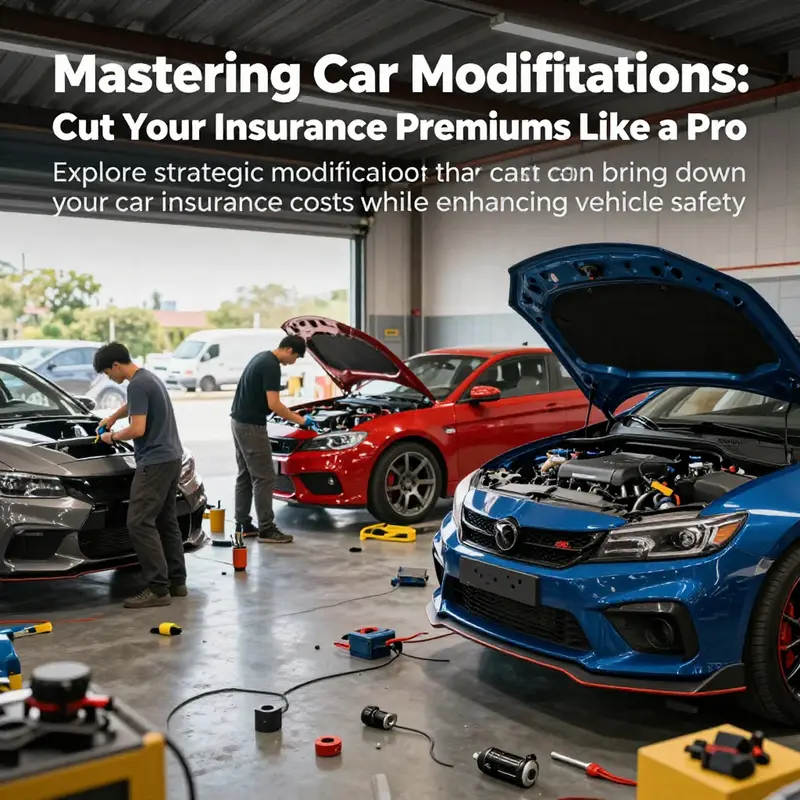
For hobbyist car modifiers, professional tuners, and classic car enthusiasts, the thrill of enhancing a vehicle goes hand-in-hand with cost management. One often overlooked aspect is the potential to reduce car insurance premiums through strategic modifications. This guide delves into four key areas that not only elevate your vehicle’s performance and safety but also significantly trim down your insurance costs. From installing robust safety features and adjusting deductibles to maintaining a pristine driving record and selecting the right vehicle, each chapter reveals how thoughtful enhancements can lead to tangible savings. Get ready to discover how your passion for car modifications can be harmonized with fiscal responsibility.
Safer by Design: How Vehicle Modifications Can Lower Car Insurance Premiums
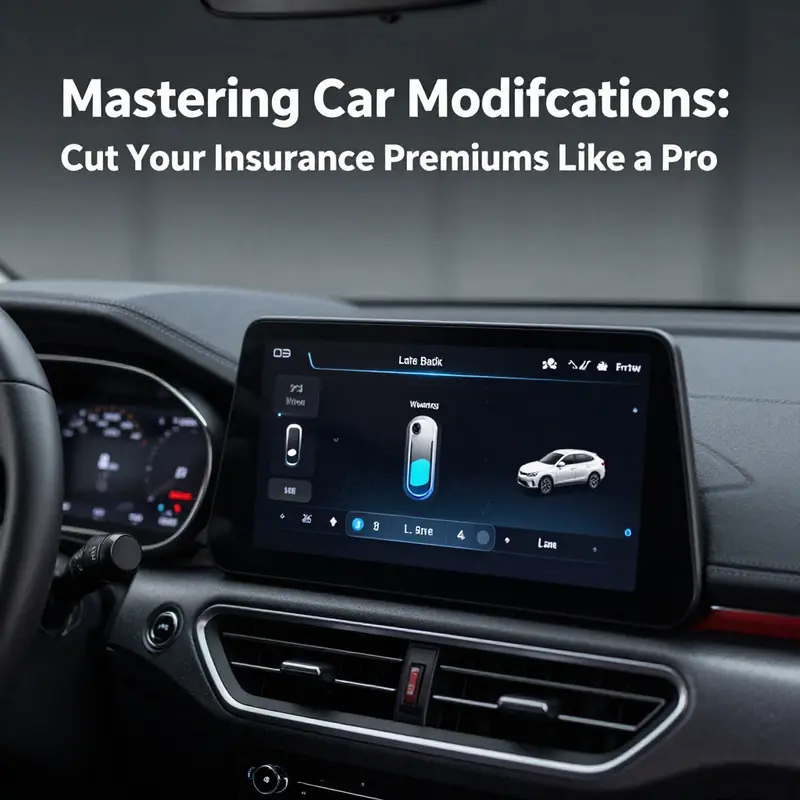
Safer by design is not a buzzword but a strategy. The choices you make about safety features can shape how insurers view your car long before a claim is ever filed. When an insurer prices risk, they look at what reduces the odds of a loss and, crucially, what keeps people inside the vehicle during a crash. Modifications that boost safety and security do more than protect you; they quietly shift the risk calculus in your favor. This creates a predictable payoff: fewer claims, steadier premiums, and a car that remains safer year after year. The most dependable way to leverage this is to focus on features with a track record of reducing losses. Anti theft gear lowers theft claims; advanced driver assistance systems prevent many collisions; and robust basic safety tech supports better control in demanding conditions. When you plan modifications, view them as a long term investment rather than a one off upgrade, because the savings accrue over multiple policy periods and many renewal cycles.
Anti theft devices like GPS trackers, steering wheel locks, and immobilizers are not merely deterrents; they provide measurable risk reductions insurers can recognize. A study from national safety authorities shows vehicles with anti theft systems are toward 30 percent less likely to be stolen, which translates into fewer theft related claims. With fewer claims to pay, insurers can justify discounts. The most direct financial impact comes from discounts that policyholders see on their monthly or annual bill, but discounts vary widely by insurer, device certification, and model year. To maximize results, confirm the device is certified and ask for the exact discount threshold. If you are considering multiple devices, document installation with receipts and activation dates. The evidence matters when you negotiate premiums, because many programs still require proof that the system is functioning and maintained. Documentation helps you avoid later disputes over eligibility.
Beyond theft prevention, the safety features in modern cockpits change the risk profile in meaningful ways. Advanced Driver Assistance Systems, including Automatic Emergency Braking, Lane Departure Warning, and Blind Spot Detection, operate as active copilots. Independent safety research shows that AEB significantly reduces front to rear crashes, with estimates around a fifty percent decrease when this technology is present. That dramatic drop in crash risk translates into meaningful discounts from many insurers, sometimes up to fifteen percent for models equipped with these systems. When you add LDW and blind spot detection, you create a safety envelope that compounds the effect. The result is a lower expected loss per mile driven, which insurers translate into more stable premiums over time. The practical upshot is that the investment in ADAS pays off in real, tangible savings that accumulate across policy years.
Even basic safety equipment maintains value. ABS prevents wheels from locking during hard braking, preserving steering control. ESC helps keep the car on a stable path in sharp turns or slick conditions. These features are often standard today, but their impact on insurance remains real. They represent incremental risk reductions that insurers reward with smaller, steady premium cuts. The cumulative effect of standard safety gear across a vehicle fleet is why insurance costs tend to drift downward as cars become safer in general. The practical takeaway is straightforward: when you shop for a used car or a new model, prioritize those with strong safety packages; you gain forward looking protection and a potential cushion against rate increases that occur after accidents or claims.
As you build a plan around safety enhancements, you will notice that discounts are not uniform. Two shoppers may install similar features and receive very different premium reductions. This variance does not reflect a flaw but a feature of how carriers calibrate risk to their own portfolios. Some insurers maintain explicit programs with narrower qualification criteria; others offer broader guidelines but smaller discounts, and a few tailor discounts to the vehicle’s overall risk score. The best approach is to start with a core set of proven loss reducers and then collect quotes from several insurers. If you are calculating the true cost, include installation expenses, the potential depreciation in value, and the lifetime value of the discount. The goal is a balance: the feature set should be worth the upfront cost and the ongoing maintenance because the premium reduction compounds across the policy term. It is also worth noting that many insurers reward ongoing safe driving with additional incentives, and some offer usage based elements that sit on top of hardware based reductions. You can explore how modifications affect insurance by reading What Modifications Affect Car Insurance?.
Implementation matters as much as the idea. A feature installed by a qualified technician and supported by proper documentation—device type, installation date, and calibration notes—makes the discount more robust. Some features require periodic recalibration or software updates, and neglect can erode or even void discounts if the insurer determines the system is performing correctly. If your car is financed or leased, you may encounter restrictions about modifying the vehicle; check your agreement and discuss the plan with your financing company or lease administrator. Thoughtful planning can help you avoid conflicts between the contract and the safety suite you install. In some cases, these modifications add resale value and can influence how the car is perceived by insurers and lenders alike. While the focus here is on safety oriented features, the broader effect shapes how the vehicle is assessed across multiple lines of risk.
For those who want a modern, data driven approach, telematics can complement safety upgrades. Telematics devices monitor driving patterns—how often you drive at night, how hard you brake, and how far you travel. Safe driving and prudent mileage can unlock additional discounts that sit on top of hardware based reductions. The alignment between what you drive and how you drive creates a two sided effect: the vehicle earns a lower risk score, and you experience a lower premium as long as you meet the conditions set by the insurer. The policy details matter: some programs require enrollment and consent to data collection, and rates may fluctuate with driving patterns. If you maintain a safe baseline, the discounts can be meaningful over several years, especially when paired with a strong safety feature package.
To visualize the potential savings, imagine a driver who adds a certified anti theft system and equips the car with Automatic Emergency Braking, Lane Departure Warning, and Blind Spot Detection. The theft deterrent reduces the risk of a theft claim, while ADAS reduces the probability of a crash. In many markets these features can translate into double digit premium reductions, often in the mid to high teens. Some insurers publish explicit numbers, but the exact discount depends on vehicle, policy, and the driver’s history. For a driver with a clean record and cautious driving habits, the premium could be noticeably lower after the first renewal period. Conversely, neglecting maintenance or disabling features can erode the discount. The underlying message is that the value of the modification rests on ongoing maintenance and verification that the device is functioning as designed, not just on its installation date.
Viewed as a long term cost strategy, safety modifications become part of the hierarchy of price and protection. Start with a core set of features that have clear risk reducing potential, then compare quotes from multiple insurers before committing to a purchase. The process is not about chasing the largest discount, but about achieving a lower total cost of ownership for your vehicle. Remember that the discount is only one piece of the puzzle. The actual premium reflects a range of factors beyond safety features, including your driving record, annual mileage, location, and policy terms. When you weigh these elements together, the path to savings becomes clearer: safety upgrades lower risk, insurers reward reduced risk, and your premium follows. For readers seeking more detail on the safety impact data, IIHS provides extensive studies on how features influence claims and costs. External resource: IIHS safety data.
Deductibles, Modifications, and Dollars: Lowering Car Insurance Premiums by Raising Your Out-of-Pocket Threshold
Raising your deductible is a straightforward, numbers-driven approach to lowering car insurance premiums, and it sits naturally alongside the broader conversation about how to lower costs when you modify a vehicle. A deductible is the portion of a claim you agree to pay out of pocket before the insurer shoulders the rest. The bigger that number, the more risk you transfer to yourself, and in exchange the insurer typically lowers your premium because the likelihood and size of a payout are reduced from their perspective. This simple math—more risk on you, less risk on them—has a direct, tangible effect on what you pay each month or year for coverage. When framed against the backdrop of vehicle modification, the deductible strategy becomes even more interesting. Modifications, especially those that improve safety, can shift your risk profile in subtle but meaningful ways. They can reduce the chance of a claim by preventing accidents or deterring theft, or they can change the way your car behaves in certain situations. When insurers see a car that’s safer to drive, and you commit to shouldering more of the cost on a claim, premium reductions can accumulate across multiple levers. In practice, the deductible is not a standalone move; it is most effective when paired with risk-reducing changes to the car and to driving behavior.
The logic behind increasing a deductible is well documented. A respected consumer information source from Europe notes that lifting the deductible is among the most direct paths to lowering annual policy costs. While the exact dollar or euro amount matters, the principle is clear: by agreeing to absorb more of the initial repair bill yourself, you reduce the pool of money the insurer expects to pay out, and that lower expected payout is reflected in your rate. In real terms, a typical jump in deductible—from, say, €500 to €1,000—can shave a meaningful portion from your premium. The exact amount will vary by insurer, by your driving profile, and by the coverage types you carry, but the pattern holds: higher deductible equals lower ongoing cost. It’s a quick win you can discover in most standard auto policies, regardless of whether you own a brand-new car or a well-loved older model.
Yet the decision to raise a deductible should not happen in a vacuum. Insurance is a backward-looking risk pool by design. The premium reflects the insurer’s assessment of how likely you are to file a claim and how costly that claim would be. If you plan to modify your car for higher performance or commercial use, or if your driving environment exposes you to greater risk, the premium reductions from a higher deductible can be offset by larger potential out-of-pocket costs. The key is to align the deductible with both your financial cushion and your actual risk profile. An important consideration is whether you have sufficient funds readily available to cover a larger bill in the event of an incident. If a $1,000 or $2,000 deductible would strain your finances after an accident, the monthly savings may not justify the increased risk. A careful assessment of your cash flow, savings, and emergency planning is essential before you make a move that shifts more risk to yourself.
The decision also benefits from understanding how modifications influence risk in the insurer’s eyes. Certain safety-focused modifications can tilt the balance toward lower premiums even if you increase your deductible. Anti-theft devices, improved braking systems, or advanced driver assistance features reduce the probability and severity of losses. If your car now includes automatic emergency braking, lane-keeping assistance, or blind-spot monitoring, the vehicle’s safety profile improves in ways that matter to underwriters. In such cases, a higher deductible can be more palatable because the chance of a costly claim drops and your out-of-pocket exposure to frequent small claims remains manageable. The math becomes a blend of genuine risk reduction and personal financial strategy. When you combine a higher deductible with a safer vehicle and disciplined driving, the potential for significant long-term savings grows.
Another layer to consider is usage patterns. If your annual mileage is lower, or if you drive primarily in safer, predictable environments, the probability of a claim falls. In this mix, the premium reduction from a higher deductible is amplified: you are statistically less likely to need to tap the policy, while you shoulder more of the initial cost if you do. Experts also remind drivers that combining the deductible strategy with other risk-reducing choices can yield even more dramatic results. For example, a driver who maintains a clean record, reduces miles, and has implemented safety modifications can see substantial premium declines when they add a higher deductible to the mix. In some expert assessments, the combined effect of these steps has been reported to push savings well beyond the 20–30% range sometimes seen with individual measures, with credible estimates suggesting the potential for over half of the previous premiums in favorable configurations. While that figure will not apply to every situation, it illustrates the magnitude of what is possible when strategic risk management meets policy design.
To translate this into practical steps, start with a candid assessment of your budget and risk tolerance. Ask: If I could comfortably cover a deductible of €1,000 or €2,000, how much would the monthly premium drop, and would that drop justify the increased outlay in the event of a claim? It’s worth running a simple break-even analysis. Compare the annual premium reduction with the potential out-of-pocket cost in the event of a claim, accounting for the probability of such a claim based on your driving history and environment. Don’t forget the safety dimension: if you have modified your car to include features that reduce crash risk or theft risk, your break-even point shifts in your favor. In that case, a larger deductible can become a clearer value proposition because the likelihood of a loss that would require a claim drops, and the severity of that loss may be less frequent or less costly.
The practical implementation requires a careful dialogue with your insurer. Not all policies are the same, and some carriers have strict rules about how deductibles apply to different coverages, such as collision and comprehensive. If you decide to pursue a higher deductible, you’ll want to confirm that the coverage you rely on remains robust enough for your needs. A critical step is to compare quotes from multiple insurers after you adjust the deductible, because rates and risk assessments can vary considerably. If you are modifying your car, you should also consider how those modifications might affect eligibility or pricing with different providers. Some insurers are more comfortable than others with certain modifications, and the overall effect on your premium can hinge on whether the modification is recognized as a safety improvement or a risk factor. Along this line, if you’re curious about how specific modifications influence insurance, you may find helpful guidance in materials that discuss insurance for modified cars, including explanations of which changes are viewed as favorable risk reductions and which may complicate underwriting. For broader context on these considerations, you can explore resources dedicated to modified-vehicle insurance strategies such as this discussion: insurance for modified cars.
A final piece of practical wisdom is timing and flexibility. Your insurer may offer mid-term adjustments, or you might decide to revisit the deductible when your life circumstances change—perhaps after a few claim-free years, or when you upgrade to a safer vehicle or after implementing additional security features. If you are actively modifying your car to enhance safety or theft resistance, those changes not only help reduce the chance of a loss, but can also influence how you view the deductible. You’re effectively shifting the risk balance in two directions: you reduce the probability of a claim through safer design and safer operation, and you decide how much of that residual risk you are willing to shoulder personally. The synergy between these factors can be powerful, particularly when you are selective about which modifications you implement and how you integrate them with your policy terms. In practice, the most successful price reductions come from a thoughtful combination of safer hardware, prudent driving, and a deductible that you can manage without compromising your financial stability.
In summary, raising your deductible can be a potent lever for reducing car insurance costs, especially when paired with safe driving habits and thoughtful vehicle modifications. This approach works best when you approach it as part of a broader strategy rather than a stand-alone adjustment. You gain the most when you couple a higher deductible with a demonstrably safer car and disciplined driving, so the insurer’s risk is consistently lower and your personal exposure remains within your means. If you’re exploring this path, take a careful inventory of your financial cushion, your risk tolerance, and the concrete ways your modifications improve safety or security. The result can be sizable savings over time, and in favorable combinations, the payoff may surpass what you’d achieve from any single change alone. For those who want to dive deeper into how modifications and insurance intersect, resources on modified-car insurance provide a useful compass for navigating coverage nuances and pricing implications. The journey toward cheaper premiums is not a one-off move but a calculated, evolving strategy that reflects both your vehicle’s capabilities and your own financial readiness.
External context on vehicle safety and risk can complement these decisions. Independent safety evaluations and crash-prevention research offer broader guidance on how features influence real-world outcomes, which can further illuminate the value of combining high-coverage protection with higher deductibles. For additional context on safety impacts and insurance implications, see established industry resources such as IIHS.
null
null
Smart Vehicle, Smart Savings: How Choosing and Modifying Your Car Can Lower Insurance Premiums
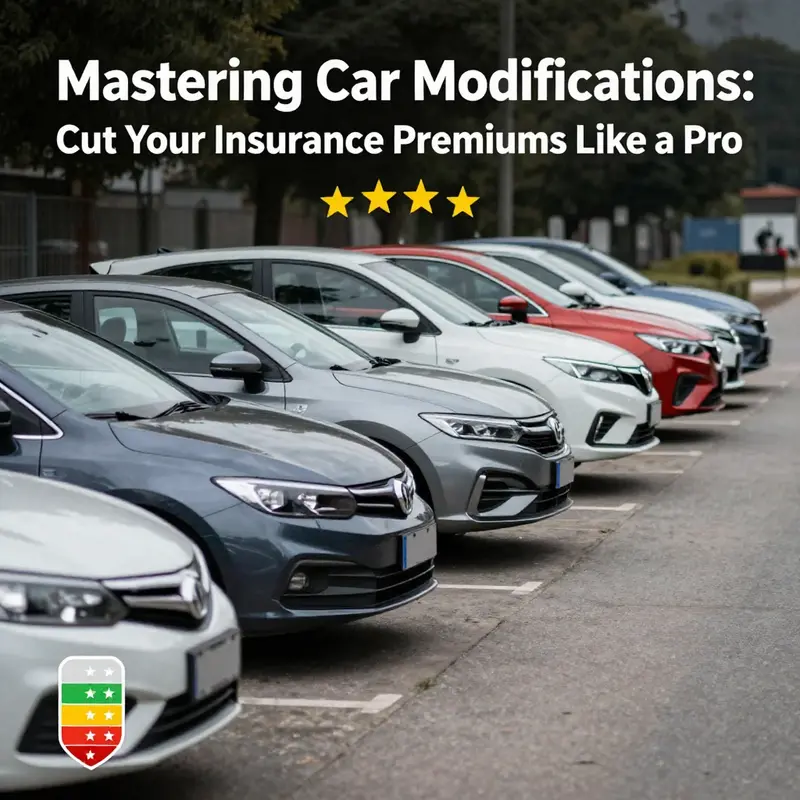
Choosing the right vehicle is often the quiet engine behind lower car insurance premiums. It happens before you ever step into a single mile of driving. Your car’s baseline risk—its likelihood of being stolen, the potential cost of repairs, and how forgiving it is in a crash—shapes the starting point insurers use to price your policy. When you couple a thoughtful vehicle choice with targeted modifications, you don’t just buy better safety; you buy a smaller risk footprint. And that smaller footprint translates into smaller premiums over the life of your policy. This is not about chasing the cheapest car or chasing gimmicks; it is about aligning what you buy with how insurers assess risk, then reinforcing that alignment with smart, durable modifications that stay with the vehicle long after the purchase receipt is forgotten.
At its core, the decision matrix for insurance-friendly vehicle selection blends three interlocking threads: engine size and performance, the insurer’s view of the car’s repair and replacement costs, and the car’s safety and security profile. A smaller engine and modest performance envelope are almost universally treated as lower risk by underwriters. They imply a lower likelihood of high-speed incidents and a reduced probability of severe damage in a crash. Cars with modest horsepower tend to fall into lower insurance groups because they are cheaper to repair and less costly to replace, should the worst occur. This is not a prophylactic against practical needs; it is a pragmatic balance of capability and risk. If you rarely drive in conditions where acceleration and speed are tempting, a vehicle with a sane, predictable performance profile can be a quiet, enduring ally for your insurance costs.
Insurance groups, a concept familiar to many buyers, quantify how insurers view a vehicle’s risk relative to its peers. These groups weigh a mix of repair costs, parts availability, theft rates, and safety performance. A car in a lower insurance group generally costs less to insure, all else being equal. It is not a verdict on prestige or modernity; it is a reflection of the car’s potential for expensive claims. When evaluating a candidate vehicle, consider not just the purchase price or fuel economy but where it sits in the group ladder. A practical, well-rated family sedan or compact with strong structural integrity and common parts can outperform flashier alternatives in the long run because it sits lower on the risk spectrum.
Safety ratings play a nuanced role. Modern safety systems—such as automatic emergency braking, lane-keeping assist, and robust crashworthiness—do not automatically reduce the sticker price of a car, but they do alter the expected claim frequency and severity in a meaningful way. From an insurer’s viewpoint, these features reduce the probability of an at-fault accident and soften the financial blow when an collision occurs. In some cases, the upfront premium may seem higher because the car carries more sophisticated features, but the long-term savings can compensate through claimed reductions in incident risk and, often, dedicated discounts offered for vehicles with advanced safety technology. When weighing a car’s safety, look beyond the marketing rhetoric. Seek independent safety ratings and confirm whether your insurer recognizes specific features for premium relief.
Modifications introduce an additional layer to vehicle selection. They can either tilt the risk profile toward savings or toward new, uncharted costs. The key distinction is intent and impact. Security-focused mods—such as certified alarms, immobilizers, or tracking devices—speak directly to the theft deterrence that insurers reward. Locks and immobilizers are proof you’re taking steps to prevent losses, and many insurers reward that diligence with lower premiums. Modifications aimed at performance, on the other hand, can complicate the risk picture. Turbochargers, aftermarket exhausts, or suspension upgrades may raise the car’s value and performance, but they also increase the potential severity of a misjudged twist of the wheel. In some cases, such modifications push a vehicle into a higher insurance group or trigger premium surcharges because they raise repair costs or the likelihood of reckless driving outcomes. If your modification plan skews toward safety and security, you’re aligning with the insurer’s core risk indicators. If it skews toward performance enhancements, you should expect a more careful underwriting conversation.
The thoughtful path, then, is to center the vehicle choice on a base model that delivers reliability, predictable performance, and strong safety credentials, and to layer on modifications that reduce risk without inflating it. A car that already embodies good structural integrity, high safety ratings, and common, well-supported parts is easier for an insurer to understand and price favorably. The modifications that consistently move the needle in the right direction are those that reduce theft risk and decrease the chance of a costly accident. Alarms, immobilizers, GPS trackers, and secure anti-theft devices are not merely add-ons; they are signals to underwriters that you are actively reducing risk exposure. In many markets, these devices unlock clear premium discounts that compound over time as you sustain a lower claim frequency.
The same logic applies to usage patterns. Lower annual mileage, predictable driving routes, and regular commuting habits can complement a safer vehicle and a robust security kit. Insurance companies increasingly view myriads of small, consistent risk-reducing choices as a portfolio. They reward drivers who minimize exposure to high-risk scenarios with lower premiums. If you can credibly demonstrate controlled usage and low accident history, your baseline risk drops further, strengthening the case for a favorable renewal quote, even if your vehicle itself isn’t the absolute lowest-cost option on the market.
From a practical standpoint, there are two intertwined paths to consider. First, evaluate a vehicle’s optics and reality in terms of safety, repair costs, and theft risk. Second, plan a modification strategy that robustly lowers risk without inviting unintended consequences. The interplay matters because insurers don’t price in a vacuum. They price in a risk landscape that is shaped by how you buy, how you drive, and how you protect what you own. When you do this well, the numbers are not a mystery. They emerge from a straightforward equation: lower theft risk, lower repair costs, and fewer high-speed misadventures signal lower probability of claims, which translates into lower premiums.
Within that framework, a practical approach unfolds. Start with the vehicle you’re drawn to and ask three questions. Does the car sit in a lower insurance group relative to peers with similar price and size? Does it have a proven safety package that a broad set of insurers recognizes with discount potential? And does it pair with a credible aftermarket modification plan that reduces risk rather than elevating it? If your answers lean toward yes, you have found a solid foundation for premium-friendly ownership. If your answers highlight high-performance ambitions or unusual modifications, proceed with caution and seek direct guidance from your insurer to ensure your plan won’t backfire at renewal time.
For many drivers, the most cost-effective path is a sensible, well-rated vehicle chosen for reliability and safety, followed by a measured set of security-focused enhancements. This approach aligns with the overarching goal of the chapter: to illustrate how vehicle selection, when paired with strategic modifications, can meaningfully lower insurance costs without sacrificing the car’s usefulness or your safety.
To deepen the practical value, you can explore additional insights on how specific modifications influence insurance costs. For instance, discussions about the broader impact of modifications on coverage and premiums reveal that some changes can trigger coverage questions and affect the terms of a policy. For a focused look at which modifications influence car insurance, see What modifications affect car insurance. This resource helps connect the theory of risk reduction with real-world underwriting responses, guiding you as you map a modification plan that stays within insurer comfort zones while still delivering the benefits you seek.
Beyond the mechanics of risk, there is a human dimension to this process. Insurance pricing is less about chasing the cheapest monthly payment and more about building a comprehensive plan that remains affordable over time. A car’s resale value, for example, can influence insurer decisions indirectly, since vehicles that retain value tend to be easier to repair and replace, reducing the severity of losses in the event of a claim. In some regions, a well-documented maintenance history and a car that has not suffered prior substantial damage can also contribute to lower premiums. The relationship between ownership costs and insurance costs is not always linear, but it is consistently present when you step back and look at the lifecycle of a vehicle.
To operationalize these ideas, begin with a candid inventory of your needs. What do you use the car for most days? How important is fuel efficiency, cargo space, and passenger capacity? Are you prepared to invest in recommended security devices, and can you absorb a higher deductible if it means a lower monthly premium? These questions anchor your decision in reality rather than aspiration. You can then compare quotes from multiple insurers, presenting a consistent baseline that includes the same vehicle and modifications. The goal is to isolate the effects of the modifications and the vehicle choice on the insurer’s price. When you see a meaningful drop in the premium after adding a security device or selecting a vehicle with strong safety ratings, you confirm that your strategy is working as intended.
The journey toward lower premiums is iterative rather than a single calculation. You may find that a car with excellent safety features carries a slightly higher upfront premium but yields greater savings over a longer policy term thanks to ongoing risk reduction. You may also discover that a particular device, while clearly reducing theft risk, interacts with other features or with your driving behavior in ways that alter discounts offered by the insurer. This complexity is precisely why it pays to maintain open dialogue with your insurer, especially when you plan to retrofit a car with new devices or choose a model with a unique feature set. Transparency helps ensure that discounts apply promptly and accurately and that you are not surprised at renewal time.
In sum, the route to lower car insurance premiums through modification begins with a deliberate vehicle choice that emphasizes safety, reliability, and cost-effective repair. It continues with mindful modifications that directly reduce risk and are acknowledged by underwriters. It ends with ongoing, informed engagement with your insurer to ensure that the care you take with your vehicle translates into real, lasting savings. This chapter has sketched a framework for that journey, emphasizing that the most powerful levers are the ones you pull first: select a vehicle with solid safety ratings and a favorable insurance profile, then layer in security-focused upgrades that demonstrably cut theft risk while avoiding ambiguous changes that could complicate coverage. By staying aligned with these principles, you can pursue a financially prudent ownership experience that protects you, your passengers, and your wallet over the long run.
For readers who want to drill into the specifics of how certain modifications interact with insurance pricing, the page What modifications affect car insurance offers a concise overview of the common triggers underwriters look for, and helps you plan modifications that maximize savings while preserving coverage. As you map your path, remember that a careful balance of vehicle choice, sensible modifications, and proactive policy management is the most reliable path to meaningful, lasting premium reductions.
External resource for broader context on vehicle choice and insurance rates: https://www.insurance.com/auto-insurance/vehicle-choice-impacts-auto-insurance-rates/
Final thoughts
Effectively managing car insurance premiums is essential for anyone engaged in vehicle modification. By incorporating safety features, adjusting your deductible, maintaining a flawless driving record, and selecting vehicles renowned for their safety, you not only enhance the value of your ride but also pave the way for significant savings. These strategies showcase that passion for vehicle improvement and financial prudence can go hand in hand. Elevate your driving experience while keeping your expenses in check, and enjoy the peace of mind that comes with being both stylish and savvy.