
For car enthusiasts, especially those with exotic vehicles, modifying a car isn’t just about performance; it’s about making a statement. However, one pivotal question looms large over every modification decision: how will it affect your warranty? This topic holds immense significance for hobbyist car modifiers, professional tuners, and restoration enthusiasts alike. Each chapter of this article delves into the nuances of how specific alterations can impact warranty coverage. From non-OEM parts that could nullify your warranty, to certified programs that allow modifications within manufacturer guidelines, this comprehensive guide seeks to illuminate the diverse landscape of car customization. Join us as we explore these aspects in detail and equip yourself with the knowledge to make informed decisions regarding your prized machine.
Power, Warranty, and the Fine Print: Do Exotic Car Modifications Void Coverage?
In the elite world of exotic cars, the thrill of pushing boundaries often collides with the precise, paper-bound world of warranties. Manufacturers back what they design, but the moment a driver steps outside the factory specifications—whether to chase a track-ready edge or simply tailor a car to personal taste—the warranty terrain changes. The warranty is not a blanket promise of coverage for every conceivable failure; it is a contract that defines responsibility. When alterations occur, the line between a defect and a modification can blur, and that blur matters. The practical effect is straightforward: some modifications can void or cancel coverage for certain issues, while others may sit on the edge of coverage depending on the policy, the jurisdiction, and how the upgrade is implemented. This is not a universal indictment of every aftermarket improvement; it is a reminder that the warranty is a shield with a set of holes, shaped by the maker’s risk assessment and the precise language of the contract you signed when you purchased the car.
At the heart of the matter is how a modification interacts with the vehicle’s carefully engineered balance. Exotic cars are engineered with tight tolerances, where the engine mapping, the cooling system, the suspension geometry, and even the software that governs stability and traction are designed to work as a single, cohesive system. Alter one variable—say, the engine’s timing or the exhaust backpressure—and you can unintentionally shift the performance envelope, the heat profile, or the wear patterns of subsystems that were not designed to handle the new reality. When a failure occurs in such a context, the manufacturer may look to the modification as a possible contributor. If they can establish that the modification altered the root cause of the problem, coverage for the affected component may be denied. This is not always the case, but it is a frequent rationale, especially for issues tied to the powertrain, electronics, or emissions systems. The key takeaway is that the warranty does not automatically disappear the moment you install a non-stock part; it becomes contingent on whether the modification can be shown to have caused or contributed to the failure.
To understand where this risk comes from, it helps to categorize the types of changes that often trigger warranty scrutiny. Engine tuning, performance calibrations, and software remaps sit at the top of the list because they change critical operating parameters. A remapped ECU that delivers higher torque at lower RPM can stress components in ways the factory never tested together, from the cooling system to the transmission clutch. If a failure occurs after such a modification and the engine control logic could be implicated, the manufacturer may argue that the problem arose from the altered state, not the original defect. Suspension upgrades also raise red flags. A stiffer setup or lower ride height can alter suspension geometry, bump absorption, and even tire contact with the road—factors that influence wear, alignment, and load paths. The result can be accelerated wear or unexpected stress on components that the original warranty intended to cover under standard operating conditions. Exhaust modifications and aftermarket intake systems pull in emissions and fuel-management considerations. They can change backpressure, catalytic converter efficiency, and even exhaust gas composition, stepping outside the regulatory and performance envelope the car was certified to meet. In such cases, the manufacturer’s position often hinges on whether the modification alters emissions behavior or violates safety and regulatory standards, which can complicate claims related to emissions-related failures.
Electronics present a particularly thorny category. When wiring is cut, harnesses rerouted, or control software is flashed outside authorized channels, the risk multiplies. Modern exotics rely on a symbiotic electronic ecosystem: engine, transmission, stability control, torque vectoring, and safety systems are all networked. A modification that disrupts any link in that network can mask an underlying defect or create a new failure mode. In these situations, manufacturers emphasize that only approved, OEM-sanctioned methods preserve the integrity of the vehicle’s diagnostic framework. This does not imply that every electronic upgrade is off-limits; rather, it means that upgrades performed through certified channels, using approved parts, can sometimes be harmonized with warranties. The distinction between “approved” and “unapproved” is therefore not merely bureaucratic. It is a practical safeguard intended to prevent ambiguous service scenarios where the origin of a fault cannot be deterministically assigned.
The role of non-OEM parts adds another layer of complexity. Aftermarket components can introduce unknown variables for heat, vibration, electrical load, and tolerances. If the dealership or manufacturer can prove that a failure originates from a non-OEM part or its installation process, the warranty on the affected system may be voided. Yet the story is not uniformly bleak. Some brands offer limited warranties on certain modifications or provide certification programs that allow upgrades while keeping warranty protections alive for the unchanged portions of the car. These paths are not universal, and they require careful navigation. They also depend on the installer’s credentials, the quality and compatibility of parts, and the conformity of the work to the maker’s engineering standards. Enthusiasts who value both performance and protection frequently pursue these sanctioned routes, recognizing that the peace of mind they offer is worth the potential premium and the procedural steps involved.
Cosmetic upgrades occupy a different moral universe within the warranty framework. A fresh coat of paint or a set of high-end wheels changes the car’s aesthetics and perhaps its weight distribution to a minor degree, but the direct impact on the powertrain is typically limited. Many owners assume cosmetic changes do not threaten the warranty. In practice, however, the warranty is layered, and some coverage areas—electronics, safety systems, or even body integration features—can be influenced by how a modification interacts with the vehicle’s telemetry, sensors, or calibration baselines. It is not unusual for cosmetic upgrades to ride along with a chain of service expectations that require careful documentation and, in some cases, verification that the upgrades did not alter critical performance parameters in a way that could invalidate unrelated warranties. The risk is that the more visible the modification, the more attention it attracts from dealers who interpret the car’s condition through the lens of the original design intent.
For a buyer, the prudent path starts with a disciplined exploration of the warranty language before any bolt is turned. Reading the warranty booklet with a dealer’s pathologist-eye—someone who can translate legalese into practical outcomes—helps identify the precise triggers that could lead to denial. It is common practice to seek written approval from the manufacturer or the dealership prior to performing upgrades, a step that creates a safeguard against later dispute. Keeping meticulous records becomes more than good housekeeping; it becomes a formal defense of the claim’s legitimacy should a dispute arise. Invoices, part numbers, installation dates, and technician notes are not merely receipts; they are the documentary backbone of the upgrade’s narrative, illustrating that the modification followed prescribed procedures and employed approved components.
The landscape grows more intricate when financing or leasing enters the equation. A financed exotic car carries obligations to the lender, and modifications can complicate the collateral framework. Leases, in particular, tend to be strict about alterations, with provisions that can charge penalties or require restoration to factory condition at turn-in. Even when the warranty remains intact post-modification, the resale market’s judgment can hinge on how well the upgrade aligned with the maker’s engineering ethos and the vehicle’s residual value. In practice, many owners balance desire and duty by engaging with dealer-approved upgrade programs or working with specialists who are explicitly authorized to perform modifications under the brand’s oversight. This approach preserves a coherent warranty narrative, improves predictability for resale, and reduces the risk of a dispute that could turn a favorite upgrade into a costly liability.
Insurance considerations are another thread in this mosaic. Modifications influence risk profiles and premium calculations, even when a warranty claim is not at stake. A comprehensive approach to ownership thus requires a cross-check between warranty eligibility and insurance terms. Some owners find value in research that clarifies how modifications affect insurance, coverage limitations, and premium adjustments. For readers seeking to deepen that understanding, consider exploring resources that address what modifications affect car insurance, since alignment between insurance and warranty strategy often reduces the chance of coverage gaps or unexpected costs. what modifications affect car insurance.
The optimal mindset for exotic-car enthusiasts is not a prohibition on upgrades but a disciplined, informed approach. Prioritize upgrades through manufacturer-certified pathways when possible, ensuring compatibility with the car’s thermal, electrical, and mechanical ecosystems. Embrace a staged approach to performance improvements, allowing the vehicle to acclimate to each change and to be evaluated under factory diagnostics before the next modification. Building a clear, auditable trail—from the initial assessment to the final installation and post-upgrade testing—helps protect the investor’s interests and preserves the integrity of the vehicle’s warranty coverage. It’s also a reminder that the objective is not merely to maximize horsepower but to sustain reliability, safety, and serviceability over the long arc of ownership.
In sum, the question of whether modifications on exotic cars cancel warranty does not admit a single, universal answer. It is a nuanced calculus shaped by the modification type, the specific warranty terms, the execution quality, and the preventive steps a buyer takes before and after the upgrade. Enthusiasts can still realize meaningful performance gains, but they should expect that some upgrades may redefine the scope of warranty coverage and that others may require careful negotiation with the dealership or manufacturer. The path to preserving warranty protection while pursuing personalization lies in clarity, documentation, and choosing upgrade avenues that align with the car’s engineering philosophy. By treating the warranty language as a living contract rather than a distant document, owners empower themselves to make upgrades that respect both the vehicle’s integrity and their own expectations for service and support. And for readers who want to pair performance with protections, the careful route—whether through certified programs or through meticulously vetted aftermarket paths—offers a durable balance between the allure of customization and the security of warranty coverage. External resource: https://www.edmunds.com/car-warranty/does-modifying-your-car-void-the-warranty/
Warranty and Mods: Navigating Non-OEM Upgrades on Exotic Cars
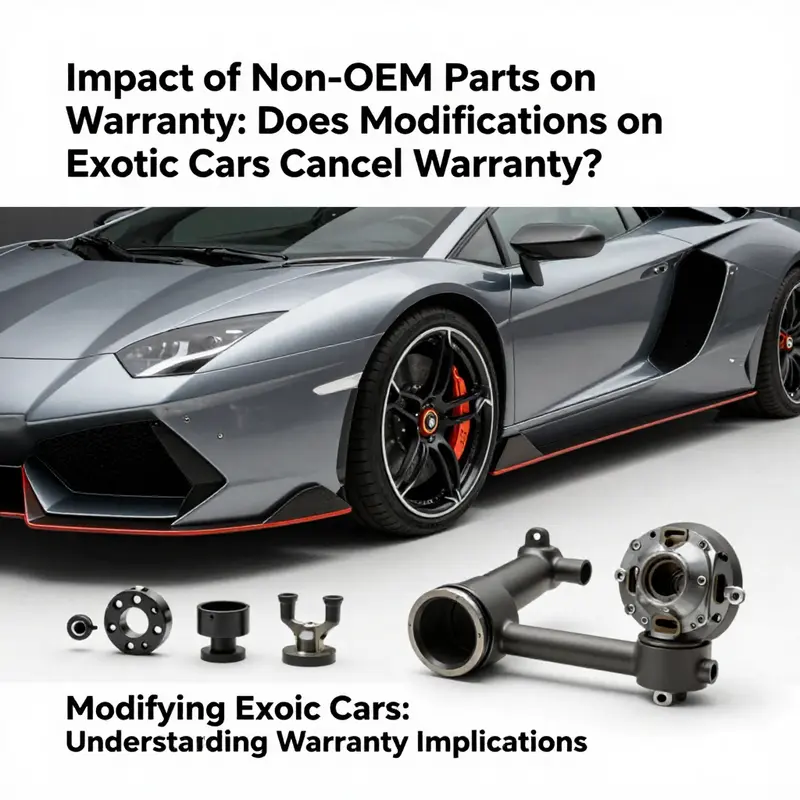
Exotic cars tempt with precision engineering, blistering acceleration, and ownership that feels like a high stake commitment to care and maintenance. The warranty that accompanies these machines defines what manufacturers will repair or replace when something goes wrong. Modifications, especially to high performance or exotic models, can affect warranty coverage. The key question is whether a change is considered safe, compatible, and within the scope of what the manufacturer supports.\n\nManufacturers frequently reserve the right to deny warranty service for issues that stem from parts or alterations not supplied or validated by the automaker. In practice, this means that if an engine fails after an aftermarket upgrade or a mis calibrated ECU tune contributes to a fault, the warranty on those components may be void or restricted. The exact outcome depends on the make, model, and modification, but the trend is clear: non OEM parts and non approved alterations introduce risk that a claim will be refused on grounds of altered design or non standard installation.\n\nIt is useful to distinguish cosmetic from performance modifications. Cosmetic upgrades to color, trim, or lighting tend to have a smaller impact on warranty eligibility. By contrast, changes to engine calibration, fuel delivery, exhaust flow, suspension geometry, or the electrical architecture—especially if they involve cutting wires or reflashing software—raise the risk profile and give manufacturers a reason to deny coverage for issues connected to the modification.\n\nIn many markets the Magnuson Moss Warranty Act provides a baseline that aftermarket parts cannot automatically void an entire warranty simply because they exist. But it does not guarantee universal coverage for damage linked to modifications, and outcomes can hinge on proof of causation and regional rules. The practical takeaway is to weigh the risks before modifying and to seek expert guidance on how any change could affect specific warranty terms.\n\nFor owners who want upgrades without losing warranty protection, certified modification programs performed by authorized technicians using manufacturer approved components are the safest route. Documentation matters as much as the upgrade itself, so obtain written approval, keep a detailed bill of materials, installation steps, and tuning parameters, and maintain a transparent chain of custody.\n\nBeyond warranty, consider insurance and resale implications. Modifications can affect premiums and terms, and even when coverage is not denied, they can complicate future claims. A measured approach starts with conservative, certified upgrades, preserves stock components for possible future reinstatement, and maintains open dialogue with the dealer or manufacturer before any work begins.\n\nFor a policy oriented lens on this topic, owners can explore official guidance and dealer policies to understand how aftermarket parts interact with warranty coverage and broader protections. The safest path to enjoying performance while preserving warranty is to align with manufacturer approved routes, document everything, and seek explicit authorization before any modification. The result is not only better odds of warranty preservation but a clearer, more sustainable ownership experience for exotic cars.
Wiring the Fine Print: How Electrical and Software Modifications on Exotic Cars Can Void Warranties
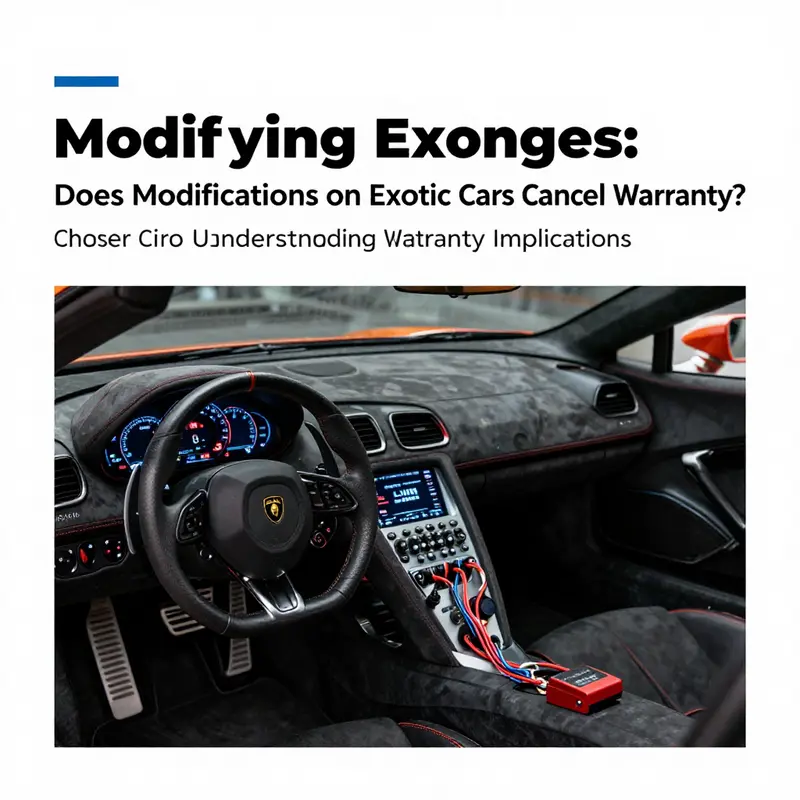
Exotic cars captivate with their precision, drama, and the promise that a driver can coax more performance from a machine that already feels barely contained. The wish to upgrade—whether to sharpen throttle response, improve battery management, or refine cockpit electronics—sits at the intersection of dream and discipline. The warranty, meanwhile, stands as a formal promise from the manufacturer that the vehicle’s core systems will operate as designed. When a modification enters the picture, that promise becomes a negotiation, and more often than not the outcome depends on how the modification interacts with the vehicle’s integrated electronics and software. In practice, electrical and software changes are among the most scrutinized categories of modifications because they touch the car’s nervous system. A driver can replace a sensor, re-route a circuit, or install a new control module, and each of those moves creates a line in the sand. If something fails, the question becomes whether the failure is a preexisting manufacturing defect or a consequence of the alteration. The distinction matters because it determines whether the warranty covers the repair and under what scope.
To understand why, it helps to recognize how modern exotic cars operate. The car is essentially a network of sensors, actuators, and control strategies that communicate through a web of software and electronic interfaces. When a modification changes the data that travels through that network, the entire map of dependencies shifts. A tweak to an engine-control algorithm, a new tune for the motor inverter, or a modification to the battery-management software can alter how the car behaves under stress. If a component later fails, technicians must trace the failure’s root cause. If the root cause traces back to the modification, the warranty coverage for that system often vanishes or is dramatically narrowed. The manufacturer’s logic is straightforward: if the problem originates from an altered specification, then it cannot be assumed to be a defect of the original engineering. The risk for the owner is not just a repair bill but a potentially extended period without a reliable, road-ready vehicle.
In the high-end and exotic space, manufacturers tend to treat any unauthorized software update, non-approved electrical installation, or tampering with emission-control or safety systems as a potential warranty trigger. This is not merely a sales tactic; it’s a practical stance aimed at preserving safety, emissions compliance, and long-term reliability in machines whose performance envelopes push tolerances. For instance, alterations to the electric drivetrain or to software controlling energy flow can affect battery temperatures, charging efficiency, or regenerative dynamics. When these elements operate outside tested parameters, the likelihood of a side effect increases. A fault that could be explained away in a stock configuration—say, a flaky sensor reading—might be entangled with a software tweak or hardware reroute, complicating both diagnosis and coverage decisions. The warranty, in such cases, may not extend to cover the modified system if the failure is plausibly linked to the change.
Within this framework, there are meaningful exceptions, but they are tightly regulated. Some brands offer certified modification programs that permit approved upgrades to be performed within the dealership network and with parts and software that have been validated to work with the specific model. These programs are designed to preserve warranty protection for the upgraded components, at least to a clearly defined extent. They are not universal, and they come with strict criteria: the modifications must be performed by authorized technicians, use genuine parts, and adhere to a defined calibration protocol. The key idea is control: by steering upgrades through a regulated channel, manufacturers reduce ambiguity about compatibility and safety, and they minimize the risk of a claim being denied for a modification-related cause. For owners who are genuinely committed to a higher level of performance while preserving warranty coverage, this pathway is worth exploring with a candid discussion at an authorized center before any part or software is altered.
The landscape for BEVs and plug-in hybrids adds another layer of complexity. The battery system, its management software, and related cooling and thermal-control strategies are central to both safety and performance. Official guidance in bevy terms often specifies that modifications affecting the electric drivetrain, battery-management software, or emissions-related controls may not be covered if the changes fall outside approved procedures. In practical terms, this means a software tune designed to extract more power or efficiency can risk denying warranty service for problems in the affected systems, even if the problem seems unrelated at first glance. The same logic applies to any hardware modification that disrupts how the vehicle monitors battery health or safety thresholds. For owners of exotic BEVs, this is a particularly critical consideration, because the difference between a minor adjustment and a misstep can be measured in battery cycles, thermal stability, and the longevity of high-value systems.
Given the high stakes, the prudent path begins with a careful reading of the warranty documentation. Owners should identify, with precision, what constitutes an authorized modification and what qualifies as a prohibited or unapproved alteration. The language is not always blanket; rather, it often ties coverage to specific components and to the procedures used for installation and calibration. A clarification that a system is covered only when modified parts are installed through an approved channel, and only with calibrated software, is common. It is equally common for the manufacturer to reserve the right to deny coverage for any failure that can be traced to an alteration, especially if the failure involves safety, emissions, or performance-critical subsystems.
Owners who decide to proceed with modifications should, before any work begins, obtain explicit written consent that the modification will be accepted under the warranty terms for the vehicle and model year. This can prevent disputes later on and creates a documented trail showing compliance with the approved pathway. The next step is to insist on using genuine parts and software, as well as installation by technicians who have documented credentials and access to the official calibration tools. Documentation matters: every part, every software iteration, every calibration setting should be recorded, with dates and technician identifiers. When a claim is filed, having a clear, traceable history of what was changed and when can tilt the balance toward coverage for related issues rather than exclusion due to the modification.
Beyond the direct question of warranty, there are broader ownership considerations that owners should weigh. Insurance is a frequent flashpoint. Many policies require disclosure of non-factory modifications, and the terms may change how a claim is evaluated or what premiums apply. In some cases, insurers will offer riders tailored to approved upgrades, while in others the presence of non-OEM electronics or software adjustments may trigger exclusions or heightened deductibles. Resale value is another practical factor. A well-documented, manufacturer-approved upgrade can additive value for a buyer who seeks enhanced performance or efficiency. Conversely, a modification that strays outside approved channels can complicate the sale, narrowing the pool of prospective buyers and potentially depressing value. The market’s response is not uniform; it depends on how convincingly the upgrade is integrated, how transparently it is disclosed, and how convincingly it demonstrates that safety and emissions standards remain uncompromised.
All of this underscores a core point for enthusiasts: the decision to modify is a strategic one that extends beyond the immediate thrill of the upgrade. It involves balancing the desire for personal expression and performance gains against the practical realities of warranty protection, insurance terms, and long-term ownership costs. Cosmetic or non-invasive changes can often be pursued with relatively low risk to warranty, but anything that touches the core control systems, software, or energy pathways should be approached with caution. The more invasive the modification, the more critical it becomes to engage through authorized channels, preserve documentation, and accept that some performance ambitions may need to be deferred until a different ownership phase or a different warranty framework is in place.
For readers seeking a concise, actionable takeaway, the message is clear. If you want to pursue modifications on an exotic car without compromising warranty protection, look for official pathways that preserve integrity and safety. If that pathway is not available, you may decide that the risk is not worth the reward for the current ownership window. In either case, clarity and documentation are your best allies. The dream of personalization remains alive, but it is tempered by the discipline of warranty terms, emissions rules, and critical safety systems. A thoughtful, well-documented approach enables you to explore performance and personalization while keeping the car’s reliability and your financial exposure within predictable bounds.
To connect this discussion with broader ownership realities, you can read about how modifications intersect with insurance and resale. Learn more through resources that discuss how modifications influence insurance considerations here: car-modifications-insurance. And for those who want a deeper dive into manufacturer-approved pathways and how they relate to warranty, consult the official terms published by the maker behind the vehicle class described in this chapter. External reference for current warranty terms can be found here: https://www.porsche.com/us/vehicles/warranty/
Warranty on the Edge: How Certified Modification Programs Shape Upgrades on Exotic Cars Without Losing Coverage
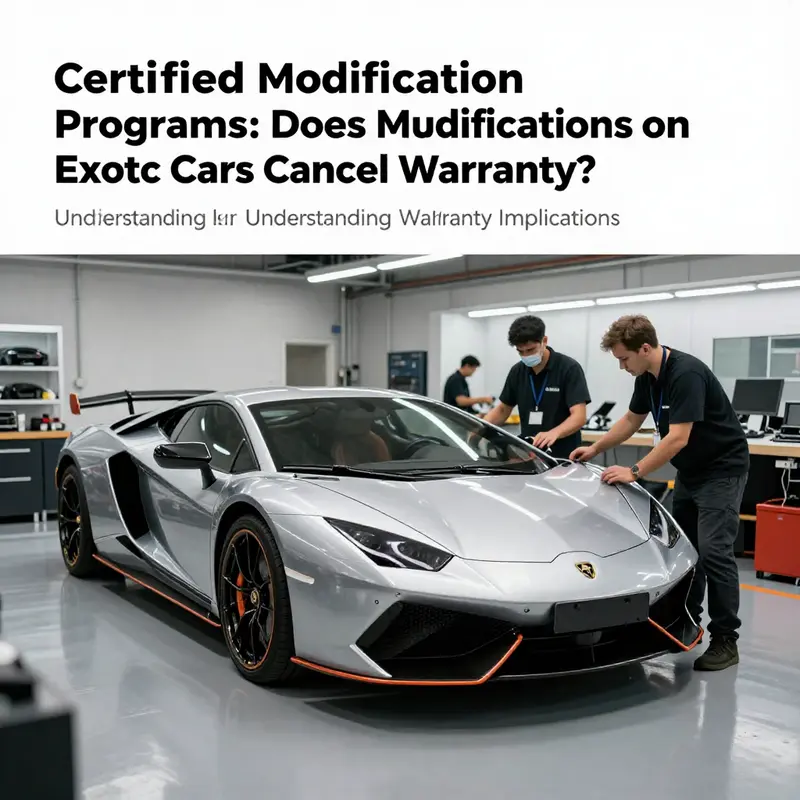
In the world of exotic cars, the allure of a fresh upgrade competes with the stubborn reality of a warranty. Performance enhancements, bespoke trims, and high-precision tinkering promise faster 0-to-60 times, sharper handling, and a driver’s personal stamp on a machine that already hums with engineering artistry. Yet every aftermarket choice sits on a precarious line drawn by the manufacturer’s warranty. The contract is explicit in its core: the exact factory specifications, and the work performed by authorized technicians, are what keep protection intact. Deviate, and the risk is not merely a loss of bragging rights on a showroom floor but a potential narrowing of coverage when things go wrong.
Exotic brands build warranties that are robust in scope. They promise confidence as a baseline—typically years of coverage and, in many cases, unlimited mileage within that period. But the moment a modification touches critical systems—engine internals, transmission, drivetrain architecture, or safety features—the warranty risk profile shifts. This is not a universal verdict that every alteration voids every benefit. Instead, the policy is more nuanced: while cosmetic changes and non-intrusive adjustments may ride along with the original warranty, performance-oriented or structural modifications can sever ties with the warranty for the affected components or even for the vehicle as a whole if the change is deemed to have caused the failure.
The practical upshot is that owners who crave power or a distinct aesthetic must understand where the risk lies. A high-end exotic is designed around tightly integrated systems. When you alter the engine’s software, replace the intake with a non-OEM part, or modify the suspension in a way that changes geometry or dampening characteristics, you are editing the blueprint that the warranty is built upon. The logic the manufacturer applies is straightforward, even if the specifics feel less so: if the replacement or the modification can be linked to the failure, the repair costs for that failure may not be covered. Even more, if a modification affects safety or emissions-related systems, the denial can extend beyond the immediate issue to related components that share a common control module or sensor network.
Non-OEM parts sit at the heart of many warranty discussions. The premium experience of an exotic car comes from a carefully engineered relationship between parts, software, and calibration. When a third-party component enters that ecosystem, it can disrupt that balance. This disruption often triggers two outcomes: first, the manufacturer asserts that the non-OEM part is not covered by the warranty; second, if the installation was not performed to exacting standards by qualified technicians, the warranty may be considered void for any failure tied to the installation. The risk amplifies when the modification involves cutting wires, rerouting electrical systems, or altering software—actions that are technically invasive and highly consequential for the vehicle’s control logic and safety systems.
There is, however, a counterpoint that speaks directly to the desire for performance without surrendering protection. Many manufacturers offer certified modification programs or approved upgrade pathways. These programs are not universal, but where they exist, they are designed to bridge the gap between personal specification and warranty integrity. In essence, certified programs provide a controlled framework: parts are factory-approved, calibration is performed by technicians trained to the maker’s exacting standards, and the work is documented in a way that the warranty terms recognize as compliant. The practical effect is that these programs can allow upgrades to proceed while preserving the original warranty or providing a clearly defined extension of coverage for the upgraded components. The status of the warranty in such circumstances depends on the program’s design and the specific scope of coverage that accompanies it. This approach reflects a broader industry trend toward balancing customer customization with risk management.
For owners considering an upgrade, the wisest first step is to consult the warranty documentation and speak with the dealer or the manufacturer before any change is made. The decision to proceed should be informed by a clear understanding of which components are protected, which aren’t, and how installation in an authorized setting might affect coverage. It is not merely a matter of obtaining a nod of approval; it is about creating a documented trail that connects the modification to the vehicle’s original design intent and to the maintenance standards that defined the warranty in the first place. In many cases, manufacturers will require that the upgrade be carried out by authorized technicians using Original Spare Parts and that the installation is logged with the same rigor as factory service work.
This is where the concept of “factory-original parts and authorized technicians” becomes more than a slogan. It is a practical guarantee that the new components align with the car’s calibration, safety, and emissions systems. When a factory-approved path exists, it provides a path to enhance performance without unintentionally triggering warranty denial for the updated systems. Some programs may include an extended coverage option, or a specialized warranty extension that explicitly covers the upgraded parts. Other manufacturers maintain a broader policy that preserves the warranty for the platform while delineating coverage for the upgrade as an optional add-on. These nuances matter, because the line between a protected modification and a rejected claim is drawn not by a single factor but by the integration of the part, workmanship, and the way the modification interacts with the vehicle’s control architecture.
A critical consideration for any exotic car owner is the type of modification that tends to carry the highest risk. Changes that directly affect the engine’s performance, the transmission’s torque delivery, or the drivetrain’s calibration are, as a rule, the most scrutinized. The same holds for safety features and electronic stability control systems. Alterations here are not merely about speed and handling; they touch safety thresholds and regulatory compliance. Modifications that involve reprogramming the ECU or altering the software parameters are particularly sensitive, because software sits at the center of how the car manages fuel delivery, ignition timing, torque distribution, and brake balance. When software is modified, a careful assessment is required to determine whether the change is within the permissible range set by the manufacturer for the warranty to remain valid. In short, the more fundamental the system affected, the higher the stakes for warranty protection.
Protection through certified programs is not a universal guarantee, but it is a powerful option. Where offered, these programs provide a framework that aligns high-performance goals with the warranty’s risk thresholds. They can include programmatic checks, standardized parts lists, and calibration processes designed to ensure that performance upgrades do not stray into uncharted territory that could tax the car’s safety and reliability envelope. The value of such programs extends beyond the immediate coverage; they also provide a predictable maintenance and service pathway. Ownership thus becomes less a leap into unknown territory and more a journey under the guidance of specialists who understand the vehicle’s architecture at the deepest level. For many enthusiasts, this is not only a pragmatic approach but a meaningful assurance that the joy of driving a finely tuned exotic remains linked to a durable, well-supported warranty.
The decision framework for potential modifications also intersects with broader ownership concerns such as resale value and insurance. Cosmetic upgrades, interior refinements, or non-invasive cosmetic wraps may be perceived as low risk by some insurers and may not alter the vehicle’s core warranties. Yet even these seemingly minor choices can affect insurance terms and, over time, the car’s perceived value by future buyers. The interplay between modification, insurance, and resale value depends on the jurisdiction, the insurer’s policies, and the specific terms of the warranty. A thoughtful owner will consider how a modification appears to future buyers and whether it could lead to increased insurance premiums or specialty-coverage requirements. This is another reason to pursue official guidance before proceeding; a well-documented modification, performed through an approved program, can minimize ambiguity and protect both the warranty and financial aspects of ownership.
In contemplating an upgrade, it helps to imagine two parallel paths: one in which every modification is carefully vetted, documented, and executed within an authorized framework, and another in which changes are introduced casually, without official sign-off or compatible parts. The outcomes diverge quickly. In the first path, the car remains a system of trusted components, with a clear record tying the upgrade to the car’s overall integrity. The warranty, while not absolute, offers a defined scope of protection for the upgraded area and related systems, supported by the manufacturer’s technicians and parts. In the second path, the risk is not just a single denied claim but a cascade of uncertainty about what is covered after any future issue arises. The reality for most exotic-car owners is that making an informed choice—one that weighs performance wants against warranty realities—requires patience, diligence, and a willingness to engage with the maker’s authorized channels.
For readers seeking practical guidance, the key takeaway is clarity and documentation. Before any modification, obtain written permission or a formal acknowledgment from the dealer or manufacturer that the permissible scope includes the intended change. Use OEM parts wherever possible, insist on service performed by authorized technicians, and retain copies of every invoice, calibration note, and diagnostic report related to the upgrade. This documentation creates a chain of custody for the modification, linking it to the vehicle’s design intent and to the maintenance philosophy that underpins the warranty. If a claim arises after a modification, you want to be able to demonstrate that the failure is unrelated to the upgrade or that the upgrade was performed within the boundaries of an approved program.
There is a human dimension to these decisions as well. Exotic-car owners are often deeply invested in the idea of personalization—the sense that their car is a sequential story of performance milestones, track days, and unique handling dynamics. Acknowledging that the warranty plays a central role in protecting that investment does not diminish the thrill of customization. Instead, it reframes customization as a strategic collaboration between owner, dealer, and manufacturer. When the collaboration is aligned, the result can be an exciting blend of individual expression and guaranteed reliability. The careful reader will recognize that the right path is not a trade-off between performance and protection but a carefully negotiated compromise that preserves both.
To close the circle, the conversation around modifications and warranty for exotic cars is ultimately about navigable risk. It is about knowing which levers you can pull, which levers you should avoid, and how to engage the manufacturer through official channels so that upgrades align with the vehicle’s architecture and the warranty’s expectations. It is about turning a potentially fraught decision into a disciplined, transparent process that honors both the desire for performance and the necessity of protection. For readers who want a concise entry point into how modifications intersect with warranty and insurance considerations, resources focusing on the relationship between car modifications and insurance can offer pragmatic guidelines and structured approaches to evaluating risks and costs. See the guidance here: car modifications and insurance.
As you navigate this terrain, remember that the pathway to upgrade success is paved with clear communication, official validation, and meticulous record-keeping. The result is not mere peace of mind but a durable foundation for enjoyment, performance, and long-term value. When a certified program exists, it can be a bridge from desire to reality that preserves coverage while enabling the car to perform as you envision. If not, the buyer’s awareness becomes the safeguard—an informed stance that helps protect the investment in an exotic machine and the promise of many miles of precise, peerless driving. The policy language may be complex, but the principle is simple: upgrade with consent, install with precision, and document with care. In this way, the edge between modification and warranty becomes a navigable frontier rather than a cliff.
External resource reference: https://www.lamborghini.com/en-en/owners/warranty
null
null
Final thoughts
Navigating the complex world of car modifications requires a careful balance of passion and prudence. Maintaining your warranty while customizing your exotic vehicle can be challenging, but by understanding how different changes affect coverage, you can make more informed decisions. From acknowledging the risks associated with non-OEM parts to exploring certified programs that maintain warranty integrity, each choice contributes to the overall performance and value of your vehicle. Armed with the insights from this guide, exotic car enthusiasts can confidently enhance their rides without jeopardizing the essential warranty protections.