
Navigating snowy terrains presents unique challenges that require keen attention and specific modifications to your vehicle. For hobbyist car modifiers, professional tuners, and automotive enthusiasts alike, understanding how to equip and prepare your vehicle can significantly enhance both safety and performance in winter conditions. This article delves into crucial vehicle modifications, detailed pre-drive preparations, and effective driving techniques tailored specifically for snowy environments. Each chapter builds upon the last, guiding you through the essential changes and habits necessary to thrive on challenging winter roads.
Snow-Proofing Your Car: Essential Modifications That Transform a Vehicle Into a Winter-Ready Machine
Snow does not simply add a cosmetic white cape to the world; it rewrites the rules of traction, visibility, and control. In such conditions, the car you trust becomes less a toy of speed and more a tool of patience, preparation, and prudence. The modifications discussed here are not about luxury upgrades; they are about turning theoretical safety into practical, repeatable behavior on winter roads. They begin with the tire and radiate outward to every system that touches the road, from the moment you slide into the driver’s seat to the quiet, deliberate approach to a snowy bend. The logic is simple, even if the weather is capricious: better grip, clearer vision, and smarter vehicle dynamics reduce the distance between intention and safe arrival. The heart of this transformation lies in tire choice, followed closely by a drivetrain that can translate grip into controlled motion, and a cabin and lighting setup that preserves visibility and alertness in fleeting daylight and stubborn gray horizons.
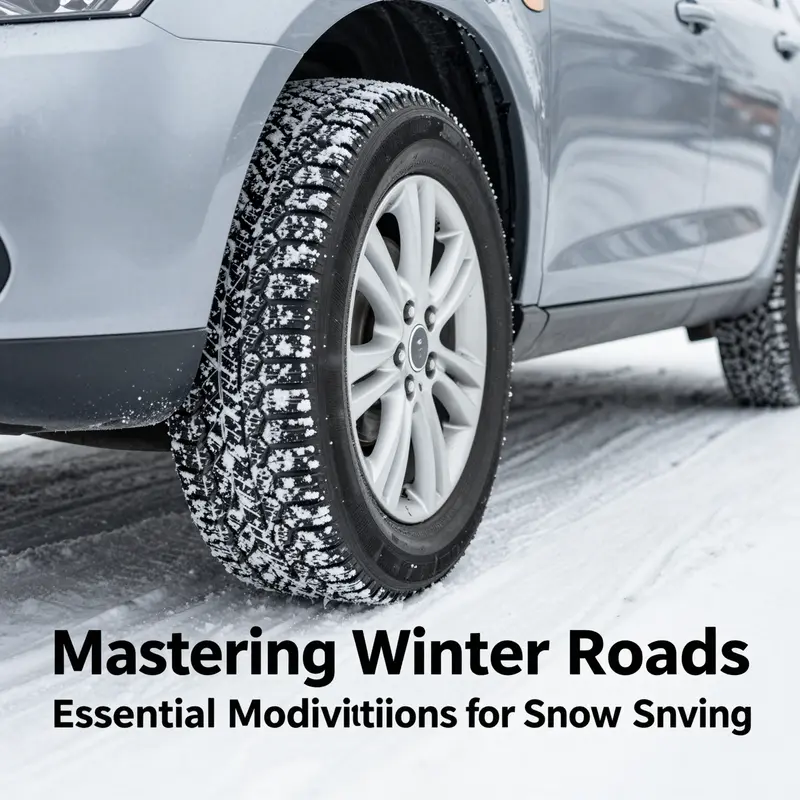
First comes the tire—the single most consequential modification for winter conditions. Ordinary tires harden when the temperature falls, and their rubber loses the flexibility needed to bite into slippery ice and packed snow. Winter tires use a softer rubber compound and a tread design engineered to work when the world is cold and the surface is not. The result is not merely better traction; it is improved braking performance and more predictable steering feedback when the road surface refuses to cooperate. Look for a certification that signals performance on snow, such as the Three-Peak Mountain Snowflake standard, which indicates the tire meets established snow-traction criteria. In extreme, icy environments, studded or partially studded designs can provide additional grip on ice, though their legality and road impact vary by jurisdiction and season, so local rules should guide their use. Practically, many drivers find a modest adjustment to tire pressure helps in soft, fresh snow: a slight decrease beyond the manufacturer’s recommended value can widen the contact patch, reducing the likelihood of sinking into deep powder. This adjustment should be treated as temporary, carefully monitored, and reversed when conditions change.
Tires set the foundation, but the drivetrain and electronic guardians that manage power delivery and stability determine whether that grip translates into meaningful control. A modern car’s all-wheel-drive or four-wheel-drive system, complemented by traction control and electronic stability control, offers a spectrum of assistance. AWD and 4WD systems distribute torque to all wheels, which can help during acceleration on slick surfaces. Yet they do not inherently shorten stopping distances. The braking challenge in snow and ice remains, and the electronic aids are designed to preserve directional stability by preemptively smoothing or modulating power, applying selective braking to individual wheels, and reducing engine output when necessary. Enabling these systems during winter driving is essential, as they are tuned to counter wheel slip and to maintain a steady, controllable feel as you navigate patches of glaze or uneven snowbanks.
Beyond propulsion and grip, what keeps a car in sight and in line is vision. The weather itself tests the limits of visibility, so an upgrade to lighting and a disciplined approach to clearing the car of snow and ice become as crucial as any tire choice. Brighter, more efficient lighting improves the driver’s field of view, particularly during snowfall or in the early morning and late afternoon hours when daylight is scarce. High-quality LED or HID-style lighting, properly aimed and kept clean, can illuminate the edges of the road and illuminate potential hazards earlier in the approach. In practice, this means not merely swapping to stronger lights but also ensuring all external and internal lights—headlights, daytime running lights, fog lights, brake lights, and turn signals—are free of snow and ice residues and are aimed to illuminate the road rather than reflect off a weight of white powder. A robust defroster and an efficient wiper system round out the visibility equation; never attempt to drive with a windshield glazed by ice and condensed moisture, for the wiper motor and linkage can suffer under a frozen load, and visibility is the first line of offense against surprises on winter roads.
The car’s body and undercarriage deserve attention as well. Snow, salt, and grit can accelerate corrosion and conceal underbody damage that would become costly or dangerous at speed on a remote pass. An underbody shield, whether full or partial, helps deflect debris and provides a barrier against salt and moisture that could corrode sensitive components. A reinforced front bumper and side protection can also reduce damage from accidental contact with hidden snowbanks or curb impacts when negotiating narrow lanes or parking in snow-choked lots. These protections are not about transforming the car into a snow tank but about preserving the vehicle’s capability and reliability through harsh conditions. In tandem with this, a reliable heating system, a functional defroster, and cabin climate control promote driver alertness and reaction times. If the interior remains cold and unwelcoming, fatigue and slower reflexes can creep in, undermining the careful planning that snow driving demands.
Comfort is more than luxury in winter driving; it is a safety factor. The sensation of warmth and steady temperature helps a driver maintain dexterity and concentration for longer periods. Features such as heated seats and a heated steering wheel may seem indulgent, yet in prolonged winter commutes they become practical allies for safety. A warm driver is a more precise operator, better able to handle delicate control inputs—gentle acceleration, smooth braking, and careful steering—without the distraction of cold fatigue. Similarly, practical safety gear, including a well-stocked winter emergency kit, reduces the likelihood of choosing risky, improvised solutions in a roadside stop. The kit should include basics such as a shovel, traction aids like sand or cat litter, jumper cables, a flashlight, extra warm clothing, and non-perishable food and water. A charged phone with a portable charger can be a lifeline, especially in remote areas where winter weather can cut power or cell service for hours at a stretch.
The modifications above build toward a simple, enduring philosophy: winter driving success is not about one heroic action but about a chain of informed, deliberate choices where each element reinforces the others. The tire provides grip; the drivetrain and electronics manage that grip; the lighting and visibility ensure you can see and be seen; the protective layers keep the mechanicals intact and ready to respond; and the comfort and preparedness keep you vigilant and capable. In practice, the combination looks like this: winter tires as the baseline for grip; an AWD/4WD platform with active electronic controls to manage power and stability; enhanced lighting to extend the window of safe operation; underbody protection to shield critical components from winter hazards; and comfort and preparedness gear to sustain safe operation through long or difficult journeys. This integrated approach is especially important because the safest driving habit in snow is patience—slowing down, increasing following distance, and anticipating the surface’s changing texture. Even with the best tires and the most advanced electronic aids, snow rules require a disciplined tempo and a readiness to adapt to patchy ice, slush, or freshly fallen snow.
To translate theory into practice, consider this broader sequence: you begin with a pre-drive check that focuses on visibility and mechanical readiness. You clear ice and snow from every window and mirror, the lights, the roof, and the license plate to avoid penalties and maintain full visibility. You ensure the engine is adequately warmed and that fluids—especially the coolant and windshield washer fluid—are at proper levels, because cold weather can highlight weaknesses that might be invisible in milder seasons. You avoid using windshield wipers on glass that is still frozen; instead, you manually remove ice and frost first, to prevent motor strain or blade damage. These preparations might seem routine, yet they lay the groundwork for safe operation in conditions that quickly erode even the most confident judgment.
As you drive, the rules are not a litany of prohibitions but a guide to smoother control. Speed must be moderated, often to half of what you would use on dry pavement, because ice and compacted snow multiply braking distances and reduce tire-grip margins. Following distance should be extended to four or five times the normal gap; this is not excess caution but the practical margin needed to absorb unexpected events in low-traction environments. When you accelerate, do so gently and progressively; when you brake, perform smooth, continuous applications rather than abrupt presses. If your vehicle is equipped with ABS, you can apply steady pressure, but you should avoid pumping the brakes unless you are without ABS. On descents, engine braking becomes a valuable ally; selecting a lower gear reduces reliance on the service brakes, decreasing the risk of heat buildup and brake fade. Steering must be deliberate, with slow, measured inputs that preserve a stable arc through the turn. The temptation to chase a line by weaving between tracks left by others should be resisted; instead, you should align with the path that offers the clearest, most compact contact patch—often the tracks already carved by other drivers who have navigated the same snow that you face now.
Of course, the winter landscape is not uniform. Black ice—the invisible sheen that lives on bridges, overpasses, and shaded areas—demands heightened awareness and a disciplined index of suspicion. The best practice is to treat every slick patch as if it were ice, adjusting your speed and steering to preserve grip. If you feel the car beginning to slide, do not panic. For front-wheel-drive vehicles, ease off the accelerator and let the weight of the car help you regain grip; for rear-wheel-drive configurations, avoid accelerating aggressively. These reactions are not instinctive; they are learned responses that become second nature with deliberate, calm practice.
This approach to modification and technique is not a solitary path. It aligns with established safety guidance and is reinforced by a broader safety culture that emphasizes preparation, visible signaling, and prudent decision-making in hazardous conditions. It also intersects with practical maintenance and policy considerations: the choice to install winter tires, the use of traction aids when required by conditions, and the regular testing of safety-critical systems like lights, brakes, defrosters, and wipers. While different vehicles may have different specs and capabilities, the underlying principles remain consistent: maximize grip where possible, manage momentum with care, and maintain visibility to anticipate the road’s hidden hazards.
For drivers seeking a practical starting point while building toward the more advanced setups discussed here, a hands-on guide is available that walks through how to install modifications on a car. That resource offers step-by-step considerations, from selecting winter tires to understanding when and how to deploy traction aids, and it complements the overarching philosophy of winter readiness that threads through this chapter. For anyone crafting their own winter-ready plan, integrating this guidance with local weather patterns and road conditions will yield a safer, more confident experience behind the wheel.
In sum, the most effective winter-ready strategy centers on a core trio: tire choice, drivetrain and electronic safeguards that cooperate, and clear visibility plus protective durability. Winter tires form the foundation by delivering grip at low temperatures and on snow or ice. An AWD/4WD platform, when combined with traction control and electronic stability control, helps manage that grip during acceleration and cornering, while lighting upgrades and ensured visibility expand the driver’s window of safe operation. Protective underbody features reduce the risk of damage and corrosion, preserving the vehicle’s ability to perform when the cold season tests its limits. And finally, driver comfort and preparedness—heated comforts and a well-stocked emergency kit—keep the driver’s mind sharp and focused on safe decisions rather than discomfort or desperation. The payoff is not instantaneous speed but consistent, predictable performance through a season of uncertainty. This is the essence of transforming a standard car into a snow-suitable machine: a cohesive system where each modification and habit supports the others, turning winter driving from a leap of faith into a calculated, survivable activity.
Internal link for practical steps: how to install modifications for a car.
External resource: https://www.safetyscience.org/driving-in-snow-essential-modifications-and-tips/
Gearing Up for Snow: Essential Pre-Drive Rituals
Snow reshapes the way a car behaves, and the first miles in winter begin long before you touch the accelerator. The pre-drive routine is not a jog through a checklist; it is a careful, almost ceremonial preparation that translates into safer handling, steadier steering, and clearer judgment on roads that have altered themselves under a white blanket. When a driver treats preparation as a disciplined practice, the car becomes a more predictable partner, and the chances of a surprise vanish into the background hum of the engine. This chapter threads together the practical steps that set the tone for the journey, weaving together mechanical readiness, situational awareness, and the quiet patience that winter driving demands. It is not about chasing speed or performing heroic maneuvers; it is about creating a stable platform from which even modest decisions can be made confidently as conditions shift from clear to icy in a matter of minutes.
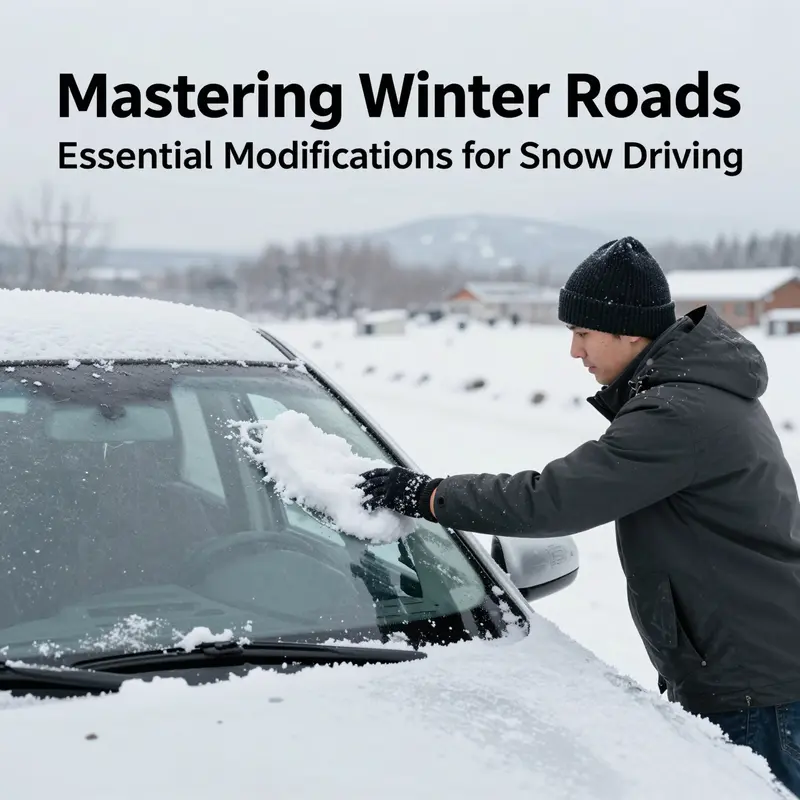
The most visible step is always the one that happens outside the vehicle. Before the engine even wakes, the world around the car demands attention that is both meticulous and unhurried. Snow clinging to the roof, ice boxing the windshield, and fogged or rimmed headlights are not simply cosmetic issues; they are hazards that reduce visibility and mislead other drivers. The simplest practice—removing every trace of snow and ice from every surface that matters—yields immediate dividends in clarity and safety. A thorough brush and scraper should be used to clear the windshield, the rear window, the side mirrors, and the headlamps, but attention must also be paid to the roof. Snow on the roof can slide down and obscure the windshield or shift abruptly into the lanes behind you when you brake or turn on a slope. The same principle applies to the license plate: it must be visible, or you risk a stop and a fine in addition to the safety hazard you’ve avoided. When the glass is encrusted with ice, it is wise to switch on the vehicle’s defroster at a modest setting to warm the glass and loosen stubborn spots. If the wipers are frozen, do not force them into action. Let heat and gentle thawing do the work first. This approach helps prevent damaging the wiper motors and ensures the blades don’t smear ice across the glass at speed. The result is a clear field of view that is essential for anticipating what lies ahead, rather than reacting to a sudden glare or hidden obstacle.
Tire choice and tire condition sit at the core of safe winter driving, and here the science of grip matters as much as the art of driving. Tires designed for winter use stay flexible in cold temperatures, maintaining the bite needed to grip ice and snow. The rubber compound and tread pattern are engineered to manage the fragile transition between traction and slip. In contrast, regular all-season tires tend to lose grip and become harder as temperatures dip below freezing, thinning the safety margin you rely on every time you press the pedal. The single most important modification a driver can make for winter safety is the installation of winter tires when conditions demand it. In very light snow, that may be enough; in heavier snow or on icy surfaces, it becomes even more critical. Snow chains become a practical option in deep drifts or heavily packed slopes, where extra traction can mean the difference between creeping forward and getting stuck. And while the availability of four-wheel drive systems has a reputation for improving winter performance, it is crucial to understand what it does—and does not—do. Four-wheel drive helps with acceleration on loose surfaces, but it does not shorten braking distances. That distinction reinforces a simple rule: tires are your primary defense in all winter conditions, and maintaining proper grip through tread and pressure is essential for both acceleration and braking. Beyond winter tires or chains, tire maintenance remains part of the pre-drive ritual. Check tread depth—below about 1.6 millimeters you are pushing the limits of grip, especially on ice. Verify inflation pressure, aiming for the vehicle manufacturer’s recommended range, typically around 2.3 to 2.5 bar depending on the vehicle and load. In some guides, a cautious note is made about briefly reducing tire pressure by a small amount, perhaps 0.2 to 0.3 bar, to increase contact area; this suggestion should be treated as a temporary measure and reversed after the conditions improve. The goal is a tire that maintains a broad, even contact patch with the road, not one that cups or deforms at the wrong moment. To keep the tires reliable, carry a compact pressure gauge and a small inflator kit, and know how to use them safely so that you are prepared for a roadside check or a long trip on wintry highways.
Once the tires are in good order, the car’s core systems deserve a careful check that aligns with the season’s demands. Brakes, lights, and wipers are the trio that keeps you visible and controllable, and they deserve gentle testing before you begin a winter drive. Start the engine and gently press the brake pedal after a short idle. A soft, preliminary brake check helps identify any binding or freezing in the calipers or lines, which can become more pronounced in cold weather. Next, verify that all lighting is fully functional. Headlights provide critical visibility in dim winter days and during dusk, while brake lights and turn signals communicate your intentions to others on slippery surfaces. If you use fog lights as part of your visibility strategy, ensure they operate correctly and that the wiring is intact. The washer fluid reservoir deserves winter-grade fluid that resists freezing, and the wipers themselves should be checked for operation and for any streaking that could obscure vision. When the car sits idle for hours in freezing weather, the windshield can accumulate frost in a matter of minutes; a clear plan for defrosting and de-icing, integrated with your wiper system, helps you avoid delays and compromised visibility.
A modest but powerful practice is to give the engine a brief warm-up period before you start the journey. Allowing the engine to idle for about three to five minutes after starting helps circulate the oil, warms the coolant, and brings the tires and brakes gradually to operating temperatures. This careful approach reduces strain on cold components and improves fuel and lubrication performance as you begin to move. It is not a license to idle excessively, and it should be complemented by gentle driving once you start moving. The warm-up routine serves as a bridge between the static preparation and the dynamic phase of the drive, during which you will integrate technique with traction management and roadway awareness. Alongside the mechanical warm-up, check the engine coolant level, the oil level, and the battery charge. Cold temperatures can reveal weak points in the electrical system and charging circuits; resolving these potential issues before departure helps prevent the car from failing on the road. In far northern climates, where nights are long and mornings colder, a battery that’s nearing the end of its life can suddenly degrade with the drop in temperature. If there is any doubt about reliability, a quick diagnostic with a service professional can avert a mid-journey breakdown.
A well-stocked vehicle prepares you for unforeseen events as much as it prepares you for the drive. A winter survival kit is not a luxury but a prudent precaution. Include a sturdy blanket, a flashlight with fresh batteries, jumper cables, a small shovel, and traction aids such as sand or cat litter. A compact thermal blanket can be a lifeline if you become immobilized in a remote stretch. The kit should also contain non-perishable snacks and bottled water, since winter conditions can slow travel or enclose you in your vehicle for longer than you expect. If you carry a portable power bank, a charging cable for your phone can be the difference between staying connected or being isolated. A reflective vest or bright flashlight can improve your visibility to others if you need to exit the vehicle on a low-visibility night. In addition to personal supplies, a few practical tools—multipurpose tool, duct tape, tire gauge, and a small square of reflective tape—can turn a challenging fix into a manageable one. The goal is readiness without excess. Organization matters; a simple, accessible storage arrangement makes it easy to locate essential items without exposing yourself to the cold or fumbling in the dark.
Staying informed about weather and road conditions is not a passive activity; it is an active discipline that shapes how you plan and execute a winter trip. Before you leave, check forecasts for snow, ice, and wind as well as any alerts for road closures or avalanche risk in mountainous terrain. Informed planning helps you choose routes that are well-traveled and plowed, avoiding bridges, overpasses, and steep climbs where ice forms more readily. When possible, opt for routes that have established maintenance and clearing workflows, rather than those that become impassable after a light snowfall. If the forecast warns of a blizzard or whiteout conditions, re-evaluate the trip or consider delaying it until visibility and road conditions improve. The idea is to begin with a safe option and adjust as conditions evolve rather than pushing forward into uncertainty. This approach is consistent with the broader philosophy of winter driving: careful anticipation, patience, and the willingness to alter plans when the data says you should.
The actual act of driving in snow requires a blend of humility and technique. There are strategic choices that set the framework for safe motion. First, reduce speed and adjust your expectations of what is possible on a given stretch of road. In icy conditions, braking distances can extend significantly—often several times longer than on dry pavement. The rule of thumb that many instructors emphasize is to anticipate a braking incident and leave ample room for the vehicle to stop under those conditions. In the most slippery situations, it is wise to maintain four to five times the usual following distance, a buffer that gives you time to recover if traction is suddenly lost. Acceleration should be smooth and deliberate; avoid abrupt throttle input that can overwhelm the tire grip. Even if your vehicle is equipped with antilock brakes (ABS), the correct approach is to apply steady, firm pressure when braking on slippery surfaces and to avoid pumping the brakes, which is a holdover from non-ABS systems. If your car has ABS, you can press firmly and let the system modulate brake pressure, but you should still be mindful of the road surface and the overall speed you maintain.
On downhill sections, use engine braking by selecting a lower gear where feasible. This technique reduces reliance on the service brakes, which can overheat and lose effectiveness on long descents. Engine braking creates resistance that helps control speed and reduces the risk of wheel lockup. Steering should remain smooth and gradual; abrupt steering moves can unsettle a car that is already fighting a reduced grip. It is often wiser to travel in a line where the road has visible tread marks from other vehicles, as those tracks are more likely to retain traction. Lane changes should be avoided unless absolutely necessary, and you should plan ahead for turns and stops. The goal is to maintain a predictable path and avoid the unpredictable shifts that come with sudden lane switches on icy pavement.
If you encounter a skid, stay calm and steer gently toward the direction you want the front of the car to go, avoiding sudden braking. The response can vary with drivetrain layout. For front-wheel-drive vehicles, ease off the accelerator to regain traction, whereas for rear-wheel-drive cars, you should avoid accelerating aggressively until traction returns. In all configurations, maintaining steering control while avoiding abrupt inputs reduces the likelihood that a loss of traction becomes a full slide. The scenario is not just about conserving speed or maintaining a straight line; it is about preserving enough momentum to steer and recover under control rather than reacting with panic or brute force. In moments of uncertainty, the rule of thumb is to slow down, stay in your lane, and seek traction rather than chase speed.
The journey through snow is not only about how you respond to immediate conditions but also about what you do in the broader context of winter readiness. Winter tires are the core modification that shapes your experience; four-wheel drive can help with traction during acceleration but does not shorten the distance required to stop. A calm, deliberate driving style—slower speeds, longer stopping distances, smooth steering, and patient decision-making—makes the difference between a safe trip and a perilous one. This alignment of equipment and behavior is the backbone of the entire approach to snow driving. If you are curious about how different vehicle modifications influence overall safety and performance, you can explore further in the Car Modifications Guide. This internal resource provides a broader view of how modifications interplay with vehicle dynamics and safety considerations, offering context for the decisions you make before the road becomes a winter obstacle course.
As you prepare for the next winter drive, keep in mind that every component, from the roof rack to the wiper blade, contributes to a safer, more predictable ride. The pre-drive ritual is where confidence is built and risk is managed. It is a quiet, disciplined practice that does not shout for attention but rather earns it through reliability. When the tires are properly prepared, the lights are bright, and the windows are clear, you are not just driving on snow—you are driving with it, acknowledging its presence while maintaining control and composure. This chapter does not pretend to remove all risk; it instead emphasizes a philosophy of preparation, patience, and prudent decision-making that allows you to meet winter conditions with a steady hand and a clear mind. The road will still challenge you, but with a robust pre-drive routine, you reduce those challenges to manageable steps and keep your focus where it belongs: on safe, deliberate progress through the evolving landscape of winter.
External resources and further reading remain a valuable complement to the habit of preparation. Local guidelines and official safety advice from authorities can reinforce best practices and remind drivers that winter conditions can be more severe than anticipated. For those seeking a broader perspective on winter driving beyond the scope of vehicle modifications, consulting a specially curated external guide such as Pacific Motorist’s Snow Driving Tips can provide additional insights and situational examples that resonate with real-world conditions and regional variations. Access that guidance here: https://www.pacificmotors.com/snow-driving-tips
Snow-Ready traction: a cohesive guide to tire choice, preparation, and the mindful pace of winter driving
Snow writes a white boundary across the world, and the car you drive has to learn a new set of rules to cross that boundary safely. The physics don’t care about your hurry, your style, or the miles you’ve logged. They care about what touches the road. In winter, that contact point is your tires, and the grip they provide becomes the most critical link between intention and action behind the wheel. As Mark Reynolds, an ASE-Certified Master Technician, reminds us, “Your car’s ability to stop, steer, and accelerate depends entirely on what’s touching the road: the tires. If they’re worn or wrong for the season, no amount of caution can fully compensate.” This is not simply a matter of preference or comfort; it is a statement about the fundamental dynamics of winter driving. The path through snow and ice is narrow, and every decision—every tire choice, every inch of speed, every quiet lull of acceleration—shapes whether you arrive intact at your destination or become another roadside consequence of how little traction you had when you needed it most. The discussion that follows is not a set of rigid rules but a practical, integrated approach to preparation, modification, and driving technique that aligns vehicle capability with the realities of snowy roads. It starts with what touches the road—the tires—and it grows through a chain of interconnected steps that prepare the vehicle, the driver, and the journey itself for a season that demands restraint, foresight, and a quieter form of courage.
The tire is the soul of winter performance. Winter tires are engineered with a softer rubber compound and open, finely tuned grooves that maintain grip even when the air alrededor cools and becomes brittle. The winter tire’s edge is not just deeper tread but a different geometry that bites into snow and trims the edge where ice lurks. When temperatures dip below seven Celsius (45°F), regular all-season tires stiffen and lose their suppleness; their tread may still attempt to channel water, but the contact patch shrinks in strength and stability. This is why winter tires, with their distinctive compound and tread patterns, deliver a noticeable shift in handling and stopping power. If you’re disciplined about one modification, this is the one that matters most. It’s not merely about speed; it’s about the predictability of your car’s responses to steering inputs and braking demands on a surface with compromised traction.
Yet winter tires alone do not transform a car into a weatherproof machine. In many places, snow chains provide an additional layer of traction when conditions become extreme or when you enter terrain where the pavement is packed with ice and snow at angles that your tread cannot fully overcome. Chains are a practical tool for certain environments—steep grades, mountain passes, or rural stretches where plowing hasn’t cleared the way. They demand careful handling: installation in advance of the moment you need them, a check that the links are intact, and a recognition that they alter ride quality and control dynamics, especially on dry pavement when they’re not necessary. The conversation about modifications thus includes both a tire-first principle and a contingency plan for the rare stretch where even the best tread cannot buy enough traction without an additional aid.
Preparation before you leave the driveway matters just as much as the tires lying on the wheel. The winter drive begins with the vehicle itself and the systems that keep you visible and protected from the cold. A car’s performance in snow hinges on more than grip; it hinges on reliable energy, clear visibility, and properly functioning safety systems. A battery that is nearing the end of its life performs poorly in cold weather, draining faster and delivering lower cranking power just when you need impulse to start and stay on the move. If the battery has surpassed three years, a test is prudent, not because age alone decides capability but because the cold also accelerates the consequences of a weak charge. Coolant levels must be checked, and the antifreeze-water mixture ought to be appropriate for sub-zero temperatures; a common target is a balanced 50/50 mix that protects against freezing while maintaining adequate heat transfer. And windshields demand attention: washer fluid with a de-icing formula rated for at least -20°F prevents instant freezing of sprayed fluid, which would otherwise leave you blind at the moment you most need to see.
Visibility remains the most basic condition of safety, and nothing substitutes for clear glass and clean lights. The defroster and heating system must function reliably to maintain a warm, fog-free cabin, so that the driver can scan the road ahead and the margins for drifting snow, as well as the vehicle’s own reflections in the icy surface it travels over. Clearing ice and snow from every pane is not merely a courtesy to others; it is the non-negotiable requirement for you to observe approaching traffic, pedestrians, and the geometry of the road. The roof should be cleared as well; snow that shifts during a corner can suddenly alter the center of gravity and affect stability. The refusal to drive with obscured vision is not merely prudent—it is a discipline that pays dividends in every live-traffic moment.
In the same vein, pre-drive warm-up is not an indulgence but a practice that ensures the car’s critical systems are ready to respond. A short idle period allows oil to circulate and reach warm viscosity, reducing the mechanical lag that can accompany cold starts. The wipers demand special respect: never run them on a windshield frozen to ice, as the motor and blades can suffer damage from the load and torque. Manual clearance of ice should precede any attempt to sweep off frost, to prevent additional mechanical strain. These routine checks form a bridge between the vehicle’s physical state and the driver’s mental state: a warmed engine and a cleared field of vision invite a smoother, more mindful approach to the road ahead rather than a rushed, brittle start that invites mistakes.
As you begin your journey, the choice of pace becomes both a philosophy and a technical parameter. The simplest rule—reduce speed—has a cascade of consequences: longer reaction times, longer braking distances, and a lower likelihood of losing control when the pavement offers less grip. Braking must be deliberate and progressive rather than abrupt. The braking technique is nuanced; on some systems, firm pressure will engage ABS and modulate brake force to prevent wheel lock, while in vehicles without ABS, the driver must employ a gentle, pulsed braking rhythm to avoid wheel lock and spin. The psychology here matters as much as the physics. It is about recognizing that your margin of safety narrows in snow and making choices that keep you inside that margin. The same logic informs acceleration: smooth, gradual throttle inputs help prevent wheel spin and preserve traction. You aren’t seeking speed; you are seeking controllable momentum that you can manage through a curve or a slope.
On long slopes or grades, engine braking becomes a friend rather than a fallback. Downhill runs, in particular, tempt drivers to ride the brakes, but that practice invites overheating and reduced stopping power in the snow. A lower gear allows the engine to absorb much of the descent’s energy, reducing the heat generated in the service brakes and maintaining a steadier, more predictable speed. This principle further clarifies the role of drivetrain layout in winter driving. All-wheel drive and four-wheel drive systems, while beneficial for accelerating from a stop and maintaining forward momentum on loose snow, do not inherently shorten braking distances on ice. The characteristic that remains most decisive is tire grip. If the tires cannot bite, the car will slide regardless of how aggressively you use the throttle or how zippy your powertrain is. The car’s tendency to understeer or oversteer will track to the tire’s contact with the surface. The clearer the contact patch, the more predictable the vehicle’s manners.
Steering in snow requires a delicate touch. Sharp inputs, sudden corrections, or abrupt lane changes invite a loss of control when the tires are on ice. The best practice is to slow down sufficiently before entering a corner and to line up your trajectory with the existing tire tracks that other drivers have left. Those tracks are not guaranteed to be perfectly aligned with your car’s weight and suspension geometry, but on snow they often provide a marginally more stable surface than fresh, untouched snow. The driver’s task is to maintain a consistent steering angle and to anticipate how the car will respond as it exits the curve. If the road surface is glazed with ice, even modest steering changes can provoke a slide. In those moments, the instinct to correct must be tempered by the recognition that overcorrection can magnify the problem. Gentle, steady steering that honors the vehicle’s momentum is the safer path. The goal is to arrive at the next marker in your lane rather than to conquer the peak of the hill with a dramatic, risky maneuver.
The choice of lane and the movement of the vehicle depends not only on your own skill but also on the quality of the surface you’re traveling on. Drivers who follow tire tracks often encounter a slightly firmer, more stable surface because the packed snow offers more bite than freshly fallen powder, which can hide a hidden glaze of ice. This is one of the reasons for a careful, anticipatory approach: you use the existing tracks as a guide, not as a guarantee. Lane discipline becomes a discipline of patience—don’t chase a second of mobility by weaving or closing gaps at speed. The highway becomes a shared space that rewards restraint and steady judgment more than bravado. If you must pass, it should be in conditions that clearly permit it: ample visibility, dry pavement on the approach, and a decision to reduce speed well before and after the maneuver so you can reestablish traction quickly.
These principles extend to more than just the mechanics of staying on the road. They define a broader mindset that is essential when winter storms arrive. Avoid driving in heavy snowstorms or fog when visibility is greatly compromised. If you must drive, use low beams and proper fog lights to cut through the whiteness without the glare that high beams can create in fog. The clearer the field of vision, the more reliable your decisions will be. Black ice is a particular enemy: a thin, invisible layer of ice on bridges, overpasses, and shaded sections of the road. It demands even more caution, an even greater sense of friction, and a slower, gentler approach than you would use on ordinary pavement. In any of these situations, panic is your enemy. If you begin to skid, stay calm, steer gently in the direction you want to go, and avoid slamming the brakes. For front-wheel-drive cars, ease off the gas and steer; for rear-wheel-drive cars, avoid accelerating while you correct. The goal is to align the tires with the slide and to preserve enough traction to regain control, not to insist on regaining perfect grip instantly.
Part of becoming snow-ready involves stocking the vehicle with basics that may no longer be optional but essential for safety and mobility. A winter survival kit is a practical investment in the unlikely event you become stuck or delayed. Blankets, water, non-perishable food, a flashlight with extra batteries, a charged mobile phone with a portable charger, a shovel, an ice scraper, jumper cables, sand or cat litter for traction, and reflective triangles are all items that can transform an uncomfortable delay into a manageable, even survivable, situation. If you ever do find yourself immobilized, avoid spinning the wheels. Instead, clear snow from around the tires and place traction aids beneath them, whether sand, gravel, or the rough texture of improvised materials. You should also know how to communicate your location and needs to help responders or passersby. The goal is not to escape a difficult moment by force but to position yourself so help can arrive while you stay safe inside a functioning, heated cabin.
A final thread in this complex fabric is the broader context in which these modifications operate. No matter what drivetrain your car uses, winter tires provide the essential grip that defines your car’s stopping, steering, and acceleration capabilities on snow and ice. Four-wheel drive aids acceleration and momentum in such conditions, but it does not automatically shorten braking distance. Safe winter driving depends on a harmony of modified hardware, well-maintained systems, and a driver’s disciplined approach to speed, following distance, and smoothness. The chain of factors—from tire performance to battery reliability, and from proper fluid levels to thoughtful route planning—works together to translate a driver’s intention into controlled motion on a surface that challenges every assumption about traction. When you connect these dots, you begin to understand why winter preparation is not a single modification or a single technique but a continuous practice of aligning vehicle capability with the reality of snow.
To take this further, those who study or apply vehicle modifications in practice often begin with a practical overview found in the car modifications guide. This resource underscores that the single most impactful decision is tire choice, a point echoed throughout winter guidance and safety standards. It is not merely about upgrading to the latest winter tire model but about selecting a tire that matches your climate, your typical driving distances, and your daily schedule. With the right tire and a willingness to adapt your driving style, the car becomes a more forgiving participant in snowy conditions, while your margins for error are preserved through strategic, deliberate actions. For drivers who want to explore more about the mechanics and economics of vehicle modifications in snow, this guide provides a grounded, practical perspective that complements the safety-focused advice offered by safety agencies and technicians. Accessing such a resource can help you balance performance, cost, and risk as you prepare for every winter journey, keeping the emphasis on what truly matters—traction and control at the tire contact patch.
In addition to tire choice and routine maintenance, a few targeted checks can reinforce safety without complicating your routine. Inspect lights—headlights, brake lights, and turn signals—as snow and ice can obscure their brightness or function. Ensure the wiper blades are in good condition and that they clear the glass effectively when the weather allows a wipe. A reliable defroster means you won’t be fighting fog as you try to read the road. These steps are not glamorous, but they fit naturally into your pre-drive ritual and reduce the chance that a minor inefficiency becomes a hazard on a cold morning. If you plan to drive through rural or mountainous regions during heavy snowfall, consider planning routes that favor major highways with better plow coverage and clearer lanes. Mapping your route with awareness of weather reports, road closures, and potential detours becomes part of prudent preparation that’s as important as the tires themselves.
The moment you accept that winter driving is a balance between the car’s capabilities and the road’s conditions, you begin to treat the journey itself with a kind of respect. You learn to slow down, to anticipate, and to adjust your expectations for what your car can do in snow. You learn to respect the road’s texture—when it bites, when it slides, and when it simply sits under a blanket of white and waits for daylight to return. The modifications you choose and the habits you cultivate reflect a deeper understanding of physics in action and of human judgment under pressure. If you take away one core idea, let it be this: the safest way through snow is to let the tires do the talking and to keep your body and mind aligned with the speed and rhythm that the road’s surface demands. When you do this, the chapter on winter driving becomes not a set of fear-inducing restrictions but a disciplined, practical approach that allows you to reach your destination with confidence rather than risk.
If you want to explore more practical guidance, you can consult a dedicated resource that distills these ideas into a concise checklist and rationale. For an external reference that provides expert-backed advice on winter driving practices, see the National Highway Traffic Safety Administration’s winter driving tips.
External resource: https://www.nhtsa.gov/safety/winter-driving-tips
Final thoughts
Successfully driving in snowy conditions demands careful modifications to your vehicle, thorough preparation, and an in-depth understanding of best practices behind the wheel. As you adapt your car to handle the challenges of winter driving—by equipping it with winter tires, maintaining essential systems, and preparing thoroughly before each trip—you set the stage for a safer and more effective driving experience. Embrace these guidelines, and you’ll transform your winter journeys into confident adventures, knowing you’re equipped to handle whatever nature throws your way.