

Car modification is a captivating blend of creativity, engineering, and personal expression, making it an essential interest for hobbyists, professionals, and enthusiasts alike. This practice transforms standard vehicles into unique machines that reflect their owners’ personalities while enhancing performance and functionality. Each chapter in this exploration delves into different facets of car modification, from performance upgrades that can redefine speed and handling to aesthetic changes that command attention on the road. Legal aspects ensure that modifications comply with regulations, while safety considerations focus on maintaining vehicle integrity amidst changes. Together, these elements paint a comprehensive picture of the car modification world, inviting you to rethink what your vehicle can be.
Power Unleashed: A Cohesive View of Performance Enhancements in Car Modification

Performance enhancements in car modification are not just about louder exhausts or flashier badges. They are a careful orchestration of engineered improvements designed to elevate power, accelerate response, sharpen handling, and refine the driving experience. For many enthusiasts, track days, or even spirited street drives, these enhancements transform a car from a factory-specified tool into a responsive partner that can meet the demands of aggressive driving and dynamic cornering. Yet behind every hollow boast of horsepower lies a set of engineering truths: increasing power typically shifts the balance of the vehicle’s performance envelope, and every upgrade must be matched with supportive systems, calibration, and, crucially, respect for safety and legality. In this light, performance enhancements emerge as a conversation between speed, control, and reliability, where each modification invites the next, and the overall result is a coordinated upgrade rather than a pile of disjointed parts. The journey begins with the engine and its breath, then flows through the intake and exhaust pathways, the control systems that govern ignition and fuel, and finally the means by which the power is translated into usable, controllable motion through the drivetrain and chassis. It is a journey that rewards both patient planning and precise execution, and it sits at the intersection of engineering discipline and driving passion. For those who want a practical entry point into the broader world of car modifications, a holistic guide to navigating these choices can be found through a concise, all-encompassing resource that frames the topic with clarity and depth: car modifications guide. This guide helps map the landscape from budget-conscious street builds to high-performance, track-oriented configurations, ensuring that the pursuit remains informed, purposeful, and aligned with the vehicle’s design limits. car modifications guide.
The engine is the heart of performance, and its upgrades are the most dramatic levers available to the modifier. Engine upgrades begin with the big-ticket items that unlock higher power ceilings, such as forced induction systems that compel more air and fuel into the combustion chamber. Turbochargers and superchargers can dramatically increase horsepower and torque, often transforming a modest daily driver into a high-spirited performer. The allure is undeniable: a overt response, a stronger midrange pull, and the sense of a machine breathing with greater intensity. But these components are not stand-alone additions. They demand robust supporting systems: intercoolers to manage the temperature of the incoming air, upgraded fuel delivery components to maintain safe air-to-fuel ratios under boost, and cooling systems that prevent heat soak during extended high-load operation. Without these companion upgrades, the gains can be illusory, overshadowed by heat, detonation risk, or reliability issues. The takeaway is not to chase horsepower in isolation, but to design a balanced package that preserves engine health while expanding the usable power band. For drivers who crave a more refined power curve, even naturally aspirated enthusiasts can gain through careful selection of performance camshafts, which shift the timing of valve events to optimize air and fuel flow at higher speeds. These adjustments, though subtler than forced induction, still require precise calibration and a thoughtful understanding of the engine’s limits. They also highlight a core principle of performance work: every gain has a cost in other attributes—drivability, torque at low RPM, and fuel economy—that must be weighed against the desired outcome.
A second axis of performance enhancements lies in the intake and exhaust systems. The intake pathway is the engine’s doorway; the air must arrive with minimal resistance and at the right temperature. Cold air intakes, when properly engineered and installed, can improve the efficiency of airflow into the engine, maximizing the energy extracted from each combustion event. The exhaust system, meanwhile, provides the exit route for spent gases. A well-designed performance exhaust reduces backpressure and can improve scavenging in the exhaust pulses, contributing to both power and a more assertive engine note. The changes here are not merely decorative; they alter the acoustic signature of the vehicle while impacting the engine’s thermal and flow dynamics. The challenge is to balance performance with emissions considerations and noise regulations, which vary by region and can affect street legality. A thoughtful approach also considers heat management, as high-flow components can shift thermal loads throughout the exhaust and beneath the hood, impacting fuel quality, sensor readings, and overall reliability. As with any performance-focused strategy, the best outcomes come from a coordinated plan that aligns intake efficiency with exhaust flow and downstream calibration.
A crucial anchor in any performance plan is engine management—the tuning of the Engine Control Unit (ECU). ECU tuning is the art and science of tailoring fuel delivery, ignition timing, and boost pressure to optimize power, response, and efficiency for the specific configuration. Reprogramming the ECU enables the engine to extract more usable power from the same hardware by shifting timing to maximize torque across a broader RPM range and by adjusting fuel maps to keep the engine within safe limits under boost. The value of ECU tuning extends beyond peak horsepower; it can improve throttle response, midrange pull, and even driveability in normal conditions by smoothing torque delivery and reducing the sensitivity of the throttle in daily use. However, tuning must be approached with caution. A more aggressive map can place greater stress on pistons, valves, and the cooling system, increasing the potential for detonation or long-term wear. Reputable tuners emphasize dyno testing, cold-start reliability, and long-term stability of the fueling strategy. The ECU acts as the conductor of the performance orchestra; if the surrounding components are not harmonized with the tune, the melody becomes a discordant grind. In practical terms, tuners often pair ECU recalibration with modest upgrades to fuel delivery and cooling, ensuring that the engine can breathe and shed heat as power climbs. This integration underscores a broader philosophy: performance improvements are most effective when they are part of a system-level design rather than a disparate collection of parts.
The transmission and drivetrain are the gears through which performance translates into actual on-road capability. Upgrades here focus on ensuring that the increased power can be effectively deployed and that shifts remain crisp and immediate. Short-shift kits alter linkage geometry to reduce the distance between gear engagements, producing a more purposeful and rapid shift feel that complements high-revving or high-torque applications. Performance clutches and upgraded flywheels are another common thread, providing the necessary grip and rotational inertia management to sustain power across a range of speeds and loading conditions. These improvements are particularly prized by drivers who anticipate aggressive shifting under track-like conditions, where the timing of each shift can influence lap times and stability through corner exits. Not all performance paths require radical drivetrain work, but the value of smoother, more predictable gear changes becomes especially evident when the engine’s power band moves higher in the rev range. In tandem, upgraded transmissions and clutches help preserve reliability by aligning mechanical demand with lubrication, heat dissipation, and wear characteristics under higher loads.
The practical application of these enhancements reveals a broader truth about performance cars: speed is a holistic property of the machine, not a single bolt-on. The most satisfying builds impose discipline on the process. They begin with clear goals—whether a more linear power curve for road use, or a sharpening of responses for track work—and then select a combination of components that fit those goals without courting compromise in critical areas such as safety, reliability, and daily usability. The ethos here is not to chase maximum numbers but to cultivate a cohesive performance narrative where each modification complements the others. This often means prioritizing upgrades that improve drivability and controllability alongside outright power. In the end, performance enhancements should elevate the driving experience, not merely inflate the car’s horsepower headline. The careful selection of a balanced package can preserve, or even enhance, daily practicality, comfort, and safety, while still delivering the exhilaration that makes car modification a deeply personal pursuit.
For those who want to approach performance upgrades with a sense of method and responsibility, it helps to view the process as a conversation between aspiration and capability. Start by evaluating the vehicle’s current condition, including the engine’s health, cooling capacity, and the integrity of the chassis and suspension. Then map out a staged plan that aligns power goals with a corresponding suite of supporting systems. A staged approach minimizes risk, keeps costs manageable, and allows for verification at each step. It also invites ongoing learning: dyno testing, track days, and real-world data can illuminate how changes behave under different temperatures, loads, and driving styles. The iterative nature of this method reflects the reality that performance is not a fixed destination but a moving target that evolves with driving experience and the evolving reliability of components.
Within the broader ecosystem of car modification, performance enhancements sit alongside aesthetic and comfort-oriented upgrades, yet they remain distinct in their primary aim: to transform how the vehicle responds to driver input and how it communicates with the road. Aesthetics may draw the eye, but performance changes the feel of the vehicle, shaping the confidence a driver has when entering a corner, crossing a straightaway, or negotiating a challenging surface. The most compelling builds are those that harmonize power and control, ensuring that speed translates into a confident, predictable, and rewarding driving experience. This alignment underpins a philosophy of modification that respects the machine, the road, and the people who share it with us, while still celebrating the ingenuity and ambition that define car culture. The journey from concept to actual performance is a careful synthesis of physics, engineering, and driver skill, where each improvement is weighed not only by its immediate effect on power but by its impact on how the vehicle behaves under real-world conditions.
In closing, performance enhancements in car modification are a disciplined art as much as an expression of enthusiasm. They demand a balance between risk and reward, a respect for the car’s original design limits, and a clear understanding of how each change affects power, heat, grip, and stability. The path forward is not a straight line to higher numbers but a thoughtful progression toward a more capable, responsive, and enjoyable vehicle. For readers who wish to explore the topic further and situate their plans within a broader, well-informed framework, the car modifications guide provides a comprehensive starting point to learn, compare, and plan. It serves as a reminder that performance is a journey—one that is best pursued with intention, data, and care. And for those who want to peer into the more technical corners of performance design, a detailed exploration of how specialized body kits integrate with high-performance builds offers a broader lens on how appearance and function can converge in meaningful ways. See the external resource for a deeper dive into the technical features and applications of performance-oriented body kits: https://www.guangzhou-car-modification.com/guide-performance-body-kits-applications-explained
Aesthetic Changes in Car Modification: Crafting Personal Identity on Four Wheels

Aesthetic changes in car modification sit at the intersection of art, technology, and personal identity. They are the visible language through which owners tell a story about who they are, what they value, and how they want to participate in the culture of driving. This chapter treats aesthetics as a legitimate, intentional practice within the broader topic of car modification, one that enhances the vehicle’s presence on the road without necessarily altering its underlying mechanical core. It is a conversation about color, texture, proportion, and atmosphere—about how the surface and the space inside a car can be tuned to reflect mood, taste, and meaning, while still respecting safety and regulatory boundaries. In this sense, aesthetic changes are not frivolous add-ons but deliberate design choices that influence how a car feels to its owner and how it communicates to others, from fellow enthusiasts to casual observers who encounter it in daily life.
Exterior aesthetics form the most immediate and visible part of this conversation. One of the enduring ways owners personalize their rides is through custom paint finishes. Matte textures, deep gloss, metallic sheens, and color-shifting paints each offer a different mood and level of depth. Matte finishes can soften reflections and emphasize clean, understated forms, while glossy finishes amplify lines and contours, making the bodywork appear more sculpted under light. Metallic paints add a sense of luxury through subtle sparkle, and color-shifting or chameleon paints offer a dynamic quality that shifts with angle and viewing distance. Each finish changes how the car interacts with its surroundings, influencing perceived size, shape, and even its perceived value. The choice is rarely about a single characteristic; it is a balance between visibility, care requirements, and the emotional response the owner hopes to evoke.
Vinyl wraps expand the design toolkit beyond what paint alone can achieve. They enable broad, bold transformations without the permanence or cost of a full repaint. Full wraps can cloak a vehicle in patterns that range from geometric abstractions to photographic murals, while partial wraps can highlight certain panels or create racing-inspired accents. Because wraps are reversible, they offer a playful, lower-risk way to experiment with color, texture, and branding. They also support rapid changes in line with shifting trends or personal phases, which is appealing in a culture that values fresh experimentation. The wrap artist’s craft—how well seams are hidden, how color transitions are managed, and how the finish holds up over time—matters almost as much as the initial design concept.
Body modifications constitute another axis of aesthetic expression. A front lip, side skirts, diffusers, and integrated spoilers can redefine a car’s silhouette, lending either an aggressive stance or a more streamlined profile. Even subtle adjustments to geometry, such as the gaps around a grille or the curvature of a splitter, contribute to a sense of motion even when the vehicle is stationary. Widebody kits, which widen the track and create a broader, more muscular appearance, are among the more dramatic statements in this realm. They can transform proportion and stance, but they also invite practical considerations: the added width can influence tire choice, fender clearance, and the way the car interacts with the road’s edges. The most successful aesthetic packages harmonize these visual intentions with the vehicle’s inherent lines, preserving a coherent character rather than creating a jumble of disparate cues.
The grille—the face of a car—offers one of the most recognizable channels for personal expression. A custom grille can emphasize airflow and cooling while signaling a unique identity. Even when the functional impact is modest, the grille sets the tone for the vehicle’s front-end presence. Meanwhile, wheels and rims are perhaps the most immediate way to alter a car’s character. Changes in size, shape, finish, and spoke pattern dramatically affect the perceived speed, prestige, and modernity of the car. A wheel package can unify a vehicle’s look, pulling disparate elements into a single, intentional statement. The interplay between wheel design and tire choice is more than cosmetics; it shapes how light plays across the surface and how the car sits visually when parked or in motion.
Interior aesthetics are equally important, offering a domestic environment in which personality can flourish. Dashboard trim kits—whether carbon fiber, aluminum, or wood veneer—can modernize the cabin’s feel, masking wear and introducing a premium texture. Sports seats with distinctive stitching or color accents provide both comfort and a visual rhythm that echoes the exterior’s personality. A customized steering wheel can alter grip, ergonomics, and even the tactile relationship between driver and machine. Ambient lighting systems extend the mood into the interior, allowing drivers to tailor brightness and hue to suit time of day, mood, or occasion. In parallel, high-end sound system installations promise not just better audio but a sense of refined space, turning the car into a portable listening room. These interior choices reinforce the idea that modification is about shaping an intimate environment as much as altering outer appearance.
The market for aesthetic upgrades has evolved in tandem with broader shifts in vehicle technology and consumer taste. Trends push toward finishes and systems that feel contemporary and premium while maintaining a practical edge. For instance, LED-integrated panels and digital dashboards are becoming common, not as radical departures but as natural progressions that align with the digital expectations of modern drivers. The rise of electric vehicles also influences aesthetics. Because electric drivetrains can enable different color stories and design cues, manufacturers and third-party specialists are exploring partnerships with new lighting concepts, fabrications, and display technologies that emphasize sleek, futuristic ambience without compromising efficiency or safety.
As aesthetic changes become more formalized, the marketplace has grown to offer model-specific kits and professionally engineered options. This professionalization helps ensure fit and finish that honor the car’s original engineering while delivering a high-quality appearance. The idea that cosmetic upgrades must be crude or amateurish is fading; instead, there is a growing emphasis on design coherence, materials science, and craftsmanship. For enthusiasts, this shift translates into more reliable outcomes, better resale potential, and a clearer path to achieving a distinctive look without compromising safety or regulatory compliance. In discussions about the value of aesthetic modifications, many owners find it helpful to consider not just the initial thrill of a change but the long-term relationship they will have with the vehicle: how the modification ages, how it is perceived by others, and how it integrates with future upgrades.
An important aspect of aesthetic modification is understanding the broader implications for ownership costs and risk. Color selection itself can influence maintenance. Darker colors may show scratches or swirl marks more readily, while lighter or jewel-toned finishes can hide micro-abrasions but may require more frequent cleaning to preserve vibrancy. Vinyl wraps, while reversible, demand careful surface preparation and maintenance to avoid edge lifting or color fading. Exterior modifications such as body kits or widebody fenders carry not only visual impact but also potential legal and inspection considerations, particularly if they alter the vehicle’s dimensions or aerodynamic characteristics. The decision to modify should therefore be weighed alongside potential implications for insurance, regulatory compliance, and resale value. In this sense, aesthetics is not a frivolous indulgence but a careful design decision within a broader framework of responsible ownership.
Regulatory context matters, even when the primary aim is appearance. For example, some jurisdictions allow color changes as long as the chosen color is not reserved for emergency or official use. That means an owner can explore a wide palette—from bold, nontraditional hues to gradient or reflective finishes—without automatically triggering regulatory flags. Wheel modifications are commonly allowed if tire size remains unchanged, preserving overall dimensions and stability. Replacing wheels with larger or smaller sizes can complicate inspections and safety checks. Interior modifications present fewer legal hurdles in many places, though safety features should always be preserved in a way that does not compromise airbag systems or driver controls. Even with these allowances, the aesthetic path should be navigated with an eye toward safety, roadworthiness, and the expectations of future owners who may value the vehicle’s condition and compliance as much as its looks.
This is where the practical meets the poetic in car modification. Aesthetic changes are not just about attracting attention; they are about creating a coherent, legible persona for the car and its driver. The choice of color, texture, and light can influence how the car is perceived at a distance, in a crowd of vehicles, or in a dimly lit parking lot. The interior atmosphere—made through trim, seating, lighting, and sound—speaks to the driver’s daily experience, shaping comfort, focus, and enjoyment. In a broader sense, aesthetics in car modification contribute to the culture of driving as a form of personal expression, aligning with a long tradition of tailoring machines to human taste and function.
For readers who are curious about the broader implications of cosmetic efforts on the car’s value, there is a useful resource that weighs how visual upgrades intersect with market perception. This discussion often ranges from the influence of appearance on resale value to the insurance and maintenance considerations that accompany certain cosmetic choices. One handy way to explore this is through targeted guidance on resale value, which can be found in resources dedicated to understanding how modifications affect a vehicle’s market position. car-modifications-and-resale-value offers insights into how buyers evaluate aesthetic changes and how to document alterations for transparency and trust.
Looking ahead, the aesthetic side of car modification will continue to evolve as designs tighten their integration with technology. Aesthetic upgrades will likely grow more language-like—colors that respond to lighting, materials that shift tactically as panels flex with temperature changes, and interior displays that blend sound, color, and motion into a unified sensory experience. This progression invites enthusiasts to approach modification with the same care applied to architecture or fashion, recognizing that a car’s appearance is not merely skin-deep but a statement about how it was built to live in the world. The chapter on aesthetics, then, is not a break from the mechanical core of car modification but its most social, communicative facet—the art of presenting a machine as a living extension of its owner’s identity.
In closing, aesthetic changes in car modification represent a mature, expressive form of customization. They require taste, planning, and stewardship to maintain harmony with the car’s architecture, safety, and regulatory environment. The most successful transformations are those that respect the vehicle’s inherent character while inviting a new dialogue with the road. They celebrate color as mood, texture as touch, and light as atmosphere, all while remaining mindful of the broader responsibilities that come with altering a machine designed to move people and cargo with reliability and care. As the car culture continues to expand in complexity and nuance, aesthetic modifications will remain a central thread in how drivers connect with their vehicles—turning mechanized mobility into a personal showcase that is both visually striking and thoughtfully curated.
For readers seeking broader context on trends and techniques beyond the specific examples outlined here, contemporary journals and guides in the automotive press remain valuable. They offer up-to-date explorations of how materials, manufacturing standards, and design language converge in the modern modification scene. And for those who want to trace the evolving dialogue between appearance and utility, attending to both market signals and regulatory boundaries will help ensure that the car’s evolving look remains as meaningful as it is compliant. Car enthusiasts who navigate this balance discover that aesthetic changes can be a gateway to deeper engagement with the craft of modification, a way to honor the past while shaping the road ahead. For further reading on trends and insights in this space, see the external reference that surveys current directions in car modification culture and technology: Car Modification Trends.
External reference: https://www.caranddriver.com/features/a/a40519782/car-modification-trends-2025/
Law, Limits, and Personalization: The Legal Dimensions of Car Modification
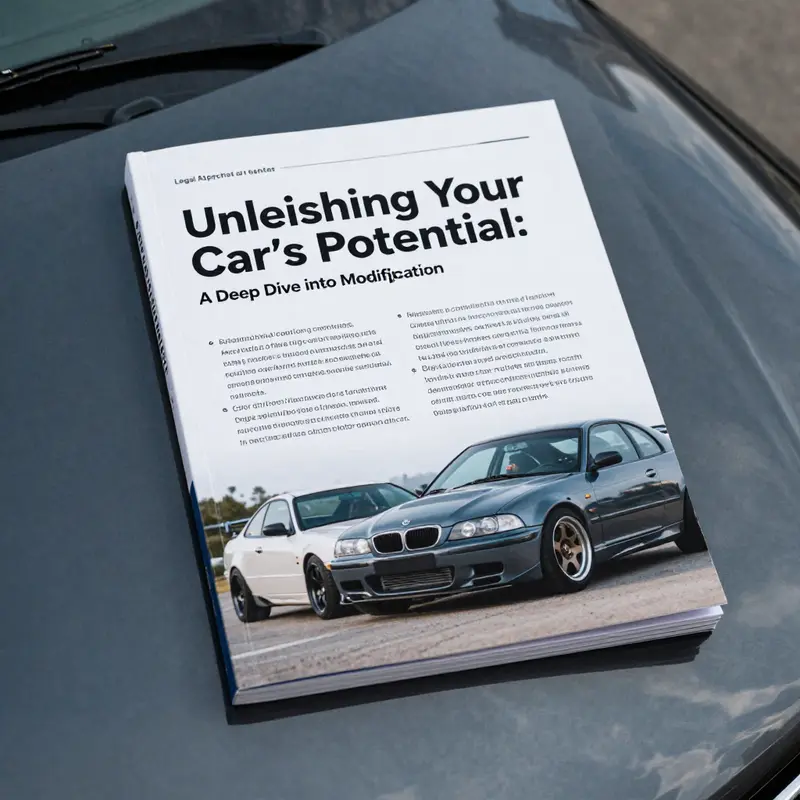
Modifying a car is often described as turning a vehicle into a personal statement, a blend of taste, ambition, and mechanical curiosity. Yet every modification exists within an established framework of safety, environmental responsibility, and road-use order. The art of modification is not only about what changes you can add to a car, but what changes you can legally carry, how they affect visibility to other road users, and how authorities verify identity and compliance on public streets. In this chapter, we explore how law and policy shape the practice of altering a car, what categories are typically regulated, what counts as permissible versus prohibited, and how drivers navigate the process of staying within the lines while expressing individuality. The conversation between design desire and regulatory obligation is not a dull ledger; it is a dynamic, practical guide to responsible personalization that protects drivers, passengers, pedestrians, and the broader ecosystem in which vehicles operate. To understand what modification means in a real-world context, you must see how rules translate into options, constraints, and responsibilities that affect every decision—from color choice to engine performance, from interior comfort to the legality of additional accessories.
Exterior appearance is where most people begin, because a vehicle’s look communicates first to the world and often reveals an owner’s style. Legal boundaries shape how far cosmetic customization can go before it requires administration or verification. In many regulatory environments, color changes are allowed, but they come with a measurable limit. For instance, the altered area cannot exceed a certain portion of the vehicle’s total body surface. In practical terms, this means a bold shift in hue across a large panel may trigger a registration update, while a more modest color change keeps the vehicle within its original identity. The distinction matters, because the system relies on recognizable identity markers to identify vehicles during inspections, seizures, or road checks, and a dramatic mismatch between a vehicle’s appearance and its registered details can prompt complications, delays, or fines. The policy view is pragmatic: it enables personal expression while preserving traceability and safety.
Two-tone paints and vinyl wraps, which many drivers adore for creating a distinctive silhouette or a premium feel, sit in a similar zone. They are allowed when the process is properly filed for approval. This is not merely a cosmetic hurdle; it is a formal acknowledgment that a vehicle’s exterior identity remains verifiable under regulatory scrutiny, even as the surface becomes more expressive. The same careful approach applies to decals. Decals can enrich the vehicle’s personality, but they must stay within a defined percentage of the body area. The underlying logic remains consistent: the more the surface is altered, the more an authority needs to confirm that safety markings, lighting visibility, and identification signals are not compromised.
Wheels represent a precise intersection of aesthetics, physics, and safety. In many jurisdictions, wheel designs can be modified only if the overall dimensions match the original factory specifications. This constraint protects the vehicle’s suspension geometry, steering response, and tire contact with the road. Swapping in noticeably larger or smaller wheels can change ride height, brake performance, and even the way a vehicle travels through a corner, potentially affecting stability and coverage of safety systems. As a result, tire size changes are typically prohibited, because they can alter gearing, speedometer accuracy, and braking efficiency. The regulation is not anti-creative; it is anti-risk, seeking to preserve predictable behavior that safety systems assume when they are certified on the factory line. For drivers who seek a distinctive look without stepping outside safety margins, compliant wheel choice becomes a critical design decision.
Roof racks and other exterior additions also enter the legal arena. A roof rack is generally permissible if it remains within a height limit—often around 30 centimeters—and is securely fastened. The rule recognizes the practical needs of travelers, families, and enthusiasts who carry gear, bicycles, or other equipment, while ensuring that the added mass does not destabilize the vehicle or obscure critical lighting and signals. The rhythm of permissible exterior changes, then, is a balance: space for personalization without compromising the vehicle’s structural integrity, visibility, or ability to be promptly identified by authorities when necessary.
Interior upgrades extend the scope of modification into the cabin where comfort, ergonomics, and sensory experience become central. Here, drivers frequently pursue changes that enhance daily life behind the wheel—new seat materials, refined upholstery, premium audio systems, or upgraded steering wheel aesthetics. The safety framework remains decisive: any interior modification must not undermine essential safety features such as airbag deployment or seatbelt integrity. In practice, upgrading to leather, Alcantara, or other premium materials is widely acceptable when it does not interfere with the deployment paths of airbags or obstruct the operation of safety restraints. One clear boundary concerns the number of seats: removing or adding seats is generally illegal, preserving the vehicle’s stated occupancy capacity and its corresponding safety and regulatory profile. The interior is a stage for personalization, but it is not a stage for structural or safety-relevant transformations that could complicate occupant protection or emergency response.
Performance-related alterations, particularly those affecting the dynamics of the chassis, brakes, and intake/exhaust systems, sit in a more nuanced category. Many systems allow performance enhancements, but they do so within a framework that protects road safety and environmental standards. Upgrading the brake system, provided that certified components are used and installed by qualified professionals, is typically permitted because it directly influences stopping power and control—critical safety attributes. This pathway encourages more confident driving and allows enthusiasts to tailor braking performance to their vehicle’s weight, tires, and usage profile without compromising safety mechanisms. When it comes to intake and exhaust modifications, the regulation often focuses on the potential impacts on noise levels and emissions. Changes that would increase noise pollution or push emissions beyond permitted thresholds are not acceptable. The guiding principle here resembles a careful calibration: improvements in one domain should not erode compliance in another, and any performance-oriented modification must align with the broader environmental and safety expectations set by law.
Despite these allowances, there are clear prohibitions that no modification can bypass. Structural changes—alterations to the frame, chassis, engine type, or transmission—are generally illegal and can carry penalties such as fines or even seizure. These limits protect the fundamental integrity of the vehicle and ensure that a car’s core safety architecture remains capable of withstanding the rigors of daily use and the demands of collision scenarios. Lighting configurations are closely regulated as well. Installing non-compliant lighting or altering the function of signaling lights can disrupt visibility or create confusion for other road users, leading to legal consequences. Ground clearance adjustments, particularly those intended to improve off-road capability, face restrictions that reflect a concern for stability and on-road performance. Attempts to raise a vehicle’s height beyond regulated limits can alter center of gravity and aerodynamic behavior in ways that influence brake performance and tire contact with the road.
Another critical boundary concerns identification information. Modifications that alter a vehicle’s VIN, license plate, or manufacturer logo are illegal and constitute fraud. This rule underscores the social contract that governs shared roads: an unambiguous, traceable identity is essential for enforcement, insurance, accident investigations, and recall campaigns. Identity integrity is not a mere formality; it is the backbone of accountability on public streets. To navigate the line between customization and compliance, many drivers adopt reversible or easily auditable modifications, such as wraps, interior trims, or aftermarket components that can be removed or reinstated to restore the vehicle’s original profile for inspections.
Compliance and reporting form a practical bridge between intention and enforcement. All modifications must be reported to the traffic management department when required, and failing to comply at the point of annual inspection can lead to obligations to restore the vehicle to its original condition. This reporting mechanism reinforces a predictable standard of identification and environmental responsibility, ensuring that vehicles on the road remain traceable and within the limits set to protect air quality, noise levels, and traffic safety. The emphasis on reporting does not deter creativity; it channels it into a framework where personalization remains a valued objective but not at the expense of public safety or regulatory clarity. In many jurisdictions, this approach also supports consumer protections by creating a transparent record of changes that insurers and resellers can reference.
Official guidance for these matters is typically anchored in comprehensive regulatory texts. The documentary backbone includes broader instruments such as the Motor Vehicle Registration Regulations and the Road Traffic Safety Law. The guiding principle that permeates these documents is clear: any alteration must not undermine safety, environmental performance, or the vehicle’s identifiable integrity. This triad—safety, environment, identity—frames every practical decision an owner makes when choosing to modify a vehicle. It is a reminder that car modification is not merely a hobby; it is a collaborative process between the owner, the vehicle, and the state that ensures driving remains a safe, predictable, and accountable activity for all.
In the context of the broader article on what car modification means, these legal considerations are not peripheral. They illuminate how personal expression and mechanical curiosity meet the discipline of law. The practice becomes not only a technical or aesthetic pursuit but a negotiated space where designers, engineers, regulators, and drivers contribute to a shared road culture. For readers who are curious about how these rules translate into practical decisions, a concise regulatory snapshot in China offers a useful reference point. It highlights the 30 percent area rule for color changes, the 30-centimeter roof-rack height, the prohibition on wheel size changes, and the emphasis on maintaining safety features and emissions standards. See Legal car modifications in China for a focused overview.
The landscape described here is not static. Regulations evolve with technology, vehicle design, and societal priorities. Emerging materials, new powertrain options, and evolving environmental targets can shift what is considered compliant, especially for performance and emissions-related modifications. Yet the core ethic remains steady: personalization should enhance the driving experience without eroding the safety, reliability, or accountability that allow roads to function smoothly. As drivers, enthusiasts, and professionals continue to push the boundaries of what’s possible, the legal framework acts as a compass, guiding experimentation toward innovations that can be adopted broadly and responsibly. This nuanced balance between freedom and order is what makes car modification a rich field of practice, study, and discourse. It invites readers to imagine vehicles that reflect personal identity while remaining legible to the systems that safeguard all users of the road.
For readers seeking a direct link to the regulatory conversation in practice, a relevant resource on the legal landscape in China can be consulted here: Legal car modifications in China. This entry offers a structured, current snapshot that complements the broader principles discussed in this chapter. Additionally, those looking for a formal, government-facing perspective on how modifications are governed and registered can consult official guidance from national authorities, which provides the authoritative framework that shapes day-to-day decisions about what can be changed, how changes are reported, and what happens during vehicle inspections. Official guidance is available here: https://www.mps.gov.cn/zwgk/fgwj/202501/t20250108_476598.html.
Balancing Power and Prudence: Safety as the Core of Car Modification

Safety sits at the heart of any meaningful car modification. It is not a barrier to customization but a framework that keeps the math of performance—the physics of speed, braking, and handling—from turning passion into danger. When people seek to personalize or enhance a vehicle, they often focus on the shine of a new color, the swing of a wider wheel, or the whisper of a tuned exhaust. Yet beneath these surface changes lies a web of interdependent systems. The engine, the brakes, the suspension, the cooling circuit, the electrical harness, and even the tire choice, all communicate with each other. Alter one thread, and the fabric of safety can begin to fray. The responsible path to modification treats this as an engineering problem, not a hobby with unpredictable side effects. This mindset anchors the broader discussion of how to modify a car while preserving safety, legality, and reliability across contexts as varied as stock factory settings, aftermarket innovations, and regulated jurisdictions.
A practical starting point is the sober reminder that modification is, at its core, a systems problem. The moment power goes up, stopping distance does not automatically shrink. In fact, it typically grows unless the brake performance, tire grip, and control systems are upgraded in tandem. A higher horsepower figure invites more heat into the braking system, greater demands on the transaxle or drivetrain, and stronger steering inputs to maintain balance. If the cooling system is neglected, a high-revving engine can overheat, triggering power loss or, in worst cases, mechanical failure. The same logic applies to suspension work. Lowering a car or stiffening springs can sharpen handling and reduce body roll, yet it can also reduce ground clearance, increase ride harshness, and alter steering geometry. If the suspension geometry isn’t recalibrated to match the new setup, tire wear becomes uneven and unpredictable, and the vehicle’s response can become binary rather than progressive. A thoughtful approach treats each modification as a change in one part of a larger ecosystem, demanding a holistic assessment rather than isolated improvements.
Begin with a responsible, stepwise evaluation of compatibility. If you pursue an engine upgrade, you should anticipate corresponding changes to the cooling, fuel delivery, and exhaust pathways. A properly tuned engine demands effective heat rejection, precise fuel metering, and an exhaust route that preserves backpressure characteristics while staying within noise limits. Skipping these steps creates a mismatch that can manifest as overheating, reduced power, or even dangerous fuel-air imbalances. Likewise, intensifying driving dynamics through suspension work should be paired with an analysis of roll stiffness, steering geometry, bump compliance, and aero effects. In the real world, the best track performance often hides a trade-off: more grip on a track might come with a stiffer ride on city streets and harsher curb impact. The key is to map how the changes interact on the road you actually drive, not only on a brochure or a dyno chart.
Beyond mechanical balance, the quality and certification of parts are a critical safety gate. Substandard or uncertified components can fail when you least expect it, with consequences that extend beyond the individual driver. Brakes, tires, seat belts, and airbags are not aftermarket accessories to be swapped at whim; they are safety-critical systems whose performance hinges on reliable materials and proper engineering. Reputable manufacturers design components to meet recognized standards, and reputable shops install them in ways that preserve those standards. When brake pads or rotors come from dubious sources, the risk of sudden fade, seizure, or blowout increases dramatically. Tires that do not meet the manufacturer’s load and speed ratings can overheat and fail under high-speed cornering or rapid lane changes. It is not exaggeration to say that the margin between exhilarating and catastrophic often lies in the choice of a single, properly certified part and its correct installation.
This emphasis on quality dovetails with the wisdom of seeking professional installation and thorough testing. Car modification requires specialized knowledge, tooling, and testing procedures. A trained mechanic can interpret how a chosen upgrade fits with the vehicle’s existing controls, sensors, and safety systems. They will calibrate engine parameters according to the specific parts, ensure the brake lines and hydraulic systems are properly bled, and align the chassis to deliver predictable steering and traction. Post-modification testing is not optional; it is essential. A controlled track or safe closed environment allows the team to assess stability, throttle response, braking strength, cornering behavior, and safety margins under various conditions. Real-world roads present unpredictable hazards—potholes, debris, wet lines, traffic gaps—that cannot be simulated with perfect fidelity. A cautious, repeatable testing process identifies soft spots in a modification strategy before you face live traffic.
Legal and regulatory compliance serves as a practical guardrail in this safety-centric approach. Laws governing modifications are designed to maintain road safety, environmental standards, and fair access to the road network. While the specifics vary by country, a common pattern emerges: engines and exhausts that push power without matching safety and emissions controls, lighting configurations that blind other drivers, or wheel and tire choices outside the manufacturer’s guidelines can trigger penalties, failed inspections, or liability in the event of a crash. In regions with stringent rules, even seemingly harmless cosmetic changes—such as a color change that uses extreme or restricted palettes or body kits that obstruct lights or plates—can become legal liabilities if they undermine visibility or identification. When in doubt, consult official vehicle codes and seek guidance from authorized technicians who understand the local landscape. As a practical step, document and register any legally compliant modifications with the relevant authorities, ensuring that your vehicle’s record reflects a deliberate and transparent engineering choice rather than a concealed risk.
Electrical systems often become the unseen bottleneck in a modification program. The temptation to add high-power audio systems, bright LED lighting, or auxiliary batteries is strong, especially when a modified car is meant to stand out. However, an overloaded wiring harness can produce shorts, fuse failures, or even fires. Electrical work must follow sound circuit design principles: appropriate gauge wiring, correctly rated fuses, proper grounding, and a clear separation between high-current accessories and critical safety circuits like airbags and anti-lock braking systems. In practice, a comprehensive electrical plan involves a careful audit of the vehicle’s load capacity, a documented power budget for each new device, and verification that alternators, battery capacity, and charging systems can sustain the added demand without compromising reliability. This kind of foresight protects not only the driver but the entire electrical network of the car, reducing the risk of cascade failures that can turn a celebration into a roadside hazard.
The local context matters as well. In the Chinese regulatory environment referenced in contemporary discussions, modifications are allowed within defined boundaries. For example, body color changes are permissible as long as universal safety constraints are respected and restricted color palettes reserved for emergency services are avoided. Wheel changes are allowed if tire sizes remain within the manufacturer’s recommended footprint; changing wheel sizes could prompt safety and inspection concerns. Interior alterations are typically more flexible but still require that critical safety devices remain functional. Performance enhancements such as suspension upgrades can improve handling, provided they preserve stability and do not compromise ground clearance to unacceptable levels. This nuanced approach demonstrates that safety is not a fixed rule but a living framework that adapts to the technology, the vehicle, and the regulatory culture that governs the road. It also highlights how a responsible modification path aligns with a driver’s expectations for both performance and longevity, reinforcing a philosophy that values safety over sheer speed.
To anchor these ideas in practice, consider the following integrated approach. Begin with a clear goal that maps your desired outcomes to the vehicle’s existing architecture. If the aim is better cornering and feedback, you might start with a careful suspension tune and a brake upgrade that suits the new balance. If the objective is higher top-end power for straight-line acceleration, plan a coordinated package that includes cooling, fuel delivery, exhaust, and drivetrain components calibrated for reliability. In every case, select high-quality parts from reputable manufacturers, verify compliance with applicable standards, and choose a qualified shop for installation. Afterward, execute a staged testing program, first on a controlled surface and later in real road conditions, always prioritizing predictable handling and immediate, reliable emergency responses. Keeping a detailed log of parts, settings, and test results fosters accountability and simplifies future maintenance or compliance checks.
Within this broader framework, the chapter’s central thesis remains: safety is not a constraint on creativity but the foundation that ensures creativity can be sustained. A well-planned modification that respects the vehicle’s original design intent, adapts it thoughtfully, and stays within legal boundaries yields a car that feels driven rather than dangerous. This perspective resonates across contexts—from enthusiast garages to professional tuning shops—and underscores why most of the best-modified cars do not rely on reckless torque or showy bravado. They show restraint, discipline, and a clear respect for how a vehicle behaves under real-world conditions. When people see a modified car that handles confidently, stops decisively, and remains predictable at the limit, they are witnessing safety as a shared value, not an individual prerogative.
For readers seeking a concise starting point on the legal dimensions of car modifications, a useful reference is the legal-car-modifications resource, which provides an overview of permissible changes and the boundaries that keep roads safe for everyone. This resource helps demystify the sometimes murky line between customization and compliance, guiding readers toward modifications that honor both innovation and responsibility. Legal car modifications.
The conversation about safety in car modification thus becomes a conversation about responsibility. It asks not only what you want your car to do, but what your car is capable of doing safely when pushed to its limits. It invites you to acknowledge the complex choreography of systems that makes modern cars what they are: a synthesis of mechanical engineering, electrical design, materials science, regulatory policy, and human judgment. And it reminds you that the most satisfying performance gains are earned through meticulous planning, high-quality parts, professional skill, and a steadfast commitment to safety as a constant companion on every mile of the road.
External reference: For regulatory standards and safety guidelines that frame modifications in the broader context of road use, see the National Highway Traffic Safety Administration (NHTSA) resource at https://www.nhtsa.gov
Final thoughts
Car modification is a multifaceted practice that combines artistic expression with engineering prowess. By understanding performance enhancements, aesthetic transformations, legal regulations, and safety implications, modifiers can craft vehicles that are not only eye-catching but also adhere to guidelines that ensure road safety. Whether you’re a hobbyist or a professional tuner, mastering these aspects can elevate your car modification journey and lead to the creation of truly exceptional vehicles.