
Mods aren’t just about making a car look or perform better; they redefine risk for insurers, which can alter coverage, pricing, and even the ability to claim after an incident. For hobbyist modifiers, professional tuners, restoration enthusiasts, and the global modding community, the stakes are real: a new turbo kit, a lowered suspension, or a full chassis rebuild can trigger premium surges, exclusions, or outright policy termination if not disclosed and managed properly. In the United Kingdom, government guidance underscores a fundamental obligation: hold appropriate coverage and avoid underinsuring by failing to declare changes. Across markets, underwriters weigh how alterations shift a vehicle’s behavior, repair costs, and safety profile. The result is a landscape where a single unreported modification can distort risk assessments, impact claim outcomes, and influence a shop’s ability to insure a project at all.
This article unpacks the question at the heart of every serious mod project: what modifications void car insurance, and how can enthusiasts and professionals navigate risk without stifling creativity? Five interlinked chapters guide readers through the core forces at work:
- Technological risk assessment of performance upgrades: how tech changes—ECU tuning, turbocharging, exhaust, and drive-train work—reshapes insurance risk.
- Economic implications for premiums, claims, and policy costs: how pricing models respond to modded risk and what that means for budgets.
- Regulatory framework and guidance (UK example) and policy compliance: the lines insurers and regulators draw around disclosure, valuation, and lawful use.
- Societal and behavioral implications of vehicle modifications and usage: how culture, expectations, and usage patterns affect risk and responsibility.
- Practical disclosure, coverage options, and risk mitigation strategies: best practices for transparency, tailoring coverage, and reducing exposure.
For enthusiasts and professionals alike, the takeaway is clear: the path to protection runs through disclosure, documentation, and proactive risk management. The five chapters build a complete view—from the technology that powers performance to the regulations that govern legality and the practical steps that keep builds protected in the real world.
Technology-Driven Risk in Vehicle Modifications: Insurance Implications and Assessments
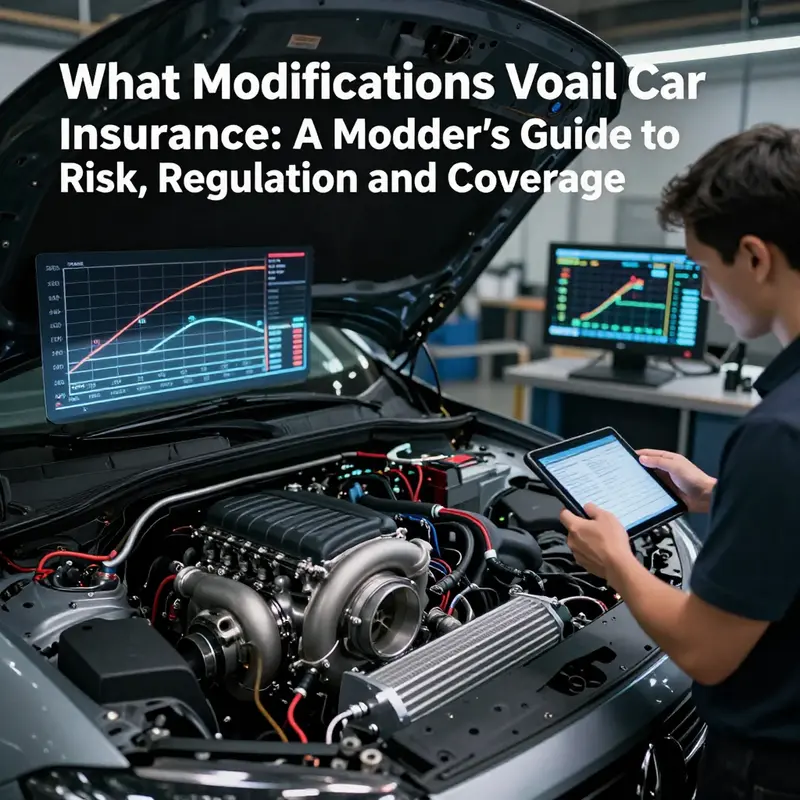
Modifying a car to enhance performance or handling introduces more than a thrill; it creates a shifted risk profile for insurers who must weigh upgraded capabilities against potential reliability and safety concerns. Insurers assess how changes affect safety systems, maintenance costs, and repair logistics, and they rely on clear disclosure to align the risk with the policy terms.
A risk-focused approach begins with full disclosure: what has been changed, who did the work, and what parts were used. Without transparency, coverage can be denied or claims delayed if a modification is implicated in an loss. When documentation is thorough, underwriters can price the risk more accurately, and endorsements for modified vehicles can be added if appropriate.
The technical ripple effects of upgrades are varied. Engine and powertrain modifications can alter stress on components, cooling needs, and fuel behavior, while software remapping can shift sensor behavior and safety-system calibration. Suspensions and wheels affect handling and braking dynamics and can change crash and repair scenarios. These interactions influence premium levels and the availability of certain coverages, as well as the likelihood of restrictions or exclusions.
Owners can improve insurability by working with qualified installers, keeping detailed part records, and pursuing policy options designed for modified vehicles. A dedicated modified car endorsement or agreed value coverage can better reflect the true value and risk of the vehicle, though they often come with higher premiums and usage restrictions.
In short, the key to maintaining insurance in the face of modifications is proactive risk management: disclose the changes, document the details, ensure proper calibration and testing, and seek coverage that matches the altered risk profile.
What Modifications Void Car Insurance: The Economic Implications for Premiums, Claims, and Policy Costs
Modifying a vehicle changes the risk profile that underwriters rely on when pricing policies. When a modification pushes a car beyond the assumptions used at policy inception, it can render coverage inaccurate or inapplicable. This is the core reason modifications may void car insurance and lead to claim denial, policy cancellation, or the introduction of exclusions.
Insurers typically scrutinize changes that affect speed, handling, repair costs, and the likelihood of a claim. High performance engines, turbochargers, or extensive engine tuning can move a vehicle outside the originally underwritten envelope. Undisclosed upgrades raise the probability of an accident and the cost to repair, so the policy may no longer match the risk.
Suspension and steering changes alter braking distances and rollover risk. Even aesthetic mods with performance implications can affect risk, and undisclosed modifications risk denial or cancellation. Removing or defeating safety systems like airbags, ABS, or ESC is a red flag.
Aftermarket tires and wheels can affect grip and heat, possibly increasing risk. Vehicle conversions for race use or rideshare can require endorsements. Using a vehicle for business uses without disclosure is misrepresentation.
Some policies may require telemetry devices or risk-reducing equipment; tampering can void coverage. For high value or classic cars, unrevealed modifications carry higher costs due to bespoke parts or appraisals.
Economically, undisclosed modifications push up claim frequency and severity, raising premiums across the market. The ABI notes a meaningful portion of motor claims involve unreported modifications, demonstrating systemic pricing effects. Consumers may face denials, restricted coverage, or higher deductibles.
Practical guidance: disclose changes, keep documentation, and consider policies designed for modified vehicles; consult insurers before modifications; maintain a record of installation dates and parts. The regulatory context in the UK emphasizes the obligation to carry appropriate coverage and to disclose material changes; the government guidance and ABI data illuminate how modifications influence coverage and pricing.
Voiding Car Insurance by Design: UK Regulatory Framework, Disclosure Duties, and Compliance
In the UK, modifying a vehicle can change the level of risk that an insurer assumes, and as a result may affect coverage. The Financial Conduct Authority (FCA) requires that material changes to a vehicle be disclosed to the insurer. A material change is any modification that could alter how a car performs, handles, or repairs, and hence could influence premiums or eligibility for cover. If a material change is not disclosed, insurers may deny a claim or cancel the policy. Policyholders should review their policy terms, seek pre-approval where offered, and keep records of any modifications. Guidance from the ABI and Money Advice Service emphasizes utmost good faith and ongoing communication with the insurer when changes are planned. For authoritative information, see official UK sources on car insurance and modifications.
null
null
null
null
Final thoughts
Across every facet of car modification, the central thread remains: transparent communication with insurers is not a hurdle; it’s a safeguard. By understanding how technological upgrades shift risk, anticipating the economic impact of those changes, aligning with regulatory expectations (notably in the UK), considering the societal and behavioral contexts of how you use a modded vehicle, and implementing practical disclosure and risk-mitigation measures, enthusiasts can preserve both their builds and their cover. The goal is to empower a confident modding journey where passion meets responsibility. Always declare changes, maintain thorough documentation, obtain the right coverage, and collaborate with trusted specialists to ensure your project stays protected from the moment you turn the key.