

Car modification has gained immense popularity worldwide, with automotive enthusiasts always looking for ways to enhance the performance and aesthetic appeal of their vehicles. However, the rules governing these modifications vary significantly from country to country. Understanding these regulations is essential for hobbyist modifiers, professional tuners, shops, and classic car restoration enthusiasts. By exploring the regulations in Japan, Germany, and the United States, we can gain insights into how these countries foster a vibrant car culture while ensuring safety and compliance. Each chapter delves into the specifics of car modification regulations in these regions, highlighting the unique aspects that define their automotive identities.
Japan’s Open Yet Guarded Path: How a Structured Framework Lets Car Modification Thrive

When people ask which country allows car modification, the instinct often turns to places with lax, almost permissive vibes. Yet Japan presents a counterintuitive model: it is both permissive enough to foster a thriving culture of personalization and tightly regulated enough to keep road safety and environmental goals unequivocally central. The result is a landscape where enthusiasts can reimagine their vehicles within a well-defined corridor, one that rewards creativity while insisting on discipline. This isn’t a loophole economy; it is a carefully engineered system designed to balance individual expression with collective responsibility. To understand why Japan’s approach stands out, one must follow the thread from the Type Designation System to the everyday adjustments that arrive on a workshop bench and pass the yearly scrutiny without tearing at the seams of the country’s transport framework.
At the heart of Japan’s modification regime lies a rigorous Type Approval framework, commonly known by its alignment with the Type Designation System (TDS). This system governs all new vehicles entering the market, ensuring that they meet strict safety, emissions, and performance benchmarks before they can be legally driven. For modified vehicles, the path is more nuanced but still navigable. The key constraint is straightforward: significant structural changes are generally off-limits. The modern Japanese road-legal sphere is not a free-for-all; it’s a well-mapped road that allows changes within a precise set of limits. Changes that alter a car’s fundamental architecture—its frame, crumple zones, or essential safety characteristics—are scrutinized to determine whether they compromise the vehicle’s integrity. In practice, this means that many cosmetic and functional upgrades can be pursued, provided that the modifications stay within the boundaries of national regulations and do not undermine safety or environmental performance. This is where the balance emerges: enthusiasts can pursue a personal aesthetic or a functional upgrade, but they do so within a framework that ensures each alteration remains compatible with the vehicle’s core safety envelope. The result is a culture of modifications that can be both aspirational and accountable, a combination that is hard to replicate in markets where standards are looser or inconsistently enforced.
One particularly telling aspect of the Japanese landscape is the prominence of non-structural modifications. While the street may be awash with stories of bumper-to-bumper customization, the rules anchor those stories in reality. Non-structural modifications encompass a range of upgrades that do not bid against the car’s safety architecture. Enthusiasts frequently pursue improvements like new roof racks, luggage carriers, step bars, or interior upgrades that transform comfort and usability without tugging at the skeleton that keeps occupants safe.
Even when it comes to wheels and lighting—often the most visually striking modifications—the path remains regulated. Replacing wheel rims, bumpers, or grilles is generally permitted so long as the new parts meet the voluminous, but explicit, Vehicle Inspection Standards overseen by the Ministry of Land, Infrastructure, Transport, and Tourism (MLIT). The logic is clear: a wheel and a light can change a car’s character, but they must still interact with crash physics, structural alignment, and correct signaling. In practice, that means attention to details such as proper crash protection, correct alignment with the frame, and correct illumination levels that meet regulatory thresholds. The aim is not to stifle style but to preserve the very conditions that keep pedestrians and other drivers safe when a car behaves unpredictably on the road.
Japan’s Kei car category offers a particularly revealing window into how dimension and power restrictions shape modification culture. Kei cars are limited to a maximum length of 3,400 millimeters, a width of 1,480 millimeters, and a height of 2,000 millimeters, with engine displacement capped at 660 cubic centimeters. These constraints, while strict, have spurred a distinctive ecosystem of customization built around efficiency, urban practicality, and clever use of space. The Kei culture demonstrates that the question of what is permissible is not a blunt yes-or-no judgment on modification; it is a nuanced invitation to rethink form and function within a compact, well-defined envelope. For Kei enthusiasts, the thrill lies not only in appearance but in the ingenuity required to maximize performance, handling, and efficiency within those compact limits. The result is a vibrant market and a social milieu that celebrates inventive solutions—such as light-weighting strategies, aerodynamic refinements, and interior optimization—that stay within the legal ceiling while delivering personal satisfaction.
Beyond Kei cars, the broader non-structural modification space remains active and dynamic. Enthusiasts often pursue upgrades that can be integrated without derailing the vehicle’s roadworthiness. Interior refinements, upgraded seating, improved sound systems, or aesthetic touches like grilles and trim replacements populate a landscape where the practical and the expressive coexist. The governing principle is clear: any modification must preserve, or at least not undermine, safety, emissions controls, and the vehicle’s ability to pass inspection. In this sense, the Japanese system is surprisingly permissive, but that permissiveness is tethered to a disciplined, rule-bound approach to the design and testing of changes. A key to this balance is the emphasis on using parts from authorized channels or those that are certified to meet the national standards. When parts come from certified dealerships or approved suppliers, the risk of misalignment with safety and emissions specifications declines, reinforcing the pathway from customization to compliance.
The regulatory backbone is reinforced by the MLIT’s Vehicle Inspection Standards, a living document that ensures modifications do not unintentionally erode roadworthiness. The annual Shaken inspection, a comprehensive vehicle inspection system, is the vehicle’s gatekeeper. It assesses whether the car continues to meet the safety, environmental, and functional criteria required for continued on-road operation. A modified car that passes Shaken retains its license plate and its place on public roads. The inspection process is not a punitive ritual; it is a validation mechanism that recognizes the legitimate right to personalize while preserving the social contract of road safety. The emphasis on testing is practical: the more a modification bends a car’s dynamics, the more scrutiny it will face to confirm that the changes behave predictably under real-world conditions.
The Japanese framework also demonstrates a thoughtful approach to regulatory governance. In 2025, the Ministry of Land, Infrastructure, Transport, and Tourism announced reforms to address data falsification in certification processes. These reforms require manufacturers to present internal control documentation and evidence of corrective actions when applying for type approval, particularly if a company had previous violations. This development is not merely about policing safety claims; it signals a systemic commitment to the integrity of the entire modification ecosystem. It reassures enthusiasts that the system they navigate is robust, transparent, and designed to minimize the risk that a misstep in certification could ripple through road safety. In a practical sense, it means that both new-vehicle designers and aftermarket providers operate in a framework where reliability and traceability are paramount, ensuring that modifications do not introduce unanticipated hazards.
The cultural dimension of Japan’s modification landscape deserves attention as well. A robust ecosystem of authorized tuners and aftermarket suppliers exists not as a substitute for manufacturers but as a regulated bridge between factory design and personal expression. This dynamic helps preserve a sense of quality control across the spectrum of modifications. It also fosters a consumer expectation that, if a modification is pursued, it will be resolutely compatible with the vehicle’s fundamental safety strategies. The emphasis on using official parts helps maintain uniformity in how changes interact with the vehicle’s safety systems, braking performance, and lighting order, reducing the likelihood that a given modification introduces risk into the road network. In this sense, Japan’s model does not celebrate reckless personalization; it celebrates responsible personalization—an ethos that resonates with a population for whom precision engineering is a cultural hallmark.
From a consumer perspective, the process of modifying a vehicle in Japan is both accessible and predictable. The path begins with a clear set of rules about what kinds of changes are permissible and ends with the assurance that those changes maintain roadworthiness. The practical takeaway is that modification in Japan is not a gamble; it is a carefully navigated journey, one that benefits from a blend of technical standards, administrative oversight, and a thriving market for compliant parts. This has produced a car-culture that is deeply creative yet reliably safe, a paradox that resonates with the broader global question of which country allows car modification. Japan demonstrates that a nation can encourage personalization without compromising safety or environmental goals, by designing a system that rewards transparency, certification, and ongoing compliance rather than loopholes or informal interpretations.
For readers seeking a more immediate understanding of how to navigate this landscape, a practical compass is often to consult resources that frame modification within the bounds of legality and safety. A useful starting point is the notion of legal car modifications as a category—emphasizing that the goal is to identify changes that enhance a vehicle without undermining its regulatory status. This perspective helps individuals distinguish between cosmetic upgrades, functional improvements, and alterations that would necessitate re-certification or re-registration. It is a reminder that the Japanese model, while permissive in spirit, demands accountability in practice. When in doubt, the path forward is to prioritize parts and services that align with official standards and to seek guidance from licensed technicians who understand the precise interaction between a modification and the vehicle’s safety architecture.
Within this landscape, the principle of alignment with approved design and testing channels becomes crucial. Using parts from authorized dealers or certified suppliers is not merely a preference; it is a practical safeguard. When a modification is anchored to components that have been vetted for compatibility, the likelihood of a mismatch that could compromise safety is significantly reduced. In this way, Japan’s approach is not a cautionary tale about stifling creativity but a blueprint for translating creativity into a durable road-worthiness proposition. The system’s predictability makes it possible for car owners to enjoy personalized expression while maintaining the social trust that comes with a shared road network. Enthusiasts learn to view year-to-year inspections not as a barrier but as a collaborative checkup with the state—a chance to confirm that personalization continues to be compatible with safety, emissions, and general roadworthiness.
From the perspective of comparative policy, Japan’s model offers a template for other countries seeking to reconcile a vibrant car culture with stringent safety and environmental expectations. Its strength lies in a deliberate segmentation of different modification domains—from Kei car constraints to cosmetic or functional non-structural upgrades—so that the regulatory touchpoints remain clear and manageable. The system also benefits from a transparent escalation path: if a modification risks safety or emissions integrity, authorities can require further testing, additional documentation, or even a rollback to factory specifications. This layered, data-informed approach helps prevent ad hoc decisions that could destabilize the fleet’s safety footing. In this way, the Japanese model does not simply permit change; it governs change in a way that sustains confidence in both car owners and the roads they share.
For readers who want a practical gateway into this framework, consider exploring resources that detail the broader legal landscape of car modifications and how they interact with insurance, registration, and roadworthiness. One practical entry point is the article on legal car modifications, which outlines how enthusiasts can pursue changes while staying within the bounds of the law. The discussion underscores that thoughtful compliance—not mere desire—drives the healthy culture of customization that Japan prizes. legal car modifications. This link points to a resource that clarifies common misconceptions and highlights the importance of alignment with regulatory expectations, an essential consideration for any owner contemplating a modification in Japan or elsewhere.
Ultimately, the Japanese example shows that the question of which country allows car modification does not have a single, simple answer. It depends on what kind of modification, what kind of car, and what kind of road use one envisions. Japan provides a sharp answer to that question: modification is allowed, but under a structured, safety-first framework that invites personal expression without surrendering public safety. The result is a car culture that is rich in design and discipline, where a modified ride can be legally maintained, inspected, and enjoyed year after year. It’s a model that acknowledges the inevitability of change in automotive design and usage while insisting that such change happens within a system that everyone can trust. As other countries continuously reassess their own policies—balancing novelty with safety—Japan’s experience offers a concrete example of how to nurture both innovation and accountability on the road.
External reference for deeper regulatory context: https://www.mlit.go.jp/english/.
Germany’s Safe Ground for Personalization: How a Legal Framework Enables Car Modifications
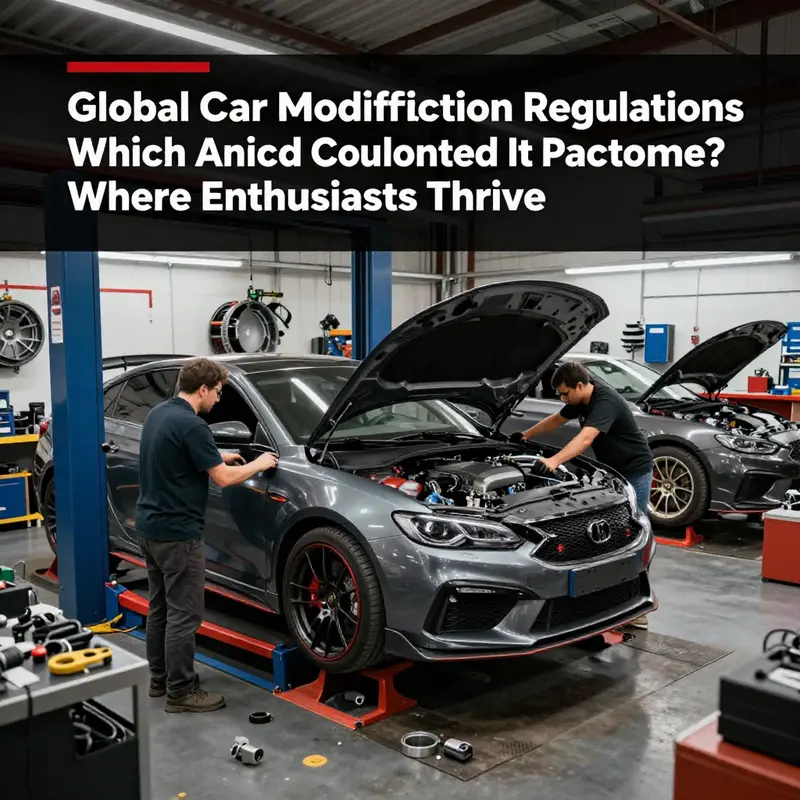
Germany’s automotive landscape presents a structured, safety-minded path for personalizing vehicles. Modifications are welcomed, but they remain linked to rigorous safety and environmental standards rather than freewheeling experimentation. The system treats modification as an extension of the roadworthiness rulebook, not as a rebellion against it. This balance has shaped a car culture where performance and expression can flourish on public roads without compromising safety or environmental goals.
At the core is a framework anchored in national traffic law and European regulations ensuring that every change preserves roadworthiness. In Germany there is no standalone modification statute; instead, the Road Traffic Act (StVG) and its implementing regulation (StVZO) define the baseline. Changes are evaluated through conformity testing, certification, and traceability, with safety and environmental standards applying as they do to factory-built components. The aim is safety for all road users, not just the driver.
The supervisory authority is the Federal Motor Transport Authority, known as KBA. The KBA ensures that modified parts and installations comply with recognized standards such as European Conformity (ECE) or EC certification. The approach distinguishes parts broadly compatible with the framework from those needing specific approvals, acting as a bridge between aftermarket innovation and public safety expectations.
A defining feature is the Gruene Liste, maintained by the KBA. The Gruene Liste is a curated set of components and modifications evaluated for safety, environmental impact, and compatibility with the vehicle’s original design. When a part sits on the Gruene Liste, it often qualifies for an ABE, a general operating permit that streamlines legitimate customization. The ABE does not require bespoke approval for each new part, provided it meets recognised standards and traceability requirements.
The framework also distinguishes OEM-approved modifications from independent aftermarket products. OEM-approved options carry legitimacy because they integrate with the vehicle’s design and certification baseline. Independent aftermarket products, when certified or listed on the Gruene Liste, can be installed with confidence that safety and compliance remain intact. This separation is not about stifling choice but about maintaining a structured, auditable ecosystem.
In everyday practice, a modification begins with a decision that may reflect performance, handling, aesthetics, or practicality. If the modification is on the Gruene Liste, the path is straightforward after installation and the vehicle stays within the general operating framework of StVG and StVZO. If not, the owner can seek formal approval through testing, documentation, and a decision by the KBA.
Germany’s market reality includes a substantial aftermarket sector. It is estimated that roughly six to eight percent of licensed vehicles undergo some form of modification, underscoring a mainstream activity rather than a niche hobby. The market’s size, including the aftermarket sector valued at around 18 billion euros, reflects a mature ecosystem built on safety, reliability, and regulatory alignment.
Traceability is a central feature: every approved modification and certificate of conformity is documented to aid inspection, resale, and ongoing monitoring. This transparency helps regulators, insurers, and owners navigate changes in law, vehicle usage, or ownership while preserving roadworthiness through the vehicle life cycle.
The European context matters as well. EU-wide safety and environmental standards harmonize with national laws, reducing uncertainty for manufacturers and owners who travel across member states. This shared regulatory climate supports a common pool of components installed with confidence while maintaining consistent safety outcomes.
For readers seeking deeper legal grounding, official guidance from the German Federal Motor Transport Authority (KBA) is available online, alongside technical standards for conformity and certification. See the official site and related resources for authoritative information: https://www.kba.de and the Gruene Liste framework documentation.
Freedom by Design: A Deep Dive into Global Car Modification Rules with a Focus on How the United States Stands on the Spectrum
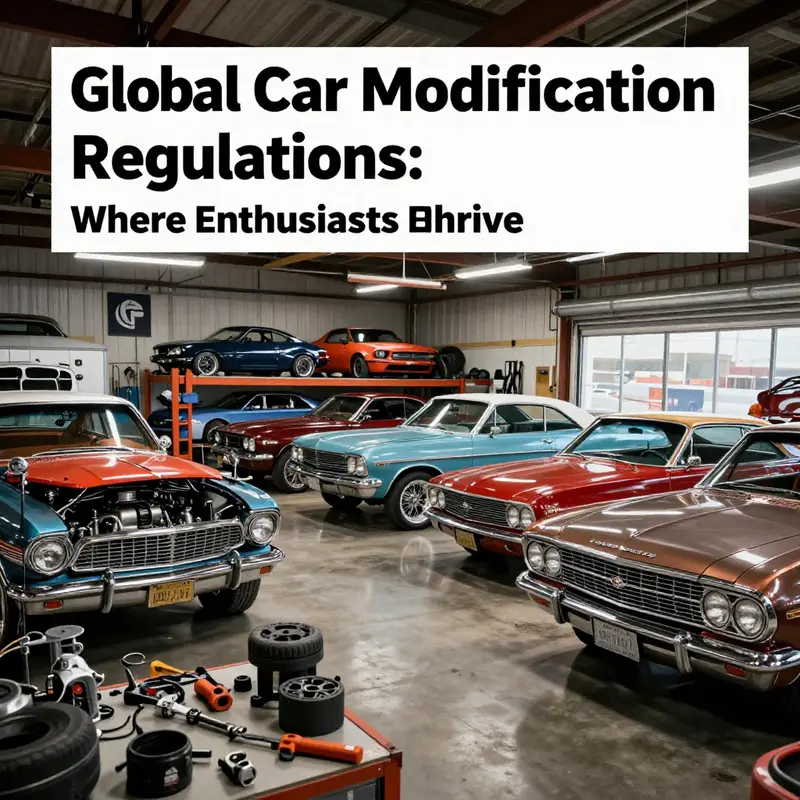
The question that frames this chapter—which country allows car modification?—is less a single answer than a map of legal terrains, cultural currents, and practical consequences for owners who want to tailor their machines. Across the world, regulators balance two competing aims: enabling personal expression and maintaining safety, environmental protection, and road reliability. When you place the United States beside jurisdictions like Japan or Germany, the contrast is instructive. The United States does not present a monolith; it presents a mosaic. The paths open to a car owner who wants to modify a ride depend on where the vehicle is registered, how the modification affects safety and emissions, and how (or whether) local authorities will inspect or certify the changes. To understand the U.S. position, it helps to look at the country as a whole while also tracing the everyday realities that shape what enthusiasts can legally do on their streets and highways.
In the United States, the broad legal principle is simple on the surface: modifications are allowed as long as they do not compromise safety or environmental compliance. The reality, though, is that this principle is implemented through a patchwork of state laws, rules, and enforcement practices. This is where the country’s car culture—so vibrant, so varied from coast to coast—meets the legal framework. Some states embrace a relatively permissive stance on the exterior aesthetics and suspension of a vehicle, while others impose stringent limits on noise levels, emissions, or vehicle height. The result is a landscape where a modification that is routine in one state could trigger a inspection, a permit, or even a prohibition in another.
California, as the most visible example, illustrates the tightrope between freedom and constraint. The state regulates modifications through the California Air Resources Board, or CARB, and the emissions implications of any change that could affect tailpipe output are the first gate to pass. The standard practice is to require an Executive Order number for aftermarket parts that influence emissions. Exhaust systems, intake kits, and other components that could alter the vehicle’s emissions profile typically demand such an approval to remain street-legal. The necessity of a rigorous smog check adds another layer; a vehicle that does not clear emissions testing cannot be registered or renewed. This is not merely paperwork; it is a real-world filter that channels the modification choices of car owners toward parts and configurations with known, approved outcomes. It is not just a regulatory hurdle but a psychological and cultural one. When enthusiasts know a part must pass CARB muster, they gravitate toward options with established legitimacy, sometimes prioritizing reliability and long-term resale value alongside performance gains.
Beyond California, the United States tells a different story. Texas, for instance, is often cited as having a broad latitude for modifications, especially for suspension changes, wheel swaps, or cosmetic updates. The statewide requirement for a safety and equipment compliance inspection keeps expectations anchored in safety, yet it does not impose a rigid ceiling on how far a vehicle can be tuned or modified. Local municipalities can layer their own rules, which means a road warrior cruising through a small town may encounter restrictions that a big city does not impose. This local nuance matters because car culture within the United States travels with the vehicle. A build that delights a Texas enthusiast could encounter a different reception in a neighboring state, and border-to-border travel invites a practical question: if a vehicle passes inspection in one state but is pulled over in another for a non-conforming modification, the enforcement logic shifts and must be navigated through local law and common-sense review.
New York presents a different equilibrium. The state emphasizes federal safety standards, but the line between permissible customization and prohibited alteration is drawn in the sand here too. Modifications such as removing side mirrors or altering headlights are strictly regulated, and exhaust systems capable of illegal noise levels are explicitly disallowed. The governing logic is that certain modifications go beyond cosmetic changes into areas that can directly affect a vehicle’s visibility, its interactions with other road users, and the overall noise and air quality environment. These rules reflect a broader public-interest view: car owners should be able to express themselves, yet not at the cost of others’ safety, comfort, or the ability of emergency services to respond.
Florida adds another dimension, combining appearance regulations with general safety requirements. Here the law often targets changes to body color and lighting or the exhaust system that could impact how a vehicle is perceived by other drivers. A state inspection remains a prerequisite for operating on public roads, so even those who optimize aesthetics in Florida must consider whether their modifications will pass the state’s safety benchmarks. The thread that ties Florida’s approach to the broader American tapestry is this: appearance does not escape scrutiny, but it can often blend with engineering standards to produce a compliant, aesthetically satisfying outcome.
Arizona, by contrast, has tended toward relatively lenient rules compared to the most tightly regulated regions. Height and suspension modifications are governed by general safety standards rather than a strict, centralized regime, which grants a degree of freedom to enthusiasts who want a lower stance or more aggressive wheel packages. Yet even here, the safety and emissions lenses remain in place. The state’s approach makes engineering sense in that it relies on predictable testing and inspection practices rather than on a sprawling catalog of banned components.
Michigan and Ohio, the heartlands of American car culture, illustrate the social dimension of modification. These states nurture a robust community of enthusiasts who gather around drag strips, show days, and wrenching sessions in garages that feel more like labs for experimentation than hobby shops. The legal pathway here is practical: modifications must remain safe on the road and pass inspection criteria. The culture of risk and reward in these states intertwines with standards for braking, steering, lighting, and load compliance. The result is a dynamic where people push boundaries within a framework that rewards sound engineering and makes room for personal taste without surrendering public safety.
What emerges from this state-centered panorama is a crucial takeaway: the United States is not a single, uniform system; it is a federation of rules that can enable a great degree of customization, but only within a structure of safety, emissions, and accountability. The safety question often dominates the debate. Cars must perform reliably under a spectrum of conditions, and modifications that compromise braking, steering, or structural integrity are not tolerated. This is not a stubborn stance against modification; it is a safeguard against risk that could harm drivers, passengers, and bystanders. The environmental question is equally central. Emissions standards, particularly in states with aggressive air-quality programs, constrain certain categories of modifications or demand additional verification for improvements or changes in the exhaust and intake system. The combination of safety and emissions criteria ensures that modifications do not undermine public health or road safety in the long run.
Within this framework, documentation becomes a practical art. Enthusiasts who undertake significant changes—especially those affecting weight, dimensions, or critical systems—should preserve records and, where applicable, obtain documentation attesting to compliance. In the normal course of ownership, this translates into a habit of keeping receipts, installation notes, part numbers, and any official approvals. The importance of documentation is twofold. First, it streamlines the inspection process and reduces the likelihood of disputes with law enforcement or registration authorities. Second, it provides a path for resale value, as buyers often seek assurance that a vehicle’s modifications are legal and traceable to components with known performance characteristics. In short, the road to legal modification in the United States is as much about paper trail as it is about the parts that go on the car.
The American story of modification is also a story of risk management and insurance. A vehicle that has been heavily customized or altered may come with enhanced liability or comprehensive risk profiles, and insurers frequently adjust premiums or coverage terms to reflect the added exposure. The field of modified-car insurance is nuanced, and the coverage a driver carries can shape decisions about what to modify, how to modify, and how aggressively to pursue performance gains. For readers who want to connect the legal and the financial realities, it is worth considering how insurance considerations interact with state-level rules. See the linked discussion on insurance considerations for modified cars to understand how insurers view different kinds of changes and what that means for premiums, coverage, and claims. Insurance for Modified Cars
The comparative question—Japan, Germany, the United States—keeps revealing something essential: other countries may codify the entire permissibility of modifications in a single national framework, or they may rely on tightly controlled pathways that require pre-approval for almost any meaningful change. Japan’s Road Vehicle Safety Standards, for instance, exist to ensure that modifications do not erode safety or cause widespread environmental impact. Compliance often hinges on a mixture of standardized parts, precise reporting requirements, and annual inspections that check for conformity in dimensions, emissions, and overall safety. Germany’s approach blends a mature regulatory framework with a thriving industry of factory-approved tuner solutions. The philosophy here is to allow performance-oriented improvements through controlled channels that maintain a high level of engineering rigor and safety. The United States, by contrast, projects a more decentralized, flexible ethos, inviting experimentation and personalization but tethered to a mosaic of state rules and performance-impairing thresholds if the changes threaten safety or emissions.
This contrast is less a story of one country triumphing over others and more a meditation on what “allowing car modification” means in practice. It means that a car owner in the United States can pursue bold styling or performance upgrades within a safety and emissions framework that varies by jurisdiction. It means a resident of California can achieve a certain level of performance through parts that have CARB approval but may face a more stringent regulatory path than a resident of Texas. It means that a New Yorker must consider the state’s specific limits on modifications that influence lighting or noise, while a Floridian might focus more on appearance and aesthetic regulations in addition to the universal safety criteria. And it means, in all cases, that the path to a legally modified car is as much about understanding local expectations as it is about selecting the right parts.
For readers seeking practical guidance amid this complexity, the core message remains stable: begin with safety and emissions as your compass. If you plan to change critical systems—brakes, steering, suspension, transmission, lighting—anticipate the need for inspections, approvals, or at least documentation. If you aim to alter appearance or sound, recognize that some jurisdictions require that such changes stay within limits that do not offend the surrounding environment or the rights of other road users. The balance is not static; it shifts with changes in regulations, technological developments, and evolving public expectations about noise, pollution, and road safety. The most responsible path to modification is to plan ahead, verify compliance, and keep a clear record of what was changed and why.
The broader implication of this analysis is that the United States may be one of the most permissive large-scale contexts for car modification, but it is not a free-for-all. The critical boundary is safety and environmental responsibility. Enthusiasts who respect that boundary—and who invest in quality parts, professional installations, and transparent documentation—tend to navigate the system successfully, enjoy more reliable performance, and preserve the vehicle’s value for resale. Conversely, attempts to bypass a state’s rules or to push beyond what the law allows can lead to costly penalties, failing inspections, or accidents that carry far more consequences than an evocative aesthetic alone.
In weaving together the state-by-state realities with the broader international comparisons, the chapter circles back to the central question: which country allows car modification? The United States, by offering a wide spectrum of permissible paths, stands out for its openness to customization, even as it preserves a hard-won commitment to safety and environmental stewardship. In the end, the true measure of permissiveness lies not in the exuberance of customization alone but in the ability to pursue that customization without compromising the road-safety and environmental obligations that keep roads safe for everyone. The result is a culture where ingenuity and responsibility can coexist, and where the car owner, the mechanic, and the regulator share a common goal: to keep the journey exciting without compromising the journey itself.
External resource for further reading: https://www.nhtsa.gov/road-safety/vehicle-modifications
Paths of Permission: Tracing Global Rules to Answer Which Country Allows Car Modification

When readers ask which country truly allows car modification, the instinct is to search for a single permissive frontier where freedom reigns. Yet the reality is a landscape shaped by culture, safety, environmental standards, and a deeply embedded automotive industry. The global picture is not a simple green light or a red line; it is a complex choreography in which enthusiasts pursue personal expression through increasingly sophisticated technology while regulators insist on safeguards that protect drivers, bystanders, and the environment. If we map this terrain by looking at the most influential jurisdictions, Germany emerges as a benchmark for a legally structured yet vibrant aftermarket culture, Japan remains a global epicenter of craftsmanship and design, the United States showcases a federated mosaic of permissiveness and inspection, and China reveals how rapid market growth meets a stubborn regulatory frame that pushes creativity in new directions. Taken together, these narratives illuminate a central truth: there is no single country that grants universal, unbounded modification. There is, instead, a spectrum of permission, supported by distinct certification processes, enforcement practices, and commercial ecosystems that together define what enthusiasts may do and how far they can push their ideas before the law steps in. At the heart of this spectrum lies the delicate balance between freedom and responsibility, a balance that keeps the road safe while allowing design to evolve in response to shifting cultural values, technological innovations, and consumer aspirations. To understand why some nations feel more permissive than others, we must look at how each framework treats three interlocking themes that matter most to modifiers: safety standards, environmental compliance, and the practical mechanics of certification and registration that make modifications legitimate and insurable rather than risky or illegal. Germany offers a highly developed model in which the aftermarket operates within a clear, tightly regulated system that still leaves substantial room for creativity. The German approach rests on a mature legal framework that permits a broad range of engine, exhaust, suspension, and aerodynamic modifications as long as they do not compromise safety or emissions standards. This is not a free for all but a well-lit corridor where manufacturers, authorized tuners, and independent workshop specialists can collaborate with engineers to craft products that pass rigorous checks and type approvals. The result is an ecosystem in which innovation and consumer protection coexist. The road to legality in Germany is paved by explicit type approvals, ongoing conformity assessments, and a culture of meticulous documentation. The regulatory backbone is anchored by an official authority that harmonizes consumer rights, safety obligations, and environmental commitments, ensuring that any performance upgrades or cosmetic enhancements do not erode the integrity of the vehicle’s safety systems, braking performance, lighting, or emissions controls. In practice, this means that a wheel upgrade, a more efficient exhaust, or a refined aerodynamic kit can be adopted widely if it has been designed to meet the standards set forth by the certification framework and, crucially, if the parts themselves come from sources that align with those approvals. The result is a perception of predictability and trust; owners and workshops know what is permissible, what requires additional testing, and how to document changes so that inspections remain straightforward rather than contentious. The German model also nurtures a robust aftermarket ecosystem that can deliver high-quality, factory-approved modifications through legitimate channels rather than relying on gray-market components. This ecosystem, supported by a culture that prizes technical excellence, helps minimize the risk of adverse effects on safety or performance while still enabling enthusiasts to tailor cars for sharper handling, improved aerodynamics, or distinctive aesthetics. Yet even in Germany, the path to modification is not a free pass. It is a carefully managed space where the alignment of parts and processes with emissions standards and safety criteria is non-negotiable. The emphasis on engineering rigor creates a public confidence in modified vehicles that often translates into lower perceived risk for insurers and legislators, a synergy that sustains the aftermarket as an important and legitimate industry. The German experience offers a blueprint where clear certifications, measured flexibility, and a mature professional culture converge to support both safety and innovation. By contrast, Japan presents a different but equally influential model that centers on precision craftsmanship and the pursuit of individuality within a structured framework. In Japan the modification scene has historically thrived on meticulous tuning and handling improvements tied to the concept of JDM culture. The system recognizes modifications as a form of personal expression and technical refinement, but it also enforces strict limits grounded in the Road Vehicle Safety Standards. Changes in engine output, suspension geometry, or body modifications are evaluated through a certification pathway that seeks to ensure reliability and safety, especially in the context of emissions and noise. The annual inspection regime further reinforces these expectations, acting as a continuing safeguard that ensures a modified car remains compliant over time. A notable feature of Japan is the attention given to the sources of parts. Using components from authorized dealerships and manufacturers is widely encouraged to minimize nonconformities and to ensure predictable performance. This approach helps to sustain a culture where high craftsmanship meets robust safety standards, creating a climate in which modifications can be bold in design while still anchored to the vehicle’s original safety architecture. It is also a culture that travels. Global audiences encounter Japanese design aesthetics through cross-border collaborations, with widebody kits and distinctive styling trickling into European and American markets. That cross-pollination underscores a broader truth: even as each country preserves its own regulatory logic, the diffusion of ideas across borders enriches the global language of modification. The United States presents a different vantage point, one shaped by federal flexibility and state-level variation. The national framework tends to permit a broad spectrum of cosmetic and performance modifications, reflecting a deeply rooted car culture that emphasizes personal expression, customization, and engineering curiosity. However, this permissiveness is tempered by state regulations that can tighten the reins on more invasive changes. In practice, most minor cosmetic touches such as wheels or exhaust upgrades are commonplace and readily accepted, while extensive engine swaps, extreme lowering, or intricate lighting systems may trigger a formal review, inspection, or registration process in certain jurisdictions. California, in particular, is often cited as a bellwether for stricter oversight, where modified vehicles may require permits or inspections before they can operate legally on public roads. This pattern of uneven enforcement across states is not a flaw but a reflection of a federal system that allows local authorities to calibrate rules to local road conditions, environmental goals, and public safety concerns. The insurance landscape in the United States also mirrors this patchwork, with some carriers requiring specialized policies or disclosures for modifications perceived as increasing risk. The net effect is a dynamic ecosystem where enthusiasts enjoy wide latitude in many areas, yet must remain vigilant about local requirements, documentation, and ongoing compliance. The American aftermarket economy is vast, backed by a history of innovation and a culture that celebrates customization from coast to coast. The result is a vibrant, diverse scene where the same model can exist in widely different forms depending on whether it is registered in a permissive or a more strictly regulated jurisdiction. Turning to China reveals a rapidly evolving scene shaped by a different set of constraints and a distinct attitude toward customization. The Chinese market has surged ahead with a level of approbation for personal expression and technology integration that is matched by a cautious regulatory stance. National traffic laws restrict modifications to certain powertrain and control systems, along with exhaust configurations, creating a constraint that pushes enthusiasts to innovate within a defined perimeter. Yet the aftermarket has grown clever, designing solutions that comply with the letter of the rules while meeting the desires of a consumer base hungry for identity and immersion in a “lifestyle-first” approach. This tension has spawned what observers describe as legal workarounds, but not in a reckless sense. Designers and drivers are finding ways to push the boundaries of form and function within the law, often by emphasizing aesthetics, interior customization, and digital or audio environments that enhance the ownership experience without contravening core safety or emissions standards. In addition, cultural customization has become a powerful vector in China. Electric vehicles in particular have become canvases for traditional motifs and contemporary storytelling, with color palettes, patterns, and even sound design turning cars into moving expressions of heritage and modern life. The rise of urban off-road configurations, designed to navigate city streets and rough terrain alike with adaptable suspensions and clever packaging, demonstrates a pragmatic form of innovation that aligns with the country’s growing mobility needs. The emphasis is not simply on speed or outright power but on the way a vehicle expresses a lifestyle, a regional identity, and a sense of place in a rapidly urbanizing society. The Chinese experience thus highlights how space for modification can expand in new directions even when formal constraints remain high. Across these case studies the thread is clear: the global map of modification is not a binary yes or no. Rather, it is a spectrum defined by the clarity and rigidity of rules, the maturity of the aftermarket, and the cultural appetite for personal reinvention. Germany shows how a mature system can actively encourage high quality upgrades within a safe framework, while Japan preserves a culture of precise craft and measurement that prizes reliability and compliance within a field of bold aesthetics. The United States demonstrates how a country can cultivate broad experimentation while permitting local control that can either enable or constrain specific projects. China illustrates a rapid, culture-forward adaptation to constraints, turning perceived limits into new modes of expression that still seek to honor safety and environmental concerns. For enthusiasts planning a project, these contrasts point to practical steps: understand the local certification requirements before sourcing parts, keep detailed records of every modification, anticipate the need for inspections or permits, and consider how changes might affect resale value and insurance coverage. A practical, widely relevant takeaway is that the safest and most durable builds emerge when the modification pathway is essentially a collaboration among the vehicle manufacturer, the regulator, and the aftermarket provider. This collaboration ensures that the enhancements work in harmony with the car’s safety and performance architecture, rather than against it, while giving drivers a sense of ownership over their machines. The conversation about modification, then, is as much about compliance as it is about creativity. It is about acknowledging that safety, environmental stewardship, and roadworthiness are not obstacles to expression but prerequisites that enable lasting, admired, and responsibly driven customization. For readers who want to explore how these principles play out in real life, a useful touchpoint is the insurance dimension of modification, which is often the bridge between design ambition and practical ownership. A widely used reference discussing how modifications influence insurance is available at a focused resource that delves into risk assessment, premium implications, and disclosure requirements. car modifications and insurance. As each jurisdiction negotiates its own balance of freedom and accountability, the core message remains consistent: to modify with confidence is to proceed within a framework that protects the driver, others on the road, and the broader community while enabling personal expression and technical progress. In that sense, the question is less about locating a single country that allows car modification and more about understanding the regulatory DNA that makes modification feasible, predictable, and ultimately rewarding for enthusiasts around the world. External resource: https://www.kba.de
Final thoughts
The landscape of car modification reveals much about each country’s attitude toward automotive personalization and collective culture. While Japan showcases a blend of tradition and modern creativity, Germany emphasizes engineering excellence and compliance, and the United States varies significantly by state, symbolizing individual freedom and expression. Understanding these diverse regulations allows enthusiasts, tuners, and businesses to navigate these landscapes effectively, ensuring that safety and environmental standards are respected while enjoying the thrill of automotive creativity.