

Car modifications are not just a passion for many; they can also be a source of confusion due to varying legality across regions. As hobbyist car modifiers, professional tuners, classic car restorers, global enthusiasts, and auto parts suppliers explore the passion of customization, it’s crucial to understand the regulations governing these modifications. From exhaust systems and body kits to window tints and performance upgrades, each chapter here delves into critical aspects of car modifications, shedding light on what’s permissible and what’s not. By the end, readers will possess a comprehensive understanding of how to navigate the legal maze surrounding car modifications, ensuring both style and compliance.
Between Loudness and Legality: Navigating Exhaust Modifications Within Car Modification Laws
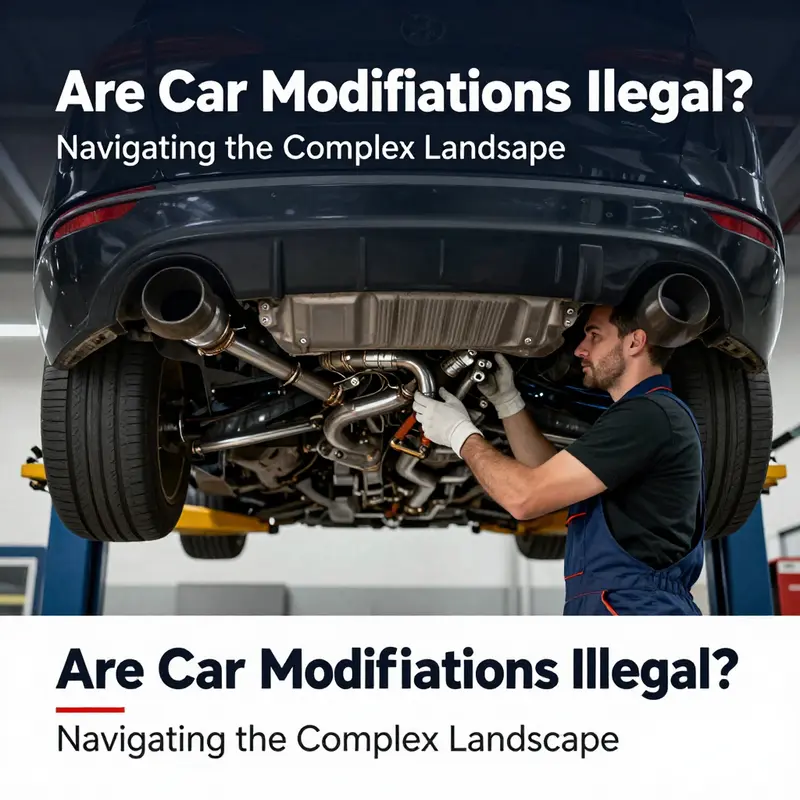
Exhaust modifications sit at a crossroads in the broader conversation about car customization. They entice with promises of sharper performance, a more distinct soundtrack, and a sense of personal identity on wheels. Yet the legality of those modifications is not a simple yes-or-no verdict. It rests on a careful alignment with emissions standards, noise restrictions, safety requirements, and the specific rules of the place where the vehicle is registered and operated. The most foundational principle behind these rules is straightforward: anything that alters how a car pollutes the air or how quietly it can drive through a neighborhood can trigger regulatory scrutiny. In practice, this means that exhaust work is often legal only when it preserves the integrity of emissions-control devices and stays within the noise boundaries set by law. When a modification bypasses, disables, or significantly tampers with catalytic converters, oxygen sensors, or other monitoring systems, authorities typically classify the modification as non-compliant, and the vehicle becomes subject to fines, impoundment, or failed inspections. In other words, the value proposition of performance and sound must be weighed against a legal framework designed to protect air quality and public peace and quiet. The result is a landscape where some upgrades fly under the radar, others require careful engineering to stay compliant, and still others are outright disallowed in particular jurisdictions.
The federal axis of this discussion is anchored in emissions control. In the United States, the Environmental Protection Agency (EPA) sets the baseline that aftermarket exhaust systems must respect: a modification may be legal if it preserves or improves emissions control and never bypasses devices designed to curb pollutants. The catalytic converter, a centerpiece of modern control technology, must not be removed or rendered nonfunctional. This is not merely a matter of ceremonial compliance; it is a substantive test of whether a modification alters the vehicle’s emissions profile in a way that would fail a smog inspection or violate air-quality standards. The principle can be illustrated with a practical scenario. Imagine an enthusiast installs an aftermarket exhaust that aims to improve flow and performance while retaining the same number of catalytic converters and still utilizing the factory oxygen sensors and catalytic-monitoring circuitry. If the final setup maintains the same or better emissions outputs under standard testing conditions, it stands a reasonable chance of being treated as lawful, provided all installation work is properly documented and certified according to local rules. Conversely, if the same upgrade eliminates a catalytic converter or bypasses the emissions-control system, the modification moves squarely into the realm of illegality in many jurisdictions. This distinction is not an abstraction; it governs the day-to-day decisions of garages, inspectors, and car owners who care about both performance and compliance.
The nuance extends beyond the emissions system to the question of noise. Noise is a separate, but equally important, driver of legality. Regulations on exhaust sound levels vary widely from one jurisdiction to another, and even within jurisdictions there can be different standards for urban, suburban, and rural areas, as well as for fixed locations like schools and hospitals. Some places tolerate a higher threshold for loud exhausts on highways or race tracks, while others impose strict decibel limits in residential zones. Law enforcement agencies frequently monitor sound levels during routine patrols or at traffic stops, and vehicles that exceed permissible noise levels can receive penalties, be ordered to restore compliant exhausts, or be deemed non-roadworthy. The practical upshot for enthusiasts is that a louder exhaust is not inherently illegal, but it becomes illegal as soon as it transcends the local decibel ceiling or fails to account for road-safety factors such as wind noise, tire noise, and overall drivability. A well-balanced approach to exhaust design, therefore, seeks to maximize the auditory and performance benefits without pushing the envelope beyond what the local noise ordinance permits. Automotive engineers and certified installers often emphasize this balance by selecting systems that maintain a pleasing, aggressive tone while staying within the regulated sound envelope for daily driving. In some cases, the same exhaust system can be tuned differently for track use versus street use, with the street configuration tuned to stay within legal limits and the track configuration reserved for closed courses where different standards apply.
The regulatory map that governs exhaust work is not uniform, and this is where jurisdictional specificity becomes crucial. In the United Kingdom, for example, the Road Vehicles (Construction and Use) Regulations 1986 frame the requirements for modifications, and vehicles must pass an MOT test after major changes to ensure continued roadworthiness and compliance with emissions standards. In the United States, the picture is a mosaic: federal standards set a baseline, but states interpret and enforce those standards through inspection regimes, emissions testing, and local noise ordinances. California, long known for its stringent emission laws, has rules that often tighten the leash on aftermarket exhausts more than other states. Some states require installation work to be performed by licensed technicians and demand test results or certified documentation showing that the vehicle still conforms to emissions thresholds after modifications. The consequence of misalignment between a modification and state law can be significant, ranging from a failed inspection to a citation, or even a prohibition on the vehicle’s street use until fixes are made. This patchwork of rules means that a modification that seems straightforward on a bench or in a schematic can become legally risky once installed on a real street vehicle in a particular locale.
These realities shape how enthusiasts and professionals approach exhaust projects. The most prudent path is not to chase the loudest or most award-worthy sound, but to pursue a design that offers a credible performance or sonic improvement while preserving the functional elements that regulation hinges upon. This means selecting certified aftermarket parts, working with installers who understand the regulatory landscape, and maintaining the emissions-control devices in their intended locations and configurations. A practical, safety-minded installer will emphasize that it is not necessary to remove or defeat the catalytic converter to realize performance gains. By optimizing exhaust flow in a way that respects the catalyst and the sensors that monitor emissions, a vehicle can gain measurable performance benefits without triggering legal complications. It also helps to keep a meticulous record of the modifications, including part numbers, installation dates, and any testing or certifications that demonstrate compliance with emissions and safety standards. In the event of a test, inspection, or audit, such documentation can be the difference between a legally compliant setup and a vehicle rendered inoperable on public roads.
As with any regulatory topic, education is the best defense against inadvertent noncompliance. Owners should begin by clarifying the local requirements before purchasing or planning any exhaust upgrades. This means evaluating not only the letter of the law but also how it is enforced in daily life. A regulation that is technically permissive can become a practical obstacle if the nearby police department or the local inspection station interprets it more strictly. Car clubs, certified mechanics, and official guides from environmental or transportation agencies can be valuable resources, but they must be cross-checked against the latest local ordinances and inspection rules. The dynamic nature of policy—where standards evolve with new scientific findings, shifts in enforcement priorities, or changes in environmental policy—means that what is legal today might be restricted tomorrow in a given jurisdiction. The responsible car owner thus treats exhaust work not as a one-off customization project but as an ongoing compliance activity that must be revisited whenever laws change.
The broader consumer implications of exhaust legality extend beyond the immediate issue of street legality. Modifications affect insurance premiums, resale value, and even the availability of certain warranties. Insurance providers, for example, commonly assess modified vehicles for risk differently than stock vehicles, with factors such as the extent of modification, the potential impact on reliability, and the likelihood of claims in the event of failure or accident considered during underwriting. A modification aimed at increasing performance could, in some cases, be viewed as elevating risk, which might alter coverage terms or premiums. This reality highlights the importance of communicating modifications clearly to insurers and understanding how the modifications could affect policy terms. It also underscores the practical reason for keeping thorough documentation not only for regulatory compliance but also for a smoother insurance and ownership experience. For readers seeking a direct discussion of how modifications can influence insurance, a useful reference is the guide that examines the relationship between modifications and insurance and delves into scenarios where coverage may be affected. What modifications affect car insurance is a concise resource that can help owners anticipate potential impacts before they commit to an upgrade. You can explore it here: what-modifications-affect-car-insurance.
Beyond the immediate regulatory frame, there is also a practical takeaway about how to approach exhaust upgrades with longevity and value in mind. A carefully engineered exhaust project can deliver meaningful gains in torque delivery, throttle response, and a more engaging driving experience without crossing regulatory lines. The key is to couple performance-oriented goals with a compliance-first mindset. This means using parts that are designed to integrate with the vehicle’s factory monitoring and control systems, preserving the integrity of exhaust sensors, exhaust gas temperature management, and the catalytic converter’s duties. Installation should be performed by practitioners who understand how to implement exhaust components in a way that preserves the vehicle’s diagnostic capabilities and readiness for regulatory checks. In many markets, installing a compliant exhaust also means continuing to perform routine maintenance, including sensor health checks and emissions testing as required. The aim is not merely to avoid fines; it is to ensure long-term driveability, reliability, and the legitimacy of the modification in the eyes of authorities and the car’s owner community.
The legal landscape is not static, and a modification that is lawful in one place can become problematic in another or over time as enforcement priorities shift. This makes proactive, informed decision-making essential for anyone considering exhaust work. Owners should invest time in obtaining up-to-date information from trusted sources and should be prepared to adjust plans if local regulations tighten or if new evidence on emissions and noise emerges. Testing and verification, rather than guessing, should guide choices about which exhaust configurations to pursue. In practice, that means planning for compliance as a core feature of any modification project rather than an afterthought. When owners and technicians adopt this approach, they can still achieve meaningful improvements in performance and sound while keeping the vehicle legally operable and environmentally accountable.
For readers who want to explore the broader consequences and practicalities beyond emissions and noise, there is a wider conversation about how modifications influence other dimensions of ownership. Resale value, for instance, can be impacted by the perception of legality and the clarity of documentation. A well-documented, regulator-approved modification history may contribute positively to resale value, signaling responsible stewardship of the vehicle. In contrast, an undocumented or poorly explained modification could complicate negotiations with buyers or complicate transfer of ownership. The intersection of legality and value invites owners to consider not only the engineering aspects of exhaust systems but also the narrative surrounding the vehicle’s modification path. Oral or written testimonials from reputable installers, receipts for certified parts, and evidence of successful inspections can all help frame the modification as a legitimate enhancement rather than a risky alteration.
Finally, the question of legality is, in essence, a question of jurisdictional interpretation. While the federal frame emphasizes preserving emissions control and regulating noise, the practical enforcement environment can be more nuanced. A vehicle that complies with federal standards may still fail local or state inspections if specific installation details diverge from regional expectations. Conversely, a region with relatively permissive rules may still require a vehicle to meet certain performance and safety criteria to avoid penalties. The careful reader will recognize that exhaust modifications demand a balanced, well-informed approach that respects both the science of emissions and the social contract of quiet, safe streets. This balance is not a surrender of personal preference but a disciplined strategy that treats legal compliance as a core design constraint alongside performance and aesthetics. By embracing this perspective, enthusiasts can pursue meaningful upgrades while safeguarding their ability to drive legally and confidently in their chosen jurisdiction.
In sum, exhaust modifications are not categorically illegal or universally permitted. Their legality hinges on preserving emissions-control integrity, respecting noise limits, and adhering to the specific regulatory framework of the area where the vehicle operates. The most reliable path to a successful, road-legal upgrade combines careful part selection, professional installation, complete documentation, and a willingness to adapt to evolving laws. This approach not only minimizes risk but also respects the broader goals of road safety and environmental stewardship that underpin modern car regulation. For those who want to explore the systematic, regulated nature of modifications beyond the exhaust, the EPA’s official guidelines offer a comprehensive reference point for emission standards and compliance expectations. The intersection of engineering ambition and legal responsibility defines a practical horizon for any enthusiast who hopes to enjoy enhanced performance without stepping outside the lines of the law.
External resources for further reading reinforce the central message: stay informed, stay compliant, and treat modifications as part of a continuous compliance journey rather than a one-time upgrade. The official Environmental Protection Agency site provides the foundational standards that drive most of the regulatory framework discussed here. See https://www.epa.gov for more details.
Body Kits and the Boundary of Safety and Law: A Practical Guide to Legal, Safe Modifications

Modifying a car with a body kit is a long standing part of aftermarket culture, but it sits at the intersection of personal expression, safety, and law. This chapter examines how visual and aerodynamic changes interact with crash protection, sensor performance, and road rules. The aim is a practical understanding: modify in a way that keeps the vehicle safe and road legal, not merely to look aggressive.
At the core, body kits are not inherently illegal everywhere; legality depends on what is changed, how it is changed, and where the vehicle will be driven. They can improve aerodynamics and stance, but often involve cutting, refastening, or modifying structural panels and mounting points. Such work can affect chassis integrity and energy absorption in a crash, so it must be considered carefully. The risk extends beyond aesthetics to safety margins regulators assume in design standards and inspections. If the modification moves the car outside the manufacturer’s expected behavior, legality can become an issue.
Legislation and enforcement are local. Some places permit cosmetic changes if lighting, reflectivity, and dimensions remain compliant; others require certification and inspection for major alterations. Broadly the question is not Can I install a body kit? but Can I do so without compromising safety, visibility, or compliance? The specifics vary by region: height limits, bumper rules, lighting placement, and sensor compatibility all matter. The common thread is that there is no universal green light; you must know the corridor you are in.
Practical considerations include fit, wiring, and sensors. A kit may affect parking assist, cameras, radar, or adaptive systems if it is not designed for the vehicle. Misalignment can degrade performance or trigger false readings, while relocated lighting or obscured plates can violate rules or reduce visibility. Installation quality matters: professional alignment, proper fasteners, and any recalibration of sensors or cameras are often necessary. Costs range with complexity, maker, and whether the job requires special tools or calibrations. Documentation and keeping OEM parts on hand help with inspections or resale.
Beyond safety, policy and economics come into play. Insurance may require disclosure and can adjust premiums; some modifications may affect coverage. It is wise to check the policy before purchase and keep records of parts and compliance markings where applicable. See official safety resources for guidance on how accessibility to aftermarket parts interacts with coverage.
The take away is practical and prudent: verify local rules before buying, plan for proper installation and calibration, and seek professional advice when uncertainty arises. Stay informed about evolving standards and choose kits designed for your vehicle generation and road use. The broader message is that customization and safety can coexist when the process is thoughtful, well documented, and compliant. For governance and safety perspectives, consult official sources such as NHTSA guidelines at https://www.nhtsa.gov
Window Tints and the Law: How Legal Restrictions Shape the Legality of Car Modifications

Window tints illustrate a practical and often misunderstood facet of car modification law. They sit at the intersection of personal comfort, privacy, vehicle aesthetics, and public safety. The choice to tint windows goes beyond a simple fashion decision; it triggers a web of rules that vary by jurisdiction and can determine whether a modification remains lawful or crosses into illegality. The story of window tinting is a microcosm of how car modification, in general, is governed by overarching safety standards, environmental considerations, and local enforcement priorities. When you start to weigh the benefits of tinted glass against the possibility of fines, inspections, or forced removal, you begin to appreciate why the legality of modifications matters as much as their appearance or performance. This chapter uses window tints as a focal point to explore the broader question: are car modifications illegal, and how do different regions balance consumer preferences with public accountability?
The core concept behind tint legality is simply stated, yet the implications are nuanced. Most places regulate the amount of visible light that can pass through a vehicle’s glass, a metric known as Visible Light Transmission, or VLT. The lower the VLT percentage, the darker the tint and the less light that can reach the interior. Rules about front side windows, rear side windows, the rear windshield, and even the windshield itself differ markedly across states, provinces, or countries. In many jurisdictions, front-side windows must admit a minimum amount of light so drivers retain sufficient visibility, while rear windows are allowed to be darker because they are less likely to impact the driver’s field of vision from the driver’s seat. The windshield, by contrast, is typically held to the most stringent standard: in most places, tinting beyond the top few inches or applying reflective films is prohibited, with exceptions for certain medical exemptions or specialized vehicles under controlled conditions. These distinctions reflect a balance between ensuring safe driver visibility and acknowledging the benefits of privacy and heat reduction, especially in hot climates or in areas with intense sun exposure.
The practical effect of these rules is that tint choices become a form of regulated modification rather than a mere cosmetic tweak. When a tint is too dark, a driver may face a roadside stop, a written warning, or a citation. If the tint fails to pass an annual or periodic inspection, a vehicle can be deemed non-compliant, which can require removal of the tint or replacement with a compliant film. In some regions, non-compliance can lead to penalties during registration renewal, or in more severe cases, the vehicle may be deemed unsafe to operate until the tint is brought into compliance. The consequences extend beyond fines. A tinted film that is too dark or improperly installed can reduce night visibility, hindering the driver’s ability to see pedestrians, cyclists, or road hazards in low-light conditions. Law enforcement and emergency responders also rely on clear visibility and the ability to identify occupants in a scene—policies that tint laws are designed to preserve. The risk calculus is therefore not simply about how the car looks; it is about how well a vehicle can be seen and interpreted in a dynamic road environment.
Within this framework, tint laws are often structured around a few core questions. First, which windows are regulated, and what is the minimum VLT allowed for each? In many places, the front side windows require a higher VLT threshold, perhaps 35 to 50 percent, to ensure adequate forward visibility and to avoid blind spots that could contribute to crashes. Second, how dark can the rear windows be? It is common to see more leniency for rear side windows and the rear windshield, with allowances down to 20 percent or even lower in some jurisdictions. The rationale here is practical: the driver’s visibility in the front of the vehicle is paramount, while rear passengers and luggage do not pose the same immediate risk to the driver’s day-to-day line of sight. Third, what about the windshield? Many regions permit only non-reflective, clear films or impose a requirement that tinting is limited to the top portion of the windshield. These rules exist to preserve face-to-face communication with law enforcement and to maintain the ability to interpret signals in traffic stops, not to mention the safety benefits of good daytime visibility.
The variability of these standards is a reminder that legality is inherently local. What might be perfectly compliant in one state could be illegal in another. And even within a single country with a federal system, different states or provinces may set their own rules while citing similar safety principles. Jurisdictional nuance is not a mere technicality; it translates into real-world outcomes, including whether a modified vehicle passes annual inspections, how insurance interacts with the modification, and what documentation a driver must carry to prove compliance when stopped by police or when presenting a vehicle for inspection. The same tint that offers privacy from prying eyes can become a source of friction if it falls outside the legal envelope, and the same tint that appears stylish in one climate can render the car non-compliant in another due to different daylight exposure and safety expectations.
This is where the practical, responsible car owner must become a sleuth of local law. The safest approach is to consult official, up-to-date resources before purchasing or applying any tint film. A savvy owner checks the relevant motor vehicle department or transportation authority to confirm the exact VLT requirements for each window position. In some places, there are also rules about the film’s reflectivity, color, and even the age of the tinting material, because certain films can interfere with the vehicle’s electronics or with on-board cameras used for safety systems. The general principle is clear: legality is about ensuring that the modification maintains the vehicle’s safety envelope while meeting public policy goals. If a tint system is installed thoughtfully and in accordance with local law, it becomes a legitimate enhancement rather than a risky deviation.
From the perspective of the vehicle owner, the decision to tint windows involves weighing not only the aesthetic and comfort benefits but also the long-term implications. Privacy is valuable, heat and glare reduction matter, and protecting interior materials from UV damage helps preserve resale value. Yet none of these advantages should obscure the reality that failure to comply with local rules can cancel those benefits. Fines, inspection failures, or forced removal of the tint are not abstract possibilities; they are real-world outcomes that can complicate ownership. It is therefore prudent to approach window tinting—like any modification that touches the vehicle’s structure or its interaction with road safety regulations—with a cautious, well-informed mindset.
For many drivers, this means choosing a tint darkness before peel-off or film selection occurs. It means discussing options with installers who are familiar with local rules and who can provide documentation proving that the tint applied has the correct VLT rating for each window. It also means recognizing the limits of these standards. A tint that perfectly matches the requirement in one jurisdiction might look overbearing in another if a vehicle is driven across state or national borders, or if ownership changes hands and the new location has different expectations. In such cases, the owner may need to revisit the labelling, the film’s certification, or even re-tint the glass to maintain compliance. If the vehicle is financed or leased, there may be additional stipulations from the financial institution or the lease provider regarding modifications, including window tinting. The interplay between personal choice, safety, and contractual obligations adds another layer of complexity to what otherwise might seem a straightforward cosmetic modification.
Within this framework, the social dimension of tinting becomes visible. Public acceptance and enforcement priorities vary. Some jurisdictions emphasize a tolerance for darker tints as a standard for privacy and heat reduction, while others emphasize visibility and the need for clear interaction with law enforcement. The result is a spectrum rather than a single rule: at one end, a regime that permits moderate tinting with clear documentation and routine checks; at the other, a regime that closely polices tint darkness and may impose strict penalties for deviations. The common thread is the same: legality is not a static label but a dynamic negotiation between individual consumers and the collective expectations of road safety, law enforcement efficiency, and environmental concerns.
To navigate this landscape, the emphasis must be on proactive research and thoughtful decision-making. Start with the local authority’s official guidance, which will specify the permissible VLT ranges for front, rear, and windshield areas. If the numbers are unclear or the laws have recently changed, consult the official portal or reach out to a licensed professional who understands the latest regulatory landscape. Keep in mind that even if the tint itself is technically legal, its installation quality, reflectivity, and the presence of any glare-reducing or anti- glare features can still trigger questions during a police stop or a vehicle inspection. A properly documented panel indicating the tint’s VLT measurement and film type can be valuable evidence of compliance.
The broader question of legality is not just about whether a modification is permitted in principle. It also concerns how changes affect other aspects of vehicle ownership and operation. Insurance, for example, may respond differently to a subjectively attractive but legally compliant tint. Some policies are written with the assumption that the tint remains within the legal range, while others may require disclosure of any modification that could impact visibility or safety. If a tint is discovered to be out of compliance after a loss, it could complicate claims or even void coverage in certain circumstances. This is why many drivers who pursue window tinting also take the extra step of informing their insurer or seeking policies that explicitly acknowledge compliant tinting as part of the vehicle’s configuration.
These interdependencies illuminate how the legality of a modification like window tinting sits within a larger system of rules and practices. It is not a simple matter of whether a film can be applied; it is about whether such an alteration can be justified within the rules designed to protect road users and responders. It is also about how one modification aligns with other modifications that a car owner might consider, such as exhaust changes, suspension upgrades, or lights. Each of these modifications has its own regulatory matrix, and together they form a mosaic of compliance, safety, and personal preference. The temptation to push the boundaries of what is allowed should be tempered by the reality that breaking those rules can lead to not only fines or inspections but also the risk of compromising driving safety or complicating future resale.
If you are curious about how other modifications can affect a vehicle’s value, there is a broader conversation to be had about the resale implications and the way modifications are perceived by buyers. A well-documented, compliant tint can be viewed as a responsible enhancement rather than a risky customization, especially if it contributes to interior longevity by reducing UV damage and heat exposure. For a broader discussion that extends beyond tinting to the array of modifications owners consider, see the article on Car Modifications and Resale Value. It provides a framework for thinking about how modifications influence a vehicle’s marketability and how to balance personal preference with practical concerns that matter to buyers later on. Car Modifications and Resale Value.
As you reflect on the legality of window tints, remember that the decisions you make today can shape your ownership experience for years to come. The key is to approach modifications with a clear eye toward safety, compliance, and practicality. Tints that stay within the letter of the law can deliver real benefits in comfort, privacy, and interior longevity, while those that breach the rules can undermine your efforts, complicate maintenance, and introduce risk at every intersection, toll booth, or roadside stop. The law is not a barrier to reasonable, thoughtful customization but a road map for doing so in a way that preserves safety and public trust. Keeping this perspective helps ensure that your car modifications remain a source of value and satisfaction rather than a point of friction with regulators, insurers, and even the next owner.
To support responsible decision-making, access to current, jurisdiction-specific information is essential. Official resources from the state, provincial, or national motor vehicle authorities provide the best guidance for tint darkness, reflectivity, and any unique restrictions tied to the vehicle type or weather conditions. When you align your choices with those guidelines, you transform a potential gray area into a straightforward, compliant enhancement that respects both your needs and the shared responsibility of road use. The window tint decision becomes a practical case study in how to modify a vehicle within the law, rather than a gamble with consequences you may not be prepared to manage.
External resource: https://www.dmv.ca.gov/
When Upgrades Meet the Law: Emissions Standards as Gatekeepers in Car Modifications

Emissions standards sit at the core of how modifications are judged on public roads. They are not a punitive constraint but a safety and air-quality framework that ensures performance and style do not come at the expense of health, safety, or fair use of shared infrastructure. In practice, legality hinges on the specifics of the change and where the vehicle is operated, because federal rules, state or provincial rules, and local ordinances create a patchwork that can be more or less permissive. At the center is the emission control system, including catalytic converters, oxygen sensors, exhaust management components, and engine calibration software, all designed to minimize pollutants within certified limits. The Clean Air Act in the United States and equivalent regimes elsewhere set boundaries that make tampering or unapproved modifications risky if they increase emissions beyond the certified level. A simple rule often holds: if a change makes the car pollute more than the factory configuration, it moves from a permitted upgrade toward unlawful alteration. What counts as tampering is not always obvious; louder exhausts can signal a change in exhaust flow that affects emissions, and tunes that alter fuel-air ratios or ignition timing can push emissions outside allowed ranges. Removing or bypassing catalytic converters is a red flag in many jurisdictions. Because enforcement targets both hardware and software, the practical standard is that any modification that increases regulated pollutants beyond the vehicle’s certified limits is risky without a formal testing or certification pathway. However, the regulatory story is not purely prohibitive. The EPA recognizes that some modifications can improve efficiency or reduce emissions when designed and tested within a formal framework. Aftermarket parts may be evaluated through certified testing programs, and if a modification is certified under EPA procedures, it can be used legally provided it preserves the air-quality safeguards. Certifications are not loopholes but controlled routes to verify compliance. Enthusiasts who pursue performance or efficiency gains often rely on these certification pathways to stay on the right side of the law, and the EPA’s resources outline the conditions under which aftermarket parts may be deemed compliant. Regulatory environments continue to evolve. Policy makers balance environmental protection with innovation and consumer choice; shifts in greenhouse gas and fuel-economy standards can broaden or narrow what is considered compliant as technology evolves. The geography of legality matters: in the United States, states like California impose stricter rules that may render parts illegal if they do not meet state criteria; in other regions, regimes may be more permissive or more prescriptive. The risk of misalignment between a modification and local enforcement means a change acceptable in one jurisdiction can lead to inspection failure or penalties elsewhere. For performance fans, this means a compliance-first mindset: seek EPA-recognized certifications or independent testing data, ask manufacturers for documentation, and work with qualified installers who understand both mechanical and regulatory constraints. Maintain records of certifications and testing data; if in doubt, consult official resources from the EPA or the relevant authority for your location. The consequences of non-compliance extend beyond a failed inspection. A non-certified vehicle may face registration or re-inspection challenges, fines, and potentially insurance penalties if the modifications are deemed to alter the vehicle’s emission profile. Resale value can also be affected, since future buyers and regulators may require proof of compliance. The overarching lesson is clear: legality is a function of compliance, not intent, and the most durable route to a road-legal modification is to choose certified parts, rely on qualified installers, and document everything. Ultimately, the question is not a binary yes or no but a careful assessment of how a modification interacts with the emission-control system, whether it has earned the necessary certifications, and how local enforcement practices apply. Emissions policy will continue to adapt as technology evolves, so staying informed through official resources—such as the EPA’s vehicle emissions testing materials and your local environmental agency—is essential. With certification-focused planning and transparent documentation, enthusiasts can pursue meaningful improvements while preserving air quality, safety, and legal compliance.
Final thoughts
As enthusiasts, it’s vital to strike a balance between customization and compliance. Understanding the legality of car modifications can safeguard your passion and investment. By exploring the chapters on exhaust systems, body kits, window tints, and emissions standards, readers can appreciate not just the freedom of expression that modifications offer, but also the responsibilities involved. Knowledge empowers car modifiers, ensuring that while the thrill of customization ignites our spirits, adherence to local laws keeps our journeys safe and compliant.