
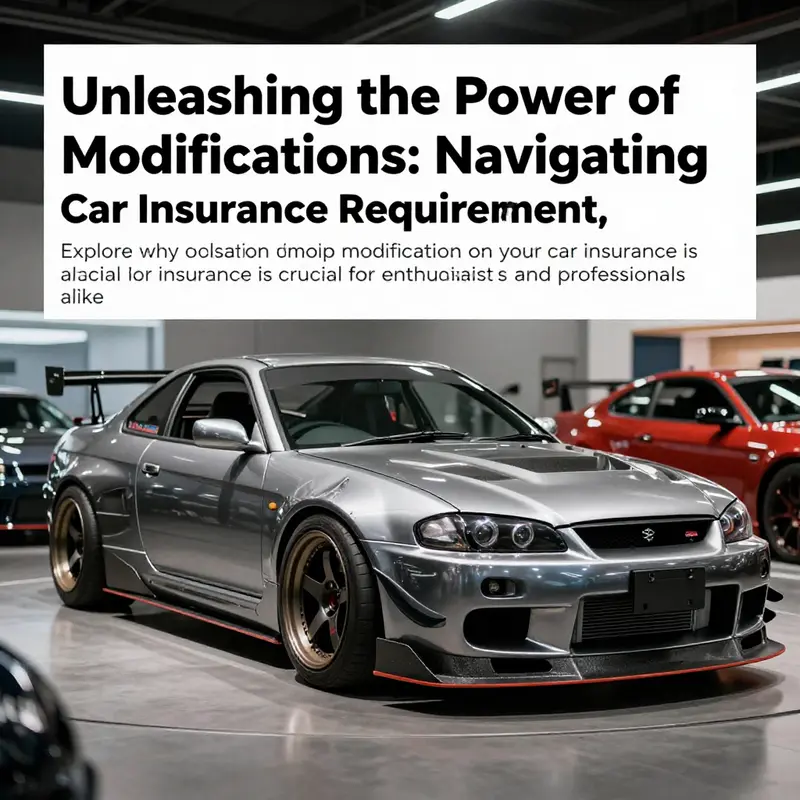
Car enthusiasts, from hobbyists to professional tuners, know that modifications can transform a vehicle into something truly unique. Yet, while engaging in this thrilling process, it is imperative to understand the implications these modifications carry regarding car insurance. Failing to declare modifications can lead to unexpected consequences, including denied claims and invalidation of your insurance policy. This guide dives into the necessity of declaring vehicle modifications, outlining the most common alterations that require disclosure, the insurance risk assessment process, and the potential fallout from neglecting this crucial step. By the end, you’ll be equipped to make informed decisions that protect your investment and passion project.
When Modifications Meet Your Policy: A Practical Guide to Declaring Car Upgrades
Every time you customize a car, you’re not just changing its look or performance—you’re shifting the risk equation that sits at the heart of every insurance policy. Modifications can alter speed, handling, value, and even the likelihood of theft. For insurers, those changes translate into a need to reassess the risk, and that reassessment often shows up as a premium adjustment or a tweak to the scope of coverage. The core idea is straightforward: transparency about modifications helps ensure your policy remains valid and that you are appropriately protected when you need to claim. In practice, this means that most, if not all, modifications should be disclosed to your insurer, whether they are mechanical upgrades, cosmetic changes, or added electronic systems. If disclosure doesn’t happen, the long-term consequences can be severe: a claim could be denied, a policy canceled, or coverage significantly restricted at a moment when you depend on it most. The risk of non-disclosure isn’t theoretical; it’s a practical obstacle that can leave you underinsured or uninsured at the precise moment you discover you’ve hidden a crucial change. To avoid that outcome, approach modifications with the same care you apply to any contract you sign for protection and financial peace of mind.
What counts as a modification is broader than most people expect. Performance upgrades like engine tuning or turbocharging, suspension or exhaust changes, and even aftermarket wheels or tires can shift the risk profile. Cosmetic alterations—body kits, custom paint, or distinctive decals—may also matter, but the line between what’s cosmetic and what’s risk-related isn’t always clear-cut. In today’s market, insurers increasingly ask about “material changes,” a phrase that encompasses changes that affect vehicle value, security, or repair costs. This means a modification doesn’t have to be a high-performance upgrade to count; it can be something as simple as a new electronic system or a tracking device, depending on the insurer’s policy language. The important takeaway is not to second-guess what qualifies but to check with your provider and document anything that could influence risk or cost of coverage. For many people, it’s enough to start with the question: would I want my insurer to know about this if I were filing a claim tomorrow? If the answer is yes, disclose it.
The consequences of failing to declare modifications stretch beyond a single premium change. An unreported modification can alter the level of risk sufficiently to invalidate the policy in the event of a claim. Insurers rely on the information you provide to estimate the odds of a future loss and to determine the expected cost of repairing or replacing a damaged vehicle. When that information changes and is not shared, the insurer’s risk calculation becomes unreliable, which can lead to claim denial or policy cancellation. This is not about catching people out; it’s about maintaining an accurate risk picture that protects both sides. The lesson here is simple: when in doubt, declare. If a modification seems minor, treat it as a potential risk factor and verify its status with your insurer. Some changes may not affect the premium, while others could lead to a higher quote or a need for enhanced coverage. The key is not the severity of the modification alone but whether it changes the risk profile of the vehicle.
Understanding when and how to declare can feel daunting, but most insurers structure disclosures around practical touchpoints. You typically disclose during the application process and again at renewal when details of your vehicle need to be current. Some providers also require disclosure mid-term if a modification occurs after policy inception. Documentation helps: photographs, receipts, and a simple list of changes with dates, approximate costs, and the extent of the modification provide a clear, recordable trail. If a modification changes the vehicle’s value, or introduces new functions or security features, you’ll likely be asked for evidence or a valuation. In many cases, you’ll not only confirm the modification but also specify whether you want the policy’s price adjusted accordingly. Some insurers offer options to insure modified parts separately or to remove certain aftermarket components from coverage if they are not essential to use, so it’s worth asking about coverage boundaries when you declare.
For those who want to minimize surprises, a practical approach is to maintain ongoing documentation before, during, and after any modification. Start with a detailed inventory: what is changed, the brand, model, and part numbers, the installation date, and the cost. Where possible, obtain professional installation notes or a written appraisal. This becomes especially important when you install performance parts or aftermarket electronics, which can have complex implications for liability, collision, and comprehensive coverage. Some insurers require photos or even access to the vehicle for inspection, so be prepared to provide a current view of how the car appears and functions. It’s also wise to anticipate what happens if you sell the car. A modified vehicle can experience changes in resale value and market demand, which in turn influences how an insurer perceives its risk. You can discover how modifications affect the resale value by consulting credible sources and noting any shifts in the vehicle’s value as you plan future changes. The objective is not to deter innovation but to preserve financial protection while you pursue it.
To make this process less opaque, engage in a conversation with your insurer rather than treating disclosure as a one-time checkbox. Ask questions about how specific modifications alter premiums, coverage, and the policy’s terms. Some changes might lead to premium increases; others could be accommodated with a simple rider or a separate policy endorsement. In some cases, insurers may decide to maintain coverage but impose restrictions on the modified portions of the vehicle or require that certain safety or security measures be installed. Others may choose not to insure certain high-risk modifications or could adjust terms for high-theft-risk components. The variability across policies means there is no universal rule that applies in every circumstance; the only reliable approach is proactive, documented communication with your insurer. If you’re unsure how a modification might affect your policy, see how modifications affect car insurance for a deeper practical discussion that aligns with this chapter’s core message.
The broader policy landscape also matters. Regulatory bodies and trade associations emphasize the importance of notifying insurers about material changes to a vehicle. This isn’t about policing every bolt and bolt-hole in your garage; it’s about ensuring that the insurer’s risk assessment reflects reality. Policies vary by company and jurisdiction, and what counts as a material change in one policy may not in another. That’s why the best course is to consult the exact wording of your policy and speak with a representative who can interpret how your specific modifications fit within that framework. In addition to the policy language, recognized industry guidance from credible bodies reinforces the principle of transparency. If you want to cross-check official guidance, you can consult resources from established regulatory and industry organizations, such as the Association of British Insurers (ABI). Their guidance emphasizes that drivers must notify insurers of all material changes to their vehicles: https://www.abi.org.uk/.
In the end, declaring modifications is not a punitive measure but a protective practice. It preserves the integrity of the contract you rely on for financial protection after an collision, theft, or other loss. It supports fair pricing, ensures coverage for the components that make your car uniquely yours, and reduces the chance that a claim could be misinterpreted or denied due to a mismatch between the vehicle’s actual configuration and the insurer’s records. The process is not about slowing you down; it’s about keeping you covered when it matters most. Read your policy carefully, maintain clear records, and don’t hesitate to reach out to your insurer with clear, precise information about each modification. The result is a transparent, accurately valued risk profile that supports both effective premiums and robust protection in the event of a claim.
External reference: For official guidance on material changes and how to navigate declarations, see the Association of British Insurers disclosures here: https://www.abi.org.uk/.
Declaration at the Wheel: Understanding When and Why Modifications Must Be Reported to Car Insurance

Car insurance relies on the vehicle’s risk profile as it sits. When you insure a car, the policy covers the vehicle in its current form. Modifications, whether installed by a dealer, by a shop, or by you, can change performance, safety margins, value, and risk of theft. Most standard policies require prompt disclosure of substantial modifications. Disclosure is a core part of the contract, meant to ensure the insurer can price risk accurately and that coverage remains valid for the actual car. Undisclosed changes can lead to claim disputes or even denial of coverage if the modification is found to have increased risk.
Insurers consider various kinds of modifications: engine and drivetrain upgrades, suspension changes, brakes, aerodynamics, wheels and tires, and interior equipment that affects value. Even cosmetic changes can affect risk if they alter performance, maintenance costs, or theft appeal. The rule is simply: disclose anything that could influence risk or value.
Before making changes, contact the insurer to understand how the upgrades will affect the policy. Some insurers offer endorsements or riders; others may require a new policy or a premium adjustment. Gather receipts, part numbers, installation dates, and photographs. Keep a modification log with dates and notes on performance and value. If the vehicle is financed or leased, follow the lender’s disclosure requirements.
If changes occur after coverage begins, report them promptly. Be precise in your disclosure: the category of modification, the exact make and model, installation date, and any professional notes. A complete disclosure helps avoid delays and protects you in a claim.
For further guidance, consult official consumer resources or talk directly with your insurer about your situation. Rules vary by country, and by state or region. A proactive, transparent approach is the best way to stay protected without surprises.
Modifications and Insurance Declarations: The Hidden Bridge Between Car Upgrades and Real-World Coverage
When you buy a car and the policy is written, there’s an agreement that extends beyond the mechanics of the engine or the color of the paint. Insurance, at its core, is a risk-sharing contract. It relies on accurate, complete information about the vehicle and how it will be used. Modifications—whether they aim to squeeze more power from the engine, alter the way the car handles, or simply change its appearance—change the risk profile. They can affect not only the likelihood of a claim, but the size of a claim, and even the possibility of coverage in the first place. For this reason, most insurers require you to declare any modifications before or at renewal. The price you pay for coverage, the conditions attached to that coverage, and whether a claim will be honored all hinge on transparent disclosure. The chapter that follows explains how that disclosure works in practice, what kinds of changes typically count as modifications, how risk assessment unfolds behind the scenes, and what happens if you fail to tell the truth. It’s not just about rules for rule’s sake; it’s about making sure your policy really works when you need it and that you aren’t faced with unexpected gaps during a claim outcome.
The question of whether modifications must be declared is rarely a matter of ambiguity in policy language. In broad terms, if a change to the car could reasonably be expected to alter its value, performance, or risk of theft, you should tell your insurer. This includes performance upgrades like engine tuning or turbochargers, suspension or exhaust changes that alter handling or noise, and cosmetic alterations such as body kits or aftermarket wheels. Even seemingly cosmetic choices—like tinted windows or custom paint—often trigger disclosure requirements because they can influence theft risk or recovery processes after an incident. The guiding principle is simple: if the modification could affect risk assessment or claim outcomes, it should be disclosed. This is why many policies specify that you must inform the provider of any alterations or additions that change the vehicle’s risk profile. When in doubt, the prudent move is to contact the insurer or review the policy documents.
The process of declaring modifications is not a mere compliance exercise; it is a risk-management tool that affects pricing, coverage, and the very validity of the policy. Insurance companies assign risk based on the information they receive about the vehicle. Modifications can shift a vehicle from standard risk to a category that commands higher premiums, or in some cases, may even lead to partial or full exclusion of certain coverages. The reasoning is straightforward. A car upgraded for higher performance is statistically more likely to be involved in high-speed scenarios, a factor that can increase the probability and cost of a claim. Likewise, changes intended to enhance aesthetics or personalization may reconcile with a higher theft risk, particularly for certain trendy or value-rich aftermarket components.
From the insurer’s point of view, the declaration creates a more accurate picture of the vehicle’s value and its ingenuity of risk. It’s not merely about price; it’s about ensuring the policy remains valid when a claim arises. If a modification is not disclosed and a claim is filed, the insurer may argue that the undisclosed change constitutes a misrepresentation, which in many jurisdictions can void the policy or limit payout. This outcome is not hypothetical—it has material consequences for the policyholder, including out-of-pocket repair costs, a potential denial of coverage, or even a claim being treated as if no coverage existed at all. The risk assessment process thus becomes an ongoing negotiation between the information you provide and the insurer’s calculation of exposure. The more accurate and comprehensive that information, the more dependable the coverage.
A key aspect of this process is recognizing that modifications come in many forms and vary in how they impact risk. Performance modifications—engine tuning, turbochargers, exhaust changes, or enhancements to the intake system—are classic examples. They can alter acceleration, top speed, and braking requirements; they can also influence wear patterns and the likelihood of mechanical failure under stress. On the theft side, the installation of advanced electronics or tracking devices, or even certain types of aftermarket wheels and tires, can shift theft risk. Cosmetic or aesthetic changes, including body kits and distinctive paint jobs, may affect how easily a vehicle is identified or targeted. Even practical upgrades, such as upgraded brakes or reinforced suspension, can alter the risk profile by changing how the car behaves in emergency situations. Each modification has to be considered for two questions: does it raise the likelihood of a claim, and does it affect the cost of a claim if one occurs?
This is where transparency becomes more than a courtesy; it becomes a shield against later dispute. When you disclose modifications, you give the insurer a fair estimate of risk, and they in turn adjust the price and terms accordingly. Some insurers offer explicit categories for modified vehicles or the option to add specific coverage designed around modifications. These options reflect a growing market segment where drivers want to preserve the customization appeal of their vehicles without sacrificing protection. In practice, disclosure might lead to a higher premium, but it can also unlock protections that otherwise would be unavailable. For example, certain providers might offer “modified vehicle protection” or similar add-ons that extend coverage to components or changes that standard policies don’t explicitly recognize. In the end, transparency preserves legality and ensures coverage is aligned with reality, which is the core purpose of any insurance contract.
To navigate this landscape effectively, a practical approach is essential. Before purchasing or renewing a policy, take stock of every modification and categorize them by type and potential impact. Gather supporting information—receipts, invoices, manufacturer specifications, and photos that document the modification’s scope and installation. When in doubt, discuss the modification with your insurer. Describe the modification succinctly, include its approximate value, and note whether it affects performance, theft risk, or usage. It’s often useful to reference policy documents that define what constitutes a modification and how the insurer expects to treat it. If you’re financing or leasing the vehicle, check whether there are lender requirements or restrictions related to modifications. Lenders may have their own rules about what can be added or altered, and failing to align with those requirements can complicate both financing terms and insurance validation.
The broader takeaway is that modification disclosure is not a one-and-done step at purchase. It is an ongoing responsibility that should be revisited whenever a new modification is added, removed, or altered. Renewal periods present a natural checkpoint to reassess your vehicle’s profile with the insurer. If the modification value or risk changes significantly, you should expect a corresponding update to your premium or coverage. In some cases, the insurer may propose adjustments to coverage limits, deductibles, or even exclude certain components from coverage if they are deemed too risky or incompatible with standard policy terms. These outcomes emphasize the importance of proactive communication and timely updates to policy information.
For those seeking clarity, it is wise to consult trusted guidance and examples from credible sources. A well-regarded consumer-oriented resource outlines how modified cars are insured and why standard policies might not fit every configuration. It reinforces the principle that disclosure is the foundation of valid coverage and helps readers understand the practical implications of modifications—from price adjustments to the right kinds of coverage to guard against gaps in protection. If you want a concise, accessible overview, consider reviewing that guidance to see how your situation aligns with common industry practices. For deeper reading on the topic of modifications and insurance, an external resource can be a valuable companion to this guidance: Moneywise—Insurance for Modified Cars.
Beyond the mechanics of disclosure, the chapter intersects with a broader theme: the evolving relationship between car customization and risk management. In a world where drivers increasingly personalize their vehicles, insurers respond with more nuanced policies and options. The equilibrium hinges on accuracy, transparency, and a willingness to adapt coverage as a vehicle’s profile evolves. For readers who want to explore the practicalities of disclosure in more depth, a specific internal resource offers actionable guidance on how to assess which modifications influence insurance and how to present them to providers. See this concise discussion for a focused look at how different changes affect coverage decisions: what modifications affect car insurance.
As you move through the process, remember that the goal is not to restrain your preferences or deny legitimate improvements, but to ensure protection keeps pace with your car’s reality. The risk assessment behind the scenes is not an adversarial exercise; it is a structured evaluation designed to balance your investment in the vehicle with prudent, predictable coverage. Honest disclosure helps you secure a policy that truly fits your car’s current state and your protection goals, reduces the chance of unpleasant surprises during a claim, and preserves the integrity of the insurance agreement over time. By treating modifications as part of the policy’s living relationship rather than as a one-time form to sign, you align your driving aspirations with responsible risk management—and you safeguard both your vehicle and your financial well-being in the event of mishap.
External resource: https://www.moneywise.co.uk/car-insurance/insurance-for-modified-cars
Under the Hood of Your Policy: Why Declaring Modifications Matters When You Insure Your Car
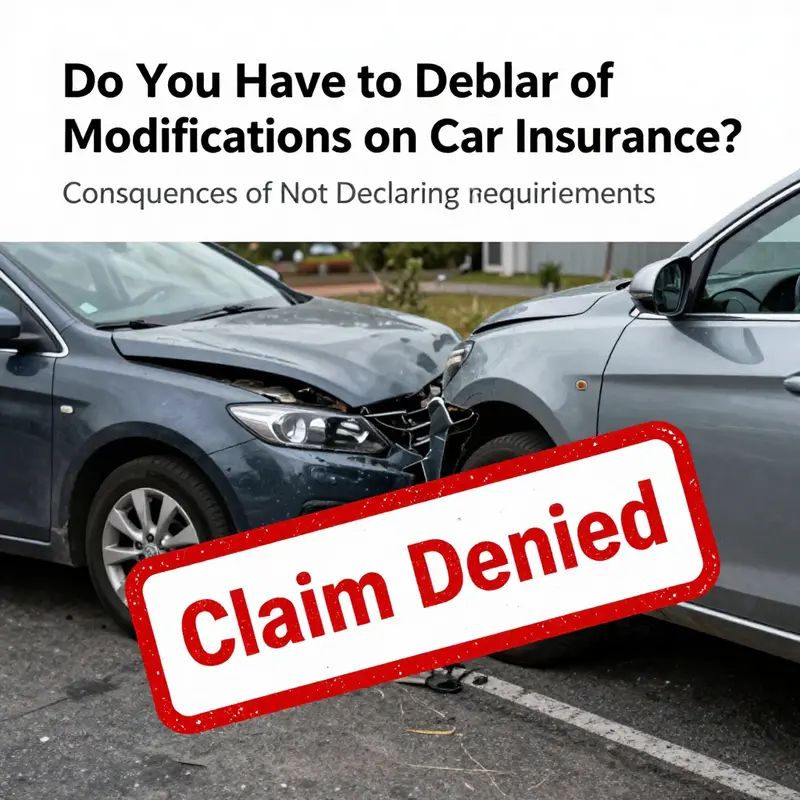
Modifications are not just cosmetic choices; they change the risk the policy must bear. Car insurance exists to balance the likelihood of a claim against the cost of coverage, and when a vehicle changes in ways that affect safety, performance, or value, the risk landscape shifts. The starting point for most policies remains the vehicle’s original specifications. Any upgrade or change that moves the car away from that baseline should be disclosed to the insurer. The obligation is not simply a suggestion but a condition of the contract between driver and insurer. When you apply for a policy, and again at renewal, you are expected to disclose material changes. The term material means changes that could influence the premium, terms of cover, or the likelihood of a claim being paid. Disclosure is a component of a transparent risk assessment rather than a test of honesty. If an insurer discovers undisclosed modifications after a claim, the consequences can be serious. A policy could be cancelled, deemed invalid from inception, or a claim rejected on grounds of non disclosure. In short, what you omit can become the obstacle between you and the protection you expect when you need it most.
The spectrum of modifications that trigger disclosure is broad. Engine tuning, suspension changes, aero parts, aftermarket wheels, security devices and even security improvements can alter risk. Insurers compare the vehicle’s stated specifications with its on road configuration to reassess risk. If a modification affects speed, handling, braking, or theft risk, it is a recalibration of risk, not a mere paperwork exercise.
Practically, this can manifest as a higher premium, a change in the policy type, or a need for a specialized policy. The exact impact depends on the modification, how much it changes theft or accident risk, the cost of repairs, and the vehicle’s value. A well documented disclosure typically leads to a smoother renewal and avoids surprises at claims time.
To stay compliant, talk to your insurer before installing a modification and again before renewal. Have notes about the change, installation date, suppliers or workshops, and the intended effect. Keep receipts and a clear narrative to help underwriting translate a technical change into a measurable risk adjustment. When in doubt, err on the side of openness. Official guidance from regulators and industry bodies can provide practical steps to stay aligned with what coverage will be maintained. A concise modification log and supporting documents can be invaluable if a claim ever arises.
In summary, if a change could meaningfully affect how the car moves, stops, steers, or protects itself from theft, treat it as a modification that should be disclosed. If the change merely alters aesthetics without affecting performance, disclosure might still be prudent but is more likely to result in a minor adjustment rather than a denial of coverage. Documentation and proactive communication are your best tools. The road to staying protected starts with clear, timely disclosure.
Declaring Modifications: Navigating Disclosure to Protect Your Car Insurance

Modifying a car is more than a craft project or a upgrade list; it alters the way a vehicle behaves, performs, and even the risks surrounding it. When you buy insurance, you are entering a contract built on a specific assessment of your car’s value, its likelihood of being involved in an incident, and how attractive it is to thieves. When you change any of those variables, the policy you signed up for is no longer an exact match. That is why, in most cases, you must declare modifications to your car insurance. The idea is simple: disclosure ensures your insurer can accurately price risk and, if necessary, adjust coverage so you aren’t surprised at claim time. If a modification changes anything about the risk profile—be it the car’s performance, its value, or how easily it might be stolen—that change should be communicated to the insurer. Failing to do so can put your policy at risk and may lead to a claim being refused or paid out at a reduced level. This is not a theoretical risk but a practical, enforceable condition of most modern policies. Even seemingly minor changes can matter in the eyes of an underwriter. An alloy wheel upgrade, a more powerful stereo system, or a different exhaust note can seem inconsequential to a driver but may influence the risk calculations behind your premium or the terms of your coverage. The logic is straightforward: if a modification makes theft more tempting, or alters how the car performs in a way that changes repair costs or safety margins, that information belongs in the risk file. And because no two insurers assess risk identically, the specifics of what counts as a material modification can vary from one policy to the next. To navigate this landscape with confidence, it helps to approach disclosure not as a bureaucratic hurdle but as a practical safeguard for your coverage. Your policy is designed to respond to your car as it actually exists, not as it appeared in an initial quote. With that mindset, you can build a cooperative relationship with your insurer, one that keeps your coverage aligned with your car’s reality.
When you start to think about disclosure, imagine the spectrum of modifications—from cosmetic touches to performance enhancements and from security upgrades to substantial mechanical changes. Cosmetic alterations like bespoke paintwork or aftermarket wheels are common and often draw questions about whether they affect value or risk. Performance upgrades, such as engine tuning or turbocharging, tend to carry greater premium implications because they can change acceleration, handling, and repair costs. Security features, including advanced alarms or immobilizers, can be viewed in two lights: they may reduce risk by deterring theft, potentially lowering premiums, or, if they are high-value and technically specific, they could require documentation to ensure proper coverage.
The central rule remains consistent across regions: ask first, disclose thoroughly, and keep records. Your insurer’s decision to renew, adjust, or even cancel a policy can hinge on whether you shared all relevant details. This is true whether you are renewing an existing policy or applying for a new one. If you are replacing a component, adding a modification, or changing the vehicle’s configuration in any meaningful way, notify your insurer as soon as possible. Insurers usually request a description of the modification, when it was installed, who performed the work, and any supporting documentation such as receipts or professional installation records. The more precise you are, the less room there is for dispute later. A simple rule to follow is to treat every material modification as information you would want to know if you were underwriting the policy yourself. That approach minimizes the risk of a claim being challenged due to undisclosed changes.
To aid the disclosure process, many policyholders find it helpful to remember that the details insurers care about typically fall into three broad categories: the nature and scale of the modification, the impact on the car’s performance or value, and the degree to which the change affects security or repairability. Engine work, significant weight changes, or alterations to the vehicle’s electrical system can shift the risk profile in substantial ways. Likewise, modifications that raise the vehicle’s value or desirability to thieves, even if purely cosmetic, can influence underwriting decisions. The important point is that there is no universal checklist, because each insurer evaluates modifications through its own lens. This is why direct consultation with your provider is indispensable. They can confirm which changes are considered material and explain how those changes might influence your premium, the terms of coverage, or the claims process.
One practical path to clarity is to consult official guidance and align your approach with the expectations of your region. In many places there are public-facing resources that outline the expectations around modifying a vehicle and how these changes interact with insurance. These sources emphasize the importance of transparency and provide general guidance on when and how to disclose modifications. For example, a trusted consumer guidance organization explains that adding modifications to your policy is a common scenario and that failing to disclose can invalidate coverage in the event of a claim. This underscores the core purpose of disclosure: keeping coverage accurate and enforceable.
If you want a concise starting point for what specific modifications might trigger disclosure, consider this: anything that changes the car’s risk profile—performance, value, theft risk, or repair costs—should be disclosed. For many drivers, the question of “Do modifications affect car insurance?” is not about fear of increases but about ensuring resilience when you need the policy most. To make this practical in daily life, it helps to frame disclosures around installation details and outcomes rather than simply listing parts. When you report a modification, you should include the following: the exact nature of the modification, the date of installation, the installer or workshop’s details, and the cost or value added by the change. If the modification affects performance, you may also need to provide the engine’s power specifications or torque figures, as well as any impacts on fuel economy if relevant to the risk assessment. And if the modification touches security, such as alarms or tracking devices, documentation about installation quality and the device’s coverage can be essential.
The process of disclosure is not merely about checking boxes; it is an ongoing dialogue with your insurer. If you anticipate changing a car’s setup, a discussion ahead of time about coverage helps ensure you don’t encounter gaps later. Even during policy renewal, it is common for underwriters to revisit the terms in light of any changes since the policy began. Some drivers are surprised by how modest upgrades can adjust premiums. It may seem logical that a well-secured, low-risk vehicle could reduce costs, but in practice many modifications, especially those that increase performance or value, can raise premiums or require different coverage terms. The goal is to balance risk with protection: the right modifications, when disclosed, may still be insurable at a fair price while ensuring that in a claim, the insurer pays according to the agreed terms.
For readers seeking a practical, actionable route, the best approach is to engage directly with the insurer you’re working with. Ask specific questions about each modification, request a written acknowledgment of disclosure, and confirm how the change will be reflected in the policy documents. If you want to explore common, discussed considerations in a concise format, you can consult resources that address which modifications affect car insurance. This kind of targeted guidance can help you prepare a clear disclosure package and avoid last-minute surprises during renewal or after a claim. If you prefer a quick reference, this resource provides a focused overview of the modifications that commonly influence coverage and pricing: What modifications affect car insurance.
Ultimately, the question is not simply whether you must declare modifications. It is about how you protect the reliability of your coverage and your own financial protection when things go wrong. By treating disclosure as a standard part of vehicle ownership, you align your insured risk with reality. This reduces the chances of disagreements at the moment you need to claim and helps ensure your policy remains robust as your car evolves. While the exact requirements will vary by insurer and region, the principle holds across the board: inform, document, and verify. The more thorough you are, the stronger your position when the unexpected happens. And if you ever doubt whether a change counts, the safest path is to ask your insurer directly. They can provide the precise guidance you need to keep your coverage accurate and enforceable throughout the life of the policy.
External resource for further reading: https://www.moneyhelper.org.uk/en-gb/insurance/car-insurance/adding-modifications-to-your-policy
Final thoughts
As a passionate modifier or car enthusiast, being informed about the nuances of car insurance and the necessity of declaring modifications is vital. A proactive approach not only protects your profound investments in your vehicles but also assures that your excitement and creativity aren’t dampened by unforeseen legal troubles or denied claims. Always ensure transparency with your insurance provider and review your policy to stay covered while you pursue your automotive dreams.