
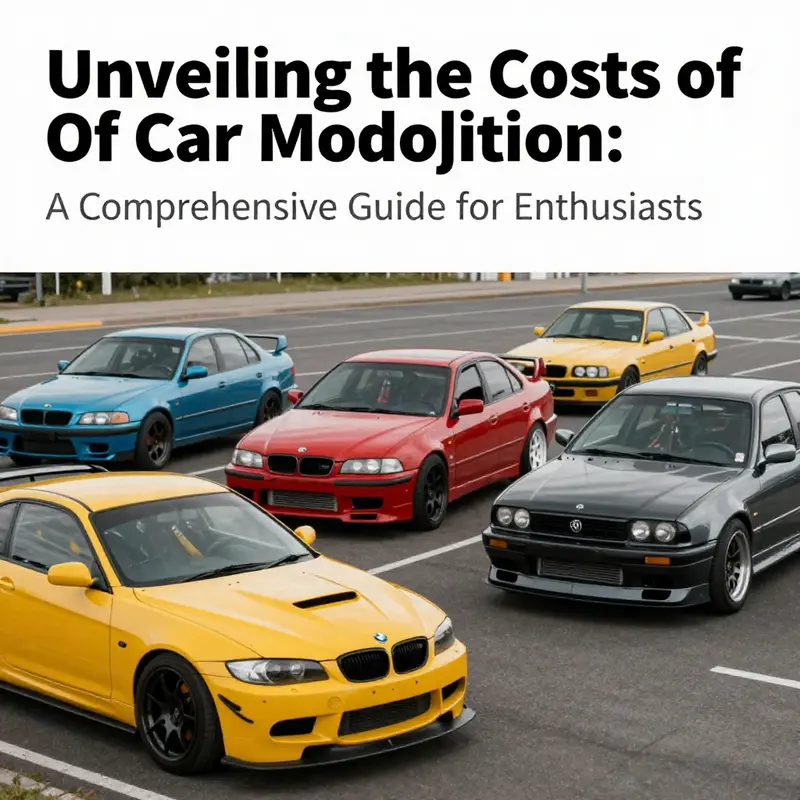
Car modification is an exhilarating journey that allows enthusiasts to personalize their vehicles, from aesthetic upgrades to advanced performance enhancements. However, many potential modifiers often grapple with understanding the cost landscape associated with these projects. This guide delves into the various aspects of car modification costs, providing clarity on how simple exterior tweaks compare to complex engine overhauls. Understanding the breakdown from aesthetic upgrades to performance tuning will help car modifiers, enthusiasts, and professionals make informed decisions. Each chapter sheds light on unique costs and influential factors, ensuring you approach your car modifications with confidence and knowledge.
The Price of Personal Touch: Understanding the Real Cost of Aesthetic Car Modifications

Modifying a car to reflect personal taste is the most visible way to tailor a vehicle to how you use it and how you want to feel behind the wheel. When people ask how much car modification costs, they often imagine a single number that covers everything. In reality, the price is a moving target shaped by decisions about scope, materials, craftsmanship, and even our willingness to accept trade-offs between form and function. The spectrum runs from modest cosmetic tweaks that barely ripple the wallet to elaborate, high-end builds that turn a car into a rolling sculpture. For the reader aiming to quantify a project before any work begins, it helps to start with the broad categories, then map those categories against your vehicle, your goals, and your budget. The most meaningful step is to separate what you want to see on the road from what you want to feel when you sit inside the cabin, because the cost structure for exterior aesthetics and interior ambiance can diverge significantly even when the end result looks cohesive and coordinated on the showroom floor in your mind.
Basic aesthetic upgrades often come with a surprisingly accessible price tag. A simple enhancement might involve adding accessories such as minor trim pieces, decals, or small lighting additions. For many owners, these changes are the gateway to personalization and can start under a thousand dollars. The exact price depends on the material quality, the complexity of the design, and whether you source parts off the shelf or rely on a shop to produce custom pieces. Even within this lower end of the spectrum, the total cost can creep upward if you decide to mix several small elements into a single, coherent look. This is where the idea of a staged approach often makes sense: you begin with one or two conspicuous details that are easy to replace or upgrade later as you refine your vision.
As you move beyond the simplest cosmetic tweaks, the price escalates in a way that mirrors the incremental seriousness of the changes. Full body kits, premium paints, and extensive interior customization—think panels, trims, and upholstery that harmonize with the exterior—are examples of projects that can exceed twenty thousand dollars when pursued at a high level. The jump from modest to premium is not only about larger components but also about the quality and sourcing of those components. A full body kit, for instance, can involve panels that must be fabricated, aligned, and refinished to fit the car’s lines. The more precise the fit and the more exotic the material, the higher the price. Similarly, high-end paint jobs, especially those with multiple layers, specialty finishes, or rare pigments, can raise the cost considerably. In the realm of aesthetics, the craftsmanship and finish are as much an investment as the parts themselves.
Even within aesthetic work, the interior often becomes the most expressive and, at the same time, the most expensive arena. Lighting upgrades have become a popular entry point because they offer a noticeable mood shift with a relatively straightforward installation path. LED strips, under-dash lighting, or footwell accents create atmosphere without overpowering the design language of the car. These systems are widely available, and their prices reflect the balance between simplicity and effect. A basic lighting retrofit might stay comfortably within a few hundred dollars, especially if you opt for single-color LEDs with standard controllers. The real value in lighting, however, lies in the flexibility—RGB options with smartphone or app control, synchronization with music, and the ability to change the color temperature to match driving conditions or mood. When you add Bluetooth-enabled kits that manage lighting scenes for different driving scenarios or times of day, the cost begins to reflect not just the hardware but the software ecosystem that makes those features useful and reliable.
Seat upgrades and interior materials illustrate another axis of cost that is easy to underestimate. Custom-fit seat covers made from neoprene, leather, or eco-friendly fabrics not only shield the original upholstery but also alter texture, grip, and overall cabin aesthetics. The cost here varies with the quality of the material, the precision of the fit, and whether the installation is done by a professional or as a DIY project. There’s a meaningful difference between a snug, factory-like fit and an aftermarket cover that needs modification to sit correctly over the contours of the seats. For some, the benefit is tangible, improving comfort and driving posture on longer trips while also adding a dash of color or contrast to the interior’s overall palette. The balance between protection, comfort, and style plays a central role when estimating the cost of interior modifications.
When aesthetic ambitions tilt toward the upper end of the spectrum, the costs can become difficult to isolate from functional goals. Aesthetics and performance can overlap, particularly when the modifications intersect with weight distribution, aerodynamics, or the perception of speed. Full-body modifications are a case in point. The line between appearance and physics blurs when designers aim for a sleeker stance or a more aggressive silhouette. In such cases, you may be looking at extensive panel work, precise mounting, and sometimes custom fabrication. This is not simply about what you see in photographs; it’s about what you feel when you drive—the sense of balance between the car’s shape, its stance, and how it responds to your inputs at speed. The labor component becomes a primary driver of costs here. Skilled technicians, precise alignment, and the use of specialized tools all contribute to the final bill.
An important caveat applies when considering security or privacy enhancements as part of aesthetics. Some owners opt for features that serve practical purposes while also influencing the perceived exclusivity of the car. Bulletproof glass, for example, sits in a category of modification that is both functional and visually discreet. The price range for bulletproof glass can vary widely, typically between $800 and $2,500 per window. This is a major investment that appeals to a specific subset of vehicles—primarily executive sedans or privacy-focused builds—where the goal is to combine a high-end appearance with a protective capability. The key takeaway is that when you introduce elements that shift a vehicle into a different risk profile, the cost structure changes in ways that are not obvious at first glance. It’s not merely about the raw material cost; it’s about the engineering, durability, and the long-term implications for maintenance and insurance.
The cumulative effect of all these decisions is that aesthetic improvements can be either an accessible hobby or a substantial project, depending on how far you’re willing to push the limits. A practical approach is to map your vision against your budget in two horizons: what you want right away and what you’re prepared to evolve toward in the future. The initial steps might involve a few high-impact, low-friction upgrades—think modest trim and lighting accents—that establish a baseline look. As you observe how these changes feel in daily driving, you can decide whether to scale up with more ambitious alterations or to refine the existing setup for consistency and durability. In either case, the cost is rarely linear. Small changes can help you test the waters with minimal risk, while large, integrated projects require careful planning to prevent cost overruns and to keep the vehicle’s function aligned with its appearance.
Beyond the numbers, the choice to modify aesthetically is also a decision about the car’s long-term identity. It affects how the vehicle is perceived by others and how it feels to own it over time. The same car can evoke different impressions depending on whether you emphasize refinement, sportiness, drama, or understated elegance. The financial implications are tied to this identity as well: the more ambitious the design language, the more deliberate you must be about sourcing, labor, and the coordination of parts. It’s not merely a price tag; it’s a plan for a personalized machine that reflects your evolving tastes and priorities.
To illustrate how varied the landscape can be, consider the idea of a multi-phase project. A beginner might begin with small interior lighting and a set of seat covers that align with their preferred color scheme. As interest deepens, they could add a full-body kit, a premium paint finish, and targeted interior upgrades that echo the exterior’s design cues. The escalation is not random; it follows a deliberate arc that balances cost against the impact on driving experience and daily usability. Throughout this process, the decision to modify is reinforced by practical considerations: how long the work will take, what kind of warranty comes with the parts, whether the modifications affect the car’s resale value, and how insurance might respond to more substantial changes. These factors often determine whether a project remains a passion or becomes a long-term financial commitment.
For readers who want a practical framing of the numbers, it’s useful to anchor expectations to a broad range. Basic modifications that enhance aesthetics without substantial fabrication can start under $1,000 and scale up as you add more features or higher-grade materials. In contrast, comprehensive or premium builds—especially those that combine exterior, interior, and performance-inspired aesthetics—can easily exceed $20,000. When evaluating options, it helps to separate the costs into parts, labor, and design services, then consider the quality and source of each element. A lower upfront price can mask higher maintenance or replacement costs later if parts wear out faster or require more frequent servicing. Conversely, investing in reliable components and professional installation upfront can yield better durability and a more coherent finished look, preserving resale potential and reducing headaches later.
The installation side of the cost equation deserves particular attention. Many people underestimate how much labor adds to the sticker price, especially when expert fitment, precision alignment, and aftercare detailing are required. Even seemingly straightforward upgrades may demand specialized tools or a controlled environment to achieve the expected finish. This is where working with reputable suppliers and experienced installers becomes essential. The aim is not just to buy parts, but to ensure that what you install enhances the car’s usability and aesthetics in a way that stands the test of time. If you’re curious about the practical installation steps and how to approach a project safely and efficiently, you can explore a detailed guide on how to install modifications. How to install modifications
The economic narrative of modifying a car also intertwines with broader considerations about value, risk, and ongoing costs. For many owners, the initial outlay represents just the beginning. Insurance premiums may change as modifications become more extensive or visible, and some jurisdictions require disclosures or certifications when certain materials or safety features are added. These realities underscore the importance of budgeting not only for the upfront price but for the life cycle of the modification. The relationship between cost, risk, and reward becomes a guiding principle: you want enough improvement to feel the difference in daily use without creating a scenario where maintenance costs cast a shadow over the ownership experience. In that sense, thoughtful planning is a cost-management tool as much as a design choice.
As with any substantial purchase tied to personal identity and practical use, the best path forward blends curiosity with discipline. Start by cataloging what you value most—external stance, interior ambiance, or a blend of both—and then set a cap that aligns with your financial reality. This approach helps prevent a drift into over-commitment where the final price diverges far from the intended payoff. It also creates a framework for making decisions when suppliers pitch more expensive options or when a particular aesthetic promise seems irresistible but isn’t fully compatible with daily driving needs. The cost discussion, therefore, is not merely a ledger exercise; it is a design discipline that asks you to define success in terms of how the car feels and how reliably it operates after the modifications.
For those who want to broaden their perspective with external context beyond the internal cost dynamics, broader industry resources offer summaries of typical ranges and the kinds of trade-offs buyers consider. A recent industry overview highlights the spectrum from budget-friendly aesthetic touches to high-end, performance-oriented builds, and it emphasizes the role of materials, fabrication, and professional installation in shaping final price. This external reference can provide a useful sanity check as you calibrate your own plan against real-world numbers. See an external overview here: https://www.autoblog.com/2023/07/14/car-modification-costs/.
The Real Price of Performance: Cost, Choices, and Planning for Engine and Suspension Upgrades
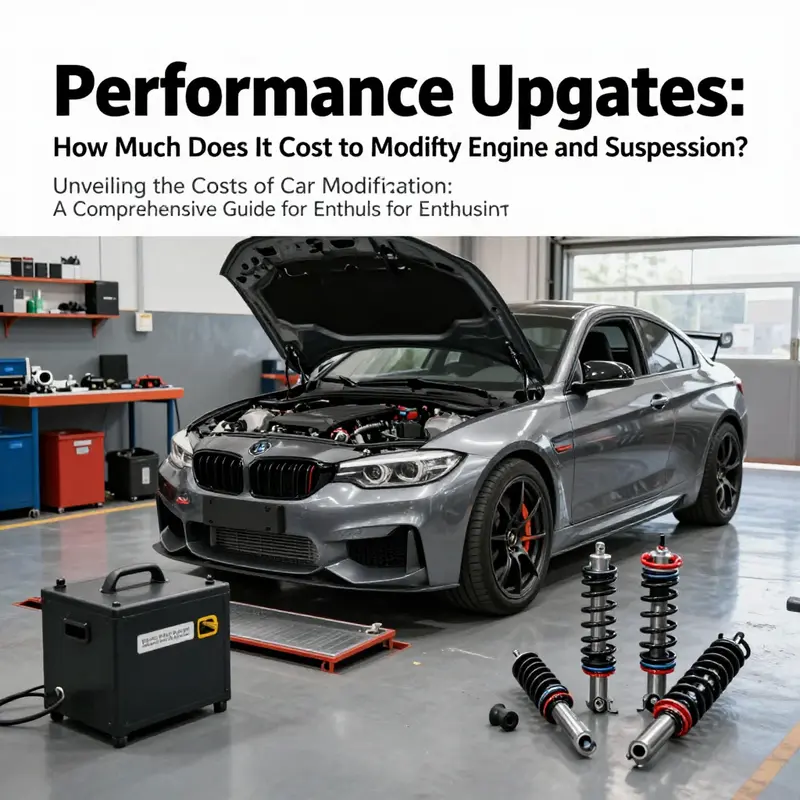
Engine and suspension upgrades sit at the heart of performance, and while costs vary with goals and the car, a practical budgeting framework helps. This chapter outlines typical cost ranges, the major components that drive price, and a planning method that matches ambition with reliability, so readers can set realistic budgets and avoid chasing hype.
Tailored Torque and the True Price: Navigating Custom Fabrication and Unique Car Modifications
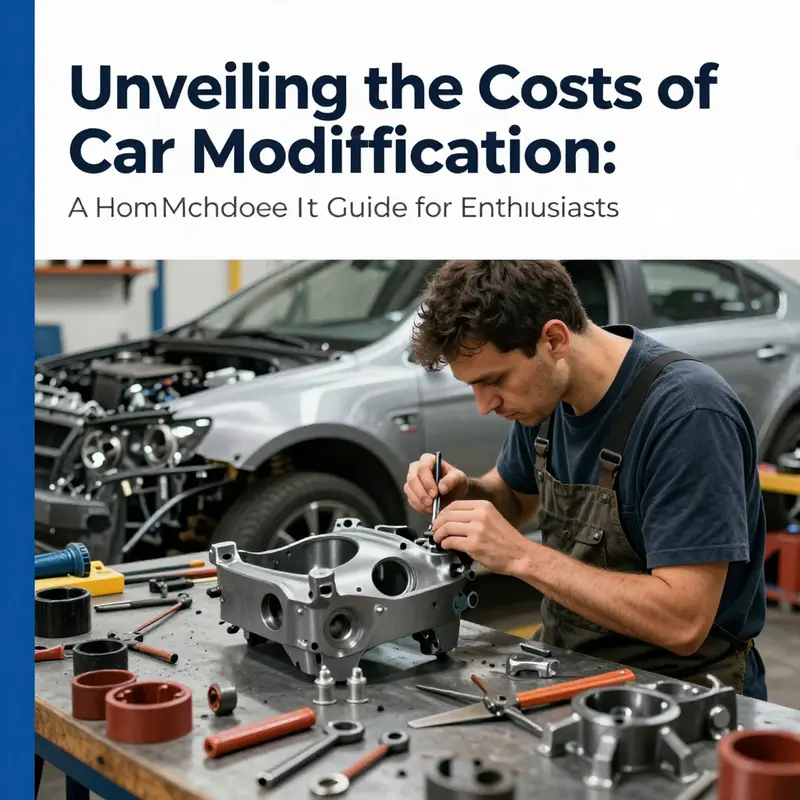
Bespoke car modification is a craft that turns a vision into a tangible machine, but it is also a business of variables. When you step beyond off-the-shelf upgrades into tailor-made fabrication, the price tag stops being a simple line item and becomes a spectrum shaped by scope, materials, skill, and the exacting demands of precision work. The cost of such tailored modifications can surprise beginners and veterans alike because the most dramatic gains—improved performance, a one-off stance, or a cabin that feels like a custom cockpit—often ride on labor-intensive processes, specialized tools, and the customization of components to your vehicle’s exact chassis and electrical architecture. A telling illustration of this scale is not the usual aftermarket kit but a truly bespoke creation: a custom hearse outfitted with a unique “freezer coffin” feature for funeral use. This is not a mass-produced add-on; it’s a highly specialized fabrication, priced between roughly $49,500 and $55,800 for a single unit. The figure speaks volumes about the upper end of the spectrum—where material science, fabrication artistry, and the demands of a very niche use case collide to create a premium product. It also signals a broader truth: tailored car modifications aren’t just about appearance; they are about engineering a solution that has to perform reliably under specific conditions, often with bespoke safety and regulatory considerations in play.
The breadth of tailored work means the cost model can feel almost unbounded. It begins with scope: is the project a cosmetic reshaping, a functional upgrade, or a full-blown engineering exercise requiring new structural elements? The answer drives the budgeting curve. The cost isn’t simply the price of the parts; it is the labor, the time, the iterative testing, and the potential need for custom fabrication jigs, welding, or re-certification. Specialized fabrication, in particular, creates a premium that reflects not only the difficulty of the task but the rarity of the craftspeople who can execute it. In a modern context, a single bespoke project can hinge on decisions about materials—steel, aluminum, composites, or advanced alloys—their weight, strength, and resistance to heat or corrosion; the fabrication process—welding, bending, forming, or CNC machining; and the integration with the vehicle’s systems, from fuel delivery to electronics harnesses to the chassis’s load paths. These are the kinds of variables that push price into a higher orbit than more common upgrades. For a sense of scale and the way specialized fabrication translates into cost, consider the high-end example of a one-off custom fabrication project, like the hearse, which demonstrates that there are legitimate, non-commodity costs attached to highly tailored builds.
When contemplating tailored modifications, it helps to frame costs along three general axes: scope, complexity, and materials. Scope defines how wide the project is. Cosmetic changes—new body panels, a reshaped bumper, or a one-off grille—remain at the lower end, yet even these require careful alignment and finish work that adds to the bill. Aesthetic upgrades such as metallic, candy, or chameleon paints may seem purely cosmetic but can involve multi-layer coatings, color matching, and meticulous surface preparation that push prices higher. In contrast, performance or functional upgrades—adjustable suspension tuning, custom exhaust routing, turbocharging, ECU remapping, or a drivetrain alteration—enter the realm where performance engineering, reliability testing, and recalibrations dominate the cost. The cost is not only in the parts but in the testing regime that ensures the car behaves as intended under dynamic loads, temperatures, and varied road conditions. A robust example in this category is the suite of performance options that modern shops provide: premium paint finishes coupled with suspension upgrades and ECU tuning, designed for better handling, braking, and power delivery, especially for track use or fast-road driving. The price here reflects the amplified labor and the need for careful tuning to prevent reliability issues.
Complexity is the second axis. A “complex” project is one that requires precise manufacturing tolerances, customized fixtures, or integration with the car’s electronics and safety systems. Widebody kits, for instance, illustrate the complexity that can drive cost well beyond simple bolt-ons. The installation often involves cutting, welding, and flaring to accommodate wider tires and altered suspension geometry. While the end result can dramatically change a car’s stance and cornering stability, the process introduces considerations about turning radius, parking clearance, and the risk of misalignment. The financial impact is not merely the kit itself but the labor to fit it cleanly, address any alignment issues, and ensure the new geometry harmonizes with brake and steering components. In some cases, the installation can limit future maneuverability or require significant alterations to fitment and clearance, a reality many buyers only learn after a first-wave of quotes. The complexity is a reminder that bespoke work is as much about engineering philosophy as it is about aesthetics.
Materials are the final major driver. The choice between steel, aluminum, carbon fiber, or advanced composites affects not only weight and strength but the cost of raw materials and the tools required to work with them. A forged alloy or a carbon-fiber panel may deliver performance and weight benefits but comes with a premium in both material cost and fabrication difficulty. Enter the interior: high-end upholstery in leather or Alcantara, customized digital instrument panels with real-time diagnostics and navigation integration, and meticulously crafted trim kits can transform the cabin into a bespoke space. The materials must endure heat, wear, and the vibrations of daily use, and their procurement often involves sourcing from specialized suppliers who understand automotive use. The price tag thus reflects the dual pressures of quality materials and the labor intensity of crafting a cohesive interior that not only looks exceptional but stands up to long-term use. In fact, interior modifications are a telling reminder that the value of bespoke work often lies in the tangible sense of durability and refinement they bring, not just the initial wow-factor.
In the end, a realistic budgeting approach recognizes that bespoke projects command a premium because they are bespoke. Bespoke projects are not merely about the components but the labor time, design iterations, and the specialized knowledge of the shop performing the work. Some projects are simple on paper—one-off upholstery or a unique color—yet the actual craftsmanship can be extensive, requiring meticulous sanding, masking, and finish work to achieve a flawless appearance. Others blend performance and aesthetics into a single package, such as a widebody with a tailored paint finish and an upgraded suspension. The total cost is the sum of all parts and processes, plus a margin for the unpredictability that accompanies custom work. It is common for modified projects to begin with a baseline range that reflects aesthetic enhancements, then climb into higher ranges as the scope expands toward full functionality or extreme customization. The broader takeaway is not a fixed price but a path to price: clear definition of the desired outcome, realistic expectations about the work required, and a plan to manage time, materials, and labor in a way that preserves the car’s reliability and safety.
For readers seeking a quick reference to scale, it helps to think in simple bands. Basic aesthetic upgrades—such as exterior accents, alloy wheels, or minor trim refinements—often sit in the hundreds to low thousands of dollars. A more complete set of cosmetic or performance enhancements—premium paint finishes, a tailored exhaust system, upgraded suspension, or ECU tuning—typically ranges from a couple of thousand to around ten thousand dollars, depending on the exact brand and the level of refinement. When the project moves into comprehensive modifications—full-body kits, bespoke structural changes, or significant engine and chassis work—the price bracket can leap into the mid-five figures and higher. And at the very top end, when the fabrication involves specialized forms, non-standard dimensions, and a demanding integration across multiple systems, the cost can exceed fifteen thousand dollars and sometimes reach well beyond that threshold. The numbers come with a caveat: these ranges reflect typical market dynamics and do not account for one-off, high-variance undertakings. Material quality, the reputation of the fabricator, and the need to navigate regulatory requirements all feed into the final tally.
If you want to gauge costs within the context of your own vehicle, start by documenting the precise objective you have in mind. Are you chasing a dramatic look, improved handling, or a combination of both? What constraints exist in your budget, your local regulatory environment, and your tolerance for risk during the build and the testing phases? Effective planning means seeking quotes from reputable suppliers and professional installers who handle your make and model. Ask for a detailed breakdown that includes material costs, fabrication time, the rate for labor, and any testing or certification fees. It helps to request a phased plan that can be reviewed after each milestone, allowing you to adjust scope if the project encounters unexpected challenges. An iterative approach is especially helpful when dealing with complex tasks such as widebody installations or custom interiors, where even small design decisions can cascade into additional work and cost.
Brainstorming with the shop about materials and finishes is also crucial. If you’re considering premium finishes for paint, you’ll want to understand the implications of each option. Metallics, candy hues, or chameleon effects can dramatically alter both appearance and maintenance requirements. The preparation stage—bodywork, sanding, dent repair, and masking—can be just as influential on price as the topcoat. In interior work, choosing between high-end leather or synthetic options, and deciding on digital panel integrations, can push costs up quickly, but the payoff is a cabin that delivers long-term satisfaction and daily usability. In other words, bespoke comes with a long arc of value and risk that is not purely financial; it includes the time you’ll invest in collaboration with the shop to realize a coherent, safe, and reliable end product.
If you want a broader frame of reference, consider the long tail of the market, where specialized fabrication meets global supply chains. Some projects, particularly those tied to niche uses or extreme performance goals, rely on components sourced from global suppliers, where costs can vary with currency, import duties, and the availability of skilled labor. A case in point is the kind of bespoke, high-precision work that would require artisans and engineers with rare expertise. While this level of customization promises a uniquely tailored result, it also introduces variables that can inflate cost and extend timelines. The broader lesson for the reader is that bespoke car modification is an investment in a performance-oriented or aesthetically distinctive objective, and it requires careful budgeting, clear scope, and reliable partners who understand both the craft and the constraints of a real-world garage workflow.
For readers who want to understand costs in the context of overall vehicle modification, there is a useful comparative reference: see the guide discussing how much car modifications can cost across different categories. This offers a practical benchmark to help you decide how far to pursue tailored work versus more standardized options. how much are car modifications.
As you plan, remember that bespoke projects carry premium due to labor intensity, customization requirements, and the specialized components involved. This means the path to your end result will likely involve trade-offs between scope and cost, the pace of the build, and the likelihood of iterative design changes. The best approach is to build a realistic budget that includes a contingency for unexpected challenges—particularly when the work touches critical systems like brakes, steering, and suspension. The most satisfying outcomes are those where the final product fulfills the original intent while preserving reliability, safety, and daily usability. If you can align your ambitions with a clear plan and a trusted partner who communicates openly about scope, you will find that tailored fabrication is less a bargain and more a disciplined collaboration—one that rewards thoughtful decision-making with a vehicle that truly feels like it was designed for you alone. For readers seeking a deeper dive into the practicalities and cost drivers behind tailored modifications, the landscape is as much about process as it is about price, and it rewards those who approach it with curiosity, patience, and a well-structured plan.
External resource: A broader context on sourcing and price analysis for modified vehicles can be found here: https://www.alibaba.com/suppliers/vehicle-modification?spm=a2700.11035364.0.0.3b6e5d4cKoLJZk
null
null
Final thoughts
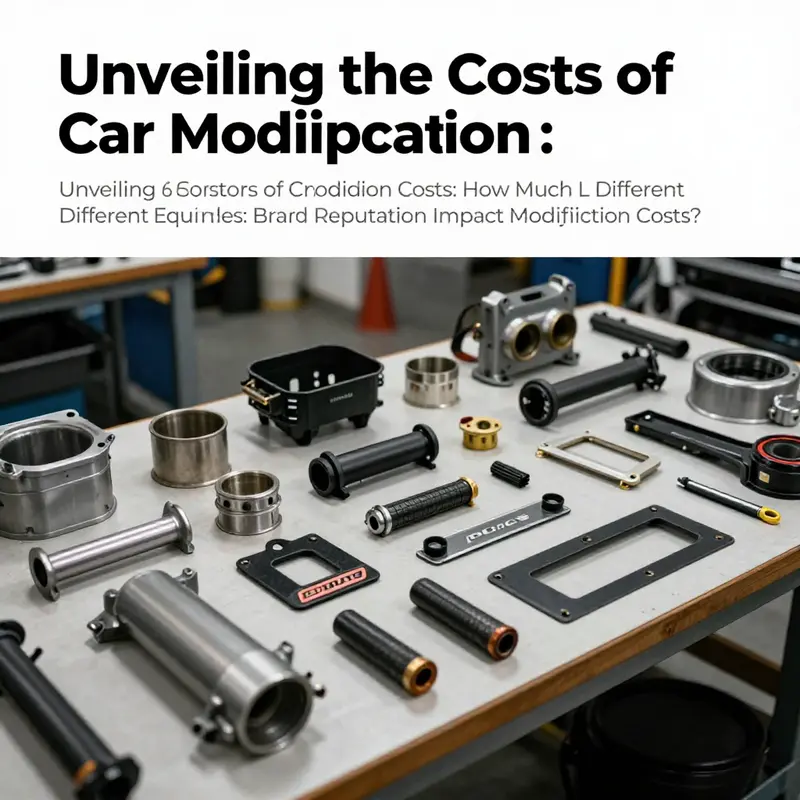
Understanding the costs associated with car modifications can empower enthusiasts to make informed choices. From aesthetic enhancements that breathe new life into your ride to performance upgrades that sharpen handling and acceleration, each modification involves a spectrum of potential expenses. By being aware of the various cost factors—from material quality to brand reputation—you can effectively budget and prioritize your modification projects. Embrace your passion for personalization wisely, ensuring every dollar spent elevates your automotive experience to the next level.