
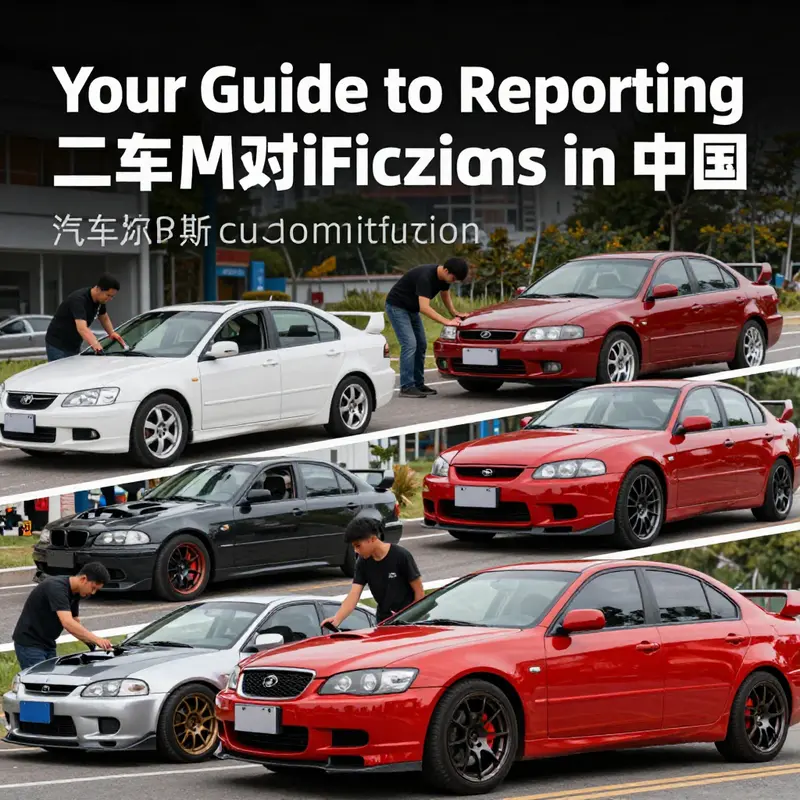
In the vibrant automotive landscape of China, car modifications reflect a unique passion among enthusiasts, professional tuners, and shops alike. However, navigating the legality of these modifications is crucial not just for individual pride but for public safety and environmental protection. Understanding how to report illegal car modifications becomes essential, ensuring compliance with local regulations and allowing the community to thrive harmoniously. Each chapter of this guide serves to illuminate various reporting methods: from direct communication with the traffic police to leveraging modern technology through official apps, and from face-to-face reporting at police stations to involving urban management authorities and considering environmental implications. Together, these insights empower automotive enthusiasts and professionals to engage responsibly with their craft.
Direct Lines to the Line: How to Report Illegal Car Modifications Through Traffic Police Channels
Witnessing a vehicle that clearly breaches safety or local regulations can feel urgent, but the impact of a well-structured report is not merely punitive. It is about stopping a potential hazard before harm occurs and about safeguarding public space from noise, pollution, or unlawful alterations that threaten urban order. The pathway from observation to action is designed to be practical and accessible, so that ordinary drivers or residents can contribute to road safety without getting entangled in procedures. In this chapter, the focus is on direct contact with traffic police—the channels that enable real-time assessment, evidence gathering, and appropriate enforcement. The core idea is simple: observe with care, document with clarity, and report through reliable channels so authorities can verify and respond with due process. In doing so, the reporting process becomes less about accusation and more about responsibility, transparency, and shared safety on the streets. The journey begins the moment you notice an alteration that appears unsafe or unlawful. A loud or noncompliant exhaust, an unsafely modified suspension, excessive lighting that blinds other drivers, or a vehicle that clearly exceeds height or width limits can be indicators that action is warranted. You do not need to have a legal education to report such concerns; what matters is precise information and credible evidence. This is where the multiple channels that listeners and readers may use converge into a coherent practice, allowing you to select the option that matches your situation—whether you are in motion, near a vehicle management office, or posting evidence via an official digital platform. Before detailing these channels, it is worth acknowledging a broader nuance often discussed in public discourse: not every modification is automatically illegal, and legality can hinge on context, purpose, and compliance with safety standards. To explore this nuance, readers may consult an overview that examines whether modifications themselves are illegal in various circumstances, which helps frame expectations about what reporting can achieve. are-car-modifications-illegal.
When you decide to report, the first and most immediate option is telephone reporting. The national and local hotlines are designed to accept concise, fact-based information that can be acted upon in real time. A call to the local traffic police line, such as the standard traffic police hotline, should be made only after you have compiled essential details: the vehicle’s license plate number, the make and model, the color, and, crucially, the location and time of observation. The description of the modification itself matters greatly. For example, you might specify that the vehicle has an unauthorized exhaust system producing an unusual noise, a suspension modification that could affect handling, non-compliant lighting that may exceed permitted brightness or color standards, or other alterations that deviate from safety norms. In urgent situations that threaten immediate danger to public safety, dialing the emergency number is appropriate, ensuring that responders are alerted without delay. The emphasis in phone reporting is speed and accuracy: operators are trained to extract essential facts and may ask clarifying questions to corroborate what you observed.
Beyond calling, on-site reporting remains a powerful option. If you are traveling on a road and encounter a suspicious, illegally modified vehicle, approach nearby traffic officers directly if it is safe to do so, or seek them through designated checkpoints. This direct engagement can be particularly useful when you notice an acute risk—such as a modification that could cause a sudden loss of control or a vehicle that is actively disrupting traffic. The aim is not confrontation but immediate, observable information that can facilitate rapid assessment by officers who are equipped to intervene, document the scene, and determine next steps according to the law. In these moments, keeping your own safety in mind is paramount; if you cannot safely report on the spot, retreat to a secure location and contact authorities from there.
Modern reporting also extends to official traffic management platforms. Local and regional governments increasingly provide digital channels that blend convenience with accountability. You can use official apps, websites, or public accounts to submit a report, upload clear photos or short videos, and tag the vehicle’s license plate alongside a precise description of the modification. Real-time tracking features on these platforms help you stay informed about the status of your report, which can be reassuring in cases where a vehicle is actively driving or traveling through crowded areas. When using these tools, the goal is to attach verifiable evidence—photos showing the license plate and the specific modification, timestamps, and, whenever possible, corroborating context such as the vehicle’s direction of travel. The more precise and well-documented your submission, the easier it is for authorities to verify and act decisively. If you prefer stepping away from apps, you may still submit a written report at a local vehicle management office or police station, taking advantage of the thorough record-keeping these offices maintain.
In certain circumstances, it can be appropriate to involve other regulatory bodies. For instance, urban management departments—often referred to as Chengguan in some cities—handle issues that affect urban order, such as excessive dimensions or persistent noise pollution from modified vehicles. When such concerns arise, presenting supporting evidence through the official channels described above ensures a coordinated response that aligns with municipal ordinances. Likewise, environmental protection authorities should be engaged if a modification clearly violates emissions limits or produces dangerous fumes. In such cases, a dedicated environmental hotline or the environmental protection authority’s reporting mechanism provides a pathway to pursue environmental compliance action. For commercial operations or vehicles engaged in transportation services that might violate sector-specific regulations, transportation authorities or service supervision lines offer a route for reporting. These additional channels remind us that illegal modifications can implicate more than road safety alone; they may intersect with urban planning, environmental stewardship, and transport-sector governance.
Crucially, credible reporting hinges on honesty and evidence. Authorities rely on factual observations supported by documentation. When preparing your report, include clear evidence that links the modification to the observable effects and to the vehicle’s identity. Photos and videos should capture both the modification and the license plate to establish a reliable connection. If you witnessed the vehicle in motion, note the time, location, direction, and any observable risks it posed. If you only observed the vehicle at night or in a confined area, describe lighting, exhaust tone, or other distinctive features that can aid identification without compromising privacy or safety. The aim is to enable investigators to verify, whereas unfounded accusations can misallocate scarce resources or lead to unintended consequences for innocent drivers. The legal framework under which these investigations proceed is often anchored in the Road Traffic Safety Law, which guides how violations are defined and acted upon once confirmed through investigation and evidence.
As reports accumulate, the process turns from citizen observation to official action. Once a report is received through any channel, investigators review the evidence, corroborate facts with on-site checks or vehicle inspections, and determine whether the modification contravenes safety standards, urban regulations, or environmental requirements. Depending on the severity and nature of the violation, actions can range from warnings and required corrective modifications to penalties or enforcement measures. In some cases, authorities may seize or immobilize a vehicle that presents an immediate danger or that lacks the necessary approvals. The outcome is not a public shaming exercise but a measured application of rules designed to minimize risk and ensure compliance across the network of vehicles, owners, and road users. For those who may wonder about the consequences of reporting, it is important to understand that truthful, evidence-backed submissions are treated with seriousness and care, while false or malicious reports are subject to penalties under applicable laws.
To maintain coherence with an evolving regulatory landscape, readers may also benefit from seeing how different jurisdictions structure their reporting ecosystems. The overarching pattern remains consistent: accessible channels, clear requirements for evidence, and a commitment to due process. The channels are designed to accommodate a range of situations—from a single, observed modification on a highway to a cluster of complaints about a business that modifies and operates vehicles in ways that may violate commercial or safety standards. This flexibility is essential for citizens who want to contribute to safety without needing specialized knowledge or tools. It also reinforces the principle that a well-substantiated report can be a powerful lever for change, prompting timely checks and, when necessary, corrective action that protects the wider public.
In closing, reporting illegal car modifications through traffic police channels is not about antagonism or punishment in isolation. It is about stewardship of the road environment—ensuring that vehicles operate within the bounds of safety and order, and that communities have clear, reliable means to raise concerns when something seems off. The practical path is straightforward: observe carefully, document thoroughly, and report through one of the established channels—phone, on-site contact, digital platforms, or in-person submissions—so authorities can verify facts and act accordingly. If you continue reading this chapter as part of a broader guide, you will notice how the same principles underpin other forms of reporting that intersect with urban safety, transportation governance, and environmental stewardship. The goal remains constant: empower ordinary citizens to participate in road safety through responsible, evidence-based reporting that leads to effective, lawful outcomes. External resource: https://www.122.gov.cn/
Reporting Illicit Vehicle Modifications through Official Traffic Management Apps
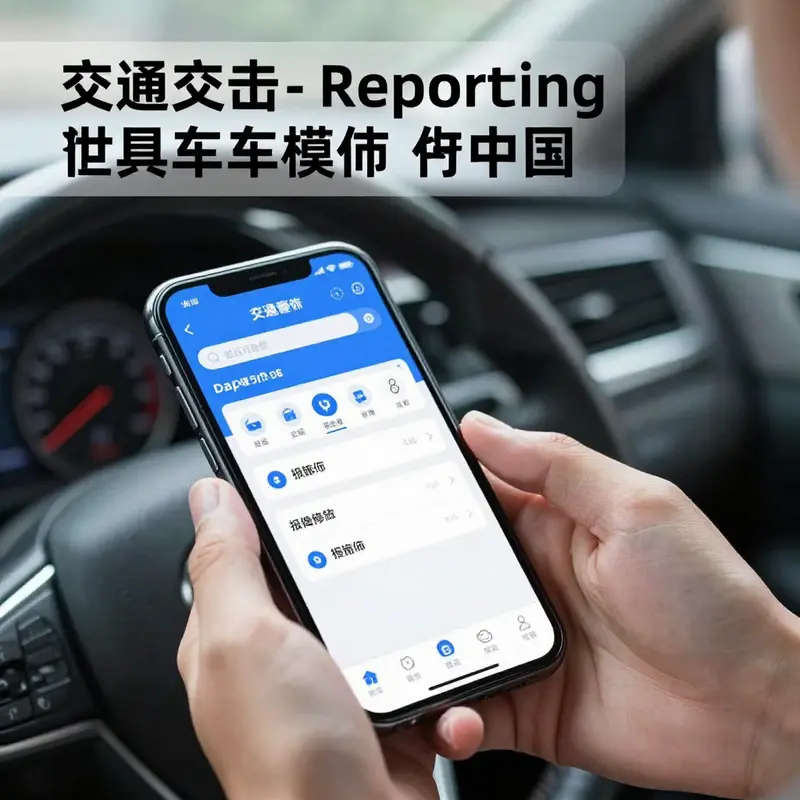
A straightforward guide to reporting illegal vehicle modifications using official traffic management apps. Start by downloading the correct app for your location and completing the required real-name registration. When you report, select the appropriate violation category such as Illegal Modification of Motor Vehicle, and provide precise details: location, time, license plate, and a clear description of the modification. Attach high-quality evidence like photos or videos with timestamps and geotags. Review your report for accuracy before submitting to the traffic management unit for review. In many regions you can also supplement app reports via hotlines for urgent concerns. The goal is to balance public safety with due process, ensuring credible reports lead to verified investigations.
Face-to-Face Accountability: Reporting Illegal Car Modifications at the Traffic Police Station
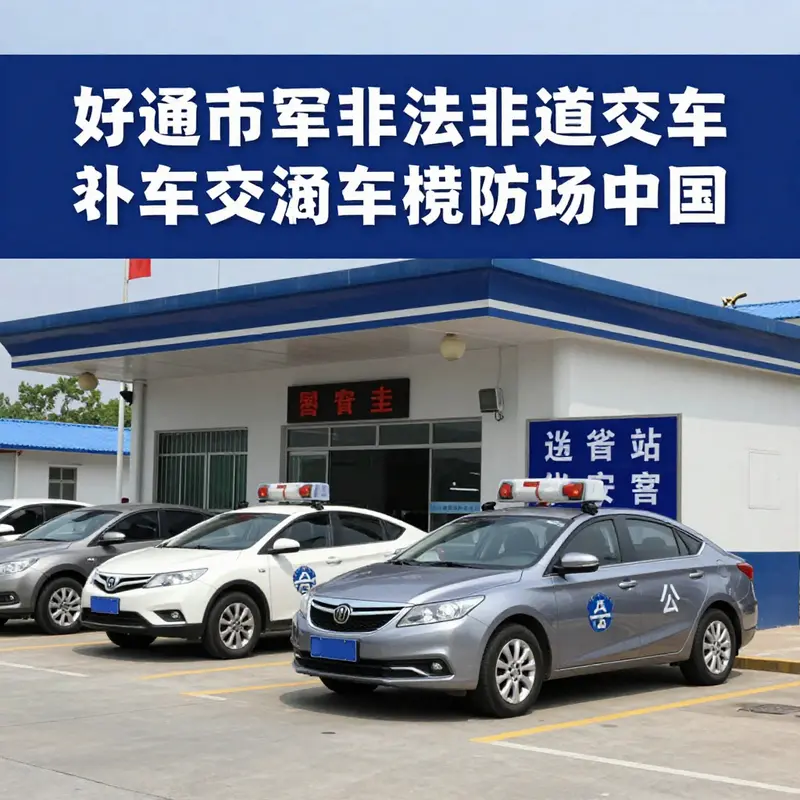
Illegal car modifications pose real safety and regulatory concerns on roads, and the most direct, hands-on way to address them is often through a face-to-face report at the local traffic police station or vehicle management office. This channel is not merely a bureaucratic step; it is a practical moment where evidence, observation, and civic responsibility converge. When a modification appears to violate regulations—whether it alters exhaust to an unapproved noise level, changes the vehicle’s dimensions beyond what is permitted, or introduces components that could compromise braking or lighting—the in-person report becomes a catalyst for investigation. It offers the opportunity to present clear, verifiable information to officers who can assess legality on the spot and coordinate with other departments if needed. In the flow of everyday life, this approach preserves public safety and reinforces the social contract that governs shared spaces on the road. The aim is not to alarm but to clarify, to document what was observed, and to allow the authorities to determine whether action is warranted under the Road Traffic Safety Law of the People’s Republic of China. With the right preparation and a cooperative demeanor, a citizen can transform a potentially disruptive observation into a constructive, law-abiding response that benefits all road users.
Preparation is the first and most crucial step. The quality of the evidence you bring to the desk often determines how quickly an officer can understand the situation and decide the next steps. Gather clear, time-stamped photos or short videos that show the specific modifications. Focus on features that define the infraction or safety risk: an oversized exhaust that changes emission patterns or noise, a non-approved body kit that alters aerodynamics, a roof rack or spoiler that exceeds legal height or width limits, or tinted windows that reduce visibility or violate tint thresholds. Alongside visual proof, record objective details: the vehicle’s license plate number, color, exact model, and the precise location and time you observed the modification. If you noticed the vehicle in motion, note the direction and any observed behavior that underscores the risk, such as aggressive acceleration, unusual exhaust puff, or blinding reflections from a modified lighting system. The more precise your notes, the more efficient the officer’s assessment will be.
On arrival, anticipate a process that blends documentary formalities with practical inquiry. You will usually be directed to a complaint desk or a designated officer trained to handle vehicle-related issues. Present your evidence calmly and in an organized sequence. A concise narrative helps the officer connect each image to a specific modification and to the corresponding regulatory standard. For example, you might describe: ‘Front bumper extension added without approval, increasing overall width by 8 centimeters; rear spoiler height exceeds permitted limits; exhaust note persists at a level that suggests non-compliance with noise regulations.’ It is not necessary to memorize every legal article, but being able to point to observable facts reduces ambiguity and avoids a speculative debate. During the discussion, expect questions about where and when the observations occurred, whether you captured the full context, and whether there were any other indicators—such as a conspicuously altered license plate frame or suspicious vehicle behavior—that might influence the assessment. The goal is to facilitate an evidence-led evaluation rather than to entertain subjective judgments about taste or personal preference.
The actual act of reporting in person also involves the administrative side. Officers may request you to fill out a formal complaint form. This form is not merely paperwork; it records essential details that will guide subsequent investigations. Be prepared to provide the vehicle’s license plate, your contact information, and a clear description of the modification, including its purpose and potential safety impact. If you are unsure about certain details, disclose what you know and indicate that you are submitting a best-available account. Honesty matters, and fabrications or embellishments undermine the credibility of the report and can complicate the enforcement process. When filling out forms, you might be asked to indicate whether the modification was observed on a specific date and location, and whether the vehicle has any commercial use or connection to illegal activities. Providing as much precision as possible helps the authorities triage cases, allocate resources, and avoid unnecessary delays.
A practical tip concerns evidence quality and the pace of processing. For faster action, some offices expect or permit online reporting through official channels, especially when the evidence is substantial and unambiguous. In-person reporting remains the preferred route when there is strong visual proof and you want immediate feedback or an expedited review, but online platforms can complement this by enabling you to attach files and receive a case reference number quickly. If you know your local authority offers such online reporting, you can ask at the desk whether a hybrid approach is possible—starting with a physical submission and then continuing the process through an official app or website. The combination of in-person verification and digital tracking can streamline the investigation and keep you informed about any developments. In cases where the modifications may affect urban order or environmental concerns, the officer might direct you to other departments for cross-agency coordination. For example, if the modification raises concerns about noise or emissions, the case could involve environmental protection or urban management authorities, who may issue separate investigations or enforcement actions.
A concrete illustration helps anchor this process. In some provinces, including Sichuan, official guidance indicates that citizens can report illegal vehicle modifications by visiting local traffic police stations and submitting evidence directly. This model emphasizes speed and accountability, ensuring that strong evidence leads to prompt review. While every jurisdiction has its own procedural nuances, the underlying principle remains consistent: a well-documented observation, presented in person with clear evidence, yields the most reliable pathway to lawful action. It is this reliability—the direct, human-to-human engagement paired with verifiable documentation—that makes in-person reporting a powerful tool in maintaining road safety and regulatory compliance.
As you move through the encounter, maintain a respectful and factual demeanor. Officers carry the responsibility of interpreting evidence within the framework of the law, and a cooperative tone helps the review proceed smoothly. Avoid speculation about intent or motives; focus on observable details, measured observations, and the precise nature of the alleged modification. If the officer asks for additional information or clarifications, respond succinctly and offer to provide any missing photos, timestamps, or supplementary notes. After you’ve submitted your report, request a reference number or receipt. This little credential is your thread to follow up on the case. It also signals that the matter has entered an official workflow and will be revisited as needed. Some offices may provide a more informal update path, while others run a formal case-tracking system. Either way, holding onto that reference number is essential for future inquiries, and it reinforces accountability on both sides: the public’s factual report and the state’s duty to verify and respond.
If your observation is part of a broader pattern—such as repeated modifications observed in a neighborhood or a row of vehicles that consistently violates a particular standard—you should consider how to present this broader context without overwhelming the individual report. You can describe patterns in addition to single incidents, but keep the primary focus on verifiable facts tied to a specific vehicle and time. The aim is to avoid speculative claims while still conveying the scale or risk of the issue. Anecdotes can be a helpful supplement only when they are anchored by corroborating evidence, such as consecutive sightings or multiple photos demonstrating the same modification across different dates. In cases where the observed vehicle is involved in or linked to illegal transportation activity, the officer may pass the case to the transport service supervision unit. Here again, the ability to provide clear, corroborated facts can shorten the path from observation to enforcement.
For researchers and readers who want to deepen their understanding of how these processes fit into the broader regulatory ecosystem, consider reviewing official resources that describe how illegal modifications are handled and the roles of various agencies. These resources reinforce that reporting is not a punitive act but a civic service designed to uphold safety standards and public order. They also remind us that truthfulness and supporting evidence are crucial. If you are curious about how certain modifications intersect with insurance or ownership rights, you can explore related discussions on modifying and declaring changes to vehicles—topics that often surface in insurance and liability conversations. declare-modifications-car-insurance provides a lens into how modifications can influence coverage and risk assessment, which can be relevant when evaluating a modification’s broader implications beyond immediate legality.
In closing this in-person pathway, remember that the purpose is constructive oversight. By reporting illegal modifications with solid evidence, you contribute to a safer road environment, help ensure that standards are consistently applied, and support authorities in prioritizing cases that carry the greatest risk to the public. The act of going to the desk is more than a formality; it is an interface where citizens and enforcers collaborate to maintain order and safety. It is a practical reminder that road safety is a shared obligation, and reliable information—delivered in person, with clear documentation—remains one of the most effective tools in enforcing compliance and protecting everyone who uses the road.
External resource for official guidance: https://www.mps.gov.cn/n2254443/n2254467/c24682371/content.html
Quiet Streets, Clear Reports: Navigating Urban-Management Channels to Stop Illegal Car Modifications
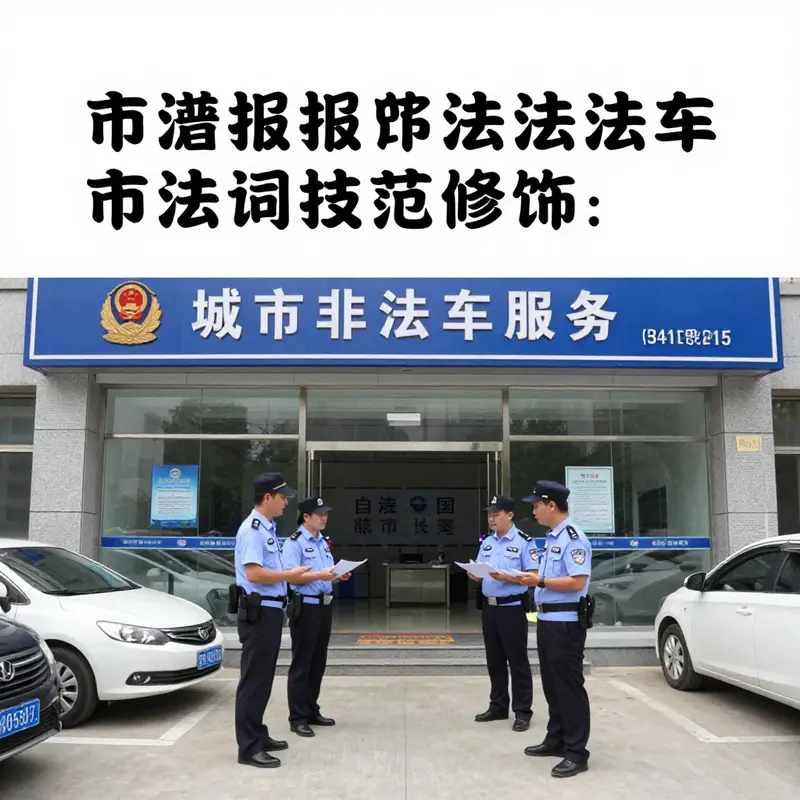
When a modified vehicle breaks the quiet rhythm of a city street—whether through a deafening exhaust, an oversized silhouette that disrupts pedestrian flow, or a shape that narrows lanes—the issue often sits at the intersection of public order, city appearance, and traffic safety. In these moments, turning to urban-management channels, sometimes called Chengguan in local parlance, can be more effective than dialing a general emergency line. Urban management departments primarily guard order and public space in the built environment. They monitor anything that harms pedestrian safety, obstructs movement, or degrades the urban landscape. Modifications that increase noise, widen or raise a vehicle beyond reasonable limits, or alter its appearance in ways that threaten orderly traffic or public tranquility usually fall within their remit. Reporting through these channels not only helps curb a single nuisance but also supports broader city governance aimed at keeping streets livable and navigable for all residents.
To embark on a report through urban-management channels, you begin with clarity and evidence. First, situate the incident in time and space. Note the exact location, the direction of travel, and the time of day. If the vehicle is in motion, your recollection of its path and speed is helpful, but precise details matter more: the license plate, color, and model, plus a clear description of the modification itself—an exhaust that roars, oversized wheels that protrude into pedestrian zones, or a modified body that narrows or widens the vehicle’s footprint. The more specific your description, the faster authorities can verify whether a violation occurred and what remedy is appropriate.
Evidence is the currency of urban-management investigations. Photos and short videos work best when they clearly capture the modification and its impact. A still image of the exhaust outlet, a sequence showing how the modification affects distance from curbside pedestrians, or a video that demonstrates how the modification alters the vehicle’s sound profile—from a muffled hum to a persistent roar—can all establish a credible basis for action. If you can, include a timestamp and a rough GPS pin to anchor the moment in place. When you prepare your report, organize these materials so an officer or reviewer can follow a straightforward trail from observation to action. This disciplined approach matters because urban-management investigations often rely on the ability to reproduce or corroborate a claim with verifiable evidence.
The channels for reporting through urban-management systems are designed for accessibility and prompt response, yet they require care and a measured approach. You may be able to visit the local Urban Management Bureau in person to file a written complaint or provide a verbal account. In many cities, you can also submit reports through online platforms operated by the municipal government. These platforms typically guide you through a structured submission form, where you select the relevant category—urban appearance, noise pollution, or obstructed traffic, for example—and attach your evidence. Online submissions often yield a case number and allow you to track the status of your report in real time. When you choose an online path, it’s wise to register with the platform in advance if required, so you can receive updates and respond quickly if authorities request additional information.
For those who prefer the immediacy of a phone call, local urban-management hotlines provide another route. In many jurisdictions, these lines are staffed specifically to handle public-order concerns in the urban environment. If you call, be prepared to relay the essential details in a concise, factual manner: the vehicle’s plate number, color, and model; a precise description of the modification and how it affects safety or public order; the time and location of the incident; and a request for a written record or follow-up. When you opt for a call, ask for a reference number and the expected timeframe for feedback. In some places, there are dedicated lines for urban-management concerns, while in others you may be routed to a general public-service or law-enforcement contact center. Either way, the aim is to move from a complaint to a documented case with an actionable path for follow-up.
In addition to these routes, many cities have proactive, city-wide platforms that invite residents to participate in the maintenance of public order and urban aesthetics. These platforms often provide a consolidated space for reporting issues that speak to noise, obstruction, or public space disruption caused by vehicle modifications. They may also offer the option to upload video evidence and to describe the modification with precise language. The design of these systems emphasizes user-friendly interaction, so even if you are not a tech expert, you can contribute effectively. When you choose online reporting, remember to keep your language precise and non-accusatory. A factual, objective report stands up better to scrutiny than a narrative charged with emotion. This is not a shield against accountability but a mechanism to ensure your report translates into timely action.
A practical question often arises: what should a report emphasize to ensure it lands in the right hands and prompts appropriate enforcement? Start with the modification’s impact on urban order. If a modification makes a vehicle excessively loud and thereby disturbs residents in a plaza, or if an oversized modification blocks pedestrian pathways or narrows traffic lanes, these are strong indicators that urban-management intervention is warranted. Document how the modification interferes with daily life—noise at certain hours, obstruction of crosswalks, or interference with public space used by families and elders. Also note whether the vehicle appears to be operated in a way that endangers others—such as weaving through dense crowds or passing through narrow avenues that require careful navigation. Your report should clearly connect the modification to a concrete risk or nuisance, not merely a subjective dislike of customization. Such clarity helps authorities triage reports efficiently and allocate resources where they are most needed.
In composing the report, include the following elements: the license plate number; the exact time and place of the observed incident; a precise description of the modification; a direct statement about how the modification affects public order or urban space; and the evidence you have gathered. If you have multiple evidence items, reference them in the narrative to show their relevance and consistency. For example, attach a short note detailing how the video demonstrates the exhaust’s volume or how the photos reveal the modification’s scale. The aim is to create a body of evidence that is straightforward to interpret and difficult to dispute, should the case proceed to review or enforcement.
The process may unfold differently depending on local practice. Some urban-management offices may request that you present your evidence in person or provide a written statement, while others may accept a fully digital submission. In Beijing and many other major cities, a hybrid approach is common: a written report submitted online, followed by a briefing or verification appointment with an urban-management official if the case requires further examination. In all scenarios, the authority will assess your submission against local regulations governing public space, vehicle dimensions, and noise standards. If the report proves the modification violates urban-management rules—whether due to excessive noise, unsafe dimensions, or disruptive appearance—the department may issue warnings, require corrective changes, or take enforcement steps such as fines or vehicle-modification restrictions. While the ultimate legal basis rests on national traffic and safety laws, urban-management authorities act to preserve orderly streets and public comfort by addressing the kinds of modifications that degrade the urban environment.
For residents who wish to explore city-specific reporting channels, there are practical entryways that often provide quick access to services. In Beijing, for instance, you can consult the official urban-management reporting channels through the city’s administrative portals. This resource consolidates multiple reporting options into one accessible portal, streamlining the process for individuals who want to act without delay. Beijing Municipal Urban Management Reporting Channels offers a centralized path for submitting complaints about noise, altered vehicle shapes, and other urban-management concerns related to modified vehicles. The page outlines the different ways to report—online, in person, or via a hotline—and emphasizes the importance of verifiable evidence. Whether you are a long-time resident or a visitor, this channel serves as a practical starting point for taking responsible action when a modified vehicle disrupts the rhythm of city life.
As you navigate these pathways, it is important to maintain a constructive posture. The goal is not to punish a vehicle or to escalate a dispute, but to restore a safer, quieter, and more navigable urban environment. When you prepare your report, you should also consider the potential overlap with other authorities. If the modification affects emissions or safety in a way that implicates environmental protection or transportation supervision, you may be asked to share your evidence with the appropriate agency. In some cases, the enforcement of a modification is a shared responsibility, with urban management addressing behavior in public spaces and traffic authorities focusing on safety and compliance with road rules. This cooperative approach ensures that each dimension of the problem—noise, space, and safety—is addressed by the most appropriate authority, expediting resolution and reducing the likelihood of conflicting actions.
Finally, reflect on the broader purpose of these channels: to preserve the everyday livability of urban areas. Your report, grounded in evidence and delivered through legitimate channels, helps authorities identify patterns, allocate resources, and implement preventative measures. It also signals to the public that city governance values a shared sense of order and considerate use of public space. In a world where individual customization can clash with collective comfort, clear, well-documented reports through urban-management channels help balance personal expression with the needs of the community. For readers who need to consult additional guidance, the national framework remains the ultimate reference point, detailing the rights and responsibilities of citizens who observe violations and the procedures through which authorities investigate and sanction confirmed offenses. The case for channeling concerns through official urban-management routes is not just about shutting down isolated incidents; it is about cultivating a safer, more predictable cityscape where residents can move and interact without undue disruption.
External resources and further reading can deepen understanding of the processes. For a comprehensive overview of the broader legal context and enforcement authorities, you can consult the national public-security guidance on reporting illegal vehicle modifications: https://www.mps.gov.cn/n2254443/n2254467/c24682371/content.html
Reporting Illegal Car Modifications: Safeguarding Air, Noise, and Public Safety
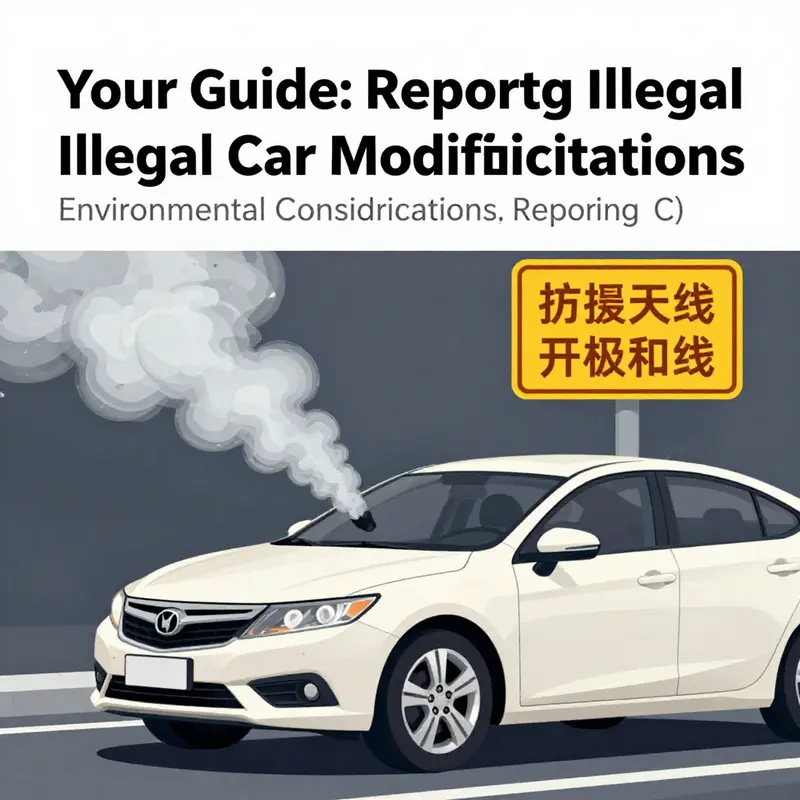
When a vehicle on the street carries modifications that violate safety, environmental, or urban-management rules, the consequences extend beyond aesthetics. Illegal car modifications can elevate emissions, amplify noise, distort handling, and undermine the orderly flow of traffic. In a region where environmental quality and public health are tied to lawful vehicle standards, reporting such violations becomes not only a civic duty but a practical way to shield neighborhoods from excessive noise and exhaust while helping authorities uphold road-safety laws. The environmental dimension is not abstract. High-performance exhaust systems, tuned engines, oversized tires, or altered suspension setups can push emissions beyond permitted levels, worsen air quality, and contribute to urban pollution pockets. When these modifications are adopted without proper controls, they place additional burdens on city ecosystems, complicate efforts to meet air-quality targets, and threaten the well-being of residents who live near busy streets or night-time corridors. The Guangdong incident cited in recent deliberations—where a modified, overloaded minibus operated illegally and caused multiple fatalities—serves as a sobering reminder that such changes are not merely cosmetic. They can translate into real danger, especially when the vehicle’s altered dynamics or overloading interact with road conditions, driver behavior, and crowd exposure. This is why environmental and safety authorities increasingly treat illegal modifications as a matter of public health as well as law enforcement. The link between environmental standards and road safety runs through a common framework: the integrity of the vehicle’s design, the performance of its exhaust and emission controls, and the shape of its risk profile on the road. In China, this linkage is reinforced by explicit prohibitions in the Regulations on the Administration of Motor Vehicle Modification and the Road Traffic Safety Law. These laws set clear expectations for what can and cannot be altered, who can authorize alterations, and how inspections should verify compliance. Yet laws alone do not guarantee safer streets; timely reporting by citizens completes the circuit. People who witness dangerous driving, unusual noise, visible exhaust violations, or suspicious shops that modify cars without authorization play a vital role in triggering official scrutiny. The act of reporting becomes a public-health intervention: it channels information to the right authorities, enables rapid response to potentially dangerous situations, and supports long-range environmental goals. The reporting process is designed to be accessible and practical for everyday observers. It begins with recognizing that there are multiple channels, each suited to different circumstances. For emergencies or imminent threats, dialing the local police emergency line is essential. If you observe reckless driving, street racing, or a modification that clearly endangers others, the quickest path to action is a direct call to the designated emergency or traffic-control numbers. This immediacy is crucial when a vehicle’s actions pose a hazard to pedestrians, cyclists, or other motorists. In non-emergency situations, more formal channels exist that allow you to document and submit evidence without compromising your safety. A widely used option is contacting the traffic police hotline to report specific details: the vehicle’s color, make, model, license plate, location, time, and a description of the modifications. Photos or videos that clearly capture the exhaust, body alterations, or noise source can dramatically shorten response times and improve the likelihood of a swift, targeted investigation. The emphasis on evidence is not decorative. Clear visuals and precise descriptions help authorities distinguish between creative, lawful customization and unauthorized, potentially dangerous alterations. Modern reporting platforms further streamline this process. Local governments often provide dedicated apps or official accounts that enable you to upload photos or videos and submit a detailed report. These platforms may offer real-time case tracking, which helps you follow the progress of an investigation and understand when action has been taken. The digital route does more than file a complaint; it creates a traceable record that can be reviewed by inspectors across agencies, coordinating responses across traffic, urban management, and environmental protection units when a modification touches multiple regulatory domains. If a modification affects urban order—such as an excessively tall or wide vehicle, or one that generates persistent noise pollution after certain hours—urban-management departments can become involved. Reporting to Chengguan or equivalent urban management bureaus ensures that the city’s spatial and acoustic norms are upheld in areas where neighborhoods shoulder the brunt of nighttime disturbances or street activity. The environmental dimension, in particular, has a distinct pathway: if the alteration results in noticeable noise or emissions that degrade air quality, complaints to the ecological or environmental protection authority are appropriate. In some cases, this route also engages standards under environmental noise legislation or ambient-air-quality guidelines, emphasizing that modifications aren’t just a matter of road rules but of environmental stewardship. For vehicles used in commercial service or transportation of passengers, additional oversight may be exercised by transportation authorities. The public can alert these agencies to potential violations in which a vehicle’s operations undermine safe or lawful transport practices. In practice, a well-rounded report weaves together several strands: a precise physical description of the vehicle, the exact location and time of observation, and clear photographic or video evidence that captures the modification in question. The more comprehensive your report, the faster authorities can verify a violation and take appropriate action. You might ask, in the language of public policy and everyday inquiry, whether certain changes are permissible. For those curious about the legal boundaries—Are car modifications illegal?—the question deserves careful attention, as local and national rules can vary by jurisdiction and by the type of vehicle. The key is to avoid speculation and rely on verifiable facts: make, model, plate, visible alterations, and any observable performance concerns that present a risk to safety. As you prepare to report, consider also the environmental context. Night-time noise can violate ambient noise standards, while exhaust emissions may breach air-quality requirements. If a modification is suspected of pushing emissions beyond permitted thresholds, this information should be emphasized in your report, and you should indicate any known ambient conditions at the time of observation. The legal framework then directs authorities to investigate with a view to remediation or sanctions consistent with the Road Traffic Safety Law and environmental regulations. In many jurisdictions, inspections may involve road-side checks, emissions tests, or reviews of a workshop’s licensing and compliance history. These processes underscore that the reporting citizen is not merely filing a complaint but contributing to a structured investigative workflow. The social value of reporting emerges from the idea that communities deserve quiet streets, clean air, and predictable traffic behavior. When reports are made responsibly, with accurate details and supportive evidence, they help reduce incidents that threaten public health and safety. They also deter illegal workshops from normalizing risky practices and help maintain fair competition in the automotive customization landscape. Of course, the act of reporting carries responsibilities. False or misleading reports can have legal consequences, and accidental mischaracterization of a modification can waste precious resources. To minimize these risks, it is essential to ground your report in objective observations, attach relevant visual evidence, and be prepared to provide follow-up information if authorities request it. The reporting ecosystem thrives on cooperation between citizens and public agencies: it relies on trust, accuracy, and timely communication. When followed correctly, reporting illegal car modifications supports the environmental protections that cities pursue daily—the reduction of noise pollution, the containment of harmful emissions, and the preservation of safer, more livable streets for everyone. In this sense, the act is both a duty and a practical instrument of environmental accountability. The public’s role is not limited to reactive complaints; it extends to ongoing engagement with how cities design and regulate transport. By participating in reporting channels, residents contribute to a feedback loop that can influence enforcement priorities, inspection protocols, and the allocation of resources to areas where modifications pose the greatest risk to health and safety. In summary, illegal car modifications are not simply a matter of personal taste or a vacuum of enforcement. They sit at the intersection of environmental protection, road safety, urban integrity, and public accountability. The reporting channels exist to channel observation into action, and your careful, evidence-backed submission can help authorities stop dangerous practices before they escalate into harm. By combining quick emergency responses with thoughtful, documented online reporting and, when necessary, environmental or urban-management channels, communities can maintain safer streets, cleaner air, and a more predictable traffic environment. For readers seeking a consolidated starting point, the official traffic-violation reporting platform maintained by the Public Security Ministry offers a trusted path to report illegal modifications and related violations. External resources provide further guidance on navigating these channels and understanding the balance between individual freedom and collective safety. For real-time guidance and to submit a report, visit your local government’s official website or use trusted public service platforms. External reference: https://www.122.gov.cn/
Final thoughts
Successfully reporting illegal car modifications is not just about compliance, it is about fostering a responsible automotive culture. By utilizing the resources available—whether through direct calls to the traffic police, digital apps, in-person reporting, or engaging with urban and environmental authorities—we can collectively ensure that the passion for car modifications remains within the bounds of legality. This awareness not only encourages personal expression but also safeguards our communities and the environment.