

Illegal car modifications are not just a minor infraction; they encompass a range of unauthorized alterations that can impact vehicle safety and legality. For car enthusiasts, whether hobbyist modifiers, professional tuners, or classic car restoration fans, understanding what constitutes illegal modifications is crucial. This article navigates the intricate landscape surrounding these modifications, detailing their types, the potential legal repercussions for non-compliance, and the broader societal effects. By the end, readers will have a comprehensive insight into the rules governing car modifications and the importance of adhering to them.
Beyond Aesthetics: The Legal Bounds and Safety Consequences of Illegal Car Modifications

Illegal car modifications are alterations that push a vehicle beyond the limits set by authorities and by the manufacturer. They often involve changes to critical safety or regulatory elements and can transform how a car behaves on the road. The term encompasses more than just cosmetic tweaks; it captures changes that affect how a vehicle performs, how it uses energy, and how it is perceived by others on the road. In practice, what counts as illegal depends on local laws, but the underlying principle is universal: road safety and regulatory compliance must not be sacrificed for personal preference. This idea sits at the heart of any serious discussion about modifying a car. When someone contemplates a change—whether to power, exhaust note, or appearance—the question is not only “Can I?” but also “Should I?” and “Under what conditions?” The answers hinge on the vehicle’s original design, how the modification interacts with safety systems, and whether the alteration can be justified under regulatory standards. The road is a shared space where performance enhancements can benefit an individual without risking others, but more often than not, illegal modifications tilt that balance toward danger and liability. The resulting tension between personal choice and public safety is not merely a matter of taste. It is a matter of harmonizing engineering limits with legal requirements and the social responsibility that accompanies every drive.
For many drivers, the impulse to modify stems from a straightforward wish: to improve performance, to personalize a vehicle, or to express identity through a distinctive look or sound. Yet when the modification involves critical systems—engine management, suspension geometry, braking balance, emissions control, or lighting that can dazzle other motorists—the risk profile shifts. This is why authorities emphasize that legality is inseparable from safety. A modification that alters how a car handles rain-slicked streets, or one that changes how quickly a vehicle can accelerate away from a red light, does not merely affect the owner’s experience; it reshapes the risk landscape for everyone on the road. The result is a regulatory response designed to preserve predictability and fairness in traffic, even if individuals feel an urge to push boundaries.
Across different jurisdictions, the specifics of what is illegal vary, but the framework grows from a common core: modifications must not compromise roadworthiness, emissions compliance, or the ability to operate a vehicle safely within the system of traffic laws. In many countries, this means that owners cannot simply swap an engine for a more powerful unit or install an exhaust that violates noise ordinances without review, testing, and, often, official approval. It also means that changes to the vehicle’s identification data, or to the way that data is recorded and displayed (like the chassis number or vehicle registration details), are treated as serious offenses. The logic is straightforward: if a change alters the vehicle’s design or how it interacts with safety features like ABS or stability control, it should be documented and validated. If it cannot be properly validated, it risks producing unpredictable behavior on the road, which governments aim to prevent.
In a practical sense, illegal modifications can be organized into several broad categories, each with its own safety and regulatory concerns. Engine and powertrain changes are a frequent focal point. Replacing the original engine or altering the engine management system can upset the delicate balance that manufacturers design into fuel delivery, cooling, and emissions. In many jurisdictions, a higher-output engine must be paired with proportionate upgrades to braking, suspension, and tires, or it becomes unsafe to operate. Exhaust system alterations are another critical area. Removing catalytic converters or installing straight pipes or excessively loud exhausts can push emissions and noise levels beyond legal limits, contributing to air quality concerns and disturbing the peace in residential areas. The legality of such changes often hinges on whether the modification adheres to prescribed noise thresholds and emissions standards.
Suspension and handling upgrades present a further layer of risk. Lowering a car too aggressively or replacing standard components with non-approved alternatives can change curb weight distribution, ride height, and suspension travel. These alterations influence steering feel, cornering behavior, and pedal effort under braking. When the geometry of the suspension is altered without proper validation, unpredictable handling emerges, particularly in emergency maneuvers or on uneven surfaces. Lighting and electrical modifications raise another class of issues. Illegal HID headlights, non-compliant brake lights, or flashy add-ons can create glare or mislead other drivers, increasing the likelihood of collisions. Body and aesthetic changes—such as unauthorized spoilers, oversized wheels, or chassis modifications—do more than alter appearance; they can affect aerodynamics, traction, or structural integrity in ways that are not easily foreseen without rigorous testing.
There is also the issue of speed and regulatory limits. Some modifications aim to remove speed limiters or disable electronic restrictions, shifting the car into a realm where the original design no longer aligns with the vehicle’s safety envelope. The result can be a vehicle that accelerates beyond what its braking system and tires can safely manage. That misalignment between capability and control is a central factor behind many regulatory actions. In the end, many illegal modifications arise from a clash between personal aspiration and systemic safety considerations. Regulators aim to prevent that clash from erupting into incidents, injuries, or worse, and they do so through a combination of registration rules, inspection regimes, and penalties that reflect the severity of the risk.
The enforcement landscape mirrors this risk-focused approach. In some jurisdictions, authorities require restoration of the vehicle to its original condition if illegal modifications are detected. Until the vehicle is back to its factory specifications, owners can face hurdles in obtaining essential services such as annual inspections or transfers of ownership. In extreme cases, repeated failures to pass inspections can trigger mandatory scrapping, underscoring how seriously the system treats repeated non-compliance. Such measures are not punitive for the sake of punishment; they are about ensuring that vehicles on the road meet baseline safety criteria and environmental standards. When a car cannot be brought into compliance, the legality apparatus recognizes that continuing operation would be unjustifiable risk to the driver and the public.
The Chinese regulatory context, for instance, highlights specific prohibitions that revolve around altering fundamental identifiers and the vehicle’s core design features. Changing a vehicle’s brand, model, engine type, or chassis number is barred under broad traffic safety and registration rules. Altering the body color, frame, or engine generally requires formal registration with the local public security traffic management department; failing to register such changes can bring fines. Installing aftermarket parts that exceed the original design specifications—such as oversized wheels, loud exhausts, or high-intensity lighting—carries safety and nuisance concerns. Beyond the potential for a dangerous mismatch with braking and steering systems, there is also the question of public disturbance and glare that can impair other drivers and pedestrians. The public security traffic management department typically requires that vehicles be restored to their original condition if illegal modifications are found; during that restoration period, many services—like annual inspection and vehicle transfers—become inaccessible. Recurrent non-compliance, such as failing three consecutive inspections, can lead to mandatory scrapping. These requirements are anchored in the broader Motor Vehicle Registration Regulations and Road Traffic Safety Law Implementation Regulations, which together create a framework that ties modifications to a vehicle’s eligibility to operate on public roads.
A different, yet complementary, regulatory perspective appears across the Atlantic in the United Kingdom. The Department for Transport identifies a clear set of modification categories that are considered illegal when they affect roadworthiness or safety standards. Engine and powertrain changes, exhaust alterations that affect emissions and noise, suspension and handling upgrades that disrupt ride and control, lighting and electrical modifications that impede visibility or confuse other road users, and body or aero changes that alter the vehicle’s relationship with other traffic all fall under scrutiny. The legal framework here traces through the Road Vehicles (Construction and Use) Regulations 1986, enforced by the Driver and Vehicle Standards Agency (DVSA). The consequence of unapproved modifications can be an MOT failure, a finding of unroadworthiness, and potential fines or prosecution under the Road Traffic Act 1988. Practically, this means insurance can become a minefield as well; insurers may regard unapproved changes as increasing risk and may adjust, restrict, or refuse coverage. The DVSA emphasizes the core principle that any modification should keep a car safe, legal, and compliant with applicable regulations. This emphasis on safety and legality reflects a broad consensus across regulatory systems that modifications carry responsibilities as well as potential rewards.
The tension between personal customization and public safety is not merely a legal artifact; it translates into real-world consequences for drivers. When people choose to modify, they must consider not only the immediate thrill or aesthetic payoff but also how the change will interact with the vehicle’s safety systems, the environment of a crowded urban street, and the likelihood of compliance checks. A modification that seems minor in isolation can, once installed, interact with other components in unpredictable ways. A wheel upgrade, for instance, may alter steering feedback and braking response; a performance exhaust might raise noise levels enough to breach local ordinances or irritate neighbors; a new light arrangement can create glare for oncoming traffic or fail to meet color and brightness standards. These interactions underscore why regulators are cautious about unverified or non-certified modifications. The narrative here is not about suppressing individual expression but about maintaining a consistent, predictable, and fair framework for traffic safety and environmental stewardship.
From the perspective of road users, there is a practical path to enjoying car personalization without crossing legal lines. The prudent approach begins with aligning any modification with the vehicle’s original design assumptions. This often means selecting components that are explicitly approved for use with the model in question, ensuring that installation follows manufacturer recommendations, and securing any necessary certifications or inspections. Where possible, owners should seek professional guidance and obtain official validation before committing to changes that touch the powertrain, braking system, suspension, or emissions control. Documenting compliance—keeping records of parts, testing, and approvals—can be as important as the modification itself, especially if questions arise during inspections or insurance underwriting. The aim is not to stifle creativity but to preserve a standard of safety that makes road travel reliable for everyone.
In this light, the decision to modify becomes a decision about risk management. Even if a modification appears technically feasible, the practicalities of ensuring reliability, serviceability, and legal compliance can be substantial. Insurance coverage, for example, hinges on disclosure and risk assessment. Hidden or unreported changes can complicate claims after an incident, and some insurers may refuse to pay if the modification is considered to have increased the risk without proper endorsement. In regions where authorities maintain a strict stance on unapproved modifications, the financial and legal risks compound the safety concerns. Owners who avoid the hazards of illegal modifications often discover that the path to personalizing a vehicle is best navigated through approved upgrades and certified installers who understand the regulatory landscape and how to maintain the car’s integrity.
For readers seeking a concise, jurisdiction-specific resource on legality, a useful reference is Are car modifications illegal, which provides a broad overview of the legal considerations that arise across different regions and helps readers gauge whether a given modification would be likely to pass regulatory scrutiny. This resource can help set expectations before any work begins and can guide conversations with mechanics, insurers, and authorities. Are car modifications illegal
As drivers weigh the options, it is important to recognize that legality is not a static concept. It evolves with technology, emissions standards, and road-safety research. The trend toward more stringent safety testing and transparent regulatory processes means that what might be acceptable today could require revalidation tomorrow. In the end, the core message remains consistent: any modification should be evaluated not only for its promise of enhanced performance or appearance but also for its compatibility with the vehicle’s safety systems, its compliance with the law, and its ability to be supported by authorities, insurers, and maintenance networks over the life of the vehicle. This integrated view supports a safer, fairer driving environment and helps ensure that personal expression does not come at the expense of public safety.
For readers who want to drill into official guidance, there is a detailed UK government resource that outlines vehicle modifications in the context of the MOT test and roadworthiness rules. This external reference provides a structured framework for understanding what is permissible and what requires certification or specialist approval: https://www.gov.uk/government/publications/vehicle-modifications-and-the-mot-test
Crossing the Line: The Real Risks and Regulatory Consequences of Illegal Car Modifications
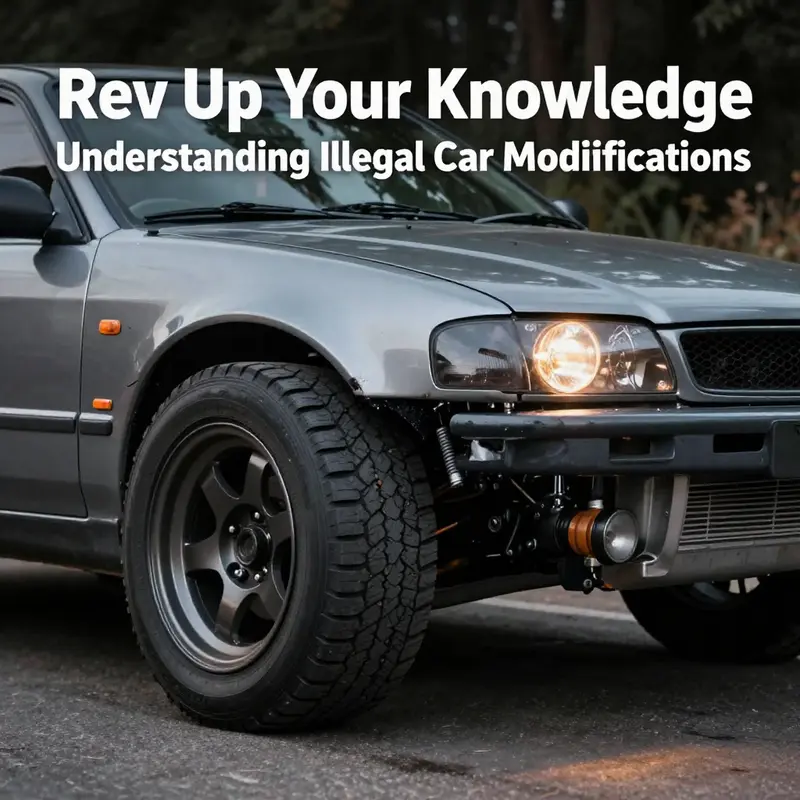
Modifying a car can feel like a private negotiation between desire and capability. Aesthetic tweaks, performance tweaks, and even practical tweaks can all seem harmless, just personalizing a ride to your preferences. Yet the line between permissible customization and illegal modification is not a vague boundary. It is a living set of standards designed to protect road users, preserve vehicle integrity, and keep the registration and inspection systems functioning. When a modification changes how a vehicle is classified, how it behaves in traffic, or how it interacts with safety and environmental controls, it almost always crosses from hobby into law enforcement concern. In the most formal terms, illegal car modifications refer to alterations that violate traffic laws and regulations, changing the vehicle’s registered structure, construction, or characteristics without the necessary authorization. The consequences are not merely cosmetic; they can ripple into safety hazards, financial penalties, and legal jeopardy. Understanding what typically counts as illegal, how authorities identify and address these changes, and why the system treats them so seriously helps drivers distinguish legitimate improvements from unlawful risks. At the core lies a straightforward principle: alterations must be compatible with the vehicle’s design, its safety-critical systems, and the regulatory framework that governs road use. When any of these elements are pushed beyond the limits, the risk of harm or violation climbs sharply. In practice, many jurisdictions tie illegal modifications to specific categories—changes that undermine the vehicle’s safety, emissions, identification, or regulatory compliance. In the context of the regulations discussed here, the state’s aim is not to dampen personal expression but to maintain a consistent standard that protects everyone on the road, from pedestrians to other motorists and from first responders to insurance and registration authorities. Within this framework, several kinds of modifications tend to draw immediate scrutiny, and the reasoning behind their prohibition is both principled and practical. A common starting point is the alteration of identity rather than appearance. The vehicle’s brand, model, engine type, or chassis number is a kind of identity document for the machine. Changing these identifiers disrupts the chain of custody that underpins registration, inspection, and taxation, and it can be exploited to mask theft, misrepresentation, or uncontrolled reconfiguration of the vehicle’s performance envelope. In many regulatory environments, including those that inform these discussions, altering identity markers is prohibited by statute and subject to robust penalties. The rationale is straightforward: if the vehicle you drive is not the vehicle in the official records, it becomes nearly impossible to verify safety compliance, crash history, emissions, and insurance status. In these contexts, the act of changing identity is not a mere clerical inconvenience; it is a decision that reverberates through every stage of a vehicle’s life cycle, from registration renewal to safety recalls, and from accident investigation to warranty coverage. Another broad category concerns modifications that alter the physical or functional attributes of the car in ways that can impair safety. Here the emphasis is on structural integrity, steering and braking performance, handling, and the vehicle’s ability to respond predictably to driver input under various conditions. Substantial changes to the suspension, removal or relocation of critical structural components, or unauthorized reprogramming of engine control units can destabilize the balance between the chassis, tires, and brakes. If authorities determine that a modification undermines crash protection, braking efficiency, or steering reliability, fines and penalties follow. In many regulatory frameworks, this category is codified in clear terms. The intent is not to stifle experimentation but to ensure that any escalation in performance or handling remains within a tested and certified framework. The public safety argument is reinforced by evidence collected in practice: when a car’s fundamental safety systems are compromised—whether by a drastic alteration to suspension geometry, a frame modification, or a firmware change that bypasses safeguards—the likelihood of loss of control rises. The law acknowledges this by linking unsafe modifications to penalties that vary by jurisdiction but commonly include fines and mandatory restoration to original specifications. A third family of illegal modifications centers on exhaust and noise control. Exhaust systems are engineered to meet emissions standards and controlled noise profiles, not only to limit nuisance but to preserve air quality and neighborhood peace. Tampering with exhaust systems—such as removing mufflers, bypassing catalytic converters, or installing aftermarket exhausts that exceed legal noise levels—can trigger traffic violations that carry substantial fines and often immediate driving prohibitions until compliance is verified. The enforcement logic here is pragmatic: excessive noise can mask other hazards, degrade urban environments, and signal reckless behavior that endangers bystanders and drivers alike. The precise decibel thresholds and testing procedures vary by locale, but the principle remains the same—modifications must not disrupt the regulatory balance between noise, emissions, and public health. Lighting and visibility present another frequent source of illegal modifications. High-intensity headlights, tinted or non-compliant tail lights, or auxiliary lighting that dazzles or confuses other road users increase the chance of accidents. When these modifications block the clear transmission of brake signals or create glare in the eyes of other drivers, the risk is deemed unacceptable, and enforcement follows. In many places, the law requires that lighting systems meet strict certification standards and that any alterations do not impair visibility or signal interpretation. The drive toward greater customization has also given rise to changes to the car’s body and exterior features that, while visually striking, can undermine safety during a collision or affect the vehicle’s overall crash dynamics. The installation of body kits, spoilers, or large bumpers, if done without regard to mass, rigidity, or compatibility with the vehicle’s airbag and crumple zones, can alter the car’s crumple behavior or its clearance profile. Even seemingly minor changes to mirrors, fenders, or license plate holders can run afoul of safety standards or visibility requirements. The intent behind such prohibitions is not to zap creativity but to prevent adjustments that alter the vehicle’s footprint, weight distribution, or energy absorption characteristics in ways that could reverse the law of physics in a crash scenario. A related dimension concerns powertrain and drivetrain upgrades. When modifications push the car beyond what the original design can safely manage—such as engine or transmission enhancements that outpace braking capacity, cooling systems, or steering control—the result may be a dangerous mismatch. The braking system, heat dissipation, and tire performance must all be capable of sustaining the increased loads. If these links fail, the safety case for enforcement becomes compelling. Across these categories, the enforcement response is not random; it follows an organized system designed to catch violations early and to enforce consistent standards. In many jurisdictions, the public security traffic management department holds the final authority to determine illegality and to require restoration to original condition. The process can involve inspections that verify the vehicle’s identity and its conformity with safety and environmental standards. Courts and regulatory agencies often coordinate with police authorities, ensuring that violations are documented, penalties are issued, and cases can be appealed with due process. The practical consequence is tangible: for a vehicle found to be illegally modified, the owner may be barred from performing vehicle-related services, such as annual inspections or transfers, until the vehicle is returned to its original state. The consequences compound when a car fails three consecutive inspections, at which point it may be subject to mandatory scrapping. This policy, though severe, is grounded in a precautionary logic: repeated nonconformity signals an unresolved risk that cannot be mitigated by simpler fixes or temporary waivers. In electronic and consumer terms, the landscape has grown more complex as manufacturers and regulators emphasize traceability, certified parts, and approved methods of modification. For instance, manufacturers increasingly warn owners that using unauthorized or illegal components can invalidate warranties and insurance coverage, and may even contravene traffic laws. If you think the line between personal expression and public safety is fragile, you are not alone. The tension is real in every nation and region, where regulatory nuance can shape how people think about what counts as a legal modification. In this sense, the law does not simply police the appearance of a car; it governs the input to a car’s safety systems, the reliability of its registration records, and the predictability with which a vehicle behaves in the hands of a driver who has to respond to unforeseen situations on the road. The case for restraint is reinforced by practical evidence. A car that looks custom from the outside may harbor a complex web of changes inside—altered suspension geometry, nonstandard fasteners, or unverified software changes—that erode the very safety envelope the manufacturer designed. Even when a modification appears to be purely cosmetic, the legal framework often demands confirmatory steps to ensure that there is no hidden risk or regulatory conflict. It is here that a simple search for once-and-done “upgrades” becomes a longer calculation that includes road-safety data, regulatory compliance, and the potential impact on insurance and liability. For readers seeking a quick pointer to the practical boundaries of legality, a concise online resource summarizes the core question: Are car modifications illegal? The answer depends on jurisdiction, but the guiding rule remains consistent: any change that alters the vehicle’s certified safety or identity, or that breaches noise, emissions, lighting, or dimensional standards, is likely to be illegal unless properly certified and registered. To underline a point that is often overlooked, several families of modifications share a common thread: a modification is illegal not simply because it looks different, but because it can change how the vehicle interacts with road users and how it is treated in the eyes of safety and regulatory systems. When the modification involves a certification path—correct labeling, tested components, and compliance verification—the line shifts from illegal to permissible. That is why the regulatory architecture emphasizes documentation, testing, and authorized installation pathways. It also explains why many drivers feel the temptation to push edges in hopes of gaining performance, aesthetics, or convenience. The system, however, is designed to curb such incentives by linking nonconformity to clear, enforceable penalties and mandatory repairs. The conversation around illegal modifications also crosses into the realm of corporate policy and consumer assurances. Guidance from major manufacturers often corroborates the regulatory stance: unauthorized parts may void warranties and insurance, complicate service agreements, and limit access to official support networks. This alignment between safety regulation and manufacturer guidance helps to reinforce the core message—the safest and most legally resilient path to customization is to pursue modifications through approved channels, with documentation and calibration aligned to the vehicle’s design intent. For those who want a concise roadmap to responsible customization, a practical step is to study the regulations governing your region, locate authorized parts and service providers, and keep meticulous records of all changes. If a modification raises questions about legality or safety, seeking official guidance before installation can prevent costly mistakes or unintended legal exposure. The advocacy for responsible modification is not about suppressing personal choice; it is about aligning that choice with a framework that honors safety, reliability, and accountability. In today’s connected landscape, information is more accessible than ever, but so is the risk of misinterpretation. A reputable approach balances curiosity with caution, experimentation with verification, and personal preference with public responsibility. To keep this balance intact, it helps to recognize that illegal modifications are not merely a matter of opinion or style. They are defined by law, tested for safety, and enforced in ways that can affect not only the driver but the broader traffic ecosystem. If you want a quick reference to how a particular modification may be categorized—whether it is likely illegal or permissible when properly certified—you can explore discussions that directly address the legal status of various modifications and see how drivers navigate the line between customization and compliance. For a concise overview of when modifications cross the line, see Are car modifications illegal?. As you explore the complexities of legality, you may also encounter perspectives from other observers, including multi-agency enforcement practices that strive for uniform standards across environmental, police, and transportation sectors. A notable illustration of such collaboration appears in the way joint inspections address high-noise and safety-risk vehicles, ensuring that the same rules apply to all, independent of the car’s make or model. In short, illegal car modifications are not a vague category but a carefully delineated set of practices that threaten safety, undermine regulatory systems, and can expose owners to fines, service bans, or even mandatory scrapping after repeated violations. The road to legitimate customization lies in compliance, documentation, and the use of certified parts and professional installation practices. This disciplined approach protects not only the owner’s investment but everyone else who shares the road. If you need a concrete reference point as you navigate these questions, consider the official notes that accompany these regulatory conversations, such as the Ministry of Public Security’s Motor Vehicle Registration Regulations and the Road Traffic Safety Law Implementation Regulations, which provide the formal framework for what counts as illegal, and what steps are needed to bring a vehicle back into legal standing. For readers who want a broader, globally informed perspective, these concepts map onto a universal understanding: modifications that preserve safety margins, maintain identifiable vehicle information, and stay within tested performance envelopes are the modifications most likely to be lawful and defensible in court, during inspections, and in the eyes of insurers. By contrast, anything that disturbs the core systems of safety or the integrity of the vehicle’s identity is a risk not only to the individual driver but to every road user who shares the environment. In the end, legality and safety converge on one principle: your car is part of a larger system. Every change you make should honor that system, be documented, and be executed with care and respect for the regulatory framework that governs road use. For further practical context, manufacturers and regulators alike emphasize the importance of avoiding unauthorized parts and consulting official guidance before making significant changes. Officially sanctioned modifications, when properly certified and registered, can be a legitimate way to tailor a vehicle to your needs while preserving safety, reliability, and legal standing. The conversation about illegal car modifications is not a static ledger but an evolving dialogue between technology, policy, and everyday driving. It is a reminder that the road is a shared space where individual expression must coexist with collective responsibility. External reference for safety and compliance perspectives can be found here: Tesla Taiwan’s Safety & Compliance Notice, which highlights the potential legal and warranty implications of using unauthorized modification components. https://www.tesla.com/zh-tw/support/vehicle-safety-and-compliance
Breaking Custom, Breaking the Law: The Legal Fallout of Illegally Modifying Your Car

The appeal of personalizing a car is irresistible to many enthusiasts. A factory line blueprint can feel like a canvas, inviting tweaks that reflect taste, need, or performance goals. Yet every adjustment carries a boundary. When those boundaries are crossed, the car ceases to be merely a vehicle and becomes a legal matter. The consequences of illegal modifications are not primarily about aesthetics; they are about safety, accountability, and the responsibilities that come with operating a device that weighs tons at speed, under the control of a driver and valued by the public as a shared resource. This chapter follows that thread, tracing how different jurisdictions treat illegal car modifications, and why the penalties are rarely incidental. It connects the dots between the intent to personalize and the obligation to keep roads safe, predictable, and compliant with recognized standards.
In one of the most explicit frameworks in the world, certain jurisdictions regulate modifications by tethering them to the vehicle’s certified identity and its original construction. In a set of regulations that seeks to preserve the integrity of the vehicle’s safety and emissions systems, changing the vehicle’s brand, model, engine type, or chassis number is treated not as a simple cosmetic update but as a fundamental alteration in legal identity. This is not a whim of bureaucrats but a precaution grounded in risk management: if the identity of a vehicle cannot be verified or its core architecture is altered outside authorized channels, the potential for misrepresentation, fraud, or unsafe operation grows substantially. The result is a clear, enforceable prohibition with a strong legal backbone. And those forbidden actions are typically backed by penalties that escalate when the unlawfulness is paired with concealment or repeated violations.
Beyond identity changes, many regulations focus on how a car’s appearance and performance components interact with safety and public order. Modifying the body color, the frame, or the engine without formal registration is treated as a failure to maintain a trackable, standard vehicle. In some systems, these changes must be registered with the local public security traffic management department. The logic is straightforward: if a vehicle looks and operates very differently from the record on file, law enforcement and road authorities cannot reliably assess its safety characteristics. The penalties for unregistered changes can be modest on the surface, such as warnings or fines, but a broader pattern of noncompliance can trigger more serious consequences, including the temporary refusal of services that require a valid, compliant record—like annual inspection, transfer of ownership, or registration renewal.
The scope of what counts as a modification is not merely cosmetic. Aftermarket parts that exceed the original design specifications—things like larger or wider wheels and tires, louder exhaust systems, intense or flashy lighting, conspicuous spoilers or full-body kits, or engine and transmission upgrades—are frequently scrutinized with an emphasis on how they affect handling, braking, acceleration, and the ability to react to the dynamic demands of driving. Wheels and tires that are outside the manufacturer’s tolerances can disrupt steering geometry, brake balance, and suspension response. Exhausts that breach noise limits can create widespread nuisance and noise pollution, but more importantly, can mask other issues and degrade neighbor peace. Highly visible lighting can dazzle other drivers, impair visibility, or violate glare or color standards meant to preserve safe perception in traffic. Bodykits and spoilers alter the vehicle’s dimensions and crash dynamics, potentially reducing protection in a collision and complicating judgments of clearance and ride height. Engine or transmission upgrades introduce power and torque changes that might outrun the braking system or stress drivetrain components, creating a mismatch that increases the risk of failure under stress.
These considerations are not theoretical. In practice, authorities will require that any such modifications be within documented design specifications and approved by the appropriate regulator or a recognized body. When modifications exceed original design limits, or when the process by which they were approved or implemented lacks proper documentation, the vehicle often faces orders to restore to its original condition. This restoration requirement is not mere paperwork; it is a practical constraint that affects real-world driving livelihood. Without restoration, owners may be blocked from essential services, such as roadworthiness tests, vehicle registration, or transfer of ownership. The logic is rational: a nonconforming vehicle cannot reliably meet safety and environmental standards, and allowing continued operation would undermine the regulatory framework designed to protect road users and communities.
In some jurisdictions, a more punitive line is drawn for repeated failures to comply. If a vehicle fails three consecutive inspections, there is typically a point at which authorities mandate scrapping or severe revisional actions. The rationale here is to prevent the accumulation of noncompliant vehicles within the traffic system, which could otherwise drift into a state where repair becomes impractical or unsafe. This escalation signals that the system views repeated noncompliance as a systemic risk rather than a permissible risk, and it reinforces the seriousness with which these issues are treated. It also underscores a practical truth: legitimate modifications, even when well-intentioned, must meet the same safety and accountability standards as stock configurations.
The enforcement landscape is not limited to one country or one legal tradition. Across the Atlantic and across the Pacific, the same principle—modifications must not undermine safety or regulatory compliance—shapes policy. In the United States, for example, the federal framework provided by the National Highway Traffic Safety Administration sets baseline safety standards, while states fill in the gaps with their own rules governing modifications. A 2023 study from the Insurance Institute for Highway Safety highlighted a clear correlation between improperly modified vehicles and higher crash risk. The report traced this to factors like reduced stability, degraded visibility, and in some cases the failure to meet braking or tire performance standards under real-world conditions. Law enforcement has also intensified screening of vehicles with illegal modifications during routine stops, with attention to oversized tires, window tinting beyond legal limits, or altered lighting systems that violate state or local rules.
Across the Atlantic in the United Kingdom, a separate regulatory architecture governs vehicle modifications. The Driver and Vehicle Standards Agency warns that modifications not approved by the manufacturer or by a recognized certification body can invalidate insurance and render a vehicle unroadworthy. A 2024 advisory from the DVSA cited a notable rate of seizure and repair demands, with penalties that can reach substantial sums and compulsory remedial work before re-registration is possible. The numbers are telling: thousands of vehicles are seized annually for illegal modifications, and the penalties are designed to deter risky practices as much as to discipline noncompliant owners. The logic applies a shared-society lens: if a modification creates an unsafe or uninsurable situation, it affects others on the road, not just the driver who chose it.
The consequences, however, extend beyond fines and seizures. Insurance plays a central role in the risk management equation. Insurers rely on the declared specifications of a vehicle to assess risk and price coverage. When a modification is illegal or not properly disclosed, coverage can be denied, or a claim may be reduced or rejected if the modification is deemed to have materially increased risk. This does not merely affect the payout on a single incident; it can alter the future insurability of the vehicle and shape the owner’s ability to transfer or finance the car. The practical impact is considerable: a modified car that escapes routine inspection, or that serves as a symbol of noncompliance, becomes a hard sell in the used-car market unless the owner can demonstrate a path to restore or certify compliance.
From a public safety perspective, the consequences are not limited to the individual. The broader community bears costs in terms of noise pollution, visual distraction, and potential environmental impact when modifications affect emissions controls or fuel efficiency in ways that contravene local standards. This is not a debate about personal expression versus social order; it is about balancing personal autonomy with collective responsibility. Authorities emphasize that only modifications approved by official bodies, and supported by adequate documentation, should be undertaken. Documentation is not merely bureaucratic garnish; it is the trail that proves, after the fact, that a modification was evaluated for safety, emissions, and roadworthiness.
For individuals weighing the decision to modify, several practical considerations arise. The first is legitimacy. Consult local vehicle registration authorities to confirm what is allowed and what paperwork is required. In many places, even seemingly minor changes—like a different shade of paint or a nonstandard exhaust tip—can escalate into a registry issue if done without notification or official approval. Second, document everything. Keep receipts, manufacturer specifications, compliance certificates, and any correspondence with regulatory bodies. When the time comes to renew registration or sell the vehicle, a robust paper trail can be the difference between a smooth transition and protracted gnashing of teeth with regulators or insurers. Third, consider the insurance implications early in the process. An upfront discussion with an insurer can prevent later disputes that might arise if a claim is filed after a modification that later proves noncompliant. In many cases, modifications that are fun but legally gray can trigger premium increases or policy exclusions, and in the worst cases, denial of coverage when an accident occurs.
The broader lesson is not that any modification is inherently dangerous or illegal, but that legality and safety are not separate concerns. A modification must be evaluated in light of how it changes vehicle behavior, safety margins, and compliance with the underlying regulatory framework. The aim is to preserve a vehicle’s intended safety envelope while allowing for responsible personalization. That means seeking official guidance, obtaining the proper approvals, and maintaining a continuous thread of documentation that can withstand scrutiny from inspectors, insurers, and civil authorities alike.
If you are curious about the boundaries of legality, a concise resource that discusses the question directly can be helpful. For a quick, practical check on whether a particular modification might cross the line, consider reading an overview such as this: Are car modifications illegal?
The legal landscape across different countries converges on a common point: the right to modify is conditional upon preserving safety, verifiable identity, and regulatory compliance. In China, the combination of the Road Traffic Safety Law and the Motor Vehicle Registration Regulations enforces a disciplined approach to changes that affect a vehicle’s identity, construction, or safety features. The scales tip toward restoration to the vehicle’s original condition when illegal modification is detected, and a noncompliant vehicle can be barred from essential services until it is brought into compliance. The penalties and administrative actions, including fines of modest amounts for minor, unregistered deviations and potential scrapping after repeated inspection failures, are designed to deter practices that could escalate risk on the road. The key is to recognize that these are not arbitrary penalties; they are calibrated mechanisms to keep the fleet uniform enough to evaluate, maintain, and regulate.
The external reality is that other jurisdictions echo this approach, albeit with their own formalities and tonalities. In the United States, the federal baseline coexists with state-specific rules that can be stricter or more permissive depending on the jurisdiction. The IIHS findings reinforce what regulators expect: that improper modifications correlate with higher crash risk, and officers increasingly scrutinize vehicles with obvious deviations from standard specifications. In the United Kingdom, the DVSA and associated bodies publicly outline the consequences of noncompliance, including the possibility of confiscation and substantial penalties, as well as the practical burden of making repairs to regain roadworthiness. These patterns illustrate a shared logic: legality is not about restricting self-expression for its own sake but about preserving a predictable, safe, and accountable traffic environment.
In practical terms, the process of addressing illegal modifications begins with acknowledgment and assessment. If a vehicle is found to have unregistered changes, authorities typically require the vehicle to be returned to its original specification before any services can resume, including inspections or transfer of ownership. This procedural consequence—restoration first, certification second—produces a ripple effect for owners who rely on their vehicle for daily needs or business activities. The waiting period, the cost of bringing a car back to conforming standards, and the potential impact on resale value all compound the immediate legal penalties. The experience underscores a broader point about risk management: lawful customization, if pursued with diligence, can offer personal satisfaction and even enhanced performance without inviting the heavy costs of noncompliance.
For readers navigating these decisions, a practical frame is to pair creative intent with regulatory literacy. Begin with a formal assessment of feasibility and compliance. Engage with licensed technicians or regulators who understand the specifics of the jurisdiction. Ask for written specifications and keep copies of all communication and certification. When considering changes that affect emissions, noise, or safety-critical systems, insist on documentation that can be verified against regulatory standards. Where possible, choose modifications that remain within the manufacturer’s design envelope or rely on certified aftermarket components and approved processes. In other words, align personalization with official pathways, not deviation from them.
The road to responsible customization is not a one-size-fits-all path. It requires attention to local rules, a willingness to document and validate changes, and a respect for the safety of one’s self and others on the road. It also invites a broader cultural shift: a move away from viewing legality as a barrier to creativity and toward viewing compliance as a foundation for reliable performance, good insurance outcomes, and a fair market for used vehicles. When regulated modifications are pursued correctly, the benefits—improved reliability, even modest gains in efficiency, and a clear basis for resale—can be realized without triggering the heavy costs that accompany illegal alterations.
External resource for further reading: UK government guidance on vehicle modifications and the law. https://www.gov.uk/government/publications/vehicle-modifications-and-the-law
null

null
Final thoughts
Staying informed about the nuances of illegal car modifications is essential for every automotive enthusiast. Whether you are a hobbyist, a professional tuner, or a classic car restoration expert, understanding the legal frameworks and societal implications linked to modifications helps prioritize safety and compliance. Engaging in unauthorized alterations may yield immediate gratification but can lead to significant legal troubles and public safety concerns, undermining the very passion that drives the car modification community. Ultimately, let this knowledge empower you to make informed, responsible choices in your vehicle enhancement journey.