

In the automotive world, modifications enhance performance, aesthetics, and overall driving experience. However, changes to your car can significantly impact your car insurance policy. Understanding what counts as a modification for car insurance is crucial for hobbyists, professional tuners, and restoration enthusiasts alike. This guide explores the intricacies of car insurance modifications, from updating vehicle details and altering coverage limits to the effects of ownership changes and personal information updates. Each chapter aims to inform car enthusiasts, ensuring you protect your vehicle adequately while enhancing it to match your passion.
Chapter 1: Car Insurance in Flux — How Changing Vehicle Details Rewrites Your Coverage

Insurance contracts are not static documents, and a car is not a fixed risk. The moment a policyholder changes a vehicle detail, the risk profile that underpins the policy shifts as well. This is why changing vehicle details is more than a clerical update; it is a recalibration of coverage, premium, and the very terms that guard your finances after a collision, theft, or a simple accident. When you treat vehicle details as mutable facts, you protect yourself from gaps in coverage and avoid unpleasant surprises at claim time. The chapter that follows is less a checklist and more a continuous narration of how and why these details matter, how they are updated, and what can go wrong if updates are delayed or neglected. In the end, the goal is to foster a mindset that sees updates not as interruptions to a policy, but as essential maintenance of a financial protection system that travels with you on every road you ride or drive.
Changing vehicle details happens for many reasons, but the underlying principle remains the same: the insurer prices risk based on the vehicle’s identity, its use, and the owner or operator who bears responsibility for it. When any of these elements changes—ownership, VIN, license plate, model year, or even the vehicle’s modifications—the policy must reflect the new reality. Without timely reflections of these changes, the policy could become misaligned with the actual risk. The most common scenarios fall into a few broad categories. A policyholder may acquire a new vehicle and need to replace the old one on the policy. A vehicle might undergo modifications that alter its safety profile, performance, or likelihood of theft. A transfer of ownership—through sale or gift—requires updating the named insured and possibly the named owner or primary driver. Even changes in personal information, such as a new address or a newly licensed driver in the household, can trigger updates to ensure the policy’s risk assessment remains precise. Consider the practical consequences when these details lag behind reality: a mismatch between the insured vehicle and its coverage can complicate claim handling, delay settlements, or, in the worst case, void coverage for the period of discrepancy.
To appreciate why this matters, imagine the chain of events that follows an accident. The insurer assesses the vehicle involved, verifies the VIN and license plate, and confirms who is listed as the insured and primary driver. If any of those data points do not align with the actual vehicle or the person responsible, the claim may be challenged. The liability limit, comprehensive, collision benefits, and even specialized add-ons all hinge on precise vehicle information. A car that is reported as still being owned by one person while another family member regularly drives it introduces a risk profile that may not have been anticipated at policy inception. In such cases, the insurer could adjust the premium or, in extreme situations, question coverage. The broader takeaway is simple: correct vehicle details are not just bureaucratic niceties; they are essential components of a policy’s risk model and its enforceability in real-world events.
A practical view of the kinds of updates you might face helps ground this idea. First, there is the changing vehicle itself. A new car purchase, a replacement after a total loss, or even a move to a different registration class often requires updating the policy with the new vehicle’s identifiers. The make, model, year, VIN, and license plate are not cosmetic labels; they are core risk signals for the insurer. Second, you might adjust coverage limits or scope. Increasing or decreasing the insured amount, or adding or removing coverages such as collision, comprehensive, roadside assistance, or rental reimbursement, can require a recalibration of premiums. Third, the insured person or owner on the policy can shift. If ownership of the vehicle changes hands, the policy must reflect the new named insured and potentially the primary driver. Fourth, personal information updates—address changes, new contact numbers, or the addition of a new licensed driver—also ripple through the policy’s risk estimates and notification requirements.
The mechanics of a vehicle detail change are straightforward, yet they demand attention. There are two primary pathways insurers use to process updates: online modifications through digital platforms and in-person changes at a branch. The online approach has become the preferred route for many policyholders. It combines speed, transparency, and the ability to track the status of a modification from start to finish. When you log into the insurer’s digital portal, you usually navigate to a section labeled something like “My Policies” or “Policy Management.” From there you select the specific policy that governs the vehicle in question. A prompt to “Modify Policy” or “Change Vehicle Details” will lead you to editable fields. Here you update the vehicle’s license plate, VIN, or the make, model, and year. You may also update the vehicle’s registered address if you have moved. The changes pass through an approval queue, and the system typically returns a confirmation within a short window—often within 24 hours. The digital route is not just about updating numbers; it is about maintaining a transparent, auditable record that connects a policy to a living, changing vehicle identity. An illustrative practical note from online platforms emphasizes how this works in real life. In People’s Insurance Car Insurance official channels, the typical flow is: log in, access policy details, tap modify, edit necessary fields, and submit. After submission, the status can be checked online, providing a sense of control and clarity that most modern policyholders appreciate.
The alternative path—an in-person modification at a branch—still holds value, especially when the change is complex or involves a full vehicle transfer. A vehicle transfer—from one owner to another, or from one household member to another—often requires more documentation and a hands-on verification process. In such instances, you gather the original policy document, the vehicle transfer or sale documentation, the vehicle registration, and IDs for both the old and new owners. You then present these materials to a service representative who can verify the details and issue a revised policy document that reflects the new ownership and, if relevant, the primary driver. The in-person process can be slower, but it offers the assurance of personalized guidance, and it becomes the reliable route when the online system cannot accommodate the complexity of the change or when legal or regulatory requirements mandate a face-to-face interaction. The knowledge base often suggests that for scenario-specific tasks—like vehicle transfers—the staff will verify and process the change and then provide updated documentation. The assurance comes from the human step: a trained professional can catch mismatches or ambiguities that digital forms might miss.
Beyond the mechanics, a crucial question emerges: how do these changes affect the policy’s economics and structure? In general, any modification that increases risk tends to raise the premium. If a vehicle’s safety features are removed, or if a high-risk modification is added, the insurer will recalibrate the risk and reflect it in the cost. Conversely, reductions in risk—such as removing an additional add-on like rental reimbursement when it is no longer necessary, or switching from a suboptimal coverage package to a more basic one when appropriate—can decrease the premium. The overarching principle is balance: you want a policy that covers the vehicle and its drivers adequately, without paying for protections you do not need. This is where a thoughtful discussion with an agent or a careful online review of the policy options becomes valuable. The decision to adjust a policy’s scope should be guided by actual changes to risk, not sentiment or habit.
Guidance on how to approach this thoughtfully often centers on clarity and documentation. Keep a running record of all changes, including dates, the nature of the change, which fields were updated, and the rationale. When you replace a vehicle, capture the new VIN, license plate, and registration details and ensure they match the official documents. When you adjust coverage limits, ask for an itemized premium impact and confirm the effective date of the change. If you are transferring ownership, ensure the named insured and the primary driver reflect the new arrangement, and confirm whether the policy still covers the vehicle’s operation by the new owner or driver. In all cases, update addresses and contact information to maintain accurate risk profiling and ensure that you receive important notices, including renewal reminders and claim communications.
The practical upshot is that vehicle detail changes should be viewed as a normal, even routine, aspect of vehicle ownership. They keep the policy aligned with reality and prevent the friction that results from claim-related disputes. Yet the realities in the field show how easily a misalignment can happen: a late update, a miscommunication, or a simple clerical error can lead to a mismatch that complicates a claim. For example, if a vehicle’s license plate is misreported or the VIN on the policy does not match the actual car, an insurer may scrutinize a claim more intensely or even deny coverage on grounds of misrepresentation or material non-disclosure. While such outcomes are not inevitable, they illustrate how important it is to treat updates as a routine part of policy management, not a one-off task triggered by a purchase or a sale.
To help embed this practice into everyday life, many insurers and industry guides encourage a proactive mindset: anticipate changes, verify information promptly, and document every update. It is helpful to keep a personal checklist, even informal, that tracks when a vehicle was purchased, when a transfer occurred, or when a modification was completed. When in doubt, consult the insurer’s official channels to confirm the correct steps for your jurisdiction and policy type. A foundational principle remains clear: the accuracy of vehicle details underpins the validity of the policy itself. A discrepancy on a single field—VIN, plate number, or the identity of the insured—can have outsized consequences when a claim arises. This is not mere bureaucracy; it is the mechanism that preserves coverage integrity and the trust that policyholders place in their protection.
For readers who want to explore the topic further, a concise resource focused on how modifications intersect with car insurance offers practical context and examples. The article explains common scenarios, the typical data fields involved, and the implications for premiums and coverage. It is a useful companion as you prepare to update or adjust your own policy details, helping you translate a set of numbers into a reliable, enforceable contract. You can read more about how modifications affect car insurance at this resource: What modifications affect car insurance.
As you move forward, keep in mind that the chapter you are reading sits within a broader conversation about how policy structures adapt to the realities of modern car ownership. The next chapters will explore broader amendments, such as adjusting policy terms after claims or shifts in driving behavior, and will tie back to the same core principle: a policy is only as solid as the accuracy of the facts that underlie it. The vehicle is the canvas; the policy is the frame; and timely updates are the braces that keep the whole composition upright when life shakes the picture. In this sense, changing vehicle details is not a detour but a direct route to maintaining the integrity of protection that accompanies you on every mile. To readers in regions where this process is still learning in practice, the guidance offered here is a reminder that the mechanics of the update matter, but the mindset—regarding promptness, accuracy, and reasoned decision-making—matters even more.
External resource for further reading and authoritative guidance is available from insurer-wide policy administration sites. For a comprehensive external perspective on policy amendments and the governance of vehicle details, you can consult the official insurer information at https://www.picc.com.cn.
From Limits to Extras: Navigating How Coverage Adjustments Count as Car Insurance Modifications
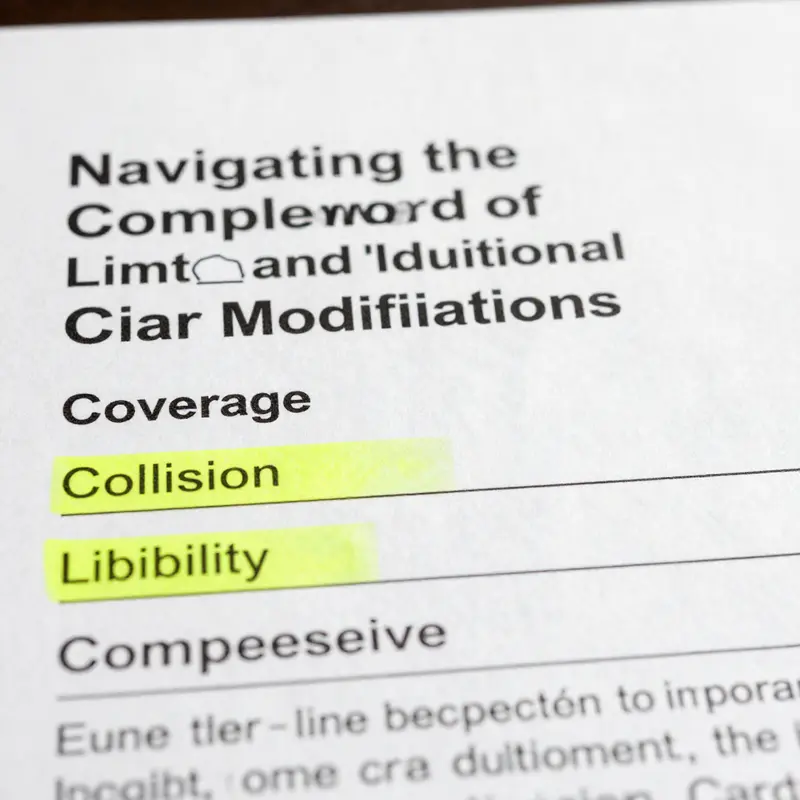
Policy modifications are not just bureaucratic formalities; they are the practical tools that keep a car insurance policy aligned with a driver’s life. When your circumstances shift—whether you buy a new car, take on a longer daily commute, or decide you want to protect against a risk you had previously underestimated—the policy should bend without breaking. In this sense, the most consequential levers you have are the adjustments to coverage limits and the addition or removal of extra coverages. These changes, enacted through endorsements or amendments, reframe the risk profile of the policy and directly influence price, protection, and peace of mind. The chapter that follows threads these ideas into a cohesive understanding of how limits and add ons operate in tandem to shape what counts as a modification in the car insurance you carry.
To begin with, coverage limits are the backbone of any modification conversation. They define the maximum the insurer will pay under each covered category when a claim arises. The most intuitive and frequent adjustment concerns third party liability, which covers damage or injury you may cause to others and their property. In most markets, liability is broken into two components: bodily injury and property damage. The decision on how high to set these limits is not merely a pricing choice; it is a hedge against the financial consequences of a serious accident. When a policyholder sits with an insurer, the question becomes not only what is affordable today but what would be capable of absorbing a high-severity claim tomorrow. In some jurisdictions, reforms and regulatory guidance have pushed liability limits higher to reflect rising medical costs and the growing potential for complex litigation. A notable example from recent reforms in one major market illustrates the point: the total liability limit was raised from 5 million to 10 million in RMB, with higher caps for medical expenses and death or disability compensation. The practical implication is clear. If you drive frequently, own a high-value vehicle, or operate in an area where the cost of a major claim could exceed the minimums, increasing your liability limit can be prudent even if it raises the premium. It is worth noting that the exact numbers and thresholds vary by country and region and must be interpreted in light of local regulations. Still, the principle remains constant: higher liability limits translate into greater protection for you and a lower risk of catastrophic personal exposure in the event of a major accident.
Beyond liability, there is the component of vehicle damage coverages, typically labeled collision and comprehensive. These two elements share a close relationship with the vehicle’s actual cash value and the policyholder’s appetite for risk management. Collision coverage generally pays for damage to your own car resulting from a collision, while comprehensive covers non collision perils such as theft, fire, weather events, vandalism, and other random hazards. The decision about how much coverage to purchase for these two categories often hinges on the car’s age, value, and the cost to repair or replace it. A brand-new car, for instance, is usually insured for its full value to avoid paying out of pocket for a total loss. For an older vehicle, where the cost of repair may begin to exceed or closely rival the remaining value, many drivers choose to scale back collision or comprehensive coverage to save on premiums. The balancing act is straightforward: you compare the car’s market value or replacement cost against the financial risk you can bear if the car is damaged or stolen, and you adjust the coverage limits accordingly. In practice, a modest increase in liability might be paired with a carefully calibrated adjustment in collision or comprehensive, ensuring that the overall risk coverage remains aligned with both the car’s value and the driver’s financial comfort.
A parallel dimension of modifications involves the addition and removal of optional coverages. These riders or endorsements are the most flexible tools insurers offer to tailor a policy to a policyholder’s unique risks and aspirations. They can fill gaps in protection or tighten coverage to reflect new realities. Common add ons include the comprehensive protection that extends beyond collision coverage to theft, vandalism, and environmental hazards; uninsured or underinsured motorist coverage that protects against other drivers who cannot pay for damages; medical payment coverages that help defray medical expenses for the driver and passengers; roadside assistance for towing, battery service, and emergency fuel; and personal protection structures that may include lost wages for injuries or special reimbursements such as rental car coverage while a vehicle is being repaired. Some policies also provide more specialized options, such as glass coverage or coverage for new alternations like wheel protection. The practical effect of adding these coverages is straightforward: each endorsement broadens protection, but it also raises the premium. The policyholder must gauge whether the added protection aligns with their risk tolerance and budget, or whether other savings could be achieved by removing less valuable add ons.
The decision to add or remove a rider is typically a straightforward conversation with an agent or customer service representative. The insurer will confirm the change, recalculate the premium, and issue a revised policy document. In many cases, modifications can be enacted at any point during the policy term, though some endorsements may carry waiting periods or require a separate underwriting review for certain coverages. This process reflects the fact that insurance pricing accounts not just for a snapshot of risk but for a forward-looking assessment of how your circumstances will evolve over the policy period. The objective is to maintain continuous, coherent protection without exposing you to abrupt gaps when you most need coverage. The practical takeaway is that you should not fear modifying a policy to align with current life conditions. Conversely, you should avoid letting a mismatch accrue over time, increasing the chance of dispute at claim time or an unaffordable renewal.
As you navigate the mechanics of these decisions, it helps to keep a few guiding principles in view. First, assess your risk profile in light of your daily routine and environment. Do you commute through congested urban corridors with high accident exposure, or do you frequently travel on high-speed highways where the severity of potential crashes could be greater? Are there risks particular to your living area, such as high theft rates or severe weather patterns? These questions do not yield a single answer but rather shape a spectrum of appropriate coverage limits. Second, weigh your budget against the financial implications of underinsurance. The premium delta for higher limits can be meaningful, but the cost of absorbing losses without sufficient coverage can be even greater. Third, budget for periodic reviews. A policy that seemed adequate a year ago may no longer fit your life, whether due to a new car, a growing family, or a change in driving habits. An annual policy review—a deliberate check of whether limits and riders still fit your risk tolerance and financial goals—helps ensure that coverage remains aligned with reality.
In practice, the adjustment workflow is a cycle rather than a one-off decision. You start with a conversation about what has changed in your life—new vehicle, new driver in the household, different usage patterns, or a shift in financial risk tolerance. The insurer then examines baseline exposures and suggests appropriate modifications. The policyholder reviews the proposed changes, weighs the premium impact, and decides whether to approve. The insurer issues updated documents and a revised premium invoice, and the cycle repeats when further changes are warranted. The result is a policy that evolves with you, rather than remaining a static contract that no longer mirrors your protection needs.
To better understand how modifications fit within a broader framework of policy design, it can be helpful to consult explanations that focus on the interplay between modifications and insurance outcomes. For readers seeking a targeted discussion on how specific changes influence the insurance equation, a concise resource outlines the ways in which different modifications affect coverage and price. This resource provides an accessible anchor for understanding the practical implications of decisions about coverage limits and additional coverages, and can serve as a useful companion to more comprehensive regulatory or insurer guidance. For a detailed discussion of how modifications influence insurance, see what modifications affect car insurance. This resource helps translate policy terms into everyday risk management choices and clarifies how small adjustments can produce meaningful differences in protection and cost. what modifications affect car insurance
Of course, the framework within which these decisions operate is not constructed in a vacuum. It sits within a regulated environment where policy constructs and pricing rules are shaped by governing authorities and supervisory bodies. In a broad sense, the purpose of the regulation is to ensure that coverage remains adequate for a considerable set of risk scenarios while maintaining fairness and affordability for consumers. In the context of major markets and regulatory bodies, the emphasis often falls on ensuring that the minimum legal requirements are reinforced by the option to purchase higher limits when warranted by risk. The changes to liability thresholds, the tailoring of endorsements, and the clearance procedures for endorsements all reflect a balancing act between protecting individuals from catastrophic financial exposure and preserving a competitive, accessible insurance market. The takeaway is simple: your modifications count as essential levers of your policy, and they operate within a legal framework designed to keep protection robust and premiums reasonable.
The practical examples that illustrate these ideas can be as plain as a conversation you might have with your insurer after you purchase a new car. Suppose you replace a midrange sedan with a higher-value vehicle. The insurer will reassess the replacement cost, the depreciation trajectory, and the potential for a high-cost claim. They might advise increasing the collision and comprehensive limits to reflect the vehicle’s current value and to prevent underinsurance in the event of a total loss. At the same time, you might consider a higher liability limit if your financial exposure in the event of a serious accident would be severe. Simultaneously, you might add a riders package that includes rental reimbursement and roadside assistance, ensuring that you are protected not only for the car itself but also for the inconveniences and expenses that can accompany a car breakdown or a claim. Each of these changes constitutes a modification to the policy, even though the policy’s core structure remains intact. And each change will carry a premium adjustment—sometimes modest, sometimes meaningful—reflecting the updated balance of risk and protection.
As with any major financial decision, clarity and documentation matter. After agreeing to adjustments, request written confirmation that outlines the exact coverage limits, the effective date of the changes, the new premium, and any changes to deductibles or eligibility requirements for endorsements. Keeping a careful record helps prevent miscommunications and ensures that when a claim arises, the policy language unmistakably reflects the protections you selected. It also helps you plan for renewal, since a clear line of sight into how and why the premium changed makes future budgeting more predictable. The process of modification thus doubles as a planning exercise: it forces you to confront how much protection you want and what you are willing to pay to obtain it.
One of the more practical aspects of managing modifications is understanding how these changes integrate with the overall risk management plan you have for yourself and your family. Life tends to be dynamic: new drivers join the policy, vehicles are swapped or added, and lifestyle factors shift. A policy that remains untouched in such circumstances runs the risk of leaving you exposed or overpaying for coverage you no longer need. A thoughtful approach to adjustments can create a cleaner, leaner, and more resilient protection portfolio. The result is a policy that remains aligned with your actual risk, a policy that travels with you rather than staying static as your world evolves. In this sense, modifications are not about chasing discounts; they are about maintaining aligned protection with prudent budgeting.
To close this reflection, consider the broader arc of how coverage limits and add ons interact in practice. The owner of a vehicle might decide to make a modest increase in liability limits to protect personal assets while simultaneously trimming back on a lower-priority add on that was never used in several years. Another driver might opt for a fuller package of add ons to address recent exposure—perhaps a change in commute pattern or an upgrade in vehicle security features that reduces theft risk while increasing the car’s value. In both cases, the changes represent a purposeful reconfiguration of the policy in response to actual risk, not a routine renewal that leaves risk gaps unexamined. This is the core idea behind counting modifications: they are strategic rebalances of protection and price that keep the policy relevant to the driver’s current life.
As policyholders navigate these choices, the chapter on modifications continues to unfold with the recognition that the world of car insurance is designed to be flexible. The dialogue between driver and insurer—between risk and protection—produces a policy that can grow with the driver, rather than forcing the driver to fit a rigid, one-size-fits-all product. The chapter you’ve read thus far aims to illuminate how the practical levers of limits and add ons operate inside that dialogue, and how those levers translate into real-world protection when it matters most. The next part of the larger article will delve into how the endorsement process itself works, how insurers implement changes, and how policyholders can navigate the administrative steps to ensure that their modifications are properly recorded and honored when a claim occurs. In the end, modification is not a detour from the main contract but a deliberate tuning that helps the policy stay in sync with life on the road.
External reference: https://www.cbirc.gov.cn
Chapter 3: Ownership Transitions and Policy Shifts: How Vehicle Ownership Changes Reshape Car Insurance Modifications

When a vehicle changes hands, the insurance policy does more than shadow the new owner. It becomes a live record of who is driving, where the car is kept, and how the risk profile of the vehicle is interpreted by the insurer. Ownership transitions—whether through purchase, gift, inheritance, or transfer between family members—are not merely administrative events. They are moments where policy language, risk assessment, and coverage needs collide. In essence, ownership changes act as a pivot point for car insurance modifications. They trigger required updates, can recalibrate premiums, and may redefine who is considered the named insured and who is allowed to operate the vehicle. Understanding this dynamic helps policyholders avoid gaps in coverage, prevents claim disputes, and ensures that the policy remains aligned with actual ownership and use.
At the core of the subject lies the principle of insurable interest. An insurer underwrites a risk on the premise that the policyholder has a stake in the vehicle’s well-being and a reasonable expectation of protecting that asset. When ownership shifts, the insurable interest must shift accordingly. If a car changes hands but the policy remains under the old owner’s name, the new owner could face a situation where the insurer disputes coverage in the event of a loss. The claim may be denied on grounds that the policyholder no longer has an insurable interest in the vehicle. This is not a mere technicality; it is a practical safeguard intended to prevent fraudulent or improperly underwritten claims. For families and individuals who transfer vehicles within the same household, these issues can still arise if the insurer’s record does not reflect the new ownership reality.
The mechanics of updating after an ownership change are straightforward in theory but demand careful execution. A policy endorsement—often called a vehicle endorsement or an update to the declarations page—formally amends the contract to reflect the new named insured, primary driver, or vehicle details. The endorsement is the document that makes the legal and financial adjustments explicit: the policy reflects who owns the car, who is allowed to drive it, and what terms apply to coverage. In many cases, the change begins with a simple notification to the insurer, followed by a request to transfer or add a vehicle, or to add a new insured party. The insurer then revisits the risk assessment, which may consider the new owner’s age, driving history, address, and even credit-based indicators where legally permissible. The result can be a premium recalibration that goes up, down, or—less commonly—stays the same, depending on the new risk profile and the coverage selections in place.
One of the most common catalysts for a policy modification is a change in the insured person or owner. When ownership moves—from parent to child, from one spouse to another, or from a family member to a new owner—the named insured on the policy must be updated. This step is essential for several reasons. First, the policy’s contract binds only the person named on the declarations page as the insured. Second, the driver’s status on the policy—the named insured and any listed drivers—affects the risk that the insurer evaluates. If the new owner drives frequently, their driving record becomes a primary input in the rating process. A young, inexperienced driver in a family car can shift a previously modest premium into higher territory, while a seasoned driver with a clean record may stabilize or even reduce the cost, especially if the policy is updated to reflect more appropriate usage patterns.
Documentation plays a pivotal role in legitimizing ownership changes. In many jurisdictions, law requires prompt notification to both the Department of Motor Vehicles (DMV) and the insurer when ownership of a vehicle transfers. This dual-notification helps prevent situations like double coverage, coverage gaps, or disputes about who is responsible for premium payments in the event of a claim. The practical implications are not merely regulatory; they also map directly onto the practical experience of claim handling. If a claim arises before the insurer has recorded the correct owner, disputes can surface about who is entitled to claim settlement or indemnification. To facilitate a smooth transition, insurers typically request documentation such as a bill of sale, a title transfer form, a certificate of title, or a letter of inheritance in cases of inherited vehicles. These documents verify the legitimacy of the ownership transfer and anchor the policy’s updated terms in a verifiable transfer.
The act of transferring ownership often intersects with changes in how and where the vehicle is stored. Address changes, which commonly accompany ownership transfers—whether due to moving to a new city, a different state, or a new household—trigger risk reassessment. Location is a recognized proxy for various risk factors: traffic density, climate-related exposure, theft rates, and even local repair costs. A change from a suburban residence to a dense urban setting can influence collision frequencies and theft risk, possibly altering the recommended coverages or the premium. Insurers may also consider changes in the primary drivers’ profiles; a shift in who operates the car most often can alter risk assessments. The update process, therefore, becomes a moment to revalidate all aspects of the policy, including coverage limits, deductibles, and endorsements that were previously accepted as appropriate.
The spectrum of potential modifications that can follow an ownership change is broad. On the simplest end, there is a straightforward update to the named insured and vehicle details—such as the VIN, license plate, and vehicle year and model—so the policy accurately matches the registered identity of the car. On the more complex end, ownership changes provoke re-evaluations of coverage scope. If the new owner uses the car for different purposes—say, as a work vehicle or as a vehicle used for ride-hailing services or short-term leasing—endorsements that reflect commercial usage or higher risk exposure may be necessary. Insurers may propose or require adjustments to liability limits, comprehensive and collision coverage, or the removal of optional add-ons that no longer serve the risk profile. The aim of these adjustments is neither punitive nor arbitrary but a rational alignment of coverage with real-world risk. For example, a higher liability limit might be appropriate if the new owner has a history of risky driving or if the vehicle competes in a high-traffic environment.
In practice, owners must also be mindful of how ownership changes interact with financing arrangements. When a vehicle is financed or leased, the lender or leasing company often requires the insurer to name the lender as a loss-payee or additional insured. Ownership transfers can complicate these arrangements, particularly if the new owner is not yet listed on the loan or if the lender’s conditions require a specific policy structure. In such cases, the endorsement may need to reflect not only the new owner but also the financier’s interest in the policy. This is more than a bureaucratic formality; it is a protective measure that ensures the lender’s collateral remains insured and that there is a clear chain of responsibility for premium payments, claim settlements, and coverage continuity.
Beyond the mechanics of endorsement, there is a behavioral layer to ownership changes. New owners often bring different driving histories, locations, and daily routines. A young adult taking over a family car might now drive more miles, park in a city garage, or operate the vehicle in ways that alter risk profiles. Conversely, an aging driver inheriting a vehicle might present a different risk mix. Insurers weigh these factors, sometimes offering opportunities to adjust conditions proactively through usage-based or telematics-based programs. These programs can reward safe driving with premium discounts or more favorable terms, illustrating how an ownership transition can open doors to product enhancements that were not previously accessible. This is not mere marketing; it is a genuine attempt to tailor coverage to actual use and risk, which can produce more accurate pricing and better protection for all parties involved.
An ownership transition also invites reflection on the broader ecosystem of policy management. Proactive communication with the insurer is critical. Delays in reporting can lead to coverage gaps, especially if the vehicle continues to be driven after the transfer but before the insurer updates the policy. During this window, any incident might trigger questions about who has insurable interest, who is authorized to make a claim, and who bears the financial responsibility for damages. These uncertainties can be resolved quickly with clear documentation and timely updates. The insurer, for its part, is typically capable of guiding the process through a streamlined pathway that may involve online forms, secure portals, or direct conversations with a dedicated account representative. The objective is not to fog the process with paperwork but to ensure that the contract reflects reality and that coverage continues without interruption.
From a practical standpoint, the chapter’s core message is that ownership changes are not incidental to car insurance modifications. They are a central locus for reexamining policy terms, coverage levels, and risk management strategies. The deliberation should consider both legal obligations and prudent financial planning. Legal requirements—like notifying the DMV and the insurer in a timely manner—are non-negotiable in many jurisdictions. Yet, the practical benefits go beyond compliance. Updated ownership data can unlock better discounts, align deductibles with current risk tolerance, and support safer driving incentives by accurately tracking who is behind the wheel. For families, this can translate into a more transparent, fair, and sustainable insurance arrangement that reflects how the vehicle is used across different members of the household.
In closing, ownership changes are more than a transfer of title; they are a recalibration of risk, a renegotiation of responsibility, and a redefinition of what the policy covers and how it pays for it. The endorsement becomes the instrument by which the contract breathes in step with real-world change. As the new owner takes the wheel, a well-handled modification process ensures that protection remains aligned with reality, that the premium reflects current risk, and that the pathway to a smooth claims experience is preserved. The practical takeaway for readers is clear: anticipate the need for policy amendments, gather the required documentation, and engage with the insurer early in the transfer process. This approach minimizes surprises, preserves coverage continuity, and helps avoid the costly aftermath of a claim denied for misalignment between ownership and policy terms. Along the way, the opportunity to explore favorable modifications—such as including or removing add-ons in light of the new owner’s circumstances or leveraging usage-based options—can lead to a policy that is not only legally sound but financially sensible as well.
For readers seeking a concrete link to related guidance on how modifications relate to insurance dynamics, see the discussion on how car modifications affect insurance in this resource: car modifications affect insurance. This reference provides context for how adjustments to coverage interact with changes in vehicle ownership and usage, complementing the legal and regulatory considerations discussed above. Additionally, readers can consult authoritative regulatory guidance to corroborate the practical steps outlined here on ownership reporting and policy amendments. For a broader regulatory perspective, see the National Association of Insurance Commissioners (NAIC) guidance on ownership changes and policy amendments: https://www.naic.org
Chapter 4: Personal Details as Policy Levers—Why Updating Information Shapes Car Insurance Modifications
Updating personal information is more than a clerical chore; it is a key driver of how a car insurance policy is priced, risk-rated, and ultimately honored in the event of a claim. When a policy is issued, insurers build a portrait of risk from a mosaic of data: your identity, where you live, how you drive, who operates the vehicle, and how the vehicle is used. Each data point informs the terms of coverage, the premium you pay, and the likelihood that an endorsement or a formal modification will be needed as circumstances shift. In that sense, updating personal information is less about changing a name or number in a file and more about preserving the integrity of the contract between you and the insurer. It is the mechanism by which a living, changing life is kept aligned with an insurance program that must reflect evolving risk in real time, or at least in a timely and accurate way.
First, consider the address. A new residence can alter risk in multiple ways. Urban versus rural location affects theft and vandalism risk, emergency response times, and even the likelihood of severe weather exposure. A move can also trigger regulatory or underwriting adjustments that the insurer must reflect in the policy. If a letter to renew the policy goes to an out-of-date address, important notices—such as renewal reminders, premium changes, or notices about changes in coverage—may never reach you. The ripple effects include late renewals, lapses in coverage, and missed opportunities to adjust limits or endorsements to better fit your new housing situation. A simple address update keeps the policy current and reduces the probability of miscommunication at a critical moment.
Next, there is the matter of contact information. A current phone number and email address are essential for timely communications about billing, claims, and policy changes. In the event of a crash or a similar incident, the insurer must be able to reach you quickly to verify details, dispatch information, and coordinate next steps. Delays in communication can complicate the claims process, extend the time needed to settle a loss, or even affect the appraisal of the vehicle. The claims ecosystem increasingly relies on real-time data, digital verification, and rapid messaging, so accurate contact details are a practical safeguard against unnecessary friction during a stressful period.
Driver status and licensing are equally consequential. If you add a new licensed driver to the household or if a current driver moves from a probationary phase to full licensure, the risk profile of the policy can shift. Younger drivers, higher rates of inexperience, or a change in the number of drivers who regularly operate the vehicle can elevate the probability of a claim. Insurers often require updates to reflect these changes because they influence the overall risk pool associated with the vehicle and the insured household. Similarly, if a driver changes their license number—perhaps due to a name change or a state-issued renewal—this update is not cosmetic. It ensures that the policy aligns with the current legal identity of the operator, which is essential for verification during a claim and for maintaining accurate records that regulators may inspect.
Occupation and daily usage bear a subtler but equally significant influence on risk. A policy that once reflected routine commuting might require revision if a driver begins a high-mileage job, starts delivering goods, or takes a position that involves significant business use of the vehicle. Commercial or business use typically carries different liability exposures and may warrant modifications to coverage limits, endorsement types, or even the primary purpose of the policy. Documenting these changes helps the insurer refine risk scoring, ensuring that premiums correlate with actual exposure. In some cases, even a temporary shift in usage—like a weeks-long period of business travel—can justify a temporary adjustment, provided the insurer’s underwriting guidelines accommodate such changes.
There is also the broader question of household changes and the insured’s relationship to the vehicle. When a policyholder changes name due to marriage, divorce, or other legal events, or when ownership of the vehicle transfers to another person, the policy must be amended. The named insured and any primary drivers on the policy are not merely administrative constructs; they define who is legally covered and who is responsible in the event of a claim. A misalignment between who is listed on the policy and who actually operates the vehicle can create gaps in coverage, leading to disputes during claims or, in extreme cases, a policy voidance for misrepresentation or non-disclosure. Updating these details preserves the policy’s integrity and helps ensure that coverage follows the actual ownership and control of the vehicle.
In all these scenarios, the central idea is clarity. Clear, up-to-date information reduces the risk of miscommunication, mispricing, and misapplication of coverage. When personal data is stale or incorrect, an insurer’s risk assessment may become skewed—leading to premium estimates that do not reflect the true profile of risk. This mismatch can yield surprises at renewal or, worse, when a claim is filed. A policy designed around your current reality not only aligns with regulatory expectations but also supports smoother claims handling, quicker communications, and a more predictable financial path for premium payments.
The mechanics of updating personal information are straightforward, and most insurers provide several reliable channels to complete the task. The online portal or mobile app is often the fastest route. Policyholders can log in, verify their identity, and update fields such as address, phone number, email, or even add or remove vehicles. A digital update typically triggers an immediate or near-immediate recalibration of the policy, including potential premium adjustments that reflect the new risk profile. This immediacy does not absolve the policyholder from reviewing the changes carefully. It remains essential to confirm that every detail—especially the list of drivers, the stated vehicle usage, and the insured value of the vehicle—remains accurate and free from errors.
If online self-service is not convenient, the insurer’s customer service hotline offers direct, real-time support. Speaking with an agent can be particularly helpful when the change is complex—such as a new occupation with a different risk exposure, or when updating multiple data points that intersect in nuanced ways. A live agent can verify identity, explain how the change affects coverages, and outline whether any endorsements or policy amendments are necessary. For those who prefer personal interaction, visiting a local branch or working with a local agent provides the assurance of face-to-face communication, the chance to present documentation, and the immediate receipt of confirmation of updated details.
It is worth noting that some updates may intersect with other financial or regulatory records. For example, a change of address with a bank or a government agency can influence the insurer’s verification processes and may require alignment across multiple systems to maintain consistency. While this connectivity adds a layer of administrative coordination, it also reinforces accuracy and reduces the risk that a mismatch in records could derail a claim or trigger a premium miscalculation.
From a practical vantage point, the timing of updates matters. As soon as a change occurs, you should notify the insurer. Some changes can be processed quickly through endorsements or policy amendments, while others might necessitate a temporary rider or a more formal adjustment during the next renewal cycle. The concept of an endorsement—an official document that modifies the original policy contract—captures the essence of these adjustments. An endorsement can amend the insured’s name, the vehicle details, or the coverage limits in response to a life change. The premium recalibration that accompanies such endorsements is a natural consequence of a policy now aligned with updated risk parameters. In many cases, the change will lead to a premium increase or decrease, depending on the direction of the risk shift. A higher risk profile—such as adding a high-mileage business use or a younger driver—will tend to raise costs; conversely, removing unnecessary add-ons or improving safety features can lower them.
Turning to practical examples, consider a family that moves from a suburban street to a city apartment complex. The new location may change daily commute patterns, the vehicle’s theft risk profile, and even the likelihood of claim-related incidents such as hail damage or flood exposure. Updating the address is essential not only for billing accuracy but also for ensuring that any risk-based rating adjustments reflect the actual environment in which the vehicle operates. Another common scenario involves quandaries surrounding additional drivers. If the policyholder’s spouse starts a new job that involves substantial driving, or if a teenage child begins driving more frequently, updating who is listed as a primary driver or adding a named driver can be crucial to preserving proper coverage. Failing to disclose a new regular driver can create gaps in liability protection or invalidate certain endorsements during a claim, particularly if the incident involves a person not listed on the policy.
The safety and protection of personal data is another critical consideration. Insurers rely on identity verification to prevent fraud and ensure that changes are legitimate. When you update personal information, you may encounter identity checks, documentation requests, or additional steps to confirm ownership of the vehicle and the policy. While these procedures can feel onerous, they are designed to safeguard both sides of the contract and to prevent unauthorized alterations that could undermine coverage. It is a reminder that updating information is not a one-and-done formality; it is an ongoing commitment to maintaining a precise and transparent relationship with the insurer.
For readers seeking a structured approach to this topic, one can think of updates as part of a broader strategy to manage risk across all insured assets. The knowledge that personal data can influence the scope and cost of coverage invites a more proactive stance. It invites policyholders to periodically review their policy details in light of life events—marriage, the arrival of a new driver, relocation, changes in vehicle usage, or even shifts in ownership. This perspective helps ensure that the policy remains a true reflection of present realities rather than a snapshot from months or years past. The result is a policy that protects what matters most—your safety, your finances, and the predictability of your insurance arrangements when it matters most.
Throughout this process, the concept of modification remains central. A modification, in the context of car insurance, is any formal adjustment to the original policy contract that alters coverage, terms, or eligibility. Updating personal information is one of the most common and least controversial forms of modification, precisely because it preserves the accuracy of the information that underpins risk assessment. By keeping personal data current, you minimize the risk of mispriced premiums, misapplied endorsements, or disputes during a claim. The end result is a policy that not only fits your current life but also supports you through moments of transition with clarity and reliability.
As you navigate updates, consider the integration of a practical resource that speaks directly to the relationship between changes in vehicle modifications and insurance outcomes. The resource discusses how modifications can impact insurance and how to declare such changes properly. An internal link to this discussion can offer an additional layer of understanding while you adjust personal information. See the discussion on car modifications and insurance impact here: car-modifications-impact-insurance.
Finally, it is useful to anchor these considerations in authoritative guidance that outlines the procedural steps for updating personal information with a car insurer. A standard reference is the Allstate guidance on updating personal information, which provides step-by-step instructions for using online portals, verifying identity, and submitting documentation when necessary. While the exact steps can vary by insurer, the core principle remains universal: keep data accurate, communicate changes promptly, and review the policy to ensure you understand how the update affects coverage and premium. You can consult Allstate’s resource for a general blueprint of the process: https://www.allstate.com/insurance/auto/update-personal-information. This external reference offers a concrete starting point for policyholders seeking a reliable, reputable outline of the practical steps involved in keeping their car insurance information current.
In sum, updating personal information is not a cosmetic adjustment; it is a meaningful, policy-centered activity that sustains accurate risk assessment, appropriate coverage, and fair pricing. It is the quiet mechanism by which real life changes are translated into policy language, ensuring that the contract you rely on remains aligned with your actual situation. When you treat updates as a routine part of policy management, you reduce the chances of missed notifications, mispriced premiums, and coverage gaps. You also simplify the claims experience, should the unexpected occur, because the insurer has full and current information to guide verification, valuation, and settlement decisions. The goal is straightforward: maintain a policy that reflects who you are now, not who you were yesterday, so that car insurance serves as a reliable safety net rather than a source of confusion during stress.
Final thoughts
Understanding what constitutes a modification for car insurance is key for enthusiasts dedicated to enhancing and personalizing their vehicles. By ensuring your vehicle details are current, coverage limits adequate, ownership details updated, and personal information accurate, you can maintain the integrity of your insurance policy. As you navigate through the modifications process, remember that these changes not only reflect your passion for cars but also safeguard your investment and driving experience. Stay proactive and informed, and your journey into car modifications will be as rewarding as it is thrilling.