
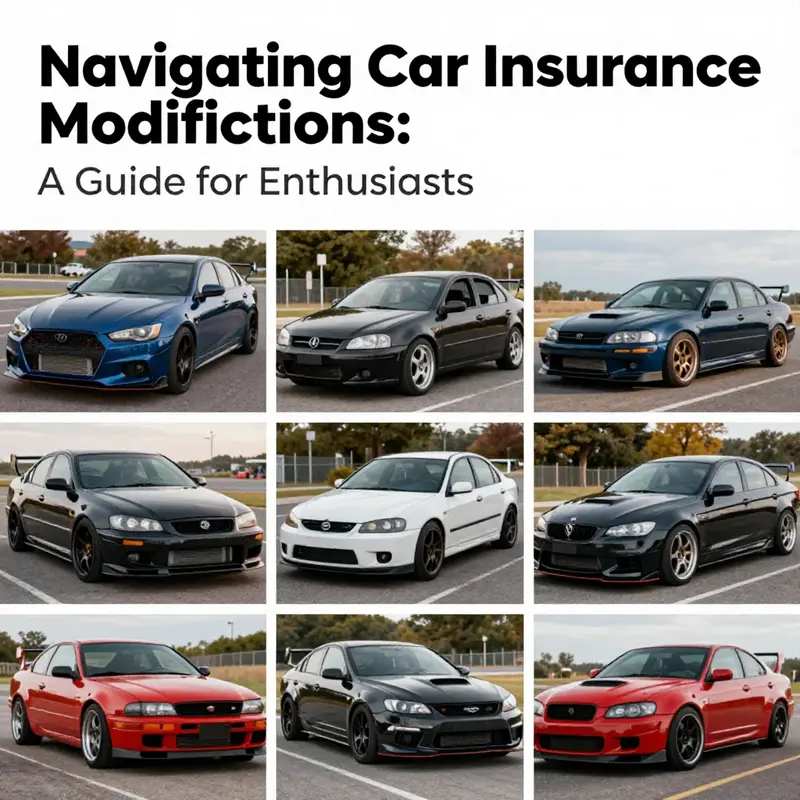
Car enthusiasts, professional tuners, and classic car restorers thrive on the excitement of modifications. However, the thrill of enhancing your vehicle can come with complexities related to insurance. Modifications can significantly alter your vehicle’s risk profile, which insurers carefully assess to determine coverage and premium rates. From performance upgrades that boost horsepower to aesthetic changes that turn heads, each modification has potential implications on your insurance policy. This guide will explore the nuances of various modifications—performance upgrades, suspension alterations, exterior aesthetics, and interior enhancements—providing you with the knowledge to navigate insurance considerations effectively.
Raising the Bar: How Performance Upgrades Redefine What Counts as a Car Insurance Modification
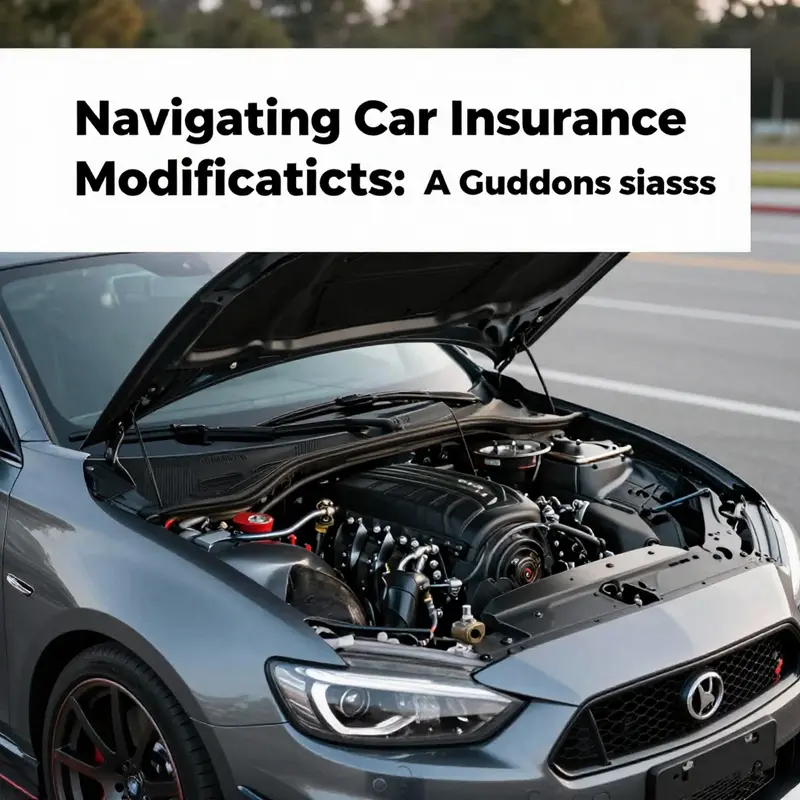
When you buy a car, what you see on the window sticker often becomes a baseline that insurers use to judge risk. Modifications, in insurance terms, are any changes that move the vehicle away from its factory configuration. They can alter performance, handling, safety features, aesthetics, or even the car’s value. The moment you start adding turbochargers, swapping out the suspension, or replacing wheels with larger, lighter, or more expensive options, you’re stepping into a different risk profile. This is not simply about making a ride look more customized. It is a change in the way the vehicle behaves, how it stops, how it accelerates, how much it costs to repair, and how likely it is to be involved in a claim. The consequence is not just a higher bill; it can be a different policy, new exclusions, or in some cases, a policy that does not cover the modified aspects at all. To understand this landscape, it helps to follow three threads: what counts as a modification, how disclosure shapes coverage, and how insurers translate modifications into premiums and policy terms. The chapter unfolds by tracing those threads through the practical realities of owning a modified car in a world where risk is measured by curves, not anecdotes.
At the heart of the discussion lies the simple principle that not all changes are treated equally. A minor cosmetic tweak—like a set of aftermarket wheels installed by a professional using factory-recommended parts—may be treated differently from a major engine upgrade, such as a turbocharged system or a full engine swap. Insurers look at modifications through the lens of risk management. They ask: does this upgrade alter the speed, acceleration, braking, or reliability of the vehicle? Does it increase repair costs or the likelihood of repair due to specialized parts? Does it affect the vehicle’s safety systems, emissions compliance, or security features? The answers determine whether a modification is simply noted for information, or whether it triggers new coverage requirements, higher premiums, or even a different policy type altogether.
The most common and consequential category is performance upgrades. Engine tuning, forced induction, or other enhancements that boost horsepower or top speed are the archetypal examples that move a car from showroom limits toward a domain that insurers perceive as riskier. The logic is straightforward in insurance terms: higher speeds and more powerful engines statistically correlate with greater claim severity and more complex repairs. The result frequently shows up in the volume of risk a policy must bear, and those numbers translate into premiums, deductibles, and coverage conditions. When performance upgrades are present, many insurers will require documentation, third-party testing, or even a re-evaluation under a specialized policy framework designed for modified cars. This isn’t merely about charging more; it’s about ensuring the policy remains commensurate with the level of risk and the specific way the vehicle is used.
Across the industry, disclosure is treated as the hinge on which coverage stays intact. The Motor Insurers’ Bureau (MIB) in the United Kingdom, for example, emphasizes that any modification that alters the vehicle’s original design or increases its speed capability must be disclosed. The failure to disclose can invalidate a policy, potentially leaving a driver without compensation after an accident. The underlying principle is simple: insurers price risk with the information they have. If the information is incomplete or misleading, the risk assessment is faulty, and the insurer may not honor claims related to the unreported modification. This is not a theoretical concern. In practice, it means that a modification must be documented, certified if necessary, and clearly communicated to the insurer before a claim scenario arises. The modern market expects that the modification is part of the insured risk profile, not a separate, hidden factor that emerges only after a claim occurs.
The spectrum of required documentation can vary. Some upgrades demand little more than receipts and a professional installation report, while others require formal testing results, emissions compliance evidence, or safety-certification papers for drivetrains, braking systems, or suspension components. In high-performance cases—think full engine swaps or forced-induction systems—insurers may even insist on a re-quote under a specialized “modified car” policy category. The practical effect is that a driver who upgrades runs the risk of losing broad policy protections if the insurer is unable to verify that the change has been appropriately assessed and approved. And because many standard comprehensive policies include exclusions for certain types of damage that stem from performance-related failures, the decision to upgrade becomes a policy design question as much as a mechanical one. In short, performance upgrades can raise premiums, narrow coverage, or require a new policy framework to ensure that the protection lines up with the car’s true risk profile.
Real-world numbers echo this dynamic. Industry observers note that premium adjustments can range widely, influenced by the extent of the modification, the driver’s history, and the coverage selected. For instance, even a relatively modest upgrade, properly disclosed, can push premiums upward if it meaningfully changes the vehicle’s risk characteristics. A larger, more comprehensive modification suite—such as engine work coupled with upgraded braking and suspension—can push costs higher still, potentially by a sizable percentage. The precise figures are never guaranteed, but the pattern is consistent: more performance means more risk in the insurer’s calculus, and that risk is priced into the policy through higher premiums, specialized coverage demands, or both. The emphasis remains on responsible disclosure and ongoing dialogue with the insurer, rather than on secrecy or postponement of conversations until after a claim.
The chapter also considers the practical steps a vehicle owner can take to preserve coverage while pursuing performance enhancements. Foremost is proactive communication. Before any physical modification, a conversation with the insurer clarifies whether the proposed change is permissible under the current policy, whether it necessitates additional coverage, and whether any temporary coverage gaps might occur during the modification process. This proactive stance helps prevent the awkward scenario in which a claim is filed for damage linked to a modification that the insurer does not recognize as part of the policy. To support transparency, owners often compile a package of documentation that includes a detailed parts list, installation invoices, safety certifications, and any testing results from emissions, brake, or safety performance evaluations. When possible, engaging a qualified installer who can provide a formal report is valuable, because providers of diagnostics and certifications may lend credibility that insurers rely on to approve a modification.
The landscape becomes more nuanced when considering the policy’s other terms, such as deductibles, coverage limits, and geographic or usage restrictions. In some markets, insurers stratify policies to account for how the vehicle is used. A weekend-only sports car, kept on a dyno-tuned regimen for track days, might attract a different risk profile than a daily commuter that has similar modifications but fewer miles on the clock. Insurers may impose usage-based conditions or require security measures such as alarms, trackers, or immobilizers, which, while common for modified vehicles, may interact with other policy features. The safety and security dimension is sometimes the unsung factor: a well-implemented alarm, tracking device, or immobilizer can mitigate risk and in some cases offset portions of a premium increase. Conversely, modifications that compromise safety systems or interfere with essential driver-assist technologies can complicate coverage, sometimes leading to exclusions or a refusal to insure certain risk configurations.
For drivers who finance or lease their vehicles, the decision tree grows more complex. Financing arrangements can require lender notice of modifications, and some lenders explicitly restrict certain changes or require them to be undone if the loan terms demand it. In these cases, failure to obtain lender consent can trigger default provisions or financial penalties, independent of how the insurer views the modification. The practical upshot is that the modification conversation often becomes a three-way discussion among the vehicle owner, the insurer, and the financier. This is not a hurdle to be feared but a process that, when navigated with transparency and planning, helps preserve both coverage and ownership rights. In some instances, drivers report that a financed or leased vehicle can be moved to a dedicated policy category or temporarily covered under a non-owned vehicle rider during the modification period. While not universal, such arrangements illustrate how the ecosystem of car ownership evolves when performance ambitions collide with the realities of risk management.
An essential caveat is the legal framework surrounding modifications. Some jurisdictions regulate certain upgrades, particularly those that affect lighting, exhaust emissions, or noise levels, and these legal constraints can intersect with insurance. Insurers may require proof that the modification complies with local laws, and noncompliance can create gaps in coverage or trigger policy cancellation. This is a reminder that the road to a modified car’s insured reality involves not just the insurance contract, but also the regulatory environment in which the vehicle operates. It reinforces the point that modification decisions should be informed by both risk assessment and legal compliance, lest drivers invest in performance enhancements that later become disputed claims or coverage voids.
Ultimately, the question of what counts as a modification is not a binary judgment but a continuum. Cosmetic changes, aftermarket wheels, or non-structural upgrades may be treated as optional enhancements with minimal impact on coverage. But performance-focused alterations, structural changes to the drivetrain or braking system, or alterations that change how the car can legally operate can push a vehicle into a new category of risk. The practical effect is that insurers will reprice risk, adjust coverage, or require specialized policies. The onus remains on the policyholder to disclose accurately and in a timely fashion, to retain documentation, and to seek clarity before committing to a modification plan. The long-term protection offered by a well-documented, transparently managed modification strategy can be substantial, because it reduces the chance of coverage gaps and claim disputes during the life of the policy. With this approach, a driver can enjoy the benefits of performance upgrades while keeping insurance aligned with the vehicle’s true risk profile.
For readers seeking a concise overview of how modifications affect insurance, a helpful reference point is the detailed guidance published by industry bodies and insurers alike, which emphasizes disclosure, documentation, and the alignment of coverage with risk. If you want to see a practical example of the kinds of questions insurers might ask and the documentation they might request, you can explore a widely cited overview such as this resource on car modifications and insurance. car modifications affect insurance. It can serve as a starting point for conversations with your own provider, though you should always verify requirements with your specific policy documents and local regulations.
In sum, performance upgrades redefine what counts as a modification because they alter the vehicle’s risk footprint. They demand transparency, documentation, and often a recalibration of the insurance relationship. When approached thoughtfully, upgrades can be pursued without sacrificing coverage, but the burden of proof rests squarely on the owner. The best path is to plan, disclose, and verify—treating modification as a legitimate part of the vehicle’s evolving story rather than a hidden chapter awaiting discovery after trouble arises. This approach protects both the car’s performance potential and the financial safeguards that insurance provides. External guidance from authoritative bodies underscores the same principle: modify openly, test as required, and ensure that the policy evolves in step with the car you drive. For a broader regulatory and industry perspective, see the authoritative resources on vehicle modifications and insurance provided by the Motor Insurers’ Bureau (MIB): https://www.mib.org.uk/insurance-guidance/vehicle-modifications/.
Wheels of Risk: Understanding Suspension and Handling Modifications and Their Impact on Car Insurance
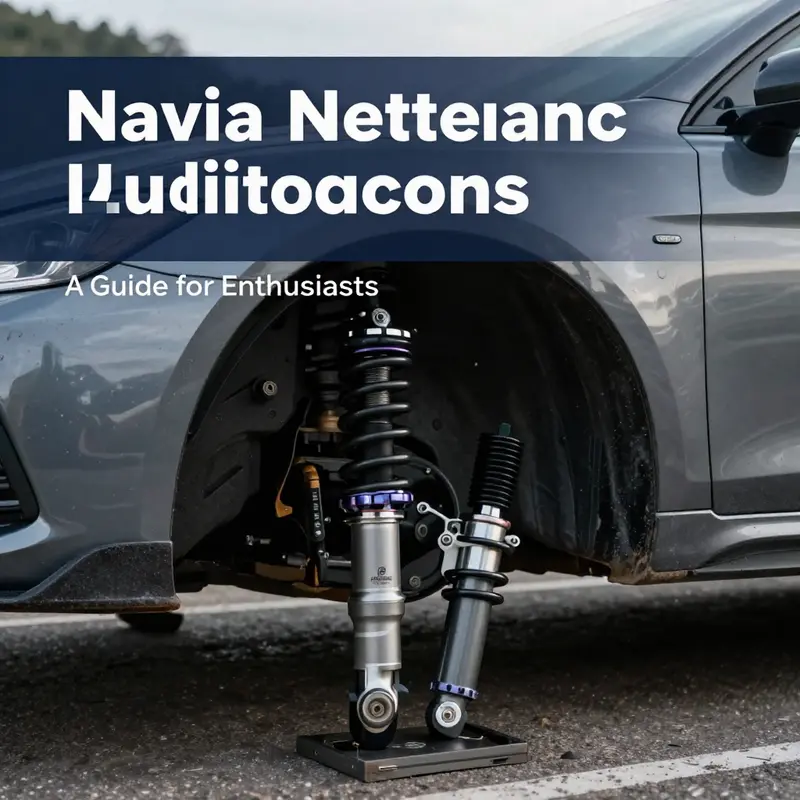
Suspension and handling modifications sit at a tricky crossroads in car insurance. They are not merely cosmetic tweaks or performance fantasies; they alter how a vehicle behaves on the road, how it stops, and how it responds to sudden inputs from the driver. Because insurance is fundamentally a risk-transfer agreement, any change that shifts risk from the factory blueprint to something more unpredictable will register in the underwriting process. When a vehicle leaves the factory line with a designed balance of ride quality, steering response, tire grip, and braking behavior, it is insured under assumptions that the risk is within a certain range. Any deviation from those assumptions can prompt a recalibration of premiums, or in some cases, a redefinition of coverage boundaries. Suspension and handling modifications are a clear example of modifications that can move the needle on risk in ways that may not be obvious at first glance. The moment a driver chooses aftermarket springs, adjustable dampers, or a radically altered anti‑roll system, insurers are asked to reassess how the car behaves under ordinary and extraordinary circumstances alike. This reassessment comes with practical consequences: changes in premium, in policy terms, and in what claims rights remain intact after a mishap. The topic deserves a careful, narrative treatment because it reveals how insurers translate driving dynamics into numbers on a ledger, and how drivers can navigate that translation without losing essential protection.
The core point to grasp is simple in theory but nuanced in practice. Suspension and handling modifications affect how a car maintains stability, how it tires and brakes under load, and how it reacts to cornering forces in emergency maneuvers. A lowering kit, stiffer springs, or upgraded shocks can alter weight transfer during a turn, potentially changing grip levels and tire wear patterns. A suspension that tightens response might be exhilarating for enthusiasts but can also lead to a stiffer ride, more abrupt jolt transmission to the chassis, and greater susceptibility to certain road imperfections. All of these factors can influence the likelihood of an accident and the severity of outcomes if one occurs. Insurers, whose business model hinges on predicting risk, respond by adjusting rates or coverage when the vehicle’s behavior departs from the norm. This is not a blanket condemnation of modifications; it is a recognition that changing how a car handles can change the probability and cost of claims in ways that need precise accounting.
To understand why, it helps to ground the discussion in a few practical considerations. First, modification is not a single event but a spectrum. Some alterations are modest and preserve much of the original dynamics, while others are transformative, altering chassis stiffness, cornering balance, and even braking distances. Second, the risk assessment is not purely mechanical. It also involves the driver’s intent and the context in which the modifications exist. A performance-oriented upgrade installed for track days, for example, may carry different insurance implications than a street-safe, street-legal handling upgrade intended to improve everyday drivability. Third, the regulatory and safety framework around modifications matters. Legal compliance tends to reduce risk in the eyes of underwriters, whereas illegal or undocumented changes introduce a new layer of uncertainty that can lead to denial of certain claims, or even policy cancellation in extreme cases. These underlying ideas shape the practical guidance drivers will encounter when they talk to insurers, renew policies, or decide how far to push a vehicle’s handling capabilities.
Disclosures sit at the heart of the insurance dialogue. If a car owner has altered the suspension or handling systems, the provider expects to know. The duty to disclose is a standard feature of most auto policies. It begins at policy inception and continues at each renewal. Even seemingly mundane changes, like switching to a different tire profile or altering ride height, can be material to risk, especially if the modifications affect tire contact with the road, braking behavior, or the structural load paths in the chassis. Failing to disclose can constitute a breach of the contract, which in turn can jeopardize coverage during a claim. In many cases, insurers will review the modifications, request documentation such as installation receipts, and require inspection reports or professional assessments before agreeing to continue coverage.
From a risk management perspective, insurers often categorize suspension and handling upgrades as factors that may require adjustments to premiums or to the scope of coverage. These adjustments can take several forms. Some policies might impose a surcharge to reflect higher risk, while others may demand a separate rider or endorsement that explicitly documents the modifications and the enhanced or specialized coverage that may be needed. In some cases, a policy may be more likely to require alternative terms for liability, collision, or comprehensive coverage, depending on how the modification interacts with typical driving scenarios and the cost of potential repairs. The overall message is that modifications change the math of risk, and the insurer will adjust the equation accordingly.
For drivers who want to modify their vehicles while retaining robust protection, the market offers a few practical pathways. A growing number of insurers understand that modifications are not inherently risky if managed properly. Some carriers offer specialized products or endorsements tailored to modified cars. These programs typically demand thorough documentation, including the nature of the modification, the performance specifications, and sometimes an inspection by a qualified technician. The premiums in these programs can be higher, reflecting the added complexity and the need for enhanced risk control measures. Importantly, these offerings are not universal. The availability of a modified-car endorsement depends on the insurer, the vehicle, the modifications, and the driver’s driving history. Ambitious projects with drastic changes to the powertrain or chassis often require careful negotiation and clear documentation to avoid gaps in coverage.
The discipline of disclosure grows more demanding when the modifications involve safety or security features. Many insurers positively view upgrades that directly improve safety or deterrence, such as advanced wheel and tire assemblies that enhance braking performance or tires designed to maintain grip in adverse conditions. Similarly, modern driver-assistance systems or aftermarket installations that contribute to safer operation can be looked upon favorably, potentially moderating premiums or broadening coverage. Yet there is a caveat: not every added tech is welcomed. Some changes, particularly those that alter visibility, weight distribution, or structural integrity, can complicate coverage in unpredictable ways. In the end, it is not the sheer number of modifications that matters but the net impact on risk and safety. The insurer’s experience with similar configurations also guides decisions, which means drivers may encounter different outcomes depending on the underwriting practices of the company they choose.
The legal dimension cannot be understated. Across jurisdictions, the legality of modifications influences both insurance and driving consequences. Illegal modifications, or those that fail to meet local standards, can void parts of a policy, complicate a claim, or trigger penalties beyond the financial costs of repairs. A prudent approach is to ensure all changes comply with applicable vehicle standards and safety regulations before they are documented for insurance purposes. For example, changes that affect lighting, emissions, or structural integrity may require additional approvals or inspections to remain insurable. This interplay between legal compliance and insurance coverage is not merely procedural; it is about preserving the integrity of the risk pool and ensuring that the policyholder’s protection remains aligned with the vehicle’s actual behavior on public roads.
In practice, the path to responsible modification and insurance is paved with preparation. First, keep comprehensive records. Save receipts, installation notes, and warranties. Photograph the modifications, especially the components that influence handling and safety. A well-documented file makes it easier for an underwriter to understand what was changed, why, and how it affects vehicle performance. Second, consult early and often with the insurer. Bring your modification plans to the conversation during policy initiation or renewal. A proactive discussion can prevent surprises during a claim and may reveal feasible options that preserve coverage while accommodating the upgrade. Third, seek professional validation. Where possible, obtain a reputable installer or vehicle technician to certify that the modifications meet safety standards and are appropriate for road use. An independent assessment can reduce friction at the underwriting stage and may be a prerequisite for certain endorsements.
A practical question for many readers is whether suspension and handling modifications should be pursued at all given insurance considerations. The answer depends on personal priorities and risk tolerance. If a driver highly values the gains in handling precision or the therapeutic thrill of a tailored chassis, a modified setup can be worth pursuing, particularly when paired with transparent disclosure and a clear plan for documentation and risk management. If the primary objective is to minimize insurance friction and keep premiums predictable, restraint may be sensible. Cosmetic modifications, while often appealing, rarely carry the same insurance implications as performance-oriented upgrades, but they can still influence depreciation, resale value, or perceived risk in the insurer’s eyes if they tangibly affect safety or compliance.
Equally important is the awareness that some drivers may encounter a mixed bag of responses from insurers. A base policy that includes a modest upgrade might be accepted with a modest surcharge or a narrow rider that limits certain high-risk scenarios, such as track-only use or extreme tuning. In contrast, a vehicle with aggressive suspension geometry, substantial weight redistribution, or specialized tires could trigger a more substantial premium adjustment or even a request for downgrade of some coverages to align with the actual risk profile. The ambiguity that accompanies such cases underscores the value of clear, documented communication. When a modification is visible to the insurer—whether through a rider, a notice on the policy, or a dedicated addendum—it reduces the likelihood that claims will be disputed on the grounds of undisclosed changes later on.
From a consumer education standpoint, it is useful to bear in mind a common synthesis of insurance practice: modifications influence risk, insurers respond with pricing and terms that reflect observed risk, and compliant disclosure minimizes the risk of claim denial. This triad—risk, response, disclosure—frames the negotiation in which drivers and insurers participate. The flow is not one-way. Insurers do not simply penalize modifications; they also offer pathways to protect value and enjoyment by enabling coverage for legitimate, well-documented changes. The best approach for a driver who wants to modify is to start with a precise plan for the changes, a realistic assessment of the intended use, and a transparent line of communication with the insurer. In this light, modifications become a shared project rather than a unilateral risk to be hidden or camouflaged.
To connect this discussion with a broader view, consider the question of how major modification decisions influence long-term ownership costs. Suspension and handling upgrades may raise annual premiums and the total cost of ownership, but they can also affect resale value and market appeal. A car that has been professionally upgraded for performance and safety can attract buyers who value refined handling and better control, potentially offsetting some premium costs with improved resale prices. The challenge remains, however, that the insurance story is not always linear. A minor upgrade might be almost costless from an underwriting perspective, while a dramatic reworking of the suspension could dramatically alter the risk calculus and the cost of coverage. For many readers, the sensible path is to balance ambition with prudence, document everything, and maintain ongoing dialogue with the insurer so that coverage remains aligned with reality on the road.
As this topic weaves through technical details, regulatory realities, and financial trade-offs, one recurring refrain stands out: the safer and more transparent the modification, the smoother the insurance pathway. The road to modification should not be paved with deception, but with documentation, compliance, and communication. That stance protects not only the driver’s access to insured protection but also the insurer’s ability to price risk accurately and responsibly. The narrative around suspension and handling modifications is not a cautionary tale about forbidden upgrades; it is a practical guide to aligning performance desires with the realities of risk management. In the end, the core objective remains clear: preserving safety and coverage as the car evolves from its factory specification into a personalized machine that reflects both the driver’s preferences and the road’s demands. For readers seeking a concise primer on how modifications affect insurance, a quick overview is available here: what modifications affect car insurance.
Further exploration of the topic can be found in external resources that discuss modified cars and insurance more broadly, including practical guidance and policy examples. For additional perspectives, see the external resource: https://www.cars.com/articles/what-you-need-to-know-about-modified-cars-and-insurance-202659/ .
Beyond Aesthetics: How Exterior Modifications Redefine Car Insurance Risk
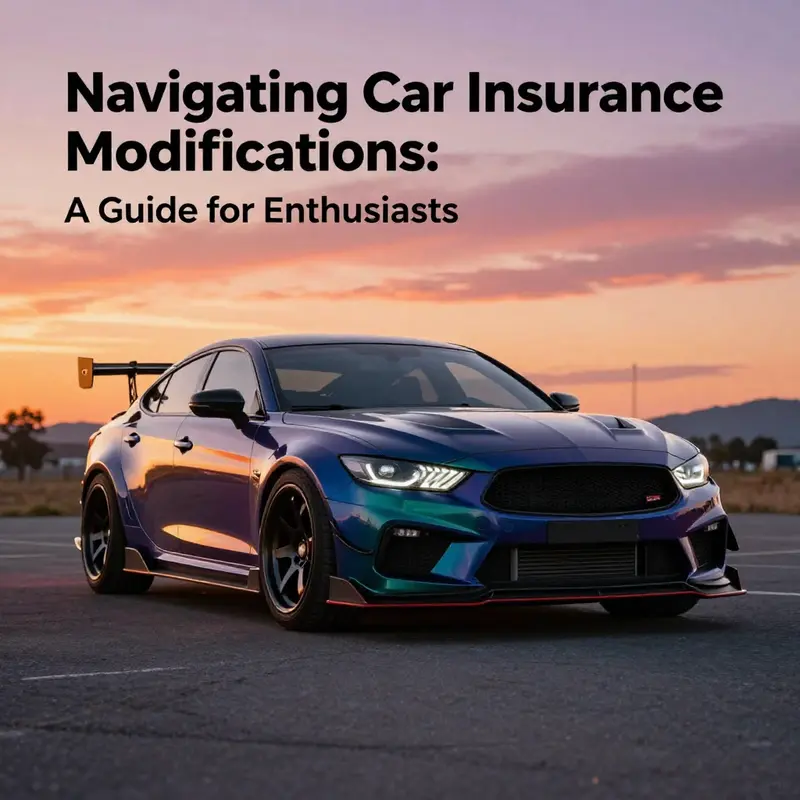
Modifications to a car often begin as a fascination with personal expression or a pursuit of enhanced performance. Yet in the world of insurance, exterior and aesthetic changes are more than skin deep. They ripple through the risk assessment that underpins every policy, shaping how insurers perceive the vehicle’s likelihood of theft, damage, or costlier repairs. The conversation about what counts as a modification cannot be reduced to style alone. It sits at the intersection of legality, safety, and actuarial risk. A driver who paints a car in a striking color or adds a sculpted body kit may be expressing individuality, but those choices can also alter the vehicle’s profile in the eyes of an underwriter. The result is not merely a question of taste but of how the changes influence repair costs, accident dynamics, and even exposure to regulatory scrutiny. In this sense, exterior and aesthetic modifications demand careful, informed dialogue between the insured and the insurer to ensure coverage remains reliable and priced fairly.\n\nTo understand the practical implications, it helps to walk through a spectrum of modifications—from the smallest cosmetic tweaks to more conspicuous alterations—and explore how each can shift risk, premium, and claim eligibility. Even when changes are legal and visually permissible, they may prompt a policy endorsement, a revision to coverage limits, or a different set of exclusions. The core issue is transparency: informing your insurer before you make a change, preserving documentation, and revisiting the terms of your policy so that the coverage you expect remains intact when you need it most. The principle is straightforward: alterations that increase risk require corresponding adjustments to protection. When you align your modifications with this principle, you keep your financial protections aligned with your automotive reality.\n\nMinor cosmetic alterations often sit at the edge of what is considered risky and what is considered routine maintenance. A color change, for instance, raises questions about visibility and identification, but it is typically permissible under many policies if done within legal boundaries. Insurers commonly allow a repaint that introduces up to three different colors and affects no more than a certain portion of the vehicle’s surface—often capped at around thirty percent. The rationale is that color alone does not necessarily alter structural integrity or safety performance, but it can influence factors like patrol visibility or accident reporting. What matters is that the change remains compliant with local vehicle laws and does not mimic the markings of emergency services. In the same vein, vinyl wraps or films fall into a related category. Wraps are frequently considered cosmetic if they cover no more than about thirty percent of the surface. They can be beneficial for protection against minor abrasions or sun fade, yet they still factor into the insurer’s risk calculus because they alter the vehicle’s exterior profile and, potentially, its repair cost if damage occurs.\n\nEven when cosmetic modifications stay within these commonly accepted thresholds, they do not exist in a vacuum. Larger wheels, deeper dives into styling with high-arch body kits, or aggressive spoilers can subtly or significantly alter a vehicle’s handling characteristics, aerodynamics, and the likelihood of curb damage or collision forces. A set of oversized wheels might look striking, but they can influence acceleration, braking distances, and ride quality—factors insurers scrutinize when projecting the cost of future claims. A dramatic body kit can change crash dynamics by altering bumper geometry or crumple zones, possibly affecting how the car behaves in a collision. Insurers don’t automatically classify these changes as disqualifying; rather, they re-evaluate risk and may adjust premiums, visibility, or coverage terms to reflect the updated risk profile. This is precisely why proactive communication matters: even seemingly minor aesthetic adjustments can trigger a policy review if they meaningfully shift risk.\n\nA practical rule of thumb is to treat exterior modifications as a dialogue with your insurer rather than a unilateral decision. Before you buy or install any modification that changes the vehicle’s exterior appearance or its dynamic behavior, reach out to your insurer to discuss the intended change. A straightforward conversation can prevent surprises when a claim arises from a crash or vandalism linked to the modification. In many cases, a simple policy endorsement—a formal amendment to reflect the new configuration—will suffice. This endorsement documents the modification, the updated value of the vehicle, and any revised premiums or deductibles. Failing to secure this endorsement can lead to friction at claims time, including claim denial or disputes over whether the vehicle was covered for the conditions present at the time of loss. It is a risk in reverse: the absence of disclosure can undermine the very protection the policy is meant to provide.\n\nThe importance of documentation cannot be overstated. Insurers often request evidence of what was changed, when, and to what extent. Photographs from multiple angles, receipts for parts, and professional installation records all contribute to a clear, auditable trail. If you wrap a car or install a new wheel and tire package, keep the project’s documentation together with your policy details. The aim is to make the modification’s scope transparent so the insurer can price risk accurately and adjust the policy terms accordingly. Documentation also helps with future resale value, another factor that sometimes interests both buyers and insurers. While the cosmetic appeal of exterior changes can be compelling, the financial implications require careful consideration of how such changes are perceived by risk assessors who quantify your policy’s coverage and cost.\n\nAnother layer of complexity arises when decorative or performance-oriented exterior changes interact with local regulations. Certain modifications may be restricted or prohibited by law in some jurisdictions. For example, some districts limit the use of certain lighting configurations or prohibit tinted windows beyond a defined percentage. These legal constraints intersect with insurance because if a modification renders a vehicle noncompliant with road rules, it can complicate both driving legality and claim eligibility. The best practice is to verify that any exterior modification conforms to local traffic laws before installation and to confirm with your insurer that the change complies with policy terms. This triple-check approach—legal compliance, insurer notification, and documentation—reduces the risk of claim complexities later on.\n\nMajor modifications—those that touch the engine, chassis, or drivetrain—represent a distinct category that almost always requires formal registration with the relevant vehicle authority before they are considered roadworthy. In many places, a drastic alteration in power output or structural components triggers an updated vehicle classification, which in turn can influence insurance classification and premium calculations. In such cases, the DMV or equivalent agency typically requires proof of the modification’s legality, safety certification, and sometimes a new vehicle identification number or registration status. From an insurer’s point of view, major changes broaden the spectrum of risk factors they must estimate: performance potential, repair costs, and even the probability of loss severity. When a vehicle undergoes a significant engine upgrade or a substantial chassis modification, expect to engage in a broader underwriting discussion and to anticipate premium adjustments. The overarching principle remains constant: when the modification changes how the vehicle behaves or how much it costs to repair, coverage terms and pricing must reflect that new reality.\n\nGiven these dynamics, insured drivers benefit from adopting a proactive posture. First, confirm the modification’s legality with your local authority and confirm that the vehicle remains road-legal after the change. Second, inform your insurer promptly and in writing about what was changed, the scope of the modification, and the intended usage of the vehicle. Third, request a formal policy review or endorsement to reflect the updated configuration. Fourth, retain comprehensive records—receipts, installation dates, photos, serial numbers, and any professional assessments. These steps may seem procedural, but they serve a practical purpose: they preserve the policy’s integrity and ensure your protections align with the car you drive.\n\nFor readers seeking a concise summary of how to navigate this terrain, the core message is clear. Exterior and aesthetic modifications can affect insurance in nuanced ways, depending on how they alter risk. The safer approach is to treat changes as triggers for transparent communication and formal documentation rather than as silent, one-off updates. If a modification is within the bounds of legality and functionality, and if your insurer is kept in the loop with a precise account of what was changed, the odds of a smooth claims experience improve significantly. Conversely, unreported changes, even those that seem minor, open the door to claim disputes and the possibility that coverage does not apply in the event of loss. This is not an alarmist warning; it is a practical framework built on transparency, legality, and collaboration between car owners and their insurers.\n\nTo deepen your understanding of the landscape, consider exploring additional resources that discuss how policy terms adapt to modifications and how to talk with insurers about coverage limits, deductibles, and endorsements. For more on the specific question of which modifications affect coverage, you can refer to the article that outlines common scenarios and insurer practices, including the potential consequences of failing to disclose changes. What Modifications Affect Car Insurance.\n\nIn sum, exterior and aesthetic modifications are not inherently disqualifying from insurance, but they are not free of risk either. The way you manage these changes—through legality checks, timely disclosure, proper documentation, and a formal endorsement when needed—determines whether your policy remains robust and your claims process remains straightforward. This approach respects both the insurer’s obligation to assess risk accurately and the policyholder’s right to tailor a vehicle to personal preferences without undermining protection. The goal is to harmonize aesthetic expression with financial security, ensuring that the car you drive remains a source of pride rather than a source of unforeseen costs.\n\nExternal resource: For additional guidance on how modifications interact with regulatory requirements and insurance practices, see the California DMV’s Vehicle Modifications Handbook, which provides authoritative context on legal and registration considerations that insurers often reference when evaluating modifications. https://www.dmv.ca.gov/portal/dmv/detail/pubs/handbooks/ownersmanual/vehiclemodifications
Inside Modifications: How Interior Upgrades and Safety Features Shape Car Insurance
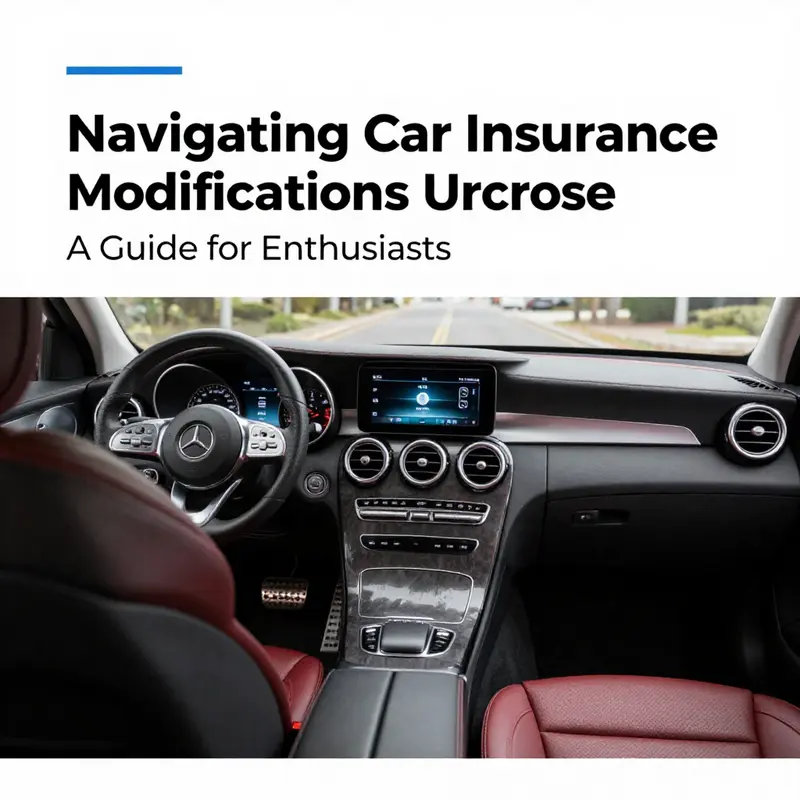
When people think about car insurance, they often picture performance exhausts or flashy body kits. Yet interior upgrades and safety-focused alterations can be just as consequential for how a policy is priced and what it will cover. The chapter you’re reading now moves beyond the perceived spectacle of mods and into the steady, practical mathematics of risk. It explains why insurers treat interior changes and safety improvements differently, how those decisions ripple into premiums and claim decisions, and what owners should do to protect both their investment and their coverage. The through line is clear: modifications are not a single category. They are a spectrum that shifts the risk profile in ways that can be subtle, tangible, or, in some cases, decisive when a claim is filed or a policy is renewed. To understand where interior and safety modifications fit, it helps to start from the core idea that insurance is a risk-sharing contract built on expected loss. Any change that increases the odds of a loss, or the cost of replacing or repairing a car after a loss, can alter that contract. Interior upgrades—whether they are purely aesthetic or designed to improve comfort and usability—often do not reduce risk in the insurer’s eyes. In many cases, they may even raise it. A premium stereo, custom upholstery, or performance seating raises the car’s value and creates incentives for theft or vandalism. From this perspective, interior modifications function as an incentive for the insurer to recalibrate the risk, and that recalibration typically lands in one of two places: a higher premium, or a requirement for additional protections that mitigate the risk. It is essential to consider that the insurer’s assessment is not a judgment about taste or comfort. It is a calculation about the probability and cost of a future claim. If a change makes the vehicle more valuable, more attractive to thieves, or more complex to repair, the math shifts. What might feel like a personal upgrade can translate into a financial exposure for the insurer—and for the policyholder who carries the premium. That is the first practical truth: interior modifications often increase the vehicle’s value and its attractiveness for theft or opportunistic damage. The second practical truth concerns safety-focused modifications. These alterations are a different story altogether. When a modification improves the vehicle’s ability to avoid or mitigate an accident—think advanced driver-assistance systems (ADAS), upgraded braking systems, or high-quality tires—the risk of a crash, or the severity of a crash, can decrease. In many markets, insurers recognize these tangible risk reductions with discounts or more favorable terms. The logic is straightforward: safer cars are less likely to file costly claims, and when a claim does occur, the loss may be less severe. The challenge for policyholders is to separate the wheat from the chaff. An ADAS feature might be genuine and effective if it is properly integrated, installed by a qualified technician, and compatible with the car’s electrical architecture. A counterfeit or improperly installed gadget, even if marketed as a safety upgrade, can introduce new failure modes that complicate repairs or even create new safety risks. The model of risk is not purely about the feature itself but about the reliability of the installation, the permanence of the modification, and the ongoing integrity of the vehicle’s systems. The distinction between interior and safety modifications is not always sharp. A single change can straddle both domains. Consider an upgraded steering wheel and pedals kit installed for performance reasons on a car that also includes a modern, factory-style collision warning system. If the kit is well-integrated and certified, it might be neutral or even positive for safety perception. If it disrupts sensor readings or conflicts with the car’s existing safety suite, it could become a liability from the insurer’s point of view. The central message for drivers is the importance of transparency and preparation. Do not assume that a modification is automatically insured or automatically covered under standard terms. The only reliable way to preserve coverage and obtain any potential discounts is to have an open, documented dialogue with the insurer. Document every interior upgrade, from the type and model of the audio system to the exact materials used in upholstery. Keep purchase receipts, installation invoices, and the credentials of the technician who performed the work. When safety features are added, collect product specifications, installation records, and, if possible, a certificate of installation from a qualified installer. These documents serve as proof that the modification was performed correctly and that it meets any applicable safety and regulatory standards. It is also important to understand that not all insurance policies automatically recognize every component or brand of a modification. The model and the brand of the modification matter. Some insurers have preferred lists or endorsement options that make it easier to qualify for discounts or for broad coverage of a modification, while others require a more tailored assessment. In some cases, a modification that seems small in scale—like a set of premium speakers—may entail a disproportionate premium impact if it is paired with other risk factors, such as a car that already has high mileage or a history of accidents. The heart of the matter for interior upgrades is value versus risk. If the modification increases the car’s resale value significantly, the insurer may adjust the agreed value for comprehensive coverage or adjust premiums to reflect the higher replacement cost. On the other hand, if an interior upgrade is seen as reducing the chance of theft—say, a hidden immobilizer or a discreet but effective alarm system—that can tilt the balance toward a favorable pricing outcome, provided the device is properly installed and maintained. The same logic holds for safety improvements. A well-integrated ADAS suite, including automatic emergency braking and lane-keeping assist, can be a lever for savings because it directly reduces the likelihood or severity of a collision. When such features are present, insurers may offer discounts or refrain from applying large surcharges that would otherwise accompany a modified car. Yet not all safety enhancements are equally valued. A feature that is experimental, unproven, or incompatible with the vehicle’s existing networks can create maintenance headaches and insurance concerns. Insurers may require documentation that the feature has been tested and certified for the vehicle in question, and they may insist on an installation performed by a qualified technician. The practical upshot for owners is that the path to favorable terms rests on documentation, compliance, and ongoing maintenance. Interior upgrades should be accompanied by clear evidence that the work was done professionally and that the finished product does not interfere with the normal operation of the vehicle’s safety systems. Safety upgrades should be supported by installation records and, ideally, by warranty or certification documents that verify the reliability and safety of the modification. To illustrate how these dynamics play out in real life, imagine a driver who adds a high-end audio system and a modest set of sport seats. The interior changes raise the car’s value and attractiveness to thieves, so the insurer may request a stronger anti-theft device or a modest premium increase to compensate for the elevated risk. If the same driver also installs automatic emergency braking and a modern tire package with enhanced grip, the insurer could view the combination as reducing overall risk. The outcome will depend on the specifics: the make and model of the car, the precise equipment installed, the quality of installation, and the vehicle’s existing safety features. A crucial practical point is to avoid any modification that could void warranties or trigger warranty-voiding clauses that touch the insurance arrangement. If an upgrade is not properly installed or certified, or if it creates a new electrical draw that interferes with the vehicle’s core systems, it can lead to coverage complications. In some jurisdictions, improperly installed safety devices can even void a portion of the coverage, particularly if a claim involves the modified subsystem. A related consideration concerns ownership structure. If a car is financed or leased, the terms of the agreement often require disclosure of any modifications and may impose restrictions or require the lender’s consent. Leased vehicles, in particular, can be sensitive to modifications because reversion to factory condition is frequently a condition of the lease’s end. Financial institutions and leasing companies may insist that modifications be documented, approved, or removed at the end of the term. Failure to obtain proper approvals can complicate a claim or affect the vehicle’s resale value. The practical advice for drivers is simple: plan ahead and communicate. If you intend to install interior upgrades or safety devices, contact your insurer before you buy the equipment or begin installation. Ask whether the modification will be covered, whether it qualifies for a discount, and whether you need to sign an endorsement or provide additional documentation. The goal is not to deter owners from improving their cars, but to ensure that those improvements do not catch the policy by surprise. It is equally important to maintain ongoing documentation after installation. Keep receipts, warranty cards, serial numbers, and photographs of the installed components. Maintain service records for any safety-related devices, including calibration data for sensors, software update histories, and maintenance intervals. Insurance is more likely to respond positively when a modification is clearly traceable and well maintained. In addition, consider the broader policy implications. The internal and external risk landscape includes not only the car but also the broader ecosystem, such as theft trends, repair costs, and the reliability of aftermarket components. A modification that reduces the risk of theft or that lowers the expected repair cost can, over time, influence the cost of coverage in a way that benefits the policyholder. Conversely, a modification that increases repair costs or introduces non-standard parts that complicate maintenance can lead to premium increases or, in rare cases, a policy cancellation if the insurer finds the risk unacceptable. It is therefore prudent to approach modifications as a joint project with the insurer rather than a solo venture. At every step, ask for written confirmation of how the modification will be treated under the policy. If a discount is offered, request the precise terms and the steps needed to maintain eligibility, including any required inspections or periodic proof of functionality. If a claim ever arises, provide the insurer with a complete, organized file of all documentation to support the modification’s legitimacy and safety. The conversation around interior and safety modifications also touches on the broader landscape of policy language. Some policies have specific clauses that spell out how modifications are treated, what constitutes an endorsement, and what kind of proof is required to claim coverage for a modified component. Reading these clauses carefully helps prevent expensive surprises after an loss event. It also helps set expectations about what remains insurable and what might fall outside standard coverage. For readers who want to explore how modifications intersect with insurance more deeply, a practical resource is a guide that discusses which modifications affect car insurance and how. You can visit a concise, accessible overview here: what modifications affect car insurance. This guide emphasizes transparency and alignment with insurer guidelines as the central strategy for safe and affordable modification journeys. Of course, every policy is different, and language varies by country, state, or region. The overarching principle, however, remains consistent: when you modify a vehicle, you are modifying its risk profile. The only reliable way to translate courage and curiosity into cost-effective protection is to engage with your insurer openly, supply complete documentation, and maintain your vehicle in a way that supports both performance and safety. If you keep those habits, interior upgrades and safety improvements can coexist with fair pricing and reliable coverage. The final word, then, is not about avoiding modifications but about handling them with care. Treat the process as a collaboration with your insurer, not a unilateral act of customization. Your diligence in documenting, certifying, and communicating will shape the insurance outcomes you experience. In the long run, you gain more than a better-tuned or safer car; you gain a policy that mirrors the reality of your vehicle and your ownership. For official guidance, see the Motor Insurers’ Bureau and their safety and coverage resources at https://www.mib.org.uk/.
Final thoughts
In conclusion, modifying your vehicle can elevate its performance, aesthetics, and appeal. However, it is vital to understand how these changes interact with your insurance policy. By being proactive about disclosing modifications to your insurer, you can safeguard your investments and ensure proper coverage. Remember, every modification carries potential implications; thus, staying informed will help you maintain both the enjoyment of your car and peace of mind.