
Car modification is not merely a hobby; it represents a transformation where creativity meets technical prowess. For many enthusiasts in India, personalizing vehicles brings immense joy and potential, but it also requires a solid foundation in automotive mechanics, skilled practical application, and adherence to legal standards. This comprehensive guide delves into vital chapters that will help hobbyist car modifiers, professional tuners, classic car restorers, and global fans navigate the intricacies of car modification. From foundational knowledge and learning paths to practical skills, legal considerations, and networking opportunities, each section is meticulously crafted to bolster your understanding and ability to modify cars in India.
Build the Basics: The Essential Mechanical and Legal Foundation for Modding Cars in India
Core Knowledge to Begin
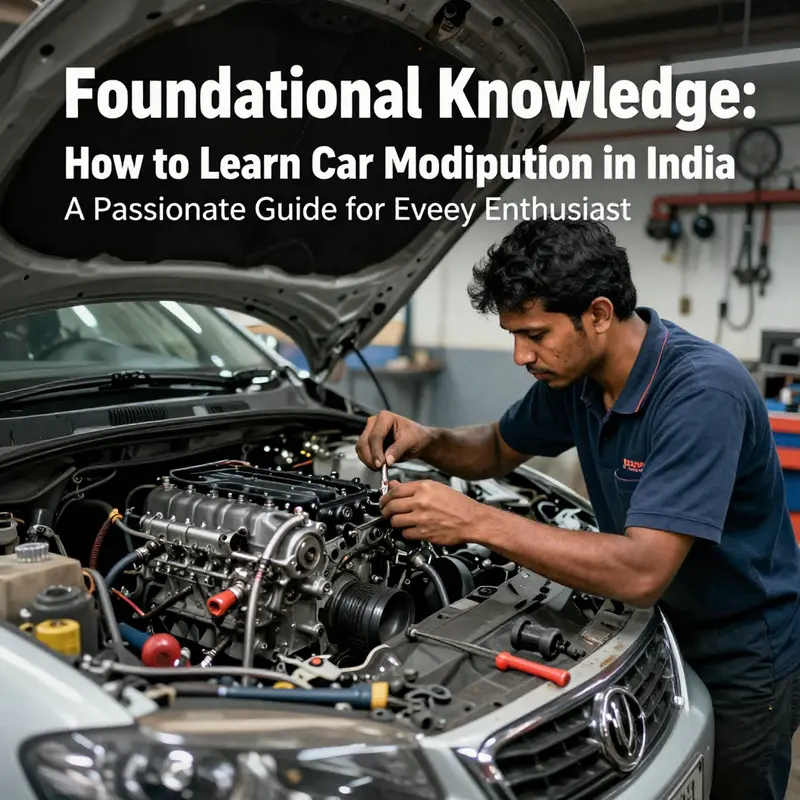
Learning car modification in India starts with two inseparable pillars: solid mechanical understanding and a clear grasp of the legal boundaries. Both inform every decision you make, from selecting parts to welding brackets or tuning an engine. Treat the car as a system where changes ripple through other systems. A new exhaust affects backpressure and sound. A stiffer suspension alters ride height and tyre wear. An added amplifier burdens the electrical system. When you learn how systems interact, you reduce risk and choose modifications that achieve desired results while keeping the vehicle roadworthy.
Begin by tracing the path of power through the car. Know what the engine does, how the transmission transfers torque, and how gear ratios alter acceleration and cruising behaviour. Study suspension geometry and damping: understand camber, caster, toe, spring rates, and how they affect handling and tyre contact patch. Learn braking fundamentals: force multiplication, heat dissipation, pad composition, and how unsuited rotors or pads can increase stopping distance rather than reduce it. Alongside mechanical systems, make electrical literacy a priority. Learn basic circuit diagrams, voltage drop, fusing, and grounding. Modern vehicles use complex electronics. Simple mistakes, like poor grounding or undersized wires, can cause fires or damage electronic control units.
Use a blend of learning resources. Textbooks and repair manuals provide reliable technical detail. Factory service manuals and model-specific guides explain torque specs, clearances, and wiring routes. Online video demonstrations show step-by-step procedures and tool use. Forums and community threads reveal common local problems and workarounds. Local vocational centers and short courses add structure and supervised practice. Finally, nothing replaces hands-on work: practice on donor parts, old cars, or scrap components before touching your main vehicle.
Practical skills develop in stages. Start with cosmetic and reversible changes. Fit new wheel trims, apply vinyl wraps, or change air filters and spark plugs. These lower-risk tasks teach bolt patterns, fastener types, torque patterns, and how trim removal affects airbags or sensors. As confidence grows, move to intermediate projects: brake pad swaps, caliper servicing, basic suspension bush replacement, and simple wiring for auxiliary lights. Only after mastering these should you consider advanced tasks like turbocharging, ECU changes, engine swaps, or chassis alterations. Each advanced change requires precise measurements, correct parts, and sometimes certification or RTO clearance.
Learning to use tools safely is essential. Invest time in learning jigs, measuring tools, welding basics, and paint preparation. Learn proper welding techniques and the importance of clean surfaces, correct filler metal, and controlled heat. Poor welding near structural members can compromise crash safety. Learn to prepare surfaces and use the right primer and paint for durability. Practice cutting and grinding on scrap metal. Familiarity with torque wrenches, thread lockers, and anti-seize compounds reduces mistakes.
Safety rules should be habits, not afterthoughts. Always use personal protective equipment when cutting, grinding, or painting. Use jack stands correctly; never rely solely on a hydraulic jack. Secure batteries when working on electrical systems to avoid shorts. When testing modifications on public roads, choose safe environments and avoid sudden, aggressive driving. A responsible approach keeps you and others safe and prevents expensive repairs.
Legal awareness in India must be integral. The Motor Vehicles Act and RTO rules regulate modifications tightly. Before you alter chassis, engine capacity, or body colour, check if RTO approval is required. Changes that affect vehicle identification, lights, exhaust noise, or safety equipment are likely to need prior clearance. Some modifications commonly done without thought are illegal, such as loud exhaust systems or retrofitted high-intensity lighting. Always confirm what requires an alteration certificate and what will trigger a fitness test failure. When in doubt, consult the local RTO or an experienced compliance consultant. Legal compliance avoids penalties and ensures resale value remains positive.
Join the community to shorten your learning curve. Local car clubs, meets, and expos expose you to different builds and practical advice. Peer feedback helps you spot poor ideas early. Network with workshop owners and mechanics who specialise in custom work. An apprenticeship or short-term placement in a reputable shop is one of the fastest ways to gain practical knowledge. Working under someone who understands both engineering and legal compliance teaches you how to balance creativity with safety.
Plan projects with documentation. Keep a build log that lists parts, part numbers, torque values, wire gauges, and photos of installations. This documentation proves useful for troubleshooting and for RTO inspections or insurance discussions. When you modify parts that affect insurance, declare them. Some changes increase premiums, while others can void coverage if undeclared. Clear records make conversations with insurers and future owners straightforward.
Budget and parts selection matter. Choose parts designed for your vehicle and use case. Cheap components often fail prematurely or cause collateral damage. Consider the total cost of a modification, including installation, testing, alignment, and potential certification. Prioritise quality in safety-related components like brakes, suspension, seat mounts, and structural welds.
Finally, adopt a growth mindset. Car modification is a craft balanced between art and engineering. Mistakes will happen. Learn from each one and iterate. Test in controlled environments, adjust based on data, and never ignore unusual noises or warning lights. Over time, with consistent study, hands-on practice, and legal compliance, you will be able to plan and execute modifications that improve performance, look, and value while keeping the car safe and legal.
For a practical roadmap and community tips tailored to the Indian context, read this guide on how to learn car modification. For details on legal requirements and official guidelines, consult the Ministry of Road Transport and Highways website: https://morth.nic.in
Roadmaps to Custom Cars: Learning Car Modification in India
In India, the art and science of car modification sits at the intersection of curiosity, skill, and a growing appetite for personalization. It is not enough to want a louder exhaust or a flashier wrap; the journey demands a disciplined approach that builds from first principles to practical mastery while staying firmly within the bounds of safety and the law. The path unfolds best when you see it as a continuum rather than a collection of isolated projects. Start with a clear understanding that true modification is about enhancing how a car performs, how it looks, and how reliably it can be driven on Indian roads, with full respect for the regulations that govern every alteration. This mindset helps keep ambition anchored in reality, enabling steady progress rather than risky experiments that may end badly on the roadside or in the inspection bay of the RTO.
Foundational knowledge is the compass you carry from day one. A modern car is a system of interdependent parts where horsepower and torque interact with suspension, brakes, and ride quality. You should understand what each component does, not just what it costs or how it looks when finished. The basics include the engine and transmission, how power is delivered to the wheels, how the suspension manages grip and stability, and how braking systems convert momentum into control. While this might seem abstract, it becomes practical once you connect theory to the street. You will learn how a change in one area, such as tire width or spring rate, affects handling, acceleration, and ride comfort. Pair this mechanical literacy with a working knowledge of electrical systems. Today, even simple upgrades—like improved lighting, audio integration, or digital gauges—touch the car’s electronic architecture. Understanding wiring diagrams, fusing, and signal routing helps you avoid common faults that plague inexperienced projects and keeps your modifications reliable over time. In many respects, the learning curve resembles a staircase: you climb with small, deliberate steps that compound into substantial capability over months and years.
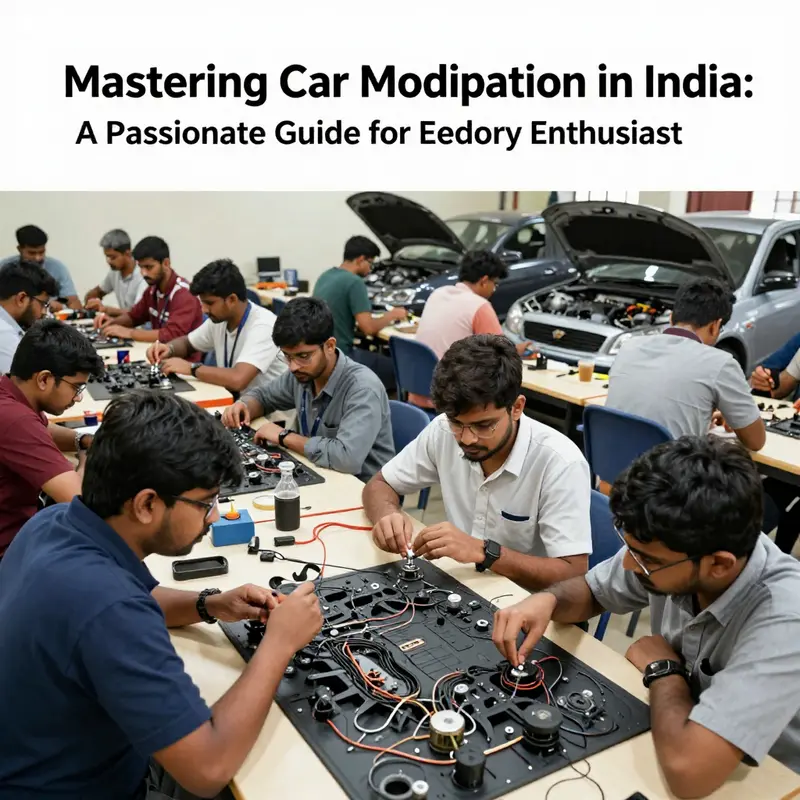
With the foundation in place, you begin to fashion a learning path that suits your budget, time, and ambitions. Formal education and vocational training offer a structured frame, from diploma programs in automobile engineering to short certificates that cover hands-on workshops. In India, these routes vary in depth and emphasis, but the principle remains the same: you gain tested techniques under supervision, then translate them into personal projects. Online platforms broaden access and enable you to sample topics before committing to a course. You can find tutorials that range from basic cosmetic mods to more ambitious electrical and mechanical tasks. Communities on forums and video channels in India act as mentors and sounding boards, helping you evaluate ideas, spot safety pitfalls, and share practical tips from folks who have walked the path before you. The most effective route often blends online learning with in-person practice, allowing you to verify what you read with what you can do hands-on. Apprenticeships at reputable workshops also remain invaluable. They give you real-world context, a mentor’s guidance, and a structured environment to develop discipline, safety habits, and attention to detail that theory alone rarely imparts.
Practical skill development is the core of any modification journey. Begin with cosmetic modifications that refine aesthetics without compromising safety or legality: wheel options within approved specifications, tasteful body wraps or vinyl accents, and upgraded lighting that stays within regulatory standards. These projects teach you material handling, fitment, and the importance of measurement accuracy, which prevents misalignment and rattles that can plague poorly executed work. As confidence grows, you can graduate to more complex tasks such as welding, cutting, grinding, and basic painting. These activities demand meticulous safety discipline, including proper PPE, ventilation, and knowledge of material properties. Practice on scrap parts or donor vehicles before touching your own car. The aim is a balance between aesthetics and function, ensuring changes do not degrade structural integrity, electrical safety, or roadworthiness. This progression mirrors the ethos of good craft: precision, patience, and respect for the vehicle’s integrity above personal flair.
Legal and safety considerations anchor your learning in reality. The Motor Vehicles Act and the rules issued by the Regional Transport Office regulate many aspects of modification—from wheel size and type to exhaust noise, chassis alterations, and lighting configurations. Even seemingly minor changes can trigger compliance requirements or roadworthiness checks if they affect safety, identification, or emissions. A critical step is to obtain the necessary approvals when required. For substantial modifications—such as body alterations or engine changes—you may need an alteration certificate from the RTO. The road test or fitness assessment is not optional; it is the moment when the state validates that your modifications haven’t compromised braking, steering, or pedestrian safety. Failing this test is a red flag that your project plan needs revision. Therefore, embedding regulatory checks into your workflow is essential from the start. It reduces rework, saves time, and keeps you on the right side of the law, letting you enjoy your car without the anxiety of unexpected penalties or cancellations at the border of legality.
Within this framework, the social fabric around modification—the networks and communities—becomes a powerful catalyst. Local clubs, car meets, and expos offer a living library: real cars, real people, and honest feedback. Events such as large-scale auto shows provide exposure to the latest trends, tools, and approaches while preserving a safe, educational environment. Networking is not mere social glue; it is a pragmatic way to learn about region-specific regulations, common pitfalls, and the best workshops in your city. Subscribing to reputable automotive publications and following established Indian automotive platforms helps you stay informed about evolving technologies and regulatory shifts. The blend of face-to-face mentorship, online guidance, and hands-on experience helps you translate ideas into practical skills, ensuring your learnings stay relevant as technology advances and the regulatory landscape shifts.
So how do you knit these threads into a coherent, actionable plan? Start by charting your current knowledge and setting a realistic, staged goal. Decide on a modest project that reflects your local road conditions, budget, and time. Build a timeline that couples theory study with a defined practice window each week. Track your progress by documenting what worked and what did not, and use each project as a stepping stone toward higher competence. Throughout, keep a running checklist of safety norms and regulatory requirements. Before you begin any major modification, consult the official guidance on wheel, exhaust, lighting, and body changes to ensure your plan complies with rules. When you feel ready to explore more structured content, you can refer to a comprehensive overview that lays out the learning path in a modular, practical way. This point of reference helps you see how your local steps fit into a broader framework while you stay grounded in India’s realities. For example, you might read about how a disciplined approach to learning—combining fundamentals, hands-on practice, and regulated process—translates into reliable, road-legal builds that reflect both personal taste and technical competence.
Importantly, your learning should come with a clear eye on future prospects. A well-taught foundation opens doors to responsible customization work in established studios, freelance projects, or private builds that emphasize safety and compliance. It also makes it easier to evaluate resale value, insurance implications, and long-term maintenance, since your modifications can be explained and justified with technical reasoning rather than guesswork. If you want to pursue this path in a methodical way, start by absorbing the basics, then step into practice, and finally bring the entire project through the regulatory gauntlet with due diligence. The result is a car that not only looks distinctive but performs reliably, handles predictably, and remains legally compliant—a combination that distinguishes thoughtful modding from reckless improvisation. The journey is iterative: you will refine your approach with each new project, gradually expanding your scope while maintaining the discipline that keeps you aligned with the road ahead. For ongoing guidance, stay connected with the community and keep your learning anchored in safe, lawful practice.
To close the loop, acknowledge that the best path blends theory, practice, and legal awareness. Your progress will be measurable in safer, more satisfying builds and in the confidence you gain as you navigate formal requirements with clarity. As you advance, you will increasingly translate ideas into repeatable workflows that yield consistent results—modifications that elevate performance, appearance, and reliability without compromising safety or legality. For further structured insights into the learning journey, you can explore the detailed pathways described in the resource how-to-learn-car-modification. And for official regulatory context that anchors your learning in India’s framework, refer to the guidance available at the country’s road transport authority portal: https://parivahan.gov.in.
From Fundamentals to Dashboard Mastery: A Practical Path to Car Modification in India
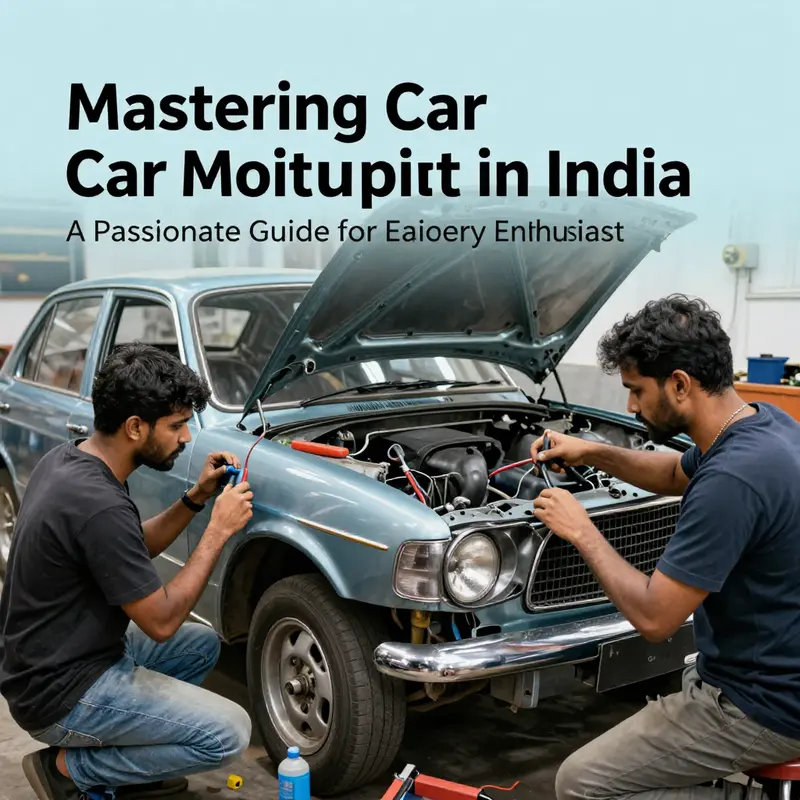
Car modification in India is not merely about making a car look different; it is a hands-on craft that marries technical understanding with careful adherence to local realities. This chapter offers a cohesive, practice-forward path that starts with solid foundational knowledge and gradually moves toward skillful, real-world execution. In a country where road conditions range from blazing highways to congested urban corridors and dusty byways, the value of a practical, safety-conscious approach cannot be overstated. The goal is to equip a learner with a sturdy mental model of how vehicles work, and then to translate that model into reliable, repeatable modifications. The journey begins with understanding the core mechanics of a vehicle—how horsepower and torque relate to acceleration, how suspension affects ride quality and handling, and how the transmission chain transfers power to the wheels. Pair this with a calm, methodical grasp of electrical systems, including the basics of circuits and vehicle electronics, and you have the toolkit to approach modifications with confidence rather than conjecture. In India, where the scale and variety of vehicles are vast, this foundational layer is not optional. It serves as the compass that keeps modifications aligned with safety, reliability, and performance goals, even as street conditions push a vehicle to its limits. As the landscape of learning expands beyond traditional classrooms, online resources and community knowledge become indispensable. Free courses, instructional videos, and forum discussions can demystify complex ideas and provide practical checklists. They also help learners recognize common pitfalls—like mismatched tolerances, heat buildup in exhaust areas, or misunderstood electrical taps—that can threaten safety or legality if ignored. For someone building a personal path, it helps to treat education as a continuum: start with the vehicle’s basics, experiment in low-stakes environments, and gradually take on more intricate tasks as confidence and competence grow. The next layer of learning blends theory with concrete practice. Here, learners encounter a spectrum of modification categories—cosmetic, performance, and electrical/electronic enhancements. Cosmetic work, such as adjusting wheel aesthetics, applying wraps, or installing lighting accents, offers an accessible sandbox for precision technique. It requires careful measurement, patient alignment, and attention to detail. Performance-oriented modifications demand a more disciplined approach. Upgrades may involve chassis balance, braking efficiency, and engine breathing—areas where improvements are tangible but come with increasing responsibility for safety and roadworthiness. Electrical and electronic work, including custom dashboards, infotainment integration, or sensor-based modifications, calls for an understanding of wiring, CAN bus interfaces, and proper isolation practices. In all cases, the imperative remains: practice safely, verify every step, and preserve the vehicle’s core integrity. A practical skill path naturally emphasizes hands-on training and local immersion. India has a growing ecosystem of workshops, garages, and community events where learners can observe, ask questions, and participate in live projects. Cities known for car culture often host meets and shows that fuse demonstrations with peer feedback, creating a living classroom outside the conventional setting. For those seeking structured credentials, a blend of formal automotive programs and shorter, targeted workshops can yield meaningful progress. Institutions at various levels now offer automotive-centric courses, while private training centers provide workshop-centered experiences. The emphasis remains practical: you learn by doing, under supervision, and with access to real parts, tools, and the constraints of working on actual vehicles. A key focus area that frequently emerges in Indian practice is dashboard modification. Dashboard work combines precision, aesthetics, and systems integration, offering a compelling demonstration of how deep practical skills translate into visible, high-impact outcomes. Achieving a polished dashboard requires meticulous measurement and fitting, from templates to caliper checks, ensuring that trim kits align with factory contours and that gaps remain uniform around every edge. The adhesive process must be executed with care to prevent air pockets, bubbling, or warping, a challenge amplified by the heat and humidity common in many Indian climates. Beyond the cosmetic, electrical integration matters. Tapping into a vehicle’s existing networks—whether to power digital gauges, add a custom display, or link new sensors—demands a cautious approach to avoid interfering with the CAN bus or factory electronics. The safety and reliability of the original electrical system must stay sacrosanct. Material handling is another critical skill. Dashboard components may involve ABS plastics, carbon fiber composites, or leather inserts, each with distinct machining and finishing requirements. Handling these materials well reduces the risk of cracks, warping, or misalignment over time. For enthusiasts pursuing dashboard work, the narrative often intertwines with industry trends and standards. A recent, in-depth analysis of dashboard modification standards and practices highlights how critical compatibility, installation practices, and material quality have become in shaping outcomes across models and generations. This context reinforces the value of learning with an eye toward future maintenance and serviceability, not just the immediate project. If you want a structured starting point, see the guide on how to learn car modification. how to learn car modification.
The practical path also hinges on tool proficiency and safety discipline. A basic toolkit—sockets, screwdrivers, heat guns, wire strippers—becomes a trusted set of companions as tasks escalate from cosmetic tweaks to more complex fabrications. Safety cannot be an afterthought. Always disconnect the battery before electrical work, wear protective gear, and follow fire safety practices when dealing with solvents or adhesives. The legal landscape in India adds another essential layer: modifications must comply with the rules laid out by the regional transport authorities, as well as safety and emissions standards. Even well-executed modifications can fall afoul of requirements if they affect braking performance, lighting, or structural integrity. Maintaining roadworthiness means planning alterations around these rules, and when in doubt, seeking appropriate approvals or alteration certificates from the RTO before committing to significant changes. The path to mastery also involves building a portfolio and engaging with a community. Documenting projects through photos and videos helps create a tangible record of skills developed and problems solved. Sharing progress on local forums or social channels invites feedback, mentorship, and opportunities for collaboration. Networking with fellow enthusiasts at exhibitions and meets can broaden exposure to different techniques and timing considerations, while also helping locate second-hand parts or budget-friendly materials. Over time, a learner who preserves a careful balance between ambition and prudence will accumulate a diverse set of projects—each a stepping stone toward greater capability and confidence. In this journey, the emphasis on ongoing learning remains crucial. Keeping pace with evolving standards, tools, and approaches requires active engagement with industry chatter, magazine features, and accessible online resources. The path is not about chasing trends headlong, but about cultivating a practical intuition: knowing what works, what doesn’t, and why. The aim is not only a better-looking car but a safer, more dependable one that reflects the owner’s preferences without compromising the vehicle’s fundamental integrity. For a broader perspective, consider this external resource that analyzes dashboard modification practices in depth, offering insights on standards and performance that can inform your hands-on work: Autocar India — Car dashboard modification complete analysis of standards, types, and industry performance. https://www.autocarindia.com/cars/car-dashboard-modification-complete-analysis-of-standards-types-and-industry-performance
Legal Regulations in Car Modification: Compliance Strategies for Enthusiasts in India
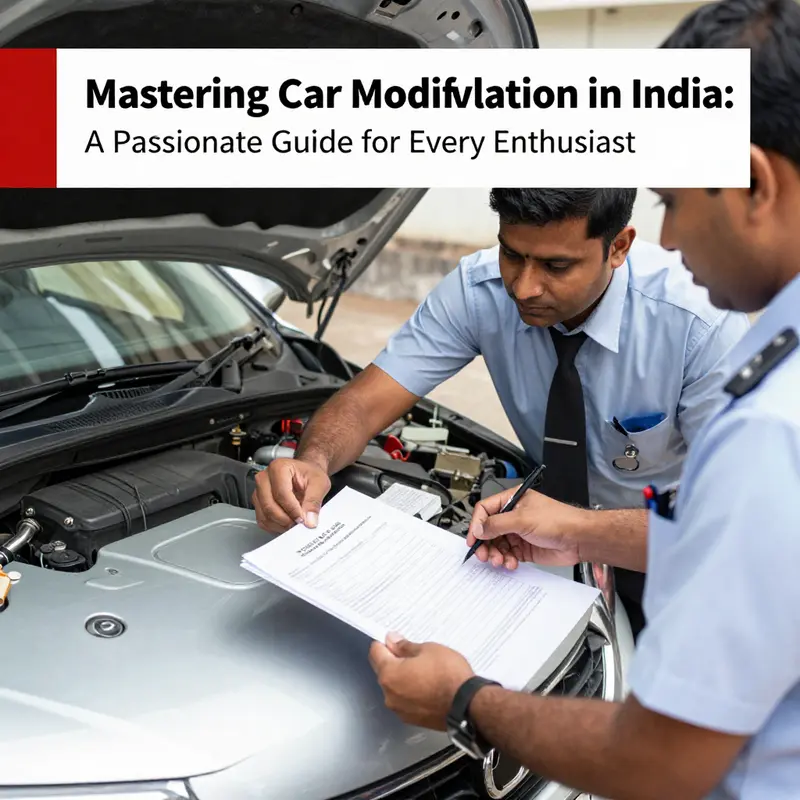
Car modification is a story that many Indian enthusiasts tell with passion and precision. It’s about turning a machine into a personal statement, but in India that statement must be drafted within a carefully defined legal framework. This is not a deterrent; it is a path that keeps drivers safe, others on the road secure, and the broader automotive culture sustainable. When you approach modification as a disciplined process—planning, documentation, and proactive compliance—the thrill of customization and the reliability of your vehicle reinforce each other rather than collide. The regulatory landscape is built to ensure that any change to a vehicle does not compromise safety, emissions, or roadworthiness. Understanding where the boundaries lie helps you push those boundaries responsibly, and it also shields you from fines, vehicle seizure, or insurance complications that can turn passion into a financial and legal burden.
At the core of the regulatory framework are the Motor Vehicles Act, 1988, and the Central Motor Vehicle Rules (CMVR), 1989, which together define how vehicles are designed, tested, and certified for road use. The Ministry of Road Transport and Highways (MoRTH) provides the overarching guidance, while industry standards issued by agencies like the Automotive Research Association of India (ARAI) inform what is considered approved and safe. In practice, this means some modifications are straightforward and broadly accepted, while others require formal approval, testing, or even a change in registration documents. The practical implication for enthusiasts is simple: before you invest time and money in a modification, you should verify that your plan aligns with these standards and, if necessary, secure the appropriate authorizations.
A useful rule of thumb is to distinguish between changes that enhance performance or aesthetics without altering fundamental design parameters, and those that alter core design elements such as power output, suspension geometry, or the vehicle’s chassis and emission systems. Cosmetic upgrades—like upgraded lighting, body decals, or wheel covers—often fall into a gray area that still requires careful consideration, especially for lighting and visibility. More impactful changes—such as increasing engine power beyond certified limits, altering the wheelbase, changing the chassis, modifying emissions controls, or altering the body significantly—almost always require explicit approvals. In this regulatory space, there is little room for informal or ad hoc experimentation. Compliance is not a buzzkill; it’s a safeguard that keeps you from legal trouble and from compromising safety on public roads.
The most practical pathway to compliant modification begins with deliberate planning. Before lifting a finger in the workshop, consult the official guidelines issued by MoRTH, and review the list of permitted alterations from ARAI. In many cases, using Original Equipment Manufacturer (OEM) parts or ARAI-approved aftermarket parts reduces risk and speeds up the approval process because these components are designed to meet established safety and emission standards. Engaging certified auto workshops that specialize in modifications is another cornerstone of compliance. These studios bring experience with the alteration process, help ensure electrical work is robust, and can advise on what documentation will be needed to satisfy the authorities.
Documentation is the quiet backbone of compliant modification. Keep meticulous records of every part purchased, including invoices and part numbers, technical specifications, and any testing or certification received. If an alteration certificate from the RTO (Regional Transport Office) is required for significant changes—such as changes to the body, engine, or suspension geometry—having these documents readily available can prevent delays and disputes during inspections. The importance of documentation cannot be overstated: it serves as tangible evidence that your vehicle remains safe, roadworthy, and compliant with the CMVR and the Motor Vehicles Act. It also helps when you renew your vehicle’s registration or when you need to demonstrate compliance to insurers, who increasingly scrutinize modifications.
Insurance is another critical thread in this tapestry. Many standard policies are written for vehicles in their original configuration. Modifications that alter performance, safety features, or structure can affect coverage, raise premiums, or even void terms if not disclosed. The prudent approach is to inform your insurer about every planned modification and seek an endorsement or rider that covers the updated specifications. This transparency protects you financially and reduces the risk that a claim may be denied because a modification wasn’t disclosed. This is not only about keeping policies intact; it’s also about aligning insurance risk assessment with the actual vehicle profile on the road.
The process of compliance is not purely theoretical. It unfolds in concrete steps, from the moment you conceive a change to after you complete the work. Start by mapping each modification against the CMVR to identify which elements require alteration certificates, testing, or approvals. If the plan involves a major change, proactively initiate the alteration process with the RTO to minimize friction later. For many enthusiasts, a practical compromise is to prioritize modifications that enhance safety and reliability—upgrades to braking systems, improved lighting for visibility, and engine tuning within certified limits—while delaying or avoiding changes that would trigger complex approvals unless they offer a compelling performance or safety benefit.
The social dimension of modification—clubs, meets, and exhibitions—can be a powerful ally in navigating the regulatory maze. Networking with experienced modifiers, attending workshops, and staying engaged with the community helps you learn from real-world cases where compliance either saved a project or where non-compliance resulted in challenges. Local clubs often share up-to-date interpretations of guidelines and can point you toward reputable workshops familiar with the approval process. Equally important is staying current with regulatory updates, as changes in CMVR or MoRTH guidelines can shift what is permissible and what requires documentation. In this sense, compliance becomes a moving target, one that benefits from a proactive, informed, and sustained effort.
To provide a concrete navigational aid, consider consulting resources that discuss the broader legal landscape of car modification in India. For a concise overview and practical guidance, readers may explore the dedicated piece on car-modification-legal-india. This linked guidance complements the formal statutes by translating them into actionable steps for enthusiasts, bridging the gap between curiosity and lawful execution. The combination of official documentation, professional workshop support, and community knowledge creates a robust framework for pursuing personalization without compromising safety or legality. As a final note, remember that legality is not a barrier to creativity but a doorway to sustainable innovation on Indian roads.
For those seeking authoritative legal context beyond practical guides, the Motor Vehicles Act, 1988, and CMVR are essential references that define the boundaries and responsibilities of vehicle owners. A direct study of the official act provides the foundational language that informs every modification decision. Keeping this in mind helps you approach customization with clarity, ensuring that your car reflects your vision while it remains a safe, compliant, and insurable asset on Indian highways.
External resource: Motor Vehicles Act, 1988 (official text) – https://www.morth.gov.in/sites/default/files/Motor%20Vehicles%20Act%2C%201988.pdf
The Social Engine of Skill: Networking, Regulation, and Continuous Learning for Modifying Cars in India
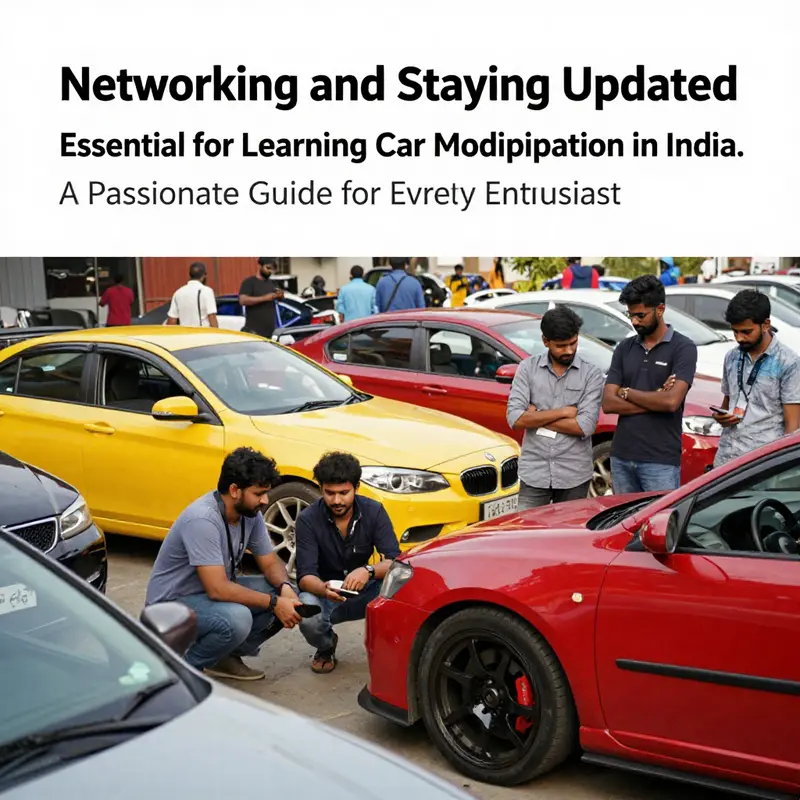
Learning to modify a car in India is rarely just a set of technical tricks. It is a living practice that grows through people, places, and up-to-the-minute knowledge about rules that govern the road. The best modifiers are as much students of a community as they are skilled craftspeople. They listen to what others have learned, observe what new tools and methods are capable of, and continually refine their approach in a way that keeps safety, legality, and personal vision in balance. In this way, networking and staying updated become not extras but core to the learning journey. The road from curiosity to competence winds through a network of mentors, peers, shops, and formal or informal gatherings that, taken together, shape a learner’s sensibility as surely as any textbook or online tutorial. A city’s car-modification scene quietly teaches what a manual cannot: how a technique looks in practice, how it behaves under varying conditions, and how to troubleshoot when a project diverges from the plan. This is especially vital in India, where the pace of technology, the variety of vehicle platforms, and the regulatory framework are all in constant motion. The learner who cultivates a robust network does more than pick up tips; they gain access to live feedback, to demonstrations that reveal the subtlety of alignment, weight distribution, or electrical integration, and to mentors who can translate a workshop notebook into a safe, road-legal reality.
A practical network starts with local engagements. Car clubs, informal weekend meets, and regional shows provide a tangible sense of what is possible and what remains beyond reach until the right combination of budget, skill, and permission aligns. Attending such events offers a rare opportunity to observe a spectrum of modifications from the tasteful to the bold, to hear the challenges creators faced, and to ask questions in real time. It is also where trust forms—between the learner and the workshop, between a modifier and a client, between peers who share a passion and a caution about safety. Networking thrives in these real places where conversations flow from problem-to-solution and back again, where the same dilemma might be solved with a different approach depending on the vehicle, the goal, or the local regulatory climate.
Beyond local clubs, an expansive online ecosystem supports continuous learning. Online forums that are popular in India offer a treasure trove of practical wisdom, troubleshooting threads, and project diaries. Peers share failures and breakthroughs alike, which helps newcomers avoid common missteps and accelerates refinement. This is complemented by professional networks such as LinkedIn, where industry discussions can reveal emerging technologies, new testing methods, and updated best practices. Attending virtual seminars or in-person talks by seasoned modifiers lets a learner observe how professionals frame questions, justify choices, and document modifications for credibility and safety. The key is not merely consuming information but engaging with it actively—posting questions, offering observations from one’s own experiments, and building a presence that invites mentorship and collaboration rather than mere spectatorship.
The regulatory dimension in India amplifies the need for an updated, engaged network. The Motor Vehicles Act and the Central Motor Vehicles Rules dictate what can be changed and how, and they evolve as new technologies and safety concerns arise. Understanding these rules is not a one-off task but a continuous practice. Regulations touch several levers: the permissible wheel size and type, the acceptability of exhaust systems, body and chassis alterations, and even lighting configurations. Keeping pace means following amendments, reading draft guidelines when they surface, and exchanging interpretations with others who have navigated similar changes. When a modification involves more than cosmetic work—such as changes to engine hardware, suspension geometry, or electrical architecture—the learner must track whether an alteration certificate is necessary, whether a fitness test is required, and how to prepare documentation that will pass scrutiny at the RTO. This is where a community becomes a safety net: comrades can share their experiences of approvals, the documents that helped, and the pitfalls to avoid, reducing the risk of costly delays or penalties.
To build a durable learning footprint, a learner should craft a blended strategy that weaves digital resources with hands-on experiences. The digital dimension includes curated learning paths, video demonstrations that explain both the why and the how, and Q&A threads that illuminate edge cases. It also means following credible automotive publications and blogs that translate complex regulatory updates into practical implications for modifications. A crucial habit is to verify information against local regulations and to seek out mentors who can interpret the law in the context of specific projects. The complementary hands-on thread is apprenticeship in a reputable workshop or a seasoned modification studio. There, beginners gain access to real vehicles, observe professional workflows, and participate in tasks under supervision. Progressive practice—starting with cosmetic work such as wheels, wraps, or lighting, then moving to more challenging tasks like welding, metal fabrication, or electrical integration—helps build competence while instilling discipline around safety protocols and test procedures. It is wise to begin with scrap parts or non-operational projects on a spare vehicle, allowing the learner to iterate without risking a primary car or compromising roadworthiness.
Throughout this journey, the learner should cultivate a studio vocabulary that bridges design intent with technical feasibility. This means learning how teams document their modifications, how they assess structural integrity after alterations, and how they plan safety checks before a vehicle returns to the road. It also means recognizing the difference between a modification that changes appearance and one that alters dynamics, handling, and reliability. When the time comes to test progress, the learner should be ready to present a clear, regulated plan to the RTO or to a chosen alteration center, including notes on how electrical work, welding, or structural changes were validated, and how the vehicle remains compliant with emission and safety standards. A disciplined, well-documented approach makes it easier to obtain approvals and reduces the likelihood of having a modification deemed unsafe or non-compliant.
To keep the momentum, learners should actively seek opportunities to contribute back to the community. Mentoring newcomers, sharing documented case studies, or presenting a workshop on a finished project can deepen understanding and widen one’s professional network. Public participation also reinforces accountability: it encourages careful planning, rigorous testing, and transparent communication with clients and regulatory bodies. In this sense, the learning network functions as a living archive—not only of techniques but of the evolving norms and expectations around car modification in India. When a learner internalizes this dynamic, every project becomes a collaboration with the broader ecosystem, rather than a solitary craft. For those who want a practical starting point, a concise roadmap to begin with is available in resources that lay out how to learn car modification, which can guide novices toward productive, compliant practice while connecting them to the right communities.
As you integrate this network into your routine, the next step is to align your personal goals with the opportunities available in your city or region. A learner who finds a balance between hands-on practice, regulatory literacy, and community engagement will not only enjoy the process but also ensure that their modifications withstand scrutiny and deliver the intended performance and aesthetics. This approach makes learning car modification in India a disciplined, social, and continually evolving pursuit. It is a pathway that respects the law, honors safety, and celebrates creativity, all while building a durable skill set that can adapt as technologies and regulations shift. For a focused, actionable pointer on starting that learning journey, see how to learn car modification. This resource can help you map your first projects, identify mentors, and begin building a supportive network that sustains growth over time.
External resource: How to Keep Your Automotive Design Skills Current
Final thoughts
The journey of learning car modification in India is multifaceted, involving both technical know-how and community engagement. By laying a strong foundation, pursuing formal education, developing practical skills, adhering to legal regulations, and actively networking with fellow enthusiasts, you empower yourself to navigate the dynamic world of car modification effectively. Embrace the passion for your vehicles, and let the road ahead fuel your creativity and expertise in all things automotive.