
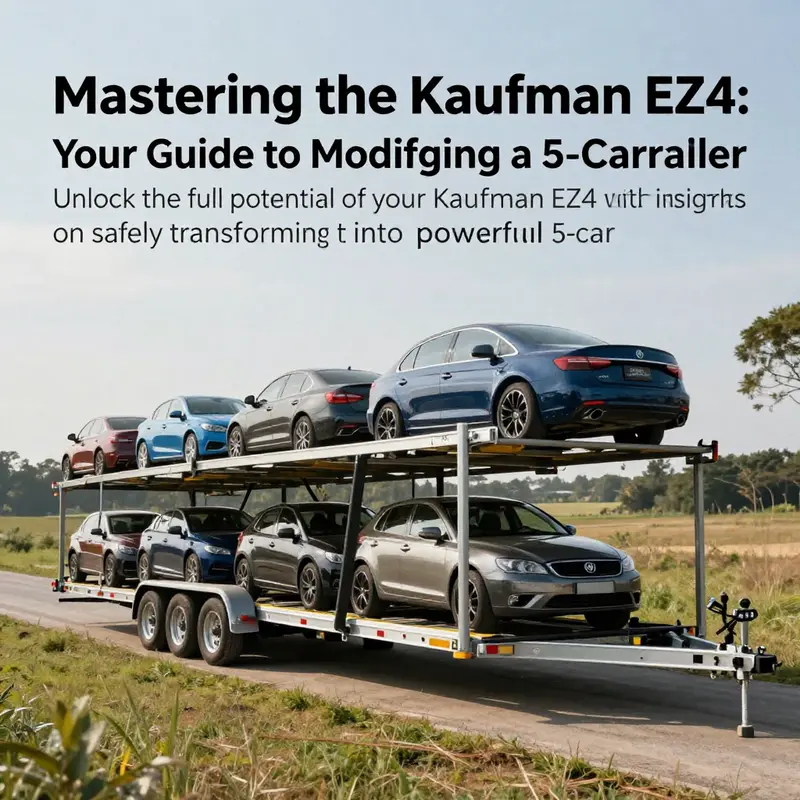
Transforming your Kaufman EZ4 into a 5-car trailer is not merely a task; it’s an ambitious journey that requires careful planning and expert execution. As passion drives many hobbyist car modifiers and professional tuners alike, understanding the intricacies of such a significant modification can unveil tremendous potential for your vehicle transport endeavors. Throughout this guide, we will delve into the essential components of the process, from legal considerations and structural reinforcements to upgrading the axle system, designing loading features, and ensuring your electrical setup meets safety standards. Each chapter offers a thorough exploration of these critical areas, empowering you to embark on this modification with confidence and clarity.
Reconfiguring a Four-Car Heavy-Duty Trailer for Five Cars: Weighing Purpose, Safety, and Legal Boundaries
When the need to move more vehicles meets the realities of a four-car heavy-duty trailer, the temptation to modify for a five-car load can be strong. The impulse is practical: fewer trips, higher efficiency, and a sense that a single investment can stretch further. Yet the decision to push a design beyond its intended capacity is not only a mechanical challenge; it is a test of safety, legality, and long-term viability. To approach this topic with honesty, one must begin with purpose. Why is a five-car capacity attractive in the first place? If the answer centers on reducing trips, increasing load efficiency, or better asset utilization, those goals are legitimate. If the motive shifts toward squeezing pennies by bypassing new equipment, the calculus changes entirely. The essential framework begins with clear intent, then moves through structural feasibility, safety margins, and the rigid terrain of regulatory compliance. This is not a guide to a quick, clever alteration; it is a sober examination of what it takes to responsibly consider moving beyond a four-car configuration toward five.
The four-car design is not merely a matter of counting spaces. It embodies a fixed frame size, axle placement that has been engineered to distribute weight in a precise pattern, and a weight distribution system calibrated for four vehicles. Those choices influence everything from deck stiffness to local bending moments, from tongue load to tire loading, and from the tractability of braking forces to the predictability of steering under dynamic conditions. To contemplate a five-car load is to confront how each of these interacting systems would be pushed beyond its tested envelope. The axle set and the suspension in particular are anchored to a target total mass and a strategic distribution across the trailer’s length. Substituting one more vehicle into that balance is not simply a matter of adding a space; it calls into question whether the frame can bear the altered bending stresses, whether the axles can sustain the increased vertical and braking loads, and whether the suspension can maintain tire contact and ride quality under higher mass and altered center of gravity.
From a practical standpoint, the factor that usually becomes the first wall is weight. Each additional vehicle adds not only its own weight but also a cascade of related effects: stronger braking demands, greater tire loads, and higher static and dynamic loads on the deck. The deck itself, designed to clasp five or more restraints for four vehicles, faces a risk of shifting moments when five are present. The risk of vehicle movement on the deck—whether during acceleration, braking, or cornering—rises with every incremental pound and inch of added mass. The restraint system, which keeps vehicles stable during transit, is optimized for a specific load vector. When that vector shifts, the risk of restraint failure or inadequate restraint increases. If the loading pattern is altered without a corresponding reinforcement in restraint strategy, there is a tangible danger that a load shift could destabilize the trailer, especially in emergency maneuvers or on uneven pavement.
Equally critical is the braking equation. A five-vehicle configuration demands more than a marginal increase in braking effort. The trailer’s braking system must be capable of stopping not just the trailer’s own weight but also the combined mass of five cars, which may exceed the original design’s tested limits. The consequences of braking shortfalls extend beyond tire wear; they directly affect stopping distances and crash risk. This is not an area to improvise. It requires a comprehensive engineering assessment of axle ratings, brake sizing, hydraulic or air-brake architecture, wiring for brake circuits, and an overall integration with the tow vehicle. In many jurisdictions, the legal standards for braking performance, wheel-end load, and overall weight distribution reflect these considerations. A modification that leaves the system underpowered or imbalanced can render a trailer non-compliant and unsafe for road use.
Another layer involves structural reinforcement. A true five-car layout would demand careful evaluation of the frame’s integrity under the heavier load, including checks for weld quality, cross-bracing, and potential fatigue points. The original frame geometry—the locations of support beams, the spacing of axles, and the deck thickness—may not accommodate a five-car payload without significant reinforcement. Welding procedures must meet stringent standards, and any added structural members must be designed to work in harmony with the existing configuration rather than to workaround its limitations. In practice, adding even modest reinforcements without proper design can create new stress concentrations, which, over time, may lead to cracks or unexpected failures. The outcome is not merely a mechanical nuisance but a serious safety hazard that could endanger drivers, other road users, and the cargo itself.
From a safety perspective, risk management demands more than addressing static capability. A five-car load can alter dynamics in ways that are difficult to predict without extensive testing. Handling characteristics—especially under wind, crosswinds, and uneven road surfaces—could degrade noticeably. Steering response, trailer yaw stability, and coupling integrity may all shift as the center of gravity moves and the mass increases. The risk of rollover, trailer sway, or wheel lift during lane changes are nontrivial concerns when you push a trailer beyond its tested envelope. These are not hypothetical scenarios; they represent the practical realities of moving heavier loads in real traffic conditions, where road quality, weather, and driver reaction times all play a role. The pursuit of five cars on a four-car frame must therefore be assessed against a broader safety framework that includes driver training, cargo restraint protocols, and an enhanced plan for accident response.
Legal considerations sit at the intersection of safety, compliance, and responsibility. In most jurisdictions, the specification of a trailer—its weight rating, number of axles, and overall dimensions—forms the basis for roadworthiness. Modifying a trailer to carry a load beyond its intended configuration can trigger a cascade of regulatory challenges. Even if the structural and mechanical aspects were somehow convincing, the vehicle could fail to meet the legal requirements for road use. Vehicle definitions, weight limits, and axle counts are often codified in a way that does not easily accommodate post‑manufacture capacity changes. Moreover, the manufacturer’s warranty on the trailer would almost certainly be voided by a modification that alters the fundamental design assumptions. This is not merely a paperwork issue; it has practical consequences for maintenance, liability, and resale value.
Insurance follows closely on regulatory and safety concerns. Insurance policies tied to trailers typically assume adherence to manufacturer specifications and recognized regulatory standards. A five-car configuration on a four-car trailer could disrupt underwriting assumptions, raise questions about the accuracy of declared weight and capacity, and complicate claims in the event of a loss. If a claim were to involve a load that exceeded design limits, the insurer could contest coverage on grounds of noncompliance or unsafe operation. In other words, the cost savings of a makeshift five-car arrangement could be offset many times over by premium increases, policy exclusions, or outright denial of coverage when incidents occur.
The conclusion many professionals reach is sobering: attempting to modify a four-car trailer to accommodate five vehicles is generally impractical and unsafe. The most reliable path tends to be a purpose-built five-car trailer that is engineered, tested, and certified for that exact duty. A dedicated five-car trailer comes with reinforced frames, additional axles, properly integrated weight distribution and braking systems, and full compliance with the relevant transportation laws. It is designed to manage the intended mass and geometry with predictable performance, and it carries a clearer line of responsibility for maintenance, inspection, and liability. This is not a recommendation born of conservatism alone; it is a recognition that the dynamic realities of vehicle transport demand a design that aligns with both physical constraints and legal obligations.
For readers evaluating options, the balance sheet matters as much as the blueprints. If the objective is to minimize trips and maximize throughput, a five-car trailer built for that purpose might still be more cost-effective in the long run than repeatedly modifying a four-car platform, chasing incremental gains that never fully realize a safe, compliant, and reliable solution. Where a modification is still under serious consideration, the first step is to engage a licensed engineer or trailer fabricator who can perform a formal structural analysis, assess braking and suspension interactions, and provide a stamped, certifiable plan for any reinforcement. The process should include a comprehensive testing regime with simulated and, if feasible, real-world load testing to verify safety margins before any public road use. It is crucial to document all steps, retain engineering notes, and secure any required inspections or approvals from authorities before operation.
In the broader context of responsible trailer ownership, it is useful to remember that legal, medical, or safety guidance sourced from reliable industry authorities should guide decisions. For a concise overview of the legal boundaries surrounding trailer modifications and usage, see the resource on legal car modifications. This anchor points readers toward mainstream guidance that helps translate technical feasibility into compliant practice: Legal Car Modifications.
External resource: For a thorough understanding of trailer legal requirements and how they are enforced in practice, consult the official trailer laws documentation at https://www.dmv.org/vehicle-trailer/trailer-laws.php. This authoritative source outlines typical weight limits, axle requirements, and compliance standards relevant to modifications and usage.
If readers still feel compelled to push forward with an ambitious modification, the recommended approach is to treat the process as a formal project rather than a personal hack. Engage a mechanical and structural engineer who can quantify the anticipated loads, reproduce a safe loading scheme, and design reinforcement that integrates with the original frame without introducing new stress risers. Treat inspection and certification as milestones, not afterthoughts. In many cases, the most prudent decision remains to transition to a purpose-built five-car trailer that offers known performance characteristics, explicit regulatory acceptance, and a warranty-backed assurance of safety. In the end, the goal is not just to move five vehicles; it is to move them with confidence, consistency, and compliance across every mile of the journey.
Beyond the EZ4: Structural Reinforcement and Safe Expansion to a Five-Car Trailer
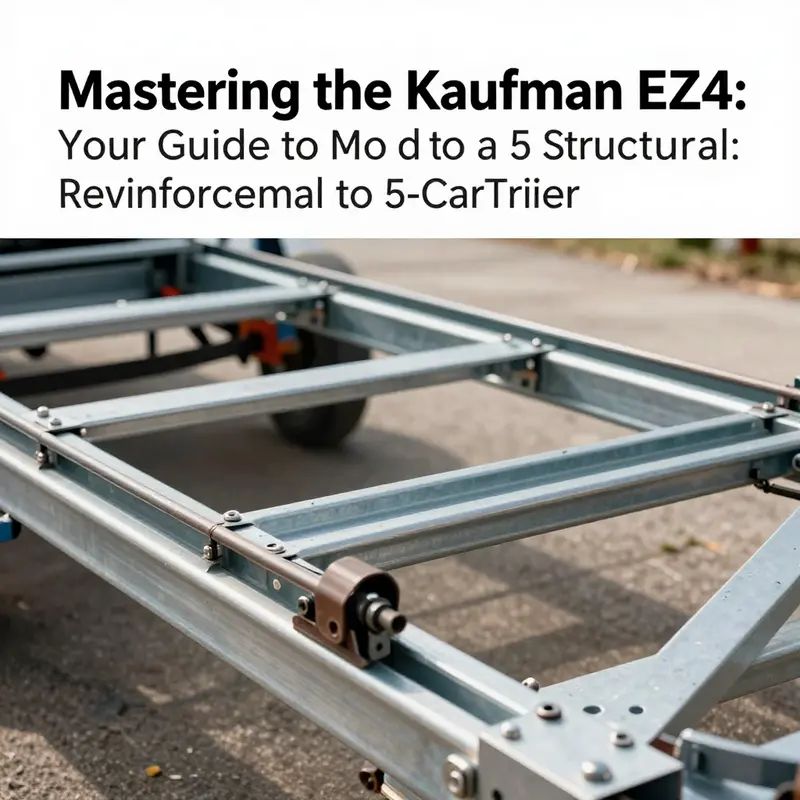
Choosing to migrate a Kaufman EZ4 toward a five-car transport configuration is more than a simple scale-up. It is a fundamental recalibration of what the trailer was engineered to do, grounded in physics, safety, and law. The research landscape surrounding this specific conversion is sparse, and that absence is itself a warning: no standard modification kit exists for turning an EZ4 into a genuine five-car carrier. What does exist are universal engineering principles for heavy-duty trailer expansion, and those principles point toward a demanding, professional process. The aim is not to improvise but to build on a verified structural foundation that respects weight, dynamics, and regulatory expectations. Before any bolt is turned, the purpose must be clearly defined and the legal frame understood. A five-car trailer represents a substantial increase in gross vehicle weight rating and in dynamic loads during acceleration, braking, cornering, and highway wind. Local DMV or transportation authority rules typically specify minimum safety equipment, axle configurations, lighting, braking systems, and load restraints for multi-car car carriers. Any modification that alters the vehicle’s gross vehicle weight or dimensions can trigger regulatory scrutiny and may require re-registration, inspections, or endorsements. This is not a place for trial and error; it is a field in which professional involvement pays for itself in risk reduction and in compliance certainty. As you plan, anchor every decision in the reality that a five-car load concentrates energy along a narrow deck and within constrained wheel paths. Every choice—from frame reinforcement to axle geometry—must account for how loads transfer to the ground, how braking responds under heavy decay of momentum, and how the trailer interacts with the tow vehicle. The professional view treats this as an integrated system rather than a sequence of individual upgrades. In this frame, one of the first guiding questions becomes practical: is the EZ4, in its current architecture, a suitable platform on which to base a five-car carrier, or does the project require a bespoke chassis designed from the outset to meet five-car demands? The answer, frankly, lies in a rigorous engineering assessment that weighs structural feasibility, material availability, and long-term durability. When the decision is to proceed, the structural reinforcement phase emerges as the bedrock of safety and performance. Structural reinforcement is the quiet work that happens beneath the visible deck. It begins with a thorough assessment of the existing frame, welds, mounting points, cross-members, and the distribution of fatigue life across key stress zones. High-strength steel is the standard language here, chosen not for flash but for predictable ductility, fatigue resistance, and the ability to support substantial static and dynamic loads. Engineers typically model the new load path, identify critical joints, and design additional members that redistribute bending moments and shear forces introduced by a five-car deck. This is not about simply thickening members; it is about rethinking the frame geometry to prevent stress concentrations and to maintain a safe reserve factor across the entire structure. The reinforcement plan must specify where new beams tie into existing members, how they are welded, and what standards govern the workmanship. Quality welding is non-negotiable. It requires welder qualifications, controlled environments, and post-weld inspection methods that may include non-destructive testing. The aim is to produce a monolithic, crack-free structure that behaves as a single, well-tuned system under load. The discipline continues with a careful evaluation of materials and connections. Bolted joints can be used in certain non-critical areas, but the core joints, particularly where the deck attaches to the frame, must tolerate repeated stress cycles. Fasteners, nuts, and washers should be selected to resist corrosion, fatigue, and loosening under vibration. The reinforcement also must consider thermal expansion, road debris impact, and the realities of long-haul operations. This is a life-cycle issue: the products chosen must endure years of exposure to sun, moisture, salt spray, and road grime without degrading the performance of the structure. Beyond the frame, the axle and suspension system represent the second pillar of a safe expansion. Moving from a modest configuration toward a five-car deck requires an upgraded axle concept—a dual- or triple-axle arrangement with tires, bearings, and brake assemblies rated for significantly higher loads. The axle geometry must balance weight distribution with stability, ensuring that load-sharing between axles is predictable and uniform. Suspension tuning becomes a dialogue among spring rates, shackle angles, and damper responses that prevent sway, dip, or axle binding when the trailer experiences uneven loads. Braking systems, too, must be engineered to deliver proportional, controllable stopping power without overheating. That typically means larger-disc or larger-diameter drum brakes, higher-capacity modulating valves, and a braking system that responds consistently across a range of speeds and temperatures. The robustness of the deck and loading design follows, because the five-car payload is not simply a mass but a dynamic, shifting set of contact points. The deck must carry the weight of vehicles while resisting deflection that would invite load shifting during braking or cornering. A reinforced deck uses heavy-duty, non-slip materials and an underlying support grid designed to minimize deflection and to distribute loads evenly. Restraints and anchors are integral to this system: multiple tie-downs, perimeters with secure anchorage points, and an anti-shift strategy that keeps vehicles from migrating on rough roads. The loading ramps require careful attention: ramp angles, mounting strength, wear resistance, and the ability to handle repeated usage with vehicles of varying wheelbases. The goal is not just to load vehicles but to secure them so that they remain in position from the moment you depart to the moment you arrive. The electrical and lighting system must be reimagined to reflect the altered footprint and increased height and weight. Compliance with safety standards means that harnesses, wiring, and weatherproof connectors are installed with redundancy and protection. Braking-light circuits, tail lights, side markers, and clearance lights must perform under all conditions, with proper grounding and corrosion resistance. A breakaway system and a battery backup are standard features in most regulated setups, designed to maintain lights if the vehicle becomes temporarily disconnected from the tow. The design philosophy here is conservative and safety-first: redundancy without overengineering to the point of unnecessary complexity. The final phase is testing and certification, the bridge between design and real-world use. Thorough load testing is essential to verify structural integrity, followed by controlled road and durability testing that simulates long-haul operation, steep grades, downhill descents, and emergency maneuvers. Weight confirmation on certified scales confirms the actual distribution against calculated targets, while non-destructive testing on critical welds and joints assures there are no subtle defects. Only after these checks do authorities typically grant the necessary registrations or endorsements, recognizing that the project has met the stringent safety and performance thresholds required for a five-car carrier. The decision to proceed with a professional engineering assessment cannot be overstated. The complexity, the safety implications, and the regulatory landscape demand a level of expertise that lies beyond hobbyist effort. A professional approach will also facilitate a realistic understanding of materials, fabrication timelines, and cost—factors that are easy to underestimate in early planning. For readers seeking a practical orientation on how seasoned operators frame vehicle and trailer customization in general, there is value in looking at broader industry resources that discuss the fundamentals of truck customization and trailer integrity. See the discussion on truck customization for a grounded sense of the tradeoffs involved in upgrading support structures, weight distribution, and safety features: truck customization. While this chapter focuses on structural reinforcement and the specific context of a five-car expansion, the overarching message remains consistent: any attempt to push a trailer beyond its original design envelope demands disciplined engineering, rigorous testing, and a respect for the regulatory frame that governs heavy transportation. For a wider safety framework that codifies industry expectations, the external reference offers essential context on trailer safety and compliance guidelines, underscoring why the conversion to a five-car carrier is a process that cannot be rushed or shortcut. External resource: https://www.trucking.org/trailer-safety-compliance
Foundations in Motion: Axle and Suspension Upgrades for a Five-Car Kaufman EZ4 Transformation
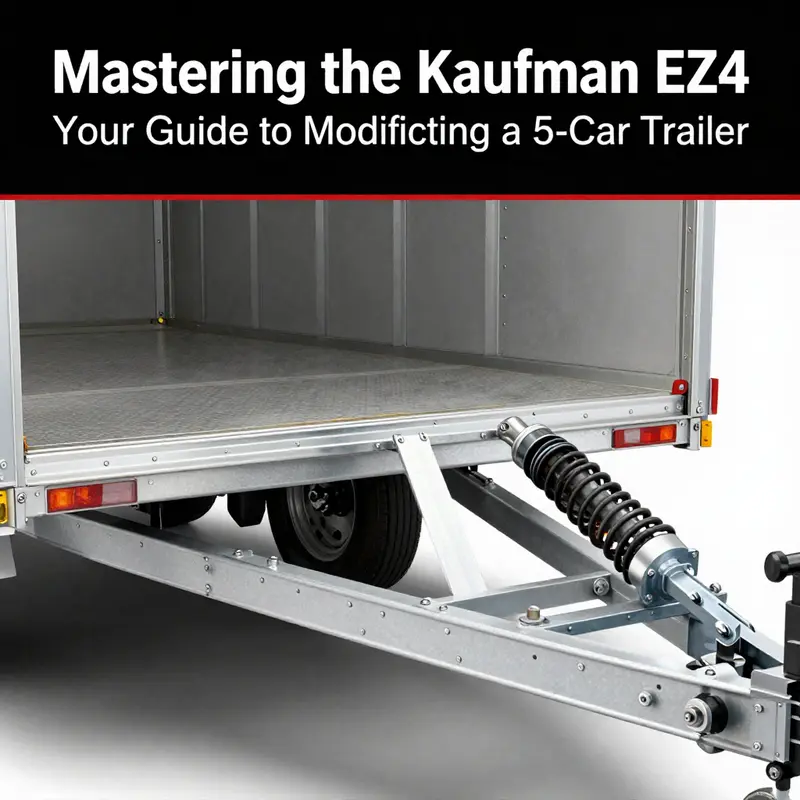
Modifying a Kaufman EZ4 to carry five cars demands more than extended deck space; it requires a reimagined load path where axles and suspension bear the lion’s share of the stress. The starting point is crucial: many lightweight, intercity trailers like the EZ4 are designed around a single, moderate-capacity axle. When you add two or more vehicles to the mix, the total load climbs far beyond the original design envelope. A clear-eyed assessment of weight distribution, dynamic forces during braking and cornering, and the wiring of safety systems becomes the foundation for any meaningful upgrade. In practical terms, this means planning for a trailer that can safely support well over twenty thousand pounds in total vehicle weight, with margins that account for peak loads, long highway miles, and the inevitable wear from repetitive use. The aim is not simply to add mass but to create a balanced, predictable platform where every component shares the burden and preserves control, braking response, and stability.
The first step is a meticulous assessment of the current structure. An EZ4 typically relies on a simple frame and a single axle arrangement, and over time even the strongest frames exhibit fatigue if loading exceeds their intended envelope. The inspection goes beyond cosmetic checks. It involves tracing the load path from the deck to the axle, confirming weld quality, crossmember integrity, and the points where the frame carries bending moments during turning and braking. The outcome of this assessment guides decisions about where to introduce reinforcement and how to space new axles for optimal weight distribution. In essence, the structure must become a rigid, well-braced backbone that can support not just the extra weight but the altered stresses that come with five vehicles in transit.
Axle upgrades sit at the heart of the transformation. The most critical step is replacing the original single axle with a dual-axle or, more robustly, a triple-axle configuration. The target capacity for each axle is determined by the expected load per axle and the required reserve. In a five-car setup, designers typically aim for a sustainable per-axle rating in the range of six thousand pounds or more, with each axle sharing the load evenly along the frame. Achieving even load distribution requires careful attention to axle spacing and alignment. An axle centerline template is a practical tool here, helping the fabricator place each axle so that weight is distributed across the frame rather than concentrated at a few points. This distribution reduces peak bending moments and overheating in the drums or pads, which is especially important during long descents or frequent stop-and-go traffic.
The equipment that carries the load must also be chosen with the same principles. Heavy-duty axle kits designed for high-load applications should be considered, and installation should prioritize symmetrical placement and robust mounting so that the frame remains a stiff, continuous member. Even without naming specific brands, the logic remains clear: components must be rated to handle the intended gross vehicle weight, resist heat buildup from braking, and maintain alignment under dynamic conditions. In practice, this means a coordinated approach where the axles, the hubs, the drums, and the mounting hardware form a cohesive system that can handle the combined forces of five stationary loads and the shocks of road irregularities alike.
Suspension upgrades are the other half of the equation. The EZ4’s original leaf-spring setup is typically insufficient for such a heavy load, especially when ride quality and load stability are priorities. A shift to torsion-based axles or a comparable air-suspension system is common in this context. Torsion axles provide more even load distribution across the wheel lines, better resistance to lateral sway, and smoother ride characteristics with less maintenance compared to traditional leaf springs. Air-ride systems take this a step further by actively leveling the trailer as the weight distribution shifts and by adapting to changes in load during transit. Either option demands careful integration with the frame and crossmembers, as the suspension must work in concert with the deck and restraining systems to prevent vibration-induced shifts that could compromise vehicle positioning on the deck.
With any upgrade, reinforcement of the trailer frame becomes indispensable. The process typically includes adding or strengthening crossmembers and possibly adding channel steel reinforcements along the main frame rails. The goal is to maintain structural integrity and to ensure the frame can transmit bending and torsional loads without sagging or failing at critical junctures. This is not cosmetic work: it is about long-term reliability and safety under conditions that push the trailer well beyond its original design envelope. As load paths are altered, the frame must be able to carry the heavier, more complex stresses encountered when five cars are aboard and the trailer negotiates grades, winds, and lane changes on highways.
Braking systems require an equally deliberate upgrade. A heavier trailer experiences proportionally higher braking demands, and the factory setup on a lighter EZ4 is unlikely to deliver consistent stopping power for five cars. The upgrade path typically involves adopting a more capable braking arrangement—one that provides reliable stopping power across multiple axles and works harmoniously with the towing vehicle’s control system. Electric-over-mechanical or hydraulic surge braking concepts can be employed, paired with larger drums, more robust pads, and a braking controller that communicates effectively with the tow vehicle. The controller’s role is to modulate braking in direct response to the driver’s input, ensuring predictable deceleration even as weight shifts with road grade, speed, and vehicle configuration. While discussing braking, it is essential to align the system with the wheel and tire combination chosen for the trailer, since tire heat, grip, and pressure influence braking efficiency as much as the mechanical capacity of the drum and pad.
Tires and wheels complete the mechanical package. For high-load, multi-axle trailers, tire selections must be deliberate. Each tire should be rated to handle the per-axle load with a safety margin, and the overall wheel-and-tire system must cope with heat generation during extended stops and gradual cooling after long descents. Aluminum wheels can reduce unsprung weight, contributing to improved handling and reduced stress on suspension components. Maintaining correct tire pressure is equally important: under inflated tires heat up, degrade quickly, and can compromise stability, while overinflation reduces the tire’s footprint and grip on the road. A balanced, carefully matched combination of tires and wheels helps ensure that the improved suspension system translates into real-world stability and predictable handling.
Beyond the mechanical components, the legal and safety framework around these modifications cannot be ignored. Local regulations vary, but common requirements include limits on trailer length, width, and axle count, along with the need for inspections and, in some cases, certification of the upgraded trailer. The project should incorporate high-visibility lighting, side reflectors, and wheel-well guards to reduce the risk of accidents and to satisfy regulatory expectations. At a minimum, a professional assessment should be sought to confirm that the modified trailer complies with applicable codes and standards, and that it remains roadworthy under typical operating conditions. The standards referenced by practitioners often point toward recognized safety and design guidelines from national and trade organizations in the trailer industry. While the technical specifics can differ, the underlying principle is universal: safety is inseparable from performance.
The path from concept to road readiness hinges on professional execution. The complexities of aligning axles, suspensions, brakes, and frame reinforcements demand a level of expertise that goes beyond casual fabrication. A certified trailer shop or an experienced fabricator brings the critical perspectives needed to verify material compatibility, weld quality, and the geometry of the entire system. They can also guide the integration of load securing features on the deck—restraints, tie-down points, ramps, and anti-shift mechanisms that ensure five vehicles remain fixed in place throughout transit. This is not a one-off upgrade; it is a comprehensive modification that affects how the trailer behaves under every driving condition, from the empty drive to the heaviest loaded highway ascent.
For readers exploring broader concepts in vehicle trailer projects, the topic of customization and how to approach major upgrades in a structured, safety-conscious way is well illustrated in standard truck customization discussions. A practical resource in that space covers the kinds of considerations that emerge when extending a trailer’s capabilities—ways to think about load distribution, system integration, and regulatory compliance as a cohesive workflow. See the discussion on truck customization for a grounded example of how professionals balance functionality with safety in complex trailer projects: truck customization.
Ultimately, the axles and suspension upgrades are the true backbone of a five-car Kaufman EZ4 transformation. They determine how weight is carried, how the trailer behaves when cornering and braking, and how reliably the system can be maintained over the life of the trailer. The improvements ripple through every connected subsystem—from deck design and load restraints to lighting and regulatory compliance. As with any major modification, the emphasis must remain on safety, predictability, and long-term durability. The path is technically demanding, but approached with a clear plan, professional oversight, and adherence to sound engineering practices, it is possible to expand the EZ4’s capacity while preserving, and even enhancing, its operational integrity. A well-executed upgrade yields a trailer that not only carries more cars but does so with confidence in performance, control, and safety for every mile of the journey.
External resource for further technical reference: https://www.dexteraxle.com/
Designing the Deck and Loading Features for a Five-Car Trailer: Bridging Theory, Safety, and Practical Realities
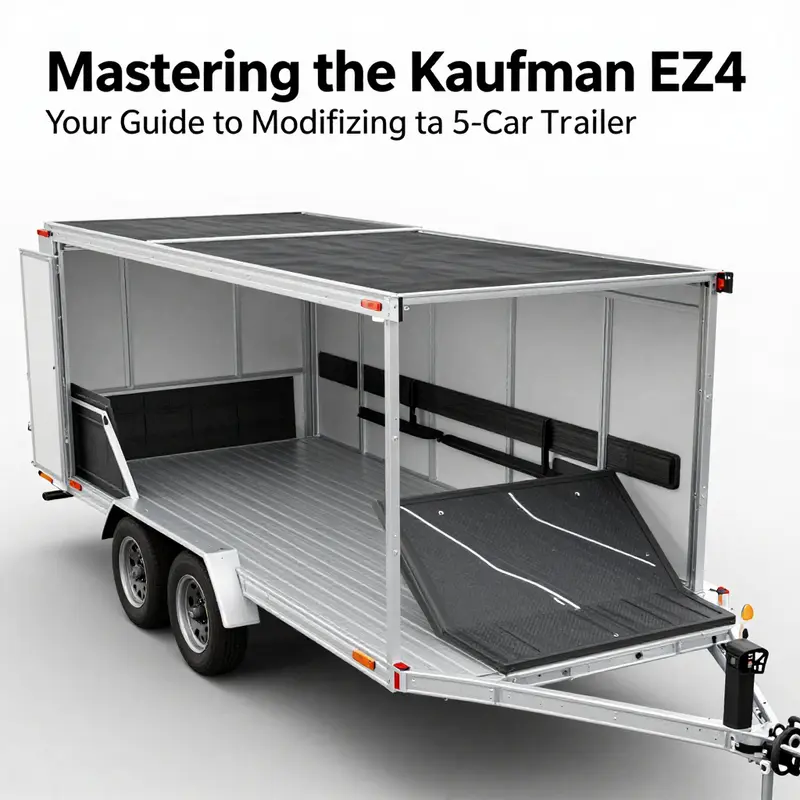
Designing the deck and loading features for a five-car trailer begins with a candid acknowledgment: there is no ready-made blueprint for converting a specific trailer model into a five-car configuration. This chapter builds from broad engineering principles and safety practices that apply across heavy-duty trailers, while also acknowledging the unique uncertainties that arise when a manufacturer-specific platform is not documented for this purpose. The deck is not merely a surface on which cars sit; it is the critical interface between the trailer and the loads it carries. The way weight distributes, how surfaces grip, and where restraint points live all determine whether a five-car system remains stable in transport, both on the highway and in loading yards. In this sense, the deck design becomes a systems problem, integrating structural capacity, loading geometry, restraint strategies, and compliance with local rules. The starting point is clear: understand how a five-vehicle stack will behave under static and dynamic conditions, and then translate that understanding into a deck that is strong, safe, and repeatable across multiple jobs.
A robust deck design begins with structural foundations. The deck must effectively transfer vehicle weight from the load path into the trailer frame without excessive flex, creep, or stress concentrations. This requires a frame-level approach to reinforcement that accounts for five simultaneous vehicle loads, as well as the dynamic forces generated by braking, acceleration, and road irregularities. In practical terms, this means crossmembers that resist bending, welded connections that meet or exceed standard welding qualifications, and a deck surface that does not introduce unexpected stiffness or hotspots where fatigue could accumulate. Material choices for the deck surface — whether steel plate with anti-slip texture or a high-strength composite — should balance weight, durability, and maintenance. The goal is a deck that can handle repeated loading cycles without exhibiting early signs of wear, such as micro-cracking in welds or delamination in composite surfaces.
Beyond the deck itself, the interface between the deck and the trailer frame must be designed for even load sharing. Five cars introduce a wide footprint and a distribution of weight that shifts as each vehicle is loaded, moved, or braked during transit. The deck should feature dedicated load-paths that guide forces toward the main rails and away from vulnerable joints. In many designs, reinforced side rails and edge protection help prevent lateral deformation during cornering or lane changes, a small feature but one with outsized safety implications. The concept of load-path integrity—ensuring every ton of carried mass follows a predictable, supported route to the trailer’s chassis—underpins the entire loading strategy. This approach reduces the risk that a single weak weld or marginal crossmember becomes the failure point in a heavy-vehicle scenario.
Loading geometry dictates both the practical use of the deck and the required restraint system. A five-car arrangement demands careful attention to ramp design, entry alignment, and the spacing of wheel tracks. Ramps should offer sufficient length to minimize steep angles while maintaining a manageable footprint for the pulling vehicle. Track width and ramp positioning influence how smoothly a vehicle enters the deck and how evenly its weight is distributed once seated. The loading ramps themselves should consider tire width, wheelbase variation among likely vehicles, and the possibility of loading two cars in a staggered pattern to optimize balance. In practice, this means designing ramps with a gradual incline, ample clearance for mirrors and undercarriage components, and a locking mechanism that remains reliable in cold weather and dust. The ramps should also interface neatly with the deck plating, avoiding abrupt edge transitions that could snag a vehicle or compromise its restraint system.
Restraint and securing systems are the heart of safe loading. A five-car deck multiplies the importance of anchor points, tie-down capacity, and restraint geometry. Modern practices lean toward integrated anchor tracks or multiple high-strength tie-down points positioned to minimize load share variation as weight shifts during braking, acceleration, or road swell. The restraint network must accommodate five vehicles without creating bottlenecks where straps, chains, or ratchets could collide with tires, suspension components, or deck hardware. The choice of strap types, ratchets, and locking mechanisms should reflect the anticipated weight, vehicle height, and points of contact along the vehicle’s body. It is essential to design with redundancy—more than enough attachment points and load-rated lines—to ensure that a single failed strap does not lead to a cascading loss of restraint. To support secure cargo, consider overlaying a restrained deck with edge rails or guard features that help keep vehicles from shifting sideways, especially during sudden maneuvers or on uneven pavement.
A practical deck design also contemplates surface treatment and payload protection. Anti-slip surfaces are not a luxury but a safety baseline; they reduce the risk of wheel slip during loading and movement on the trailer. Drainage considerations prevent water pooling that could lead to rust or ice formation, both of which degrade performance and control. Edge protection guards look after the outermost car’s vulnerable corners, reducing scuffing and preserving structural integrity during repeated dock loading and unloading cycles. Integrated lighting provisions and weatherproof electrical connections are not just compliance details; they are functional necessities. Lighting must illuminate the deck for loading operations at dawn, dusk, and night, and the electrical system should withstand exposure to spray, mud, and road salt. The goal is a deck that not only bears weight but also supports a safe, repeatable workflow in real-world conditions.
The design process must acknowledge the limitations of existing data. The specific case of modifying a widely known trailer platform into a five-car configuration lacks formal, published guidelines in the available literature. In other words, there is no plug-and-play solution for the exact model in question. This reality reinforces the prudent path: base decisions on general engineering standards and the expertise of experienced trailer manufacturers, rather than attempting a bespoke, one-size-fits-all modification without corroboration. When data gaps exist, the responsible approach is to consult with professionals who can translate load calculations, material properties, and safety criteria into a concrete deck and loading framework tailored to the intended operational profile. The absence of a documented template should not deter progress, but it should guide a cautious, methodical process that prioritizes structural verification, restraint reliability, and regulatory compliance.
In crafting a cohesive deck and loading system, engineers often look to established guidelines for heavy-duty trailer design. The core ideas stay consistent: rigorous load-path analysis, conservative safety margins, and a transparent, testable method for validating performance under realistic conditions. If a project diverges from standard configurations, it is prudent to build a robust verification plan that includes static load testing, dynamic movement simulations, and practical on-site trials. The objective is to demonstrate that the deck, restraints, ramps, and frame can absorb expected loads without deformation beyond serviceable limits. Additionally, documentation of design choices, material specifications, and test results helps satisfy regulatory expectations and makes the subsequent registration process smoother.
For readers seeking practical inspiration beyond generic guidelines, a broader view on heavy-duty vehicle modifications can be instructive. A relevant resource on truck customization can provide context on hardware considerations, mounting strategies, and the interplay between chassis compatibility and deck attachments. See this broader discussion here: truck customization.
Finally, the design philosophy here emphasizes that the deck and loading features are the most visible manifestation of a five-car trailer’s capability. They reflect a careful balance between ambitious transport goals and the imperative of safety, reliability, and compliance. The five-car task is inherently ambitious, and it demands a disciplined engineering approach backed by professional validation. In the absence of model-specific guidance for the Kaufman EZ4 or any particular platform, whatever deck and loading design emerges must be traceable to a sound structural rationale and a clear risk assessment. This approach not only improves the odds of successful operation but also supports long-term durability and predictable performance across multiple deployments. For readers who want to explore foundational engineering context that informs these choices, external engineering resources provide a baseline for understanding load paths, material behavior under fatigue, and the practical realities of heavy-duty deck design: https://www.engineeringtoolbox.com.
null

null
Final thoughts
Modifying your Kaufman EZ4 to transport five cars is a multifaceted endeavor that calls for a blend of technical skill and regulatory awareness. By navigating the legal landscape, reinforcing structural integrity, upgrading the necessary mechanical components, designing a functional loading area, and ensuring that electrical systems adhere to safety standards, you can create a trailer that not only meets your needs but does so reliably. Each step requires attention to detail and a commitment to quality, but the rewards of efficient vehicle transport will make every effort worthwhile. So gather your tools, align your vision, and prepare to enhance your Kaufman EZ4 into a formidable five-car transport solution.