
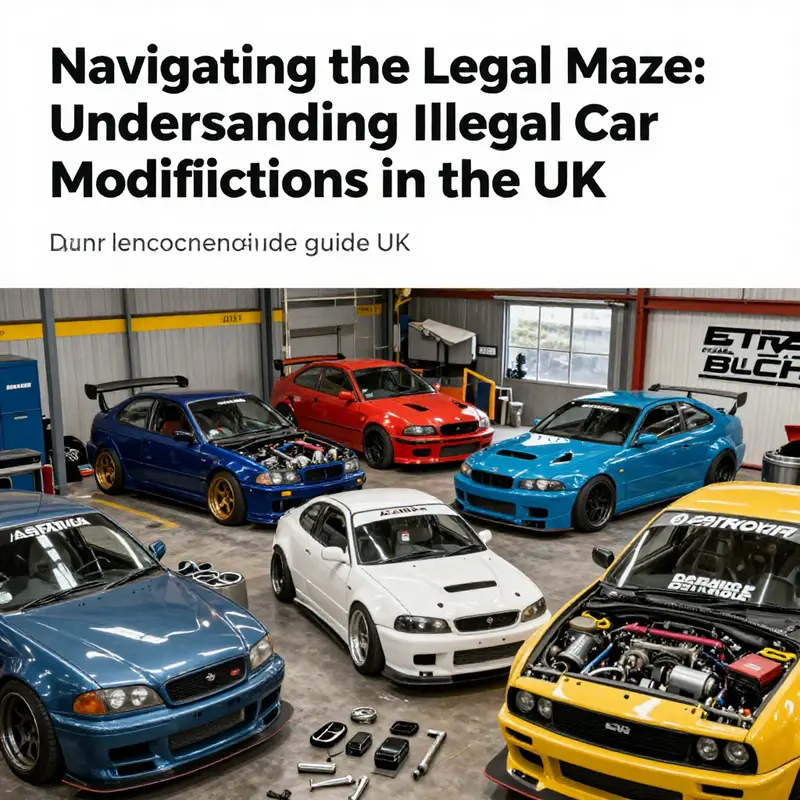
For car enthusiasts, modifications are a way to express individuality and improve performance. However, navigating the legality of these modifications in the UK can be daunting. Many hobbyists, professional tuners, and restoration experts may inadvertently step into murky waters with illegal alterations. Understanding the specific modifications that are deemed illegal not only ensures compliance with the law but also protects against potential fines, invalid insurance, or more severe repercussions. Over the next few chapters, we will delve into unapproved exhaust systems, illegal window tinting, incorrect lighting, improper tyre modifications, and unauthorized bodywork changes—each pivotal in maintaining the integrity and safety of your vehicle while enjoying the art of modification.
The Noise Gate: How Unapproved Exhausts Define Illegal Car Modifications in the UK
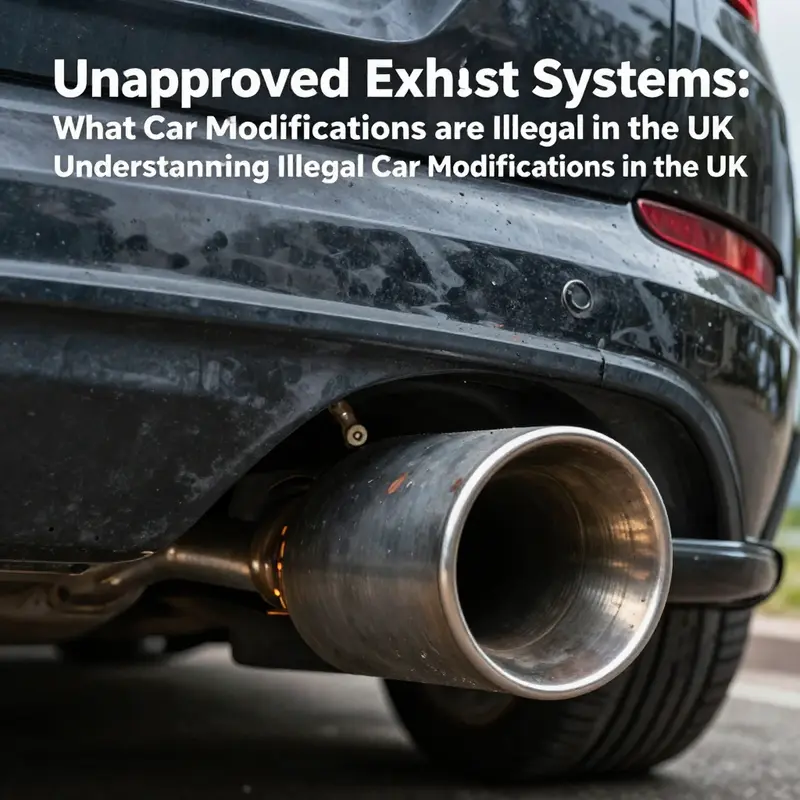
A whispered rule governs the louder ambitions of car enthusiasts across the UK: exhaust modifications may be tempting, but they are not free of consequence. The law treats exhaust systems as more than a matter of sound preference; they are a component that touches noise, emissions, safety, and accountability on the road. When a driver upgrades or alters an exhaust without the proper approval, the modification can become illegal in a way that reaches beyond a failed MOT or a roadside fine. The consequence is not merely a louder ride; it is a potential challenge to roadworthiness, insurer expectations, and personal liability. In this landscape, the unapproved exhaust acts as a litmus test for legality, compliance, and the broader framework that keeps UK roads safe and predictable for everyone who uses them.
At the core of this issue is a regulatory framework designed to curb excessive noise and to ensure that any modification does not undermine safety or environmental standards. The Road Vehicles (Construction and Use) Regulations 1986 set out the baseline requirement that modifications must not cause excessive noise. This is not a vague guideline; it is a concrete constraint with measurable consequences. In practice, authorities assess whether an exhaust system pushes noise beyond what is legally permissible at a given speed and vehicle type. In many jurisdictions, including the UK, noise levels are not merely a nuisance concern; they are a valid safety and environmental concern. Excessive noise can mask important engine and road sounds that indicate mechanical issues, and it can contribute to public nuisance concerns that trigger environmental protection provisions. The Environmental Protection Act 1990 is often implicated in cases where exhaust noise becomes a broader community concern, and this is why a louder exhaust can attract attention beyond the individual vehicle owner.
What counts as illegal in this arena is not simply any louder exhaust, but exhaust changes that fail to meet the standards set by manufacturers, regulators, and testing bodies. Aftermarket exhaust systems that are designed to amplify sound to levels well beyond the legal threshold are frequently deemed non-compliant. A commonly cited informal benchmark—though not the sole determinant in every case—is a vehicle that produces excessive noise at typical highway speeds, such as 74 dB(A) at 50 mph. This figure is referenced in regulatory discussions and enforcement practices as a practical indication of when an exhaust might cross the line into illegality. It is important to emphasize that the noise threshold is not an arbitrary target; it reflects a balance between allowing legitimate performance improvements and preserving the quiet, predictable acoustic footprint that reduces disturbance for other road users and residents.
The nature of the modification matters as well. Removing catalytic converters, installing straight pipes, or using muffler delete kits are not simply cosmetic choices; they are direct interventions in the exhaust and emissions control system. These alterations pose dual risks: they can violate emissions laws and they can undermine the vehicle’s acceptable noise profile. In some cases, such modifications are linked to higher emissions, greater air pollution, and greater risk of triggering environmental enforcement actions under the Environmental Protection Act. For this reason, many unapproved exhaust changes carry potential penalties that extend beyond a fine to include vehicle seizure, prosecution, or other legal remedies under the applicable regulations. After all, the exhaust system is part of the vehicle’s health and its relationship to air quality and public safety.
The practical implications for drivers are concrete. A vehicle found with an illegal exhaust during a roadside check may be subject to immediate enforcement action. If the exhaust is deemed non-compliant, the vehicle can fail its MOT due to a noise test or a failure in the broader inspection that assesses conformity with roadworthiness standards. The MOT itself is a gatekeeper for road use, and it is designed to catch modifications that compromise safety or environmental performance. If a vehicle fails because the exhaust is too loud or not properly certified, the owner must replace the illegal exhaust with one that complies with the legal standards before the car can return to service on public roads. This is not merely a matter of putting a different muffler in place; it is about ensuring that the entire exhaust pathway—from catalytic converter to tailpipe—meets regulatory expectations.
Compliance, then, is not an optional luxury but a requirement that often hinges on proper certification. Any exhaust modification that a vehicle owner intends to keep on the road should be accompanied by appropriate documentation. This includes certification from the manufacturer or installer that confirms compliance with relevant standards, and, in some cases, a Certificate of Conformity (CoC) or type approval under applicable regulatory frameworks. The European regulatory framework, where relevant, has historically provided a pathway for type approval, and even with evolving regulatory landscapes, the principle remains: modifications should be demonstrably compliant with the vehicle’s design intent and the standards that govern noise and emissions. In practice, this means engaging with certified installers and testing authorities who understand the nuances of exhaust technology, the vehicle’s original specifications, and the regulatory thresholds that apply to a given model and usage scenario.
For those who are navigating modification plans, a practical path toward legality begins with thorough documentation and professional advice. Check that any aftermarket exhaust system is approved for road use and that it comes with valid certification. Maintain records of installation, parts, and warranties. Before embarking on changes, consult with an authorized testing station or the DVSA guidelines to confirm that the intended setup will pass the required tests. These steps help ensure that a vehicle remains roadworthy and insurable, and they reduce the risk that a modification ends up as an unlawful addition that triggers penalties or insurance complications.
The broader context also involves insurance. Modifications, especially those affecting noise or emissions, can influence how a policy views risk. In some cases, unapproved exhausts can complicate or invalidate coverage, complicating a claim if a fault or accident is linked to the exhaust system. While this discussion centers on legality, the insurance implications intersect with the maintenance of a vehicle’s legal status on the road. In short, the decision to alter an exhaust is not solely about sound or aesthetics; it is about compliance, safety, and the ongoing responsibilities of car ownership in the UK.
For readers who want a more comprehensive picture of the legality of car modifications overall, it helps to explore the broader landscape of legal and illegal modifications. This includes considerations beyond noise, such as structural changes, lighting, and other safety-critical systems. The overarching message remains consistent: any modification that alters the vehicle’s fundamental operation or its compliance with safety, emissions, or regulatory standards should be approached with caution and professional guidance. Compliance is not a barrier to personalization; it is a framework that protects drivers, passengers, pedestrians, and the environment while allowing responsible customization.
If you are curious about how these rules apply specifically to different types of exhaust systems or want to dive deeper into the nuances of compliance versus intent, a concise overview of the legality of car modifications offers a broader lens on the topic. For readers seeking more on the topic of legality, see the article on illegal car modifications.
External resource: https://www.gov.uk/government/publications/vehicle-exhaust-systems-and-noise
Tinted Truths: Navigating UK Window Tint Rules and the Wider Landscape of Illegal Car Modifications
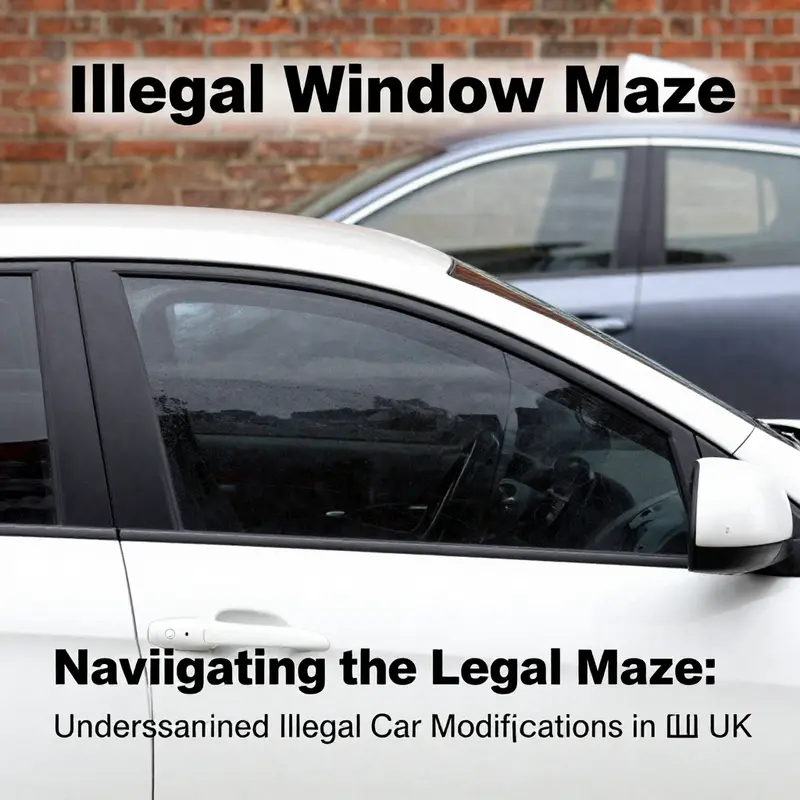
In the UK, drivers often view window tinting as a simple customization. It offers privacy, reduces glare, and can shield the interior from overheating. But beneath the aesthetic appeal lies a precise regulatory frame designed to preserve safety and visibility. The lines separating a lawful tint from an illegal one can feel narrow, and crossing them may carry consequences that extend beyond the moment of a police stop. This chapter concentrates on one modification that is especially prone to misinterpretation—window tinting—and then threads it into the broader map of modifications that the DVSA and lawmakers regulate to keep roads safe.
The central rule on glass tinting is about light transmission. The windscreen must admit at least 75 percent of visible light. Any tint that reduces this below the threshold is illegal because it hampers the driver’s ability to see and be seen. Many drivers justify darker tints on warm days or for privacy, but the law keeps a hard line here. The front side windows create a second, equally important gate. The legal limit for those windows has been interpreted in different ways over time, but the current guidance in the detailed regulatory materials centers on ensuring that a safe amount of light reaches the eyes of the driver and the police officer assessing the vehicle. In practical terms, many tints that look subtle to a casual observer end up failing a roadside check or an MOT inspection when the light transmission falls short. The rear windows, by contrast, can be tinted darker if visibility is still satisfactory during normal driving and reversing. The rule is not a free pass to conceal a vehicle from the world; it is a carefully balanced standard intended to prevent drivers from operating with compromised field of vision.
Another feature that trips drivers up is reflectivity. Tints with reflective or mirrored properties are not permitted on windshields or side windows because they create glare and can deflect sunlight or headlights into the eyes of other road users. The practical effect is that even a stunning, glossy finish on glass becomes unlawful if it interferes with other drivers’ ability to judge speed, distance, and intent. The scope of these rules is broad: they apply to passenger cars, vans, and motorcycles alike. The enforcement mechanisms around tinting typically hinge on visual inspection with a light meter to determine transmission, though more thorough checks can occur at MOT time or during police stops.
Given that the consequences of non-compliance extend beyond a simple fine, it helps to understand what can happen in practice. A vehicle that fails to meet the tint standards is unlikely to pass the annual MOT. The MOT test line would flag the non-conforming windows as a fault, and the owner would be required to remove or replace the tint before re-testing. The penalties for being caught with an illegal tint can include fines and, in some cases, a requirement to have the tint removed. It is also worth noting that insurance implications can be serious. If your policy specifies that modifications must comply with legal requirements and your tinting is non-compliant, insurers may refuse to pay for claims or may consider the policy void. The result can be expensive and complicated, especially if an accident occurs and it’s alleged that tinted glass contributed to the severity or visibility issues.
In discussing illegal glass work, it is easy to overlook the practical realities of enforcement. Police officers can stop a vehicle if the tint appears unusually dark or reflective. They may request documentation to prove conformity with the VLT requirements or direct the driver to remove the tint on the spot. In many cases, a vehicle could be deemed unroadworthy and taken off the road until the issue is resolved. The penalties are not merely administrative; there is a real potential for court proceedings if disputes arise about the interpretation of the color or transmission readings. This is why, if you are contemplating any tinting, it pays to consult the official guidance, have proper documentation, and ensure any film is applied by a reputable installer who understands the rules.
The landscape of UK car modifications does not stop with window tinting. Even when a tint is found illegal, it sits in a wider matrix of changes that can be either permissible or prosecutable depending on the specifics. For instance, unapproved exhaust systems that produce excessive noise—specifically, noise levels that exceed 74 decibels at 50 mph—are treated as more than a nuisance. They can be prosecuted under the Environmental Protection Act 1990 for causing unnecessary public nuisance. Such enforcement is not about fashion or sound for its own sake; it’s about protecting communities from sustained noise that disrupts daily life. The same environmental and safety rationale governs lighting: replacing standard headlights with non-approved HID or LED bulbs, adding additional lighting such as underglow visible from the front or rear, or fitting non-standard colours is illegal when it contravenes the Road Vehicles Lighting Regulations 1989. In short, any alteration that affects how a vehicle communicates its presence, or how it is seen on the road, becomes a potential legal hazard.
Tyre choice and configuration offer another concrete example of how seemingly minor choices can tilt into illegality. Tyres that do not meet the required size, tread depth minimums, or load index standards can lead to illegal operation. Mismatched tire sizes on the same axle, while not prohibited in every case, are disallowed in situations where they affect handling and safety. The rule here is practical: tyres are not simply about grip; they determine braking performance, stability, and steering response. When a modification experiment undermines those fundamentals, the law can step in.
Bodywork and structural changes demand even more caution. Major alterations to the vehicle’s shape, such as lowering suspension beyond safe limits, or modifying the chassis or frame, can render a car unroadworthy. The law recognizes that structural changes can have profound effects on a car’s crash dynamics and collision performance. If a modification compromises seat-belt anchor points, airbag deployment, or crashworthiness, it becomes a matter of public safety rather than an aesthetic choice. In this regard, the distinction between a fashionable modification and a dangerous alteration is not negotiable. The same logic governs more covert changes that can affect safety, such as modifying a vehicle’s electronic control systems or braking, which require rigorous approval and testing to ensure they do not introduce new risks.
Readers seeking a concise risk map for illegal modifications will recognize a common thread: the need for compliance with type approvals and testing standards. Alterations that sit on the boundary of approval demand careful vetting with the DVSA and, when in doubt, with an authorized testing station. What counts as compliant is not always obvious, and some modifications that look harmless on a bench test can produce unintended consequences on the road. In practical terms, that caution translates into a straightforward rule of thumb: if an intended modification touches safety-critical systems, emissions, or structural integrity, treat it as an item requiring formal approval rather than a DIY shortcut. When in doubt, consult the official sources and consider the risk to yourself, other road users, and your own legal standing.
For readers who want to explore this topic beyond tinting, a broader overview of illegal car modifications can be informative. It helps to know where window tint rules sit within a wider legal framework. You can consult this overview of illegal car modifications to see how other popular changes are treated in law, and to understand the process of obtaining approvals where possible. overview of illegal car modifications.
As a final note tied to the official process, any modification that affects safety or emissions must be cross-checked with the DVSA guidelines. The agency emphasizes that before changing a part of the vehicle, you should seek approval, ensure type approval where applicable, and verify that the modification will be legal on the road. This careful approach helps prevent situations where a modification renders insurance void, a car unroadworthy, or a driver liable for penalties in court. The tension between customization and compliance is real, but it is resolvable with diligent research, professional installation, and a willingness to align with the country’s road-safety priorities.
External resource: For a government-backed overview of the official rules on window tinting and vehicle safety, see the government resource on vehicle window tinting rules in the UK.
External link: https://www.gov.uk/government/publications/window-tinting-and-vehicle-safety/vehicle-window-tinting-rules-in-the-uk
Lighting the Line: Navigating UK Vehicle Lighting Rules and What Modifications Remain Illegal
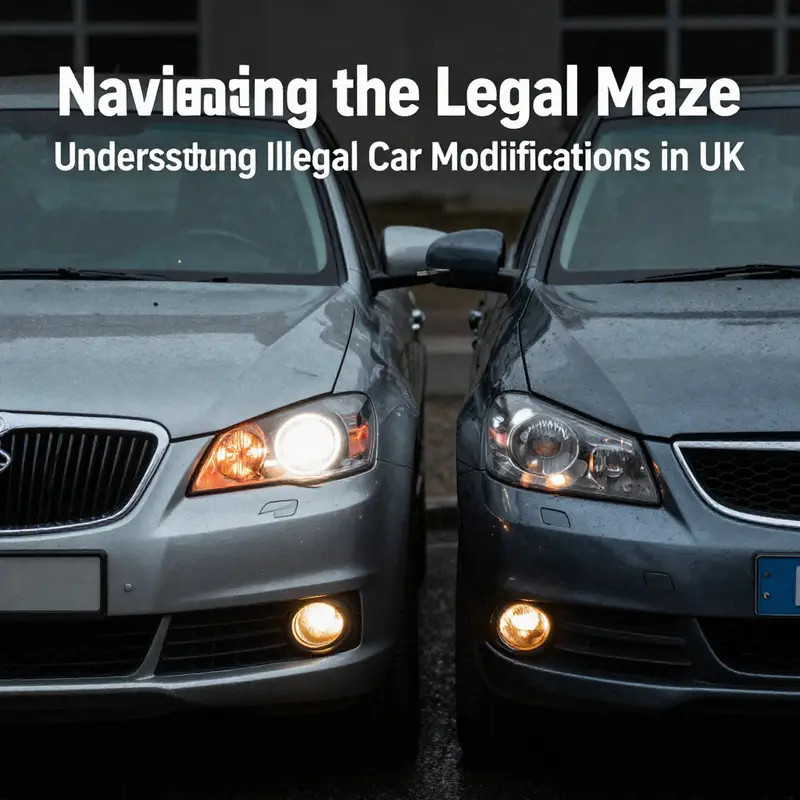
When car enthusiasts talk about modifications, lights are often at the heart of the debate. In the UK, lighting choices sit at a crossroads of safety, road use, and regulation. The line between a tasteful upgrade and an illegal modification is governed by standards designed to prevent glare, confusion, and dangerous driving conditions. This isn’t about dampening creativity; it’s about ensuring that every vehicle on the road behaves in a predictable way that others can anticipate. In practice, lighting must be installed and used in accordance with established rules, and any deviation that alters color, intensity, beam pattern, or visibility is treated as potentially unlawful. Understanding why these rules exist helps explain not just what you can or cannot do, but how the consequences of missteps extend beyond a ticket to serious safety and insurance implications.
At the heart of the UK’s lighting regulations is a framework that seeks to harmonize vehicle lighting with the needs of all road users. The Road Vehicles Lighting Regulations 1989, reinforced by subsequent guidance and standards, specify what colors, alignments, and usage patterns are permissible. The government’s guidance makes the core principle clear: headlights and other primary lighting must illuminate the road adequately without dazzling oncoming drivers or drivers ahead. Anything that undermines visibility or creates glare is treated as a potential violation, and the penalties reflect the seriousness of the risk involved. The practical upshot is that changes that seem cosmetic can actually alter a car’s safety profile in ways that inspections and law enforcement will scrutinize. Thus, a modification that looks striking in a workshop can fail the roadworthiness test once the lights are tested in real driving conditions.
One of the clearest and most frequently misunderstood aspects of lighting legality concerns the color of headlamps. The UK permits only white or selective yellow for headlamps. Colored headlights—blue, red, green, or other hues—are generally illegal unless a vehicle is specially authorized for emergency services. This restriction isn’t about aesthetics; it’s about ensuring that the light emitted is perceived by other road users as a standard, predictable signal. When a bulb or lens produces an unexpected color, it can confuse other drivers and reduce reaction times in critical moments. In practice, even bulbs marketed as “white” can appear tinge-shifted in different weather or due to aging, which is why the rules emphasize approved, tested components rather than ad hoc colour experimentation. The result is that many popular aftermarket lighting upgrades—especially those that promise a brighter or more dramatic look—are not just frowned upon; they may render the vehicle non-compliant and unroadworthy.
Beyond color, the physical alignment and intensity of lights matter as much as what bulbs you choose. Incorrect alignment can create blind spots or glare, compromising safety for drivers in front or approaching. The DVSA and related regulatory guidance stress that headlights must meet specific beam patterns and be properly adjusted. A high-performance bulb that throws a beam too high or too far to the sides may illuminate signs, cycles, or pedestrians in ways that are not anticipated by standard vehicle design. The same applies to fog lights. These are not decorative pieces; they are tools used in poor visibility. When fog lights are used in normal conditions, or when they are not aimed correctly, they can distract or dazzle other drivers, leading to dangerous driving scenarios and potential prosecutions for dangerous driving or careless behavior.
A further area of risk involves “extra” exterior lighting. Underglow lighting, roof bars, or additional light strips that are visible from the front or the rear can fall foul of the regulations if they exceed what is deemed acceptable for road use. The guidance is clear that such additional lights, even if they are powered and functional, must not compromise clearance, visibility, or the vehicle’s overall profile in a way that could mislead other road users. In everyday terms, a flashy after-market kit that changes the vehicle’s silhouette or emits light in an unexpected color can quickly become illegal. The same principle applies to bulbs used in indicators and brake lights; any modification that alters the standard color or flash pattern can trigger scrutiny because it changes how other drivers interpret the car’s signals.
The penalties for lighting non-compliance are not merely cosmetic. If a vehicle is found to be using non-compliant lighting, it can be deemed unroadworthy, which carries the risk of a fine, a requirement to rectify the issue, and, in serious cases, criminal prosecution. More commonly, drivers may face enforcement action that includes a potential impact on insurance. Insurance policies often rely on the vehicle being maintained in a way that aligns with legal standards; if lighting changes are deemed illegal, an insurer might refuse liability coverage for claims arising from an incident connected to the non-compliant lighting. This is not just about losing a policy in a moment of carelessness; it can affect future cover and premiums if the modification is considered a material alteration in risk.
For anyone considering upgrading or changing their vehicle’s lighting, the best approach is to verify compliance before any purchase or installation. The government guidance emphasizes using parts that are approved for road use and ensuring that any new lighting aligns with the car’s original design intent as well as with tested beam patterns. If there is any doubt, the safest route is to consult a testing station or DVSA-approved professional who can assess whether a particular unit or configuration would pass the requisite standards. This avoids the cost and inconvenience of mistakenly installing a setup that looks attractive but fails the roadworthiness test when inspected or when a police officer or an examiner checks the vehicle.
For readers seeking a broader perspective on how lighting and other modifications intersect with legal risk, there is a useful discussion at Are car modifications illegal? that explores the general principles behind modification legality and the practical considerations of staying on the right side of the law. Are car modifications illegal?
In practice, the pathway to compliant lighting begins with a careful inventory of what you want to change, why you want to change it, and how the change will function in real-world driving conditions. If the goal is better visibility, there are legitimate, regulated options that improve performance without crossing the line into illegality. For instance, choosing lighting components that are explicitly approved for road use, ensuring compatibility with the vehicle’s electrical system, and having the installation performed or supervised by a qualified technician can significantly reduce the risk of non-compliance. It is also wise to document the modification process, keep receipts and installation notes, and be prepared to present evidence of compliance if required by authorities. Deeply personal preferences for a certain aesthetic should never override the safety standards designed to protect everyone on the road.
The guidance also reminds drivers that this is not a one-time decision. Lighting laws can evolve as new technologies emerge and as road safety evidence accumulates. What may pass inspection today could become non-compliant tomorrow if the national standards are updated or if new interpretations of the regulations are issued. Keeping up to date with official resources is essential—the GOV.UK Vehicle Lighting Guidance provides the current framework and specifics for what is permitted, how to install correctly, and when certain uses are allowed or prohibited. Staying informed helps bridge the gap between a personal vision of a car and the shared responsibility of road safety. External readers should consult official sources for definitive guidance and updates.
In the end, lighting is about clarity and responsibility. A better-looking car is meaningless if it blinds or confuses other road users. The UK’s lighting rules are not a mood board for customization; they are a safety manual that ensures all drivers share a predictable, legible set of signals on the road. For many motorists, that means accepting the limits on color and arrangement and focusing instead on accuracy of alignment, legitimacy of components, and prudent usage. If a modification cannot be clearly shown to align with the approved standards, the prudent choice is to forgo it or consult a professional who can steer you toward compliant options. The result is not a watered-down salvaging of style; it is the preservation of safety, legality, and peace of mind for you and everyone else you share the road with.
External resources for a deeper dive into official standards are available on GOV.UK’s Vehicle Lighting Guidance, which provides authoritative details on color, usage, alignment, and compliance. This guidance is the standard reference point for anyone evaluating whether a lighting modification will hold up under scrutiny and how to navigate legitimate upgrades without compromising safety or legality.
Tread Lightly, or Face the Consequences: The Legal Limits of Tyre Modifications in the UK
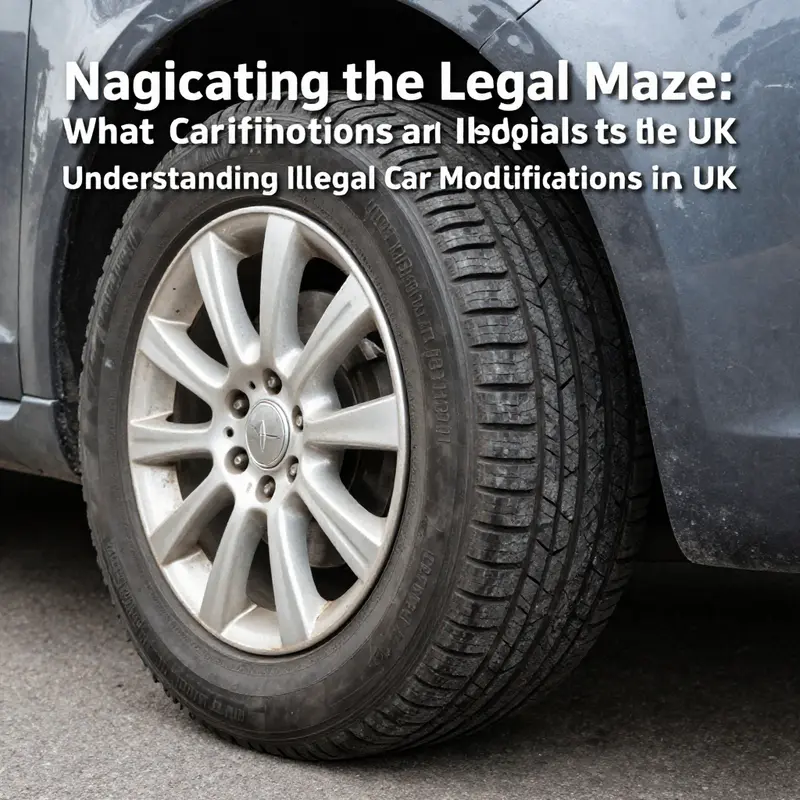
Tyres sit at the edge of daily driving life and safety, a quiet edge that can become a loud danger the moment one modification crosses the line. In the United Kingdom, tyre choices are not just about grip or cosmetic appearance; they are governed by rules designed to keep braking distances predictable, handling reliable, and roads safer for everyone. The subject can feel narrow, almost technical, but it touches the heart of legality and liability every time a wheel rotates on public roads. For many, tyre changes are routine maintenance or performance upgrades. Yet when size, fit, or tread pattern deviates from the manufacturer’s specification, or when the modification affects the vehicle’s overall width and suspension geometry, the modification ceases to be a simple upgrade and becomes a legal issue with real consequences. The line separating an approved change from an illegal one is defined by several interlocking standards and enforcement practices that the DVSA, manufacturers, and road-going drivers must navigate in tandem. Understanding this boundary is essential not only to avoid fines and points but to preserve the core purpose of tyres: consistency in contact with the road under varied conditions, with predictable wear, and with predictable interaction with safety systems and braking performance.
At the most fundamental level, tyre legality hinges on staying within the manufacturer’s original specifications. If you fit tyres that are significantly larger or wider than what the vehicle was designed to accommodate, you risk more than cosmetic misfit. Wider tyres can rub against the bodywork or suspension components, alter the steering feel, and destabilize the vehicle under load when braking or cornering. What seems like a simple aesthetic or performance tweak can become a path toward reduced control, uneven tyre wear, and, in the worst case, sudden failure on the road. The law recognizes these risks and treats excessive size as not just a matter of preference but as a potential roadworthiness issue. The consequences can include an MOT failure, penalties, or the vehicle being deemed unroadworthy. In practical terms, this means you should consult the original equipment specifications and any guidance from a certified tester before ordering tyres that deviate materially from the standard.
Beyond size, the tyre’s load index and speed rating are critical safety signals. The load index marks the maximum weight a tyre can carry, while the speed rating indicates the highest safe operating speed. Installing tyres with a lower load index or a lower speed rating than the vehicle requires introduces a heat and stress risk that the tyres are not designed to handle. Overheating and rapid heat buildup can compromise the tyre’s structural integrity, reducing grip, increasing the chance of blowouts, and degrading handling at the very moment you need stability most. This is not merely a paperwork concern; it translates into measurable performance gaps during emergency braking, high-speed driving, or when the vehicle is carrying passengers and cargo. Because the manufacturer’s intended performance envelope is built around a specific combination of tyre size, load, and speed, any deviation from that envelope should be treated with caution and professional guidance.
The tread pattern is another subtle but significant factor. UK road safety standards call for a minimum tread depth that ensures effective water displacement and grip in wet conditions. Tyres with tread patterns that are excessively aggressive for on-road use can be legal on a rally stage or a specialized track, but they are often unsuitable for public roads. Conversely, tyres with unusually shallow tread wear or inappropriate tread design for wet weather can compromise braking and steering. If a tyre’s pattern is not aligned with the intended road use—or if the tread depth drops below the legal threshold—expect the MOT to flag it. The DVSA’s testing and the accompanying regulations are clear about maintaining sufficient grip and water evacuation channels. In practice, drivers should monitor tread depth with a calibrated gauge and replace tyres before the legal limit of 1.6 millimetres across the central three-quarters of the tread is approached, rather than waiting for a fail during MOT.
A broader, structural issue concerns the vehicle’s overall width and track width. When you fit tyres that extend beyond the original fenders or widen the vehicle beyond its permitted width, you alter how the car interacts with lane markings, adjacent vehicles, and even the road’s camber. This has tangible safety implications: increased lateral forces during cornering, altered aerodynamics and braking dynamics, and a higher risk of arching and scraping in everyday maneuvers. In many cases, makers of these modifications must be prepared to demonstrate that the vehicle remains compliant with width and load restrictions, and that the modifications have passed a recognized approval process. The rules are not built to stifle experimentation but to ensure that the geometry of the car—the distance from tyre to tyre, the wheel alignment, and the clearance to bodywork—remains within a safe and predictable margin. In practice, this means measures such as confirming the wheel arches will still accommodate the tyre without rubbing, and ensuring the overall track width remains within legal boundaries unless formal authorization has been granted by a competent authority.
Documentation matters as much as installation. For any tyre modification that could plausibly affect vehicle type approval, roadworthiness, or the safe operation of the car, it is prudent to document the change and verify it against the DVSA’s guidelines and the vehicle’s V5C registration details. If the modification is substantial or unusual, a certified tester’s opinion or a stamp of approval may be necessary. Without this documentation, a driver risks insurance complications, invalidation of cover in the event of a claim, or even prosecution if the vehicle is judged unroadworthy under current regulations. The best practice is to align tyre choices with the manufacturer’s specifications and to keep a record of any adjustments, constraints, or temporary measurements in case a police or DVSA officer asks for evidence of compliance.
The practical implication for drivers is straightforward: when contemplating tyre changes, treat the decision as a regulated modification rather than a routine upgrade. Consult the vehicle’s manual, check the V5C for the exact model specifications, and seek confirmation from a qualified tyre professional about fitment, load index, and speed rating. If there is any doubt about legality, it is better to refrain from the modification or to pursue formal approval pathways. As a point of reference within the broader landscape of legal modifications, this is a core example that illustrates how changes to tyres can cross from enhancement to illegal if they compromise safety, compliance, or roadworthiness. For readers seeking a broader context, see illegal-car-modifications for a wider discussion of legality across different domains of car customization.
In any case, the MOT remains the annual gatekeeper of tyre legality. During the inspection, the examiner checks tread depth and overall tyre condition, confirms that the tyres meet the manufacturer’s specifications, and looks for any signs of interference with the vehicle’s steering and suspension. If the tyres do not meet these criteria, the vehicle fails the test, and the driver faces a corrective timetable to rectify the issue. This is not simply a bureaucratic hurdle; it is a direct safety measure intended to prevent accidents and to ensure that vehicles continue to operate under predictable friction, grip, and heat characteristics. The DVSA’s role here is not punitive for its own sake but protective, aiming to keep roads safer by ensuring that tyre choices align with the car’s design intent and the road environment drivers face daily.
For drivers who enjoy experimenting with performance and appearance inside the law, there are constructive avenues. Choose tyres that stay within the manufacturer’s width and profile ranges, and work with professionals to assess any potential impact on suspension geometry and steering dynamics. If a larger or wider tyre is essential to your goals, pursue legitimate pathways for approval through the appropriate testing and certification channels. Keeping a close dialogue with a qualified tester or a DVSA-approved facility can turn a potential traffic court matter into a routine maintenance decision. Documentation, careful measurement, and adherence to the manufacturer’s specifications form a triad that reduces risk and preserves the intended performance envelope of the vehicle while remaining within legal boundaries.
In summary, tyre legality is not merely about the visible appearance of a wheel and tyre package. It is a synthesis of size, load and speed ratings, tread design and depth, and the vehicle’s overall width and geometry. Each facet interacts with safety, roadworthiness, and enforcement realities that shape how modifications are assessed on the road. The UK regulatory framework expects drivers to approach tyre changes as a considered modification, not a routine upgrade, and to rely on manufacturer guidance, professional testing, and official standards when making decisions. By staying within these boundaries, drivers can pursue better grip and performance without stepping into illegality or risk. For those who want a broader sense of how tyre choices intersect with the rest of car modifications, a broad view of illegal modifications provides helpful context and reinforces the idea that legality is as important as performance in the long run. External resource: https://www.gov.uk/guidance/tyres-and-vehicles
The Fine Line Between Style and Safety: Unauthorized Bodywork and Other Illegal Modifications in the UK
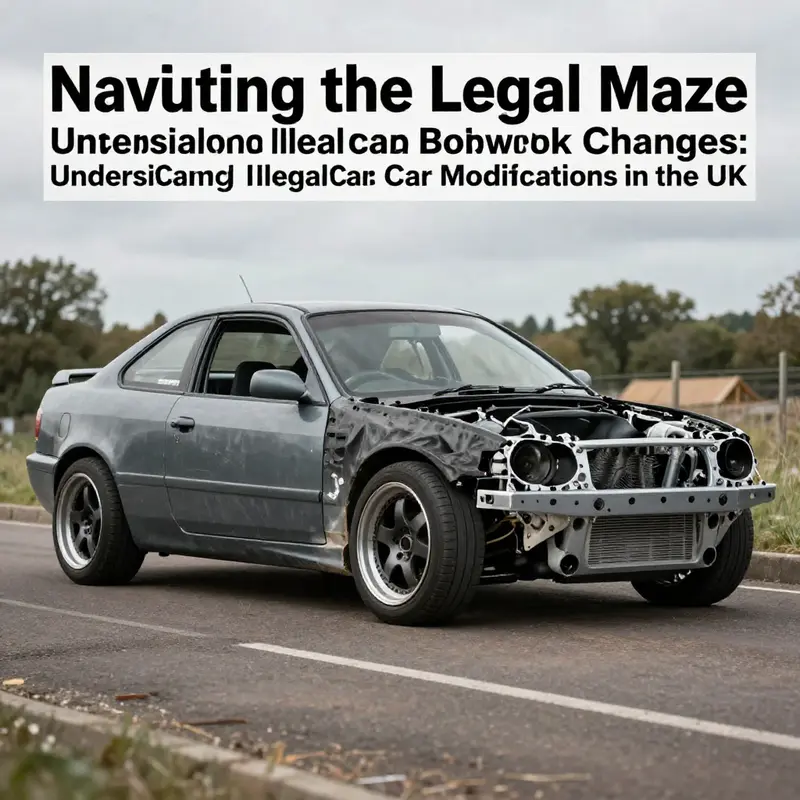
Car culture often tempts owners to push boundaries, to tune, trim, and tailor their machines for a sharper look or a bolder roar. Yet in the UK, a large swath of modifications sits in a legal gray area, or outright illegality, because safety, environmental impact, and roadworthiness take precedence over customization. This chapter examines how unauthorized bodywork fits within a broader landscape of illegal changes, why authorities police these modifications, and how drivers can navigate the line between personal expression and compliance. The core message is simple: when a modification alters a vehicle’s structural integrity, its emissions, or its likelihood to be seen and understood on the road, it risks more than just a failed MOT; it can invite fines, license penalties, insurance problems, or even seizure of the vehicle. A careful approach to modification starts with recognizing which changes matter most to safety and accountability, and then seeking approvals when required rather than pursuing shortcuts that save money or time but compromise overall roadworthiness.
Unauthorized bodywork changes sit at the heart of this conversation. The term refers to alterations to a car’s exterior form that fundamentally shift its proportions, aerodynamics, or overall behavior without the proper approvals. In practice, sweeping changes such as lowering a chassis beyond legal limits or adding wide arches that extend beyond the wheel wells can move a vehicle out of compliance with vehicle standards. These kinds of alterations may affect how the car responds to road hazards, how it absorbs impacts, or how its lights and reflectors function. They can also interfere with critical components tied to safety, such as suspension travel or steering geometry. The Vehicle Certification Agency (VCA) and related guidelines outline how bodywork changes must be evaluated, and many modifications demand formal certification or testing to demonstrate continued roadworthiness. The risk is not merely cosmetic; a misconfigured body can mislead other road users or complicate maintenance and inspection. If a modification changes the vehicle’s silhouette or dimensions in a way that affects visibility or stability, it invites closer scrutiny at MOT time and beyond.
Exhaust systems offer another clear frontline area where legality often collides with appetite for sound and performance. A loud or drastically altered exhaust that exceeds established noise limits is illegal under the Road Traffic Act framework, and the DVSA actively enforces these boundaries during road checks and the MOT process. When exhausts are redesigned to produce more noise or to alter exhaust flow in ways not approved for street use, the risk extends beyond nuisance to safety concerns. Emission control systems sit in the same camp: tampering with catalytic converters, EGR valves, or other components that govern what goes out of the exhaust not only violates environmental laws but also undermines public health goals. The modern emphasis on reducing air pollution makes such tampering especially scrutinized. In short, an exhaust that sounds dramatic often carries heavier regulatory baggage than a misaligned tailpipe—it can trigger a test fail and subsequent penalties, even if the car otherwise passes mechanical checks.
The Environmental Protection Act and related EU-type approvals provide the backdrop for many of these rules. Emissions tampering—removing catalytic converters, defeating emissions controls, or using devices designed to bypass regulatory standards—carries serious consequences. Not only do such actions harm air quality, but they also place the vehicle outside the scope of its type approval. Penalties can include criminal charges, substantial fines, and mandatory corrective action. Drivers who confront such choices should weigh the long-term costs of non-compliance against the short-term appeal of a louder exhaust, a trimmed look, or a more aggressive stance. It is rarely a smart bargain, because the same modifications that seem to boost performance or aesthetics can erode insurance coverage and resale value if discovered.
The conversation about legality cannot ignore lighting and visibility. Modifying headlights with non-approved bulbs, changing their color, or introducing extra lighting that violates positioning or brightness standards is not just a matter of image; it is a safety concern. UK regulations require lighting to meet specific standards, and non-compliant installations will fail inspection and can lead to tickets or immobilization. The same logic applies to window tinting. Front windscreen and front-side windows must transmit a minimum amount of light to ensure adequate driver visibility. When tinting becomes too dark, it reduces the driver’s line of sight and can obscure pedestrians or other road users, increasing risk during urban driving or at junctions. Rear windows may be darker, but drivers should still be mindful of reversing visibility and the need to keep the rear plate visible and legible. These restrictions reinforce a broader principle: any modification that undermines the driver’s ability to see or be seen on the road is inherently risky and frequently illegal.
Tyres and wheels illustrate how design intent and regulatory limits converge in practice. The law does not ban all wheel or tyre modifications, but it does set clear boundaries. Tyres must meet the correct size, tread depth, and load index specifications, and they must be fitted in a way that does not interfere with braking, steering, or suspension components. Mismatched tyre sizes on the same axle can compromise grip and handling, especially in emergency manoeuvres. Wheels must not obscure the registration plate or foul suspension parts, and they must not cause the vehicle to exceed legal width limits. In other words, even well-intentioned upgrades can become illegal when they change core geometry or impede essential safety systems. Proper planning, consultation with a trained technician, and verification against DVSA guidance can prevent missteps that would otherwise lead to a failed MOT or a formal complaint.
Beyond bodywork, exhausts, lighting, and tyres, other safety-critical components are also protected by law. Modifying seat belts, airbags, or other safety features is illegal and can invalidate insurance and lead to criminal charges. This reflects the fundamental rule that essential safety equipment must perform to a standard that protects occupants in a crash. Any attempt to replace or bypass these systems, or to install non-compliant restraints, undermines the protective function of these devices and creates risks for all vehicle occupants. In addition, the legality of wheel rims is tied to both safety and regulatory limits. Wheels that interfere with suspension components or that obscure the vehicle’s plate are a quick route to non-compliance, regardless of other performance goals. Taken together, these examples illustrate a broader pattern: modifications that affect how a vehicle interacts with the road, responds to controls, or communicates its presence to other road users are the ones most likely to trigger enforcement actions.
The overarching guidance for anyone considering changes is straightforward. First, verify that a proposed modification will be compatible with existing safety standards and environmental rules. If there is any doubt, seek approval before making changes. The Driver and Vehicle Standards Agency (DVSA) and related government publications provide the framework for what is permissible and what requires certification. The risk of proceeding without confirmation includes not just a failed MOT, but also the possibility of penalties, insurance complications, or even seizure of the vehicle. A practical approach is to treat modifications as a process rather than a one-off purchase. Plan, consult, document, and confirm with an authorised testing station or DVSA-approved technician before committing to work that could affect the vehicle’s compliance status. For readers who want to explore a broader discussion on legality and to gauge public and professional perspectives, a related article offers a concise overview of what counts as illegal modifications and why. Are car modifications illegal?
To ensure the discussion remains grounded in reliable sources, it is useful to consult government materials that lay out the conditions under which modifications are deemed legal or not. The official Vehicle Modifications and MOT guidance provides precise detail on what is expected during inspections and what kinds of changes can trigger a failure or a downgrade in classification. This external reference reinforces the practical takeaway: while customization can be a satisfying pursuit, it is bounded by rules designed to maintain safety, environmental integrity, and roadworthiness. In all cases, the safest path is to approach modifications with an eye toward compliance, not merely aesthetics or performance. For readers seeking a quick, more general overview, the internal discussion linked above can help situate personal choices within the broader regulatory framework. Are car modifications illegal?
Finally, the most reliable route to confident modification is ongoing education and verified knowledge. The UK’s regulatory landscape is nuanced, and changes to rules or newer rulings can alter what is permissible. Keeping abreast of DVSA updates, attending licensed inspection sessions, and maintaining transparent records of any work performed can protect owners from unintended non-compliance. It also helps preserve the vehicle’s value and future insurability. If a modification is contested or if you are weighing a potentially risky change, consider a structured risk assessment: how will this alteration affect visibility, braking performance, aerodynamics, or energy efficiency? Will it alter the vehicle’s registration status, require a new type approval, or necessitate recalibration of safety systems? By treating compliance as a core aspect of the modification decision, owners can enjoy personal expression without compromising safety or legality. For additional context on how modifications can impact insurance and resale value, readers may consult related discussions that explore the financial and practical implications of customization in the modern market. Government guidance, professional assessments, and careful planning together form the bedrock of responsible modification.
External resource: Official guidance on Vehicle Modifications and MOT continues to be a critical touchstone for understanding permissible changes and the MOT implications of modifications. Access the guidance here: https://www.gov.uk/government/publications/vehicle-modifications-and-mot
Final thoughts
Being aware of the regulations regarding car modifications can save you from legal troubles and ensure your vehicle remains roadworthy. Each of the modifications we’ve discussed plays a crucial role in vehicle safety, environmental impact, and compliance with UK laws. As a car enthusiast or professional, it’s vital to engage with modifications responsibly and ensure they enhance your vehicle without crossing legal boundaries. Your creativity in car modification can coexist with compliance, ensuring both safety and individuality shine through.