
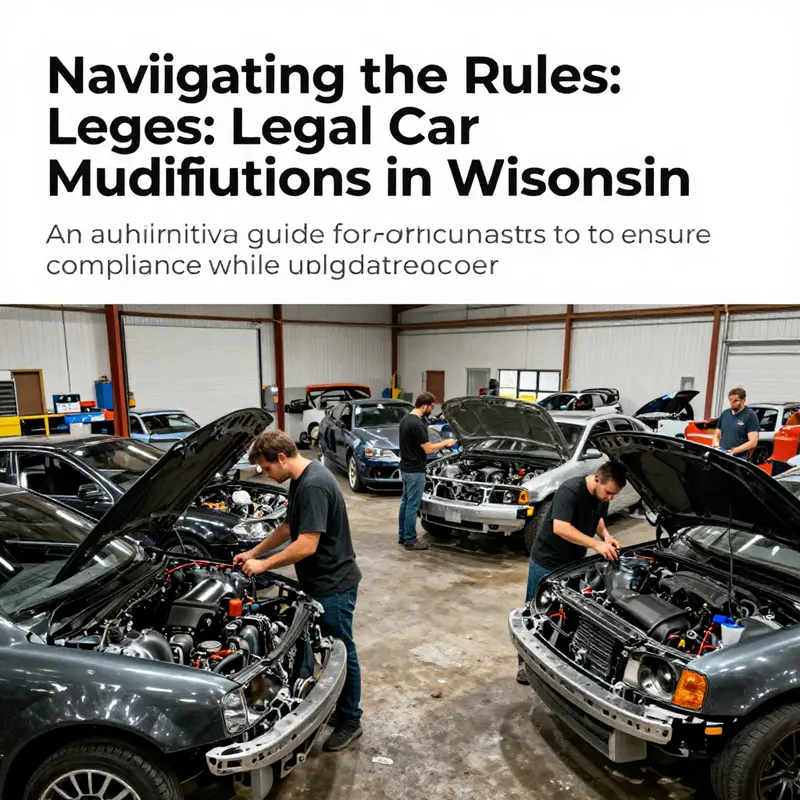
Wisconsin is a haven for car enthusiasts, where modifications can elevate both performance and aesthetic appeal. Understanding the legal framework surrounding car modifications is crucial for hobbyist car modifiers, professional tuners, and classic car restoration enthusiasts alike. This guide unpacks the legal landscape of car modifications in Wisconsin, providing clarity on what’s permissible and what’s not. It delves into four main areas: exhaust system modifications ensuring compliance with emissions standards; tire and wheel changes that maintain safety integrity; body modifications including paint regulations; and interior upgrades that uphold safety standards. With insights tailored for all types of car lovers, this article equips readers with the knowledge needed to personalize their vehicles while staying within legal boundaries.
Breathing Right in the Badger State: Understanding Legal Exhaust System Modifications in Wisconsin
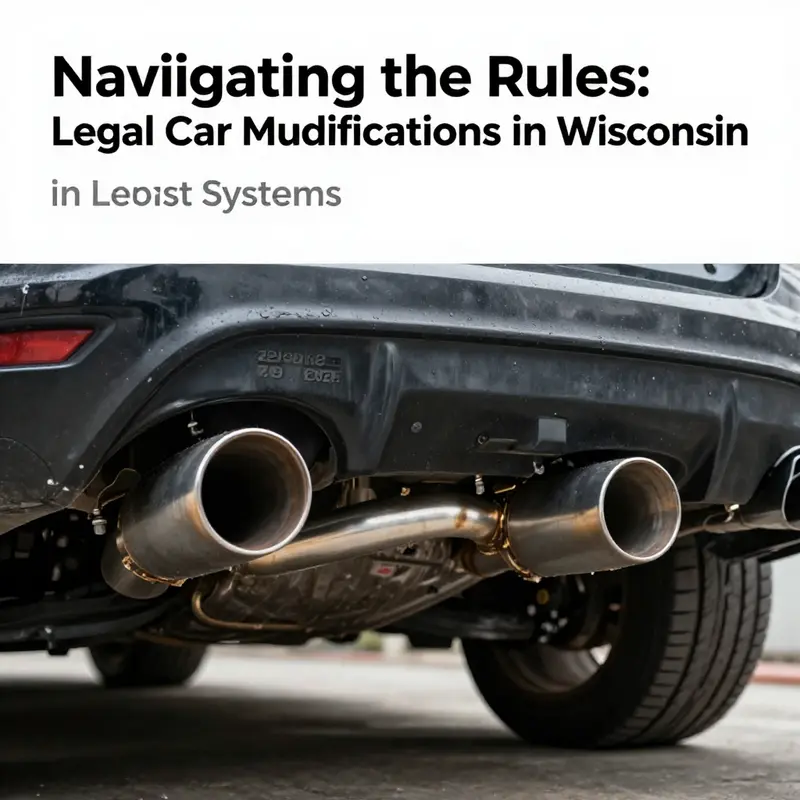
Wisconsin’s roads carry a long history of automotive curiosity, from rugged trucks to quiet commuter cars, and the state’s approach to modifying exhaust systems sits at a careful intersection of public health, environmental stewardship, and practical road use. The question of what counts as a legal exhaust modification in Wisconsin does not have a single, sweeping answer. Instead, it rests on compliance with federal emission standards, state environmental regulations, and local noise codes, all while preserving the vehicle’s basic safety features and roadworthiness. In this landscape, exhaust modifications are permitted to the extent that they do not push a vehicle outside the bounds of emissions control and do not create hazards for drivers or the public. Understanding this balance helps owners pursue performance goals without risking fines or registration issues, and it also reveals why Wisconsin’s enforcement posture looks toward verification and certification rather than blanket prohibition.
At the heart of Wisconsin’s stance is the recognition that exhaust systems influence two intertwined domains: emissions and noise. The U.S. Environmental Protection Agency (EPA) sets broad standards for air quality by regulating emissions from motor vehicles, including the components that govern what comes out of the tailpipe. Wisconsin’s Department of Natural Resources (WDNR) and the Wisconsin Department of Transportation (WisDOT) collaborate with the EPA to ensure that aftermarket exhaust components meet those standards. This shared responsibility means that after-market parts are not categorically illegal; they are permissible when they are certified to meet emissions limits and do not cause the vehicle to depart from legal performance in a way that raises environmental or safety concerns. When a modification risks increasing emissions beyond what the state can tolerate, or when a part lacks proper certification, it steps into illegal territory. In practice, this means many bolt-on performance exhausts are allowed, but you should avoid removing catalytic converters, bypassing emission controls, or installing components that make the vehicle noncompliant with Wisconsin’s environmental rules. This enforcement framework echoes a nationwide pattern: ownership of a legally modified exhaust hinges on accountability to emissions standards and local ordinances, not on a prohibition of all aftermarket upgrades.
One of the most common questions surrounding legal exhaust alterations concerns the catalytic converter and related emission-control devices. In Wisconsin, as in most states, the catalytic converter plays a central role in ensuring that a vehicle meets emission thresholds when tested. Removing or disabling a converter typically results in higher emissions, which can trigger a failed emissions inspection. Wisconsin requires emissions testing for most passenger cars, and failure to pass can prevent lawful operation on public roads. Drivers should therefore treat any exhaust upgrade as a package deal: the performance gains should be achieved without undermining the vehicle’s catalytic converter and other emission-control components. This principle is not just a matter of compliance but also of broader environmental responsibility. When choosing an exhaust system, buyers should verify that the parts have EPA certification or Wisconsin-appropriate equivalents. The EPA maintains a list of certified aftermarket exhaust components that can serve as a reliable reference point for legality. By aligning with this documentation, a Wisconsin resident can pursue a more aggressive exhaust tone or improved flow while staying within the legal framework.
Beyond emissions, Wisconsin’s legal landscape includes the issue of noise. Local municipalities frequently regulate vehicle noise, with decibel limits that vary by city or county. Even where an exhaust system itself is compliant with emissions rules, it can still trigger trouble if it produces noise levels that exceed local ordinances. In practice, this means that systems designed to produce an aggressive exhaust note must still be quiet enough to avoid nuisance citations. Features like louder mufflers, aggressive resonators, or unshielded straight pipes can lead to enforcement action, particularly in residential neighborhoods or school zones. A prudent approach to exhaust upgrades becomes a balance between achieving the desired sound and staying within the decibel thresholds established by local authorities. It’s not merely a regulatory checkbox; it’s a real-world test of how a modification interacts with the fabric of Wisconsin’s communities and daily life on the road.
The interplay between state and federal rules is more nuanced than it might appear at first glance. Wisconsin does not maintain a single, comprehensive list of approved aftermarket exhausts; instead, it relies on the framework of emissions compliance established by the EPA, supplemented by WDNR guidance and WisDOT registration standards where applicable. The practical consequence for an enthusiast is to approach an upgrade with due diligence. Before making a significant change, consult the WDNR and check whether the modification could alter the vehicle’s classification for emissions testing. If the part is EPA-certified, and if the installation preserves the integrity of the vehicle’s emission-control system, the upgrade is far more likely to be permissible. Conversely, if a part is marketed as “high-performance” but lacks EPA certification or cannot be proven to maintain acceptable emissions, the modification should be regarded as risky or unlawful. The EPA’s official resources provide a baseline for these determinations, and Wisconsin’s agencies translate those federal requirements into state-tested expectations that impact inspections and registration. For those seeking a concise, up-to-date federal perspective, the EPA’s vehicle emissions testing page offers authoritative guidance on what counts as compliant aftermarket exhaust components and the testing processes that determine legality.
For readers who want a broader view of how exhaust modifications fit into the larger spectrum of car customization, a helpful resource discusses legal car modifications more generally. It presents a balanced overview of what kinds of changes are permissible, what forms of documentation are wise to keep, and how to navigate insurance and registration concerns that often accompany performance-oriented upgrades. Readers can explore that broader discussion through this link: Legal car modifications. While the focus here is specifically on exhaust systems, the same principles—emissions compliance, safety preservation, and adherence to local rules—apply across many modification categories. Keeping a steady eye on these shared principles can prevent missteps that lead to costly compliance issues.
In practice, most Wisconsin drivers who pursue exhaust system upgrades do so with a careful plan. They source parts that are EPA-certified and compatible with the vehicle’s existing emission-control architecture. They work with reputable installers who understand the intricacies of catalytic converters, oxygen sensors, and the computer controls that monitor exhaust performance. They plan an emissions-tuning approach that does not override the sensors or trigger fault codes, avoiding the scenario where an upgrade yields transient performance gains but long-term reliability questions or periodic inspection failures. This practical mindset aligns with the state’s broader emphasis on safety, environmental stewardship, and lawful operation on public roads. It’s a reminder that modifications are most sustainable when they respect the system that makes the vehicle meet road-use standards, rather than when they chase a loud roar at the expense of compliance.
Wisconsin also places value on documentation and due diligence. While a modification to an exhaust system may be technically permissible, the state expects vehicle owners to maintain records that demonstrate compliance if questioned during inspections or at a roadside stop. This includes keeping receipts and installation notes for the exhaust components, proof of EPA certification, and a clear understanding of how the installation affects the vehicle’s emissions profile. In some cases, local ordinances may require additional notices or registration steps if the modification alters the vehicle’s identity or registration details in ways that WisDOT recognizes. The guidance is explicit: modifications that compromise safety or identity, or that contravene emissions rules, can lead to fines or registration issues. The underlying message is straightforward: responsibility is part of the modification process, and a well-documented upgrade reduces uncertainty for drivers who want to enjoy the benefits of a louder or more efficient exhaust without paying a costly compliance price.
When contemplating an exhaust upgrade, it is natural to weigh the trade-offs between performance, sound, and compliance. A well-chosen, compliant exhaust can deliver a meaningful improvement in exhaust flow and engine efficiency while preserving reliability and quiet enough operation to avoid local pushback. On the other hand, a poorly chosen system—one that touts extreme decibel levels or that relies on unlawful removal of emission-control components—risks emissions-test failures, fines, and potential vehicle immobilization if registration becomes jeopardized. Wisconsin’s framework makes the trade-off explicit: the best path is one of certified parts, careful installation, and ongoing attention to both federal and state regulations. In this context, the practical advice becomes more concrete. Start with EPA-certified exhaust components; verify Wisconsin-specific compliance channels; consult the WDNR guidance; and be mindful of local noise rules. The end goal is a vehicle that sounds right for the community, performs within the engine’s design envelope, and sails through annual inspections without drama.
For readers who are curious about the broader implications of exhaust modifications on insurance, resale value, and maintenance, a chorus of guidance exists in consumer-facing resources. It is important to recognize that while exhaust upgrades can be legitimate, they often intersect with other concerns. Insurance, for instance, may respond to changes in a vehicle’s performance or safety features. Resale value can rise or fall depending on how the modifications are perceived by buyers who value compliance and reliability. The surrounding ecosystem—covering documentation, maintenance rituals, and the ongoing compatibility of parts with the vehicle’s on-board computer systems—matters almost as much as the exhaust itself. In short, a thoughtful, legally compliant approach to exhaust upgrades can safeguard the vehicle’s long-term value and road legitimacy, while a rushed or non-compliant path can complicate ownership in meaningful ways.
As a final note, readers are encouraged to stay connected with official sources to ensure accuracy as rules evolve. The Wisconsin Department of Transportation and the Wisconsin Department of Natural Resources periodically update guidance to reflect new emissions standards, technology changes, and shifts in local enforcement practices. In addition, federal updates from the EPA can alter the certification landscape for aftermarket exhaust components. Keeping a finger on the pulse of these developments helps ensure that a modification remains within the legal boundaries while delivering the performance and auditory experience a driver desires.
External resources remain essential for grounding decisions in current law. For a broader federal context on vehicle emissions testing and aftermarket exhaust components, refer to the EPA page cited earlier. This external reference provides a backbone to the state-level guidance and helps readers evaluate parts against national standards. While Wisconsin may tailor its enforcement to state and local needs, the underlying emissions framework is federal in origin, and awareness of that connection strengthens avenues for compliant modification.
In sum, legal exhaust system modifications in Wisconsin exist within a carefully drawn framework that respects emissions controls, local noise regulations, and safety considerations. The path to compliance is progress through verified, EPA-certified components, proper installation, and a willingness to confirm that the upgrades do not undermine the vehicle’s ability to pass emissions testing or to operate safely on Wisconsin’s roads. With thoughtful planning and responsible execution, Milwaukee and Madison commuters, rural residents, and all Wisconsin drivers can enjoy the benefits of upgraded exhaust systems without stepping outside the lines that keep the state’s air clean, its roads safe, and its neighborhoods peaceful. The goal is not simply louder or faster, but better governed, environmentally aware, and road-ready performance that aligns with the values of the Badger State.
For readers seeking a broader context on how exhaust modifications fit into the larger landscape of legal car modifications, explore the linked resource on legal car modifications for a holistic view of best practices, documentation, and risk mitigation: Legal car modifications.
External reference for federal context and emissions requirements: https://www.epa.gov/vehicle-emissions-testing
Wheels and Widths under Wisconsin Law: Navigating Tire Choices Without Crossing the Line

Wheels and Widths under Wisconsin Law: Navigating Tire Choices Without Crossing the Line
Choosing tires and wheels is more than a cosmetics exercise. In Wisconsin, the road ahead is navigated by safety, compliance, and a practical understanding of how modifications interact with the vehicle’s original design. While many aftermarket tire and wheel combinations are legal, they must fit within a framework that prioritizes reliable handling, accurate reporting of vehicle identity, and adherence to federal safety standards. The first rule is simple: any change to the tire or wheel package must preserve the vehicle’s intended performance characteristics. The second rule follows a common sense corollary: if you introduce a setup that alters the vehicle’s dimensions in a way that could affect steering, braking, or stability, you should expect closer scrutiny from inspectors and, in some cases, penalties if the change creates a hazard on the road. The Wisconsin emphasis on safety means that what matters most is not how aggressive a look you want but whether the tire and wheel combination keeps the vehicle predictable, controllable, and compliant with the rules that protect drivers and pedestrians alike.
Tire choice sits at the heart of this balance. Wisconsin requires tires to be properly sized and matched to the vehicle’s make, model, and year as specified by the manufacturer. It is not enough to slip on a wider tire in hopes of improving grip; the new size must align with the vehicle’s design limits. Installing tires that are significantly wider or narrower than stock can alter how the vehicle responds in cornering, how quickly it stops, and even how quickly the ABS engages. Such changes aren’t just about grip; they influence steering feel, suspension dynamics, and braking forces at the contact patch with the road. In practical terms, a tire that is much wider than recommended for a given wheel well can rub against the fender liners or suspension components, creating noise, wear, and, more ominously, a loss of control at highway speeds. Wisconsin inspectors look for evidence that the tires won’t rub during full suspension travel or when the steering is turned to its maximum extremes, especially when the car is loaded or driven over uneven pavement.
A related criterion concerns tandem or mismatched sizing. Wisconsin law discourages or prohibits mismatched tire sizes on the same axle. When the two tires on one axle have different dimensions, the vehicle can experience uneven traction, unpredictable braking behavior, and accelerated wear. On a snowy or wet Wisconsin road, those discrepancies can become safety liabilities. The same logic extends to the interaction between tires and the vehicle’s electronic stability control systems. If the size change alters the rotational characteristics of the wheels enough to affect wheel speed readings at the ABS or traction control sensors, the system might function oddly or disengage unintentionally. In short, while a consumer might be tempted to experiment with a sportier or more aggressive look, any tire change should be evaluated for its impact on handling, braking performance, and compatibility with the car’s safety systems.
Wheel modification rules in Wisconsin follow a similarly pragmatic line. Wisconsin does not explicitly permit oversized rims or aggressively stretched tires in the sense of providing a blanket allowance. The legal risk isn’t necessarily a formal ban on every large wheel, but it rests on fitment and safety. If a wheel design extends beyond the fender well or causes the tire to rub against suspension members or the bodywork under normal operation, it is likely to be deemed illegal because it introduces a hazard that did not exist with the original equipment. Even minor aesthetic changes—different rim finishes or styles—are generally permissible if they do not interfere with clearance, safety systems, or highway use. The critical boundary here is clearance: any wheel that physically interferes with suspension travel, steering, or tire contact must be reconsidered. The line is drawn where the wheel and tire combination begins to violate the vehicle’s intended geometry, or where the fitment risks damaging the suspension, braking components, or body structure.
Beyond fit and clearance, the interaction with lighting and visibility must be considered. Wisconsin law is clear that modifications should not obstruct or alter the function of essential lighting elements such as headlights, brake lights, or turn signals. A wheel or tire setup that somehow modifies the light pattern or creates unusual reflections or glare can draw scrutiny. While many wheel upgrades emphasize aesthetics or performance, the legal standard remains anchored in safety and visibility. This is why even seemingly minor changes can trigger inspections if they affect light distribution, mounting points, or the ability to maintain proper clearance for lighting elements.
On the federal side, the compliance framework tightens the leash further. When aftermarket rims or tires are installed, they must continue to meet federal safety standards that apply to the vehicle’s tires and wheels. In particular, the relevant standards focus on tire performance and wheel strength. If a modification does not align with these standards, it may lead to citations during inspections or traffic stops. The risk isn’t limited to a failed inspection; it can also affect the vehicle’s registration status and, in some cases, the insurance posture if the modification is deemed to have altered the vehicle’s fundamental safety characteristics. To stay on the right side of the line, it is essential to verify that the selected tires and wheels preserve the vehicle’s integrity and do not undermine the systems designed to keep occupants safe.
For Wisconsin drivers planning to adjust tire and wheel configurations, the practical path is to consult the official resources and bring questions to the inspection station or the state department. The Wisconsin Department of Transportation vehicle inspection page serves as a primary reference point for the rules governing tire and wheel compliance. It outlines the steps, measurements, and criteria that inspectors use to evaluate fitment and safety. This resource helps bridge the gap between consumer goals—such as a more aggressive stance or a sportier appearance—and the safety realities that govern road use. When in doubt, err on the side of staying within factory specifications or selecting options that stay within the manufacturer’s recommended range for width, diameter, offset, and clearance. The goal is not to chase the trend but to ensure that the vehicle remains predictable and safe in all typical Wisconsin driving conditions.
For readers seeking practical guidance that connects the legal framework with real-world considerations, the broader conversation about modifications and their consequences can be informative. Changes to tire and wheel packages can influence not only safety but also insurance costs, resale value, and the process of declaring modifications for coverage or registration. A credible resource that discusses these broader implications is available in discussions about car modifications and insurance. That conversation highlights how such changes can affect risk profiles and policy terms, helping owners weigh the tangible benefits of a new setup against the potential implications for coverage and cost. It is important to approach any modification with a holistic view of the car, its systems, and its responsibilities on the road. For readers interested in exploring that dimension, a concise overview is available under the topic of car modifications and insurance. car modifications and insurance.
From a planning perspective, the road map is straightforward. Begin with the manufacturer’s specifications for tires and wheels and identify whether a candidate upgrade stays within that envelope. If the proposed change nudges beyond, consider a conservative alternative that preserves the original geometry and load ratings. When you choose tires, confirm that the new tires maintain the same or higher load capacity and speed rating as the original equipment, and that the overall diameter remains within a few percent of the factory value to prevent speedometer errors and drivetrain strain. When you select wheels, ensure the offset and backspacing keep the tire away from suspension components, the fenders, and any brake hardware. It is also prudent to consider the impact on the vehicle’s ABS and stability control systems, which rely on wheel speed sensors and precise geometry to function correctly. If you cannot verify compatibility with electronic systems, or if you notice changes in steering feel, braking response, or vibration, pause and seek expert advice.
Along this line, it is worth noting that compliance is not merely about one trip to the shop. The WisDOT vehicle inspection process may require that you demonstrate that the chosen tires and wheels perform within the bounds of the vehicle’s original design. You might be asked to provide measurements, such as overall diameter and wheel offset, and to show that the tire fits within the fender clearance without contact during suspension articulation. In some cases, a modification may be allowed with an accompanying note or documentation to keep registration accurate and to prevent misclassification. Documentation is not always required, but if it is requested, be prepared with manufacturer specifications, tire load and speed ratings, and a clear account of the modification steps. The essential practice is transparency and alignment with the vehicle’s safety profile.
The broader lesson for Wisconsin enthusiasts is that legality is a function of safety and predictability. A modification that makes your car look different is not automatically illegal, but one that makes it behave unpredictably—through rubbing, compromised clearance, or interference with safety systems—will attract enforcement attention. The onus is on the vehicle owner to confirm that the setup remains within the vehicle’s original design envelope and does not introduce new risks for the driver, passengers, or other road users. In this sense, tire and wheel choices are a test of restraint and foresight as much as they are a test of ambition and style. As with any modification, take the time to plan, measure, and verify before pulling the trigger.
Finally, the practical realities of Wisconsin driving—varying climates, snow, and road textures—underscore why strict adherence to sizing, clearance, and safety considerations matters. The daily reality of winter detritus, potholes, and sudden lane changes means that a modification that sounds clever in a showroom or on a forum can prove dangerous on a Milwaukee street or a rural Wisconsin highway. A correct choice keeps the car predictable, preserves the integrity of its safety systems, and minimizes the risk of inspection disputes or penalties. For many drivers, the right path is clear: respect the limits, verify the fit with official guidelines, and choose tire and wheel configurations that honor the vehicle’s original design while delivering the performance and appearance readers desire. This balance—safety first, legality second, and personal preference a close third—frames the conversation around tire and wheel modifications and helps ensure that Wisconsin roads remain safe for everyone who shares them.
For further reading on how modifications interact with broader considerations such as insurance and resale value, you can explore more on the topic of car modifications and insurance. That resource discusses how changes to tires and wheels can influence risk assessments, coverage options, and pricing, which can inform your decision before you order parts or schedule an installation. In practical terms, it means balancing the desire for a certain look or performance with the realities of safety, compliance, and cost. Official sources remain the best point of reference for the specifics of Wisconsin law, and the WisDOT vehicle inspection page provides the current framework within which tire and wheel changes must operate. If you are planning a wheel or tire upgrade, review those guidelines early in the process and consult the inspection office if anything looks ambiguous. The intent is not to deter modifications but to ensure that any change remains a safe, compliant, and legally defensible part of your vehicle’s ongoing story.
External resource: For official guidance, consult the Wisconsin Department of Transportation vehicle inspection page: https://www.dot.wisconsin.gov/vehicle/inspection
Body Modifications and Wisconsin Vehicle Regulations: A Practical Overview

In Wisconsin, exterior modifications are evaluated against safety, emissions, and vehicle identity concerns. Cosmetic changes like paint or wraps are generally allowed, but changes that alter the vehicle’s color on more than about 30 percent of the surface area may trigger formal documentation with WisDOT for registration.\n\nBeyond that threshold, modifications should not impair safety features, airbags, sensors, or structural integrity. Emissions considerations remain relevant when changes affect the engine bay or exhaust path, and any modification that could influence emissions should be checked with state requirements.\n\nExterior lighting and visibility features must meet legal standards; decorative lighting should not obscure signals or reduce reliability. For substantial color changes, drivers are advised to consult WisDOT or a local DMV before proceeding and to retain documentation such as photographs of the original and modified appearance. The overall message is to balance personal expression with road safety and record accuracy. For official guidance, contact the Wisconsin Department of Transportation at dot.wisconsin.gov.
Inside Wisconsin’s Car: Navigating Interior Modifications, Safety Rules, and Accessibility Compliance

Modifying a car’s interior in Wisconsin is a landscape that blends practical need with layers of regulation. For many drivers, the priority is comfort, accessibility, or specialized use. For others, it’s the chance to tailor a vehicle to a career or hobby. In Wisconsin, those interior choices are not a free-for-all. They ride on a careful balance of state and federal safety standards, vehicle identity protections, and the practical realities of inspections and insurance. The path through these rules, while tedious at times, aims to prevent modifications from undermining crash protection, airbag integrity, or occupant egress, while still allowing meaningful customization when it can be done safely and legally. This chapter follows that path, focusing on interior changes from accessibility adaptations to everyday upgrades, and showing how the best decisions hinge on safety, documentation, and inspections as much as they hinge on taste or budget.
At its core, interior modification in Wisconsin must respect two overlapping sets of requirements. The first is the federal safety framework administered by the National Highway Traffic Safety Administration (NHTSA). The second is the state-level oversight provided by WisDOT and, where relevant, the Wisconsin Bureau of Motor Vehicles (BMV). Together they shape what counts as a permissible interior alteration and what steps a driver must take to stay compliant. This is especially true when the change touches the vehicle’s structural integrity, electrical systems, or safety mechanisms such as seat belts and airbags. Even a project that seems small—like a custom dash kit or upgraded seating—needs to be considered in light of whether it could interfere with crash forces, occupant protection, or system performance during a collision. The goal is not to stifle customization but to preserve the vehicle’s safety envelope while enabling necessary or desired changes.
Consider, for example, the spectrum of interior work that Wisconsin typically views as permissible. Upgrades like replacing seat covers, adjusting trim, or adding new interior finishes are generally allowed, so long as they do not compromise safety features or alter the number of seats. A change that reduces seat count—for instance, removing a seat to create more cargo space—enters a gray area that can complicate registration and insurance. In practice, most interior cosmetic upgrades stay well within the law when they preserve the vehicle’s intended occupancy and do not disable or divert critical safety equipment. Likewise, adding nonessential accessories such as new floor mats, dash kits, or lighting elements inside the cabin is usually permissible so long as they do not affect the deployment of sensors, airbags, or other safety systems, nor create a distraction that could violate exterior lighting or visibility rules.
The lines get tighter when the modification touches the vehicle’s core safety architecture. Wisconsin, like other states, has a sharp line around anything that could alter crashworthiness or the resilience of structures during a collision. An interior modification that reconfigures mounting locations for airbags, alters the integrity of pillars or the floor, or modifies wiring linked to safety devices can feed into the state’s inspection regime and, in some cases, trigger additional certifications. The risk here is not merely regulatory but practical: a failed inspection or an insurer’s denial can follow if the work undermines crash performance or fails to meet the necessary standards. In that sense, interior changes are a test of whether the final result preserves, or at least does not compromise, the vehicle’s protective envelope.
One of the most consequential areas inside the car concerns accessibility modifications. Wisconsin recognizes the importance of mobility and accessibility, and drivers may need ramps, lifts, or other assistive devices installed to enable safe, independent operation of a vehicle. The synthesis of accessibility with safety is precise: any ramp or lift installed inside the passenger compartment must comply with crashworthiness standards and must not interfere with the vehicle’s restraint systems. In practice, this means that accessibility modifications are almost always performed by specialized installers who are familiar with the relevant safety criteria and inspection procedures. The installers’ training and the use of certified components become essential to achieving compliance. Wisconsin’s approach seeks to ensure that assistive devices do not merely fit inside a vehicle but integrate with its safety architecture so occupants remain protected in the event of a crash.
For drivers pursuing accessibility accommodations, Wisconsin offers a few notable pathways. If a modification is necessary due to a disability or medical need, it may be possible to apply for specialized license plates or exemptions that recognize the unique nature of the change. Tax exemptions can also be available under state law, but they are not automatic. Eligibility typically depends on the modification being performed by a certified installer and passing a state-approved inspection. The Wisconsin Bureau of Motor Vehicles (BMV) provides guidance, including lists of approved modification providers who can help ensure that the work meets the state’s standards and that the vehicle continues to comply with registration requirements. This blend of financial incentives and formal oversight helps ensure that accessibility projects improve mobility without compromising safety or legality.
The practical path to compliance for interior modifications thus often begins with a conversation among three parties: the vehicle owner, the installer, and the regulatory authority. Owners should start by clarifying the intended use of the modification and any potential impacts on seating capacity, airbag system performance, or electrical integration. The installer’s role is to design and execute the modification with components and techniques that are demonstrably safe and compliant. Finally, WisDOT or the BMV, depending on the modification, provides the inspection framework, confirms the legality of the change, and determines any additional steps for registration, licensing, or exemptions. This collaborative process minimizes the risk that an interior project will inadvertently create compliance issues or leave the owner financially exposed to fines or insurance gaps.
Insurance is another critical thread in this narrative. Modifications, even interior ones, can influence the terms and cost of coverage. Insurers assess risk based on how a change affects safety, reliability, and the vehicle’s value. If a modification alters occupancy, safety equipment, or the vehicle’s ability to meet crash standards, the insurer may adjust premiums or require disclosures or endorsements. It is prudent for owners to inform their insurer before undertaking more than cosmetic interior work. In turn, insurance considerations reinforce the broader principle that interior changes should harmonize with safety compliance rather than pursue aesthetics at the expense of protection. The goal is for a modified interior to be both safer and legally defensible, preserving the vehicle’s insurability.
For the curious reader who wants a broader sense of how modifications intersect with value and risk, a practical reference is available in a comprehensive guide that covers the spectrum of car modifications. It provides context on how interior changes—whether for accessibility, comfort, or professional use—can influence resale value, coverage, and regulatory compliance. See the car modifications guide for a wider lens on these dynamics. car modifications guide.
When approaching interior work in Wisconsin, the step-by-step logic often follows a familiar arc. First, assess the necessity and scope of the modification. Then, verify that the plan will not impair any safety devices or structural elements. Next, identify whether the modification falls under a special program or requires an inspection or certification. Finally, complete any registrations or exemptions with WisDOT or the BMV, as applicable. The process is designed to slow us down just enough to prevent unsafe or noncompliant changes while keeping the door open to the kinds of interior improvements that matter most to drivers with mobility challenges, work needs, or personal preferences. The key is to treat interior changes as a system-level decision rather than a single, isolated swap of components.
A practical example helps illustrate this approach. Suppose a driver needs a wheelchair access ramp installed inside a van. The ramp must be integrated with the vehicle’s floor, seating, and restraint system in a way that preserves occupant protection. The installer would document how the ramp is anchored, how it interacts with seat belts, and how it affects cabin clearance and egress. The modification would then be reviewed against WisDOT’s guidelines and any state-approved inspection procedures. If the design passes, the owner can proceed to registration and, if eligible, apply for any accessibility-related exemptions. If the ramp design changes the vehicle’s identity or tamper with an essential safety function, the project would likely require additional approvals, testing, or a different installation approach. This example underscores the core idea: safety and identity protections govern interior changes as much as the desire for customization.
The inspection dimension is often the most overlooked but highly consequential phase. Wisconsin does not rely solely on a hopeful self-certification by the installer. Vehicles undergoing important interior changes—especially those affecting seating or safety systems—may be subject to additional inspections before registration or renewal. Such inspections provide a tangible check that the modification does not undermine crash safety or the vehicle’s ability to meet emissions and noise standards. For some people, the possibility of extra inspections is a practical deterrent to sloppy work; for others, it is a necessary safeguard that ensures the vehicle remains a reliable and safe mode of transport. In either case, it is crucial to anticipate potential inspections and to plan for the associated time and cost, rather than discovering the regulatory snag only at the moment of registration.
The legal framework for interior modifications thus rests on three pillars: safety compliance, accessibility needs, and the legitimacy of the installation process. The first pillar is safety integrity—the protection of occupants through intact airbags, seat belts, and structural strength. The second is accessibility, recognizing that mobility needs may require substantial interior work but must be reconciled with safety and registration. The third is legitimacy and oversight, which means respecting the inspection and certification steps that confirm the modification is not merely cosmetically appealing but technically sound. When these pillars are observed, interior modifications can expand a vehicle’s utility and accessibility without compromising Wisconsin’s commitment to safe, responsible driving.
In the broader landscape of vehicle customization, it is easy to focus on the flashy exterior elements or high-tech conveniences and forget the crucial interior safety architecture. Yet the interior is where occupants live—the seats, restraints, anchors, and control interfaces. In Wisconsin, those interior systems are protected by a web of standards that encourage thoughtful planning, professional installation, and transparent documentation. A well-executed interior modification respects the vehicle’s original safety intent while addressing practical needs, whether those needs arise from disability accommodations, specialized transportation work, or simply a personal preference for a more comfortable cabin. In that sense, interior modifications become a case study in regulatory literacy: they demand that drivers understand not only what is possible but what is permissible, how to prove it, and why the proof matters for safety and insurance alike.
For readers seeking a practical roadmap, the starting point is not just a desire to change the interior but a conversation about the modification’s scope with a qualified installer and the state regulators who oversee it. It is a process that rewards diligence, documentation, and a clear understanding of how an interior project interacts with the vehicle’s safety systems and identity. The goal is to create a cabin that serves the driver’s needs while preserving the vehicle’s crash protection, occupant safety, and registration legitimacy. In Wisconsin, this balanced approach is not a bureaucratic hurdle; it is a path to responsible customization that respects both personal needs and public safety.
External guidance continues to evolve, and owners should consult official sources as changes occur. For official guidance on how to handle interior modifications and the steps for compliance, see the Wisconsin Department of Transportation’s interior modifications resources. This page provides the current standards, inspection procedures, and contact points for approved installers. It is a vital companion to any interior project, whether the goal is accessibility or a more customized cabin that still adheres to the law.
External resource: https://dot.wisconsin.gov/vehicle/interior-modifications
Final thoughts
Understanding the legalities surrounding car modifications in Wisconsin empowers enthusiasts and professionals alike to navigate the thrilling world of vehicle personalization confidently. By adhering to state and federal regulations, car modders can unleash their creativity while ensuring compliance, safety, and respect for the road. From exhaust systems to body modifications and interior upgrades, making informed choices is crucial for a satisfying and lawful car modification journey in the Badger State.