
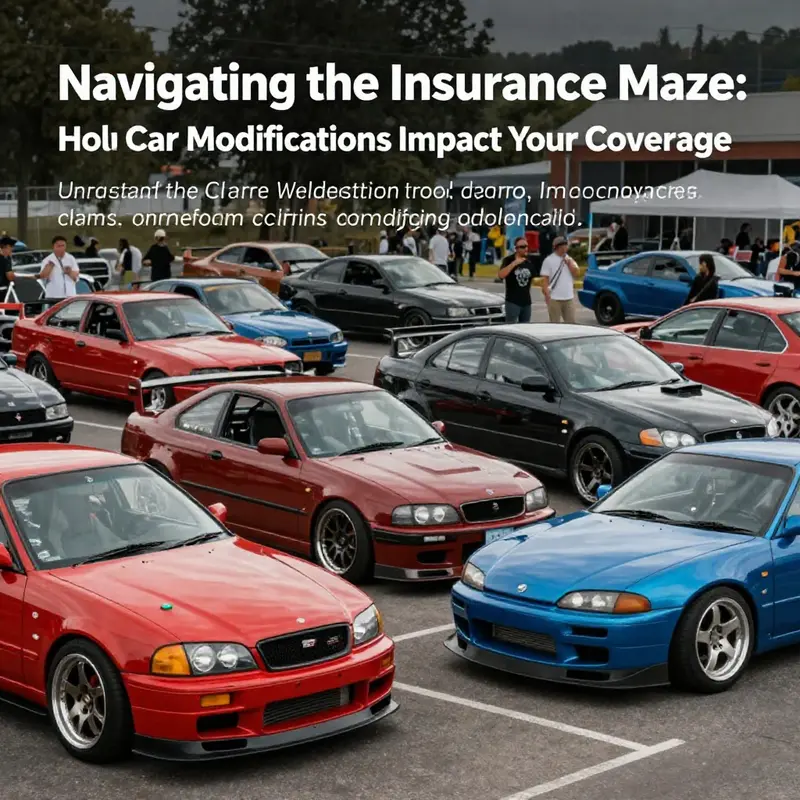
For car enthusiasts, modifications can breathe new life into a vehicle, transforming it from ordinary to extraordinary. However, behind the thrill of custom enhancements lies an essential consideration—car insurance. Modifying a vehicle can profoundly affect insurance premiums, the likelihood of claim denial, and the legal ramifications of such changes. In this exploration, we will delve into the impact of modifications on car insurance premiums, the risks of claim denial due to unreported modifications, and necessary legal compliance for vehicle upgrades. Whether you’re a dedicated hobbyist, a professional tuner, or an auto parts supplier, understanding these facets is crucial for safeguarding both your investment and your peace of mind.
The Premium Puzzle: How Modifications Shape Car Insurance Costs and Coverage

Modifying a car is as much about personal expression as it is about performance or practicality. For many drivers, a tweak here or an upgrade there can transform a stock vehicle into something that better fits their needs, tastes, and ambitions. Yet the same changes that customize a car can also shuffle the rules of insurance. The premium you pay, the scope of coverage you can claim, and even whether a claim will be honored after an crash can hinge on decisions you make long before you take the road. Understanding the premium puzzle means looking beyond the glossy finish of a new exhaust system or a gleaming set of alloy wheels and into the way insurers assess risk, discloseability, and the economics of repair and replacement in today’s automotive landscape. In this chapter, we’ll trace how modifications intersect with insurance, why some alterations carry heavier penalties than others, and how drivers can navigate the process with foresight and fairness to both themselves and their insurers. The central thread is clear: any alteration alters risk, and risk has a price tag attached to it in the form of premiums, coverage adjustments, and policy requirements that must be respected if protection is to remain intact when it’s needed most.
To begin, it helps to map the spectrum of common modifications and the instinctive reactions they provoke from insurers. On one end are performance enhancements—engine tuning, turbocharging, and high-performance tires—that are designed to push a car’s speed, acceleration, or handling to levels beyond stock specifications. From an underwriting standpoint, these changes often translate into a higher probability of loss. Faster cars can reach higher speeds more quickly, and sharp handling increases the likelihood of sharp maneuvers and, in some scenarios, risky driving behavior. The potential repair costs after an accident can be substantially higher when premium components, forged internals, or specialized tires are involved. Insurers consequently apply higher premiums to offset the greater exposure. But it’s not only the acceleration that matters; the frequency with which a high-performance vehicle might be targeted by thieves can also rise with certain upgrades, especially when the modifications are conspicuous or widely associated with a higher resale value. In other words, the risk calculus expands beyond mere performance to include theft and the total cost of repairs.
Aesthetic modifications—custom paint, body kits, aftermarket rims, and interior finishes—also find their way into the underwriting equation, albeit for different reasons. The initial outlays here may be a cosmetic investment, but the replacement costs during a claim can be steep. Shiny new rims or a body kit can push the replacement bill higher in the event of damage, and in some cases, these embellishments are more attractive to thieves, which can raise the likelihood of theft-related losses. Insurers consider not just the parts themselves but the broader implications for claim outcomes and repair logistics when calculating premiums. This is why two vehicles with identical factory specs can carry notably different premium prices once their visual presentation diverges through aftermarket additions. The financial impact of cosmetic upgrades may be less about the likelihood of a crash and more about the cost continuum of getting the vehicle back to its best state after a loss.
Even seemingly minor or everyday additions—such as a roof rack, a more powerful audio system, or additional safety features like dash cameras and upgraded lighting—can influence coverage if they are not properly disclosed or documented. Roof racks, for instance, can alter load characteristics and affect how a vehicle behaves under certain driving conditions. They can also become points of failure in the event of a rollover or crash where the rack or its mounting hardware fails, potentially changing liability or comprehensive outcomes. Upgraded audio and display systems may not directly increase the risk of an accident, but they contribute to the overall replacement cost profile of the car after a loss. In the eyes of insurers, the combination of higher replacement costs and the potential for additional damage to interior or electrical components can push premiums upward or require specific endorsements to maintain full coverage.
The core requirement that threads through every modification is disclosure. Insurance is a contract built on information. When a policyholder makes changes to a vehicle, those changes can alter the underwriting dynamics in ways that aren’t always immediately obvious to a lay observer. Failing to tell an insurer about modifications is among the most costly mistakes a driver can make. Non-disclosure can lead to policy cancellation, denial of a claim, or a significant reduction in payout if a claim is filed after an undisclosed modification is implicated in the loss. The reason is straightforward: an unreported alteration may have changed the risk profile in ways the insurer had not priced at the time the policy was issued. Even if the modifications are legal and compliant with local regulations, the absence of notification creates a breach of the contract, undermining the insurer’s ability to assess risk accurately and to mobilize appropriate reserves for a potential claim.
To minimize risk for both parties, many insurers require that modifications be documented, verified, and, in some cases, approved before coverage is extended in full. Verification might involve a professional assessment, receipts for parts and labor, and sometimes an official declaration to a regulatory body or a vehicle registration authority. Depending on the jurisdiction, certain modifications may require re-registration, roadworthiness checks, or compliance with safety standards. When a change passes these checks, it can be reflected in the policy with a revised premium and updated coverage terms. When it does not pass or when documentation is missing, the insurer may constrain coverage—often limiting it to third-party liability or denying a comprehensive claim altogether if the modification is judged to contribute to the loss or to present a safety hazard. The emphasis here is not to discourage modification but to ensure that any modification is transparent, legally compliant, and integrated into the risk management framework the policy represents.
The decision to modify a car, then, becomes a delicate balancing act between the benefits a driver seeks—enhanced performance, personalization, or resale value—and the financial implications tied to insurance. In practice, the premium response to modifications is rarely uniform. It’s shaped by a matrix of factors: the type and extent of the modification, the vehicle’s original value and reliability, the driver’s claims history, the typical theft profile of that model, and even the intended use of the car. A luxury or high-value vehicle often experiences disproportionately larger premium shifts because the cost to repair or replace components is higher. Electric vehicles, with their specialized parts and repair infrastructure, can also command higher increases, not solely because of performance goals but due to the higher cost of batteries, specialized repair labor, and the potentially greater risk of total loss in certain accident scenarios.
Beyond the raw cost calculus, insurers watch how modifications influence safety and roadworthiness. Certain alterations can impair safety systems or change the effectiveness of stability control, braking, or airbag deployment. If a modification diminishes a component’s reliability or tamper with the vehicle’s computerized safety networks, an insurer might reserve the right to adjust coverage or require corrective measures before agreeing to full protection. Others may assess whether a modification could complicate maintenance and repair in the event of a breakdown. The net effect is that while some added features seem purely desirable—such as upgraded brakes or improved lighting—these can also trigger a more rigorous underwriting review if they alter how the car behaves on the road.
Given this landscape, the prudent driver begins not after a purchase decision but during the planning stage of any modification project. The goal is not to avoid modifications but to approach them as a structured risk-management exercise. Start by researching how a proposed change could affect insurance costs and coverage. This means engaging in a candid discussion with the current insurer or a broker about the exact modification plan, the parts involved, installation quality, and any professional oversight that will accompany the change. Providing a detailed bill of materials, installation invoices, and verification certificates can streamline the process and build a transparent risk profile that insurers can price more accurately. It also helps to request a written endorsement or rider that explicitly documents the modification and its impact on the policy. These documents serve as a bridge between the modification itself and the coverage that follows, reducing the chance of ambiguity should a claim arise.
Pre-modification education can yield tangible savings and better protection. For drivers who want to proceed with a particular upgrade, a practical approach is to solicit quotes from multiple insurers and ask each how they treat that exact modification. Some providers may offer generic endorsements, while others will tailor a policy to the modified state, sometimes at a higher premium but with more extensive coverage that aligns with the new risk. In certain cases, specialists or niche insurers who routinely insure modified vehicles may present more favorable terms than traditional practitioners who are less familiar with these changes. The important thing is to compare apples to apples: understand whether the additional premium is coupled with expanded limits, better theft protection, or a more protective claims process for modifications that fail or cause damage. This due diligence can prevent sticker shock when the policy renewal arrives and provide a clearer path to maintaining comprehensive protection without compromising safety or legality.
What should drivers look for in a modified-vehicle insurance arrangement? The answer is twofold: clarity and continuity. Clarity means the insurer must outline precisely which modifications are covered, which are excluded, and how the premium is calculated. The policy should detail any restrictions, such as limits on towing, use cases (daily driving vs. track days), or storage requirements that relate to the modification. Continuity means that the moment a change is made, there is a process to reflect it in the policy without a lapse or a risky delay in coverage. This often involves submitting the relevant documentation before the modification is installed and ensuring the new premium is set before the vehicle hits the road with the upgrade. Without this continuity, a claim could become financially complicated if the insurer disputes whether the modification existed at the time of loss or if it contributed to the incident.
For drivers navigating the modification maze, there is an explicit caution about timing and disclosure. The simplest rule is to inform the insurer before the modification is completed and to obtain written confirmation of coverage for the new state of the vehicle. If the modification is performed without notification, the insurer may pause, suspend, or cancel coverage, leaving the owner exposed to substantial out-of-pocket costs in the event of a claim. The policy could become limited to third-party liability, or in the worst case, could be voided entirely if the modification is tied to safety systems or regulatory compliance failures. The consequences extend beyond the financial; there could be legal complications if the vehicle is found non-compliant with roadworthiness checks or if the modification violates local laws. In practical terms, this underscores a broader principle of risk management: remain proactive, document thoroughly, and maintain open channels with the insurer throughout the modification lifecycle.
In some situations, drivers may discover that a modification not only heightens risk but alters the fundamental economics of insurability. Insurers may respond with endorsements that create tailored coverage for the modified state. These endorsements can provide expanded protection for the upgraded components, increased coverage for theft and vandalism of high-value parts, and coverage terms that reflect the new risk profile. In other cases, insurers may request a professional assessment, meticulous documentation of parts and labor, and sometimes proof of compliance with regulatory standards before agreeing to adjust the policy. The overarching purpose of these measures is to align the coverage with the actual risk, rather than relying on a conventional, one-size-fits-all policy that may undervalue or misprice the enhanced exposure. For drivers, the practical upshot is that modified-vehicle insurance is not a static product; it is a dynamic agreement that evolves with each change to the car and each new set of circumstances surrounding its use.
A practical frame for decision-making emerges from this complexity. First, research matters: know how the modifications you have in mind affect insurance costs before committing to them. Second, transparency matters: document every detail of the modification and communicate clearly with the insurer. Third, comparability matters: not all insurers treat modifications the same way, so shopping around can uncover providers who are more sympathetic to your goals or better aligned with your risk tolerance. Fourth, consider specialized paths: in some markets, a dedicated “modified car” policy or a specialty insurer may deliver value that exceeds what a traditional policy can offer, especially when the modification significantly alters the vehicle’s profile or if you frequently participate in events that showcase modified cars. These steps do not guarantee lower premiums, but they improve the odds of finding coverage that meets expectations and minimises the friction of claims when it matters most.
The practical implications for drivers are clear. If you intend to keep driving a modified car, you should build a plan that integrates modification, insurance, and road use from the outset. Talk through your goals with a broker who understands the intricacies of modified vehicles. Gather estimates for parts and labor, and secure a professional assessment wherever possible. Prepare to adjust your budgeting not just for the initial installation but for ongoing costs: periodic revaluations, potential premium adjustments after a renewal, and ongoing maintenance that keeps the modification safe and compliant. In many cases, the best outcome is a well-documented, professionally verified modification that is legally compliant, insured under a tailored policy, and supported by a clear claims process should an incident occur.
For readers seeking a concise primer on the relationship between modifications and insurance costs, you can explore a focused overview that summarizes the key factors that drive premium changes and coverage decisions. This resource can help you quickly gauge the potential financial implications before you start a project. what modifications affect car insurance.
As you weigh the pros and cons of each modification, remember that the goal of insurance is not to discourage personalization but to ensure protection remains meaningful when you need it. The premium is not merely a line item; it is a reflection of risk, cost, and accountability. When you align your modifications with transparent practices, regulatory compliance, and thoughtful risk management, you can preserve the value of your car, stay within the boundaries of your policy, and keep open the possibility of a fair payout if misfortune occurs. The path through the premium puzzle is not about avoiding risk entirely but about managing it with foresight, documentation, and a commitment to trust between driver and insurer. It is this trust that sustains coverage, encourages responsible modification, and ultimately keeps the road safer for everyone on it.
External resource for further reading: for a broader overview of how consumer-focused sources discuss modifications and insurance, including common questions and policy considerations, see https://www.moneywise.com.au/car-insurance/modified-vehicles-and-insurance-what-you-need-to-know
A Risky Recalibration: Navigating Claim Denials and Insurance Realities in Modified Cars
Modifying a car is often a personal statement as much as a mechanical choice. Enthusiasts chase sharper handling, more power, a distinctive sound, or simply a vehicle that stands out. Yet for many drivers, those modifications intersect with a layer of financial risk they may not anticipate. In the insurance world, change is not just a matter of style or speed; it can reconfigure the risk the policy was written to cover. The central tension is simple but consequential: insurance premiums and the likelihood of payout hinge on the vehicle’s declared specifications and intended use. When those come under revision through modifications, the policy must adapt. If it does not, a claim after a loss can become a legal and financial quagmire. This chapter explores how modification can create claim denial risks, why disclosure matters, and how drivers can navigate the process so their coverage remains reliable rather than merely decorative.
To begin, any alteration that alters performance, value, or safety changes the risk profile of the vehicle. A turbocharger or engine remap, for example, does not just increase power; it changes how the engine behaves under load, how quickly it heats, and how long components are stressed during typical and extreme driving. Upgrading suspension or brakes modifies how the car responds to road surfaces and forces, which can affect tire wear, braking performance, and the likelihood of component failure in a collision or during aggressive driving. Even what might seem like cosmetic upgrades such as aftermarket wheels, chassis braces, or high end components carries a cost implication. Insurers evaluate these changes against their underlying risk models, and in many cases, the result is a higher premium to reflect the increased cost of potential repairs and the heightened risk of damage when the vehicle is driven aggressively or subjected to more extreme operating conditions. This is especially true for luxury or electric vehicles where repair costs, replacement parts, and the risk of theft or vandalism tend to be higher. In practice, insurers will look at the entire package: how the modifications affect power delivery, handling, reliability, and the long-term value of the car. They may also consider the likelihood that a modified vehicle will be targeted for theft due to upgraded parts or the allure of higher performance.
The insurance contract rests on the premise that the policy underwriter has enough information to assess risk and price it fairly. When mods are added, the policy may no longer reflect the risk the insurer originally assumed. In some cases, this mismatch can be addressed through a rider or endorsement that explicitly covers the modified vehicle. A mismatch can also occur if the modifications affect safety systems or the roadworthiness of the car. For instance, if a vehicle’s braking performance is altered by aftermarket components, or if a suspension upgrade changes how the car behaves in typical driving conditions, the safety profile can shift in ways that shift risk for the insurer. The point is not that modifications are inherently unsafe or illegitimate, but that they require explicit communication and, in many circumstances, a recalibration of coverage and price. Without that recalibration, gaps can appear between what the policy covers and what actually happens on the road.
Disclosures are not merely a courtesy. They are a component of the contract’s honesty and transparency. If an accident occurs and the insurer later discovers that the vehicle was modified but those changes were not disclosed, the claim can be denied on the basis that the risk was not underwritten at the time the policy was issued or renewed. The denial is not always straightforward or tied to a direct cause-and-effect link between the modification and the accident. Instead, it can hinge on the principle that the insurer did not accept the added risk, and therefore the claim falls outside the scope of the policy as written. In some jurisdictions, undisclosed modifications can be treated as a material misrepresentation, potentially voiding the policy entirely. Even when the modification is not alleged to have caused the accident, the insurer may argue that the increased risk was not underwritten, and the premium did not reflect the car’s altered reality.
This is why the path to secure coverage in a modified vehicle is usually marked by proactive disclosure and collaboration with the insurer. The most fundamental guidance is straightforward: inform your insurer before any modification is performed, or at the very least as soon as you decide to proceed. This allows the insurer to assess the modification, verify its legality, and determine whether an endorsement, rider, or revised policy terms are warranted. In many markets, insurers offer a modified vehicle policy or endorsement designed for cars that have been altered from stock. This coverage can provide protection for the increased costs associated with the modification, such as repair or replacement of non-standard parts, specialized labor, and potential gaps in OEM warranties. The premium will reflect the higher risk, but the policy will be designed to ensure continued coverage rather than creating a risk of denial after a claim. The important thing is to understand that the existence of a modification does not automatically invalidate coverage. What matters is whether the insurer has accepted and priced that modification within the policy document.
Knowledge of the legal and regulatory framework surrounding modifications further complicates the issue but is essential to maintaining coverage. In many regions, modifications must pass a verification and inspection process, sometimes conducted by official bodies such as vehicle registration authorities. If modifications lack legal approval or have not passed the required checks, insurance coverage may be limited or denied, even if the car would otherwise be eligible for comprehensive coverage. This is not an abstract concern. If a modification fails a roadworthiness test or violates safety standards, a claim could be complicated or outright refused. The policy may be interpreted as void for the modified portions, or as void entirely if the modification constitutes a material change that was not disclosed or approved. In practical terms, this means drivers need to maintain documentation proving that modifications were legally performed, that they pass safety checks, and that authorities have accepted the changes. Carrying this documentation in the vehicle or keeping it readily accessible in digital form can help during claim processing and can also reassure the insurer that the modification was undertaken in compliance with local laws and safety standards.
Ethics of disclosure and the practicalities of documentation intersect with the realities of vehicle checks and ongoing risk management. Some drivers assume that a modification is minor or harmless and therefore does not need to be declared. Others may worry that declaring a modification will lead to immediate premium increases or even a cancellation of coverage. These concerns are understandable, but they miss a critical point: acceptance and disclosure do not obligate a policyholder to bear unmanageable costs or lose protection. The insurer’s obligation is to risk-assess accurately. When done properly, the process yields a clarified, enforceable contract that protects both parties. This is particularly important for ongoing coverage that may span years of ownership or lease, where the car may undergo multiple rounds of modifications or changes in use. The safer course is to discuss changes with the insurer in detail, provide any requested documentation, and negotiate the terms. In some cases, the insurer may offer guidance on which modifications are easiest to insure, how to structure the coverage, and what kinds of records will improve the claim-handling process if something goes wrong.
One common mistake that can lead to claim denial is post-accident modification or incomplete post-modification documentation. A driver may decide to install a new exhaust system or a different wheel setup after a claim has been filed or after an accident. If this modification is not reflected on the claim or the policy at the time of the incident, the insurer may question why the vehicle had non-stock parts at the moment of loss. The resulting back-and-forth can drag out the settlement process, or worse, lead to partial pay-outs or denial of parts of the claim. The effect is not simply financial; it can also undermine the policyholder’s confidence in the coverage that was supposed to protect them when they needed it most. To prevent such friction, the best practice is clear communication: notify the insurer of any planned modification, obtain an endorsement if required, and keep both the documentation and the updated policy in hand, ready for review if a loss occurs.
The conversation about modifications and claims should also acknowledge the role of safety and compliance. If a modification affects the vehicle’s safety systems or if it complicates periodic safety checks, the insurer may question the overall risk. This is not about policing taste in upgrades; it is about ensuring the car remains roadworthy and that the risk of further harm is not introduced by non-standard changes. As a result, even seemingly minor changes can influence safety ratings or impact the insurer’s ability to process a claim. In such cases, it may be wise to seek a professional valuation of the vehicle’s current configuration and obtain a written assessment of how the modifications affect safety performance. The value of this documentation lies not only in premium calculation but also in the clarity it provides during a claim review. It helps bridge the gap between the car’s modified reality and the insurer’s risk model, making it easier to determine what is covered and what remains excluded.
For readers who want a practical frame for decision-making, a few guidelines can reduce the likelihood of claim denial or coverage gaps. First, approach modifications with a plan rather than a impulse. Budget not only for the cost of the modification but for any corresponding premium increases and potential adjustments to deductibles or coverage limits. Second, treat the modification as part of the car’s lifecycle. If the car undergoes a modification, schedule a policy review with the insurer at that moment rather than waiting for renewal. Third, document everything. Keep receipts, photos, installation notes, and any correspondence with the installer, the manufacturer of the parts, and the regulatory authorities. Fourth, insist on clarity about what is and is not covered under the policy after the modification. Ask whether the endorsement covers the specific parts and how it applies in the event of a total loss, theft, or a claim involving damaged non-standard components. Fifth, make safety and legality the guiding principles. If a modification affects braking, steering, or crash energy management, or if it fails to pass roadworthiness checks, reevaluate the modification’s necessity and its coverage implications. By following these steps, drivers can reduce the likelihood of claim denial and can ensure that modifications are a source of pride and performance rather than a legal and financial liability.
From a narrative standpoint, it is also important to recognize how the dynamics of modification and insurance intersect with broader lifecycle questions: vehicle ownership, financing arrangements, and even resale value. If a car is financed or leased, the lender or leasing company typically imposes additional requirements for modifications. They may require consent for certain changes or prohibit modifications entirely unless they are performed by approved technicians and documented in a specific way. Failure to comply with those requirements can trigger penalties or affect the terms of the loan or lease, which, in turn, can influence insurance status. For some buyers, the fear of losing coverage or facing denial might push them toward stock configurations, but that is not a necessity. Instead, it is possible to balance the need for performance or personalization with robust risk management. The essential ingredient remains transparency: a policy designed around the actual configuration, not the intended or imagined configuration, is the most reliable shield against denial in a time of claim.
In terms of how this topic fits into the broader article, the question of what modification means for car insurance is not merely about price or eligibility. It is about the relationship between a driver, their vehicle, and the insurer, a contract built on information, predictability, and shared risk. Affirming or updating this relationship before and after modifications helps ensure that coverage persists under real-world conditions, not just on the page of the policy. It is a discipline of careful planning and ongoing dialogue. It is also, in essence, a test of how well a policy can evolve with the vehicle it is meant to protect.
Those who approach modification with forethought can often find a path that preserves both performance and protection. The concept of a modified vehicle policy or endorsement exists precisely for this purpose: to acknowledge the reality that the car has changed and to price and adjust coverage accordingly. The premium rise is not a punishment; it is a reflection of the increased risk and the greater complexity of repairing or replacing non-standard components. And if a policy is structured well, it can still provide robust protection even after significant changes. The key is to secure written confirmation that the policy will continue to respond to a claim in a predictable manner, with coverage identified for each major modification and a clear path to repair or replacement when needed.
In closing, the risk of claim denial in a modified car scenario is not an inevitable consequence of customization. It is a function of information, planning, and the contract between driver and insurer. By approaching modifications with honesty, documentation, and proactive policy management, drivers can transform a potential liability into a measured, well-understood risk. The upshot is simple: modifications demand a distinct insurance conversation. The car you drive may be the same physically, but its risk profile has shifted; your responsibility is to ensure the policy reflects that shift. For those who seek a concise roadmap, the essential steps are to disclose modifications before they take place, obtain the appropriate endorsement or updated policy, document the work thoroughly, verify compliance with local regulations, and maintain open lines of communication with the insurer through the life of the car. In doing so, you protect not just your coverage but also your peace of mind every time you turn the key.
For readers seeking a deeper dive into the specifics of what constitutes a relevant modification and how insurers approach these changes, a focused discussion is available in the detailed resources below. To explore a broader overview of how modifications interact with insurance in practice, you can read more on this topic through the article What Modifications Affect Car Insurance. This resource provides a helpful baseline for understanding which kinds of changes typically influence risk assessment and premium adjustments, and how to prepare documentation that supports a smooth claim process. What Modifications Affect Car Insurance: https://modifiyeliarabalar.net/blog/what-modifications-affect-car-insurance/
External resource: Cars.com offers a practical, consumer-oriented perspective on how modifications can impact insurance coverage and the payout process in real-world scenarios. While the policy details vary by insurer and jurisdiction, the principles discussed provide a useful reference for drivers seeking clarity on whether a modification will be likely to trigger a denial or a covered claim. See the external article for broader context: https://www.cars.com/articles/insurance-and-car-modifications-what-you-need-to-know-2026/.
Compliance and the Road Ahead: How Legal Verification Shapes Insurance for Modified Cars
Modifying a car is rarely just a hobby; it changes risk and, therefore, insurance. Modifications can affect safety, reliability, value, and theft risk, so insurers reassess exposure and pricing. The result is often a revised policy scope and premium that reflects the new reality. The core principle is straightforward: disclosure and verification protect both policyholders and providers by aligning coverage with actual risk. In the UK, notifiable changes may require approval before they are insurable under a standard policy. Authorities and insurers expect disclosure of upgrades that affect fundamental characteristics or safety, with verification or inspection when applicable. Failure to disclose can lead to claim denials or policy voidance. In the US, state laws and insurer practices vary, but many plans require disclosure of changes that affect safety, value, or use; a turbocharger or upgraded brakes can trigger re-evaluation and premium adjustments. The key idea is informed consent and active communication with the insurer to understand how a modification will influence coverage. Not all changes are automatically notifiable: consult your insurer to determine notifiable status and required documentation. Documentation—receipts, certificates, and professional inspections—facilitates accurate premium adjustments and smoother policy updates. For substantial modifications, insurers may request assessments to quantify effects on performance and repair costs, sometimes leading to coverage exclusions or specialized options. Finally, align your planning with the vehicle’s use profile; a track-focused build may require different coverage than a daily commuter, and some modifications may be restricted to non-public-road use. The practical takeaway is to declare, document, verify, and update ahead of time. Engage with your insurer early, obtain written confirmation of coverage for the modified configuration, and maintain organized records to support future renewals or claims. External guidance from government sources can clarify not only what is required but why these rules exist, helping enthusiasts pursue builds within a predictable, lawful framework. The road ahead is not about stifling creativity; it is about enabling performance and personalization without compromising protection or peace of mind.
Final thoughts
Understanding the interplay between car modifications and insurance is paramount for any automotive enthusiast. While customizing your vehicle can enhance its performance and appearance, these changes can also lead to significant increases in insurance premiums and potential pitfalls with claims. Legal compliance must be maintained to safeguard coverage, and sharing modifications with insurers is not just recommended but essential. By appreciating these dynamics, hobbyists, tuners, and restoration enthusiasts can not only enjoy their passion but also protect their investments and ensure their modifications can be sustained well into the future.