
The world of car modifications is an exhilarating blend of creativity, performance enhancement, and personal expression. However, beneath the exciting surface lies a complex web of legal obligations that can lead to significant consequences if overlooked. Failing to declare car modifications can not only hamper your enjoyment of your vehicle, but it also exposes you to legal penalties, insurance complications, safety hazards, and even criminal liabilities. In this article, each chapter will delve into a specific consequence of failing to report your modifications, providing hobbyist car modifiers, professional tuners, restoration enthusiasts, global car modification fans, and auto parts suppliers the critical information needed to navigate this intricate landscape safely and legally.
Silent Modifications, Loud Consequences: Navigating the Legal Risks of Not Declaring Car Changes
Modifying a car sits at the intersection of personal preference, engineering curiosity, and regulatory strictness. Across many jurisdictions, the line between a simple upgrade and a legally risky alteration is drawn not by taste but by the potential impact on public safety and accountability. In places where the regulatory framework is explicit, the decision to modify without declaring what has changed can trigger a cascade of consequences that extend far beyond a single fine or a rushed repair bill. The core concern is not merely whether a change was made, but whether that change was verified, registered, and aligned with the vehicle’s documented specifications. When owners neglect this alignment, they set consequences in motion that can affect their finances, their freedom to drive, and the long-term value of the vehicle itself. The legal framework is most clearly understood as a system designed to preserve road safety, ensure traceability, and protect insurance arrangements and public interests. Within this system, the responsibility to disclose modifications is not optional; it is a condition of lawful ownership and operation.
The practical doorway into these consequences is the requirement to declare modifications within a defined timeframe after they are made. In many regimes, a modification that alters the vehicle’s appearance or technical data must be registered within a defined period—often ten days after the change. The penalties for missing this deadline begin with administrative warnings and fines and can escalate with the significance of the modification. Minor changes may attract modest penalties, but substantial alterations—such as exhaust-system changes or major body-kit additions—can carry higher fines. The framework places a premium on timely disclosure, recognizing that prompt documentation reduces uncertainty for authorities, insurers, and buyers. It also creates a clear remedy path: once a change is registered, the vehicle can continue to operate with the proper record; when it is not, the risk of disputes and penalties grows.
Beyond fines, authorities may reserve the right to seize a vehicle that has undergone unauthorized modifications. Seizure is not a trivial administrative act; it represents a formal step toward restoring the vehicle to its original, unmodified condition or documenting a compliant modification history. In cases where the altered state cannot be reconciled with official records, or where the modifications pose a safety or liability risk, authorities may withhold return until restoration or proof of legitimate modification is demonstrated. The possibility of seizure underscores how seriously unregistered work is treated, especially when it involves changes that could affect handling, durability, or cross-border compliance.
A related yet distinct consequence arises during the annual vehicle inspection process. The annual check is designed to verify that the vehicle’s current state matches the information registered with the authorities. If a modification is unregistered, the inspection may flag the mismatch, leading to a failure unless the owner restores the vehicle to its original condition or provides documented proof of proper registration. A failed inspection can trigger additional costs, re-inspection delays, and potential disruptions to renewals and insurance coverage.
Insurance arrangements hinge on the vehicle’s registered specifications. When a vehicle carries unregistered modifications, insurers may view the policy as breached or misrepresented. In practice, this can translate into refused claims, reduced payouts, or even cancellation of coverage after an accident. The ripple effect of a denied claim is significant: out-of-pocket repair costs, potential liabilities, and a weakened position in subsequent disputes. This risk is not hypothetical; cases across jurisdictions illustrate how unreported changes undermine the contractual basis for insurance, leaving owners personally liable for substantial damages. The lesson is clear: accuracy in disclosure is a predicate of reliable insurance protection.
The resale market also bears the financial consequences. Vehicles deemed illegally or incompletely modified can suffer depreciation. Potential buyers may offer less or insist on retrofitting back to a compliant standard before purchase. The stigma attaching to unreported modifications can influence price and market demand, potentially extending the time a vehicle remains on the market. In short, the long-term value of a car can be diminished not only by the modification itself but by the cloud of regulatory uncertainty that accompanies an unregistered alteration. This reinforces a prudent approach: ensure every change is properly declared, documented, and registered before it becomes part of the vehicle’s official profile.
Safety is the final pillar in this architecture of consequences. Modifications that alter engine power, exhaust characteristics, suspension geometry, wheels, or structural elements can affect braking, steering, stability, and crash-resilience. When changes are made without proper verification, the vehicle’s performance envelope can shift in unpredictable ways. Increased risk of unsafe handling, braking responses, or reduced crash-resilience becomes more plausible as a vehicle diverges from its original design parameters. The safety-oriented logic behind declaration requirements is protective and preventive: it helps ensure drivers rely on modified performance only when the rest of the system is properly verified.
The landscape also contains nuanced exceptions. Not every alteration triggers the same regulatory burden; some very minor changes may fall outside the declaration requirements. The existence of exemptions does not erase the broader obligation to disclose, but it does acknowledge that the line between permissible and prohibited modification is not always absolute. When in doubt, the prudent path is to consult the relevant guidelines and seek formal confirmation before proceeding.
For readers seeking practical guidance, the process of proper declaration is not merely bureaucratic formality. It is a pathway to safeguarding investment, ensuring ongoing insurance protection, and preserving road safety for all users. Plan modifications with an eye toward compliance, document every change meticulously, and register changes within the regulatory window. This approach minimizes the risk of later disputes, avoids the costs and disruption of seizures or failed inspections, and helps maintain a vehicle’s market value over time. If needed, consult official guidance on declaration procedures and how to present a modification for registration. In the broader ecosystem of road-ownership duties, keeping the modification history transparent and aligned with official records remains the most reliable safeguard against penalties, refusals, and liabilities that follow unreported changes.
Ultimately, the takeaway is straightforward: modifying a car without declaring what has changed is a high-stakes gamble. The penalties—ranging from fines to seizure, from failed inspections to denied insurance—are designed to deter ambiguity and protect accountability on the road. The safety, legal, and financial dimensions are inseparable, reinforcing the same principle: disclose, document, and validate every modification rather than gamble with a vehicle’s legal status. For official frameworks and up-to-date guidelines, consult the relevant regulatory authority’s public resources and remember that the path to a compliant, safe, and valuable vehicle runs through clear records and transparent documentation.
Hidden Upgrades, Hidden Liabilities: Insurance Consequences of Unreported Car Modifications

Insurance is not a guessing game. When you buy a policy, you enter a mutual agreement with the provider: you disclose what could change the risk of insuring the vehicle, and they price the premium accordingly. Car modifications can alter a car’s power, handling, safety systems, and even the likelihood of theft. If those changes are kept secret, the risk pool the insurer uses shifts in ways you haven’t accounted for, and the consequences can ripple far beyond a single claim. The chapter that follows focuses not on the thrill of customization but on the practical realities that protection hinges on honesty and proper documentation. Without disclosure, a driver can unknowingly step into a minefield where simple repairs, routine maintenance, or an fateful accident become much more complex, costly, and legally fraught.
Claims become the critical test. If an accident happens and the insurer later discovers high‑performance parts, altered suspension, or a series of cosmetic changes that modify the vehicle’s perceived value, the company may argue that the premium was based on false information. This isn’t just a paperwork upset; it’s misrepresentation, and in many places it approaches fraud. The upshot can be that the claim is denied, or the policy is canceled from inception, leaving the driver financially exposed for repairs, medical costs, and liability to others. The severity of the consequence depends on the jurisdiction and the specific policy language, but the underlying principle is consistent: risk is a shared understanding, and undisclosed changes disrupt that understanding.
Retroactive cancellation is a particular threat. Some contracts allow the insurer to void coverage retroactively if undisclosed modifications were material to risk. Even in jurisdictions with strong consumer protections, there is room for dispute. When coverage is voided, the driver may find themselves uninsured and legally liable for damages, which can extend beyond the incident into regulatory or civil consequences. The moment a claim unfolds after a crash, the insurer looks for the facts that informed the policy’s price. If those facts were inaccurate or incomplete, payment can be delayed, reduced, or refused while the insurer investigates coverage under the policy’s terms. And if the modification touches safety or emissions—such as a turbo upgrade, a redesigned exhaust, or a non‑standard braking setup—the chance of a claim refusal rises, because the insurer can argue the risk was not adequately priced. Even small changes can catalyze large disputes if the insurer deems them material to risk.
The legal and financial headaches do not stop at the insurer’s desk. Not all modifications are automatically illegal or uninsurable, but many jurisdictions treat unreported changes as a signal to regulators that the vehicle is out of compliance. In such cases, the consequences can include fines, orders to revert to stock configuration, or mandatory inspections. These regulatory actions add another layer of risk to the same event that triggered the insurance dispute: an accident. The person at the center of the case may contend that the modifications made driving more enjoyable or provided better performance, while the state or local authorities emphasize safety, emissions, and roadworthiness. The friction between personal customization and public safety creates a scenario in which the financial, legal, and reputational costs can accumulate quickly.
Not every modification carries the same weight, however. Some modifications may be acceptable when declared and properly documented, pass added inspections, and stay within local rules. Insurance providers may adjust a policy rather than void it entirely, recalibrating the premium to reflect the new reality of the vehicle. Minor upgrades like certain wheel choices or interior enhancements can be accommodated if the owner submits receipts and a clear description of what was changed. The pivotal factor remains disclosure. When the change is clearly communicated, the insurer can reassess risk accurately, which allows the policy to remain in effect and the coverage to stay aligned with the vehicle’s actual condition and use. This is why many conversations between drivers and insurers begin with a straightforward inventory of modifications, followed by the requisite documentation and, where necessary, an inspection to confirm compliance with safety standards.
Beyond the contract, there is a broader duty to legality. Some modifications may be illegal or require official approval, especially when they alter emissions, safety‑critical systems, or the vehicle’s identity in ways that violate intellectual property or import/export rules. In such cases, the financial consequences multiply: fines, seizure, and criminal liability could accompany civil disputes over repair costs. Real‑world scenarios echo these warnings. They illustrate how unreported changes can ripple outwards, triggering regulatory scrutiny and complicating the insurer’s ability to honor a claim. The research highlights that even changes that seem cosmetic or purely aesthetic can become flashpoints if they interact with safety standards or vehicle identification documentation. The overarching lesson is simple: honesty with the insurer and adherence to the law are not only prudent but essential to preserve the protective function of your car insurance.
These considerations lead to a practical path for drivers who pursue modifications. First, treat every modification as a verifiable fact about the vehicle that could influence risk. Keep thorough records, including purchase receipts, parts specifications, and any professional assessments. When in doubt, consult the insurer early in the process rather than waiting for trouble to surface after an incident. Second, expect to adjust the policy if needed. The insurer may require updated information, increased premiums, or changes to the coverage limits to reflect new risk profiles. In many cases, this is a reasonable trade‑off for continued protection rather than facing a denial after a claim. Third, obtain any required inspections or approvals. Some jurisdictions require safety or emissions testing for certain modifications; obtaining formal clearance helps preserve coverage and demonstrates compliance. Finally, recognize that the law is not a moving target you can ignore. Local rules evolve, and what was permissible last year may be restricted this year. Staying informed is not just about avoiding fines; it is about maintaining a robust safety net in the event of a crash or theft.
For those who want to translate these ideas into concrete steps, there are practical resources available. If you want practical steps on how to declare modifications and manage insurance properly, see declare-car-modifications. This kind of guidance helps bridge the gap between a passion for customization and the realities of risk management. And for those seeking authoritative guidance, you can consult official consumer and regulatory resources such as the UK’s Motor Insurers’ Bureau, which emphasizes disclosure and the implications of misrepresentation in claims: https://www.mib.org.uk. The combination of practical checklists and formal guidance provides a balanced approach to ensuring that personalization does not erode protection when it is most needed.
In the end, the goal of insurance is not to dampen creativity but to ensure that protection matches reality. Unreported modifications break the contract that makes coverage possible and shifts the burden of risk squarely onto the driver. The costs are not only monetary; they include time, stress, and the risk of being uninsured in an accident. By approaching modifications as a documented, disclosed, and regulated aspect of vehicle ownership, drivers can enjoy their upgrades with a clear understanding of how coverage will respond if things go wrong. That transparency is the quiet cornerstone of responsible customization—and the surest way to keep your protection intact when you need it most.
Hidden Dangers on the Road: Safety Hazards of Unreported Car Modifications
Unreported car modifications create a shadow over a vehicle’s safety, turning a machine designed for predictable performance into an unpredictable risk. The road is already a complex ballet of speed, weight, traction, and reaction times; when modifications are made without proper documentation or approval, that ballet can lose steps in ways that engineers seldom anticipate. The point is not to demonize all customization, but to recognize that safety margins in modern cars are built around factory specifications. When you alter critical systems without formal testing, you change those margins—and you invite outcomes that may surprise even an experienced driver.
One of the most immediate safety concerns is braking performance. Brakes are calibrated to the car’s weight distribution, tire grip, and suspension geometry. If you swap wheels to a larger diameter, or install heavier aftermarket rims, the overall unsprung weight can climb. The vehicle may take longer to stop, especially in emergency scenarios where milliseconds count. In wet or icy conditions, the effects compound: grip is already compromised by surface conditions, and the altered mass distribution can cause the front or rear end to dive or dive less predictably under braking. A longer stopping distance doesn’t just threaten the driver; it endangers pedestrians and other motorists who rely on the car’s ability to halt promptly.
Handling stability follows closely behind braking. Suspension changes intended to improve grip or ride feel can inadvertently dull steering response or destabilize the chassis during cornering. If the suspension is too stiff, you may lose small inputs that would otherwise be damped by the car’s design. In rain or snow, subtle shifts in balance can become large drifts, turning controlled turns into skids. In addition, misaligned suspension geometry from nonstandard components can wear tires unevenly, reducing grip and increasing the risk of a sudden loss of control at the very moment you need steady handling most.
Structural integrity is another quiet but serious hazard. Modifications that involve welding, reinforced mounts, or altered chassis connections can change how the body absorbs impacts. Even if a modification seems secure in a workshop, vibrations, road debris, and temperature changes during long drives test joinery and fasteners in ways that aren’t replicated in a showroom or on a short test drive. A poorly executed modification can crack or fatigue a frame over time, compromising occupant protection in a collision. This risk isn’t just theoretical: structural compromises can cascade into more dramatic failures during crashes, affecting airbags, seat mounting, and seatbelt anchors.
There is also a real fire hazard in some common upgrade paths. Exhaust system changes, fuel line routing, or wiring modifications placed too close to hot engine components or fuel sources can create ignition risks. An aftermarket exhaust installed without proper heat shielding or clearance can overheat nearby components, and ill-conceived cable routing can second-guess the car’s own protection circuits. In worst-case scenarios, a small heat source near a flammable area can ignite and rapidly escalate into a fire with limited time for the driver to react.
Electronic systems, increasingly the quiet guardian of vehicle safety, are particularly vulnerable to unregulated modifications. Modern cars rely on an intricate network of sensors and controllers that cooperate to manage ABS, electronic stability control, traction control, and even adaptive cruise features. When an ECU is retuned or sensors are altered without precise calibration, the harmony among these systems can break down. A miscalibrated ABS sensor might respond too late to wheel slip, or ESC logic may misread a loss of traction, promoting instability rather than curbing it. The result is not simply a nuisance; it is a tangible rise in the probability of spin, hydroplaning, or late intervention by safety systems that your car relies on every time you drive.
The danger extends into crash dynamics as well. If a vehicle’s weight distribution or suspension geometry has been shifted, the way it behaves in a collision changes. The force path through the chassis, the location of crumple zones, and even the effectiveness of seatbelts can be altered by modifications that were never validated for the specific car in question. Occupant protection, including airbags, is calibrated against factory figures. When a car is modified, especially without scrutiny, the protective assumptions behind those safety nets may no longer hold, leaving occupants more exposed in a crash than they would have been with stock configuration.
It is essential to recognize that some risks are not confined to the individual driver. Unreported modifications can affect other road users through unexpected vehicle behavior. A car that suddenly understeers too aggressively in a corner, or one that stiffens abruptly under braking, can surprise other drivers and lead to secondary collisions. Weather amplifies these risks. A vehicle that may feel stable on dry pavement can become unpredictable on slick or uneven roads if key components are not tuned to handle those conditions. The cumulative effect is a road environment where misjudgments by even careful drivers can have cascading consequences.
All of these hazards are not purely theoretical. They arise from a mismatch between a modification’s intent and the vehicle’s integrated safety system. A performance upgrade might promise better acceleration or cornering, yet without the right testing, the changes can undermine stability, braking, or occupant protection. This reality helps explain why many jurisdictions treat unreported modifications as a flagrant risk, not just a cosmetic change. The line between enhancement and hazard is narrow, and it is drawn where official oversight, standardized testing, and professional installation converge.
For anyone who has considered adding power, changing suspension, or altering the body or frame of a vehicle, the path to safety begins with documentation and professional evaluation. The first step is to recognize that safety is not a single feature but an integrated system. Any change—no matter how small it seems—ripple-effects through brakes, steering, suspension, electronics, and crash physics. A thorough assessment by a certified technician can determine whether the modification works within the car’s safety envelope or whether alternative approaches exist that preserve or even enhance safety without compromising compliance. In many cases, this involves testing the vehicle on a controlled track or under simulated conditions to measure how changes affect stopping distance, stability margins, and the behavior of safety systems.
Moreover, the act of declaring modifications is not merely a bureaucratic duty; it is a crucial step in maintaining the vehicle’s safety lineage. Documentation creates a transparent record that can be reviewed by insurers, authorities, and repair shops. It allows for a shared understanding of a car’s capabilities and limitations. If you encounter a scenario where you need to stop quickly or avoid a hazard, a well-documented modification can tell responders and professionals what to expect under stress. This openness also supports ongoing maintenance, ensuring that parts chosen for modifications are compatible with the car’s systems and that regular inspections verify that everything remains properly installed and functioning. To keep your journey on the right side of safety and legality, consider the step of confirming your modifications through trusted channels—see declare car modifications for guidance.
Beyond the immediate safety implications, unreported modifications carry implications that touch insurance and the law. Insurance contracts are built on risk assessment models that assume a certain level of conformity to factory specifications. When modifications are unreported, insurers may deny claims if a loss occurs, arguing that the risk profile changed without notification. When claims are denied, drivers face the financial and logistical burden of repairing or replacing a vehicle out of pocket, potentially leaving them liable for medical costs and damages as well. In many places, unreported cosmetic and performance changes can also trigger legal penalties, including fines or vehicle seizure, should authorities determine that the changes violate road-safety rules or intellectual property laws. These outcomes are not hypothetical; they reflect real-world enforcement patterns where safety, compliance, and accountability converge.
In sum, the safety hazards of unreported car modifications arise from the simple truth that a vehicle is a system designed to operate within precise parameters. Modifications, especially when undocumented, risk shifting those parameters in ways that undermine braking, stability, structure, and crash protection. The prudent path centers on documentation, professional evaluation, and compliance. Maintaining this discipline protects not only the driver but everyone who shares the road.
For a broader safety overview and practical guidance on how to navigate modifications with care, refer to established resources such as the National Highway Traffic Safety Administration’s guidance on vehicle modifications.
External resource: NHTSA Vehicle Modifications
Undeclared Modifications and the Road to Seizure: Why Not Declaring Changes Can Cost You Your Vehicle
Undeclared modifications rarely stay hidden for long. In many places, vehicles are subject to random stops, emissions checks, and safety inspections that compare what the owner says the car is with what the machine is actually delivering. When a mismatch shows up, authorities don’t just write a ticket; they pull the vehicle off the road and begin a process that can end with seizure. This is not rare in jurisdictions with tight emissions regimes or strict road-safety rules. The logic is straightforward: modifications that alter how a car burns fuel, vents exhaust, or steers brakes can change its risk profile in ways that the public has decided are unacceptable or unsafe. To the state, those changes might mean higher pollution, reduced safety margins, or hidden performance that the public cannot tolerate.
But how does a modification become a seizure risk? The path often starts with documentation gaps. If a driver adds an aftermarket exhaust system, reprograms the engine control unit, or alters the suspension without declaring the change, the vehicle’s paperwork no longer matches its physical reality. When roadside inspectors run diagnostic tools, the vehicle’s reported specifications and the actual configuration might clash. Modern inspection regimes rely on data from the onboard computer and the vehicle’s emissions control devices. When a chip tune bypasses emissions controls or a muffler change increases noise beyond permitted levels, the system flags a discrepancy. In California and other jurisdictions with robust testing programs, even small tweaks can trigger a failure, because regulators assume a baseline that must be verifiable and trackable over time.
This is where seizure begins to loom as a real possibility. A officer may decide to impound a car to prevent ongoing emissions violations or to conduct a thorough audit of the vehicle’s components and documentation. Impoundment is not a mere inconvenience; it interrupts ownership, work, and daily life. The owner must navigate administrative processes, present proof of legitimate modifications, obtain any missing approvals, and sometimes pay fines or posting a bond to release the vehicle. The risk is magnified if the modification affected critical safety features such as braking or steering systems, or if it touched the chassis or airbag configuration. In such cases, authorities may determine the car poses a danger to the public, and seizure becomes a protective measure rather than a punitive one.
Beyond the immediate impact on mobility, the seizure story unfolds with financial and legal consequences that extend long after the car is back in the owner’s hands, if it ever is. Insurance companies closely study the modification history of a vehicle before settling claims. If a crash occurs and it emerges that the car carried unreported changes—especially changes that amplify performance or alter safety systems—the insurer may deny coverage. The logic is practical and stark: insurance rests on predictability and risk assessment. When a vehicle deviates from its declared state, the risk profile changes in ways the insurer did not agree to cover. The result can be a blank check for the owner in the wake of a claim, particularly for medical expenses, property damage, and legal costs.
The seizure and insurance consequences dovetail with regulatory and export implications. Some modifications also affect a vehicle’s export eligibility. When modifications are undocumented, authorities cannot verify that the car complies with the importing country’s standards or that it remains within the catalog of approved configurations. Export licenses may be blocked, and the car may languish at the border or in a port yard until the paperwork is reconciled. A separate but related risk concerns counterfeit or noncompliant components. If a modification kit or a component has not been properly validated or has infringed on intellectual property rights, the entire vehicle can be seized as part of a broader enforcement action. This is not a hypothetical scenario; it has real-world echoes in cases where vehicles were subjected to seizures due to unapproved alterations, even when the underlying platform was legitimate.
The heart of the matter lies in safety and accountability. Unauthorized changes to engine tuning, exhaust, wheels, or body alterations can compromise the interplay of braking, steering, and stability systems. A brake system that expects a certain weight distribution or a steering system calibrated for stock geometry may respond differently after a modification. The risk of a blowout, loss of control, or rollover grows, particularly at high speed or under demanding conditions. These safety considerations are not abstract; they form the basis for the rigorous checks that a modern road network enforces. The state’s responsibility to protect public safety justifies the seizure of vehicles that do not comply with safety standards. In contexts where environmental protection and emissions compliance are central, tampering with emission-control devices—such as removing catalytic converters or dialing back sensors—can be a quick route to noncompliance and impoundment. This is precisely why the EPA and similar agencies maintain robust guidelines about what counts as a compliant modification, and why owners should approach any change with documentation, testing, and professional oversight.
Yet, the stakes go beyond fines and impoundment. The social cost is borne by the owner who confronts a loss of mobility, a potential watermark on the vehicle’s value, and ongoing headaches with insurance and legal compliance. The unilateral decision to modify a car and keep it off the record is not a private risk; it is a public risk that invites scrutiny from a complex web of agencies. The consequences ripple through the financial life of the vehicle, shaping resale value, insurability, and even the ability to export or import a vehicle across borders. This is why many experts emphasize the importance of transparency: declare changes, obtain appropriate certifications, and keep comprehensive records of all components and their approvals. A straightforward declaration and the right paperwork can transform a potentially punitive encounter with authorities into a routine, manageable process. It may mean the difference between a car that remains a practical daily driver and a vehicle that becomes a liability subject to seizure, destruction of value, or legal exposure.
For readers seeking practical guidance on how to approach modifications lawfully, a focused resource on declaration procedures can be a helpful starting point. The guidance is not a dry compliance manual; it is a roadmap for staying on the right side of rules while pursuing the improvements that safety and performance considerations justify. An accessible, authoritative source outlines the steps: from identifying which components require disclosure to obtaining the necessary approvals, testing, and documentation. The process often involves multiple stakeholders—manufacturers, testing laboratories, insurers, and road-traffic authorities—and success hinges on a clear, traceable trail of documentation. The overarching message is simple: the safer, smarter path is to declare modifications, verify compliance, and maintain a complete record. See declare-car-modifications for steps and best practices.
As a final note, the regulatory landscape continues to evolve with technology. The rise of connected vehicles, more sophisticated diagnostics, and more intricate emissions-control architectures means that the margin for undeclared changes shrinks. When a car’s software can alter performance or emissions in real time, the opportunity for unreported modifications to go undetected becomes smaller. In this context, staying informed matters as much as staying compliant. The road ahead will likely see still tighter checks and more robust enforcement, particularly in areas with aggressive emissions frameworks. The best defense against seizure is proactive governance of the vehicle’s configuration, supported by documentation, professional certification, and a willingness to align with regulatory expectations rather than race ahead with unverified experimentation.
External reference: https://www.epa.gov/vehicle-and-engine-emissions-information/vehicle-emissions-testing-and-certification#modifications
Hidden Dangers on the Road: Criminal and Compliance Risks of Unreported Car Modifications
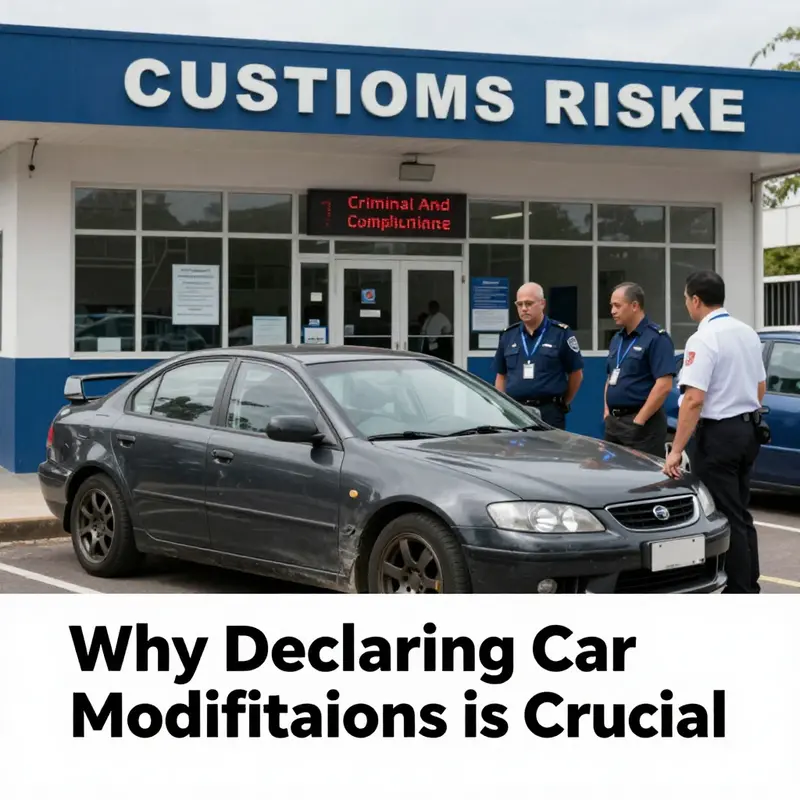
Change rarely stays cosmetic for long. A driver may start with a tweak to look or feel cooler, yet the consequences of failing to declare that modification can unfold in ways that ripple through finances, legal standing, and safety. This chapter unpacks how unreported changes move beyond personal preference and into a web of criminal and regulatory exposure. It is not merely about a ticket or a loud exhaust; it is about pathways that can entangle a driver, a family, and even a business in costs and risk that no quick fix can erase.
In many places, laws about vehicle modifications are written with a practical aim: to ensure that alterations do not undermine safety, emissions norms, or public trust. When a modification occurs without disclosure, the law treats it as a breach of regulatory norms. The penalties vary by jurisdiction, but the underlying logic is consistent. In some scenarios, a modification can constitute an offense under road-safety or environmental-protection statutes. For example, in China, authorities have issued fines that reflect the seriousness of unreported changes—ranging from small sums for a color alteration to more substantial penalties for modifications like a “noisy” exhaust or an unauthorized body kit. The logic is not just punishment; it is the claim that unvetted changes can undermine road safety or legal compliance at scale.
The risk environment widens when you consider other major jurisdictions. Across the United Kingdom and the European Union, altering a vehicle’s structure, engine, or emissions system without proper notification can breach regulatory expectations. When exhaust systems are modified to bypass emissions controls, the breach is not merely administrative. It intersects with environmental protection laws that can trigger fines, mandatory repairs, or, in extreme cases, criminal prosecution under relevant statutes. The emphasis is on ensuring that what leaves a factory remains within tested and verifiable boundaries. The message is unambiguous: if you change system performance without telling the right authorities, you may be stepping into legally perilous territory.
Insurance considerations follow a parallel logic, but with a different mechanism. Insurance contracts rely on a clear picture of risk. When modifications are not declared, insurers can argue misrepresentation or breach of contract. A policy that would otherwise cover an accident or a fault may be denied, leaving the owner liable for damage, medical costs, and potential civil penalties. The implications extend beyond a single claim; they can affect future coverage, premiums, and eligibility for insuring that vehicle or similar ones. A well-publicized case from Shanxi Province illustrated the point: a claim was rejected because the vehicle had been illegally modified without the insurer’s knowledge, heightening the risk profile and voiding the coverage. The consequence was not merely a denied payout but a personal financial exposure that could span years.
Safety is the most tangible and immediate reason behind these rules. Modifications that change power, handling, braking, or suspension can alter a vehicle’s performance in ways that drivers may not anticipate. An engine that delivers more torque without corresponding throttle control, wheels that reduce grip, or a chassis altered for stance rather than stability—all can compromise braking distances, steering responsiveness, and structural integrity. In high-speed scenarios or emergency maneuvers, these changes can elevate the chance of loss of control, rollover, or severe collisions. The risk calculus becomes personal: the driver, passengers, other road users, and even pedestrians all shoulder more risk when the vehicle’s safety envelope has been silently rewired.
Beyond individual risk, there are broader regulatory and societal consequences. Some modifications can affect the ability of authorities to inspect, certify, or register a vehicle properly. In export contexts, for instance, failing to prove the legitimacy of modifications can lead to denial of export licenses or other regulatory hurdles. Governments and customs bodies can seize vehicles when unsanctioned alterations appear to breach safety, intellectual property, or import-regulation standards. In extreme cases tied to counterfeit branding or misrepresented origins, criminal liability can follow, reflecting a convergence of safety, compliance, and fraud concerns. The upshot is clear: unreported changes are not a private matter of taste; they can trigger formal actions that range from administrative penalties to criminal charges.
For fleets and businesses, the stakes are even higher. When a company operates multiple vehicles, maintaining accurate modification records becomes part of governance and ESG stewardship. Auditors and regulators expect traceable histories for each asset. Non-compliance can flag broader risk to financing, insurance, and partnerships, potentially jeopardizing access to capital or collaborative opportunities. The chapters in this narrative are not simply about personal risk; they map onto corporate accountability, where failure to declare and document modifications can ripple through governance, compliance, and public trust.
Faced with these realities, practical steps gain urgency. The safest path is to treat modifications as regulatory events rather than cosmetic changes. Before any alteration, consult official guidance that applies where the vehicle is registered and operated. In the United Kingdom, the DVSA and related authorities provide explicit advice on what is permissible and how to notify them through the vehicle’s logbook. In the United States, the National Highway Traffic Safety Administration (NHTSA) outlines how certain changes may contravene federal safety standards and what that can mean for recalls or enforcement actions. The overarching principle is straightforward: verify, document, and declare.
A disciplined approach to modification involves several interlocking actions. First, obtain complete documentation for any part or system intended for change, including the source, specifications, and testing results where applicable. Second, communicate with the insurer well ahead of making the alteration. Provide a full picture of what will change, why, and how it affects risk. Third, ensure registration or notification through the proper channels—whether it is updating the V5C logbook in jurisdictions that require it, or using official online tools to confirm compliance. Fourth, retain records of all communications and approvals. These steps do not guarantee unbroken protection from penalties, but they do shift risk toward transparency and regulatory alignment, reducing the chance of surprise enforcement or denial of coverage when a claim arises.
For minds wrestling with the tension between individual preference and public responsibility, a simple reminder helps: a modification is not a guaranteed upgrade of performance if it is not part of an approved, documented process. The price of sidestepping that process can be steep—fines, seized vehicles, blocked exports, insurance gaps, and even criminal liability in cases involving fraud or deliberate misrepresentation. The narrative here is not about dampening creativity but about aligning it with the rules that exist to keep roads safe for everyone. When in doubt, ask for guidance, document the decision, and declare what you plan to change. In that approach, the risk of criminal or compliance penalties recedes into the background, while the benefits of safer, legally compliant driving stay foregrounded.
If you are considering changes, check the official guidance on how to properly declare vehicle modifications. A practical starting point is the resource on declare-car-modifications, which lays out the correct notification pathways and the documentation that authorities expect. declare-car-modifications
External resource for authoritative guidance: UK Government—Vehicle Modifications and Legal Requirements. https://www.gov.uk/government/publications/vehicle-modifications-and-legal-requirements
Final thoughts
Understanding the ramifications of failing to declare car modifications can be the difference between enjoying your ride and facing serious legal, financial, and safety fallout. The chapters above illustrate the multifaceted consequences of this oversight, emphasizing that transparency with authorities and insurers is not just a regulatory necessity, but a crucial step in ensuring the safety and legality of your vehicle. By declaring your modifications, you not only protect yourself but also contribute to a responsible automotive community.