

Car modifications form the heart of automotive passion, where hobbyists, enthusiasts, and professionals come together to enhance performance and aesthetics. However, in China, certain alterations can lead not only to legal troubles but also to safety concerns. Understanding what modifications are deemed illegal under the Road Traffic Safety Law and Motor Vehicle Registration Regulations is essential for anyone involved in the car modding community—from hobbyists customizing their rides to professional tuners striving for enhanced performance. Each chapter of this article will delve into specific illegal modifications: engine tweaks, exhaust system changes, body alterations, and wheel adjustments, emphasizing the implications of these modifications and offering insights to stay compliant while pursuing your automotive dreams.
Power Without Permission: Engine Modifications and the Road Ahead
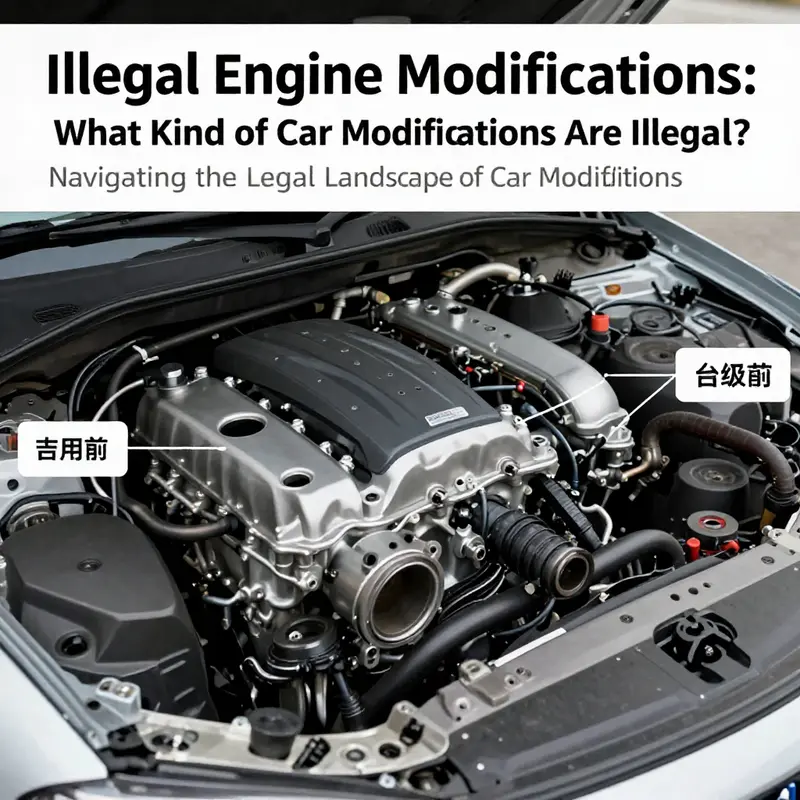
Engine performance is often a driver for enthusiast upgrades, but legal and safety constraints shape what can be done. This chapter explains why many modifications move from a hobby to a regulated activity. Across jurisdictions, changes that affect power, emissions, or vehicle identification can be restricted or prohibited. A key theme is that alterations must stay within the manufacturer’s certified specifications and respect environmental and safety standards. In practice, this means using components that are on-road certified, avoiding changes to engine controls that push power outside the calibrated range, and not tampering with VINs, engine codes, or chassis identifiers after registration. The regulatory approach also covers exhaust and emissions controls; removing or bypassing catalytic converters or sensors, or installing non-certified exhaust setups, can lead to failed inspections and penalties. Insurers may also review coverage if a car bears unauthorized modifications. Enforcement varies by region, but the underlying logic is common: performance gains are not free to disregard safety, accountability, and environmental obligations. For readers navigating this terrain, the prudent course is to seek certified parts, document changes, and consult regulators or qualified inspectors before proceeding. The road remains a shared space with rules designed to protect riders, pedestrians, and communities from undue risk and pollution.
Noise as a Liability: Understanding Illegal Exhaust Modifications Within China’s Road Safety Framework
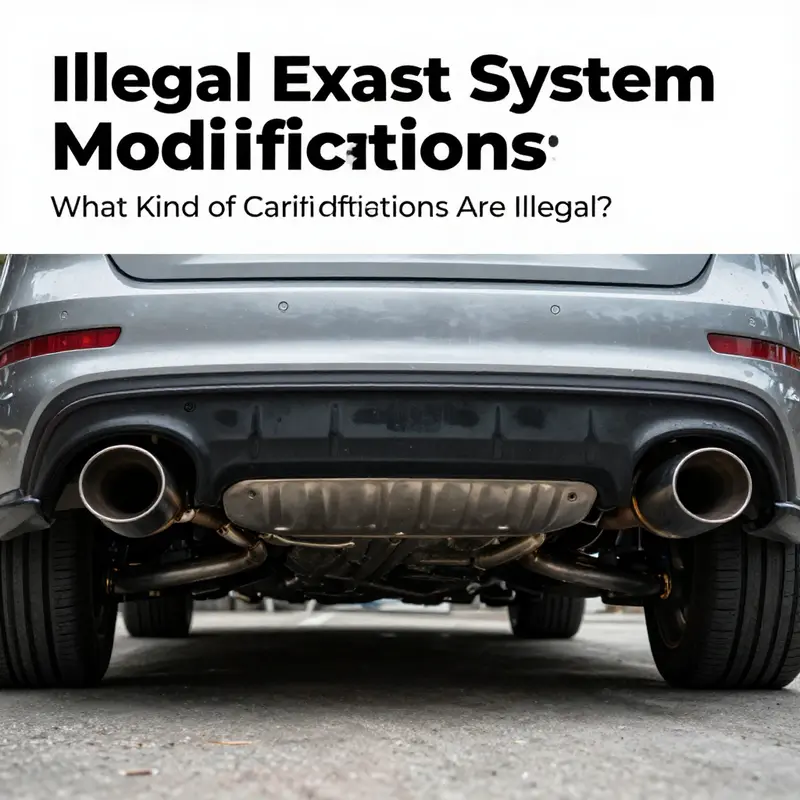
When a car’s exhaust system is pressed into a louder, deeper voice than the factory intended, many enthusiasts hear a call to personality and performance. Regulators hear something different: a potential threat to safety, to public order, and to the environment. In China, illegal exhaust system modifications sit at a clear boundary, one that separates legitimate, regulatory-compliant tuning from alterations that undermine the safety of the vehicle, the comfort of others on the road, and the integrity of the broader transportation system. This chapter traces that boundary, weaving together how exhaust-related changes are evaluated, why they are prohibited, and what that prohibition reveals about the larger framework that governs all car modifications in the country. The story here is not simply about louder pipes; it is about how roads stay safe when vehicles are constrained by rules that protect drivers, pedestrians, and communities alike.
Exhaust systems are far more than a ceremonial tailpipe. They perform critical functions long after the engine has burned fuel and created motion. A factory exhaust is tuned to balance noise, backpressure, emissions, and heat management. It channels exhaust gases efficiently, reduces pollutants through catalytic converters and mufflers, and, crucially, keeps noise within legal limits. When a modification removes or disables these components, or when it reconfigures the exhaust to push more noise or different emissions, it shifts the vehicle away from its originally certified design. The legal framework in China treats these shifts as not merely cosmetic alterations but as structural changes to the vehicle’s operating characteristics. In other words, the exhaust system is not just about sound; it is a safety and environmental control device, and tampering with it triggers regulatory concerns that go beyond personal preference.
At the heart of the prohibition is the Road Traffic Safety Law of the People’s Republic of China, alongside the Motor Vehicle Registration Regulations. These laws establish that a vehicle must retain its original structure, construction, and technical characteristics once it has been registered. Any alteration—including in the exhaust system—that changes the vehicle’s fundamental design without the approval of the relevant authorities is deemed an illegal modification. The language is precise enough to capture both overt changes and subtler shifts in performance that accompany certain exhaust modifications. If the change affects the vehicle’s sound profile, the emissions profile, or the way exhaust gases are expelled, it is likely to fall under the category of illegal modification unless there is an authorized process to approve the alteration. This approach emphasizes safety and environmental protection, but it also acknowledges the complexity of modern exhaust systems, where even minor changes can ripple through engine management, fuel economy, and thermal dynamics.
From a practical standpoint, illegal exhaust modifications are typically those that increase engine noise beyond legal limits, alter the exhaust’s original design in a way that worsens emissions, or remove key components designed to control pollution and heat. The iconic, street-legal muffler is more than a noise reducer; it is part of an integrated emission-control system. A muffler that is removed or replaced with an aftermarket unit that does not meet regulatory specifications can raise noise levels to a point where it disturbs neighborhoods, irritates other drivers, and undermines the quiet operation expected on the road. Similarly, tampering with catalytic converters or exhaust pipes can upset the emissions balance, resulting in higher pollutant outputs and a vehicle that no longer complies with environmental standards.
These modifications are not simply about personal taste, but about safety, and the law makes that link explicit. The enforcement apparatus—comprising the Ministry of Public Security and local traffic management departments—regularly targets vehicles with modified exhaust systems during routine inspections and road checks. The penalties attach to the act of modification itself and the state of removal from the original, approved specification. The typical consequences are strict and immediate: temporary confiscation of the vehicle, removal and destruction of illegal parts, and fines ranging from 200 to 500 RMB. In addition, owners may be required to restore the vehicle to its original condition before it can be driven legally again. In some contexts, there may also be a points deduction for certain illegal modifications; for example, cargo vehicles may face a 1-point deduction starting in 2024. The net effect is that the costs of illicit exhaust work go far beyond the money spent on parts, extending into time, compliance risk, and ideal business practices for any owner who relies on their vehicle for work or daily life.
Insurance is another critical dimension of the penalty structure. Insurance providers operate within the framework of safety compliance, and they frequently treat illegal exhaust modifications as a material breach of the vehicle’s declared safety profile. In practice, this means that if an accident occurs involving a vehicle with an illegal exhaust modification, an insurer may refuse to pay claims because the vehicle is considered outside the safety standards on which the policy was issued. This consequence compounds the direct regulatory penalties with financial exposure, forming a strong incentive to maintain compliance even for drivers who crave louder exhaust tones. The combined effects of regulatory penalties and insurance implications place illegal exhaust work in a markedly high-risk category for any owner who values legality and financial predictability alike.
The rationale behind these rules extends into the public space that surrounds every roadway. Excessive exhaust noise is not simply an annoyance; it is a source of acoustic pollution that can degrade hearing for nearby residents, impair concentration for drivers in adjacent lanes, and contribute to a broader sense of disorder on the street. Emissions concerns are equally consequential. If exhaust systems are modified in ways that disable or circumvent emission-control devices, vehicles can emit higher levels of pollutants, undermining air quality goals and potentially violating environmental protection standards. The safety argument also covers technical risk: altered exhaust configurations can influence backpressure, engine temperature, and fuel-air mixtures, affecting idle stability, throttle response, and, in extreme cases, reliability under stressful driving conditions. The regulatory calculus thus links noise, emissions, and mechanical integrity into a comprehensive safety mandate.
Given this legal backdrop, what exactly counts as illegal when it comes to exhaust work? The core idea is straightforward: any modification that changes the exhaust’s role as a control system or that elevates risk beyond the design assumptions approved at registration. Removing or circumventing the muffler, or replacing it with a louder, non-compliant unit, is one of the most direct routes to illegality. Equally clear is the removal or tampering of catalytic converters, which serve to reduce harmful emissions; such actions are not merely a mild variance from factory design but a fundamental alteration to how a vehicle meets environmental standards. Changing the exhaust layout in a way that affects the vehicle’s backpressure and thermal management can also fall into illegal territory if those changes were not sanctioned by the authorities. In the same vein, installing an aftermarket exhaust system that produces excessive noise without appropriate verification or approval—even if the audible result is purely subjective—can be grounds for enforcement if it breaches the licensed noise thresholds retained by the state.
When readers encounter the term “illegal exhaust modifications,” they should remember that the issue hinges less on the aesthetic of a louder exhaust and more on the alignment of the vehicle with certified design parameters. The philosophy behind this stance is not anti-tuning but pro-safe, predictable roads. The law expects that any change to the exhaust that could impact noise, emissions, thermal behavior, or structural integrity has to be vetted and approved through formal channels. If that approval is not granted, the modification is illegal. This is why the emphasis in official guidance is on maintaining the vehicle’s registered specifications and seeking the proper channels for any change. It is a framework built around accountability—accountability for the driver, for other road users, and for the environment.
For readers seeking to navigate this landscape without surrendering their curiosity about sound and performance, there is a path that stays within the lines of legality. It involves selecting parts and configurations that are designed and certified to meet regulatory standards. It can also involve engaging with the appropriate authorities to understand what modifications, if any, can be approved for a given vehicle model and use case. A sense of kerosene-that-ignition practicality returns when a driver realizes that legal compliance does not have to be a barrier to enjoying a car’s performance potential. Many legal avenues exist to adjust exhaust sounds and performance within the framework of safety and environmental standards. In short, enthusiasts can pursue responsible, compliant tuning that honors the original intent of the vehicle’s design while still delivering a satisfying driving experience.
In discussing illegal exhaust modifications, it is helpful to connect this subtopic to the broader topic of illegal vehicle modifications that govern motor safety and roadworthiness. The legal system in China treats exhaust as a baseline element; however, it is not the only aspect under close scrutiny. Engine modifications that enhance power beyond the original design, bodywork changes that alter the vehicle’s structural integrity, wheel and tire alterations that affect handling and speedometer accuracy, lighting and visibility changes that can create glare or mislead other drivers, suspension alterations that impact stability, and even the tampering of vehicle identification numbers—all of these fall under a wide umbrella of prohibited changes. While this chapter centers on exhaust, readers should recognize that the same regulatory logic applies: any modification that diverges from registered specifications without proper approval is at risk of penalties, including confiscation, fines, mandatory restoration, and potential insurance consequences.
To keep this narrative grounded in the specific context of the exhaust, consider the practical takeaway for owners and drivers. If you are contemplating a modification to your exhaust system, you should first consult official guidelines and verify whether the change can be legally approved. The process usually involves presenting the modification to the appropriate authorities, ensuring that the new configuration meets noise and emission standards, and verifying that it retains the essential functionalities of the factory design. If the approval is not granted, the safe course is to retain or restore the original exhaust configuration. This approach protects you from regulatory penalties and preserves your vehicle’s eligibility for insurance coverage and lawful road use.
For readers who want to dig deeper into the regulatory text or to see how enforcement plays out in practice, official sources offer the most accurate, up-to-date guidance. The Ministry of Public Security’s portal remains a primary reference for enforcement notices and public guidance related to vehicle modifications. It documents how authorities identify illegal exhaust work during inspections and what drivers should expect if their vehicle is found non-compliant. This portal is a trustworthy anchor for understanding the legal landscape and for staying informed about any updates to thresholds, penalties, or enforcement priorities. Its role is not to scare drivers but to provide clarity so that people can make informed decisions about permissible modifications and compliance pathways.
As you navigate the topic of illegal exhaust modifications, you may encounter a range of perspectives in the broader conversation about car customization. Some voices emphasize performance gains and personalized aesthetics; others highlight the importance of noise control, emissions reduction, and consistent safety standards. The practical reality is that both sides share common ground: the need for predictable, enforceable standards that keep roads safe and communities comfortable. The legal framework in China is designed to balance these aims by allowing drivers to pursue a degree of customization while ensuring that no modification undermines the vehicle’s fundamental safety characteristics. The result is a dynamic tension—one that rewards thoughtful, compliant tuning and punishes reckless, unapproved changes. In the end, the path to a legal, enjoyable driving experience lies in respect for the rules, careful sourcing of components, and a clear-eyed understanding of what the law permits and what it does not.
As a final note, readers who want to explore related topics can find additional discussions about how modifications intersect with resale value, insurance considerations, and the broader legal context through curated resources that examine legal and illegal car modifications. For one such in-depth discussion with a focus on the legal landscape in China, see the article on legal car modifications in China. This resource provides a grounded comparison that can help readers assess how exhaust and other modification practices fit into the wider regulatory framework and how to approach modifications in a way that both satisfies personal goals and complies with the law. The integration of official guidance and practical planning makes it possible to pursue performance and style without crossing the line into illegality.
For readers seeking official context beyond the scholarly discussion, the Ministry of Public Security’s portal remains the authoritative source for enforcement notices and regulatory updates: https://www.mps.gov.cn. This external resource anchors the discussion in the current legal environment and offers a direct pathway to the primary legal texts and enforcement guidelines that shape how illegal exhaust modifications are identified, penalized, and ultimately prevented on China’s roads.
Internal link to related content: legal car modifications in China
In sum, illegal exhaust system modifications reveal a broader regulatory architecture built to preserve safety, environmental integrity, and road harmony. They remind enthusiasts that the thrill of customization coexists with the responsibility to maintain a vehicle’s integrity and its alignment with established standards. Within this framework, the loudest exhaust is not a badge of independence but a signal that the vehicle may have stepped outside the bounds of legality. The disciplined path—seeking approvals, maintaining certified components, and respecting noise and emission limits—offers a sustainable route to Tuning that honors both the road and the rule of law.
Shaping Safety: The Boundary Between Body Modifications and Legal Car Mods in China
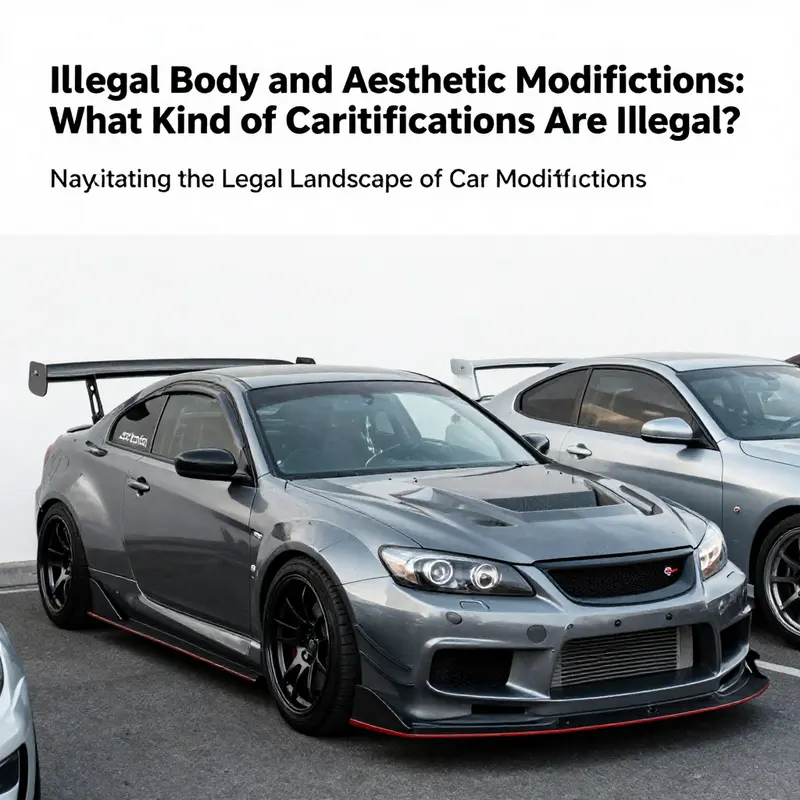
In China, road safety and orderly traffic management are central to daily life. The physical silhouette of a vehicle is treated not as a matter of taste but as a signal to inspectors and other road users about how the car will behave on the road. The body of a vehicle—its shape, weight distribution, aerodynamics, and how easily it can be identified—are considered part of a safety system. For that reason, many body and cosmetic changes are tightly regulated or prohibited unless officially approved and properly registered. The rule is straightforward in intention: changes that can affect stability, braking, visibility, or the vehicle identity must pass a formal review to ensure they do not undermine safety or the integrity of the road use system. This perspective links customization to public responsibility rather than personal expression alone.
To understand why these rules exist, it helps to ground the discussion in the relevant law and regulatory framework. The road traffic safety law and the vehicle registration regulations connect a car s physical form to its permitted operating parameters. In practice, any alteration that expands exterior dimensions or changes the silhouette or space occupation must be evaluated and approved. Without that approval, the modification is illegal and may invite penalties such as fines, vehicle seizure, or a requirement to restore the original configuration. Enforcement relies on visibility of the modification during registration inspections and routine checks. When a change diverges from the registered specs, authorities may regard it as a safety risk and a regulatory violation.
The body and aesthetic category focuses on changes that can influence handling, crash dynamics, and visibility. Unauthorized structural changes can shift weight distribution and center of gravity. Altering a cargo area or removing partitions can create unpredictable behavior in emergency maneuvers. Even minor changes that alter aerodynamics or obscure safety features may be scrutinized, because the law treats the vehicle as a system designed to perform within tested limits. The same logic applies to color and panel changes that affect how the car is identified. If the paint or decals move far from the registered appearance, re registration may be required to maintain a clear and verifiable identity on the road.
A central concern is the preservation of vehicle identity. VIN numbers and other identifiers support safety recalls, insurance coverage, and regulatory compliance. Modifications that attempt to obscure or alter these identifiers are treated as serious violations. They undermine traceability and accountability and can lead to severe penalties.
Practical enforcement occurs through inspection regimes that verify the car records match the actual configuration. When inspectors spot non original bumpers or body panels, they may require corrective action. The burden of proof lies with the owner to show compliance through official documentation and a clear modification history. The process can be lengthy and costly, but it helps ensure predictable vehicle behavior and reliable enforcement in busy traffic environments.
The message for enthusiasts is clear. Seek formal approval before making changes that alter exterior form, structural features, or vehicle identification. The approval path is not a shield against creativity; it is a guardrail that keeps design innovation compatible with safety and regulatory requirements. In many cases modest cosmetic changes can proceed with minimal friction, while more ambitious alterations require proper channels and documentation. The result is a balanced approach that respects both individual vision and public safety.
Wheel Presence, Legal Absence: The Tight Boundary Between Fitment and Safety in China’s Illegal Modifications Arena
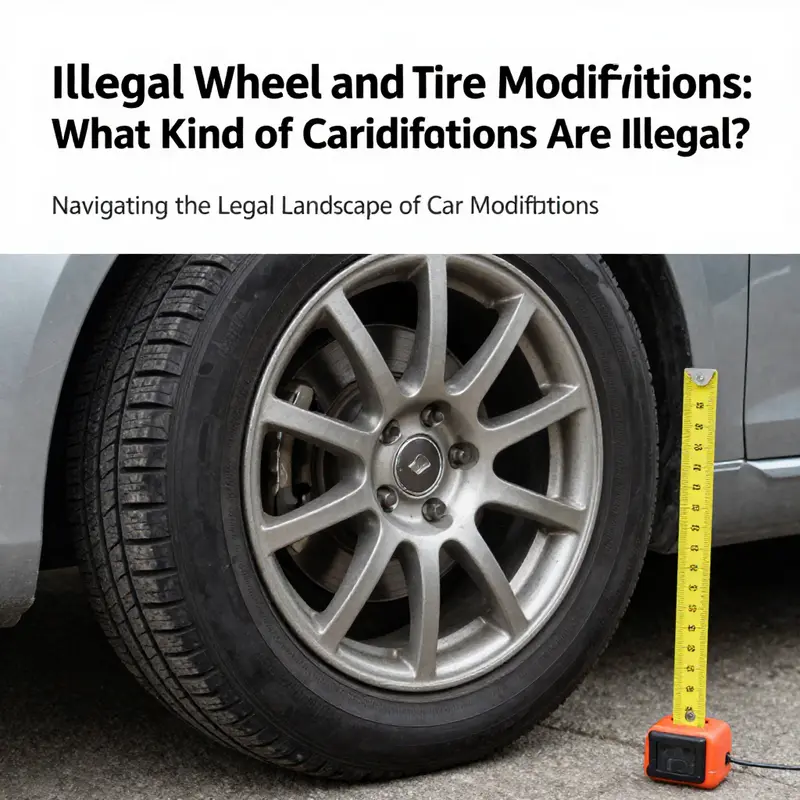
Wheels and tires sit at the most visible intersection of a car and its road environment. They carry weight, transmit power, and relay crucial information to the vehicle’s safety systems. In many markets, drivers tinker for appearance or marginal performance gains. In China, however, the line between a cosmetic tweak and an illegal alteration is drawn with regulatory precision. This chapter explores the wheel and tire modifications that authorities deem illegal, and why those rules matter for safety, compliance, and the everyday life of a driver, a technician, and a vehicle inspector alike. The discussion here anchors the broader topic of “what kind of car modifications are illegal,” and it emphasizes that some changes, while seemingly minor, ripple through a vehicle’s dynamics, electronics, and legal identity in ways that are not always obvious at a quick glance.
At its core, the prohibition on wheel and tire modifications rests on the principle that the original design specifications of a vehicle are chosen to balance handling, braking performance, stability, and durability under a defined set of conditions. When a wheel or tire modification alters those dimensions, the car’s behavior and the accuracy of its vital sensing systems can be compromised. The regulatory framework in China makes this explicit: changes to the vehicle’s outer dimensions or technical features must receive official approval before they can be considered lawful. In practical terms, that means a modification must be brought into alignment with the vehicle’s registered parameters and pass the standards set by national authorities before a vehicle can legally operate on public roads. Without that alignment, the modification is illegal, and the car faces a higher risk of failing inspections or voiding insurance coverage.
The most straightforward category of illegal wheel and tire work concerns non-original equipment sizes. Diameter and width changes that push beyond the manufacturer’s prescribed limits are not merely cosmetic choices; they adjust the circumference, rolling diameter, and the contact patch with the road. A larger wheel or wider tire can reduce the clearance between the tire and the fender, but it can also impinge on calipers, brake lines, or suspension components. More subtly, sizes that deviate from factory specifications alter the rotational speed data the vehicle’s ABS and ESC rely on. These systems depend on accurate wheel speed readings to modulate braking force and vehicle stability during sudden maneuvers. When the data stream is altered by an unexpected wheel diameter or a change in tire profile, the system can misinterpret road conditions, apply brakes unevenly, or fail to correct skids promptly. In the worst cases, this can translate to longer stopping distances, unpredictable steering response, or reduced control in wet or icy conditions. Given these risks, Chinese regulations prohibit wheel and tire changes that depart from the manufacturer’s numbers without official approval, and inspectors routinely verify the conformity of wheel size and tire specifications during annual checks.
These rules are not abstract. They apply to a broad spectrum of vehicles, but the most common subjects are passenger cars, light trucks, and, in some contexts, specialized electric vehicles used in urban settings. The appeal of oversized rims or aggressively wide tires—often pursued for a bold look or a perceived grip advantage—can be strong. Yet the same modifications that attract attention for fashion or a pinched sense of performance can undermine predictable behavior in emergency braking, lane changes, or cornering. The regulatory emphasis on preserving the vehicle’s original dimensions is not about stifling customization; it is about preserving a predictable operating envelope that aligns with the vehicle’s design intent. When a wheel or tire change violates the envelope, the law treats it as an illegal modification because it introduces an unapproved variable into the vehicle’s stability, traction, and braking profile.
An equally important piece concerns how alterations to wheel and tire configurations can affect the vehicle’s electronic control systems. Modern cars rely on a network of sensors and control modules that respond to wheel speed, rotation rhythm, and contact patch signals. If a new wheel diameter or tire width changes the gearing of the system or the timing of sensor signals, ABS and ESC can receive data that no longer matches the car’s dynamic state. Incorrect data can lead to delayed or inappropriate intervention in braking or stability control, especially in abrupt maneuvers or on uneven surfaces. Consequently, from a regulatory perspective, even seemingly modest size changes may be deemed illegal if they compromise the reliability or accuracy of safety-critical electronic systems. In practice, this linkage between mechanical fitment and electronic behavior reinforces why authorities view wheel and tire modifications through a safety-first lens rather than as a purely cosmetic adjustment.
The regulatory framework that supports these distinctions is explicit in Chinese policy on vehicle modification management. The Road Traffic Safety Law and the Motor Vehicle Registration Regulations form the backbone of the legal case against unapproved wheel and tire changes. They articulate a clear standard: any alteration that modifies the vehicle’s outer dimensions, structural integrity, or technical features without official authorization constitutes an illegal modification. That unambiguous language is designed to ensure a uniform baseline for vehicle identification, registration, and safety performance. The practical consequences—vehicles failing annual inspections and insurance claims being denied—are not afterthoughts. They are mechanisms to deter modifications that could erode the safety envelope or undermine the traceability of a vehicle in traffic and in the event of an accident.
To understand the scope of these rules, it helps to spell out the precise categories considered illegal. The first and most fundamental is changing the wheel or tire size beyond the manufacturer’s limits. Diameter and width cannot drift outside the accepted range without authorization. This is not a one-size-fits-all prohibition; it is calibrated to each model’s original specification and testing. When a tire or wheel pair departs from those numbers, it can alter the vehicle’s handling, reactivity, and even braking distance. The second area is one of practical consequence: the interaction with electronic systems. The ABS and ESC depend on accurate wheel speed inputs, and any deviation in wheel circumference or sensor alignment can disrupt those inputs. Even if the change feels minor to a driver, the system’s protective logic may respond in unintended ways, reducing the vehicle’s safety margin in critical moments. The third area, while overlapping with body and aesthetics in some enforcement considerations, involves how size changes can affect clearance with fenders, suspension travel, and caliper clearance. If a wheel or tire is too large, it can rub during suspension articulation or under full steering lock, leading to mechanical damage or a loss of steering control. In all such instances, the modification is illegal because it departs from the design that the law has deemed safe and verifiable.
These dimensions are not merely theoretical; they have tangible, enforceable outcomes. Vehicle owners who modify wheel or tire sizes risk failing inspections, which is a legal hurdle that can ground a vehicle from road use until conformity is demonstrated. Insurance is another practical consequence. In many cases, policies require the vehicle to reflect its registered configuration. When a wheel or tire modification shifts dimensions without authorization, insurers may refuse coverage for damage or liability arising from an incident tied to the unapproved configuration. This combination of inspection, registration, and insurance implications makes wheel and tire modifications a high-stakes area for anyone considering changes beyond the manufacturer’s specifications.
Understanding the legal stance on wheel and tire modifications also helps illuminate why other modification areas are treated with similar seriousness. Suspension changes, for example, can alter the vehicle’s center of gravity, ride height, and dynamic response. The same safety calculus that governs wheel size also informs the prohibition on suspension alterations that exceed legal thresholds. The same logic extends to braking modifications and the introduction of non-certified braking components. In each case, the core concern is predictable, auditable safety performance that aligns with the vehicle’s tested and approved configuration. The law does not ban all customization; it bans unauthorized alterations that compromise safety or traceability.
For readers seeking a concise orientation to broader legal-modification questions in China, this discussion of wheels and tires intersects with practical guidance on how to approach modifications responsibly. If you want to explore how other communities frame legal car modifications in China—whether for appearance, performance, or efficiency—consider the broader, policy-oriented overview of legal car modifications in China. That resource emphasizes the same principle: any modification that affects safety, identification, or regulatory compliance must receive official authorization before it can be realized on public roads. This alignment underscores a common thread through all the regulation’s facets: safety, accountability, and the ability to verify a vehicle’s configuration during inspections and in the event of a claim.
From a driver’s perspective, the takeaway is not stubborn prohibition but thoughtful conformity. If the goal is to pursue a modification that might improve appearance, efficiency, or a marginal performance edge, the route is clear but disciplined: engage with the appropriate authorities, secure the necessary approvals, and ensure that the end configuration is fully documented in the vehicle’s registration and compliance records. In the absence of that process, the modification remains illegal, with all the consequences that entails for road use, insurance, and annual inspections. This approach helps maintain a level playing field for all road users, ensuring that a car’s visible changes do not come at the expense of its tested safety profile or its recognized identity on the road.
The broader article from which this chapter is drawn stresses that illegal modifications are not merely about keeping the streets orderly. They are about preserving predictable vehicle behavior under a wide set of conditions. When wheel and tire changes are made without authorization, the data that safety systems rely on can become skewed, and the result can be a vehicle whose behavior is unpredictable in emergencies. The State’s rules, therefore, are not arbitrary limits but a structured framework to protect drivers, passengers, pedestrians, and other road users. By design, this framework makes it easier for inspectors to verify that a vehicle’s listed specifications match its actual configuration, and it makes insurance resolution more straightforward when the vehicle’s configuration is documented and approved.
In summarizing the central idea, illegal wheel and tire modifications are about more than fit and aesthetics. They constitute a category of changes that alter a vehicle’s fundamental interaction with the road, the accuracy of its safety systems, and the verifiability of its identity. The boundaries are explicit: changes that depart from the manufacturer’s measurements must receive official authorization. Without that authorization, the vehicle risks failing inspections, losing insurance coverage, and facing penalties that reflect the broader aims of road safety and regulatory compliance. This clarity helps drivers evaluate their ideas for customization with a practical, safety-first lens and encourages a culture where any modification is approached with due regard for both engineering implications and legal responsibilities.
Internal link for further context: for a broader discussion of legal car modifications in China and how regulatory guidance translates into practical decisions for owners, technicians, and inspectors, see the resource titled Legal Car Modifications in China. The anchor text below points to an accessible overview that complements the technical detail discussed here: Legal Car Modifications in China.
As the chapter on wheel and tire changes demonstrates, the concept of illegality in vehicle modification is not about prohibiting creativity; it is about safeguarding a vehicle’s life-saving functions and ensuring that every change can be traced, tested, and trusted. The same logic informs the broader categories of illegal modifications discussed in other sections of the article, including engine, exhaust, bodywork, lighting, suspension, and VIN integrity. Each category carries its own set of risks and regulatory demands, but the underlying principle remains consistent: any modification that alters the vehicle’s essential design parameters, safety behavior, or official identity requires proper authorization. This ensures that a car remains predictable and safe for the roads it travels, even as owners explore new ideas within the boundaries of lawful practice.
External reference for further reading: The official guidance on vehicle modification management provided by China’s national authorities outlines prohibited changes, including wheel and tire modifications that alter vehicle dimensions or safety performance. This external resource provides the policy framework that underpins the discussion above and offers a formal point of reference for inspections, registrations, and enforcement actions. https://www.mps.gov.cn/n1635798/n1635802/c7458137/content.html
Final thoughts
The realm of car modifications is thrilling but must be navigated with caution, especially in regions with stringent regulations like China. From engine modifications that boost performance to flashy body kits that enhance curb appeal, every adjustment carries potential legal ramifications. Understanding these limits not only ensures compliance but also prioritizes safety, both for the driver and the wider community. By adhering to legal standards, enthusiasts can pursue their automotive passions without running afoul of the law, preserving the joy of car ownership.