
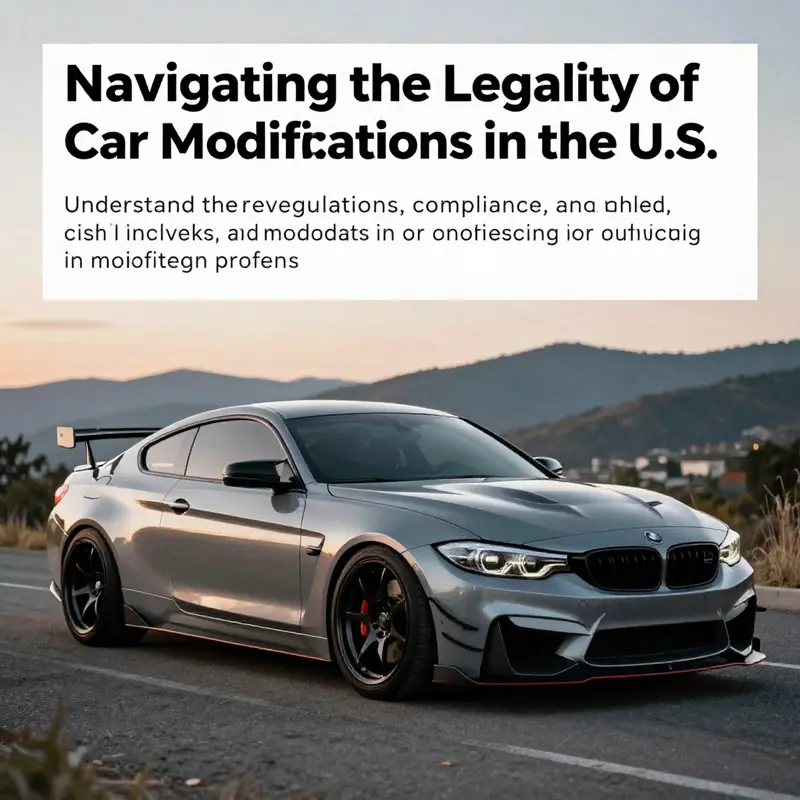
Car modification is a passionate pursuit for many enthusiasts, but understanding the legal landscape is crucial. With regulations varying from state to state and specific guidelines set by federal agencies, the journey of modifying your vehicle requires diligence and knowledge. From ensuring that your modifications comply with safety and emissions standards to navigating the maze of registration and inspection processes, the path to a fully customized car isn’t just about creativity; it’s about legality. This article will explore the nuances of car modification legality across the U.S., helping hobbyists, professionals, and enthusiasts understand what they can and cannot do. We will delve into state and local regulations, compliance with safety and emissions, the processes surrounding registration and inspections, aspects of insurance, and the types of modifications that may pose risks. Each chapter promises to equip you with the essential insights to proceed with confidence in your car modification endeavors.
null
null
Between Freedom and Fit: Navigating Safety and Emissions Rules in U.S. Vehicle Modifications
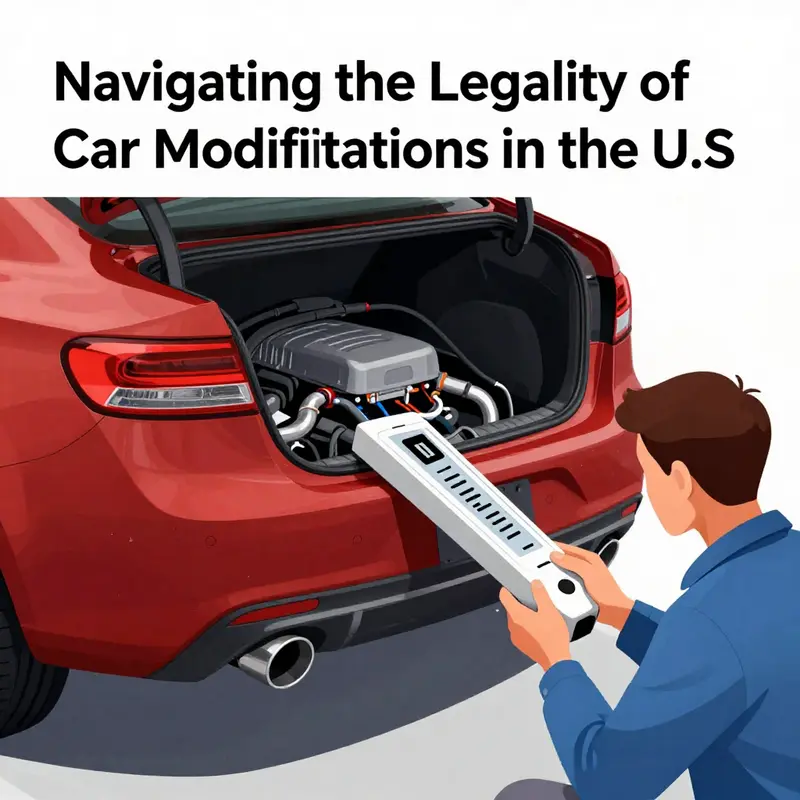
Every car owner who loves to customize understands a simple truth: the thrill of personal expression through a tuned suspension, a sharper look, or a more responsive engine competes with a stubborn reality: safety and environmental rules that guard the roads and the atmosphere. In the United States that tension between creative freedom and regulatory guardrails is a layered system. Federal standards set by agencies dedicated to safety and the environment provide a baseline to ensure that modifications do not undermine core protections and do not push emissions beyond what air quality laws permit. Yet the enforcement landscape and the exact rules you must follow can shift with state and local jurisdictions. What begins as a DIY project or a weekend upgrade quickly becomes a careful negotiation among safety, emissions, registration, and insurance after you take the first wrench to your ride. Understanding this landscape requires seeing the whole mechanism from the federal framework down to the practical checks at the DMV counter or in the insurer’s office.
At the federal level two agencies shape most of the practical realities you will encounter. The Environmental Protection Agency or EPA oversees emissions and the environmental impact of modifications. If you alter components that influence how the vehicle manages exhaust, fuel efficiency, or emissions control such as aftermarket exhaust systems, engine management changes, or alterations to catalytic converters you must ensure that emissions stay within the legally permitted limits. These are not merely guidelines; they are performance targets tied to the Clean Air Act that help maintain air quality and public health. When a modification shifts the emissions signature of a vehicle it can trigger state inspections or constitute a violation that leads to penalties or denial of registration if the vehicle does not pass required tests. The EPA’s official guidance on emissions and what constitutes compliant alterations is the go-to authority for anyone who plans major changes to the powertrain, exhaust, or emissions related systems.
Parallel to that environmental frame is the safety framework administered by the National Highway Traffic Safety Administration or NHTSA. This body ensures that critical safety systems brakes, steering, tires, and the structural integrity of the vehicle remain reliable after modifications. In practice that means you cannot retrofit parts in a way that undermines a vehicle’s ability to stop promptly, steer predictably, or withstand standard crash loads. Modifications that compromise these safety baselines can be deemed unlawful or at least incompatible with your vehicle’s certificate of conformity and warranty provisions. Warranties too are a practical consideration. Many manufacturers and dealers reserve the right to void warranties if a modification is found to be unsafe or not aligned with the vehicle’s intended design. Although the corporate dynamics of warranty coverage are separate from criminal penalties, the effect is similar: you are left bearing the cost of fixes that would otherwise be covered, and you may face hurdles when you attempt to claim damages from an insurer who sees the modification as a risk factor.
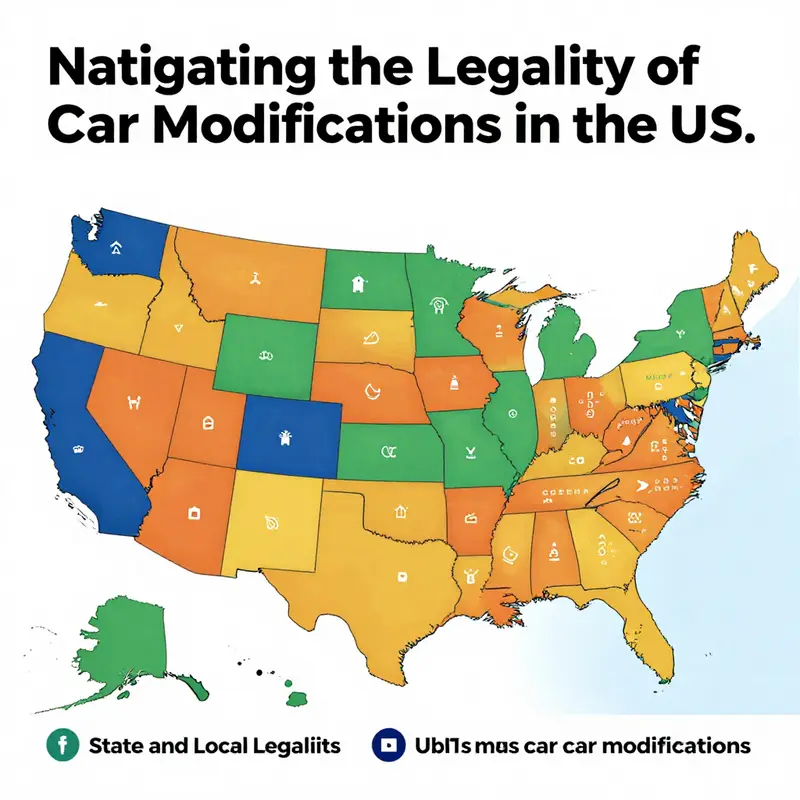
Those federal pillars create the backdrop, but the day-to-day reality unfolds in state and local settings. There is no uniform nationwide checklist for every conceivable modification. Instead states couple the federal baseline with their own rules, varying thresholds for exhaust noise, permissible tint darkness, visibility requirements, and how far a suspension or chassis alteration can go before triggering a re-inspection or a re-registration. Some states require a formal permit for certain categories of changes, others rely on routine inspections to catch deviations from safety and emissions norms. What this means for the individual modifier is that two projects that look similar on the bench can land in very different regulatory pockets once the vehicle crosses the state line. The lesson is simple: research your state’s DMV and environmental agency rules before you begin. In many cases, the best starting point is the state’s DMV official guidance, supplemented by inquiries to licensed automotive inspectors who understand how compliance plays out in practice in your jurisdiction.
The practical consequences of playing fast and loose with safety and emissions are not mere paperwork. They carry real penalties like fines, seizure or denial of registration, and the headaches that come with being unable to drive a modified vehicle legally. In some cases modifications can void warranties and complicate financing or leasing arrangements. The insurance angle adds another layer of complexity. Insurance companies assess risk and, in many cases, view significant changes as potential red flags. They may adjust premiums or, in extreme cases, limit or deny coverage if a modification is judged to render the vehicle more prone to damage or theft, or if it introduces safety liabilities that arent adequately managed. The informed path, then, is to have a frank conversation with your insurer before you perform a major modification and to document the changes and your compliance strategy. That approach not only helps protect your coverage but also signals to the insurer that the vehicle remains a responsibly maintained asset, reducing the likelihood of unexpected disputes after a claim.
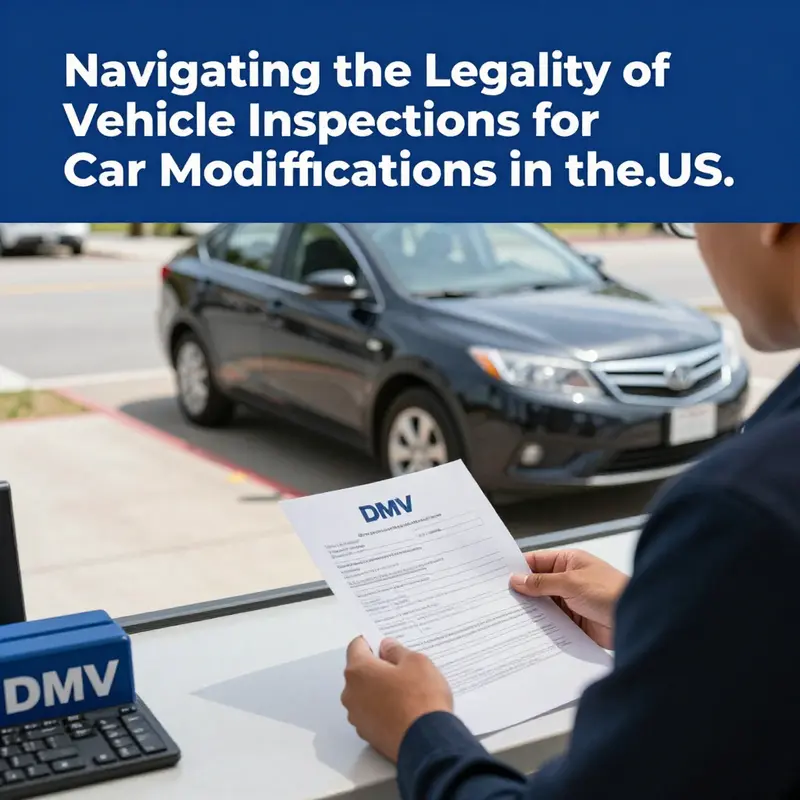
As you plan any modification, a prudent mindset acknowledges steps that reduce risk. Start by mapping the modification against both emissions and safety baselines. Ask: will this change affect the engine or exhaust in a way that could push emissions beyond legal limits? Will the change alter braking performance or steering behavior in a way that could compromise safety? If the answers raise concerns, consult a licensed professional who can provide engineering validation or help you secure the necessary approvals before the work begins. For major changes, such as those involving the powertrain, suspension geometry, or the introduction of large exterior alterations, expect a possible inspection or re-registration step at the DMV. This is not a bureaucratic trap but a practical checkpoint to ensure that the car continues to meet the conditions for road use, including the ability to pass the state’s inspection criteria and to remain compliant with equipment standards. Documenting these steps—receipts, engineering statements, inspection approvals—creates a trail that can prove invaluable should questions arise from authorities or insurers.
A coordinated approach to compliance also means recognizing the limits of what is considered prudent modification. There are modifications widely discouraged or restricted for safety or legal reasons. Excessively loud exhaust systems that exceed local sound limits, bisected or obstructed vision due to oversized roof attachments, or structural alterations that undermine the integrity of the original frame are all areas where risk exceeds the reward. Even changes that seem minor can have disproportionate effects if they interact with other components or with regulatory thresholds in a way that was not originally anticipated. In all of this the goal is not merely to avoid penalties but to preserve the vehicle’s integrity, reliability, and safety over time. The responsible modifier is one who treats compliance as an ongoing discipline, not a one-time check.
The process I have described is not abstract. It translates into concrete steps you can take before you lift the hood or jack up the car. Begin with a clear plan: define the end state of the modification, list all systems touched, and identify potential regulatory touchpoints in your state. Then assess the emissions and safety implications with a professional, and where relevant seek engineering approval for anything that involves structural or powertrain changes. Before you finalize the work, confirm with your DMV whether any permits or inspections are required, and schedule those steps into your timeline. Finally, talk to your insurer early and keep a comprehensive record of all changes, inspections, permits, and the engineering explanations that support compliance. This sequence keeps the project grounded in safety and legality, while still allowing room for the kind of customization that makes a vehicle feel uniquely yours.
For readers who want a practical targeted resource on how modifications affect insurance, an area many drivers worry about, the following link offers guidance specifically around this issue: What Modifications Affect Car Insurance. It provides considerations about coverage, disclosure, and risk management, helping you avoid surprises when you file a claim or renew a policy. As you continue through this chapter and the broader article, remember that the legal status of a modification is never static. Rules evolve with new technology, enforcement priorities, and environmental concerns. When in doubt, consult official sources and licensed professionals and always err on the side of safety and accountability rather than expedience.
In sum the legality of car modifications in the United States rests on a framework that values safety and environmental stewardship while accommodating personal expression. The federal backbone ensures that safety systems and emissions controls stay intact, while state and local jurisdictions tailor rules to local conditions and priorities. The risk of noncompliance includes practical costs, legal exposure, and the loss of driving privileges, but the rewards of a well planned, compliant modification can be substantial: a vehicle that reflects your vision without compromising the safety of you or others on the road. This is the balance that defines responsible automotive customization and it is the compass for every decision you make as a modern gearhead navigating the patchwork of rules that govern U.S. roads. If you keep that compass steady, your project can be both satisfying and lawful, letting you enjoy the drive without the legal side of the journey pulling you off course. For authoritative ongoing guidance, always consult your state’s DMV resources and the regulatory agencies before you begin, then proceed with clear evidence of compliance at every step of the modification process. The road to customization is a personalized one, but it travels on well-marked lanes of safety and emissions compliance. External resource: https://www.epa.gov/vehicle-and-motorcraft-emissions
null
null
Insurance Considerations for Modified Vehicles in the US

Modifying a car is a widely accepted hobby and a pragmatic way to tailor a vehicle to personal needs, tastes, and performance goals. Yet when the question turns to what this means for insurance, the landscape becomes more deliberate and nuanced. In the United States, most modifications can be covered by standard auto policies, but only if the insurer is aware of the changes and agrees to them. Insurers tend to view modified cars as higher risk because alterations can raise repair costs, affect safety dynamics, or amplify liability exposure. This means that the path to reliable coverage often requires a proactive, well documented approach rather than a quick declaration that the car is “mowed down by style.” The good news is that transparent communication, solid documentation, and a clear demonstration that the vehicle remains road legal can keep most modifications within the realm of insurability rather than exclusion.
When you start shopping for insurance after a modification, it is essential to understand what factors most influence whether coverage is granted, how premiums are set, and what forms of protection realistically align with your goals. There are three broad considerations that commonly determine an insurer’s willingness to insure a modified vehicle: the type of modification, the value of the modifications, and the legality and documentation surrounding them. Cosmetic changes such as custom paint or interior upgrades generally have a smaller impact on risk profiles than powertrain or suspension alterations. Performance upgrades like turbochargers, exhaust systems that alter noise or emissions, or suspension changes that alter handling can significantly shift the risk calculus. The key is to be explicit about what exists, how it functions, and why it is safe and compliant with local laws. A well-constructed inventory that couples parts lists with serial numbers, install dates, and installer credentials can transform a tentative conversation into a concrete policy quote.
A second pillar is the value added by modifications. Insurers evaluate how much the modifications alter the vehicle’s value, not merely its appearance. Some enhancements increase the car’s resale value, while others may inflate repair costs or necessitate specialized parts and service. A mismatch between declared value and actual market value can create gaps in coverage during a claim. To avoid gaps, it is prudent to obtain a professional appraisal or a documented estimate that reflects the current market value of the vehicle with its modifications. This value helps set appropriate comprehensive and collision limits and ensures that a total loss settlement can reflect the true state of the car. It is important to remember that some lenders or lienholders require you to carry coverage that aligns with the modified value, particularly if the modifications are significant or if the car is financed. In these cases, failing to align insured value with the car’s actual worth can complicate a claim or affect financing arrangements.
The third determining factor relates to legality and documentation. Modifications must be street-legal in the state where the vehicle is operated. Legal compliance is not merely a box to check; it is the foundation for credible coverage. Insurers often request evidence that parts are certified for road use, that emissions standards are not violated, and that the installation was performed by a licensed professional or a reputable shop. Receipts, part numbers, installation notes, and warranty information all contribute to a persuasive risk profile. Documentation also serves as a shield against disputes in the event of a claim. If a modification was not disclosed and later discovered by an adjuster, some policies permit coverage denial on grounds of misrepresentation. A thorough disclosure at the outset—often supplemented by a formal endorsement or rider—significantly reduces the likelihood of claim denial based on undisclosed modifications.
Within this framework, the process of securing insurance for a modified vehicle often moves from a straightforward quote to a more deliberate, two-step engagement. The first step is to identify insurers who explicitly acknowledge and cover modified cars. Some providers offer riders or endorsements specifically designed to accommodate nonstandard components, while others may apply specialized rating factors, requiring longer underwriting periods or additional documentation. The second step is to present a complete, well organized modification profile. This means a precise inventory that catalogs every change, from cosmetic enhancements to performance upgrades, with details such as make, model, serial numbers, install dates, and the names of technicians or shops involved. It also involves a clean narrative about how the modifications interact with the car’s safety systems. For example, a turbo kit may require upgraded braking performance and reinforced cooling; such interdependencies should be explained to illustrate a comprehensive safety approach rather than a single feature added in isolation.
Beyond standard auto policies, many drivers with significant modifications opt for specialized policies or endorsements. These are often geared toward show cars, weekend enthusiasts, or vehicles used in sanctioned track or concours environments. A dedicated policy might offer higher limit options, coverage for specialty parts, and tailored claims handling that recognizes the unique nature of modified vehicles. If your use-case involves frequent appearances at car shows or participation in track events, a specialized policy can align better with the realities of your driving patterns and the risks they pose. However, it is essential to scrutinize the terms carefully. Some specialized policies impose mileage restrictions, require storage in secure facilities, or exclude certain types of operation that would otherwise be permissible under a standard policy. Understanding these nuances before committing can prevent costly gaps in coverage when it is most needed.
The central practice that binds all these pathways is disclosure. Be explicit about every modification in the application process. Do not assume that a change is insignificant or that the insurer will find it during a routine inspection. Omission is one of the fastest ways to undermine a claim. When you list modifications, pair each entry with supporting evidence: purchase receipts, installation photos, professional installation notes, and any warranty documentation. If a modification alters vehicle dynamics or safety, pair it with a description of how safety concerns were mitigated. For example, if you install a high-performance brake kit, include information about upgraded rotors, calipers, pads, and any required changes to tires or brake fluid capacity. The narrative matters as much as the numbers because it demonstrates your commitment to keeping the car safe and compliant. The internet has many resources for guiding this process, and one widely referenced topic is the specific insurance considerations for modified cars. See the article Insurance for Modified Cars as a reliable starting point for aligning expectations with insurers while preparing your own documentation.
If you are actively financing or leasing the vehicle, you should also review the terms of the loan or lease. Lenders frequently require comprehensive and collision coverage, and some will demand coverage limits that reflect the modified vehicle’s increased value. In some cases, lenders may request a rider or a separate policy to guarantee that the modifications remain insured at their agreed value. This is not a barrier to ownership but a reminder that the financial ecosystem around a modification can shape the insurance solution. In turn, this affects how you plan future changes. If you expect additional upgrades over time, consider building a staged approach to coverage with your insurer, so you can re-evaluate value and risk as modifications accumulate.
Another practical consideration is the pace at which insurers adjust premiums in response to modifications. Premiums tend to rise with features that increase repair costs, raise the likelihood of accidental damage, or heighten the risk of liability exposure. Yet there are countervailing factors as well. If a modification improves safety or reduces risk—such as a stronger suspension that minimizes rollover risk or a modern stability control upgrade—your insurer may factor these benefits into favorable premium changes. That is not a guarantee, but it is a possibility worth exploring during conversations with your agent. The overall effect on premiums will depend on the combination of your vehicle’s baseline risk, the extents of the modifications, the chosen coverage limits, and the specifics of your driving profile and location.
A practical aspect of navigating insurance for modified cars is the role of documentation in claims. In the event of a loss, having a clear, auditable trail of what was modified and how it was installed simplifies the adjuster’s job and can speed up settlements. It also reduces disputes about whether a modification contributed to the loss. For example, if a collision involves an aftermarket body kit, having precise documentation of the kit’s installation and compatibility with the vehicle’s structural integrity can influence whether the damage is deemed repairable or a total loss. In short, the better prepared you are with documentation, the smoother your claim experience will be, regardless of the claim’s cause.
The conversation about insurance for modified vehicles also benefits from a broader awareness of how modifications can affect other aspects of ownership. Beyond coverage, there are considerations related to resale value, maintenance costs, and the potential need for specialized service. Some modifications may require ongoing professional maintenance, which can influence both the reliability of the vehicle and the predictability of repair costs. When you price insurance, you may also want to factor in these ongoing costs, not just the upfront premium. A well-informed plan considers these realities, helping you avoid surprises when the car is serviced after an claim or downtime.
If you want a concise, practitioner-oriented view that aligns closely with common practice, you can start with Insurance for Modified Cars, an article that mirrors many of the considerations discussed here and offers practical steps for documenting and communicating with insurers. Insurance for Modified Cars is a helpful anchor as you build your modification narrative and prepare for the underwriting process. It is not a substitute for speaking directly with a licensed agent, but it provides a solid framework for understanding what insurers typically need and how to present your case effectively.
As you map the path from idea to insured reality, remember that this is a balancing act between customization and responsibility. The U.S. insurance landscape accommodates a wide range of modifications, but it rewards preparation, transparency, and compliance. The more you can demonstrate that you have safeguarded the vehicle, aligned with local legality, and clarified the monetary implications of your changes, the more options you are likely to preserve. In the end, the goal is not merely to own a unique and expressive vehicle, but to do so with confidence that you are protected against the financial risks that accompany modern car ownership. For most enthusiasts, that confidence comes from a disciplined process: document every modification, verify legality, obtain a formal endorsement when needed, secure appropriate coverage for vehicle value, and maintain open communication with your insurer and lender. This approach keeps the dream of customization compatible with the realities of insurance, finance, and safe driving.
External resource for broader guidance: https://www.iii.org/article/car-insurance-for-modified-vehicles
When Style Meets Regulation: Navigating Prohibited and Risky Car Modifications in the United States
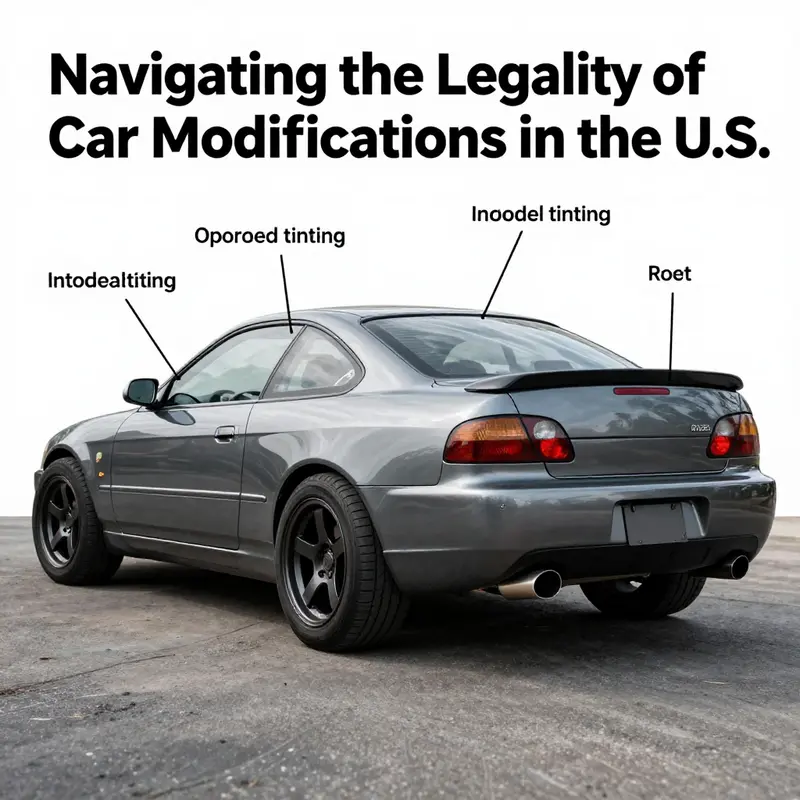
Modding a car in the United States sits at the intersection of personal expression and public safety. The freedom to customize a vehicle is real, but the law draws precise lines that vary by state, city, and even neighborhood. This chapter surveys the kinds of modifications that regulators commonly flag as illegal or dangerously risky, and it explains why those rules exist even in a country famous for automotive enthusiasm. The goal is not to dampen creativity, but to illuminate the boundaries so enthusiasts can pursue meaningful personalization without inviting fines, failed inspections, or worse—compromised safety on public roads.
Excessive exhaust noise is a frequent flashpoint. When an aftermarket exhaust or a removed muffler amplifies sound beyond what a given jurisdiction considers reasonable, districts step in. The logic is straightforward: louder vehicles can disturb neighborhoods and mask important cues such as sirens or horn signals from other drivers. Some states also tie exhaust noise to emissions controls and vehicle inspections, meaning a loud system can trigger both noise violations and compliance failures. The consequence is more than a nuisance—legal citations, mandatory retrofits, and in some cases, limits on when and where a vehicle can be operated.
Tinting windows illustrate another common clash between personal preference and legal visibility. Tints that reduce forward visibility too much or block occupants from being seen by law enforcement or traffic cameras can raise safety concerns. While privacy and sun protection are legitimate benefits, most states impose minimum visible light transmission requirements for windshields and front side windows. Perched in the middle of the spectrum are trends toward darker tints for rear windows; those choices are often permissible, but front-side and windshield tinting frequently runs up against hard limits. The result, again, is a balance: drivers gain comfort and style, regulators preserve safety, and inspectors assess whether a film meets the state’s VLT (visual light transmission) standards.
Lighting modifications represent a third area of controversy. Aftermarket accents such as underglow or neon lighting are visually striking, but they can distract other drivers or be mistaken for emergency or official vehicle lighting. Most jurisdictions prohibit lights that flash, imitate headlights or emergency signals, or impair the visibility of standard lighting functions—headlights, brake lights, and turn signals. The underlying principle is simple: any added lighting must not confuse or startle other road users, nor should it compromise the predictable signaling a driver relies on to navigate traffic.
Suspension and ride height changes sit at a more technical crossroads. Lowering a vehicle dramatically can improve handling on the track or a preferred stance on the street, but it can also alter weight distribution, reduce ground clearance, and affect steering geometry and braking performance. Raising a vehicle beyond a safe threshold can likewise compromise stability and visibility. Some states codify ride-height limits or require professional calibration for suspension work, and they may require inspections to verify that the modifications do not create new hazards. The aim is to prevent suspension alterations that undermine crashworthiness or make a vehicle less predictable for other drivers.
Structural and dimensional modifications address safety at the design level. Extending a wheelbase, altering a frame, or performing substantial structural changes without proper engineering approval can compromise crash protection and crash-test compliance. Federal standards guide many aspects of vehicle safety, and when owners push the boundaries of the original design, regulators assess whether the vehicle still meets applicable FMVSS. In practice, this category often becomes a gatekeeper: some enhancements simply cannot be legalized without extensive certification, documentation, and professional engineering validation.
Performance enhancements tied to emissions control present another legal hurdle. Upgrades that increase engine power or install components that bypass or disable emissions controls risk violating federal and state air quality laws. The EPA’s emissions framework sets a baseline that aftermarket parts must respect. If an upgrade pushes a vehicle outside those limits, or if it nullifies a mandated catalyst, oxygen sensor, or exhaust gas recirculation system, it can be illegal. The consequences range from failed emissions testing to penalties that can include vehicle detainment or denial of registration.
Tires and wheels, though seemingly amenable to customization, can also stray into unsafe territory. Installing oversized or mismatched wheels or tires can alter the vehicle’s dynamics, including steering and braking response, heat buildup in the tires, and load ratings. Most jurisdictions require certain specifications to be preserved to maintain safe vehicle handling. When wheel and tire choices diverge too far from the OEM design, regulators can deem the vehicle noncompliant, especially if the changes affect speed rating, load capacity, or ride quality.
Perhaps the most fundamental prohibition concerns removing or disabling safety equipment. The idea that a vehicle should retain essential safety systems—airbags, seat belts, anti-lock brakes, and other protective features—is a cornerstone of federal safety standards. Modifications that tamper with or remove these systems are generally illegal and especially dangerous. This is not a gray area; it is a clear-cut boundary designed to protect occupants in the event of a crash.
If you read through these areas, a clear pattern emerges: many modifications are not categorically forbidden everywhere in the United States, but they are tightly regulated, and enforcement is uneven across jurisdictions. The same tweak can be perfectly legal in one state and unlawful in another. That variance places a premium on research before making changes. The most prudent path is to identify your state’s DMV guidelines, consult local law enforcement or a licensed automotive inspector, and, when in doubt, pursue modifications through compliant channels and proper documentation. For readers asking about the broader legality of modifying vehicles, a concise, location-aware perspective exists in consumer-focused discussions that explore whether car modifications are illegal in general. A careful read of those discussions can be helpful, but it does not replace direct guidance from your state’s regulations. If you want a quick starting point, you can explore a straightforward resource that questions legality and summarizes risk. Are car modifications illegal? https://modifiyeliarabalar.net/blog/are-car-modifications-illegal/ While this link points to an independent source, it can serve as a prompt to verify specifics with your own DMV or a licensed inspector, since the primary authority on legality and enforcement remains state and local agencies.
Beyond the legal texts, the practical implications of these prohibited or risky modifications extend into the realm of insurance. Modifications can influence coverage, premiums, and even eligibility for policy terms. Some insurers may adjust rates upward to reflect perceived risk, while others may refuse coverage if a modification is deemed unsafe or noncompliant with state law. The most reliable approach is to document changes and notify your insurer before you execute them. Honest disclosure helps prevent surprises if a claim is filed or if your policy is reassessed after a vehicle change. In addition to insurance, the reinspection or re-registration process after major modifications is a real consideration. Several states require a formal inspection or re-certification when a vehicle undergoes significant changes—such as a new engine, major body work, suspension alterations, or a color change that affects registration records. Even when a modification stays within the letter of the law, the administrative steps can be substantial. Keeping preservation of records, receipts for parts, and certifications from qualified technicians ready can smooth the process if an inspection is demanded. The overarching message, then, is nuanced. The United States does not impose a monolithic prohibition on all vehicle customization. It does, however, insist that the pursuit of personalization must not compromise safety, emissions compliance, or the predictable operation of a motor vehicle. The most reliable way to stay on the right side of the law is deliberate planning: research the exact requirements of your state and locality, work with qualified professionals for any structural or safety-critical work, maintain thorough documentation, and keep your insurer informed about substantial changes. When the line between customization and regulation is unclear, err on the side of conservative choices and professional oversight. If you want to consult official safety guidelines that frame the standards you must meet, the National Highway Traffic Safety Administration NHTSA provides guidance that can help readers navigate the regulatory landscape. See https://www.nhtsa.gov/vehicle-safety for authoritative context and practical safety considerations. Access to clear, state-specific information remains essential. The safest, most reliable path is to treat any ambitious modification project as a multi-step process: confirm legality with the DMV, engage licensed technicians for engineering-grade work when needed, secure proper documentation, and maintain open communication with your insurance provider. This way, you can pursue personalization while preserving safety, legality, and the ability to drive on public roads.
Final thoughts
Understanding the legality of car modification in the U.S. is essential for anyone who enjoys customizing their vehicle. With a diverse set of state and local regulations, compliance with safety and emissions standards, and the implications of insurance, it’s crucial to navigate this landscape carefully. From exhilarating aesthetic changes to performance upgrades, every mod carries specific considerations that could impact legality. By staying informed and proactive, enthusiasts can successfully transform their vehicles while remaining within the legal framework. Your vehicle should be a reflection of your passion and creativity—knowing the rules will help you design it safely and lawfully.