
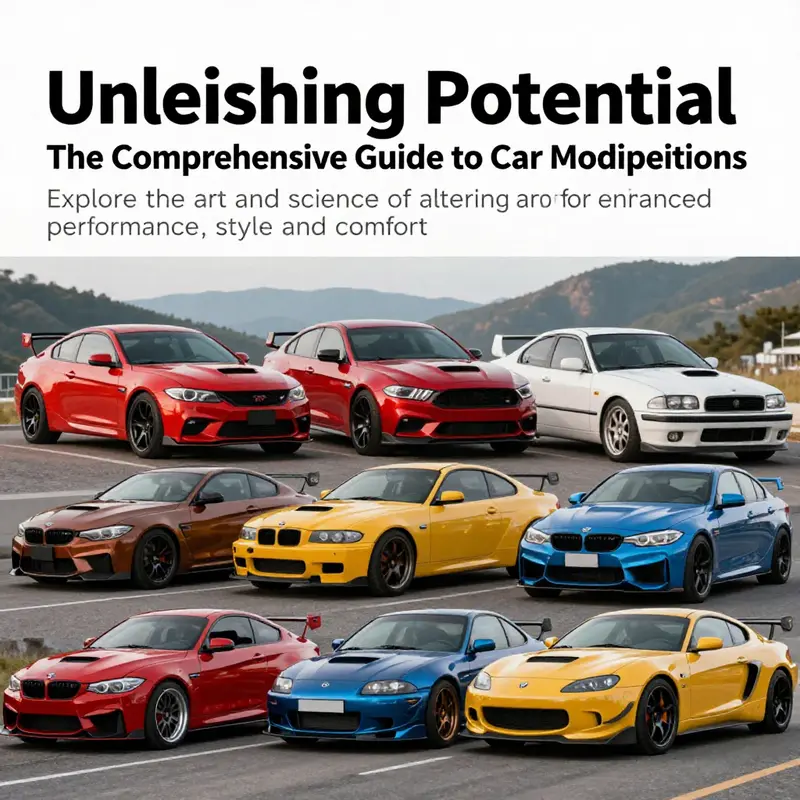
Car modifications represent a passionate pursuit among enthusiasts aimed at personalizing vehicles beyond factory specifications. From aesthetics to performance enhancements, modifiers explore various facets of their vehicles, contributing to an ever-evolving car culture. “Exterior Modifications on a Car: Enhancements in Style and Aerodynamics” dives into the transformative power of body kits, paintwork, and wheels, showcasing how these changes enhance visual appeal and improve aerodynamics. Next, “Interior Modifications on a Car: Upgrading Comfort and Technology” unpacks the upgrades that elevate the driving experience through better sound systems and seating. Then, in “Performance and Powertrain Modifications on a Car: Boosting Power and Handling,” the article examines how engine upgrades and tuning can unleash a vehicle’s raw potential. Finally, the chapter “Safety and Convenience Add-ons in Car Modifications: Enhancing Protection and Functionality” discusses non-invasive improvements that drive safety and convenience, striking a balance between aesthetic enhancements and everyday functionality.
Beyond the Paint: Exterior Modifications as a Synthesis of Style, Aerodynamics, and Driving Responsiveness

Exterior modifications are often the first language a car speaks to the world. They announce a driver’s taste, intentions, and even the way a vehicle should move through space. Yet beneath the surface gloss of color swatches and chrome accents lies a deeper why: exterior components shape how a car interacts with air, gravity, and road texture. When done thoughtfully, external upgrades become more than vanity; they forge a tighter link between driver input and road feedback. This chapter invites you to consider exterior modifications not as a collection of add-ons but as a coherent design strategy that blends aesthetics with physics, comfort with performance, and personal expression with regulatory responsibility.
Stylistic enhancements are, on the surface, about making a car look like itself in a particular mood. The exterior acts as a canvas where trim, molding, and color work in concert to sculpt the vehicle’s silhouette and perceived character. Decorative strips along door edges or around windows can refine lines that already exist, emphasizing a lengthened profile or a compact stance. These elements, often manufactured from chrome, plastic, rubber, or carbon-fiber finishes, are chosen not just for shine but for how they interact with light and the car’s basic geometry. A well-chosen trim piece can unify disparate panels, masking minor gaps and concealing small imperfections that would otherwise interrupt the visual cadence of the body. The result is a coherent tableau: a car that reads as intentional, cohesive, and uniquely yours. The aesthetic payoff is not merely skin-deep. In many cases, that refinement translates to a more flattering reflection in every showroom window or parking-lot glance, which can influence ownership satisfaction and even how a vehicle shows its age over time.
But the same exterior that catches the eye also governs how a car breathes. Aerodynamics is the other half of the exterior story, and it can be just as consequential as color and trim. The principle is simple: air flows around a car, and every crease, angle, and protrusion creates a wake or a bypass that affects drag, lift, and stability. When designed with purpose, exterior changes can streamline airflow, reduce turbulence, and improve how the chassis behaves at speed. A subtle front splitter, a thoughtfully shaped side skirt, or a discreet rear diffuser can guide air more efficiently, dampen lift at high velocity, and stabilize the rear under breaking or cornering. The practice is not about turning a sedan into a race car; it is about reducing parasitic drag and smoothing the car’s interaction with air so that throttle response and steering feel become more predictable and linear. In rough terms, better aerodynamics can translate into better fuel economy at highway speeds, steadier high-speed handling, and a more confident sense of control when pushing through sweeps or gusty crosswinds. As an automotive dynamics engineer noted, exterior mods that improve airflow and weight distribution can transform a sluggish sedan into a responsive driver’s car. That observation captures the dual payoff of good exterior modifications: they refine both the look and the way a car behaves when the road demands speed, balance, and composure.
The question then arises: how do drivers decide which enhancements make sense for their car and their goals? A practical approach begins with a clear problem statement about the car’s current dynamics and the owner’s priorities. If the aim is to turn a weekend cruiser into a more engaging daily driver, the focus might rest on balancing aesthetics with modest aerodynamic gains and weight management. If the goal is to preserve a more aggressive stance while improving stability, attention may center on suspension alignment with exterior features to ensure the body’s aero profile remains effective at functional speeds. In either case, the journey involves a dialogue between visual goals and aerodynamic realities, a dialogue that respects the car’s original design while acknowledging how outside changes can either reinforce or undermine its intended balance.
Aesthetics and aerodynamics rarely exist in isolation. They intersect wherever a modification alters perceived size, stance, or movement. For example, lowering a vehicle a few millimeters changes how the wheels interact with the wheel arches and how air streams over the fenders. Wider tires, while enhancing grip, also modify the air boundary layer near the wheels, sometimes necessitating larger fender treatments or careful alignment to prevent rubbing. The integration of these pieces—wheels, tires, fenders, and underbody panels—requires a holistic view rather than a series of isolated upgrades. It offers the potential for a car that looks purposeful while delivering measurable benefits in stability and efficiency. The best exterior programs treat each modification as a puzzle piece that completes the larger picture rather than a standalone garnish.
That philosophy extends to more aggressive aerodynamic kits, where the emphasis shifts from subtle refinements to deliberate, performance-oriented geometry. A front air dam can reduce cross-wind lift and channel air toward larger openings designed to feed the radiator and brake cooling ducts. Side skirts can manage the flow in the lower sides of the car, reducing underside turbulence that often undermines stability. A rear spoiler, properly sized and mounted, helps maintain rear downforce, especially when momentum carries the vehicle toward higher speeds or during quick direction changes. These additions don’t merely create a visual break from the stock look; they can improve the car’s thrust distribution and overall feel in corners, making the vehicle seem more planted and responsive through mid-corner transitions. This is where the oft-quoted maxim about exterior mods holds true: the most successful installations improve air management and weight distribution in a way that changes the car’s dynamic character, not just its silhouette.
But performance-oriented modifications must be chosen with care, particularly because the line between gains and drawbacks is fine. The same fix for one car might introduce mismatches for another. For example, a larger spoiler might produce meaningful downforce on a mid-speed coupe but could create unwanted drag in a city-bound sedan. Similarly, a wide-body kit may improve track performance but alter the car’s proportions to a degree that clashes with its overall aesthetic. The choice, therefore, becomes less about chasing the most dramatic effect and more about achieving a coherent balance. A disciplined approach begins with wind tunnel data, when available, or at least careful on-road testing with consistent measurement of handling, steering feel, and braking stability. It also involves evaluating weight distribution changes and how they interact with the car’s existing suspension geometry. The result is not just faster or cooler but more predictable in a wide range of conditions, which is often the primary criterion for the serious enthusiast who wants both form and function.
A cost-conscious path to exterior personalization emphasizes value through improvements that are both noticeable and reversible. Subtle upgrades—such as high-quality, non-permanent wraps or color-shifting finishes that protect the original paint while offering a fresh look—offer a lower-risk route to personal expression. Such wraps are usually designed to be removable, preserving resale value and avoiding permanent commitments. In this context, the idea of “cost-effective personalization” becomes a sequence of choices that maximize impact per dollar, while preserving the car’s original geometry and structural integrity. Even small accessories, like carefully styled license plate frames or trim accents, can deliver a surprisingly strong stylistic statement without altering core performance traits. These lighter modifications often serve as a proving ground: if the look and feel align with the owner’s experience, more involved changes can follow with greater confidence.
The interplay of exterior improvements with the car’s internal systems is not purely hypothetical. The broader ecosystem of car ownership—insurance, depreciation, and resale value—can be influenced by exterior changes. While aesthetics alone rarely triggers major shifts, the aggregate effect of an integrated exterior package can be meaningful. Buyers and insurers alike look for consistent quality, compatibility with the vehicle’s original design language, and an overall impression of careful execution. In some cases, modifications can affect warranties or compliance with local regulations. As with any modification, it is essential to understand the potential implications for registration, insurance, and legality before undertaking changes. In certain jurisdictions, altering dimensions or removing safety components is not just discouraged but prohibited, and even seemingly cosmetic changes might require official disclosure. Practical owners therefore adopt a measured plan, aligning their goals with regulatory realities and ensuring that the car remains a legal, safe, and reliable companion on the road.
From a storytelling perspective, exterior modifications also offer a way to narrate a vehicle’s journey. The choices reflect a phase of ownership, a response to climate, travel patterns, or personal milestones. A color wrap might symbolize a fresh start or a new chapter, while a aero kit can hint at a desire for sharper, more purposeful driving dynamics. This narrative dimension resonates with enthusiasts who see a car as an extension of themselves rather than a static commodity. In this sense, the exterior becomes a tangible memoir, a daily reminder of the driver’s evolving relationship with speed, balance, and aesthetics.
For readers seeking a deeper dive into the consequences of exterior choices, there is a useful discussion thread on the topic of resale value and modifications. See the analysis here: car-modifications-and-resale-value. The piece explores how different exterior treatments—ranging from paint and wraps to spoilers and trim—can impact buyer perception and market value, reinforcing the idea that appearance is more than skin-deep when it comes to long-term ownership economics. This connection between style, performance, and value underscores the importance of a cohesive, well-planned approach to exterior modifications rather than a scattershot collection of add-ons.
In the broader context of the article’s theme, exterior modifications anchor a philosophy: changes should be deliberate, compatible with the car’s architecture, and respectful of the road and legal environment. A well-executed exterior program respects the original design while acknowledging that air and weight distribution are not abstract concepts but forces that influence daily driving experience. The most convincing transformations are those that you feel in the seat of the car as you accelerate, brake, and steer—subtly, almost subconsciously—so that the vehicle becomes an instrument that responds to intent rather than a passive vessel that merely carries you from point A to point B.
As this discussion unfolds, it is worth noting the limits of exterior customization. Aesthetic and aerodynamic improvements have practical bounds. The value of any modification lies in creating a harmonious relationship with the car’s chassis, drivetrain, and tires. Excessive or poorly integrated changes can produce diminishing returns or even degrade handling quality. A thoughtful plan—grounded in the car’s existing design language, intended use, and local regulations—tends to deliver the cleanest, most rewarding outcomes. The aim is to enhance what the car already does well, while avoiding a jarring, disjointed transformation that betrays the vehicle’s original character.
External resources can provide valuable guidance on the broader implications of modifications, including safety, legality, and insurance considerations. For readers who want to explore these concerns further, a comprehensive external reference is available at the following link: https://www.autocar.co.uk/car-review/tech-explained/car-exterior-decoration-explained. This resource offers technical perspectives on how exterior decoration and functional aero elements interact with vehicle dynamics, complementing the practical, owner-centered viewpoints presented here.
In sum, exterior modifications are a modality of craft and contemplation. They are about choosing the right mix of color, trim, and aero geometry to create a vehicle that not only looks purposeful but also moves with increased confidence and efficiency. The most successful projects treat aesthetics and performance as a single design problem, resolved through careful planning, testing, and a respect for the car’s fundamental physics. When done with care, exterior modifications honor both the art of car culture and the science of motion, producing a driving experience that feels more connected to the road and more true to the owner’s vision. For those who embark on this journey, the reward is not simply a new look, but a vehicle that communicates its story with precision, personality, and performance.
Inside the Cabin: Crafting Comfort and Connectivity Through Interior Modifications

A car cabin is more than a space to sit in during a drive; it is a personal sanctuary, a controlled environment that shapes how you feel, how you move, and how you perform behind the wheel. Interior modifications, when approached with intention, can transform that space from a mere enclosure into a thoughtfully engineered ecosystem. The aim is not merely luxury or novelty but a cohesive upgrade that supports posture, reduces fatigue, and enhances how you connect with the car and the world outside it. Think of interior work as a partnership between body and machine, where comfort, accessibility, and technology converge to create a driving experience that is more humane and more efficient, even on the daily grind of commutes and errands. In this space, the best modifications are not flashy afterthoughts but well-considered adjustments that align with how you live in the car most of the time. The result is a cabin that breathes with you rather than fighting you, a place where small changes compound into measurable improvements in well-being and attention.
Ergonomics sits at the heart of any meaningful interior upgrade. The body at the wheel benefits most from improvements that support posture and reduce unnecessary strain. A long drive, a daily ride through bumper‑to‑bumper traffic, or a weekend camping trip—all of these scenarios illuminate how fragile the back and neck can become if the seating and support system fail to respond to your needs. Memory foam seat cushions, contoured to cradle the pelvis and align the spine, offer a surprisingly simple yet effective route to sustained comfort. They are not a cosmetic add-on but a functional investment in spinal health. When you sit with proper alignment, muscle fatigue declines, you can maintain clearer focus for longer, and your reaction times stay steadier because your body isn’t fighting against repetitive discomfort. Designers and engineers alike emphasize that the seating experience is a system—backrest angle, lumbar support, cushion depth—and memory foam helps harmonize those elements so the body emphasizes awareness rather than compensating for misalignment.
In climates where mornings arrive with a bite, heated seat covers become more than a luxury; they become a practical strategy for comfort without overtaxing the vehicle’s heating system. A heated cover distributes warmth more evenly and quickly to the keys of the body that crave relief, while avoiding a needless blast of hot air that can cause a rattling distraction as you wait for the cabin to reach a tolerable temperature. This is where the tactile and the thermal merge. The sensation of warmth through the seat connects directly with the sense of seat contact, and that warmth can help muscles relax, reducing stiffness and allowing a smoother transition into the driving rhythm. A simple material swap, when done with care for fabric durability and fit, can quietly recalibrate the sensory experience of the cabin so that every curve of the road feels less taxing and more controllable.
Steering wheel comfort, often overlooked, plays a critical role in tactile feedback and ergonomics. A soft leather or knitted fabric steering wheel cover can improve grip, reduce fatigue on long trips, and bring a refined feel to the most frequently touched surface in the car. The tactile feedback from a well-chosen cover helps with precision steering and lessens the need for excessive grip force, which in turn reduces forearm tension. The right cover can also contribute to a calmer driving environment, because a predictable texture in the hands translates into steadier control, especially in moments that require micro-adjustments during turns or lane changes. In this regard, interior upgrades become part of a broader safety equation: comfort breeds calm, and calm fosters focus.
Beyond the physical feel of the cabin, interior upgrades increasingly revolve around how information and media flow to the driver. Advanced technology integration inside the car has evolved from a convenience add-on to a core component of driving safety and enjoyment. A modern interior can include a high-quality infotainment system that serves as the central hub for navigation, media, and vehicle settings. At their best, these systems emphasize clarity, speed, and intuitive controls, so that a driver’s eyes rarely deviate far from the road. A robust system reduces cognitive load—no more squinting at a tiny screen or fidgeting with multiple devices while driving. In parallel, wireless charging pads and smartphone integration platforms simplify everyday use. Wireless charging eliminates the struggle of cables while the car remains in motion, and a well-integrated system ensures that maps, messages, and playlists come through in a way that feels seamless rather than invasive. The interplay between comfort and connectivity is subtle but consequential: when your hands and eyes are free and your information access is straightforward, your attention can stay where it belongs—on the road and the surrounding environment.
A premium audio experience also enters the interior equation as a meaningful upgrade, not merely a symbol of luxury. A high-quality sound system that balances bass, mids, and highs can transform routine commutes into moments of clarity and focus. Noise-cancellation features further improve perceived sound quality by reducing ambient road noise that can fatigue the ears and dull concentration. The result is a cabin that becomes a more inviting place to listen to music, podcasts, or guided feedback while still remaining attentive to driving tasks. The goal is a refined auditory backdrop that supports mood and cognitive function without creating distraction. A quiet, well‑tuned interior makes it easier to notice subtle changes in road conditions or traffic patterns, contributing to safer, more confident driving.
Ambience is another powerful lever in interior modifications. Smart ambient lighting, when implemented thoughtfully, can reduce eye strain during night driving and help regulate circadian rhythm during long trips that cross time zones or late shifts. The goal is not to flood the cabin with color at every moment but to equip it with a palette that can be adjusted to the task at hand—bright, cool tones for night navigation, warmer hues for relaxed cruising, or dynamic accents that reflect driving modes or driving conditions. When lighting aligns with the driver’s needs, attention can remain sharp without the fatigue that often accompanies a dim, monotonous cockpit. In combination with material choices—carbon fiber trims, wood veneer, or brushed aluminum inlays—the interior gains a cohesive aesthetic that conveys both purpose and personality. These elements, while subtle, shape how you experience the car day in and day out.
The holistic approach to interior improvement often leads to a rethinking of materials and surfaces, not merely for looks but for feel, durability, and ease of maintenance. Upgrading dashboard trims to more tactile materials can elevate the sense of quality and ownership. Custom floor mats, chosen for durability and spill resistance, protect the cabin’s core surfaces while asserting personal taste. A performance-minded cockpit might favor matte finishes that resist glare and fingerprints, paired with color accents that guide the eye to essential controls. These choices are not about ostentation; they are about reducing friction between the driver and the vehicle. When materials feel predictably how they should under different conditions—whether a hot afternoon or a cold morning—the driver’s confidence grows. The cabin becomes a reliable stage on which the drama of daily travel unfolds, not a distraction awaiting a misstep.
But interior alterations cannot exist in a vacuum. They are most effective when they respect the car’s original intent and the ways a vehicle is used. A cabin upgrade should complement exterior changes and performance work rather than clash with them. For example, interior upgrades that emphasize ergonomics and digital access can harmonize with an aerodynamic or visually cohesive exterior to present a unified personality for the car. In practice, this means evaluating how each modification serves daily life. If a change helps you stay more comfortable on a two-hour drive or reduces the effort required to locate a key function when you’re in a hurry, it earns its place. The most successful interior transformations feel inevitable, arising from everyday needs rather than impulsive impulses. They also align with a broader philosophy: the car should support you, not demand that you adjust your behavior to fit it.
There is also a practical dimension that often emerges once the excitement of a new interior wears off. Upgrades should be chosen with an eye toward long-term value and usability. Memory foam cushions, heated covers, and steering wheel enhancements need to be compatible with the car’s seat dimensions and mounting points. A properly fitted upgrade will not shift during driving or create rattle noises that add to fatigue. Likewise, a new infotainment setup should be compatible with the vehicle’s power supply and data interfaces, and installation should preserve the integrity of original electronics to avoid future compatibility issues. In other words, you want a seamless integration that respects the car’s engineering rather than a patchwork that requires ongoing adjustment. The contented, well-tuned interior is one that stays comfortable and functional through seasons of use and across a range of driving tasks.
A final layer to consider is the broader life of the car beyond your personal comfort. Interior upgrades have practical implications for resale value, maintenance, and insurance expectations. Upgrades that are durable, well-integrated, and non-invasive tend to settle more neatly into the vehicle’s overall value proposition. A cabin that feels thoughtfully upgraded can reduce the perception of age and improve how the car is perceived by future buyers. At the same time, it is wise to document modifications and understand how they may affect coverage, warranties, or registration where applicable. The right approach blends practical design with clear communication about what was changed and why. For readers who want to explore how interior modifications intersect with resale value, see the discussion here: car modifications and resale value.
Ultimately, interior modifications are about more than making a car look better. They are about shaping a space that supports you in your daily routines, reduces distractions, and enhances your ability to stay present and engaged behind the wheel. When executed with thoughtful ergonomics, careful material choices, and a coherent integration of technology and ambience, interior upgrades become an ally in the drive—helping you arrive rested, focused, and ready for whatever the road brings. The cabin then ceases to be a passive container and becomes a dynamic partner in motion, a place where comfort and connectivity coexist with clarity and control.
External resource for deeper understanding: https://www.autoblog.com/2026/01/15/car-interior-upgrades-comfort-tech/
Power, Precision, and the Modded Road: Understanding Powertrain Upgrades
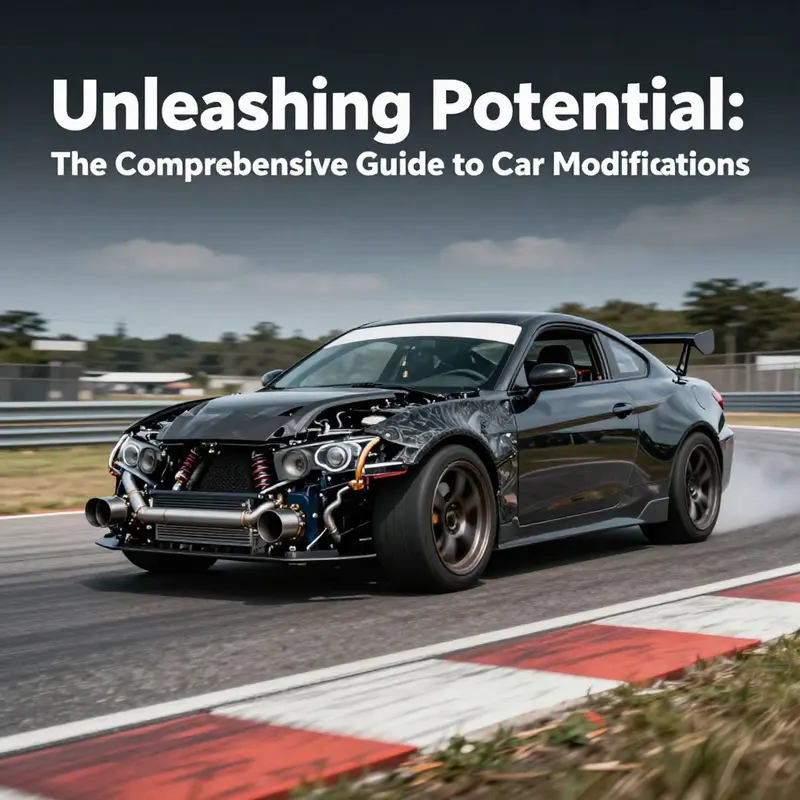
Upgrading a car to extract more power and sharpen its reflexes is a journey that begins with a simple premise: energy must move from the engine to the pavement as efficiently as possible.
In this chapter we explore the heart of powertrain modifications, tracing how each upgrade changes not just numbers on a dyno, but the feel of driving itself.
The aim is to deliver a balanced, reliable, and controllable motion that responds to the driver with immediacy. When done with care, power ambitions translate into real world gains in acceleration, top speed, and grip, while preserving driveability. When rushed or mismatched, they can become a liability. The path requires careful integration of airflow, exhaust flow, engine management, and supporting hardware that keeps the drivetrain from failing under load. The result is a vehicle that behaves like a well-tuned rhythm: power delivery that harmonizes with steering feedback, braking stability, and chassis balance under load. The connections matter because modifications rarely exist in isolation; exhaust changes alter backpressure, and boosting shifts torque delivery, demanding more from cooling and fuel systems. This chapter views these components as a continuum rather than a checklist.
Safe by Design: How Safety and Convenience Upgrades Shape Modern Car Modifications

Modifications to a car often conjure images of louder exhausts, bolder paint, or slick aerodynamics. Yet a substantial and increasingly influential side of customization lies in safety and convenience add-ons. These upgrades are not just about looking or sounding faster; they are about protecting occupants, supporting drivers in everyday use, and weaving advanced technology into the driving experience without sacrificing reliability. When done thoughtfully, safety and convenience modifications can elevate a vehicle beyond its factory baseline while preserving, or even enhancing, its overall usability. The key is to see these changes as part of a holistic system—one that respects the car’s original design, the road environment, and the driver’s needs. In this sense, modifications become a form of responsible engineering, balancing personal preferences with the imperative of keeping people safer and more in control behind the wheel.
At the core of safety-focused modifications are systems that actively assist or intervene during driving. Advanced Driver Assistance Systems, or ADAS, exemplify how technology can extend human perception and reaction time. Features such as lane-keeping assistance, adaptive cruise control, and automated emergency braking are designed to prevent collisions or reduce their severity. When these are added or upgraded, the modification is less about flashy cosmetics and more about reducing the likelihood of human error—a factor that contributes significantly to road risk. Upgraded lighting, including high-efficiency LED headlights and adaptive lighting that responds to speed, steering, and weather, further enhances night-time visibility and awareness. The impact of better illumination goes beyond aesthetics; it translates into quicker recognition of pedestrians, obstacles, and sudden hazards, which in turn reduces reaction time and the chance of a mishap.
A closely related safety consideration involves the reinforcement of core structural components. Some owners pursue modifications that strengthen the chassis or crash-absorption areas, particularly if the vehicle is used in demanding conditions or on challenging roads. While such enhancements can improve occupant protection, they must be executed within strict engineering parameters. Altering structural elements without proper validation can inadvertently undermine safety, affecting crumple zones, airbag deployment, or pedestrian protection systems. As with any modification, the goal is to preserve or improve the car’s safety envelope rather than to chase an aesthetic or performance edge at the expense of protection.
Concurrently, convenience add-ons are increasingly intertwined with safety. The line between comfort and protection often blurs when features such as dashcams, tire-pressure monitoring systems, and GPS navigational aids play a role in safer driving. Dashcams provide a recorded account of events, useful for accident analysis and insurance discussions, while tire-pressure monitoring helps avert blowouts or suboptimal traction. Modern convenience tech can also be integrated with safety systems; for example, information from a tire-pressure monitor can feed into ADAS logic to adjust stability control or braking performance in real time. This blending of comfort and safety reflects a broader shift in automotive design: the car becomes a data-rich platform that supports the driver through better information, more precise feedback, and a more predictable operating environment.
Beyond passive or semi-active systems, the integration of connectivity and software-driven features marks a new frontier in safety-focused modifications. A connected-car framework can enable remote updates to safety algorithms, refine navigation with real-time weather and traffic data, and enhance emergency response capabilities when needed. These software-driven enhancements underscore a crucial point: modern safety is not solely about hardware installed in a shop but about how software maintains and augments that hardware over time. Yet this has to be managed with discipline. Software updates should come from trusted sources, be compatible with the vehicle’s existing hardware, and be thoroughly tested to avoid unintended interactions with life-critical systems. As the vehicle ecosystem becomes more software-defined, the responsibility to maintain and verify these changes shifts from a one-off installation to ongoing stewardship of the car’s safety and performance profile.
The practical reality of safety and convenience modifications is that they must fit the broader regulatory and maintenance context. Not all add-ons are universally permissible, and many jurisdictions require that certain changes be inspected, registered, or even certified before they become street-legal. For instance, modifications that significantly alter a vehicle’s dimensions, weight distribution, or fuel system can prompt regulatory scrutiny or outright prohibition. Likewise, any alteration that disables an original safety feature—such as removing a headrest or bypassing an airbag-related sensor—can create serious risks and legal concerns. Owners who pursue these kinds of changes without appropriate oversight may find themselves facing insurance complications, failed inspections, or liability in the event of a crash. Therefore, responsible modification begins with a clear understanding of local rules, followed by collaboration with qualified professionals who can assess compatibility, safety margins, and long-term reliability.
A nuanced aspect of safety-oriented modifications is the interdependence of different systems. For example, upgrading lighting and ADAS sensors may work well in isolation, but the newer configuration must maintain sensor integrity, correct calibration, and proper alignment with the vehicle’s perception suite. If a headlight upgrade changes glare characteristics or affects camera calibration, the ADAS may misread road features or misjudge lane markers. This is why many installers emphasize holistic validation rather than simply adding a component and hoping for the best. The same principle applies to suspension changes. While lowering a car can improve handling and aesthetics, it can also alter brake balance, steering geometry, and crash energy management. Even seemingly minor changes—such as tire size or wheel offset—can cascade into altered traction control, ABS modulation, and rollover risk. The takeaway is simple: every modification that touches the car’s sensor array, chassis geometry, or protective systems requires careful integration testing and, ideally, a return-to-baseline assessment after a period of operation.
In discussing the safety implications of aftermarket modifications, it is useful to acknowledge the role of maintenance. A modified car places greater onus on the owner to ensure that upgrades remain reliable and safe over time. Components that do not wear evenly or that age differently can create imbalances in braking performance or steering feel. Regular inspection of upgraded brake systems, suspension components, and electronic interfaces becomes essential. This is particularly true for electrical and software-based enhancements, where a software update or a hardware fault can alter how systems respond in adverse conditions. A disciplined maintenance plan—documented, scheduled, and performed by qualified technicians—helps preserve the safety and reliability that were the purpose of the modifications in the first place.
The conversation about safety and convenience also intersects with consumer education. People who modify their cars often want to know how changes affect insurance premiums, resale value, and long-term reliability. The insurance question, in particular, deserves careful consideration because many policies evaluate risk based on the car’s equipment, usage, and claimed purpose. Modifications can trigger different underwriting categories or premium adjustments, and in some cases they can complicate claims in the event of a loss if the modifications are not properly disclosed or documented. Engaging with insurers early in the modification process, disclosing the nature of the upgrades, and maintaining thorough records can help ensure that protection coverage remains coherent with the car’s evolving configuration. For a concise discussion on how modifications influence insurance, see the linked resource.
One compelling dimension of modern safety and convenience upgrades is the potential for software-enabled enhancements to deliver ongoing safety benefits. In an era where manufacturers push regular, remote updates to safety software, drivers increasingly benefit from improvements that arrive after purchase. These upgrades can refine ADAS performance, tighten emergency response capabilities, or optimize navigation with up-to-date hazard data. Such software-driven improvements illustrate that safety is not a static attribute but a moving target that can improve through careful, legitimate updates. The idea is not to chase the newest gadget, but to maintain and refresh the vehicle’s safety toolkit in a way that respects the vehicle’s architecture and the environment in which it operates. Industry examples of this approach emphasize that ongoing software stewardship, delivered through dependable platforms and properly vetted channels, can amplify both safety and convenience without requiring radical hardware overhauls.
To ground these concepts in practical terms, consider the everyday driving context. A family with a daily commute may favor ADAS and adaptive lighting to reduce fatigue and enhance awareness during late-evening drives. A sport-oriented build might emphasize high-quality dashcams and robust tire-pressure monitoring to support spirited driving while maintaining vigilance about road conditions. A rural or highway-driven setup could benefit from more advanced emergency braking logic and improved headlamp reach to cope with variable weather. In each case, the modifications should be integrated with the vehicle’s core systems, tested for compatibility, and maintained to ensure long-term safety and reliability. The aim is to improve protection and ease of use without introducing new kinds of risk, such as miscalibrated sensors, degraded braking balance, or unexpected software interactions.
From a planning perspective, the path to successful safety and convenience modifications begins with a clear briefing of goals. Which safety benefits are most valuable for the driver’s typical routes and conditions? How will the added features interact with current driving habits and the vehicle’s baseline tolerances? What maintenance schedule will support the longevity of the upgrades? The answers to these questions should come from qualified technicians who understand both the car’s design constraints and the regulatory landscape. A thoughtful approach balances personal preference with a respect for physics, engineering limits, and the shared responsibility of road safety. It also invites a broader view that includes the vehicle’s future, recognizing that many of today’s enhancements can evolve through software updates, OEM-approved pathways, or certified aftermarket networks that emphasize safety and reliability as core principles.
In this context, it is natural to explore the broader implications of modifying a car’s safety profile beyond the immediate driving experience. The discussion often touches on the social and ethical dimensions of customization: the responsibility of the owner to ensure that aesthetics do not undermine protection for occupants or other road users; the importance of transparent disclosure when seeking insurance coverage or resale; and the value of ongoing education about best practices in installation, calibration, and maintenance. A well-executed safety and convenience program is not about pushing the car to its limits, but about extending its protective and supportive functions in the everyday realities of modern driving. It is about building a vehicle that remains predictable, reliable, and safer for all its passengers, while still reflecting the owner’s preferences and intended use.
For readers seeking a deeper dive into how modifications intersect with insurance implications, a practical reference is available here: What modifications affect car insurance. This resource offers a grounded overview of common concerns and provides a bridge to more specialized guidance on documentation, disclosure, and risk assessment when safety and convenience upgrades are part of the vehicle’s evolving profile.
As the field of car modifications continues to mature, the balance between protection, convenience, and personal expression will increasingly hinge on disciplined design and responsible stewardship. The best upgrades are those that elevate safety without compromising the car’s fundamental performance or its ability to protect occupants in a crash. They are upgrades that weather the test of time—calibrated, maintained, and integrated within a broader framework of compliance and professional support. And in an era where software and connectivity shape the next generation of safety features, responsible modification becomes as much about keeping systems current as it is about enhancing physical components. The result is a vehicle that not only looks and feels unique but functions as a reliable, well-protected partner on the road. The journey from concept to safe, sustained performance is a collaborative one, combining owner intent, professional expertise, and a shared commitment to road safety.
External resource: https://www.bmw.com/en/connecteddrive
Final thoughts
Car modifications are more than just aesthetic changes; they reflect individual preferences, enhance performance capabilities, and improve the overall driving experience. As passion drives the car modification community, it’s essential to understand the various categories of enhancements available. Each modification serves a unique purpose, from making a visual statement to boosting the vehicle’s power and safety. This holistic approach not only transforms vehicles but also unites enthusiasts in a shared experience of creativity and performance.