
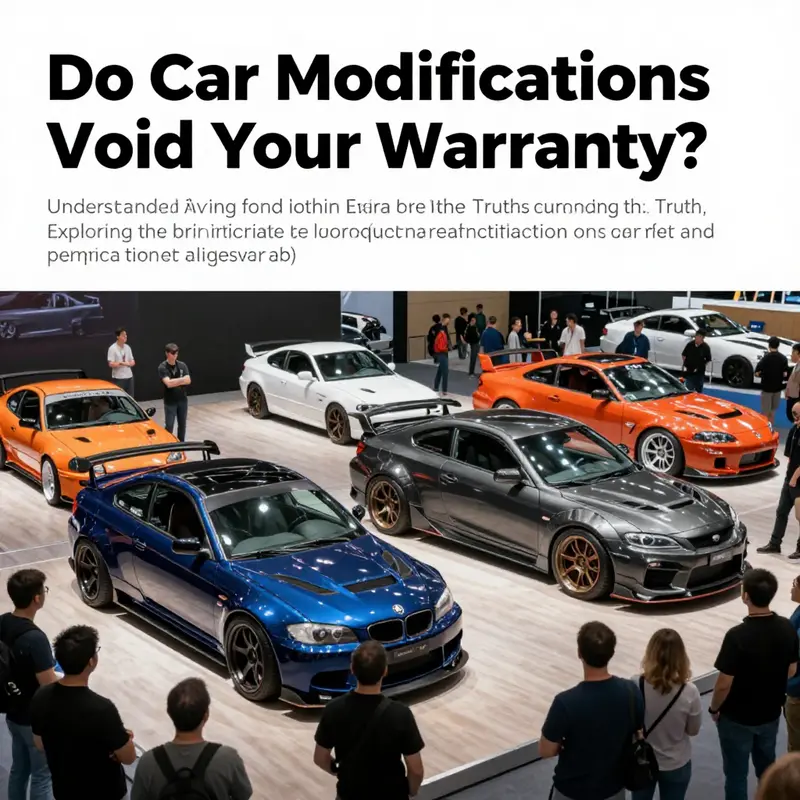
Car enthusiasts frequently grapple with the intriguing question: does modifying a vehicle void its warranty? While the allure of enhancing performance or aesthetics through modifications beckons, the implications for warranty coverage can deter even the most daring modders. Understanding whether your modifications might jeopardize your warranty is essential for anyone engaging in car customizations. The conversation begins with how car modifications can affect warranties, delves into legal frameworks like the Magnuson-Moss Warranty Act that govern these situations, and highlights manufacturer policies that vary widely. Along the way, we’ll examine specific examples of modifications that may risk warranty voiding and offer best practices to safeguard your investment and maintain coverage. Each chapter builds a clearer understanding of the relationship between modifications and warranty protections, empowering you to make informed decisions as you enhance your vehicle.
Warranty Under Pressure: Reading the Fine Print on Car Modifications and Coverage
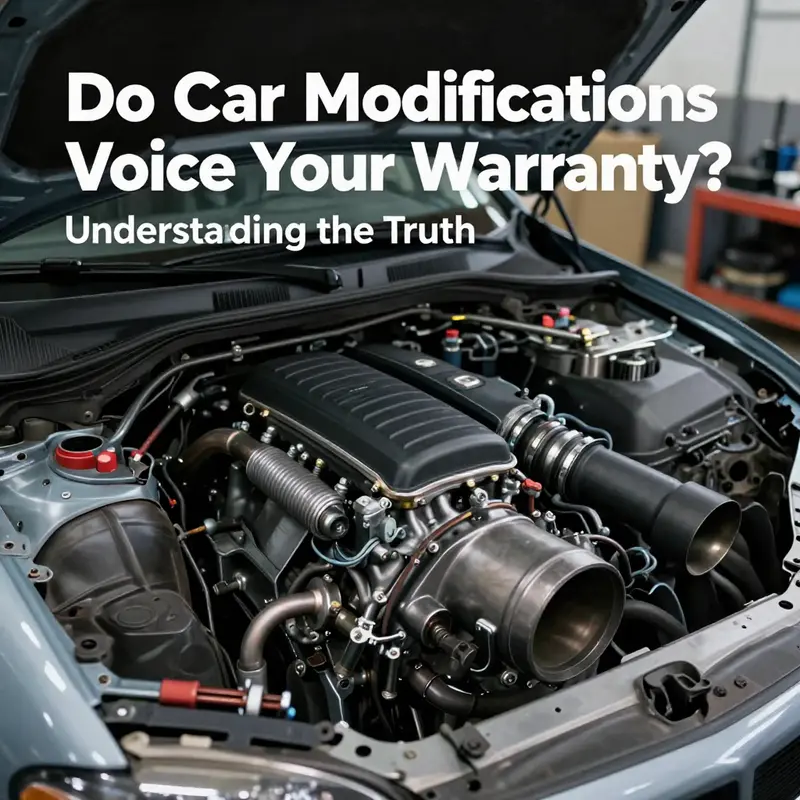
Warranty coverage for cars is not a single blanket shield; it’s a contract whose terms depend on model year, jurisdiction, and the specifics of a modification. Many manufacturers allow certain upgrades through factory-approved programs, while others assert that non-OEM parts can affect coverage. The Magnuson-Moss Warranty Act provides a baseline protection, preventing a blanket voiding of a warranty merely because a modification exists, but it does not guarantee universal coverage for modified components. The burden of proof in disputes often rests on whether the modification caused the defect or if it would have occurred regardless. Documented evidence—part numbers, installation dates, calibration notes, and technician credentials—helps preserve eligibility for warranty repairs. When evaluating modifications, consult the official terms, prefer factory-approved parts, and work with qualified professionals to keep records that support compliance with the manufacturer’s design intent. If a claim arises, the manufacturer must show a causal link between the modification and the fault; otherwise coverage may still apply. Finally, approach upgrades with a plan that weighs performance goals against potential warranty implications, and always seek written confirmation before making changes.
Warranty at the Edge: The Magnuson-Moss Act, Car Modifications, and Consumer Rights
When a driver powers up a car with a modification, the question often shifts from “Will this void my warranty?” to a more nuanced inquiry: how does a federal standard protect me when I add aftermarket parts or alter software? The Magnuson-Moss Warranty Act, enacted in 1975, sits at the center of that discussion in the United States. It does not guarantee that every warranty will stay intact no matter what you do to your vehicle, but it does set a crucial floor for how warranties must be written and enforced. The act requires that any written warranty for a consumer product priced above a modest threshold clearly disclose its terms in plain language and label the warranty as either “full” or “limited.” More importantly for drivers who modify, the act protects against unfair denials of warranty coverage and against deceptive or misleading disclaimers that would hide the true scope of protection. In practice, this means a dealership or manufacturer cannot blanketly void an entire warranty merely because a non-OEM part was installed, unless that modification is shown to be the direct cause of the failure in question. The law carves out a more precise duty: coverage for defects not caused by modifications remains intact, and denial of coverage must be tied to a demonstrable link between the modification and the problem reported.
The practical implication of this framework is subtle but significant. A full understanding begins with distinguishing between full and limited warranties. A full warranty would, in general, require the manufacturer to repair or replace a defective component at no charge within a reasonable period. A limited warranty, by contrast, can impose specific restrictions, exclusions, or conditions. When a vehicle owner adds aftermarket parts or tunes the vehicle’s software, these changes do not automatically rewrite the entire warranty. Instead, coverage becomes a mosaic: the portion of the vehicle that failed and is related to the modification can be treated differently from systems that operate independently of the modification. For instance, a faulty engine component introduced by a modified turbocharger or by improper tuning could be deemed the responsibility of the aftermarket installation. In that case, the manufacturer might deny coverage for the engine repair that stems from the modification. Yet if the same vehicle later experiences an unrelated transmission issue, the manufacturer cannot shrug off the transmission repair solely because a modification exists elsewhere. This distinction matters for both consumers and service departments, because it encourages a careful, issue-by-issue evaluation rather than a blanket denial.
A core principle underpinning these rules is the burden of proof. The manufacturer must demonstrate that the modification caused the failure in question. The level of causation required is not typically “absolute” but must be a credible link between the alteration and the defect being claimed. This means that a repair shop’s diagnostic data, logs, or other evidence can be pivotal in a warranty dispute. It also means that drivers should preserve evidence of the installation: the parts used, the installer’s credentials, and the steps taken during installation. Records become not just a matter of convenience but a practical tool in protecting rights under the law. Importantly, the Magnuson-Moss Act has a constructive partner in the Federal Trade Commission (FTC), which issues guidelines to ensure that warranty language is not misleading and that disclosures meet transparent and understandable standards. The FTC’s stance reinforces the idea that a label or disclaimer cannot obscure the fundamental protections the law affords to consumers.
In real-world terms, drivers sometimes face tensions between what a dealer or manufacturer says and what the law permits. A common scenario involves a modified engine component that fails due to a defect in the aftermarket part itself, rather than the original manufacturing design. The warranty denial in such a case can be challenging but not automatic. If the problem is traced to the non-OEM part and its installation, the manufacturer may refuse to cover the repair for that specific issue. However, if another system experiences a separate failure that has no causal linkage to the modification, the warranty coverage for that unrelated problem should not be voided simply because the vehicle was modified. This cadence of reasoning is central to the act’s protective intent: it guards against blanket exclusions while allowing targeted denials grounded in demonstrable causation. And for consumers who feel they have been unfairly treated, the act provides a federal cause of action, which can be invoked to pursue remedies, including recovery of attorney fees and other litigation costs based on the time expended pursuing a rightful claim. The practical effect is that the law empowers individuals to challenge misapplied exclusions and to seek a fair resolution through the courts if warranted.
From a policy perspective, these protections do not eliminate the risk of warranty challenges. They do, however, establish a framework that incentivizes thoughtful, well-documented modification practices. For some owners, this means exploring factory-approved performance packages or certification programs that carry their own limited warranties or enhanced coverage terms. In such circumstances, the line between performance enhancement and warranty risk becomes clearer, because the manufacturer has already vetted the modification pathway and stands behind the result in a controlled way. For others, the decision to modify hinges on a balance of personal preference, financial calculations, and a clear acceptance of potential warranty trade-offs. The important takeaway is that modification does not automatically equal warranty elimination; rather, the interaction between the modification and the failed component—along with the documentation and the specific warranty terms—determines the outcome.
To navigate this landscape with greater clarity, many drivers benefit from a proactive approach that aligns expectations with the law and with practical vehicle maintenance. Before installing any aftermarket part or altering software, it makes sense to review the vehicle’s warranty documentation in detail and speak with the dealership or the manufacturer about the intended modification. Understanding whether the modification would trigger any special terms or void specific coverages helps prevent surprises down the road. It is also prudent to choose qualified professionals for installation. The quality of installation can influence not only the performance of the modification but also its impact on other vehicle systems. A poorly tuned engine, for example, can produce heat and stress that ripple through the drivetrain, potentially causing issues that might be misattributed to a blanket warranty denial. Informed installation and workmanship thus become practical components of a strategy to preserve as much warranty protection as possible while pursuing the performance goals that drive modification in the first place.
For readers seeking a concise articulation of these ideas within a broader framework of legal and consumer protections, a deeper look into the topic of legal car modifications can provide useful context and practical guidance. This perspective emphasizes careful planning, documentation, and alignment with regulatory standards as part of any modification project. You can explore that broader discussion here: legal car modifications.
As the law continues to evolve and as automakers refine their own modification policies, the Magnuson-Moss Act remains a foundational protection that encourages transparency and fair dealing. It does not guarantee a worry-free experience for every modification, but it does guarantee that warranty terms are communicated clearly and that coverage is not arbitrarily sacrificed. The outcome of any specific claim will still depend on the facts: the nature of the modification, the timing of the failure, the relationship between the modification and the defect, and the documentary trail that the owner can present. In that sense, the act serves both as a safeguard and as a guide, reminding drivers and manufacturers alike that responsible modification must be accompanied by responsible disclosure and responsible installation. Keeping a level-headed approach to planning, testing, and documentation can help ensure that a modified vehicle remains a source of enjoyment and performance without eroding the protections that many car owners rely on every day.
External resource for further reading on the official interpretation of the Magnuson-Moss Warranty Act and its enforcement by the FTC can be found here: https://www.ecfr.gov/cgi-bin/text-idx?SID=e6f2d067cc4ddace23e6694ed1e064bb&mc=true&node=pt16.1.700&rgn=div5
Guardrails of Warranty: Navigating Manufacturer Policies on Car Modifications
Modifying a car is often framed as a private expression of taste, performance goals, or practicality. Yet behind the thrill of tweaking a ride lies a set of guardrails laid out by manufacturers and reinforced by consumer protection law. This chapter follows a single thread: how maker policies shape what you can change, how those changes affect coverage, and why a careful approach can preserve both the thrill and the warranty. The path through this terrain is not simply about avoiding a void stamp; it is about understanding how risk, responsibility, and rights intersect when the car in your driveway becomes a canvas for mechanical and aesthetic alteration. The questions are practical, not purely doctrinal: If I install a different exhaust, a suspension upgrade, or a tuning module, will the warranty vanish or merely narrow in scope? And if a failure occurs, what burden of proof shifts from the owner to the manufacturer, and when does it stay with the modification itself?
The key framework begins with a legal backbone that governs warranties across the United States. The Magnuson-Moss Warranty Act sets the stage by prohibiting manufacturers from voiding a warranty simply because a modification exists. It does not grant carte blanche, however. The act allows denial of warranty coverage if a modification is proven to cause a specific failure or defect. In practical terms, this means a manufacturer must demonstrate that the modification directly led to the problem, not merely that the vehicle was altered and later showed wear or failure somewhere else. The burden of proof rests with the automaker, and the connection between fault and modification must be clear and well substantiated. This nuance matters because it protects owners from automatic warranty erasure for every aftermarket change, while still allowing manufacturers to defend themselves against claims that arise because a modification misbehaved inside the system it touches.
Take, for example, a high-performance exhaust or an engine-tuning device. If improper tuning or overheating linked to the modification causes a failure in the engine, the manufacturer may refuse to cover the engine-related repairs. The logic is straightforward: if the defect is a consequence of the modification’s operation, coverage can be constrained accordingly. If the failure is unrelated, or if the modification did not contribute to the defect, coverage for other systems might still be intact. The formal standard is not a blanket protection; rather, it is a tailored exception that guards both consumer rights and the integrity of the vehicle’s engineered systems. This distinction helps explain why some owners enjoy a broad warranty even after certain upgrades, while others face a more limited horizon of coverage.
Beyond the federal frame, each automaker often crafts its own policies—some welcoming modifications by offering factory-approved options, others prohibiting changes altogether, and many walking a line between permissive and restrictive. Factory-approved or OEM-recognized upgrades are a key category. These upgrades are designed to work within the manufacturer’s safety, emissions, and performance envelopes. They are more likely to preserve warranty coverage because they are validated by the maker and often come with installation requirements, such as dealer or authorized service-center involvement. Yet even with these sanctioned parts, the conditions can be exacting: installation by qualified technicians, adherence to specific part numbers, and sometimes mandatory re-certification of the vehicle’s systems may apply. The practical effect is that the path to ongoing warranty protection is narrower than simply buying the most powerful aftermarket offering; it requires alignment with the manufacturer’s testing, documentation, and service network.
For those who want a deeper understanding of the policy landscape, a careful read of the warranty documentation is essential. The language varies from brand to brand, but the strategic takeaway remains consistent: know what is allowed, what is approved, and what the dealer is prepared to support. Speaking with your dealership, and sometimes with the manufacturer directly, can prevent misinterpretations that lead to disputed coverage after a problem arises. In this sense, the policy discussion is as much about clarity as it is about protection. Given the stakes, many drivers keep a meticulous record of every modification, from the parts used to the credentials of the technician who performed the work. These records can prove invaluable if a dispute ever surfaces about whether a given repair falls under warranty or not.
The decision to modify also ripples outward beyond warranty coverage. Insurance implications often accompany changes that affect safety or performance. Some insurers scrutinize modifications more closely and may adjust premiums or deny claims if unauthorized parts are detected. Even if the modification does not affect a covered system, an insurer may interpret the altered risk profile in ways that complicate claims after an accident. Because insurance terms and warranty rights operate in tandem, it is prudent to coordinate both streams before committing to any upgrade. This means contacting your insurer to disclose planned changes, obtaining approval when possible, and maintaining consistent documentation across warranties, receipts, and professional certifications. In practice, the most robust approach is to treat modification as a project with multiple stakeholders—dealer, insurer, and manufacturer—each of which has a say in the final outcome.
The resale value of a modified vehicle adds another layer of complexity. Some buyers prize unique configurations and high-performance capabilities, while others see potential red flags in non-OEM alterations. The impact on resale value depends on the quality, integration, and documentation of the modification. Records that demonstrate professional installation, compatibility with the vehicle’s systems, and ongoing maintenance can help reassure buyers that the modification was properly executed and is safe to operate. On the other hand, modifications that are poorly documented or that depart significantly from what the manufacturer considers standard may deter some buyers and reduce market value. For the owner who plans to sell, a thoughtful approach is to prioritize traceable, certified upgrades and to preserve all warranty-adjacent documentation. This careful record-keeping not only helps during negotiations but also signals to potential buyers that the vehicle has been responsibly maintained within a framework that respects both performance and safety.
Navigating these policies requires more than a cursory search or a quick read of a warranty booklet. A practical mindset is to balance curiosity with prudence: pursue upgrades that are explicitly sanctioned or compatible with the manufacturer’s guidelines; insist on professional installation by technicians familiar with the vehicle’s architecture; and keep receipts, certifications, and service notes in an organized file. The aim is not to shackle the car’s potential but to ensure that any enhancement remains within a framework that the maker recognizes and that keeps the vehicle within the boundaries of safe operation and compliant emissions performance. When in doubt, consult the official guidance provided by the vehicle maker or an authorized service center. This is not a bureaucratic hurdle; it is a risk management strategy that protects the owner’s investment and safety, while preserving options for after-sales support should a problem arise.
For readers seeking a concise, practitioner-oriented synthesis of these ideas, one can start with a broader understanding of how to approach modifications legally and responsibly. A useful reference point is the broader article on legal car modifications, which offers practical guidance on navigating the grey areas between customization and compliance. It emphasizes the importance of choosing modifications that the manufacturer has either approved or at least does not actively disavow. It also highlights a pragmatic approach to documentation, installation quality, and the strategic discussion with insurers and dealers. This balanced approach helps ensure that your project remains enjoyable while staying tethered to the protections you expect from the warranty and from responsible ownership. To explore these legal considerations in more depth, consider reading the article on legal car modifications.
In sum, manufacturer policies on modifying cars are not a single rule but a spectrum. The most protective stance for owners is to seek options that align with factory specifications, document every step of the process, and maintain open communication with both the dealership and the insurer. The Magnuson-Moss framework provides a shield against automatic warranty voiding, but it does not grant a free pass to alter a vehicle without consequence. Modifications done with care, transparency, and professional execution can coexist with meaningful performance gains and a solid warranty posture. As the landscape evolves with new technologies and evolving safety standards, the practical art of modification becomes the art of reading policy, aligning with the maker’s intentions, and managing risk with discipline. For those who want to dig deeper, the internal resources and case guidance available through manufacturer literature and trusted consumer guidance channels can offer a solid, navigable map through this complex terrain. The aim is a car that reflects personal ambition without becoming a casualty of a misread policy or an overlooked clause. External reference to the policy landscape and safety guidelines can be found in the following resource: https://www.nhtsa.gov
From Power Tricks to Structural Tweaks: Specific Modifications That May Void a Car’s Warranty
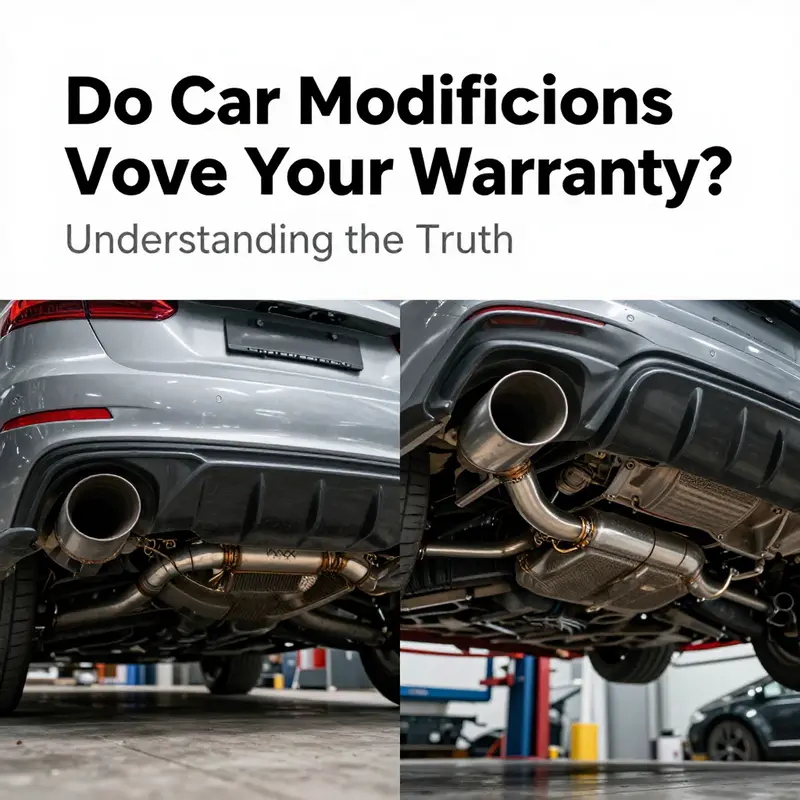
The idea that a modification automatically voids a car’s warranty is a simple shortcut that misses the deeper, more careful truth: the warranty landscape is nuanced, and the outcome hinges on how a modification interacts with the vehicle’s original design, safety systems, and powertrain. Under the Magnuson-Moss Warranty Act, manufacturers cannot automatically void the entire warranty merely because a modification exists. Yet when a modification directly contributes to a failure or defect, the manufacturer can deny coverage for the affected issue. The burden rests on the manufacturer to prove that the modification caused the problem. This balance matters not only in legal terms but also in practical terms for owners who care about reliability, safety, and resale value. Modifications can be tempting for performance, aesthetics, or personal preference, but they carry a cost that extends beyond the install bill. The following discussion threads those costs into everyday driving decisions, highlighting the categories most likely to trigger warranty concerns while reminding readers that some paths maintain coverage if approached with care and proper guidance.
Engine and powertrain modifications sit at the heart of the warranty question. When a car’s heartbeat—the engine and its accompanying transmission—gets altered, the risk of a warranty denial grows substantially. Turbocharging, engine tuning, or adding performance chips changes how the engine breathes, how much fuel it uses, and how heat is managed. Even seemingly minor steps, like loading an aftermarket ECU tune or enabling a performance map not supplied by the factory, can cascade into issues that the original warranty cannot cover. If a problem emerges that can be traced to the modification—say, unexpected detonation, abnormal heat, or altered fuel injection timing—the manufacturer may refuse to cover the repair for the related component. It is not enough to show that another system failed; the link must be drawn between the failure and the modification’s influence on the engine’s operating parameters. In practice, many manufacturers emphasize that while a stock engine can still experience failures, a modification that creates or exacerbates a defect shifts the responsibility away from the warranty for the affected part.
Unauthorized electrical or wiring work represents another reliable path to warranty questions. When a vehicle’s electrical architecture is altered outside approved protocols, the risk of short circuits, fires, or control-system malfunctions rises. Installations for high-power audio systems, custom lighting, or dash-mounted electronics may seem innocuous, but improper wiring can introduce parasitic drains, fuse failures, or ground loops that stress the vehicle’s electrical backbone. If a fault arises from such work, manufacturers frequently view it as an “unauthorized modification” that can void coverage for any damage stemming from the electrical system. The core idea is straightforward: the more a modification departs from the factory’s tested electrical topology, the greater the potential for unintended consequences that warranty terms may exclude.
Software tuning or what some call “hacking” the vehicle’s firmware further complicates the warranty calculus. Unauthorized firmware updates, altered driving profiles, or hidden function unlocks that bypass stock safeguards can trigger warning lights or system errors. Even when no hardware changes are visible, these software actions can violate warranty terms and prompt coverage denial for related electronic or safety-system components. The modern car’s brains are coded to preserve certain performance thresholds and safety interlocks. When a user disables or bypasses those safeguards, manufacturers argue that the car’s failure mode can no longer be confidently linked to a factory design, making warranty coverage riskier to extend.
Exhaust systems—particularly those marketed as performance upgrades—occupy a distinct gray zone. A modest exhaust tip or muffler replacement might leave emissions and engine reliability largely unscathed, yet more aggressive exhaust systems that alter backpressure, catalytic efficiency, or emissions output can raise compliance and reliability questions. Emissions-related warranties, where they exist, become especially vulnerable if a modification alters the vehicle’s emission-control behavior. In some cases, even if the engine itself remains undamaged, the modification constitutes a breach of the warranty agreement from the perspective of emissions compliance. The line between appearance and function blurs when a part is advertised as “performance” and actually shifts how the exhaust system interacts with the engine’s breathing and the exhaust aftertreatment.
Suspension and chassis changes lock into a different part of the warranty conversation. Lift kits, lowered springs, or other suspension alterations change ride height, steering geometry, and wheel alignment. These modifications can hasten tire wear, stress steering and suspension components, and affect handling and braking behavior. Manufacturers often view such changes as affecting vehicle safety and structural integrity. If a failure arises in a steering rack, suspension mount, or drivetrain components that wear abnormally due to altered geometry, coverage may be denied for those related parts. The logic is not that all suspension work voids everything, but that the specific safety-relevant or wear-prone systems may become excluded if the modification is deemed to have compromised their intended operation.
Body and frame alterations introduce another layer of risk. Roof racks, roof tents, or even roll cages alter a vehicle’s structural profile. While these changes might be within the realm of practical use, they touch on the balance between safety, crashworthiness, and the integrity of the original design. In an accident, if a report indicates modifications contributed to the outcome, insurers and manufacturers may question coverage for repairs. The same logic applies to rare cases where changes affect crumple zones or airbag deployment zones. Any interior or exterior modification that touches safety features or the chassis’ basic architecture invites heightened scrutiny from warranty evaluators and insurers alike.
Interior upgrades, often pursued for comfort or customization, need careful assessment when they involve safety-critical systems. Simple seat covers or cosmetic trims are generally benign, but more invasive interior work that interferes with airbag deployment paths, sensor placement, or dash-integrated control modules can jeopardize warranty protection for the affected safety systems. The core warning is clear: if a modification might influence how a safety feature operates or how the vehicle reads its own status, it is liable to complicate warranty coverage.
How should a driver navigate this landscape without surrendering everyday reliability? The practical answer blends caution with strategy. First, many automakers offer factory-approved performance or appearance options that are designed to be compatible with the vehicle’s existing warranty structure. These programs can preserve warranty coverage while delivering the desired upgrade. Second, meticulous documentation matters. Keeping a detailed record of all parts, professional installation work, receipts, and any calibrations or software changes can help demonstrate that the modification was performed by qualified technicians and that the vehicle’s core systems remain within the manufacturer’s tested parameters. Third, consult with the dealership or manufacturer before making changes. A quick conversation can reveal whether a modification is covered under a specific program, whether it requires a formal approval process, or whether a certain class of parts must be used to maintain warranty integrity.
The interplay of law, policy, and engineering means a single rule cannot fit every car or every modification. What matters is how directly a modification affects the car’s core systems, safety features, or emissions controls, and whether the change aligns with the manufacturer’s tested operating envelope. The broader lesson for owners is practical and patient: before you bolt on a part, reprogram the software, or reconfigure a system, learn how the change maps to the warranty. Document the process and seek informed guidance to avoid a scenario where a later repair becomes a dispute over which party bears responsibility for the fault.
In pursuing a well-informed path, owners can still explore meaningful upgrades that respect the warranty framework. For those seeking information about how modifications interact with insurance, there is a dedicated discussion that outlines which alterations tend to influence coverage decisions. That resource emphasizes the importance of clear communication with both insurers and manufacturers and the value of maintaining accurate records of every modification. For readers who want a practical view on how such changes ripple through risk management, the linked resource below provides a concise summary and actionable guidance. what modifications affect car insurance
For the broader context of how industry standards treat modification-related warranty questions, it is helpful to reference contemporary guidance from automotive media that aggregates OEM policies and common practice. A leading source notes that modifications impacting safety, emissions, or core mechanical systems are the most likely to lead to warranty denial. This consensus aligns with the examples above, reinforcing the need for careful planning, professional installation, and clear documentation when pursuing any upgrade.
External resource: Car and Driver’s 2026 guidelines on modification and warranty provide a thorough, up-to-date perspective on how manufacturers interpret modifications in light of the law and safety requirements. This external reference can serve as a checkpoint for readers comparing their plans against a broad industry standard: https://www.caranddriver.com/features/a48986245/what-modifications-will-void-your-car-warranty/
Keeping the Warranty Intact While You Mod: Practical Guidance for Safe, Smart Car Customization
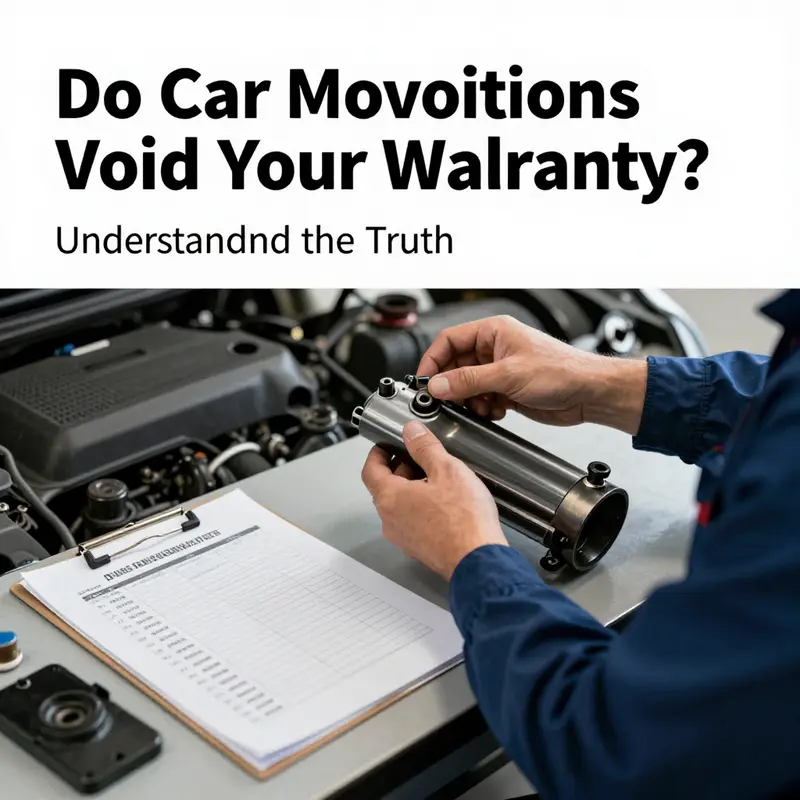
Modifying a car is a common way to tailor a vehicle to personal taste or performance goals. The question of whether those changes void a warranty is not a simple yes or no. The Magnuson-Moss Warranty Act sets a baseline: manufacturers cannot automatically void a warranty solely because a modification exists. However, if a failure is caused by a modification, coverage for that failure can be denied. A practical approach is to keep modifications clearly separated from the core engine, transmission, drivetrain, and emissions systems, and to seek written confirmation from the dealer that specified upgrades will not void warranty for the components affected.
Choose OEM-approved parts or certified programs when possible. Documentation is essential: keep receipts, part numbers, installation details, technician credentials, and service logs. If a claim arises, a clear paper trail helps show the modification did not cause the issue. For engine or transmission tuning, use reputable technicians and consider reversibility to stock to preserve coverage on other subsystems.
Maintenance discipline remains foundational; follow the manufacturer guidance, service intervals, and ensure that modifications do not interfere with maintenance tasks. When financing or leasing, review the contract language, as some agreements impose stricter rules about modifications.
Before proceeding, obtain written guidance from the dealer or authorized service center and keep it as part of your records. Factory-approved performance packages often provide the best balance between customization and warranty protection.
Final thoughts
Navigating the world of car modifications while ensuring your warranty coverage requires careful consideration and proactive measures. Understanding the nuances behind warranty voiding, including the legal protections afforded by the Magnuson-Moss Warranty Act, equips you with the knowledge to make informed choices about your vehicle upgrades. By appreciating manufacturer-specific policies and recognizing the modifications that could risk warranty claims, you can enjoy the benefits of personalization without jeopardizing your investment. Adopting best practices, such as documenting modifications and utilizing qualified professionals, will further enhance your warranty safety. Ultimately, an informed approach to modifications allows enthusiasts and tuners alike to enhance their vehicles confidently while preserving warranty protections.