
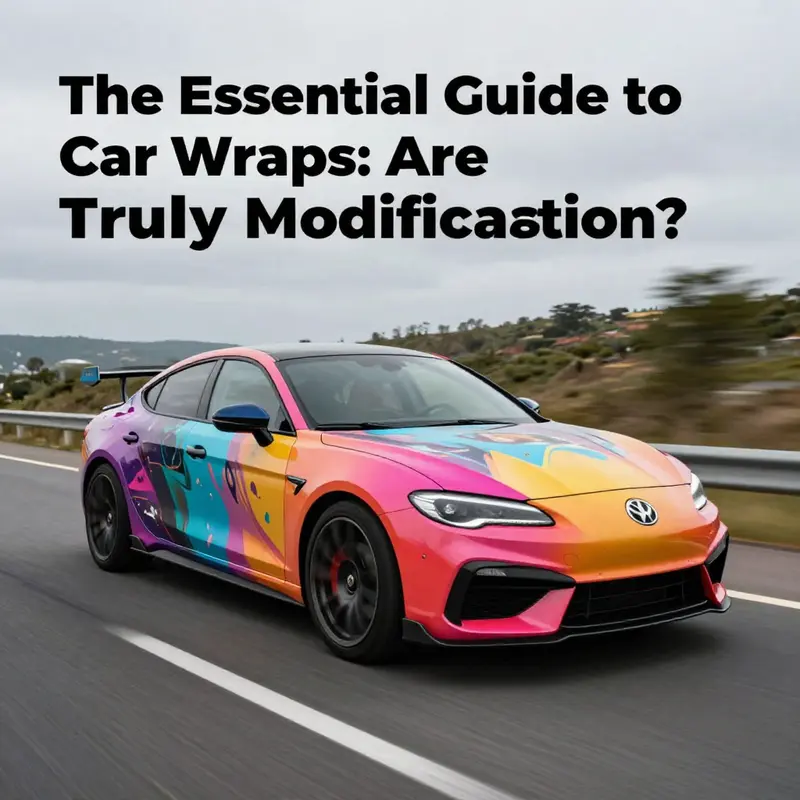
Car wraps have surged in popularity over the years, offering a breadth of customization options that intrigue hobbyist car modifiers, professional tuners, and classic car enthusiasts alike. As these wraps evolve from mere aesthetic choices to functional enhancements, a critical question arises: are they truly modifications? This article embarks on a comprehensive exploration, breaking down the multifaceted nature of car wraps. We’ll dive into how they transform the appearance of a vehicle in the first chapter, while the second chapter focuses on their functional aspects, like protection and heat regulation. The third chapter tackles the impact of car wraps on resale value, revealing how modifications can influence financial considerations. Finally, we navigate the legal landscape in the fourth chapter, examining local regulations that may govern the use and definition of vehicle modifications. Each chapter builds a clearer understanding of car wraps as a definitive modification in the automotive world.
Wrapped Identity: How a Car Wrap Redefines Appearance, Protection, and Value
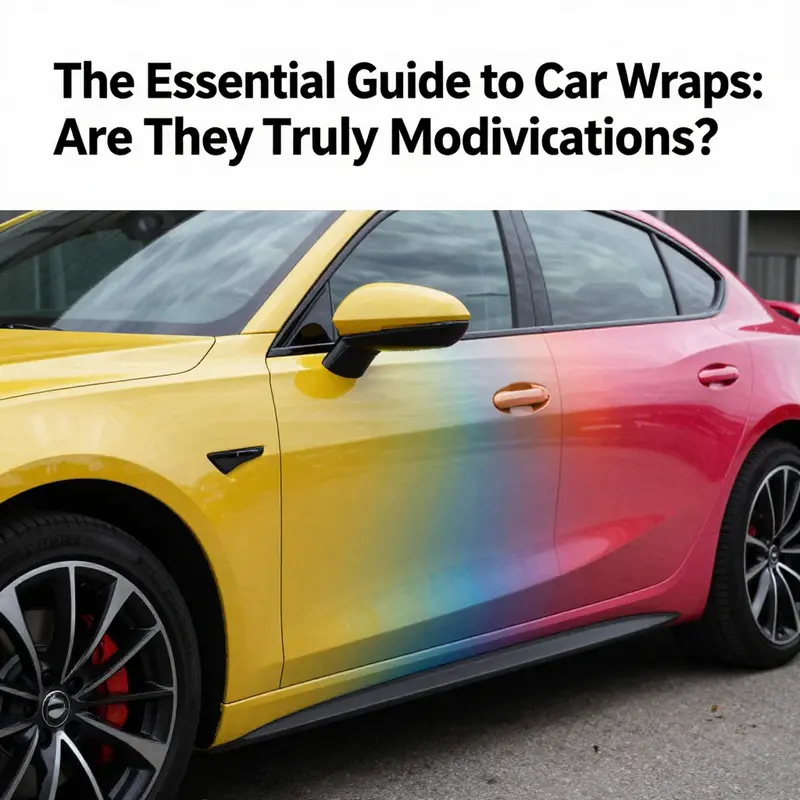
A car wrap is more than a surface change. It is a deliberate reconstruction of how a vehicle presents itself to the world, a visual language that can signal personality, purpose, or brand identity. While the engine, transmission, and chassis remain untouched, the car’s external skin becomes a flexible canvas. It is a modification in the fullest sense: a permanent or semi-permanent layer that alters how the car looks, and, in many cases, how it is perceived by others, by insurers, and by potential buyers. In that sense, a wrap sits at the crossroads of aesthetics, protection, and commerce, offering a means to transform appearance without the permanence or cost of a traditional repaint. Its presence raises questions not just about style, but about function, value, and the rules that govern what a vehicle can be or become on public roads.
The core idea behind a wrap is simple enough: a large-format vinyl graphic is applied to the car’s surface, often covering the original paint entirely. Unlike a conventional paint job, which binds pigment to metal through solvents, primers, and clear coats, a wrap introduces a new layer that can be removed with care. This removable layer is powerful because it means the underlying paint can be preserved or restored to its original state, even after years of exposure to sun, road debris, and the everyday grind of urban driving. Yet the wrap is not merely a protective shell; it can be engineered to deliver dramatic changes in color, texture, and pattern. It can mimic metal finishes, create bold graphics, or reproduce brand imagery with a precision that was once possible only with a custom paint job and a meticulous design process. In this sense, a wrap is a transformation tool, a way to reinvent a vehicle’s look in a single, cohesive gesture.
The transformation capabilities of wraps are not limited to color alone. Owners can choose color change wraps that offer a spectrum of finishes—gloss, satin, matte, or even a high-gloss gloss that mimics a freshly polished surface. Beyond shade, wraps enable textures and effects that are either difficult or costly to achieve with paint. A wrap can evoke brushed metal, carbon fiber, or even abstract geometric patterns that wrap around the car’s contours. For commercial applications, wraps make a vehicle into a moving billboard, a platform for brand storytelling that travels through traffic and parks at curbside events, attracting attention from pedestrians and other drivers who may otherwise overlook a static storefront or a stationary fleet. In this sense, a wrap is not simply a cosmetic choice; it is a strategic decision about visibility, identity, and messaging.
The installation process is as important as the design. A wrap is only as effective as its execution. It begins with meticulous measurements, where every curve, crease, and contour of the vehicle is mapped to create a layout that minimizes waste and ensures edges remain secure. Professional installers use high-quality vinyl material, heat, and precise lamination to coax the film to follow the car’s lines without lifting or peeling. The result should be a seamless finish with edges that stay flush against door seams and body seams, even after exposure to sun, temperature swings, and road vibrations. A well-executed wrap can look as flawless as a factory paint job, while also offering the flexibility to be removed or replaced as tastes change or as branding needs evolve. The people who perform these installations bring a blend of artistry and engineering, balancing aesthetics with aerodynamic awareness, ensuring that the wrap does not interfere with sensors, cameras, or other exterior features where applicable.
Functionality extends beyond appearance. Wraps offer tangible protective benefits that preserve the car’s original finish. They shield the paint from UV rays, which can fade color and degrade clear coats over time. They also resist micro-scratches and help absorb the impact of minor abrasions that would otherwise mar the factory paint. In the short term, this means a wrap can keep resale value higher by slowing the pace of paint degradation. In the long run, the possibility of returning a car to its original condition without a repaint can be appealing to buyers who want a clean, unaltered canvas. A noted automotive detailer explains that wraps are like armor for a car’s original paint, and when done right they help preserve resale value. That insight underscores a layered benefit: protection and appearance work in concert, so the car remains attractive today while preserving value for tomorrow.
For businesses, the appeal of wraps extends into the realm of marketing and brand consistency. A single vehicle can become a mobile platform, spreading a message across neighborhoods, city centers, and highway corridors. The visibility of a wrapped fleet can translate into durable impressions, reaching thousands of potential customers as vehicles travel through dense metropolitan areas. This is not a fleeting appeal but a measurable one. Research indicates that mobile vehicle wraps can generate tens of thousands of daily impressions in busy markets, making them among the most cost-effective forms of outdoor advertising. The return on investment comes not only from recognition but from coherence in branding—logos, color schemes, typography, and contact information that are reinforced wherever the vehicle roams. The wrap thus becomes a compact, deployable brand asset—both a protective layer and a dynamic emblem of corporate identity.
An important dimension of wraps is how they intersect with broader questions about modification. A wrap is a modification because it alters what you see, and sometimes how you experience a vehicle, while leaving mechanical systems intact. Yet because wraps are designed to be removable, they also offer a less permanent path to experimentation than repainting. This duality can influence how owners think about ownership, insurance, and resale. The wrap may interact with insurance considerations, since some policies treat visual modifications differently from mechanical changes. If the wrap includes integrated digital components or branding, regional regulations might govern visibility and lighting, or even require specific labeling for commercial vehicles. The nuances here underscore a broader truth: when a vehicle’s appearance changes, the conversation often expands to include resale value, insurance implications, and compliance with local rules. The modification is not simply about aesthetics; it becomes a matter of risk assessment, financial planning, and regulatory literacy.
The aesthetic potential of wraps is matched by a practical logic. Wraps can be designed for performance as well as style. For example, they can be engineered with surface properties that reduce heat absorption in certain finishes, helping to limit interior temperature rise on sunny days. This is not a universal feature of all wraps, but it demonstrates how a carefully chosen wrap can contribute to a more comfortable cabin experience and, in some cases, to a modest improvement in energy efficiency of climate control systems. In addition, wraps can obscure the existing imperfections in an original paint job, offering a clean canvas that hides swirl marks, scratches, or other blemishes that would otherwise require repair. At the same time, because the wrap is an added layer, the job depends on quality materials and skilled installation. A poorly executed wrap can produce a ripple effect, with edges peeling, corners lifting, or color mismatches appearing at panel lines. That is why the value of professional installation cannot be overstated; the promise of a dramatic transformation is realized only when the crew understands surface preparation, edge treatment, temperature control during application, and proper post-installation care.
Care and maintenance of wraps follow different rules from those of traditional paint. While the wrap does protect the underlying finish, it calls for a specific regimen to maximize longevity. Cleaning tends to involve mild, non-abrasive solutions and soft cloths, with avoidance of aggressive solvents that can degrade adhesive layers or cause premature fading. It is not unusual for owners to schedule periodic inspections to ensure adhesion integrity, particularly around edges, around door handles, and along body seams where flexing can cause lifting over time. Some owners also choose a window tinting or sun film option in conjunction with a wrap, which can further influence interior light levels and UV exposure, enhancing seat and dashboard protection while maintaining a desired level of visibility. This holistic approach to exterior modification—where color, texture, protection, and light management work in concert—demonstrates how wrapping can be a thoughtful, integrated project rather than a single, isolated change.
Within this broader context, the question of value—resale value, branding impact, and insurance implications—becomes central. A wrap can preserve the integrity of the original paint, which matters when buyers favor factory finishes or desire a clean slate for their own customization. The potential resale advantage is nuanced, however, and depends on factors such as the wrap’s condition, the quality of the installation, the duration of ownership, and the market’s appetite for wrapped vehicles. Some buyers will celebrate a vibrant, well-executed wrap as evidence of care and modern taste, while others may prefer to return to stock appearance. In discussing these dynamics, it is helpful to consider the published perspectives on car modifications and resale value. See the exploration of how modifications intersect with resale value here: car-modifications-and-resale-value. This linkage is especially pertinent when the modification is visible and carries branding or design language beyond mere color.
The story of a wrap also intersects with the practical realities of ownership—budget considerations, maintenance routines, and the lifecycle of the modification. A wrap is typically less costly upfront than a full repaint, and it can be replaced or removed as tastes shift or as a vehicle’s role changes. The decision is rarely about a single factor; it integrates aesthetic desire, protection strategy, and financial planning. For someone evaluating a wrap for the first time, the decision often hinges on the intended duration of the modification, the level of protection sought for the original paint, and the operational costs of maintenance and eventual removal. A well-chosen wrap, installed by skilled hands and maintained with care, can offer a compelling blend of appearance, protection, and promotional value that few other exterior modifications can match.
As the field evolves, so too do the guidelines and best practices for selecting wraps, materials, and installers. The industry emphasizes the importance of choosing high-quality vinyl with robust warranty terms, ensuring color consistency across panels, and confirming compatibility with the vehicle’s curves and features. It also highlights a cautious approach to changes that could affect regulatory compliance or insurance coverage, especially in regions with strict tinting and visibility standards. The conversation around wraps embraces both the creative and the responsible sides of car ownership: how to transform appearance while protecting what lies beneath, and how to tell a story with a vehicle that is genuinely ready for the road—and for the future.
For readers seeking deeper, technical insights into the wrap landscape and its applications in engineering and branding, explore the broader industry discussions at Vehicle Wraps – Industry Insights. This external resource provides a structured overview of materials, techniques, and practical considerations that accompany professional installations. The wrap’s value lies not just in its surface-level beauty, but in how it can be integrated with a vehicle’s total lifecycle—appearance, protection, usage, and value—so that the car remains a dynamic asset rather than a fixed display. In the end, a wrap expresses intentionality: a choice about how a vehicle is seen, how it ages, and how it travels through the world with a message that can be as quiet as a gloss black finish or as loud as a full-color mural.
For readers who want to connect this topic to related questions about how modifications affect ownership experiences, consider the broader discussions on resale value and insurance implications linked in this chapter. A wrap is a modification with a purpose and a personality, a way to tailor a car’s appearance to a person or a brand while preserving the possibility of returning to the original state when the time is right. In this sense, it stands as a powerful example of how appearance-based modifications can function as both aesthetic choices and strategic business decisions, shaping not only how a car looks but how it travels through markets, communities, and everyday life. If you are curious about how such changes align with your own vehicle plans, the discussion of car modifications and resale value can offer useful context and considerations for decision-making. car-modifications-and-resale-value
Beyond Aesthetics: The Functional Realities of Car Wraps as Modifications
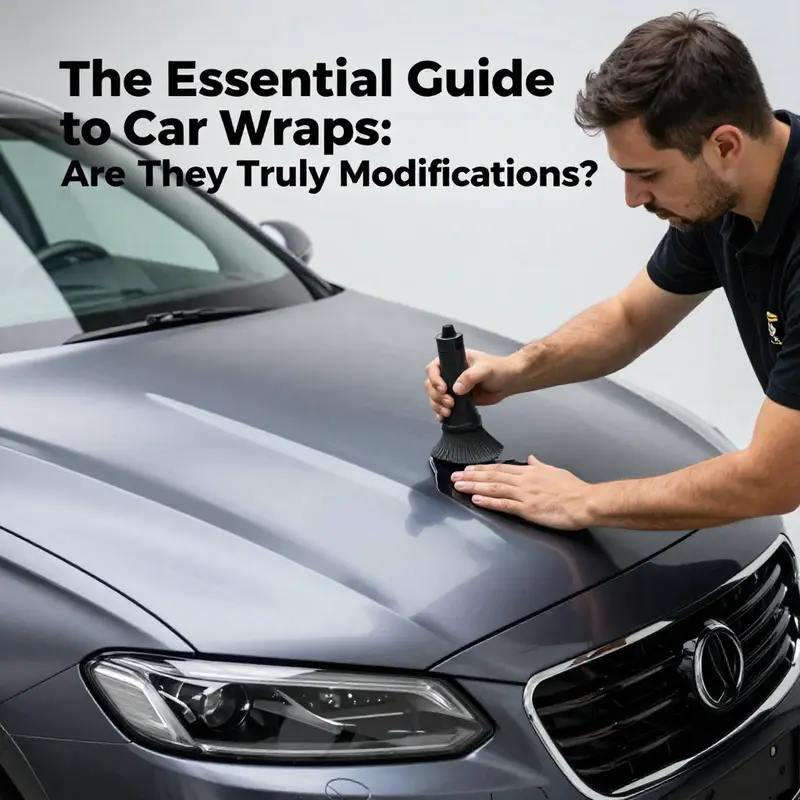
A car wrap is easy to mistake for a vanity project, an accessory spent on flashy graphics or a glossy cover that hides dull factory paint. Yet within the broader discourse of vehicle modifications, wraps perform a substantial, multi-layered function. They are not a mere cosmetic change but a practical modification that reshapes a car’s exterior dynamics, protection profile, and even its interaction with the everyday economics of ownership. When a driver chooses to wrap a car, they are, in effect, selecting a shield, a branding canvas, and a temporary reimagining of the vehicle’s identity all at once. Understanding this layered function helps clarify why wrap becomes both a marketing tool and a durable defense system, a reversible aesthetic upgrade and a strategic asset in value preservation. The most immediate benefit is protection, and this benefit is more nuanced than it first appears. A wrap acts as a flexible, durable barrier between the vulnerable base coat and the everyday hazards of road travel. UV radiation, stone chips, bug splatter, and abrasion from frequent contact with brush, gravel, or debris are all diminished by the presence of a protective layer. The paint, which is often the most expensive and time-consuming component to repair or restore after an accident or aging, benefits from the wrap’s sacrificial shield. If a chip or scratch occurs, the wrap may bear the damage, while the underlying paint remains pristine beneath it. This is particularly meaningful for high-end finishes or distinctive colors that would be costly to reproduce with a repaint. The wrap, in effect, becomes a sacramental layer that buys time for owners who want to preserve the original aesthetics of their vehicle without committing to the permanent alter of a new coat of paint. This protective role is reinforced by the materials themselves. Modern wraps utilize high-grade vinyl with advanced color- and light-blocking properties. Paint protection films, a subset of wrap technology, are engineered to be nearly invisible, yet highly resistant to abrasion and chemical attack. They provide clarity or a chosen tint while offering a barrier that scavenges some of the impact energy from minor encounters with road debris. The result is not merely a shield for the paint but a visual maintenance tool that keeps the car looking newer for longer. The protective function does not exist in isolation; it has practical implications for maintenance schedules and resale planning. A vehicle with a well-applied wrap and intact original paint system is often easier and less expensive to refresh if the owner later decides to return to the stock appearance. The wrap’s removal is designed to be non-destructive, a feature that adds to its appeal as a modification. If the owner chooses to revert to the factory finish or switch to a different look, a trained installer can lift the wrap without harming the underlying surface. Peel-back techniques, specialized solvents, and careful heat management enable a clean removal that minimizes risk to the paint layer beneath. This reversibility is a key differentiator from permanent repainting, offering a flexible path to change and adaptation. The ability to revert to the original paint is not just about restoration; it is a strategic option for owners who anticipate future changes—whether personal preference, market demand, or the shifting regulations of where the car is driven. The functional value of wraps expands beyond protection and reversibility into the realm of branding and visibility. For fleets and commercial vehicles, the wrap doubles as a mobile billboard. A fleet vehicle that travels through urban corridors, highways, and service areas becomes a moving signboard. The ability to tailor graphics precisely, scale branding, and alter messaging as campaigns evolve makes wraps an attractive return on investment for businesses. In this sense, the wrap performs a dual function: it protects and enhances the vehicle’s surface while turning the car into a platform for communication. This is not merely about ad space; it’s about reach and memory. A bold color change or a distinctive graphic can create a lasting impression that outlives traditional decals, retaining legibility and visual impact even after many miles on the road. The operational side of wraps—how they are applied and how they interact with the vehicle’s shape and traffic environment—also contributes to their functional status as a modification. Modern wraps are engineered with air-release channels that reduce the formation of air pockets during installation. This yields a smooth finish and shorter application times, which translates into lower labor costs and less downtime for the owner. The installation process, when performed by skilled technicians, respects the contours of the car—from the complex curves of a hood to the tight panels around doors and trunks. The wrap adheres to the surface, but it does so with care, allowing for future removal with minimal residue and no lasting damage. It is this combination of resilience, ease of application, and clean removal that elevates the wrap from a cosmetic experiment to a legitimate, functional modification. In addition to the protective and aesthetic functions, wraps intersect with the broader economic and regulatory landscape of car ownership. The decision to wrap a vehicle is rarely made in isolation. Owners weigh the potential impact on resale value, insurance considerations, and the evolving rules that govern vehicle appearance in different jurisdictions. For example, a color change wrap can refresh a vehicle’s market appeal, but it can also influence how buyers perceive originality and authenticity. A preserved original finish under a removable wrap could, over time, improve resale value by offering a near-original canvas once the wrap is removed, or conversely, it may require more careful negotiation if the market places a premium on factory finishes. Insurance questions inevitably arise as well. Some policies treat noticeable modifications, including wraps, as risk-related changes that may influence premiums. While the wrap itself does not affect engine performance or safety systems, the modification status can affect how insurers assess risk, especially if the modification implies ongoing expenses for maintenance, repair, or potential changes in liability exposure. It is essential for owners to consult their insurer and understand how a wrap may alter their coverage or premium—this is not just a theoretical concern, but a real financial consideration that shapes the decision to apply or remove a wrap in the first place. Regulations and local rules sometimes govern the visibility and color of certain wraps, particularly for emergency vehicles, commercial fleets, or vehicles operating in mixed-use environments. A wrap that drastically alters a vehicle’s appearance could raise compliance questions, especially if the theme or color confuses identification in traffic or clashes with public safety standards. These regulatory nuances reinforce the point that a wrap is not merely decoration; it is a modification with social and legal dimensions. Still, the versatility of wraps remains compelling. For branding, the ability to tailor design, finish, and texture is unmatched in the world of exterior vehicle customization. A wrap can deliver a glossy, satin, or matte finish, or even a unique texture that changes how light interacts with the surface. This is not about vanity alone; it shapes the car’s presence in public space. People notice wrapped vehicles differently than stock ones, and that attention can translate into increased curiosity about the brand or business represented by the wrap. The strategic use of color and design can emphasize corporate identity, support campaign messaging, or simply reflect the owner’s personal narrative. But the functional appeal also includes a practical aspect of upkeep. Many wraps demand specific cleaning protocols that protect the adhesive and finish. The correct approach—gentle washing, avoidance of abrasive compounds, and non-residual cleaners—preserves the film’s integrity and extends its life. When owners follow appropriate maintenance routines, the wrap remains vibrant and durable for years, which is a more sustainable investment than a repaint that might require regular retouching or color matching if damaged. This durability offers a predictable maintenance cost profile, a factor many buyers evaluate when considering the total cost of ownership. The broader conclusion emerges: a car wrap is not merely a visual upgrade but a comprehensive modification that changes a vehicle’s protective envelope, ownership economics, regulatory footprint, and its business utility. It reframes how a car ages in the hands of its owner, offering a reversible, cost-effective way to manage appearance and protection over time. The interconnections between style, protection, branding, and legality reveal a layered value proposition. When owners weigh the decision, they are balancing the immediate satisfaction of a new look with the long-term realities of upkeep, resale strategy, and compliance. In essence, a wrap is a modification that pays dividends in resilience and adaptability as well as in appearance. This integrative view helps explain why wrap installations are increasingly viewed as a practical, multifunctional automotive enhancement rather than a purely cosmetic tweak. For readers curious about how these modifications ripple into a car’s overall value, a deeper dive into the dynamics of car modifications and resale value provides additional context and nuance. car modifications and resale value This link offers a focused examination of how changes to a vehicle, including wraps, influence market perceptions, buyer expectations, and negotiation dynamics when the time comes to sell or trade in a vehicle. In practice, the decision to wrap is guided by a blend of personal preference, business strategy, and practical foresight. Owners who expect to own their cars for an extended period may prioritize color protection and finish longevity, choosing wraps that maximize paint stewardship and ease of removal. Those managing fleets may emphasize branding impact and cost-effective deployment across multiple vehicles, leveraging the same materials and processes to achieve a consistent look while tracking maintenance and lifecycle costs. From another angle, enthusiasts who crave a dramatic transformation might opt for color change wraps that unlock a new identity for a vehicle without the permanence of repaint. They can push boundaries with bold finishes, metallics, or chromatic shifts, and still revert if the desire for change reemerges or if it becomes advantageous to align with evolving personal or professional branding. The market response to wraps also reflects these practical virtues. As more drivers recognize that a wrap can deliver protective benefits with a reversible, design-forward approach, demand grows for high-quality installations that balance adhesion with safe removal. In this evolving landscape, the installer’s skill matters as much as the material quality. An experienced technician optimizes panel coverage, ensures edge sealing, and minimizes the risk of peel at seals and gaps, while also preserving paint integrity during removal. A successful wrap project reads as a collaboration among owner, designer, and installer—a shared understanding of the vehicle’s use, aesthetic goals, and long-term maintenance plan. The result is a finished product that looks intentional and cohesive, with a level of durability that supports both safety and brand messaging. As a chapter in the broader discussion of whether a car wrap qualifies as a modification, this functional perspective anchors the argument in tangible consequences. It’s not only about the car’s new color or pattern; it’s about how that surface acts in the real world: shielding the finish, communicating a message, and offering a reversible path that respects the base vehicle beneath. The wrap thus sits at the intersection of art and engineering, aesthetics and protection, identity and policy. And while it does not alter the mechanical heart of the vehicle, it alters the way the car ages, the way it is perceived, and the way it participates in the consumer economy. For readers seeking further grounding in the materials and practicalities behind this kind of modification, Autowrap offers an in-depth look at interior wraps and the associated material grades and specifications, capturing the practical realities of implementing these changes in industrial and commercial contexts. Its discussion of material science and implementation limitations provides a useful counterpart to the broader narrative about functional wraps. The practical takeaway remains clear: a car wrap is a modification with a distinct set of functional advantages that extend beyond looks, shaping protection, branding potential, and long-term ownership considerations. The choice to wrap a vehicle thus becomes a deliberate investment in how the car ages, how it is valued, and how it interacts with the world around it. Whether the goal is to shield a cherished finish, present a coherent corporate image, or simply explore a dynamic new appearance, a wrap offers a functional pathway to achieve multiple aims without sacrificing the option to return to original specifications. The argument stands on several pillars—the protective barrier, the reversible nature, the branding and advertising potential, and the manageable maintenance and lifecycle implications. When viewed through this lens, the wrap’s status as a modification becomes not only defensible but compelling. It represents a fusion of practical utility and expressive possibility, a way to tailor a vehicle to a user’s practical needs while preserving flexibility in a market that values both durability and adaptability. For those who crave evidence of the wrap’s functional impact, the existing body of research on coatings and surface protection supports the idea that non-invasive modifications can offer meaningful value, especially when they are applied by skilled professionals and maintained with appropriate care. In the end, the question of whether a car wrap is a modification is answered by looking at what it does in the real life of the vehicle: it guards, it communicates, it allows change, and it does so in a way that respects the original canvas beneath. The wrap is a tool for resilience, a canvas for branding, and a bridge between aesthetics and protection that endures through the many miles ahead. For a broader context on how such modifications influence market dynamics and ownership outcomes, exploring the literature on related topics can illuminate how owners weigh costs, benefits, and risks over time. Autowrap’s resource on interior wraps, as cited, provides a technical companion to the business and regulatory considerations discussed here, grounding the conversation in material science and practical limitations that matter when planning a wrap project.
Resale Value Reconsidered: Car Wraps as Modifications Shaping Market Perception
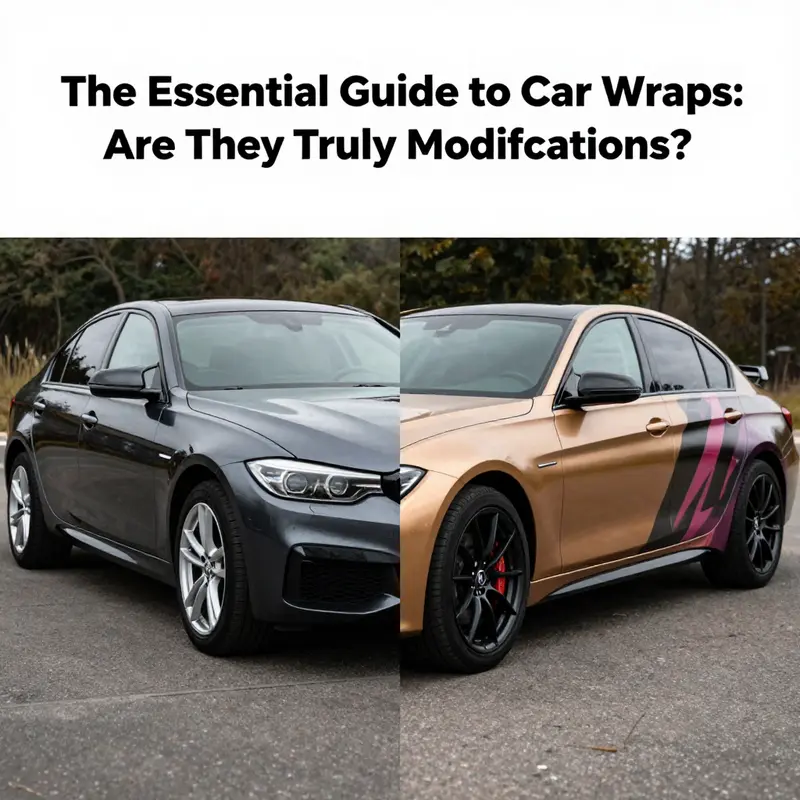
When a car wrap is discussed in conversations about a vehicle’s value, many buyers and sellers picture a cosmetic makeover. Yet the question at the heart of this chapter is more nuanced: is a car wrap a modification, and if so, how does that classification influence resale value? The answer lies at the intersection of aesthetics, protection, and the psychology of buying. A wrap changes the visible exterior, sometimes dramatically, and in doing so it becomes a modification in the strict sense used by both automotive practice and legal frameworks. It alters not just how a car looks, but how it is perceived in the marketplace. The outcome is not monochrome; it depends on a constellation of factors including the wrap’s quality, the design chosen, how well the wrap has aged, and whether the original paint is preserved underneath. To understand resale value, we must move beyond simple binaries and consider how modifications are valued in a diverse market that includes casual buyers, enthusiasts, and professional flippers alike.
A high-quality vinyl wrap, when applied by skilled technicians and maintained with care, can refresh a vehicle that looks dated, while keeping the original paint beneath protected. In this sense, the wrap functions as a reversible modification that offers the advantage of change without the permanence of repainting. For some buyers, the ability to switch looks without committing to a new color or finish is a compelling proposition. A rare, well-executed design or a brand collaboration can elevate a car’s perceived value, signaling a premium or exclusive appeal that might justify a higher asking price. In markets where customization signals personal taste and lifestyle, a tasteful wrap can become a differentiator, not a deterrent. The wrap thus contributes to resale value by expanding the pool of potential buyers who see the car as something distinct and thoughtfully curated, rather than as a stock example.
But the picture is not uniformly rosy. The same modification that adds value in one buyer’s eyes can subtract it in another’s. A wrap that is damaged, peeling, or removed with paint damage underneath can transform what should be a selling point into a liability. The resale price can suffer if the wrap is perceived as temporary or if there is concern about how it was removed. In some cases, buyers worry about the condition of the underlying paint once the wrap comes off, or they worry about residual adhesive removal. If a wrap was installed poorly or used substandard materials, the risk of visible edge lift, color mismatches at seams, or adhesive residues increases. Such flaws can signal sloppy maintenance to a prospective buyer and translate into a lower offer, or in worst cases, a walkaway scenario. These outcomes underscore a simple truth: the modification’s value is partly a function of the wrap’s visibility and its quality, but it is equally a function of buyer perception and risk tolerance.
From a materials science perspective, modern wrap films are engineered to resist UV degradation, scratches, and environmental stresses. The composition and structure of the vinyl, the adhesive system, and the finishing layers all contribute to how well a wrap ages and how easy it is to remove without damage. When a wrap maintains its color integrity and edge adhesion over time, it more convincingly communicates that the vehicle has been well cared for. Conversely, if a wrap shows early signs of fading, cracking, or edge lift, resale value can be dampened because the car looks less preserved and less original, even if the underlying paint remains pristine beneath. This distinction matters because many buyers equate vehicle maintenance with future reliability and value preservation. The wrap becomes a visible proxy for overall care, and in that sense it can influence resale value indirectly, even when the wrap itself has no mechanical impact on performance.
The nature of the wrap—whether it is a color-change wrap, a protective film layer, or a graphic design—also shapes resale trajectories. Color-change wraps enable owners to alter the hue and finish without repainting, but the degree to which that change appeals to the market matters. A bold, polarizing color or a niche design may attract a dedicated subset of buyers seeking a standout vehicle, yet it may deter more mainstream shoppers who prefer a neutral aesthetic. In practice, a wrap that leans toward classic, widely appealing colors or finishes tends to hold or slightly enhance resale value better than a design that is highly unique or trend-driven. A clear protective film, like a paint protection film, is also a modification albeit with a different resale calculus. It protects the original paint, which can be a strong selling point to buyers who value the provenance of the car and want to avoid repaint costs, but if the wrap is fully or partially removed to reveal the original paint in an older, well-preserved condition, the buyer may question whether the film contributed to value or simply masked inevitable wear.
Another critical variable is installation quality and post-installation maintenance. A wrap that was professionally installed and has since been properly maintained demonstrates a higher level of care. This tends to reassure buyers that there is a minimal risk of paint damage during removal and that the vehicle’s exterior has been kept in good condition. Documentation plays a role here too. Receipts for installation, care guidelines, and records of any wrap maintenance or touch-ups help buyers feel confident about the vehicle’s history. When the wrap carries clear provenance—proof that it was installed by a reputable shop and that the underlying paint was in solid condition before and after—the resale scenario becomes more favorable. In contrast, a poorly installed wrap with noticeable air bubbles, edge lifting, or uneven seams can become a red flag, signaling potential cosmetic issues and increased time on the market. In markets where the buyer pool is highly price-sensitive, such signals can translate into price concessions that erase any perceived premium from the wrap itself.
The decision to modify a vehicle with a wrap also interacts with the broader economics of ownership. The wrap’s cost, the expected maintenance outlay, and the anticipated resale premium or discount paint a complex financial picture. If the wrap is a discretionary upgrade that adds perceived value but does not appreciably increase the resale price, owners may still view the modification as worthwhile for personal utility or brand expression. For some, the wrap serves as a form of self-expression or as a way to convey a certain lifestyle to potential buyers. Yet, for others, the wrap represents a sunk cost that may not fully translate into added value at sale; the time on market may be longer, and the final sale price could be tempered by buyers who see the wrap as a nonessential enhancement. These dynamics underscore the importance of balancing the emotional appeal of a wrap with the practical realities of a fluctuating market.
To navigate these realities, buyers and sellers often consider the wrap in the context of the vehicle’s overall condition and provenance. A car that has been consistently well-maintained, with meticulous documentation and a wrap that has aged gracefully, is more likely to command a favorable resale price than a similarly aged vehicle with a damaged wrap and questionable upkeep. The market tends to reward vehicles that present as well-kept regardless of cosmetic alterations. For instance, a wrap that preserves the integrity of the original paint underneath and can be fully removed without trace becomes a selling point, not a caveat. In such cases, the owner can claim that the wrap provided protection without compromising the car’s value, appealing to buyers who want the option to revert to stock aesthetics or to customize again in the future. The ability to restore the car to its original state is itself a form of value preservation that resonates with a broad swath of buyers who prize authenticity and potential future appreciation of the base model.
Research highlights a nuanced takeaway: wraps are not inherently good or bad for resale value. The outcome hinges on intent, quality, compatibility with market tastes, and the buyer’s risk tolerance. A well-chosen wrap in a tasteful finish, expertly applied and well maintained, can align with a premium perception and support a higher asking price. At the same time, a wrap that is unconventional, poorly executed, or in a state of degradation can reduce perceived value and elongate the sale process. The most reliable path to preserving or enhancing resale value through a wrap lies in investing in quality from the outset, maintaining the finish with appropriate care, and documenting the vehicle’s modification history and maintenance records for prospective buyers.
From a broader industry perspective, the conversation around resale value and wraps intersects with how people talk about modifications in general. In some contexts, wraps are seen as legitimate, reversible steps that can enhance aesthetics and protection without compromising fundamental mechanical components. In others, modifications are viewed with caution, particularly when they dramatically diverge from stock configurations, raise concerns about insurance coverage, or invite regulatory scrutiny. The literature on wrap materials emphasizes durability and performance, suggesting that the lasting value of a wrap hinges on material science—and by extension, on how the wrap withstands time and usage. When buyers understand that wraps can be both protective and expressive, and when owners prioritize longevity and reversibility, wraps can become a strategic modification that complements the vehicle’s value proposition rather than diminishing it.
In practical terms, owners contemplating a wrap as part of a resale strategy should weigh several considerations. First, the wrapper’s age and the expected remaining life of the vinyl matter. A wrap with several years left before replacement may offer a greater perceived value than one nearing its end of life. Second, the design choice should aim for broad appeal or for niche appeal with a well-documented origin; both strategies can be valid, but broad appeal tends to translate to easier resale in diverse markets. Third, the possibility of removing the wrap without damage to the underlying paint should be factored into the decision, especially for models with high resale demand where paint condition is a primary concern. Finally, maintain thorough records of the wrap’s installation, care regimen, and any professional assessments. These documents provide a transparent narrative about the vehicle’s history and reduce buyer uncertainty, which in turn can support a more favorable resale outcome.
For readers seeking a practical synthesis, consider this guiding principle: a car wrap functions as a modification that can either preserve or enhance resale value when it is executed with quality, maintained diligently, and aligned with market tastes. It is not inherently a hole in value, nor is it a guarantee of a higher sale price. The verdict rests on how the modification is integrated into the vehicle’s story. When the wrap complements the car’s character, preserves the integrity of the original paint, and stands up to wear, it can become a selling point that resonates with buyers who value customization as a statement of care and personalization. In contrast, a wrap that introduces visible risk, remains poorly maintained, or is emotionally disconnected from the prevailing market preferences is more likely to complicate the sales process. This balanced view helps sellers set realistic expectations and helps buyers assess the true value proposition of a wrapped vehicle.
Taken together, the resale value implications of car wraps reinforce a broader truth about modern modifications: value is as much about perception as about material reality. A wrap is a modification in the eyes of both the law and the market, and its financial impact is mediated by quality, care, and the strategic presentation of the vehicle’s modification history. For those who treat modification as a mindset rather than a one-off upgrade, wraps can be a meaningful part of a vehicle’s lifecycle, enabling the owner to refresh or reimagine a car while preserving its core value. As the field of wrap technology continues to evolve, and as consumer tastes shift, the most resilient stance for resale value is a disciplined approach to modification—one that prioritizes quality, reversibility, and clear communication with potential buyers. For readers who want to explore how broader modification decisions affect resale value, see the discussion on car modifications and resale value.
External resource and research context: The materials science and performance considerations of modern wrap films—durability, UV resistance, and removable adhesives—are detailed in the Car Wrap Vinyl Guide and related engineering literature, which provide a technical underpinning for how these finishes age and what that implies for resale value. External reference: https://www.sciencedirect.com/science/article/pii/S135983682300476X
Wrapped in Regulation: Navigating the Legal Terrain of Car Wrap Modifications
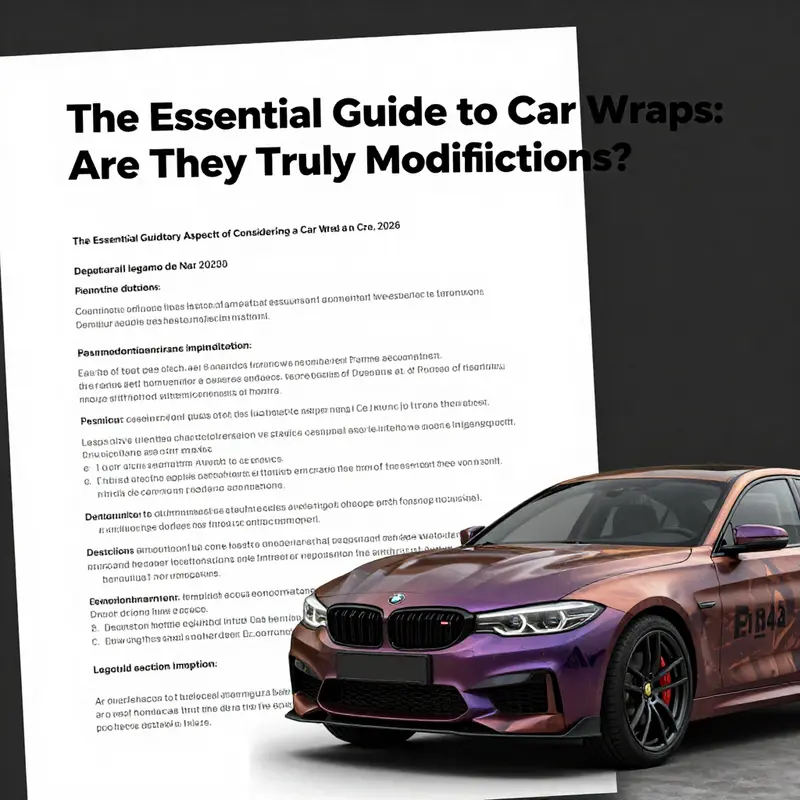
Car wraps have moved from niche customization to a mainstream option for drivers who want to express personality, protect paint, or promote a business on the move. Yet as these overlays become more common, so too does the need to understand their legal and regulatory footing. A car wrap is a modification in the eyes of most authorities, not because it changes the engine or chassis, but because it changes the vehicle’s exterior appearance and the way its surface interacts with light, visibility, and other road users. This chapter examines how different jurisdictions classify wraps, what rules govern their use, and how owners can navigate the regulatory landscape without compromising safety, insurance, or compliance. The discussion here builds on the broader context that a wrap, whether it is a protective layer like paint protection film, a color change, or a graphic, is a deliberate alteration to the vehicle’s presentation and, in many cases, its perceived identity on the road. For those who want a concise overview of the legal terrain, a useful starting point is the concept of legal car modifications that treats cosmetic and branding updates as modifications that may trigger specific requirements, rather than treating them as entirely separate from everyday vehicle maintenance and use. Legal car modifications provides a framework that informs the discussion here, without substituting for local regulations.
In any discussion of legality, context matters. The same wrap that looks perfectly compliant in one state or country can encounter different thresholds or prohibitions in another. A wrap is typically regarded as an exterior alteration rather than a structural change, meaning it does not automatically require changes to registration or title unless it introduces a feature that could mislead law enforcement, obscure critical signals, or violate safety standards. The core questions regulators ask are practical: does the wrap interfere with the vehicle’s basic signaling and identification systems, does it create a material risk to other road users, and does it align with established standards for visibility and conspicuity? These questions drive how laws are written and enforced, and they affect the day-to-day decisions drivers and shops make when choosing materials, designs, and placement.
A recurring theme across jurisdictions is that while wraps are not typically treated as a permanent, structural modification, they can still trigger regulatory considerations if they affect safety-focused features. For example, many regions scrutinize color, reflectivity, and coverage to ensure that essential elements remain visible and that the vehicle is easy to identify at a distance and under various lighting conditions. In practice, this means a wrap must not obscure lights, windows, or license plates, and it must not imitate emergency or law-enforcement vehicles. Those guardrails exist for predictable, recognizable traffic behavior and for accountability in accidents or investigations. In the United States, the federal framework through the FMVSS—Federal Motor Vehicle Safety Standards—plays a role by setting minimum requirements for visibility and conspicuity. While FMVSS standards are designed with a broad spectrum of vehicle configurations in mind, state and municipal rules often fill in the gaps where local context, aesthetics, or public safety concerns demand closer scrutiny.
California provides a concrete illustration of how a wrap can trigger specific rules. The state’s approach tends to hinge on coverage and potential impact on safety signals. If a wrap covers more than a quarter of the vehicle’s surface, it must comply with safety standards, and wrap designers must ensure that critical elements like license plates, windows, and lights remain unobstructed. More than coverage, the content of the wrap can be regulated to prevent confusion or misrepresentation, such as imitating emergency markings. These state-level constraints underscore a broader point: even when a wrap is primarily cosmetic, regulatory risk management requires attention to how the modification interacts with safety, enforcement, and the public’s expectations of road behavior.
Beyond the public-safety dimension, regulatory concerns also arise for those using wraps for commercial purposes. Branded fleets, for instance, face additional layers of compliance. Local zoning laws, sign ordinances, and traffic regulations can constrain the size, placement, and content of vehicle advertisements. Municipalities sometimes impose restrictions on vehicle-based advertising to preserve streetscape aesthetics or reduce visual clutter, and these rules can interact with normal traffic and business licensing requirements. In other words, a wrap used for branding is not merely an artistic choice; it becomes a business operation with regulatory duties attached.
Insurance is another axis where regulation and practical considerations converge. Insurance providers typically treat wraps as modifications, and this classification can influence coverage terms and premium calculations. The prudent path is to inform the insurer about any wrap installation in writing before an incident occurs. Failure to disclose can complicate or void claims, even if damage is unrelated to the wrap itself. The regulatory dimension often mirrors this practical insurance posture: if a jurisdiction flags compliance concerns, an insurer will want documentation showing that the wrap meets applicable safety and visibility requirements. This is an excellent reminder that legal compliance and financial risk management are two sides of the same coin when a wrap is part of a vehicle’s presentation.
The regulatory conversation also touches on the boundaries between permitted customization and deceptive or illegal practices. Some regions disallow wraps that imitate police cars or emergency responders, a prohibition grounded in public safety and the public’s reasonable expectation of official signaling. The risk here goes beyond a fine or the removal of the wrap; it can include legal complications stemming from impersonation or interference with law enforcement. The general lesson is simple: while a wrap can transform appearance, it should never erode the ability of other drivers to recognize a vehicle’s official capacity or its intended function.
Another layer of consideration relates to the processes through which wraps are approved or inspected. In many places, significant changes to a vehicle’s exterior do not require a formal permit or inspection, especially if the changes do not affect structural integrity or safety systems. However, the absence of a formal permit does not guarantee immunity from enforcement. Some jurisdictions maintain discretionary authority for officers or inspectors to assess a wrap on the spot, particularly if there is ambiguity about coverage, color, or reflectivity. In practice, drivers may be asked to remove or modify a wrap to restore compliance if inspectors deem it necessary for safety or identification. This reality reinforces the importance of choosing materials and designs that preserve standard signaling while still allowing for personal or brand expression.
For commercial wraps, minimum requirements often intersect with broader regulatory environments that govern signage, advertising, and business operations. A branded vehicle is, in effect, a moving billboard, and as such it may be subject to advertising restrictions that regulate the size, content, and placement of messages. Local governments may have zoning considerations or municipal codes that limit how much visibility or which colors can be used in public spaces. The practical upshot is that commercial wraps demand a careful balancing act: maximize brand visibility while staying within the letter and the spirit of local rules. This balancing act is not merely bureaucratic; it also affects how a company or individual can deploy a mobile advertising strategy, how easily a vehicle can be serviced and registered, and how resale considerations unfold when a wrap has been in place for an extended period.
In parallel with formal rules, drivers and shops can take proactive steps to minimize regulatory friction. A foundational step is to verify current local and state or provincial requirements before planning a wrap. This means consulting the relevant transportation authority or the department responsible for vehicle regulations and seeking clarity on coverage thresholds, screening requirements for materials, and the visibility of essential signals. Keeping clear records—manufacturer warranties, material specifications, installation dates, and photos showing coverage—and sharing these records with insurers can accelerate problem resolution if questions arise after the fact. A practical approach combines due diligence with a proactive posture: anticipate questions about visibility and identity, and prepare responses that reference applicable standards.
The conclusions drawn from regulatory and safety considerations are not merely about avoiding penalties. They are about preserving the purpose of a road system that relies on predictable signaling and mutual recognition among drivers. A wrap should be seen as a deliberate, traceable modification that adds value in appearance, protection, or branding, while still respecting the shared rules that keep roads safe. Achieving that balance means asking hard questions about color, coverage, and conspicuity, and recognizing that regulatory compliance is not a one-time hurdle but an ongoing part of vehicle ownership and operation. In this sense, the law does not kill creativity; it channels it toward responsible expression that remains legible to other road users and to law enforcement when necessary.
For readers who want a concise, practical entry to the topic, keep in mind the core tests regulators apply: does the wrap obscure or alter critical signals, is it convincingly different from emergency or official markings, and does it maintain the vehicle’s basic visibility under a range of lighting conditions? If the answer to these questions is yes, it is a signal to reexamine the design, material choices, or coverage. If the answer is no, the wrap has a better chance of riding the line between customization and compliance. In this sense, the law acts as a steward of road safety and public trust, rather than a gatekeeper against personal expression.
The broader takeaway is that a car wrap sits at the intersection of aesthetics, protection, branding, and regulation. Recognizing this intersection helps owners and shops navigate a landscape where creativity and compliance must coexist. This is not only about avoiding penalties; it is about ensuring that the vehicle remains easily identifiable, that critical signals stay unobscured, and that the owner and any business behind the wrap can operate with confidence. Ultimately, the legal and regulatory frame surrounding wraps reinforces the idea that modification does not equal disorder on the road. Instead, it aligns with a governance of appearances that respects safety, accountability, and the evolving ways in which individuals and organizations use vehicles as canvases for expression and function.
For readers seeking federal context on safety standards that inform these conversations, a valuable reference is the National Highway Traffic Safety Administration. This external resource provides guidance on how visibility and other safety considerations are integrated into federal standards, helping to situate local regulations within a wider framework of road safety. See https://www.nhtsa.gov for more information.
If you want to explore how regulations interact with the practical realities of car ownership, you can also consult comprehensive discussions of car modifications and insurance, which illuminate how regulatory compliance and risk management converge in everyday decision-making. A useful internal overview to consider, as you chart a path for your own project, is the broader look at legal car modifications and their implications. Legal car modifications can serve as a starting point for understanding how changes to the exterior and branding of a vehicle are contextualized within legal and safety frameworks, while recognizing that regulations vary by location and over time.
In sum, treating wraps as modifications that are governed by color, reflectivity, visibility, and appropriate signaling allows owners to pursue personalization without compromising safety, legality, or the integrity of the road network. The regulatory landscape may seem complex, but with careful planning, transparent communication with insurers, and adherence to standards, a car wrap can be a legitimate, responsible, and legally compliant form of vehicle modernization that aligns with the broader goals of road safety and consumer protection.
Final thoughts
Car wraps undoubtedly represent a significant modification to a vehicle’s identity and functionality. From enhancing aesthetics to providing protection and navigating the complexities of local laws, they encapsulate the essence of modern vehicle customization. As the automotive landscape continues to evolve, understanding the various dimensions of car wraps—both as a visual and legal modification—will empower enthusiasts and professionals alike. It’s not just about changing colors or adding graphics; it’s about reimagining what’s possible for every vehicle, reinforcing the idea that car wraps are an integral part of our automotive culture.